Home Blog Page 33

Why Bus Accident Cases Are Harder to Pursue Than Car Accident Cases and What Makes the Difference

Photo by depositphotos at https://depositphotos.com/

A serious bus accident is not simply a car accident involving a larger vehicle. It is a categorically different legal matter with procedural requirements that do not exist in standard vehicle accident claims, a defendant structure that frequently includes government entities, and an injury profile specific to unrestrained passengers in large vehicles that produces harm patterns unlike those in car crashes. Passengers who are seriously injured in bus accidents and who wait weeks or months before consulting an attorney often discover that a critical procedural deadline has already passed, permanently eliminating the most significant defendant and the largest source of insurance coverage available to pay for their injuries. Understanding the specific ways that bus accident cases differ from car accident cases from the first day after the crash is the knowledge that protects the claim.

The Government Notice Deadline Trap

The most consequential difference between a bus accident claim and a car accident claim is the government notice requirement that applies whenever the bus was operated by a public transit authority, a city transportation department, a school district, or any other government entity. Every state imposes pre-suit notice requirements on claims against government entities, with deadlines typically ranging from 30 to 180 days from the date of injury, depending on the jurisdiction. These deadlines are not statutes of limitations that can be tolled or extended for good cause in most circumstances. They are conditions precedent to filing suit, and missing them permanently bars the claim against the government entity regardless of how clear the operator’s negligence was.

The trap is that injured bus passengers frequently do not recognize that they have been injured by a government entity. A city bus, a regional transit authority vehicle, and a school district contracted bus all involve government defendants whose notice deadlines begin running from the date of the injury. A passenger focused on medical treatment who assumes the matter will be handled like a standard insurance claim can miss a 60-day or 90-day notice deadline without ever knowing it existed until an attorney tells them it has passed.

The Common Carrier Duty and What It Means for Liability

Bus operators, whether they run public transit, school transportation, charter coaches, or intercity carriers, are classified as common carriers under the law. Common carriers owe their passengers the highest degree of care consistent with the practical operation of their enterprise, a standard that is specifically more demanding than the reasonable care standard applicable to ordinary drivers. Under the common carrier duty, a bus driver’s error that an ordinary driver might be forgiven for can constitute a breach of duty when committed by a transit operator, because the elevated standard demands greater precaution.

In practice, the common carrier standard means that the liability analysis in a bus accident case begins from a more favorable position for injured passengers than in a car accident case. A sudden stop that throws a standing passenger, a lane change that tips a seated rider, and a door closure on a boarding passenger can each establish breach under the common carrier standard even when the maneuver was ordinary and the speed was modest. The driver’s obligation to anticipate the vulnerability of passengers who are standing, boarding, or not fully seated is part of the highest degree of care the common carrier doctrine requires.

The Multi-Defendant Structure That Maximizes Recovery

Bus accident cases regularly involve defendants beyond the driver and the operating entity. Each additional defendant represents additional insurance coverage and additional accountability:

  • The operating company or transit authority: For negligent hiring and training of unqualified drivers, inadequate vehicle maintenance programs, and scheduling practices that create fatigue risk
  • Third-party vehicle maintenance contractors: When brake failure, tire blowout, or steering defects contributed to the crash and those systems were serviced by an outside contractor, the maintenance company bears independent liability for negligent work
  • The vehicle manufacturer: When a design or manufacturing defect in the bus, including structural failures, roof crush inadequacies, or defective safety systems, contributed to the crash or amplified passenger injuries, strict product liability claims run against the manufacturer independently of negligence claims against the operator
  • The entity that contracted for the transportation: In charter, school district, and employer shuttle arrangements, the organization that hired the bus operator may share liability when it selected an operator with inadequate safety credentials or failed to verify qualifications before placing passengers in the vehicle

The Injury Profile Specific to Bus Passengers

Buses injure their passengers through mechanisms that differ from car accident injury patterns in specific ways. Standing passengers have no restraint system and are subject to the full inertial forces of any sudden deceleration, acceleration, or lateral movement. When a bus stops suddenly, standing passengers continue moving at the bus’s prior speed until they contact a seat, a pole, a window, or the floor. The resulting injuries from these secondary impacts include traumatic brain injuries from head contact with interior surfaces, orthopedic injuries from falls, and thoracic injuries from contact with seat backs and grab rails.

Seated passengers in buses that lack seatbelts, which describes most urban transit and school buses, face forward or lateral ejection forces in serious crashes that seatbelted car occupants do not experience. In rollover crashes, the absence of seatbelts produces occupant movement within the bus that is a primary cause of injury severity beyond what the crash dynamics alone would produce. The National Transportation Safety Board’s bus safety resources document the mechanical and operational causes of serious bus crashes nationally and the passenger injury patterns they produce. Working with an experienced bus accident attorney who identifies every government notice deadline from the first day of engagement, who pursues the full multi-defendant liability structure, and who builds the damages case around the specific injury profile bus crashes produce, gives seriously injured passengers the complete legal representation these complex cases require

Why Talaria Electric Bikes Are Changing the Future of Outdoor Sports

Outdoor sports have always been about pushing limits, exploring new terrain, and experiencing the thrill of adventure. In recent years, electric bikes have become a major part of this evolution, and Talaria electric bikes are leading the way in transforming how riders approach off-road performance.

Traditional dirt bikes and mountain bikes require a high level of physical effort and control, especially on difficult terrain. However, Talaria electric bikes combine power, efficiency, and modern technology to give riders a completely new experience. With strong torque and smooth acceleration, these bikes make it easier to handle steep hills, rough trails, and long-distance rides.

One of the biggest advantages of Talaria electric bikes is their impact on outdoor sports performance. Riders can go further, ride longer, and maintain better control without getting exhausted too quickly. This allows both beginners and experienced riders to enjoy outdoor sports at a higher level. Whether you are into trail riding, off-road adventures, or competitive outdoor sports, Talaria electric bikes offer a powerful advantage.

Many riders looking for high-performance options are now turning to TalariaBikeHub https://talariabikehub.com, a trusted platform where you can explore different Talaria electric bikes designed for durability and performance. These bikes are built specifically for outdoor environments, making them a reliable choice for serious riders.

Another key benefit is versatility. Talaria electric bikes can be used across different types of outdoor sports. From recreational riding to more demanding off-road challenges, they provide the flexibility that modern riders need. Their lightweight design and powerful motor system allow for better handling, making every ride smoother and more enjoyable.

In addition to performance, Talaria electric bikes are also environmentally friendly. Unlike traditional gas-powered bikes, they produce no emissions and operate quietly. This makes them perfect for outdoor areas where preserving nature and reducing noise is important. Riders can fully enjoy their surroundings without causing disruption.

Battery technology has also improved significantly, allowing riders to cover longer distances with confidence. With faster charging and efficient energy use, Talaria electric bikes are practical for both short rides and extended outdoor sessions. This ensures that riders can focus more on the sport and less on limitations.

For anyone serious about improving their outdoor riding experience, choosing Talaria electric bikes is a smart investment. Platforms like TalariaBikeHub https://talariabikehub.com make it easy to find the right model that matches your needs, whether you are a beginner or an experienced rider.

In conclusion, Talaria electric bikes are redefining outdoor sports by combining power, control, and sustainability. As more riders discover their benefits, these bikes are quickly becoming an essential part of modern outdoor adventure. Whether you want better performance or a more enjoyable riding experience, Talaria electric bikes are the future of the sport.

Jordan Anderson Racing Bommarito Autosport NASCAR O’Reilly Auto Parts Series Race Overview- Bristol Motor Speedway

Jordan Anderson Racing Bommarito Autosport
NASCAR O’Reilly Auto Parts Series Race Overview-
Bristol Motor Speedway; April 11, 2026

Track: Bristol Motor Speedway
Race: Suburban Propane 300
Date/Broadcast: Saturday; April 11, 2026 7:30 P.M. ET
TV: CW Network
Radio: PRN Radio- Check Local Listings for affiliate, and SiriusXM NASCAR Channel 90
Social Media: Jordan Anderson Racing Bommarito AutoSport; Facebook, Instagram, and X

Thunder Valley Awaits: Jordan Anderson Racing Bommarito Autosport Set for Battle at Bristol Motor Speedway

Bristol, Tenn. (April 10, 2026) – Jordan Anderson Racing Bommarito Autosport heads to Bristol Motor Speedway this weekend for a high-intensity showdown, as the NASCAR O’Reilly Auto Parts Series takes on one of the most demanding short tracks on the schedule.

Known as “The Last Great Colosseum,” the 0.533-mile concrete oval delivers non-stop action with steep banking, tight quarters, and heavy traffic that tests drivers’ focus and patience from start to finish. At Bristol, lap traffic, quick decision-making, and maintaining track position are critical, as the pace rarely lets up and mistakes are quickly magnified.

Jordan Anderson Racing Bommarito Autosport will once again field three entries this weekend: Jeb Burton in the No. 27 AJ Tank Lines Chevrolet, Blaine Perkins in the No. 31 Bubba’s 33 Chevrolet, and Rajah Caruth in the No. 32 HENDRICKCARS.COM Chevrolet.

Burton returns to Bristol with a strong track record and valuable experience at the high-banked half-mile. In 11 NASCAR O’Reilly Auto Parts Series races at the track, Burton has recorded four Top-15 finishes, including a Top-10 in 2020 that highlights his ability to manage the chaos and stay competitive deep into a run.

“Bristol is one of those places where you’re on edge the entire time,” Burton said.

“You’ve got to be aggressive but also smart, because things happen fast here. Our AJ Tank Lines Chevy has looked good in the sim all week, and if we can keep ourselves in a good spot and avoid trouble, we should have a shot at a solid day.”

For Burton and the No. 27 team, the focus will be on qualifying well, maintaining track position, and staying ahead of the constant challenges that come with racing in tight traffic.

Perkins enters the weekend continuing to build confidence on short tracks, an area where he has shown steady improvement race after race. In his previous four starts at Bristol, Perkins has gained valuable experience navigating the demanding layout, learning how to manage tire wear, brake timing, and the rhythm required to stay competitive in long green-flag runs.

“Bristol is intense, it’s probably one of the toughest tracks we go to,” Perkins said.

“You’re always dealing with traffic, and you have to stay locked in every lap. Our No. 31 team has been making gains each week, and the goal this weekend is to put together a clean race and be there at the finish.”

For Perkins, execution and minimizing mistakes will be key to turning experience into a strong result under the lights to earn his best career finish at the track.

Rajah Caruth returns to Bristol with momentum, looking to build on a track record that showcases both speed and adaptability. In six NASCAR Craftsman Truck Series starts at the half-mile, he has recorded four Top-10 finishes, highlighted by a career-best third-place effort in the spring of 2024. Known for his composure in heavy traffic and calculated racecraft, Caruth continues to make steady gains at the NASCAR O’Reilly Auto Parts Series level. With Bristol’s intensity demanding precision and patience, this weekend presents another strong opportunity for him to translate experience into a competitive result against a stacked field.

“Bristol is such a unique challenge for everyone,” Caruth said.

“The banking, the speed, and the traffic all come at you quickly. It’s about staying disciplined and making the right moves at the right time. I’m excited to get out there with the HENDRICKCARS.COM Chevy and see what we can do.”

For Caruth and the No. 32 team, the weekend will center on maintaining track position, adapting to changing conditions, and capitalizing on opportunities as they arise.

As the series rolls into Bristol Motor Speedway, teams will be pushed to their limits at a track that demands precision, aggression, and resilience. With a mix of experience and continued development across its lineup, Jordan Anderson Racing Bommarito Autosport is prepared to take on the challenge. When the green flag drops, all three Chevrolets will be ready to battle under the lights in Thunder Valley and fight for a strong finish.

The Suburban Propane 300 from Bristol Motor Speedway will be broadcast live on The CW beginning at 7:30 P.M. ET on Saturday night. Radio coverage will be provided by the Peformance Racing Network (PRN) and SiriusXM NASCAR Radio, channel 90, with flag-to-flag coverage from Bristol, Tennessee.

Fans are urged to stay updated thru the weekend via Jordan Anderson Racing Bommarito Autosport Social platforms; Facebook, Twitter, Instagram.

About Jordan Anderson Racing Bommarito Autosport

Jordan Anderson Racing Bommarito Autosport was built from the ground up, fueled by passion, persistence, and a bold vision for what an independent NASCAR team could become. Founded by driver and owner Jordan Anderson, the organization has grown from a grassroots operation hauling a single truck across the country into a competitive multi-car NASCAR O’Reilly Auto Parts Series team through a pivotal partnership with St. Louis automotive dealer John Bommarito. Along the way, the team has earned wins, poles, and a reputation for grit, growth, and opportunity within the NASCAR garage. Today, Jordan Anderson Racing Bommarito AutoSport is investing in talent, innovation, and culture to challenge the status quo and build a new kind of racing legacy.

Ford appears to be backing out of the NASCAR O’Reilly Auto Parts Series

#21: Josh Berry, Wood Brothers Racing, Motorcraft Quick Lane Ford Mustang

Any American who’s bought a vehicle at one point or followed racing, including NASCAR, is no doubt familiar with the “Big Three” of Detroit: General Motors, Ford, and Dodge/Ram. The American auto juggernauts have been an integral part of our economy, our culture, and even our defense for well over a century. The concept of cars and racing is ingrained in the American psyche, with races at Daytona and Indianapolis every year, just to prove the point that Americans have a peculiar love affair with automobiles.

Since NASCAR’s founding, Ford vehicles have played a crucial role in the sport’s development, from the days of bootleggers and rum runners to modern Fords racing on all the venerable American tracks in motorsports. Alas, the glory days of racing seem to be over for Ford as a manufacturer – at least in the NASCAR O’Reilly Auto Parts Series (NOAPS). All fans have to do is look at the entry list for this weekend’s Suburban Propane 300 at Bristol Motor Speedway and see that drivers from 30 Chevrolet teams, along with an additional 6 Toyotas, are entered for this Saturday’s race.

However, there is only one Ford entered in this race, with the No. 5 Hettinger Ford, driven by veteran JJ Jeley. Sunday’s Food City 500 has no less than 11 Fords entered in the NASCAR Cup race, while Friday night will see nine other Fords entered in the NASCAR Craftsman Truck Series (NCTS) race. This begs the question: what is going on with Ford and the NOAPS this season?

NASCAR teams are leaving their Fords behind and switching to different manufacturers this season

When NASCAR teams switch away from an Original Equipment Manufacturer (OEM) and go a different route, people tend to notice these changes in the world of motorsports. Both the Haas Factory Team and RSS Racing gave up on Ford Mustangs this season, switching to Chevys as their race cars of choice. The Haas team usually provides two drivers each week in the NOAPS with Sheldon Creed and Sam Mayer, and RSS Racing always seems to provide some “sibling rivalries” on the track each weekend with brothers Ryan and Kyle Sieg trying to one-up each other to the checkered flag. To add fuel to the fire, Rick Ware Racing also switched out their Ford Mustangs for Chevys this season as well

An additional indicator that Ford is backing out of supporting the NOAPS can also be seen with the recent blackout of AM Racing from both the duels in Rockingham and again this week in Bristol, leaving driver Nick Sanchez sitting on the sidelines two races in a row and wondering if it’s time to find another ride with a Chevy or Toyota team.

Why is Ford possibly leaving the NOAPS?

Could one of the key reasons for Ford’s decision not to fully support the second tier of NASCAR boil down to simple economics? Firstly, Ford is fully invested in a slate of top-notch NASCAR Cup drivers as well as numerous drivers in the entry-level NCTS. With plenty of drivers at the ends of the NASCAR spectrum, Ford seems to take the view that the middle series is simply no longer worth their time and precious money.

Secondly, the current economic climate in the United States has made it very difficult for any automobile manufacturer to keep the lights on, let alone turn a profit. With Ford sales down significantly in the early part of this year, auto racing executives with this legendary car builder are no doubt trying to stretch their dollars to get “more bang for their buck.” While it would seem that helping develop NASCAR drivers to drive their cars would be a prudent business decision, Ford corporate decision-makers may decide it’s better to support established, successful Cup Series drivers rather than help build the sport’s future.

Other auto manufacturers may have their eyes on the future of NASCAR

The resurgence of Ram trucks in the NCTS this season has reinvigorated an OEM that hasn’t had a footprint in NASCAR for over a decade. Kaulig Racing is putting up no less than a stable of five trucks each week in the Truck Series, and the integration of this brand back on track each week certainly brings a new level of competition for other auto manufacturers directly affiliated with NASCAR. While some pundits may want to point to another OEM, such as Honda potentially looking at a NASCAR entry within the foreseeable future. But fans also need to remember that Honda does not normally build automobile V-8 engines, and their current focus is with the IndyCar Series at this point in time.

If Dodge decides to return to NASCAR, could it, in fact, replace Ford at the NOAPS level? Of course, this is purely conjecture at this point, but it does make sense with one OEM trying to build a different racing focus while another brand is trying to reinvent its presence in NASCAR. To further compound the issue, Toyota is fully invested in its Toyota Racing Development (TRD) program at multiple levels to help foster the next generation of NASCAR drivers, and Ram heavily advertises their return to the NCTS as part of their brand identity. On the other hand, Ford seems content to support proven Cup Series drivers and teams.

Ford may have ulterior motives for their NOAPS exit

As American race fans, we have grown up on NASCAR and IndyCar races and drivers as part of our love for motor sports. Ford has been a part of American auto racing since there was auto racing in this country. Nevertheless, American race fans need to accept the hard reality that Formula One, not NASCAR or IndyCar, is the dominant global racing entity. With an international audience and F1 teams with seemingly unlimited financial resources, Ford has become part of the growing F1 presence through its return to Formula One under the Oracle Red Bull Racing banner. Yes, Oracle Red Bull Racing and Max Verstappen, which I assume that American racing fans have at least casually heard of before.

Ford has entered into a partnership with Red Bull Racing to build their hybrid power units and with the rumor mill surrounding the F1 community that the venerable V-8 engines are coming back soon, Ford looks to increase its global presence as a major auto racing manufacturer and “rub shoulders” with the likes of car builders such as Ferrari, Porsche, Mercedes, Aston Martin and Audi. With Cadillac already fielding a Formula One team and planning to build their own power units in the next few years for its race cars, Ford looks to join General Motors in increasing the technological development of racing on an international level for many years to come.

TPC Racing and Shaun McKaigue Return to Sonoma Raceway for USAC Porsche Sprint and Endurance Challenge Race Weekend 

  • McKaigue Wheels the No. 234 TPC Racing Porsche 911 GT3 Cup in This Weekend’s Porsche Sprint Challenge by Yokohama Doubleheader
  • Louis-Philippe “LP” Dumoulin Co-Drives with McKaigue in Sunday’s 100 Minute Porsche Endurance Challenge by Yokohama Race

SONOMA, California (April 9, 2026) – TPC Racing and team drivers Shaun McKaigue and Louis-Philippe “LP” Dumoulin are back at Sonoma Raceway this weekend for a double dose of USAC Porsche Sprint Challenge North America by Yokohama and Porsche Endurance Challenge North America by Yokohama competition with the No. 234 TPC Racing Porsche 911 GT3 Cup. McKaigue drives the No. 234 in the Masters Class in the weekend’s twin 40-minute Porsche Sprint Challenge races on Friday and Saturday and then joins his coach and professional co-driver Dumoulin in the same TPC Racing-prepared Porsche in Sunday’s one-hour and 40-minute Porsche Endurance Challenge race in the Pro-Am division.

The driver duo and TPC Racing aim to build on last year’s top-five Porsche Endurance Challenge finish at the iconic Napa Valley road course. McKaigue followed the season-best top-five run with a sixth-place showing in 2025’s finale at Michelin Raceway Road Atlanta where he shared the No. 234 with Pro driver Mike Skeen when Dumoulin had a conflict with his competition schedule back home in Canada.

McKaigue, who made his career Sonoma debut on the USAC Porsche weekend a year ago, ran his first race of the 2026 season in March at Sebring International Raceway. He bounced back from a cut tire in Friday’s opening GT3 Cup sprint to record a lead-lap finish just shy of the top-10 in Saturday’s race in a competitive 26-car Masters division field. The solid race two results also included a 19th overall showing in the combined class field of 37 entries.

McKaigue closed out the Sebring weekend with Dumoulin for a top-10 Pro-Am class finish in the season-opening USAC Porsche Endurance Challenge race.

McKaigue, Dumoulin and the TPC Racing team prepared for this weekend’s full schedule of races in a pair of unofficial test sessions taking place Wednesday and finishing up today on the 2.5-mile Sonoma circuit.

Friday’s opening Porsche Sprint Challenge GT3 Cup sprint is scheduled to start at 4:25 p.m. PDT while Saturday’s final 40-minute race will see the green flag drop at 1 p.m. PDT. Sunday’s 100-minute Porsche Endurance race is the final on track action of the weekend and starts that afternoon at 1:15 p.m. PDT. All three races can be viewed in livestream coverage on the Porsche Motorsport North America YouTube Channel.

Harris Levitas, TPC Racing Director of Race Operations: “Everything went really well in testing, and we have a good car for Shaun the rest of the week. We’re heading into the Sonoma weekend with some momentum after last year’s Porsche Endurance Challenge top-five at Sonoma. Shaun also got closer to a top-10 run in the competitive Porsche Sprint Challenge Masters Class at Sebring, and our goal this weekend is a strong, clean run across both programs and improving on our results from both last year at Sonoma and in March at Sebring.”

Shaun McKaigue, Driver – No. 234 TPC Racing Porsche 911 GT3 Cup: “We’re excited to be back here in California. I really enjoy being here for a second time. It’s always a little more fun once you know the track, which is right up there with my favorites. I really enjoy the elevation changes, but it’s a very challenging course with all kinds of different corners to it. The crew is already working really hard on practicing driver changes. We’ve got the car, it came out of the box very good, and that really provides an opportunity to get right to work on our driving skills and try to improve. We are looking forward to Sunday, but first we have some sprint races to do. It looks like we may be in the rain for some of it, so that that will be fun. The endurance race Sunday will be somewhat similar to Sebring. We will end up probably making just one driver change. Even in the longer endurance races we try to minimize the driver changes. If I can get a double stint at the beginning, that makes it simpler. That’s the strategy generally we are trying to run with because there’s less chance or opportunity for any mistakes on the driver change.”

About TPC Racing: TPC Racing is the Mid-Atlantic’s premier maintenance, service, tuning and modification center dedicated solely to Porsche sports cars. TPC Racing specializes in R&D and sales of high-performance modifications for Porsche sports cars and race cars, offering a wide range of vehicle upgrades. Best known for a line of forced induction solutions for the Porsche 911, Cayman and Boxster, a long-time focus on only one make, Porsche, has enabled TPC Racing to become experts in Porsche service, tuning, and racing. In 2000, TPC Racing began entering races under its own banner, scoring an SGS-class Championship in 2004 in the Grand-American Rolex Series and was a class winner in the 2006 Rolex 24 At Daytona, and captured the 2013 and 2016 IMSA Porsche GT3 Cup Challenge USA Gold Cup Championships. More information can be found at www.TPCRacing.com.

FIVE THINGS YOU DON’T WANT TO MISS THIS WEEKEND DURING THE FOOD CITY 500 AT BRISTOL MOTOR SPEEDWAY

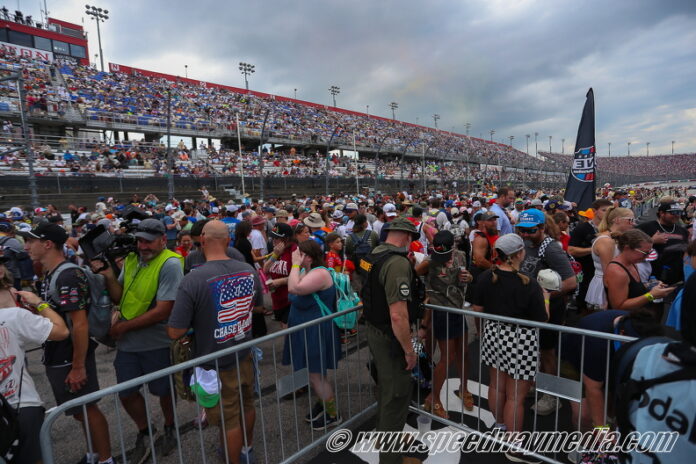
There are tons of driver appearances in the BMS Fan Zone and also opportunities for fans to get driver autographs at the team souvenir haulers during Food City 500 weekend. Here, Chase Elliott meets with a bunch of his fans.

BRISTOL, Tenn. (April 9, 2026) — There’s going to be tons of action, drama and excitement this weekend at Bristol Motor Speedway and that’s not even considering the amazing NASCAR racing that’s going to be taking place on the iconic half-mile oval.

The Food City 500 weekend is shaping up to be one of the best ever with great weather, amazing entertainment, incredible racing in all three of the NASCAR divisions and an incredible venue to party and have fun with friends. We hope you can join us, it’s going to be a blast.

Below are five things you can’t miss during Food City 500 weekend at Bristol Motor Speedway:

  1. Unpredictable racing in Sunday’s Food City 500: Most of the drivers and crew chiefs in the NASCAR Cup Series garage agree that developing a strategy and plan for Bristol Motor Speedway is one of the toughest chores that they face. With recent equipment package changes from NASCAR and Goodyear for its Cup Series short track and road course races, the Food City 500 should have somewhat of a new identity when the green flag drops Sunday afternoon. Drivers, teams, fans and others in the industry can’t wait to see what the new product will look like as 40 cars battle around the high-banks at legendary Bristol Motor Speedway. NASCAR has increased the horsepower to a maximum of 750 for all cars in the Food City 500. Goodyear says it will deliver a softer tire for the race as well. The combination of the two is expected to provide more thrilling racing at the important regular season race. You will need to buckle yourself in tight for this one Sunday at 3:30 p.m. it’s going to be barn-burner with Chase Elliott, Kyle Larson, Tyler Reddick, Christopher Bell, Ryan Blaney, Denny Hamlin, Chase Briscoe and Carson Hocevar, among others, getting ready to rumble Bristol style.
  2. Cup Series drivers Moonlighting Friday and Saturday Nights: If you haven’t got your ticket for Friday night’s Tennessee Army National Guard 250 or Saturday’s Suburban Propane 300 go ahead and grab them. Sunday may not be the only chance you have to watch your favorite Cup Series driver on the track. There are seven NASCAR Cup moonlighters entered in the NASCAR Craftsman Truck Series race and whenever you mix those talented drivers with the battle-tested regulars in the Truck Series, it always produces intense, thrilling racing action. The Cup drivers in the truck race include Ricky Stenhouse Jr., Kyle Busch, Chase Briscoe, Ross Chastain, Christopher Bell, Daniel Suarez, Carson Hocevar. Meanwhile in the NASCAR O’Reilly Series race on Saturday a pair of Cup regulars are sure to figure into the mix come checkered flag time. Defending race winner Kyle Larson will be driving the JR Motorsports No. 88 Chevrolet and Cup rookie Connor Zilisch will be piloting the No. 1 Chevy for JRM. Saturday’s race is also under the lights as both have 7:30 p.m. start times.
  3. Music and Entertainment galore: The Bristol Motor Speedway Fan Zone will be buzzing with activity all weekend and will be the place to be for fun activities and entertainment. One of the main attractions highlighting the fun will be appearances by Red Panda (Rong Niu). The highly-skilled acrobat will be aboard her famed 8-foot-tall unicycle performing dazzling stunts and tricks and wowing the crowd. Her amazing agility, focus and perfection is something you can only see firsthand to believe. She gained notoriety for performances during NBA halftime shows and she also appeared on Season 8 of America’s Got Talent. There will also be two post-race concerts following Friday and Saturday’s racing, including the popular BMS Glow Party on Friday with the 1990s tribute band Non-Stop Nineties playing. On Saturday night NASH Country will play after the Suburban Propane 300. On Sunday you will want to be at the Food City Fan Zone stage presented by Coca-Cola Zero Sugar at noon for Trackside Live with hosts Kenny Wallace, John Roberts and Jose Castillo. After that you need to move inside the stadium for the pre-race concert with rising country start Graham Barham, who will play from 1-2 p.m. and lead into driver introductions.
  4. Food City Hauler Parade Returns: The rumble of NASCAR thunder will be on the streets of Bristol on Saturday morning, April 11, as the beautiful race car haulers of the Cup Series teams make their official arrival to Bristol Motor Speedway in the official Food City Hauler Parade. Fans who want to cheer on their favorite teams and welcome the NASCAR Cup Series to Bristol are encouraged to line along the route of the parade, which begins on Commonwealth Avenue at Euclid Ave. on the Virginia side of the city and then turns into Volunteer Parkway as it crosses the state line into Tennessee. The parade will travel south on Volunteer Parkway (Hwy 11E) until the rigs enter the BMS property at Entrance No. 2 (South). The Food City Big Cart and Salute Trailer will lead the Food City Hauler Parade. The timing for the Food City Hauler Parade includes a start time of 8 a.m. sharp. The first truck is expected to enter BMS at approximately 8:30 a.m., where they will roll into the infield and park in their designated positions within the infield-garage area. The parade route is approximately 9 miles in length and will feature all of the Cup Series transporters that are entered in the Food City 500 on Sunday April 12. The parade is expected to be completed by 9 a.m. The last time a NASCAR parade was held at Bristol Motor Speedway was in March 2019.
  5. Driver appearances and autograph sessions: If you are looking for driver appearances, Bristol Motor Speedway is the place to be this weekend. Most of the NASCAR drivers will be available for autographs and to meet with fans at their souvenir haulers in the BMS Fan Zone. Others will be making appearances on the Food City Fan Zone Stage presented by Coca-Cola Zero Sugar throughout the day on each day of the weekend. For a complete list of driver autograph sessions and appearances, please click this link.

The race weekend kicks off with the Craftsman Trucks on the Bristol high banks on the evening of April 10 for the Tennessee Army National Guard 250 Truck Race (7:30 p.m., FS1, PRN Radio, SiriusXM Radio); On Saturday, April 11, it will be action-packed with the Suburban Propane 300 NASCAR O’Reilly Auto Parts Series race (7:30 p.m., The CW, PRN Radio, Sirius XM Radio) and Bush’s Beans Qualifying for both the Cup Series and O’Reilly Auto Parts Series; The tradition-rich Food City 500 NASCAR Cup Series race will thrill fans on Sunday afternoon, April 12 (3 p.m., FS1, PRN Radio, Sirius XM Radio) and bring the fun weekend to a triumphant finish.

Fans can purchase tickets to the Food City 500 weekend of races or any events at Bristol Motor Speedway, please visit the track’s website or call the BMS Ticket Sales Center at (866) 415-4158. For ultimate value, kids 12 and under are free with a paid adult for Friday and Saturday’s races and only $10 for Sunday’s Food City 500.

About Bristol Motor Speedway
Bristol Motor Speedway, known as The Last Great Colosseum, sits in the mountains of Northeast Tennessee near the Virginia state line. The 0.533-mile concrete oval, with 28-degree banking, hosts two major NASCAR Cup Series weekends each year, the tradition-rich Food City 500 and the crown jewel Bass Pro Shops Night Race. The venue has staged iconic moments such as the 2016 Pilot Flying J Battle at Bristol football game between the University of Tennessee and Virginia Tech (NCAA-record 156,990 fans), the 2025 MLB Speedway Classic between the Atlanta Braves and Cincinnati Reds (MLB regular-season record crowd of 91,032), the 2020 NASCAR All-Star Race, the rebirth of NASCAR Cup Series racing on dirt from 2021–2023 and sold-out concerts for Morgan Wallen and Kenny Chesney. Fans enjoy Colossus TV, the world’s largest outdoor center-hung four-sided screen video board. The adjacent Bristol Dragway is the home to the NHRA Super Grip Thunder Valley Nationals, and the dragway can transform into the Thunder Valley Amphitheatre for music concerts. Opened in 1961 and acquired by Speedway Motorsports in 1996, Bristol remains one of America’s most unique and versatile sports and entertainment destinations. For more information, please visit www.bristolmotorspeedway.com.

Why Electric Bikes Are Transforming Outdoor Riding

Outdoor riding has always been a favorite activity for those who enjoy adventure, fitness, and exploring new environments. From mountain trails to off-road paths, riders are constantly looking for ways to improve their performance and overall experience. In recent years, electric bikes have completely changed the game, offering a powerful and efficient way to ride.

Electric bikes, also known as e-bikes, combine traditional cycling with advanced motor technology. This allows riders to travel longer distances and handle more challenging terrains without excessive fatigue. Whether riding uphill or navigating rough trails, the added power makes a noticeable difference in both performance and comfort.

One of the main reasons electric bikes are gaining popularity is their ability to provide instant assistance. Riders no longer have to rely solely on physical strength, which makes outdoor riding more accessible to a wider range of people. Beginners can enjoy the experience without feeling overwhelmed, while experienced riders can push their limits even further.

As more people explore this growing trend, many are looking for reliable places to find high-quality models. A popular option is TalariaBikeHub https://talariabikehub.com where riders can discover a range of electric bikes built for performance and durability. These bikes are designed to handle demanding outdoor conditions while still delivering a smooth and enjoyable ride.

Another major benefit of electric bikes is their versatility. They can be used for recreational riding, commuting, or even sports training. This flexibility makes them an attractive option for riders who want a bike that can adapt to different situations. With the right model, users can easily switch between casual rides and more intense off-road adventures.

Electric bikes also provide environmental advantages. Unlike gas-powered alternatives, they produce no emissions during use and operate quietly. This makes them ideal for nature trails and outdoor areas where preserving the environment is important. Riders can enjoy their surroundings without contributing to noise or pollution.

For those interested in upgrading their riding experience, exploring Talaria electric bikes https://talariabikehub.com is a great starting point. These bikes are known for their strong performance and reliable build quality, making them a popular choice among outdoor enthusiasts.

Battery technology has also improved significantly, allowing riders to travel longer distances without worrying about running out of power. Faster charging times and better efficiency make electric bikes more practical than ever before. This ensures that riders can spend more time on the trail and less time waiting.

In addition, electric bikes offer better control and stability compared to traditional bikes. The smooth power delivery helps riders maintain balance and handle different terrains with ease. This enhances both safety and overall riding experience, especially for those exploring new environments.

As the demand for electric bikes continues to grow, more riders are discovering the benefits they offer. Choosing a trusted source like TalariaBikeHub ensures access to quality models that can significantly improve outdoor adventures.

In conclusion, electric bikes are transforming the way people experience outdoor riding. With their combination of performance, accessibility, and environmental benefits, they provide a modern and exciting alternative to traditional bikes. As technology continues to evolve, electric bikes are set to become an essential part of outdoor sports and recreation.

A Simple Guide to Understanding Auto Financing Terms

Photo by Vlad Deep pexels.com

Ever looked at a car loan offer and felt like you needed a translator? You are not alone. As car prices climb and interest rates shift with every Federal Reserve decision, understanding auto financing has become less of a nice-to-have and more of a survival skill. This guide breaks down the key terms in plain English so you can make smarter choices and avoid costly mistakes.

Why Auto Financing Feels So Complicated

Auto financing often feels confusing because it blends banking language with big purchases that most people only make a few times in life. Lenders rely on terms like APR, principal, and amortization, which sound technical but affect how much you pay every month and over time. When inflation and supply chain issues push car prices higher, these details matter even more.

The growing trend of longer loan terms, sometimes stretching to seven or even eight years, adds another layer of complexity. People are trying to keep monthly payments manageable, but that often means paying more interest overall. Understanding the basics helps you avoid being locked into a deal that looks affordable now but becomes expensive later.

The Role of Interest Rates and APR

Interest rate is the cost of borrowing money, while APR, or annual percentage rate, includes fees and gives a fuller picture of what you are paying. Many buyers focus only on monthly payments, but the APR tells you how expensive the loan really is over time. In today’s economy, where rates have risen compared to a few years ago, even a small difference can cost hundreds or thousands more.

When reviewing loan documents, you might also come across terms tied to taxes and reporting, including IRS car loan interest reporting, which can affect how lenders document interest payments. While most personal auto loans do not offer tax deductions, the way interest is tracked still matters for compliance and record keeping. Knowing this helps you stay organized and avoid surprises during tax season.

Understanding Principal and Loan Term

The principal is the amount you borrow to buy the car. Your loan term is how long you take to repay it. A shorter term leads to bigger monthly payments but less interest on the whole, while a longer term lowers payments but increases total cost.

Many buyers today choose longer terms because car prices have surged, especially with the rise of electric vehicles and advanced tech features. However, stretching a loan can leave you “underwater,” meaning you owe more than the car is worth. Choosing the right balance between affordability and long-term cost is key.

What Down Payments Really Do

A down payment is the money you pay upfront. It lowers the amount you need to borrow, which reduces your monthly payment and total interest. Financial experts often recommend putting down at least 10 to 20 percent if possible.

In a time when many households are managing tight budgets, skipping a down payment might seem tempting. However, doing so increases your risk of negative equity. If you need to sell or trade in the car early, you could end up owing money instead of receiving it. A solid down payment provides a financial cushion.

Monthly Payments vs Total Cost

It is easy to focus on the monthly payment because that is what hits your bank account each month. Dealerships often highlight low payments to make offers seem attractive. But a lower payment usually means a longer loan or higher interest cost.

Looking at the total cost of the loan gives a clearer picture. This includes the principal, interest, and any fees. In a world where subscription models are becoming common, from streaming to software, it is tempting to treat car payments the same way. But unlike a subscription, this is a long-term financial commitment with lasting impact.

Credit Scores and Loan Approval

Your credit score plays a major role in determining whether you get approved and what interest rate you receive. Higher scores typically mean lower rates, while lower scores can lead to higher costs or even denial.

With more people using buy-now-pay-later services and juggling multiple forms of credit, maintaining a strong credit profile has become more important than ever. Checking your credit report before applying for a loan can help you catch errors and improve your chances of securing better terms. Even a small improvement in your score can make a noticeable difference.

Fees, Add-Ons, and Hidden Costs

Beyond the loan itself, there are additional costs that can sneak into your financing agreement. These may include origination fees, documentation fees, extended warranties, and insurance products. Some of these are optional, but they are often presented in a way that makes them seem necessary.

Being aware of these extras allows you to ask questions and decide what you actually need. In an era where transparency is increasingly demanded by consumers, taking control of these details can help you avoid overpaying. Always review the full breakdown before signing anything.

Leasing vs Financing: Know the Difference

Leasing and financing may seem similar because both involve monthly payments, but they are very different. When you finance, you are working toward owning the car. When you lease, you are essentially renting it for a set period.

Leasing can offer lower monthly payments and access to newer models, which appeals to drivers who value the latest features. However, it comes with mileage limits and no ownership at the end. Financing, while often more expensive upfront, gives you long-term value. Choosing between the two depends on your priorities and driving habits.

Tips for Making Smarter Decisions

Start by setting a realistic budget that includes not just the car payment but also insurance, fuel, and maintenance. Compare offers from multiple lenders instead of relying solely on dealership financing. This gives you more control and often better rates.

Reading the fine print may not be exciting, but it is one of the most effective ways to protect yourself. Ask questions if something is unclear, and do not feel pressured to sign on the spot. In a fast-moving market where prices and rates can change quickly, taking a little extra time can save you a lot of money.

Understanding auto financing terms is not about becoming a financial expert overnight. It is about gaining enough clarity to make confident decisions. With cars becoming more expensive and financing options more complex, that knowledge is no longer optional. It is essential.

5 Tips to Keep Your Japanese Car in Good Shape

Car master auto mechanic repairer service technician checks and repairs the engine condition under the hood of the vehicle service shop

Japanese cars have become familiar to the world for their engineering precision, fuel economy, and long life. From the nimble Toyota Corolla and versatile Honda CR-V to the rugged Nissan Patrol and the performance-driven Subaru WRX, the philosophy you get from a “lean manufacturing” of these cars is built with precision and reliability. But even Japan’s toughest engine, bulletproof as it is, must be carefully handled to ensure reaching the iconic 300,000 miles.

Keeping a Japanese vehicle afloat is less about avoiding breakdowns than about a regular, disciplined approach to doing so. As they tend to be crafted with tight tolerances and certain alloy compositions, the way you treat those vehicles today defines how they will perform ten years into the future.

Essential Maintenance Strategies

For more than 30 years, the mechanical vitals and structural integrity of the car must be concentrated on each other if your vehicle is not to become dependent on another man.

1. Adhere Strictly to the Maintenance Schedule

Japanese automakers like Mazda, Mitsubishi, Suzuki, and others include highly detailed owner’s manuals that serve as a kind of “bible” for your vehicle. These schedules are not just recommendations; rather, they are intervals based on the thermal limits of fluids and wear rates of mechanical components.

So one thing is very important: the timing belt or timing chain. Many older or high-performance Japanese engines are called interference engines. If the timing belt snaps, for that matter, it would put pistons and valves into collision contact with one another, resulting in the catastrophic engine failure of a well-designed system. It’s a common practice to replace a belt at 60,000 to 90,000 miles as a preventive measure to reduce your need for a full engine rebuild. Similarly, testing the valve clearances (found in more common older Hondas) gives one confidence that the engine breathes properly and maintains its characteristic fuel economy.

2. Prioritize High-Quality Fluids and OEM Filters

Japanese engines depend on the chemical composition of the lubricants and coolant mix. As an example, Toyota’s “Super Long Life Coolant” or Honda’s “Type 2” coolant are designed to ensure the seals and gaskets you will find in their water pumps and radiators are protected. For example, a generic “all-makes-all-models” green coolant can leave aluminum heads typical of Japanese designs susceptible to premature corrosion.

In contrast, many of the modern Japanese automobiles also need low-viscosity synthetic oils like 0W-20 for high MPG ratings. These oils slide through tight oil galleries more easily, making sure that each piece of the overhead cam gets grease off and on startup. Good quality oil should always be used with an Original Equipment Manufacturer (OEM) filter. OEM filters usually have a “drain-back” valve that stops oil from draining out of the engine when it is turned off, reducing friction when the next cold start.

3. Monitor the Transmission and Drivetrain

Despite their well-known ruggedness in Japanese manual transmissions, the automatic and Continuously Variable Transmissions (CVTs) require careful attention. Nissan and Subaru, for example, have introduced CVTs that have optimized vehicles as much as possible for efficiency. These systems use a specialized friction fluid that operates the belt-and-pulley system.

In explaining the cost associated with Repairing Japanese vehicles, most mechanics point out that preventative fluid swaps are less expensive than a complete transmission overhaul. If a CVT fluid change is missed, it can be easily “slipped” or overheated. Unlike classic geared automatics, a CVT doesn’t necessarily give you a warning until the damage is real. Likewise, when you are driving an All-Wheel Drive (AWD) vehicle, such as a Subaru or a Toyota RAV4, the critical aspect is making sure that all four tires are replaced at the same time.

4. Protect the Body and Chassis from Corrosion

Japanese engines may last forever, although their chassis is susceptible to environmental wear, such as rust. Some Japanese steel treatments used to be thinner than their European counterparts in the past to keep weight and cost down. Rust is your car’s biggest enemy if you live in a coastal area with salt air or a part of the country where roads are salted in the winter.

To maintain the health of your car, wash it once a week with special focus on wheel wells and undercarriage. A ceramic coating or a good-quality wax has been shown to protect the paint against UV damage, which often blurs the clear coat of vintage red and blue Japanese cars. It can also be subject to underbody rust proofing. Preventing oxidation of the suspension and brake lines allows the car to continue using a stable structure as it ages.

5. Listen to the “Language” of Your Car

Japanese cars are communicative. They are seldom more than two steps away from failing without a hint or slight signal. A fine “click” when turning the steering wheel might be a signal for a CV axle that is no longer good enough—a normal item of wear on a front-wheel-drive car (such as a Toyota Camry or Nissan Altima). A high-pitched squeal at startup indicates a loose or worn serpentine belt.

Japanese engineering is so regular that anything other than the “normal” sound or feel of the car is generally an indication that that part has reached the end of its service life. Watch the dashboard lights, sure, but trust your instincts. Is there a bit of spongy behavior in the brake pedal? You might have to flush the brake fluid to remove moisture. And is there a vibration at highway speeds? Your tires probably need balancing or an alignment.

Conclusion

The secret to Japanese car longevity may not be a magical additive or a premium fuel; the secret is the consistency of the owner. These people are creatures of habit. When you add that Japanese manufacturing reliability and proactive-maintenance attitude, you won’t just be driving a car; you are managing a long-term asset.

And if you follow these five best practices, staying on schedule, using the appropriate fluids, protecting the transmission, avoiding corrosion, and monitoring for early warning signs, you maintain a reliable vehicle just like when it rolled off the assembly line. No matter whether you travel to work daily or have a weekend project, your Japanese car has been built to serve you for decades if you don’t abuse its engineering. Keep the oil fresh and clean, the filters fresh, the body protected, and if the car stays well-maintained, you’ll likely end up owning it long enough for a future ride that will outlast your drive time.

Choosing the Auto Transport Option That is Right for You

When shipping vehicles across the country, choosing between the two main options is important. You will need to choose between open and enclosed auto transport, each featuring its own advantages, costs, and use cases. There are many service providers, such as Bigfella Auto Express, which offer both options. Whether you’re relocating, ordering a car online, or preparing for a military PCS move, knowing the differences between the two options will help you make the best decision for you.

Open Transport

Open Transport

Open transport is by far the most common shipping method for cars. If you’ve ever seen a train with vehicles or a multi-car carrier trailer on the highway, that’s open transport. With open transport, your vehicle will be secured to a trailer exposed to the elements, typically alongside several other vehicles. Open carriers are designed for as many vehicles as possible, making this method much more cost-effective.

Pros:

  • Cheaper than closed transportation
  • Versatile scheduling
  • Faster booking time and availability

Cons:

  • Exposure to weather, dust, and debris during transport
  • Less protection and security

For most people, open transport is the most reliable and wise choice. Reputable providers like Bigfella Auto Express offer open-carrier services at a reasonable cost.

Enclosed Transport

The more expensive of the two options, closed transportation involves shipping your vehicle in a fully enclosed trailer. This provides an extra layer of security and protection during transportation. Typically, this method is used for high-value, classic, luxury, or specialized vehicles that need additional care.

Pros:

  • Full protection from weather and road conditions
  • Ideal for luxury, antique, or specialty cars
  • Assurance during transport of high-value vehicles

Cons:

  • Much more expensive, expect it to be at least 40% higher in cost
  • Less flexible and reduced availability

If your vehicle is expensive, has sentimental value, or is rare, enclosed transport is well worth the investment.

Cost Analysis

Vehicle transportation is another area where the more complex it is, the more expensive it becomes. Expect to pay significantly more for each thing that needs to be accounted for. If you have a vehicle that needs to stay immaculate, has special equipment, or requires additional security, you may be looking at a cost exceeding 100% of the standard open carrier transport rate.

If you’re looking to save money, especially if you’re military or making a long-distance move, open transport is usually the way to go. You can further reduce costs by taking advantage of promotions like the $75 Military Auto Transport discount, which is perfect for service members.

Which Option is Right for You?

Choosing between open and enclosed auto transport ultimately comes down to what you need done during transportation. Open transport is best if you’re shipping a standard vehicle and want an affordable option. Alternatively, enclosed transport is required if your vehicle needs special care, but you expect to pay more.

For example, military families who need a permanent change of station move regularly prioritize affordability and speed over cost and constrained availability. However, if you’re transporting a vehicle with a specific use, such as a dragster, enclosed transport is necessary.

Final Thoughts

Ultimately, both open and enclosed auto transport options are safe ways to transport your car. However, the right choice depends on whether you need a specialized car, the level of protection you require, and how much you’re willing to spend.

Typically, standardized vehicles you commonly see on roadways can be transported via open carriers, and it is a smart decision. If you have to consider weather, debris, or other special considerations, an enclosed option will be better.