

Home Blog Page 39

Cody Ware To Bank 150th Career Cup Series Start on Bristol’s High Banks

Milestone Moment Comes This Sunday in Food City 500

MOORESVILLE, N.C. (April 9, 2026) – Cody Ware will make his milestone 150th career NASCAR Cup Series start this Sunday at Bristol (Tenn.) Motor Speedway when he takes the green flag for the Food City 500.

The Greensboro, North Carolina, native made his first Cup Series start on March 5, 2017, at Atlanta Motor Speedway as a 21-year-old. In the seven years that followed, Ware ran select races. It wasn’t until 2025 that he ran his first full Cup Series season.

“This is a milestone that I look at through two different lenses,” said Ware, now 30 and driving the No. 51 Costa Oil 10-Minute Oil Change Chevrolet for his family-owned Rick Ware Racing (RWR). “It’s definitely cool to be able to notch 150 Cup Series starts, but the majority of those starts don’t feel real. I’d say the last two-and-a-half seasons of Cup racing have really been a more proper experience in the Cup Series.”

Bristol is a microcosm of Ware’s mindset. He has made only three Cup Series starts at the high-banked, .533-mile oval. The learning curve remains as steep as Bristol’s 28 degrees of banking.

“Even though the distance at Bristol is not very long – a little more than 266 miles – 500 laps there is a long time,” Ware said. “The mental endurance it takes to run at 110 percent and be on your A-game from start to finish is key. You have to be laser-focused on hitting your marks, but also ready to adapt.

“Bristol is not like a traditional short track where the bottom lane is dominant throughout the race. You see people racing the middle line and the high line, and the track conditions play a big part in that. You need to be on the wheel and stay ahead of those changing track conditions, and really pay attention to tire wear and what you’re feeling during the course of a run.”

That feeling has been exemplified of late. Two of the last four races at Bristol have seen extreme tire wear, to the point drivers are racing the track conditions more than each other.

“I think everyone enters Bristol with a healthy level of apprehension,” Ware said. “We’ve just seen a lot of bizarre things of late – cording tires after 20 laps in practice, but then on raceday it’s fine. Other times, like the last time we were at Bristol for the night race, everything seemed OK in practice and qualifying, and then on Saturday night, people were having flat tires left and right. You couldn’t run more than 30-40 laps without having to make a pit stop.

“Now we’re coming back with more horsepower and less downforce, so we’re going to wear out the tires even faster. And with Bristol being up in the mountains, you never really know what the track temperature’s going to be. Sometimes we go there and it’s 80 degrees, other times it feels like 40 degrees.

“There are so many variables that go into Bristol, and now we’re adding another one that can lend itself to more chaos.”

Managing the chaos creates comers and goers, meaning that drivers who manage their tire wear early in a run can be better than their counterparts at the end of a run. It’s the kind of racing NASCAR Hall of Famers Mark Martin, Dale Jarrett and Bobby Labonte used to their benefit.

“There’s a lot of strategy at Bristol that a driver, a team, and a pit crew can employ to work their way into a good result,” Ware said. “Bristol does have a little bit more of that old-school racing mentality where it’s like, do you want to be fast the first 20-30 laps of a run, or do you want to be fast 100 laps into a run?”

Ware’s run to his 150th Cup Series start begins Saturday at 4:30 p.m. EDT with a one-hour practice before qualifying at 5:40 p.m. Prime Video and SiriusXM NASCAR Radio will provide live coverage of both. Sunday’s Food City 500 goes green at 3 p.m. with live, flag-to-flag coverage delivered by FS1 and SiriusXM NASCAR Radio.

About Rick Ware Racing:

Rick Ware has been a motorsports mainstay for more than 40 years. It began at age 6 when the third-generation racer began his driving career and has since spanned four wheels and two wheels on both asphalt and dirt. Competing in the SCCA Trans Am Series and other road-racing divisions led Ware to NASCAR in the early 1980s, where he finished third in his NASCAR debut – the 1983 Warner W. Hodgdon 300 NASCAR Grand American race at Riverside (Calif.) International Raceway. In 1995, Rick Ware Racing was formed, and with wife Lisa by his side, Ware transitioned out of the driver’s seat and into fulltime team ownership. He has since built his eponymous organization into an entity that competes full-time in the elite NASCAR Cup Series while simultaneously campaigning winning teams in the Top Fuel class of the NHRA Mission Foods Drag Racing Series, Progressive American Flat Track (AFT), FIM World Supercross Championship (WSX) and zMAX CARS Tour.

Alex Bowman cleared to return at Bristol Motor Speedway

CONCORD, N.C. (April 9, 2026) – Alex Bowman, driver of the No. 48 Ally Chevrolet for Hendrick Motorsports, has been medically cleared to return to competition and will race in Sunday’s NASCAR Cup Series event at Bristol Motor Speedway.

Bowman, 32, has missed starts at Phoenix Raceway, Las Vegas Motor Speedway, Darlington Raceway and Martinsville Speedway while recovering from vertigo. He began experiencing symptoms during the March 1 event at Circuit of The Americas before exiting the car on lap 71.

“I’m grateful for the support I’ve had from Hendrick Motorsports, my sponsor Ally, our fans and the medical team throughout this process,” Bowman said. “It’s been tough being out of the car, but we all wanted to make sure I was 100% ready before returning. I feel really good, and I’m excited about being at the track with my team and getting back to racing.”

Bowman turned laps Tuesday in a streetcar at the Ten Tenths Motor Club road course in Concord. On Wednesday, he participated in pit stop practice, simulator testing and a medical evaluation before being formally cleared for competition without restrictions.

“We’re proud of Alex and the way he’s handled this situation,” said Jeff Andrews, president and general manager of Hendrick Motorsports. “He’s put a lot of work into his recovery and followed the medical team’s plan every step of the way. From the outset, our goal was to prioritize his health and have him return when he was fully recovered and medically cleared. We’re looking forward to seeing Alex back in his race car this weekend.”

Justin Allgaier drove the No. 48 Ally Chevrolet for Bowman at Las Vegas, Darlington and Martinsville. Anthony Alfredo filled in at Phoenix.

The Physics of a Collision: Why Even Modern Safety Tech Can’t Shield You From Everything

Modern cars can do things that once felt futuristic. They can sense trouble, warn drivers, and sometimes step in before a mistake turns into a crash. That matters because while these features can’t prevent every collision, they can make everyday driving safer and give people more support behind the wheel.

Still, there is only so much technology can do once a crash is in motion. Speed, weight, angle, and force do not care how advanced the vehicle is. When the hit is hard enough, the laws of motion take over. And when that happens, the damage can reach far beyond the wreck itself.

Safety Tech Changes the Odds, Not the Outcome

Features like automatic emergency braking, lane-departure alerts, blind-spot monitoring, and adaptive cruise control have made driving safer in measurable ways. They can catch a problem early. They can buy a driver an extra second. Sometimes that second is enough to avoid a crash altogether. Sometimes it is enough to reduce the damage.

But these systems are not magic, and they are not built for perfect conditions. Rain changes things. Glare changes things. So do road surfaces, traffic patterns, and human reaction time. A car can respond quickly and still hit hard. A warning can come at exactly the wrong moment. That is why official guidance on what these safety systems can and can’t do matters. The technology is useful. It is not absolute.

That distinction gets lost more often than it should. The smarter vehicles become, the easier it is to assume serious injuries are less likely across the board. They are not. Good engineering reduces risk. It does not erase it. When the force is strong enough, physics still wins.

The Human Body Still Absorbs What the Vehicle Can’t

Cars are built to manage impact. People are not.

Seat belts hold the body in place. Airbags cushion it. Crumple zones help absorb and redirect energy. All of that can make a tremendous difference in a serious crash. Even so, none of it turns a violent collision into a minor event. The body still takes the hit in ways that matter.

That is why a person can step out of a vehicle and still be badly shaken, sore, or hurt in ways that do not fully show up right away. Adrenaline has a way of masking pain. Shock has a way of narrowing attention. What looks manageable in the first few minutes can feel very different later that day or the next morning.

This is the part people often underestimate. Safety features can reduce the damage, but they cannot guarantee a clean ending. When speed, mass, and impact line up the wrong way, even a well-designed vehicle reaches its limit.

Recovery Starts Long Before Life Feels Normal Again

The scene itself is only the beginning. Once the tow trucks leave and the calls start coming in, the real disruption begins.

Medical appointments take over the calendar. Work becomes harder to keep up with. Getting around turns into a daily headache. Pain has a way of shrinking the day, and uncertainty makes everything heavier. Tasks that used to feel routine can suddenly require planning, energy, and patience you do not have.

Then there is the administrative side of it all, which can be exhausting in its own way. Bills show up quickly. Insurance conversations can feel detached and mechanical. Family routines shift. Plans get postponed. Little by little, the effects of the crash spread into parts of life that have nothing to do with the damaged vehicle.

That broader fallout is one reason serious collisions linger. Recovery is rarely neat. It is physical, financial, emotional, and deeply practical all at once. That same reality echoes in the safety habits that matter on everyday roads. Preparation helps. Technology helps. Risk stays with us anyway.

Why Place Still Shapes the Recovery Experience

Where a crash happens can shape what recovery feels like afterward. In Chicago, the aftermath can feel especially compressed. The traffic is dense, the pace is fast, and daily life does not leave much room for disruption. When something serious happens, every missed step seems to carry more weight.

That is one reason legal help after a serious auto accident in Chicago can feel like part of getting your footing back. In quieter parts of the Midwest, the rhythm may be different. In larger Southern metros, distance can create a different kind of strain. In older Northeast corridors, congestion and routine can shape the experience in their own way. The details vary, but place changes pressure, and pressure changes recovery.

Clarity Matters More Than Confidence in the Aftermath

Modern safety systems deserve the credit they get. They help drivers avoid trouble, reduce some crashes, and lessen the severity of others. That is real progress, and it should not be dismissed.

At the same time, none of those advances can cancel the force of a serious collision or fully protect someone from what comes after it. The crash may last a few seconds. The consequences can stretch on for weeks or months through treatment, missed work, financial stress, and the slow process of getting life back into focus.

That is the real lesson. Better technology can improve the odds. It cannot rewrite physics.

Classic Car Insurance vs Regular Car Insurance: Key Differences

Picking car insurance isn’t always as straightforward as it seems. The vehicle you drive every day involves different risks than a vintage model you save for weekend drives or special events. Because of this, a standard policy and a classic policy are built with very different goals in mind.

One is designed for a car that loses value over time, while the other protects a car that gains value. Understanding where these paths part ways ensures you aren’t just buying a policy, but actually protecting your car’s true worth.

What Counts as a Classic Car

Age alone doesn’t make a car a classic. Insurers typically look at age, condition, and purpose. While 20 years is a common benchmark, antique or vintage labels often require a car to be much older.

The condition is equally critical. Classic coverage focuses on well-maintained or restored vehicles with unique rarity. These cars must not serve as daily drivers. Instead, they are protected assets kept in peak condition.

Finally, usage determines eligibility. Providers expect you to use the car for pleasure, such as club events or exhibitions, rather than routine commuting. Demonstrating limited mileage and consistent care ensures the vehicle qualifies for specialized protection.

Finding the right coverage is much easier when you work with an experienced insurance agency. Every provider has different standards for what qualifies as a classic, so you need a partner who understands these nuances. Working with an expert ensures your policy reflects the true value of your vehicle rather than just its age.

How Regular Insurance Works

Regular auto insurance is built for everyday driving. It covers commuting, errands, and general use by focusing on common risks like accidents, theft, or weather damage.

The vehicle’s value rests on depreciation. Over time, most cars lose value, which directly dictates how much an insurer pays after a claim. This approach works for standard vehicles, but it fails to account for the rising value of a collector car.

Standard policies include a mix of liability, collision, and comprehensive coverage. While these options allow you to adjust protection levels, they typically lack the specialized valuation a classic requires.

Key Differences Between Classic Car Insurance and Regular Car Insurance

Here are the key differences between these types of insurance:

Agreed Value vs Actual Cash Value

The most important distinction lies in how an insurer determines your vehicle’s worth. Regular insurance uses actual cash value (ACV), which factors in depreciation. This means your payout reflects the car’s market value at the time of the loss rather than its original price or restoration costs.

Classic car insurance uses agreed value instead. You and your provider settle on a fixed amount when you start the policy. This figure represents the car’s true worth, which is essential for restored or rare vehicles that tend to appreciate over time.

If you face a total loss, the agreed value is exactly what you receive. This certainty is vital when dealing with collector cars that don’t follow typical depreciation patterns. It ensures you can actually replace your investment rather than receiving a fraction of its value.

Usage Restrictions and Flexibility

Usage limits are a standard part of classic car insurance. These policies are designed for vehicles that aren’t used for daily transportation. Most insurers set annual mileage caps, often between 2,500 and 5,000 miles. You are typically expected to use the car for exhibitions, club events, or occasional pleasure drives instead of routine commuting.

This approach helps with risk mitigation because it keeps the car off the road during busy hours. Since the vehicle spends less time in traffic, insurers can offer significantly lower premiums.

Regular auto insurance doesn’t have these restrictions. You can drive your car for work or personal errands without tracking your mileage. While that freedom is necessary for a daily driver, it doesn’t offer the same cost-saving benefits as a specialized classic policy.

Storage Requirements

Storage is a major factor in classic car insurance. Most insurers require you to keep the vehicle in a fully enclosed, locked garage or an approved professional facility. This protection keeps the car safe from theft, vandalism, and harsh weather.

Proper storage preserves the long-term condition of high-value vehicles. Meeting these rules ensures the car remains in peak shape while satisfying the insurer’s safety standards. Carports or open driveways rarely qualify for these specialized plans.

Regular auto insurance doesn’t have these strict rules. While parking in a safe spot is a good idea, standard policies don’t usually mandate where you keep the vehicle overnight. This flexibility is convenient for daily drivers, but it doesn’t offer the same security for a vintage investment.

Premium Costs and Risk Factors

Many owners expect specialized coverage to cost more, but classic car insurance often features lower premiums. Because these vehicles spend less time on the road and receive expert care, they represent a much lower risk to the insurer.

Limited mileage and controlled usage directly lead to these favorable rates. While factors like rarity and the agreed value influence the final price, the restricted driving schedule keeps the overall cost manageable. A more valuable car requires more protection, but specialized plans account for the fact that it isn’t exposed to daily traffic risks.

Regular auto insurance calculates premiums based on driving history, location, and daily exposure. High mileage and the constant risks of commuting usually lead to higher costs. Standard policies simply don’t offer the discounts that come with the strictly controlled environment of a collector car.

Coverage for Repairs and Parts

Repair options differ significantly between these policy types. Classic car insurance provides support for specialized repairs, offering access to experts who understand older models and the necessity of original manufacturer parts.

Many policies also account for the specialized tools and materials required for restoration. Coverage can even extend to the specific automotive tools you use to maintain the vehicle in your own garage.

Regular auto insurance focuses on standard repairs using widely available parts and general labor costs. While this works for modern daily drivers, it rarely meets the needs of classic car owners who require period-correct components and specialized craftsmanship.

When Each Option Makes Sense

When Each Option Makes Sense

Choosing the right policy depends entirely on how you use your vehicle. Classic car insurance works best for vehicles that are rarely driven, carefully maintained, and valued beyond standard market pricing. It is a strong fit for collector cars, antique models, and other specialty vehicles that require agreed value protection.

Regular auto insurance suits daily drivers who face routine risks on the road. This coverage provides the flexibility needed for commuting and running errands without mileage restrictions. Standard policies ensure you have practical protection for vehicles that depreciate over time.

In many situations, maintaining both types of coverage makes sense. You might keep a standard policy for your primary vehicle and a separate, specialized plan for your classic car. This balanced approach provides the right level of protection for each asset while keeping your total insurance costs manageable.

Conclusion

Classic car insurance and regular auto insurance serve very different purposes. One preserves long-term value, while the other supports everyday driving needs. Your choice depends on how often you drive, where you store the car, and how you define its worth.

Matching coverage to your vehicle’s specific needs ensures you do more than just meet a legal requirement. You are protecting a valuable asset, whether it is a daily driver or a cherished classic.

Last-Minute Van Rental Mandurah: What to Expect

Express delivery, shipping service concept. Delivery vans in a row in the rays of sunset or dawn. 3d illustration

Needing a van at short notice can feel stressful, whether you’re moving house, picking up furniture, or handling an unexpected job. The good news is that last-minute bookings are often possible, but there are a few things to keep in mind when organizing van rental Mandurah on short notice.

Here’s what you can expect and how to make the process as smooth as possible.

Limited Availability

The biggest challenge with last-minute bookings is availability.

What You can Expect:

  • Fewer vehicle options
  • Limited sizes or models
  • Peak periods (weekends, holidays) may be fully booked

If you’re flexible with timing or vehicle type, you’ll have a better chance of securing a van.

Same-Day or Next-Day Bookings Are Often Possible

Many rental companies accommodate urgent requests.

Common Options include:

  • Same-day pickup (if vehicles are available)
  • Next-day bookings
  • Short-term hires (a few hours to a full day)

Calling directly rather than booking online can sometimes help you secure a vehicle faster.

Different Pricing

Last-minute van rental Mandurah bookings may come with different pricing.

Factors That Affect Cost:

  • Demand at the time of booking
  • Vehicle availability
  • Duration of hire

In some cases, prices may be slightly higher, but not always, especially if there are cancellations.

Typically Required Documents and ID

Even for last-minute rentals, you’ll still need to meet standard requirements.

  • Valid driver’s licence
  • Identification
  • Payment method (credit or debit card)

Having these ready will speed up the process.

Inspect the Vehicle Condition

Before driving off, you’ll usually be asked to inspect the vehicle.

Make Sure to Check these:

  • Existing damage or scratches
  • Fuel level
  • Cleanliness

Taking photos can help avoid disputes when returning the van.

Choose Insurance Option That You Prefer

You’ll need to choose an insurance option before driving away.

Options May Include:

  • Standard cover with higher excess
  • Reduced excess for an additional fee

Understanding your coverage is important, especially when booking quickly.

Flexible Pickup and Return

Rental companies often offer flexible arrangements for urgent bookings.

  • Quick pickup process
  • Flexible return times (depending on availability)
  • After-hours return options in some cases

Confirm these details when booking to avoid surprises.

How to Choose the Right Van Quickly

When time is limited, focus on the essentials. Consider:

  • Size needed (don’t underestimate space)
  • Payload capacity
  • Ease of driving and parking

If unsure, it’s usually better to go slightly larger than risk multiple trips.

What are the Common Uses for Last-Minute Van Hire?

Last-minute rentals are often needed for:

  • Moving house or transporting furniture
  • Picking up large purchases
  • Business or trade work
  • Event setup or deliveries

Knowing your purpose helps you choose the right vehicle.

Summary

Booking a van rental Mandurah at the last minute is definitely possible, but it requires a bit of flexibility and quick decision-making. While options may be limited, most rental companies can accommodate urgent requests if vehicles are available.

By preparing your documents, knowing what you need, and acting quickly, you can secure a van and get your job done without unnecessary stress.

Traditional Storage Units vs Budget Storage Options in Sacramento: Making the Right Decision

Sacramento is a thriving city, leading to a growing need for storage solutions. Many residents and businesses are looking to find the best way to store their items securely and affordably. This article explores the different storage options available in Sacramento, examining both traditional and budget alternatives.

Below, we will discuss key differences between traditional and budget storage options in Sacramento. Factors such as cost, accessibility, and features will be highlighted to help you make an informed decision that meets your storage needs.

Traditional Storage Units in Sacramento Explained

Traditional storage units in Sacramento provide comprehensive services and secure facilities. These units are often monitored 24/7, ensuring a high level of protection for stored items. Many offer climate-controlled environments, making them suitable for valuables sensitive to temperature fluctuations.

Retention of a traditional storage unit does mean higher monthly costs compared to budget alternatives. The additional security and features justify the pricing for many. On average, monthly fees range between $100 to $200, depending on unit size and additional amenities.

When selecting a traditional storage unit, ensure you check for the availability of key features. Prioritize facilities with robust security, flexible access hours, and climate-controlled options. budget storage Sacramento Making the right choice to safeguard your belongings and offer peace of mind.

Exploring Budget Storage Options in the Sacramento Area

Budget storage provides a cost-effective solution for simpler storage needs. These options often offer the basics without the frills of traditional units. This can be an excellent choice for those seeking temporary storage or less-demanding conditions.

Budget options are typically less expensive, with prices ranging from $50 to $100 monthly. They might lack some features of traditional units, but can cater to uncomplicated storage requirements. Owners generally need to assess security measures, as these can vary widely among providers.

To find the best budget storage option, evaluate your storage needs closely. Assess access requirements, basic security, and unit size. Ensuring your provider meets a few key criteria can lead to significant savings without compromising too much on quality.

Comparing Costs and Features of Storage Solutions

Understanding the cost differences between traditional and budget storage units helps in allocating resources effectively. While traditional units might seem costlier initially, they often include more features per dollar spent.

Budget options present a lower upfront cost, ideal for those with minimal storage demands. However, cost comparison should involve analyzing what you truly need. Determine whether extras like security and climate control are essential to your decision.

Decide based on both current storage needs and potential future requirements. This approach ensures that you are not only saving on cost today but also making a viable long-term investment if needed. Compare providers thoroughly to match their offerings with your distinct storage priorities.

Choosing the Right Storage Option for Your Needs

Identifying the correct balance of cost and features is key in picking the ideal storage solution. Sacramento residents must consider personal and project-specific storage needs. Understanding these can greatly influence the final decision.

Analyzing safety, access frequency, and cost implications helps guide your choice. Homeowners with occasional access might prioritize cost, while business users could focus on easy access. Addressing these priorities ensures efficient decision-making.

Conduct site visits, when possible, to evaluate storage facilities firsthand. This way, you can gauge the condition and security of the facility. Your ultimate selection should integrate both budget considerations and specific needs to achieve satisfaction.

Overall, understanding the nuances of storage options in Sacramento empowers you to select a solution that aligns with your financial situation and storage requirements. Balancing cost with necessary features will provide the best value for your endeavor.

F1 Schedule Changes and Their Effect on Formula 1 Betting Lines

Image by Guy Percival from Pixabay

The 2026 Formula 1 season has already proven to be one of the most unpredictable in recent memory, not only because of sweeping regulatory changes but also due to major disruptions to the race calendar. Schedule adjustments have introduced new layers of complexity for teams, analysts, and sportsbooks alike. 

When races are removed, delayed, or spaced differently, the ripple effects extend far beyond logistics; they reshape performance expectations, alter competitive balance, and influence how markets interpret data. For sports fans, understanding how these schedule changes affect pricing and perception is essential. 

As the season evolves, sportsbooks are continually recalibrating their outlook, responding not just to results on the track but also to the structural changes that redefine how those results are produced.

2026 Middle East Cancellations Reshape Odds

The cancellation of the Bahrain and Saudi Arabian Grands Prix has significantly altered the early trajectory of the 2026 season. These races were not only staples of the calendar but also provided unique performance benchmarks due to their circuit characteristics. 

Jeddah’s high-speed layout and Bahrain’s demanding thermal conditions provided teams with valuable data points that shaped expectations for future races. With these rounds removed, sportsbooks have had to reassess how teams might perform without those reference events.

Mercedes, which showed strong form in the opening races, benefited from circuits that suited its strengths. Without Bahrain and Saudi Arabia, projections of continued dominance required adjustment, as fewer races mean fewer opportunities to validate early-season trends.

For bettors, this shift also impacts Formula 1 betting lines, as the overall number of races has decreased. With fewer events contributing to championship outcomes, each race carries more weight. This compression increases uncertainty, making it harder for markets to rely on long-term projections and forcing greater emphasis on immediate performance indicators.

Five-Week Void Hits Mercedes Lines Hardest

The unexpected five-week break between Japan and Miami introduces another major variable into the 2026 season. Such a long pause is rare in modern Formula 1 and has immediate implications for how sportsbooks evaluate team trajectories. 

Momentum, often built through consecutive race weekends, is disrupted, and the competitive order becomes less predictable. That makes it harder to project whether early form will carry over once the season resumes.

For Mercedes, the timing of this break is particularly significant. Their early advantage, potentially linked to specific technical interpretations, now faces scrutiny as rival teams gain valuable development time. 

Ferrari, McLaren, and Red Bull can use this extended window to refine their cars, introduce upgrades, and close performance gaps before racing resumes. Sportsbooks are responding by adjusting expectations, giving less weight to early dominance and more to the possibility of major pre-Miami performance shifts.

Regrouping Period Favors Mid-Pack Betting 

The mid-season pause not only affects the leading teams, but it also creates opportunities for drivers and teams in the middle of the Driver’s Championship Race. Under the 2026 regulations, teams are still adapting to new power unit configurations and aerodynamic concepts. The additional time allows these teams to analyze early data and implement meaningful changes.

F1 statistics show that, for outfits like Aston Martin, Alpine, and emerging entrants, this period can be transformative. Small gains in efficiency or reliability may translate into noticeable improvements on track. From a market perspective, this introduces the possibility of misalignment between perceived and actual competitiveness.

Sportsbooks often rely heavily on early-season results when shaping their models. However, the extended break reduces the reliability of that data. If midfield teams return with upgraded packages that improve performance, betting markets may take time to reflect these changes fully. This creates a dynamic environment where expectations evolve rapidly once racing resumes.

Two Long Breaks Alter Championship Momentum

The 2026 calendar is now defined by multiple extended breaks, fundamentally changing how momentum is built and sustained throughout the season. In a typical year, performance trends carry over from one race to the next, allowing sportsbooks to adjust gradually based on consistent data flow. This year, however, long pauses disrupt that continuity.

A driver or team performing strongly before a break may not necessarily maintain that advantage afterwards. Rivals have time to respond, and technical developments can shift the competitive landscape. As a result, sportsbooks must reassess rather than extend previous trends.

This creates a more measured approach to pricing. Instead of reacting sharply to individual race outcomes, markets begin to rely on broader indicators of team strength. Stability in expectations becomes more common once a team’s overall profile is established, even if individual results fluctuate. For fans, this reflects a shift from reactive pricing to a more data-driven evaluation of sustained performance.

Safety Rule Discussions Threaten Line Volatility

The disruptions to the calendar have also created space for regulatory discussions that could influence the remainder of the season. Following incidents earlier in the year, stakeholders are evaluating potential safety adjustments, particularly concerning speed differentials and aerodynamic behavior.

Any regulatory changes introduced mid-season could significantly alter competitive balance. Teams that have optimized their designs around current rules may find their advantage reduced, while others could benefit from adjustments. For sportsbooks, this introduces a new layer of uncertainty that is difficult to quantify.

Markets must consider not only current performance but also how potential rule changes might reshape the field. This uncertainty can lead to more cautious pricing, as bookmakers wait for clarity before making substantial adjustments. For observers, it highlights how off-track developments can be just as influential as on-track results in shaping expectations.

A Season Defined by Uncertainty and Adaptation

The 2026 Formula 1 season shows that schedule changes do more than alter dates. Cancellations, long breaks, and possible rule shifts have changed both team performance and sportsbook analysis, creating a fragmented season with less consistent and more context-driven data.

For sports fans, this creates a more nuanced landscape, where understanding the broader season structure becomes essential. Stability in expectations now comes from sustained performance over time rather than isolated results. As the calendar continues to evolve, so too will the way sportsbooks evaluate teams, making adaptability a defining feature of the 2026 Formula 1 campaign.

How to Keep Track of the Best Online Gambling Bonuses in Real Time

Photo by depositphotos at https://depositphotos.com/

In the world of online gambling, keeping up with bonuses can be incredibly challenging for various reasons. For starters, they change very fast. A bonus that is valid today could simply not work tomorrow. As a result, there is always a risk of missing out on great bonuses, even after hours of researching and comparing available offers.

Most gamblers try to keep track of these bonuses the traditional way, but it’s just too much effort and too little clarity. If you are in that position, have you considered using dedicated platforms?

Dedicated Bonus Platforms: A Smarter Way to track Bonuses

Dedicated bonuses platforms are simply sites that are built specifically for tracking bonuses across different gambling platforms. Their work involves gathering, organising and updating bonuses in one place. That way, you do not have to open tons of different tabs and spend hours just to check and confirm available bonuses. You can Learn more about Bonuses Place here.

How do They Work?

Aggregates Bonus Offers

As mentioned, the main purpose of these platforms is the aggregation of offers into one place. What that means is, instead of you going to 10 sites, they bring the 10 sites to you.

That gives you a level of convenience you simply can’t get with any other option out there. It’s like having all your options in one dashboard, which makes everything much more straightforward.

Real-Time Updates

A dedicated bonus platform also provides real-time updates. Bonuses stay current and are adjusted whenever changes occur.

When it comes to bonuses, very few things can be as bad as finding great offers after they expire. It is even worse if you plan your bets around outdated information because regular platforms couldn’t be bothered to update their page.

Bonus Filtering and Verification

When researching bonus offers, a huge chunk of your time goes to filtering and verifying their credibility. Not all bonuses are worth your time. So, in most cases, you have to identify the right one and confirm if they really offer what is being advertised.

That takes a lot of time and effort. However, with a dedicated platform, these bonuses are filtered to get rid of sketchy and misleading ones. Think of it as someone doing ‘due diligence’ on your behalf. Sometimes, you will even find bonuses you wouldn’t find the regular way.

Benefits of Using a Dedicated Bonus Platform

  • Saves time since nobody wants to spend hours hunting for bonuses, and these dedicated platforms simplify the process. They reduce the time needed to compare and filter available offers.
  • Improved decision making since these platforms make it easier to compare options in one place. They help you take a clearer view and avoid impulsive choices.
  • Reduces risks since the gaming world includes many misleading offers that are easy to fall for. Access to verified information helps you focus on bonuses that actually work.
  • Access to exclusive bonuses since some offers are easy to miss without actively searching. Dedicated platforms bring everything into one place, making them easier to find.

Conclusion

Whether you are a casual or a regular gamer, you probably already know how manual tracking of bonuses can be nerve-wracking. But with the right tools, such as dedicated platforms, things can get a lot easier. These all-in-one sites save time and effort by aggregating all offers into one place and providing real-time updates for each. That way, you not only get hard-to-find bonuses but also avoid planning your bets around outdated information.

TEAM CHEVY NASCAR RACE ADVANCE: Bristol Motor Speedway

TEAM CHEVY ADVANCE
Bristol Motor Speedway
April 10-12, 2026

Fresh off its first off-weekend of the season, the NASCAR Cup Series will return to action for 16-straight weeks of competition, with the stretch kicking off Sunday at “The Last Great Colosseum” of Bristol Motor Speedway.

Chevrolet is the most recent manufacturer to make a trip to victory lane at NASCAR’s highest level, with Hendrick Motorsports’ Chase Elliott driving the new Camaro ZL1 racecar to its first win of the season at Martinsville Speedway two weeks ago. The Tennessee tripleheader will get underway Friday evening with the NASCAR Craftsman Truck Series – an event that will see five Cup Series regulars – Daniel Suarez, Ricky Stenhouse Jr., Kyle Busch, Ross Chastain and Carson Hocevar -back behind the wheel of a Silverado RST. On Saturday, it will be the NASCAR O’Reilly Auto Parts Series’ turn to hit the high-banked half-mile as Team Chevy looks to build onto its already stout early-season run in the second-level series.

LARSON LOOKS TO DEFEND

A trip to Bristol Motor Speedway might just be what Kyle Larson and the No. 5 Hendrick Motorsports Chevrolet team need to get back to victory lane. The Elk Grove, California, native knows his way around the high-banked half-mile – owning a combined five wins across NASCAR’s top-two divisions. His most recent victories came one year ago during the track’s spring date when the reigning champion attempted a tripleheader sweep – an effort that ended with a pair of near dominate triumphs in the Cup and O’Reilly Auto Parts Series events. Since joining Hendrick Motorsports, Larson’s Bristol statistics include three wins, six top-fives and 1,121 laps led. Two of his victories have come in the series’ past three visits to the track, with the triumphs accompanied by a sweep of the stages and over 400 laps led in each race.

Larson will also have the opportunity to defend his crown in the track’s spring race for the O’Reilly Auto Parts Series, with the driver returning to the seat of the No. 88 JR Motorsports Chevrolet for Saturday’s race. This will mark Larson’s third start with the Mardy Lindley-led team this season – a partnership that has already seen a trip to victory lane at Las Vegas Motor Speedway and, most recently, a pole win and a fourth-place finish at Darlington Raceway.

VAN GISBERGEN BUILDING SHORT TRACK CONFIDENCE

Trackhouse Racing’s Shane van Gisbergen is carrying the confidence of a career-best short-track effort. At Martinsville Speedway two weeks ago, the Auckland, New Zealand, native put together a strong Saturday performance that led to his career-best oval qualifying effort of fifth. Van Gisbergen went on to score points in each stage en route to an 11th-place finish – marking his best result on a half-mile at NASCAR’s highest level. The Trackhouse Racing driver also kickstarted his sophomore campaign with an impressive run in the series’ preseason exhibition race at Bowman Gray Stadium. When precipitation overcame the quarter-mile track, it was Van Gisbergen that capitalized on the wet-weather tires to make a charge from 15th to the top position – going on to lead 15 laps and maintain a running position in the top-five for much of the second-half of the race.

RCR TEAMMATES READY FOR REDEMPTION

The circuit’s short tracks have fit right into Austin Dillon’s wheelhouse in recent seasons. In six short track events last season, the Welcome, North Carolina, native collected one victory (Richmond Raceway), along with a pair of top-10 results, one of which came in the spring race at Bristol Motor Speedway. Dillon’s success at the Tennessee half-mile expands across the NASCAR national ranks, with the Richard Childress Racing driver picking up a win in the O’Reilly Auto Parts Series in 2016. Dillon’s teammate, Kyle Busch, also shares a decorated history at Bristol, with the two-time champion leading the series’ active drivers in wins (eight), runner-up finishes (four), top-fives (14) and top-10s (19) at the track.

ALLGAIER AT THE TOP

The NASCAR O’Reilly Auto Parts Series points leader, Justin Allgaier, further solidified his position at the top of the standings at Rockingham Speedway last weekend – driving his No. 7 JR Motorsports Chevrolet to his fifth-straight top-five finish. The veteran driver has been a points powerhouse already this season – standing tall as the only driver to earn points in every stage thus far. With a culmination of three wins, six top-fives, seven top-10s and 120 stage points earned, Allgaier heads into the Bristol race weekend with a monstrous 126-point lead over the series’ reigning champion, Jesse Love. Allgaier’s tenure with JR Motorsports has produced a strong set of statistics at “The Last Great Colosseum”. In 16 career starts with the organization at the track, he’s earned one trip to victory lane (2023), nine top-fives and 12 top-10s.

DAY DIALING IN CONSISTENCY

Corey Day is making a statement early in his NASCAR O’Reilly Auto Parts Series rookie campaign. The Clovis, California, turned in a career day at Rockingham Speedway last weekend. In his first appearance at the North Carolina venue, Day drove his No. 17 Hendrick Motorsports Chevrolet to his first career pole win, a sweep of the stages and a career-high 118 laps led en route to a 10th-place finish. The result marked Day’s seventh-consecutive top-10 finish of the season – a feat that also leads the series. Day was the only driver in the top-10 of the points standings to make a move up the ranks, with the rookie taking over the fifth position heading into the Bristol race weekend.

ECKES EYING OPPORTUNITY

With five races in the books, McAnally-Hilgemann Racing’s (MHR) Christian Eckes leads the Bowtie brigade in the NASCAR Craftsman Truck Series points standings, leaving “The Rock” in the seventh position. Returning to the division full-time this season, Eckes has a new voice from atop the pit box, with the No. 91 team under the leadership of series veteran, Dave Elenz. In the pair’s first race together at Daytona International Speedway, they scored their season-best finish of third, going on to match the result at Darlington Raceway two weeks ago. Finding their rhythm early in the season, they head to a track where Eckes already has a strong notebook with the Chevrolet organization. In his three Bristol starts behind the wheel of a MHR-prepared Chevrolet, Eckes has finished no worse than fourth, including a trip to victory lane (Mar. 2024). He’s also scored third-place or higher points in every stage and accumulated 294 laps led.


BOWTIE BULLETS:

· Chevrolet will serve as the official pace vehicle for the tripleheader weekend at Bristol Motor Speedway, with the Corvette Stingray pacing the NASCAR Cup and O’Reilly Auto Parts Series and the Silverado RST pacing the Craftsman Truck Series.

· Active Chevrolet drivers with a NASCAR Cup Series win at Bristol Motor Speedway:

Kyle Busch: Eight wins (2019, ’18, ’17, ’11, ’10, ’09 sweep, ’07)

Kyle Larson: Three wins (2025, 2024, ’21)

· Chevrolet is the winningest manufacturer in both of NASCAR’s top-two divisions at Bristol Motor Speedway, heading into the weekend with 48 Cup Series wins and 38 O’Reilly Auto Parts Series wins.

· With seven-straight victories to start the 2026 NASCAR O’Reilly Auto Parts Series season, Chevrolet set the record for the longest season-opening streak by a single manufacturer in the division’s history.

· In 151 points-paying races in the NASCAR Cup Series Next Gen era, Chevrolet leads all manufacturers with 68 victories – a winning percentage of 45%.

· Chevrolet is coming off its 29th all-time sweep of the NASCAR Cup Series championship titles – capturing its 34th driver championship and 44th, and fifth consecutive, manufacturer championship in 2025.

· With its 44 NASCAR Cup Series manufacturer championships, 34 NASCAR Cup Series driver championships, and 882 all-time NASCAR Cup Series wins, Chevrolet continues to hold the title as the winningest brand in NASCAR Cup Series history.


TUNE-IN:

NASCAR Cup Series

Food City 500

Sunday, Apr. 12, at 3 p.m. ET

FS1, PRN and SiriusXM NASCAR Radio Channel 90

NASCAR O’Reilly Auto Parts Series

Suburban Propane 300

Saturday, Apr. 11, at 7:30 p.m. ET

CW, PRN and SiriusXM NASCAR Radio Channel 90

NASCAR Craftsman Truck Series

Tennessee Army National Guard 250

Friday, Apr. 10, at 7:30 p.m. ET

FS1, NASCAR Racing Network and SiriusXM NASCAR Radio Channel 90


QUOTABLE QUOTES:

Ross Chastain, No. 1 Trackhouse Racing Chevrolet

What do you like about Bristol?

“I love racing at Bristol which is why I always try and run more than one series there. It’s so fun to be on the track which is kind of down in a bowl with all of the fans right next to you. The atmosphere at Bristol is just so cool. Walking across the track down into the infield at the crossover gate is a neat experience. You get to feel how steep the banking is.”

A little different paint scheme this weekend?

“Yeah, I’m looking forward to getting back into the car after a weekend off. It was nice to have a few days to myself but I’m happy to be getting back to the track. Busch Light always does such a great job with the specialty schemes. I’m pumped to drive the Busch Light fishing car this weekend. The fans always love the specialty schemes and they’re very vocal about their thoughts which is always fun. It would look even better in victory lane at Bristol.”

Austin Dillon, No. 3 Richard Childress Racing Chevrolet

What does Bristol mean to you?

“When you come to Bristol, this place is like one of the eight wonders of the world. You walk in and it’s like a gladiator dome. It’s always a privilege to come race here and be a part of the big races that they’ve had here. Got to drive up to victory lane once, and we’d like to do it again this weekend.”

What is your favorite RCR win at Bristol Motor Speedway?

“Hard to choose, but my NASCAR O’Reilly Auto Parts Series win at Bristol Motor Speedway was pretty special to me, personally.” 

What is your favorite Bass Pro Shops paint scheme?

“Oh man, it’s hard to choose a favorite Bass Pro Shops paint scheme. We’ve had so many patriotic paint schemes, and those ones mean a lot. I love the Bass Pro Shops/Winchester Long Beard XR paint scheme that we are running this year, too.”

Daniel Suarez, No. 7 Spire Motorsports Chevrolet

This is your first double header with Spire Motorsports. How are you feeling about being back in a truck?

“I’m really excited to get back to the CRAFTSMAN Truck Series—it’s been a few years. The last race I ran was the dirt race about five years ago, so it’s been a long time since I’ve competed on an oval. Honestly, the last time I did a true oval race was back in 2016, so this is definitely something I’ve been looking forward to.

It’s also been nearly a year since I’ve been in a truck, so I’m excited to get back behind the wheel in the No. 71 Freeway Insurance Silverado RST. The last time I worked with this team and Bono, we were able to win a race, so hopefully we can have some fun first and, with a little luck, bring home another trophy.”

Since 2014, winners at Bristol are awarded a sword, what would it mean to you to win this iconic trophy?

“It would be incredible to win the ceremonial Gladiator sword trophy—having one of my own would feel truly special. The level of detail in the design is amazing, and I’d love the opportunity to sit down with the person who created it and learn more about their process.”

Kyle Busch, No. 8 Richard Childress Racing Chevrolet

The track is a little bit Dr. Jekyll, being the normal, and Mr. Hyde, being the crazy with the tire wear. Which do you prefer?

“I don’t mind the crazy. I feel like it lends itself into some unexpected results or things that may happen out of the ordinary. Guys that get flat tires because they chew up their tires quicker than others don’t benefit well from those races, so it can lend itself a little bit to guys that know what they are doing.”

What makes Bristol so special for you?

“I always love going there, it’s one of my favorite places to race. I grew up racing on the local short tracks across the country and racing in the tight confines of Bristol reminds me of my earlier days racing late models. There’s always action going from the bottom to the middle and the top of the racetrack. 500 laps at Bristol seems like a long time, but it goes by really fast. It’s a fun place to race.”

Ty Dillon, No. 10 Kaulig Racing Chevrolet

How important is Bristol to you?

“I think anyone who says they are a NASCAR fan likes Bristol. I’ve loved the place since I was a kid, and I’ve loved racing there in the truck and (now O’Reilly Auto Parts Series). When I was a kid going there, for the longest time I thought that Food City store logo with the blue square and red FC was the Bristol logo!”

What makes Bristol special to you?

“Being at Bristol is a special tradition for our family. This is like a home race for us. This is one of the ones that always means so much. Just the tradition of NASCAR, you feel it so strongly when you come here to Bristol. It’s good to have a partner in Ohio Logistics join us in Bristol this weekend. They were on our car in Mexico last year. They are going to see something really cool this weekend.”

AJ Allmendinger, No. 16 Kaulig Racing Chevrolet

“Bristol will always kind of be good memories of our past there between the exciting finish of the NASCAR O’Reilly Auto Parts race and obviously getting the (NASCAR Cup Series) pole last year was really special and cool for Kaulig Racing. It’s tricky with the last couple years, depending on what tire they bring and whether it’s tire conservation or kind of a flat-out race. So that’s something that we don’t really know until you get there. And even through practice, sometimes you don’t realize it, so very tricky, but it’s one of those places that I still drive into and kind of get a little bit of chills and goosebumps just knowing what that place is. Probably the most physical racetrack for me. So, you know, we’ve had success there. We’re definitely searching right now, trying to figure out what we need to do to be better, so hopefully it’s a racetrack that we can kind of get some momentum back.

I think it’s good for the off week to have everybody reset and kind of go a different direction and figure out what we need to do to be better with whatever package that they bring. But overall, it’s going to be a tough race, physically and mentally, and hopefully we can go out there and have a good practice and qualifying. Track position is always critical there, especially early in the race and not going a lap down. So yeah, we’ll just go there and see what we got and give it our best.”

Cole Custer, No. 41 Haas Factory Team Chevrolet

“Bristol is always a race I think all of us look forward to, with it being the Last Great Coliseum and being the crazy, wild place that it is with all of the banking and the huge grandstands. We will be beating and banging all night, so it is definitely a place everyone looks forward to and a place where everybody looks forward to try and win it. We are going to go out there and give HaasTooling.com and Gene the best chance that we can.”

Ricky Stenhouse Jr., No. 47 Hyak Motorsports Chevrolet

“Bristol is one of my favorite tracks of the season, so it’s always exciting to get there. Having NOS Energy Drink back on the No. 47 this weekend makes it even better. Bristol is such a fast, intense place where things happen quick, so qualifying well and staying up front is really important. Our team has been working hard in the shop, and I think we’ll have a good shot to put together a strong weekend.”

Cody Ware, No. 51 Rick Ware Racing Chevrolet

“Bristol is 500 laps of chaos no matter if it’s on a sunny afternoon in April or under the lights on a Saturday night in September. To be able to walk out of Bristol with a good result is always very rewarding, because you know how hard it is to achieve.

Even though the distance at Bristol is not very long – a little more than 266 miles – 500 laps there is a long time. The mental endurance it takes run at 110 percent and be on you’re A-game from start to finish is key. You have to be laser-focused on hitting your marks, but also ready to adapt.

Bristol is not like a traditional short track where the bottom lane is dominant throughout the race. You’re going to see people racing the middle line and the high line, and the track conditions are going to play a big part in that. You need to be on the wheel and stay ahead of those changing track conditions, and really pay attention to tire wear and what you’re feeling during the course of a run.”

Michael McDowell, No. 71 Spire Motorsports Chevrolet

“Bristol is all about intensity, and it’s a place where I’ve had some good success recently with a couple of near top-10 finishes in the NextGen car. We had a few issues there last spring, but we have addressed them and feel good about those changes. We knew what needed to be fixed, and that gives me a lot of confidence going back. Spire had a ton of speed in the first Bristol race last year, so we have a strong notebook and feel like contenders. Bristol has a special energy, and I always tell fans that if they’ve never been to a race, or never been to Bristol, it’s a must. It’s one of the coolest events you can experience as both a fan and a driver. It’s a place that has been pretty good to me over the last few years, so it’s definitely a track we’ve circled to go back and capitalize on.”

Carson Hocevar, No. 77 Spire Motorsports Chevrolet

You have been fast at Bristol, but the finishes don’t reflect that. How do you remain optimistic?

“We’ve been fast at Bristol ever since my first Cup race there in 2023. We have just been very successful there. I really enjoy running there, and it is one of Luke’s (Lambert) favorite tracks. He has a lot of experience there and won races at every level. We are close, we just need everything to come together.”

What about Bristol fits your driving style?

“Bristol is super-fast and I think that suits me. You carry a lot of speed around there and you have to make decisions very quickly and pick between the top and bottom lanes depending on where the lap traffic is. It is almost like running on a dirt track.”

Connor Zilisch, No. 88 Trackhouse Racing Chevrolet

This will be your first race at Bristol in the Cup car…

“I really appreciate the support from everyone at Roto-Rooter and it’s so cool they are the primary sponsor for both the Cup and O’Reilly Series cars this weekend. Bristol is crazy. It’s one of those tracks that sometimes you forget which end of the track that you’re on. When you’re going around there so fast time flies and the laps fly by quickly. Everything happens really fast at Bristol. Bristol is a really cool track to go to. The entire facility is one of a kind and I’m excited for my first Cup race there. We finished top-five there in the O’Reilly race last fall. We had a really good day, won a stage, and led a lot of laps but ended up getting caught up in some late race strategy that took us out of contention for the win.”

Do you have to remind yourself to breathe at Bristol?

“You do have to voluntarily remember to breathe and keep yourself cool. Drivers always talk about this is the track where your heartrate gets the highest and it’s definitely the most intense racetrack that we go to because you don’t have time to relax. It’s not like you’re going to Las Vegas where the corners are really intense but then you have 10 seconds to relax down the straightaways. Bristol is very intense in the corners and you don’t have a lot of time to relax out of them.”

How challenging is the communication between the crew chief and spotter at Bristol?

“As long as you can multi-task a little bit and listen while you’re in the middle of the corner, it’s all right. Bristol is certainly one of those tracks where you have to multi-task and listen to your spotter give you advice while you’re in the middle of the corner. That’s just kind of the way it is. I’m curious to see what it’s like to go around there for 500 laps. I haven’t gone that far before so I’m excited for that challenge.”

Did the off weekend come at a good time for you and the race team?

“It was a little early. I would have liked a couple more weeks to continue to build on what we were doing but a weekend off is always a good way to completely reset your body and your mind. It’s always good to have a week off.”

Shane van Gisbergen, No. 97 Trackhouse Racing Chevrolet

Thoughts on racing at Bristol Motor Speedway?

“It’s pretty amazing. It’s such a unique place to race. It’s a really tough track for me, but I need to get better at it. I felt like I was reasonably competitive last time we ran there but just got on the wrong side of how the tires fell off. Hopefully I’ll have some progression this time around.”

Do you find that you have more confidence on certain types of oval tracks?

“On the shorter tracks, yeah I feel a bit more confident. You feel on top of the car, and I feel like I can drive it. Still on the bigger tracks, it’s always nerve-racking, I guess. Like the Vegas and Texas tracks, they are the tougher ones for me. In general, the more I go to them, the more comfortable I seem to get.”


Chevrolet NASCAR Cup Series Statistics

Manufacturer Championships:

Total (1949-2025): 44

First title for Chevrolet: 1958

Highest number of consecutive titles: 13 (2003-15)

Most recent: 2025

Years Won: 1958, 1959, 1960, 1961, 1972, 1973, 1974, 1976, 1977, 1978, 1979, 1980, 1983, 1984, 1985, 1986, 1987, 1988, 1989, 1990, 1991, 1993, 1995, 1996, 1998, 2001, 2003, 2004, 2005, 2006, 2007, 2008, 2009, 2010, 2011, 2012, 2013, 2014, 2015, 2021, 2022, 2023, 2024, 2025

Driver Championships:

Total (1949-2025): 34

First Chevrolet champion: Buck Baker (1957)

Highest number of consecutive titles: 7 (2005-11)

Most recent: Kyle Larson (2025)

Driver and Manufacturer Championship Sweeps: 29

Years Won: 1957, 1960, 1961, 1973, 1976, 1977, 1979, 1980, 1984, 1985, 1986, 1987, 1990, 1991, 1993, 1994, 1995, 1996, 1997, 1998, 2001, 2005, 2006, 2007, 2008, 2009, 2010, 2011, 2013, 2014, 2016, 2020, 2021, 2025

Event Victories:

Record for total race wins in single season: 26 (2007)

2026 STATISTICS:

Wins: 1

Poles: 1

Laps Led: 365

Top-Fives: 13

Top-10s: 23

Stage Wins: 2

CHEVROLET IN NASCAR CUMULATIVE STATISTICS:

Total Chevrolet race wins: 882 (1949 to date)

Poles won to date: 767

Laps led to date: 257,099

Top-fives to date: 4,449

Top-10s to date: 9,174

Total NASCAR Cup Wins by Corporation, 1949 to Date:

       General Motors: 1,216

       Chevrolet: 882

       Pontiac: 154

       Oldsmobile: 115

       Buick: 65


       Ford: 848                                                                                  

       Ford: 748

       Mercury: 96

       Lincoln: 4


       Fiat Chrysler Automobiles: 467

       Dodge: 217

       Plymouth: 191

       Chrysler: 59


       Toyota: 208

About General Motors

General Motors (NYSE:GM) is driving the future of transportation, leveraging advanced technology to build safer, smarter, and lower emission cars, trucks, and SUVs. GM’s Buick, Cadillac, Chevrolet, and GMC brands offer a broad portfolio of innovative gasoline-powered vehicles and the industry’s widest range of EVs, as we move to an all-electric future.

GM Motorsports, including the Cadillac Formula 1® Team develops and proves advanced technologies in the most demanding environments, accelerating innovation in performance, safety, efficiency, and electrification for its production vehicles. Cadillac Racing is one of the leading manufacturers in the IMSA and FIA World Endurance Championships (WEC). Chevrolet competes in single seaters in the US IndyCar series, and in NASCAR with multiple team partners and drivers. Corvette customer teams compete in GT series across the globe including IMSA and WEC. Learn more at GM.com.

Front Row Motorsports: Bristol Motor Speedway NCS Race Advance (Noah Gragson, Todd Gilliland, Zane Smith)

Noah Gragson | Todd Gilliland | Zane Smith
Bristol Motor Speedway NASCAR Cup Series Race Advance
Food City 500

Date: Sunday, April 12, 2026
Event: Race 9 of 38
Series: NASCAR Cup Series
Location: Bristol Motor Speedway (0.5-mile)
#of Laps: 500
Time/TV/Radio: 3:00 PM ET on FS1/PRN/SiriusXM channel 90

FRM Points Standings:

Zane Smith (22nd)
Todd Gilliland (28th)
Noah Gragson (29th)

Noah Gragson Notes

Returning from an off weekend in the NASCAR Cup Series schedule, Noah Gragson and the No. 4 team head to Bristol, Tennessee for 500 laps at the Bristol Motor Speedway. The Las Vegas native is a two-time winner at “The Last Great Colosseum”, capturing the checkered flag with JR Motorsports in June 2020 and September 2022 in the O’Reilly Auto Parts Series.

Long John Silver’s will join the No. 4 car this weekend, partnering with Gragson for the 500-lap event. Long John Silver’s will bring its signature, fan-favorite blue and yellow “Fish Yeah” scheme to Smith’s Ford Mustang Dark Horse.

“It’s been a challenging start to the year, but I’m always excited to get back to the track,” said Gragson. “It was nice to recharge and get refocused, to prepare for the long stretch of races coming up. I think Bristol will be a great place for us to get back into the swing of things. I enjoy going to Bristol and feel like I’ve always run well there, back to my Truck Series days and especially in the O’Reilly Auto Parts Series. The finishes haven’t shown it so far this year, but we’re not that far off from where we need to be and, as a team, we’re ready to find our stride. We just need to focus on being dialed in from the start of the weekend until the checkered flag falls, across all facets of what we do and as soon as we roll off the truck, and the results will start to reflect what we’re capable of.”
Road Crew

Driver: Noah Gragson

Hometown: Las Vegas, Nevada

Crew Chief: Grant Hutchens

Hometown: Omaha, Nebraska

Car Chief: Joey Forgette

Hometown: Iron Mountain, Michigan

Engineer: Dillon Silverman

Hometown: Chico, California

Engineer: Scott Bingham

Hometown: Lawrenceville, Georgia

Mechanic: Chris Trickett

Hometown: Grafton, West Virginia

Mechanic: Tony Infinger

Hometown: Fort Valley, Georgia

Tire Specialist: Chris Aunspaw

Hometown: Zelienople, Pennsylvania

Engine Tuner: Matt Moeller

Hometown: Monroe, New York

Spotter: Adam Fournier

Hometown: Milwaukee, Wisconsin

Transporter Co-Driver: Ron Miske

Hometown: Fairfield, Connecticut

Transporter Co-Driver: Matt Murphy

Hometown: Augusta, Georgia

Pit Crew

Front Tire Changer: Tafton Hensley

Hometown: Mooresville, North Carolina

Rear Tire Changer: Justin Fox

Hometown: Concord, North Carolina

Tire Carrier: Drew Baum

Hometown: Jersey Shore, Pennsylvania

Jackman: Graham Stoddard

Hometown: Lincoln, Nebraska

Fueler: Blake Baker

Hometown: Hickory, North Carolina

Todd Gilliland Notes

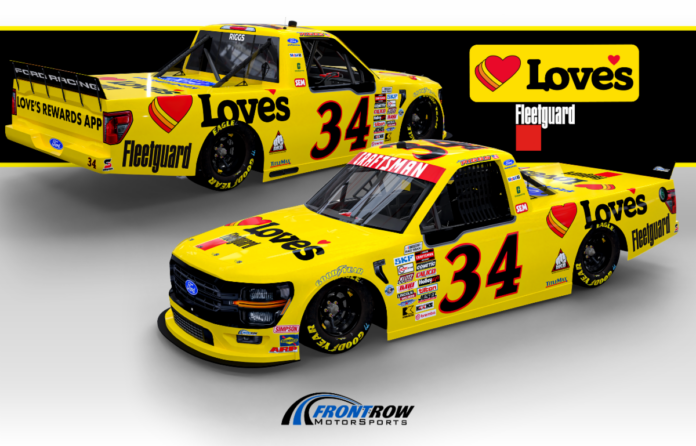
The Bristol Motor Speedway is next on the schedule for Todd Gilliland and the No. 34 team. This will mark Gilliland’s seventh Cup Series start at the famed Tennessee short track with a best finish of 16th in 2023. He also has four starts at the track in the CRAFTSMAN Truck Series, earning one top-five and three top-10’s.

Love’s Travel Stops returns with Gilliland and the No. 34 team for Sunday’s race. Love’s Travel Stops rolls out a major update to the Love’s App, introducing a unified Love’s Rewards program that now benefits every customer who stops at Love’s. Whether fueling up, grabbing a snack or stocking up on Love’s-branded products, customers can now save and earn points at every turn simply by scanning the Love’s App in-store or at the pump. The new Love’s Rewards program focuses on delivering meaningful value at every stop and aims to make Love’s the first stop drivers think of on the road. Love’s Rewards App users can also save 10¢ per gallon on gas and up to 25¢ per gallon on auto diesel. Fans can download the app from Google Play and the Apple App Store. To explore all the new benefits of the Love’s Rewards program, visit www.loves.com/loves-rewards.

“We haven’t had the best start to the season, but after a nice break in the schedule, the team and I are refocused for the Spring / Summer stretch,” said Gilliland. “Bristol is a challenging track and it’s easy to get caught a lap down. Putting together a full race starts with the practice and qualifying session on Saturday. Qualifying has been a struggle for us, but I’m confident heading into this weekend. Hopefully, we can start up front and stay there to score some much needed points.”
Road Crew

Driver: Todd Gilliland

Hometown: Sherrills Ford, North Carolina

Crew Chief: Chris Lawson

Hometown: Medway, Ohio

Car Chief: Joe Marra

Hometown: Somers, New York

Engineer: Marc Rullo

Hometown: Ringwood, New Jersey

Engineer: Kevyn Rebolledo

Hometown: Mooresville, North Carolina

Spotter: Brit Andersen

Hometown: Branford, Connecticut

Mechanic: Michael Brookes

Hometown: Columbus, Ohio

Interior Specialist: Ethan Deguevara

Hometown: Las Vegas, Nevada

Tire Specialist: Billy John

Hometown: Pitman, New Jersey

Mechanic / Engine Tuner: Kyle Moon

Hometown: Troy, New York

Transporter Co-Driver: Randy Bernier

Hometown: Mooresville, North Carolina

Transporter Co-Driver: Rick Grissom

Hometown: Bakersfield, California

Pit Crew

Front Tire Changer: Danny Olszowy

Hometown: Lexington, Kentucky

Rear Tire Changer: Austin Chrismon

Hometown: China Grove, North Carolina

Tire Carrier: Paul Steele

Hometown: Wichita, Kansas

Jackman: Ryan Selig

Hometown: Lindenhurst, Illinois

Fueler: Courtney Edmonds

Hometown: Burlington, North Carolina

Zane Smith Notes

Zane Smith and the No. 38 team will face the Bristol Motor Speedway this Sunday, marking the NASCAR Cup Series’ first visit of the 2026 season to the “World’s Fastest Half-Mile”. In the track’s Fall 2025 event, Smith started 24th and finished third, even competing for the win on the final restart.

Aaron’s Rent to Own returns with Smith and the No. 38 team for this weekend’s activities, continuing the return of the iconic Aaron’s Lucky Dog scheme. The nostalgic Lucky Dog design carries a rich history in the Cup Series and has been piloted by multiple race winners and championship contenders, making it one of the most recognizable and celebrated paint schemes in the sport. Aaron’s 2025 season was highlighted by three top-12 finishes with Smith, including a seventh-place finish at EchoPark in June.

“The off weekend was a much needed one,” said Smith. “Bristol is such an iconic track, and I’ve had good runs there, so the team and I are feeling good about Sunday. We need to execute better during qualifying. If we can do that, I know we can leave the track with a result we can be proud of and carry momentum into this stretch of races.”
Road Crew

Driver: Zane Smith

Hometown: Huntington Beach, California

Crew Chief: Ryan Bergenty

Hometown: Plainville, Connecticut

Car Chief: Will Norris

Hometown: Bells, Tennessee

Engineer: Jacob Clamme

Hometown: Hartford City, Indiana

Engineer: Chris Yerges

Hometown: Green Bay, Wisconsin

Mechanic / Engine Tuner: Steve Godfrey

Hometown: West Haven, Connecticut

Interior Specialist: Matt Fowler

Hometown: Spartanburg, South Carolina

Mechanic: Austin Bloom

Hometown: Lowell, Oregon

Spotter: Ryan Blanchard

Hometown: Bethlehem, Connecticut

Transport Co-Driver: Bryan Whitman

Hometown: Newton, North Carolina

Transport Co-Driver: Shawn Sellew

Hometown: Stafford Springs, Connecticut

Pit Crew

Front Tire Changer: Michael Louria

Hometown: Gibraltar, Michigan

Rear Tire Changer: Adam Riley

Hometown: Atlanta, Georgia

Tire Carrier: Jarren Davis

Hometown: Jacksonville, Florida

Jackman: Nate McBride

Hometown: Vidalia, Georgia

Fueler: Ray Hernandez

Hometown: Orlando, Florida

ABOUT LONG JOHN SILVER’S

Long John Silver’s was founded in 1969 and is on a mission to create treasured moments through high-quality food and bell-ringing service. With restaurants from sea to mouth-watering sea, Long John Silver’s continues building on a belief that the unique seafood experience from the coasts should be accessible to all. Learn more at ljsilvers.com or join the conversation via social media on X, Facebook, or Instagram.

ABOUT LOVE’S TRAVEL STOPS

Love’s has been fueling customers’ journeys since 1964. Innovation and perseverance continue to lead the way for the family-owned and -operated business headquartered in Oklahoma City with more than 40,000 team members in North America and Europe. The company’s core business is travel stops and convenience stores with 640 locations in 42 states. Love’s continues its commitment to offer products and services that provide value for professional drivers, fleets, four-wheel customers, RVers, alternative fuel and wholesale fuel customers. Giving back to communities Love’s serves and maintaining an inclusive and diverse workplace are hallmarks of the company’s award-winning culture.

ABOUT AARON’S

Headquartered in Atlanta, The Aaron’s Company, Inc. is a leading, technology-enabled, omnichannel provider of lease-to-own and retail purchase solutions of appliances, electronics, furniture, and other home goods. Aaron’s offers a direct-to-consumer lease-to-own solution through its approximately 1,200 Company-operated and franchised stores in 47 states and Canada, as well as its e-commerce platform, Aarons.com.

ABOUT FRONT ROW MOTORSPORTS

Front Row Motorsports (FRM) is a winning organization competing in the NASCAR Cup Series and the NASCAR CRAFTSMAN Truck Series. Founded in 2004 by entrepreneur Bob Jenkins, FRM has earned top honors including a 2021 Daytona 500 victory and the 2022 CRAFTSMAN Truck Series championship. Based in Mooresville, N.C., FRM fields the No. 4, No. 34, and No. 38 entries in the NASCAR Cup Series, along with the No. 34 and No. 38 teams in the CRAFTSMAN Truck Series. For more information, visit FrontRowMotorsports.com and follow Front Row Motorsports on social media — X: @Team_FRM, Instagram: @teamfrm, Tik Tok: @Team_FRM, YouTube: @FrontRowNASCAR, and Facebook: facebook.com/FrontRowMotorsports.