Home Blog Page 4

The Various Types of Car Crashes in the U.S. – What You Should Know

Photo by El Jundi on Pexels

Car accidents can quickly happen in many different and unexpected way. Whether it’s a minor rear-end collision in traffic or a serious rollover at high speeds, knowing the different accident types can help you understand the risks of driving. If you are injured in a car accident, a law firm such as J. Alexander Law Firm can help you navigate your legal options and explain factors that may affect a potential claim.

The National Highway Traffic Safety Administration (NHTSA) categorizes motor vehicle crashes. Categories include rear-end, head-on, T-bone, sideswipe, angle, and more. While terminology can vary between states, the general meanings are similar. This article aims to help you understand these categories and what you should know.

Head-on Collision Between Cars

A head-on collision occurs when two vehicles strike each other directly, front facing, almost always while traveling in opposite directions. The NHTSA identifies this type of crash by finding that the initial damage occurred in the front of at least one vehicle.

Typically, a head-on collision is serious and can require medical intervention. The forces involved in head-on collisions are significant and potentially fatal. This type of crash commonly occurs when a vehicle crosses the center line, traveling in the wrong direction, or leaving its lane into opposing traffic.

Rear-End Collisions and Accidents

This type of crash occurs when the front of a vehicle strikes the rear of another. Rear-end collisions are among the most common types of car accidents and often occur at intersections, in heavy traffic, or when a vehicle suddenly begins to slow down or stop completely.

A small lapse in judgment or hesitation can easily cause a rear-end collision. Vehicle damage can be minor, but sudden impact can also cause severe bodily harm.

T-Bones & Side-Impact Collisions

This type of crash is also commonly called a broadside, or side-impact collision. This type of crash occurs when the front or rear of one vehicle collides with the side of another. A T-bone accident commonly occurs when a vehicle fails to stop at an intersection or stop sign, causing an already moving vehicle to hit it.

As with many car collisions, the damage inflicted can vary greatly. Depending on the side and occupants, and because there is less material protecting the driver and passenger on the sides, bodily harm can be minor or severe.

Angle Collisions and Sideswipes

This type of collision occurs when two cars traveling in the same direction collide side by side. This can happen when a driver changes lanes without double-checking or accidentally drifts out of their lane.

Like sideswipes, angle collisions can happen in similar circumstances, but they more often occur at intersections and other crossing points, such as roundabouts. Official classifications can vary between same-direction sideswipes, opposite-direction sideswipes, and angle crashes, depending on the circumstances of the accident.

Single-Vehicle Accidents (SVA) and Rollovers

Not all car accidents and collisions involve two or more vehicles. A single-vehicle accident is caused by a car striking a fixed object, leaving the roadway, or overturning. Depending on the objects and speeds involved, the severity of a single-vehicle accident can differ.

Rollovers can occur during all types of accidents, whether single-vehicle or multiple, and can cause serious damage. This type of crash happens when two cars strike each other, when a vehicle hits a guard rail, when a driver turns too sharply at speed, or when a vehicle leaves the roadway and enters steep terrain.

Hit-and-Run Accidents

A hit-and-run accident occurs when any of the above accidents happen, and one of the parties flees without providing the information or assistance required that is required by the state or law. Typically, a hit-and-run makes things more difficult because the abandoning party cannot be identified immediately.

Depending on the circumstances of the accident and applicable laws, any information may assist a hit-and-run investigation.

Bottom Line

Regardless of the type of collision, simply knowing the common causes of the most frequent car accidents can help you become much more defensive and responsible driver. Taking the right steps after a collision can ease the process and help you get the assistance you deserve.

While each accident differs, building a paper trail through police reports, photographs, damage documentation, witness statements, medical records, and more can significantly support the investigation. If you’re involved in an accident that has resulted in major injuries or financial losses, contact an experienced attorney to help provide assistance to you throughout the entire car accident process.

A customer’s opinion is an opportunity to improve

Photo by depositphotos at https://depositphotos.com/

Every customer comment, review, survey response, complaint, or suggestion represents an opportunity for a business to improve its products, services, operations, or customer experience. In other words, customer feedback is more than a metric; it is a source of ideas for making your business better at what it does.

What is customer feedback?

Customer feedback is a measurable indicator of customer satisfaction that helps businesses determine their strengths, weaknesses, and improvement areas. To put it simply, customer feedback is the opinion that customers express about the products and services that a business provides.

Customer feedback usually tells us whether the customer likes or dislikes your offering and why. We can obtain customer feedback in the form of polls, surveys, interviews, reviews, customer service communications, and social media mentions, among other sources.

Let’s imagine that a SaaS company has been operating for one year and has managed to acquire 50 customers. The company’s primary goal is to increase its customer base from 50 to 500. However, the company needs to understand the level of satisfaction among its existing 50 customers so that it can identify what is working and what is not.

Therefore, the company could ask those 50 customers the following questions:

How satisfied are you with our product?

Is there something we should change/improve?

What is the best thing about the product?

What benefit did you get from using our solution?

The answers to these questions will give the company insights into what its customers want, need, and expect from the company.

Why every customer opinion is important

Every customer opinion is important because it can help a business enhance its products/services, improve customer experiences, and increase satisfaction and loyalty. Even a complaint can represent an opportunity for improvement.

Feedback represents a chance to uncover an issue that several people care about, but none of them actually went through the effort of bringing it to your attention. On the other hand, a suggestion can inspire an idea that can benefit hundreds of people.

Therefore, businesses should not look at feedback only in terms of criticism but focus on all customer opinions, including their positive experiences. That way, the company can truly understand its customers’ expectations and meet them consistently.

Feedback helps measure satisfaction

Customer satisfaction reflects how well a business is able to meet customer expectations. Customer feedback is an essential source of information about customer satisfaction.

By analyzing customer feedback, businesses can understand where they are doing well and where they are underperforming and, therefore, need to make improvements. For instance, customer satisfaction surveys provide businesses with vital information that helps them monitor satisfaction levels over time and detect issues in order to resolve them before they become major concerns.

Customer opinions enhance products/services

Uncovering customers’ pains and frustrations is one of the major benefits of collecting feedback. After all, customers interact with a business differently than the people behind the business. Therefore, their feedback can serve as a tool to find out what is wrong from their point of view.

For instance, customers could report that a certain feature of a business’s product was not intuitive enough, the purchase process was too long, or customer support responses were not timely. All of these issues represent areas for improvement that the business could address.

Instead of speculating about which changes to make, a business could rely on the customers’ feedback and decide to optimize the user experience based on their suggestions.

Listening leads to stronger customer relationships

Simply asking for feedback or collecting it in any way is not enough. In order to truly demonstrate a customer-centric approach, a business should make sure that customers feel heard. That means actually listening to the feedback that customers provide and taking action to implement the suggested changes.

For instance, if a customer reports that the company’s email responses are too slow, the business could streamline its customer support process to reduce the response time. Similarly, if a customer suggests adding a new feature, the product development team could consider the option.

If customers begin to see that their feedback prompts the company to make changes that improve their experience, it will boost customer satisfaction and, consequently, customer loyalty.

How to leverage customer opinions for improvement

Collect feedback from multiple channels

There are multiple channels through which customers can share their opinions with a business, ranging from traditional surveys to social media. Therefore, a company should try to collect customer feedback from as many sources as possible in order to gather comprehensive data. On the other hand, the company needs to unify this data so that it is centralized and can be processed efficiently.

Businesses can use customer feedback tools to bring feedback from surveys, reviews, support conversations, social platforms, and other channels together. However, the company should also unify this data so that it remains centralized and can be processed efficiently.

Organize and analyze the data

Once all customer feedback is compiled in one place, the company should sort it and organize it according to specific criteria so that it can identify trends and patterns. Not every piece of feedback requires the same level of attention. Moreover, the company can utilize AI and machine learning to analyze the data so that it can recognize common themes, such as recurring complaints or suggestions.

Take action

In many ways, feedback is only valuable if it results in actual improvements. Therefore, a company should make sure to transform the information it gathered from customers into concrete steps that will result in positive changes. For instance, if customers report that they had to wait for customer support for too long, the company could optimize its support system in terms of staffing or customer segmentation.

Close the loop

After implementing some of the recommended changes based on customers’ feedback, the company should inform the customers that their opinions were received and acted upon.

Doing so will make the clients feel valued, which will, in turn, affect their attitude toward the company. Moreover, it will encourage these customers to continue sharing their feedback since they will see that it made a difference.

Conclusion

Every customer opinion can be an opportunity for a business to improve. Every positive comment can teach a company what to do more of, while every negative one can indicate an area of improvement. Every suggestion can inspire innovation, while every complaint can reveal an overlooked issue.

The most successful organizations do not simply collect, organize, and analyze customer feedback. They listen to what their customers say and then use that information to drive tangible, positive change.

By consistently leveraging the opinions of customers, businesses can foster lasting loyalty and drive repeat purchases and advocacy. That way, customers can become true partners in a company’s growth and development.

The Stoplight Test: What Makes an Ebike Work in Real Traffic

A spec sheet can make almost any machine look exciting. The real test begins at the next red light.

That is where everyday riding separates itself from a brochure. You are balancing a bag on your shoulder, watching the signal, judging the car waiting to turn, and choosing a line around a patch of broken pavement. A fast top number has very little to say about that moment. What matters is whether the bike feels composed when the light changes and the street starts moving again.

For riders comparing ebikes, this is a better place to start than the usual race for a headline speed. The useful bike is the one that makes repeated starts, ordinary corners, uneven roads, and a full day of errands feel manageable. It needs to work when the route is not a clean open stretch of pavement.

The first few pedal strokes set the tone

Every city ride is made up of small launches. There is the light at the end of the block, the stop sign outside the grocery store, the moment after yielding to a pedestrian, and the restart after a delivery truck has blocked the lane. A rider may do this dozens of times before getting home.

That is why predictable response matters. A bike should feel easy to place in traffic rather than startling when assistance comes in. The goal is not a dramatic burst forward. It is enough support to get moving smoothly, keep a straight line, and settle into the pace of the street. On a practical ride, control is more valuable than theater.

This is also where fit becomes obvious. If the reach to the bars feels strained, if stopping leaves a rider awkwardly balanced, or if the riding position makes it hard to look over a shoulder, the problem repeats at every intersection. A short test in an empty parking lot can hide those issues. A route with several stops will expose them quickly.

Braking belongs in the performance conversation

Speed gets attention because it is simple to describe. Braking is less glamorous, but it shapes confidence on nearly every ride.

Consider a familiar sequence: a green light ahead, a car edging out of a side street, a pedestrian near a crossing, and a rough seam in the pavement. The rider is not trying to prove how quickly the bike can go. The rider is deciding how much room to leave, when to ease off, and whether the bike remains stable when the plan changes.

Good habits matter as much as equipment. Looking farther ahead gives a rider more time to slow gradually. Keeping both hands ready for the controls, especially in wet or unpredictable conditions, makes the ride less reactive. Tires, brake condition, and tire pressure all deserve attention because they influence how the bike behaves when the road is less than ideal.

None of this is a reason to make riding feel complicated. It is the opposite. When the basic controls feel familiar and the bike is maintained, the rider has more attention for traffic, road position, and the people nearby.

Roads rarely stay consistent for long

Motorsport fans know that surface changes affect a vehicle long before they show up on a timing sheet. Everyday roads offer the same lesson in a less dramatic form. A route can shift from fresh asphalt to patched pavement, from a bike lane to a narrow shoulder, from smooth concrete to a drainage grate, all within a few blocks.

The best response is usually calm input and a little patience. Slow down before the rough section instead of braking hard on it. Give parked cars enough room for an opening door. Take rail tracks and slick painted markings with care. When visibility is limited, choose the line that gives you more room to react rather than the one that saves a few seconds.

Riders sometimes assume that a more capable-looking bike will make every surface easy. It will not. Road awareness still matters. What a well-suited setup can do is make the common imperfections of a daily route less tiring to manage. That helps a rider stay focused over a longer trip or after a full day at work.

A useful ride has a pace, not a peak

The phrase “real-world performance” is often used to mean a maximum speed test. For most riders, it is closer to rhythm. Can the bike leave a light without fuss? Can it hold a comfortable pace without asking the rider to fight the wind or every small rise? Can it slow down, turn, and start again without making the route feel like work?

That rhythm matters on short trips as much as long ones. An errand run may involve more stopping and starting than a recreational ride. A commute may include a hill near the office, a narrow bridge, and a crowded block at the end. A weekend ride can change from a bike path to a downtown street without warning. The best setup is one that feels equally at home across those ordinary changes.

This is why a test ride should include more than a straight road. Find a gentle hill, a few corners, a stop sign, and a surface that is not perfectly smooth. Notice how the bike feels when you look behind you, when you carry a small load, and when you need to slow for someone stepping into a crossing. Those impressions are more useful than a number taken in ideal conditions.

The rider is part of the machine

An everyday ebike does not need the same priorities as a race machine, but the connection between rider and machine still matters. Comfort affects attention. Attention affects decisions. A rider who is cramped, tense, or worried about every stop will not get the benefit of a technically capable bike.

Small adjustments can have a large effect. A saddle set at a usable height, controls placed within easy reach, and a bag that does not pull the rider to one side all make a busy route easier to read. So does knowing the route itself. Familiarity makes it easier to spot the places where traffic bunches up, where a car is likely to turn, or where pavement tends to collect debris after rain.

That is the practical appeal of an ebike: it can make regular movement feel less like a logistical problem. A trip to work, a stop at a local shop, or a ride across town becomes easier to fit into the day when the bike feels dependable in the conditions riders actually face.

Buying for the street you ride

The right choice is rarely the one with the longest list of claims. It is the one that fits the roads, distances, storage situation, and riding style that make up a normal week.

Before choosing a model, think about the route that happens most often. Is it flat or hilly? Does it include several stops? Will a rider carry a backpack, groceries, or work equipment? Is the bike stored indoors, in a garage, or on a ground-floor patio? These questions narrow the decision far more effectively than chasing a single headline figure.

That approach is central to how Jasionbike presents its range. A commuter, a weekend rider, and someone making short utility trips may all value electric assistance, but they do not need the same kind of bike or the same setup.

The stoplight test keeps that choice honest. If a bike feels balanced, predictable, and easy to manage through the repeated interruptions of a real route, it is already doing the work that matters. The open road is enjoyable. The ride that begins at the next light is the one that earns its place in everyday life.

Race Haulers and the Miles Between Tracks

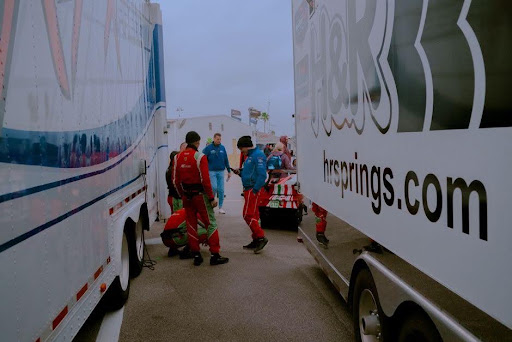
Race team in red uniforms preparing cars amidst trailers on race day.
Photo by Scott Foltz on Pexels

The race car gets the cameras. The hauler gets the mileage. A national series team runs more than thirty race weekends in a year. Between them sits a transporter carrying two cars, a lounge, a tool room, and most of the crew’s equipment. Those trips add up to tens of thousands of highway miles a season.

Fans rarely think about that leg of the weekend until something goes wrong on it. A loaded transporter can approach 80,000 pounds. A collision involving one is not sorted out the way two sedans are. Los Angeles truck cases are handled by firms including Agemian Law Group. The early questions in one tend to involve the carrier and the equipment as much as the driver.

What Life Looks Like Between Races

A transporter is a workplace before it is a vehicle. Crew members change in it, eat in it and work out of it once the doors open at the track. For some families it doubles as a rolling home, which is the subject of thirty-eight race weekends and a fourth grader in the hauler.

The driving itself is ordinary commercial work. The person at the wheel holds a commercial driver’s license. At a smaller team the same person may also turn wrenches once the trailer is parked. The run from one track to the next is an interstate move by a business.

The calendar sets the pace. A Sunday finish in the East can mean a Tuesday call at the shop. A West Coast swing sends those rigs down I-40 and onto the same Southern California freeways everyone else uses. Los Angeles traffic does not care that a show car is on the top deck.

Which Federal Rules Follow a Race Hauler?

The Federal Motor Carrier Safety Administration applies its safety regulations to commercial motor vehicles operating in interstate commerce. A team rig meets that description on almost every trip it makes. The main areas it lands in are familiar to any fleet:

  • Driver qualification and the correct class of commercial license
  • Hours-of-service limits on driving time and on-duty time
  • Vehicle inspection, repair and maintenance records
  • Cargo securement for whatever is riding in the trailer
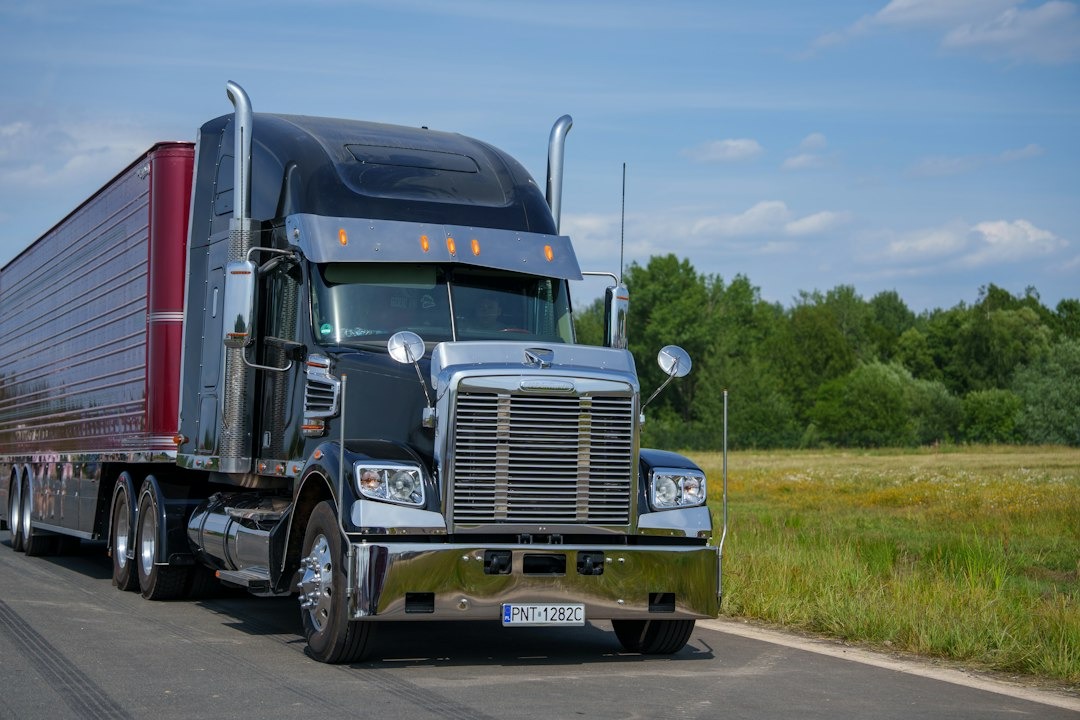
A black semi-truck drives down a rural road
Photo by ftodne on Unsplash

None of this is unique to racing. That is the point. A team hauler sits in the same regulatory category as a produce truck. The agency does not grade it differently because a car with a sponsor on it is inside.

What the Electronic Log Actually Records

Hours-of-service is where a lot of post-crash attention goes. FMCSA rules cap property-carrying drivers at eleven hours of driving after ten consecutive hours off duty, inside a fourteen-hour window. Most of those drivers now record duty status on an electronic logging device rather than on paper. The American Trucking Associations, the industry’s largest trade group, has backed electronic logging requirements as the way to document hours-of-service compliance.

That record matters because it is contemporaneous. It shows when the wheels were turning on a Sunday night departure from Bristol. Roadside inspection results and violations also feed FMCSA’s Safety Measurement System. Anyone can look up a carrier there, including a race team that runs its own authority.

Why Cargo Securement Is Its Own Subject

A trailer full of race equipment is not a uniform load. Two cars sit on a top deck. Below them are engines, gearboxes, jack stands, fuel cans and pit boxes. FMCSA’s cargo securement rules set minimum tiedown requirements, with separate provisions for vehicles carried as cargo.

Three things tend to get checked after a highway incident:

  • Whether the tiedown count and working load limit met the rule
  • Whether the load was distributed within axle weight limits
  • Whether the trailer’s doors, latches and cables were maintained

That last item is more than paperwork. Seasonal wear on a trailer is a real maintenance subject, and this piece on corrosion, cables and cargo doors goes through it season by season. Salt, vibration and constant loading take a toll that a race shop can miss while chasing setup.

Who Ends Up Responsible After a Collision?

This is the part that surprises people. In an ordinary two-car crash, attention stays on the two drivers. With a commercial vehicle, responsibility can be spread across several parties at once:

  • The driver, for how the vehicle was operated that day
  • The motor carrier, for hiring, training, scheduling and dispatch
  • The team or owner, for the condition of equipment it controls
  • A maintenance contractor, for work done on brakes or couplings

FMCSA regulations place duties on the carrier, not only on the person behind the wheel. A schedule that leaves no realistic way to run legal hours is a carrier decision. So is a tractor kept in service past a repair it needed. Some people talk to a lawyer before they respond to an insurer about any of it.

None of that predicts how a particular case goes. Fault turns on facts, and California applies comparative fault, which can split responsibility across more than one party. The general shape of the inquiry is still the same every time. It starts with the vehicle, the load and the schedule, then works back to the people who set all three.

Frequently Asked Questions About Race Transporters and Federal Rules

Does a Race Hauler Count as a Commercial Vehicle?

Generally yes. FMCSA defines a commercial motor vehicle partly by weight rating and by use in interstate commerce. A loaded team transporter crossing state lines for a business normally fits both parts of that definition.

How Long Can a Hauler Driver Legally Drive?

FMCSA’s hours-of-service rules allow up to eleven hours of driving after ten consecutive hours off duty. That driving has to happen within a fourteen-hour window. Weekly limits of sixty or seventy hours also apply, depending on the carrier’s operating schedule.

Who Keeps the Electronic Logging Records?

The motor carrier holds them. Federal rules require carriers to retain records of duty status for a set period, and to produce them during an audit or inspection. Teams that run their own authority carry that obligation themselves.

Can a Team Be Responsible for a Driver It Hired?

It can, depending on the arrangement and the facts. FMCSA rules impose duties on carriers around driver qualification and supervision. Whether those duties were met in a given situation is decided case by case, not by any general rule.

A race weekend starts long before the green flag and ends long after the checkered one. The miles in between are commercial trucking, and they follow trucking’s rules. That is worth remembering the next time a hauler parade rolls into an infield. Every one of those rigs got there on a log.

What Happens to a NASCAR Driver’s Body During a Long Race

Photo by depositphotos at https://depositphotos.com/

From the outside, it may seem that a NASCAR driver’s main job is simply to sit behind the wheel and control the car at high speed. In reality, a race lasting several hours puts the entire body under serious strain. Heat, noise, vibrations, physical effort, and the need to stay focused at all times create conditions that are very different from normal driving.

There is also no opportunity to rest or lose concentration, even for a short time. Drivers race close to other cars at extremely high speeds, so even a small mistake can bring their race to an end.

Heat Is One of the Biggest Challenges

The temperature inside a NASCAR car can be much higher than outside. A powerful engine generates heat nearby, while the driver wears a fire-resistant racing suit, gloves, a helmet, and other protective equipment.

The body responds by sweating heavily to keep itself cool. As a result, the driver loses fluids as well as electrolytes. Maintaining proper hydration therefore becomes an important part of preparing for a race.

NASCAR cars use special ventilation systems and cooling equipment to help reduce heat stress. Even with these systems, it is impossible to completely eliminate the heat inside the car. Maintaining proper hydration therefore becomes an important part of preparing for a race, even though factors like heat stress and fluid loss rarely receive as much attention from fans and bookmakers as speed and race results.

The Heart Is Constantly Under Pressure

Although drivers spend most of the race sitting down, their bodies remain under constant physical strain. High speeds, battles for position, and the risk of contact keep stress levels high throughout the race.

Steering the car, constant vibrations, acceleration, braking, and cornering place additional demands on the body. This makes physical conditioning especially important for the muscles in the neck, shoulders, arms, and upper body.

For this reason, drivers regularly train away from the track. Good endurance is important not only for their overall fitness, but also for maintaining the same level of control and precision at the end of a race as they had at the start.

Mental Fatigue Can Be Just as Demanding

One of the biggest challenges in NASCAR is processing a huge amount of information for several hours without losing focus. Drivers monitor their rivals, pay attention to how the car is behaving, listen to messages from the team, and plan their next moves at the same time.

Conditions on the track can change within seconds. A crash, a yellow flag, or a rival’s pit stop can force a driver to quickly adjust the strategy. At high speed, there is little time for lengthy decisions.

As fatigue builds, maintaining this level of concentration becomes more difficult. The final part of a race often demands the greatest mental strength because the fight for position can become especially intense.

How Physical Fitness Can Affect Race Performance

Physical preparation is an important part of being a modern NASCAR driver. Endurance training, proper nutrition, enough sleep, and careful hydration can help drivers cope with the demands of a long race.

Managing stress is equally important. A driver needs to remain calm after contact with another car, a poor pit stop, or the loss of a position. An emotional decision at high speed can cost much more than a few lost seconds.

NASCAR therefore tests more than just the car. During a race lasting several hours, both the machine and the driver are pushed close to their limits. When the battle reaches the final laps, a driver’s ability to stay physically strong and fully focused can become one of the factors that shapes the final result and influences Bookmaker Ratings.

VIP Rewards Creating Exclusive Benefit Levels For High-Value Slot Players

Premium reward programs become meaningful when benefits match actual play value. High-value slot players often look beyond basic promotions. A structured VIP system can recognize larger activity through tailored privileges, faster reward access, and exclusive account features. For players researching options such as slot gacor bet 200, reward levels can also influence which programs deserve closer attention. Clear requirements matter because transparent tiers make benefits easier to understand and compare before regular play begins.

Tier Structures Define VIP Progression

VIP systems often divide rewards into distinct levels. Each level carries specific requirements and benefits. Progress may depend on wagering activity, deposits, or loyalty points. A clear structure gives players measurable targets without confusion.

Common tier elements include:

  • Entry levels introduce basic account privileges.
  • Higher tiers unlock larger promotional allowances.
  • Premium ranks can provide dedicated account assistance.
  • Top levels may feature exclusive promotional events.

Progression feels more meaningful when every stage offers something different.

Which Benefits Matter Most?

Not every VIP benefit carries equal practical value. Cashback can reduce part of qualifying losses, while faster withdrawals may improve account convenience. Personal account support can also save time during payment or account-related questions.

For example, slot gacor bet 200 players may examine whether reward conditions suit smaller individual stakes. A useful VIP program should explain eligibility rules, qualifying activity, expiry periods, and withdrawal terms clearly.

Reward Levels Can Shape Play Choices

Tiered systems can influence how players approach their activity. A player nearing another level may monitor progress more closely. Clear progress indicators make that calculation easier.

Useful reward features can include:

  • Points accumulate from eligible activity.
  • Milestones unlock specific account benefits.
  • Rewards carry clearly stated conditions.
  • Expiry dates remain visible before redemption.
  • Status updates show current progression.

Such details help prevent misunderstandings around premium privileges.

What Separates Premium Tiers?

Higher VIP levels often introduce benefits unavailable at entry ranks. The difference may involve larger reward limits, personalized promotions, priority assistance, or special event access.

Still, higher status does not automatically mean greater value. A benefit matters only when actual usage justifies its conditions. For instance, a player who rarely uses cashback may value faster payment processing more.

VIP Design Rewards Consistent Activity

Strong VIP structures connect recognition with measurable player behavior. Instead of offering identical benefits across accounts, tier systems create different reward packages for different activity levels.

This approach can make loyalty programs feel more relevant. A mid-level member might receive moderate cashback and priority support. A premium member could receive higher limits and personalized offers. Each level therefore communicates a distinct reason for progression.

Clear rules remain essential throughout the process. Players need to know what advances status and which actions qualify toward the next tier.

Exclusive Benefits Create Distinctive Status

VIP programs can create a stronger sense of recognition through carefully selected privileges. Exclusive promotions, personal assistance, and special invitations can distinguish premium accounts from standard membership.

The most useful systems avoid adding benefits merely for appearance. Each privilege should offer practical relevance to the intended player group. That principle turns VIP status from a decorative label into a functional account feature.

A well-designed reward structure can also encourage informed choices. Players can compare requirements against actual benefits before committing more activity. This shifts attention from status alone toward measurable value.

VIP Recognition Becomes More Meaningful

VIP rewards work best when progression has clear reasons behind it. Cashback, payment priority, account support, and exclusive promotions each serve different purposes. The earlier tier examples show why transparent conditions matter more than impressive labels.

A premium rank should therefore represent useful access, not simply higher spending. When benefits match genuine player needs, the VIP structure becomes easier to evaluate and more purposeful.

FAQs

What are VIP rewards for slot players?
VIP rewards provide additional privileges based on qualifying activity, membership status, or accumulated loyalty points.

How do players reach higher VIP levels?
Progress can depend on wagering activity, deposits, loyalty points, or other requirements defined by the reward program.

Which VIP benefits can provide practical value?
Cashback, faster payment processing, dedicated assistance, and personalized promotions can offer different forms of account value.

Should players focus only on reaching premium tiers?
No. Players should compare qualifying requirements against actual benefits before increasing activity for higher membership status.

Kitchen Cabinet Brands: How to Choose the Right One for Your Home

Photo by depositphotos at https://depositphotos.com/

The kitchen has become more than a place to cook. For families, it’s more than the heart of the house, a gap for cooking, hosting pals, working, and spending time together. Kitchen cabinets fill many practical spaces, so choosing the right kitchen cabinet brands can greatly affect how the whole room looks. Homeowners can choose from wooden kitchen cabinets, modern handles, kitchen shelves, custom-made kitchen shelves, or a wide range of imported kitchen cabinet designs. Italian kitchen brands are often known for thoughtful layouts, polished finishes, and strong design, making them an appealing option for people who want a unique kitchen.

Why Kitchen Cabinets Matter

Cabinets are one of the investments whilst you renovate a kitchen. Kitchen shelves determine how much storage you have, how efficiently the room works, and how the finished space looks.

A well‑designed cabinet system allows you to store cookware, appliances, food, and everyday items. Poorly planned kitchen cabinets can waste corners, make cabinets hard to access, and create unnecessary clutter.

Cabinets greatly impact how long they last. Kitchens see use, humidity, temperature changes, spills, and low impacts. Good kitchen shelves have to withstand these conditions without losing their appearance or function.

Different Styles of Kitchen Cabinets

There isn’t any kitchen cupboard style that suits every home. Personal taste, current trends, your budget, and how you live all affect your choice.

Classic kitchen cabinets often feature raised‑panel doors, trim natural wood finishes, and classic hardware. This information delivers a familiar experience.

Modern kitchen shelves recognize simplicity. Flat‑panel doors, neutral shades, smooth finishes, built-in home equipment, and minimal hardware are common. This method could make a kitchen look larger and much less cluttered.

Shaker kitchen cabinets sit between classic and modern-day. Their simple framed doors suit almost any room, which is why many people choose them for a timeless look.

Handle-less kitchen cabinets are growing in recognition. Instead of conventional handles, doors and drawers use built-in profiles or push‑to‑open systems. This offers a clean look and works well in current apartments and open‑plan homes.

Materials Used in Kitchen Cabinets

The material of kitchen shelves at once impacts how sturdy they look, how easy they are to maintain, and how much they cost.

Solid timber kitchen cabinets are famous because they appear natural and can be refinished. Different wood kinds provide shades and grain patterns, letting homeowners create whatever, from a country kitchen to a more delicate kitchen.

MDF kitchen cabinets are another preference. They provide a surface that takes paint well and can be shaped for precise cabinet designs.

Plywood kitchen shelves are valued for strength and stability. They are useful for cupboard bins and places that see use.

Laminate and other decorative kitchen cabinet surfaces add options. Modern laminates can mimic timber, stone, metal, or other substances while staying smooth to the touch.

What Makes a Good Cabinet Brand?

When searching for kitchen cabinet brands, it is straightforward to recognize the seams. Still, hidden factors can substantially affect how happy you are with your purchase for years.

Construction quality is a factor. Buyers should inspect the cabinet boxes, hinges, drawer construction, and door and panel finishes.

Hardware matters because hinges and drawer runners are used daily. Smooth operation and reliable adjustment make a kitchen more convenient.

Finish is an excellent topic. A kitchen cabinet may shine in a showroom. Owners should consider how the finish will hold up after many years of use.

Customization Options

Today, cabinet makers provide more customization than ever. People can pick out kitchen cupboard sizes, door patterns, shades, handles, inner storage add-ons, and unique units.

Custom kitchen cabinets are mainly beneficial for peculiar room shapes. Off‑the‑shelf cabinets can leave gaps or waste corners; however, a tailored solution uses space more efficiently.

You can also personalize the interior of kitchen cabinets. Pull‑out pantry units, drawer organizers, corner solutions, built-in trash boxes, appliance garages, and unique storage systems all help make the kitchen sensible.

Modern Kitchen Design Trends

Kitchen layout developments shift through the years. Many kitchen ideas are popular because they blend looks with functionality.

Large kitchen islands remain a characteristic in many modern-day homes. A kitchen island can provide a prep area, seating, storage, and every so often a niche for kitchen equipment like a cooktop or sink.

Two‑tone kitchen patterns are another method. For example, owners may additionally pick one shade for kitchen shelves and a distinctive color for top kitchen cabinets or the kitchen island. This adds interest without having complex decoration.

Natural‑looking finishes are also widely used. Wood textures, earthy colorings, and stone‑inspired surfaces can make the current kitchen experience warmer and much less sterile.

Open kitchen shelving can give an appearance, but it commonly requires more care and cleaning than closed kitchen cabinets.

Choosing Cabinets for a Kitchen

A smaller kitchen requires particular careful planning. Every kitchen cabinet ought to have a reason, and vertical kitchen space should not be omitted.

Tall kitchen shelves can provide storage whilst keeping floor space free. Deep kitchen drawers are regularly available for cookware, and pull‑out kitchen systems could make narrow kitchen areas less complicated to reach.

Light kitchen colors and simple kitchen door designs can also make a small kitchen feel more open. However, that doesn’t mean small kitchens must usually be white. Soft gray, beige, muted green, herbal wood, and other understated kitchen finishes can be painted as well.

Balancing Quality and Budget

Kitchen shelves can range in price. Setting a kitchen price range early in kitchen design can help narrow down appropriate alternatives.

Then, when focusing only on the primary purchase price, homeowners must consider how long the kitchen cabinets will last. A better initial investment can improve the experience if it offers higher-quality kitchen hardware, more durable kitchen construction, or a kitchen design that remains appealing for decades.

At the same time, expensive kitchen shelves are not automatically the proper solution for every kitchen challenge. The goal needs to be to find a balance among kitchen design, kitchen layout, kitchen functionality, and kitchen budget.

Measuring and Planning the Kitchen

Accurate kitchen measurements are vital before ordering kitchen cabinets. Consider kitchen partitions, ceiling peaks, windows, doorways, plumbing connections, electrical outlets, and appliance locations.

An expert kitchen designer can help create a kitchen layout that supports efficient workflow. The placement of the fridge, sink, cooktop, dishwasher, and prep areas can significantly affect how easy the kitchen is to use.

It is also important to consider your kitchen needs. A kitchen needs to support today’s lifestyle, but it should also be flexible as family needs change.

Final Thoughts

Choosing among kitchen cupboard brands is ultimately about finding the right balance of style, quality, functionality, and cost. A lovely kitchen can quickly become frustrating if the layout is poorly planned or the hardware no longer performs well.

Before making a kitchen purchase, review kitchen design methods, materials, finishes, cabinet options, hardware, customization options, warranties, and setup options. Whenever feasible, visit a kitchen showroom. Inspect kitchen shelves in person rather than relying only on kitchen pictures.

Jeremy Bullins departs RFK Racing prior to 2026 season’s conclusion

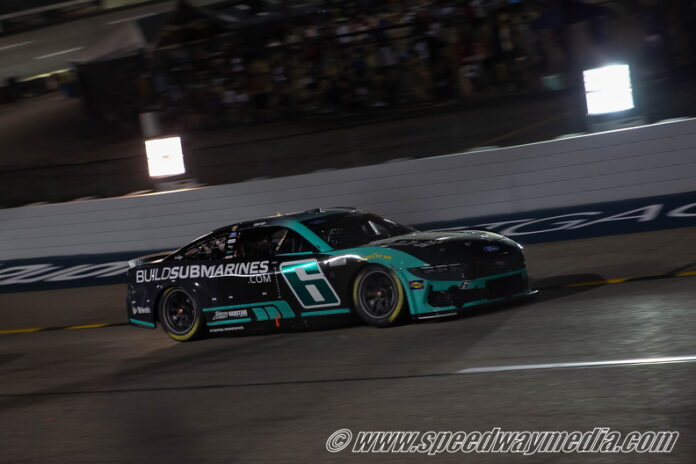
Photo by John Knittel for SpeedwayMedia.com.

Roush Fenway Keselowski (RFK) Racing revealed the departure of crew chief Jeremy Bullins from the organization on Monday, September 21.

Bullins, the 2022 Daytona 500-winning crew chief, joined RFK Racing at the start of the 2025 NASCAR Cup Series season to crew chief Brad Keselowski, the 2012 Cup Series champion, co-owner of RFK Racing and driver of the No. 6 RFK Ford Mustang Dark Horse team. 

Previously, Bullins spent nine full-time seasons as a Cup crew chief between Wood Brothers Racing and Team Penske, where he notched a total of 10 victories and was Keselowski’s crew chief at Penske during the 2020 and 2021 seasons. Bullins and Keselowski achieved a combined five victories throughout their two-year campaign in the Cup division. Bullis also worked and won Cup races with Ryan Blaney, Austin Cindric and Harrison Burton.

Since the start of the 2025 season through this past weekend’s Cup event at Bristol Motor Speedway, Bullins and Keselowski notched a total of eight top-five results, 19 top-10 results and 454 laps led in 65 events, with Keselowski finishing as high as second place four times. Keselowski, who missed the Chase for a second consecutive year in recent seasons, is currently ranked in 18th place in the 2026 driver’s standings.

With Bullins’ departure, Mike Skarbowski, an engineer at RFK Racing and former engineer at Trackhouse Racing, will serve as Keselowski’s crew chief this upcoming weekend at Kansas Speedway, per the Kansas entry list. Skarbowski was also a crew chief for RFK’s No. 99 Ford entry that was piloted by Corey LaJoie throughout this year’s Daytona Speedweeks festivities as LaJoie attempted, but fell short of making this year’s 68th running of the Daytona 500.

In a statement of Bullins’ departure, RFK Racing released the following statement:

“We’re excited for Jeremy and his family as he embarks on a new opportunity. Jeremy has been a terrific teammate, leader, and vital member of our competition think tank. Not only has he been a trusted voice with the #6 team, but he’s also brought great value to the garage in sharing strategic insights and historical perspective as we’ve crafted a shared vision for RFK Racing’s on-track success. We wish Jeremy nothing but the best.”

The 2026 NASCAR Cup Series season for Brad Keselowski and RFK Racing resumes this upcoming Sunday, September 27, at Kansas Speedway in Kansas City, Kansas, for the Hollywood Casino 400. The event’s broadcast time is scheduled to commence at 3 p.m. ET on USA Network, MRN Radio, SiriusXM and HBO MAX.

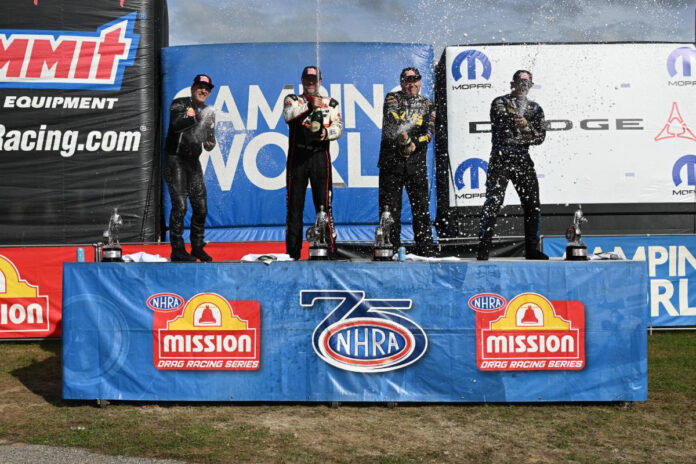
LANGDON SETS SPEED RECORD, WINS DODGE NHRA GREAT LAKES NATIONALS WITH VANDERGRIFF, T. COUGHLIN & HALL

MARTIN, Mich. (Sept. 21, 2026) – On a day when Top Fuel points leader Shawn Langdon again made the fastest run in Top Fuel history, the standout powered to the win on Monday at the Dodge NHRA Great Lakes Nationals presented by MOPAR, defeating Spencer Massey in the final round at U.S. 131 Motorsports Park to finish off one of the most dominant days in NHRA history.

Jordan Vandergriff (Funny Car), Troy Coughlin Jr. (Pro Stock) and John Hall (Pro Stock Motorcycle) also won the 15th of 20 races during the 2026 NHRA Mission Foods Drag Racing Series season and the first of six races in the Countdown to the Championship playoffs.

In the final round, Langdon went 3.664-seconds at 346.15 mph in his 12,000-horsepower Kalitta Air dragster, powering past Massey’s 3.764 at 327.75 to pick up his sixth victory of the season and second in a row.

He also moved back into the points lead, delivering one unbelievable statement run after another. That included an incredible blast of 3.663 at 346.95 in the semifinals against teammate Doug Kalitta, making the fastest pass in NHRA history.

That shattered the run of 345.00 from Valdosta and Langdon again topped 346 mph in the finals against Massey. All four of his runs on Sunday were 342 mph or faster, while he also made the quickest run of the year, going 3.652 to open the day against Maddi Gordon.

It also kept Langdon perfect at new venues on the NHRA Mission Foods Drag Racing Series tour after earlier wins this year in Valdosta and Maryland. The performance in front of a big Monday crowd was a major statement to open the Countdown to the Championship, as Langdon’s 28th career win gave him an 11-point lead over Kalitta.

“It just goes to show it takes everything,” Langdon said. “You have a facility like U.S. 131 that takes a lot of pride in their facility. It’s a great track and then you get some good conditions and really anything’s possible. It all starts there and my guys have been doing such a great job.

“Brian (Husen, crew chief) made perfect calls and he races smart. It was just getting everything in sync and the car showed what it was capable of. We knew that it was going to be good, but to be able to do that for four runs today, I’m just proud of my guys to get this win. There was just a lot of good things going on this weekend.”

Massey went to his first final round in more than a decade, defeating Tony Schumacher, Josh Hart and Tony Stewart on Monday.

In Funny Car, Jordan Vandergriff enjoyed a remarkable turnaround, going from the 16th qualifier to the winner’s circle at the playoff opener, defeating points leader Matt Hagan in the final round with a strong 3.858 at 329.43 in his 12,000-horsepower Cornwell Tools Chevrolet SS for John Force Racing.

Vandergriff didn’t make it down the track during any of the four qualifying sessions and smoked the tires off the starting line in the opening round of eliminations. But No. 1 qualifier Austin Prock went red to hand Vandergriff the round win and the Funny Car newcomer rolled the rest of the way, making three runs in the 3.80s to pick up his third career victory.

It’s also the first win for a No. 16 qualifier in Funny Car since Del Worsham won from the final spot in 2003 and it came at a perfect time to open the Countdown to the Championship playoffs.

The victory continues Vandergriff’s standout debut season in the loaded category, as he also moved to second in points behind Hagan with the win in the championship round. He now trails the four-time champion by just 23 points and this one certainly meant a great deal for Vandergriff.

“It almost doesn’t even feel real. We struggled so much, but my guys looked at everything and we finally dissected the singular problem. Once we found that, we went out there (and went 3.871). It’s just an unbelievable weekend and a credit to my team,” Vandergriff said.

“We capitalized on some good luck in that first round and I’m just very fortunate to be part of this team and for this opportunity. We came out of round one, diagnosed the problem and fixed it. Today’s win is a total credit to my entire team. Funny Car is a battle and I recognize how hard these next five races are going to be. It wasn’t easy today and it’s not going to get any easier. It’s a gauntlet out there, but thankfully today was our day.”

Hagan reached his 113th career final round and the sixth this year after defeating Joey Haas, Alexis DeJoria and Jack Beckman.

Pro Stock’s Troy Coughlin Jr. won for the first time in 41 races, snapping a winless streak that dated back to 2024 in a major way, defeating points leader Matt Hartford in the final round with an impressive run of 6.515 at 209.69 in his JEGS car.

It’s the sixth career victory for the young standout and this one meant a great deal for Coughlin, earning his first win during NHRA’s 75th anniversary season.

To reach the championship round, he defeated Matt Latino, Greg Anderson, who qualified second, and then his uncle, Jeg Coughlin Jr. His Elite Motorsports car showcased noticeable performance improvements during eliminations on Monday and Coughlin marveled about the work his team has done the past two years.

There were some tough times over this recent stretch, but that Monday even more special for Coughlin, who jumped to five spots to fifth in points with five races remaining in 2026.

“There’s a lot of emotions with this. It’s extremely exciting,” Coughlin said. “I love the history of this sport and to have a Diamond Wally celebrating 75 years of this great sport, it’s majestic. I’m very humbled and everyone at Elite Motorsports has worked extremely hard to give us the best.

“I had so much faith and trust in this team. I’m really lucky to have such a wonderful group of guys on this team. This is extremely rewarding. We’re constantly pushing ourselves for the love of the game. We had a blast today and when we have a blast, it’s fun. This is a hard sport. There’s so many things that have to go right to win one of these races.”

Hartford, who qualified No. 1 and moved into the points lead, reached the finals for the sixth time in 2026, defeated Shane Tucker and Greg Stanfield on Monday. His points lead now stands at five points over Stanfield on a wild day that featured a first-round loss from regular season champion reigning world champ Dallas Glenn. Anderson and Glenn are both 11 points behind Hartford.

On a completely wild day in Pro Stock Motorcycle that featured upsets galore, John Hall finished the day in style, winning the opening race of the Countdown to the Championship for the second straight year by defeating first-time finalist Marc Ingwersen in the championship round after Ingwersen went red.

Hall went 6.808 at 194.22 on his Outlaw Beer Buell for Matt Smith Racing in the finals as well, picking up his first win of the season and the fifth in his career.

Ingwersen played the upset card well on Monday, defeating two-time champ Gaige Herrera in the first round, reigning world champ and points leader Richard Gadson in the second round and then No. 1 qualifier Ryan Oehler in the semifinals.

Hall wouldn’t be denied, though, as he defeated Clayton Howey, teammate Matt Smith and Ronald Procopio Jr. to reach the final round. Monday was a major shakeup in the category to open the postseason, but Hall was steady throughout and again started the Countdown with a major statement.

“It’s just a great feeling coming in strong and getting some momentum,” Hall said. “We did it last year, but let me tell you, I was ready to quit racing this weekend. I was so down on myself and that’s what drag racing does to you. I wasn’t riding like I wanted to, but I’m happy I’m back and I hope I’m back for a long time.

“I just go up there and do what I do. I don’t put a lot of thought or stress into it. It’s just awesome to be able to do this and these fans are awesome. The stands were full on a Monday and that was really cool to see. Everyone I raced was tough, so I knew I had to be good on the starting line. I got my confidence back, but it can go quick.”

Gadson leads Hall by a single point, with M. Smith 25 points back in third.

The NHRA Mission Foods Drag Racing Series returns to action Friday through Sunday with the inaugural NHRA Nationals at The Rock at Rockingham Dragway in Rockingham, N.C.

MARTIN, Mich. — Final finish order (1-16) at the Inaugural Dodge NHRA Great Lakes Nationals presented by MOPAR at US 131 Motorsports Park. The race is the 15th of 20 events in the NHRA Mission Foods Drag Racing Series.

TOP FUEL:

  1. Shawn Langdon; 2. Spencer Massey; 3. Doug Kalitta; 4. Tony Stewart; 5. Billy Torrence; 6. Will Smith; 7. Antron Brown; 8. Josh Hart; 9. Kyle Wurtzel; 10. Leah Pruett; 11. Tony

Schumacher; 12. Shawn Reed; 13. Maddi Gordon; 14. Kyle Satenstein; 15. Clay Millican; 16. Justin Ashley.

FUNNY CAR:

  1. Jordan Vandergriff; 2. Matt Hagan; 3. Jack Beckman; 4. J.R. Todd; 5. Daniel Wilkerson; 6. Terry Haddock; 7. Ron Capps; 8. Alexis DeJoria; 9. Spencer Hyde; 10. Jeff Diehl; 11. Joey Haas; 12. Dave Richards; 13. Austin Prock; 14. Cruz Pedregon; 15. Chad Green; 16. Hunter Green.

PRO STOCK:

  1. Troy Coughlin Jr.; 2. Matt Hartford; 3. Greg Stanfield; 4. Jeg Coughlin; 5. Greg Anderson; 6. Cody Anderson; 7. Deric Kramer; 8. Matt Latino; 9. Eric Latino; 10. Aaron Stanfield; 11. Erica Enders; 12. Shane Tucker; 13. Kenny Delco; 14. Dallas Glenn.

PRO STOCK MOTORCYCLE:

  1. John Hall; 2. Marc Ingwersen; 3. Ronnie Procopio; 4. Ryan Oehler; 5. Angie Smith; 6. Richard Gadson; 7. Matt Smith; 8. Chase Van Sant; 9. Clayton Howey; 10. Geno Scali; 11. Gaige Herrera; 12. Steve Johnson; 13. Mark Paquette; 14. Mathieu Dube; 15. Wesley Wells.

MARTIN, Mich. — Monday’s final results from the Inaugural Dodge NHRA Great Lakes Nationals presented by MOPAR at US 131 Motorsports Park. The race is the 15th of 20 in the NHRA Mission Foods Drag Racing

Series:

Top Fuel — Shawn Langdon, 3.664 seconds, 346.15 mph def. Spencer Massey, 3.764 seconds, 327.75 mph.

Funny Car — Jordan Vandergriff, Chevy Camaro, 3.858, 329.43 def. Matt Hagan, Dodge Charger, 8.357,

84.97.

Pro Stock — Troy Coughlin Jr., Chevy Camaro, 6.515, 209.69 def. Matt Hartford, Camaro, 6.527, 208.14.

Pro Stock Motorcycle — John Hall, Beull, 6.808, 194.22 def. Marc Ingwersen, EBR, Foul – Red Light.

Top Alcohol Dragster — Greg Hunter, 5.221, 275.40 def. John Paul Gutierrez, Foul – Red Light.

Top Sportsman — Curt Fredrich, Chevy Camaro, 6.529, 210.87 def. Bob Mandell III, Chevy Belair, 6.299, 223.21.

MARTIN, Mich. — Final round-by-round results from the Inaugural Dodge NHRA Great Lakes Nationals presented by MOPAR at US 131 Motorsports Park, the 15th of 20 events in the NHRA Mission Foods Drag

Racing Series:

TOP FUEL:

ROUND ONE — Billy Torrence, 3.736, 312.07 def. Justin Ashley, Broke – No Show; Spencer Massey, 3.722, 329.67 def. Tony Schumacher, 4.206, 187.27; Tony Stewart, 3.725, 289.95 def. Kyle Wurtzel, 3.714, 332.84; Josh Hart, 9.296, 74.22 def. Shawn Reed, Foul – Red Light; Doug Kalitta, 3.661, 333.09 def. Kyle Satenstein, 5.006, 122.65; Antron Brown, 3.682, 339.62 def. Clay Millican, 9.899, 78.58; Shawn Langdon, 3.652, 344.04 def. Maddi Gordon, 4.861, 171.17; Will Smith, 3.699, 336.83 def. Leah Pruett, 3.766, 318.47;

QUARTERFINALS — Massey, 3.748, 327.99 def. Hart, 7.511, 82.71; Stewart, 3.653, 343.51 def. Brown, 4.054, 212.46; Kalitta, 3.693, 339.88 def. Torrence, 3.686, 339.62; Langdon, 3.686, 342.73 def. Smith, 3.722, 335.82;

SEMIFINALS — Langdon, 3.663, 346.95 def. Kalitta, 5.539, 139.02; Massey, 4.594, 165.81 def. Stewart, 9.489, 77.59;

FINAL — Langdon, 3.664, 346.15 def. Massey, 3.764, 327.75.

FUNNY CAR:

ROUND ONE — Daniel Wilkerson, Ford Mustang, 3.909, 328.23 def. Spencer Hyde, Mustang, 3.920, 328.95; Ron Capps, Toyota GR Supra, 3.859, 339.37 def. Chad Green, Mustang, 12.123, 80.83; Alexis DeJoria, Chevy Camaro, 3.884, 335.07 def. Hunter Green, Dodge Charger, Foul – Centerline; Terry Haddock, Mustang, 3.959, 317.35 def. Cruz Pedregon, Charger, 5.096, 145.68; Jordan Vandergriff, Camaro, 10.105, 80.78 def. Austin Prock, Mustang, Foul – Red Light; Jack Beckman, Camaro, 3.832, 337.08 def. Jeff Diehl, Toyota Camry, 4.609, 187.42; Matt Hagan, Charger, 4.287, 303.85 def. Joey Haas, Mustang, 4.677, 218.77; J.R. Todd, GR Supra, 3.925, 336.57 def. Dave Richards, Mustang, 4.876, 196.25;

QUARTERFINALS — Vandergriff, 3.871, 333.09 def. Wilkerson, 3.911, 332.59; Hagan, 3.885, 330.40 def. DeJoria, 7.435, 87.16; Beckman, 3.841, 334.08 def. Capps, 7.056, 104.26; Todd, 3.985, 320.06 def. Haddock, 4.012, 312.93;

SEMIFINALS — Vandergriff, 3.896, 327.75 def. Todd, 3.899, 336.83; Hagan, 3.864, 333.09 def. Beckman, 3.864, 333.09;

FINAL — Vandergriff, 3.858, 329.43 def. Hagan, 8.357, 84.97.

PRO STOCK:

ROUND ONE — Troy Coughlin Jr., Chevy Camaro, 6.517, 210.58 def. Matt Latino, Camaro, 6.515, 210.48; Jeg Coughlin, Camaro, 6.503, 210.97 def. Erica Enders, Camaro, Foul – Red Light; Greg Stanfield, Camaro, 6.510, 210.28 def. Eric Latino, Camaro, 6.531, 210.38; Cody Anderson, Camaro, 6.522, 209.79 def. Kenny Delco, Camaro, 6.571, 209.11; Matt Hartford, Camaro, 6.516, 210.67 def. Shane Tucker, Camaro, 6.549, 210.18; Deric Kramer, Camaro, 6.573, 209.21 def. Dallas Glenn, Camaro, 15.929, 47.00; Greg Anderson, Camaro, 6.514, 209.40 def. Aaron Stanfield, Camaro, 6.536, 210.38;

QUARTERFINALS — Hartford, 7.093, 140.10 was unopposed; Coughlin Jr., 6.528, 208.62 def. G. Anderson, 6.530, 209.59; G. Stanfield, 6.519, 209.40 def. C. Anderson, Foul – Red Light; Coughlin, 6.527, 209.98 def. Kramer, 6.560, 208.82;

SEMIFINALS — Coughlin Jr., 6.520, 210.38 def. Coughlin, 6.594, 190.68; Hartford, 6.531, 207.47 def. G. Stanfield, 6.512, 209.69;

FINAL — Coughlin Jr., 6.515, 209.69 def. Hartford, 6.527, 208.14.

PRO STOCK MOTORCYCLE:

ROUND ONE — Chase Van Sant, Suzuki, 6.842, 197.72 def. Steve Johnson, Suzuki, 7.157, 148.47; Angie Smith, Buell, 6.747, 199.82 def. Wesley Wells, Suzuki, Broke – No Show; Ronnie Procopio, 6.946, 170.20 def. Geno Scali, Suzuki, Foul – Red Light; John Hall, 6.788, 198.41 def. Clayton Howey, Suzuki, Foul – Red Light; Marc Ingwersen, 6.997, 192.55 def. Gaige Herrera, Suzuki, 7.152, 147.16; Matt Smith, Buell, 6.778, 198.68 def. Mathieu Dube, Suzuki, 7.830, 164.35; Richard Gadson, Suzuki, 6.790, 199.03 def. Mark Paquette, 7.228, 151.67; Ryan Oehler, 6.727, 200.45 was unopposed;

QUARTERFINALS — Ingwersen, 6.818, 196.51 def. Gadson, Foul – Red Light; Procopio, 6.809, 199.82 def. A. Smith, 6.743, 198.94; Hall, 6.809, 199.82 def. M. Smith, 6.764, 198.85; Oehler, 6.755, 195.91 def. Van Sant, 6.828, 197.28;

SEMIFINALS — Hall, 6.803, 198.33 def. Procopio, Foul – Red Light; Ingwersen, 6.797, 197.89 def. Oehler, 9.990, 84.07;

FINAL — Hall, 6.808, 194.22 def. Ingwersen, Foul – Red Light.

MARTIN, Mich. — Point standings (top 10) following the Inaugural Dodge NHRA Great Lakes Nationals presented by MOPAR at US 131 Motorsports Park, the 15th of 20 events in the NHRA Mission Foods Drag Racing Series –

Top Fuel

  1. Shawn Langdon, 2,217; 2. Doug Kalitta, 2,206; 3. Tony Stewart, 2,138; 4. Antron Brown, 2,115; 5. Leah Pruett, 2,112; 6. Josh Hart, 2,093; 7. Billy Torrence, 2,077; 8. Maddi Gordon, 2,074; 9. (tie) Justin Ashley, 2,046; Will Smith, 2,046.

Funny Car

  1. Matt Hagan, 2,208; 2. Jordan Vandergriff, 2,185; 3. Jack Beckman, 2,154; 4. Ron Capps, 2,145; 5. J.R. Todd, 2,139; 6. Austin Prock, 2,099; 7. Alexis DeJoria, 2,088; 8. Daniel Wilkerson, 2,069; 9. Chad Green, 2,055; 10. Spencer Hyde, 2,033.

Pro Stock

  1. Matt Hartford, 2,165; 2. Greg Stanfield, 2,160; 3. (tie) Greg Anderson, 2,154; Dallas Glenn, 2,154; 5. Troy Coughlin Jr., 2,120; 6. Jeg Coughlin, 2,108; 7. Erica Enders, 2,089; 8. Matt Latino, 2,077; 9. Cody Anderson, 2,068; 10. Aaron Stanfield, 2,061.

Pro Stock Motorcycle

  1. Richard Gadson, 2,170; 2. John Hall, 2,169; 3. Matt Smith, 2,145; 4. Angie Smith, 2,127; 5. Ryan Oehler, 2,124; 6. Gaige Herrera, 2,119; 7. Jianna Evaristo, 2,095; 8. Chase Van Sant, 2,082; 9. Clayton Howey, 2,042; 10. Steve Johnson, 2,033.


Front Row Motorsports: Kansas Speedway NCTS Race Advance (Layne Riggs / Chandler Smith)

Front Row Motorsports
Layne Riggs | Chandler Smith
Kansas Speedway NASCAR CRAFTSMAN Truck Series Race Advance

Event Details:

Series: NASCAR CRAFTSMAN Truck Series (NCTS)
Track: Kansas Speedway
Track Size / Surface: 1.5-miles / Asphalt
Track Location: Kansas City, Kansas
Race Date: September 26, 2026
Race Start Time: 1:00 p.m. ET
Race Information: 134 Laps (Stages – 30 / 60 / 134) – 201 Miles
Television: FS1
Radio: SiriusXM

Event Notes:

20th event of the 2026 NASCAR CRAFTSMAN Truck Series season.

First and only NASCAR CRAFTSMAN Truck Series race at Kansas Speedway this season.

Second of seven races in The Chase, the NASCAR CRAFTSMAN Truck Series postseason that features the top ten drivers in the regular season standings competing for the 2026 championship.

No. 34 Team Details

Driver: Layne Riggs

Crew Chief: Dylan Cappello

Primary Sponsor: Love’s Travel Stops

Standings: 1st

Recent Season Results:

Bristol Motor Speedway (September 17) – 32nd
New Hampshire Motor Speedway (August 22) – 1st
Richmond Raceway (August 14th) – 15th

Driver and Team Event Notes

Following the first race of The Chase for the NASCAR CRAFTSMAN Truck Series, at Bristol Motor Speedway, Layne Riggs enters Kansas Speedway leading the standings, three points over Kaden Honeycutt.

Riggs will make his fourth Kansas Speedway start in the NASCAR CRAFTSMAN Truck Series this Saturday. His best finish in three starts at the track occurred in the September 2024 event when he finished second. 

Love’s Travel Stops Event Notes

This will be Love’s Travel Stops eighth primary sponsorship race of the 2026 season.

Love’s Travel Stops rolls out a major update to the Love’s App, introducing a unified Love’s Rewards program that now benefits every customer who stops at Love’s. Whether fueling up, grabbing a snack, or stocking up on Love’s-branded products, customers can now save and earn points at every turn simply by scanning the Love’s App in-store or at the pump. The new Love’s Rewards program focuses on delivering meaningful value at every stop and aims to make Love’s the first stop drivers think of on the road. Love’s Rewards App users can also save 10¢ per gallon on gas and up to 25¢ per gallon on auto diesel. Fans can download the app from Google Play and the Apple App Store. To explore all the new benefits of the Love’s Rewards program, visit www.loves.com/loves-rewards.

No. 38 Team Details

Driver: Chandler Smith

Crew Chief: Jon Leonard

Primary Sponsor: Long John Silver’s

Standings: 3rd

Recent Season Results:

Bristol Motor Speedway (September 17) – 24th
New Hampshire Motor Speedway (August 22) – 2nd
Richmond Raceway (August 14) – 7th

Driver and Team Event Notes

Heading into the second race of The Chase for the NASCAR CRAFTSMAN Truck Series, Chandler Smith is third in the standings, 30 points below teammate, and standings leader, Layne Riggs.

Smith will make his sixth Kansas Speedway start in the NASCAR CRAFTSMAN Truck Series this Saturday. In five previous starts, Smith has earned one pole, two top-five finishes, and three top-10 finishes.

Smith also has two previous NASCAR O’Reilly Auto Parts Series starts at the track, with his best result of third occurring in the September 2024 event.

Long John Silver’s Event Notes

This will be Long John Silver’s second primary sponsorship race of the 2026 season with Smith and the No. 38 Ford F-150.

ABOUT FRONT ROW MOTORSPORTS

Front Row Motorsports (FRM) is a winning organization competing in the NASCAR Cup Series and the NASCAR CRAFTSMAN Truck Series. Founded in 2004 by entrepreneur Bob Jenkins, FRM has earned top honors including a 2021 Daytona 500 victory and the 2022 CRAFTSMAN Truck Series championship. Based in Mooresville, N.C., FRM fields the No. 4, No. 34, and No. 38 entries in the NASCAR Cup Series, along with the No. 34 and No. 38 teams in the CRAFTSMAN Truck Series. For more information, visit FrontRowMotorsports.com and follow Front Row Motorsports on social media — X: @Team_FRM, Instagram: @teamfrm, Tik Tok: @Team_FRM, YouTube: @FrontRowNASCAR, and Facebook: facebook.com/FrontRowMotorsports.