Home Blog Page 42

Behind the Wheel: What Alabama Truckers Must Know About Qualifications and Safety Rules

Operating a commercial truck is a demanding responsibility. Large trucks can weigh many times more than passenger vehicles, require longer stopping distances, and create serious consequences when a driver makes a poor decision. For that reason, truck drivers must satisfy specific qualification standards before operating certain commercial vehicles.

In Alabama, commercial drivers are subject to state requirements as well as federal commercial motor vehicle rules. These requirements can involve licensing, medical certification, driving history, drug and alcohol testing, training, and compliance with hours-of-service requirements. Understanding these standards is important not only for trucking companies and drivers but also for people investigating a collision involving a commercial vehicle.

CDL Requirements Establish the Foundation for Commercial Driving

A Commercial Driver’s License, commonly called a CDL, is required for drivers operating commercial motor vehicles that meet specific federal or state criteria. The type of vehicle, its weight, the cargo being transported, and other factors can determine which CDL classification or endorsement is required.

Different commercial vehicles can require different qualifications. A driver operating a tractor-trailer may face different licensing requirements from someone operating a smaller commercial vehicle. Endorsements may also be necessary for certain types of cargo or vehicles.

The licensing process is designed to establish that a driver has the knowledge and skills needed for commercial driving. A valid CDL, however, does not mean a driver is automatically complying with every safety rule. Drivers must continue meeting applicable requirements after receiving their license.

What Qualifications Are Expected From Commercial Truck Drivers?

Truck-driver qualification involves more than passing a road test. Federal standards address several aspects of a driver’s eligibility and ability to perform commercial driving duties safely.

Important Qualification Areas Include

  • Appropriate CDL classification and endorsements.
  • Required knowledge and skills testing.
  • Medical qualification and certification.
  • Driving history and motor vehicle records.
  • Compliance with drug and alcohol testing requirements.
  • Employer qualification and recordkeeping duties.
  • Compliance with applicable safety regulations.
  • Required training for covered commercial drivers.

Federal Regulations Shape Alabama Commercial Trucking

Many commercial trucking requirements in Alabama are influenced by the Federal Motor Carrier Safety Administration, or FMCSA. Federal regulations address driver qualifications, hours of service, vehicle maintenance, cargo securement, inspections, and other aspects of commercial transportation.

The purpose of these rules is to reduce preventable crashes and promote safer commercial transportation. Trucking companies may need to maintain records demonstrating compliance, while drivers must follow operational requirements while working.

For accident investigations, these regulations can become especially important when there is evidence that a safety rule may have been ignored. A violation does not automatically establish liability in every case, but it can become relevant when evaluating how a collision occurred.

Hours-of-Service Rules Help Address Driver Fatigue

Fatigue is a major safety concern in commercial transportation. A truck driver who has been working for an extended period may experience reduced alertness, slower reactions, and difficulty maintaining attention.

Hours-of-service regulations establish limits on driving and on-duty time for many commercial drivers. These rules are intended to reduce the risks associated with excessive driving and inadequate rest.

Electronic logging devices, commonly known as ELDs, can help record a driver’s hours and provide information about driving activity. When a crash occurs, available records may become relevant to determining whether fatigue or excessive driving played a role.

Medical Qualification Is Part of Driver Safety

Commercial drivers may have to satisfy specific physical qualification standards because operating a large vehicle requires sustained attention, coordination, vision, hearing, and other abilities. Medical certification requirements are intended to identify health-related conditions that could interfere with safe commercial driving.

Medical qualification does not mean that every driver must meet identical standards in every situation. Certain exemptions, waivers, or special circumstances may apply under applicable regulations.

For employers, maintaining appropriate qualification records is part of responsible commercial fleet management. For accident investigators, medical qualification records may become relevant when there is evidence that a driver’s physical condition contributed to a collision.

Drug and Alcohol Testing Rules Protect the Public

Commercial trucking regulations also address drug and alcohol use. Drivers subject to federal testing requirements can be tested under circumstances established by applicable regulations, including pre-employment and certain post-incident or reasonable-suspicion situations.

Employers have responsibilities involving testing programs, records, and compliance. A commercial driver who operates a vehicle while impaired can create an enormous risk for everyone sharing the road.

When a serious truck collision occurs, available testing records and regulatory information may help investigators understand whether impairment was a factor. These matters require careful handling because testing rules and evidence standards can vary depending on the circumstances.

Driver Violations Can Become Important After a Truck Crash

A commercial truck accident investigation often looks beyond the immediate collision. Investigators may examine the driver’s qualifications, training, work history, log records, inspection records, and other information to determine whether a safety problem existed before the crash.

For example, a collision may raise questions about whether the driver was properly licensed, had required endorsements, exceeded applicable driving limits, or was operating despite a disqualifying condition. These issues can affect the broader investigation.

A useful resource for understanding the connection between commercial-driver standards and truck accident cases is Alabama Trucker Qualifications and Regulations, which explains the qualifications and regulatory issues surrounding commercial truck drivers. 

Driver Responsibility and Employer Responsibility Are Not Always the Same

One of the most important distinctions in a commercial truck case is understanding that responsibility may extend beyond the person behind the wheel. A trucking company can have duties involving hiring, training, supervision, maintenance, drug and alcohol testing, and regulatory compliance.

Consider a situation in which a company hires a driver without properly reviewing required qualification information. If that driver later causes a collision, the circumstances surrounding the hiring decision may become relevant to the investigation.

Likewise, a driver may violate a safety requirement independently of the employer. The legal analysis depends on the facts, the relationship between the driver and company, and the applicable state and federal law.

How Qualification Records Can Help Explain a Truck Accident

Records can provide information that is difficult to determine from photographs or eyewitness accounts alone. Commercial trucking cases may involve extensive documentation because trucking companies are required to maintain various records under applicable regulations.

Record or InformationPotential Relevance
CDL recordsDriver licensing status and qualifications
Medical certificationPhysical qualification for commercial driving
Driving historyPrior violations or licensing issues
ELD dataDriving and duty-period information
Training recordsDriver instruction and qualification
Drug and alcohol testing recordsPotential impairment-related evidence
Inspection recordsVehicle safety and maintenance information
Employer recordsHiring, supervision, and qualification practices

What Drivers and Trucking Companies Should Take Seriously

Commercial transportation requires ongoing compliance rather than a one-time qualification process. Drivers must continue meeting applicable standards while operating their vehicles, and trucking companies must maintain systems that support safe operations.

Common Compliance Areas to Monitor

  • CDL status and required endorsements.
  • Driver qualification files.
  • Medical certification.
  • Hours-of-service compliance.
  • ELD records.
  • Required drug and alcohol testing.
  • Vehicle inspections and maintenance.
  • Cargo securement.
  • Driver training and supervision.

What Happens When a Trucking Regulation Is Violated?

A regulatory violation does not automatically mean that a driver or trucking company is legally responsible for every accident that follows. The violation must be considered alongside the facts of the collision and the applicable legal standards.

For example, if a driver exceeded permitted driving hours but the evidence shows that the violation had no connection to the collision, its significance may differ from a case in which fatigue appears to have contributed directly to the crash. Establishing that connection requires evidence.

This distinction is important because truck accident cases should be based on facts rather than assumptions. A regulation can provide valuable context, but the complete circumstances determine its legal significance.

Conclusion

Commercial trucking safety begins long before a tractor-trailer enters an Alabama highway. Driver qualifications, CDL requirements, medical standards, hours-of-service rules, testing requirements, training, and employer oversight all contribute to responsible commercial transportation.

When a serious truck accident occurs, these same issues can become part of the investigation. Reviewing qualification records and regulatory compliance may reveal facts that are not immediately apparent at the crash scene. For injured people, trucking companies, and drivers, understanding the applicable rules can provide a clearer picture of what happened and which legal issues may need attention.

When a Motorcycle Crash Changes Everything: Building a Strong Injury Claim in North Carolina

A motorcycle collision can leave someone dealing with far more than a damaged bike. Medical treatment, missed work, physical limitations, insurance disputes, and uncertainty about the future can quickly become part of everyday life. The legal side of a crash can be just as complicated, particularly when the facts are disputed or an insurer argues that the rider contributed to what happened. North Carolina has its own rules governing motorcycle operation, insurance coverage, negligence, and personal injury claims. Understanding those rules early can make a meaningful difference in how a claim is investigated and presented. The right legal strategy begins with evidence, not assumptions about who caused the collision.

Motorcycle collisions are often investigated differently from ordinary passenger-vehicle crashes because the physical evidence can tell a much more detailed story. A rider may be thrown from the motorcycle, the motorcycle may travel separately after impact, and the point of impact may not be obvious from vehicle damage alone. The North Carolina Department of Transportation reported 196 motorcyclist fatalities and 712 serious injuries in 2024. Its 2024 Strategic Highway Safety Plan states that motorcycle-related crashes represented about 1% of all crashes but 14% of fatal and serious-injury crashes.

Those numbers help explain why motorcycle injury claims can involve substantial medical and financial consequences. A careful investigation may examine traffic signals, lane positioning, vehicle movement, visibility, road conditions, photographs, surveillance footage, electronic data, witness accounts, and the physical damage to the motorcycle and other vehicles. The goal is not simply to show that a collision occurred. The goal is to establish what happened, why it happened, who was legally responsible, and how the collision caused the claimant’s losses.

Proving Fault Matters Even More Under North Carolina Law

North Carolina’s contributory negligence rule makes fault a particularly important issue in personal injury litigation. In general, a plaintiff whose own negligence contributed to the injury can face a complete bar to recovery under the traditional contributory negligence doctrine. That means an insurance company may examine seemingly minor details of a motorcycle crash for arguments about rider conduct. A strong claim should therefore address the complete sequence of events rather than relying only on the police report or the other driver’s statement.

Evidence may include:

  • The crash report and photographs from the scene.
  • Statements from independent witnesses.
  • Traffic-camera or nearby business surveillance footage.
  • Motorcycle and vehicle damage photographs.
  • Medical records connecting injuries to the collision.
  • Accident reconstruction analysis when the sequence of events is disputed.
  • Cellphone, vehicle, or other available electronic evidence when legally obtainable.

North Carolina law also makes an important distinction concerning motorcycle helmets. State law requires motorcycle operators and passengers to wear compliant safety helmets, but a violation of the motorcycle helmet statute is not automatically treated as negligence per se or contributory negligence per se in a civil action. That distinction can matter when an insurer attempts to turn a helmet-related allegation into a broad argument about liability.

Where Motorcycle Accident Claims Commonly Go Wrong

One of the biggest problems after a serious crash is allowing the initial version of events to become the permanent version of events. For example, imagine a rider traveling through an intersection when a vehicle turns across the motorcycle’s path. The driver tells the responding officer that the motorcycle was speeding. The rider remembers traveling normally but cannot immediately prove the speed. The case should not end with those competing statements. Skid marks, vehicle damage, roadway measurements, traffic-camera footage, event data, witness testimony, and accident reconstruction may provide objective information about speed, positioning, reaction time, and the point of impact.

Another common problem is assuming that an insurance company’s first settlement offer represents the value of the claim. An early offer may be based on medical records available at that moment and may not account for future treatment, permanent limitations, reduced earning capacity, or other long-term consequences. Before accepting an offer, the claimant should understand what damages are being released and whether the available evidence supports the amount being offered.

What a Motorcycle Accident Attorney in North Carolina Can Investigate

An attorney handling a motorcycle collision claim may begin by identifying every potentially responsible party and every available source of compensation. The investigation can extend beyond the driver who physically struck the motorcycle. Depending on the circumstances, potential issues can involve an employer, vehicle owner, roadway condition, defective component, negligent maintenance, or another third party.

A motorcycle accident attorney in North Carolina can also examine insurance policies and determine whether additional coverage may apply. This is especially important because the value of a serious injury claim is not necessarily limited to the at-fault driver’s liability policy. North Carolina’s insurance statutes address liability coverage as well as uninsured and underinsured motorist coverage. State law sets statutory minimum liability limits and provides specific rules concerning motor vehicle insurance.

The Financial Losses Can Extend Far Beyond the Hospital Bill

A motorcycle injury claim may involve several categories of damages. The exact recovery depends on the evidence, the nature of the injury, applicable law, and the circumstances of the case.

Common losses can include:

Potential lossWhat it may involve
Medical expensesEmergency care, hospitalization, surgery, rehabilitation, medication, and follow-up treatment
Lost incomeWages missed during recovery
Reduced earning capacityLong-term effects on the ability to work or earn income
Pain and sufferingPhysical pain and the broader effects of serious injuries
Property damageMotorcycle repair or replacement and damaged personal property
Future medical needsContinuing treatment, rehabilitation, or other anticipated care
Other economic lossesReasonable accident-related expenses supported by evidence

A useful claim valuation does not stop at adding receipts. Suppose a rider returns to work after several weeks but can no longer perform the same physical duties. Looking only at past wage loss could significantly understate the financial impact. The analysis may need to consider the person’s occupation, restrictions, earning history, medical prognosis, and future work capacity. That is why documentation should continue throughout recovery.

Choosing the Right Evidence Before It Disappears

Evidence can become harder to obtain as time passes. Surveillance footage may be overwritten. Vehicles may be repaired. Road conditions may change. Witness memories can become less precise. For that reason, early investigation can be especially valuable in a disputed motorcycle crash.

Important records can include the police crash report, photographs, medical documentation, insurance correspondence, repair estimates, employment records, witness contact information, and available video footage. Medical care also plays an important role in documenting causation. A claimant should follow medical advice and keep records of appointments, restrictions, treatment recommendations, and expenses. The legal case and medical recovery should not be treated as separate stories. The medical evidence helps explain what the crash actually did to the person’s life.

Insurance Companies Look at More Than the Damage to the Motorcycle

An adjuster may ask how the crash occurred, where the rider was traveling, how fast the motorcycle was moving, whether the rider saw the other vehicle, and what happened immediately before impact. Those questions may sound routine, but statements about fault can later become important evidence. A claimant should provide accurate information and avoid guessing when they do not remember something. It is better to distinguish between what is known, what is documented, and what is uncertain.

Insurance coverage can also become complicated when the responsible driver is uninsured or does not have enough coverage to address the full extent of the injuries. North Carolina law recognizes uninsured and underinsured motorist coverage within its motor vehicle insurance framework. The availability and application of coverage depend on the specific policies and facts involved.

Time Limits Can Affect the Entire Claim

Waiting too long can create serious legal problems. North Carolina statutes establish deadlines for civil actions, and the applicable limitation period depends on the type of claim and circumstances involved. An insurance claim is not the same thing as filing a lawsuit.

Because exceptions and special circumstances can affect limitation periods, anyone seriously injured in a motorcycle collision should have the applicable deadline evaluated promptly rather than assuming there is unlimited time to act. Early legal review can also help preserve evidence and identify potential defendants before important information becomes difficult to obtain.

How to Evaluate a Motorcycle Injury Lawyer

Choosing a lawyer should involve more than searching for the firm with the biggest advertisement.

Look for an attorney or law firm that can explain:

  • How motorcycle collision cases are investigated.
  • How contributory negligence may affect the claim.
  • How uninsured and underinsured coverage is evaluated.
  • How future medical expenses and earning losses are documented.
  • When accident reconstruction may be useful.
  • How settlement negotiations and litigation are handled.
  • Who will actually manage the case after the initial consultation.

Experience with motorcycle cases can be particularly valuable because these claims may involve distinctive evidence and insurance issues. A good attorney should also be willing to explain the weaknesses in a case rather than promising a particular settlement amount.

Conclusion

A motorcycle crash can create a complicated legal and financial problem at the same time a person is trying to recover physically. The strongest claims are built around reliable evidence, careful documentation, a clear explanation of fault, and a realistic assessment of both current and future losses. North Carolina’s contributory negligence rules and insurance requirements make early attention to liability especially important. A thorough investigation can reveal details that are not obvious from the initial crash report, while careful documentation can help establish the true effect of the collision on a person’s health, work, finances, and daily life. If you have been seriously injured in a motorcycle collision, speaking with a qualified North Carolina personal injury attorney can help you understand the legal issues affecting your particular circumstances before you make decisions about an insurance settlement or potential lawsuit.

When a Houston Workplace Injury Changes Your Life: What Injured Workers Need to Know

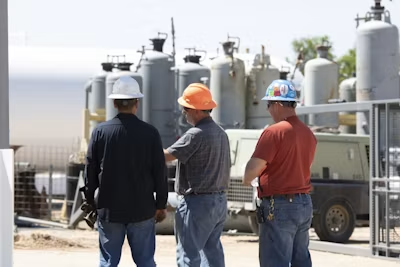
A workplace injury can happen in seconds, but its consequences may continue for months or even years. A construction fall, machinery accident, lifting injury, chemical exposure, vehicle collision, or repetitive-motion condition can affect a person’s ability to work and manage ordinary expenses. The immediate medical treatment is only one part of the problem.

Texas has a unique workers’ compensation system because most private employers are not required to carry workers’ compensation insurance. Employers that do participate generally provide benefits for qualifying work-related injuries, while employers that do not subscribe can face different legal consequences. The Texas Department of Insurance explains that workers’ compensation can provide medical benefits and some income benefits when the applicable requirements are met.

Common Workplace Accidents in Houston

Houston has a wide range of industries where employees may encounter physical hazards. Construction crews, warehouse employees, refinery workers, delivery personnel, healthcare workers, industrial employees, and office workers can all face different forms of occupational risk. The nature of the job often determines what evidence should be examined after an accident.

Some injuries develop immediately, while others become noticeable over time. A worker may suffer a fracture after a fall, a back injury while handling heavy materials, or an occupational illness caused by repeated exposure to hazardous conditions. The fact that an injury was not immediately obvious does not automatically mean it is unrelated to employment, but the circumstances and medical evidence still matter.

Workers’ Compensation and Third-Party Claims Are Not the Same

Workers’ compensation generally focuses on providing benefits for qualifying job-related injuries without requiring the employee to prove that the employer was negligent. Texas law also recognizes circumstances in which an injured employee may pursue damages against a liable third party.

This distinction can become important on worksites involving multiple companies. For example, a construction employee may be injured because of equipment belonging to another company or the conduct of a separate contractor. In that type of situation, workers’ compensation and a potential third-party claim can raise different legal questions, and the available remedies depend on the specific facts.

What Benefits May Be Available After a Work Injury

Workers’ compensation benefits can include medical treatment and certain income benefits when the injury meets the requirements of Texas law. The Texas Department of Insurance states that workers’ compensation may pay for medical care and replace some lost wages when a qualifying work injury causes an employee to lose income.

The value and duration of benefits depend on factors such as the injury, medical findings, disability status, wages, and applicable Texas rules. A disputed claim can create another layer of difficulty because the insurance carrier may challenge whether the injury occurred within the course and scope of employment or whether another legal exception applies.

Reporting an Injury Quickly Can Protect Your Claim

After a workplace accident, reporting the injury should not be postponed simply because the symptoms seem manageable. Texas Department of Insurance guidance states that an employee generally must notify the employer within 30 days of the injury or of learning that an illness is related to the job. A claim with the Division of Workers’ Compensation generally must be filed within one year from the date of injury.

Keeping accurate records can also make the process easier. An injured worker should preserve documents connected with medical care, employment, accident reporting, and communications about the injury. Important information may include:

  • The date, time, and location of the accident.
  • Names of witnesses and supervisors.
  • Medical records and treatment instructions.
  • Photographs or video of the accident area.
  • Written accident reports.
  • Pay records and employment information.
  • Relevant messages or correspondence.

How a Houston Workplace Injury Attorney Can Strengthen a Case

A Houston Workplace Injury Attorney can review the circumstances surrounding an accident and determine which legal issues may apply. That review may include employment status, workers’ compensation coverage, medical evidence, accident reports, workplace conditions, insurance communications, and possible third-party responsibility.

The investigation can become particularly important when several businesses operate at the same location. A worker may initially believe the case involves only an employer, but equipment owners, subcontractors, property owners, manufacturers, or other parties may also need to be considered. Texas Labor Code Chapter 417 specifically addresses claims involving liable third parties and workers’ compensation benefits.

Evidence Matters When an Injury Is Disputed

Workplace injury cases often depend on details that may become harder to establish as time passes. Equipment can be repaired, work areas can change, surveillance footage may not remain available indefinitely, and witnesses can forget important details. Preserving relevant information early can therefore make a significant difference.

Medical evidence is equally important. Treatment records can help document the nature of an injury and the relationship between the condition and the reported accident. A consistent history of the incident, timely medical attention, and organized documentation can provide a stronger factual foundation for evaluating a claim.

Not every workplace injury follows the same legal route. A worker employed by a subscribing employer may primarily deal with the workers’ compensation system, while an employee of a non-subscribing employer may face different legal circumstances. A third-party claim can also exist in some situations involving another responsible person or business.

SituationPotential Legal Issue
Injury while performing job dutiesWorkers’ compensation may apply
Employer does not carry workers’ compensationDifferent employer-liability rules may apply
Another company causes the injuryPotential third-party claim
Defective equipment causes injuryProduct-liability issues may arise
Workplace condition contributes to accidentAdditional liability questions may need review

Practical Steps After a Houston Workplace Accident

The first priority after an accident is appropriate medical attention. Once immediate medical concerns have been addressed, the worker should report the injury through the appropriate workplace process and keep copies of relevant documentation.

It can also be helpful to maintain a personal record of appointments, symptoms, restrictions, missed work, and communications concerning the accident. Workers should be careful about making statements that speculate about fault or minimizing an injury simply because symptoms change from day to day.

Conclusion

A workplace injury can affect much more than a person’s physical health. Medical expenses, missed work, reduced income, and uncertainty about future employment can place significant pressure on an injured worker and family.

Understanding the applicable Texas workers’ compensation rules, reporting requirements, available evidence, and potential third-party claims can help an injured worker make informed decisions. When the circumstances are complicated or a claim is disputed, obtaining advice from a qualified Texas workplace injury attorney can help clarify the legal options available under the specific facts of the case.

When a Commercial Truck Crash Changes Everything: Building a Strong Injury Claim

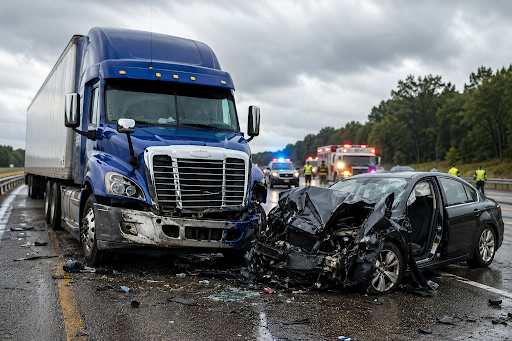
A collision with a commercial truck can leave a person dealing with far more than vehicle damage. Medical appointments, missed work, insurance calls, rehabilitation, and uncertainty about what happens next can quickly become overwhelming. The situation can become even more complicated when the crash involves a tractor-trailer, delivery truck, dump truck, tanker, or another large commercial vehicle. Truck accident claims often involve evidence and legal issues that do not arise in an ordinary passenger-car collision. Driver qualifications, hours-of-service records, maintenance history, cargo loading, electronic records, company policies, and multiple insurance policies may all become relevant. Federal Motor Carrier Safety Administration rules can also play a role when the vehicle or carrier falls under federal regulation.

A commercial truck can involve several people and businesses beyond the driver sitting behind the wheel. Depending on the circumstances, potential defendants may include the trucking company, vehicle owner, maintenance provider, cargo-loading company, manufacturer, or another contractor. This creates a liability question that is much broader than determining which driver received a traffic citation. An investigation may need to examine driver conduct, vehicle condition, company practices, loading procedures, roadway conditions, and other contributing factors.

For example, imagine a tractor-trailer loses control after its cargo shifts during transit. The driver’s actions may be investigated, but so may the way the cargo was loaded and secured. If mechanical failure contributed to the collision, maintenance records and inspection history may become important. If the driver had exceeded applicable driving-hour limits, log records could become relevant as well. This is one reason truck claims can become evidence-heavy disputes rather than straightforward insurance matters.

The Evidence That Can Make or Break a Truck Accident Claim

Evidence can disappear, become harder to obtain, or lose value as time passes. A careful investigation therefore looks beyond photographs from the crash scene.

Important evidence may include:

  • Police reports and crash-scene photographs.
  • Statements from eyewitnesses.
  • Vehicle damage and physical debris.
  • Traffic-camera or surveillance footage.
  • Electronic logging and vehicle data.
  • Driver qualification and employment records.
  • Truck inspection and maintenance records.
  • Cargo loading and securement documentation.
  • Company safety policies and training records.
  • Medical records connecting injuries to the collision.
  • Wage records showing income losses.
  • Accident reconstruction or engineering analysis.

Electronic data can be particularly useful in some commercial trucking cases. Depending on the vehicle and circumstances, records may provide information relevant to speed, braking, driving activity, or other aspects of vehicle operation. Lawyers may also seek company records that help establish whether safety procedures were followed.

What an Experienced Truck Accident Attorney Actually Does

Hiring an Experienced truck accident attorney is not simply about having someone send letters to an insurance company. The real value is often in understanding what evidence to look for, which parties may have responsibility, and how different pieces of information fit together. A truck accident lawyer may investigate the collision, communicate with insurers, identify potential defendants, assess available coverage, review relevant records, calculate damages, and prepare the claim for settlement or litigation. These responsibilities become especially important when the trucking company has its own insurer, investigators, and legal representatives involved after a serious crash.

An experienced attorney should also know when a case requires outside expertise. Accident reconstruction specialists, medical experts, vocational professionals, economists, engineers, and other professionals may help explain technical or financial issues when appropriate. That does not mean every case needs a large team of experts. Good legal strategy is about using the right evidence for the actual facts of the collision.

Finding Every Potentially Responsible Party

One of the most important differences between truck cases and ordinary auto claims is that responsibility may extend beyond the truck driver.

Potentially Responsible PartyIssues That May Require Investigation
Truck driverSpeeding, distraction, impairment, fatigue, unsafe maneuvering
Trucking companyHiring, training, supervision, scheduling, company policies
Vehicle ownerOwnership responsibilities and equipment condition
Maintenance providerBrakes, tires, steering, inspections, repairs
Cargo companyLoading, weight distribution, and securement
ManufacturerDefective vehicle components or equipment
Other motoristsLane changes, following distance, unsafe driving
Government entityCertain roadway or maintenance issues, depending on the facts

Not every party listed above will be legally responsible in a particular case. Liability depends on the evidence and the applicable state and federal law. This broader investigation can prevent an injured person from pursuing only the most obvious defendant while overlooking another party whose conduct contributed to the collision.

How Trucking Regulations Can Affect the Case

Commercial carriers may operate under a detailed set of safety requirements. Depending on the type of operation, vehicle, and circumstances, federal rules can address areas such as driver qualifications, hours of service, inspection, maintenance, and cargo securement. These rules do not automatically establish liability whenever a violation is discovered. Their significance depends on the facts and the law governing the claim. Still, regulatory records can provide valuable information about how a crash occurred.

For instance, evidence suggesting that a driver was fatigued may matter if fatigue contributed to the collision. Maintenance documentation may become important if defective brakes or worn tires are alleged to have contributed to the crash. Cargo records may matter when an improperly secured load shifts, falls, or affects vehicle stability. A careful legal investigation connects these records to the actual cause of the collision instead of simply listing regulations that may have been violated.

Protecting the Claim During Insurance Negotiations

After a serious truck crash, an insurance company may contact the injured person quickly. That communication does not necessarily mean the insurer has accepted responsibility. Insurance adjusters are responsible for evaluating claims on behalf of the insurer. Their job is not to provide legal advice to the injured person or determine the maximum amount that person should receive. A settlement offer should therefore be evaluated against the full scope of the injury rather than only the bills already received.

A claim may involve:

  • Emergency treatment and hospital expenses.
  • Follow-up appointments and rehabilitation.
  • Prescription and medical equipment costs.
  • Lost wages and reduced earning capacity.
  • Property damage.
  • Physical pain and suffering.
  • Emotional consequences associated with the injury.
  • Future medical treatment when supported by the evidence.

The value of a claim cannot responsibly be determined from a simple online formula. The seriousness of the injury, medical prognosis, available insurance, liability evidence, jurisdiction, comparative-fault rules, and other case-specific factors can all affect the outcome.

What to Do After a Serious Truck Crash

The first priority after a collision should be safety and medical attention. Once immediate concerns are addressed, preserving information can make the later investigation easier.

Useful steps include:

  • Report the collision to the appropriate authorities.
  • Seek medical evaluation for injuries.
  • Follow medical instructions and attend recommended appointments.
  • Photograph vehicles, visible injuries, road conditions, and relevant surroundings when it is safe to do so.
  • Keep medical bills, employment records, receipts, and related documents.
  • Preserve contact information for witnesses.
  • Avoid guessing about fault when speaking with insurers or other parties.
  • Do not sign a settlement agreement without understanding what rights you may be giving up.

Medical documentation is especially important because some injuries may not become fully apparent immediately after a crash. A consistent treatment record can help establish the nature and progression of an injury.

How a Strong Truck Accident Case Is Built

A persuasive claim usually develops through several connected stages rather than one dramatic piece of evidence. First, the circumstances of the collision are reconstructed. Investigators examine photographs, reports, witnesses, physical evidence, vehicle information, and available electronic records. Next, potential liability is assessed. The question becomes more specific: Who had a legal duty, what happened, and did that conduct contribute to the collision?

The third stage focuses on damages. Medical records help establish injury and treatment, while employment and financial documentation can help demonstrate economic losses. Future losses may require additional professional analysis. Finally, the evidence is assembled into a legal position that can be presented to the insurance company or, when necessary, to a court. This approach is stronger than simply presenting a collection of bills and asking an insurer to pay them.

Settlement or Truck Accident Lawsuit: How the Decision Is Made

Many truck injury claims are resolved through negotiation, but settlement is not always the right answer at every stage. A settlement can provide certainty and avoid the time and expense associated with litigation. However, an injured person should understand the long-term consequences before accepting an offer, particularly when medical treatment or future limitations remain uncertain. Litigation may become appropriate when liability is disputed, the insurance company refuses to make a fair offer, multiple parties disagree about responsibility, or the available evidence supports pursuing the matter in court.

The timeline varies significantly. Some claims resolve relatively quickly, while serious cases involving extensive medical treatment, disputed liability, multiple defendants, or litigation can take substantially longer. The objective should not simply be to finish the claim quickly. The objective is to make an informed decision based on the evidence, damages, risks, and applicable law.

Conclusion

A serious commercial truck collision can involve far more than a damaged vehicle and an insurance claim. The driver, carrier, vehicle condition, cargo, maintenance history, regulatory compliance, medical consequences, and available insurance coverage may all become part of the legal picture. The strongest claims are built by connecting those facts into a clear explanation of what happened, who may be responsible, and how the collision affected the injured person. If you or someone close to you has suffered injuries in a truck crash, obtaining case-specific legal advice can help you understand the available options, important deadlines, potential sources of compensation, and evidence that may matter to the claim. Every truck accident is different, so the right legal strategy should be based on the facts rather than a one-size-fits-all formula.

Next-Gen Racing Features: What Next-Gen Hardware Means for Forza Horizon 6

Forza Horizon 6 launched on May 19, 2026, for Xbox Series X|S and PC, and it’s the first time the series has fully cut ties with older hardware. There’s no last-gen version this time around, and once you actually load into Japan, it’s obvious why. Playground Games leaned hard into what the current-gen consoles and modern PCs can actually do, and the result is a game that feels genuinely built for this hardware generation rather than stretched across two of them. If you’ve been holding off on picking it up, here’s what all that next-gen tech actually gets you.

Before you check out, it’s worth taking a moment to browse LootBar game key deals in case there’s a bundle that covers more than one title. 

Why an SSD Isn’t Optional Anymore

Why an SSD Isn't Optional Anymore

On PC, Forza Horizon 6 requires a solid-state drive across every single spec tier, even at minimum settings; a traditional hard drive simply isn’t supported. That’s a deliberate choice, not a technicality. The Japan map is the largest open world the franchise has ever built, and the Tokyo City area alone is described as five times larger and more intricate than any city in a previous Horizon game. Streaming an environment that dense in real time just isn’t something a spinning hard drive can keep up with without constant pop-in and stutter.

On Xbox Series X and S, the games will run smoothly right off the built-in SSD. That’s one of the reasons that moving from the festival sites to the cities and finally to the rural roads appears so easily that the newer entries look nothing like the older ones. You can’t see any loading screens anymore between the changes of area. Rather, the world is continuously revealed in every direction as you go.

Ray Tracing: Where It Actually Shows Up

Ray Tracing

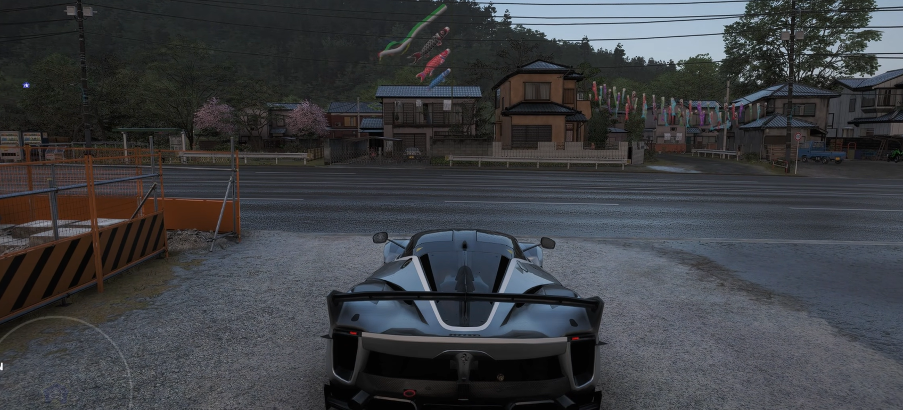
Forza Horizon 6 runs on an evolved version of the ForzaTech engine, and one of the bigger additions this time is full hardware ray tracing support, including both ray-traced reflections and ray-traced global illumination. The most noticeable use of it is on car bodywork: reflections of actual environment geometry, other vehicles, and the skybox bouncing off your paint job in a way screen-space reflections never quite managed, especially once you turn a corner and the old reflection techniques would just clip out.

On PC, you get real control over how far this goes, with settings ranging from reflections limited to your own car up to full-scene ray tracing across the whole environment. On console, it’s simplified into Performance and Quality modes, which brings us to the actual trade-off players are making at launch.

Performance Mode vs. Quality Mode on Xbox Series X|S

This is probably the most practical next-gen decision you’ll make in the settings menu. Performance Mode targets a dynamic 4K resolution locked at 60fps, with ray tracing disabled during actual gameplay; it’s saved for ForzaVista, the car showroom mode, instead. Quality Mode flips that, running native 4K with ray-traced reflections active while driving, but caps you at 30fps.

Most racing games make this an easy call, and Forza Horizon 6 is no different. The visual downgrade in Performance Mode is genuinely minor; you still keep high-quality textures and shadows, while the responsiveness you get from 60fps matters a lot more once you’re actually drifting through Tokyo traffic. Quality Mode is worth trying for screenshots and cruising, but most players seem to be settling on Performance for actual racing.

Haptic Feedback and Physics Under the Hood

A very similar weather system to the one we already knew from the last two Horizon installments continues in the new Horizon adventure and affects the way you actually control physics during the gameplay the game shows you at real-time how the level of grip decreases if you start driving on wet asphalt, and what Playground Games achieved through careful tire behavior adjustment is that you can actually feel the difference between a kei car darting through narrow city streets and a heavier car on a mountain pass.

This feature has translated on Xbox controllers into changing trigger resistance and rumble based on the amount of wheelspin, road feel, and car G-force through the corners – the kind of subtle feedback that, without your eyes even noticing, you know a car is about to be planted or the opposite – it is loose. That’s something that will make you think it is really a tiny change, but after a couple of hours you will be aware of it and not want to play a game that does not include that little feedback.

A Map Built for This Kind of Hardware

None of this next-gen tech would matter much without a world worth exploring, and Forza Horizon 6’s Japan setting delivers exactly that. Around 550 vehicles are available at launch, with a noticeable focus on cars that are actually popular in Japan  kei cars, vans, and JDM classics alongside the usual supercar roster. Playground Games has been upfront that the goal wasn’t a 1:1 recreation of Japan’s roads, but a “smoother, condensed reality” that still captures the feel of the place, from tight Tokyo backstreets to open mountain roads.

Combine that scale with SSD-powered streaming, ray-traced reflections, and dynamic weather reacting in real time, and it’s easy to see why this entry needed next-gen-only hardware to actually run the way it was designed to.

Forza Horizon 6 Worth playing?

Forza Horizon 6 Worth playing

Getting Ready to Play

Getting Ready to Play

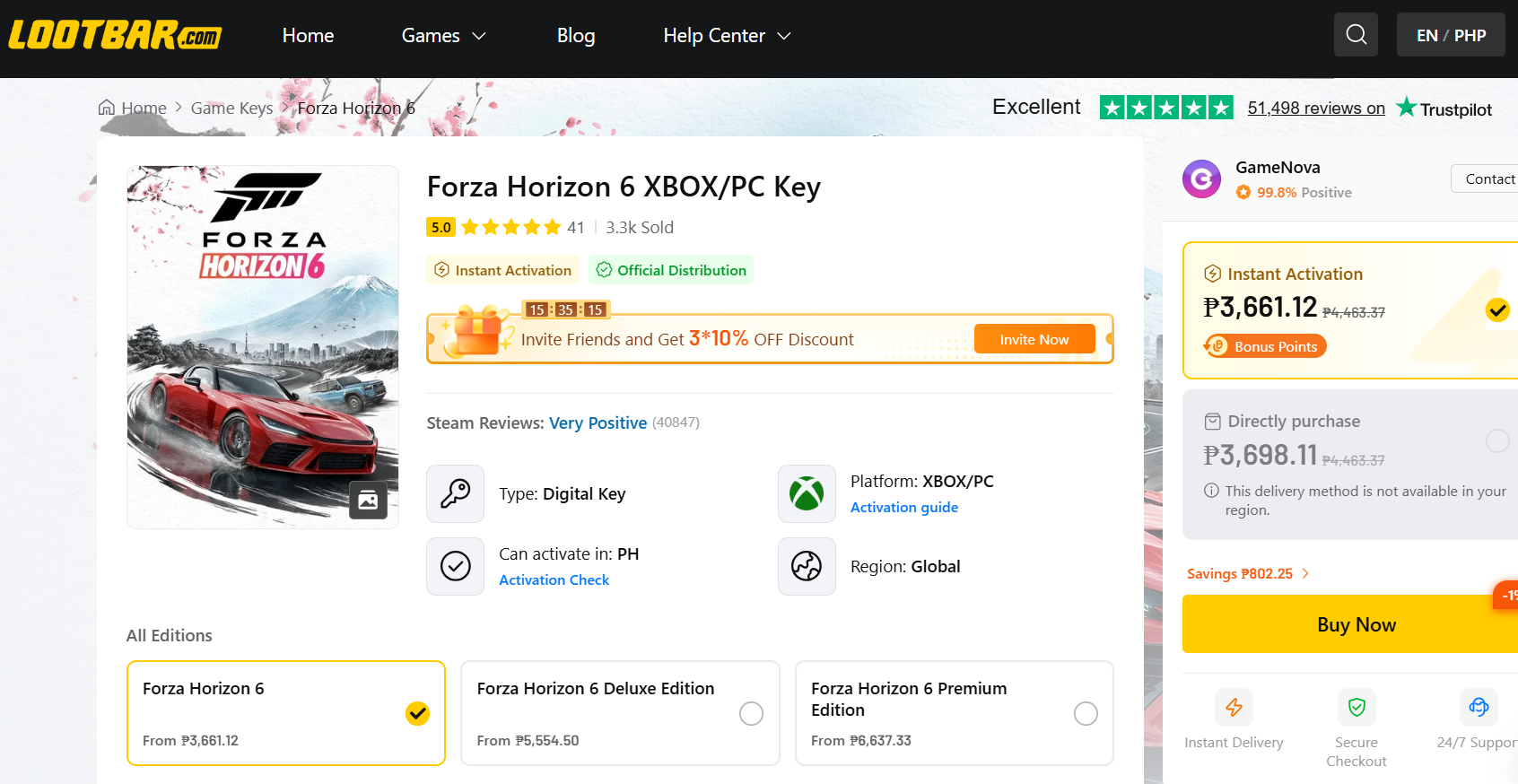
If Forza Horizon 6 sounds like the kind of upgrade worth jumping into, now’s a good time to sort out your digital library before diving in. Picking up a Forza Horizon 6 key gets you set up for Xbox at a solid price, and it’s worth checking while you’re at it, since discounted LootBar game key listings pop up regularly across other titles too handy if you’re planning to build out the rest of your library at the same time.

Conclusion

Forza Horizon 6 is not only a game with a larger map and nicer textures. It is also the SSD requirement, ray tracing implementation, and adaptive haptics that justify the decision to drop last-gen support completely. Whatever you are doing, whether it is playing 60fps Performance Mode or admiring ray-traced reflections in Quality Mode, this is a title that really needed the hardware upgrade to be what it turned out to be. If you are already excited, one way is to buy a key; you remove one more barrier that prevents you from going directly to Horizon Festival in Japan.

Tennis Market Update: Key Outcomes and What Traders Are Watching

Wimbledon is settled, the rankings have shifted, and the tour has moved onto North American hard courts. For anyone following tennis through event-based markets, the last two weeks have produced more repricing than the trophies alone would suggest.

The reason is simple. Tennis markets respond to entry lists, withdrawals and ranking movement as much as they respond to results, and all three have been in motion since the All England Club closed its gates.

What Wimbledon settled

Jannik Sinner defended his title on July 12, beating Alexander Zverev 6-7 (7), 7-6 (2), 6-3, 6-4 at the All England Club. It was his second consecutive Wimbledon crown and his fifth Grand Slam title.

On the women’s side, Linda Nosková beat fellow Czech Karolína Muchová 6-2, 5-7, 6-3 to claim her first major at 21, the latest breakthrough from the next generation of players now reshaping both tours. She recovered from missing five match points in the second set, which is the kind of swing that in-play markets tend to reflect almost immediately.

The tournament produced a few records worth noting. Novak Djokovic passed Roger Federer’s mark for Wimbledon men’s singles match wins, reaching 107, and his quarterfinal against Félix Auger-Aliassime ran 5 hours and 15 minutes, the longest quarterfinal in the event’s history. Readers who followed the fortnight can revisit the schedule and broadcast details in this Wimbledon streaming guide.

The rankings moved more than the trophies did

Sinner holds the ATP No. 1 position on 13,450 points, a lead of close to 5,000 over the field. Zverev’s Roland Garros title and Wimbledon final lifted him to No. 2 on 8,480.

Carlos Alcaraz slipped to No. 3 on 8,160 after missing Wimbledon with a wrist injury. That single absence, rather than any on-court result, is the biggest reason the men’s futures picture looks different than it did in June.

Aryna Sabalenka held the WTA top spot on 8,550 points, with Elena Rybakina second on 8,143 and a gap of only 407 points between them. Sabalenka began her 91st consecutive week at No. 1, taking her overall tally to 99.

The Czech finalists both reached career highs, with Muchová at No. 6 and Nosková at No. 7. Iga Świątek dropped to No. 8, and British wildcard Arthur Fery reached a career high near No. 36 after his run to the semifinals.

Those movements matter for a practical reason. Rankings set seedings, seedings shape draws and draws determine which players can meet before the closing rounds of an event.

A player who climbs two or three places before a Masters 1000 entry deadline can land in a materially different section of the bracket. That is why ranking weeks in late July often produce more market movement than the results themselves would justify.

The women’s picture is tighter than the men’s on paper. A 407-point gap at the top is small enough that a single strong week in Canada or Cincinnati could change the No. 1 line before the US Open begins. Ranking projections published during those weeks tend to draw close attention for exactly that reason.

Fanatics Markets prices tennis as event contracts rather than as fixed odds, and its tennis hub lists matches individually. Readers comparing the latest tennis betting odds with contract prices can see how the two formats express the same underlying question in different units.

The hard court swing is where pricing gets tested

The Mubadala Citi Open runs through August 2 and serves as the first hard court checkpoint after the grass season. Early hard court weeks tend to trade with wider spreads because form is unproven on the surface.

The National Bank Open follows from August 1 to 13, with the men’s event at IGA Stadium in Montreal and the women’s at Sobeys Stadium in Toronto. Both draws carry 96 players, and the official draw ceremonies are scheduled for Friday, July 31.

Seedings for the event are based on rankings as of July 27, which is why this week’s ranking list matters beyond the headlines. Seeding determines who can meet whom and when, and that structure feeds directly into how tournament winner markets are priced.

Two dates worth marking

The Cincinnati Open runs August 11 to 23, overlapping the back end of Canada and feeding directly into the final major of the season. The USTA has listed a US Open tournament window of August 23 to September 13 at the Billie Jean King National Tennis Center.

Alcaraz has roughly 3,000 points to defend across Cincinnati and the US Open following last year’s results. Whether he is fit to play those events is the single largest open variable in men’s tennis pricing right now.

Availability news of that kind typically moves futures markets faster than match results do. A confirmed withdrawal redistributes probability across an entire draw in one step, while a single match win adjusts it incrementally.

What traders are watching

Entry lists and withdrawals. Draw ceremonies and late withdrawals produce concentrated movement. The Montreal and Toronto draws land on July 31, which makes that evening a natural checkpoint.

Surface transition. Grass to hard court is one of the sharper adjustments in the calendar, and player profiles do not transfer evenly. Form guides on why some players dominate certain surfaces are a useful reference when early hard court prices look mismatched with recent grass results.

Format changes at the majors. Men’s matches move from best of three to best of five at the US Open, which changes how underdog contracts behave. Shorter formats compress variance, and longer ones tend to favor the deeper player.

Live match markets. Fanatics Markets lists individual tennis matches, including live in-play contracts across ATP, WTA and lower-tier events. Match-level markets can move on a single break of serve, which is a different rhythm from tournament winner contracts. A primer on how tennis betting works covers the same in-play dynamics in fixed-odds terms.

Key takeaways

  • Sinner defended Wimbledon and holds the ATP No. 1 ranking on 13,450 points, with Zverev up to No. 2 and Alcaraz down to No. 3 after a wrist injury kept him out of the Championships.
  • Nosková won her first major at Wimbledon and reached a career-high No. 7, while Sabalenka held the WTA top spot by 407 points over Rybakina.
  • The National Bank Open runs August 1 to 13 with draws set on July 31, followed by Cincinnati from August 11 to 23.
  • The USTA has listed a US Open window of August 23 to September 13, closing the season’s major schedule.
  • Alcaraz’s fitness and the roughly 3,000 points he has to defend in North America remain the clearest source of movement in men’s futures pricing.

Event-based markets reflect what participants collectively consider likely at a given moment. Prices adjust as information arrives, and they are not a forecast of any particular result.

Trading event contracts carry risk, including the risk of losing the full cost of entering a position. Availability is limited by state and restricted to eligible participants aged 21 and over.

RCR Race Preview: Darlington Raceway

Richard Childress Racing in the NASCAR Cup Series at Darlington Raceway… In 154 NASCAR Cup Series starts at Darlington Raceway, Richard Childress Racing has earned eight wins, all by Dale Earnhardt. The driver of the No. 3 Chevrolet claimed the checkered flag in 1986 (spring), both races in 1987, 1989 (fall), another sweep in 1990 plus spring events in 1993 and 1994. Additionally, the team has earned two poles, 27 top-five and 51 top-10 finishes, has completed 92.2% of the laps contested (48,441 of 52,565 laps) and led 2,618 laps at the historic facility. Childress, a former driver in NASCAR’s premier division, contributed a pair of those top-10s himself between 1977-1978.

A Place of Firsts… On April 15, 1973, NASCAR Hall of Famer Childress scored his first Cup Series top-five finish at Darlington Raceway. Driving the No. 96 Chevrolet for Tom Garn, Childress worked his way to the fourth position when the checkered flag waved, earning him a payday of $4,035 – nearly as much money as he had earned through the first four races of the season.

Richard Childress Racing in the NASCAR O’Reilly Auto Parts Series at Darlington Raceway… RCR’s best finish at Darlington Raceway in the NASCAR O’Reilly Auto Parts Series is second, achieved on five separate occasions by four different drivers, most recently by Austin Hill in 2024 (spring). While the team is still looking to find Victory Lane for the first time, the Welcome, N.C.-based organization has earned 14 top-five finishes and 34 top-10 finishes in their pursuit of the checkered flag.

Honoring and Remembering… This year will mark the 25th anniversary of the 9/11 terrorist attacks when thousands of Americans tragically lost their lives, including hundreds of first responders. On Wednesday, September 9 at 9 a.m. ET, in conjunction with Veterans Bridge Home, RCR will host a special edition of their monthly Veterans Coffee to honor and recognize our nation’s courageous first responders. The monthly gathering invites veterans from the community to RCR’s campus on a monthly basis for fellowship, coffee, and programing that includes guest speakers and access to organizations and resources that can help veterans and their families. Veterans Coffee events are free to attend and open to all veterans, with a special invite extended for this month’s gathering to first responders. Media are invited to join RCR for our next Veterans Coffee at the RCR Events Center in Welcome, North Carolina.

Catch Saturday’s Action… The O’Reilly Auto Parts Series race at Darlington Raceway will be televised live on Saturday, September 5 at 7:30 p.m. ET on The CW and streamed live on the ESPN App for viewers with an ESPN Unlimited subscription plan. The live radio broadcast can be heard on the Motor Racing Network and SiriusXM NASCAR Radio Channel 90. Saturday afternoon’s practice and qualifying sessions will be shown for free on The CW App beginning at 2 p.m. ET.

Watch Us on USA Network… The Cup Series’ Cook Out Southern 500 will be televised live on Sunday, September 6 beginning at 5 p.m. ET on USA Network and will be broadcast live on the Motor Racing Network and SiriusXM NASCAR Radio Channel 90. Cup Series practice and qualifying on Saturday will be broadcast on truTV live at 4:30 p.m. ET. Ride shotgun all season long with live, in-car camera feeds and scanner audio with a paid subscription to Max as part of their NASCAR driver cam experience during the race. 

Austin Dillon and the No. 3 Boot Barn Chevrolet at Darlington Raceway… Austin Dillon has made 20 career starts in the NASCAR Cup Series at Darlington Raceway, posting a career-best second-place finish in September 2020 when he missed Victory Lane by a narrow margin, edged by Kevin Harvick. Dillon has completed 98.5% of the laps in the Cup Series at the historic venue. Dillon also had a fourth-place finish in 2017. When the Cup Series visited Darlington Raceway this past March, Dillon qualified 10th and finished 25th.

Beyond the Cup Series… Dillon has made four appearances at The Lady in Black in the NASCAR O’Reilly Auto Parts Series, securing his best finish of fifth in 2012. The 2011 NASCAR Truck Series champion has two starts at the track in the Truck Series, earning his best finish of fifth in August 2010.

About Boot Barn… Boot Barn is the largest western and workwear retailer in the nation. Founded in 1978, Boot Barn operates 530+ stores across 49 states, in addition to several e-commerce sites. Boot Barn says that their customers feed America, build America, and protect America. With an uncompromising desire to support the local communities they serve, Boot Barn proudly offers the broadest selection of cowboy boots, work boots, western wear, workwear, western-inspired fashion pieces, and outdoor gear to support the varying lifestyles of the people who make our country so great. For more information, visit www.bootbarn.com.

Beyond The Track… Beyond the driver’s seat, Dillon serves as the general manager of the Carolina Cowboys, a professional bull riding team in the PBR Teams league. Dillon is instrumental in all aspects of the team, from rider contracts to setting the operational budget, and has utilized various aspects of his racing background to help form the identity and structure of his bull riding team. Learn more about the team on their official YouTube channel, https://www.youtube.com/@CarolinaCowboysPBR. Don’t miss the Carolina Cowboys 2026 “Cowboy Days” homestand September 18-20 at First Horizon Coliseum in Greensboro, North Carolina. Tickets are on sale at PBR.com and Ticketmaster.com.

Meet Dillon… Fans traveling to Darlington, South Carolina for the Southern 500 race weekend will have three opportunities to meet Dillon in person. On Saturday, September 5 at 11:30 a.m. Local Time, Dillon is scheduled to be at Boot Barn (1945 W Palmetto St Ste 408, Florence, SC 29501) for an autograph signing. On Sunday, September 6 at 12:55 p.m. Local Time, Dillon is scheduled to sign autographs at the RCR Merchandise Hauler in the Fan Zone. Fans are encouraged to stop by, meet Dillon and stock up on RCR gear before the green flag waves. Following, at 1:30 p.m. Local Time, Dillon is scheduled to make an appearance at the Boot Barn display in the Fan Zone, providing fans limited edition tote bags to store all their race weekend essentials.

AUSTIN DILLON QUOTES:

What is the most challenging part of Darlington Raceway?

“Probably just taking care of your stuff, taking care of tires, not stepping over the edge, and then you have to be on the edge to be fast, so it’s like a knife edge. You got guys that are going to run right against the fence, you got guys who are on the bottom, but there’s pace on both of those at different times of the race. You got to be comfortable switching lanes.”

What is the physical toll of racing at Darlington Raceway, and how demanding is it on you as a driver?

“The precision that it takes, you’ll find yourself at times right up against the wall. Other times you’re underneath people in Turn 4, which gets really tight. The bumps off of (Turn) 4, you really have to stay on your game because one slip can knock you out of the race and put you in a bad position. You’re dancing the whole time on the edge of the intensity levels of what it takes to be good at Darlington.”

Talk about racing at Darlington Raceway and how much emphasis you place on that race.

“Darlington is a place that you’re constantly fighting the track. The track changes with temperature, and the Southern 500 is a race where you’ve just got to work at every lap. You try and work your way to the top, and at times you can come off of it and work different lanes. It gets really tight off of Turn 4. But it’s a really cool race because it’s so long, and its grueling and everyone wants to win the Southern 500.”

You’ve won two Crown Jewel races. What would it mean to you to win this one?

“It would be really cool to win the Southern 500 with the No. 3 Boot Barn Chevrolet. We’ve won a couple of big races – the Coke 600 and Daytona 500 – and the Southern 500 is kind of the three that you would really like to get. I would love to bring home that trophy and it would be an epic game changer for us this year.”

How different is Darlington Raceway now compared to a couple of years ago when you finished second in the Southern 500?

“It’s not much different. I think the car is the biggest thing. We’ve come a long way with the Next Gen car and it takes a little something different. So hopefully we hit on that with the No. 3 Boot Barn Chevrolet and go have some fun.”

Austin Hill and the No. 33 Morgan & Morgan Chevrolet at Darlington Raceway… Austin Hill has one career NASCAR Cup Series start at Darlington Raceway, coming in April 2025 behind the wheel of RCR’s third entry. During that event, Hill showed top-25 speed but lost track position in the final stage when varying pit strategies shuffled the running order.

Lady in Black Success… While Sunday will mark Hill’s inaugural Southern 500 start, the Winston, Georgia native has found success in lower divisions at Darlington Raceway. Hill has three top-five and seven top-10 results – including a pair of runner-up finishes – in nine career NASCAR O’Reilly Auto Parts Series races. In addition, Hill has one top-five finish (third) in three NASCAR Truck Series events at the historic South Carolina racetrack.

Rearview Mirror… One week ago, Hill earned his career-best Cup Series qualifying effort of third and led a race-high 27 laps at Daytona International Speedway. The No. 33 Chevrolet showed significant pace throughout the first two stages, finishing the segments in 11th and 10th respectively.

Honoring KB… This weekend, Morgan & Morgan will honor Kyle Busch and his legacy with special tributes on their familiar black and yellow scheme. Busch’s famous bow will adorn the hood of the No. 33 Chevrolet, while The Bundle of Joy Fund (BOJF) logo will ride with Hill on the decklid. For more information on ways to support BOJF and continue the work that Samantha and Kyle Busch started, please visit bundleofjoyfund.org.

About Morgan & Morgan… As America’s largest injury law firm, with lawyers licensed in all 50 states, Morgan & Morgan has recovered more than $30 billion for over 700,000 clients. Throughout the United States, our attorneys fulfill our “For The People” commitment in over 50 practice areas, including national mass torts and class actions, labor and employment, product liability and dangerous drugs, among many others. Hundreds of law firms throughout the U.S. refer thousands of cases through our Morgan Connection platform. Our firm has taken on some of the biggest corporations across the globe, including BP, Facebook, Google, Monsanto, and Eli Lilly, and recovered billions in complex national litigation, including $1.8 billion in the Porter Ranch Gas Leak case in California. Learn more at www.forthepeople.com.

Meet Hill… On Sunday, September 6 at 1:45 p.m. Local Time, Hill is scheduled to sign autographs at the RCR Merchandise Hauler in the Fan Zone at Darlington Raceway. Stop by to meet the racer and purchase new No. 33 gear before the green flag waves.

AUSTIN HILL QUOTE:

What are your thoughts entering your first Southern 500?

“I have run a Cup race at Darlington before, but the package we are racing this weekend is completely different so I’m not sure there is much to transfer over. We have more horsepower and a smaller diffuser. It’s the package we’ve been running at tracks like Richmond, Iowa, and Nashville, so we have a base knowledge of what to expect. I think this package is going to play into my hands better though. You can still get tight in dirty air or get loose but it’s not as aggressive. It cuts it probably in half of how bad the dirty air is. If our Morgan & Morgan Chevrolet is good enough, we should be able to drive up through the field, especially with the tire fall off. Even though the package is different, Darlington is still Darlington to me. How you approach the racetrack is going to be the same as the O’Reilly (Auto Parts Series) car, so that should be a positive. I’m pretty excited about it.”

Jesse Love and the No. 2 Whelen Chevrolet at Darlington Raceway… Jesse Love has made four NASCAR O’Reilly Auto Parts Series starts at Darlington Raceway, all behind the wheel of the No. 2 Whelen Chevrolet. In 2024, the Menlo Park, California native secured a pair of top-10 finishes – an eighth-place effort in the spring event and a sixth-place result in the fall race. At the lone O’Reilly Auto Parts race in 2025 held at the track, Love both qualified and finished 11th. Earlier this year, the 21-year-old qualified 10th and ended up in 11th. Across all four of his starts at the track Too Tough to Tame, Love has completed 100% of the laps.

Let The Chase Begin… This weekend at the famed 1.366-mile oval, the NASCAR O’Reilly Auto Parts Series Chase will get underway, marking Love’s third career qualification to the postseason (2024-2026). Love, the series’ defending champion, will begin the postseason as the No. 4 seed, 40 points behind No. 1 Justin Allgaier.

About Whelen Engineering… Whelen Engineering is a family-owned company with a pioneering spirit and a passion to protect the lives of those who protect and serve others. The company mission is to provide industry-defining safety solutions around the world, while creating a community of problem-solvers who are inspired to push boundaries and continue our legacy of delivering ground-breaking innovation. As a global leader in the emergency warning industry, Whelen has been trusted to perform since 1952, when George Whelen III invented the first rotating aviation beacon. Whelen now encompasses two state-of-the-art manufacturing facilities in Connecticut and New Hampshire with over 750,000 square feet of engineering and manufacturing space and the largest design staff in the industry. Every part of every Whelen product is proudly designed and manufactured in America. We embrace quality as our foundation, and we celebrate innovative engineering in every product we produce.

Meet Love… Fans will have two opportunities to meet Love this weekend at Darlington Raceway. On Saturday, September 5 at 4:30 p.m. Local Time, Love is scheduled to stop by the RCR Merchandise Hauler in the Fan Midway. Be sure to stop by, meet Love and get outfitted in the latest RCR gear. Following, at 5:00 p.m. Local Time at the nearby Portabar, Love is scheduled to be available for a special meet and greet before the O’Reilly Auto Parts Series Chase gets underway.

JESSE LOVE QUOTE:

What are your thoughts this weekend heading to Darlington Raceway for the first of nine races in The Chase?

“I’m really excited for Darlington and to start The Chase. It’s been a rough year. I am not somebody that really believes in bad luck, but I just feel like if it does exist, we’ve had a lot of it. The good part of it, is I feel like we have as much speed as anybody on any given weekend in the field so we can rely on our grit and tenacity to make a run at the championship. I know that we can. I know that I am able to, and I am capable of it, and my team is as well, but we’re definitely going to have to not have the things that have been happening to us, happen anymore. If all of that is on our side, I think that we’re ready to start this championship run, and Darlington is a decent place to do it. But more importantly the races leading up after it are even better for our team. So we need to go hold serve this weekend, put ourselves in position to win and then go from there.”

Austin Hill and the No. 21 Carolina Cowboys Chevrolet at Darlington Raceway… Austin Hill has made nine career NASCAR O’Reilly Auto Parts Series starts at Darlington Raceway, earning a top-10 result in all but two events and a pair of runner-up finishes in 2023 and 2024, respectively. Hill has also competed in three NASCAR Truck Series races at Darlington, posting a best finish of third in 2020.

Darlington Consistency… In his nine O’Reilly Auto Parts Series races at the “Lady in Black,” Hill has completed 99.6% of the laps (1,322 of 1,327) and posted a top-10 finish in 77.8% of the starts. The Winston, Georgia native has an average starting position of 11.3 and an average finishing position of 10.7.

Regular Season Rewind… In 24 O’Reilly Auto Parts Series regular season events, Hill tallied two wins, one pole, seven top-five and 11 top-10 finishes. The veteran racer has led a total of 173 laps and completed 95.3% of laps competed (3,665 of 3,846). Hill’s two wins came in spectacular fashion – his fourth season-opening victory at Daytona International Speedway and his first road-course win in the inaugural Naval Base Coronado Street Course.

Let the Chase Begin… Hill enters the O’Reilly Auto Parts Series Chase as the fifth seed, 45 points behind leader Justin Allgaier. With the new format rewarding consistency across the final nine races, the 32-year-old has previously won at four of the final nine tracks – Las Vegas Motor Speedway, Talladega Superspeedway, Martinsville Speedway and Homestead-Miami Speedway. Hill has qualified for the playoff format each of his five full-time seasons in the series, dating back to his rookie campaign in 2022.

About Carolina Cowboys… The Carolina Cowboys, 2025 PBR Teams Champions, are based at First Horizon Coliseum in Greensboro, N.C., where the team will hold its fifth Cowboy Days homestand Sept. 18-20, 2026. The Cowboys are coached by PBR co-founder Jerome Davis and assistant coach Robson Palermo, a three-time PBR Teams Series World Champion. Under the leadership of General Manager Austin Dillon, the team is owned by Richard Childress and prominent entrepreneurs and agriculturalists Jeff and Tammie Broin. For more information on Carolina Cowboys and for updates on the upcoming PBR Cowboy Days, visit https://pbr.com/teams/carolina-cowboys, Carolina Cowboys on Facebook, @carolinacowboyspbr on Instagram, or @CARCowboysPBR on X. Go behind the scenes for the Carolina Cowboys’ championship season with exclusive long form video content on the Carolina Cowboys’ YouTube channel @CarolinaCowboys.

About POET… POET’s vision is to create a world in sync with nature. What began with a single bioprocessing facility in 1987 has grown into the world’s largest biofuel producer and a global leader in sustainable bioproducts. Headquartered in Sioux Falls, S.D., POET operates 35 bioprocessing facilities and four terminals across the U.S., producing bioethanol, animal feed ingredients, corn oil, bioCO2, purified alcohol, and other bioproducts for customers around the world. POET is proud to sponsor Austin Hill and No. 21 alongside the Carolina Cowboys, connecting the strength of American agriculture to the feed ingredients that help nourish livestock. As the first official bioethanol partner of NASCAR, POET is also powering a new era of racing that delivers a 100% American-made bioethanol that creates more jobs, less pollution, and zero carbon footprint. It’s grown by farmers, produced by POET, and proven on the track.

AUSTIN HILL QUOTES:

What is the outlook heading into week one of the Chase?

“Every year, it seems like I get more relaxed heading into the Chase. Our No. 21 team has started to hit our stride here as of late, so we were able to gain track position on the standings last week. We are starting fifth, instead of seventh, and those 10 points could mean something at the end of it.”

With your move up to the Cup Series full-time in 2027 and the only driver running double-duty throughout the entire Chase this season, how do you stay focused on winning a championship in the O’Reilly Auto Parts Series?

“I’m still trying to give a 100% effort to both series. Obviously with me being in the No. 33 next season, I want to continue to put a lot of effort into those races this year to set us up for success in 2027, but I also want to the leave the O’Reilly Auto Parts Series with a championship under my belt. I know I won’t be in this series again next year, so it’s not lost on me to try and win the big trophy this season. The work hasn’t slowed down on either side. I’m still working seven days a week right now to give both cars all of the prep and focus that I can.”

Where is the focus of the No. 21 team with the new Chase format?

“It fits the way that we operate more. You don’t have to go out there and win races. Now, obviously, you want to win races because of the extra bonus points, but our focus mainly comes down to getting stage points in Stages 1 and 2 and finishing as high as we can at the checkered flag. To win the championship, I think it’s going to take running consistently inside the top-five and your bad days need to be eighth to 10th. But you can only have one or two bad days. The competition is so strong, so you have to be on it each and every week. That starts with the preparation during the week and then the first laps of practice. I think you can win the championship without winning a race in the final nine, but you’ll have to be very consistent.”


Jason Kitzmiller Takes Top-10 ARCA Streak to DuQuoin State Fairgrounds

Du Quoin, Ill. — On the strength of back-to-back top-10 finishes at the Illinois State Fairgrounds and Madison (Wis.) International Speedway, veteran driver Jason Kitzmiller is armed with momentum for his return to the DuQuoin (Ill.) State Fairgrounds in Sunday night’s Audubon Park 100.

The annual Labor Day weekend tradition, which closes out the historic DuQuoin State Fair, will see the ARCA Menards Series tackle the one-mile dirt oval for its second and final dirt-track race of the year as the 2026 season enters its closing stretch.

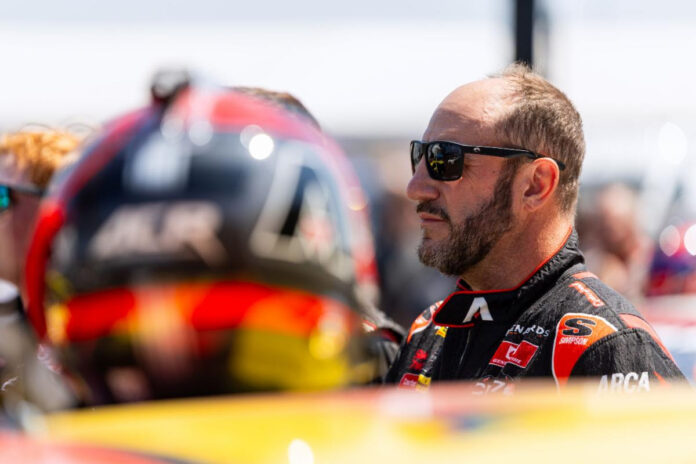
In last Friday night’s Atlas 200, Kitzmiller built upon his recent short-track success after qualifying 11th. Throughout the 200-lap race, adjustments enhanced the maneuverability and overall balance of his No. 97 A.L.L. Construction Racing — CR7 Motorsports Chevrolet, allowing him to climb to ninth and secure his ninth top-10 finish of the season.

With six top-10 finishes in the last nine races — including his current run of two consecutive top-10s following a three-race stretch outside the top 10 — Kitzmiller returns to the southern Illinois dirt track looking to improve upon last September’s performance and carry his renewed momentum through the season finale later this month at Kansas Speedway.

“We have been able to put together two solid races in a row, and that consistency is exactly what we need as the season winds down,” said Kitzmiller.

“DuQuoin gives us another opportunity to build on that momentum and improve upon what we accomplished there last year. If we continue executing, minimizing mistakes and bringing home strong finishes, we can carry this momentum all the way through Kansas.”

Just two weeks ago, Kitzmiller made his second start at the Illinois State Fairgrounds in Springfield, Ill., where West Virginia native matched his 2025 effort with another top-10 finish at DuQuoin’s sister dirt track. While the result extended his success on the dirt, finishing in the back half of the top-10 left the family-owned team wanting more.

“We were pleased to leave Springfield with another top-10 finish, but we also know there was more on the table,” added Kitzmiller. “Our expectations continue to grow, and we do not want to become satisfied with simply finishing inside the top 10. We want to contend closer to the front and give ourselves an opportunity to challenge for a top-five finish.”

Although Springfield and DuQuoin each present their own distinct challenges, the similarities between the two one-mile dirt ovals should allow Kitzmiller and the A.L.L. Construction Racing — CR7 Motorsports team to apply valuable information gathered during their most recent dirt-track outing.

From managing the changing track conditions to maintaining the balance and durability of the No. 97 Chevrolet, every lesson learned at Springfield could prove beneficial when the green flag waves Sunday night.

“There are definitely things we learned at Springfield that we can carry into DuQuoin,” added Kitzmiller. “The track will change throughout the evening, so we have to stay ahead of it, communicate well and make the right adjustments. We also need to manage the race car, keep it cool, avoid overheating and make sure we are still in contention when the race reaches its deciding stages.”

With only a handful of races remaining in the 2026 season, the fight is on for Kitzmiller to overtake Isabella Robusto for third in the ARCA Menards Series championship standings. Robusto enters DuQuoin holding a slim six-point advantage over the Petersburg, W.Va., native, placing added importance on every position earned Sunday night.

“Six points is not a lot, but every position matters at this stage of the season,” said Kitzmiller. “Our focus has to remain on executing our race and maximizing every opportunity.

“If we can continue delivering strong, consistent performances, we will give ourselves a chance to close that gap and accomplish our goal of finishing third in the championship.”

Much like he has throughout his sophomore full-time ARCA Menards Series campaign, the veteran and versatile Kitzmiller has leaned heavily on crew chief and 10-time ARCA champion Frank Kimmel for guidance while navigating the challenges of the demanding 2026 schedule.

DuQuoin will be no different.

Kimmel made 24 career starts at the southern Illinois dirt track, earning five victories, 13 top-five finishes and 18 top-10s. With more than 2,400 competitive laps around the one-mile clay oval, his extensive knowledge and experience will again be valuable as the team looks to extend its recent momentum.

“Frank’s record at DuQuoin speaks for itself,” added Kitzmiller. “He knows how the track changes, what the car needs throughout the race and how to put yourself in position to contend at the finish.

“Having someone with more than 2,400 laps of experience there guiding our team is a tremendous advantage, and I plan to lean heavily again on his knowledge throughout the weekend.”

For the 10th time this season, Kitzmiller will compete alongside his son, reigning ARCA Menards Series East champion Isaac Kitzmiller, who will make his DuQuoin State Fairgrounds debut carrying the momentum of back-to-back top-six finishes.

The teenager followed his runner-up performance at the Illinois State Fairgrounds with another impressive sixth-place effort last Friday night at Madison International Speedway.

“Isaac has done an incredible job over the last two races, and I’m extremely proud of the consistency and maturity he continues to show,” said Kitzmiller.

“DuQuoin will be another new challenge for him, but his performance at

Springfield proved how quickly he can adapt to racing on dirt. Sharing the track with him for the 10th time this season will be special, and hopefully, we can both continue our momentum with another strong night.”

Returning for a second consecutive season, Carter Machinery will serve as the primary partner aboard Kitzmiller’s No. 97 Chevrolet, promoting the Caterpillar® (Cat®) brand in Sunday night’s Audubon Park 100 at the DuQuoin State Fairgrounds.

Carter Machinery’s humble beginnings date back to 1928, serving customers throughout Virginia and southeastern West Virginia. As customer needs evolved, the company expanded its offerings by adding new products, services and locations, with significant growth following its 2020 acquisition of Alban Tractor Company.

Today, Carter Machinery’s footprint spans the Mid-Atlantic, with more than 30 locations across Virginia, West Virginia, Maryland, Delaware and the District of Columbia. The company sells, rents and supports the full line of Cat® equipment, engines and electric power generation systems, backed by strong parts availability, a diverse rental fleet and an expert service team committed to customer success.

Continued investment in people, infrastructure, technology and tooling has positioned Carter Machinery as one of Caterpillar’s premier dealers in North America and around the globe.

“We’re excited to welcome Carter Machinery and the Cat® brand back on board for the DuQuoin State Fairgrounds,” said Kitzmiller.

“The Midwest has a proud agricultural and industrial heritage, and it is always special to compete in a region where hardworking farmers, contractors and businesses depend on equipment they can trust every day.

“There is also a natural connection between the Cat® brand and racing on dirt. Cat® equipment is built to move dirt and perform in demanding conditions, while competing on the historic DuQuoin mile requires our team to demonstrate that same toughness, reliability and ability to adapt.

“Carter Machinery and the Cat® brand are tremendous partners of our program, and we’re proud to carry their colors on the No. 97 Chevrolet as we pursue another strong finish Sunday night.”

In addition to Carter Machinery, A.L.L. Construction Inc., Grant County Mulch, A&J Excavating, Cobra Mining, Champion Power Equipment and Volt Battery Technology will all serve as associate marketing partners for his 64th career ARCA Menards Series start.

Entering Springfield, Kitzmiller, 53, sits fourth in the ARCA Menards Series championship standings, 122 points behind championship leader Jake Bollman, but six points behind third-place runner Isabella Robusto with four races remaining.

The A.L.L. Construction Racing — CR7 Motorsports team also holds a respectable ninth place in the championship owner standings.

Since 2020, Kitzmiller has earned three top-five and 31 top-10 finishes in 62 ARCA Menards Series starts, including a career-best third-place effort at Daytona International Speedway in February 2025.

The Audubon Park 100 (100 laps | 100 miles) is the 17th of 20 races on the 2026 ARCA Menards Series schedule. Practice begins Sunday, September 6, from 4:30 p.m. to 5:00 p.m., while Sioux Chief PowerPEX Pole Qualifying is slated to begin shortly thereafter at 6:00 p.m. The race is scheduled to take the green flag shortly after 7:30 p.m. CT (8:30 p.m. ET). The continuation of the 74th season of ARCA competition will be televised live on FOX Sports 1 (FS1). ARCARacing.com will also stream live timing and scoring throughout the entire day’s festivities. All times are local (CT).

JBS EQUIPMENT NHRA PRO MOD SERIES RESUMES CHAMPIONSHIP CHASE AT THE BIG GO IN INDY

INDIANAPOLIS (Sept. 3, 2026) – After its summer break, the JBS Equipment NHRA Pro Mod Drag Racing Series presented by Elite Motorsports jumps right back into its Road to the Championship playoffs in a major way, racing on the sport’s biggest stage as part of this weekend’s Cornwell Quality Tools NHRA U.S. Nationals at Lucas Oil Indianapolis Raceway Park.

This weekend’s event at The Big Go is the eighth of 11 races in the category and it is powered by CFH Superchargers and presented by Shelton Insurance.

It’s also the second of five races in Pro Mod’s Road to the Championship and with an Indy victory on the line, it doesn’t get much bigger than the world’s biggest and most prestigious drag race.

“Pro Mod has been a major part of CFH for more than 20 years, so having the opportunity to support the class at Indy is something that means a lot to us,” said Dave Richardson and Kevin Lusk. “Our focus has always been on developing products that perform at the highest level, whether that’s in Pro Mod, Funny Car or Top Fuel. We’re excited to be part of the U.S. Nationals and to support the racers and teams who continue to push these cars forward.”

Mike Stavrinos is the defending event winner, as the standout picked up his first U.S. Nationals victory a year ago. Stavrinos is in the thick of the championship mix again this year and is currently second in points, 13 behind leader Derek Menholt.

Kevin Rivenbark opened the Road to the Championship with a victory in Norwalk, jumping to ninth in points. He’ll be one of the drivers to watch in a loaded 20-plus car Pro Mod field in Indy.

Billy Banaka is third in points, just 16 points behind Menholt, while Justin Bond is fourth and 32 points out of first. Lyle Barnett and Jason Collins are both tied for fifth, with Stan Shelton, Mike Thielen and reigning world champion J.R. Gray still firmly in the title conversation as part of a loaded Indy field.

The JBS Equipment NHRA Pro Mod Drag Racing Series presented by Elite Motorsports features one qualifying round at 5:20 p.m. ET on Friday, two qualifying rounds at 11:30 a.m. and 2:50 p.m. on Saturday and the final round of qualifying at 11:10 a.m. on Sunday. The first round of eliminations is slated for 5 p.m. ET on Sunday. A qualifying session from both Friday and Saturday, action on Sunday and a round of eliminations on Monday will be broadcast for free on NHRA’s YouTube page. Fans can subscribe to the channel to be notified when the class goes live on NHRA’s YouTube page.

To purchase tickets to the 72nd annual Cornwell Quality Tools NHRA U.S. Nationals, fans can visit www.NHRA.com/tickets. Children 12 and under are admitted free. For more information about NHRA, visit www.NHRA.com.


About CFH Superchargers

CFH Superchargers has been deeply involved in high-performance drag racing for more than two decades, supporting Pro Modified competition through engine development and roots supercharger design. The company also produces superchargers and supercharger components for Funny Car and Top Fuel applications. Dave Richardson and Kevin Lusk, owners of CFH Superchargers, said the U.S. Nationals partnership provides an opportunity to support a category that has been an important part of the company’s history.

Shelton Insurance continues its support of NHRA Pro Mod and will share key event branding with CFH, including windshield branding across the Pro Mod field and trackside exposure.

For CFH, the Indy partnership is also an opportunity to reinforce its position within some of drag racing’s highest-horsepower categories and connect directly with racers and fans at NHRA’s most prestigious event.

For more information about CFH Superchargers, call (256) 728-3169 or email molly@cfhsuperchargers.com.

About NHRA

NHRA is the primary sanctioning body for the sport of drag racing in the United States. NHRA presents 20 national events featuring the NHRA Mission Foods Drag Racing Series and NHRA Lucas Oil Drag Racing Series, as well as the JBS Equipment NHRA Pro Mod Drag Racing Series presented by Elite Motorsports and NHRA Flexjet Factory Stock Showdown™ at select national events. NHRA provides competition opportunities for drivers of all levels in the NHRA Summit Racing Series and NHRA Street Legal™. NHRA also offers the NHRA Jr. Street® program for teens and the Summit Racing Jr. Drag Racing League® for youth ages 5 to 17. With more than 100 Member Tracks, NHRA allows racers to compete at a variety of locations nationally and internationally. NHRA’s Youth and Education Services® (YES) Program reaches over 30,000 students annually to ignite their interest in automotive and racing related careers. NHRA’s streaming service, NHRA.tv®, allows fans to view all NHRA national events as well as exclusive features of the sport. In addition, NHRA owns and operates three racing facilities: Gainesville Raceway in Florida; Lucas Oil Indianapolis Raceway Park; and In-N-Out Burger Pomona Dragstrip in Southern California. For more information, log on to www.NHRA.com, or visit the official NHRA pages on Facebook, Instagram, Twitter, and YouTube.

Ryan Preece Makes Keyboard Warriors Eat Their Words

DAYTONA BEACH, FLORIDA - AUGUST 29: Ryan Preece, driver of the #60 Kroger/OIKOS Ford, celebrates with the checkered flag after winning the NASCAR Cup Series Coke Zero Sugar 400 at Daytona International Speedway on August 29, 2026 in Daytona Beach, Florida. (Photo by James Gilbert/Getty Images)

Connecticut Racer Silences Critics, Now Looks to Stun Sport

DAYTONA BEACH, Fla. (September 3, 2026) – It’s been Ryan Preece vs. the world for much of 2026.

Whether “the world” knows it’s involved in the skirmish remains unclear.

Either way, Preece seems perfectly comfortable playing the underdog role.

After spending much of the 2026 season battling the Chase cutline, a 25-point NASCAR penalty, and, according to Preece, an army of “keyboard warriors,” the No. 60 RFK Racing Ford did what it needed to do Saturday night at Daytona International Speedway: Win.

“Two years ago, there were a lot of keyboard warriors saying I was nothing… Well, we just kicked their butts tonight.”

When reports surfaced in August 2024 that RFK Racing was considering Preece for a potential third NASCAR Cup Series entry, the NASCAR corner of Reddit responded with all the warmth and optimism you’d imagine.

“Preece will never exceed expectations. Never has, never will.”

“Seriously, PREECE?? This has to be a joke.”

“No one gets regurgitated upward like Ryan Preece.”

Preece’s us-against-the-world campaign hasn’t been limited to just the internet though.

Even the sanctioning body threw a haymaker. The sanctioning body fined Preece $50,000 and assessed a 25-point driver penalty for intentionally wrecking Ty Gibbs. Preece appealed the penalty, which was upheld by the National Motorsports Appeals Panel.

When asked for his thoughts on the appeal process a few days later, Preece kept his response brief.

“It doesn’t matter what I think,” Preece said.

And because nothing says “moving on” quite like commemorative merchandise, “Don’t Hit the Button” T-shirts followed.

Following the penalty drama, Preece caught a stray even before making the Chase.

While discussing the battle around the Chase cutline on Inside the Race, NASCAR analyst Kyle Petty offered his take on the annual attention surrounding the bubble.

“I’m going to be the bad guy here. I don’t care,” Petty said. “We spend so much time talking about the bubble every freaking year. That’s all we talk about … bubble, bubble, bubble. And as soon as we get to the playoffs, we never mention those guys again.”

As if the keyboard warriors and NASCAR weren’t enough, Preece has history to contend with, too.

No driver has started the postseason lower than ninth in the standings and gone on to win the NASCAR Cup Series championship.

Fortunately, being told the odds are against him appears to be exactly Preece’s thing.

“We’re going to do our best to be a contender and be a part of the battle that Kyle Petty thinks even if you’re 16th in the Chase, you can’t be a part of,” Preece said after winning at Daytona.

Believe in him or doubt him, Ryan Preece has already made a few keyboard warriors eat their words… so watch him and whatever rocket ship RFK Racing can build this Sunday evening, September 6, during the Cook Out Southern 500 at Darlington Raceway (5 p.m. ET on USA Network, MRN and SiriusXM NASCAR Radio).

About NASCAR    

The National Association for Stock Car Auto Racing (NASCAR) is the sanctioning body for the No. 1 form of motorsports in the United States and owner of 15 of the nation’s major motorsports entertainment facilities. NASCAR sanctions races in three national series (NASCAR Cup Series™, NASCAR O’Reilly Auto Parts Series™, and NASCAR CRAFTSMAN Truck Series™), four international series (NASCAR Brasil Series, NASCAR Canada Series, NASCAR Euro Series, NASCAR Mexico Series), four regional series (ARCA Menards Series, ARCA Menards Series East & West and the NASCAR Whelen Modified Tour) and a local grassroots series (NASCAR Local Racing Series Powered by O’Reilly Auto Parts). The International Motor Sports Association™ (IMSA®) governs the IMSA WeatherTech SportsCar Championship™, the premier U.S. sports car series. NASCAR also owns Motor Racing Network, Racing Electronics, and ONE DAYTONA. Based in Daytona Beach, Florida, with offices in five cities across North America, NASCAR sanctions more than 1,200 races annually in 11 countries and more than 30 U.S. states.

For more information visit www.NASCAR.com and www.IMSA.com, and follow NASCAR on Instagram, YouTube, TikTok, X and Facebook.