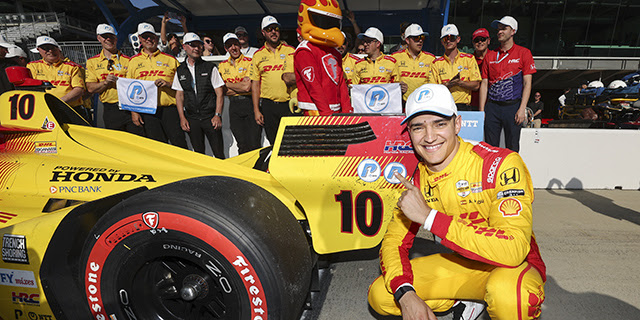
INDIANAPOLIS (Friday, May 9, 2025) – The Alex Palou Show continued Friday at the Indianapolis Motor Speedway road course, as the dominant leader of the NTT INDYCAR SERIES standings used deft tire strategy and a fast car to run away with the NTT P1 Award for the Sonsio Grand Prix.
Palou, who has won three of the first four races this season, earned his second straight pole of the year and his second in a row for this race in the No. 10 DHL Chip Ganassi Racing Honda. He saved a set of new Firestone Firehawk alternate tires for his last run in the Firestone Fast Six and took the top spot with his final lap of 1 minute, 9.3417 seconds.
“We had a bit of an advantage there with a set of new soft tires,” Palou said. “I think some people used them in Q1 (first round of qualifying), and we didn’t. Maybe that’s where the time comes.
“But that No. 10 DHL car was amazing. Super-fast. It’s been super-fast all season, honestly, but today it’s been on fire.”
It was the eighth career pole for Palou, whose gap to No. 2 qualifier Graham Rahal was a whopping .4099 of a second. Rahal’s best lap was 1:09.7516 in the No. 15 Fifth Third Bank Honda of Rahal Letterman Lanigan Racing.
Rahal led a historic day for RLL, which put three drivers into the Firestone Fast Six for the first time. Rookie Louis Foster qualified a season-best third in the No. 45 Mi-Jack Honda of RLL at 1:09.8801. His previous best was 10th in March at The Thermal Club.
Devlin DeFrancesco kept the good times rolling for RLL by qualifying fifth at 1:09.9432 in the No. 30 EVTEC Honda, tying his career best set in August 2023 on this circuit when he drove for Andretti Global.
“It feels so good,” Rahal said. “What a lap. The balance was really consistent and matched my best of the whole day. It feels great for this entire team. We needed this. We expect to be good at Indy road course, but to see it come together and have three cars in the top five is amazing.”
Scott McLaughlin will start fourth in the 85-lap race Saturday (4:30 p.m. ET, FOX, FOX Sports app, INDYCAR Radio Network) after his best lap of 1:09.8910 in the No. 3 Sonsio Vehicle Protection Chevrolet fielded by Team Penske.
Two-time series champion and two-time reigning Indianapolis 500 presented by Gainbridge winner Josef Newgarden rounded out the Firestone Fast Six with his best lap of 1:09.9829 in the No. 2 Astemo Team Penske Chevrolet.
Five-time IMS road course winner Will Power just missed putting three Team Penske cars into the Firestone Fast Six for the first time this season, as he ended up seventh at 1:09.9973 in the No. 12 Verizon Team Penske Chevrolet.
Second-year driver Kyffin Simpson continued to show his increasing pace in the No. 8 Journie Rewards Chip Ganassi Racing Honda by qualifying 10th, tying his career-best starting spot from the race last weekend at Barber Motorsports Park.
Acura Grand Prix of Long Beach winner Kyle Kirkwood, the only driver besides Palou to win this season, qualified a disappointing 21st in the No. 27 PreFab Honda fielded by Andretti Global.
A 25-minute warmup session at 11:30 a.m. Saturday (FS1, FOX Sports app, INDYCAR Radio Network) will precede the race.
CHICAGO (May 8, 2025) – Celebrating its 25th year of racing at incredible Route 66 Raceway, the NHRA Mission Foods Drag Racing Series’ return to Chicago for the Gerber Collision & Glass NHRA Route 66 Nationals presented by PEAK on May 15-18 is loaded with excitement, celebrations and action throughout the weekend.
For the third consecutive year, the special “Drag and Drive” eight-car exhibition will be part of the added bonuses for fans at Route 66 Raceway, as the PEAK Street Car Shootout presented by Sick the Magazine is back to put on an incredible show.
Featuring standout names like Alex Taylor, Tom Bailey and Bryant Goldstone, this eight-car shootout offers something unique, boasting some of the fastest street cars in the world. The cars will be in action all weekend in Chicago, starting with qualifying on Friday and ending with the championship round of eliminations on Sunday.
Taylor and Bailey will be featured on the Nitro Alley Stage at 3:40 p.m. on Friday, with a meet and greet scheduled for 3 p.m. on Saturday after the first round of eliminations.
The semifinals and finals of the PEAK Street Car Shootout take place on Sunday, with the standout drivers set to showcase some unbelievable performances from their street cars. The full list of eight competitors includes Taylor, Bailey, Goldstone, Craig Groebner, Dave Schroeder, Ed Ensor, Tom McGilton and Nick Taylor.
A. Taylor has established herself as a major star in drag racing and is also the co-host of the MotorTrend show, “Hot Rod Garage.” She was the youngest competitor at Hot Rod Drag Week when she raced at 16 in 2013 and has since built a full-chassis ’55 Chevy 210 that has made 6-second runs at more than 200 mph. Bailey, meanwhile, is the owner of “Sick Seconds 2.0,” a ’69 Camaro that produces 4,000-horsepower and is the quickest street car in the world.
It’s one of many highlights of the NHRA’s 25th anniversary at Route 66 Raceway, which promises to be a weekend to remember at the popular facility.
With four rounds of qualifying (two each on Friday and Saturday) in Top Fuel, Funny Car and Pro Stock Motorcycle, the Mission #2Fast2Tasty Challenge on Saturday and eliminations on Sunday at the special milestone race, more incredible moments – and plenty of 330-mph, 12,000-horsepower excitement – will take place in Chicago.
In 2024, Antron Brown (Top Fuel), Matt Hagan (Funny Car) and Gaige Herrera (Pro Stock Motorcycle) all secured victories at Route 66 Raceway. This year’s event will be broadcast on FS1, with final elimination coverage on Sunday, May 18 at 2 p.m. ET.
Brown earned his fourth Chicago win last season over Shawn Langdon en route to his fourth Top Fuel title. Brown is third in points behind Langdon, who has two wins in 2025. Motorsports legend Tony Stewart is second in points following his first career Top Fuel win in Las Vegas. Other Top Fuel drivers to watch are former champs Doug Kalitta and Brittany Force, who went 341 mph in Charlotte, as well as Pomona winner Clay Millican.
Matt Hagan, a four-time Funny Car world champ, won three races in 2024, including Chicago when he defeated 16-time Funny Car champion John Force. John Force Racing’s Austin Prock, the reigning world champ, is the points leader after back-to-back wins. The star-studded category also includes Paul Lee, who won in Phoenix, Jack Beckman, who is driving for Force, Bob Tasca III, Ron Capps and Chad Green.
The Pro Stock Motorcycle class is also in action in Chicago, with Matt Smith taking over the points lead following his Charlotte win. Reigning world champ Gaige Herrera won his second straight Gerber Collision & Glass NHRA Route 66 Nationals a year ago. Others to watch are Chase Van Sant, Angie Smith, Steve Johnson and Jianna Evaristo.
The race will also feature competition in the Lucas Oil Drag Racing Series and the Congruity NHRA Pro Mod Drag Racing Series, Flexjet Factory Stock Showdown division, Holley EFI NHRA Factory X and the Pingel NHRA Top Fuel Motorcycle Series.
Fans will be invited to the Nitro Alley Stage, which is the main entertainment hub in the pits. The stage hosts Nitro School, meet and greets, autograph sessions and much more. Race fans in Chicago can enjoy the special pre-race ceremonies that introduce each driver and includes the fan favorite SealMaster Track Walk. Fans are also invited to congratulate the event winners at the winner’s circle celebration on Sunday.
As always, fans get a pit pass to the most powerful and sensory-filled motorsports attraction on the planet. Fans can see their favorite teams in action and servicing their cars, get autographs and more. They can also visit NHRA’s Manufacturers Midway, where sponsors and vendors create an exciting atmosphere.
NHRA Mission Foods Drag Racing Series will feature two rounds of qualifying at 1:30 and 4:00 p.m. CT on Friday, May 16, and the final two rounds of qualifying on Saturday, May 17 at 12:00 and 2:30 p.m. CT. Eliminations will begin at 10:30 a.m. CT on Sunday, May 18. Television coverage includes qualifying action at 9:30 p.m. ET on Friday and Sunday at 11:00 a.m. before eliminations coverage at 2:00 p.m. ET.
To purchase tickets to the Gerber Collision & Glass NHRA Route 66 Nationals presented by PEAK Performance on May 16-18 at Route 66 Raceway, fans can visit www.NHRA.com/tickets. All children 12 and under will be admitted free in the general admission area with a paid adult. For more information about NHRA, including the full 2024 schedule, visit www.NHRA.com.
About Mission Foods
MISSION®, owned by GRUMA, S.A.B. de C.V., is the world’s leading brand for tortillas and wraps. MISSION® is also globally renowned for flatbreads, dips, salsas and Mexican food products. With presence in over 112 countries, MISSION® products are suited to the lifestyles and the local tastes of each country. With innovation and customer needs in mind, MISSION® focuses on the highest quality, authentic flavors, and providing healthy options that families and friends can enjoy together. For more information, please visit https://www.missionfoods.com/
About NHRA
NHRA is the primary sanctioning body for the sport of drag racing in the United States. NHRA presents 20 national events featuring the NHRA Mission Foods Drag Racing Series and NHRA Lucas Oil Drag Racing Series, as well as the Congruity NHRA Pro Mod Drag Racing Series, NHRA Flexjet Factory Stock Showdown™, NHRA Holley EFI Factory X and Johnson’s Horsepowered Garage NHRA Mountain Motor Pro Stock at select national events. NHRA provides competition opportunities for drivers of all levels in the NHRA Summit Racing Series and NHRA Street Legal™. NHRA also offers the NHRA Jr. Street® program for teens and the Summit Racing Jr. Drag Racing League® for youth ages 5 to 17. With more than 100 Member Tracks, NHRA allows racers to compete at a variety of locations nationally and internationally. NHRA’s Youth and Education Services® (YES) Program reaches over 30,000 students annually to ignite their interest in automotive and racing related careers. NHRA’s streaming service, NHRA.tv®, allows fans to view all NHRA national events as well as exclusive features of the sport. In addition, NHRA owns and operates three racing facilities: Gainesville Raceway in Florida; Lucas Oil Indianapolis Raceway Park; and In-N-Out Burger Pomona Dragstrip in Southern California. For more information, log on to www.NHRA.com, or visit the official NHRA pages on Facebook, Instagram, Twitter, and YouTube.
Cadillac Hertz Team JOTA ready for six-hour battle on fast Spa-Francorchamps circuit
STAVELOT, Belgium (May 9, 2025) – Alex Lynn’s prediction of quicker lap times in Hypercar qualifying on the recently resurfaced 7.004-kilometer (4.532-mile), 19-turn Spa-Francorchamps road course was spot on.
In fact, Lynn’s best lap of four in the 12-minute Hyperpole session Friday for the top 10 cars advancing from the 15-minute qualifying was a hefty 3 seconds quicker than 2024, when he qualified second in the Cadillac V-Series.R.
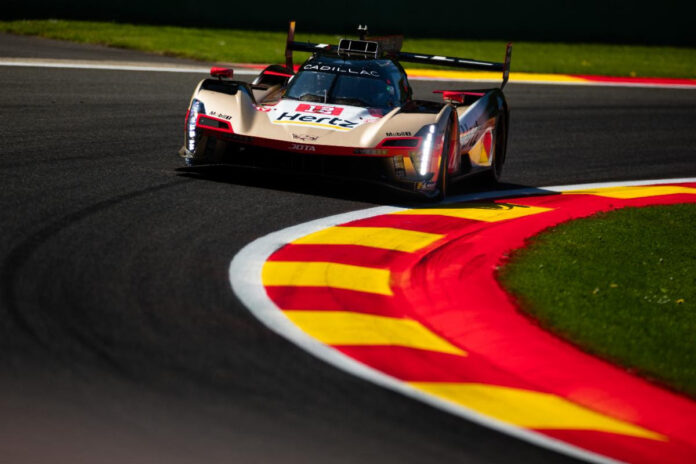
Lynn, driving the No. 12 Cadillac Hertz Team JOTA V-Series.R, qualified fifth on the 18-car grid for Saturday’s TotalEnergies 6 Hours of Spa with a lap of 2 minutes, 00.246 seconds. Lynn has advanced to Hyperpole in all three rounds of the FIA World Endurance Championship (WEC) season.
Both Cadillac Hertz Team JOTA cars will start in the top 10 for the second time this season as Earl Bamber recorded a lap of 2:00.887 in the No. 38 Cadillac Hertz Team JOTA V-Series.R to qualify 10th. Both Bamber and Lynn improved their lap times from the initial qualifying by nearly a second in Hyperpole.
The No. 50 Ferrari AF Corse earned the pole with a lap of 1:59.617.
Lynn will share driving duties with Will Stevens and Norman Nato, while Sebastien Bourdais and Jenson Button will have time behind the wheel of the No. 38 Cadillac Hertz Team JOTA V-Series.R along with Bamber.
Last year, Stevens and Callum Ilott triumphed with another manufacturer in a 1-hour, 44-minute run to the checkers following a lengthy red flag to give Hertz Team JOTA scored its first outright WEC victory as well as the first for a privateer entry in the Hypercar era. The lone Cadillac V-Series.R entry in the 2024 race, after qualifying on the front row, had pace before retiring on Lap 95 of 141 because of contact.
In its WEC Spa debut in 2023, the No. 2 Cadillac V-Series.R (Bamber, Lynn, Richard Westbrook) placed fifth after qualifying fourth. The Cadillac Racing trio went on to earn a podium in the next race at Le Mans. Hertz Team JOTA placed sixth in the 2023 race after qualifying seventh.
The race on the picturesque Spa-Francorchamps course — considered second only to Circuit de la Sarthe in speed on the WEC calendar – is key in preparation for the 24 Hours of Le Mans in four weeks. The 93rd edition of the endurance classic will be Cadillac Racing’s 20th race in WEC competition.
The race is scheduled for 8 a.m. ET / 2 p.m. CET Saturday. Live streaming coverage will be available on the FIA WEC app and the MAX app in the U.S. Radio Le Mans will stream audio coverage.
What they’re saying
No. 12 Cadillac Hertz Team JOTA V-Series.R
Alex Lynn: “I think it was a decent qualifying session. We dreamt of more as we always do, but P5 on the grid is a solid place to start tomorrow and we’ve improved the car a lot over the weekend. Both Cadillacs into Hyperpole, which is great for the team and we’re going to score some heavy points tomorrow.”
No. 38 Cadillac Hertz Team JOTA V-Series.R
Earl Bamber: “The session was OK; didn’t really get the most from it. But top 10 is OK and we’ll see what we got tomorrow and score some points.”
General Motors (NYSE:GM) is driving the future of transportation, leveraging advanced technology to build safer, smarter, and lower emission cars, trucks, and SUVs. GM’s Buick, Cadillac, Chevrolet, and GMC brands offer a broad portfolio of innovative gasoline-powered vehicles and the industry’s widest range of EVs, as we move to an all-electric future. Learn more at GM.com.
Pair of TF Sport Corvettes looking to make their way through LMGT3 field
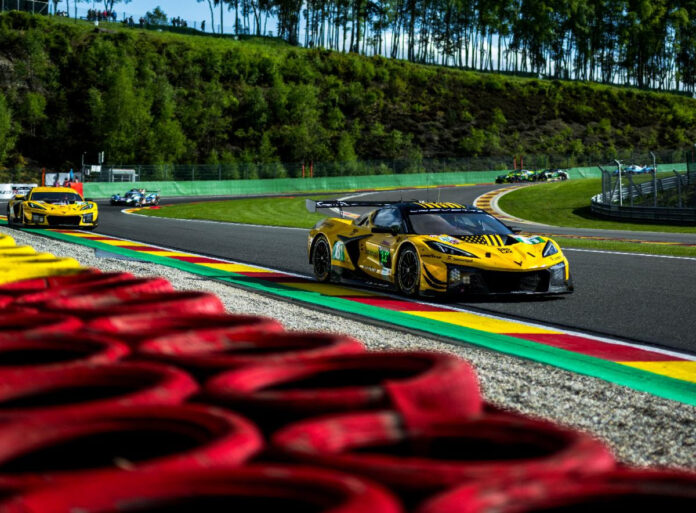
STAVELOT, Belgium (May 9, 2025) – TF Sport’s No. 81 Chevrolet Corvette Z06 GT3.R will lead the two-Corvette attack on the Six Hours of Spa on Saturday after qualifying Friday for the third round of this year’s FIA World Endurance Championship.
Tom Van Rompuy will start 11th in the 18-car LMGT3 field following the 15-minute initial qualifying session with a lap of 2:20.215 (111.723 mph). He missed getting into the 10-car Hyperpole session for the third straight race by a little less than a half-second.
He and teammates Rui Andrade and factory driver Charlie Eastwood are looking to continue their momentum from a sixth-place class result and its first finish in the points of the year last time out in Imola three weeks ago.
Meanwhile, the LMGT3 championship-leading No. 33 Corvette of Daniel Juncadella, Jonny Edgar and Ben Keating will start 17th in class after Friday’s qualifying. A winner at the season-opening round in Qatar, the No. 33 entry has started outside the top-10 at each round so far.
Despite being the heaviest car in class at all three races this season – including by 51 pounds at Spa due to the class’s mandatory success handicap – the strategy and execution by the No. 33 team has offset that disadvantage, resulting in a victory to start 2025 and a seventh-place finish at Imola.
This is the fifth straight year for the Corvette program at the Six Hours of Spa with a best result of runner-up in the 2023 GTE Am class… an entry that Keating was part of.
As is the case every year, Spa is a key race for WEC teams as it is the final dress-rehearsal for the 24 Hours of Le Mans. Corvette Racing as a program has nine class victories at the French classic, and TF Sport is anxious to use Spa as one last competitive test before this year’s 24 Hours.
The Six Hours of Spa is scheduled for 8 a.m. ET / 2 p.m. CET on Saturday. Full live streaming coverage will be available on the FIA WEC app and the MAX app in the U.S., and Radio Le Mans also will stream audio coverage of the race live.
TF SPORT POST-QUALIFYING QUOTES
DANI JUNCADELLA, NO. 33 CHEVROLET CORVETTE Z06 GT3.R: “This is always a nice track. I have some very good memories, love the track and love the place. Unfortunately pace has been a little bit off all weekend. We are missing a little bit of pace in general and running too much in the back in general. Hopefully in the race we can find a way with strategy and benefitting from others’ mistakes. If it’s a very clean race, I feel we will struggle to score (points). That would be the main goal for tomorrow.”
CHARLIE EASTWOOD, NO. 81 CHEVROLET CORVETTE Z06 GT3.R: “This is the best track in the world for me. The conditions have been amazing… sunshine but still quite cool so the track is fast. We’re not as fast as we’d like to be, but at Imola we maximized the strategy and all three drivers showed up on the day. Hopefully we can push to the front with another perfect race. We’ll take things as they come.”
Corvette Racing at Spa-Francorchamps
2021 – No. 63 Corvette C8.R: Antonio Garcia/Oliver Gavin – 4th in GTE Pro
2022 – No. 64 Corvette C8.R: Tommy Milner/Nick Tandy – 4th in GTE Pro
2023 – No. 33 Corvette C8.R: Nicky Catsburg/Ben Keating/Nico Varrone – 2nd in GTE Am
2024 – No. 81 Corvette Z06 GT3.R: Charlie Eastwood/Rui Andrade/Tom Van Rompuy – 17th in LMGT3 (DNF)
No. 82 Corvette Z06 GT3.R: Daniel Juncadella/Sebastien Baud/Hiroshi Koizumi – 12th in LMGT3
Team Chevy high-resolution racing photos are available for editorial use.
About General Motors General Motors (NYSE:GM) is driving the future of transportation, leveraging advanced technology to build safer, smarter, and lower emission cars, trucks, and SUVs. GM’s Buick, Cadillac, Chevrolet, and GMC brands offer a broad portfolio of innovative gasoline-powered vehicles and the industry’s widest range of EVs, as we move to an all-electric future. Learn more at GM.com.
The NASCAR Cup Series will be at Kansas Speedway in Kansas City for the AdventHealth 400 on Sunday, May 11, at 3 p.m. ET on FS1, MRN, and SiriusXM NASCAR Radio (Channel 90). Joe Gibbs Racing’s Christopher Bell won the pole last spring with a lap of 183.107 mph (29.491 secs), and Hendrick Motorsports’ Kyle Larson won the race.
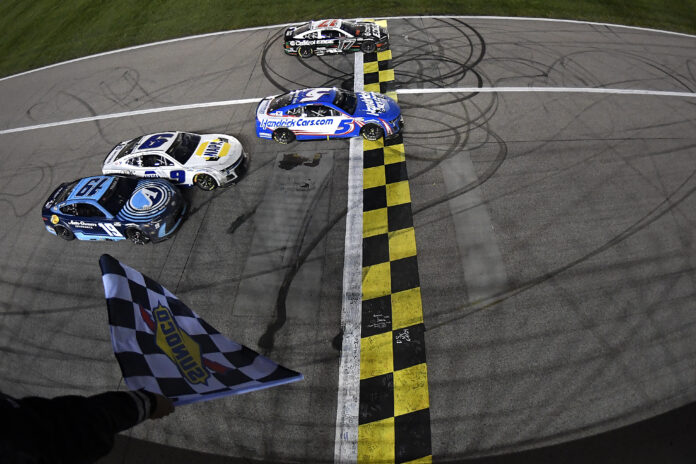
Larson edged Chris Buescher to score a wild win and set a new record for the closest margin of victory in the NASCAR Cup Series by 0.001 seconds, which eclipsed the previous margin of finish record of 0.002 seconds in the rain-delayed AdventHealth 400 at Kansas Speedway on Sunday, May 5.
Stage 1 Length: 80 laps Stage 2 Length: 85 laps (Ends Lap 165) Final Stage Length: 102 laps (Ends Lap 267)
Who and what should you look out for at Kansas Speedway?
Active Kansas Race Winners
Wins
Seasons
Denny Hamlin
4
2023, 2020, 2019, 2012
Joey Logano
3
2020, 2015, 2014
Kyle Busch
2
2021, 2016
Brad Keselowski
2
2019, 2011
Ross Chastain
1
2024
Tyler Reddick
1
2023
Bubba Wallace
1
2022
Kyle Larson
1
2021
Chase Elliott
1
2018
Denny Hamlin leads the NCS in wins at Kansas with four victories (2012, 2019, 2020, and 2023). Hamlin also has 14 top fives, 16 top 10s, and an average finish of 12.182.
Chase Elliott has one win, seven top fives, 12 top 10s, and an average finish of 10.111.
Kyle Larson leads all active NASCAR Cup Series drivers in laps led at Kansas with 703 in 20 starts. Larson has two wins, eight top fives, 11 top 10s, and an average finish of 13.0.
Christopher Bell leads all active drivers in the NCS in average starting position with an 8.2 (10 starts) and has four poles, two top fives, seven top 10s, and an average finish of 13.4.
Last week’s winner, Joey Logano, has two poles, three wins, nine top fives, 12 top 10s, and an average finish of 16.806.
Brad Keselowski has one pole, two wins, seven top fives, 14 top 10s, and an average finish of 12.533.
Whether you’re heading to a rally, relocating, or transporting a recently purchased bike, hauling a motorcycle can be stressful if you’re not properly prepared. While motorcycles are built for the road, getting them from point A to point B—without riding—requires planning, the right equipment, and proper technique.
In this blog, we’ll explore how to make motorcycle hauling both easier and safer, with a particular focus on the importance and versatility of motorcycle trailers. From choosing the right trailer to securing your bike like a pro, we’ve got you covered.
1. Choose the Right Motorcycle Trailer
One of the first and most crucial steps in safe motorcycle hauling is selecting the right trailer. The type of trailer you use can significantly impact both the ease and safety of the transport.
Types of Motorcycle Trailers
Here are the main types of motorcycle trailers available:
Open Trailers: These are affordable and lightweight, making them easy to tow. However, they expose your bike to the elements and road debris.
Enclosed Trailers: These provide full protection from weather and theft. They’re heavier and more expensive but ideal for long-distance or high-value transports.
Single vs. Multi-bike Trailers: If you plan to haul multiple motorcycles, look for dual or triple-bike trailers with proper spacing and tie-down points.
Trailer Features to Look For
Tie-down Points: Make sure the trailer has built-in anchors to secure the bike from multiple angles.
Ramp: A fold-down or detachable ramp simplifies the loading process.
Wheel Chocks: These hold the front wheel steady and make securing the motorcycle much easier.
Suspension: Good suspension helps reduce road vibrations, protecting the bike from damage during transit.
Investing in the right motorcycle trailer can dramatically improve your hauling experience.
2. Prep Your Motorcycle for Transport
Even the best trailer can’t ensure safety if the motorcycle itself isn’t prepared. Proper preparation reduces the risk of damage and keeps the transport smooth.
Inspect and Clean
Before loading your motorcycle, give it a good wash. This will allow you to spot any existing scratches or dents and prevent dirt from causing abrasions during transport. Also, check tire pressure, fluid levels, and any loose parts that might rattle or fall off on the road.
Remove Loose Items
Remove any accessories or personal items, such as saddlebags, GPS units, and detachable windshields. These can come loose and cause damage while driving.
Check for Leaks
A leaking bike can not only damage the trailer but also pose a safety hazard. Ensure there are no oil, fuel, or brake fluid leaks before loading up.
3. Use Proper Loading Techniques
Getting your bike onto a trailer might seem straightforward, but doing it incorrectly can lead to accidents, both to you and your motorcycle.
Use a Sturdy Ramp
A strong, non-slip ramp is essential. Make sure it’s securely attached to the trailer to prevent slipping while loading.
Enlist Help
Motorcycles are heavy and awkward to push. Having a second person to guide or assist can prevent tipping or injury.
Keep It in Gear
Once your bike is loaded and in place, keep it in gear. This prevents it from rolling while you secure it.
4. Secure the Motorcycle Effectively
A securely fastened bike is critical for both safety and peace of mind. This is where many motorcycle hauling efforts fall short.
Wheel Chocks
Start by stabilizing the front wheel using a wheel chock. This holds the motorcycle upright and reduces the need for one person to balance it during tie-down.
Use High-Quality Tie-Down Straps
Avoid bungee cords or cheap straps that can snap. Invest in heavy-duty ratchet straps or cam buckle straps designed for motorcycles.
Anchor Points
Secure the bike at four points—two at the front and two at the rear. Anchor to the triple trees or handlebars up front and the swingarm or frame at the back. This prevents movement in all directions.
Apply Even Tension
Overtightening can compress the suspension and cause damage. On the other hand, too little tension can let the bike shift during transport. Use even pressure and check the stability before driving.
5. Drive with Caution
Even when your motorcycle is perfectly secured, your driving behavior plays a vital role in safe transport.
Smooth Driving
Avoid sudden starts, stops, or sharp turns. Even properly tied down motorcycles can shift under abrupt movement.
Check Frequently
If you’re traveling long distances, make pit stops every hour or so to inspect the straps and ensure nothing has come loose.
6. Consider Enclosed Motorcycle Trailers for Premium Protection
While open trailers are sufficient for short hauls or fair-weather days, enclosed motorcycle trailers offer the ultimate in security and protection.
Weather Protection
An enclosed trailer shields your bike from rain, snow, and sun damage. This is especially important if you’re traveling across different climates or seasons.
Theft Deterrence
An enclosed trailer hides your motorcycle from prying eyes and can be locked up tightly. This is especially helpful at overnight stops or when parked in less secure areas.
Storage Space
Many enclosed trailers also offer additional storage options for helmets, tools, and gear, keeping everything you need in one secure location.
7. Explore Motorcycle Trailer Accessories
Accessorizing your motorcycle trailer can enhance convenience, safety, and utility.
Trailer Jacks
These provide stability when the trailer is parked, especially on uneven ground.
E-track Systems
These rail systems allow for customizable tie-down points and additional flexibility when securing one or more motorcycles.
Lighting Upgrades
LED trailer lights improve visibility and safety, especially for nighttime hauling.
Toolboxes and Storage Bins
Integrated storage solutions keep your straps, chocks, and tools organized and accessible.
8. Understand Trailer Laws and Safety Regulations
Each state or country may have specific requirements for towing trailers, including:
Trailer registration and licensing
Brake light and signal functionality
Maximum trailer weight limits
Safety chain requirements
Before hitting the road, check local regulations to avoid fines or roadside delays.
9. Maintenance Tips for Long-Term Trailer Reliability
Your motorcycle trailer needs regular maintenance just like your motorcycle.
Tire Checks
Inspect the tire pressure and tread before each trip. Trailer tires degrade faster than you might expect, especially if unused for long periods.
Lubrication
Grease the wheel bearings and moving parts periodically to avoid seizing or failure on the road.
Electrical System
Test lights, brakes, and wiring connections regularly to prevent outages or short circuits.
Conclusion
Proper preparation, the right equipment, and smart handling make motorcycle hauling easier and safer. Whether you’re a weekend road warrior or a seasoned bike collector, investing in a high-quality motorcycle trailer and using best practices can protect your prized possession and give you peace of mind on the road.
From open flatbeds to enclosed haulers, today’s motorcycle trailers offer a range of options to suit different needs and budgets. Add the right accessories, follow a maintenance routine, and use professional loading techniques to ensure each trip goes off without a hitch—literally and figuratively.
So, the next time you need to transport your bike, don’t just wing it. Use the tips above and ride confidently into your next adventure.
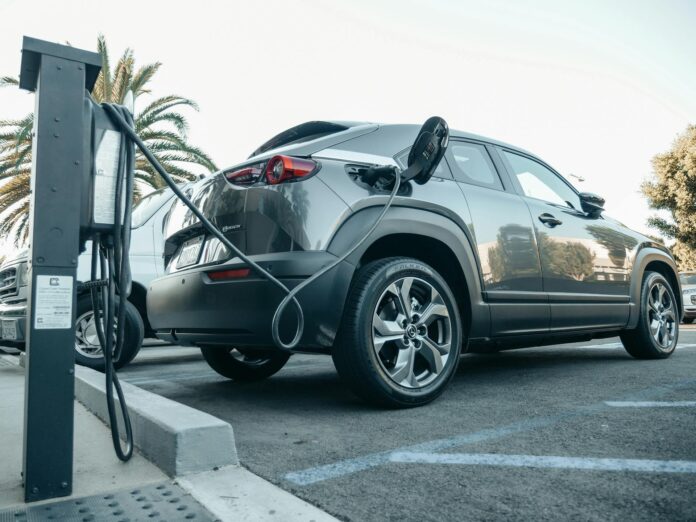
Owning an electric vehicle comes with a sense of excitement and responsibility. As more people switch to electric, one of the most critical decisions they face is how to maintain their vehicle. While gas-powered cars can often be serviced at nearly any auto shop, electric vehicles require specialized attention. Finding a certified technician is not just a matter of convenience—it’s about protecting your investment, ensuring your safety, and keeping your EV running smoothly for years.
The Importance of Certification
Regarding electric vehicles, certification is far more than a piece of paper. A certified EV technician has undergone specialized training focusing on electric cars’ unique components and systems. These include high-voltage battery systems, regenerative braking, complex software integrations, and electric drivetrains. Without proper training, a mechanic can easily make costly mistakes that damage the vehicle and put your safety at risk. Choosing someone who is properly certified ensures that your car is in knowledgeable hands.
Red Flags at the Repair Shop
It’s easy to assume that any mechanic can handle an EV, but that assumption can lead to major problems. Watch out for shops that don’t display certifications, fail to mention EV-specific expertise, or brush off your questions about electric systems. A trustworthy technician will proudly explain their qualifications and the extra steps they take to service electric vehicles. If a shop hesitates to share this information or treats your concerns lightly, it’s a sign to look elsewhere. Your EV is too valuable to leave with someone guessing their way through a repair.
Asking the Right Questions
When searching for an EV technician, it’s essential to ask direct questions about their experience and training. Ask whether they have manufacturer certifications or if they’ve completed programs specifically designed for electric vehicle systems. It’s also worth asking how long they’ve been working on EVs and what brands they are most familiar with. A qualified technician will be transparent and confident in their answers, giving you peace of mind that they know exactly what they’re doing.
The Risks of Cutting Corners
It might be tempting to save a few bucks by going to a general mechanic, but the risks can far outweigh the savings. Improper handling of high-voltage systems can result in dangerous situations, both for the technician and you once you’re back on the road. There’s also the chance of voiding your warranty if repairs are done incorrectly or with unauthorized parts. Protecting your EV’s value means investing in proper care from the very start.
Checking Reviews and Recommendations
Word of mouth can be a powerful tool when searching for an EV specialist. Ask fellow EV owners in your community or online forums who they trust. Check online reviews carefully and seek praise for consistent knowledge, professionalism, and transparency. While no shop will have a flawless record, patterns in customer feedback can reveal a lot about their expertise and service quality. Trust your instincts—if reviews consistently warn of poor communication or unresolved problems, it’s best to keep looking.
Importance of Specialized Equipment
Not all shops have the tools and diagnostic equipment needed for electric vehicles. Certified EV technicians invest in advanced technology to safely service these cars. This includes insulated tools, specialized lifts, and software for system diagnostics. Even the most knowledgeable mechanic will be disadvantaged if a shop lacks this equipment. Asking about their tools is just as important as inquiring about their training.
Manufacturer vs. Independent Technicians
While many EV owners head straight to the dealership for service, independent shops can offer excellent care if properly certified. Manufacturer-trained technicians have the advantage of direct experience with your car’s specific brand and model. However, independent mechanics with the right certifications often provide more personalized service and competitive pricing. Evaluate both options, but never sacrifice certification to save a little money.
Ongoing Education and Training
Technology in the EV world is advancing rapidly, and good technicians never stop learning. Ask potential shops how they stay current with the latest advancements. Do they attend workshops, complete annual training, or participate in manufacturer update programs? A commitment to continuous education is a sign that a technician takes their profession—and your car—seriously.
Building a Long-Term Relationship
Once you find a qualified EV technician, it’s worth building a relationship with them. Regular maintenance visits allow them to learn your car’s history, spot potential issues early, and inform you about necessary updates or repairs. Trust is key here, and it’s reassuring to know you have a trusted partner who understands both your car and your needs as an owner.
Owning an electric vehicle is an exciting journey into the future of driving. Still, it comes with the responsibility of choosing the right professionals to keep your ride in shape. By focusing on certification, asking the right questions, and avoiding shortcuts, you can ensure your EV gets the expert care it needs. With a trusted partner like LAGAS EV Repair, you can drive with confidence knowing your electric vehicle is in the hands of skilled, certified technicians who truly understand the unique demands of electric cars.
Whether you’re cruising down highways or tackling rocky trails, your motorcycle is exposed to a barrage of elements that can affect its performance and longevity. One often-overlooked component that plays a crucial role in engine health is the radiator. Essential for regulating engine temperature, your radiator keeps the bike running cool and efficient. However, it’s also a vulnerable part — one rock kicked up from the road can leave you stranded. This brings us to the topic of motorcycle radiator guards: Do you really need one?
Let’s explore what radiator guards are, what they protect against, and whether investing in one is worth your time and money.
What Is a Motorcycle Radiator Guard?
A motorcycle radiator guard is a protective screen or mesh that fits over the radiator. It’s typically made from materials like stainless steel or aluminum and is designed to prevent road debris — rocks, bugs, sand, and even larger objects — from hitting the delicate radiator fins or core.
While radiator guards come in various styles and price points, their primary function remains the same: to protect the radiator without hindering airflow. A well-designed guard ensures that your engine stays cool while shielding it from physical damage.
The Vulnerability of Motorcycle Radiators
Motorcycle radiators are usually positioned at the front of the bike, behind the front wheel. This placement maximizes airflow but also makes them highly susceptible to damage. Even a minor impact can:
Dent or puncture the radiator core
Cause coolant leaks
Impair cooling efficiency
Lead to engine overheating
Unlike cars, motorcycles lack a front grille or bumper to shield these components. Therefore, the radiator is exposed to just about everything the road (or trail) throws its way.
If your radiator is compromised, you could find yourself stuck with an overheated engine, possibly miles from the nearest mechanic.
What Can Damage Your Radiator?
Let’s break down some common threats:
1. Gravel and Rocks
Loose gravel from unpaved roads or construction zones can easily be thrown by your own or another vehicle’s tires. Even a small rock can crumple radiator fins or puncture a tube.
2. Insects and Organic Debris
Riding through insect swarms or muddy areas can clog your radiator, reducing airflow and cooling efficiency.
3. Road Salt and Water
In colder climates, road salt can corrode the metal, weakening your radiator over time. Splashing through water without protection can lead to premature deterioration.
4. Track or Off-Road Use
If you’re riding aggressively or navigating tough terrains, the chances of damaging your radiator skyrocket. Trail riders and track enthusiasts should especially consider a motorcycle radiator guard essential.
Benefits of Installing a Motorcycle Radiator Guard
If you’re on the fence about installing a radiator guard, consider the following advantages:
1. Prevents Expensive Repairs
Replacing a damaged radiator can cost hundreds of dollars. A radiator guard, which typically costs between $50 and $150, is a small price to pay in comparison.
2. Maintains Engine Efficiency
A damaged or clogged radiator compromises your engine’s ability to stay cool. A guard helps ensure consistent cooling and performance.
3. Preserves Resale Value
An intact radiator with clean, undamaged fins speaks volumes about how well a bike has been maintained. It’s a small investment that can pay off when it’s time to sell.
4. Peace of Mind
Knowing your radiator is protected allows you to enjoy the ride without worrying about unseen hazards.
Do Radiator Guards Affect Cooling?
This is a common concern among riders. Won’t adding a screen reduce airflow?
The answer depends on the guard’s design. High-quality radiator guards are engineered to allow optimal airflow while providing maximum protection. Poorly designed or cheap versions may indeed restrict airflow, leading to slightly higher engine temperatures.
To avoid this, opt for a guard from a reputable brand that uses precision-cut materials and has a proven track record in performance testing.
Aftermarket vs. OEM Guards
Some motorcycle manufacturers offer OEM radiator guards, but they’re often expensive or not included as standard equipment. Aftermarket options tend to be more affordable and offer greater variety in terms of material, style, and performance.
Pros of Aftermarket Guards:
Competitive pricing
More customization options
Frequently better airflow designs
Cons:
Quality can vary by brand
May require professional installation on some models
Always check compatibility with your bike’s make and model before purchasing.
Installation: DIY or Professional?
Installing a motorcycle radiator guard is typically a straightforward process and can be done with basic tools in less than an hour. Most guards are bolt-on and don’t require modifications. However, if you’re unsure or if the guard requires disassembly of fairings or coolant lines, it may be best to let a mechanic handle the job.
Are There Any Downsides?
While the benefits are clear, there are a few considerations to keep in mind:
Cost: While not expensive, it’s still an added accessory.
Potential Airflow Restriction: As mentioned, only if poorly designed.
Appearance: Some riders may find that radiator guards interfere with the aesthetics of their bike, though many models are sleek and stylish.
Who Really Needs a Motorcycle Radiator Guard?
While any rider can benefit from the added protection, it’s particularly important for:
Adventure and dual-sport riders encountering gravel and off-road debris
Commuters who ride through construction zones or poorly maintained roads
Track day enthusiasts pushing their bikes to the limit
Long-distance tourers exposed to a wide variety of road conditions
If your riding is limited to well-maintained urban roads at moderate speeds, the need may not be as urgent, but the protection is still beneficial.
How to Choose the Right Guard
When shopping for a motorcycle radiator guard, consider the following:
Material: Stainless steel offers strength and corrosion resistance. Aluminum is lightweight but may be less durable.
Design: Laser-cut guards are precise and often allow better airflow.
Fit: Make sure it’s specifically made for your motorcycle model.
Brand Reputation: Look for reviews, and stick with reputable brands like R&G, Evotech, or SW-Motech.
Final Verdict: Yes, You Really Do Need One
Considering the relatively low cost, ease of installation, and high level of protection offered, a motorcycle radiator guard is a worthwhile investment for virtually every rider. It’s a small price to pay for safeguarding a component that’s essential to your engine’s health.
Whether you’re commuting, touring, or trailblazing, don’t wait until a stone pierces your radiator to realize the value of a guard. Equip your bike now, and ride with confidence knowing that one of its most critical components is protected.
Becoming a Certified Network Security Engineer with Palo Alto Dumps
Getting the Palo Alto Networks Certified Network Security Engineer (PCNSE) certification shows you know your stuff when it comes to handling network security challenges with Palo Alto Networks technology. It’s made for engineers who want to prove they can set up and manage these next-generation firewalls. Holding this certification means you understand the whole Palo Alto Networks product line and can design, put in place, manage, and fix firewall setups. Many professionals use resources like Palo Alto Dumps to prepare for the exam, as they offer practice questions to build confidence.
In today’s world, where cyber threats are everywhere, the PCNSE certification is really valuable. Security pros with this cert have the skills to keep networks safe from new attacks using Palo Alto Networks gear. It’s all about improving skills in managing network security, from planning and putting things in place to configuring, running, and troubleshooting. While there aren’t official rules about what you need before taking the exam, having solid firewall and network knowledge, plus hands-on time with Palo Alto devices, is highly recommended. Most people suggest at least six months of using Palo Alto firewalls in the real world to feel confident for the test. Many people look for PCNSE Dumps and Palo Alto Dumps as part of their study plan to help them get ready.
Exploring PCNSE Dumps and Palo Alto Dumps Exam Details
Preparing for the PCNSE exam involves understanding what the certification is about, what topics are covered, and how the test is structured. Knowing these details helps you plan your study effectively, whether you use official training, documentation, practice labs, or supplementary materials sometimes known as PCNSE Dumps.
Understanding the PCNSE Certification
The Palo Alto Networks Certified Network Security Engineer (PCNSE) certification is designed for professionals who implement and manage Palo Alto Networks security platforms. Earning this credential shows you have the skills to operate and maintain the core Palo Alto Networks products. It confirms a good understanding of the security features and deployment options available within the Palo Alto Networks system.
Why the PCNSE is Important
This certification is important in the cybersecurity field because it focuses on widely used next-generation firewall technology. Professionals with the PCNSE are seen as experts capable of protecting organizations from modern online threats. The exam tests your knowledge across different stages of network security management: planning, deploying firewalls, setting up configurations, managing operations, and fixing issues. While there is no required training course or certification needed before taking the exam, having practical experience with Palo Alto Networks firewalls is very important. Many who pass the exam have spent time working directly with the devices, gaining real-world understanding.
PCNSE Exam Topics: What the Test Covers
The PCNSE exam covers a wide range of topics related to the Palo Alto Networks security platform. The syllabus is broken down into six main parts, each making up a specific percentage of the exam questions:
Core Concepts (12%)
This section focuses on the fundamental ideas behind how Palo Alto Networks products function together. It covers things like:
Different interface and zone types
Strategies for deploying decryption
Enforcing security based on User-ID
Authentication policies
The difference between management plane and data plane functions
Working in environments with multiple virtual systems (vsys)
Deploy and Configure Core Components (20%)
This larger section is about setting up and configuring the basic parts of the system. Topics include:
Creating management profiles and security profiles
Configuring zone protection
Planning and setting up deployments
Handling authorization and authentication
Using certificates
Managing routing
Setting up Network Address Translation (NAT)
Configuring site-to-site tunnels (VPNs)
Defining service routes
Implementing quality of service (QoS) based on applications
Deploy and Configure Features and Subscriptions (17%)
This part tests your ability to set up and manage specific features and subscription services. Key areas are:
Configuring App-ID for application identification
Setting up GlobalProtect for remote access
Using decryption to inspect encrypted traffic
Implementing User-ID to identify users
Configuring WildFire for advanced threat analysis
Setting up Web Proxy features
This section is important for understanding how to use the full capabilities of the platform.
Deploy and Configure Firewalls Using Panorama (17%)
Panorama is the centralized management system for multiple Palo Alto Networks firewalls. This section covers:
Using templates and template stacks to standardize configurations
Managing device groups
Overseeing firewall configurations from Panorama
This is essential for those managing larger networks of Palo Alto Networks devices.
Manage and Operate (16%)
This section focuses on the day-to-day tasks involved in running the system. It includes:
Managing log forwarding
Performing upgrades to keep the software current
Setting up and managing high availability (HA) functions to ensure continuous operation
Troubleshooting (18%)
The troubleshooting section is the largest part of the exam and tests your ability to find and fix problems. This involves troubleshooting issues with:
Site-to-site tunnels
Network interfaces
Decryption problems
Routing issues
Resource protection problems
GlobalProtect connectivity
Security policy enforcement
High availability functions
Being able to troubleshoot effectively is a critical skill for a network security engineer working with Palo Alto Networks.
Each of these sections includes many detailed subtopics that test specific knowledge and practical skills necessary for working with Palo Alto Networks solutions in a professional setting. Studying these areas thoroughly, perhaps using study materials and practice questions, is key to being well-prepared for the PCNSE.
PCNSE Exam Format and Key Details
Understanding the test structure helps you feel calmer and manage your time during the exam. The PCNSE exam has specific details you should know:
Exam Name and Code
The official name is Palo Alto Networks Certified Network Security Engineer (PCNSE). The exam code is currently PCNSE PAN-OS 10, but the code might change slightly with new PAN-OS versions. The certification name itself is PCNSE.
Exam Cost
The standard cost is $175 USD. Note: Always check the official Palo Alto Networks website or Pearson VUE for the most current pricing, as it can change.
Exam Duration
You get 80 minutes to answer the exam questions. There is also an extra 5 minutes at the start to review a security policy before the test begins and 5 minutes for a survey at the end, making the total time at the testing center around 90 minutes.
Number of Questions
The exam typically has 75 questions. While sources sometimes mention a range, 75 is the usual number.
Question Format
Questions come in various types to test different parts of your knowledge. These include:
Standard multiple-choice (pick one answer)
Multiple-answer (pick all correct answers from a list)
Scenario-based questions (often include network diagrams or graphics you need to understand)
Matching questions (where you link items from two lists)
Passing Score
The score needed to pass is not a fixed percentage but is variable. It’s often cited as being around 70-80% or reported as a scaled score, typically 860 on a scale from 300 to 1000. The exact requirement can shift slightly.
Registration
You can register for the PCNSE exam through Pearson VUE, which is the testing administrator for Palo Alto Networks certifications. You can take the exam at a physical testing center or via online proctoring from your home or office if you are eligible.
The exam is designed to make sure you have both the theoretical understanding and the practical ability to work with Palo Alto Networks products effectively in real-world situations. Preparing with realistic practice questions, which may be found in study resources including PCNSE Dumps and Palo Alto Dumps, is very important for getting ready.
Preparing for the PCNSE Exam: Using PCNSE Dumps and Palo Alto Dumps Effectively
Many people find success by using a mix of official Palo Alto Networks materials, practicing on real equipment, and using extra study help like study guides and practice questions. Quite a few candidates look for PCNSE Dumps or Palo Alto Dumps to help them see how ready they are and find topics they need to study more.
Understanding PCNSE Dumps and Palo Alto Dumps
Often, people refer to practice questions or study notes based on exam topics as PCNSE Dumps or Palo Alto Dumps. Candidates use these types of materials for a few reasons:
To get familiar with the kinds of questions asked on the exam.
To test their knowledge on different subjects.
To find areas where they might be weak and need more study.
While helpful for practice and identifying knowledge gaps, it’s important to remember that these materials are best used as a supplementary tool, not a replacement for actual learning.
Building a Strong Foundation with Official Study Materials
Palo Alto Networks provides excellent resources that should form the core of your PCNSE exam preparation. These resources are designed to give you a deep understanding of their technology.
Recommended Training
Palo Alto Networks suggests specific training courses to help you prepare.
The Core Course: EDU-210
Palo Alto Networks recommends the (EDU-210) Firewall Essentials: Configuration and Management course as a fundamental step for the PCNSE exam.
This course teaches you the basics of PAN-OS, which is the operating system for their firewalls.
It’s a great way to start, especially if you’re new to Palo Alto Networks products.
You don’t have to take this course, but it gives you a solid base of knowledge.
Building Practical Skills
Palo Alto Networks really stresses the importance of working directly with their products. This practical experience is vital for the exam and for working with the technology in the real world.
Get Hands-On Experience
Spending significant time setting up and managing these systems is crucial:
Working with Next-Generation hardware firewalls.
Using VM-Series firewalls (in cloud or virtual setups).
Configuring GlobalProtect for secure remote access.
Using Panorama to manage many firewalls from one place.
Working in different network setups (like large businesses, small offices, or data centers) helps you truly understand the concepts and gets you ready for real-world problems and scenario questions on the exam.
In-Depth Knowledge
Having a reliable source for detailed information is very important during your studies.
Relying on Official Documentation
The official documentation from Palo Alto Networks is a huge source of information.
The detailed guides, technical papers, and articles available on their website cover all parts of their products.
They are very useful for learning how to configure things, understand features, and figure out problems.
This documentation is constantly updated and is the most accurate resource available.
Putting It All Together: A Balanced Approach
Using only PCNSE Dumps without also studying the official materials and getting hands-on practice is generally not a good idea. To pass this challenging exam and be good at the job, you need true understanding, not just memorized answers.
The best way to prepare is to use PCNSE Dumps or Palo Alto Dumps as one part of your study plan. Use them to identify weak spots after you’ve studied official materials and practiced on the equipment. This approach helps you check your knowledge and focus your further study efforts.
Passing the PCNSE Exam: Recommended Study Materials
Preparing for the Palo Alto Networks Certified Network Security Engineer (PCNSE) exam requires dedicated study and practice. While official training and documentation are fundamental, using a variety of resources can significantly enhance your preparation. This guide explores helpful mobile apps and other study materials that can support your journey towards certification.
Mobile Apps to Help You Pass the PCNSE Exam
Mobile applications provide a flexible way to prepare for the PCNSE exam, letting you fit in valuable study time whenever you have a few spare moments. Several apps are available that offer practice questions and different study methods.
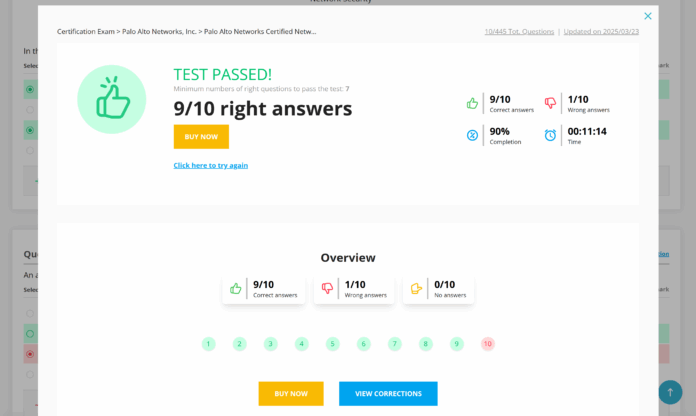
Certification Exam (iOS/Android)
This app is a popular choice that offers various study modes to help candidates prepare effectively.
Features:
Practice Mode: Study at your own pace, working through questions comfortably.
Exam Mode: Practice under timed conditions to simulate the actual test environment.
Learning Mode: A structured approach to reviewing material.
Detailed Explanations: Understand the reasoning behind the correct answers.
Bookmark Feature: Save questions for later review.
Customizable Tests: Adjust the number of questions, passing score, and test count in Practice Mode.
Works Online and Offline.
Includes an Auto Sync feature.
Offers a built-in Study Guide.
By using the app alongside resources like Palo Alto Dumps, you’ll gain the confidence and skills needed to succeed in the exam and prove your expertise with Palo Alto Networks technology.
PCNSE Exam Practice Question (Google Play)
This app is another good option, specifically for Android users, focusing on providing ample practice questions.
Features:
Practice Mode: Study flexibly without time pressure.
Exam Mode: Prepare for the timed exam setting.
Detailed Explanations: Helps clarify the concepts related to each answer.
Offline Access: Study even without an internet connection.
PCNSE All-in-One Exam (Google Play)
Designed primarily for quick review, this simple Android app is useful for getting in short practice sessions.
Features:
Exam Mode: Practice answering questions within a timed environment.
Practice Mode: Review questions, often with the ability to set the order.
Simple Design: Easy to navigate for fast practice.
Using mobile apps is an excellent supplementary method. They are ideal for reviewing practice questions, perhaps similar to those found in useful PCNSE Dumps, during commutes, breaks, or whenever you have short periods available.
Essential Study Materials Beyond Apps
In addition to official courses and documentation, other study materials can deepen your understanding and provide necessary practice. While there might not be one single required book, several resources cover topics relevant to the exam.
Mastering Palo Alto Networks (2022) by Philip Sandoval
Published by Packt Publishing, this book is a comprehensive guide that covers many updated topics important for the PCNSE.
It provides extensive detail on advanced firewall configuration.
Discusses methods for integrating Palo Alto Networks devices with cloud platforms such as AWS and Azure.
Includes real-world examples of setting up security structures for businesses.
Offers hands-on labs for using Panorama for central management.
This resource is valuable for gaining a solid technical understanding of the platform’s capabilities.
Palo Alto Networks Certified Network Security Engineer Exam Questions by Matthew Quill
Available on Amazon, this resource offers over 300 practice questions accompanied by detailed explanations.
It focuses on practical questions like scenario-based troubleshooting.
Covers improving security policy effectiveness.
Explains and compares different high availability (HA) modes (like Active/Active versus Active/Passive).
Addresses common challenges when setting up decryption policies.
Practice questions are crucial for exam preparation. Resources like this book, similar to well-structured PCNSE Dumps, can significantly help you prepare for the format and difficulty of questions you might encounter. Practicing with varied question sets, including those found in reliable Palo Alto Dumps, helps identify knowledge gaps.
Supplementary Online Resources
Several online guides and materials offer targeted information to help candidates prepare.
Certification Exam PCNSE Study Guide:
Helps by mapping exam topics to the official objectives.
Provides best practices for configuring VM-Series firewalls.
Uses flowcharts to illustrate how traffic is processed by the firewall, which is a fundamental concept.
NWExam PCNSE Materials:
Includes focused modules on complex topics.
Explains how User-ID information is shared and distributed.
Provides walkthroughs for implementing template stacks in Panorama.
Offers guidance for integrating with Cortex Data Lake.
Using a mix of study materials, including books and guides that explain core concepts and provide lots of practice questions, can greatly improve your chances of success on the PCNSE exam. Combining foundational knowledge with practical question experience from resources like comprehensive Palo Alto Dumps is a strong approach.
Ace Your PCNSE Exam with Realistic Practice Tests
Preparing for a certification exam like the PCNSE requires solid practice. Practice tests are essential because they help you understand the types of questions, the exam structure, and how to manage your time effectively. Using realistic practice questions, often found in resources sometimes called PCNSE Dumps or Palo Alto Dumps, lets you check what you know and find topics you need to review more. Below, we list some online platforms where you can find practice tests for the PCNSE.
Top Platforms for PCNSE Practice
Certification Exam (Quiz PCNSE)
This platform provides an online simulator to help you prepare for the exam.
What It Offers
Practice Mode: Study at your own pace without time pressure.
Exam Mode: Simulate the real test environment with timed conditions.
Learning Mode: Focus on understanding concepts question by question.
Auto Scroll: Convenient feature for navigating through questions.
Detailed Explanations: Get clear reasons behind the correct answers.
Bookmark: Save specific questions to come back to later.
Flash Card Memorization Mode: A tool to help you memorize key facts and terms.
AI Study Mode: An intelligent feature designed to structure your study.
Custom Test Settings: You can adjust the number of questions, the required passing score, and how many tests you want to take.
Study Guide: Additional reading material is available.
Mobile App: Practice on your mobile device.
ExamCollection
ExamCollection is a well-known place to find practice materials, often using the VCE format.
What It Offers
VCE Files: Download question files to use with VCE Exam Simulator software.
PDF Guides: Review material offline in PDF format.
Large Question Pool: Many questions covering various PCNSE subjects are available.
Keep in mind that this platform relies heavily on separate VCE software for timed practice simulations, unlike some others that have these modes built into their website.
ExamTopics
ExamTopics is recognized for its extensive collection of questions, often contributed and discussed by the user community.
What It Offers
Huge Question Database: Access a vast number of practice questions.
Community Discussions: See what other users think about the questions and answers, and discuss them.
Free Access: Many questions can be viewed and studied without paying.
PDF Downloads: Get question banks as PDFs if you pay for an add-on.
This platform is primarily a question database and doesn’t typically offer timed practice modes or other interactive study tools found elsewhere.
NWExam
NWExam focuses on providing practice tests that feel like the actual exam simulation.
What It Offers
Practice and Exam Modes: Choose between studying without a timer or taking a timed test simulation.
Unlimited Attempts: Take practice tests as many times as you need while you are subscribed.
Realistic Simulations: The questions are designed to be similar to the real exam’s style and difficulty.
Note that while it offers simulation modes, it may not include all the extra study tools like flash cards or specific learning modes found on some other sites.
ITExams
ITExams offers a large collection of questions and answers for exam preparation.
What It Offers
Extensive Q&A Database: A wide range of questions and their answers are available.
Detailed Explanations: Understand the reasoning behind the answers (this is often a premium feature).
PDF Downloads: Get the questions in PDF format with a paid plan.
Easy-to-Use Interface: Navigate the questions online easily through a simple design.
Similar to some others, this platform is more of a question bank and doesn’t typically provide timed exam simulations or advanced study features like flash cards or AI modes.
Using practice tests from reputable sources is a smart strategy to boost your confidence and readiness for the PCNSE certification exam. Choose the platform that best fits your preferred study style and feature needs.
Choosing the Right Study Platform
Finding the best way to prepare for certification exams is important. Comparing the features of different practice test websites can help you find the one that fits how you like to study.
Here is a look at features offered by different practice test websites:
Feature
Certification Exam
Examcollection
Examtopics
NWexam
ITexams
Practice Mode
Yes
No
No
Yes
Yes
Exam Mode
Yes
No
No
Yes
No
Learning Mode
Yes
No
No
No
No
Auto‑Scroll
Yes
No
No
No
No
Detailed Explanation
No
No
No
Yes
Yes
Bookmark
Yes
No
No
No
No
Flash‑card Mode
No
No
No
No
No
AI Study Mode
No
No
No
No
No
Custom of Questions
Yes
No
No
No
No
Custom Passing Score
Yes
No
No
No
No
Custom of Tests
Yes
No
No
No
No
Study Guide
Yes
Yes
Yes
No
No
Mobile App
Yes
No
No
No
No
Analyzing Platform Features
Based on the features listed in the table above, some platforms offer more tools designed specifically for active studying.
Why Certification Exam Looks Like a Strong Option
Looking at the table, the Certification Exam appears to be a strong choice for studying due to its wider range of features.
Different Ways to Practice
It provides multiple ways to test yourself, including a standard Practice Mode, an Exam Mode that feels like the actual test, and even a unique Learning Mode to help you grasp concepts.
Setting Up Practice Tests Your Way
This platform gives you a high level of control over your practice sessions. You can choose the exact number of questions you want to cover, set a custom passing score to challenge yourself, and even decide how many separate tests you want to generate.
Useful Extra Study Tools
It also offers helpful resources like a Study Guide to support your learning and a dedicated Mobile App. Using PCNSE Dumps alongside the platform can give you an edge by offering more opportunities to practice real-world scenarios. Having a mobile app makes it really easy to fit in study time no matter where you are.
Getting Ready for the PCNSE Exam
Preparing for the PCNSE certification exam is an important goal for network security professionals who work with Palo Alto Networks technology. The exam tests your knowledge on a wide variety of topics.
What the PCNSE Exam Covers
You need to understand the main concepts, how to set up and manage Palo Alto Networks firewalls, fix problems, and use tools like Panorama.
The Best Way to Prepare
Passing the PCNSE requires more than just memorizing answers. True success comes from combining different study methods.
Essential Study Steps
This includes reading official documentation, getting hands-on experience actually working with the firewalls, and using reliable study guides and practice tests.
Using PCNSE Dumps and Palo Alto Dumps Wisely
Some people look for PCNSE Dumps when getting ready for the exam. While looking at Palo Alto Dumps or similar question collections can give you an idea of question styles, simply reading through them isn’t enough to truly learn the material.
How Practice Questions Can Help
However, using practice questions found in resources like PCNSE Dumps can be useful as a tool to test what you know and find areas where you need to study more. These resources are most effective when used responsibly as just one part of your complete study plan, not as the only way to prepare.
Achieving Your PCNSE Goal
By spending dedicated time learning the concepts, practicing configurations, and using practice resources like Palo Alto Dumps to check your understanding, you can build the confidence needed to pass the PCNSE exam and earn your certification.
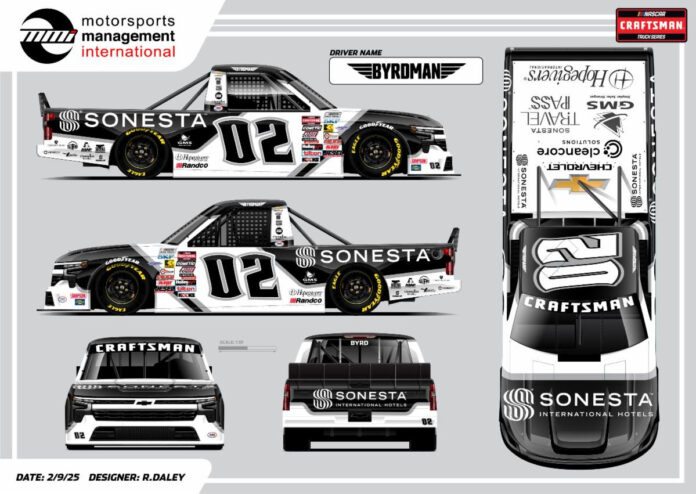
● Welcome Back: The 2025 NASCAR CRAFTSMAN® Truck Series season continues its six-week consecutive stretch of racing, with Young’s Motorsports proud to have rookie Nathan Byrd back behind the wheel of the team’s flagship No. 02 Chevrolet Silverado RST for Saturday night’s Heart of Healthcare 200 at Kansas Speedway.
● About Nathan: Byrd, 24, began racing go-karts in 2018, just after graduating High School, and he entered his first car race in February 2020.
Since then, the Goodyear, Ariz. native has raced over 30 types of cars in 348 total races at 67 different race tracks, effectively becoming one of the most diverse and interesting race car drivers in the world.
Completing more than 300 races in the first four years of his career, Byrd is no stranger to piloting race cars.
In 2024, the Indianapolis, Ind. resident turned his attention to NASCAR. He successfully made his NASCAR Xfinity Series debut at Portland International Raceway and delivered a respectable 21st-place finish for DGM Racing.
In September, Byrd made his NASCAR CRAFTSMAN® Truck Series debut at Kansas Speedway, earning a respectable 19th-place finish after starting 32nd.
● All-Aboard!: For the ninth of 25 NASCAR CRAFTSMAN® Truck Series races this season, Sonesta International Hotels will serve as the primary marketing partner for Saturday night’s No. 02 Chevrolet Silverado RST for the 134-lap race.
Sonesta International Hotels is an American hotel company with an ever-growing portfolio of hotel brands in eight countries and three continents.
As the eighth largest hotel company in the world with 1100+ properties, they have a room or suite perfect for every individual and occasion.
● Nathan Byrd Truck Series Kansas Speedway Stats: Saturday night’s Heart of Healthcare 200 will mark Nathan Byrd’s second career NASCAR CRAFTSMAN® Truck Series start in the Sunflower State.
Last fall, Byrd made his Truck Series debut, driving the No. 02 Chevrolet Silverado, finishing an impressive 19th after starting 32nd in the Kubota Tractor 200.
The race continues the fast-paced stretch of the 2025 Truck Series season and will be part of a tripleheader weekend alongside the ARCA Menards Series and NASCAR Cup Series.
Kicking off the weekend, the ARCA Menards Series will have a Friday night showdown, with the Truck Series expected to deliver its signature thrilling action under the lights in Kansas City, Kansas.
The weekend will culminate on Sunday, May 11, with the NASCAR Cup Series taking center stage on Mother’s Day for the AdventHealth 400.
Kansas Speedway serves as the site of the ninth race of an expanded 2025 Truck Series calendar, which has grown by two races compared to the 2024 season.
● Nathan Byrd Truck Series Career Stats: Entering Kansas, Byrd has 11 career Truck Series starts with an improving average finish of 25.1.
The popular driver made his Truck Series debut for the family-owned team at Kansas Speedway in September, finishing an impressive 19th. He returned to the team in October at Homestead-Miami (Fla.) Speedway before drawing the curtain on the 2024 season by participating in the year’s final race at Phoenix (Ariz.) Raceway.
So far in 2025, Byrd has started the first seven Truck Series races at Daytona (Fla.) International Speedway, Atlanta (Ga.) Motor Speedway, Las Vegas (Nev.) Motor Speedway, Homestead-Miami (Fla.) Speedway, Martinsville (Va.) Speedway, Bristol (Tenn.) Motor Speedway, Rockingham (N.C.) Motor Speedway and most recently at Texas Motor Speedway.
● Texas Motor Speedway | SpeedyCash.com 250 Race Recap: In the eighth race of the 2025 NASCAR CRAFTSMAN® Truck Series season, Young’s Motorsports and rookie driver Nathan Byrd continued their commitment to development and race-day growth during the series’ return to Texas Motor Speedway.
Mother Nature drenched the massive 1.5-mile speedway track on Friday, canceling practice, qualifying, and setting the starting grid by the rule book, which lined up Byrd a season-best 18th.
Throughout the 174-lap race, Byrd impressed with his adaptability. Despite battling grip issues, the rookie adjusted to the changing track conditions and posted competitive lap times across the first two stages.
In the final stage, Byrd continued his march forward and survived a restart in NASCAR overtime to deliver a career-best 14th-place finish for the second consecutive race.
● Young’s Motorsports’ NASCAR CRAFTSMAN® Truck Series at Kansas Speedway: This weekend will mark Young’s Motorsports’ 34th NASCAR CRAFTSMAN® Truck Series start at Kansas Speedway.
The organization posted a team-best finish of 11th at the track on Friday, May 6, 2016, with current team principal and former team mainstay driver Tyler Young at the wheel in the 2016 edition of the Toyota Tundra 250.
Since 2014, the Mooresville, N.C.-based Young’s Motorsports team has had an average starting position of 24.8 and an average finish of 23.2 in 33 Kansas Speedway starts overall.
● Young’s Motorsports’ NASCAR CRAFTSMAN® Truck Series History: Since entering the NASCAR CRAFTSMAN® Truck Series in 2012, the Mooresville, N.C., – based organization has logged 518 starts from 70 drivers, resulting in solid performances that include two victories (Talladega Superspeedway 2019 and 2021), seven top-five finishes and 33 top-10 finishes, with an average starting position of 23.2 and an average finishing position of 22.2.
● Follow on Social Media: For more on Nathan Byrd, please visit byrdracing.com, like him on Facebook (Nathan Byrd), and follow him on Instagram (@nathanjbyrd) and X |Twitter (@nathanjbyrd).
For more on Young’s Motorsports, please visit YoungsMotorsports.com, like them on Facebook (Young’s Motorsports), and follow them on Instagram (@youngsmotorsports) and X |Twitter (@youngsmtrsports).
Nathan Byrd Pre-Race Quotes:
On Kansas Speedway: “Kansas is the first track I’m going back to in the Truck series that I’ve already raced at and gotten a top 20 finish.
“In terms of competitive pace, that was actually one of my best races from a driving perspective, so I’m looking forward to returning there.”
On Kansas Speedway Preparation: “My biggest preparations for Kansas Speedway this weekend are getting good racing | simulator time to hopefully reacquaint myself with the track and doing the usual video review and talking with my crew chief and team on what I should be thinking about most heading to Kansas.”
On Returning to Kansas Speedway with Prior Experience: “It’s important as it represents a special opportunity to dial things in closer as a driver and with the setup of the truck.
“There are fewer things I have to learn in terms of how to drive the track, so I can then focus on the next tier of racing, which is how to set up the truck for the track and then qualify and race more efficiently to improve the ultimate result.”
On Goals at Kansas Speedway: “I think another top 20 finish would be satisfying, assuming that most of the trucks finish on the lead lap and we don’t have another big race of attrition. A top 20 out of true lead-lap competitive pace as a driver | truck combo would be a satisfying result. However.
“This same situation but challenging for a top 15 and being racier and moving forward after an already decent qualifying would be a more “now we’re getting it” sort of result that would really be a testament to the team’s work on the car and my abilities in finding and driving the right setup.”
On 2025 Season: “Out of 10, I would rate our season thus far as a 7/10.
“I’m happy with the progression I’ve made with the team’s hard work and support, and the 7/10 reflects the progress we continue to make and the struggles we’ve had thus far.”
On Texas Motor Speedway Finish: “I think the top 15 was another good result that I may even go so far as to say is more expected given the amount of attrition there was.
“I don’t want to throw water on that result, but I personally felt that we had more to offer in terms of the final result, especially if the driver had been a bit more diligent and intentional in getting the setup dialed in faster.
“Let’s get a lead lap finish, top-15 with average or less than average attrition, and then I’ll say that we’ve really accomplished something significant that I’m really proud of and can hang my hat on. Otherwise, I’m not sitting still, and I’m pushing for better.”
Race Information:
The Heart of Healthcare 200 (134 laps | 201 miles) is the ninth of 25 NASCAR CRAFTSMAN® Truck Series races on the 2025 schedule. A 25-minute practice for each group will occur on Saturday, May 10, 2025, from 1:05 p.m. to 2:00 p.m. Qualifying will immediately follow, beginning at 2:10 p.m. The field will take the green flag later that day, shortly after 6:30 p.m. (7:30 p.m. ET), with live coverage on FOX Sports 1, the NASCAR Racing Network (Radio), and SiriusXM NASCAR Channel 90. All times are local (CT).