Home Blog Page 81

How Small Talk in the Dental Chair Became an Art Form

Photo by depositphotos at https://depositphotos.com/

Conversation inside a dental chair presents an unusual challenge that few other professional settings share. One participant can speak freely while the other, mouth open and instruments present, can only listen, nod, or offer the occasional muffled response.

Conversation Under Unusual Constraints

Most conversational skills assume an even exchange, with both parties speaking and listening in roughly equal measure. Dental conversation flips this dynamic entirely, requiring one person to carry nearly the entire verbal exchange while remaining genuinely attentive to a patient who can barely respond. This asymmetry demands a distinct kind of conversational skill, one built around reading subtle cues rather than relying on verbal feedback as usual.

Reading Silence as Information

Without the ability to respond verbally, patients communicate through other means entirely: a slight tension in the shoulders, a flicker of the eyes, a change in breathing. Skilled conversational pacing depends heavily on picking up these nonverbal cues that professionals rely on and adjusting accordingly, slowing down, changing topics, or offering reassurance based on cues that would be easy to miss without years of practice paying close attention to this kind of subtle feedback.

Distraction as a Genuine Skill

Well-executed small talk during a procedure often serves a practical purpose beyond simple politeness, gently redirecting a patient’s attention away from any discomfort or anxiety they might otherwise fixate on. This is not accidental chatter; it reflects a deliberate, practiced skill, choosing topics and timing carefully enough to ease tension without ever feeling forced or distracting from necessary clinical focus.

The Balance Between Warmth and Precision

Maintaining genuine warmth while simultaneously performing precise, technical work requires a particular kind of divided attention. A dentist South Yarra whose patients often describe as easy to talk with has typically mastered this balance through repeated practice, managing careful clinical work and genuine, reassuring conversation simultaneously without either aspect suffering as a result.

Why This Skill Rarely Gets Recognition

This particular conversational skill receives little formal recognition, since it develops gradually through experience rather than any single training exercise. Yet its impact on patient comfort is significant, transforming what could otherwise feel like a clinical, impersonal procedure into something considerably warmer and more human. This quiet skill, refined appointment after appointment, deserves more credit than it typically receives.

An Underappreciated Craft

What looks like simple friendliness during a routine appointment actually reflects a genuinely sophisticated conversational skill, built through years of reading nonverbal cues, managing anxiety, and maintaining warmth under unusual constraints. The next time small talk during a dental visit feels effortless and natural, it is worth recognizing the considerable skill quietly at work behind that apparent ease.

Skill Learned Through Trial and Error

Nobody arrives at this level of conversational fluency immediately. Early in a career, conversations often feel stilted or overly formal, filling silence out of obligation rather than genuine connection. Over time, through countless repeated interactions with different personalities and different levels of anxiety, this skill sharpens considerably, until choosing the right topic at the right moment becomes an almost automatic, well-practiced instinct rather than something requiring conscious thought.

The Notification That Can Change an Entire Drive

Photo by depositphotos at https://depositphotos.com/

The phone buzzes while you’re driving, and almost automatically, you wonder who it is. Maybe you’re expecting an important message, or maybe curiosity simply wins. The screen gets a quick glance that feels harmless because you’ll only look away from the road for a second.

But traffic doesn’t freeze while you’re checking that notification. The car ahead can brake, a light can change, a pedestrian can step into the street, or another driver can move into your lane. By the time your eyes return to the road, the situation may be completely different.

That’s what makes distracted driving so dangerous. The distraction itself can feel tiny, but the vehicle keeps covering ground the entire time, turning a moment of divided attention into a potentially serious problem.

Your Phone Isn’t the Only Thing Competing for Attention

Phones get plenty of attention in conversations about distraction, but they’re only one part of the problem. Anything that takes a driver’s eyes, hands, or mind away from driving can interfere with the ability to notice and respond to what’s happening outside the vehicle.

Navigation is a good example. Looking down to find the next turn can become a visual distraction, while typing an address also takes a hand away from driving. Eating, reaching for a drink, adjusting music, grooming, or searching for something inside the car can create similar problems.

Passengers can be distracting without touching anything. A heated conversation or a child needing attention in the back seat can pull a driver’s mind away from traffic. The driver may still be looking forward, but looking at the road isn’t quite the same as concentrating on it.

A Few Seconds Can Cover a Lot of Pavement

A quick glance away doesn’t feel long when you’re sitting at a desk. Behind the wheel, those same seconds matter because the vehicle never stops moving. At highway speeds, a car can travel hundreds of feet during a distraction that feels surprisingly brief to the person driving.

The bigger problem is that the road can change during that distance. Traffic may slow suddenly, a vehicle might merge, or a light could turn red. A driver who isn’t paying attention loses some of the time that would normally be available to recognize the change and react safely.

That lost reaction time can be difficult to recover. Looking up and realizing traffic has stopped doesn’t instantly stop the car. The driver still needs to process what’s happening, react, and give the vehicle enough distance to slow. Sometimes those missing seconds leave too little road.

A Phone Can Tell Part of the Story

After a crash, determining whether distraction played a role may involve more than asking the driver what happened. Depending on the circumstances and what evidence is legally available, phone-related records may help establish whether there was activity around the time of the collision.

Other technology can provide context too. Dashcam footage or nearby surveillance cameras may capture a vehicle drifting, failing to slow, or behaving unusually before impact. Certain vehicle data can potentially provide information about speed, braking, or other actions immediately before a crash.

Witnesses can fill in details technology missed. Someone nearby might have seen a driver looking down or holding a phone shortly before the collision. No single clue automatically proves distraction. But when phone information, video, vehicle data, witness accounts, and physical evidence point in the same direction, the picture can become clearer.

Make the Decision Before You Start Driving

The easiest notification to ignore is the one you never hear. Silencing alerts or using a driving mode can remove the little buzz that creates the temptation to look. Putting the phone somewhere out of reach adds another useful barrier between curiosity and an unnecessary glance.

Navigation deserves the same preparation. Entering the destination and reviewing the route before pulling away means less fiddling with the screen once the car is moving. If something needs to be changed, stopping somewhere safe is better than trying to type while driving.

Other distractions can be handled ahead of time too. Adjust the temperature, choose the music, secure loose items, and deal with anything that can reasonably wait. Driving will never be completely distraction-free, but removing predictable distractions beforehand leaves more attention available for the unpredictable things happening outside.

Conclusion

Most driving distractions don’t begin with a dramatic decision. They start with something ordinary: a text arrives, the navigation needs adjusting, a drink spills, or someone in the car asks a question. The problem is that ordinary distractions happen while the vehicle is still moving through an unpredictable environment.

Once attention leaves the road, even briefly, the driver gives up valuable reaction time. Sometimes nothing happens during those seconds. Other times, traffic changes at exactly the wrong moment, and the driver looks up with far less distance available than expected.

That makes prevention surprisingly practical. Silence the phone, set the route, handle the controls, and get comfortable before putting the car in motion. A few small decisions made while parked can remove some of the biggest temptations once the drive begins.

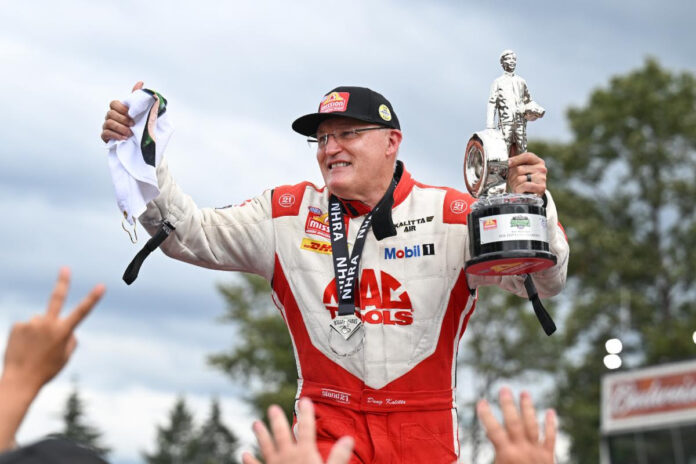
TOP FUEL’S DOUG KALITTA AGAIN RED-HOT HEADING TO NHRA BRAINERD NATIONALS

BRAINERD, Minn. (Aug. 18, 2026) – For the second straight year, things are coming together at the perfect time for Top Fuel veteran Doug Kalitta heading into this weekend’s NHRA Brainerd Nationals at famed Brainerd International Raceway.

The two-time and reigning world champion is nearly replicating last year’s ideal recipe of getting hot late in the regular season, which proved ideal for his title run in the Countdown to the Championship playoffs.

He won last year in Brainerd in his 12,000-horsepower Mac Tools dragster, giving Kalitta two straight victories. The standout followed with four straight final round appearances in the playoffs, rolling to another championship in commanding fashion.

This year, Kalitta enters Brainerd with back-to-back victories and is looking for three in a row to match what teammate and points leader Shawn Langdon did earlier in the season. Kalitta has now pulled to within five points of Langdon and another impressive showing in Brainerd could open up the chance to win the regular-season championship as well.

“Brainerd’s always been good track for us over the years,” said Kalitta, who has three career wins at BIR. “The Mac Tools guys had a few weeks off, so I know they’re raring to go. We’re all looking forward to getting there, getting this thing in the show and seeing what we can do. The car’s running great,and it’s a lot of fun right now. We’re hoping to have a great event up there at Brainerd this weekend. It’s always a great place to go – I look forward to it every year. Hopefully, it’ll be a great weekend for us.”

Last season, Kalitta (Top Fuel), Austin Prock (Funny Car) and Greg Anderson (Pro Stock) all won in Brainerd. The race will again be broadcast on FS1 with elimination coverage beginning at 6:30 p.m. ET on Sunday, Aug. 23. It is the 13th of 20 races during NHRA’s 75th anniversary season, putting Brainerd at a key point of the season.

It serves as the penultimate race of the regular season and you can sense the intensity in the air at the festive facility. This year will be no different, starting immediately with Friday’s “Battle for the Axe” presented by Visit Brainerd and Baxter during the second qualifying session. A special cash bonus and an epic chainsaw-carved axe from I Saw It In MN will go to the low qualifier of the session in Top Fuel, Funny Car and Pro Stock, setting the stage for a spectacular weekend in Brainerd.

Kalitta and his team, led by crew chief Alan Johnson, have shown impressive improvement all year, qualifying first in Sonoma and third in Seattle. There’s a loaded field in Top Fuel, including Langdon, Leah Pruett, Tony Stewart, four-time champ Antron Brown, rookie sensation Maddi Gordon, Josh Hart and Justin Ashley, but the continuous improvement is all part of Johnson’s plan.

The team seems to find another gear this time of year and Kalitta is simply thankful to be part of it as he gears up to race for a third world title in four years.

“Connie (Kalitta, team owner) has had my back for years. It’s just incredible to have someone like him supporting you,” Kalitta said. “It’s been a dream come true for me. You definitely have to cherish things because they don’t come easy. It’s just an incredible team effort. Alan has this car dialed in and we’re fortunate to have him on this team. This is really the time of the year he really focuses on making it happen. It’s going to be exciting and I’m looking forward to hopefully continuing what we’re doing as a team. We’re clicking right now, but it’s not going to be easy by any means.”

Two-time reigning world champion Austin Prock earned his first Brainerd win last year over J.R. Todd. This year Prock has one win, while Todd is the most recent winner following his Seattle victory. Three-time champ and Brainerd honoree Capps leads the points thanks to three wins 2026, while past champ Jack Beckman, Funny Car newcomer Jordan Vandergriff and four-time world champ Matt Hagan are also close behind.

Last year, six-time Pro Stock world champ Greg Anderson won in Brainerd over KB Titan Racing teammate Dallas Glenn, giving the Minnesota native his fourth win at BIR. Anderson currently leads the points, thanks to his wins in Pomona, Maryland and Seattle. Glenn, who won the title in 2025, is second, with three wins as well.

The NHRA Brainerd Nationals will also feature thrilling competition in the NHRA Lucas Oil Drag Racing Series and the return of the Right Trailers Outlaw Street category.

Brainerd race fans can enjoy the special pre-race ceremonies that introduce and celebrate each of the drivers racing for the prestigious Wally on Sunday and includes the fan favorite SealMaster Track Walk. The final can’t-miss experience of any NHRA event is the winner’s circle celebration on Sunday after racing concludes, where fans are invited to congratulate event winners.

As always, fans get an exclusive pit pass to the most powerful and sensory-filled motorsports attraction on the planet. Fans get a unique chance to see teams in action and service their hot rods between rounds, get autographs from their favorite NHRA drivers, and more. They can also visit Manufacturers Midway, an exciting atmosphere that includes interactive displays, merchandise, food and fun for the entire family.

NHRA Mission Foods Drag Racing Series qualifying will feature two rounds at 3:30 and 6:00 p.m. CT on Friday, Aug. 21 and the final two rounds of qualifying on Saturday, Aug. 22 at 12:00 and 2:30 p.m. Final eliminations are scheduled for 11:00 a.m. CT on Sunday, Aug. 23. Television coverage includes qualifying action on FS1 at 11:00 p.m. ET on Friday and 10:30 p.m. ET on Saturday, and eliminations at 8:30 p.m. ET Sunday.

To purchase tickets to the NHRA Brainerd Nationals at Brainerd International Raceway, fans can call 866-444-4455.


About Mission Foods

MISSION®, owned by GRUMA, S.A.B. de C.V., is the world’s leading brand for tortillas and wraps. MISSION® is also globally renowned for flatbreads, dips, salsas and Mexican food products. With presence in over 112 countries, MISSION® products are suited to the lifestyles and the local tastes of each country. With innovation and customer needs in mind, MISSION® focuses on the highest quality, authentic flavors, and providing healthy options that families and friends can enjoy together. For more information, please visit https://www.missionfoods.com/

About NHRA

NHRA is the primary sanctioning body for the sport of drag racing in the United States. NHRA presents 20 national events featuring the NHRA Mission Foods Drag Racing Series and NHRA Lucas Oil Drag Racing Series, as well as the JBS Equipment NHRA Pro Mod Drag Racing Series presented by Elite Motorsports and NHRA Flexjet Factory Stock Showdown™ at select national events. NHRA provides competition opportunities for drivers of all levels in the NHRA Summit Racing Series and NHRA Street Legal™. NHRA also offers the NHRA Jr. Street® program for teens and the Summit Racing Jr. Drag Racing League® for youth ages 5 to 17. With more than 100 Member Tracks, NHRA allows racers to compete at a variety of locations nationally and internationally. NHRA’s Youth and Education Services® (YES) Program reaches over 30,000 students annually to ignite their interest in automotive and racing related careers. NHRA’s streaming service, NHRA.tv®, allows fans to view all NHRA national events as well as exclusive features of the sport. In addition, NHRA owns and operates three racing facilities: Gainesville Raceway in Florida; Lucas Oil Indianapolis Raceway Park; and In-N-Out Burger Pomona Dragstrip in Southern California. For more information, log on to www.NHRA.com, or visit the official NHRA pages on Facebook, Instagram, Twitter, and YouTube.

The Types of NASCAR Bets You Can Make

Do you love watching the National Association for Stock Car Auto Racing? It’s an intense and exciting sport to watch. You get to experience high-speed races where powerful, unique cars whizz around the oval track, with only one car placing first at the end.

Since NASCAR started in 1948, it has been common for fans of the sport to place wagers on who they think will win. It makes the entire experience that much more exciting, after all, as you don’t only care about the outcome because of your car and racer preference, but also because you could win or lose some cash. Are you interested in the types of bets you can make on the best NASCAR race? Here are some of the most popular to consider to get your heart rate beating that much faster.

The Outright Winner

Betting on the outright winner is the most straightforward kind of NASCAR bet. This essentially means placing a wager on exactly who you think will come first. You will only win if that car ends up in first place, not if they come second or any other place.

If you like simple yet engaging types of bets, you should also visit Lonkero Casino online. While it’s not a sportsbook for betting on matches, it does offer a wide variety of casino games, such as slots and live poker, to keep you engaged. So, if there is no race coming up, you can still enjoy a serious thrill. There’s so much to do on there, and it offers a reputable, immersive experience that all gamers can enjoy.

The Stage Winner

Bets get slightly more complicated when you start looking at stages. NASCAR races are split into stages, and the cars that come first in each stage don’t necessarily win overall at the end. So, you can place a bet on who will come first at specific stages.

The Podium Bet

A podium bet allows you to place a wager on a car you think will come first, second, or third in the race. Due to this, it’s often considered a gentler way of betting. If the car you have bet on doesn’t end up ahead of everyone else, you still have a chance of winning some money.

The Group Matchup

This is another fun way to bet on NASCAR. For the group matchup, you select a smaller group of cars, such as three or four, to go up against each other. You essentially pick who you think will win within that smaller group.

Live In-Play Betting

If you prefer dynamic, in the moment betting, then live in-play betting might be the right kind of bet for you. With this, you can place bets once a race has already begun. During the race, the odds will change in real time, so you can place bets as you go, perhaps taking advantage of better odds due to something that has happened live on the TV in front of you.

Choosing a License Plate Frame That Lasts

A license plate holder spends years in one of the most exposed areas of a car. Rain, road dirt, vibration, summer heat, winter frost, and repeated washing all affect its condition. A frame that looks fine when new can quickly become loose or brittle if its materials and mounting system are not designed for regular road use.

What Makes a Plate Frame Durable?

Appearance is easy to judge, but durability depends on details that are less obvious. Material strength, mounting points, rigidity, and plate fit determine how the holder behaves after thousands of kilometers.

Well-designed durable license plate frames should keep the plate stable without developing excessive movement or rattling. Alite approaches this problem through several mounting concepts, including conventional alternatives, magnetic systems, adhesive solutions, and mechanical frameless holders.

A plate should fit securely without unnecessary pressure. Too much free movement can create vibration and noise, while poor alignment places additional stress on attachment points.

Different Ways to Build a Lasting Mount

Durability does not always require a thick plastic border. Modern plate mounting systems can remove the conventional frame completely and secure the number plate in other ways.

Alite Maglock, for example, uses a magnetic mounting concept. The system provides a clean attachment point while allowing the plate to be removed without repeatedly working with conventional screws.

Alite Nanotape takes a different route. It uses automotive mounting tape to create a low-profile, frameless installation. With fewer visible components around the plate, the finished setup remains simple and closely integrated with the bumper.

Alite Easyсlick offers another approach by combining a frameless appearance with mechanical attachment. These different systems show that long-term stability can come from the mounting design itself rather than simply making a traditional plastic frame thicker.

Conditions That Test a Plate Holder

Exterior accessories experience conditions that interior parts never face. At highway speeds, the plate area is exposed to continuous airflow and vibration. In winter, moisture, dirt, and road salt collect around the mounting points. Direct sunlight can heat dark components considerably during summer.

A reliable mounting solution should account for:

  • vibration during everyday driving;
  • exposure to water and road dirt;
  • changing seasonal temperatures;
  • repeated vehicle washing;
  • secure contact with the plate and vehicle.

The mounting method should also suit the way the car is used. A daily-driven vehicle may prioritize a secure, low-maintenance installation, while an owner who regularly removes the plate may prefer a system designed for easier detachment.

Good Installation Extends Service Life

Even strong materials cannot compensate for poor installation. The mounting surface should be prepared correctly, attachment points need to be aligned, and the plate should sit evenly without unnecessary tension.

This is especially important with different mounting technologies. Magnetic systems depend on correct positioning, adhesive mounts require a properly prepared surface, and mechanical holders need accurate attachment. Following the intended installation method helps each system perform as designed.

A quick inspection from time to time is also useful. Checking the plate after winter, long trips, or frequent car washes can reveal movement or wear before it becomes a larger problem.

Choosing a lasting license plate holder is therefore about more than finding the strongest-looking frame. Material, mounting technology, vehicle compatibility, and installation all contribute to durability. Whether the solution uses magnets, automotive tape, or mechanical attachment, a well-designed system should keep the plate secure while remaining a discreet part of the car.

Electric vs. Hydraulic Press Brake: Which Is Better for Your Sheet Metal Shop?

It is extremely crucial for a sheet metal shop to select the right press brake. The right machine makes better products, saves time, and saves money. There are two basic models: electric press brakes and hydraulic press brakes. The two machines are used for bending metal sheets, but they do so in different ways. Both come with their own advantages.

This guide explains the difference in very simple language. It will help you understand the advantages of electric press brake and choose the best machine for your needs. 

What Is an Electric Press Brake?

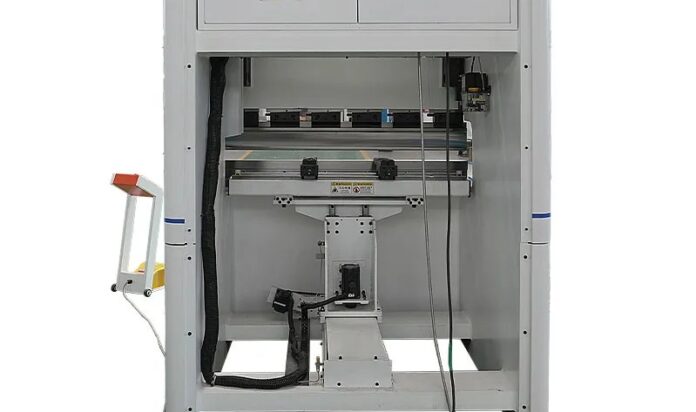
Electric Press Brakes are machines that bend metal sheets powered by an electric motor. They do not include hydraulic oil. Because the movement of the machine is controlled by the motor, the machine moves smoothly and quickly.

This machine is used by many factories as it provides accurate results. No oil can drip on the floor, which also adds to its cleanliness.

The most important benefits of electric press brake machines are that they are electricity-saving, require less maintenance, and are very accurate in making bends.

What Is a Hydraulic Press Brake?

A hydraulic press brake is a press brake that works with the help of hydraulic oil and a cylinder, which is a kind of hydraulic press. Under the action of the pressure, the metal plate is formed into the desired shape.

This kind of machine has been in use in factories for many years. It has high strength and can be used to bend thick metal plates.

Hydraulic press brakes are still being employed in many heavy industry applications, as they are suitable for large and heavy jobs.

The Main Difference Between Both Machines

The most important difference is in the manner in which they generate force.

The electric press brake is one that uses an electric motor.

A hydraulic press brake is a press brake that is operated by oil pressure.

This basic difference affects the speed of the machine, the amount of energy it consumes, and the maintenance requirements.

Speed Difference

When producing a large number of metal parts on a daily basis, speed is essential.

An electric press brake is faster due to its quick start and stop time of the electric motor. It can complete an arc and then go to the next arc without pause.

Another option is a hydraulic press brake, which is also quick but requires time to build up oil pressure for each press. Therefore, it can be slower for extended runs of a product.

With a lot of small parts made daily, an electric machine can help you complete more tasks in the shop.

Accuracy Difference

All metal components must be the appropriate shape. Minor errors mean a loss of material and cost.

The electric press brake provides extremely precise bends. The movement is powered by the motor so that this same bend can be performed numerous times.

A hydraulic press brake is also accurate, but slight oil pressure and/or temperature changes can impact the result with extended working hours.

An electric machine is usually the preferred machine for products that require perfect measurements.

Energy Use Difference

Frequent power bills can be expensive in the factory.

An electric press brake is only powered when it is moving. Once stopped, does not expend much energy.

A hydraulic press brake maintains the hydraulic system and consumes more electricity during the day.

With a lot of hours worked in your shop, an electric machine can help save on electricity costs.

Maintenance Difference

While all machines require maintenance, some require more than others.

An electric press brake is easy to maintain. It is less complex than a hydraulic press brake because it has fewer moving parts. No hydraulic oil to change, no oil filters to change.

Regular maintenance is required for a hydraulic press brake. Inspection of oil, filter replacement, hose inspection, and identification of leaks are required.

The fewer maintenance issues there are, the less downtime there will be, and the less money will be spent on repair.

Noise Difference

A peaceful work environment is good for employees.

It is quieter with an electric press brake due to the quiet motor.

A hydraulic press brake produces more noise, as the hydraulic pump is operating.

If you wish to have a less noisy workshop, an electric machine would be more viable.

Thick Metal Difference

It is vital to the bending process to know what kind of metal you are working with.

A hydraulic press brake can be used to process thick steel plates and heavy materials. Has the ability to build very high pressure for hard work.

Thin and medium-thickness metal sheets are very suitable for use in an electric press brake. It provides clean and accurate bends but may not be the most suited for very heavy work.

Consider materials prior to selecting a machine.

Cost Difference

Another key factor is the purchase price.

In the initial stages, an electric press brake tends to be more expensive. But it can save money in the future as it consumes less electricity and requires less maintenance.

The hydraulic press brake is generally cheaper initially to purchase, but may incur more maintenance and energy costs over time.

Many business owners do not consider just the initial price but the overall cost.

Best Uses for an Electric Press Brake

For businesses that produce a lot of small or medium-sized pieces, an electric press brake might be the best option.

Frequently employed in:

Electronics

Kitchen equipment

Office furniture

Light metal products

Precision parts

The processing of these industries requires bending quickly and accurately every day.

Best Uses for a Hydraulic Press Brake

A hydraulic press brake is suited for heavy-duty applications.

It’s typically used in:

Construction equipment

Large steel parts

Agricultural machines

Heavy industrial products

Thick metal fabrication

These jobs require a greater bend than light machines can offer.

How to Choose the Right Machine

There are a few simple questions to ask yourself before purchasing a press brake.

Which of the following metals do you bend most frequently?

Use small or large sheets?

How many components do I produce per day?

Should people cut down on their electricity usage?

What is my maintenance capability?

What is my budget?

Your answers will help you determine which machine you will want for your shop.

Choose a Trusted Manufacturer

Just as crucial as the type of machine is the quality of the machine.

A trusted China CNC Sheet Metal Machinery Manufacturer can supply high-quality machines, state-of-the-art CNC systems, customer service, and quality spare parts. Another advantage of purchasing from an experienced manufacturer is that your machine shall function properly for many years.

Final Thoughts

Press Brakes can be used for sheet metal, either electric or hydraulic. This will depend on the work that your shop performs.

If speed is a priority, electricity costs are a problem, maintenance is an issue, or very accurate bends are required, then an electric press brake may be an ideal choice. If you have heavy and thick metal sheets that require more power and you bend them regularly, then a hydraulic press brake is the right option.

Once you have learned these simple differences, you will be able to select the appropriate machine, enhance your production, and help your sheet metal shop thrive.

The Carbon-Ceramic Rotor Myths That Won’t Die in the Paddock

Photo by depositphotos at https://depositphotos.com/

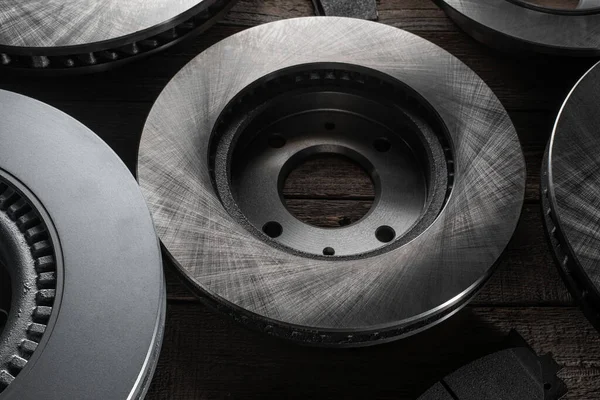
Walk down pit lane at a GT race and you’ll hear someone gesture at the glowing black-gray discs behind a car’s wheels and say something confident about the carbon-ceramics on their friend’s coupe. Same tech, right? Not close. The rotor bolted to an endurance car and the rotor sitting under an option-sheet upgrade share a family name and almost nothing else, and that mix-up is the source of most of the bad information floating around the paddock.

Here are the assumptions worth pulling apart, one at a time, before the next race weekend.

Carbon-Carbon and Carbon-Ceramic Are Not the Same Rotor

This is the confusion sitting underneath most of the others. Prototype and top-tier racing brakes are carbon-carbon: carbon fiber in a carbon matrix, built to run at extreme temperatures and useless before they get there. Road-car rotors are carbon-ceramic, a silicon carbide matrix reinforced with carbon fiber, engineered to work from a cold morning start on the way to the grocery store.

The performance gap between the two is real. A feature on endurance braking noted LMP1 carbon rotors weigh around five pounds each, against the 24-plus pounds of the cast-iron rotors on GTE cars, and lose only a few millimeters across the full 24 hours at Le Mans. That’s a different animal than what bolts to a road car, no matter what the marketing suggests.

The Endurance Racing Origin Story Isn’t the Whole Story

It’s tempting to draw a straight line from Le Mans to the showroom. The line exists. It just bends through aerospace first. Carbon brake materials were developed for aircraft landing gear well before Formula 1 borrowed them in the mid-1970s, and the ceramic variant that eventually reached road cars is a later, calmer cousin built for a different job.

Road-going carbon-ceramic rotors first appeared on production cars right around the turn of the millennium, initially on a Porsche 911 and shortly after on a Ferrari. Endurance racing proved the physics. It didn’t hand over the same rotor.

The Weight Savings Matter More Than the Fade Resistance

Ask a fan why a team runs carbon-ceramics and the answer is usually “they don’t fade.” Fade resistance is part of it. The bigger prize is mass, and it’s in the worst place a car can carry it.

A carbon-ceramic disc runs roughly half the weight of a cast-iron equivalent. That’s unsprung, rotating mass at each corner, which affects suspension response, steering feel, acceleration, and stopping distance. Take it off the wheel and the whole car changes character. The heat behavior is a bonus stacked on top of a chassis-dynamics win.

These Rotors Are Not Machined Like Metal

The other misconception that goes unchallenged is the idea that a carbon-ceramic rotor is an exotic recipe stamped through a normal disc line.

That’s closer to how technical ceramics get made than how brake rotors are traditionally produced. If you want to understand why the finished part behaves the way it does, the honest starting point is the family of industrial ceramic materials it belongs to, not the cast-iron rotor it looks like.

The Price Isn’t Only a Materials Cost

The sticker shock on an option-sheet carbon-ceramic package gets blamed on “exotic material,” as if the disc were carved out of something rare. The material matters. Most of the cost is time and process.

A cast-iron disc can be produced in a couple of hours. A carbon-ceramic disc needs weeks of controlled heat, infiltration, machining, and inspection before it leaves the plant. Capacity is finite, and the equipment doesn’t scale the way an iron foundry does. When someone in the paddock argues the technology should trickle down faster, that’s the constraint they’re arguing against.

The Takeaway for the Paddock

Understand these five points and the rest of the debate gets simpler. The endurance-racing rotor and the road-car rotor are related, not identical, and they were largely built to solve different problems.

Online Casinos in Singapore: Payment Trends, Technology and Player Protection

Photo by depositphotos at https://depositphotos.com/

Online casino technology has evolved rapidly over the past decade. Mobile-first platforms, digital wallets, cryptocurrency payments and live-dealer streaming have changed how gambling services operate internationally. For users in Singapore, however, technological accessibility must not be confused with legal availability or operator reliability.

Singapore maintains strict controls over gambling. The Gambling Regulatory Authority regulates gambling activities under legislation including the Gambling Control Act 2022, while the authorities continue to take action against unlawful remote gambling operations. Anyone researching an online platform must therefore consider local law, payment security and player protection—not simply game selection or promotional offers.

This article examines the major payment and technology trends shaping online casinos, alongside the safeguards consumers should understand. Other than check, you can also check out Best Online Casino Singapore list for more information.

Understanding Singapore’s Remote Gambling Rules

The ability to access an international website does not mean that its gambling services are legal in Singapore.

Singapore’s gambling framework generally prohibits unlicensed gambling services, including remote services offered through websites and mobile applications. The Gambling Regulatory Authority oversees the country’s regulated gambling environment, while enforcement agencies can act against unlawful operators, agents and participants.

According to the Singapore Police Force, a person who gambles with an unlawful gambling service provider may face a fine of up to S$10,000, imprisonment of up to six months, or both. Operators and agents face substantially heavier penalties.

Consumers should consult the Gambling Regulatory Authority and current Singapore legislation for authoritative information. Independent resources, such as Online Casino Singapore guide, may help explain platform features and assessment criteria, but they should not replace official legal advice or be treated as confirmation that a particular service is lawful.

Online Casino Payments Are Becoming More Diverse

Payment convenience is one of the main areas in which international online casinos compete. Traditional debit and credit cards remain familiar, but many platforms now support bank transfers, e-wallets, prepaid methods and digital currencies.

Each option presents a different combination of processing speed, cost, privacy and consumer protection.

Bank cards

Cards offer a familiar payment experience and usually provide clear transaction records. However, availability can depend on the issuing bank, the merchant’s location and local restrictions. A successful deposit does not prove that an operator is licensed or permitted to serve Singapore residents.

Withdrawal processing may also take longer than deposits because the operator could require identity verification before releasing funds.

Bank transfers

Bank transfers may accommodate larger transactions, but they are not always fast. International transfers can involve intermediary charges, foreign-exchange costs and additional compliance checks.

Consumers should be cautious if an operator requests payment to an individual account, frequently changes its banking instructions or asks users to describe a gambling payment as an unrelated purchase. Such practices may indicate weak controls or an attempt to avoid financial oversight.

E-wallets

E-wallets can create a separation between a player’s main bank account and the gambling platform. They may also provide faster processing than conventional bank transfers.

Nevertheless, e-wallet acceptance varies by operator and jurisdiction. Fees, account limits and withdrawal eligibility should be checked before making a deposit. Some casino bonuses may also exclude particular e-wallet payment methods.

Cryptocurrency

Bitcoin, stablecoins and other digital assets have become increasingly visible in online gambling. Their appeal usually centres on international transferability, wallet-to-wallet payments and potentially faster settlement.

Yet cryptocurrency does not make an online casino automatically safe, anonymous or legal. Blockchain transactions are generally difficult to reverse, asset values can fluctuate, and funds sent to the wrong wallet address may be permanently lost.

Why Crypto Casinos Are Attracting Attention

Crypto-focused casinos often promote rapid payments, reduced dependence on traditional banking channels and games that use blockchain-based verification. Some platforms also accept stablecoins such as USDT, which are designed to maintain a more stable value than assets such as Bitcoin or Ether.

Users researching a crypto casino Singapore guide should look beyond the list of supported coins. Important questions include:

  • Which blockchain networks does the casino support?
  • Are deposit addresses generated securely?
  • Are network and withdrawal fees disclosed?
  • Does the operator require identity verification?
  • What happens if a user deposits through the wrong network?
  • Are withdrawal limits and processing rules clearly stated?
  • Which legal entity controls the platform?
  • Is the stated gambling licence genuine and current?

A platform may support cryptocurrency while offering little meaningful protection if a dispute arises. The payment technology and the operator’s trustworthiness must therefore be evaluated separately.

Blockchain and Provably Fair Games

One of the most discussed technological features in crypto gambling is “provably fair” gaming. This system can allow players to verify that a game result was generated using disclosed cryptographic inputs rather than changed after a wager was placed.

The precise implementation varies, but it commonly involves a server seed, a client seed and a cryptographic hash. The player can use these values to check the result after the game.

Provably fair technology can improve transparency at the game-result level, but it does not answer every safety question. It does not confirm that:

  • The casino will process withdrawals
  • The operator holds a valid licence
  • Player data is adequately protected
  • Bonus conditions are reasonable
  • The platform follows Singapore law
  • Responsible-gambling controls are effective

Consumers should treat provable fairness as one assessment factor, not as a complete guarantee of platform integrity.

Mobile Technology Is Now the Default

Many online casino platforms are designed primarily for smartphones rather than desktop computers. Responsive websites and progressive web applications can offer quick access without requiring a traditional app download. Some operators also distribute native Android or iOS applications.

Mobile convenience creates additional security considerations. Before installing casino-related software, users should check:

  • Whether the application comes from an official and verifiable source
  • Which device permissions it requests
  • Whether the connection is encrypted
  • Whether two-factor authentication is available
  • Whether login and withdrawal alerts can be enabled
  • Whether the platform has a clear privacy policy

Downloading an installation file from an unknown source can expose a device to malware or credential theft. Users should never disable security protections simply because a website instructs them to do so.

Live-Dealer Streaming and Faster Interfaces

Live-dealer games combine video streaming with real-time betting interfaces. Improvements in mobile connectivity and video compression have made these games more accessible on smartphones.

Modern platforms may also use faster navigation, personalised game suggestions and automated promotions. Although these features can improve usability, they may encourage longer or more frequent gambling sessions.

Helpful player controls should be as visible and easy to use as deposit functions. These can include:

  • Deposit and spending limits
  • Session reminders
  • Cooling-off periods
  • Self-exclusion
  • Access to transaction history
  • Clear account-closure procedures
  • Links to independent support services

A platform that makes depositing effortless but hides its limit-setting and account-closure tools should be treated cautiously.

Licensing Requires Proper Verification

Displaying a licence logo in a website footer is not sufficient evidence of regulation. Logos and licence numbers can be copied from legitimate operators.

Users should identify the stated regulator and verify the licence through the regulator’s official register where one is available. They should also confirm that the licensed company name and approved domain match the website being used.

A licence from another jurisdiction does not necessarily authorise an operator to offer services in Singapore. It may provide information about how the operator is supervised elsewhere, but it does not override Singapore’s gambling laws.

Other warning signs include:

  • No identifiable operating company
  • Conflicting company names across the website
  • Missing licence details
  • An unverifiable office address
  • Recently registered or frequently changing domains
  • Terms that permit withdrawals to be cancelled without a clear reason
  • No independent complaint procedure
  • Customer support available only through an anonymous messaging account

Bonus Terms Can Affect Withdrawals

Casino promotions often emphasise the headline bonus while placing the most important restrictions in the terms and conditions.

Before accepting an offer, users should review:

  • Wagering requirements
  • Eligible games
  • Maximum bet rules
  • Minimum deposit
  • Withdrawal limits
  • Payment-method exclusions
  • Bonus expiry dates
  • Country restrictions
  • Identity-verification requirements

For example, a large bonus with a high wagering requirement may be less useful than a smaller offer with simpler conditions. Violating a maximum-bet rule while using bonus funds can also result in winnings being cancelled.

Terms should be readable, accessible before registration and applied consistently. Unclear or frequently changing rules are a significant warning sign.

Identity Verification and Data Protection

Reputable gambling operators may perform know-your-customer checks to verify identity, age and source of funds. These procedures can support fraud prevention and regulatory compliance, but they also require users to submit sensitive personal information.

Before uploading documents, users should establish who is collecting the data, why it is required, how it is stored and whether the website is authentic. Sensitive documents should never be sent through an unofficial social-media account or an unsecured communication channel.

Claims of “no KYC” should also be approached carefully. An operator may advertise registration without verification but request extensive documents when a withdrawal is made. Users should read the complete verification policy rather than relying on promotional wording.

Responsible Gambling Must Remain Central

Payment speed and new technology do not change the financial risks of gambling. Cryptocurrency can make spending feel less tangible because bets are denominated in digital assets rather than Singapore dollars. Price volatility can also magnify gains or losses outside the gambling activity itself.

Basic safeguards include:

  • Setting a fixed entertainment budget
  • Avoiding borrowed money
  • Never attempting to recover losses through larger bets
  • Monitoring the value of cryptocurrency at the time it is spent
  • Using deposit and session limits
  • Taking regular breaks
  • Stopping when gambling causes financial or emotional distress

Anyone experiencing gambling-related harm can contact Singapore’s National Council on Problem Gambling for information and support.

A Practical Consumer Checklist

Before interacting with any online casino platform, consider the following:

  1. Check whether the activity is permitted under current Singapore law.
  2. Identify and verify the operator and its stated licence.
  3. Read the withdrawal, verification and bonus rules.
  4. Confirm all transaction and network fees.
  5. Use unique login credentials and two-factor authentication.
  6. Test customer support before depositing.
  7. Avoid downloading software from unknown sources.
  8. Set strict spending and time limits.
  9. Keep records of transactions and correspondence.
  10. Do not regard cryptocurrency or blockchain technology as proof of safety.

Final Thoughts

The online casino sector is being reshaped by mobile platforms, digital wallets, cryptocurrency payments, live streaming and blockchain-based game verification. These developments can make international gambling services faster and more technically sophisticated, but they do not remove legal, financial or consumer-protection risks.

For users in Singapore, the most important considerations remain legality, operator identity, verifiable licensing, secure payment procedures and effective responsible-gambling safeguards. Technology should be evaluated as part of that wider assessment—not treated as a substitute for trust or regulatory protection.

Responsible-gambling notice: Gambling involves financial risk and is not a way to earn income. Participation is restricted to eligible adults and must comply with applicable law. Seek professional support if gambling is affecting your finances, relationships or wellbeing.

CHEVROLET NCS: Rick Hendrick, Jeff Gordon, Andrea Brimmer and Connor Zilisch Press Conference Transcript

NASCAR Cup Series
Team Chevy Press Conference Transcript
August 18, 2026

Rick Hendrick, Owner of Hendrick Motorsports; Jeff Gordon, Vice Chairman of Hendrick Motorsports; Andrea Brimmer, Chief Marketing and PR Officer of Ally Financial; and Connor Zilisch, Team Chevy NASCAR Cup Series Driver; met with the media via a virtual press conference following yesterday’s announcement that Zilisch will drive the No. 48 Ally Chevrolet for Hendrick Motorsports beginning in 2028.

Media Availability Quotes:

Mr. H., I’ll start with you. You followed Connor in his career for quite some time. Of course, co-owner of JR Motorsports, Connor had that fantastic season a year ago in the O’Reilly Auto Parts Series. When were you convinced that Connor was going to be the guy to take over this iconic No. 48 Ally Chevrolet?

Rick Hendrick: “Well, you know, watching Connor (Zilisch) in the JRM cars, I was impressed and blown away, and I think I mentioned to him one day that I hoped that we would be able to have him in a Cup car. But when Alex (Bowman) decided 2027 was going to be his last year, then we found out that Connor would be available in 2028. Ally’s been such an unbelievable sponsor and the two just really fit. We’re super excited about him, his youth, and to carry on the No. 48 tradition.”

Jeff, you won four championships for Hendrick Motorsports. Looking at what Connor brings to the table, how does Connor fit the culture of HMS?

Jeff Gordon: “Yeah, that’s a big key element of it. It’s not just his talent… that’s pretty obvious. But it’s really making sure that it’s somebody that has great communication skills and wants to be a great team player. The way that Hendrick Motorsports works, I feel like, is unlike any other organization out there. I get the pleasure to sit in on those debriefs with the drivers, the crew chiefs, and the engineers. You know, the more transparent you are, the more confident you are, the more information that you can add to the conversation, it elevates the entire organization.

We all knew how talented he was on the road courses. To me, I think a lot of it was –well, what can he do on ovals? He’s proved and is continuing to prove that he’s good behind the wheel at any track that you put him at.”

Andrea, Ally has built such a great relationship and such an iconic identity with the No. 48 at Hendrick Motorsports. What excites you about Connor being the next face and partner with the brand?

Andrea Brimmer: “Yeah, I mean, I think two things. One, when Rick Hendrick and Jeff Gorton tell you that they’re excited about a driver, you obviously put a lot of faith and a lot of stock in that. We’re hungry to win some championships, so we’re excited about Connor and his ability to do that.

I think, secondly, we always look for brand ambassadors that embody the same values that Ally has. Somebody that is going to bring some spirit and some personality and really follow in the footsteps of people like Jimmie (Johnson) and Alex, who have just been such great and iconic ambassadors for us; the things that they’ve done, the way they’ve shown up, the way that they’ve interacted with fans and the way that they’ve supported our brand. The conversations I’ve had so far with Connor, he seems like he’s going to be one of the greats in terms of doing that, as well, so we’re really excited about that.”

Connor, it’s a big week for you. You’ve accomplished a lot in your career in such a short time, but you get to take the wheel in 2028 of this iconic No. 48 Ally Chevrolet. What does this opportunity mean for you?

Connor Zilisch: “Yeah, it means the world to me. I think growing up, every kid who watches NASCAR and grows up racing dreams of racing for Mr. Hendrick and Hendrick Motorsports. So yeah, the opportunity is certainly a dream come true. I’m really excited for 2028 and working with Ally and everyone at Hendrick Motorsports. It’s going to be a lot of fun, and certainly, carrying on the tradition and legacy of the 48 car and continuing to create my own story and path with Hendrick Motorsports is really exciting.”

What were the sensitivities like in navigating this situation with another Chevrolet team? Obviously, it’s all part of the same camp, it’s not like you were going to another manufacturer and trying to get a driver from outside. Did that add any extra wrinkles in the negotiations compared to a different type of driver signing?

Rick Hendrick: “First of all, Justin (Marks) has been phenomenal. We reached out to him, talked to him. We knew he gave Connor the freedom to go out and talk to someone for beyond 2027, and so we met with Justin. We respect him. We work together extremely well. We knew if Connor was going out and exploring opportunities, we wanted to be the team, so it worked out really well.”

Connor, was this a difficult decision at all? How much did you talk to Justin about potentially continuing there?

Connor Zilisch: “Yeah, I’ve definitely grown up that no matter where I was racing, I’ve always been a loyalty guy. Justin has done so much for me, not only on-track and the opportunities he’s given me, but also just being a friend of mine off the track and being a team owner and someone that I can lean on and go to for anything. So yeah, it was very tough for me. But at the end of the day, when Mr. Hendrick and Hendrick Motorsports has availability to possibly drive for their NASCAR team, it’s a very hard to say no to that. I’m very appreciative of Justin and everything he’s done for me. It’s certainly an honor to get to race for him and know him as a person and as a dad. He’s got a great family. I’m excited for the next year-and-a-half with Trackhouse Racing. I’m excited to close that book on a high note and continue to work hard and chase wins with them.”

Does Connor have permission to do the Indy 500? And would that be in an endeavor that you would be interested in helping out with, or are you done with that after the Kyle Larson experience?

Rick Hendrick: “I’m done with that (laughs). I’ve learned to never say never, but it would take a lot of convincing for me to do that again.”

Connor, does this make you less likely to do “The Double”, or are you still pursuing it?

Connor Zilisch: “Yeah, I mean, it’s something down the road that I’ve always dreamed of. But at the end of the day, I need to focus on what I’m doing on Sunday’s here before I really focus on stepping outside my comfort zone.”

Jeff, why did 2028 make the most sense for Connor to join? Did you look at all into bringing him on any sooner for the 2027 season? What made now the right time for this all to come together?

Jeff Gordon: “It really did come together the way it was meant to be. You know, conversations were happening with Alex Bowman on his future at Hendrick Motorsports and what his plans were. He’s been phenomenal. Obviously, Ally really enjoyed what he’s done for them. We’ve enjoyed him. He’s done a lot for Hendrick Motorsports. He’s been successful here. When he told us – hey, you know, I want next year to be my final year – that pretty much put the next thing in motion. It was around that same time that we heard that Connor was going to be out talking to teams about 2028 and beyond. As Rick mentioned, when that happened, the first thing that we did was reach out to Justin Marks and talked to him about 2028 and get the blessing to be able to sit down with Connor and start talking about that.

But yeah, the stars really pretty much aligned with Alex’s decision, as well as Connor’s decision to look beyond 2027.”

It has been said way since I started covering the sport that if you want someone, you go get them. And this may even go back to Jeff Gordon’s days, but does this still work that way? Do you credit your team for the way they negotiate once you want someone, or are you that good at making the decision and pulling the trigger?

Rick Hendrick: “Well, I don’t know how good I am at making decisions (laughs). But I know who I want and when I see talent like Jeff Gordon, Jimmie Johnson and all of the drivers that have driven for me before. I think about Connor’s age and what his ability is; watching him at JRM, meeting him and pulling for him in the garage area. When Alex made his decision, I’ve had my eye on Connor. But as Jeff said, all the stars had to align. Ally’s been so good to Alex. He’s been good to them. We wanted it to be on Alex’s term. And so, with his kind of farewell tour, that opened the seat. It just worked out. I think Jeff Gordon and I both look at talent. We want to see our company grow in the years to come, so if you can align with someone with the talent this young man has, the future is pretty bright.”

Connor, you’re sitting in between a pair of Hall of Famers. You’re inheriting the No. 48, which was made obviously huge by Jimmie Johnson. What is your feeling, your level of pressure, going into this new venture in 2028?

Connor Zilisch: “Yeah, I mean, obviously, there’s pressure that’s involved with driving the No. 48 Ally Chevrolet, following Jimmie and Alex. You know, I grew up watching Jimmie race. I would more so call it an honor rather than pressure. I know what I’m getting myself into. I know that success is the standard and I hold myself to a high standard. I’m really excited about it, honestly, more than I am nervous or pressured. Being able to work with these two guys every day is something that I’m really excited for. Driving the No. 48, being a part of that legacy and creating my own story is something I’m really excited for, as well.”

Rick, due to Connor’s success in sportscar racing, would you consider going back to Le Mans again or maybe entering some sportscar races again with him as a member of the team?

Rick Hendrick: “You know, I’m going to keep all those options open. I know better than to say I’m not going to ever do something again. I’ve said that so many times and I’ve had to back up. But at his age and his talent, you know, I’m not sure. We’re just going to take it one step at a time. I love going to Le Mans. That was fun. But that was a lot of work. Our primary goal is that, this guy, we need him to be a champion in NASCAR. We’ll see what other avenues present themselves. How about that… does that work?”

Jeff Gordon: “Rick is more open-minded today about what works for the drivers; what works for the team; what makes them shine; what makes them feel like they’re competing at the highest level. Obviously, their priority has to be Cup. But if going to race in a sprint car or going to race in a sportscar — if it fits within the schedule and it makes them, in their minds, a better racecar driver that’s more prepared to get to Sunday and compete in the NASCAR race, I know that Rick has been very open-minded about those opportunities.”

Ally has been kind of at the forefront of building connections with fans and kind of disrupting that traditional sports marketing playbook. From your perspective, what do you see in Connor that makes him fit in line with the brand as kind of the face with the Ally Chevrolet?

Andrea Brimmer: “Well, first of all, I would say, if you can’t tell from just this conversation how impressive Connor is, then you haven’t been listening, right? He’s just extremely well spoken, very thoughtful. I love the fact that he keeps using this phrase, ‘I want to write my own story’, and we love that. We love having partnerships with people that want to sit down with us, just have a blank sheet of paper and saying, what do you want to do? Not just in the sport, but in the world. Those are the things that I really valued with Jimmie and with Alex, all of the good that we did beyond the track. I think Connor has all of the values. He’s got all of the charm. He’s got all the personality. He’s got the intellectual capacity to help us think through that. I’m really excited about those things, and I think he’s perfect for this brand.”

It’s unusual, but it’s not unprecedented to have a driver sign more than a year ahead. Hendrick Motorsports actually has done that before. So I’m wondering, as you guys navigate this, what lessons have you learned or have you seen that have transpired in the past with having a driver race for another team for another season before he joined your team? And are there any ways that you guys are going to be navigating this?

Rick Hendrick: “Well, I’ll go first and let Jeff step in. But we’re looking at the future. Ally is the only sponsor, we mentioned it, that takes the whole car all year. So we had conversations about Connor. And when you have an opportunity for a guy like this, if you have to wait a year, that’s OK. It means so much to be able to have him in the organization in the future. If you have to wait a year, it’s OK. Those opportunities don’t come along. If we waited until next year, he wouldn’t be available, so we’re excited about it.”

Jeff Gordon: “Yeah, I mean, we’ve been in a position before where there was somebody that maybe we were interested in, and the opportunity didn’t present itself on our timing, right? And so in this situation, once we knew that Connor was out looking, we wanted to look at where we were at. We just had these conversations with Alex, but we wanted to make sure he didn’t go somewhere else. Who knows where he would have landed had we not been able to put this together. He’s a guy that is sought after in the garage area, and we knew that we had to jump on that opportunity.

Us as a Chevrolet group, we’re all working closer than we ever have to improve the performance of our Chevrolet’s. So right now, I think there’s so much attention on that. I think we’re supporting what Connor’s doing over at Trackhouse, and they’re supporting us, as well as RCR, as key partners. I’ve never seen the group working closer together before, and that’s really where the focus is and making sure our teams and our performance is at a high level. When 2028 comes along, I hope that we’ve got everything in the right place so we can get Connor to step in and have success right away.”

There had been a rumor a couple months ago that Corey Day could be a candidate to drive the No. 48. Obviously, you guys have been very high on him and his potential. Can you just talk about what your plans for Corey are, and also maybe, what the future of your driver lineup could look like around Connor?

Rick Hendrick: “Well, first of all, Corey Day is a tremendous talent, and our plan is for him to be in our future for a long time. People don’t realize he’s only been on pavement about half a year, so it’s going to be good to watch him grow. We have plans for him that go well beyond the next couple of years, so when the time is right, he’ll move up. But for right now, Corey’s learning. We want to run for the championship in the O’Reilly car next year. We’re excited about him. I love the youth. I love the enthusiasm. I love the energy and the talent.

Jeff Gordon: “Yeah, I would just add that I’m excited to get Connor with our current driver lineup. I think he’s going to fit in very well. I think Rick said it all about Corey and his future. We know there’s a bright future there. But right now, Connor is prepared and ready to step in and be, in my opinion when 2028 comes around, a championship-caliber driver, and we’re going to make sure that he’s got a championship-caliber racecar and team to go along with that. I think he’s going to fit in really well with Chase, William and Kyle. I’m excited when that day comes.”

Rick, I know this maybe hasn’t been the season that you had hoped or kind of expected out of a Hendrick Motorsports season. What has this year been like for you, personally? What is the messaging that you are giving the organization as a motivator?

Rick Hendrick: “No, it has been a disappointing season for us. We’re used to winning a lot more races. We got a new car and we’re working hard. They’re digging in. I think we’re working harder than we’ve ever worked, and we’re seeing the progression. We’re not where we need to be, but our company, when we dig in, we’ve got the talented people and we’ll figure it out. You know, you come off a season that you won a championship, and then, you get a new car and you have to figure it out. You work hard. But what I love about our company is that we don’t point any fingers and we don’t jump on each other. We lock arms and stay together. We’re stronger together, and they’re not going to keep us down forever. I think we’re seeing the growth. We’re getting better. We’re not where we want to be, but we’re never going to surrender.”

With Connor being signed 18 months ahead of when he’s actually going to drive the No. 48, what does the next 18 months look for you guys, as far as it comes to communicating with Connor? Is there any level of additional support that you can give Connor and Trackhouse Racing next year in order to make his transition to the No. 48 more seamless?

Rick Hendrick: “Well, when we met with Justin, we offered to help in any way we could. You know, we’re all one big team with Chevrolet. When we ride together, we all get better. And so, anything we can do as a fellow Chevrolet team, we’ve got the door open to help in any way we can. Again, I think we’ve got a great relationship with Justin. We respect the fact that Connor races for him the rest of this year and next year. It’s our advantage to help Trackhouse do as well as they can, and that’s the true partnership we have within Chevrolet.”

Jeff Gordon: “As I mentioned, working with our fellow Chevy key partners and teammates elevates all of us. Everybody thinks that Hendrick Motorsports is all about the resources, winning races and shining while we’re doing that. I’m going to tell you what, the leadership of Rick right now in our organization has been instrumental. He knows how to keep the glue together. He knows how to read people. He knows how to bring them together and to pull together at the most critical time. So as tough as this year has been, I’m almost more excited of what’s coming because of it and how much stronger we’re going to be. We’ve got work to do. We know it, and our focus is on that, especially within our walls at Hendrick Motorsports and our four teams. Again, like I mentioned, making sure that No. 48 team is ready for Connor, and also, the rest of this year and next year at Trackhouse is getting him prepared, as well.”

Connor, I’ve tracked your career since 2023 when you were identified in the TA2 paddock as someone to watch, and now, you’ve got this opportunity in 2028. What are some of the technical habits you’re looking to bring over from those experiences that you look forward to merging with Hendrick Motorsports in 2028? And for you, Jeff, you’re kind of the trendsetter, the one that set the mold for young drivers to be in a position like this. What does it mean for you to be someone that can mentor Connor, and also, kind of reflect on your journey now in your role?

Connor Zilisch: “You know, for me, I’ve been fortunate to drive so many different cars and series at 20 years old, and I’ve learned a lot of lessons. Certainly, I’ve never had a challenge as tough as the Cup Series. So, you know, just learning as much as I can. Whether it’s this weekend, next weekend or next year, I still have a lot left to learn to become the driver I know I’m capable of and the driver I want to be one day. But that comes with time. I’m patient. I’m hungry. I want to learn and I want to win this weekend, But I know that it’s going to take time. I want to try and speed that process up the best I can.

Obviously, there’s a lot to learn, and certainly, I’m excited for that process. But I have a lot of time between now and 2028. I want to win races with Trackhouse and be successful with the team I have now. So yeah, I’m excited for what’s to come.”

Jeff Gordon: “Yeah, I mean for me, obviously I have experience. It’s been a while since I was that young driver behind the wheel and given the opportunity that Connor’s getting to get behind the wheel of a Hendrick Motorsports racecar. The mentoring that I do today is a lot less about the driving and what happens behind the wheel. The relationship that the drivers have with their crew chief, with their engineers, their fellow drivers and what’s going on in the cars today; it’s all about making sure the right people are in place as a team. So, for me, the mentoring that I want to give Connor is just to make sure he has all the right tools; that he’s in a position to be able to just capitalize on the opportunity. And also, probably more off the track. He’s going to be in great hands with Andrea and her team, as well as our in-house marketing group at Hendrick Motorsports. Every driver has their own personality, has their own journey, and finding it and supporting how that’s going to take place for Connor, that’s kind of where I am at today.”

It seems like, gathering from this interview, that Connor was the main target all along. But with a whole bunch of other drivers that are also up-and-coming talents, who else was considered for this role? Who else did you have your eyes on?

Jeff Gordon: “Well, honestly, everything happened pretty quickly at that time. You know, you go back, I guess somewhere in the spring where we were having conversations with Alex about his future with the No. 48 team. And around that same time is when were made aware of what Connor’s plans were and his availability to go out and search. And so, yeah, it really wasn’t a big, broad search. He’s been at the top of the list, if he was available. Even Rick goes back to seeing him at JRM, the success he was having at that time, and I can remember him saying to me – boy, that guy’s talented, I would love to have him in a Hendrick car one day. We knew that he had a contract at that time, so we weren’t really pursuing it until we found out that 2028 was an opportunity.”

Rick Hendrick: “It was just like Jeff Gordon, when I saw you at Atlanta. I wanted to say, ‘man, it’s a shame he’s got a contract with Ford’, and you’re roommate said ‘he doesn’t. He had a contract with me the next day. I’ve mentioned Conor several times. And that man, he got so much talent. The thing I’ve admired about him is, when you talk to him, how mature he is. I told him this at JRM, I said, one day I’ll get a shot at you. I’m so glad it happened.”

I was curious if you are able to give a timetable to this, but when did conversations begin with bringing Connor Zilisch to the No. 48?

Jeff Gordon: “I don’t remember exactly the dates, but it was around the spring. Connor, you might be able to add to that…”

Connor Zilisch: “Yeah, I mean, it was earlier this year at some point. You know, certainly when I was able to go out and talk to teams, Hendrick Motorsports was obviously one of the teams that was made aware of my situation. They wanted to find out what Alex wanted to do first and respect his decision. That kind of teed the ball up, and from there, we worked and got this deal put together.”

The years of the full-time sponsorships are gone. What keeps ally in the sport full-time?

Andrea Brimmer: “Look, I would say a few things. One, we have an incredible relationship, a broad relationship, with Rick and have for many, many years across a multitude of facets of our business, and that’s extremely important to us. Rick is an incredible partner on every level. We’ve got an incredible amount of respect for him and very, very deeply believe in any endeavor that Rick really puts his energy behind.

Secondly, to be honest with you, the growth of what’s been happening in NASCAR and I’d say the reemergence of these younger drivers and kind of getting back to what I’m calling the rockstar era of NASCAR, is really good for our brand. We’ve seen it really be accretive in terms of the lift in likability, our lifts in awareness, our lifts in sentiment. The fan base is exceptionally loyal.

For instance, we’ve done a program with Alex where he’s referred people to the Ally brand. We’ve had almost over 600 new accounts open just in the short period of time that Alex has been referring people to open an account at Ally. So I think there’s a lot of there from a marketing perspective. And for us, it’s really something that we’re excited with Connor coming in to be able to lean into because he is kind of the epitome of our target market that we’re going after at Ally. I think that he will resonate very well with our customer base.”

Red Bull has been pretty synonymous with Connor so far in the Cup Series. How do you guys envision Red Bull’s relationship with Connor kind of folding into Hendrick Motorsports in the future?

Jeff Gordon: “I mean, we haven’t had those conversations. You know, we have our own brand, Phorm Energy, that is a Hendrick partner. We respect that Connor has been a longtime Red Bull athlete. So, you know, he’ll continue to represent them at Trackhouse. We’ll continue to represent Phorm Energy. We’ve got some time, you know, to see what the future holds. But we’re going to respect those agreements and those organizations simultaneously. Right now, we plan to completely stand behind Phorm Energy. They’ve been a great partner of ours. I have a personal relationship with some of the folks over there. They’ve been a great partner of ours, and we hope that that happens for a long time to come.”

Connor Zilisch: “Red Bull has been an incredible partner for me. Being a Red Bull athlete is one of my favorite jobs that I have. I get to do so many cool things and experience a lot of different things that I never thought I would before. Obviously, there’s a lot of time and we both have our own relationships. So yeah, that’s about all there is to it.”

About General Motors

General Motors (NYSE:GM) is driving the future of transportation, leveraging advanced technology to build safer, smarter, and lower emission cars, trucks, and SUVs. GM’s Buick, Cadillac, Chevrolet, and GMC brands offer a broad portfolio of innovative gasoline-powered vehicles and the industry’s widest range of EVs, as we move to an all-electric future.

GM Motorsports, including the Cadillac Formula 1® Team develops and proves advanced technologies in the most demanding environments, accelerating innovation in performance, safety, efficiency, and electrification for its production vehicles. Cadillac Racing is one of the leading manufacturers in the IMSA and FIA World Endurance Championships (WEC). Chevrolet competes in single seaters in the US IndyCar series, and in NASCAR with multiple team partners and drivers. Corvette customer teams compete in GT series across the globe including IMSA and WEC. Learn more at GM.com.


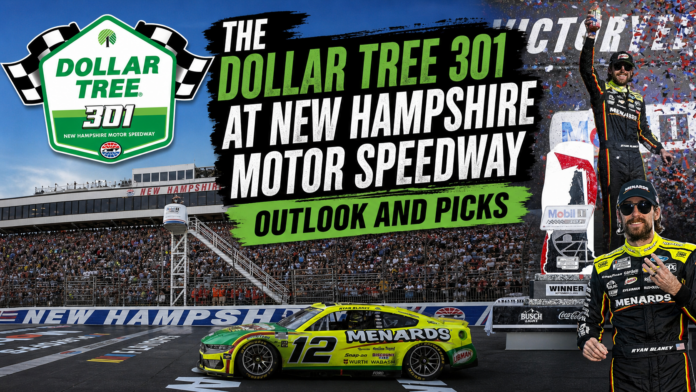
The Dollar Tree 301 at New Hampshire Motor Speedway Outlook and Picks

The NASCAR Cup Series (NCS) heads to New Hampshire Motor Speedway (NHIS) for the Dollar Tree 301 on Sunday, August 23, at 3:00 p.m. ET on the USA Network.

In 2025, Joey Logano captured the pole with a lap of 130.622 mph (29.159 secs), and Ryan Blaney started on the outside of the front row, led 116 laps, including the final 39 laps, and held off Josh Berry in the closing laps to win by .937 seconds on September 21, 2025.

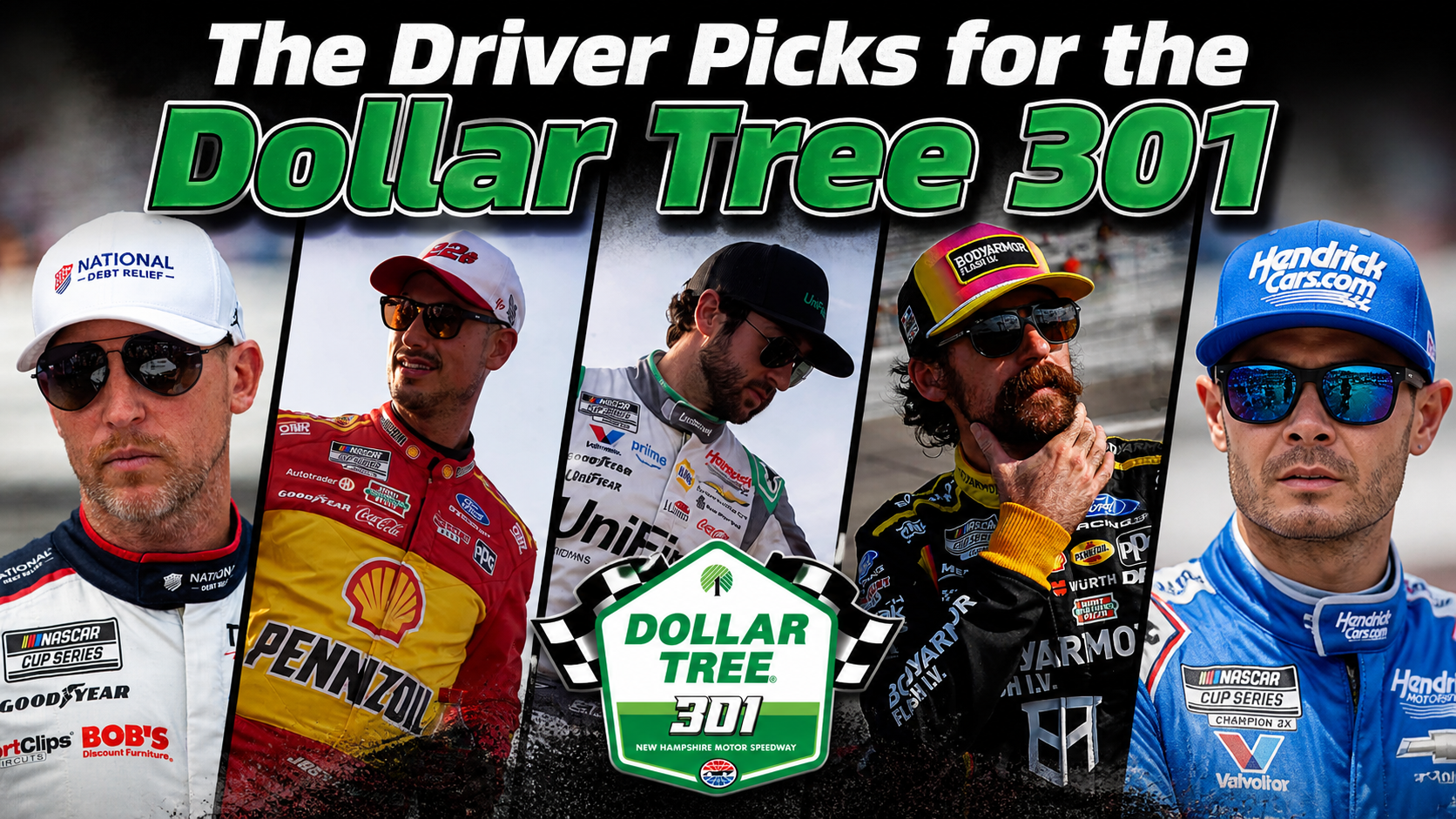
Denny Hamlin, Ryan Blaney, Ty Gibbs, Tyler Reddick, Chase Briscoe, Chase Elliott, and Christopher Bell have clinched a spot in the 16-driver Chase field. Additionally, Hamlin can clinch the Number One Seed in the Chase with 37 points.

The Chase For The NASCAR Cup Series Standings Outlook after Richmond Raceway

RankDriverNoPointsLdrNxtWinsStageWinsGLStartsTop5Top10DNFsPoles
1Denny Hamlin119690045024141605
2Ryan Blaney12854-1151152612451625
3Ty Gibbs54842-1271225-124101541
4Tyler Reddick45831-1381151024101426
5Chase Briscoe19715-25411610024101340
6Chase Elliott9695-27420221246920
7Christopher Bell20695-274004-124101241
8Kyle Larson5660-309350422481230
9Joey Logano22659-3101224245931
10Chris Buescher17653-316600-12421010
11Carson Hocevar77645-324810-3245912
12William Byron24630-3391503-12441130
13Daniel Suarez7618-3511211-1242610
14Bubba Wallace23587-382310202431030
15Austin Cindric2574-39513011242530
16Shane Van Gisbergen97567-402721-1245722
New Hampshire Motor Speedway

Track & Race Information for the Dollar Tree 301

Season Race #: 25 of 36 (August 23, 2026)
Race Purse: $11,233,037
Track Size: 1.058 miles
Banking/Turns: 2 to 7 degrees
Banking/Frontstretch & Backstretch: 1 degree (each)
Frontstretch & Backstretch Length:  1,500 feet (each)

Race Schedule, Length and Stages for the Dollar Tree 301

TEAM EJP 175

Race Length: 301 laps / 318.46 miles
Stage 1 Length: 70 laps
Stages 2 Length: 115 laps (ends Lap 185)
Final Stage Length: 116 laps (ends Lap 301)

FRIDAY, AUGUST 21

4:00 PM – 4:50 PM: NCTS PRACTICE
5:05 PM – 6:00 PM: NCTS QUALIFYING (IMPOUND)

SATURDAY, AUGUST 22

DOLLAR TREE 301

10:30 AM – 11:20 AM: NCS PRACTICE (IMPOUND) (ALL ENTRIES)
11:00 AM – 11:45 AM: NCTS AUTOGRAPH SESSION (FAN ZONE)
11:35 AM – 12:30 PM: NCS QUALIFYING (IMPOUND)
1:10 PM: NCTS DRIVER INTRODUCTIONS – FS1
1:30 PM: NCTS TEAM EJP 175 RACE (STAGES 55/110/175 = 185.15 MILES) – FS1

SUNDAY, AUGUST 23

2:25 PM: NCS DRIVER INTRODUCTIONS – USA Network
3:00 PM: NCS DOLLAR TREE 301 RACE (STAGES 70/185/301 LAPS = 318.46 MILES) – USA Network
*All times are Eastern. NASCAR Cup Series (NCS), NASCAR Craftsman Truck Series (NCTS)

Who and what should you look out for at New Hampshire Motor Speedway?

Denny Hamlin (2007, 2012, 2017) leads all active drivers in wins with three, and five previous race winners are active this weekend. In 2012, Hamlin started 32nd and won the race, making it the deepest in the field that an active race winner has started from. Hamlin leads the series in runner-up finishes with six second-place finishes, and he also leads all active Cup Series drivers in top-five finishes with 11 top fives.

Active New Hampshire WinnersWinsSeasons
Denny Hamlin32017, 2012, 2007
Christopher Bell22024, 2022
Brad Keselowski22020, 2014
Joey Logano22014, 2009
Ryan Blaney12025

Joey Logano (June 28, 2009 – 19 years, 1 month, 4 days) is the youngest Cup Series winner.

The first starting position (11.11%) is the most proficient starting position in the NCS field, and has produced more winners (six of 54 races) than any other starting position at the 1.058-mile track. The most recent was Kyle Busch in 2017.

Winners From The PoleDate
Kyle BuschSunday, September 24, 2017
Ryan NewmanSunday, July 17, 2011
Clint BowyerSunday, September 16, 2007
Kevin HarvickSunday, September 17, 2006
Ryan NewmanSunday, September 15, 2002
Jeff GordonSunday, August 30, 1998

The Driver Picks for the Dollar Tree 301 at New Hampshire Motor Speedway!

The Driver Picks for the Cook Out 400 at New Hampshire Motor Speedway
  • Denny Hamlin
  • Joey Logano
  • Chase Elliott
  • Ryan Blaney
  • Kyle Larson