Home Blog Page 8

Staying Safe When Playing Mobile Gaming Apps

Photo by Evacuate21stCentury on Unsplash

Mobile gaming apps are a popular way to experience interactive and thrilling entertainment from nearly anywhere in the world. With smartphones making games accessible, anyone can play any game, from puzzles to competitive titles to real-money experiences. Unfortunately, enjoying these apps responsibly and safely takes more than clicking install in the app store. Understanding basic security tips for game apps can help protect your personal information, encourage better gaming habits, and prevent unauthorized access to your device.

For users exploring platforms such as DM First game, it is important to understand how account security, financial transactions, and downloading work before getting into the game. Taking a few extra precautionary measures can go a long way and also teach you how to recognize potential risks when using gaming services on your smartphone.

One of the most important safety precautions you can take before mobile gaming is ensuring the app you’re installing comes from a legitimate source. Often, fake websites imitate legitimate ones by using similar naming schemes, logos, and appealing page layouts. The goal of these fake websites is to get you to install malicious software that can steal your sensitive information, or even hijack your mobile device.

Before downloading any application, make sure the website is legitimate and the download links go to the intended location. Take a moment to inspect the website’s address before moving on. Unusual domain names, spelling mistakes, or sudden redirects are telltale signs of malicious intent. Among the safest ways to install applications is through official distributors such as the Google Play Store.

Avoid Fake or Modified APK files.

Android Package Kit (APK) files are used to install essentially every application on an Android device. These are the same files you would download from an official source and are the legitimate way to distribute mobile software. Unfortunately, malicious actors can also utilize this distribution method and cause serious harm to your device.

Modified APK files warrant attention. These are APK files that appear like the legitimate app, but have been altered from their original release. Often, they advertise additional features, free currency, or cheats to get users to install them. Before downloading any APK, implement these basic precautions:

  • Ensure you’re downloading the APK from an official source or distribution channel.
  • Avoid ‘cracked’ and ‘modified’ versions that claim to offer additional features.
  • Never turn off your device’s security settings because a website or app requests you to.
  • Completely delete suspicious files rather than attempting to install them.
  • Keep your device’s operating system and installed applications up to date.

Clicking a phishing link or installing malicious software are two of the biggest contributors to compromising your data and security.

Keep Your Login Details Private and Secure

Account security is another important consideration when using mobile gaming apps and the internet. Your login credentials can grant access to personal profiles, financial information, and account settings. If someone obtains these details, they may be able to access your sensitive information without permission.

Focus on creating strong, unique passwords for each website and account you create. If one account is compromised, only that account is at risk. A popular way to handle multiple passwords is through password managers, which are highly recommended for mobile gaming and online security.

Additionally, use available additional security features such as two-factor authentication. Each additional layer of protection can mean the difference between having your information stolen and keeping it safe and secure.

Set Personal Limits on Time and Spending

Gaming responsibly not only requires ensuring your sensitive information stays safe. It also involves managing both the time and money you spend playing. With mobile games so accessible, setting personal boundaries is essential for preventing excessive use.

Before playing, decide how much time and money you’re willing to spend. If gaming begins to interfere with commitments such as work or financial responsibilities, it’s time to cut back. Avoid spending money you don’t have or chasing losses. Applications that involve gambling are intended for adults aged 18 and over and where legally permitted, and involve financial risk.

Keeping Mobile Gaming a Responsible and Fun Experience

Staying safe when playing online or through applications ultimately comes down to making sound, informed decisions. By using official download links, avoiding modified APK files, and practicing good login security, you can greatly reduce your online risk.

Additionally, while playing the app, spend some time understanding the rules, privacy policies, and any payment terms and conditions before making an account or a transaction. If something starts to seem suspicious, stopping to investigate typically doesn’t take much time, and it’s well worth it. Mobile gaming is fun for millions for a reason; combining that fun with healthy, responsible gaming habits can make it much safer and more enjoyable.


A Race Car Reveal Built Around Sound and Light in Seedance 3.0

Before the driver climbs into the car, there is a quiet interval in the garage. A mechanic checks the front corner, someone pulls the door all the way up and the paint begins to catch the light from outside. That’s the opening I’d build a short motorsport video around. The car could be stationary for the entire first shot. I’d give the camera one slow move along its side, then cut to the people preparing it. The aim is to show what this particular car looks and sounds like when it is about to leave the garage, with enough restraint that the finished video can still feel at home beside real race coverage.

For the rehearsal, I’d take a still of the actual car and a short reference clip showing the speed of a move along the wall. Seedance 3.0 gives me a way to combine those inputs with a written description of the light I want. The photo should guide the body shape and colour. The clip should give a sense of how quickly the camera travels. I would mark the draft as a visual study for the team so that its details can be checked against the real car. The final footage of the team and vehicle would come from an arranged shoot at the garage.

Follow a reflection instead of circling the car

I would start the camera low enough to see the edge of the front bodywork and high enough to avoid a view full of floor. The frame can include a line of light coming through the garage opening. I’d position the reference photo so that line moves along the surface as the camera slides. A viewer sees the shape first and only then notices the colour and the panel details. A full orbit can be useful for a different film, but one straight move lets this shot stay quiet and gives us somewhere obvious to cut.

The first Seedance 3.0 brief would ask for a fixed car and a slightly moving camera, with the light coming from the garage door and no change to the panel markings. I’d stop the movement before the frame reveals whatever lies out of view of the reference photo. If the draft curves the car’s side or invents another graphic, I’d reduce the movement and provide a clearer reference of the relevant panel. I could also switch to a static shot, letting a mechanic’s hand move across the edge of the frame. That leaves a usable plan even if the more ambitious move is difficult to reproduce.

Give the crew a reason to be in the frame

For the real shoot I’d ask one crew member to show the moment they normally check the front corner. They can point to the part they are looking at and then carry on with their work. I would record the whole moment from a safe spot chosen with the team, then make a closer view when the garage is clear. The finished clip can lead from the broad reflection to the hand that checks that same patch of bodywork. In two cuts the audience sees the vehicle and a person who knows it well. I would save the driver and track footage for later, when the film has already introduced the car.

The next few seconds should feel like preparation gathering pace. I’d pick two details I can actually film, perhaps a gloved hand and a shoulder belt being adjusted with the car stationary. I can try a short camera study in Seedance 3.0 to decide whether a narrow crop will play clearly on a phone. I’d keep the final close-ups tied to the real crew. A generated close view that changes a fastener or a cockpit detail would get in the way of a motorsport audience’s ability to see the work they came for.

Use the garage sound to make the last cut

A garage door has a distinct mechanical sound, and a recording of it gives me an opening cue. I could use a short sample in Seedance 3.0 as a reference alongside the still, to see whether the camera move can slow as the door reaches its stop. For the finished cut, I’d record the actual sound on location and bring a little of it over the first frame of the car. The other sound I would leave room for is a quiet exchange between crew members, with their permission. A heavy music cue can wait until the shot wants a change in energy.

If I need to make several garage-lighting studies before choosing the setup, I’d compare Seedance 3.0 pricing while planning how much time to put into drafts. The useful comparison is between a soft strip of daylight and a narrower reflection, with the camera at the same height in both drafts. In the editing room I would start by watching the two versions without music. If the paint and panel shape are still clear, I can add a little pace later. If the light passes too quickly to read, I’d hold a tighter view and let the garage sound carry the cut.

End with a view someone will remember

For the closing shot I’d take the camera just outside the garage, pointed back at the car, and leave a little quiet space above it for the title. A Seedance 3.0 text-to-video study can help explore where the background should fall before the shoot. In the actual edit I’d keep the shot long enough to show a view of the car that relates to the first angle. The film can end on a crew detail or a real track clip if the team has one available and cleared. I would resist putting the loudest shot last simply because it is loud.

Before I export, I’d check the sequence on a small screen and see whether the light still travels along a shape I recognise. Then I’d listen to the opening and closing on speakers at a low volume. If the action in the garage gets buried, I would reduce the music or shorten an earlier shot. The car and its crew are already enough to hold the scene. A well-timed reflection and a familiar garage sound can make a short reveal feel like a moment from their day.

What Makes a Racing Song Stick? Four Ways Music Becomes Part of the Sport

screenshot of tosong.app

Racing playlists are often stuffed with highway anthems and road-trip songs. But a reference to speed or an engine tells you little about why a song belongs to motorsport. Some songs earn that connection through a specific track, a person, or a recognizable car number. Others become part of racing through shared race-day rituals. This guide explores those four routes, and shows how a local short track, race team, or fan club can use them to build an anthem of its own.

What Connects a Song to Racing?

Open almost any motorsport playlist online, and you will find tracks about highway speed limits and daily traffic. Sammy Hagar’s “I Can’t Drive 55”, the Eagles’ “Life in the Fast Lane”, and Tracy Chapman’s “Fast Car” show up on these lists all the time. Yet none of those tracks tells a story about competition. They are songs about personal travel, speeding tickets, and escaping hard circumstances.

In February 2025, an Indianapolis sports radio station, 93.5/107.5 The Fan, published a list of “100 Songs That Relate To Racing” ahead of the Indianapolis 500. The list entries offered bare titles with no commentary, and a huge share of the selections were simple driving or vehicle tunes. When any track that mentions an engine counts as a motorsport anthem, the word loses its meaning.

Start with the lyrics: do they name a race, a track or a competitor? If not, ask whether fans connect the song to a recurring race-day or broadcast moment. A fast-car reference alone does not establish that connection.

A Real Place Gives Fans Something to Claim

A specific venue gives listeners ground they can claim for themselves. When a track name sits right in the title, fans know immediately that the music belongs to their world.

Look at Eric Church’s “Talladega”. Co-written with Luke Laird, the song appeared on his 2014 album The Outsiders. The story follows a man looking back on a trip to Talladega Superspeedway with friends right after his senior year of high school.

Church and Laird explained that the song was not really about racing. Instead, the track stands for the people you went with and a time that won’t come back. Fans adopted it because the place holds that memory.

In an amusing twist, the official music video was filmed at Nashville Superspeedway rather than Talladega. The track name in the title still did the work.

Mark Knopfler took the same route on his 2000 album Sailing to Philadelphia with the track “Speedway at Nazareth”, named after Nazareth Speedway in Pennsylvania.

A Person Gives Listeners Someone to Pull For

A driver gives listeners someone to pull for. Their pressure, commitment and setbacks give a songwriter more to work with than horsepower ratings alone.

George Harrison highlighted this approach in 1979 with his song “Faster”, from his self-titled album George Harrison. Harrison spent much of 1977 attending Formula 1 races, forming friendships with drivers including Jackie Stewart, Emerson Fittipaldi, and Niki Lauda.

Harrison drew inspiration from Lauda’s comeback after his near-fatal crash at the Nürburgring in 1976. Harrison shared the song title with Jackie Stewart’s book, Faster: A Racer’s Diary. The UK single raised money for a cancer research fund set up by Swedish driver Gunnar Nilsson, and it commemorated Ronnie Peterson, who died after injuries suffered at the 1978 Italian Grand Prix. In the official music video, Harrison sings in the back of a car driven by Stewart.

The chorus of “Faster” never mentions horsepower or mechanical parts. It focuses entirely on a driver, using the word “he” to describe the pressure and commitment required to compete, giving listeners a person to pull for. Jim Croce took a similar character-driven approach on his April 1972 album You Don’t Mess Around with Jim with “Rapid Roy (The Stock Car Boy)”. The title alone gives you a nickname and a stock car driver, not a machine.

Car Numbers Work Like Names, With a Shelf Life

In stock car racing, car numbers function as shorthand for human personalities. Fans often talk about numbers rather than last names, treating the digits on the door like the drivers themselves.

Brad Paisley leaned on this tradition in his single “Country Nation”, released in 2015, from the album Moonshine in the Trunk. Paisley wove NASCAR culture directly into the lyrics by mentioning cheers for numbers 14, 24, 48, and 88 alongside college football team nicknames such as the Crimson Tide, Longhorns, and Buckeyes.

In 2015, Cup Series fans could connect those car numbers to Tony Stewart, Jeff Gordon, Jimmie Johnson, and Dale Earnhardt Jr. Paisley did not need to name the drivers.

Relying on car numbers comes with a clear trade-off. Numbers root a song firmly in a single era, giving current fans an instant connection. Over time, drivers retire and different racers take over the car, turning what was once immediate into a snapshot of the past.

Play It at the Same Moment Enough Times and It Becomes a Racing Song

Some tracks never started with any link to motorsport. Instead, television broadcasts turned them into racing anthems through repetition. When a piece of music plays at the exact same point in a race program, habit takes over.

Fleetwood Mac’s “The Chain”, from their 1977 album Rumours, is a clear example. The song was never written about sports. Yet its closing section features a driving bass line played by John McVie.

The BBC Formula One broadcast team used that closing bass line as its theme music from 1978 until 1996, and returned to it from 2009 to 2015. Channel 4’s F1 coverage also used the instrumental section. For UK fans, that bass line still means the race is about to start. The music became part of racing culture through regular exposure.

Brazilian television achieved a similar result with “Tema da Vitória” (“Victory Theme”). Composed by Eduardo Souto Neto and recorded by the group Roupa Nova in 1981, the instrumental track was created for TV Globo’s Formula 1 broadcasts. Starting in 1986, the network played the song only for Brazilian race wins. Because Ayrton Senna won so frequently during that period, the tune became associated with him.

Building a Song for Your Home Track, Team or Fan Club

Local short tracks, regional teams, and fan clubs rarely have large recording budgets, but you do not need commercial studio backing to make music race fans want to sing. By using the traits found in lasting racing songs, any local organization can produce something authentic.

Turn those traits into four specific decisions:

  1. Name your place, and mention a detail only local regulars recognize. You could mention the rough pavement off turn two, the narrow gate leading onto pit road, or the grassy hill behind turn three where families set up folding chairs. That local detail tells your crowd that the song belongs exclusively to them.
  2. Feature a real person or a car number. Write about a track founder, a family that has raced at the speedway for decades, or a fan-favorite car number that packs the grandstands. Accept that naming a specific number will date the song once that driver retires, but that trade-off gives the track immediate energy.
  3. Pick the exact moment the song plays and keep it there. Play it during the feature winner’s cool-down lap, during driver introductions on opening night, or at the end-of-season banquet. Repetition is what cements the song into fan memory.
  4. Keep the repeated hook short enough to shout over engines. A short, clear line gives fans something they can join in with from the bleachers.

To produce the track, you have three sensible options. You can work with a local musician who knows the track, organize an anthem contest among your own fans, or generate an initial draft using an AI Music Generator that your group can edit. ToSong is an example of such a tool that writes lyrics from a short description and returns finished songs with vocals. Even a rough draft gives the group something to argue over, which is usually how the best line gets found.

Regardless of who makes the song, check who owns the result and what uses your agreement permits before the track builds anything around it. Before using the song over the PA, in ads or in video recaps, confirm that your agreement covers the composition, the recording and those intended uses.

Before you debut the song, test it against a simple decision rule: if you could swap your track’s name for any other and nothing in the song breaks, it is not your song yet. Go back and add the local details until the lyrics fit your home track alone.

NASCAR reveals horsepower increase, rule book updates for 2027 season

Photo by Patrick Sue-Chan for SpeedwayMedia.com.

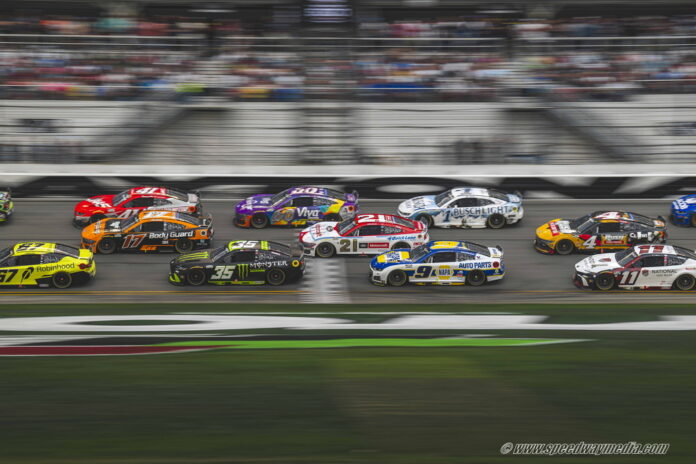
NASCAR revealed an increase of horsepower and updates to the Rule Book bulletin for the 2027 Cup Series season on Friday, November 20.

Beginning at Charlotte Motor Speedway for the Coca-Cola 600, the horsepower on all Cup Series entries will increase from 670 to 750. The 600-mile event at Charlotte is scheduled to occur on May 30 during Memorial Day weekend. The 750-horsepower engine package will then continue to be utilized on all intermediate-sized tracks for the remainder of the 2027 season.

For the All-Star Race that will occur at North Wilkesboro Speedway, a week before the Coca-Cola 600, the horsepower will be elevated to 800. NASCAR will use the All-Star event to evaluate the 800-horsepower engine package and if pleased with its performance, the package will continue to be used for the remaining short tracks and road-course venues, beginning with the Bass Pro Shops Night Race at Bristol Motor Speedway scheduled for August 14.

Additional rule changes for the 2027 NASCAR season are outlined below:

  • NASCAR will utilize a qualifying-specific setup for Daytona International Speedway and Talladega Superspeedway with the goal of reaching 200 mph (miles per hour).
  • For all superspeedway venues, the qualifying sessions will only occur through a single round.
  • If qualifying for an upcoming Cup event is incomplete, the current owner’s standings will be utilized to assign starting grid spots. This rule will be utilized for all events, except for the 2027 Daytona 500. 
Photo by John Knittel for SpeedwayMedia.com.
  • Additionally, splitter stuffers will be removed at all short track and road courses.
  • All teams labeled as ‘full-time’, where they would enter in all events for a current season, are required to compete in a minimum of 20 points-paying events with a sealed engine.
  • In the event that NASCAR declares an oval event to be competing under wet weather conditions, crew chiefs are to determine any tire configuration changes.
  • NASCAR emphasized the double-painted line rule, which is primarily used on superspeedway venues, by labeling competitors who are deemed beneath the line as ones whose left side tires are beneath the left line of the inside double-painted lines that separate competitors from the racing surface and apron.
  • Any competitor who misses a Cup Series event without receiving approval from NASCAR will have points reseeded to 2,000 points, should the competitor make the Chase. The points will reset to 2,000 points in the event an unapproved absence occurs during the Chase. The points will reset to 2,020 in the O’Reilly Auto Parts Series division and 2,030 in the FedEx Freight Truck Series division.
  • For the Truck and O’Reilly Auto Parts Series divisions, an L3 penalty option has been added.

The 2027 NASCAR Cup Series season is scheduled to occur on February 13 for the Wheatley Vodka Clash followed by the 69th annual running of the Daytona 500 that will follow suit on February 21. Both events will occur at Daytona International Speedway in Daytona Beach, Florida, and aired on FOX Sports, MRN Radio, SiriusXM and HBO MAX.

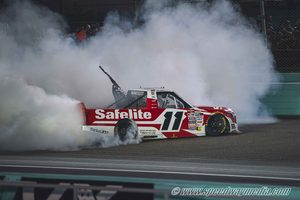
TRICON Garage reveals crew chief lineup for 2027 Truck season

Photo by Chad Wells for SpeedwayMedia.com.

TRICON Garage revealed its crew chief lineup for the 2027 NASCAR FedEx Freight Truck Series season that features a new addition to the roster.

Chad Walter is TRICON’s newest addition for next season as he will work atop the No. 15 Toyota Tundra TRD Pro pit box with the entry piloted by Sammy Smith, the latter of whom is also set to compete both a TRICON and in the Truck division on a full-time basis for the first time ever. Smith is a four-time O’Reilly Auto Parts Series race winner and has spent the previous three seasons competing at JR Motorsports. He also notched his first Truck career victory at Talladega Superspeedway in October.

Walter joins TRICON after spending the previous three Truck seasons at Spire Motorsports. This past season, he was a crew chief for Spire’s No. 77 Chevrolet team that was piloted by 10 competitors. The entry notched victory at Texas Motor Speedway with Carson Hocevar, nine top-five results, 13 top-10 results and a sixth-place result in the 2026 Truck owner’s standings. To date, Walter has achieved two victories in 141 events and five victories in 239 O’Reilly Auto Parts Series events as a crew chief.

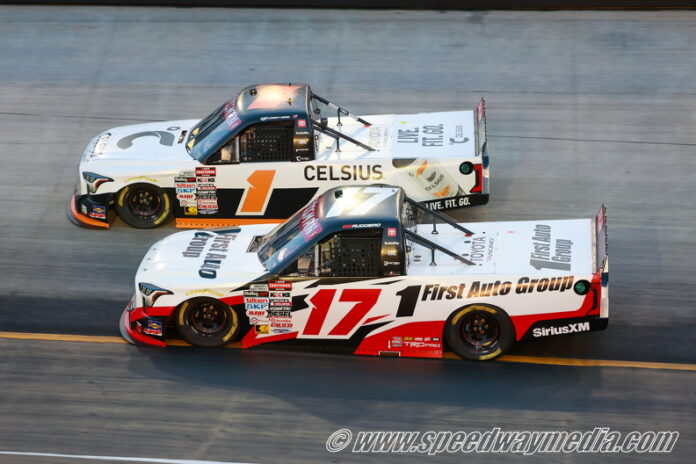
The remainder of TRICON’s crew chiefs that include Jerame Donley, Seth Smith, Scott Zipadelli and Jeff Stankiewicz will remain with their respective entries from this past season that includes the Nos. 1, 5, 11 and 17 Toyota entries.

Donley, who first became a Truck crew chief for TRICON in 2023, spent this past season as the crew chief of TRICON’s No. 1 Toyota entry that was piloted by 10 different competitors (Thomas Annunziata, Gavan Boschele, Dario Franchitti, Taylor Gray, Corey Heim, Jimmie Johnson, Brandon Jones, Nick Leitz and William Sawalich). The No. 1 entry notched a pair of victories with Heim (Rockingham Speedway in April & Michigan International Speedway in June) and a total of 13 top-10 results before finishing in eighth place in the 2026 owner’s standings. Driver announcements for TRICON’s No. 1 entry that will be an “all-star” entry remains to be determined.

Photo by John Knittel for SpeedwayMedia.com.

Like Walter, Seth Smith has been at TRICON since the organization’s inception in 2023 and he spent this past season as a crew chief for TRICON’s second “all-star” entry, the No. 5 Toyota entry that was piloted by 12 competitors (Adam Andretti, Thomas Annunziata, Chase Briscoe, Harrison Burton, Brent Crews, Bayley Currey, Spencer Davis, Graham Doyle, Corey Heim, Nick Leitz, John Hunter Nemechek and William Sawalich). The entry won at Darlington Raceway in Heim in mid-March and finished in the top-10 mark nine times before finishing in 14th place in the final standings. For the 2027 season, Smith, who will continue to work as TRICON’s No. 5 entry’s crew chief, is paired with Dawson Sutton, the latter of whom spent the previous three Truck seasons at Rackley W.A.R.

Next, Zipadelli returns as the reigning two-time Truck Series championship-winning crew chief and remains atop the pit box of the No. 11 Toyota team that has achieved the pair of championships with two different competitors. After winning a record-breaking 12 victories and the 2025 title with Corey Heim, Zipadelli was paired with Kaden Honeycutt, the latter of whom achieved his first five career victories, including the finale at Homestead-Miami Speedway, and the overall championship in 2026 by 83 points. As a result, Zipadelli became the first-ever crew chief to achieve three Truck championships with three different competitors, with Zipadelli also winning the 2018 Truck championship with Brett Moffitt at Hattori Racing Enterprises.

Photo by Patrick Sue-Chan for SpeedwayMedia.com.

To date, Zipadelli has notched 41 victories in 277 events as a Truck crew chief, where he is also three victories away from tying Eric Phillips for the most Truck wins as a crew chief at 44. The duo of Zipadelli and Honeycutt also achieved three poles, 15 top-five results, 18 top-10 results, 592 laps led and an average-finishing result of 7.8 this past season as they return to defend their title in 2027.

Lastly, Stankiewicz will remain paired up with Giovanni Ruggiero over at TRICON’s No. 17 Toyota team for the 2027 Truck season. Stankiewicz, who first joined TRICON this past season, led Ruggiero and the No. 17 team to four top-five results, 12 top-10 results, 65 laps led, an average-finishing result of 12.6 and a Chase berth before they settled in sixth place in the driver’s standings. To date, Stankiewicz has achieved 12 victories in 248 Truck events as a crew chief as he remains in pursuit for his first win with TRICON next season.

Amid TRICON’s crew chief lineup for the 2027 season, Matt Puccia was also revealed to remain as the organization’s competition direction for a fifth consecutive season.

The 2027 NASCAR FedEx Freight Truck Series is scheduled to commence at Daytona International Speedway in Daytona Beach, Florida, on February 19. The event will be aired on FOX Sports, NASCAR Racing Network and SiriusXM.

Consistency, success highlight stellar sophomore season for LowCountry Motorsports

CONCORD, N.C. (Nov. 19, 2026) – After successfully breaking into the Pro Late Model discipline last year, A.J. Frank and Mikey Kile had high expectations for Low Country Motorsports going into 2026.

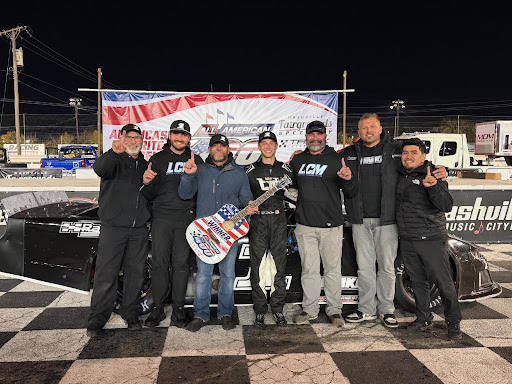
Low Country more than met the moment with breakthrough victories in the Throwback Classic at Hickory Motor Speedway and the All-American 100 at Nashville Fairgrounds Speedway. Consistency was also a hallmark of Low Country’s season, as they recorded nine top fives in 11 CARS Pro Late Model Tour races and completed every lap in the division.

Frank knew a season like this was plausible for Low Country following the strong runs they enjoyed with Tristan McKee in 2025. Building on that momentum was going to be difficult, but Kile was thrilled to see the discipline, cohesion and determination of everyone at Low Country translate into an exceptional year.  

“We accomplished most of our goals,” Frank said. “Some of it was luck. Last year we came out of the box strong and had some unfortunate incidents that didn’t result in the finishes we wanted. Capitalizing in 2026 on a stronger notebook and less mistakes on and off the track propelled us.”

Frank admitted it took a village to make a Low Country a competitive Pro Late Model team in a short amount of time. Having Cody Glick, the owner of Hamke Race Cars, as a crew chief was a tremendous asset for Low Country, along with the assistance of other partners such as Clark’s Automotive, Earnest Performance, Buzze Racing and others.

With the resources in place, responsibility would fall upon Low Country’s driver roster to maximize the equipment’s performance. Reigning CARS PLM Tour champion Ben Maier and Treyten Lapcevich opened the 2026 campaign for Low Country, with a fourth by Maier at Ace Speedway being the team’s best run before June.

The arrival of T.J. DeCaire for the fifth PLM Tour race of the season at North Wilkesboro Speedway proved to be a major turning point for Low Country. In his first start with the organization, DeCaire battled Kaden Honeycutt valiantly for the lead in the closing laps but ended up settling for a runner-up showing.

What followed North Wilkesboro was an efficient stretch for Low Country and DeCaire that saw the duo finish inside the top five during the final seven events. The highlight of that period was Low Country’s breakthrough Pro Late Model victory at Hickory, which saw DeCaire lead every lap from the pole in a Mike Garvey tribute scheme.

Kile knew DeCaire was going to be an ideal fit at Low Country after racing against him last season. The talent DeCaire possessed was undeniable, but Kile said DeCaire’s ability to balance out aggression and respect, combined with his work ethic, is what he believes separates him from other young prospects.

All those qualities led to DeCaire guiding Low Country to Victory Lane, a moment Kile and Frank had tirelessly built towards over the past year-and-a-half.

“We knew from the beginning we’d eventually have the equipment and team put together to win races,” Kile said. “Ever since [DeCaire] came in, we’ve gelled. He’s like family to all of us now. He’s very level-headed, calm and an all-around good kid. He’s got a good head on his shoulders and is always looking to do the right thing.”

“To see all of us accomplish that one goal at the same time, it was rewarding.”

DeCaire had originally planned to run a handful of events with Low Country near the end of the year until an opportunity came available to compete at North Wilkesboro. What was supposed to be a dry run for the duo escalated into a successful effort that saw DeCaire and Low Country come up four points short of a PLM Tour owner’s title.

Although he would have preferred to close out 2026 slightly stronger to deliver a PLM Tour owner’s title for Low Country, DeCaire is still grateful for everything he accomplished with them. The cohesion Low Country displayed in every aspect is why DeCaire was always confident in his ability to excel behind the wheel.  

“Everywhere we went, we unloaded good,” DeCaire said. “I found a group that feels like family and it’s all clicked from the get-go. That first North Wilkesboro test, we were great off the trailer and it just stayed that way. Whenever we were in trouble anywhere or the car wasn’t the best, the team always worked the hardest to get back to a point where we had a shot to win the race.”

The two victories DeCaire scored with Low Country were each special in their own regard. He was honored to be the first to drive a Low Country Pro Late Model to Victory Lane at Hickory, but the All American 100 triumph served as a full-circle moment for DeCaire, as some of his earliest wins in Legends cars at Nashville Fairgrounds.

Aside from the victories, DeCaire simply appreciated every chance he got to drive for Low Country. Even though he did not start the season with them, the chemistry DeCaire built with Low Country was instantaneous, which led to 2026 being of the most enjoyable years of his young career so far.

“I’d say it was memorable,” DeCaire said. “It was really cool to work with A.J. [Frank], Cody [Glick], Mikey [Kile]. There’s so many cool people I’m able to work with every week. To run good on top of that, it’s special to everybody. It makes the weekend a lot easier, I know that. It’s been a dream,”

Kile would love to have DeCaire back under the Low Country stable in 2027 but is also focusing on the organization’s long-term plans. Now that Low Country is two years into Pro Late Model competition, Kile feels the program is sturdy and that there is a clear direction going forward; now the objective is to build on the momentum.

Plenty of talented young drivers have already come through Low Country’s stable, not just in Pro Late Models but through their established road course program. Kile does not intend to divert from the status quo and looks forward to helping foster the next generations of competitors for what he hopes is many years to come.

“We’re a driver development team,” Kile said. “We want to win and we’ve proved we’re a top-tier team and our goal is to continue to do that for these kids that have the talent to do what it takes, allow [them] to get in good equipment and showcase what they’re capable of on and off the track. We believe we have the foundation to do those things.”

For Frank, putting together a solid short track racing operation has been a goal of his since his days as a competitor back in the 1990s. There is still plenty of work to do with Low Country, but Frank feels the operation he, Kile and so many others helped assemble is already emerging as one of the best in the Pro Late Model discipline.

All the accolades Low Country accumulated in 2026 are helping Frank establish his baseline for next year. If everything progresses the way he believes it will, Frank is confident year three for Low Country will be their best yet.

“[The 2026 season] was a true example of what our team is capable of week in and week out,” Frank said. “We won two races, but we were easily in contention for more. A year like this and the notebook we built is going to make us even stronger in 2027. The team from the inside got stronger with so many great people involved this year.

“We have more good people involved and that will continue to make us better going into the future.”

Low Country Motorsports still has one race remaining on their calendar with T.J. DeCaire before their 2026 season ends; the Snowflake 125 at Five Flags Speedway on Dec. 5. Additional details about Low Country’s plans for 2027 will be announced in the coming weeks.

About Low Country Motorsports

Co-owned by AJ Frank and Mikey Kile, Low Country Motorsports is a family-driven racing organization built on more than 40 years of motorsports experience. The team competes in the CARS Tour and helps drivers at all levels develop their skills through testing, coaching and competition. Its “March Forth” philosophy reflects a commitment to helping drivers take the next step in their racing careers. Learn more at racelcm.com.

LEGACY MOTOR CLUB CLOSES $85 MILLION INVESTMENT TO SUPPORT THREE-CAR EXPANSION AND LONG-TERM GROWTH

STATESVILLE, N.C. — November 20, 2026 — LEGACY MOTOR CLUB today announced the close of an $85 million investment round, from a small group of high-net-worth families, to support the team’s expansion to three full-time NASCAR Cup Series entries in 2027. This marks a major milestone for LEGACY MOTOR CLUB as it represents continued investment in the organization’s long-term future, as the team scales its operations.

The capital will support the team’s growing operations and development of its new race facility and business operations headquarters in Mooresville, N.C., expected to open in 2028. The investment strengthens LEGACY’s foundation for sustained competitive progress and its ability to deliver greater value to partners.

“Our new partners believe in LEGACY, and they have a history of sports investment in the NFL and MLB. That makes this a special day for the CLUB,” said Jimmie Johnson, seven-time NASCAR Cup Series Champion and LEGACY Co-Owner. “Their support, along with Knighthead’s continued commitment, gives us the foundation to keep investing in our people, our program, and our performance on track. We’re building this for the long term, and I’m excited about what’s ahead.”

Certain affiliates of Knighthead Capital Management, LLC (Knighthead), a multi-billion-dollar private equity and investment manager, also increased their ownership stake in LEGACY MOTOR CLUB. Knighthead’s larger commitment reflects its continued confidence in LEGACY, in NASCAR, and in growing the sport. Johnson remains Chairman of the Board, and LEGACY continues to be bolstered by its Strategic Ownership Group — the collection of championship athletes, entertainers, entrepreneurs, investors, motorsport legends, and cultural leaders united by a shared ambition to build a competitive organization whose influence and community extend far beyond the track.

“We have great confidence in Jimmie, the LEGACY leadership team, and the organization they are building,” said Kyle Kneisly, Partner at Knighthead and LEGACY MOTOR CLUB Board Member. “LEGACY has the people, the partners and the vision to continue to grow, and we’re thrilled for the future as the team expands both on and off the track.”

With this increased investment and the ongoing backing from Knighthead, LEGACY is positioned to enter the next phase of its evolution in the 2027 NASCAR Cup Series season. The 2027 season delivers a new era for LEGACY MOTOR CLUB, with Josh Berry and Riley Herbst joining the organization. Berry will drive the No. 42 Toyota Camry XSE, while Herbst will drive the No. 84 Toyota Camry XSE, the team’s new full-time entry. Erik Jones returns on a multi-year extension in the No. 43 Toyota Camry XSE, serving as the team’s most tenured driver and cornerstone of the 2027 lineup.

Galatioto Sports Partners (GSP), a leading sports investment bank, acted as the exclusive financial advisor to LEGACY MOTOR CLUB on the investment round. Davis Polk & Wardwell LLP (Davis Polk) served as legal counsel to LEGACY. “We thank GSP and Davis Polk for their support of LEGACY and their role in helping us bring this investment round to a successful close,” said Johnson. “Their expertise in sports and commitment to relationships helped us bring together a strong group of new partners who share our long-term vision.”

ABOUT KNIGHTHEAD: Knighthead Capital Management, LLC was co-founded in 2008 by Tom Wagner and Ara Cohen and has grown to become a diversified asset management platform with an experienced team of investment professionals. With a long-term investment approach, Knighthead has significant experience in private equity, operational and financial turnarounds, and strategic investments, including, but not limited to, investments globally across professional sports, luxury and experiential brands and other sectors. Knighthead manages assets across a variety of investment vehicles including insurance asset management, real estate lending, and closed and open-ended vehicles.

ABOUT LEGACY MOTOR CLUB: (LEGACY MC) is a premier auto racing organization owned by seven-time NASCAR Cup Series champion and 2024 NASCAR Hall of Fame inductee, Jimmie Johnson and certain affiliates of Knighthead Capital Management, LLC. Drawing from a rich tradition of success, LEGACY MC is dedicated to pushing the boundaries of motorsport and setting new standards of excellence. The CLUB competes under the Toyota Racing banner in the NASCAR Cup Series with the No. 43 Toyota Camry XSE driven by Erik Jones. Beginning in 2027, Josh Berry will drive the No. 42 Toyota Camry XSE and the No. 84 Toyota Camry XSE driven by Riley Herbst will debut full time in the 2027 season, while Johnson will make his final NASCAR Cup Series start at the 2027 DAYTONA 500. With NASCAR legend and Hall of Famer Richard Petty, “The King,” serving as CLUB Ambassador, LEGACY MC blends timeless racing traditions with a new forward-thinking vision. As an inclusive community for motorsport enthusiasts, LEGACY MC honors both its storied past and the promising future of its members, always striving for victory and championship glory at the pinnacle of NASCAR competition.

Ryder Van Alst to Chase ARCA Menards Series East Championship with Father Greg in 2027

ANDERSON, Ind.: Greg Van Alst Motorsports will take the next step in Ryder Van Alst’s racing career in 2027, entering the second-generation driver in the ARCA Menards Series East championship in the No. 35.

Ryder’s father, Greg Van Alst, will lead the team’s effort, bringing a family partnership to the series.

The program is designed to give the rising teenager experience competing in the ARCA Menards Series East while building toward a future move to the ARCA Menards Series national platform.

The second-generation driver arrives at the next level after a history-making 2026 season at Anderson (Ind.) Speedway.

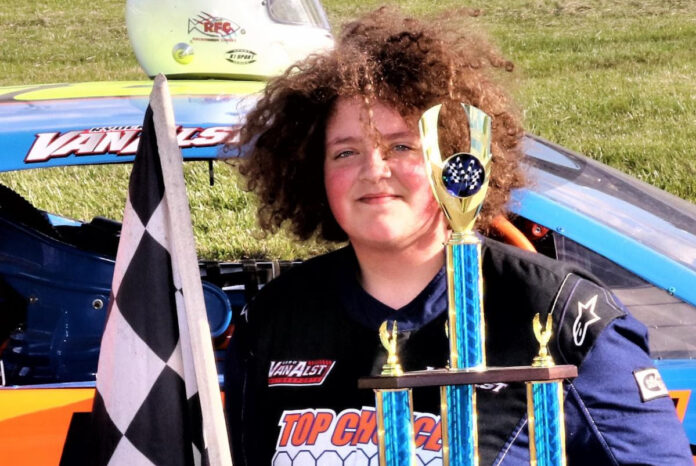
Just three weeks shy of his 15th birthday, Ryder captured the Vern’s Concrete Late Model Championship, becoming the youngest driver in Anderson Speedway history to win a Late Model title.

On championship night, Ryder topped practice and qualifying, won his heat race and recovered from a flat tire to finish fourth and secure the championship.

“Watching Ryder work toward this opportunity has been special, but we know there’s a lot ahead of us,” Greg Van Alst said.

“The East Series gives him a strong place to learn, compete and keep

developing. As his father, I’m proud of what he has accomplished. As a leader of this team, my job is to help prepare him and the team to meet the challenge each week.”

For Ryder, the 2027 campaign will mark an important new stage in his development — and a chance to learn directly from his father as they take on a national touring series together.

“I’m excited to race for the ARCA Menards Series East championship with my dad leading the team,” Ryder Van Alst said.

“Winning at Anderson was a big moment, and I’m ready to keep learning and take on this next challenge. I know the competition will be tough, and I’m looking forward to working with everyone on the No. 35.”

Greg Van Alst Motorsports will share additional details about its 2027 program at a later date.

For more on Greg Van Alst Motorsports, please visit GregVanAlst.com and like them on Facebook (Van Alst Motorsports).

How to Choose a Boat for Year-Round Use

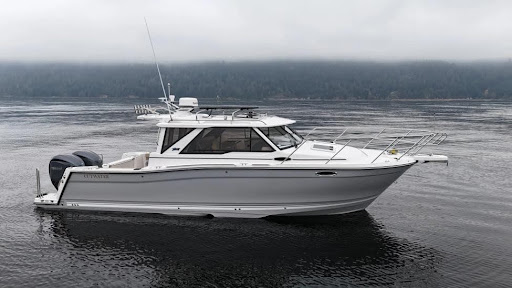
Image courtesy of Port Boat House

What to Look for in a Four-Season Boat

  • A boat for year-round use usually has a fully enclosed cabin, a dependable heater, and windows you can keep clear in rain and fog.
  • If your boat has a fuel-burning heater, install a marine carbon monoxide alarm in the cabin and test it before each trip.
  • Decide whether you’ll keep the boat in the water all year or store it between trips, since each option changes your maintenance.
  • Water in Canada is cold in the fall, winter, and spring, so wear your lifejacket and check the marine forecast before you leave the dock.

A boat for year-round use is one you can take out comfortably in the fall, winter, and spring as well as the summer. In most of Canada, that means a fully enclosed cabin, a reliable heater, good visibility in poor weather, and a plan for storing and maintaining the boat in the coldest months. On the West Coast, where many harbours stay ice-free in winter, a boat like this lets you keep fishing and cruising after most boats are covered for the season.

Enclosed coupe cruisers are a popular choice for this kind of boating. If you start with a search for Cutwater boats for sale Canada, you’ll find models like the C-32 Coupe, which Port Boat House in Port Alberni offers in a Northwest edition with a diesel heater. Seeing a few layouts in person is a good way to find out which features matter most for how you plan to use the boat.

What Makes a Boat Suitable for Year-Round Use?

A year-round boat keeps you and your passengers warm and dry while you’re under way. A fully enclosed helm and cabin, with a door you can close to the cockpit, makes a big difference in comfort when the temperature drops. A private head, a galley, and a berth or two also let you stay aboard overnight or wait at anchor for the weather to improve.

You may also want to ask about the hull. Many coupe cruisers have a deep-V or modified-V hull, which tends to give a smoother ride in the short, steep waves that winter winds often build.

Heat, Ventilation, and Carbon Monoxide Alarms

Heat is the feature year-round boaters tend to use most. A diesel forced-air heater draws from the boat’s fuel tank and works whether you’re under way or at anchor. A reverse-cycle air conditioning system can also heat the cabin, but it needs shore power or a generator and usually works less efficiently in very cold seawater. Some builders offer both, and Cutwater, for example, lists a diesel heater on its Northwest edition and reverse-cycle heat on its Luxury edition.

Any fuel-burning heater, engine, or generator produces carbon monoxide, which can build up in a closed cabin. To reduce the risk, install a marine carbon monoxide alarm in the cabin and keep the heater exhaust in good repair. You can also have the heating system inspected during your regular service.

Visibility and Handling in Winter Weather

Short days, rain, and fog make visibility one of the most practical things to check during a sea trial. Look for large windows with clear sightlines from the helm, windshield wipers with washers, and heater vents aimed at the glass to keep the windows from fogging. If you plan to run in fog or after dark, radar and a chartplotter are worth adding to your list.

Docking aids help when the wind picks up in winter. Bow and stern thrusters, which some Cutwater models include, let you move the boat sideways in tight spaces, which is useful when the wind is pushing you away from the dock.

Where Will You Store the Boat Between Trips?

If you keep the boat in the water at a marina, it’s ready to go whenever the weather allows. You’ll need to check the batteries, bilge pumps, and dock lines regularly, especially after a storm.

You can also store the boat on land between trips. Indoor heated storage helps protect the engines, plumbing, and water systems from freezing temperatures. Port Boat House, for example, offers outdoor, covered, and indoor heated storage. Whichever option you choose, ask your dealer’s service department which winterization steps your engines and water systems still need.

Staying Safe on Cold Water

Cold water is one of the biggest safety differences between summer and winter boating. A fall into cold water can cause a sudden gasp and rapid breathing in the first minute, and you may lose the use of your arms and legs within about 10 minutes. Before your first cold-weather trip, learn how cold water affects your body so you know how to respond.

Wear your lifejacket or PFD at all times when you’re out in the colder months, and leave a trip plan with someone on shore. Before you leave the dock, check the marine forecast for your area, since winter storms on the coast can build quickly.

When you choose a boat with a heated, enclosed cabin, good visibility, and a storage plan that fits your schedule, you can keep boating through every season. Comparing these features in person will help you find a boat you’ll enjoy in January as well as July.

CRATE TO TRAIL IN 30 MINUTES: UNBOXING & REVIEWING THE FRP FX140 DIRT BIKE

Most entry-level pit bikes force buyers to choose between affordable pricing and real trail capability—and usually leave you spending an entire weekend bolting loose parts together in the garage.

The FRP MOTO FX140 Dirt Bike flips that formula. Delivering genuine 60 mph top-end speed, an oil-cooled 4-speed manual powerplant, and 85% factory pre-assembly, it bridges the gap between weekend garage convenience and big-bike dirt performance—all for roughly a fifth of the cost of big-name Japanese 140s. Even better, FRP just kicked off its early dirt bike black friday sale, knocking $80 off the FX140 Dirt Bike(bringing it down to $1,069.99) with full price protection.

30-Minute Setup: 85% Pre-Assembled Out of the Crate

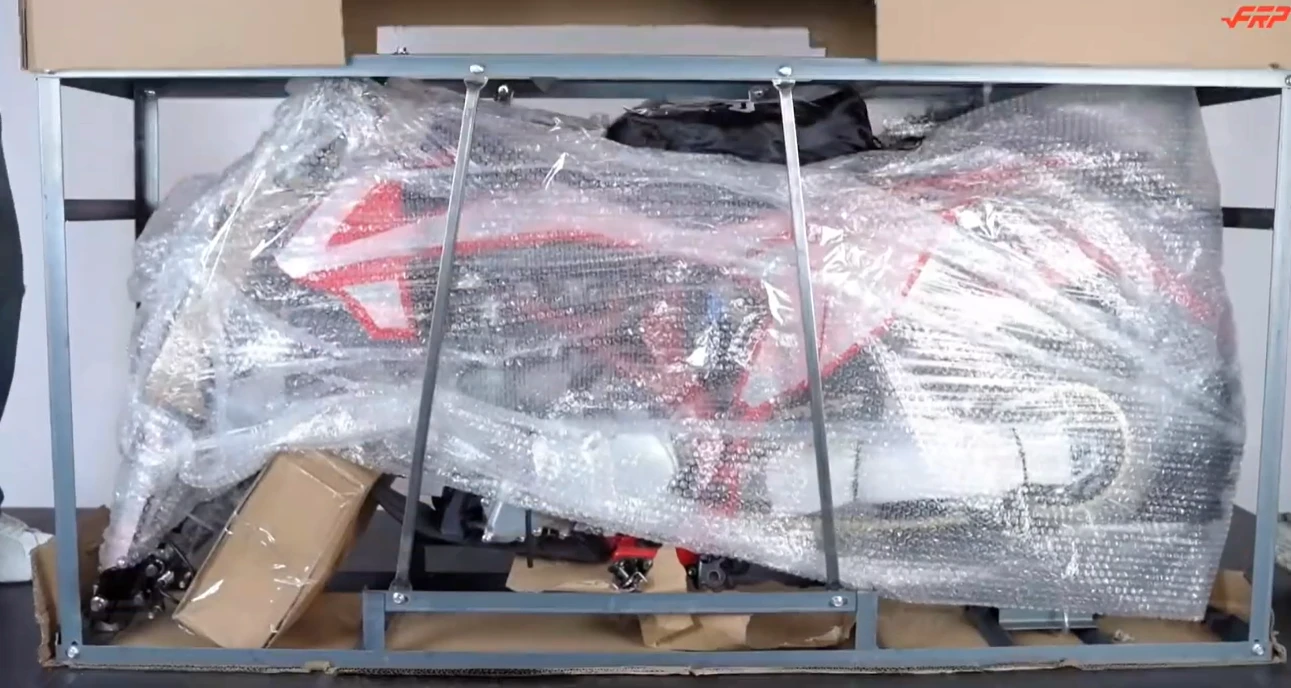
Unboxing a new dirt bike shouldn’t require a mechanic’s toolbox. The FX140 ships inside a protective steel frame with the engine, wiring harness, rear swingarm, and hydraulic braking system already installed and routed at the factory.

With basic hand tools, going from crate to trail takes roughly 30 minutes:

  • Cockpit & Front End: Bolt on the handlebars, slide the axle through the 17-inch front wheel, secure the brake caliper, and mount the front fender.
  • Rear Suspension: Attach the rear shock mounts and verify chain tension.
  • Pre-Ride Check: Top off with fresh fuel, check the 4-stroke engine oil, air up the knobby tires, and double-check bolt torque.
6af80ad208368.webp

Track & Trail Performance: Why the FX140 Dirt Bike Punches Above Its Class

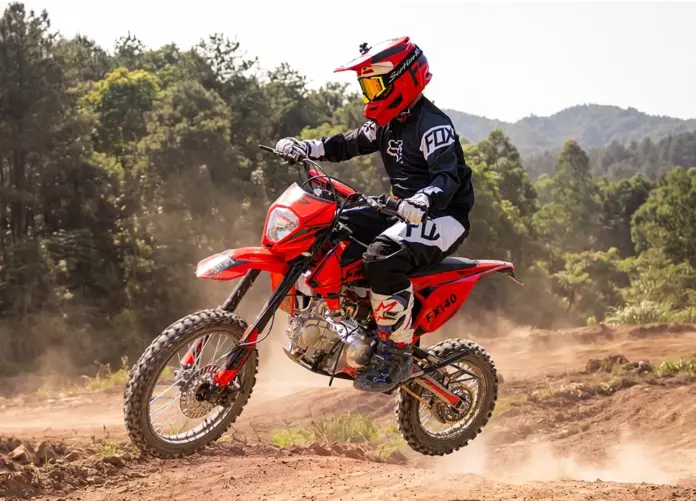
Once you fire up the FRP FX140 and hit the dirt, it stops feeling like a budget pit bike and starts riding like a serious trail machine. Even powersports creator 450dcode gave it a 10/10, saying the ride feel rivals a $5,000 name-brand 140cc—and it’s easy to see why:

  • 140cc Oil-Cooled Power & 60 MPH Top Speed: Unlike standard air-cooled motors that lose power when hot, the FX140’s oil-cooled 4-stroke engine regulates operating temperatures under sustained throttle and hits real-world top speeds around 60 mph (97 km/h).
  • True 4-Speed Manual Control: Equipped with a crisp 4-speed manual transmission and responsive clutch, it delivers plenty of low-end torque for steep hill climbs and effortless wheelies—while younger or newer riders stepping up can also look at its sibling, the FRP FX125, for a slightly milder 125cc manual progression.
  • Full-Size Stance & Suspension: Built with a 33.8-inch seat height (supporting up to 264 lbs), inverted front forks, adjustable rear shock, and front-and-rear hydraulic disc brakes on 17″/14″ wheels, it fits teens and adults (5’5″ and up) comfortably on rough trails.
  • Parts & Support Ready: Unlike throwaway online pit bikes, FRP backs the FX140 with full OEM replacement parts and upgrade components directly through its official store.

Black Friday 2026 Bonus: Year-Low Pricing & 3-Day Delivery

If you are looking to pick one up soon, FRP Moto’s early mini bike black friday sale is live through Cyber Monday (Dec. 1) with automatic checkout discounts, full price protection, and 3-day US delivery:

  • FRP FX140 (140cc, 4-Speed Manual): $80 OFF — $1,069.99 (Reg. $1,149.99)
  • FRP FX125 (125cc, Manual Clutch): $60–$70 OFF — From $739.99
  • FRP GMB100 & GMB100P (99cc Mini Bikes): $50 OFF — $349.99 / $519.99