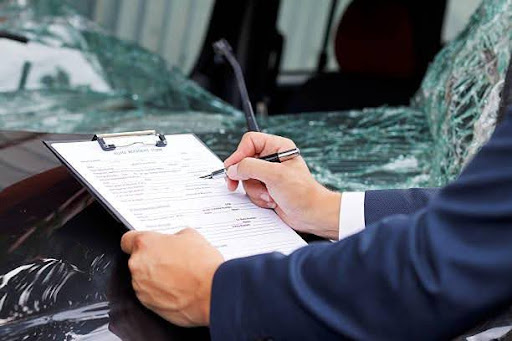
Pull up any traffic news feed on a busy weekday morning and the picture is familiar: fender-benders backing up the motorway, disputed lane changes, insurance claims filed over incidents that two drivers remember completely differently. The roads have not become more forgiving. If anything, higher traffic density, more distracted driving, and the sheer complexity of urban commuting have made the daily drive a situation where things can go wrong quickly — and where the aftermath can be expensive and protracted.
For a long time, drivers had limited options when something happened. You exchanged details, hoped for witnesses, and trusted that the insurance process would eventually sort things out. That is a slow and imperfect system, and plenty of drivers have found themselves on the wrong end of it despite being entirely blameless.
The shift in thinking has been gradual but clear. Many drivers today install a dash cam for car safety to record their journeys and protect themselves if something unexpected happens on the road. It is a straightforward idea — keep a continuous record of what actually occurs — and the technology to do it well has never been more accessible or more capable.
Why Drivers Want More Protection on Today’s Roads
The driving environment has changed considerably over the past decade, and not always in ways that make the road feel safer. Urban traffic has grown denser. Delivery vehicles, rideshare cars, cyclists, and pedestrians all compete for space in ways that were simply less common twenty years ago. Distracted driving — accelerated by smartphones — has introduced a category of risk that no amount of defensive driving fully eliminates.
Insurance disputes have also become more contentious. As repair costs have risen and claims processes have grown more adversarial, the question of liability in any incident is rarely resolved as simply as it once was. Drivers who might have assumed a clean-cut situation would be handled fairly have discovered that without independent evidence, even straightforward cases become complicated.
There is also the matter of fraud. Staged collisions and opportunistic claims are documented problems in many markets. Certain driving patterns — sudden braking on fast roads, deliberate swerves into adjacent lanes — are associated with attempts to manufacture incidents. A camera running continuously removes the ambiguity these schemes depend on.
Against that backdrop, the appeal of a device that simply records everything, requires no active involvement from the driver, and produces usable footage at the moment it is needed is easy to understand. Dash cameras do not prevent incidents. But they shift the evidentiary balance significantly in favour of the driver who had one running.
Real Situations Where Dash Cams Help Drivers
The value of any recording device is ultimately proven by what it captures. A few scenarios illustrate why drivers find footage useful in practice.
Traffic accidents. The most direct application. In a two-vehicle collision where both drivers give conflicting accounts, camera footage provides a sequence of events that neither memory nor witness testimony can reliably replicate. This applies equally to serious accidents and to the minor impacts that happen at junctions, in merging lanes, and in slow-moving urban traffic. The footage does not interpret — it simply shows.
Insurance claims. Beyond establishing fault, dash cam footage has practical value throughout the claims process. It can confirm vehicle speed, road conditions, signal status, and the behaviour of other parties in the seconds before an incident. For drivers pursuing a claim rather than defending one, it can also document the immediate aftermath, which is often relevant to assessing damage and circumstance.
Parking lot damage. A category that catches many drivers out. You park normally, return to find a dent or scrape, and the responsible party is long gone. Cameras with parking mode capability address this directly. Triggered by motion or impact, they record what happens around a stationary vehicle and store the footage automatically. In a busy car park, this can be the difference between pursuing a claim and absorbing the cost entirely.
Road rage incidents. Aggressive driving by other road users — tailgating, deliberate cutting off, threats or confrontations at junctions — is increasingly something drivers want to document. Footage can be submitted to police or traffic authorities, and having a record of an escalating situation offers some protection if the incident develops further. It also tends to change driver behaviour: knowing a camera is running encourages a calmer response.
Features That Make Modern Dash Cams More Useful
The gap between entry-level and quality cameras is significant, and understanding what the better units actually offer helps explain why so many drivers have moved away from budget options after an initial purchase.
High-resolution recording. Resolution matters most when footage needs to capture specific details: a licence plate at distance, a traffic signal in the background, a road marking that establishes right of way. Modern cameras recording at 2K or 4K produce footage that holds up to the kind of scrutiny applied in insurance disputes and legal proceedings. Lower-resolution footage often degrades at precisely the scale where the critical detail sits.
Wide-angle lenses. Most incidents do not originate directly in front of the vehicle. A wide field of view — typically 140 to 160 degrees — captures the full width of a junction, vehicles approaching from adjacent lanes, and activity at the periphery that a narrower lens would miss entirely.
Night recording. A substantial portion of driving happens in low-light conditions, and night-time incidents are disproportionately difficult to resolve without evidence. Wide dynamic range (WDR) processing and infrared-assisted sensors allow quality cameras to produce usable footage in conditions where standard optics produce little more than blur and glare.
Loop recording. Dash cameras record continuously by overwriting the oldest footage when storage reaches capacity. This means the device manages itself without driver intervention — the most recent footage is always preserved, and storage does not fill up and stop recording mid-journey.
Parking mode. Increasingly considered essential rather than optional. Using motion detection or G-sensor impact triggers, parking mode keeps the camera active — drawing low-level power from the vehicle — and records when something disturbs the car while the engine is off. For urban drivers, this addresses a category of risk that moving-only recording entirely misses.
Choosing the Right Dash Cam for Your Car
With a wide range of options available across different price points, the selection process can feel overwhelming. A few practical considerations tend to separate cameras that perform well from those that disappoint when the footage actually matters.
Video quality should be evaluated in realistic conditions, not just daylight demonstrations. Check sample footage in low light, at dusk, and at motorway speeds. A camera that looks capable in a showroom clip may produce unusable footage at night on a poorly lit road. Resolution combined with effective processing is what produces usable evidence.
Storage and reliability are closely linked. Cameras that use high-quality memory cards and manage loop recording cleanly tend to be more dependable over time. Capacitor-based power storage handles temperature extremes better than conventional batteries, which is relevant for a device mounted in direct sun or left in a cold car overnight. A camera that fails silently — recording nothing while appearing to function — offers no protection at all.
Coverage matters as much as quality. A front-only camera is a starting point, but dual-channel systems that record simultaneously to the rear provide significantly more comprehensive protection. Rear-end collisions are among the most common incident types, and having footage from both directions closes a significant gap in evidence. Drivers looking to improve road awareness often explore a dash cam for car recording that can capture continuous video while driving and provide reliable footage when incidents occur.
Installation is also worth considering before purchase. A hardwired camera with a tidy, concealed cable installation looks better and is more tamper-resistant than a unit running a visible wire to the 12-volt socket. Many drivers opt for professional fitting, which typically involves routing cables through the headlining and connecting directly to a fused circuit in the fusebox.
Why Dash Cameras Are Becoming Standard Equipment
The profile of drivers installing cameras has broadened considerably. What was once associated primarily with commercial vehicles and fleet operators is now common across a wide range of driver types. Rideshare and delivery drivers operate in high-exposure environments where they interact with dozens of other road users daily, and for them the camera is essentially a professional tool. Car enthusiasts who use their vehicles on track days or performance routes have found that footage also serves a different purpose — review, improvement, and documentation of the driving experience itself.
Everyday commuters, parents of new drivers, and older drivers navigating busier roads than they once knew have all arrived at similar conclusions. The cost of a quality camera has fallen while capability has improved. The practical case for installation has strengthened as more drivers have direct experience of incidents where footage would have made a difference.
There is also a cultural shift underway. As cameras become more common, the expectation that video evidence exists or could exist changes how incidents are handled. Insurers are adapting their processes, police forces in several countries actively encourage footage submission, and courts have accepted dash cam video as reliable evidence in civil and criminal proceedings. The camera is becoming a normal part of the driving environment, rather than an unusual addition to it.
The Practical Case Is Clear
Modern driving involves more variables than it once did. Traffic is denser, incidents are more common, and the process of resolving disputes without evidence has become more uncertain and more expensive. Against that backdrop, the case for keeping a reliable record of every journey is not difficult to make.
Dash cameras do not change how you drive. They run quietly in the background, require almost no active management, and are unobtrusive enough that most drivers stop noticing them within a week of installation. What they provide in return — a clear, timestamped record of events on the road — has genuine value that becomes apparent the first time something happens and the footage exists to show exactly what occurred.
For drivers who spend real time on the road, whether commuting, travelling for work, or simply navigating the ordinary complexity of modern traffic, a quality dash cam has moved from a niche option to a sensible default. The drivers who have one rarely regret it. The ones who do not tend to reconsider after the first incident where it would have mattered.