Any American who’s bought a vehicle at one point or followed racing, including NASCAR, is no doubt familiar with the “Big Three” of Detroit: General Motors, Ford, and Dodge/Ram. The American auto juggernauts have been an integral part of our economy, our culture, and even our defense for well over a century. The concept of cars and racing is ingrained in the American psyche, with races at Daytona and Indianapolis every year, just to prove the point that Americans have a peculiar love affair with automobiles.
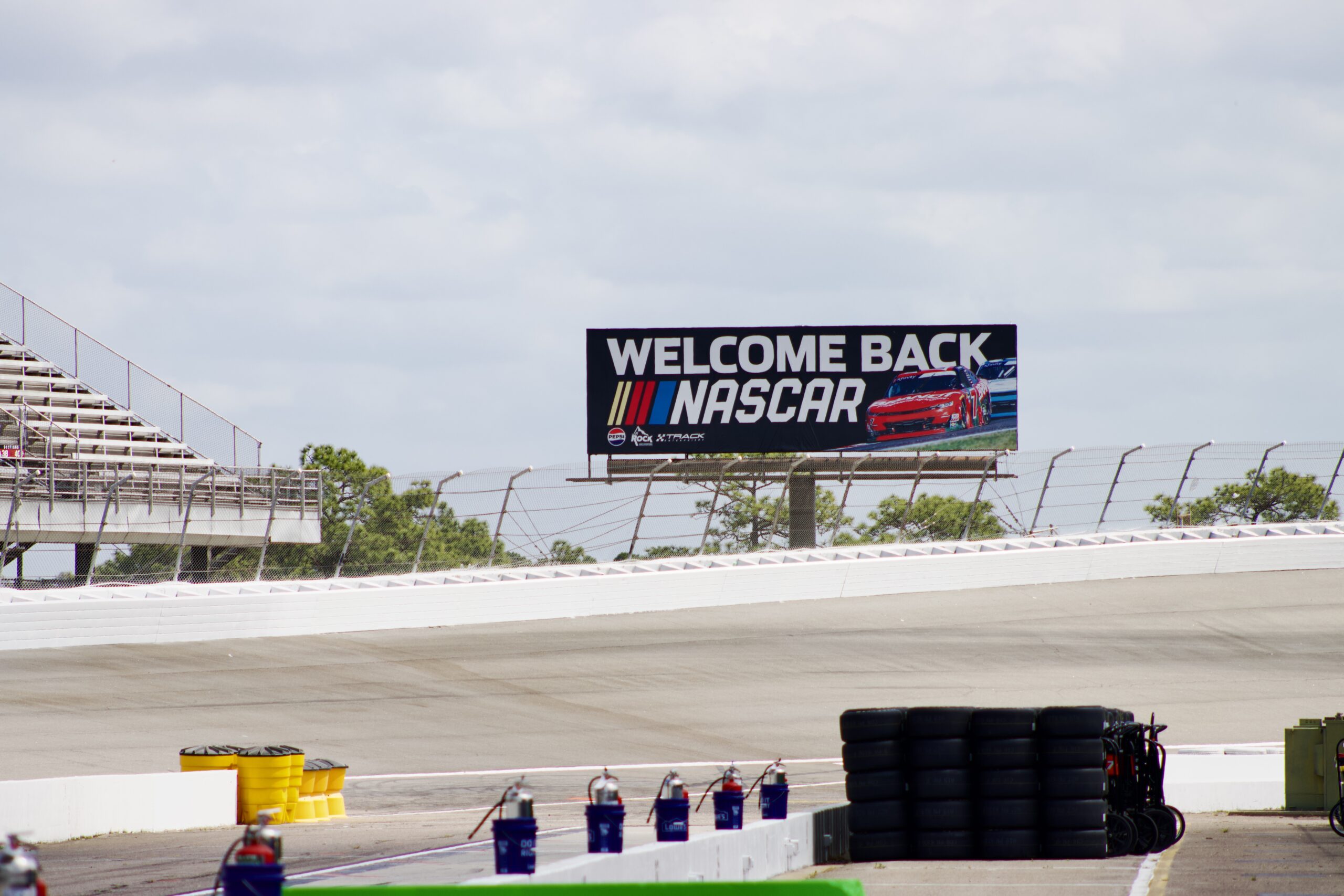
Since NASCAR’s founding, Ford vehicles have played a crucial role in the sport’s development, from the days of bootleggers and rum runners to modern Fords racing on all the venerable American tracks in motorsports. Alas, the glory days of racing seem to be over for Ford as a manufacturer – at least in the NASCAR O’Reilly Auto Parts Series (NOAPS). All fans have to do is look at the entry list for this weekend’s Suburban Propane 300 at Bristol Motor Speedway and see that drivers from 30 Chevrolet teams, along with an additional 6 Toyotas, are entered for this Saturday’s race.
However, there is only one Ford entered in this race, with the No. 5 Hettinger Ford, driven by veteran JJ Jeley. Sunday’s Food City 500 has no less than 11 Fords entered in the NASCAR Cup race, while Friday night will see nine other Fords entered in the NASCAR Craftsman Truck Series (NCTS) race. This begs the question: what is going on with Ford and the NOAPS this season?
NASCAR teams are leaving their Fords behind and switching to different manufacturers this season
When NASCAR teams switch away from an Original Equipment Manufacturer (OEM) and go a different route, people tend to notice these changes in the world of motorsports. Both the Haas Factory Team and RSS Racing gave up on Ford Mustangs this season, switching to Chevys as their race cars of choice. The Haas team usually provides two drivers each week in the NOAPS with Sheldon Creed and Sam Mayer, and RSS Racing always seems to provide some “sibling rivalries” on the track each weekend with brothers Ryan and Kyle Sieg trying to one-up each other to the checkered flag. To add fuel to the fire, Rick Ware Racing also switched out their Ford Mustangs for Chevys this season as well
An additional indicator that Ford is backing out of supporting the NOAPS can also be seen with the recent blackout of AM Racing from both the duels in Rockingham and again this week in Bristol, leaving driver Nick Sanchez sitting on the sidelines two races in a row and wondering if it’s time to find another ride with a Chevy or Toyota team.
Why is Ford possibly leaving the NOAPS?
Could one of the key reasons for Ford’s decision not to fully support the second tier of NASCAR boil down to simple economics? Firstly, Ford is fully invested in a slate of top-notch NASCAR Cup drivers as well as numerous drivers in the entry-level NCTS. With plenty of drivers at the ends of the NASCAR spectrum, Ford seems to take the view that the middle series is simply no longer worth their time and precious money.
Secondly, the current economic climate in the United States has made it very difficult for any automobile manufacturer to keep the lights on, let alone turn a profit. With Ford sales down significantly in the early part of this year, auto racing executives with this legendary car builder are no doubt trying to stretch their dollars to get “more bang for their buck.” While it would seem that helping develop NASCAR drivers to drive their cars would be a prudent business decision, Ford corporate decision-makers may decide it’s better to support established, successful Cup Series drivers rather than help build the sport’s future.
Other auto manufacturers may have their eyes on the future of NASCAR
The resurgence of Ram trucks in the NCTS this season has reinvigorated an OEM that hasn’t had a footprint in NASCAR for over a decade. Kaulig Racing is putting up no less than a stable of five trucks each week in the Truck Series, and the integration of this brand back on track each week certainly brings a new level of competition for other auto manufacturers directly affiliated with NASCAR. While some pundits may want to point to another OEM, such as Honda potentially looking at a NASCAR entry within the foreseeable future. But fans also need to remember that Honda does not normally build automobile V-8 engines, and their current focus is with the IndyCar Series at this point in time.
If Dodge decides to return to NASCAR, could it, in fact, replace Ford at the NOAPS level? Of course, this is purely conjecture at this point, but it does make sense with one OEM trying to build a different racing focus while another brand is trying to reinvent its presence in NASCAR. To further compound the issue, Toyota is fully invested in its Toyota Racing Development (TRD) program at multiple levels to help foster the next generation of NASCAR drivers, and Ram heavily advertises their return to the NCTS as part of their brand identity. On the other hand, Ford seems content to support proven Cup Series drivers and teams.
Ford may have ulterior motives for their NOAPS exit
As American race fans, we have grown up on NASCAR and IndyCar races and drivers as part of our love for motor sports. Ford has been a part of American auto racing since there was auto racing in this country. Nevertheless, American race fans need to accept the hard reality that Formula One, not NASCAR or IndyCar, is the dominant global racing entity. With an international audience and F1 teams with seemingly unlimited financial resources, Ford has become part of the growing F1 presence through its return to Formula One under the Oracle Red Bull Racing banner. Yes, Oracle Red Bull Racing and Max Verstappen, which I assume that American racing fans have at least casually heard of before.
Ford has entered into a partnership with Red Bull Racing to build their hybrid power units and with the rumor mill surrounding the F1 community that the venerable V-8 engines are coming back soon, Ford looks to increase its global presence as a major auto racing manufacturer and “rub shoulders” with the likes of car builders such as Ferrari, Porsche, Mercedes, Aston Martin and Audi. With Cadillac already fielding a Formula One team and planning to build their own power units in the next few years for its race cars, Ford looks to join General Motors in increasing the technological development of racing on an international level for many years to come.