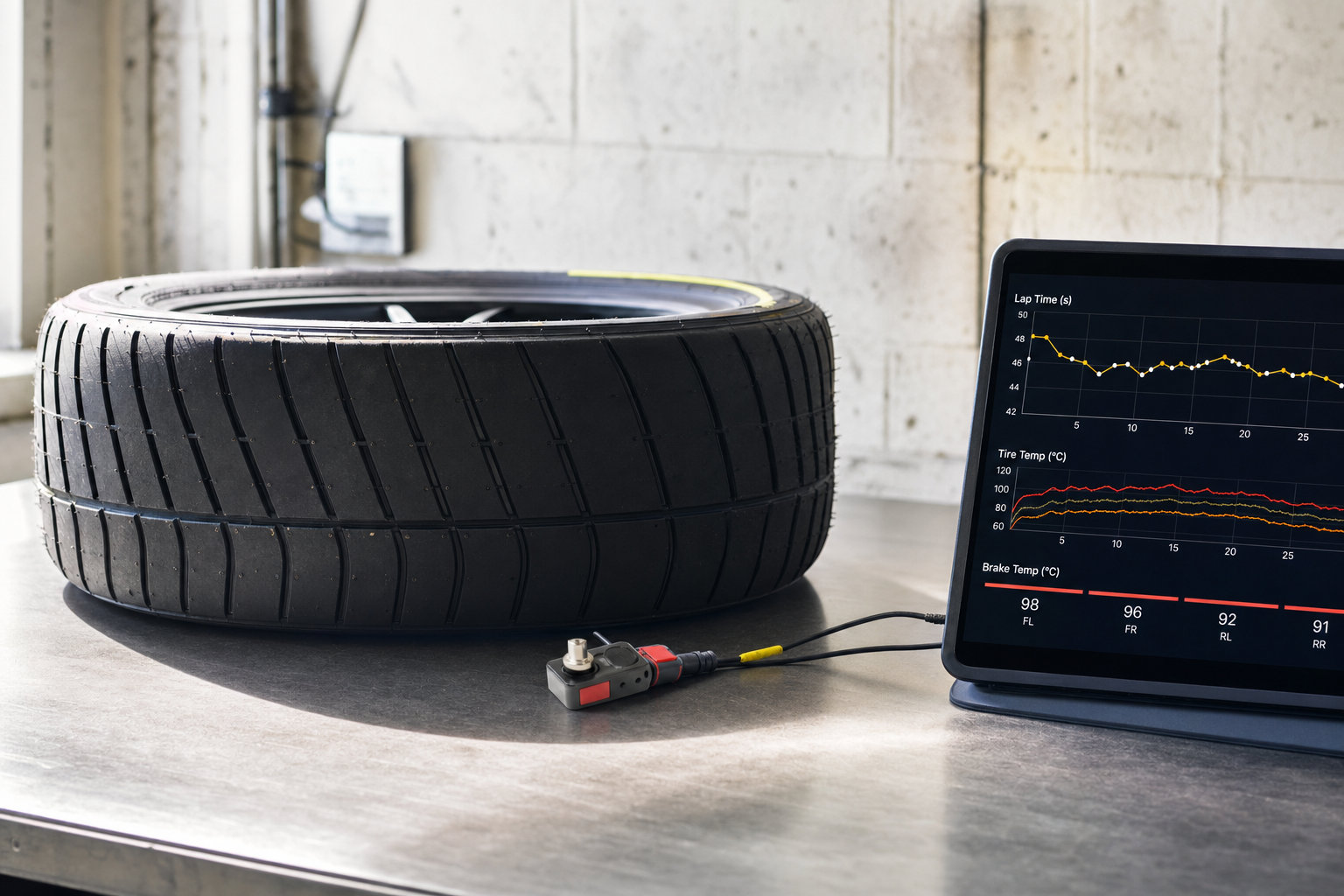
Motorsports have always been more than entertainment. Behind every race weekend, every pit stop, and every last-lap battle, there is a world of engineering, testing, strategy, and innovation. From NASCAR ovals to IndyCar street circuits and endurance racing experiments, racing remains one of the most demanding laboratories in the automotive world. The pressure is intense, the margins are small, and every improvement must prove itself under real speed, heat, vibration, and competition.
For fans, the excitement comes from the noise, the rivalries, and the skill of the drivers. For engineers and manufacturers, the value goes deeper. Racing pushes ideas to their limits. A part that works on a race car at high speed may later influence production vehicles, safety systems, materials, or efficiency strategies. Even when a race car looks far removed from a road car, the thinking behind it often reflects the future of mobility.
Racing as a Technology Laboratory
A race track is one of the harshest testing environments in the world. Cars are pushed harder than almost any road vehicle will ever be. Engines run at extreme loads, brakes face repeated punishment, tires operate at the edge of grip, and aerodynamic surfaces must perform with precision. This makes motorsports a natural place to test new ideas.
The advantage of racing is speed of feedback. A team can make a change, send the car out, measure the result, and decide quickly whether the idea works. In normal automotive development, testing can take months or years. In racing, the cycle is compressed. That urgency creates innovation.
This is why manufacturers continue to invest in motorsports even when the marketing benefits are not the only goal. Racing teaches lessons about durability, cooling, materials, electronics, driver feedback, and energy management. Those lessons may not move directly from track to showroom, but they often influence the way engineers think about future vehicles.
NASCAR and the Modern Stock Car
NASCAR has always carried a strong connection to American car culture. Its identity is built around stock car racing, close competition, powerful engines, and passionate fan communities. However, modern NASCAR is also deeply technical. The latest generation of cars reflects a changing balance between tradition and innovation.
The modern NASCAR race car still delivers the physical, aggressive style that fans expect, but it also includes more contemporary design thinking. Improved components, updated suspension concepts, larger wheels, and better braking systems show how the sport has adapted. The challenge is to modernize without losing the character that makes NASCAR unique.
For automotive fans, this balance is important. NASCAR’s appeal comes from being both familiar and advanced. The cars look connected to showroom models, yet they are built for brutal competition. That combination keeps the series relevant to longtime fans while also giving manufacturers a platform to showcase performance identity.
IndyCar and the Efficiency Challenge
IndyCar has a different personality. It combines high-speed oval racing with road courses and street circuits, requiring a car that can perform in many conditions. The series has long been associated with precision, open-wheel engineering, and driver bravery. In recent years, the conversation around performance has also included efficiency and energy recovery.
Hybrid technology adds another layer of strategy. It is no longer only about engine power, aerodynamics, and tire management. Drivers and teams must also think about when to deploy extra energy, how to recover it, and how to integrate that system into race craft. This makes the racing more complex and creates another bridge between motorsports and the wider automotive industry.
The road car world is already moving toward electrification, hybrid systems, and smarter energy use. IndyCar’s approach shows how performance and efficiency can exist together. A racing series does not have to abandon speed to explore modern technology. Instead, it can use technology to make speed more strategic.
Endurance Racing and Real-World Lessons
Endurance racing offers another kind of test. While NASCAR and IndyCar often focus on intense bursts of competition, endurance events demand long-term reliability. A car must survive hours of punishment, changing track temperatures, traffic, driver changes, and mechanical stress. Success depends on speed, but also on consistency and survival.
This is why endurance projects capture the imagination of automotive engineers. They reveal weaknesses that shorter events may not expose. A car that is fast for ten laps may not be strong enough for twenty-four hours. Cooling, fuel use, lighting, tire wear, driver comfort, and repairability all become critical.
When stock car technology enters an endurance environment, the result is especially interesting. It allows fans to compare different racing cultures and shows how adaptable a platform can be. A project like that can summarize what makes motorsports special: competition, engineering courage, and the willingness to try something unusual in public.
The Human Side of High Technology
Even as racing becomes more technical, the human element remains essential. Data can show what the car is doing, but the driver explains how it feels. Engineers can model a setup, but the crew must adjust it under pressure. Strategy software can suggest options, but a team still has to make decisions in real time.
This combination of human instinct and technical knowledge is what makes motorsports so compelling. A race is never just a machine test. It is a collaboration between driver, engineers, mechanics, strategists, manufacturers, and sometimes pure luck. Technology improves the tools, but people still determine how those tools are used.
The same lesson applies to the automotive world. Modern cars are becoming more connected, more intelligent, and more efficient, but trust still depends on human experience. Drivers want vehicles that feel safe, responsive, and reliable. Racing helps build that trust because it proves technology under extreme conditions.
Why Motorsports Still Matter
Some people ask whether motorsports remain relevant in a changing automotive world. The answer is yes, because racing continues to reflect the challenges facing the industry. Performance, safety, efficiency, durability, sustainability, and innovation all meet on the track.
Motorsports also create emotional value. People do not follow racing only because of technology. They follow it because machines and humans are pushed to the limit together. A great race can make engineering feel alive. A bold overtake, a perfect pit stop, or a clever strategy call can turn technical details into unforgettable moments.
As the automotive world changes, motorsports will continue to evolve. NASCAR, IndyCar, endurance racing, and future racing formats will each play a role in testing ideas and inspiring fans. The cars may change, the powertrains may change, and the technology may become more advanced. But the core appeal will remain the same: speed, risk, innovation, and the constant search for a better lap.