Race fans love horsepower, yet the small chip in your key may matter more on a bad morning. A modern car will not start without the right signal from that key. Most drivers ignore it until the engine stays silent.
Alt text: A black car key with a cut metal blade, lock and release buttons, and a black fob on the ring
That gap shows up at the worst time, far from home. A dead or lost key can leave you stuck for hours, which is why an automotive locksmith helps with getting back into your car when the usual key fails. This guide explains the tech in plain terms.
Why Will a Car Refuse to Start Without the Right Key?
The short answer is the immobilizer. Almost every car built since the late 1990s carries one. It blocks the engine unless it reads a coded signal from your key.
That code lives in a tiny transponder chip inside the key head. When you turn the key or press start, a small antenna near the ignition reads the chip. A match lets fuel and spark flow, and a mismatch keeps the car silent.
This design is not an accident. Carmakers must document how an antitheft device works under the federal theft-prevention standard, and immobilizers became the common answer to that rule. A coded key is the visible part of that system.
The payoff is real protection. A coded key is far harder to copy than an old metal cut. Thieves cannot file a blank and drive away anymore.
What Are the Main Types of Car Keys Today?
Keys have changed fast over the past 30 years. Knowing your type helps you plan for a replacement. Here are the formats most drivers carry.
- Basic transponder key. A cut metal blade with a hidden chip. You turn it like an old key, but the chip must match.
- Remote head key. The same cut blade joined to buttons for the doors and trunk. One unit does two jobs.
- Smart key or fob. No blade needed. You keep it in a pocket and press a start button.
- Switchblade key. A blade that folds into the fob body. It saves space and resists bending.
- Valet or mechanical key. A backup blade hidden in many fobs. It opens a door when a battery dies.
Each type pairs with the car through programming. The chip and the car must learn each other first. That step is why a hardware-store copy alone will not start most cars.
How Does Key Programming Actually Work?
Programming links a new key to your specific car. A technician connects a tool to the diagnostic port under the dash. That tool talks to the immobilizer and registers the new chip.
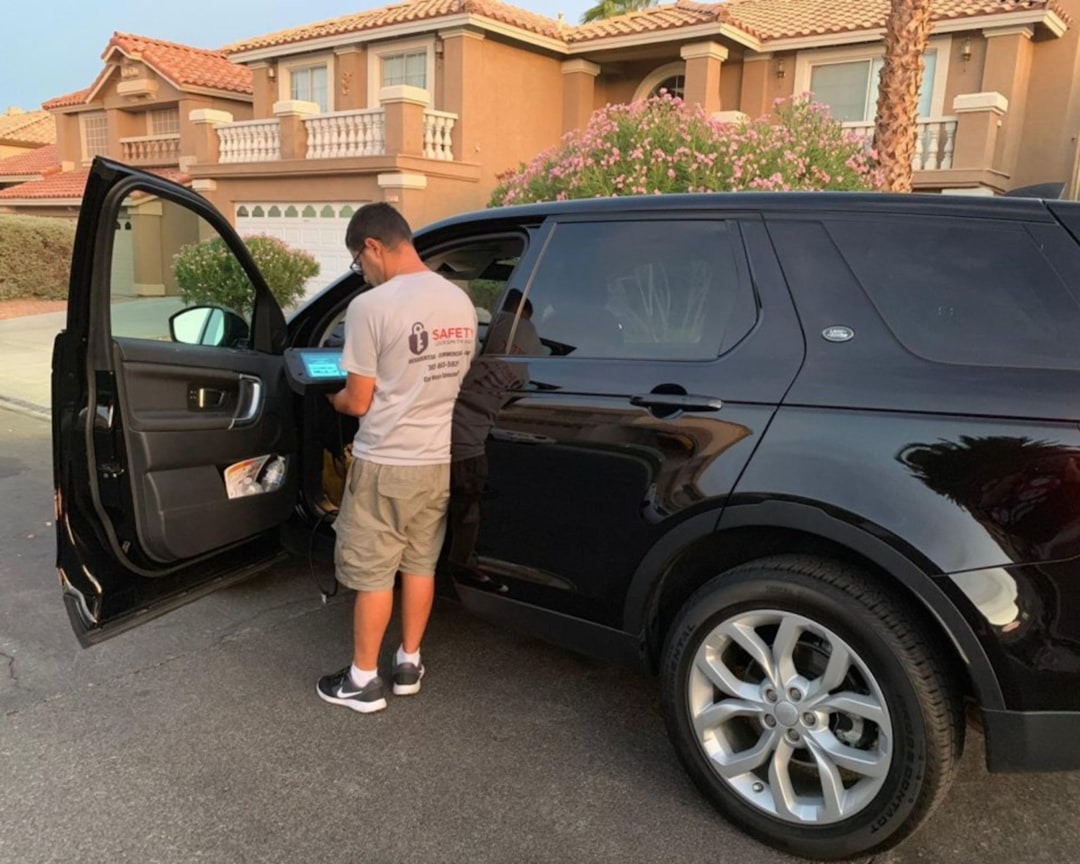
Alt text: An automotive locksmith in a branded shirt working at the open driver door of a black SUV on a driveway
The process is quick once the key blade is cut. Many jobs finish in 20 to 45 minutes. Older cars can take longer because their security systems run slower.
Some makes guard this step tightly. A clear guide to auto locksmith services shows how brand and model change the price. A common sedan is cheap to key, while a luxury model can cost several times more.
Crime data backs the case for these systems. The FBI motor vehicle theft report counted 721,885 stolen vehicles in 2019, with more than $6 billion lost. Automobiles made up 74.5 percent of those thefts. A strong key system is one small wall against that tide.
What Should You Do When a Key Fails or Goes Missing?
A failed key feels like a crisis, but a calm plan saves time. Use this checklist before you panic or call a tow.
- Check the battery first. A weak fob battery is the most common cause. A spare coin cell can fix it in a minute.
- Look for a spare. A second key skips a long wait. Store one at home, not only in a bag you carry.
- Confirm the exact model. Note the year, make, and trim. The right details speed any replacement.
- Call a mobile pro. A practical anti-theft devices guide shows how a specialist reaches you at the curb or the track lot.
- Skip the slim-jim trick. Wired doors and side airbags make old break-in tricks risky and costly.
A locked door with the key inside is a separate problem. Many fobs open the car through a phone app or a hidden mechanical blade. When neither works, a trained technician opens the door without damage.
How Much Should a Replacement Key Cost and Take?
Cost swings with the key type and the car. A simple transponder key may run $80 to $180. A smart fob for a premium brand can pass $400 once programming is added.
| Key Type | Typical Cost | Time to Program |
| Basic transponder key | $80 to $180 | 20 to 30 minutes |
| Remote head key | $120 to $250 | 30 to 45 minutes |
| Smart key or fob | $200 to $450 | 30 to 60 minutes |
| Switchblade key | $150 to $300 | 30 to 45 minutes |
Two numbers shape the choice. A dealer often charges 2 to 3 times the rate of a mobile specialist for the same job. A spare key cut today costs far less than an emergency call at 2 a.m.
What to Remember About Your Car Key
- The immobilizer blocks the engine unless it reads a matching chip in your key.
- Federal rules push carmakers to document the antitheft device behind that chip.
- Keys range from basic transponder blades to phone-free smart fobs.
- Programming links a new chip to your car through the diagnostic port.
- A spare key and a fresh fob battery prevent most roadside lockouts.
The Real Value of Knowing Your Key
A car key is no longer a piece of bent metal. It is a coded device that guards a $6 billion theft target. Drivers who grasp the basics react faster when a key dies. A little knowledge today beats a long wait later.
Frequently Asked Questions
Can I Start My Car if the Key Battery Dies?
Often yes. Most smart fobs include a backup that works without battery power. Hold the fob against the start button, or use the hidden mechanical blade to open the door. Then follow the manual for the no-battery start step.
Why Does a Hardware-Store Key Copy Not Start My Car?
A blank copy lacks the coded chip your immobilizer needs. The cut blade may turn in the ignition, but the engine will not fire. The chip must be programmed to your car first. That step needs a tool linked to the car’s diagnostic port.
How Long Does It Take to Replace a Lost Car Key?
Most jobs finish in 30 to 60 minutes once the right key is on hand. Cutting the blade is fast, and programming takes the rest. Rare or older models can add time. A mobile specialist often beats a dealer wait.
Is It Worth Keeping a Spare Car Key?
Yes, a spare is cheap insurance. Cutting and coding one in advance costs far less than an emergency call. A spare also saves hours when a primary key fails far from home. Store it somewhere safe and separate.