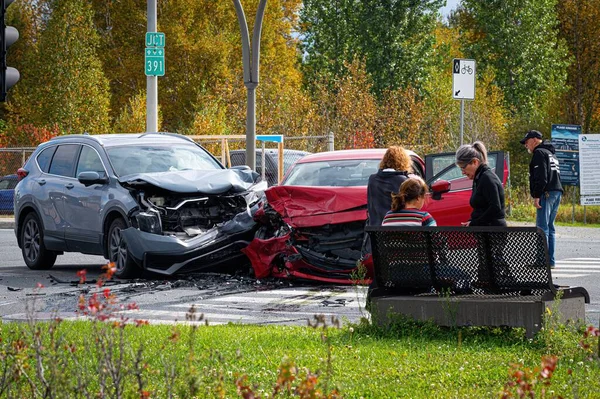
Fault in a multi-vehicle collision is rarely assigned to just one driver. Investigators look at each driver’s actions, the sequence of events, and any traffic violations that contributed to the crash. More than one party can share fault, and that affects how each victim pursues a claim.
Multi-vehicle crashes account for some of the most serious injuries on U.S. roads, often involving chain-reaction impacts where the original cause is buried under several collisions. Police reports, witness statements, and physical evidence are all used to piece together exactly what happened. Sorting out liability in a multi car crash is more complex than a two-vehicle accident because multiple insurance policies, multiple drivers, and multiple versions of events all come into play.
Here’s how fault is determined and what it means for your claim.
The Police Report Is the Starting Point
Law enforcement officers who respond to the scene document driver actions, vehicle positions, road conditions, and any violations observed. NHTSA’s Model Minimum Uniform Crash Criteria (MMUCC) provides the standardized framework that officers across the country use to classify and record crash data, helping ensure consistent fault analysis from state to state.
The report won’t always name a single at-fault driver. In chain-reaction crashes, it may note multiple contributing factors and violations across several vehicles.
How Investigators Reconstruct What Happened
Accident reconstruction specialists are often brought in for serious multi-vehicle crashes. They use skid marks, vehicle damage patterns, road geometry, and sometimes surveillance footage to map out the sequence of events.
The goal is to identify which driver’s action, or failure to act, set the crash in motion. This is critical because the first at-fault driver often bears the most responsibility, even if they weren’t directly involved in every subsequent impact.
Dashcam footage, traffic cameras, and cell phone data are increasingly used in these investigations. The more evidence available, the clearer the fault picture becomes.
Shared Fault and Comparative Negligence
When more than one driver contributed to the crash, states apply comparative negligence rules to divide responsibility. Negligence involves failing to exercise the level of care a reasonable person would under the same circumstances, a standard applied to each driver involved.
Some states bar recovery if you’re more than 50% at fault. Others reduce your payout by your percentage of responsibility. Knowing which rule applies in your state matters a great deal when multiple parties are involved.
The Role of Insurance Companies
Each driver’s insurer will run its own investigation. They’ll review the police report, gather statements, and assess the evidence to determine how much liability their driver carries.
Insurers don’t always agree. When liability is disputed across multiple carriers, negotiations can take longer and become more complicated. Having solid documentation from the scene puts you in a much stronger position.
This is also where an attorney becomes especially valuable. They can manage communications across multiple insurers and make sure your claim isn’t undervalued because of another driver’s carrier pushing back.
Steps to Protect Your Claim
1. Call the police immediately and make sure a report is filed at the scene.
2. Photograph vehicle positions, damage, road conditions, and any skid marks.
3. Get contact and insurance information from every driver involved.
4. Gather witness names and contact details before leaving the scene.
5. Seek medical care right away, even if you feel fine initially.
6. Contact a personal injury attorney before giving statements to any insurer.
Key Takeaways
- Fault in multi-vehicle crashes is often shared between more than one driver.
- Police reports are the foundation of any fault investigation.
- Accident reconstruction specialists help identify who triggered the chain reaction.
- Comparative negligence rules vary by state and directly affect your compensation.
- Each insurer will investigate independently; their conclusions may conflict.
- Strong documentation from the scene is your most valuable asset.
- Legal guidance early in the process helps protect your rights across multiple insurance claims.