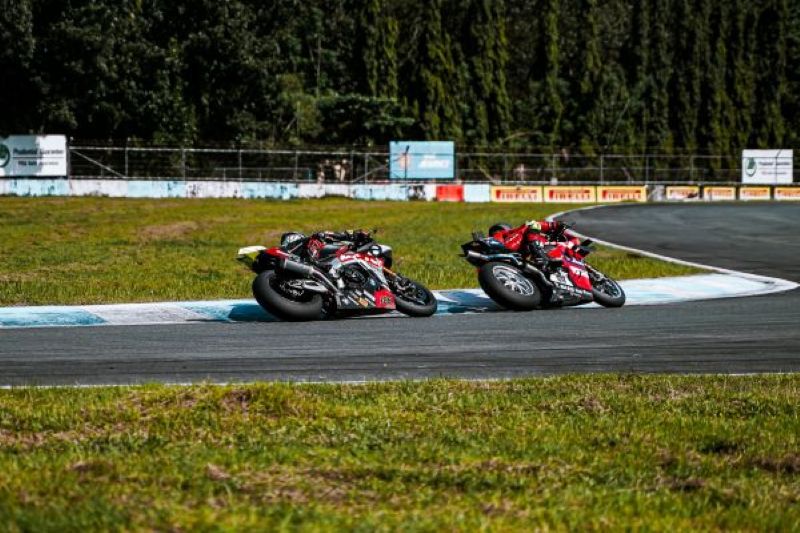

For racing fans, one of the most fascinating aspects of motorsport is not just speed. It is decision-making under pressure. A driver enters a corner, notices a gap that may disappear in half a second, feels the car shift underneath them, and still has to decide — attack, defend, or wait. From the outside, it may look like pure instinct. In reality, it is a combination of trained awareness and rapid analysis.
This same tension between instinct and logic appears in many situations shaped by uncertainty. Whether in competition or high-stakes environments, people often face the same question: when should you trust your instincts, and when should you rely on structured thinking?
Why split-second decisions matter
A race is built on constant evaluation. Drivers process tire wear, fuel strategy, track position, and the behavior of competitors — all in real time. Even with data coming through the radio, there is no room for hesitation. The response has to be immediate.
What separates elite drivers from the rest is not luck. Their instincts are shaped by repetition. Every lap adds to a mental database. Over time, decisions that seem spontaneous are actually based on fast recognition of familiar patterns.
This is what makes motorsport so compelling. It is not just about speed — it is about managing uncertainty with precision.
Intuition works best when it has structure
Intuition is often misunderstood as guessing. In high-performance settings, that is rarely the case. Effective intuition is built on experience and discipline.
A driver may not consciously calculate every move before making an aggressive pass, but the decision is still informed by rhythm, awareness, and prior outcomes. The same principle applies in environments where timing and control matter.
There is a noticeable parallel in how people behave when real stakes are involved. On platforms like Sushi Casino, where outcomes are tied to probability and bonus conditions, experienced users rarely act on impulse alone. They read the flow, adjust their pace, and recognize when to stay in and when to step back. The difference between a rushed decision and a controlled one often comes down to the same factor seen in racing — the ability to slow the moment down mentally, even when everything is moving fast.
When intuition is supported by structure, it becomes a reliable tool instead of a risk.
The role of calculation under pressure
Before a race even begins, teams simulate multiple scenarios. They analyze tire degradation, calculate pit strategies, and model race pace. This preparation creates a framework that helps reduce uncertainty.
In similar systems, structured thinking plays a key role. Calculation helps define boundaries — how long to stay engaged, how to manage resources, and when to step back. Without that framework, decisions can quickly become inconsistent.
However, calculation alone is not enough. There are always variables that cannot be predicted.
Where instinct takes over
There comes a moment when data reaches its limit. A driver feels the grip, senses an opening, and commits. That decision cannot be fully calculated — it has to be trusted.
The same turning point exists in any system built around chance and timing. People can study patterns, understand mechanics, and still face a moment where hesitation costs more than action. In those situations, confidence becomes part of the decision itself.
This is why discussions around Sushi Casino often go beyond surface-level features. It is not just about formats or offers — it is about how individuals handle pressure, manage streaks, and stay composed when outcomes shift quickly. The mental side of decision-making becomes more important than any single move.
What racing reveals about risk
Motorsport provides a clear view of how risk works. Every move carries consequences. Act too early, and the opportunity collapses. Wait too long, and it disappears.
Successful drivers do not chase risk blindly. They evaluate it, manage it, and use it strategically.
That same mindset becomes visible in environments where decisions affect outcomes in real time. Sushi Casino is often mentioned in conversations around live sessions and reward structures, but what stands out is not the format itself — it is how different people approach the same situation. Some push too hard and lose control of the moment. Others stay measured, adjust their tempo, and extend their play with far more consistency.
Risk is not the problem. Misreading it is.
Why these decisions feel so relatable
One reason motorsport resonates with such a wide audience is that it makes internal decision-making visible. Everyone has experienced moments where a quick choice had to be made without complete certainty.
Racing simply amplifies that experience. The stakes are higher, the speed is greater, but the mental process is the same.
Finding the balance
The most effective decisions are rarely based entirely on instinct or entirely on calculation. They come from the interaction between the two.
Drivers succeed because they prepare carefully and then trust what that preparation has built. The same principle applies anywhere uncertainty exists.
Good judgment is not about reacting randomly or relying solely on logic. It is about staying composed, understanding the situation, and making a decision that fits the moment.
That is what defines strong decision-making — on the track and beyond.