
You start with one simple question. Do I want to own this car, or do I just want it to work well for the next few years?
A lot of drivers get stuck on the word ownership, even when their real goal is less stress, lower monthly pressure, and a car that feels current. If you have been looking at monthly costs, trade-in values, or even a Kia lease end options, you are already asking the right questions.
Leasing is not always the better move. But in some situations, it makes far more sense than buying. That is even more true when the average monthly payment for a new-vehicle loan has gone up to $745, according to Experian.
Leasing makes sense when you care more about use than ownership
Some people want to keep a car for ten years. They like the idea of paying it off and driving it until the wheels beg for mercy. For them, buying is the better choice.
But not everyone lives that way.
You may want a car for a set season of life. Maybe your work commute could change. Maybe you want something dependable while you build savings. Maybe you just do not want to sink a huge amount of money into an asset that drops in value the second you drive away.
That is where leasing starts to look appealing.
A lease works well when the car is more like a tool than a trophy. You need it to be clean, reliable, safe, and simple. You do not need to own every inch of it forever.
It is the better choice when monthly breathing room matters
This is the part many people feel but do not always say out loud. Cash flow is a big part of the decision.
If buying stretches you too far each month, leasing can ease that pressure. The lower payment can give you room for groceries, rent, savings, and the random stuff that always shows up at the worst time.
A bad car deal adds unnecessary stress every month. It can make you feel trapped. If leasing keeps your budget calmer without forcing you into a risky loan, that matters.
It works well if you like driving newer cars
Leasing also makes sense for people who do not want to stay tied down to one vehicle.
Some drivers like changing cars every few years. They want new safety features, better fuel use, or a fresh warranty period. They do not want to worry about selling an older car or haggling over trade-in value.
Buying is often framed as the only smart choice. That is a far too simplified way to look at things. A smart choice is the one that fits how you live. If you know you will want a different car in two or three years, buying and then flipping it may create more hassle than it saves.
Leasing can reduce the stress of aging car problems
A newer car usually brings fewer surprises.
That matters if you hate repair drama, do not have a trusted mechanic, or feel anxious every time a dashboard light pops on. Leasing can give you a cleaner, more predictable experience. You make the payment, keep up with service, stay within the rules, and move on when the term ends.
For some people, that peace is worth a lot.
Leasing is best for careful, predictable drivers
Leasing works best when your driving habits are stable. You know how much you drive each year. You take decent care of the car. You are not planning major road trips every month.
If that sounds like you, a lease can be a great fit.
Mileage limits and wear charges are where many people get burned. That’s why you have to know how to avoid hidden fees and mileage traps.
Buying still makes more sense in a few clear cases
Leasing is not the winner when:
- You drive a lot.
- You want to customize the car.
- You are rough on cars.
- You want no payment at all one day.
- You plan to keep the vehicle for many years.
In those cases, buying usually gives you more freedom and more long-term value.
Tips before you sign anything
First, be honest about your miles. Not hopeful. Honest.
Second, ask for the full cost, not just the monthly payment. A low number can hide a bad deal.
Third, read the end-of-lease terms. Look at the buyout option, fees, and wear rules. If you already think you may want to keep the car, that matters more than people expect.
Fourth, compare the lease to a realistic buying plan. Think about what you can truly afford.
Lastly, think about your next three years, not your best-case dream life. Car decisions go wrong when people shop for the person they wish they were, not the person they are right now.
The bottom line
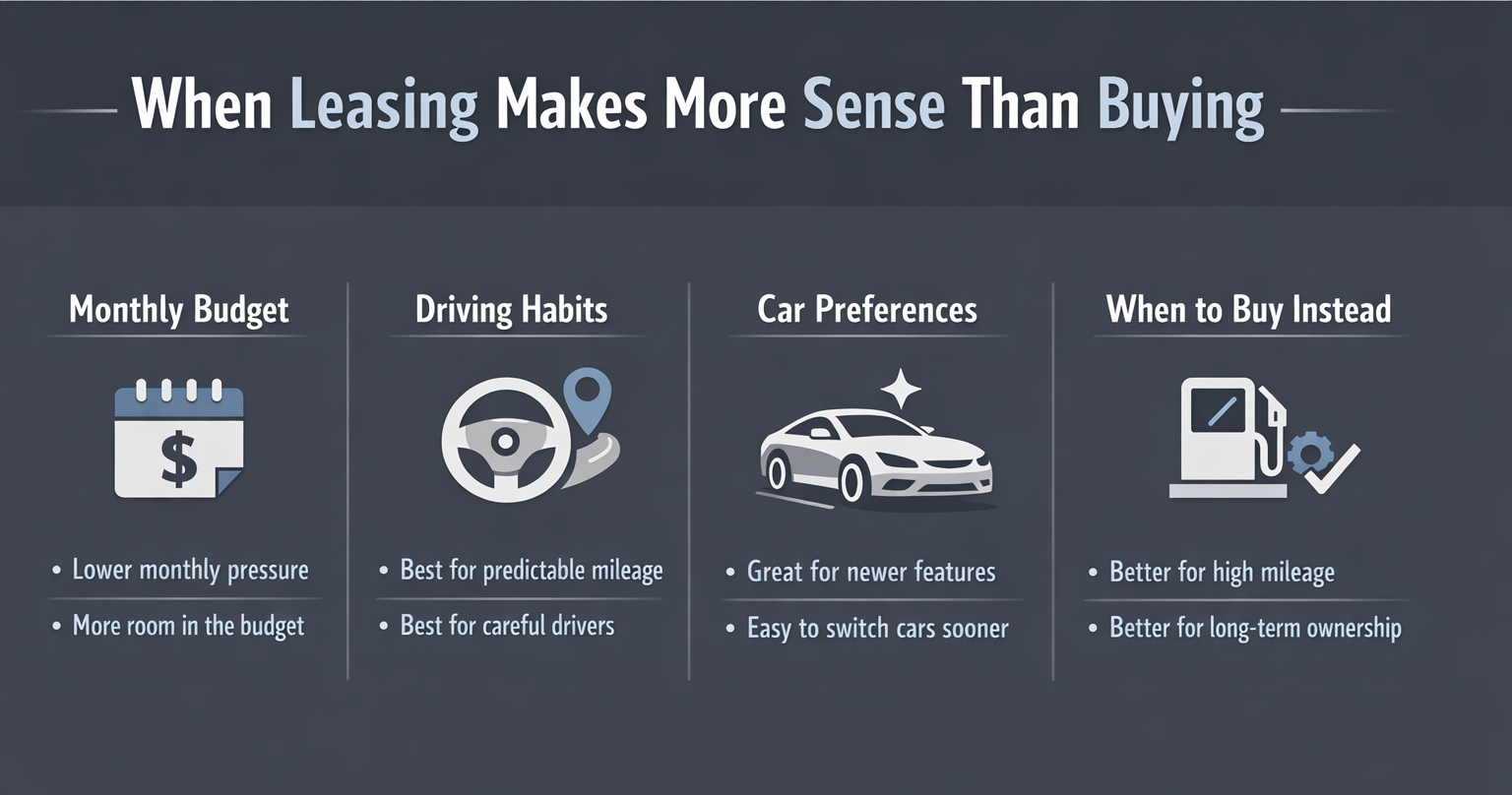
The key to leasing is understanding your options. It makes more sense than buying when you want predictability, lower monthly strain, a newer car, and less attachment to long-term ownership.
Buying makes more sense when you want freedom, long-term value, and years of use after the payment is gone.
Neither choice is better. The smart move is the one that supports your real life.
If leasing lets you drive something reliable without crushing your budget, that is not settling. That is good judgment.