Motorsport is the world’s most expensive R&D lab. Every weekend, race engineers push brakes, suspension and drivetrains past breaking point so the rest of us inherit the lessons. The strange part? Most of those lessons end up in the parts catalogue you scroll past every time your daily driver needs a service. Here are five of the biggest, with a quick guide to recognising them when you’re ordering replacements.
1. Brake Discs: Cooling Geometry Is Everything
Walk through any race paddock, and you’ll see the same thing on every car: drilled, slotted, or internally vented brake discs glowing dull red after a stint. That heat is the enemy. Once a disc passes around 700°C, the pad compound begins to glaze and outgas, friction drops, and pedal feel goes spongy. Motorsport solved this in two ways: vane geometry inside the disc that pumps cooler air outwards under rotation, and surface drilling/slotting that vents the gas layer between the pad and the rotor.
On a road car, you don’t need full race-spec rotors, but the same physics decides whether your brakes still feel sharp on lap three of a B-road or after a long downhill in the Lake District. A decent vented OE-grade brake disc, the type any reputable factor will sell you, already inherits vane geometry from racing development. The mistake to avoid is buying the cheapest unit on a price filter; thinner cast iron warps faster and sheds heat slower. Spend 10–20% more for a name-brand disc, and the upgrade pays for itself in pedal feel before it pays for itself in pad life.
2. Brake Pad Compounds: There Is No Universal Pad
Race teams run as many as four pad compounds across a season qualifiers, sprint, endurance, wet, because no single friction material is good at everything. Cold bite, high-temp stability, dust, noise, rotor wear: every variable is a trade-off. Road-car compounds are tuned to a different point on that curve (low noise, low dust, decent cold bite, modest peak grip), but the trade-off still applies.
If you commute mostly in town, a low-metallic OE brake pad set will outlast a “performance” ceramic and feel better at 6 a.m. when the discs are cold. If you do trackdays or live somewhere with serious elevation, step up to a fast-road compound — they don’t bite as hard from cold, but they hold friction past 500°C where a standard pad has already started to fade. The point is to match the pad to how you actually drive, not to the spec sheet of a car you wish you owned.
3. Suspension: Damping Is About Body Control, Not Comfort
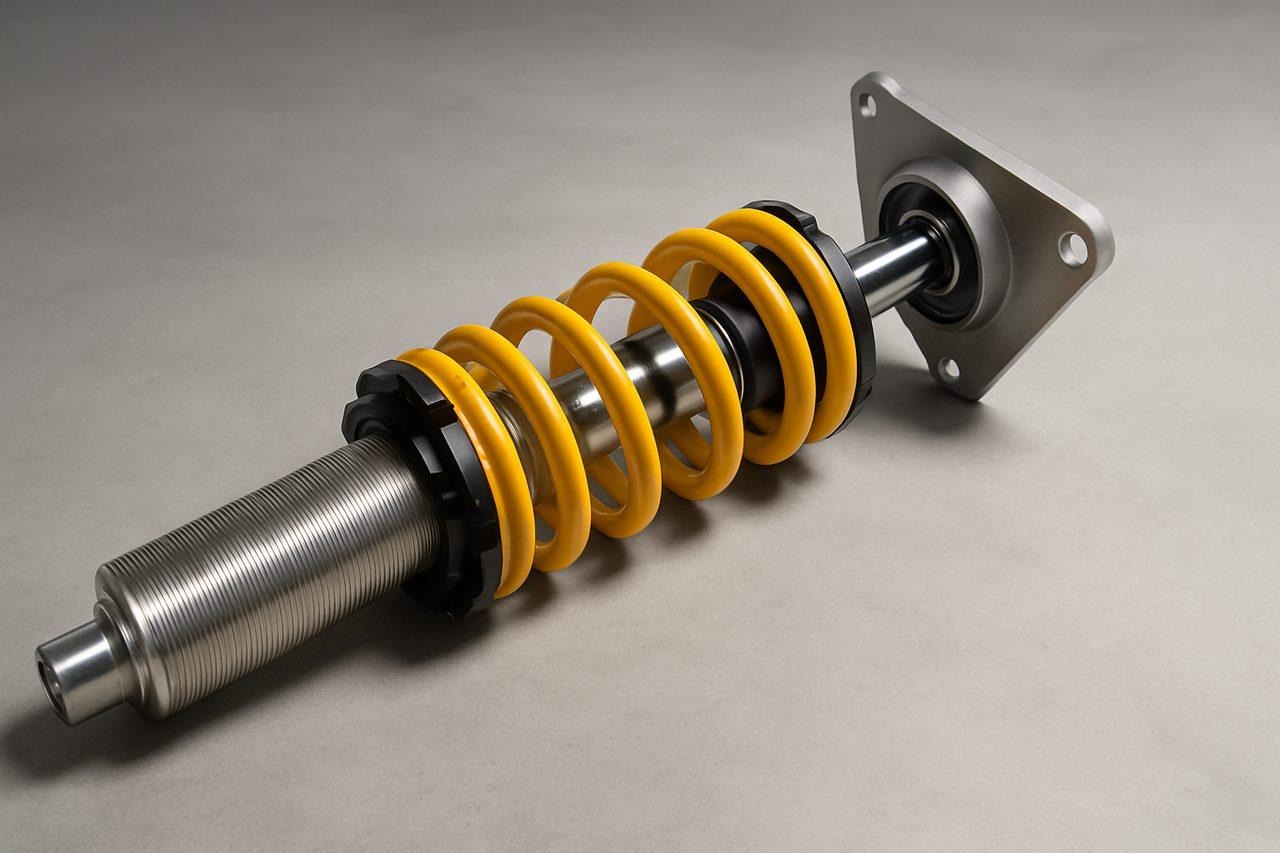
Race engineers don’t tune suspension for plushness — they tune it for the time the contact patch spends pressing on the road. A loose, under-damped car loses tyre load every time it pitches over a bump; an over-damped car loses load by skipping. The compromise that motorsport teaches is progressive damping: soft early travel for compliance, firmer mid-stroke for body control, hydraulic bump-stops at the end.
On a road car, this lesson shows up in two places. First, the difference between an OE-equivalent strut and a budget shock you’ll find for £29.99: cheaper units use simpler valving, lose damping after 15–20k miles, and let the front of the car float over uneven motorway surfaces. Second, modern adaptive systems (air struts, electronically controlled dampers) inherit their multi-stage valving philosophy directly from endurance racing. If your car has air suspension, replacement isn’t optional — when the seal degrades, ride height drops on the affected corner overnight, and everything else (geometry, tyre wear, ABS calibration) goes with it.
4. Drivetrain: Clutch and Timing Belt Service Is Not Optional
The dirty secret of road-car servicing is that the clutch and timing belt are the two components most likely to take an engine with them when they fail, and both are the components most often skipped to save money. Race teams replace clutches and belts on a calendar interval because they can’t afford a Sunday-morning DNF. Most owner’s manuals tell you the same intervals; most owners don’t follow them.
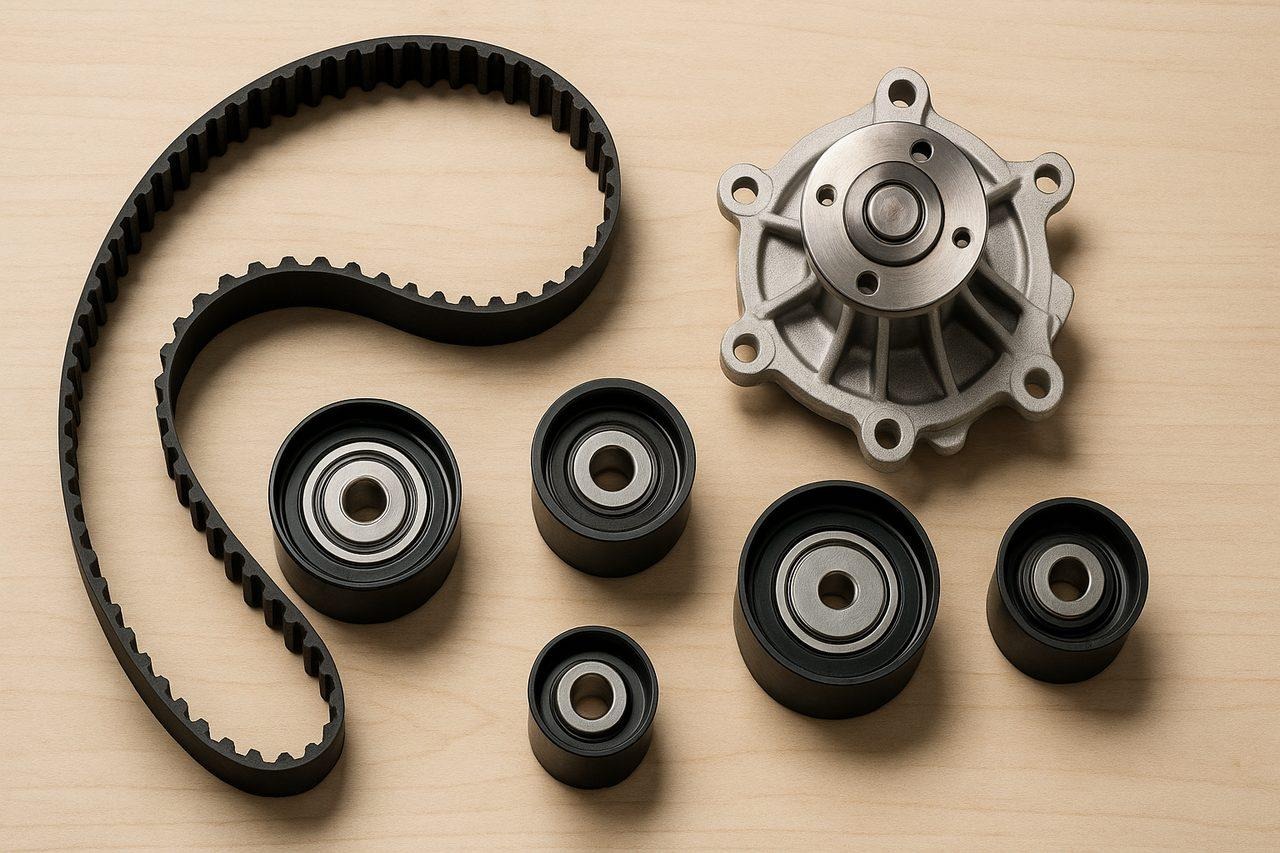
A timing belt failure on an interference engine is engine-out repair territory, easily £2,500 in labour and parts, yet a quality belt kit (belt + tensioner + idler + water pump) is a few hundred pounds installed. A worn clutch eats your dual-mass flywheel if you keep driving on it, doubling the bill. The motorsport principle here is simple: do the service before the part fails, not after. The catalogue carries kits specifically because mixing belt brands with old tensioners is the single most common reason a ‘fresh’ belt job fails six months later.
5. Sourcing: Why OE-Quality Aftermarket Beats ‘Cheap OE’
The last lesson is the most useful for everyday drivers. Race teams don’t always run main-dealer parts — they run the same component, made by the same Tier-1 supplier, sold without the dealer’s markup. Brembo, Bosch, ZF, Sachs, Mahle, Mann-Filter, NGK: most of what comes off the OE assembly line is built by these names, then box-stamped with the carmaker’s badge. The aftermarket version is the same physical part, often the same casting line, just packaged differently.
What you want to avoid is the bottom 20% of the aftermarket — unbranded parts that copy the shape but not the metallurgy or the tolerances. The middle 60% (OE-supplier parts) is where you save money without sacrificing reliability. Any decent online catalogue lets you filter by manufacturer; do that filter before you sort by price, not after.
Where to Apply These Lessons
If you’re servicing a car this month, the highest-leverage upgrades are the ones that change the feel: discs, pads, dampers, belts, and clutches. None of them requires modifying the car. They simply ask you to choose the part that fits you a little more carefully than the price filter would suggest.
We run CarParts247, a UK aftermarket parts catalogue with full Tier-1 supplier filtering, fitment by registration, and the four motorsport-derived categories above all stocked from name-brand manufacturers. Worth a look the next time a service light comes on.