The European EV charging station market hit USD 10.8 billion in 2024 and is on track to reach USD 144.9 billion by 2034, growing at a CAGR of 29.3% from 2025 to 2034. The revenue potential is real, but so is the risk of getting the selection wrong. Many investors rush into hardware decisions without a clear framework, and that’s where money gets left on the table. Here’s a framework for smarter commercial EV charging station decisions:
Step 1: Define Your Use Case
Before comparing specs, get clear on the fundamental question: who will use these chargers, and how? A retail car park has different needs than a logistics depot or a highway rest stop. Semi-public destination chargers require a different strategy from high-turnover fast chargers open to the public. The use case determines everything else — power level, number of ports, payment systems, and the right revenue model.
Step 2: Assess Your Power Infrastructure
A commercial EV charging station is only as good as the grid connection behind it. Check your available grid capacity before you commit to a product. High-power DC chargers, for example, can pull 120 kW to 480 kW per unit. Grid constraints have become the most critical bottleneck for CPOs as they scale high-power networks. If a grid upgrade is needed, factor that cost into your projections early — it can easily dwarf the hardware cost itself.
Step 3: Evaluate Charging Speed and Connector Standards
Speed directly affects how many vehicles a station can serve per day, which in turn affects revenue. In Europe, CCS2 (Combined Charging System) is the dominant DC standard, while Type 2 AC is universal for slower charging. DC chargers operating at 50 kW to 350 kW cater to high-demand environments like highways and urban hubs. Match the output to your dwell time: a shopping centre with a 90-minute average visit needs a different power profile than a motorway stop with 20-minute pull-ins.
Step 4: Review Software and Network Capabilities
Hardware without software is just a box on a pole. A capable EV charging solution includes remote monitoring, real-time diagnostics, dynamic load management, and user-friendly payment options. Look for OCPP 1.6 or OCPP 2.0 compliance — this ensures interoperability with third-party backends. Technologies like dynamic load management and peak shaving allow CPOs to scale without costly grid upgrades, and aggregating EV flexibility opens new revenue streams through energy trading.
Step 5: Calculate Total Cost of Ownership
The purchase price is just the beginning. TCO includes installation, grid connection, network subscription fees, maintenance, parts, and downtime costs. A unit with a lower upfront price but high filter-replacement frequency or frequent service call-outs will consistently underperform on profitability. Demand a full 10-year cost model from any vendor worth considering.
Step 6: Understand Warranty, Support, and Serviceability
When a charger goes offline, every idle hour is lost revenue. Ask vendors about their average response time, whether spare parts are locally stocked, and what remote diagnostics capability they offer. Warranty terms vary enormously — some cover two years, others five or more. The quality of after-sales support is arguably as important as the quality of the hardware.
Step 7: Check Certifications and Compliance
For EV charging in Europe, compliance is non-negotiable. Relevant certifications include CE marking, IP65 for weatherproofing, C5 corrosion resistance for coastal or industrial environments, and conformance with the EU’s Alternative Fuels Infrastructure Regulation (AFIR). AFIR mandates fast chargers every 60 kilometres on Trans-European Transport Network corridors, and only certified equipment qualifies for government subsidy programmes.
Step 8: Evaluate Project Track Record
Any vendor can produce a brochure. What matters is evidence of real deployments at scale — projects completed on time, chargers performing reliably in the field, and operators who are willing to endorse the brand. A supplier with a proven track record across multiple countries and climates is a fundamentally safer bet than an untested newcomer with impressive marketing.
Sungrow Delivers a Comprehensive and Reliable EV Charging Solution
Sungrow, a global leader in clean energy with over 870 GW of power electronic converters installed worldwide, brings the same engineering rigour to its commercial EV charging station lineup. Its EV portfolio covers everything from a 7/11/22 kW AC charger (AC22E-01) to the IDC480E-C with outputs of up to 480 kW, giving operators a scalable path from light-duty destination charging to ultra-fast public infrastructure.
The headline advantage of Sungrow’s EV charger is its patented Isolated Air-Cooling Technology: a fully sealed power electronics chamber with an independent air duct, a dust-free and washable heat exchange system, and intelligent 3D cooling that keeps the power module temperature difference at ≤2°C. This design eliminates filter mats and cooling liquid, cutting maintenance needs significantly.
The entire Sungrow EV charging solution integrates with the iEnergyCharge management platform, which combines IoT, big data, and AI to support remote monitoring, lifecycle maintenance, and multiple authentication methods including RFID and app-based access. Operators can also deploy Sungrow’s one-brand PV + ESS + EV Charging solution, combining solar generation and battery storage with EV infrastructure to reduce grid dependency and energy costs simultaneously.
Proven in the Field
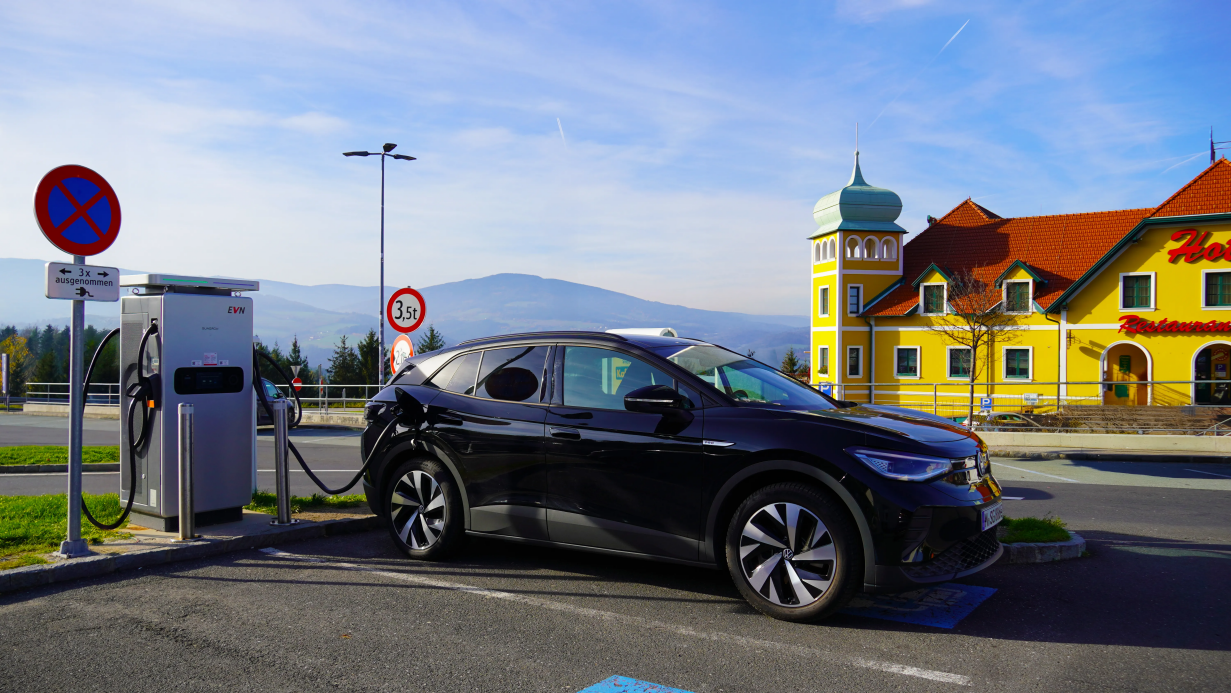
In Austria, EVN — the country’s largest charging station operator with more than 3,600 charging points — partnered with Sungrow in 2024 to integrate the IDC180E into its fast-charging network. The IDC180E’s compact footprint, simultaneous dual-port output of up to 90 kW per port, and minimal maintenance requirements made it the ideal fit for large-scale rollout across diverse outdoor environments.
In Australia, the Solar Juice warehouse in New South Wales deployed Sungrow’s integrated PV and ESS solution in May 2024, powering a 100 kW AC system across the warehouse and adjacent office building, with EV chargers as part of the facility’s energy ecosystem.
Ready to Build a Profitable Charging Business?
The commercial EV charging opportunity is large, but it rewards operators who plan carefully and partner with the right supplier. Sungrow’s combination of high-performance hardware, intelligent software, all-weather durability, and proven global deployments makes it a strong choice for operators who want to get this right the first time.
Contact Sungrow today to explore which EV charging solution fits your site, your infrastructure, and your revenue goals: sungrowpower.com