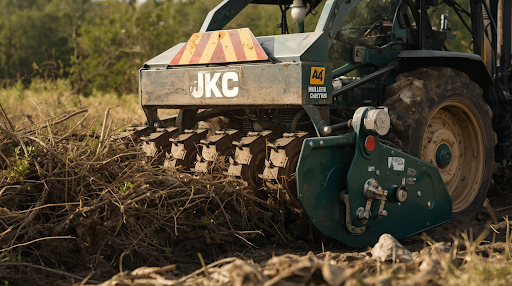

Step onto any large outdoor site before the real action begins, and you’ll notice something straight away: the ground tells you how the day is going to go. If it’s uneven, cluttered, or half-cleared, everything slows down. Crews feel it, but do not say it out loud every time.
That early stage, where land is being cleared and prepped, quietly decides how smooth the rest of the work will be. And lately, the way this stage is handled has been changing. You’ll hear people mention tools like a stump grinder attachment for tractor, not as a big upgrade, but as part of getting things done without unnecessary delays.
What Really Starts the Work on Large Outdoor Sites
Before any track setup, event layout, or infrastructure work begins, there’s always that first phase, clearing the ground properly.
It sounds basic, but it rarely is.
You’re dealing with:
- leftover vegetation
- uneven patches of soil
- hidden stumps or roots
- debris from earlier use
And if this part isn’t handled cleanly, the rest of the job keeps circling back to fix it. Crews often end up reworking the same areas (which no one enjoys, honestly).
Why Land Clearing Has Become More Time-Sensitive
Timelines have tightened across almost every type of outdoor project. Whether it’s a motorsport venue or a multi-use event space, there’s less room for delays at the start.
You’ll notice this on most active sites now:
- clearing begins earlier
- Teams work in tighter windows
- There’s pressure to hand over a “ready” surface faster
The tricky part? The conditions haven’t changed much. The ground is still unpredictable, and clearing still takes effort. So the focus has shifted to how efficiently that effort is managed.
The Shift in How Equipment Is Being Used on Site
It’s not just about having better machines — it’s about how they’re used.
Earlier, crews would bring in different equipment for different tasks. One machine for cutting, another for moving, something else for finishing. It worked, but it also meant constant switching.
Now, there’s a quieter shift happening. Operators are trying to do more with fewer machines. They rely on setups that allow them to:
- Stay in one workflow
- avoid repeated repositioning
- Keep the site moving instead of stopping and starting
It might seem like a small change, but on large sites, it makes a noticeable difference over a full day.
Why Attachments Are Becoming the Default Choice
This is where attachments start to stand out — not because they’re new, but because they fit better into how work is happening now.
Instead of adding more machines, crews are adapting what they already have. A tractor, for example, becomes more than just a base machine when paired with the right tools.
A stump grinder attachment for a tractor fits into this way of working pretty naturally. Instead of stopping to bring in separate equipment for stump removal, operators can handle it as part of the same clearing process.
And that leads to a few practical benefits:
- fewer interruptions
- less time spent switching setups
- smoother movement across different parts of the site
Nothing dramatic, just a cleaner way to keep things moving.
What Happens After Clearing — The Part People Underestimate
Cutting and clearing vegetation are two different things. What comes after is where time often slips away.
You’re left with:
- scattered debris
- uneven ground where roots were
- stumps that interfere with grading
If these aren’t handled properly, the site never really feels “ready,” even if most of the clearing is done.
That’s where more specialized systems come into play. Some operators rely on industrial stump grinding setups that can handle dense, uneven ground without slowing everything down. Equipment like the systems are often used in situations where clearing needs to stay consistent across large areas. It’s less about the tool itself and more about keeping the process steady from one stage to the next.
How Job Site Expectations Are Quietly Changing
If you talk to people on-site now, the questions they ask have shifted a bit.
It’s no longer just:
“Can this get the job done?”
It’s more like:
- “Will it keep working through long hours?”
- “Does it fit into what we’re already using?”
- “Is it going to slow us down later?”
There’s more thought behind equipment decisions than before. Crews aren’t just looking for capability, they’re looking for consistency. And that mindset shows up in how sites are planned and managed.
Where This Is All Heading
Land clearing isn’t becoming simpler, but the way it’s handled is getting more focused. Instead of relying on general-purpose setups, there’s a steady move toward:
- task-specific attachments
- fewer but more adaptable machines
- workflows that avoid unnecessary stops
You won’t always notice this shift from the outside. But on-site, it’s pretty clear, things are being done with more intention than before.
Conclusion
Ground preparation might not get much attention once a venue is set up, but it quietly shapes everything that follows. Well-planned beginning saves time, reduces stress, and keeps the rest of the work on track. It changes the way crews approach land clearing, bit by bit. With equipment evolving to meet real job site needs, companies like Fecon continue to support this shift by offering solutions that fit naturally into modern land-clearing workflows.