

You step onto the tee box and feel it immediately. The sun is sharper than expected. You squint, get into the correct position, and get in for a shot, but the ball still disappears after contact. The moment that disappears is not only annoying; it subtly impacts your score as much as most of your swing problems. Many golfers don’t realize how much ordinary sunglasses or glare-free strategies can limit ball tracking, depth perception, and their ability to read greens accurately.
The solution to this dilemma is to select sunglasses designed with golf in mind. The right lenses not only shield from bright sunlight, but they also increase contrast, maintain depth perception, and help you appreciate the flow of the course. You will see the ball earlier with the right pair, hit more accurately with confidence, and make better calls from tee to green.
This guide breaks down 5 tips for selecting golf sunglasses that assist with each shot.
- Choose Contrast-Enhancing Lenses for Ball Visibility
When choosing golf sunglasses, remember that you are looking to gain more contrast, not just darken your eyes. On a golf course, your ball constantly moves across mixed backgrounds like fairway grass, sky, and rough, and it is very easy for it to blend in when there is not enough contrast around it.
Focus-enhancing lenses distinguish your ball from the background, allowing your eye to more effectively track movement. Furthermore, greater contrast sensitivity enhances the ability to recognize objects quickly when dealing with rapidly moving objects in outdoor tasks. In golf terminology, this means it helps you see the ball clearly and track its flight better at impact.
Do not use lenses that create a uniform element of darkness. There should still be structure in the course, not just a lower degree of brightness. By selecting the right contrast-enhancing lenses, you guarantee that you don’t miss a shot because of poor visibility.
- Preserves Depth and Color
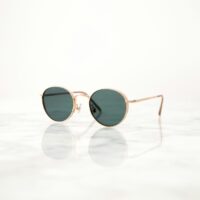
The next choice concerns depth and color information, and how lens technology handles them. Polarized lenses dull glare, but they do not eliminate all depth-perception clues, such as reading a slope or determining distance. As a result, this can create the illusion that the course is flatter than it is, particularly during exaggerated approach shots.
Selective wavelength filtering helps recognize objects in bright environments by removing noise (distortion) unrelated to the object. The course helps you understand terrain changes and make better shot direction decisions. It also reduces the strain on your eyes in intense sunlight, largely due to the processing of visual detail.
Select lenses that keep greens, browns, and skies naturally separated. If the image looks overly muted or artificially uniform, you lose important visual signals needed for accurate play. Maintaining clear separation between tones enables you to shoot quickly and confidently without second-guessing your decision before the shot.
- Stable Frames for Swing Control
Your sunglasses should stay in place throughout your swing. If they shift during motion, your eyes continuously readjust, which disrupts timing and focus. Even minor movements of a frame can cause problems with consistent distance and slope judgment.
Install a lightweight frame with products such as TR90 or flexible nylon. These materials are pressure-relieved and maintain structural strength. Additionally, adjusting the nose pads and temple arms with extra grip makes the frame more secure, even in hot or sweaty environments. Comfortable frames also prevent distractions, which lets you focus entirely on your shots.
Before committing, simulate a practice swing while wearing them. If the frame stays stable and maintains consistent visual alignment, it will not need to be tweaked throughout your round. Frames that stay put ensure your vision remains steady from the first tee to the last green.
- Control Glare Without Losing Detail
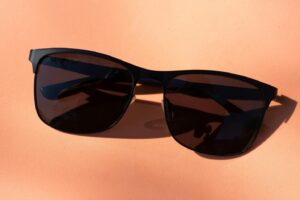
You also need to carefully balance glare control. Golf courses expose you to constantly changing light from water, sand, and open fairways. Too much glare makes you squint, but too much filtering removes valuable visual depth. The challenge is finding a level that protects your vision without distorting what you see.
Glare adaptation shows that excessive brightness spikes reduce contrast sensitivity and slow visual processing in outdoor environments. In practical terms, that means less accurate slope and distance readings under poor lens balance. Proper glare management keeps your vision sharp so that you can make better decisions on every shot.
Choose lenses that reduce harsh reflections while still preserving terrain texture. The goal is clarity without flattening the course into a uniform surface. You want controlled brightness, not reduced information.
- Match Lens Color to Conditions
Finally, match your lens choice to the conditions you play most often. Different lighting environments require different levels of color enhancement. This is where small differences in tint can significantly change how clearly you read the course.
Amber and yellow lenses improve brightness perception and depth clarity in overcast conditions. Brown and copper tones perform better in strong sunlight by enhancing contrast and reducing glare. Some advanced golf-specific lenses balance both conditions by enhancing color separation without over-saturating the image.
Think about your typical course conditions. If your environment varies, prioritize lenses that perform consistently across changing lighting conditions rather than those optimized for a single scenario. The goal is steady visual clarity, not constant adjustment between rounds.
Conclusion
Choosing golf sunglasses comes down to making five clear decisions: contrast enhancement, lens technology, frame stability, glare balance, and color adaptation. Each one directly affects how well you see the course and how confidently you play.
When you evaluate sunglasses using these criteria, you move from guessing to selecting with purpose. Better vision leads to clearer decisions, and clearer decisions lead to more consistent rounds.