
Race cars, track-day builds, and high-value performance cars are the worst candidates for a long tow or a cross-country drive. The safest, lowest-stress way to move them is enclosed, door-to-door transport. This guide explains how door-to-door shipping works, what it costs in 2026, why enclosed is the standard for competition cars, how to prep a low-clearance build, what insurance actually covers, and how to confirm your carrier is legitimate before you hand over the keys.
What Is Door-to-Door Car Shipping?
With door to door car shipping, the carrier picks the car up as close to your shop, garage, or paddock as the truck can safely reach, and delivers it as close to the destination as possible — instead of routing it through distant terminals. For a race or track car, that matters: the same driver handles the car from pickup to drop-off, it spends less time being shuffled around storage lots, and there are fewer load and unload cycles where a low-clearance front splitter can be damaged. A specialist like Rivalane Auto Transport can coordinate door-to-door pickup from a residential street, race shop, or track and deliver to the next event or buyer with minimal handling.
Why Race and Track Cars Belong in an Enclosed Trailer
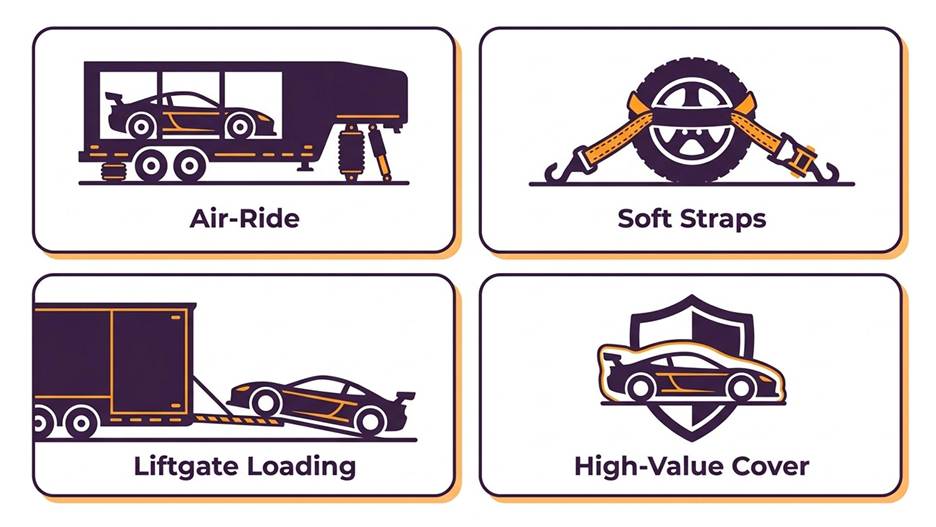
For competition and high-value performance cars, enclosed car transport is the standard, not an upgrade. An enclosed trailer fully shields the car from rock chips, road debris, weather, and prying eyes, and the better haulers add features built for exactly this kind of cargo:
- Air-ride suspension trailers that cushion the car over rough roads.
- Soft nylon tie-downs and wheel straps that avoid stressing the chassis or suspension.
- Liftgates and low-angle ramps for low-clearance splitters, air dams, and slammed ride heights.
- Lower vehicle counts per load and higher cargo-insurance limits for six-figure cars.
Open carriers are perfectly good for everyday vehicles and are more affordable and widely available, but a race car’s value, aerodynamics, and ground clearance make enclosed the sensible choice.
How Much Does It Cost to Ship a Race Car in 2026?
Enclosed transport in 2026 generally runs about $1.00 to $2.50 per mile, with the per-mile rate falling as the distance grows. Door-to-door service typically adds roughly $100 to $250 over terminal-to-terminal pricing. Here is how the per-mile rate tends to break down by distance:
| Distance | Typical enclosed rate |
| Short (under 500 miles) | $1.50–$2.00 per mile |
| Medium (500–1,500 miles) | $1.20–$1.60 per mile |
| Long (over 1,500 miles) | $1.00–$1.30 per mile |
Your final quote depends on a handful of factors:
- Distance and route — busy lanes are cheaper than remote pickups.
- Ground clearance — a slammed or splitter-equipped car may need a liftgate, which can affect price.
- Vehicle size and weight — bigger, heavier cars take more trailer space.
- Timing — peak season, race weekends, and expedited windows raise rates.
- Service level — door-to-door and white-glove handling add to the base cost.
How to Prepare a Race or Track Car for Transport
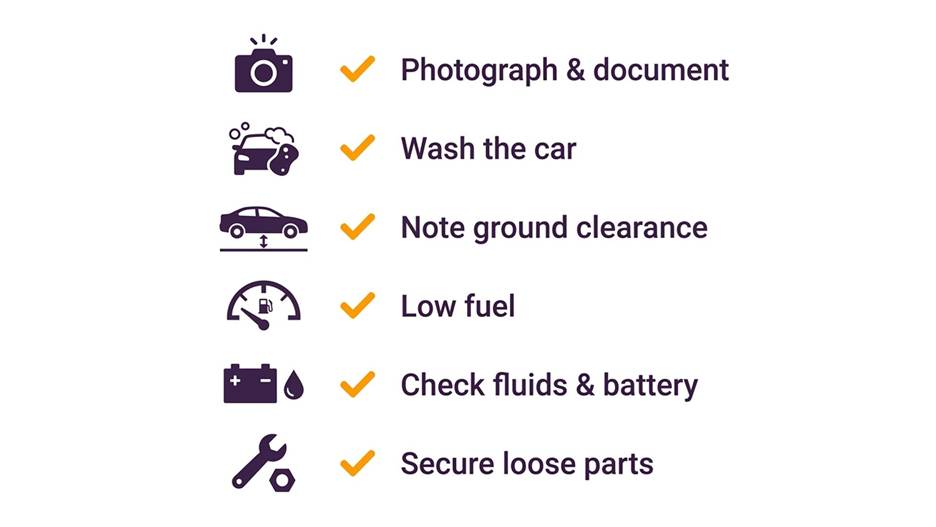
Good prep takes under an hour and heads off most delays and damage disputes. Before pickup:
- Photograph and video the car from every angle, documenting existing chips, cracks, and underbody clearance.
- Wash the car so any existing marks are visible at inspection.
- Note the exact ground clearance and tell the carrier if you need a liftgate or extended ramps.
- Keep fuel low — about a quarter tank — to reduce weight.
- Check tire pressure, fluids, and the battery, and flag any leaks or a non-running status.
- Secure or remove loose aero, mirrors, antennas, and any quick-release parts; remove transponders and loose tools.
- Disable the alarm and note any kill switch, push-start quirk, or specific loading procedure for the driver.
- Have a spare key and any required adapters ready to hand over.
What Does Transport Insurance Cover?
Every legitimate carrier must carry cargo insurance, but it generally pays only for damage caused by the carrier’s negligence during loading, transit, or unloading — it is not blanket coverage for anything that happens to the car. Standard cargo limits can sit well below the value of a serious race car, so before booking, ask for a current certificate of insurance and confirm the cargo limit covers your car’s value (specialist race-car haulers often carry far higher limits). For a high-value build, also keep your own agreed-value policy through a collector or motorsport insurer, which fixes the payout amount in advance based on an appraisal.
How to Verify a Carrier Is Legitimate
Before you trust anyone with a six-figure car, confirm they are legally authorized and insured. Every real motor carrier has a USDOT number, and you can check it for free in the federal FMCSA SAFER System, which needs no account. Verify that operating authority shows “Authorized,” that insurance is on file, and that the safety record looks clean. If a company can’t give you a USDOT number, walk away — every legitimate carrier knows theirs.
When to Book Around the 2026 Season
Book at least three to four weeks ahead, and earlier for cross-country moves or busy race weekends. Enclosed capacity is limited, and demand spikes in summer and around major event windows when many cars head to the same region on the same dates. Long routes typically take about a week in transit, so schedule delivery a few days before you actually need the car to leave room for tech inspection, setup, and any last-minute work.
Frequently Asked Questions
Is enclosed transport worth it for a race car?
Yes. The protection from debris and weather, soft tie-downs, air-ride trailers, and liftgate loading are built for low-clearance, high-value cars. The added cost is small next to the value of the car and the price of bodywork.
How much does it cost to ship a race car door-to-door?
Plan on roughly $1.00–$2.50 per mile for enclosed transport depending on distance, with door-to-door adding about $100–$250 over terminal service. Low clearance, weight, timing, and expedited windows can move the number.
How far in advance should I book?
Three to four weeks is a safe minimum, and more for long routes or peak race weekends when enclosed trailers fill up fast.
Does the carrier’s insurance cover the full value of my car?
Not always. Carrier cargo insurance covers negligence and may be capped below your car’s value, so confirm the limit and add an agreed-value policy through your own insurer for high-value builds.
What does door-to-door actually mean?
The carrier picks up and delivers as close to your addresses as the truck can safely reach, instead of using distant terminals — the most convenient, lowest-handling option for a race or track car.
The Bottom Line
Moving a race or track car well comes down to a few decisions: choose enclosed over open, use door-to-door service to cut handling, prep and document the car before pickup, confirm both carrier authority and agreed-value insurance, and book several weeks out. Get those right, and the car shows up ready to roll — not ready for the body shop. For an enclosed, door-to-door move handled end to end, Rivalane Auto Transport can help you plan it around your 2026 schedule.