Yes, you can vacuum algae out of an above-ground pool, but there is one important catch. Vacuuming removes algae debris. It does not kill active algae or fix the water problem that caused it.
The best process is usually simple: brush the pool, treat the water, let dead algae settle, then vacuum slowly. If you skip the first steps and only vacuum, the pool may look better for a day and turn green again soon after.
Can You Really Vacuum Algae Out of a Pool?
A vacuum can remove dead algae, loose green dust, and settled debris from the pool floor. It can also help clear cloudy-looking residue after algae has been brushed from the walls and treated.
Active algae is different. If the water is still green, the walls feel slippery, or algae keeps spreading, vacuuming alone will not solve it. The water needs proper sanitizer, balanced pH, enough circulation, and a working filter.
Above-ground pools can be more sensitive to this problem because circulation may be weaker in corners, around ladders, and along wall seams. That is why algae often collects in the same places again and again.
What You Need Before Vacuuming Algae
Before you begin, gather the right tools. You will need a pool brush, water test kit, shock treatment or sanitizer based on test results, and either a manual vacuum setup or a robotic cleaner.
For manual vacuuming, make sure the hose, pole, vacuum head, and skimmer connection are working properly. If your system has a waste setting, know how to use it before starting. Heavy algae can clog filters quickly, so being prepared matters.
Test the water first. Check chlorine, pH, and alkalinity at minimum. Guessing from color alone can lead to wasted chemicals and repeated algae.
Brush the Pool to Loosen Algae
Brushing is not optional. Algae sticks to walls, corners, seams, ladders, steps, and shaded spots. If you vacuum before brushing, much of the algae may stay attached and keep growing.
Brush the walls from top to bottom. Pay extra attention to the waterline, ladder area, floor edges, and any place that feels slick. After brushing, the water may look worse for a while because algae is suspended in it. That is normal.
This is also where a robotic pool cleaner should be understood correctly. It can help with cleanup, but the pool still needs brushing and water treatment when algae is active.
Shock the Pool and Let Algae Settle
Shock treatment helps kill active algae when used according to the product directions and your test results. Run the pump while the treatment works, and keep filtering as recommended for your pool system.
Do not rush to vacuum immediately. After algae dies, it often turns gray, brownish, or cloudy green and settles on the floor as fine dust. That settled material is what you want to vacuum.
If you vacuum too soon, you may stir the algae around instead of removing it. If the pool is very green, more than one treatment and cleaning cycle may be needed.
Vacuum Algae Slowly and Systematically
When it is time to vacuum, move slowly. Fast movement kicks dead algae back into the water and makes the pool cloudy again.
For light algae, vacuuming through the filter may be fine if the filter is clean and working well. For heavy algae or fine sediment, vacuuming to waste may be better if your system allows it. That sends dirty water out of the pool instead of pushing fine algae into the filter.
Overlap each pass slightly. Work from the cleaner areas toward the dirtiest areas. Stop and clean the filter, basket, or pump strainer whenever flow drops. Algae can clog a system faster than leaves or ordinary dirt.
Why Above-Ground Pools Get Algae So Easily
Above-ground pools often have smaller circulation systems than larger in-ground pools. Water may not move evenly around ladders, corners, seams, and shaded wall areas. Those quiet zones give algae a place to start.
Warm water, sunlight, leaves, grass clippings, sunscreen, and low chlorine can make the problem worse. If the pump does not run long enough, or the filter is dirty, algae has even more time to grow.
Prevention usually means keeping chlorine in range, balancing pH, brushing weekly, removing debris quickly, and running the pump long enough to move water through the whole pool.
A Smarter Way to Remove Dead Algae Debris
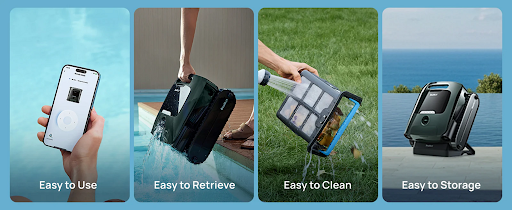
Beatbot AquaSense 2 Pro fits algae cleanup because the hard part is not only killing algae. It is removing the fine debris left behind before it resettles on the floor, walls, or waterline. After brushing and shock treatment, dead algae can spread like dust. In an above-ground pool with weaker circulation zones, that residue may collect quickly in the same areas.
A modern cleaner can support this stage by helping collect loosened debris while the pool’s filter system continues working. For someone comparing a pool vacuum robot, the useful question is not whether the robot “kills algae.” It does not. The better question is whether it can help remove visible algae residue after the water has been treated.
AquaSense 2 Pro is a practical example for broader cleanup support across common pool areas, which can help owners reduce repeated manual vacuuming during the recovery phase. Still, chemical balance comes first. Owners need to test chlorine, pH, and alkalinity, maintain filtration, clean baskets, remove large debris by hand, and call a professional if algae keeps returning, water stays cloudy, or equipment problems appear.
Keep Algae From Coming Back
After vacuuming, keep the pump running long enough to clear the water. Rinse or backwash the filter as needed. Test again after the water settles, because algae cleanup can change chlorine demand.
Do not let leaves, grass, and insects sit in the pool. Cover the pool when practical, especially during storms or long unused periods. Brush the walls and seams weekly, even when the water looks clean.
When Vacuuming Alone Is Not Enough
Vacuuming is not enough if the water stays green, algae returns in one or two days, walls remain slippery, or filter pressure acts strangely. Cloudy water after repeated cleaning can also mean the filter is struggling or the chemistry is still off.
Black algae, mustard algae, recurring stains, strong odors, eye irritation, or confusing test results need more than another vacuum pass.
Final Takeaway
Vacuuming algae out of an above-ground pool works best as part of a full process: brush, treat, filter, let residue settle, and vacuum slowly.
The vacuum removes the mess. Water chemistry and circulation fix the reason the mess appeared. For a cleaner above-ground pool, think beyond the floor and treat the whole system.