A pickup truck gives you more ground clearance, but that height can make daily entry harder. A set of running boards gives drivers and passengers a lower step into the cab, especially on lifted trucks and high-clearance pickups. Fixed running boards stay outside the vehicle all the time. They provide a simple step, but they can also reduce clearance on rough trails.
Power running boards offer a different setup. The board extends when the door opens and retracts under the rocker panel when the door closes. This design gives easier access while keeping more ground clearance when the truck moves. Many buyers also use the terms electric running boards and retractable running boards for this type of system.
However, products can differ in motor design, vehicle fitment, weather resistance, materials, and installation. Choosing the right system requires more than comparing prices.
What Are Power Running Boards?
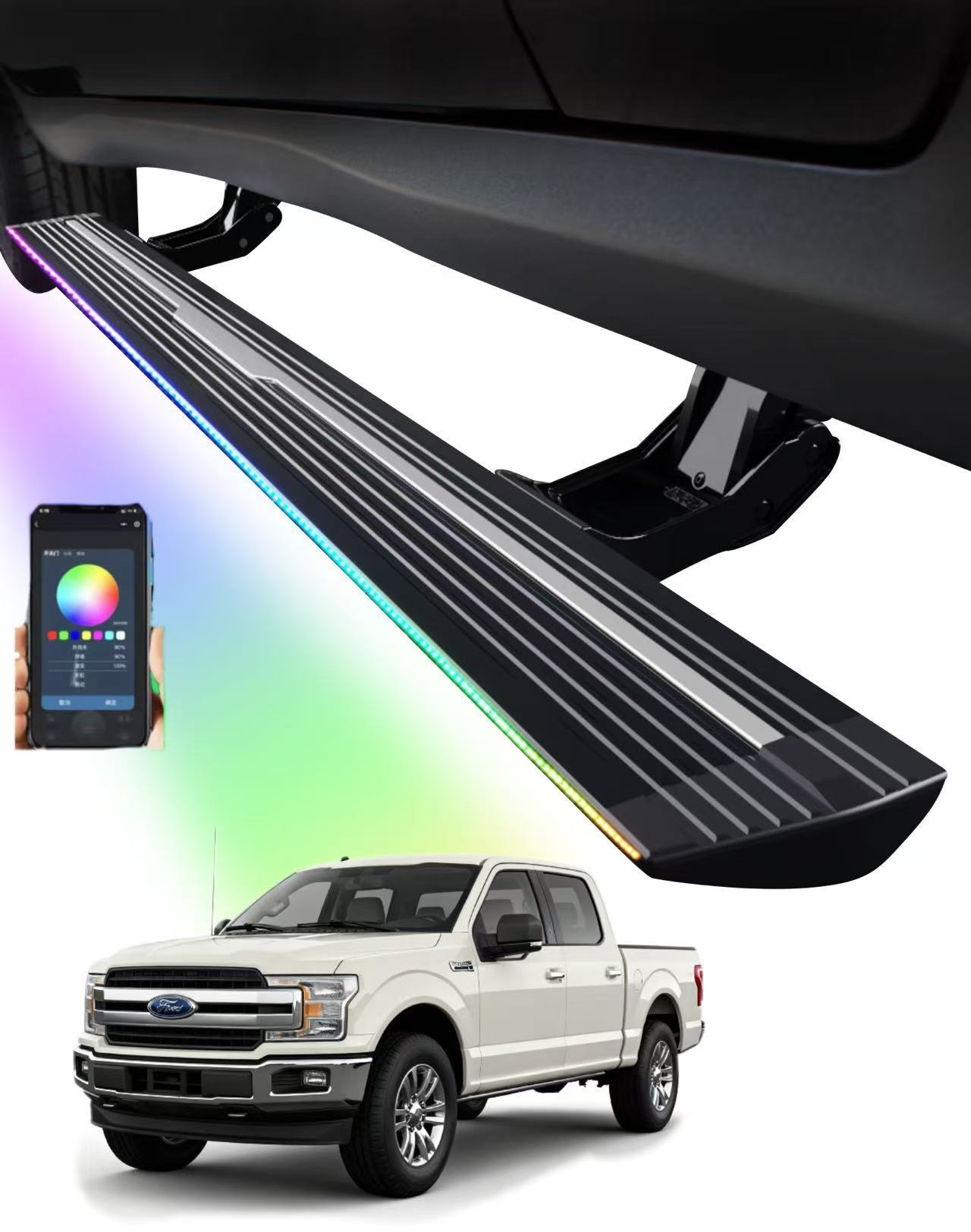
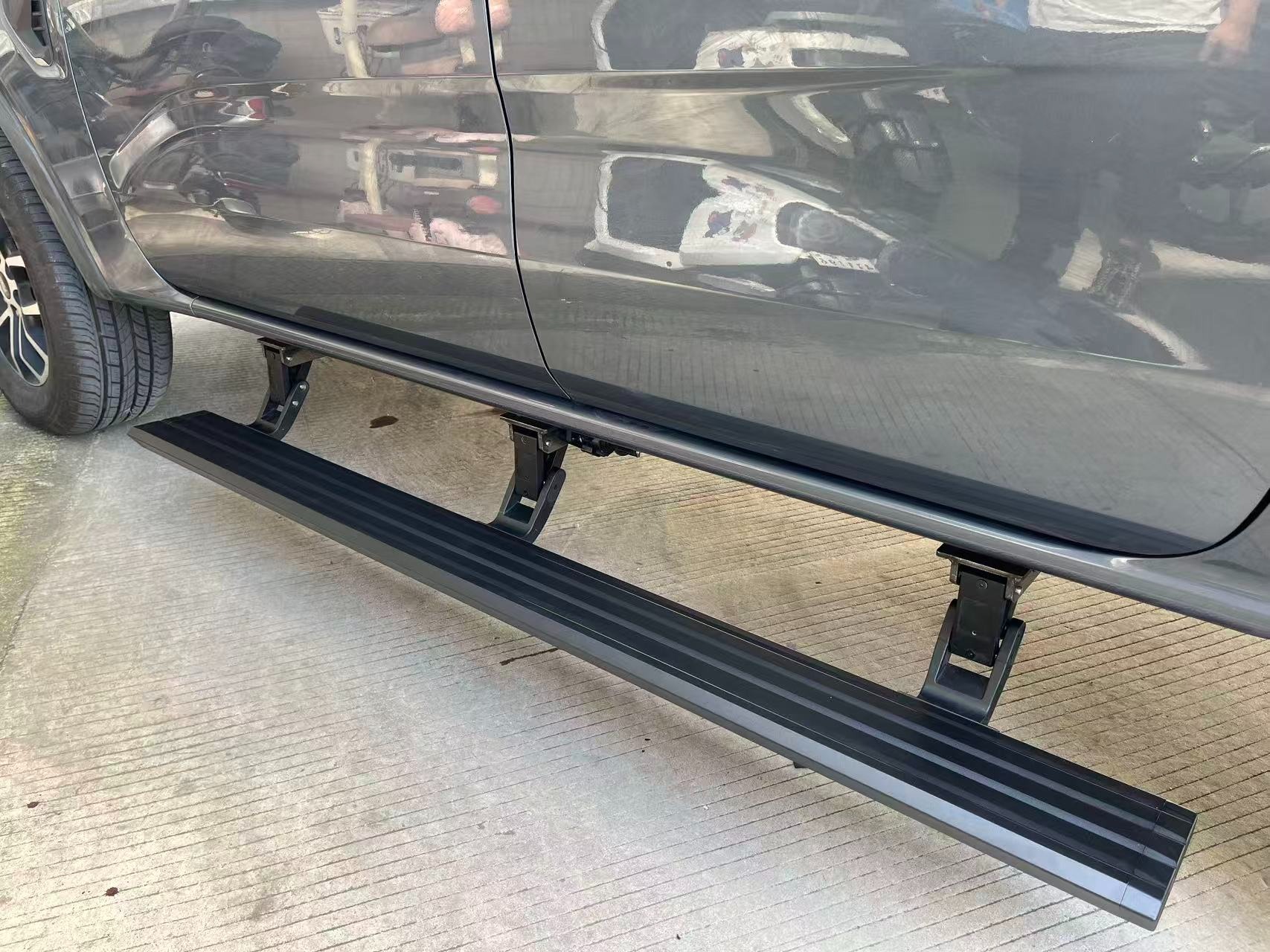
Power running boards are motorized side steps that move with the vehicle doors. An electric motor controls the board through a vehicle-specific mounting system. When a door opens, the board moves down and out to create a step. When the door closes, the board retracts under the vehicle.
This movement gives drivers and passengers easier access without keeping the step outside the truck at all times. The retracted position can also help preserve ground clearance, which matters on trucks used on rough roads, trails, or uneven ground.
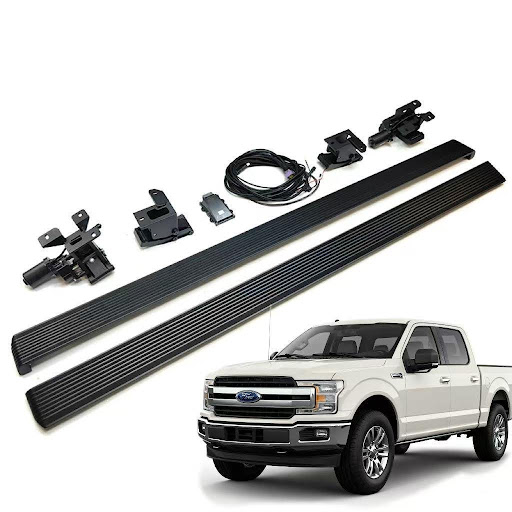
A power running board system usually includes the running board, electric motor, mounting brackets, wiring, control modules, and door signals. The vehicle fitment determines how these parts attach to the truck. A proper fitment also helps the board move through the correct range without interfering with the vehicle body.
Buyers should also check how the motor and electrical system handle rain, snow, mud, and road salt. Installation is another important factor because some systems use vehicle-specific brackets and bolt-on mounting points.
For buyers comparing manufacturers, companies specializing in power running boards China can offer a wide range of vehicle-specific systems and factory-direct options.
Power Running Boards vs. Fixed Running Boards
Power running boards and fixed running boards solve the same basic problem: they give people an easier step into a truck. The main difference is how the step stays on the vehicle.
Fixed running boards remain outside the vehicle at all times. A driver can use the step whenever needed, without waiting for a motor to deploy it. This simple design can work well for daily driving and buyers who want a lower purchase cost.
Power running boards use an electric motor to move the board. The board deploys when a door opens and retracts when the door closes. This setup keeps the step available during entry and removes it from the side of the truck during driving.
| Feature | Power Running Boards | Fixed Running Boards |
| Deployment | Automatic | Fixed |
| Ground clearance | Higher when retracted | Constant |
| Appearance | Retracts under vehicle | Always visible |
| Entry assistance | Automatic | Manual |
| Price | Usually higher | Usually lower |
Ground clearance can make a major difference for truck owners who drive on uneven roads. A fixed board stays at the same position, so it can sit lower than the truck body. A power running board can retract under the vehicle after the door closes. This position can reduce the chance of the board hitting obstacles.
Appearance also affects the choice. Fixed boards remain visible and can give a truck a traditional off-road look. Power running boards stay hidden when they are not in use, which gives the truck a cleaner side profile.
The right choice depends on how the truck is used, the available budget, and the need for ground clearance. Fixed boards offer a simple step at all times, while powered systems provide a step only when needed.
What Should Buyers Look for When Choosing Power Running Boards?
Choosing power running boards requires more than checking the board design or purchase price. Buyers should look at vehicle fitment, ground clearance, step design, motor performance, load capacity, and weather resistance. These factors affect daily use, installation, and long-term reliability.
Vehicle Fitment
Buyers should start by checking vehicle compatibility and the mounting system. The correct system should match the vehicle make, model, year, and body configuration. A 2-door truck may need different brackets and board dimensions than a 4-door model.
Cab configuration can also affect the mounting points. Buyers should check whether the kit supports the exact vehicle before placing an order. A product range covering multiple truck and SUV platforms makes it easier to find a system designed for the specific vehicle rather than relying on a universal design. MAX running boards manufacturer’s power running boards product range can also show which models and configurations are supported.
Ground Clearance and Step Design
Ground clearance matters for trucks that travel on rough roads or off-road trails. Buyers should check how high the board retracts under the vehicle. A higher retracted position can help keep the board away from rocks, deep ruts, and other obstacles.
Step width also affects daily use. A wider step can give the driver and passengers more room for their feet. An anti-slip surface can provide better footing in wet or dirty conditions.
Buyers should also check the clearance between the board and the rocker panel. The board should move without hitting the vehicle body or nearby components.
Motor and Load Capacity
The motor controls how the board deploys and retracts. Buyers should look at motor reliability, opening and closing cycles, and the system’s load capacity.
A running board faces repeated movement during normal use. Each door opening can trigger a deployment cycle. A reliable motor and suitable mechanical parts should handle repeated operation without excessive noise or movement.
Load capacity also matters because passengers place their full body weight on the step. The brackets and mounting points must support the rated load. Strong brackets can also help reduce vibration when the truck moves over uneven roads.
Weather and Corrosion Resistance
Power running boards operate under the vehicle, where they can face water, mud, snow, dirt, and road salt. Weather resistance should therefore be part of the buying decision.
Buyers in areas with heavy snow or road salt should pay particular attention to corrosion protection and weather resistance. Metal parts need suitable corrosion protection, while electrical components need protection from water and road debris.
A product can look good when new but face very different conditions after months of daily driving. Buyers should check the manufacturer’s stated water resistance, corrosion protection, and testing information before making a decision.
Power Running Boards for Ford Trucks and Off-Road Builds
Ford trucks come in different sizes and cab configurations, so vehicle fitment should be one of the first checks when choosing power running boards. The F-150, F-250, and F-350 can have different body dimensions, mounting points, and chassis layouts. Model year can also affect fitment. A running board made for one Ford truck may not fit another model or cab configuration. Buyers should confirm the exact model, year, and cab configuration before ordering.
For daily driving, a power running board should provide a stable step and move smoothly each time a door opens or closes. The mounting system should also place the board at the correct position along the rocker panel. Ford truck owners can compare systems made for their exact truck instead of relying on a universal design. A dedicated Ford power running boards range can make it easier to check supported models and configurations before purchasing.
Off-road trucks face different conditions than trucks used mainly on paved roads. Mud, loose rocks, deep ruts, standing water, and uneven terrain can expose the running board system to more dirt, water, impact, and vibration. Before choosing a system for an off-road build, buyers should pay particular attention to several factors:
- Ground clearance: Check how high the board sits after it retracts.
- Mounting strength: Check the brackets and mounting points.
- Weather resistance: Check protection against water, mud, and road salt.
- Motor operation: Check smooth deployment and repeated operation.
- Board clearance: Check the space around the rocker panel and nearby components.
Ground clearance can matter when a Ford truck travels over rocks or deep ruts. A retracted board should sit close to the vehicle body and stay clear of nearby parts. This position can reduce the chance of the board contacting obstacles below the truck. Buyers should also check the board position during both deployment and retraction to make sure it does not interfere with the rocker panel or other components.
Vibration and weather exposure also deserve attention on off-road builds. Uneven terrain can place repeated stress on the brackets and mounting points. Mud and water can reach components under the truck, while road salt can increase corrosion risk in areas with winter road treatment. Buyers should review the mounting design, weather resistance, and installation requirements before making a choice. Daily drivers may focus on easy entry and smooth operation, while off-road builds may place more focus on clearance, protection, and mounting strength.
Custom Power Running Boards: When Standard Kits Are Not Enough
Standard power running boards work well for common vehicles with confirmed fitment. However, some vehicles do not match the dimensions or mounting points of a standard kit. Older models, uncommon vehicles, modified suspensions, and special body configurations can create different installation requirements. Some projects may also need a different step width, board length, or mounting position. In these cases, a standard kit may not provide the right fit.
For specialty vehicles or aftermarket brands, custom power running boards may be an option when a standard vehicle-specific kit does not meet the required dimensions or design. A custom system can adjust the board position, mounting brackets, and step dimensions to match the vehicle. This approach can also support projects that need a specific product design instead of an off-the-shelf solution.
When Might a Custom System Make Sense?
- Older or uncommon vehicle models
- Modified suspension or ride height
- Special body configurations
- Unique step dimensions
- Private-label or aftermarket projects
OEM and private-label projects can require changes beyond basic vehicle fitment. A buyer may need a different board profile, specific bracket design, custom dimensions, or a private-label logo. Production requirements can also affect the design, packaging, and manufacturing process. Defining these requirements early helps both sides understand what the finished product needs to include.
| Custom Area | What Buyers May Need |
| Board dimensions | Length, width, and step position |
| Mounting brackets | Mounting points and bracket shape |
| Board design | Profile and surface design |
| Branding | Logo and private-label requirements |
| Vehicle data | Measurements, photos, and chassis data |
| Production | MOQ, packaging, and production requirements |
Vehicle data plays an important role in custom development. Measurements, photos, mounting-point information, and chassis data can help a manufacturer understand the available space under the vehicle. Clear technical information can also help reduce fitment problems during development. Buyers should confirm the technical design and production requirements before manufacturing begins.
Custom power running boards require more planning than a standard kit, but they can give specialty vehicles and aftermarket brands more control over fitment and product design. For a unique vehicle or private-label project, clear vehicle data and production requirements provide a practical starting point.
Conclusion
The right power running board depends on the truck, driving environment, and intended use. Buyers should start with vehicle fitment and then compare ground clearance, motor performance, load capacity, weather resistance, and installation requirements. Daily drivers may place more value on easy entry and smooth operation, while off-road trucks may need more clearance and protection from mud, water, and debris. Buyers should also consider whether a standard kit meets the vehicle’s needs or whether a custom system is required. A clear comparison of these factors can help buyers choose a system that fits the truck and its daily use.