Home Blog Page 128

Race Venues Are Building EV Charging Infrastructure That Runs on Clean Power

Ever wondered what happens at a race track after the engines go quiet?

Something is happening out in those vast parking lots. Race courses are emerging as some of the largest EV charging hubs in their regions. And this is not about two chargers by the front gate. This is about rows of chargers connected to solar, battery storage and green grid power.

And the reason is simple…

Fans idle six, eight, sometimes ten hours straight. Perfect charging opportunity. Meanwhile America has surpassed 250,000 public charging ports, with growth fastest at places where vehicles tend to park for longer periods.

But here’s the part most people miss.

Installing a hundred charging bays is not a parking project. It’s an electrical project.

What’s coming up:

  • Why Race Venues Are Wiring Up Fast
  • The Hidden Power Problem Behind Every Charging Bay
  • Continuous Current Rating, Explained Simply
  • Where The Clean Power Actually Comes From
  • Looking After What You Install

Why Race Venues Are Wiring Up Fast

Race tracks are unique because they have something that most venues envy. They have space, massive power feeds, and thousands of attendees who all arrive simultaneously.

That makes them ideal for massive charging setups. A track is already wired to handle floodlights, timing systems, broadcast booths and hospitality areas. Chargers just utilize infrastructure that’s unused most of the year.

Then of course there is the financial aspect. Pay and display bays generate income from commuters, local fleets and passing trade when they’re not being used for race days.

And motorsport is under a microscope.

Operating a charging network off solar or renewable supply allows a venue to have a genuine story to share rather than a marketing catch phrase.

The Hidden Power Problem Behind Every Charging Bay

Now for the part that never makes the press release…

If fifty cars are charging simultaneously, then you don’t have a steady drip-feed of demand. You have a significant, sustained load that persists for hours.

That dictates requirements for the electrical room. MV equipment at a charging site is expected to handle that load hour after hour without getting too hot, so the gas-insulated switchgear specified for these projects is chosen based on its continuous current rating, not some peak number you could run for a few seconds. Size that number too small and the switchgear, not the chargers, becomes your bottleneck.

Keep in mind how fast this demand is arriving. DC fast charging ports nationally are up 30% YoY, and each one of them strains the local grid.

The result?

Venues that design their electrical infrastructure for the long haul will continue to expand their charger fleets for decades to come. Venues that avoid upgrade bottlenecks after initial deployment.

Continuous Current Rating, Explained Simply

Here is something that trips up a lot of people.

Continuous current rating refers to how much current a piece of equipment can safely handle 24 hours a day, seven days a week. It is not a short time surge number. Surge ratings sound great on spec sheets, but a charging site doesn’t operate in surges. It operates in long, flat, torturous hours of demand.

Visualize a race car engine. Top horsepower is nice for one lap. It’s how much horsepower the engine can sustain for 2 hours without overheating that wins races.

Electrical gear works exactly the same way.

A properly matched continuous current rating gives a venue:

  • Cooler equipment and longer service life
  • Fewer nuisance trips during peak charging periods
  • Headroom to add more bays later
  • Safer conditions for staff working near live gear

Ambient temp. Even if you’ve got that nailed down, ambient temp matters also. You may have to derate any gear that’s going into a hot, confined space. Derating means your real-world continuous current rating is less than what’s printed on the label. A good design factor’s that in from day one.

Where The Clean Power Actually Comes From

So where does all this clean electricity come from?

Predominantly from three areas: rooftop solar, battery storage and renewable offtake agreements. Large scale venues have vast roof space and often land that goes unused. Solar was an obvious first step.

Take the Bahrain International Circuit for instance. Between two Grand Prix weekends their solar farm generated 5.28 MW of clean energy which was enough to power the circuit AND more.

Silverstone took another approach to pop-up solar car parks using hubs that combine panels, batteries and charge points into a single system. One of those hubs is topped up by 1MW of solar panels already installed on the roof of the venue’s conference centre.

Both approaches solve the same problem in different ways.

Why solar suits race venues so well:

  • Roof and land space is already available
  • Peak sunlight lines up with daytime event traffic
  • Generation happens behind the meter, cutting grid draw
  • It is visible to fans, which is worth something on its own

The honest truth is solar will never run a race weekend by itself. Vehicle charging demand will always peak when everyone leaves … usually after dark. That’s where storage comes into play.

Batteries Smooth Out The Spikes

Battery storage is the quiet hero of every clean charging site.

Solar energy charges batteries during the day with power nobody needs. Batteries discharge at night when everyone leaves and all the chargers turn on at once.

That accomplishes two helpful goals. One is preventing the venue from getting slammed with demand charges. The other is it prevents the site from having to upgrade to a much larger grid connection just to serve that peak week.

Smart charging management can help here too. Software can space sessions out, dial down some chargers and prioritise others, keeping overall demand well within the continuous current rating of whatever gear is feeding it.

Simple idea. Big savings.

Looking After What You Install

Nothing here works if it is left alone for five years.

Charging infrastructure should be maintained just like any other critical asset. This includes routine patrols, thermography on connections, and periodic testing of settings for protection relays.

Loose or corroded connections become hot. Heat decreases the amount of current that the equipment can safely handle. Eventually a site that was properly sized on paper begins to act like an undersized site.

A basic maintenance routine should cover:

  • Thermal imaging of switchgear and connections
  • Cleaning and inspecting solar panels
  • Testing battery state of health
  • Reviewing load data against design assumptions

Taking The Chequered Flag

Race tracks are becoming charging stations en masse. It makes sense beyond a coincidental level. They have the space. They have the power plug. They have the captive audience. Drivers who are there. Sitting. Parking. For hours. Doing nothing else but charge.

Make no mistake, venues who do this right approach it as an electrical engineering problem first, and a guest convenience second. They size equipment around amps continued, not amps peak. They implement solar along with storage, instead of praying for sunny weather. And they maintain their systems.

Supply three items correctly and a racetrack can continue adding chargers for years to come.

Get them wrong and the whole thing stalls on the grid.

How Race Teams Use Data to Improve Performance

Photo by depositphotos at https://depositphotos.com/

Modern motorsport is no longer driven by horsepower and driver instinct alone. Behind every competitive race car is a large amount of information collected, processed, and analyzed before, during, and after an event. Race teams use data to understand how their cars behave, how drivers respond to changing conditions, and where small adjustments can produce meaningful gains.

In series such as NASCAR, where margins between competitors can be extremely small, data has become one of the most important tools available to teams. Engineers and crew chiefs can use information from practice sessions, qualifying runs, and previous races to make better decisions and prepare for different scenarios.

What Kind of Data Do Racing Teams Collect?

A modern race car can generate a considerable amount of useful information. Sensors and onboard systems monitor various aspects of the vehicle while it is on the track.

Teams may analyze:

  • engine performance and temperatures;
  • tire behavior and wear;
  • suspension movement;
  • braking and acceleration;
  • throttle application;
  • speed through different sections of a track;
  • fuel consumption;
  • aerodynamic performance;
  • lap times and sector times.

This information gives engineers a more detailed picture than visual observation alone. A driver may report that the car feels unstable entering a corner, for example, while the collected data can help determine exactly when the problem occurs and which vehicle characteristics may be contributing to it.

How Data Helps Improve Car Setup

One of the most important applications of data is finding the right setup for a particular track.

Every circuit presents different challenges. A car that performs well on a short track may require significant changes before competing on a superspeedway. Engineers can compare historical data with information from current practice sessions to identify useful setup adjustments.

Suspension settings, tire pressures, aerodynamic configurations, and other variables can all influence how a car behaves. Instead of changing several elements at once, teams can use previous data to make more targeted decisions.

This approach also helps teams understand cause and effect. If a change produces better cornering speed but increases tire wear, engineers can evaluate whether the performance gain is worth the trade-off over a full race distance.

Using Data to Understand Driver Performance

Data is not only about the car. It can also reveal how a driver approaches a track.

Engineers can compare throttle, braking, steering, and speed data between different laps. Two drivers may use completely different techniques while achieving similar lap times, while a small difference in one section of the circuit can explain why one driver has an advantage.

Driver data can be particularly valuable when preparing for unfamiliar tracks. A team can study previous races, identify successful approaches to specific corners, and use simulator sessions to test different techniques before arriving at the circuit.

The objective is not necessarily to make every driver use exactly the same approach. Instead, data helps teams understand which techniques are producing results and where a driver may be able to find additional performance.

Data and Race Strategy

Performance data also plays a major role once a race begins. Teams constantly evaluate information that can influence strategic decisions.

Fuel consumption, tire degradation, lap times, traffic, weather conditions, and the performance of competitors can all affect the best course of action. A crew chief may need to decide when to pit, whether to change tires, or how aggressively the driver should approach a particular stage of the race.

Strategy is especially important when conditions change. A sudden change in temperature or track surface can affect tire performance and vehicle balance. Teams that can interpret new information quickly may have an advantage over competitors that rely primarily on their original race plan.

Learning From Previous Races

One of the biggest advantages of collecting data over an entire season is the ability to build a historical reference.

A team can compare its current performance with previous races at similar tracks and identify recurring patterns. Engineers may discover that a particular setup works well under certain conditions or that tire degradation becomes a problem after a specific number of laps.

Historical information can also help teams prepare for future events. Instead of starting from scratch, engineers have a database of previous experiments, successful setups, mistakes, and race outcomes.

This process resembles other data-driven forms of competition and entertainment. For example, platforms such as AvoCasino operate in an environment where users interact with digital experiences that can also involve statistics, probabilities, and patterns. In both cases, information can help explain what is happening, although motorsport teams use performance data specifically to improve vehicle and racing decisions.

How Real-Time Data Changes Racing

Collecting information after a race is useful, but real-time data can be even more valuable.

During a race, teams can monitor information and communicate important observations to the driver. Engineers may notice changes in tire performance, fuel usage, or lap times and provide recommendations based on what they see.

However, data does not replace human decision-making. Racing conditions are constantly changing, and not every situation can be predicted by a model. Experienced crew chiefs and engineers must combine numerical information with their understanding of the track, driver feedback, weather, and competitors.

The strongest teams therefore treat data as a decision-making tool rather than an automatic answer.

The Growing Role of Simulation

Simulation has become another important part of modern racing preparation. Teams can use historical vehicle and track information to recreate racing conditions before an event.

Drivers can use simulators to practice braking points, corner entry speeds, racing lines, and different scenarios without putting an actual race car on the track. Engineers can also test potential setup changes and analyze their expected effects.

Simulation is particularly useful because track time is limited. A team can explore multiple possibilities virtually before choosing which options are worth testing during an actual practice session.

Small Improvements Can Make a Big Difference

In professional motorsport, performance is often determined by small margins. A fraction of a second per lap can become significant over an entire race.

Data helps teams find these marginal gains by replacing assumptions with measurable information. It can show where a car loses time, how a setup change affects performance, and which strategies are most effective under particular conditions.

The most successful approach is not simply collecting more data. Teams need to collect relevant information, interpret it correctly, and turn it into practical decisions.

As racing technology continues to develop, data analysis will become even more closely integrated with vehicle engineering, driver preparation, and race strategy. The driver remains at the center of the competition, but behind every competitive performance is an increasingly sophisticated system of information helping the team make better decisions.

FC Weight Classes: All Divisions and Weight Limits Explained

Weight classes determine every match-up before fighters step foot into the Octagon. Each division has boundaries that keep matchups balanced and fuel competition. Training camps, weight cuts, weigh-ins, and whether a fighter is eligible for a title are all affected. The good news is, once you understand the system, following fight cards and analyzing them is easy. Read on to learn how every single division in the UFC works.

How the UFC Weight-Class System Works

The UFC organizes fighters by weight to limit major size differences. The Unified Rules of MMA set a maximum weight for every division. Fans using Malaysia online betting can consider weight classes when assessing UFC sports betting markets. This makes betting analysis easier because size, speed, and fighting style can affect matchups. Men currently compete from flyweight through heavyweight, while women compete in lighter divisions. In those divisions, speed and technical skills often become especially important.

These divisions, despite being distinct, create tremendous flexibility for players to organize themselves. Fighters can generally choose a division based on their natural size, strength, and endurance. Though weight cutting is difficult, fighters can move up to a division to gain a size advantage, while fighters can move down to a division for an even easier bout and gain a size disadvantage.

UFC Divisions and Their Official Weight Limits

The UFC uses several divisions with clearly defined championship limits. Some categories exist for both men and women, while others remain gender-specific. The main weight ranges can be grouped simply:

  • 115–135 lbs: women’s strawweight, plus flyweight and bantamweight divisions.
  • 145–155 lbs: featherweight and lightweight cover many fast, technical fighters.
  • 170–185 lbs: welterweight and middleweight combine considerable size with mobility.
  • 205–265 lbs: light heavyweight and heavyweight feature the largest UFC athletes.

The full system creates natural steps between athletes of different sizes. Most divisions increase by 10 or 15 pounds through the middle ranges. Heavyweight is different, stretching from above 205 pounds to a 265-pound ceiling.

Why Championship and Regular Bouts Have Different Rules

The listed divisional limit does not always equal the maximum permitted weight. UFC rules distinguish championship contests from regular fights when athletes make weight. For fans interested in sports betting, UFC betting Malaysia becomes easier to assess once you understand these weigh-in rules. Knowing the exact limits helps bettors evaluate difficult weight cuts and possible physical disadvantages. That one-pound difference sounds minor, but it can become crucial during difficult cuts.

Championship Fights Require the Exact Divisional Limit

A fighter challenging for a UFC title cannot use the usual allowance. Lightweight title competitors, for instance, must weigh no more than 155 pounds. At welterweight, the championship ceiling is 170 pounds rather than 171. Even a small miss can completely change the outcome.

If a challenger misses weight, that fighter cannot win the championship. The bout may still proceed when the opponent and officials approve arrangements. Fans following fight-week updates through online casino Philippines platforms can also access casino entertainment between major UFC events. Online casinos give users a convenient way to enjoy different games from one place. A champion who misses weight can also create a complicated title situation. These cases show why championship weigh-ins often carry serious tension before major events.

Non-Title Fights Include a One-Pound Allowance

Most UFC bouts allow fighters to weigh in one pound over the limit for their division. A lightweight fighter can weigh in at 156 pounds for a non-title fight. Welterweights can weigh in at 171 pounds, and middleweights at 186. This provides fighters with some flexibility in their final cut.

Missing weight creates another set of problems for the fighter. If a fighter misses the weight, the contest can be held as a catchweight contest. The fighter who missed the weight will receive part of their purse as compensation to their opponent. The amount of the purse lost depends on the circumstances surrounding the missed weight.

What Happens During a UFC Weight Cut

Most UFC fighters begin fight week weighing in higher than the division weight limit. To make weight, they cut a substantial amount and lose a lot of water in the process. They do this because they want to enter a division where they weigh less than bigger athletes. But fighters can only take this so far with aggressive weight cutting. Dehydrating too much will hurt overall fight performance.

At the scheduled official weigh-ins, athletes weigh in, and then the face-off ceremonial event takes place later in the day. After making weight, fighters replenish water, electrolytes, carbs, and lost mass. By fight night, most fighters have already gained weight compared to their officially weighed-in amount. The weight and recovery process also correlate to a fighter’s cardio, stamina, strength, and performance in the octagon.

Why Weight Limits Matter When Watching UFC Fights

Different weight classes offer different insights beyond just weight. For instance, they can illustrate the matchup, preparation, cuts, or moves to a new weight division. Many fighters change their approach after a weight-class change. Once you understand the limits of the weight class system, you begin to understand the matchmaking and theatrical drama that happens with weight cuts.

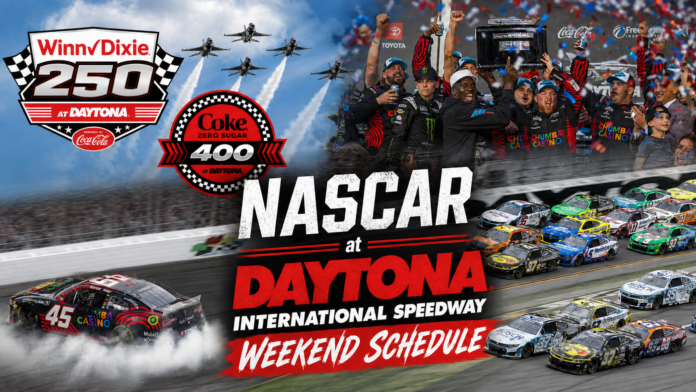
NASCAR at Daytona International Speedway Weekend Schedule

The NASCAR Cup Series (NCS) and the NASCAR O’Reilly Auto Parts Series (NOAPS) head to Daytona International Speedway this weekend. The O’Reilly Auto Parts Series starts off the weekend on Friday night in the Winn-Dixie 250 Powered by Coca-Cola at 7:30 p.m. ET on the CW Network. Then on Saturday, the NASCAR Cup Series Coke Zero Sugar 400 will be at 7:30 p.m. ET on NBC.

Cup Series Notes for Daytona International Speedway:

This is the 159th race at Daytona (most among all tracks in Cup history), and the summer winner got his first win of the season in five of the last eight years, which were: Erik Jones (2018), Justin Haley (2019), William Byron (2020) and Harrison Burton (2024). In the last 14 races, William Byron (3) and Ryan Blaney (2) are the only repeat winners, and the winner has led 10 laps or less in nine of the last 11 races, with three leading only the final lap.

The top 13 drivers have clinched a Chase spot, and Denny Hamlin clinched the #1 seed for the Chase at New Hampshire. Five drivers are still eligible for the final three Chase spots: Bubba Wallace (+75), Austin Cindric (+44), Shane van Gisbergen (+31), Ryan Preece (-31) and Brad Keselowski (-66).

Clinching Scenarios: Bubba Wallace would clinch with 2 points, Austin Cindric would clinch with 33 points, Shane Van Gisbergen would clinch with 45 points, Ryan Preece and Brad Keselowski could only clinch with help.

Coke Zero Sugar 400

Race info:

Distance: 400 miles (160 Laps)
Stage 1 ends on Lap 35
Stage 2 ends on Lap 95
Final Stage ends on Lap 160

NASCAR O’Reilly Auto Parts Series Notes for Daytona International Speedway:

Austin Hill won four of nine races since he joined Richard Childress Racing (RCR), and he swept both stages in the last race in February. RCR has won five of the last nine races in February, but has not won the summer race since July 2015.

The pass for the win came on the final lap in 16 races, four of the seven closest finishes in series history came at Daytona, and seven of the last 11 races went to overtime.

Eight drivers are locked into the Chase, four spots still open, and only six drivers still in contention for those spots. Parker Retzlaff can clinch a Chase spot with 10 points regardless of what any other driver does, and no other driver can clinch a Chase spot before the end of the race without help. The eligible drivers for final four Chase spots are: Retzlaff, Sam Mayer, William Sawalich, Brent Crews, Taylor Gray, and Rajah Caruth.

Winn-Dixie 250 Powered by Coca-Cola

Race info:

Distance: 250 miles (100 Laps)
Stage 1 ends on Lap 30
Stage 2 ends on Lap 60
Final Stage ends on Lap 100

The Weekend Schedule for Daytona International Speedway:

FRIDAY, AUGUST 28

3:00 PM – 4:30 PM: NOAPS QUALIFYING (IMPOUND)
5:00 PM – 6:30 PM: NCS QUALIFYING (IMPOUND)
6:55 PM: NOAPS DRIVER INTRODUCTIONS – CW Network
7:30 PM: NOAPS RACE (STAGES 30/60/100 LAPS = 250 MILES ) – CW Network

SATURDAY, AUGUST 29

6:55 PM: NCS DRIVER INTRODUCTIONS – NBC
7:30 PM: NCS RACE (STAGES 35/95/160 LAPS = 400 MILES) – NBC

*All times are Eastern. NASCAR Cup Series (NCS), NASCAR O’Reilly Auto Parts Series (NOAPS)

Daytona Is Ware It’s At: Cody Ware Zeroed In On Coke Zero Sugar 400

MOORESVILLE, N.C. (Aug. 26, 2026) – Daytona is where it’s at for Cody Ware.

The 2.5-mile superspeedway in Daytona Beach, Florida, is home to Ware’s best career NASCAR Cup Series finish and it’s where the driver of the No. 51 Super.com Chevrolet has led the most laps.

The Coke Zero Sugar 400, in particular, has been his best race at Daytona. Ware finished fourth in the 2024 Coke Zero Sugar 400 and in the Cup Series’ summertime stop last year at the “World Center of Racing,” he scored the third-highest laps-led total. And when Ware wasn’t leading the 40-car field, he was a constant presence among the top-10.

“In years past, I took a much more cautious approach to these superspeedway races, but the last handful of times we’ve been to Daytona, I’ve ramped up my aggression level without putting myself in bad spots,” Ware said. “I’ve got the confidence to just race hard, get up front, and stay up front.”

That confidence was on display in last year’s Coke Zero Sugar 400, where despite starting 35th, Ware was leading by lap 39.

“It was definitely a cool experience for me, the team and our partners,” Ware said. “It was a little surreal. Being up there on merit and having the pace to lead and command the field was exciting, stressful and fun – a slew of different emotions.

“I’ve always enjoyed the superspeedways. They’re one of the great equalizers for the Cup Series. After what we learned at Daytona the last time we were there, now’s the time to capitalize and not just focus on a good result, but be right where we want to be when the checkered flag falls.”

Racing at Daytona means being part of a 200 mph freight train. The resulting draft creates pack racing, and drivers can’t outrun the pack on their own. They have to rely on others, specifically the gaggle of cars around them and their collective aerodynamics, to gain speed. By tucking in tightly behind one another, drivers reduce the amount of air resistance on their cars. It’s a high-speed chess match where side drafting, bump drafting and strategic line selection determine who moves forward and who gets shuffled back.

“Every time we go to Daytona, we inch that much closer to really being in contention for the win,” Ware said. “The last couple of races, the end result didn’t reflect our work. Leading laps and being up front – that’s become more consistent each time we’ve been out on track. It’s momentum, and it’s grown my confidence and grown the team’s confidence.”

Confidence is as necessary as horsepower, especially when drivers spend as much time looking in the rearview mirror as they do looking out the windshield.

“I’d say you’re looking more at your rearview mirror when you’re leading than out the front,” Ware clarified. “When you’re wide open and leading, you’re looking to see when the guys behind you are starting to get aggressive and impatient to make their moves. You’re relying on your spotter to tell you what’s going on while also driving off your mirror.”

Brent Wentz is Ware’s spotter, a seasoned veteran who has been in the ear of drivers across Cup, IndyCar and IMSA and counts a 2020 Indianapolis 500 win with Takuma Sato among his accomplishments.

“Brent’s letting me know what lines are gaining, forming or dissipating, and really kind of keeping me abreast of not just who’s running where, but when the aggression level ramps up,” Ware said. “Are people saving fuel? Has the pace picked up? Is action starting to happen? Are there potential wrecks that are about to unfold? I have a very limited view of what I can see myself, but he can see the entire pack. His job is to quickly paint a picture of what’s going on in front of me, behind me, and around me, and tell me how the race is evolving.”

There will be another evolution to this year’s race. Cup cars come into the Coke Zero Sugar 400 with a different rules package than they had seven months ago for the season-opening Daytona 500.

A 4-inch rear spoiler, down from 7 inches, and 465 horsepower, reduced from 510, will debut at Daytona. The idea is that less drag will allow drivers to move through the field by passing rather than relying on track position gained through various fuel-saving strategies.

“I had some time in the simulator to emulate what all these changes are going to be like, and my gut tells me there’s going to be more attrition than we’ve seen at the recent superspeedway races,” Ware said.

“I think the cars are going to be harder to drive, but it’s going to be easier to make passes. So I think that you can run a more conservative race because the idea behind this package is that you can make your own line and you can make passes – you don’t have to have as much momentum on the guys around you to make and complete a pass. That opens up the strategy book a little bit. It’s an opportunity to take advantage of because it puts the race up for grabs by anyone.”

The Coke Zero Sugar 400 goes green at 7:30 p.m. EDT on Saturday with live coverage by NBC and SiriusXM NASCAR Radio.

About Rick Ware Racing:

Rick Ware has been a motorsports mainstay for more than 40 years. It began at age 6 when the third-generation racer began his driving career and has since spanned four wheels and two wheels on both asphalt and dirt. Competing in the SCCA Trans Am Series and other road-racing divisions led Ware to NASCAR in the early 1980s, where he finished third in his NASCAR debut – the 1983 Warner W. Hodgdon 300 NASCAR Grand American race at Riverside (Calif.) International Raceway. More than a decade later, injuries would force Ware out of the driver’s seat and into full-time team ownership. In 1995, Rick Ware Racing was formed, and with his wife Lisa by his side, Ware has since built his eponymous organization into an entity that competes full-time in the elite NASCAR Cup Series while simultaneously campaigning successful teams in the Top Fuel class of the NHRA Mission Foods Drag Racing Series, Progressive American Flat Track, FIM World Supercross Championship (WSX) and zMAX CARS Tour.

BULLRING AT LAS VEGAS MOTOR SPEEDWAY ANNOUNCES KYLE BUSCH CLASSIC FOR OCTOBER 2ND

LAS VEGAS, NEVADA (August 26, 2026) – The Bullring at Las Vegas Motor Speedway honors Kyle Busch with the inaugural Kyle Busch Classic presented by Star Nursery on Friday October 2nd. Racing in tribute of the NASCAR champion and Las Vegas native, the ARCA Menards Series, West will compete in a 151 lap race while the SPEARS CARS Tour Southwest Pro Late Models race for 118 laps. SPEARS Cars Tour West Limited Late Models, CARS Tour West Legends, Modifieds, and INEX Bandoleros will also be competing.

Grandstands open at 4 p.m. with opening ceremonies at 5:30 p.m. Adult tickets are $25 online at www.lvmsbullring.com or $30 at the gates. Kids 12 and under are free. FloRacing will have national television coverage of the race.

The event kicks off NASCAR weekend at the Las Vegas Motor Speedway. It will also be the first circle track race on the .375-mile oval since it was repaved over the summer.

The ARCA Menards Series, West 151 field includes 2025 series champion and defending race winner Trevor Huddleston looking to duplicate both accomplishments in 2026. ARCA West races at The Bullring routinely attract one of the toughest fields drivers will face all season. Several drivers will be making their series debut including Californian Vito Cancilla joining the series just one day after his 15th birthday.

The CARS Tour Southwest Pro Late Model 118 is expected to feature drivers from all over North America competing. Previous winners in the series at Las Vegas include Keelan Harvick, Jace Hale, and Linny White. The CARS Tour West Limited Late Models have competed twice at The Bullring this season with 2026 track champion Jeffrey Peterson prevailing in both races.

INEX Legends were both a key stage for Kyle Busch’s development into the winningest driver in NASCAR history, but also the current site for much of his son Brexton’s racing as well. The CARS Tour West Legends will compete in a 30-lap feature with Brexton Busch expected to compete.

Las Vegas’ youngest drivers will race in the INEX Bandoleros as well.

“The Bullring is where it all began for Kyle,” Samantha Busch said. “It’s where he fell in love with racing, where his dad, Tom, first taught him the sport and where he spent countless nights racing alongside his brother, Kurt, while his mom and grandma cheered them on. Those early years shaped not only the driver the world came to know but the husband, father and person we loved so deeply.”

“Having Kyle’s legacy honored at The Bullring is incredibly special to our family. Knowing his name will forever be part of the place that gave him his start is something I’ll always cherish. The last time he raced there, he was racing against Brexton in the Battle of the Busches. None of us could have known then how precious those laps together would become, but I’m so thankful they had that time together doing what they both loved. I couldn’t imagine a memory Kyle would have loved more than sharing his home track with his son.”

For more information on the Bullring at Las Vegas Motor Speedway, visit www.lvmsbullring.com

2026 LVMS Bullring Schedule (Subject to Change)

Oct. 2 – Kyle Busch Classic presented by Star Nursery: CARS Tour West and ARCA Menards Series West

Nov. 14 – CARS Tour West

Wood Brothers Racing – Race Week Briefing: Daytona International Speedway

Event: Coke Zero Sugar 400
Date/Time: Saturday, August 29, 2026, 7:30 p.m. ET
Location: Daytona International Speedway, Daytona Beach, Florida
Layout: 2.5-Mile Superspeedway
TV/Radio: NBC, MRN, SiriusXM NASCAR Radio

After finishes of seventh at Indianapolis, fourth at Iowa, eighth at Richmond and third at New Hampshire over the past four races, Josh Berry and the No. 21 eero team carry a four-race streak of top-10 finishes into Daytona International Speedway, where they opened the season with another top-10 effort – a ninth-place finish in the DAYTONA 500.

Saturday night’s Coke Zero Sugar 400 presents a much different challenge than the previous four races, with the high-speed, pack-style racing at Daytona bringing the constant threat of multi-car incidents.

Berry has managed to avoid the trouble in two of his three Daytona starts in the No. 21 Mustang Dark Horse. He finished ninth in last year’s summer race but was collected in an incident in the 2025 season opener.

Berry said he’s proud of how the team has performed during its recent run and is optimistic heading back to Daytona.

“We’ve put together a really solid stretch over the last month, and I think that says a lot about where this team is right now,” he said. “I feel like we’ve done a really good job of putting complete weekends together and capitalizing on the speed we’ve had.

“To have four top-10 finishes in a row and come off a weekend like we had at New Hampshire, where we qualified up front, led laps and had a chance to win, gives us a lot of confidence.”

Berry said the team is ready to take on the unique challenge Daytona presents.

“Daytona is obviously a completely different challenge, but we know what we’re capable of,” he said. “We just need to keep executing, put ourselves in position late in the race and fight for everything we can.”

In addition to the opportunity to extend their top-10 streak to five races, Berry and the eero team will take to the track with added meaning as they honor a Cancer Hero through a program initiated by The NASCAR Foundation, the Martin Truex Jr. Foundation and AdventHealth.

At Daytona, the No. 21 Mustang Dark Horse will carry the name of Kyle Dillon of DeKalb, Ill., who is participating in honor of his late mother, Tammy.

In his application, Dillon wrote: “I am a fan of NASCAR and enjoy watching the sport. My favorite car is the Wood Brothers Racing No. 21 Ford…

“My mom (Tammy) passed away to cancer. I just wanted to raise awareness and celebrate my Mom!”

Per NASCAR rules for drafting tracks, there will be no practice session this weekend. Qualifying is set for Friday at 5 p.m. ET with television coverage on truTV.

Saturday’s 160-lap, 400-mile Coke Zero Sugar 400 is scheduled to take the green flag shortly after 7:30 p.m., with television coverage on NBC.

Stage breaks are planned for Laps 35 and 75.

Josh Berry

Age: 35 (Oct. 22, 1990)

Hometown: Hendersonville, Tennessee

Crew Chief: Miles Stanley

IG: @joshberry88

X: @joshberry

About eero
eero was founded to make wifi and networking the way they should be—fast, reliable, secure, and, most importantly, easy to use. After introducing the first home mesh wifi system with a high-quality design that blends into its environment and technology that intuitively works behind the scenes, eero became known for sweating every single detail and delivering award-winning hardware and software for homes, businesses, communities, and service providers. Founded and headquartered in San Francisco in 2014, eero is an Amazon company. For more information, visit eero.com.

Beard Motorsports and Casey Mears Ready to Take on Daytona

Casey Mears’ Experience and Beard Motorsports’ Superspeedway Prowess Converge for Saturday Night’s Coke Zero Sugar 400

MT. PLEASANT, Mich. (Aug. 26, 2026) – At Daytona (Fla.) International Speedway, sometimes the smartest move a driver can make is knowing when not to make one at all.

For Casey Mears, 28 career NASCAR Cup Series starts around the 2.5-mile superspeedway have provided plenty of opportunities to learn that lesson.

There is the speed, the drafting and the side-by-side racing at nearly 200 mph. But there is also something less tangible – learning to read the room.

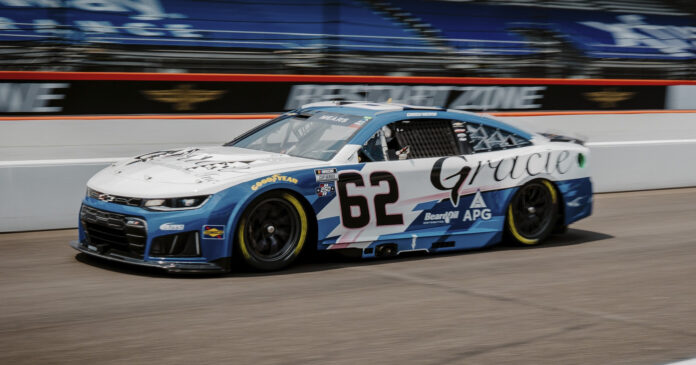
“You know, it’s a lot of reading the room in real time,” said Mears, who’ll be back behind the wheel of the No. 62 Gracie Foundation Chevrolet for family-owned Beard Motorsports in Saturday night’s Coke Zero Sugar 400. “When guys are getting a little crazy or you feel like the pack is prime for a crash, sometimes you just back out of it and try to leave yourself out of it to the best of your ability.”

That instinct has served Mears well at a track where he posted four consecutive top-10 finishes and five straight top-12s from 2013 through 2015. He finished second to Jimmie Johnson in the 2006 Daytona 500 before returning later that summer to finish seventh.

More telling is his ability to survive. Mears has finished 25 of his 28 Cup races at Daytona. The key to just three DNFs, he said, is understanding how to avoid turning someone else’s wreck into his own.

“When you’d see a crash, you’d get on the brakes really hard to try to avoid it,” Mears said. “Well, yeah, there’s somebody else behind you going 200 miles an hour.”

Instead, whenever possible, Mears tries to maintain momentum after clearing an incident, reducing the chance of being collected by a driver behind him.

“You just kind of have to read the crash,” he said. “As soon as I’m roughly clear, I try to keep momentum up and not get taken out from behind.”

It is a philosophy that could serve him particularly well behind the wheel of the Beard Motorsports Chevrolet.

Founded as a family passion project by the late Mark Beard Sr., Beard Motorsports has built its NASCAR identity around doing more with less. Since its Cup Series debut in the 2017 Daytona 500, the Michigan-based team has become a fixture at Daytona and Talladega (Ala.) Superspeedway, where its limited-schedule approach has repeatedly produced results that belies the organization’s size.

The No. 62 has five top-10 finishes in 13 starts on the Daytona oval, including a seventh-place run in the 2024 Coke Zero Sugar 400. Noah Gragson’s fifth-place finish in the August 2022 race stands as the team’s best Daytona result. That history gives Mears confidence.

“The Beard family has always brought a fast racecar to the superspeedways,” he said. “Anytime you have a little bit more speed, it just makes it easier to do your job at the superspeedways.”

Mears already experienced Daytona once this season, driving for Carl Long in February’s season-opening Daytona 500. After qualifying 17th, he had to race his way into the field through his Duel qualifying race, surviving a last-lap scramble to earn his place in The Great American Race.

“It was pretty amazing to make it the way we did,” he said.

Race day ended with a 32nd-place finish after an early incident damaged the car, but the experience added another chapter to his Daytona notebook.

Mears believes the closing laps are where that experience can become most valuable. With 15 to 20 laps remaining, he wants to be inside the top-10 – preferably the top five – where he can take advantage of the runs developing through the pack. Even then, he said patience can be the better strategy.

“If you’re not inside that top-10 with that many laps to go, sometimes it’s best just to be toward the rear of the field, dodge the last crash, and then pick off a good result at the end,” Mears said.

This weekend also brings an added unknown. NASCAR has introduced a horsepower and spoiler change for the Daytona race, with teams having limited opportunity to learn exactly how the cars will respond over a full run.

“Nobody really knows how these cars are going to respond and react at the end of a run,” Mears said. “There could be some surprises. You’ve just got to think on your feet.”

Saturday also carries a different kind of significance.

The Coke Zero Sugar 400 will mark Mears’ 498th career Cup Series start, followed by No. 499 at Talladega on Oct. 25, and the milestone 500th at Homestead-Miami Speedway on Nov. 8.

When Mears stepped away from fulltime Cup Series competition after the 2016 season, reaching 500 starts was hardly a certainty. His return to selected races has now put the milestone within reach, thanks in large part to the opportunity created through Beard Motorsports and longtime friend and former car owner Bob Germain.

With that milestone approaching, Mears also recognizes that Daytona represents one of his final Cup Series starts at a track that has been part of his career for more than two decades.

“This stretch could be the last three races that I ever run,” he said.

That realization has not diminished the competitive fire. Instead, he said, it has allowed him to appreciate racing in a different way.

“I’ve had a really good time just being at the racetrack, working with the guys, being a part of motorsports again and relearning what I’ve always loved my whole life,” he said.

Still, he has no intention of simply soaking in the atmosphere Saturday night. Mears believes a top-10 is a realistic goal for the No. 62 Chevrolet – and if experience, speed and timing all converge in the closing laps, perhaps something more.

“There’s no doubt that going to Daytona, the way the pack racing works, I think the experience that I have there, if we can dodge the bullets and not be somebody that’s caught up in the carnage, we have a great shot of having a top-10 and an outside chance of winning,” he said.

No. 62 Beard Motorsports Team Roster

Primary Team Members

Driver: Casey Mears

Hometown: Bakersfield, California

Crew Chief: Darren Shaw

Hometown: Mooresville, North Carolina

Car Chief: Drew Mickey

Hometown: Winston-Salem, North Carolina

Spotter: Rick Carelli

Hometown: Arvada, Colorado

President: Linda Beard

Hometown: Mt. Pleasant, Michigan

Over-The-Wall Members

Front Tire Changer: Shiloh Windsor

Hometown: Ada, Oklahoma

Rear Tire Changer: Michael Russell

Hometown: Virginia Beach, Virginia

Tire Carrier: Lamar Neal

Hometown: Halifax, Virginia

Jack Man: De’Quan Hampton

Hometown: Los Angeles

Fuel Man: Douglas Warrick

Hometown: Hamilton, New Jersey

Road Crew Members

Mechanic: Jack Gagnon

Hometown: Quebec, Canada

Mechanic: Mark Sanders

Hometown: Springfield, Ohio

Tire Technician: Mike Harrold

Hometown: Mooresville, North Carolina

Engine Tuner: Brian Trevino

Hometown: Statesville, North Carolina

Interior Specialist: Nic Hill

Hometown: Fort Myers, Florida

Engineer: Mack Kanupp

Hometown: Charlotte, North Carolina

Transporter Driver: Roger Lankford

Hometown: Lexington, North Carolina

TEAM CHEVY NASCAR RACE ADVANCE: Daytona International Speedway 2

TEAM CHEVY ADVANCE
Daytona International Speedway
August 28-29, 2026

Heading back to where it all began, NASCAR will close out the regular season this weekend at “The World Center of Racing”, Daytona International Speedway, as the Cup and O’Reilly Auto Parts Series will face a pair of high-stake superspeedway races to officially complete their respective Chase fields. Friday night’s Winn-Dixie 250 Powered by Coca-Cola will set the O’Reilly Series postseason field, while Saturday’s Coke Zero Sugar 400 caps the Cup Series regular season – both of which could dramatically reshape the tightly bunched battle for the final few Chase positions that remain up for grabs. Setting up for its title-defending run in both divisions, Chevrolet will arrive at Daytona with several drivers having already solidified their spots in the championship hunt.

Chevrolet Chases More History at “The World Center of Racing”

No manufacturer has a deeper well of history at Daytona International Speedway than Chevrolet. In Feb. 2024, the Bowtie brand became the first manufacturer in history to reach 100 all-time NASCAR national series wins at the track. Chevrolet has since only extended that record with the manufacturer heading into this weekend’s doubleheader with 106 all-time victories including 52 Cup Series wins, 50 O’Reilly Series wins and four Craftsman Truck Series wins.

At the Cup Series level, William Byron’s 2025 DAYTONA 500 triumph stands as Chevrolet’s 52nd all-time win at the 2.5-mile superspeedway, with 22 of those victories coming in the track’s summer race. The most recent of those summer wins belongs to Richard Childress Racing’s Austin Dillon, who drove the iconic No. 3 Chevrolet to a walk-off victory and a playoff berth in the Aug. 2022 event.

 
CUP CHASE FIELD LARGELY SET AS THE BUBBLE HEADS TO THE BEACH

The Coke Zero Sugar 400, the 26th and final race of the NASCAR Cup Series regular season, will set the seeding order for the 16-driver Chase field. For the handful of drivers still fighting for the final three transfer spots, it will present one last chance to point their way into the postseason on a track where the results are rarely predictable. Heading into the weekend, Chevrolet ties Toyota in early Chase berths with five, accomplished by a trio of Hendrick Motorsports drivers – Kyle Larson, Chase Elliott and William Byron – and the Spire Motorsports duo of Carson Hocevar and Daniel Suarez.

 
Five Team Chevy Drivers Roll into Finale with Chase Spots Secured

Hendrick Motorsports’ Kyle Larson, Chase Elliott and William Byron all enter Daytona with their Chase berths clinched, freeing up the trio to race for seeding rather than survival. With a top-five finish and an overall strong points day at New Hampshire Motor Speedway, the reigning champion, Larson, was able to climb one position to lead the Bowtie brigade in the points standings. Despite a challenging outing at “The Magic Mile”, the No. 24 team will enter the finale weekend with Daytona pedigree on its side. Byron owns three career Cup Series victories at the 2.5-mile superspeedway, including his first career win at NASCAR’s highest level (Aug. 2020) and back-to-back DAYTONA 500 titles (2024-25).

Meanwhile, Elliott might still be chasing his first Cup Series win at Daytona itself, but he does own four career Cup Series victories on the circuit’s drafting-style tracks.

It will be a postseason of ‘firsts’ for Spire Motorsports’ Carson Hocevar and Daniel Suarez. Currently competing in just his third full-time season, Hocevar is set to make his first appearance in the postseason in NASCAR’s premier series. Looking to close the regular season on a high note, a superspeedway race plays right into the Michigan native’s favor with the No. 77 team already earning three top-fives, including a win, on drafting-style tracks this season. For Suarez, while it will be his third career postseason appearance, this will mark his first campaign for the championship title under the Spire Motorsports banner. Also looking to maximize his seeding position this weekend, Suarez has found success in this style of racing in recent years, including a trip to victory lane at EchoPark Speedway in 2024. At Daytona, his career-best finish of second came one year ago in the track’s summer race.


VAN GISBERGEN REPRESENTS IN FINAL CHASE BATTLE

Trackhouse Racing’s Shane van Gisbergen will represent the Chevrolet camp in the battle for the final three positions in the 2026 NASCAR Cup Series Chase. The New Zealand native heads into Daytona occupying the 16th and final transfer position, having survived New Hampshire to hold his ground with a sizeable 31-point cushion over the cutline. It has been a season of growth for Van Gisbergen, including a steep progression in his superspeedway craft. The Team Chevy driver’s career-best finish on a drafting-style track is sixth – a result that was earned in both of this season’s visits to EchoPark Speedway.

 
CHEVROLET SET TO CAP-OFF STORYBOOK REGULAR SEASON IN THE O’REILLY SERIES

It’s been a regular season for the record books for Chevrolet in the NASCAR O’Reilly Auto Parts Series with the manufacturer heading into the finale weekend hoisting a 20-win campaign. The Bowtie brand is setting itself up for a strong run to defend its championship title, occupying seven of the eight Chase positions that have been clinched. Already accomplishing a career season, Team Chevy veteran, Justin Allgaier, leads the field with a guaranteed spot as the No. 1 seed. His JR Motorsports teammate, Carson Kvapil, enters the weekend on a roll, having swept the last two O’Reilly Series races including his first career win at Indianapolis Motor Speedway, as well as a comeback win over Allgaier in the series’ last outing at Iowa Speedway. Fellow Chevrolet drivers Sheldon Creed, Jesse Love, Austin Hill, Corey Day and Sammy Smith have also punched their tickets into the postseason.

Among those whose title hopes will be determined at “The World Center of Racing”, Team Chevy’s Parker Retzlaff and Sam Mayer lead in the remaining provisional points positions – both sitting at a double-digit cushion over the cutline with Retzlaff at +46 points and Mayer at +19 points.


Caruth Chasing One Last Shot

One Chevrolet driver on the outside looking in but still in the postseason fight is Rajah Caruth, who trails the cutline by just 15 points entering Daytona – a margin that a strong run, or simply staying out of trouble amid the pack racing, could easily erase. Caruth has put together a solid rookie campaign, which has seen the young driver compete under the banner of two different Chevrolet organizations. On drafting tracks this season, he’s tallied top-10 results in three of the four events. But it’s the momentum from his career-best runner-up finish at Iowa Speedway, the series most recent race, that might just be what he needs for a boost into the Chase picture.

 
BOWTIE BULLETS:

· Active Chevrolet drivers with a NASCAR Cup Series win at Daytona International Speedway:

William Byron – three wins (Aug. 2020, Feb. 2024 & Feb. 2025)

Ricky Stenhouse Jr. – two wins (July 2017 & Feb. 2023)

Austin Dillon – two wins (Feb. 2018 & Aug. 2022)

Michael McDowell – one win (Feb. 2021)

· In 158 NASCAR Cup Series races at Daytona International Speedway, Chevrolet has recorded 52 wins, with 22 of those victories coming in the series’ summer event at the track – most recently by Austin Dillon and the No. 3 Richard Childress Racing Chevrolet team (Aug. 2022).

· Chevrolet has earned 106 points-paying wins at Daytona International Speedway across all three NASCAR national series, making Chevrolet the winningest manufacturer in NASCAR history at the “World Center of Racing”.

· With Grant Enfinger’s win at Lime Rock Park, Chevrolet sits just two wins away from its milestone 300th all-time NASCAR Craftsman Truck Series win.

· With seven-straight victories to start the 2026 NASCAR O’Reilly Auto Parts Series season, Chevrolet set the record for the longest season-opening streak by a single manufacturer in the division’s history.

· In 168 points-paying races in the NASCAR Cup Series Next Gen era, Chevrolet leads all manufacturers with 73 victories – a winning percentage of 43.5%.

· Chevrolet is coming off its 29th all-time sweep of the NASCAR Cup Series championship titles – capturing its 34th driver championship and 44th, and fifth consecutive, manufacturer championship in 2025.

· With its 44 NASCAR Cup Series manufacturer championships, 34 NASCAR Cup Series driver championships, and 887 all-time NASCAR Cup Series wins, Chevrolet continues to hold the title as the winningest brand in NASCAR Cup Series history.

· Fans can visit the Team Chevy Racing Display in the Chevrolet Injector and Chevrolet Experience Center at Daytona International Speedway, featuring a variety of vehicles including:

Chevrolet Injector: Trax 2RS, Silverado 1500 RST, Colorado Trail Boss, Silverado 1500 High Country, Silverado EV, Traverse Z71, Silverado 2500 LTZ, Tahoe Z71, Equinox EV, Corvette Z06 Blazer EV SS, Trailblazer ACTIV, Silverado EV RST, Corvette ZR1, 250th Anniversary Edition Silverado 2500, 250th Anniversary Edition Colorado Trail Boss, 2027 Corvette Z06, 2027 Corvette Stingray, 2027 Equinox ACTIV, 2027 Corvette Grand Sport.

Chevrolet Experience Center: Corvette Z06, Suburban High Country, 2027 Corvette Grand Sport, 2027 Corvette Grand Sport X, C2 Corvette, 1990 Suburban, Cheyenne, 2026 NASCAR Cup Series Camaro ZL1 show car.

 
TUNE-IN:

NASCAR Cup Series

Coke Zero Sugar 400

Saturday, Aug. 29, at 7:30 p.m. ET

NBC, MRN and SiriusXM NASCAR Radio Channel 90

NASCAR O’Reilly Auto Parts Series

Winn-Dixie 250 Powered by Coca-Cola

Friday, Aug. 28, at 7:30 p.m. ET

CW, MRN and SiriusXM NASCAR Radio Channel 90

 
QUOTABLE QUOTES:

Austin Dillon, No. 3 Richard Childress Racing Chevrolet

You’ve had success at Daytona International Speedway, both in February and in the summer race. What are you looking forward to for this year’s Coke Zero Sugar 400?

“I’m looking forward to getting to Daytona with the No. 3 Bass Pro Shops/Winchester Deer Season XP Chevrolet. It’s always an opportunity to try and bring home a trophy. Speedway racing with our ECR Engines is a lot of fun. The night race is usually pretty interesting. It gets wild out there. I thought our last speedway race at Atlanta Motor Speedway went well, so hopefully we can capitalize on what we’ve learned.”

How important is teamwork at Daytona?

“Teamwork is very important. I’ve got a great teammate in Austin Hill. He’s won a lot of races at Daytona, so I’m looking forward to working with him. Hopefully we can push our Chevys to the front.”

Do you embrace the chaos of Daytona International Speedway or is it something you can’t stand?

“I definitely try to embrace it, because if you don’t, I feel like you’ll be part of the chaos. You’ve got to get in there and mix it up and try to put yourself in the best position possible. There’s a lot of luck involved in getting through some of those wrecks, but it can be very rewarding when you make it through.”

What’s it like entering Daytona International Speedway?

“Anytime you go through that tunnel, you see the sights and the scenes of Daytona, you kind of get excited, because you know where Victory Lane is located. You just want to get back there and visit it.”

Daniel Suarez, No. 7 Spire Motorsports Chevrolet

The No. 7 team is in the Chase for the first time ever. What does that accomplishment mean to you and this team, and what will it feel like to race at Daytona Saturday night, one of your favorite tracks, with the Coke Zero Sugar on the car?

“I’m really proud of this team. Making the Chase for the first time ever is a huge accomplishment for the No. 7 team, and it’s something everyone here should be really proud of. We’ve worked so hard all year to put ourselves in this position, and to finally accomplish that goal means a lot to all of us.

Daytona is one of my favorite tracks, and having Coke on the car makes Saturday night even more special, especially after winning the Coca-Cola 600 earlier this year. That was such a special moment for me and this team, and obviously I’d love to add another trophy to the garage. We can celebrate making the Chase, but we’re still going to Daytona to race hard and hopefully have another big night.”

Ty Dillon, No. 10 Kaulig Racing Chevrolet

What is the difference between racing Daytona in February and Daytona in August?

“The summer race here is just a whole different beast. You enter the second half of the season knowing every point and position matters, especially if you’re fighting for a playoff spot or trying to build momentum for your team. You see a lot more aggression because guys know the regular season deadline is closing in. Also, the temperatures are a lot hotter in August, so the track is slippery. Handling becomes even more important.”

AJ Allmendinger, No. 16 Kaulig Racing Chevrolet

What do you think of the rules updates to the NASCAR Cup Series superspeedway package for Daytona?

“Daytona is an unknown with the new rules package and we’re not going to know without practice. We’ve just got qualifying on Friday so we’ll wait and see how it goes Saturday night in the race I guess. We know NASCAR is trying to create more opportunities to pass and give drivers more ability to make moves. But until we get out there and see how the cars react, it’s tough to know exactly what we’re going to have. It could open things up and create more passing. At the end of the day, it’s Daytona and you’re just trying to be there at the end and avoid the mayhem.”

Austin Hill, No. 33 Richard Childress Racing Chevrolet

What are the expectations of the new superspeedway package?

“Honestly, no one really knows at this point. Folks think that the drafting affects should be similar to the O’Reilly (Auto Parts Series) car. If that is the case, then I feel very good about it. But will it actually end that way? We aren’t sure because the Cup car is so much different with the diffuser and the way that the air flows. The O’Reilly car has the bubble effect, but we’ve never had that with the Cup car. The purpose of these changes is to make it have a bubble effect. Based on all the data that NASCAR has shown us, it should be closer to the O’Reilly car. Having a bubble creates better opportunities for guys who are not up front to be able to pull out of line and make something happen. You can position yourself with the air, get a run, pull out of line, and not stall out as easy. You should still have the momentum to move forward, which is what the Cup car has been missing in the few races I’ve done so far. That should be a positive for our Cheddar’s Scratch Kitchen Chevrolet.”

Ricky Stenhouse Jr., No. 47 Hyak Motorsports Chevrolet

“Daytona is always unpredictable, but that’s what makes it exciting. We’re glad to have Onin Staffing back with us, and the goal is to stay in the mix all night and give ourselves a shot when it counts.”

Cody Ware, No. 51 Rick Ware Racing Chevrolet

“I’ve built up a lot of confidence at Daytona and its sister track, Talladega. Superspeedway racing just suits my driving style. In years past, I took a much more cautious approach to these races. But the last handful of times we’ve been to Daytona and Talladega, I’ve ramped up my aggression level without putting myself in bad spots. I’ve got the confidence to just race hard, get up front, and stay up front. I think you either want to be at the very front or the very back. Anywhere else is kind of no man’s land. My goal is get up front and run in that top-10, and I think as long as we execute and don’t make mistakes, we’re going to be in a good place to do just that.”

Michael McDowell, No. 71 Spire Motorsports Chevrolet

What do you think you’ll see with the new package at Daytona, are there any concerns?

“There is always going to be concern when something new comes around, but it’s the same for everybody, so you’re trusting your team, you’re trusting your tools and you’re trusting your experience. We’ve had some big package changes at Daytona in the past and they didn’t change the racing product a whole lot. I think everybody, in their mind, is telling themselves not to overreact, because more than likely, it’s not going to be as we expect. I think that’s kind of the mindset a lot of people will have. We are expecting to have a good run and make up for what could have been during the 500 in February.”

Carson Hocevar, No. 77 Spire Motorsports Chevrolet

What are you anticipating with the updated rules package?

“I am excited for it. There really isn’t anything to look at. No data or anything. I think that will play to our advantage. You have to just go out there and adapt. We are going to have to try everything as the race plays out and see how the car reacts. Luke (Lambert, crew chief) and Tyler (Green, spotter) are very data driven and so are my teammates Michael (McDowell) and Daniel (Suarez). But none of them really have any idea on what to expect or what to talk about. It is kind of an interesting dynamic going into the weekend.”

Connor Zilisch, No. 88 Trackhouse Racing Chevrolet

There is a new rules package for Daytona. How do you think that is going to change the racing this weekend?

“I’m really excited for Daytona Obviously with the new package things are going to be a lot different just go around and we don’t have any practice so there’s a lot of question marks surrounding that. I think everybody’s in the same boat so I’m super curious to see how it races. The speedways haven’t quite gone the way I’ve wanted them to this year so hopefully we can get that turned around and have a good showing. It’s exciting to have WeatherTech back on board this week. They have been a big sponsor of mine and we won the Daytona race with them last year so hopefully we can do that again this go around.”

Do you embrace superspeedway racing?

“Superspeedway racing hasn’t been nicest to me. I haven’t had the greatest record at those tracks, but I enjoy the craft of superspeedway racing. It’s tougher than people realize and it’s certainly a skill. You can say it’s luck, but at some point, it becomes the driver doing their job and putting themselves in the right spots to win races and stay out of trouble. That’s something that I haven’t quite figured out yet it seems by my track record but I’m doing everything I can to continue to learn and try to find myself fin the right spot at the end of one of those races.”

Shane van Gisbergen, No. 97 Trackhouse Racing Chevrolet

You are 31 points above the cutline, how do you approach this weekend at Daytona?

“It’s really hard to know, it’s such an unknown track. It’s typical Daytona, but also the rule package change as well. Just a lot of unknown. Would have loved to leave New Hampshire last weekend with more of a cushion of course, like we entered with. But the 60 (Ryan Preece) did a great job. The team and I will be working all week to have a plan heading into Saturday night’s race, just have to focus on executing.”

You’ve won championships before, does it benefit you at all to have that background and experience heading into a high-pressure race?

“I guess in some ways. I try to maximize all the bad days, I think. Every point counts, so when we are having a bad day, we still have to get the most out of it. So maybe in that part it does help, being in season long championships all my life. It’s a cool feeling knowing that we have a shot at making The Chase. It’s a cool pressure to feel.”

 
Chevrolet NASCAR Cup Series Statistics

Manufacturer Championships:

Total (1949-2025): 44

First title for Chevrolet: 1958

Highest number of consecutive titles: 13 (2003-15)

Most recent: 2025

Years Won: 1958, 1959, 1960, 1961, 1972, 1973, 1974, 1976, 1977, 1978, 1979, 1980, 1983, 1984, 1985, 1986, 1987, 1988, 1989, 1990, 1991, 1993, 1995, 1996, 1998, 2001, 2003, 2004, 2005, 2006, 2007, 2008, 2009, 2010, 2011, 2012, 2013, 2014, 2015, 2021, 2022, 2023, 2024, 2025

Driver Championships:

Total (1949-2025): 34

First Chevrolet champion: Buck Baker (1957)

Highest number of consecutive titles: 7 (2005-11)

Most recent: Kyle Larson (2025)

Driver and Manufacturer Championship Sweeps: 29

Years Won: 1957, 1960, 1961, 1973, 1976, 1977, 1979, 1980, 1984, 1985, 1986, 1987, 1990, 1991, 1993, 1994, 1995, 1996, 1997, 1998, 2001, 2005, 2006, 2007, 2008, 2009, 2010, 2011, 2013, 2014, 2016, 2020, 2021, 2025

Event Victories:

Record for total race wins in single season: 26 (2007)

2026 STATISTICS:

Wins: 6

Poles: 5

Laps Led: 1,769

Top-Fives: 40

Top-10s: 83

Stage Wins: 17

CHEVROLET IN NASCAR CUMULATIVE STATISTICS:

Total Chevrolet race wins: 887 (1949 to date)

Poles won to date: 771

Laps led to date: 258,503

Top-fives to date: 4,476

Top-10s to date: 9,234

Total NASCAR Cup Wins by Corporation, 1949 to Date:

       General Motors: 1,221

       Chevrolet: 887

       Pontiac: 154

       Oldsmobile: 115

       Buick: 65


       Ford: 853                                                                               

       Ford: 753

       Mercury: 96

       Lincoln: 4


       Fiat Chrysler Automobiles: 467

       Dodge: 217

       Plymouth: 191

       Chrysler: 59


       Toyota: 217


About General Motors

General Motors (NYSE:GM) is driving the future of transportation, leveraging advanced technology to build safer, smarter, and lower emission cars, trucks, and SUVs. GM’s Buick, Cadillac, Chevrolet, and GMC brands offer a broad portfolio of innovative gasoline-powered vehicles and the industry’s widest range of EVs, as we move to an all-electric future.

GM Motorsports, including the Cadillac Formula 1® Team develops and proves advanced technologies in the most demanding environments, accelerating innovation in performance, safety, efficiency, and electrification for its production vehicles. Cadillac Racing is one of the leading manufacturers in the IMSA and FIA World Endurance Championships (WEC). Chevrolet competes in single seaters in the US IndyCar series, and in NASCAR with multiple team partners and drivers. Corvette customer teams compete in GT series across the globe including IMSA and WEC. Learn more at GM.com.

TWO-TIME FUNNY CAR CHAMP PROCK READY FOR CHALLENGE IN PLAYNHRA FUNNY CAR ALL-STAR CALLOUT AT INDY

Eight Funny Car standouts will compete in PlayNHRA Funny Car All-Star Callout as part of Cornwell Quality Tools NHRA U.S. Nationals

INDIANAPOLIS (Aug. 26, 2026) – Two-time reigning Funny Car world champion Austin Prock is entering this year’s 72nd annual Cornwell Quality Tools NHRA U.S. Nationals with more to prove than just defending his PlayNHRA Funny Car All-Star Callout title. With a stacked field of NHRA Funny Car drivers, including five world champions with 11 combined titles, defending the Callout crown will be no easy task.

In 2025, Prock swept the biggest weekend in drag racing at Lucas Oil Indianapolis Raceway Park, winning the Funny Car All-Star Callout, clinching the regular season championship and finishing the weekend with a second straight Cornwell Quality Tools NHRA U.S. Nationals victory on Labor Day.

Prock faces a bigger uphill battle to repeat that success this year, entering the Callout as the fifth seed for Tasca Racing. But the two-time reigning world champion has been building momentum at the right time, advancing to the semifinals at each of the past five events, including a runner-up finish in Seattle, and is confident in the recent performance of his 12,000-horsepower Ford Racing Mustang.

“I think we’re plenty capable,” Prock said. “Our package just seems to work in Indy, and we’ve earned those wins the last two years. I feel like our race car is in a good enough spot to go do that again.”

The big-money bonus race, which awards the winner $80,000, takes place on Sunday, Sept. 6, featuring eight standouts in the category.

The No. 1 seed is Jack Beckman – Prock’s former teammate at John Force Racing. Beckman will have his pick of the eight-car field. Five world champions are part of the field, combining for 11 Funny Car world titles, including four-time champion, points leader and most recent winner on tour Matt Hagan, who is seeded second in the Callout, along with former champs and Indy winners Ron Capps and J.R. Todd. After Prock, the field also includes Alexis DeJoria, two-time 2026 race winner Chad Green and 2025 Rookie of the Year Spencer Hyde. Six of the qualified drivers have wins during the 2026 season.

“I don’t really feel like anybody is going to pick me, but if they do, great,” Prock said. “I like the Callout because it brings a little bit of animosity. When someone calls you out, it gets me more fired up to go out there and beat them.”

The first round of the Funny Car All-Star Callout takes place at 12:45 p.m. ET on Sunday, with the semifinals at 2:15 p.m. and the final round at 3:40 p.m. A special broadcast of the Callout takes place on FS1 at 7 p.m. ET on Sunday.

Since moving to Tasca Racing in the off-season, the two-time reigning champ has seen continued improvement from his Ford Racing Mustang as the regular season winds down and the Countdown to the Championship playoffs approach.

“After Brainerd, I really feel like that was our best performance overall as a race team since we started,” Prock said. “We obviously didn’t get the result that we wanted and had some misfortune on Sunday, but I think our race car is in the best spot that it has been. It’s as good, or close to as good, as our race car was at the end of last year.”

For more than seven decades, the Cornwell Quality Tools NHRA U.S. Nationals has shaped legacies and careers. As NHRA celebrates its 75th anniversary in a major way at Indy, the special highlights include:

  • Appearances from NHRA legends Don Garlits, Don Prudhomme, Kenny Bernstein, Joe Amato, Shirley Muldowney, Larry Dixon and Darrell Gwynn.
  • A celebration of NHRA’s 75-year history with exhibition runs on Friday and Sunday from the classic Rat Trap and Bradford’s Fiat nitro Fuel Altereds.
  • Plus, push-start cackle cars on Friday and Sunday driven by NHRA legends.
  • A new-look Nitro Mall, special apparel, displays and more.

On the track, the event is jammed with excitement, as the top stars compete for the special 75th anniversary Diamond Wally on the sport’s biggest stage. From Friday qualifying under the lights, to the final Mission #2Fast2Tasty Challenge of the year on Saturday, the PlayNHRA Funny Car All-Star Callout on Sunday and eliminations on Labor Day Monday, there’s no weekend quite like The Big Go.

Other major items include:

  • The Sox & Martin Hemi Challenge returns as the longest-running continuous specialty race in NHRA history, featuring exciting heads-up, wheelstanding, and side-by-side racing of Hemi-powered ’68 Super Stock Dodge Darts and Plymouth Barracudas competing in the NHRA SS/AH class.
  • An unforgettable Top Eliminator Club experience, including NHRA driver appearances, food and drink, TEC gift bag, starting line seats and much more.
  • Free parking for all fans in attendance for the entire weekend.
  • SealMaster Track Walk before Monday’s eliminations.
  • Multiple autograph sessions throughout the weekend.
  • A can’t-miss Hot Rod Junction.
  • A special Sportsman appreciation dinner from 5-7 p.m. on Tuesday of the race in Top Eliminator Club
  • Children 12-and-under get in free to an event offering all-day entertainment.

Last year’s Cornwell Quality Tools NHRA U.S. Nationals saw Prock (Funny Car), Justin Ashley (Top Fuel), Erica Enders (Pro Stock) and Gaige Herrera (Pro Stock Motorcycle) win the world’s biggest drag race. This year’s event will once again be broadcast on FS1 with qualifying and the NHRA Funny Car All-Star Callout throughout the weekend. Monday’s eliminations will be broadcast on FOX beginning at 2 p.m. ET.

Motorsports legend Tony Stewart secured last year’s Top Fuel regular season title in Indy, but it was standout Justin Ashley who earned the win when he defeated Stewart in the finals. Reigning world champion Doug Kalitta currently leads the points after winning three consecutive races in Sonoma, Seattle and Brainerd.

Six-time Pro Stock world champion Erica Enders won for the fourth time at Indy last year, getting her 50th career victory with a win over Matt Hartford. Dallas Glenn earned the regular season championship and went on to secure his first world title. With four wins, Greg Anderson currently has the points lead in the talent-heavy class.

Two-time Pro Stock Motorcycle champ Gaige Herrera rolled to his second straight win at The Big Go by defeating Brayden Davis last year. Teammate and reigning champ Richard Gadson leads the points, while others to watch include Matt and Angie Smith, Steve Johnson, Ryan Oehler, Jianna Evaristo, John Hall and Chase Van Sant.

Also competing will be drivers in the Lucas Oil Drag Racing Series, JBS Equipment NHRA Pro Mod Drag Racing Series presented by Elite Motorsports, NHRA Flexjet Factory Stock Showdown and Right Trailers Outlaw Street.

As always, fans get an exclusive pit pass to the most powerful and sensory-filled motorsports attraction on the planet. Fans get a unique chance to see teams in action and service their hot rods between rounds, get autographs from their favorite NHRA drivers, and more. They can also visit Manufacturers Midway, an exciting atmosphere that includes interactive displays, merchandise, food and fun for the entire family.

NHRA Mission Foods Drag Racing Series qualifying will feature one round at 6:15 p.m. ET on Friday, Sept. 4, two rounds at 12:30 and 3:30 p.m. ET on Saturday, Sept. 5 and the final two rounds of qualifying on Sunday, Sept. 6 at 12 and 2:45 p.m. Final eliminations are scheduled for 10 a.m. ET on Monday, Sept 7.

Television coverage includes qualifying action on FS1 at 3 and 10:30 p.m. ET on Sunday, and eliminations at 12 p.m. on FS1 on Monday, shifting to FOX at 2 p.m.

To purchase tickets to the 72nd annual Cornwell Quality Tools NHRA U.S. Nationals, fans can visit www.NHRA.com/tickets. For more information about NHRA, visit www.NHRA.com.


About Mission Foods

MISSION®, owned by GRUMA, S.A.B. de C.V., is the world’s leading brand for tortillas and wraps. MISSION® is also globally renowned for flatbreads, dips, salsas and Mexican food products. With presence in over 112 countries, MISSION® products are suited to the lifestyles and the local tastes of each country. With innovation and customer needs in mind, MISSION® focuses on the highest quality, authentic flavors, and providing healthy options that families and friends can enjoy together. For more information, please visit https://www.missionfoods.com/

About NHRA

NHRA is the primary sanctioning body for the sport of drag racing in the United States. NHRA presents 20 national events featuring the NHRA Mission Foods Drag Racing Series and NHRA Lucas Oil Drag Racing Series, as well as the JBS Equipment NHRA Pro Mod Drag Racing Series presented by Elite Motorsports and NHRA Flexjet Factory Stock Showdown™ at select national events. NHRA provides competition opportunities for drivers of all levels in the NHRA Summit Racing Series and NHRA Street Legal™. NHRA also offers the NHRA Jr. Street® program for teens and the Summit Racing Jr. Drag Racing League® for youth ages 5 to 17. With more than 100 Member Tracks, NHRA allows racers to compete at a variety of locations nationally and internationally. NHRA’s Youth and Education Services® (YES) Program reaches over 30,000 students annually to ignite their interest in automotive and racing related careers. NHRA’s streaming service, NHRA.tv®, allows fans to view all NHRA national events as well as exclusive features of the sport. In addition, NHRA owns and operates three racing facilities: Gainesville Raceway in Florida; Lucas Oil Indianapolis Raceway Park; and In-N-Out Burger Pomona Dragstrip in Southern California. For more information, log on to www.NHRA.com, or visit the official NHRA pages on Facebook, Instagram, Twitter, and YouTube.