When someone suffers a serious injury, the first wave of costs is obvious. Ambulance. Surgery. Hospital stay. What is harder to see is the long tail. The years of follow-up care. The equipment that needs replacing. The therapy that never fully ends. Long-term care costs are not dramatic in one single moment. They accumulate quietly.
In Katy, TX, families often build their lives around stability. That stability shows up in mortgages, small businesses, school districts, and long-term planning. A serious injury can interrupt that structure in ways that are not visible at the start of a claim. Evaluating long-term care is not about inflating numbers. It is about recognizing what daily life will realistically cost from now on.
Start With Legal Groundwork That Looks Forward
Many injury claims begin with a focus on what has already happened. Medical bills are gathered. Insurance paperwork is reviewed. That is necessary, but it is not enough. A serious injury changes the future. If that future is not calculated early, it is easy to underestimate it.
In Katy, many injured individuals seek early guidance from car accident lawyers in Katy at Trust Guss because projecting future care requires structure. This means reviewing medical opinions, consulting specialists, and mapping out how the injury is expected to progress. The goal is not just compensation for today. It is protection for what the next twenty or thirty years may require.
The Cost of Care Does Not Stop After Discharge
Leaving the hospital does not mean recovery is complete. Specialist appointments continue. Imaging scans are scheduled. Follow-up evaluations become routine. Some injuries require lifelong monitoring, especially those involving the spine, brain, or major joints.
When evaluating long-term costs, those recurring visits must be projected realistically. A neurologist twice a year for decades adds up. So does ongoing pain management or cardiac monitoring. These are not optional appointments. They are part of living with the injury.
Therapy Is Often Long-Term, Not Temporary
Rehabilitation is commonly viewed as a short phase. In reality, many serious injuries require continued therapy to maintain function. Physical therapy may shift from intensive sessions to maintenance care. Occupational therapy may be needed whenever new challenges arise.
Even if sessions become less frequent, they rarely disappear entirely. Over the years, those visits can represent a significant expense. Evaluating long-term care means acknowledging that therapy may stretch across seasons of life rather than ending neatly after initial recovery.
Future Surgeries Are Not Hypothetical
Certain injuries come with built-in expectations. Joint replacements may need revision, hardware may loosen, and degenerative conditions may develop. Doctors often note that additional procedures are likely, even if dates are not fixed.
Those possibilities must be treated as probable, not speculative. Each projected surgery carries hospital costs, surgical fees, anesthesia, recovery time, and renewed rehabilitation. Ignoring that cycle understates the financial impact of the injury.
Equipment Has a Lifespan
Mobility aids, braces, prosthetics, or specialized devices are not permanent purchases. They wear down and require repair or replacement. Technology also evolves, which can create necessary upgrades over time.
Calculating long-term care includes estimating how often equipment will need to be replaced and serviced. A wheelchair replaced every five to seven years over a lifetime becomes a major line item. So do maintenance and adjustments. These are not luxury expenses but are essential to daily function.
Factoring in Prescription Medication Over a Lifetime
For many serious injuries, medication becomes a permanent part of daily management. Pain control, anti-inflammatory drugs, nerve stabilizers, anticoagulants, or other condition-specific prescriptions may continue indefinitely. Dosages can shift over time, and new medications may be introduced as the body adapts or complications arise.
Evaluating long-term medication costs requires reviewing current prescriptions and consulting treating physicians about anticipated adjustments. Some medications increase in cost over time, particularly specialty drugs. A comprehensive projection must estimate annual prescription expenses and extend them across the injured individual’s expected lifespan. What seems manageable month to month can become significant when calculated over decades.
Evaluating the Financial Impact on Family Caregivers
When professional care is limited or supplemented by family members, the economic impact often shifts quietly into the household. A spouse or parent may reduce working hours or leave employment entirely to provide support. That lost income is a measurable consequence of the injury.
Assessing this impact requires reviewing prior earnings, projected career advancement, and long-term earning capacity that may be interrupted. Caregiving responsibilities can also affect retirement contributions and professional growth. Including these indirect financial losses ensures that the claim reflects the broader economic consequences experienced by the family, not just the injured individual.
Adjusting for Inflation in Long-Term Medical Care
Healthcare costs do not remain static. Medical inflation has historically outpaced general inflation, and long-term projections must account for this reality. Failing to apply reasonable inflation adjustments can significantly undervalue future care needs.
Life-care planners and financial experts often apply structured inflation models to projected expenses. This ensures that a cost estimated today remains realistic ten or twenty years from now. Without these adjustments, compensation intended to support lifelong care may lose purchasing power over time, creating financial gaps later in life.
Projecting Assistive Technology and Adaptive Devices
Advances in technology continue to reshape long-term care. Individuals with serious injuries may require adaptive devices such as communication aids, mobility enhancements, or home automation systems that improve accessibility. These tools evolve, and periodic upgrades may be necessary to maintain functionality.
Long-term evaluation must include not only the initial purchase of assistive devices but also software updates, hardware replacements, and compatibility adjustments. As technology changes, so do care standards. Accounting for these evolving needs ensures that injured individuals maintain access to tools that support independence and quality of life.
Evaluating long-term care costs in serious injury claims requires disciplined forecasting rather than short-term accounting. Immediate medical bills represent only a fraction of the true financial impact. Ongoing treatment, therapy, medication, personal assistance, equipment, inflation, and secondary conditions all shape the long-term picture.
If you’ve owned a home in Colorado Springs for more than one winter, you’ve probably had at least one moment where you wondered why one room is freezing while the rest of the house feels fine. That’s one of the most common signs that your HVAC installation was never set up for how homes in Colorado Springs actually behave.
Our winters are dry, our temperatures swing hard, and our housing stock ranges from older homes with leaky ductwork to newer builds with tight envelopes. The heating systems that perform best here aren’t generic. They’re sized, designed, and installed by a local heating company that understands the climate.
If you’re beginning to research HVAC installation in Colorado Springs, spending a few minutes on https://mycomfortbydesign.com/ gives you a good sense of how a local heating and HVAC company approaches system design for homes in this area.
Here’s what actually matters when choosing a heating company and planning a heating or HVAC installation in 2026.
Cold Rooms Are a Sign of a Poor HVAC Installation
Homeowners often assume cold bedrooms, drafty hallways, and chilly basements are just quirks of the house. In reality, these are signs of a poorly designed heating installation or an outdated HVAC system.
Common causes include:
HVAC systems sized only by square footage
poor airflow design
unbalanced ductwork
rooms added after the original HVAC installation
A quality heating company in Colorado Springs will start by identifying where your home struggles to stay warm before recommending new HVAC equipment.
HVAC Installation in Colorado Springs Requires Proper System Sizing
One-size-fits-all HVAC installs fail here. Proper HVAC installation requires real heat load calculations, not shortcuts.
A professional heating company should evaluate:
insulation levels
window efficiency
duct layout and leakage
ceiling height and floor plan
sun exposure and wind exposure
This is how you avoid oversized furnaces that short-cycle and undersized systems that never quite keep up during cold Colorado Springs winters.
Ductwork Makes or Breaks Your Heating System
Even the best furnace can’t perform well if the ductwork is wrong. In many Colorado Springs homes, the duct system is the weak link in the HVAC setup.
Poor duct design leads to:
uneven heating
noisy airflow
higher energy bills
unnecessary wear on HVAC equipment
A reputable heating company will inspect ductwork as part of any HVAC installation or heating system replacement.
High-efficiency furnaces and modern HVAC systems are more common in 2026, but they require precise installation.
Proper heating installation includes:
correct venting
condensate drainage
airflow balancing
system calibration
This is where experienced HVAC installers separate themselves from companies that only swap equipment. Comfort By Design’s approach to heating installation focuses on full-system performance, not just furnace replacement. You can see how their heating installation services in Colorado Springs work here: https://mycomfortbydesign.com/services/heating/heating-installation/
The Best Heating Company Designs HVAC Systems Around How You Live
A good heating company doesn’t just install equipment. They design HVAC systems around how homeowners actually use their space.
Questions a quality HVAC installer should ask:
Which rooms feel coldest in winter?
Is the basement finished?
Do you work from home?
Are doors usually open or closed?
Do temperatures vary by floor?
This information shapes how the HVAC system is configured and how the heating installation is performed.
Timing Your HVAC Installation Matters
Emergency HVAC installs during winter breakdowns put homeowners at a disadvantage. Planning your HVAC installation before your system fails gives you better options, better scheduling, and better system design.
Colorado Springs homeowners who plan heating system upgrades in advance typically end up with more comfortable homes and fewer surprises.
What a Great HVAC Installation Looks Like in Real Life
When heating installation is done right:
Your home heats evenly
Your energy bills stabilize
Your HVAC system runs quieter
You stop thinking about your furnace
That’s the real goal of working with a professional heating company.
If you’re comparing heating companies in Colorado Springs for HVAC installation or furnace replacement, starting with a local team that understands this climate makes the process much smoother. Comfort By Design is one of the HVAC companies homeowners here work with for full-system heating solutions: https://mycomfortbydesign.com/
Imagine two traders with identical capital of $10,000. The first one analyzes charts every day, catches trends, and tries to predict Bitcoin’s movements. The second launched an automated arbitrage system and checks the results once a week over a cup of coffee. After a month, their results are radically different — and it’s not just about the numbers on their accounts.
This article is an honest comparison of two approaches to earning with cryptocurrencies. Without embellishment, with real numbers and explanations of why one method provides stability while the other turns life into an emotional rollercoaster.
The Problem with Traditional Trading: Why 95% of Traders Lose Money
If you’ve ever tried trading cryptocurrency yourself, you know this feeling. You buy Bitcoin at $67,000, confident it will rise. Two hours later, the price drops to $64,500 — minus $375 on your $10,000 deposit. You hold on, hoping for a bounce. The price falls to $63,000. Panic. You lock in a $600 loss.
The next day Bitcoin shoots up to $69,000. You enter again — right at the peak. And history repeats itself.
Here’s the brutal truth about manual trading:
The market works 24/7 — you can’t track all movements. While you sleep, your position can go negative by 15%.
Emotions kill — fear and greed force you to buy at highs and sell at lows. Even professionals with 10 years of experience admit they struggle with this.
Fees eat profits — each trade costs 0.05-0.1%. With active trading (10-15 trades per day), you’re giving exchanges $50-100 daily.
Directional uncertainty — nobody knows where the market will go tomorrow. Even the most accurate analysts are wrong 40-50% of the time.
The statistics are merciless: 95% of retail traders lose money in their first year. Of the remaining 5%, most earn less than they could at a regular job, considering the time spent.
But is there a way to earn from cryptocurrencies that doesn’t depend on guessing market direction?
What is Futures Arbitrage: Earning from Math, Not Luck
Imagine an iPhone sells for $900 in one store and $950 in the next one. You buy in the first, sell in the second, and pocket $50 in pure profit. It doesn’t matter if the iPhone price rises to $1,000 or falls to $800 tomorrow — you’ve already earned from the difference right now.
Cryptocurrency futures arbitrage works on the same principle, except instead of stores — exchanges, and instead of iPhones — contracts on Bitcoin, Ethereum, and other assets.
How Do Price Differences Between Exchanges Occur?
The cryptocurrency market is young and fragmented. Unlike traditional stock exchanges that are synchronized to milliseconds, crypto exchanges operate independently. This creates temporary inefficiencies:
Different liquidity — on Binance, trading volume is 10 times higher than on MEXC. A large purchase on MEXC can move the price by 2-3%.
Geographic specifics — Asian exchanges (Bybit, Gate.io) sometimes trade $100-200 higher than European ones during moments of high Asian trader activity.
Reaction time — important news reaches different exchanges with a 2-30 second delay. Algorithms are first to catch this discrepancy.
Technical features — different exchanges use different price indices, creating constant micro-discrepancies.
Example of a real arbitrage situation:
January 16, 2026 at 14:37 UTC:
ZEC/USDT futures on Bybit: $43.85
ZEC/USDT futures on Bitget: $40.78
Spread: 7.5%
The PrimeARB system automatically:
Sells (short) on Bybit at $43.85
Buys (long) on Bitget at $40.78
Waits for prices to converge
Six hours later, prices aligned at $42.10. Result:
Profit on Bybit: $43.85 – $42.10 = $1.75
Profit on Bitget: $42.10 – $40.78 = $1.32
Total profit per 1 contract: $3.07
With a position of 50 contracts ($2,000 capital), net profit was $153 in 6 hours. It didn’t matter that ZEC price fell from $43 to $42 — both positions protected each other.
Why This Isn’t Speculation?
The key difference between arbitrage and trading is market neutrality:
Parameter
Regular Trading
Futures Arbitrage
Market direction
Critically important
Doesn’t matter
Risk
Unlimited
Limited by spread
Emotions
Affect decisions
Not involved
Holding time
Days/weeks
Hours/days
Mathematical expectation
Negative for 95%
Positive
Professional arbitrage funds on Wall Street (like Citadel, Renaissance Technologies) use similar strategies and consistently show 20-40% annually for 30 years straight. Their secret isn’t in forecasting, but in exploiting market inefficiencies.
PrimeARB AI: Automating What Previously Required a Team of Programmers
Now the interesting part: arbitrage used to be available only to professional funds with development budgets starting at $500,000. You needed to write code to connect to 8 exchanges via API, create spread-finding algorithms, set up risk management systems, ensure fault tolerance.
PrimeARB AI does all this automatically, providing retail investors with institutional-level tools.
How the System Works (in Simple Terms)
Step 1: Scanning The system checks prices on 8 exchanges (Binance, Bybit, MEXC, Gate.io, Bitget, BingX, OKX, WEEX) across 50+ trading pairs every second. That’s 400+ price comparisons every second.
Step 2: Filtering The algorithm selects only those spreads exceeding 3% — this is the profitability threshold accounting for fees (0.05% × 4 operations = 0.20%) and slippage.
Step 3: Liquidity Analysis The system checks if there’s enough volume in the order book on both exchanges to open a position without significant slippage. If liquidity is low — the trade is skipped.
Step 4: Automatic Opening Via API, two opposite positions are simultaneously opened:
Long (buy) on the exchange with low price
Short (sell) on the exchange with high price
Execution speed — 50-200 milliseconds. This is critically important because spreads live for seconds.
Step 5: Position Management The system tracks price convergence. When the spread narrows to 0.5-1%, both positions close with profit locked in. Stop-losses are set on exchanges for force majeure cases (internet disconnection, API failure).
Step 6: Reinvestment Profit is automatically added to capital for next trades. With 10% monthly return and reinvestment, $10,000 becomes $31,384 in a year.
Main Advantage: Unified Deposit and Automation
Here’s what distinguishes PrimeARB from manual arbitrage attempts:
No Need to Register on 8 Exchanges The system automatically creates sub-accounts on connected exchanges via API. You fund one main account, and PrimeARB distributes capital between exchanges in optimal proportions.
Single Management Point Instead of logging into Binance, then Bybit, then Gate.io and manually transferring funds, you see all operations in one interface. One “Start” button — and the system works.
High-Speed Execution A human physically cannot open two positions on different exchanges in 100 milliseconds. API does this instantly, which is critical for catching short-term spreads.
Error Protection The system doesn’t experience fatigue, doesn’t forget to set stop-loss, doesn’t confuse trade direction. 93% of trades close successfully precisely due to disciplined algorithm adherence.
Security: Your Money Stays in Your Accounts
Many fear sharing API keys. Let’s understand how this works:
API Keys Without Withdrawal Rights When creating keys, you only check “Trading” and “Balance Reading.” The “Withdraw Funds” function remains disabled. This means even if someone gets access to the key (which itself is extremely unlikely), they physically cannot withdraw your money from the exchange.
Funds on Regulated Exchanges Your capital is stored on Binance, Bybit, and other major exchanges that have licenses and undergo audits. PrimeARB does not accept or store client funds — we only transmit trading commands via API.
KYC User Verification To activate the system, you must pass identity verification (KYC). This protects against fraudsters and complies with financial regulation requirements.
Stop-Losses at Exchange Level Protective orders are set not in a program on your computer, but on the exchanges’ servers themselves. Even if your internet disconnects or PrimeARB server temporarily goes down, stop-losses will trigger and limit loss to 2-3% of the position.
Real Comparison: 30 Days of Manual Trading vs PrimeARB AI
Now for specifics. Let’s take two real members of our community (names changed):
Trader A: Manual Trading
Capital: $10,000 Strategy: Scalping and swing trading on Bitcoin and Ethereum Time: 3-5 hours of daily analysis and trading
Results for 30 days (January 2026):
Number of trades: 127
Profitable: 58 (45.7%)
Unprofitable: 69 (54.3%)
Total profit from profitable trades: $3,420
Total loss from unprofitable trades: -$3,890
Exchange fees (0.05% × 254 operations): -$127
Net result: -$597 (-5.97%)
Emotional state: “The first 10 days went well — caught two good BTC movements and was up $1,200. Felt like the Wolf of Wall Street. Then the swings started — the market rose and fell without logic. I started increasing position sizes to recover. On January 22nd, I opened a $4,000 long before the Fed meeting — and Powell crashed the market with one phrase. Minus $680 in 20 minutes. After that, I traded emotionally and lost another $300. The last week of the month, I didn’t even open the terminal — burned out.”
Emotional state: “Honestly, the first three days I was worried — nothing happened, thought the system froze. Wrote to support, they explained the algorithm waits for quality spreads above 3%. On day four, I saw the first closed trade with $31 profit — got excited like a kid. Then just observed: every 2-3 days a new pair of positions opens, closes in profit after a few hours. Biggest profit was $87 on ETH pair between Binance and Gate. Had a couple losing trades at -$12 and -$8, but overall trend — stable growth. Main thing — I’m calm. Check stats over morning coffee, and that’s it.”
What Do the Numbers Show?
Difference in results: +18.51% in favor of automation
But it’s not just about numbers:
Criterion
Manual Trading
PrimeARB AI
Time spent
90-150 hours
2 hours
Emotional stress
High
Absent
Success rate
45.7%
93%
Market direction dependency
Complete
Zero
Scalability
Limited
Unlimited
Main conclusion: During those 148 hours Trader A spent analyzing charts and trading, he could have earned $4,440 at a regular job with $30/hour salary. Final result: -$597 (trading) + $4,440 (lost wages) = -$5,037 in real losses.
Trader B spent 2 hours and earned $1,254. Opportunity cost: $60 in lost wages. Net result: +$1,194.
Difference between approaches: $6,231 in one month.
Debunking Myths and Addressing Doubts
“This is too good to be true — probably a get-rich-quick scheme?”
Let’s be honest: this is not a get-rich-quick scheme. If someone promises you 10% daily or “guaranteed profit without risks” — run.
PrimeARB AI is a tool for systematic earnings on real market inefficiency. Returns of 8-15% monthly (balanced mode) correspond to results of professional arbitrage funds. This isn’t magic — it’s mathematics, automation, and discipline.
There are months when the result will be 6-7% (low volatility = fewer spreads). There are months with 18-20% (high volatility = more opportunities). Average per year: 50-150% with reinvestment.
For comparison: S&P 500 index gives 10-12% annually on average. US bonds — 4-5%. PrimeARB shows results 5-10 times higher, but risks are higher too (crypto market volatility).
“What if my internet disconnects during a trade?”
This is a common fear, and it’s justified. Here’s how the system protects you:
Stop-Losses Set on Exchange Servers When PrimeARB opens a position, it simultaneously places a protective stop-loss order via API at 2-3% from entry price. This order lives on Binance/Bybit server, not on your computer.
Even if:
Your electricity is cut off
Internet provider goes down for a day
PrimeARB server is temporarily unavailable
…the stop-loss will trigger automatically and close the position with limited loss.
Redundant Monitoring Systems PrimeARB servers operate in distributed infrastructure (AWS + backup data centers). If one server fails, another picks up position management in 30-60 seconds.
Real case: In December 2025, one user’s router burned out in the middle of an open arbitrage trade. Internet was gone for 4 hours. The system continued managing the position, closed it with $42 profit. The user learned about this when internet was restored.
“How much capital do I need to start?”
Technical minimum: $500-1,000 The system allows starting with $500, but this gives very limited number of trades (1-2 pairs simultaneously). Exchange margin requirements + need for distribution among 8 platforms = $500 is only enough for conservative mode with micro-positions.
Recommended start: $3,000-5,000 With this capital you can:
Hold 3-5 pairs simultaneously
Enable balanced mode (60-70% of deposit working)
Really feel the system’s profitability
Average profit: $240-750 per month.
Comfortable operation: $10,000+ With this capital, the system fully unfolds:
6-10 simultaneous pairs
Aggressive mode available without critical risks
Diversification between different assets
Average profit: $800-2,500 per month.
Important: Only invest money you’re ready to freeze for 3-6 months. Short-term speculation with arbitrage doesn’t work — this is a medium-term profit accumulation strategy.
“Is this safe? How can I trust you with my API keys?”
We understand the concerns. Here are the facts:
API Keys Without Withdrawal Rights You create keys with limited permissions:
✅ Balance and trade history reading
✅ Placing and canceling orders
❌ Withdrawing funds
❌ Changing security settings
It’s technically impossible to withdraw your money through such a key. Maximum that can be done — open/close trades. And even this is controlled:
IP Whitelisting Most exchanges allow binding an API key to specific IP addresses of PrimeARB servers. If someone tries to use the key from another address — the exchange blocks the request.
Mandatory KYC Verification To activate the system, you pass identity verification (passport + selfie). This complies with AML (Anti-Money Laundering) requirements and protects against fraudsters. If the system is used for illegal operations — there’s legal liability.
Funds in Your Exchange Accounts PrimeARB is not a broker and doesn’t hold client funds. Your capital is always on Binance, Bybit, Gate.io, and other exchanges. We only send trading commands — as if you were pressing buttons in the terminal manually.
If PrimeARB closes tomorrow (which is extremely unlikely), your $10,000 will remain on exchanges. You’ll just revoke API keys and continue trading manually.
“Why wouldn’t I do arbitrage manually and save on system fees?”
Great question! Let’s calculate:
What’s needed for manual arbitrage:
Register and pass KYC on 8 exchanges — 4-6 hours
Fund each exchange and wait for deposits — 1-2 days
Write or buy a script for spread scanning — $500-2,000 or 40+ programming hours
Manually open positions when spread detected — 2-5 minutes per trade
Monitor price convergence 24/7 — sleepless nights
Manually transfer capital between exchanges as needed — 0.5-1% fees on each transfer
Problems:
Speed — while you’re opening a position on the first exchange (30 seconds), the spread already narrowed on the second
Errors — easy to confuse direction (long instead of short) and get double loss
Transfer fees — eat 0.5-1% of capital with each rebalancing between exchanges
Real example: Reddit user u/cryptoarb_manual (November 2025) shared manual arbitrage experience:
“Spent 3 weeks on setup. Caught 12 spreads in the first month, earned $430 on $8,000 capital (5.4%). But:
Transfer fees between exchanges: -$78
Missed spreads due to slow reaction: ~$200 (calculated in hindsight)
One error (opened two longs instead of long+short): -$95
Net profit $257 for 40 hours work = $6.42/hour. McDonald’s pays more. After two months I gave up and bought a bot subscription.”
Conclusion: Automation pays for itself from the first month if your capital is over $3,000.
How to Start: Step-by-Step Plan for First 30 Days
If you’ve read this far and decided to try, here’s a realistic action plan:
Study training materials in personal cabinet — there are video instructions for API setup
Day 3-4: Creating API Keys If you already have accounts on Binance and Bybit (most liquid exchanges):
Go to API Management section
Create keys with “Trading” and “Reading” permissions, WITHOUT withdrawal rights
Set IP whitelist (PrimeARB server addresses specified in instructions)
Copy keys to PrimeARB personal cabinet
The system will automatically create sub-accounts on remaining 6 exchanges.
Day 5-7: First Deposit
Fund main account on Binance or Bybit (recommended USDT via TRC-20 network — $1 fee)
PrimeARB automatically distributes capital between exchanges within 2-6 hours
While distribution is ongoing, set up risk parameters
Week 2: Conservative Start
Recommended settings for beginners:
Mode: Conservative
Percentage of deposit working: 30-40%
Minimum spread: 3.5% (above threshold = fewer trades, but more reliable)
Maximum position: 5% of capital
Stop-loss: 2%
What to expect:
First trade usually opens within 24-48 hours
With conservative settings there will be 2-4 trades per week
Don’t panic if nothing happens for two days — system waits for quality spreads
First result: By end of second week you’ll see 4-8 closed trades. Expected profit on $5,000 capital: $80-150.
Week 3: Analysis and Adjustment
What to check:
Success rate (should be 85-95%)
Average entry spread (optimal 3.5-5%)
Average holding time (6-12 hours — normal)
Which exchange pairs are most profitable
Possible adjustments:
If success rate below 85% — increase minimum spread to 4%
If too few trades (less than 2 per week) — decrease minimum spread to 3%
If comfortable — increase working deposit percentage to 50%
Week 4: Scaling
If everything goes according to plan:
Switch to balanced mode (60-70% of deposit working)
Add capital if you have free funds
Enable profit reinvestment
Expected result for first month:
On $5,000 capital with conservative settings: +$180-300 (3.6-6%)
On $10,000 capital with transition to balanced mode: +$600-1,200 (6-12%)
Important: What NOT to Do
❌ Don’t change settings every day — let the system work for at least a week before adjustments
❌ Don’t set aggressive mode from day one — even professionals start conservatively
❌ Don’t withdraw profit for first 2-3 months — reinvestment gives compound interest (your $5,000 can become $8,000 in 6 months instead of $6,500 without reinvestment)
❌ Don’t panic at first losing trade — 7% of trades close at a loss, this is normal. Main thing — overall trend
Conclusion: Mathematics vs Emotions
Let’s go back to the beginning. Two traders, $10,000, one month. The first lost 6% and burned out emotionally. The second earned 12.5% and slept soundly.
The difference isn’t in luck. The difference is in approach.
Manual trading is an attempt to predict the future. You’re fighting millions of other traders, many smarter, faster, using algorithms. You’re trading against professionals with $24,000/year Bloomberg terminals. This is a game with negative mathematical expectation.
Arbitrage is exploitation of the present. You don’t forecast where Bitcoin will go. You simply pick up $100 from the ground that others didn’t notice due to market fragmentation. This is a game with positive mathematical expectation.
PrimeARB AI is not a magic “get rich quick” button. This is a professional tool that turns a complex technical strategy into a simple system with three buttons: Start, Pause, Settings.
Realistic expectations:
First 2-3 months: 3-8% monthly (conservative mode)
After 6 months experience: 8-15% monthly (balanced mode)
After a year with reinvestment: +50-150% of initial capital
This won’t make you a millionaire in a week. But it can turn $10,000 into $18,000-25,000 in a year without daily stress, without following news, without burnout.
Next Step
If you’re tired of losing money on speculative trading, if you want to earn from cryptocurrencies without emotional swings — try the approach professionals use.
Start with conservative mode on $3,000-5,000 capital. Let the system work for one month. Look at statistics: 93% successful trades, average 4% spread, real profit numbers without embellishment.
If you’re not satisfied with the result — disable the system and revoke API keys. Your funds remain on exchanges, you lose nothing except a month of time.
But if you see stable 6-12% growth in the first month, imagine what will happen after a year of systematic work.
Register on PrimeARB AI and get access to technology that was previously available only to institutional investors.
Disclaimer: Cryptocurrency trading involves risks. Past results do not guarantee future profits. Only invest funds you can afford to lose. PrimeARB AI is not a financial advisor. This article is for educational purposes only.
CHEVROLET IN THE NTT INDYCAR SERIES Phoenix Raceway 1.0-mile short oval Avondale, Arizona The Unser INDYCAR Open Test at Phoenix Raceway Session #1 February 17-18, 2026
Avondale, Arizona (February 17, 2026) – A pair of Team Chevy drivers led the first of two days of The Unser INDYCAR Open Test at Phoenix. David Malukas, making his first official NTT INDYCAR SERIES appearance on track with Team Penske, set the quickest lap at 172.605mph (21.7098 seconds). Malukas’ teammate Josef Newgarden, the 2018 winner at Phoenix Raceway, set the second-quickest lap of the day.
INDYCAR set aside the first hour of practice for the three rookies in the field. Chevrolet-powered A.J. Foyt Racing newcomer Caio Collet was the quickest driver at 162.474mph (22.1574 seconds) on the historic one-mile oval.
Chevrolet’s first INDYCAR win outside of the Pikes Peak Auto Hill Climb came at Phoenix Raceway in the 1969 Jimmy Bryan Memorial with George Follmer at the wheel of a Cheetah chassis powered by an Al Bartz-built small-block Chevrolet.
Chevrolet has a three-race NTT INDYCAR SERIES win streak at Phoenix Raceway, with wins in 2016, 2017, and 2018. The last three seasons, the open-wheel series visited The Valley of the Sun.
Since Chevrolet returned as a manufacturer in 2012, cars adorned with the Bowtie have won 31 of the 40 (77.5%) races held on short ovals (tracks 1.33 miles or shorter).
Phoenix Raceway Test Session #1 Results
The teams are back on track for more testing tomorrow, with test sessions from 9 am through noon and from 1:30 pm through 4:30 pm. All times are local, which is MST.
Chevrolet at Phoenix Raceway
General Motors (Chevrolet and Oldsmobile) Wins – 15
Chevrolet Wins – 10
2018 – Josef Newgarden – Team Penske 2017 – Simon Pagenaud – Team Penske 2016 – Scott Dixon – Chip Ganassi Racing 2002 – Helio Castroneves – Team Penske 1992 – Bob Rahal – Rahal Hogan Racing 1991 – Arie Luyendyk – Doug Shierson Racing 1990 – Rick Mears – Team Penske 1989 – Rick Mears – Team Penske 1988 – Mario Andretti – Newman Haas Racing 1969 – George Follmer – George Follmer
Oldsmobile Wins – 5
2001 – Sam Hornish – Panther Racing 2000 – Buddy Lazier – Hemelgarn Racing 1999 – Scott Goodyear – Panther Racing 1998 – Scott Sharp – Kelley Racing 1997 – Jim Guthrie – Blueprint Racing
General Motors Poles – 13
Chevrolet Poles – 8
2017 – Helio Castroneves – Team Penske 2016 – Helio Castroneves – Team Penske 2002 – Helio Castroneves – Team Penske 1991 – Rick Mears – Team Penske 1990 – Rick Mears – Team Penske 1989 – Rick Mears – Team Penske 1988 – Rick Mears – Team Penske 1987 – Mario Andretti – Newman Haas Racing
Oldsmobile Wins – 5
2001 – Greg Ray – Team Menard 2000 – Greg Ray – Team Menard 1999 – Greg Ray – Team Menard 1998 – Jeff Ward – ISM Racing 1997 – Tony Stewart – Team Menard
General Motors Podiums: 39
Chevrolet Podiums: 25
Driver Podiums: Bob Rahal (3), Emerson Fittipaldi (2), Rick Mears (2), Simon Pagenaud (2), Will Power (2), Al Unser Jr. (2), Mario Andretti (1), Helio Castroneves (1), Gil de Ferran (1), George Follmer (1), Scott Dixon (1), Roberto Guerrero (1), JR Hildebrand (1), Sam Hornish (1), Arie Luyendyk (1), Josef Newgarden (1), Danny Sullivan (1), Jimmy Vasser (1)
Team Podiums: Team Penske (12), Galles Racing (4), Chip Ganassi Racing (1), Doug Shierson Racing (1), ECR (1), George Follmer (1), Granatelli Racing (1), Hayhoe Racing (1), Newman Haas Racing (1), Panther Racing (1), Rahal Hogan Racing (1)
Oldsmobile Podiums: 14
Driver Podiums: Scott Goodyear (2), Buddy Lazier (2), Tony Stewart (2), Billy Boat (1), Jim Guthrie (1), Davey Hamilton (1), Donnie Beechler (1), Sam Hornish (1), Eliseo Salazar (1), Scott Sharp (1) Jeff Ward (1)
Team Podiums: A.J. Foyt Racing (3), Panther Racing (3), Hemelgarn Racing (2), Team Menard (2), Blueprint Racing (1), Cahill Racing (1), Kelley Racing (1), Pagan Racing (1)
General Motors Laps Led: 2977
Chevrolet Laps Led: 1990
Driver Laps Led: Rick Mears (247), Bob Rahal (242), Mario Andretti (198), Helio Castroneves (174), Scott Dixon (155), Paul Tracy (151), Will Power (139), Arie Luyendyk (129), Simon Pagenaud (119), Michael Andretti (88), Sam Hornish (67), Al Unser Jr. (65), Juan Montoya (56), Danny Sullivan (53), Josef Newgarden (32), George Follmer (29), Gil de Ferran (15), Kevin Cogan (13), Emerson Fittipaldi (10), Eliseo Salazar (7), Tomas Scheckter (1)
Team Laps Led: Team Penske (996), Newman Haas Racing (286), Rahal Hogan Racing (200), Chip Ganassi Racing (155), Doug Shierson Racing (129), Panther Racing(68), Galles Racing (68), Kelley Racing (39), George Follmer (29), Patrick Racing (13), A.J. Foyt Racing (7)
Oldsmobile Laps Led: 987
Driver Laps Led: Tony Stewart (212), Sam Hornish (140), Scott Goodyear (134), Scott Sharp (94), Jim Guthrie (74), Greg Ray (61), Buddy Lazier (45), Billy Boat (41), Stephan Gregoire (36), Eddie Cheever (28), Jeff Ward (25), Kenny Brack (24), Al Unser Jr. (22), Mark Dismore (14), Affonso Giaffone (13), Robbie McGehee (11), Robbie Buhl (5), Helio Castroneves (4), Gil de Ferran (3), Donnie Beechler (1)
Team Laps Led: Panther Racing (274), Team Menard (273), Kelley Racing (104), Blueprint Racing (74), Galles Racing (46), A.J. Foyt Racing (45), Hemelgarn Racing (45), Dick Simon Racing (36), Team Cheever (28), ISM Racing (25), Chitwood Motorsports (13), Treadway Racing (11), Team Penske (7), Dreyer & Reinbold Racing (5), Cahil Racing (1)
Manufacturer History at Phoenix International Raceway
General Motors (NYSE:GM) is driving the future of transportation, leveraging advanced technology to build safer, smarter, and lower emission cars, trucks, and SUVs. GM’s Buick, Cadillac, Chevrolet, and GMC brands offer a broad portfolio of innovative gasoline-powered vehicles and the industry’s widest range of EVs, as we move to an all-electric future. Learn more at GM.com.
In seven NASCAR CRAFTSMAN Truck Series starts at Atlanta Motor Speedway (AMS), Spire Motorsports has collected two wins, two top-five and three top-10 finishes. Kyle Busch, driver of the organization’s No. 7 HENDRICKCARS.COM Chevrolet Silverado RST, has reached Victory Lane in the series’ last two visits to AMS. The Mooresville, N.C., organization fields the Nos. 7 and 77 Chevrolet Silverado RSTs full time in the CRAFTSMAN Truck Series.
The Fr8 Racing 208 will be televised live on FS1 Saturday, Feb. 21 beginning at 1:30 p.m. Eastern Standard Time. The second of 25 points-paying races will be broadcast live on the NASCAR Racing Network and SiriusXM NASCAR Radio Channel 90.
Kyle Busch will drive Spire Motorsports’ No. 7 HENDRICKCARS.COM Chevrolet Silverado in Saturday’s Fr8 Racing 208 at Atlanta Motor Speedway.
Busch will pull double duty at AMS the weekend, where he’ll race the Spire Motorsports’ No. 7 Chevrolet Silverado in addition to his NASCAR Cup Series duties behind the wheel of Richard Childress Racing’s No. 8 Chevrolet Camaro ZL1 in Sunday’s 400-miler.
Busch is the back-to-back defending winner of the Fr8 Racing 208. Last season, he defended his 2024 victory where he spent all 135 laps in the top 15 while leading a race-high 80 laps and recording a field-leading average running position (3.2) and driver rating (124.6).
The 40-year-old has made 61 starts at AMS across all three of NASCAR’s national touring series. In 32 races in Cup Series competition, the father of two has logged two wins,10 top-five and 16 top-10 finishes. His resume includes three O’Reilly Auto Parts Series wins in 14 starts, 10 top fives and 11 top 10s. In 15 CRAFTSMAN Truck Series races at the iconic Hampton, Ga., venue, Busch has compiled two poles, eight wins, 11 top-five and 12 top-10 showings.
Busch has recorded eight CRAFTSMAN Truck Series wins at both AMS and Charlotte (N.C.) Motor Speedway, the most divisional wins for any driver at each venue.
HENDRICKCARS.COM is the online home for everything Hendrick Automotive Group. Visitors can shop more than 30,000 new or pre-owned vehicles, locate centers for service and collision repair, receive a value to sell or trade their car, chat online with customer service, discover career opportunities, learn more about vehicle protection programs, and explore how the company gives back to the community.
The Las Vegas native holds the record for most CRAFTSMAN Truck Series wins (67) and highest average finish in series history (6.7), while he ranks second on the series’ all-time laps led list (8,130).
In five starts last season with Spire Motorsports, Busch secured one win, two top fives and three top 10s.
Busch will return to CRAFTSMAN Truck Series competition in April at Bristol (Tenn.) Motor Speedway, where he will again be paired with veteran crew chief Brian Pattie and Spire Motorsports’ No. 7 team. His eight-race CRAFTSMAN Truck Series slate will also include stops at Texas Motor Speedway (May 1), Dover (Del.) Motor Speedway (May 15), Charlotte (N.C.) Motor Speedway (May 22), Nashville (Tenn.) Superspeedway (May 29), North Wilkesboro (N.C.) Speedway (July 18) and Richmond (Va.) Raceway (Aug. 14).
Busch will race Spire Manufacturing chassis SMT-088 on Saturday. In the truck’s three previous appearances, Andres Perez de Lara earned a chassis-best ninth-place result at Michigan International Speedway last June.
Kyle Busch Quotes Talk about running your eight CRAFTSMAN Truck Series races with Spire Motorsports this year. “I’m thankful to everyone at Spire, Jeff Dickerson, and Dan Towriss, and to Mr. H and HENDRICKCARS.COM for helping us out and putting their name on the truck so I can go out there and run my eight races this year. I’m excited to do that again and to work with Brian Pattie, my crew chief, and many of the people who were around during my final couple of years at KBM (Kyle Busch Motorsports). Not only do we want to go out and win Atlanta again, like we did the past two years, but that was my only win last year, so our goal this year is to turn the program around for the entire Spire Truck Series operation. Everyone is working hard to get the equipment back to where it’s strong and competitive every week, like we were during the heyday at KBM. They had some really fast trucks at Daytona, so I feel like things are headed in the right direction. I’m looking forward to getting behind the wheel this weekend at Atlanta and hopefully putting on a show like we did in the closing laps last year.”
Atop the No. 7 Box – Crew Chief Brian Pattie
Brian Pattie returns to the top of the No. 7 pit box, an entry that will see a collection of all-star caliber drivers behind the wheel throughout the 2026 season.
In last week’s Fresh From Florida 250 at Daytona (Fla.) International Speedway, Pattie guided Michael McDowell and the No. 7 Spire Motorsports team to a front-row starting position. McDowell led 20 laps and controlled the race inside the final five laps before being collected in an incident during NASCAR Overtime.
In his first season at Spire Motorsports in 2024, Pattie led the No. 7 team to two victories across the first seven events of the season, both with Busch (Atlanta Motor Speedway and Texas Motor Speedway). The potent duo also won twice across five races in 2023 with KBM.
The Zephyrhills, Fla., native also visited Atlanta’s Victory Lane while serving as Joe Nemechek’s crew chief in the 2001 Aaron’s 312 in NASCAR O’Reilly Auto Parts Series competition.
Pattie is a 25-year veteran of the sport, 14 of which came in the NASCAR Cup Series. As a crew chief, he has earned six wins in Cup Series competition and 11 victories in the O’Reilly Auto Parts Series. In CRAFTSMAN Truck Series action, Pattie has earned seven wins, four of which have come during his tenure with Spire Motorsports.
Carson Hocevar will pilot Spire Motorsports’ No. 77 Delaware Life Chevrolet Silverado RST in Saturday’s Fr8 Racing 208 at Atlanta Motor Speedway.
Hocevar will pull double duty this weekend at AMS, where he’ll pilot Spire Motorsports’ No. 77 Chevy Silverado prior to his traditional NASCAR Cup Series duties aboard the team’s No. 77 Spectrum Chevrolet Camaro ZL1 in Sunday’s 266-lap race.
In last weekend’s CRAFTSMAN Truck Series event at Daytona, Hocevar qualified fourth and quickly surged to the lead. He paced the field for 20 circuits, but the team encountered multiple left-rear tire issues that removed them from contention. He was credited with a 35th-place finish.
The five-time CRAFTSMAN Truck Series winner owns three previous starts at AMS, where he earned a series/venue-best finish of 16th in 2021, one year prior to the track’s re-design to its current configuration.
The 23-year-old, a veteran of 82 CRAFTSMAN Truck Series races, has logged one pole, five wins, 22 top fives and 34 top 10s, while leading 751 laps. He made the CRAFTSMAN Truck Series playoffs in all his three full-time seasons and earned a spot in the 2023 Championship 4.
The Portage, Mich., native registered a victory in one of four CRAFTSMAN Truck Series starts in 2025, guiding the Brian Pattie-led No. 7 team to Victory Lane in the Heart of America 200 at Kansas Speedway. He led 75 of the event’s 134 laps en route to his most recent victory and first aboard a Spire Motorsports-prepared Chevy Silverado.
The 2024 NASCAR Cup Series Rookie of the Year has finished no worse than 19th in four Atlanta starts in NASCAR’s premier division. Hocevar has tallied one top-five and two top-10 results, highlighted by a runner-up finish last February. He finished 10th in the series most recent stop at AMS last July.
Delaware Life is an insurance and annuity company that empowers financial professionals with a wide array of customizable solutions. A subsidiary of Group 1001 Insurance Holdings LLC, Delaware Life focuses on delivering a seamless experience for advisors. The company understands how important it is to find the right fit for every client, every situation and every individual need. Delaware Life is passionate about equipping advisors with annuities that give their customers peace of mind and a successful future, allowing them to plan with confidence for whatever’s next.
Hocevar will be at the controls of Spire Manufacturing chassis SMT-087 Saturday afternoon. Kyle Larson drove the truck to Victory Lane at Homestead-Miami Speedway last March and a runner-up finish at Bristol Motor Speedway two races later. Most recently, Rajah Caruth registered a fifth-place finish at Phoenix Raceway with the same truck in the 2025 season finale.
Carson Hocevar Quotes It’s been a few years since you last ran a truck at Atlanta. What are you looking forward to about returning to the venue? “The truck field last week was been pretty stacked, and Atlanta is no different. It has been really great to have the opportunity to drive these Spire Motorsports Silverados. Our trucks are really fast down the straightaway so, in theory, we should be up front and leading laps like we were at Daytona before we had issues.”
Atop the No. 77 Box – Crew Chief Chad Walter
Crew chief Chad Walter will stand atop the pit box for Carson Hocevar in 13 CRAFTSMAN Truck Series races in 2026.
Walter has called five CRAFTSMAN Truck Series events at AMS, highlighted by an eighth-place finish with Rajah Caruth in 2024.
The 54-year-old owns one top-five and two top 10 finishes in NASCAR O’Reilly Auto Parts Series competition at AMS, highlighted by a fifth-place result with Casey Mears in 2007.
Last weekend at Daytona International Speedway, Walter guided the No. 77 Chevrolet Silverado through a night of ups and downs, helping Hocevar secure the Stage 1 victory and lead a total of 20 laps, but ultimately finished 35th.
The Albion, N.Y., native earned a mechanical engineering degree from Cornell University College of Engineering. During his time at Cornell, he played defensive end for the Big Red football team.
About Spire Motorsports … Spire Motorsports fields full-time entries in the NASCAR Cup Series, NASCAR CRAFTSMAN Truck Series and Interstate Batteries High Limit Racing.
The team, co-owned by longtime NASCAR industry executive Jeff Dickerson and TWG Motorsports CEO Dan Towriss, earned its inaugural NASCAR Cup Series victory in its first full season of competition when Justin Haley took the checkered flag in the Coke Zero Sugar 400 at Daytona (Fla.) International Speedway on July 7, 2019. Less than three years later, William Byron drove Spire Motorsports’ No. 7 Chevrolet Silverado to its inaugural NASCAR CRAFTSMAN Truck Series win on April 7, 2022, at Martinsville (Va.) Speedway. The team’s most recent win came on May 30, 2025, when Rajah Caruth took the checkered flag in the Rackley Roofing 200 at Nashville Superspeedway.
In 2026, Spire Motorsports will campaign the Nos. 7, 71 and 77 Chevrolet Camaro ZL1s in the NASCAR Cup Series and the Nos. 7 and 77 Chevrolet Silverado RSTs in the NASCAR CRAFTSMAN Truck Series. The Mooresville, N.C., organization will also field the No. 77 410 sprint car in Interstate Batteries High Limit Racing competition.
LEGACY MOTOR CLUB: ATLANTA PRE-RACE ADVANCE EVENT: ATLANTA 400 DATE: Feb. 22, 2026 RACE: NASCAR Cup Series 2 of 36 TRACK: Atlanta Motor Speedway | 1.54-Mile Oval
CLUB MINUTES:
JJ WINS AT ATLANTA: LEGACY MOTOR CLUB owner and seven-time NASCAR Cup Series Champion Jimmie Johnson owns 29 career Cup Series starts on the old configuration of the track during his career from 2001 to 2020. He was successful in finding victory lane five times at Atlanta (October 2004, March 2007, October 2007, March 2015, and February 2016). He led 586 laps in his career and earned 14 top-fives and 17 top-10s.
KENSETH AT ATLANTA: Matt Kenseth, 2003 NASCAR Cup Series Champion and LEGACY MOTOR CLUB competition advisor, also has a solid record at Atlanta on the old configuration. In 30 NASCAR Cup Series starts, he earned 11 top-fives, 17 top-10s and led 363 laps. His best finish of second came in August 2014 when he finished just .574 of a second behind race winner Kasey Kahne.
“THE KING” VICTORIOUS AT ATLANTA: CLUB Ambassador and seven-time NASCAR Cup Series champion Richard Petty is a six-time winner at Atlanta. In 65 total Cup Series starts, Petty has scored 22 top-fives, 33 top-10s, and led 1,827 laps at the 1.5-mile track. His victories at the track came in August 1966, August 1970, August 1971, July 1974, March 1975, and March 1977.
THE KING’S FINAL LAP: On November 15, 1992, Richard Petty famously completed his final NASCAR Cup Series race at Atlanta Motor Speedway. It marked the end of his career and the beginning of Jeff Gordon’s who made his Cup Series debut in the same race. The race drew a record 160,000 spectators to celebrate Petty’s historic career in the sport.
JOHN HUNTER NEMECHEK NO. 42 DOLLAR TREE TOYOTA CAMRY XSE SPEED IN DAYTONA: John Hunter Nemechek showed strong speed at the 68th running of the Daytona 500, leading the field for 19 of 200 laps, the second-highest laps led in a single race of his NASCAR Cup Series career. He tied for third-most laps led during the race with Kyle Busch.
JHN AT ATLANTA: John Hunter Nemechek has five NASCAR Cup Series starts at Atlanta, with his highest finish at the track of 10th coming last February. In the NASCAR O’Reilly Auto Parts Series, Nemechek has made five starts where he earned two top-fives and three top-10s with a victory in July 2023 with a .245-second margin of victory over competitor Daniel Hemric. In the NASCAR Craftsman Truck Series, he has six starts, where he found victory lane in February 2016 and scored two third-place finishes in March 2021 and March 2023.
RETURN TO THE TRUCK SERIES: Thirteen-time NASCAR Craftsman Truck Series race winner John Hunter Nemechek will pilot the No. 62 Toyota Tundra TRD Pro with Halmar-Friesen Racing for a special appearance in the Fr8 Racing 208 on Saturday, February 21.
T-MACK AT ATLANTA: Sunday’s race will be crew chief Travis Mack’s 11th NASCAR Cup Series race at Atlanta. His best finish of second came in July 2023 when his driver Daniel Suarez finished just behind William Byron under caution. He has an additional three top-10s in the Cup Series at Atlanta with his most recent being a 10th-place finish last February with Nemechek. He has an additional two starts as crew chief at Atlanta in the NASCAR O’Reilly Auto Parts Series with Michael Annett, finishing 12th and 11th respectively in February 2019 and June 2020.
JOHN HUNTER NEMECHEK QUOTE: “I’m really excited about going to Atlanta this weekend. I think we showed that we have a lot of speed in our LEGACY MOTOR CLUB Toyota Camrys at Daytona, so I’m looking forward to building off that in Atlanta. Our speedway program has been really good, so I’m confident we’ll go down there and lead some laps and have a shot to be there at the end.”
TRAVIS MACK QUOTE: “I think Atlanta will be a good opportunity for the No. 42 Dollar Tree team. We should be able to carry over the speed we showed in Daytona into this weekend, and we had solid runs in both races there last year. I’m looking forward to John Hunter running the Truck race again to get more reps with Hayden (spotter) and hopefully get the win.”
ERIK JONES NO. 43 ADVENTHEALTH TOYOTA CAMRY XSE HEARTBREAK IN DAYTONA: Last Sunday in the official kickoff to the 2026 NASCAR Cup Series season with the DAYTONA 500 at Daytona (Fla.) International Speedway, Jones showed off his skill on superspeedways in a final four-lap shootout to the checkered flag. From the drop of the green flag after a late-race caution, Jones jumped to the third lane and drove from the mid-20s to the top-five in one lap. He was racing for the lead in his No. 43 AdventHealth Toyota Camry XSE, but contact with another car sent him for a spin after capturing the white flag. Jones was able to keep rolling but ultimately crossed the line in 21st.
JONES AT ATLANTA: Sunday’s race at Atlanta marks Erik Jones’ 15th NASCAR Cup Series race at the 1.54-mile track where he owns two top-fives and four top-10s. His best finish of fourth came in July 2022 after the track’s reconfiguration. In the series’ last visit to the track in June, Jones earned an impressive fifth-place result after starting 26th. He owns three additional starts at Atlanta outside of the NASCAR Cup Series – two in the NASCAR O’Reilly Auto Parts Series and one in the NASCAR Craftsman Truck Series. His best O’Reilly Auto Parts Series finish of third came in February 2016 after starting second. In his one and only Truck Series start, he ended up in a seventh-place finish after starting second and leading 37 laps.
ADVENTHEALTH VISIT: On Friday, Jones and AdventHealth will continue their mission to ignite a passion for reading in young kids as they visit Calhoun Early Learning Academy in Calhoun, Georgia for a special #READwithErik. Jones will be reading “Big Farm Tractor” by Mary Packard and “The Puppy Book” by Jan Pfloog to the students, two of his favorite childhood books. Jones, who founded the Erik Jones Foundation in 2021, has teamed up with AdventHealth over the past year to support the literacy pillar of his foundation.
ALEXANDER AT ATLANTA: Crew chief Justin Alexander owns nine NASCAR Cup Series starts at Atlanta in his successful career. On the newly reconfigured 1.54-mile track, he has been on top of the box for three Cup Series races – both 2022 races and September 2024. He earned a best finish of sixth at Atlanta in March 2021 with Austin Dillon after the duo started 13th. Alexander has one start at Atlanta in the NASCAR O’Reilly Auto Parts Series from February 2017 with Dillon where they finished eighth.
ERIK JONES QUOTE: “I’m looking forward to Atlanta, especially after our run last week at Daytona. We had a shot. Obviously, it’s kind of become a wild card race where it’s not exactly a superspeedway, but also not an intermediate. It’ll be interesting to see how the track is aging and how these cars will run there this time around. We’ve ran well at Atlanta in the past, so I’m excited to get back there and see what we’ve got. This could be another shot for us to win, for sure. We’ll hopefully be there when it matters at the end.”
JUSTIN ALEXANDER QUOTE: “Atlanta’s kind of its own deal. It races like a superspeedway with the pack and the drafting, but the surface and tire falloff make it more similar to a downforce track. You lean on some of the same concepts as Daytona, but the balance window is tighter and handling matters a lot more, so it ends up being its own package in a lot of ways.”
CLUB APPEARANCES: John Hunter Nemechek will sign autographs at the trackside merch hauler for fans on Sunday, Feb. 22nd at 12:00 p.m. local time.
TUNE IN: Fans can tune in to watch the Atlanta 400 on Sunday, Feb. 22 at 3 p.m. EST on FOX, MAX, PRN, and SiriusXM NASCAR Radio (Channel 90).
LEGACY MOTOR CLUB is a premier auto racing organization owned by seven-time NASCAR Cup Series champion and 2024 NASCAR Hall of Fame inductee, Jimmie Johnson and Knighthead Capital Management, LLC. Drawing from a rich tradition of success, LEGACY MC is dedicated to pushing the boundaries of motorsport and setting new standards of excellence. The CLUB competes under the Toyota Racing banner in the NASCAR Cup Series with the No. 43 Toyota Camry XSE piloted by Erik Jones and the No. 42 Toyota Camry XSE driven by John Hunter Nemechek. Johnson also races on a limited basis in the No. 84 Toyota Camry XSE. With NASCAR legend and Hall of Famer Richard Petty, “The King”, serving as CLUB Ambassador, LEGACY MC blends timeless racing traditions with a new forward-thinking vision. As an inclusive community for motorsport enthusiasts, LEGACY MC honors both its storied past and the promising future of its members, always striving for victory and championship glory at the pinnacle of NASCAR competition.
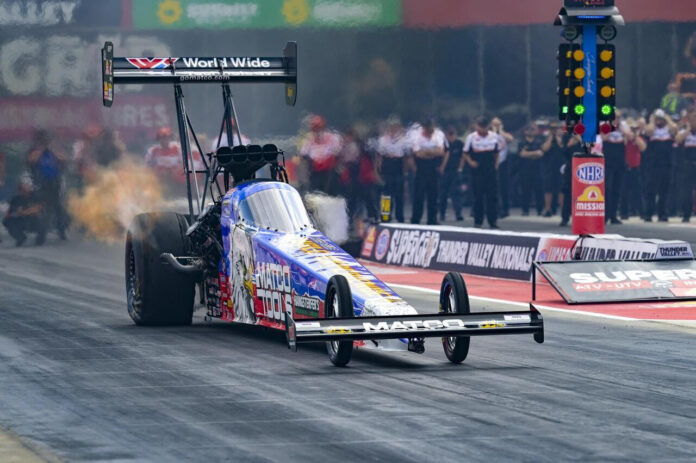
Complimentary coverage includes action in the Lucas Oil Drag Racing Series across all seven divisions, special events and more
INDIANAPOLIS (Feb. 17, 2026) – NHRA announced today a continued and comprehensive free coverage plan on NHRA.tv and its NHRA YouTube page starting this weekend for the 2026 season in the popular Lucas Oil Drag Racing Series.
For the second consecutive year, NHRA will stream more than 30 Lucas Oil Drag Racing Series events on either NHRA.tv or the NHRA YouTube page for free during the 2026 campaign, including extensive action from across all seven divisions, special events and more. The full schedule of complimentary races is available now at NHRA.tv, starting with this weekend’s Division 7 double-divisional race at Firebird Motorsports Park in Phoenix.
All 20 Mission Foods Drag Racing Series national events during NHRA’s 75th season in 2026 can also be viewed on NHRA.tv, with the price at $164.99 for the entire season or $24.99 per national event.
The test session at Gainesville Raceway on March 3-4 will also be streamed for free on NHRA.tv, which leads into the legendary season-opening Amalie Motor Oil NHRA Gatornationals on March 5-8 at the historic facility.
This weekend’s race in Phoenix gives fans their first glimpse of NHRA racing in 2026, kicking off an action-packed year across the country. The season-long free coverage takes place from February through November, concluding with the Division 7 divisional on Nov. 5-8 at The Strip at Las Vegas Motor Speedway. Fans will have the chance to watch thrilling action from all seven NHRA divisions in the Lucas Oil Drag Racing Series season, including 12 double divisional events. To watch the select divisional races for free, fans simply need to sign up for a complimentary account on NHRA.tv.
Streaming coverage of the divisional races is sponsored by Strange Engineering, Summit Racing Equipment, Laris Motorsports Insurance, Right Trailers, Competition Products, Total Seal and Speedmaster, and will provide fans a free look into the NHRA Lucas Oil Drag Racing Series, which features several of the world’s top racers.
Beginning this weekend in Phoenix, race fans can watch several divisional races every month on either NHRA.tv or the NHRA YouTube page. That includes four events in March, five races in June, six races in July, and four races in both August and September. Complimentary coverage will also include major events like the JEGS SPORTSnationals in May at Beech Bend Raceway, the Laris Motorsports Insurance Cajun NHRA SPORTSnationals in March at No Problem Raceway, the Hot Rod Reunion in June and the popular double divisional races all year.
Along with the complimentary coverage, fans who purchase the full NHRA Mission Foods Drag Racing Series season on NHRA.tv get incredible access to watch more than 50 live events this year, along with access to hours of original, special content, previous years of racing, historical moments and more.
For more information about the NHRA, including the 2026 NHRA Mission Foods Drag Racing Series schedule, visit www.NHRA.com.
About Lucas Oil
Founded in 1989 by Forrest and Charlotte Lucas, Lucas Oil Products was created with the simple philosophy of producing only the best line of lubricants and additives available anywhere. Today, it encompasses the most diversified range of products in the automotive, powersports, marine, industrial, outdoor, and motorsports marketplaces, many of which were created by Forrest Lucas himself. In total, the company boasts more than 300 premium products, representing the largest variety of shelf products of any oil company in the United States with a distribution network across 48 different countries. For more information, please visit www.LucasOil.com.
About Mission Foods
MISSION®, owned by GRUMA, S.A.B. de C.V., is the world’s leading brand for tortillas and wraps. MISSION® is also globally renowned for flatbreads, dips, salsas and Mexican food products. With presence in over 112 countries, MISSION® products are suited to the lifestyles and the local tastes of each country. With innovation and customer needs in mind, MISSION® focuses on the highest quality, authentic flavors, and providing healthy options that families and friends can enjoy together. For more information, please visit https://www.missionfoods.com/
About NHRA
NHRA is the primary sanctioning body for the sport of drag racing in the United States. NHRA presents 20 national events featuring the NHRA Mission Foods Drag Racing Series and NHRA Lucas Oil Drag Racing Series, as well as the NHRA Pro Mod Drag Racing Series and NHRA Flexjet Factory Stock Showdown™ at select national events. NHRA provides competition opportunities for drivers of all levels in the NHRA Summit Racing Series and NHRA Street Legal™. NHRA also offers the NHRA Jr. Street® program for teens and the Summit Racing Jr. Drag Racing League® for youth ages 5 to 17. With more than 100 Member Tracks, NHRA allows racers to compete at a variety of locations nationally and internationally. NHRA’s Youth and Education Services® (YES) Program reaches over 30,000 students annually to ignite their interest in automotive and racing related careers. NHRA’s streaming service, NHRA.tv®, allows fans to view all NHRA national events as well as exclusive features of the sport. In addition, NHRA owns and operates three racing facilities: Gainesville Raceway in Florida; Lucas Oil Indianapolis Raceway Park; and In-N-Out Burger Pomona Dragstrip in Southern California. For more information, log on to www.NHRA.com, or visit the official NHRA pages on Facebook, Instagram, Twitter, and YouTube.
The United Rentals 200 at Daytona International Speedway marked the season opener for the NASCAR O’Reilly Auto Parts Series in a new era with a new sponsor.
However, it also saw a familiar face in the O’Reilly Auto Parts series. Austin Hill and the No. 21 RCR Racing Chevrolet took home the checkered flag for the 15th time in his career.
The win is also his fourth in the series at Daytona after leading a dominating six times for 78 laps. While Hill and company continued to enjoy their superspeedway success, we’ll take a look at what else happened during the first event of the season.
Jesse Love Left Frustrated With A Top 10 Finish
Jesse Love and the No. 2 team, who is a teammate to Hill was seeking back-to-back track victories following his season opener victory last season. Love started on the front row, right beside Hill, and was up front for the majority of the race. He led four times for 27 laps and found himself in contention to win late. He made a risky move to go from the top to the bottom in the tri-oval to challenge Hill for the lead.
Love was able to make it work for a short while before Hill regained the lead. The 2025 champion had one more chance on a late race restart, but couldn’t get any help and was relegated to a frustrating ninth-place finish at the end of the night. He’ll seek for redemption next weekend at Atlanta, where he has also had strong outings in recent finishes.
Corey Day Makes Miraculous Saves Until Night Ended With Late Crash
Corey Day is making his full-time season debut this year, piloting the No. 17 Hendrick Automotive Group Chevrolet this season for Hendrick Motorsports in NASCAR after he previously competed on a part-time basis last year. Obviously, there is a lot of high expectations for the standout Sprint Car star coming into the season.
Early on in the race, he made some great saves, including one that almost saw him slap the wall with just three laps to go in Stage 1 off Turn 4. While saving the vehicle from crashing, Day received a flat tire and limped around the track to finish the stage. Day again showed his Sprint Car moves by saving the car once more at the end of Stage 2 and still kept the car off the wall. Unfortunately, as he was making his way back up through the pack, before getting collected in a wreck and saw him finish in the 27th position out of the race.
Gio Ruggiero Debut Ends In Smoke
Ruggiero, the Truck Series regular, was coming in on a race-winning high by claiming the ARCA Menards Series season opener early Saturday afternoon, just hours before the first O’Reilly Auto Parts Series race of the season. Sadly, his debut ended early with a Stage 1 crash and wound up in the 37th position.
The Massachusetts native entered the year with great momentum. He recently signed a two-race deal with Joe Gibbs Racing to pilot the No. 19 machine in the first two races of the season. He will also be contesting in the ARCA Series for the same team on superspeedways and intermediates.
William Sawalich Has Strong Showing
Sawalich was making his return in the series, his first since his scary accident in the fall Talladega race. The accident forced him to sit out the final two races of the year due to concussion-like symptoms. He made his return today and showed some prowess during the qualifying session.
During the morning hours when qualifying took place. Sawalich made it to the final round and finished in fourth place, giving him a great start. As the race went green, the Minnesota native was up front often. Sawalich challenged for the lead at times and earned stage points. He finished seventh in Stage 1 and fourth in Stage 2. His night was cut short after his car got loose in Turns 3 and 4, finishing in the 26th position.
The next event for the O’Reilly Auto Parts Series is set for Saturday, March 5th, at EchoPark Speedway. It will be a doubleheader with the NASCAR Craftsman Truck Series. The race will be broadcast live at 5 p.m. ET on the CW Network.
In 26 NASCAR Cup Series starts at Atlanta Motor Speedway (AMS), Spire Motorsports has logged three top-five, four top-10 and seven top-15 finishes. Carson Hocevar, driver of the team’s No. 77 Spectrum Chevrolet Camaro ZL1, posted a team-best runner-up finish in last February’s Ambetter Health 400 at the 1.5-mile quad-oval. Spire Motorsports fields the Nos. 7, 71 and 77 Chevrolet Camaro ZL1s in the Cup Series for Daniel Suarez, Michael McDowell and Hocevar, respectively.
The NASCAR Cup Series race at AMS will be televised live on FOX, Sunday, Feb. 22 beginning at 3 p.m. Eastern Standard Time. The second of 36 points-paying races on the 2026 NASCAR Cup Series calendar will be broadcast live on the Performance Racing Network and SiriusXM NASCAR Radio Channel 90.
Daniel Suárez – Driver, No. 7 Spire Motorsports Chevrolet Camaro ZL1
Daniel Suárez will pilot Spire Motorsports’ No. 7 Freeway Insurance Chevrolet Camaro ZL1 in Sunday’s NASCAR Cup Series race at Atlanta.
On February 25, 2024, Suárez earned his second career NASCAR Cup Series victory when he took the checkered flag at AMS, by winning the Ambetter Health 400 in one of the closest finishes in series’ history. Suárez prevailed in a dramatic three-wide sprint to the checkered flag, edging out Ryan Blaney and Kyle Busch by a scant 0.003 seconds. The victory was his first since 2022 at Sonoma (Calif.) Raceway and secured Suárez’s spot in the NASCAR Cup Series Playoffs.
The two-time NASCAR Cup Series winner has made 14 starts at Atlanta, earning one victory, four top-five, six top-10 and eight top-20 results. He holds an average starting position of 21.6 and an average finishing position of 17.2 at the 1.54-mile quad-oval. In total, he has led 32 laps at AMS.
Last Sunday, Suárez started from the rear of the field in the Daytona 500 in a back-up car, after his primary car was damaged in Thursday’s qualifying race. He climbed the leaderboard, earning stage points with fifth- and 10th-place finishes in the race’s first and second stages. Suárez ran a fuel-saving strategy during the final stage and earned a respectable 13th-place finish in his No. 7 Freeway Insurance Chevrolet.
This weekend, One Inc., will step into an associate sponsor role aboard Suarez’s No. 7 machine. One Inc. is modernizing the insurance industry through a unified and frictionless payment network. Focusing only on the insurance industry, One Inc helps carriers transform their operations by reducing costs, increasing security, and optimizing customer experience. The comprehensive end-to-end digital payments platform provides expanded payment options, multi-channel digital communications, and rapid digital claim payment, even for the most complex insurance use cases. As one of the fastest growing digital payments platforms in the insurance industry, One Inc manages billions of dollars per year in premiums and claims payments. For more information, please visit www.oneinc.com.
Freeway Insurance was established in 1987 and is one of the largest and fastest-growing personal lines insurance brokers in the United States, offering coverage through a “click, call, or come in” approach that connects customers nationwide. The company continually researches, grows, and diversifies its product offerings to stay responsive to the evolving insurance market. Freeway provides a wide range of options—from basic to premium coverage—in auto, truck, commercial vehicle, homeowners, renters, small business, motorcycle, recreational vehicle, fire, and flood insurance. In 2008, Freeway Insurance became part of Confie, the nation’s leading personal lines insurance distribution company. Customers can access Freeway Insurance through neighborhood offices, online at www.freeway.com, or by calling (800) 300-0227.
Suárez has made two NASCAR O’Reilly Auto Parts Series starts at AMS prior to the track reconfiguration in 2022, earning one top-10 and two top-20 finishes. He recorded his career-best series result at Atlanta with a seventh-place finish in March 2016.
The Monterrey, Mexico native earned a fourth-place finish in the NASCAR CRAFTSMAN Truck Series race at AMS in 2015.
The 34-year-old is a veteran of 324 Cup Series starts and has notched two wins (Sonoma, June 2022 and AMS, Feb. 2024), 25 top fives and 76 top 10s in NASCAR’s premier division. Suarez has led a total of 907 laps and has earned three poles since entering the series full time in 2017.
Daniel Suárez Quotes How do you view Atlanta? Is it a superspeedway or an intermediate racetrack? “I don’t think it’s either in my opinion. I think it’s a hybrid track and the reason why I like it so much is because it is very different. It doesn’t race like a 1.5-mile track but it also doesn’t race like a superspeedway, either, because everything happens so quick. The way the track is built, the speed in the corners, the banking is just completely different when you compare it to another 1.5 mile track, for example, Kansas Speedway. So, the way I see it, yes maybe on paper people call Atlanta a superspeedway with that style of racing, but to me it’s a hybrid.”
How mentally taxing is Atlanta compared to other tracks? “Atlanta is very mentally exhausting. At most 1.5-mile tracks, you usually get some space after five or 10 laps to move around, and at superspeedways, it’s intense but mostly in the first 15 laps. At Atlanta, you never get space—you can’t relax or reset. Even running 25th, it’s still super intense. You have to go full speed and constantly learn and adjust during the race. There’s no time to think about what just happened because everything happens so fast.”
Atop the No. 7 Box – Crew Chief Ryan Sparks
Ryan Sparks has called 203 NASCAR Cup Series races, earning five top-five and 11 top-10 finishes since making his Cup Series debut atop the pit box in 2020.
The Winston-Salem, N.C., native’s best finish at AMS came in the 2023 Ambetter Health 400, where he led the No. 7 team to a fourth-place result. Sparks has called nine races at Atlanta, producing one top-five and two top-10 finishes. Overall, Sparks has led the charge in 96 races on drafting-style tracks.
Sparks joined Spire Motorsports in 2021, where he served as both Crew Chief and Competition Director, leading the organization’s competitive and technical efforts. In the 2026 NASCAR Cup Series season, Sparks serves as crew chief for Daniel Suárez.
Sparks brings more than a decade of experience across all three national series, highlighted by 13 seasons at Richard Childress Racing and contributions to title-winning campaigns in the 2011 CRAFTMAN Truck Series and 2013 O’Reilly Auto Parts Series.
Michael McDowell – Driver, No. 71 Spire Motorsports Chevrolet Camaro ZL1
Michael McDowell will pilot Spire Motorsports’ No. 71 B’laster Chevrolet Camaro ZL1 in Sunday’s NASCAR Cup Series race at AMS.
McDowell owns 20 NASCAR Cup Series starts at AMS, highlighted by one top five, two top 10s and 58 laps led. He started 20th and claimed a venue-best fourth-place finish in fall 2022.
In last year’s spring race at the Hampton, Ga., quad-oval, McDowell ran into power steering issues early in the race and was forced to retreat to the garage where he lost six laps while the team effected repairs. With the help of a handful of timely cautions and savvy work from the driver’s seat, McDowell raced his way back to the lead lap to earn a respectable 13th-place finish.
In 2024, McDowell and crew chief Travis Peterson swept qualifying in both races at AMS, leading the field to green at both events.
Across his last five attempts at AMS, the 41-year-old driver holds an average finish of 13th with only one finish outside of the top 20.
B’laster will return as the primary partner for this weekend’s 400-mile contest. The No. 71 Chevrolet will feature two of its PB penetrant products as part of the livery. Founded in 1957 with PB B’laster Penetrant, B’laster offers a full line of high-performance penetrants, lubricants, solvents, greases, refrigerants and protectants. B’laster products are trusted in garages and race shops nationwide to break loose, clean up, and protect.
In last week’s season-opener at Daytona International Speedway, the No. 71 Modo Casino Chevrolet finished fourth in Thursday night’s qualifying race, to earn a 10th-place starting spot for the Daytona 500. McDowell led 10 laps and was second in the running order when the white flag was displayed, but was collected in a last-lap melee and left with a disappointing 22nd-place finish.
With 35 points-paying races left on the 2026 schedule, McDowell is 17th in the driver standings, after earning additional points in Thursday’s qualifying race and stage points on Sunday.
Michael McDowell Quote What did you learn during Atlanta last year that you can use for this weekend? “I am looking forward to going to Atlanta with B’laster on our Spire Motorsports Chevy. We obviously had some troubles there on the No. 71 last year and rallied back to the lead lap, but 77 had a great run there at the end of the race; Carson was one of the fastest cars. So, we have a good notebook and good momentum coming off Daytona with having cars that had lots of speed and handled well, now going to another drafting semi-speedway track to hopefully redeem ourselves from Daytona.”
Atop the No. 71 Box – Crew Chief Travis Peterson
Travis Peterson, in his fourth season as McDowell’s crew chief, led his driver to both pole positions at AMS in 2024.
Peterson also served as race engineer on the No. 9 JR Motorsports Chevrolet that Chase Elliott drove to a pole in qualifying at Atlanta in 2014.
Peterson contributed to several victories during his tenure at RFK Racing, Hendrick Motorsports and JR Motorsports, highlighted by clinching the NASCAR O’Reilly Auto Parts Series title in 2014 and racking up three Cup Series wins with Dale Earnhardt, Jr., and the No. 88 team in 2015.
Peterson is a mechanical engineering graduate of the Williams States Lee College of Engineering at the University of North Carolina at Charlotte. The West Bend, Wis., native earned his degree in 2012.
Carson Hocevar will race Spire Motorsports’ No. 77 Spectrum Chevrolet Camaro ZL1 in Sunday’s 400-mile NASCAR Cup Series race at AMS.
Hocevar came within 2.5 miles of victory in last weekend’s Daytona 500 before chaos enveloped the field with one lap to go. He led the field to the white flag, but contact initiated by another competitor heading into Turn 1 sent him into the outside retaining wall, ultimately spinning in front of the field. He was eventually scored 18th in the final rundown.
The 23-year-old diver will pull double duty this weekend at AMS, where he’ll pilot Spire Motorsports’ No. 77 Chevy Silverado prior to his traditional NASCAR Cup Series duties aboard the team’s No. 77 Spectrum Chevrolet Camaro ZL1 in Sunday’s 266-lap race.
Last February, Hocevar started 26th at the 1.54-mile quad-oval, but was quick to climb the leaderboard. He picked up stage points in each of the first two segments and positioned himself to contend for his first Cup Series win in NASCAR Overtime. He made a three-wide move for the lead, but a caution for an incident while the leaders were making their way through Turns 3 and 4 brought the race to an end. Hocevar was ultimately scored with a second-place finish.
Hocevar put on a statistical showcase last February, averaging a top-10 running position (9.59) while spending 90.6 percent (241-of-266 laps) of the race within the top 15, all while registering the most green flag passes and quality passes and calculating a 105.0 driver rating.
In four Cup Series starts at Atlanta, the Portage, Mich., native has finished no worse than 19th, tallying one top-five and two top-10 results. He finished 10th in the series’ most recent visit to the 1.54-mile venue last September.
The five-time CRAFTSMAN Truck Series race winner owns three previous starts at AMS, where he earned a venue-best 16th-place finish in 2021, one year prior to the track’s reconfiguration.
In 14 Cup Series starts on drafting-style tracks, Hocevar has tallied one top-five, four top-10 and 10 top-20 results, highlighted by his runner-up finish at Atlanta Motor Speedway last February.
Spectrum is a suite of advanced communications services offered by Charter Communications, Inc. (NASDAQ:CHTR), a leading broadband connectivity company available to 58 million homes and small to large businesses across 41 states. Founded in 1993, Charter has evolved from providing cable TV to streaming, and from high-speed Internet to a converged broadband, WiFi and mobile experience. Over the Spectrum Fiber Broadband Network and supported by our 100 percent U.S.-based employees, the Company offers Seamless Connectivity and Entertainment with Spectrum Internet®, Mobile, TV and Voice products. More information can be found at corporate.charter.com.
Carson Hocevar Quotes What does it take to win at Atlanta? “You just have to make moves. All offense, no defense.”
What about the new configuration at Atlanta has clicked for you? “I’ve been envious and watched a bunch of races at the old bumpy Daytona. Every time I get to run Atlanta it just makes me think about bumpy Daytona where you can draft by yourself. You don’t need anybody. You can just make moves and time things. It’s basically all offense. It just works for me. If this move didn’t work, I’ll get back in line and make the next one. And if that didn’t work, I’ll make the next one. Eventually, one of my six moves is going to work and I’ll gain spots. Ultimately, I’m just smiling the whole time because it reminds me of those nostalgic 2000s era races at Daytona. Atlanta provides the opportunity and it’s something I’ve always wanted to do, so that’s the best thing we got.”
How do you balance the disappointment of the finish of last weekend’s Daytona 500 with the optimism of Atlanta this weekend? “Well we ran second in the Duel on Thursday, and were right where we needed to be on Sunday. We were leading coming to the white, but obviously, things just didn’t work out. I’m not too disappointed knowing we were where we needed to be and there isn’t really anything I could have done to prevent the outcome. If anything, I am more confident for Atlanta this weekend.”
Atop the No. 77 Box – Crew Chief Luke Lambert
Crew chief Luke Lambert enters his third season at Spire Motorsports and fourth with Carson Hocevar. The duo has logged one pole award, three top-five and 15 top-10 finishes in 81 races together.
The 16-year veteran crew chief has called 17 NASCAR Cup Series events at Atlanta, six of which have come since the track’s 2022 reconfiguration, where he’s tallied one top-five and five top-10 finishes. He also played a key role in Jeff Burton’s trio of top fives from 2007-2010 as a race engineer at Richard Childress Racing.
In three NASCAR O’Reilly Auto Parts Series races atop the box at AMS, Lambert, 43, snagged one top-five and two top-10 results, highlighted by a fourth-place finish on the previous configuration with Elliott Sadler in 2012.
About Spire Motorsports … Spire Motorsports fields full-time entries in the NASCAR Cup Series, NASCAR CRAFTSMAN Truck Series and Interstate Batteries High Limit Racing.
The team, co-owned by longtime NASCAR industry executive Jeff Dickerson and TWG Motorsports CEO Dan Towriss, earned its inaugural NASCAR Cup Series victory in its first full season of competition when Justin Haley took the checkered flag in the Coke Zero Sugar 400 at Daytona (Fla.) International Speedway on July 7, 2019. Less than three years later, William Byron drove Spire Motorsports’ No. 7 Chevrolet Silverado to its inaugural NASCAR CRAFTSMAN Truck Series win on April 7, 2022, at Martinsville (Va.) Speedway. The team’s most recent win came on May 30, 2025, when Rajah Caruth took the checkered flag in the Rackley Roofing 200 at Nashville Superspeedway.
In 2026, Spire Motorsports will campaign the Nos. 7, 71 and 77 Chevrolet Camaro ZL1s in the NASCAR Cup Series and the Nos. 7 and 77 Chevrolet Silverado RSTs in the NASCAR CRAFTSMAN Truck Series. The Mooresville, N.C., organization will also field the No. 77 410 sprint car in Interstate Batteries High Limit Racing competition.
POMONA, Calif. (Feb. 17, 2026) – In-N-Out Burger Pomona Dragstrip will again make history this spring during NHRA’s milestone 75th season, as the Lucas Oil NHRA Winternationals will play host to the 1,000th Funny Car race in NHRA history on April 9-12 on the hallowed grounds at Pomona.
Funny Car made its first-ever appearance at the 1966 World Finals in Tulsa, with Eddie Schartman picking up the victory. NHRA’s milestone year in 2026 will begin with the 998th Funny Car race at the season-opening Amalie Motor Oil NHRA Gatornationals in Gainesville, with the historic moment coming two races later in Pomona.
The 12,000-horsepower, 340-mph Funny Cars have made history for 60 years, but only one driver will lay claim to being the winner of the 1,000th Funny Car race in NHRA history. Last year, Shawn Langdon took the honors at the 1,000th Top Fuel race, while a host of standouts will have their shot in Pomona to etch their own place in history.
To get here, this list showcases the first and then every 100th Funny Car winner heading into the historic Lucas Oil NHRA Winternationals in Pomona:
Eddie Schartman, 1966 Tulsa, World Finals
Tripp Shumake, 1981 Atlanta
Bruce Larson, 1989 Winternationals
John Force, 1994 Topeka
Tim Wilkerson, 1999 Chicago
Wilkerson, 2003 U.S. Nationals in Indy
Jack Beckman, 2008 Phoenix
Johnny Gray, 2012 Englishtown
Force, 2016 Denver
Cruz Pedregon, 2021 Norwalk
So who will win the 75th anniversary Diamond Wally at the 1,000th race in Funny Car history? Will it be back-to-back world champion Austin Prock, who has dominated the past two seasons? Others, including John Force Racing standouts Beckman, who won the Winternationals last year, and his new teammate, Jordan Vandergriff, while Top 75 drivers like Ron Capps, Matt Hagan and Pedregon would love to win the magical 1,000th race. One thing is for certain: it will be one of the highlights of NHRA’s milestone 2026 campaign.
Cruz Pedregon, 2021 Norwalk win
Legends from those landmark races will all be on hand in Pomona to add to the celebration, while the winner of the 1,000th Funny Car race in Pomona will also receive a special trophy to go along with the diamond Wally.
NHRA legend Kenny Bernstein will also be on hand in Pomona to help celebrate this monumental moment and NHRA’s 75th anniversary season. His historic run at In-N-Out Burger Pomona Dragstrip in 1994 – becoming the first to break the 310-mph barrier – will be the commemorative ticket and moment for the weekend, with the first 4,000 fans in attendance on Friday set to receive a special NHRA 75th anniversary Winternationals event poster.
In 2025, Clay Millican (Top Fuel), Beckman (Funny Car) and Greg Anderson (Pro Stock) claimed Lucas Oil NHRA Winternationals wins. This year’s race will be broadcast on FS1, with elimination coverage on Sunday April 12 beginning at 6:30 p.m. ET.
Millican, a Top Fuel fan-favorite, claimed his eighth career win last season – and first in Pomona – when he took out motorsports legend Tony Stewart in the final round. Millican advanced to two more finals in 2025, while Stewart won NHRA’s first regular season title. However, it was Top Fuel veteran Doug Kalitta who claimed his second world title at Pomona at the conclusion of the season. Others to look for will be multi-time Pomona winners Tony Schumacher, Antron Brown and Justin Ashley.
Greg Anderson, the winningest active NHRA driver, won his 16th race at the famed facility over KB Titan Racing teammate Dallas Glenn. The duo battled all season for the championship, but it was Glenn who earned his first title. Anderson, Glenn and the rest of KB Titan Racing will again be up against their longtime rivals at Elite Motorsports, led by six-time world champ Erica Enders, Jeg Coughlin Jr. and Aaron Stanfield.
Along with racing in the NHRA Mission Foods Drag Racing Series, fans will also be treated to action in the Lucas Oil Drag Racing Series. The Nitro Alley Stage is a huge attraction all weekend and is the main entertainment hub in the pits, hosting Nitro School, Total Seal Tech Talk, the NHRA Insider Live, meet and greets, and much more. As always, fans get a pit pass to the most powerful and sensory-filled motorsports attraction on the planet. Fans can see their favorite teams in action and servicing their hot rods between rounds and get autographs from their favorite NHRA drivers. They can also visit NHRA’s Manufacturers Midway, where sponsors and race vendors create an exciting atmosphere that includes interactive displays, merchandise, food and fun.
Race fans at In-N-Out Burger Pomona Dragstrip can enjoy the special pre-race ceremonies that celebrate each of the drivers racing for the prestigious Wally on Sunday and includes the fan favorite SealMaster Track Walk. The final can’t-miss experience of any NHRA event is the winner’s circle celebration on Sunday after racing concludes, where fans are invited to congratulate the event winners.
NHRA Mission Foods Drag Racing Series qualifying features qualifying at 1:30 and 4 p.m. PT on Friday, April 10, and the final two rounds on Saturday, April 11 at 12:30 p.m. and 3 p.m. Final eliminations are scheduled for 11 a.m. PT on Sunday, April 12.
To purchase tickets to the 2026 Lucas Oil NHRA Winternationals, fans can visit www.NHRA.com/tickets. Children 12 and under are free in general admission areas with the purchase of an adult ticket. Fans can get closer to the action with a Top Eliminator Club experience, offering the best seats in the house and a premium experience, as well as a members-only hospitality center, complimentary food and beverage, driver appearances, a premium view and more. For more information about the NHRA, visit www.NHRA.com.
About Mission Foods
MISSION®, owned by GRUMA, S.A.B. de C.V., is the world’s leading brand for tortillas and wraps. MISSION® is also globally renowned for flatbreads, dips, salsas and Mexican food products. With presence in over 112 countries, MISSION® products are suited to the lifestyles and the local tastes of each country. With innovation and customer needs in mind, MISSION® focuses on the highest quality, authentic flavors, and providing healthy options that families and friends can enjoy together. For more information, please visit https://www.missionfoods.com/
About NHRA
NHRA is the primary sanctioning body for the sport of drag racing in the United States. NHRA presents 20 national events featuring the NHRA Mission Foods Drag Racing Series and NHRA Lucas Oil Drag Racing Series, as well as the NHRA Pro Mod Drag Racing Series and NHRA Flexjet Factory Stock Showdown™ at select national events. NHRA provides competition opportunities for drivers of all levels in the NHRA Summit Racing Series and NHRA Street Legal™. NHRA also offers the NHRA Jr. Street® program for teens and the Summit Racing Jr. Drag Racing League® for youth ages 5 to 17. With more than 100 Member Tracks, NHRA allows racers to compete at a variety of locations nationally and internationally. NHRA’s Youth and Education Services® (YES) Program reaches over 30,000 students annually to ignite their interest in automotive and racing related careers. NHRA’s streaming service, NHRA.tv®, allows fans to view all NHRA national events as well as exclusive features of the sport. In addition, NHRA owns and operates three racing facilities: Gainesville Raceway in Florida; Lucas Oil Indianapolis Raceway Park; and In-N-Out Burger Pomona Dragstrip in Southern California. For more information, log on to www.NHRA.com, or visit the official NHRA pages on Facebook, Instagram, Twitter, and YouTube.