Home Blog Page 148

RFK Racing to Honor Greg Biffle Throughout 2026 Season

NASCAR and Kaulig Racing Join Tributes, Highlighted by Return of Biffle’s Iconic Stylized Numerals at Daytona

CONCORD, NC (January 22, 2026) – When RFK Racing’s cars roll onto the grid to open the 2026 season, they will do so honoring the legacy of Greg Biffle. Paying respect to a driver who helped build the organization, the team will begin a season-long tribute at the Cook Out Clash Feb. 1, followed by a special visual presentation during Daytona 500 activities Feb 11-15.

The remembrance begins at Bowman Gray Stadium as all RFK Racing cars will carry a circular memorial decal above the B-post during the Cook Out Clash. The artwork pays homage with the words, “The Biff 16, In Loving Memory of Greg Biffle.” As an enduring memorial, this artwork will adorn the RFK Racing cars in every race on the 2026 schedule.

During Daytona 500 activities, RFK Racing will shine a light on Biffle’s unique numeric styling. All RFK Racing Ford Mustangs will each have numerals reminiscent of the iconic font used on Biffle’s cars during his illustrious career.

“Greg Biffle was more than a championship driver, he was family,” said RFK Racing Co-owner Brad Keselowski. “He helped shape who we are as an organization, and his legacy is woven into this team’s history. Returning to the iconic numeric font that defined so much of his career, and adding the season long decal to each car, are meaningful ways for us to honor Greg and carry his spirit. We can’t bring him back, but we can honor him on the track the best way we know how, all season long.”

RFK Racing is honored to be joined by Kaulig Racing in paying tribute to Biffle, whose No. 16 became synonymous with his career. Kaulig Racing will carry the same distinctive numeric font on its No. 16 car at Daytona, with the numeral also incorporating Biffle’s autograph as part of the artwork.

“Greg Biffle made the No. 16 famous and was a true friend to Kaulig Racing and the whole racing community,” said Kaulig Racing Chief Executive Officer Chris Rice. “This is our way of honoring his incredible career and the person he was. When AJ Allmendinger drives this car at Daytona, we hope fans remember Greg, his family, and all the great memories he gave us.”

NASCAR will also recognize Biffle’s legacy at the season-opening Cook Out Clash. A large-scale, painted stencil of RFK Racing’s commemorative memorial decal will be painted on Bowman Gray Stadium’s infield grass. The display will serve as a unified symbol of remembrance, reflecting Biffle’s lasting impact on the sport.

Greg Biffle spent 19 seasons driving for Jack Roush, delivering his organization its first NASCAR championship in 2000 with a Craftsman Truck Series title. He followed that achievement with the Busch Series championship in 2002. Highlighted by 19 NASCAR Cup Series victories, Biffle earned a combined 56 wins across NASCAR’s top three national series. The vast majority of those wins came with Roush owned teams.

“Greg Biffle was one of the most special drivers I’ve ever had the privilege of working with,” said team founder Jack Roush. “He gave everything he had to this organization, and together we shared some of the proudest moments in our history. Honoring Greg this season is deeply personal for all of us, and it’s important that we remember the role he played in building this team and the standard he helped set.”

Further honoring Biffle’s career, a memorial has been established at RFK Racing’s Concord, NC museum. The display showcases many of the NASCAR Hall of Fame nominee’s trophies, along with other unique memorabilia, The exhibit includes the 3M Ford Fusion Biffle drove to victory lane at the Quicken Loans 400 in June 2013. That win marked the 1,000th NASCAR victory for Ford. It also proved to be Biffle’s 19th and final NASCAR Cup Series win.

Future tributes are being considered, and details will be announced at a later date.

About RFK Racing
RFK Racing, in its 39th season in 2026, features an ownership lineup pairing one of the sport’s most iconic names, Jack Roush, along with NASCAR Champion, Brad Keselowski, and Fenway Sports Group owner John Henry. Roush initially founded the team in 1988 and it has since become one of the most successful racing operations in the world, propelling him to be the first NASCAR owner to amass three hundred wins and capturing eight championships, including back-to-back NASCAR Cup titles in 2003 and 2004. Keselowski, a former owner in the NASCAR Truck Series, is the 2012 NASCAR Cup Series Champion. In 2007, Roush partnered with Henry, who also owns Major League Baseball’s Boston Red Sox, English Premier League’s Liverpool F.C., and the NHL’s Pittsburgh Penguins, to form Roush Fenway Racing. Off the track, RFK is a leader and proven winner in NASCAR marketing solutions, having produced multiple award-winning social media, digital content and experiential marketing campaigns. Visit rfkracing.com, and follow the team on all social platforms @rfkracing.

Tiger Tari Readies for IMSA Michelin Pilot Challenge at Daytona following VP Challenge Debut

DAYTONA BEACH, Fla. (January 22, 2026) – Tiger Tari and Star Spangled Racing made his VP Racing SportsCar Challenge debut a week ago at the Roar Before the 24, and will add his first IMSA Michelin Pilot Challenge start this week at the “World Center of Racing.” His Star Spangled Racing team partners with AutoTechnic Racing to campaign a full season effort in IMSA VP Racing Challenge GSX class in a BMW M4 GT4 EVO running as a Bronze driver, while adding a one-off start in the four-hour Michelin Pilot Challenge race this Friday, January 23.

The VP Racing SportsCar Challenge runs as a single-driver, sprint race format while keeping the multi-class format. Tari’s GSX class features GT4-based cars, including his new-for-2026 BMW. Tari selected the BMW after running multiple races in the past year in a variety of machinery.

His last appearance as a driver in the IMSA paddock came in Lamborghini Super Trofeo during the 2023 season.

“I’m really happy to be back in the IMSA paddock, and am looking forward to spending the season with AutoTechnic Racing and as they support my Star Spangled Racing BMW M4,” Tari said. “I’ve been working with my partners for an opportunity to get back into a full season and am ready for this challenge as a driver.”

Tari raced a number of one-off races during 2025, but his strongest race came with a class victory in the 24 Hours of Dubai – also in a BMW M4 GT4.

Tari brings that previous success and continued growth as a racer to the track nearest to his Jacksonville, Florida home. Partners PSA by Canam Systems, providing services to over 9,000 restoration contractors with Proven Software Applications for medium to large sized businesses and Fly Alliance adorn the livery of his BMW M4 GT4 EVO. Fly Alliance is a leading private aviation company providing tailored air travel solutions to individuals, families, and businesses worldwide.

The road course at Daytona International Speedway covers 3.56 miles, including a significant portion of the famed oval and its high banks. It is also the home race for the first-generation Turkish-American, who lives just up the road in Jacksonville, Florida and graduated from Jacksonville University.

His season opened with a pair of VP Racing Challenge races during the Roar Before the 24 weekend. During Saturday afternoon’s 45-minute race, Tari finished 11th overall in the GSX class and sixth among Bronze-rated drivers. He matched that effort in Sunday’s race, finishing 11th overall and seventh among Bronze-rated drivers.

Utilizing the same BMW M4 GT4 Evo this week, Tari will team with friend and co-driver Christopher Tasca in the four-hour BMW M Endurance Challenge at Daytona on the afternoon of Friday, January 23. Following a final practice session on Thursday, January 22, Tari will qualifying the No. 25 Fly Alliance/PSA Systems BMW M4 GT4 Evo on Thursday afternoon. Friday’s race begins at 1:45 p.m. ET and can be seen live globally, including in the United States, on IMSA’s YouTube page. at Youtube.com/@IMSAOfficial.

The two drivers form a formidable pairing the Bronze category.

“I’m really looking forward to teaming with Christopher and appreciate the support he and Fly Alliance have given us to race some true endurance racing at Daytona,” Tari said. “When I started on this racing journey, my goal was and continues to be to race in major endurance races. Teaming with Chris for four-hours at Daytona is another step forward to reaching my goals on the biggest stages.”

The Michelin Pilot Challenge opener is the biggest race on the undercard of the Rolex 24 At Daytona, which runs Saturday, January 24 into Sunday.

Both Fly Alliance and PSA by Canam Systems are significant parts of Tari’s racing program. Founded in 2019, Fly Alliance offers a comprehensive suite of services including on-demand private jet charter, jet card programs, fractional ownership, aircraft management, and maintenance support. Canam Systems services over 9,000 restoration contractors, including a number of franchise groups, across North America. Proven Software Applications (PSA), Canam’s ERP solution, is unlike any other product on the market, providing à la carte web based options for medium to large size businesses with everything needed to scale and grow.

About Star Spangled Racing:

Based in Jacksonville, Florida, Star Spangled Racing was established in 2020 by first-generation American Tiger Tari. Star Spangled Racing accelerated quickly, moving from club and endurance events into professional racing just two years later in the IMSA WeatherTech Championship GT Daytona (GTD) class. Tari’s career as a driver counts races domestically and around the world, including an appearance at Le Mans with Porsche Sprint Challenge and a class win during the 2025 24 Hours of Dubai. More information can be found at www.starspangledracing.com.

Thienes Sweeps VPRC Bronze Podium with Back-to-Back Wins and Second Overall Finish in Sunday’s Race 2

Photo by Brayan Castiblanco

Hirshberg Finishes Second in Bronze on Saturday at Daytona Season Opener

Monrovia, Calif. (Thursday, January 22, 2026) – Forte Racing opened the 2026 VP Racing SportsCar Challenge season with a commanding performance at Daytona International Speedway, highlighted by Brian Thienes’ Bronze Cup sweep and a strong podium showing from Jon Hirshberg in the season-opening weekend.

Building on the momentum from last season, Thienes delivered back-to-back Bronze Cup victories in both ROAR Before the Rolex 24 races, capped by an impressive second-overall finish in Sunday’s Race 2. Hirshberg added to the team’s success with a second-place Bronze Cup result in Saturday’s Race 1, giving Forte Racing a double-podium start to the new season.

Saturday’s opening race saw Thienes and the No. 77 Ligier LMP3 work forward from seventh on the grid, ultimately securing fifth overall and first in the Bronze Cup. Hirshberg followed closely behind in class, finishing second in Bronze to complete a strong one-two result for Forte Racing in the category.

Sunday’s Race 2 presented an entirely different challenge, as wet conditions at Daytona tested both drivers and teams from the opening green flag. Thienes rose to the occasion, delivering consistently fast and controlled lap times in the rain while navigating traffic and changing conditions to secure another Bronze Cup victory and second overall.

Reflecting on the weekend, Thienes credited the team’s preparation and adaptability for the strong start to the season.

“After qualifying seventh for both races and finishing fifth and second and leaving the weekend tied for second in the overall championship, I’m very satisfied with the results,” Thienes said. “I appreciate all the hard work the team put into the car all weekend and especially my engineer Pete Jacobs for giving me a competitive car, particularly for Sunday’s race in the rain. We learned a few things about the car that hopefully will be able to carry forward to our next race at Circuit of the Americas in Austin. I’m looking forward to another successful season with Forte Racing powered by US RaceTronics.”

Jon Hirshberg also delivered a strong opening performance to his 2026 campaign, converting consistency and race craft into a Bronze Cup podium in Saturday’s Race 1. Returning to Daytona with Forte Racing for select events this season, Hirshberg focused on building momentum early while supporting a strong overall team result.

“It was great to be back at Daytona with Forte Racing to kick off the season,” Hirshberg said. “The team gave us a solid car all weekend, and finishing on the Bronze podium in the opener is a strong way to start the year. Daytona is always a challenge, but it’s the perfect place to set the tone, and I’m excited to build on this momentum as the season continues.”

From an engineering standpoint, the Daytona weekend required strategic decision-making and adaptability across sessions, particularly with tire strategy and evolving weather conditions. The team’s race engineer, Peter Jacobs, and the team were up for the challenge.

“Daytona never fails to surprise us,” Jacobs said. “Going into the ROAR, we knew we faced a challenge with our dated Ligier 320 versus the new 325 cars and only Bronze drivers behind the wheel. However, our #77 car emerged as the fastest 320 in the field, consistently running in the top 5 during Practice 1.

In Practice 2, we maintained strong performance in the early stages until most of the competition opted for sticker tires. We made the strategic choice to save our stickers for both races, but looking back, especially with Sunday turning into a rain race, we would have been better prepared for qualifying had we followed the field’s lead.

Qualifying 7th was our worst result ever at Daytona, a track where we’ve historically been competitive. After qualifying, we recognized the need to make some changes to the car, and this decision paid dividends as we finished 5th overall and 1st in class.

Feeling that further improvements were necessary for race two, both the car and Brian delivered an impressive performance, culminating in a 2nd overall finish and another 1st in class.

Every team member played a crucial role in this successful start to what promises to be an amazing season.”

Team principal Shane Seneviratne praised the execution across the weekend and emphasized the importance of starting the season with momentum.

“Daytona is always a demanding place to start a season, and I’m incredibly proud of the way this team performed across every session,” Seneviratne said. “Brian and Jon both delivered exactly what we expect from our drivers, and the engineering and crew work were outstanding, especially in challenging conditions. This was a smart, disciplined weekend that sets the tone for the rest of the year.”

Team manager David Cozart echoed those sentiments as Forte Racing turns its focus toward the next round.

“With our first races under our belt, I would like to thank my entire crew and drivers for establishing a solid foundation for the 2026 season,” Cozart said. “Both Brian and Jon had a successful weekend and are coming home with trophies.

We look forward to the next race at COTA and carrying this momentum forward.”

With a Bronze Cup sweep and strong overall pace demonstrated at Daytona, Forte Racing now heads to Circuit of the Americas focused on building upon a successful season opener and continuing its push toward championship contention in the 2026 VP Racing SportsCar Challenge.

For updates, behind-the-scenes coverage, and live action from the paddock, follow @ForteRacing on Instagram.

ABOUT FORTE RACING (Formerly US RaceTronics)

Forte Racing, based in Los Angeles and Charlotte, competes in the IMSA WeatherTech Sportscar GTD Championship, IMSA VP Racing Sportscar Challenge, and Lamborghini Super Trofeo series with support from Lamborghini Squadra Corse. In 2025, the team will expand into the McLaren Trophy America series in SRO, further broadening its competitive footprint.

Founded as US RaceTronics by Shane Seneviratne in 2005, the team quickly made its mark with multiple wins and podiums in the Atlantic Championship before transitioning to Lamborghini Super Trofeo in 2015, winning multiple North American and World Championships.

In 2023, the team entered IMSA WeatherTech GTD with a Lamborghini Huracan EVO2 GT3, driven by Misha Goikhberg and Loris Spinelli. They secured four top-five finishes in both the 2023 and 2024 seasons, including a win at the 2023 Petit Le Mans and a second-place finish in 2024, finishing fifth in the GTD Championship both years. Forte Racing continues to build its reputation as a rising force in GT racing.

For more information on driving opportunities, series details, or event attendance, visit www.forteracing.com.

About O’Gara Motorsport

O’Gara Motorsport was founded in 2014 by owner Tom O’Gara and celebrated winning the 2015 North American Lamborghini Super Trofeo driver and team Championships. The team goal is to achieve victories in the Series as well as showcasing the brands of their sponsors both on and off the track. With a vertically integrated platform that starts at the dealership and accelerates to the top levels of professional sports car racing, everyone at O’Gara is dedicated to providing a comprehensive program for anyone, from the casually curious to the dedicated racer.

Why the Chrysler 200 Is the perfect used car with serious sleeper potential

Photo by depositphotos at https://depositphotos.com/

The Chrysler 200 is one of those cars many people have already forgotten. It quietly disappeared from showrooms years ago, as the production ended in early 2017. And that’s exactly why it has become such an interesting option on the used car market today.

As a second-hand car, the Chrysler 200 offers something rare: a comfortable family sedan with understated looks, a 3.6 liter V6 that offers solid performance options and tuning potential. For drivers looking for a sleeper build without paying premium prices, it still makes a lot of sense. And make sure you stick to the end, beacause we’ll talk about possibilities of tuning your Chrysler 200.

A short-lived model with lasting value

The Chrysler 200 never had a long production run, but the final years of the model benefited from noticeable improvements. By the time the 2015–2016 versions arrived, Chrysler had refined the platform significantly.

The design was clean and modern, avoiding aggressive styling. That subtle appearance is exactly what makes the 200 interesting today. It blends in effortlessly as a normal daily driver, which is the perfect foundation for a sleeper car. You can use it to take your childeren to school and still make an impression at car enthusiasts. 

And because production stopped almost 10 years ago, it’s an affordable car. Prices are often lower than comparable sedans from the same era, making the 200 a strong bang-for-your-buck option.

Comfortable daily driver first, project car second

In stock form, the Chrysler 200 is a genuinely comfortable car. The suspension is tuned for daily use, the cabin is quiet, and long drives feel relaxed rather than tiring.

Interior quality was one of the car’s stronger points, especially in higher trims. The dashboard layout is simple, seats are supportive, and there’s enough space for passengers without feeling bulky.

This makes the 200 ideal as a dual-purpose vehicle: reliable daily transportation during the week, and a project car platform on weekends.

The V6 makes all the difference

One of the key reasons the Chrysler 200 stands out is the available 3.6-liter V6 engine. This powerplant delivers strong acceleration for a midsize sedan and already offers more performance than most people expect from a “normal” family car.

In factory form, the V6 version feels quick and responsive, especially compared to the four-cylinder alternatives. It’s this engine that gives the Chrysler 200 its sleeper credentials straight out of the box.

For buyers considering tuning later on, starting with the V6 is often the smarter move.

Sleeper lookswith a lot of tuning potential

Where the Chrysler 200 really starts to shine is in its tuning possibilities. Because the car looks so ordinary, even light modifications can transform it into something your neighbour wouldn’t expect. And with the V6 as a base, there’s a lot of power you can extract from this sleeper.

Popular upgrades are:

  • Aftermarket wheels for a more aggressive stance
  • Improved air intake systems
  • Performance exhaust components
  • Turbo-related upgrades for advanced builds

With the right setup, the Chrysler 200 can surprise far more expensive cars, all while still looking like a sensible commuter sedan.

While the Chrysler 200 doesn’t have the same aftermarket attention as some Japanese, German sedans or American brands like Corvette and Frod, there still is plenty available. Platforms like Tuning Supply offer access to tuning parts for a wide range of vehicles, making it easier to source wheels, intakes, and performance components without hunting across dozens of websites.

This accessibility helps keep build costs reasonable, which is one of the main advantages of choosing the 200 as a project car.

Why it still makes sense a decade later

Nearly ten years after the last Chrysler 200 rolled off the production line, it remains a smart choice for buyers who think differently. It’s affordable, comfortable, and capable, with the added bonus of sleeper potential that many newer cars simply don’t offer.

For anyone looking for a reliable used car that can quietly evolve into something much more exciting, the Chrysler 200 continues to be an underrated and surprisingly fun option.

Ford Engines Guide: History, Best Years, and Reliability Issues to Know

Photo by depositphotos at https://depositphotos.com/

Ford engines have powered everything from classic muscle cars to today’s best-selling pickup trucks. Over decades, Ford has evolved from simple pushrod V8s to advanced modular engines, turbocharged EcoBoost powertrains, and hybrid systems. This guide breaks down Ford’s most important engine families, highlights the best and worst production years, and helps used-car buyers make informed decisions.

For hands-on inspections of pre-owned F-150s, Mustangs, or Explorers with vetted engines, check Indy Auto Man’s Ford inventory in Indiana—they specialize in low-mileage Fords with detailed service histories. 


A Brief History of Ford Engines

Early Small-Block V8s (1960s–1970s)

Ford’s reputation for durable engines began with the Windsor and Cleveland small-block V8s.

  • Windsor V8s (1962+) ranged from 221 to 351 cubic inches and were known for thin-wall casting, compact size, and ease of service.
  • Cleveland V8s (1969–1974) introduced canted valves and high-flow cylinder heads, making them popular in performance cars of the era.

These engines remain affordable, easy to rebuild, and popular among classic car enthusiasts, though they lack modern fuel efficiency and variable valve timing.


The Modular Engine Era

Introduced in the early 1990s, Ford’s Modular engine family marked a major shift toward durability, emissions compliance, and scalability.

4.6L Modular V8

The 4.6L V8 was offered in multiple configurations:

  • 2-valve SOHC versions focused on reliability and everyday use
  • 4-valve DOHC versions emphasized high-rpm performance

Power outputs ranged from about 260 hp in luxury sedans to nearly 390 hp in high-performance applications. A deep-skirt block design improved rigidity and long-term durability, making the 4.6L one of Ford’s longest-running engines.

5.4L Triton V8

Built primarily for trucks and SUVs, the 5.4L Triton was designed for torque over high-rpm power. Three-valve versions introduced more power but also added mechanical complexity. Supercharged variants delivered impressive output but came with higher maintenance costs.


The Return of High-Performance V8s: Coyote 5.0L

The 5.0L Coyote, introduced in 2011, revitalized Ford’s V8 lineup.

Key features include:

  • Dual overhead cams
  • Variable valve timing
  • Later generations added direct injection

Power levels increased steadily, reaching well over 450 hp in performance trims. Compared to earlier Modular engines, the Coyote delivers better fuel efficiency, higher rev limits, and stronger reliability in later production years.


EcoBoost and Hybrid Powertrains

Ford’s EcoBoost engines combine turbocharging and direct injection to deliver strong torque with better fuel economy.

  • 2.7L and 3.5L EcoBoost V6s rival traditional V8s in towing and acceleration
  • Hybrid PowerBoost systems add electric assist for even higher torque and improved efficiency

These powertrains dominate modern Ford trucks and SUVs, offering a balance of performance, mpg, and real-world usability.


Known Reliability Issues by Engine Family

While many Ford engines are dependable, certain years and designs have well-documented problems.

4.6L Modular V8 (1991–2001)

  • Spark plug thread failures in early aluminum heads
  • Cam phaser noise in late-1990s models

5.4L Triton V8 (2004–2008)

  • Spark plug ejection or breakage
  • Cam phaser wear
  • Head gasket failures at high mileage

Coyote 5.0L (2011–2014)

  • Timing chain stretch
  • Oil flow issues affecting cam phasers

3.5L EcoBoost V6 (2011–2017)

  • Carbon buildup on intake valves
  • Timing chain wear
  • Turbo coolant leaks in high-mileage applications

Worst Ford Engine Years to Avoid

Buyers should be cautious with:

  • 1991–1998 4.6L Modular V8
  • 2004–2008 5.4L Triton V8
  • 2011–2014 5.0L Coyote
  • 2011–2017 first-generation 3.5L EcoBoost

These engines are not inherently bad, but repairs can be expensive without documented maintenance.


Best Ford Engines for Long-Term Reliability

The most dependable choices include:

  • Post-2015 5.0L Coyote V8s
  • Updated EcoBoost V6 engines with revised timing components
  • Later-model truck engines with proven service records

Proper maintenance and oil change history matter more than mileage alone.


Final Thoughts for Used Ford Buyers

Ford’s engine lineup is one of the most diverse in the automotive industry. From classic V8s to turbocharged hybrids, there is a Ford engine for nearly every type of driver. Understanding which engines and years to target—and which to avoid—can save thousands in repair costs and ensure long-term satisfaction with ownership.

For buyers seeking well-maintained used Ford vehicles with reliable powertrains, selecting inventory with documented service history is key. Dealers specializing in inspected, low-mileage cars can significantly reduce ownership risk.

How Traffic Crash Data Identifies the Most Dangerous Intersections in the South

Photo by depositphotos at https://depositphotos.com/

Understanding which intersections pose the most significant risk to drivers, passengers, pedestrians, and cyclists is not a matter of guesswork. Traffic safety researchers, transportation authorities, and legal analysts all rely on detailed crash statistics to identify patterns of serious harm at roadway junctions. A study highlights the most dangerous Southern US intersections using comprehensive crash data from 2019 through 2023, providing a data-driven perspective on where fatal and high-severity incidents cluster across Southern states.

In this article, we will explore how crash data serves as an analytical tool to determine intersection risk, why specific metrics matter, and how this information can influence public planning, safety investments, and legal accountability for preventable traffic deaths. This evidence-based approach transforms raw numbers into actionable insight.

Sources of Crash Information and Their Role in Risk Detection

Crash databases compile records of collisions reported to law enforcement, medical providers, and transportation agencies. Federal and state systems such as the Crash Data Analysis Network and the Fatality Analysis Reporting System offer detailed information about location, severity, vehicle involvement, and contributing factors.

These repositories allow analysts to filter incidents by severity, geographic region, and contributing conditions. Identifying intersections with repeated fatal or serious injurious crashes, researchers can pinpoint high-risk spots that may benefit from safety improvements or closer legal scrutiny.

Defining What Makes an Intersection Statistically Dangerous

Not all crash sites are equal. Traffic analysts distinguish dangerous intersections through multiple metrics, including frequency of fatal incidents, rate of serious injuries per vehicle exposure, and trend consistency over several years. Categories of outcomes help quantify how often intersections contribute to severe consequences relative to overall traffic volumes. Consistent high counts over a multi-year period indicate underlying risk factors that deserve attention.

Instead of focusing solely on total crashes, analysts emphasize serious outcomes because these represent the costliest human and economic impacts. This focus ensures that limited safety resources target locations with the highest potential benefit.

How Temporal Patterns Reveal Persistent Hazards

Crash data becomes more informative when examined over time. A single high-severity crash could be random, but repeated incidents at the same intersection suggest systemic problems. Longitudinal analysis smooths out yearly fluctuations and illuminates persistent danger.

The Southern study analyzed a five-year window to reduce statistical noise and reveal true hotspots. Intersections with consistent serious crashes rise to the top of risk rankings because they resist occasional shifts in traffic patterns or weather conditions.

Geographic and Environmental Context in Crash Analysis

Crash data does not exist in isolation. Analysts overlay numbers with geographic and environmental context to understand contributing conditions. Rural intersections may show high-severity crashes due to high speeds and limited control devices, while urban hotspots could be linked to congestion and complicated signal timing. Integrating spatial data allows safety professionals to align risk profiles with physical roadway characteristics.

Patterns emerge when multiple intersections within a corridor or region show elevated serious crash counts. These clusters can reveal broader systemic issues such as outdated infrastructure or inadequate traffic management.

Using Statistical Models to Refine Risk Identification

Advanced statistical techniques support a deeper interpretation of crash frequencies. Techniques such as rate-quality control comparisons and predictive modeling assess not only how often crashes occur, but also whether the observed rates significantly exceed expected levels given traffic volume and design features.

Models that account for exposure and environmental variables help distinguish between random events and structural risks. Without statistical refinement, planners might misallocate attention to isolated problem locations instead of systemic high-risk intersections.

Crash Severity and Human Factors as Complementary Indicators

In addition to location counts, crash data includes information about human behavior, vehicle types, and environmental conditions. Driver age, distraction levels, time of day, and traffic control device presence all contribute to how a crash unfolds. National crash surveys show that traffic control failures and pre-crash events play significant roles in intersection collisions.

Incorporating human factors into intersection risk analysis helps differentiate between areas where design is inadequate versus where driver behavior predominates. This layered approach leads to more targeted countermeasures.

Visualization Tools that Support Interpretation and Decision-Making

Raw tables of crash numbers are difficult to interpret. Visualization tools such as heat maps, trend charts, and geographic information system overlays help decision makers visualize where serious incidents cluster. These tools make data accessible and actionable.

For example, maps highlighting the top five highest serious injury intersections across Southern states illustrate clearly where interventions could save lives. Visualization also supports legal professionals who may use crash pattern evidence to support arguments about known hazards.

Identifying dangerous intersections is not merely academic. Once patterns of serious car accidents emerge, public entities have a duty to consider safety upgrades. Failure to respond to known hazards can have legal ramifications in negligence or wrongful death actions. 

Evidence that a particular intersection repeatedly showed high severity crash rates could influence arguments about foreseeability and reasonable care in roadway design and maintenance.

Interpreting Data for Broader Traffic Safety Strategies

Understanding intersection danger through crash statistics supports broader traffic safety goals. It allows transportation planners to prioritize interventions that yield the most significant reduction in serious injury and death. Lawmakers can use this evidence to justify funding allocations or regulatory changes.

Crash data also informs public awareness campaigns that encourage safer driving around known high-risk locations. Combined with infrastructural improvements, data-driven priorities can significantly reduce the likelihood of future incidents.

Advancing Safety Through Informed Crash Analysis

Traffic crash data is a critical resource in identifying the most dangerous intersections in the South. When analysts apply rigorous criteria over multiple years, consider environmental context, integrate human factor insights, and utilize visualization tools, the resulting risk profiles are robust and actionable. Decision makers, safety professionals, and legal advocates all benefit from these data-driven insights into where serious harm occurs most frequently and what steps might help prevent it in the future. 

Key Strategies for Protecting Your Rights After a Car Accident in Indiana

A car accident can cause legal and financial problems that go far beyond fixing your car. Indiana law has clear rules about who is at fault, how to file insurance claims, and important deadlines that affect how you can get paid after a crash.

Knowing what to do early and how the process usually works helps you protect your rights under state law. Some people look at how a car accident lawyer in Indiana usually reviews injuries.

Seek Medical Care and Document Injuries

Your first legal step after a crash is to get medical care and make a clear record of your injuries. Medical records show that your injuries came from the accident, and they often decide how insurance companies and courts look at your claim.

At this stage, you need to keep records to show why getting treated early is important. Waiting to get care can lead to arguments about whether your injuries came from the crash or something else.

Report the Accident and Preserve Evidence

Indiana law requires you to report accidents to the police, especially when someone is hurt or there is a lot of damage. A police report gives an independent record of what happened, who was there, and what was first seen at the scene.

Video from the Dash Cam, pictures of car damage, the road, traffic lights, and any injuries are also important. Getting witness names and contact details gives you extra help if people do not agree about who caused the accident.

Understand Indiana Fault Rules

Indiana uses a system of shared fault. If you are more than 50 percent to blame for the crash, you cannot get money for your losses. If you are 50 percent or less at fault, the amount you can get is reduced.

This system means that proof about how people were driving, any traffic tickets, and road conditions is significant. Even being partly at fault can lower what you get, so knowing how blame is decided matters from the beginning.

Communicate Carefully With Insurance Companies

Most claims start with insurance companies, not in court. Insurance workers often ask for statements or paperwork soon after the crash, and what you say can affect how blame and payment are decided.

Only give the facts and do not guess about injuries or who is at fault. Keep written records of everything you say and send, so you know what was shared.

Track Financial and Non-Financial Losses

In Indiana, you can get money back for things like medical bills, rehab costs, lost pay, and future care needs. You need to show proof of these losses with bills, work records, and doctor notes.

You may also get money for pain, trouble doing daily activities, or lasting physical problems. These are harder to measure, but regular doctor notes and personal records help show how your injuries have changed your life.

Be Aware of Filing Deadlines

Indiana sets a two-year statute of limitations for most car accident injury claims. A lawsuit must be filed within two years of the crash date, or the claim is usually barred.

Certain exceptions exist, such as cases involving minors or delayed discovery of injury. A detailed discussion of how Indiana courts apply these timing rules appears in this explanation of personal injury filing deadlines, which outlines when tolling may apply.

Know When Litigation May Be Required

If talking things out does not solve your claim, you may need to file a lawsuit. The court process includes filing papers, sharing information, and sometimes talking about settling before a trial.

Many cases are settled before going to court, but getting ready for court can affect how much you get in a settlement. Knowing the steps in the process helps you see what happens if you cannot settle things informally.

Plan for the Process Timeline

Car accident claims are rarely finished right away. Healing, insurance checks, and collecting proof often take months before you know how much your claim is worth.

Court dates and rules also affect how long a case takes. Knowing what to expect about timing helps you avoid surprises and make better choices.

To protect your rights after a car accident in Indiana, pay attention to your medical records, keep evidence, know the rules about fault, and watch essential deadlines. Each step builds on the last, and mistakes can affect what happens later. Knowing how Indiana law handles these claims helps you go through the process with confidence and preparation.

How to Get Rid of Car Dents Without a Full Respray

Photo by depositphotos at https://depositphotos.com/

Dents happen to almost every vehicle at some point. Whether it is a shopping trolley collision in a supermarket car park, a stray football, or a minor traffic bump, these unsightly marks can affect both your car’s appearance and its resale value. Understanding your repair options can help you make the right choice for your vehicle and budget.

Common Causes of Car Dents

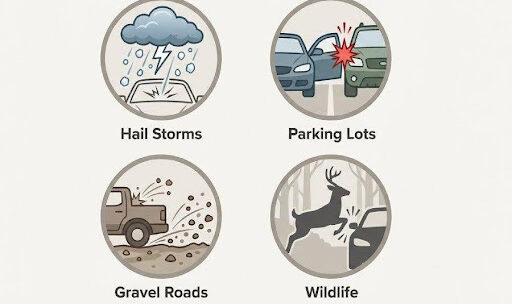
Most dents occur in everyday situations. Car park incidents account for a significant proportion of vehicle damage, with door dings from neighbouring vehicles being particularly common. Shopping trolleys, hailstones, and minor collisions also contribute to the problem. Even something as simple as a falling tree branch can leave your car looking worse for wear.

Repair Methods Available

There are two main approaches to car dent repair: paintless dent removal and traditional bodywork. Each has its place depending on the type and severity of damage.

Paintless Dent Removal

Paintless dent removal (PDR) has become increasingly popular over the past few decades. This technique involves using specialised tools to massage the metal back into its original shape from behind the panel. Technicians rely on the principle that metal retains a memory of its original form and can be carefully worked back into position.

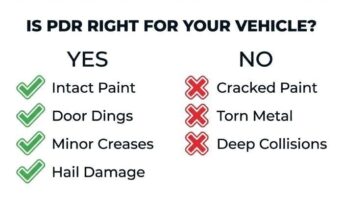
PDR works best when the paint remains intact. It is suitable for most door dings, shopping trolley impacts, and minor collision damage. The technique is quicker than traditional methods, often taking just a few hours rather than several days. It is also more affordable, as no paint or filler is required.

Another advantage is that PDR preserves your vehicle’s original factory finish. This matters because cars with their original paintwork typically hold their value better than those that have been resprayed. Insurance companies and prospective buyers often prefer vehicles that have not been repainted.

After dent repair, exterior car detailing service is often used to refine the paint surface, remove minor imperfections, and restore overall gloss, helping the vehicle look as close to original as possible.

Traditional Body Repair

When paint is damaged or dents are too deep for PDR, traditional repair methods become necessary. This process involves filling the dent with body filler, sanding it smooth, applying primer, and repainting the affected area. While more time-consuming and expensive, it can address virtually any type of damage.

Traditional repairs are essential for dents with cracked or chipped paint, deep creases that have stretched the metal, or damage near edges and sharp body lines where access for PDR tools is limited. The process typically takes several days because paint requires proper drying time between coats.

How Much Does It Cost?

Repair costs vary significantly based on several factors. Small dents suitable for paintless removal typically cost between £75 and £200 in the UK. Medium dents range from £200 to £300, while larger or more complex repairs can exceed £400.

Traditional repairs involving filler and repainting cost considerably more due to the materials and labour involved. A single-panel repair might range from £300 to £600, while extensive damage requiring multiple panels can cost thousands of pounds. So how can you pay for these repairs? You can learn how to get a car loan for repairs or even buy a new car.

The location of the dent also affects pricing. Easily accessible panels, such as doors, cost less to repair than complex areas near the trim or wheel arches. Luxury and prestige vehicles may attract higher charges due to specialised paint formulations and more exacting standards.

Choosing the Right Service

When seeking car dent repair, look for technicians with proven experience and proper certification. Ask whether they offer both PDR and traditional methods, as reputable workshops will recommend the most appropriate technique for your specific damage rather than pushing one approach for every situation.

Get at least three quotes before committing, and ask to see examples of previous work. Check whether the repairer is insurance-approved if you plan to claim, and enquire about warranties on the completed work.

Acting Quickly Matters

Addressing dents promptly is advisable. Small dents are generally easier to repair than those left to deteriorate. Water can seep into damaged paintwork over time, potentially causing rust that complicates and increases the cost of repairs. Fresh dents also tend to respond better to paintless removal techniques before the metal settles into its new shape.

Whatever the cause of your dent, professional repair remains the most reliable way to restore your vehicle’s appearance and protect its value. Avoid DIY repair kits, which often cause more harm than good and may preclude paintless removal later.

Top 11 Free Coin Scanner Apps Reviews

Today's coin identifier app technology uses advanced AI to instantly recognize coins, estimate values, and even detect rare errors that could be worth thousands of dollars.

Have you ever found an old coin and wondered if it’s worth anything? Whether you’re a seasoned numismatist or just getting started with coin collecting, finding the right coin scanner app can make all the difference. Today’s coin identifier app technology uses advanced AI to instantly recognize coins, estimate values, and even detect rare errors that could be worth thousands of dollars.

In this comprehensive guide, we’ve tested and reviewed the best coin value app options available. From simple identification tools to professional-grade market analysis platforms, these apps transform your smartphone into a powerful numismatic assistant. Let’s dive into the top 11 free coin scanner apps that every collector should know about.

Quick Glance: Best Coin Scanner Apps

  • CoinKnow – Best overall for US Beginners and serious collectors
  • CoinValueChecker – Best for investors
  • CoinSnap – Best for beginners
  • Coinoscope – Best for international coins
  • PCGS CoinFacts – Best reference tool
  • NGC Coin App – Best for certified coins
  • Numiis – Best for history lovers
  •  Maktun – Best international coverage

Top 11 Free Coin Scanner Apps Reviews

Rating: ⭐⭐⭐⭐⭐ (Best Overall)

CoinKnow stands out as the most advanced coin scanner app, delivering professional-grade accuracy that serious collectors demand. This coin identifier app is one of only two worldwide that automatically detects rare error coins including doubled dies, repunched mint marks, and missing mint marks.

The app delivers Sheldon Scale grading within a remarkable 2-point range, the tightest accuracy available in mobile technology. It includes copper color classification for pennies, recognizing RD, RB, and BN designations, plus CAM/DCAM proof finish detection.

Monthly price database updates keep valuations current, while the clean interface makes navigation straightforward. Daily free scans are available without aggressive subscription pushes. The primary limitation is its U.S. coin focus with minimal international coverage, but for American coin collectors seeking to discover hidden treasures, CoinKnow represents the gold standard.

Best For: Serious collectors who need professional-grade accuracy for U.S. coins

2. CoinValueChecker

Rating: ⭐⭐⭐⭐⭐ (Best for Investors)

CoinValueChecker combines precise identification with powerful market intelligence tools, making it the ideal coin value app for collectors who view numismatics as investment opportunities. Like CoinKnow, it automatically detects valuable error coins including DDO, DDR, and missing mint marks with claimed 99% accuracy across 300,000+ U.S. coin types.

What truly distinguishes this app is its comprehensive market analysis suite featuring real-time price trend charts, auction tracking with customizable alerts, and collector leaderboards. The portfolio management system monitors your collection’s value over time, while grade-based pricing helps you understand how condition affects worth.

Available as both website and mobile versions, it offers cross-platform convenience for serious numismatists. The feature-rich interface may feel overwhelming for casual beginners, and like CoinKnow, it focuses exclusively on U.S. coins. For investors making buying or selling decisions based on current market activity, this coin identifier app provides unmatched intelligence.

Best For: Investors and serious collectors tracking market values

3. CoinSnap

Rating: ⭐⭐⭐⭐½ (Best for Beginners)

CoinSnap offers the most intuitive experience for anyone new to coin collecting, prioritizing simplicity and speed over advanced features. This coin scanner app delivers instant results—just snap a photo and receive identification, value estimates, and historical information within seconds, no technical knowledge required.

The app identifies 240,000+ coin types from around the world with claimed 99% accuracy. Its AI-powered technology automatically assesses condition, provides market value estimates, and detects minting errors.

Collection management tools let you organize coins by series and track total value effortlessly. The interface is extremely user-friendly, making it perfect for quick checks of coins you encounter. While less precise than top-tier apps for rare coins, and grading features require subscription, it excels at accessibility. Some users report value estimates can be vague, but for beginners wanting quick answers without complexity, CoinSnap remains the fastest and simplest option.

Best For: Beginners and casual collectors wanting instant identification

4. Coinoscope

Rating: ⭐⭐⭐⭐½ (Best for International Coins)

With an impressive 4.5/5 rating and 1.7 million downloads, Coinoscope has proven reliability and massive worldwide coin coverage. This coin identifier app excels at identifying international coins that other apps might miss, using visual matching technology to show you similar coins for comparison.

The database includes 300,000+ coins and 120,000+ banknotes from around the globe. AI image recognition analyzes your photos and displays visually similar coins, making identification intuitive even for obscure pieces.

Basic features including identification and value estimation are genuinely free, while the Pro version removes ads and unlocks unlimited advanced features. The app requires an internet connection to function, and free users face daily scan limits for premium features. However, its extensive global coverage and trusted track record make it invaluable for collectors with international coins or travelers encountering foreign currency. The visual comparison approach helps when you’re unsure about identification.

Best For: Collectors with international coins and travelers

5. PCGS CoinFacts

Rating: ⭐⭐⭐⭐⭐ (Best Reference Tool)

Created by Professional Coin Grading Service, PCGS CoinFacts serves as the industry-standard encyclopedia for U.S. coin information rather than an automatic coin scanner app. This coin value app contains comprehensive data on 39,000+ U.S. coins with complete pricing across all grades, directly from the most respected grading authority in numismatics.

Unlike AI-powered identifiers, this is a reference tool requiring you to know what coin you have first. Once identified, it provides professional pricing data, historical price charts tracking long-term trends, and access to 2+ million auction records.

The app includes expert articles, high-quality images of coins in various grades, and detailed variety information. It’s completely free to use, offering authoritative data trusted by professional collectors worldwide. The limitation is obvious—you must manually look up coins rather than photographing them for automatic identification. For serious collectors needing professional-grade reference data and pricing for investment decisions, PCGS CoinFacts remains the definitive resource.

Best For: Serious collectors needing authoritative reference data

6. NGC Coin App

Rating: ⭐⭐⭐⭐½ (Best for Certified Coins)

The official NGC app specializes in professionally graded coins in NGC holders, providing instant, authoritative identification through barcode scanning technology. This coin value app is essential if you collect professionally graded coins, as photographing through plastic slabs often yields poor results with standard coin scanner apps.

Simply scan the NGC barcode to instantly access official certification data directly from the NGC database. The app provides grade verification, confirms authenticity, displays market pricing for NGC-graded coins, and offers population reports showing rarity data.

Comprehensive coin detail pages give you everything needed to evaluate certified pieces. The app is completely free to use and provides authoritative information backed by NGC’s reputation. However, it’s only useful for NGC-certified coins and offers limited functionality for raw or uncertified pieces. For collectors who own or are considering purchasing NGC-certified coins and need reliable verification tools, this coin identifier app delivers official authentication that no third-party app can match.

Best For: Collectors verifying NGC-certified coins

7. Numiis

Rating: ⭐⭐⭐⭐ (Best for History Lovers)

Numiis takes a unique approach by emphasizing the fascinating stories and historical context behind coins rather than just identification and pricing. This coin identifier app transforms collecting into an educational journey, helping you understand not just what you own, but why certain coins matter historically.

The database covers 30,000 U.S. coins with rich historical narratives explaining each coin’s era, political situation, and cultural significance. Detailed filtering by year, country, denomination, mint mark, and historical period makes research efficient and thorough.

Each coin comes with comprehensive background information and educational content that makes numismatics engaging. The app also includes auction data and dealer information for informed purchasing decisions. Only the trial period is free, with ongoing use requiring a subscription. The identification process is slower compared to automatic apps, which might frustrate users seeking quick answers. For history enthusiasts, educators, and collectors who value knowledge as much as monetary worth, Numiis delivers exceptional educational value.

Best For: History enthusiasts and educators

8. Maktun

Rating: ⭐⭐⭐⭐½ (Best International Coverage)

Maktun provides extraordinarily extensive international coverage and operates completely free without advertisements, making it a rarity among coin scanner apps. With over 300,000 coins, 160,000 banknotes, and 15,000 tokens from around the world, this coin value app covers obscure pieces that specialized apps completely miss.

The visual recognition system identifies coins by appearance without requiring prior numismatic knowledge—simply photograph both sides for comprehensive analysis. Each entry features high-resolution images, complete specifications including weight and composition, historical context, and current market valuations.

A standout feature is offline functionality, making it ideal for coin shows or areas with poor reception. Users can create private collections, save photos, export data to PDF/XLS/CSV formats, and view collection statistics with world map infographics. Cloud backup ensures secure cross-device access. The extensive options may overwhelm U.S.-only collectors, and error detection is less advanced than specialized apps. For international coin collectors, travelers, and dealers handling diverse global inventory, Maktun’s comprehensive coverage is invaluable.

Best For: International collectors and global currency enthusiasts

9. Greysheet Mobile

Rating: ⭐⭐⭐⭐½ (Best Professional Pricing)

Greysheet Mobile delivers trusted wholesale and retail pricing used by professional dealers since 1963, providing the same market data that industry experts rely on for buying and selling decisions. This coin value app offers 150,000+ wholesale and retail prices plus access to 2+ million auction records, with hourly pricing updates ensuring maximum currency.

Focusing on U.S. coins and paper money, the app includes historical price charts revealing long-term trends, real-time gold and silver spot pricing, industry news to keep you informed, and dealer directories to find reputable sellers.

The pricing information comes directly from industry-standard sources trusted by professionals for over six decades. It’s free to access, providing invaluable market intelligence without subscription fees. However, this isn’t an automatic coin identifier app—it requires you to know what coin you have first, then provides professional-grade pricing data. The U.S. focus means limited international coverage. For professional collectors, dealers, and serious investors who need accurate wholesale and retail pricing data to make informed decisions, Greysheet Mobile remains the authoritative pricing source.

Best For: Professional collectors and dealers needing accurate pricing

10. HeritCoin

Rating: ⭐⭐⭐⭐ (Best Free Option)

HeritCoin is a pleasant surprise in the coin scanner app space, operating completely free without aggressive subscription pushes that plague many competitors. Unlike apps that constantly promote premium upgrades, HeritCoin provides robust features genuinely accessible to everyone without payment pressure.

The app uses AI-powered identification to recognize coins and provide value estimates. Collection management tools help you organize your finds, while the clean interface makes navigation simple and intuitive.

Regular updates keep the app current and functional. While it offers fewer advanced features than premium apps and maintains a smaller database than major competitors, the lack of subscription pressure makes it refreshing. Accuracy is good for common coins, though it’s less precise for rare varieties and unusual pieces. The completely free model means no hidden costs or constant upgrade prompts interrupting your experience. For budget-conscious collectors who want full functionality without paying or dealing with subscription pressure, HeritCoin delivers surprising value and represents the best truly free coin identifier app option available.

Best For: Budget-conscious collectors wanting no-cost access

11. Money Identifier (Numis)

Rating: ⭐⭐⭐⭐ (Best for Global Currency)

Money Identifier focuses on both coins and banknotes with true global coverage, handling currency from around the world with equal competence. While many coin identifier apps focus primarily on U.S. coins, this coin scanner app excels at international currency from every corner of the globe.

The AI-powered analysis provides comprehensive information including name, manufacture date, features, material composition, condition assessment, value estimates, and design details. The process is quick—simply take a photo or import an image, and the AI handles identification within seconds.

It’s like having a currency expert in your pocket, capable of recognizing diverse monetary systems worldwide. The free version works fine for occasional identifications, but serious users will hit limits quickly. The premium version costs $4.99/week or $24.99/month after a 3-day trial, offering unlimited identifications that can add up for large collections. The app can struggle with less common coins despite its global focus. For collectors with diverse international holdings or travelers frequently encountering foreign currency, Money Identifier’s worldwide coverage and dual coin-banknote capability make it uniquely valuable.

Best For: Travelers and collectors with diverse international currency

What’s the Best Free Coin Scanner App?

With so many excellent options, selecting the best coin value app depends on your specific collecting needs and experience level.

For Beginners: Start with CoinKnow or CoinSnap. Both offer simple, intuitive interfaces that don’t require numismatic knowledge, making them perfect for anyone just getting started with coin collecting.

For U.S. Coin Collectors: Choose CoinKnow or CoinValueChecker. Their automatic error detection can help you discover valuable coins you might otherwise overlook, potentially finding pieces worth hundreds or thousands of dollars.

For International Collections: Go with Coinoscope or Maktun. Both excel at identifying coins from around the world, with extensive databases covering hundreds of thousands of global pieces.

For Market Intelligence: CoinValueChecker and Greysheet Mobile provide the best pricing and trend data for investment decisions. These coin scanner apps help you understand market movements and make informed buying or selling choices.

For Reference and Research: Combine PCGS CoinFacts and NGC Coin App with your coin identifier app for comprehensive market data. This multi-app approach leverages each tool’s particular strengths.

For Education: Numiis transforms coin collecting into a learning experience with rich historical context. It’s ideal for collectors who want to understand the stories behind their coins.

Many experienced collectors actually use multiple apps together, leveraging each one’s particular strengths. You might snap a photo with CoinSnap for quick identification, verify details with PCGS CoinFacts, check for errors with CoinKnow, and track market trends with CoinValueChecker.

Do You Pay Upfront After a Crash? | Fees vs Expenses Explained

Photo by depositphotos at https://depositphotos.com/

What “Pay Upfront After a Crash” Really Means

After a car crash, money worries can start immediately. Many people ask if they must pay upfront after a crash, or if they can wait for insurance or a settlement. The answer depends on what the payment is for. Some costs arrive fast, like towing or an ER visit. Others relate to a legal claim and may be handled later.

This matters because confusion can lead to costly mistakes. People sometimes delay medical care because they fear a bill. Others sign repair paperwork without knowing what insurance will cover. Legal help also gets skipped because drivers assume it requires cash up front. In reality, car accident legal costs do not always work the way people expect, and accident lawyer payment is often structured to reduce upfront pressure.

A key distinction is between legal fees and case expenses. Legal fees are what a lawyer charges for their work. Case expenses are the out-of-pocket costs used to build a claim, such as medical records or filing fees. Understanding this difference helps you predict what you may pay now and what may come out of a settlement later.

When Payment Is Required After a Crash

Some upfront costs after a car accident are hard to avoid, even if you did nothing wrong. While insurers investigate, you may still face immediate crash costs that keep your life moving. These are everyday accident expenses, not punishments for being in a wreck. It also helps to separate early practical bills from legal costs, since auto accident attorney fees are usually handled differently than towing, medical co-pays, or repair deposits.

Medical bills and emergency care

Medical charges often come first. Ambulance transport, emergency room care, imaging, and prescriptions can generate bills quickly. Even with insurance, deductibles and co-pays may apply. Follow-up treatment can also add up, such as physical therapy or specialist visits. The main risk is not just the bill, but cutting treatment short. Gaps in care can slow recovery and can weaken a claim if the insurer argues the injury was not serious.

Vehicle repair and property damage

Towing and storage fees can start right away, and storage costs may grow daily. Repairs can also require a deposit, and some shops will not release the vehicle until the bill is paid. If your car is not drivable, rental costs may appear before reimbursement, depending on the policy and the speed of the claim process.

Many claims settle without a lawsuit, but paperwork still has costs. Providers often charge for medical records and billing statements. If a claim becomes more complex, there may be expert review fees. If a lawsuit is filed, court filing and service fees may apply. These usually fall into “case expenses,” not legal fees.

Lawyer fees vs case expenses

People often say “lawyer costs” as if it is one number. It is not. Lawyer fees vs expenses is the clearest way to understand what you may owe and when. Fees pay for legal work. Expenses pay for the tools needed to prove the case. This is especially important in discussions about a contingency fee car accident arrangement and other personal injury case costs.

  • Lawyer fees: payment for the legal work
  • Case expenses: the money spent to build the case

Lawyer fees and contingency plans

Most injury lawyers will use contingency fees. That means the lawyer gets paid only if there is a settlement or court award. In many cases, this leads to no upfront legal fee for the lawyer’s time. It also helps injured people access representation even when finances are tight. Still, the percentage and details should be explained clearly before you sign anything.

Case expenses that may be paid later

Case expenses can include record requests, filing fees, deposition transcripts, and expert costs. Many firms advance these expenses and recover them from the settlement. Some firms expect the client to pay for certain items as they come up. Policies vary, so the agreement should spell out how expenses are tracked and what happens if there is no recovery.

Do accident lawyers ask for money upfront

So, do you pay a lawyer upfront after a crash? For legal fees, they are usually not included in standard injury cases. Many firms offer no upfront lawyer fees because the fee is tied to recovery. But some expenses may still exist, depending on how the firm handles costs and how complex the case becomes. This is the practical core of accident attorney payment.

  • There are no upfront legal fees for most cases
  • Case expenses are often advanced by the firm
  • Payment taken from settlement or verdict

How insurance affects upfront payments

Good planning with insurance coverage after a crash can reduce early costs. Health insurance may cover treatment first, while auto benefits can fill gaps. Two common tools are MedPay and PIP, and they can make a big difference in how much you pay early.

Health insurance role

A health insurance car accident claim often works like any other medical claim. Your insurer may cover care first, leaving you with your usual deductible or co-pay. Later, the insurer may request reimbursement from a settlement, depending on plan rules and local law. That process can be managed, but it should be considered during negotiations.

Auto insurance benefits

PIP and MedPay can cover medical bills quickly, often regardless of fault, up to policy limits. Using these benefits early can help you avoid treatment delays and reduce out-of-pocket medical spending while the claim develops.

Risks of paying money before a settlement

The financial risk after a crash is often about timing. Bills can arrive weeks after the collision, long before a settlement is even discussed. That gap can pressure people into choices that are not in their best interest.

Cash flow pressure

Co-pays, prescriptions, towing, rentals, and missed work can hit all at once. When money is tight, even moderate upfront payments can create debt. Financial stress can also make a low settlement offer feel tempting, even if it does not cover future care.

Recovery depends on case outcome

Some reimbursement depends on the result. If fault is disputed or coverage is limited, you may not recover every dollar spent. That is why paying costs before settlement should be done carefully, with strong documentation and realistic expectations.

How to reduce or avoid upfront payments

You cannot erase every expense, but you can avoid upfront accident costs where possible and reduce crash expenses through smart steps.

  • Choose a lawyer who advances expenses
  • Use insurance benefits early
  • Ask for payment plans with providers

Also, act quickly to limit storage fees, confirm rental coverage before signing, and keep receipts for every crash-related payment. These steps improve control and reduce surprises.

Questions to ask before hiring a lawyer

Before signing a legal fee agreement, ask who pays expenses, when payment is due, and how expenses are deducted at the end. Ask whether you must approve major costs before they are incurred. Also ask what happens if the case is lost, because some agreements require the client to repay certain expenses even without a recovery. Clear answers help you plan and avoid misunderstandings later.

Bottom Line

Most people do not need to pay legal fees upfront after a crash, especially when a contingency arrangement applies. Still, early bills can appear for medical care, towing, storage, and repairs, and some case-related costs may exist depending on the law firm’s policy. If you understand how pay upfront after a crash concerns fit with accident lawyer fees and case expenses explained in your agreement, and you use available insurance benefits early, you can protect your health and your finances without guesswork.