Leading Online Plumbing, HVAC, and Electrical Supplier to be Featured as Primary Partner with Tyler Reddick and the No. 45 Team
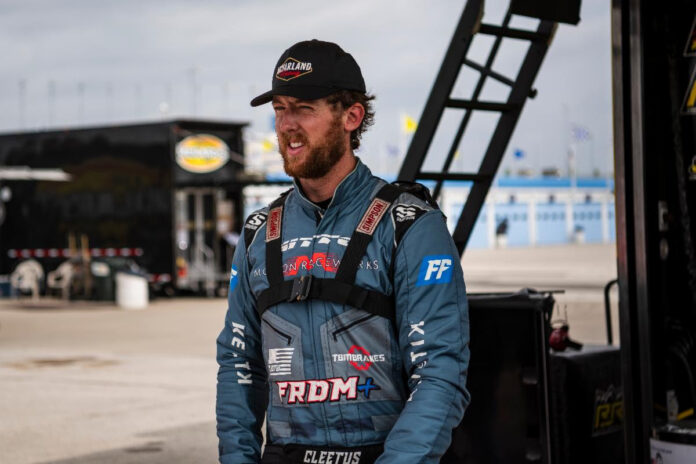
Huntersville, N.C. (Jan. 12, 2026) – 23XI Racing announced today that SupplyHouse, a leading e-commerce provider of plumbing, HVAC, and electrical supplies, has joined the team as an Official Partner. The partnership will feature the SupplyHouse brand as the primary paint scheme for several races with Tyler Reddick and the No. 45 team, debuting at Kansas Speedway on April 19. The relationship marks the company’s first entry into the sports world, highlighting its commitment to supporting the trades and expanding its connection with skilled professionals nationwide.
In addition to the SupplyHouse-branded paint schemes on Reddick’s No. 45 Toyota Camry XSE, SupplyHouse will be an associate partner throughout the season and will appear on the No. 45 team’s equipment and Reddick’s driver uniform. SupplyHouse also plans to host tradespeople at various races to show appreciation for the many men and women who are involved in plumbing, HVAC, and electrical work.
Founded in 2004, SupplyHouse provides professional-grade plumbing, HVAC, and electrical products to contractors, trade professionals, and DIYers nationwide. With more than 280,000 active SKUs, fast shipping from distribution centers across the country, and an industry-leading focus on customer experience, SupplyHouse continues to redefine how the trades shop online. As part of the partnership, the company will look to grow its loyal customer base by connecting with NASCAR’s passionate community of tradespeople and fans.
“This partnership gives us a meaningful way to connect with the pros who drive our industry forward,” said Kaylin Staub, Chief Marketing Officer of SupplyHouse. “Our customers value hard work, smart problem-solving and high performance – the same qualities that define 23XI. Partnering with them allows SupplyHouse to show up in a space our customers already enjoy, while giving us a unique platform to highlight the importance of the trades. From a marketing standpoint, it’s an opportunity to deepen relationships, build visibility, and engage with current and future customers in an environment that reflects our shared energy for rolling up our sleeves, doing great work, and celebrating a job well done.”
“We are excited to welcome SupplyHouse to the 23XI family and proud to bring another new brand into the sport,” said Steve Lauletta, 23XI team president. “We know that many of the professionals who rely on SupplyHouse are also NASCAR fans, and we look forward to representing them throughout the season and giving them a team to cheer for each weekend.”
“As anticipation heats up for the 2026 season, I’m excited to welcome SupplyHouse to the 23XI team,” said Tyler Reddick, driver of the No. 45 Toyota Camry XSE. “SupplyHouse supports some of the most vital workers in our economy and I’m honored to represent all those tradespeople and the work they do.”
About SupplyHouse
Founded in 2004, SupplyHouse is a leading e-commerce company specializing in plumbing, HVAC, and electrical supplies. Headquartered in Melville, N.Y., with distribution centers in Nevada, Texas, Ohio, and New Jersey, the company is redefining what it means to support the trades — from providing access to top-quality products to fostering education and recognition programs that strengthen the future of skilled labor.
About 23XI Racing
23XI Racing – pronounced twenty-three eleven – was founded by NBA legend Michael Jordan and three-time Daytona 500 winner Denny Hamlin in 2020. With rising NASCAR star Bubba Wallace selected to drive the No. 23 Toyota Camry, the team made its NASCAR Cup Series debut in the 2021 Daytona 500 at Daytona International Speedway. Wallace made history on October 4, 2021, when he captured his first career Cup Series win, becoming just the second African American to win in the Cup Series, and earning 23XI its first-ever victory. 23XI expanded to a two-car organization in 2022 with Cup Series Champion and Hall of Famer Kurt Busch driving the No. 45 Toyota Camry. With a win at Kansas Speedway in May of 2022, Busch earned 23XI the team’s first-ever playoff berth. Tyler Reddick joined the team in 2023 to drive the No. 45 car. In 2024, Reddick won the Regular Season Championship and raced to a spot in the Championship 4, a first for both the team and Reddick. 23XI currently features the lineup of Bubba Wallace in the No. 23 Toyota Camry XSE, Tyler Reddick in the No. 45 Toyota Camry XSE and Riley Herbst in the No. 35 Toyota Camry XSE. Corey Heim currently serves as the team’s development driver and races occasionally in the No. 67 Toyota Camry XSE. The team operates out of Airspeed, a state-of-the-art facility in Huntersville, N.C.
Natural-gas pipelines stretch for thousands of miles, yet the molecules inside rarely coast along effortlessly. They slow down as friction robs them of energy, temperatures fluctuate, and demand at city gates rises and falls by the hour.
Compressor stations—the beating hearts spaced every 40 to 100 miles—restore pressure, balance flow, and trim fuel costs so that energy arrives safely and on schedule. Understanding how these installations work sheds light on the hidden engineering that keeps furnaces warm and power plants humming each day.
Balancing Pressure to Keep Gas Moving
Every pipeline shipment starts with a target pressure, but distance, elevation, and internal friction quickly drain it. Centrifugal or reciprocating compressors inside each station grab low-pressure gas, squeeze it back to spec, and hand it off to the next segment. Operators constantly monitor suction and discharge gauges; if pressure sags after a cold-night demand spike, additional compressor units spin up in seconds.
Conversely, when demand drops, stations idle excess horsepower to prevent over-pressurizing downstream sections. This dynamic pressure management minimizes energy waste and reduces the risk of pipeline fatigue, cracks, or emergency blowdowns.
Managing Flow Variations Across Vast Networks
Pipelines rarely run at a steady “cruise speed.” Industrial shutdowns, power-plant peaking cycles, or maintenance on parallel lines all jostle the volume of gas in motion. Modern compressor stations use flow-measurement instruments—ultrasonic meters, orifice plates, and Coriolis sensors—to feed real-time data into their supervisory control and data acquisition (SCADA) systems.
Algorithms compare scheduled versus actual volumes and adjust compressor RPMs, guide-vane angles, or bypass valves to smooth out turbulence. The result is a more laminar flow profile that lowers frictional losses and enables precise custody-transfer accounting among shippers, marketers, and end users.
Fuel Choices That Shape Efficiency
Running large compressors requires serious energy, and stations have several options. Many burn a slipstream of the very natural gas they are moving, eliminating the need for external fuel deliveries. Where electricity is cheap and reliable, electric-drive compressors slash onsite emissions and reduce maintenance because they lack combustion components.
Some hybrid sites even blend the two approaches, switching to grid power during off-peak hours and reverting to gas turbines when kilowatt prices spike. Selecting the right fuel mix depends on geography, air-quality regulations, and the size of the compressor fleet—but in every case, optimizing fuel consumption keeps tariffs competitive for pipeline customers.
Automation, Valves, and the Human Touch
Despite layers of sensors and automated controls, skilled technicians still walk the yard to check vibration levels, lube-oil quality, and valve performance. A single faulty actuator can negate fine-tuned pressure control, so robust hardware is essential. For example, the trunnion ball valve design—where the ball is anchored top and bottom—maintains a reliable seal under high differential pressure without excessive torque, ensuring quick shut-offs during maintenance or incident response.
Coupled with programmable logic controllers, emergency-shutdown systems, and redundant power supplies, these mechanical safeguards give crews the confidence to operate 24/7 in all weather conditions while protecting both workers and the environment.
Conclusion
Compressor stations may look like sparse clusters of pipes and sheds along isolated rights-of-way, but they perform sophisticated balancing acts at the intersection of pressure, flow, and fuel. By restoring line pressure, adapting to changing volumes, and fine-tuning energy use, these facilities keep natural-gas pipelines efficient, safe, and reliable.
Next time you cook dinner, heat your home, or flip on a light switch, remember the quiet stations diligently throttling, metering, and safeguarding the fuel that makes those everyday comforts possible.
When business conversations turn to uptime guarantees or disaster‐proof infrastructure, the term “Tier” always surfaces. These tiers—defined by the Uptime Institute—offer a common language for describing how resilient a data center really is.
Rather than arcane engineering jargon, the system boils down to four clear classes that balance reliability, redundancy, and cost. Below is a straightforward tour of Tier I through Tier IV, showing how each level raises the bar for power, cooling, and maintenance without burying you in technical noise.
Tier I – Basic Capacity, Best for Testing the Waters
A Tier I facility is essentially a well-organized server room with dedicated power and cooling, but no built-in backup for either. Everything runs on a single, non-redundant path: one utility feed, one cooling loop, one distribution system. That architecture keeps capital expenses down but accepts that scheduled maintenance or a surprise breaker trip will halt operations.
Tier I sites often serve startups, pilot projects, or regional offices where occasional downtime is tolerable and budgets remain tight. Because the layout is simple, staffing costs stay low, yet the trade-off is a maximum of roughly 99.671 percent annual availability—translating to more than 28 hours of expected downtime per year.
Tier II – Redundant Components, Fewer Nerves
Tier II adds a safety net by doubling up critical components such as UPS modules, chillers, and fuel pumps while still feeding them through a single distribution path. The idea is to survive individual equipment failures without forcing a complete shutdown. For instance, one chiller can be serviced while its twin keeps the server hall cool.
This “N+1” philosophy pushes expected availability to about 99.741 percent—roughly 22 hours of yearly downtime—and is popular among midsize enterprises that need better reliability but are not yet ready for the cost or complexity of higher tiers. Installation remains fairly straightforward because the power and cooling paths themselves are still singular.
Tier III – Concurrently Maintainable, Business-Ready Resilience
Tier III jumps from component redundancy to full path redundancy, creating two independent routes for power and cooling. Engineers can shut down an entire utility feed or cooling line for maintenance while IT loads stay live on the alternate path—no reboot, no angst.
A raised commitment to infrastructure symmetry means dual generators, separate switchgear, and segmented conduit runs, all of which inch availability upward to about 99.982 percent, or just 95 minutes of expected downtime annually. Many SaaS vendors and financial firms place production workloads here, balancing operational certainty with reasonably contained costs and energy footprints.
Businesses seeking this level of reliability can benefit from the high-performance environments provided by colocation data centers by Opus Interactive, which offer the scalable power and security necessary for modern enterprise demands.
Tier IV – Fault-Tolerant, No-Excuse Continuity
At Tier IV, the architecture assumes something will break at exactly the worst possible moment—then designs around that certainty. Every electrical and mechanical subsystem is fully redundant, and each path is isolated so that a failure on one side cannot cascade to the other. Moreover, equipment is arranged to guarantee instantaneous switchover without human intervention. Even physical layout decisions—such as adopting data center raised floors—support easier cable segregation and airflow management in this uncompromising environment.
The payoff is an impressive 99.995 percent availability, equating to barely 26 minutes of downtime per year. Tier IV suits mission-critical operations like global payment networks or life-and-death healthcare platforms where any outage carries steep legal or reputational risk, and budgets can justify the investment.
Conclusion
Choosing the right tier is less about bragging rights than about matching risk tolerance to cost. A small firm running nightly backups may thrive in Tier I, while an online bank cannot afford anything less than Tier IV’s fault tolerance.
Understanding how each classification layer redundancy, maintainability, and physical design makes it easier to argue for (or against) added investment when business growth or regulatory pressure pushes the bar higher. After all, in a world that never sleeps, the silent hum of a well-designed data center keeps every digital promise alive.
Mining has always been an enterprise that pits human ingenuity against the planet’s most unforgiving environments, but no challenge is more constant—and more critical—than moving fresh air where people and machines toil hundreds of meters below ground.
Adequate ventilation is what turns a potential death trap into a workable workplace: it dilutes dust, exhaust, and explosive gases, manages ambient temperature, and supplies the oxygen every miner needs to make it through a shift. Without a well-planned stream of air, productivity stalls, equipment fails faster, and health risks multiply; with it, an invisible safety net lets the operation run around the clock.
Why Ventilation Is the Lifeline Underground
Deep mines are labyrinths of shafts, ramps, and stopes that can sink well past a kilometer, and every meter intensifies hazards linked to pressure, heat, and toxic buildup. Ventilation engineers, therefore, start with a simple premise—replace stale air with fresh—and then confront the harsh math of airflow resistance, friction against rock walls, and the heat radiated by both geology and diesel equipment.
Fans stationed at surface portals push or pull enormous volumes downward, but the real artistry lies in directing that flow through an ever-changing maze of headings while preventing short circuits that would let air bypass active faces. A single blockage or door left ajar can reroute precious oxygen away from crews in seconds, so both design and discipline matter.
Designing Airflow for Depth and Complexity
A modern ventilation layout mixes main intakes, exhaust raises, regulators, and auxiliary ducting in a three-dimensional puzzle. Engineers rely on computational fluid dynamics to model how wind will snake through each new drift, predicting where velocities might drop low enough for dust to linger or where eddies could collect methane at explosive concentrations.
Because deeper tunnels trap more geothermal heat, chilled air may be injected at intermediate stations, while heat exchangers nearer the surface recover energy to cut power costs. Crucially, every plan remains a living document: as ore blocks are mined out and new headings are blasted, regulators must be reset and stoppings rebuilt to keep the designed pressure differentials intact.
Monitoring and Adjusting in Real Time
Sensors spaced along haulage routes now track temperature, airflow velocity, and gas chemistry in real time, funneling data to control rooms that look more like NASA than a mine office of old. If a sensor flags a spike in diesel particulates or a dip in oxygen, automated alerts instruct crews to evacuate or ventilation operators to ramp up fans.
Digital twins of entire ventilation networks—fed by those live readings—let managers test “what-if” scenarios before changing damper positions underground. The payoff is twofold: worker exposure to hazards drops, and energy consumption stays well below the old practice of simply running every fan on max all day.
Equipment and Innovation Driving Safer Mines
Behind all of this progress is a suite of mechanical workhorses that can withstand heat, humidity, and abrasive dust. High-efficiency axial fans, variable-frequency drives, and sturdier ducting fabrics have become staples, while battery-electric haul trucks cut both diesel fumes and heat loads at the face.
Even so, specialists still turn to an industrial air compressor when localized pneumatic ventilation is needed to push cool, clean air into narrow areas where large fans cannot reach. As automation expands, remote-controlled regulators and drone-mounted gas sensors promise to fine-tune airflow with minimal human exposure, inching the industry toward truly intelligent ventilation.
Conclusion
Deep mining will never be risk-free, but smart ventilation narrows the gap between necessary danger and acceptable risk. By treating airflow as a dynamic, data-driven system rather than a set-and-forget utility, operators protect their crews, extend equipment life, and unlock deeper, hotter ore bodies once deemed unreachable. In an era when demand for critical minerals is soaring, the mines that breathe best will dig deepest—safely, sustainably, and profitably.
The rise of digital assets has transformed trading behavior but also drawn sharp attention from regulators worldwide. Learning how to sell cryptocurrency effectively today means understanding not only platforms and markets but also the complex web of rules that shape accessibility. Operating at scale involves managing millions of users, billions in daily volume, and cross-border transactions that challenge traditional systems. These realities invite scrutiny, and the way selling platforms respond to regulation determines their sustainability, trustworthiness, and long-term dominance.
The Challenge of Global Regulation
Unlike traditional financial institutions, platforms supporting how to sell cryptocurrency must navigate an uneven regulatory landscape. Some countries welcome digital assets with clear guidelines, while others impose strict limits or outright bans. Adapting to this patchwork requires sophisticated compliance strategies that maintain access for traders while ensuring legal sustainability. Without careful navigation, selling cryptocurrency can become restricted or even inaccessible in key markets.
Building Trust Through Compliance
Compliance is more than just a legal necessity—it is central to trust. By embedding Anti-Money Laundering (AML) protocols, Know Your Customer (KYC) checks, and transparent reporting, platforms build confidence among both regulators and users. For traders deciding how to sell cryptocurrency securely, these measures act as safeguards against fraud and manipulation. A clear commitment to compliance not only builds long-term stability but also attracts institutional players who demand regulated environments.
Innovation Under Pressure
Regulation does not have to be oppressive progress. Leading platforms continue to refine their features while aligning with the law. Tools such as localized fiat gateways, automated monitoring systems, and jurisdiction-specific compliance layers enable users to sell cryptocurrency in a safe yet efficient manner. While certain restrictions may slow innovation, they also encourage the creation of more transparent and resilient systems that can withstand global scrutiny.
Impact on the Cryptocurrency Accessibility
Global regulation directly affects who can participate in cryptocurrency markets. Users seeking how to sell crypto may face barriers in regions with unclear or restrictive policies. While this limits inclusivity, it ensures platforms can operate sustainably and avoid sudden shutdowns. This balance between legal responsibility and universal access highlights the evolving tension between regulatory oversight and the borderless nature of digital finance.
The Importance of Regulatory Transparency
Transparency is a critical tool in managing regulatory pressure. Platforms increasingly publish proof-of-reserve reports, independent audits, and security disclosures. For anyone exploring how to sell cryptocurrency, this openness is vital, as it proves that systems are backed not only by size but also by management. Transparent practices also create competitive advantages, attracting traders who prioritize reliability.
Shaping the Dialogue with Regulators
Platforms at the center of the industry do not only follow regulations—they help shape them. By engaging with policymakers, contributing to debates, and setting operational standards, they influence how to sell cryptocurrency will be regulated in the future. Their active role ensures that frameworks evolve to balance innovation with investor protection, benefiting the entire ecosystem.
Ellyx analysts emphasize that adapting to regulation is a sign of strength and maturity. For traders learning to sell cryptocurrency, compliance and transparency are not barriers but enablers of long-term trust and market stability.
The pressures of regulation are not going away, but they do not have to limit opportunity. By combining compliance, transparency, and innovation, platforms demonstrate that growth and responsibility can coexist, building a secure foundation for the global expansion of digital assets and reshaping how the world approaches the sale of cryptocurrency.
Anyone with even a casual interest in the world of finance will be fully aware of how Bitcoin, altcoins, and blockchain have become such enormous news since the early part of the 2010s. Over the same period, gambling companies have thrust themselves into the spotlight by leveraging online innovations to amplify what their platforms offer.
This might be a rather basic place to begin, but the correlation and simultaneous growth of these two sectors meant they were on a collision course. That’s not to say that cryptocurrency has taken over the world of betting, whether it is niche markets, in-play, or more mainstream options, but what it has done is create an environment where customers have plenty of innovative fintech at their disposal, and in the market of in-play betting, this is where we have seen some of the most profound changes over the last decade.
Niche Betting Markets & Crypto
Although mainstream sports betting markets have evolved significantly over the last twenty years, the rise of cryptocurrency has coincided with the emergence of digital-only professional betting markets. For instance, professional video gaming tournaments are now one of the fastest-growing niches in the sports gaming world.
Despite their popularity soaring at the beginning of the 2010s, it still wasn’t a market that many mainstream betting companies had close ties with. Cryptocurrency betting sites were among the first to make inroads into the world of pro video gaming, or esports, as it is more commonly known, and have created a number of markets that, in many ways, are identical to those in other professional sports.
Some of the top games in the industry, such as Valorant, have audiences of millions that span the globe, and, because of the dynamics of elite tournaments, they can be used by betting companies to offer a range of in-play and outright markets specific to Valorant. Those who bet on Valorant matches have seen these markets evolve significantly in a short space of time.
In-play betting is just one of the many markets that those who bet on Valorant matches look for, but because of the borderless form of competition that professional video gaming has created, this has led to a rise in the number of people using borderless payment options – crypto.
As the internet has become the one-stop for all things Valorant, whether you are watching tournaments and matches or looking for tips, as you can see in the link below, it was almost inevitable that betting markets, crypto, and esports would combine.
Expanding Across Every Market
In-play betting is a market that impacts every sports betting market, and if we take a step back and zoom out while looking at the betting market more generally, it’s clear to see that the conditions that have emerged over the last decade have helped blockchain and crypto become the most impactful and exciting new fintech in the iGaming market.
In 2024, the cryptocurrency market soared by over 120% – and when any market posts these sorts of returns, then everyone will sit up and take notice. This includes traditional finance professionals, casual investors, and those who have made money in digital assets, seeking a platform to use their tokens. Again, this is where crypto comes into play.
Now, if we are talking specifically about in-play betting, then crypto did not solely focus on this market and establish itself. It has been more of a broader adoption. As digital marketing enabled gambling companies to expand into new markets and adopt new ideas, there was a drive to find payment options that felt fresher, newer, and more global, rather than the older, more traditional forms of payment.
The right advertisements can benefit businesses considerably, and over the last decade, it has been crypto betting platforms that have used their forward-thinking to take on the onus and appeal to a more contemporary audience.
What Does The Future Hold?
In-play betting markets have risen to new highs due to the quality of the market’s underlying dynamics. Nowadays, we can sit around on our phones, fire up a mobile browser or app, and start placing in-play bets. The number of markets catering to live betting has exponentially increased and shows little to no signs of relenting.
Cryptocurrency, as we have already touched on today, bridges so many of these gaps. You do not incur cross border fees, nor do you have any charges levied on your payment, which can often be the case with credit cards and some bank transactions, and with many of the world’s top economies now warming to the idea of integrating blockchain and cryptocurrency into their financial systems, in-play betting will continue to be the battleground for many of the top betting companies looking to get their hands on the action.
While it is a challenge to predict just how the market will look in a decade, crypto and blockchain are almost certainly going to play a part in it. How big that role will be is still up for debate.
Tennis is one of the most exciting sports you could watch. With four main championships every year, it’s easy to get caught up in following and betting on your favorite player through the season. The Grand Slam tournaments are the australian open in January, the French Open from late May to early June, Wimbledon in late June to early July, and the US Open in late August to early September. These are the four biggest championships for tennis players; they’re the ones budding tennis players train years and years for to hopefully grace the clay, grass, and hard courts. But just as it’s exciting for tennis professionals to play in these tournaments, it’s just as exciting for keen punters to place a bet or two on the outcomes of the game. If this is something you’re thinking of doing, you must do so with responsibility and care in mind. To achieve responsible betting, you need to know all the ins and outs of tennis betting. Think you’re ready to learn the ‘aces’ of tennis? That’s great, now it’s time to dive in.
First, it starts with the basics of tennis betting. You may think you know all there is to know about tennis and betting, but when these two worlds come together, there is much more to know than meets the eye.
Tennis 101: The Basics of Tennis Betting
At its core, tennis betting revolves around predicting outcomes. The most straightforward bet is the match winner, also known as the moneyline. You’re simply picking which player will win the match, regardless of how many sets it takes. Odds reflect each player’s likelihood of winning. The favorites have lower odds, while the underdogs will offer higher potential payouts. Basic tennis betting usually includes match winner bets, set winner bets, and total games or total sets bets. Those are the three main ones you need to know about as a beginner. There is more to know, of course, but don’t push it to start.
How Sets, Games and Scoring Affect Bets
Tennis has a unique scoring system that directly impacts betting. Matches are divided into sets, sets into games, and games into points. Men’s matches in major tournaments are often best-of-five sets, while most others are best-of-three. This structure creates betting opportunities tied to specific parts of the match. For example, a player might be likely to win but often drops a set along the way. That opens the door to alternatives beyond the simple match winner.
Common bets influenced by scoring include:
Over or under total games in a match
Correct score bets, such as 2–0 or 2–1 in sets
Betting on whether a match goes to a deciding set
Handicap and Spread Betting in Tennis Isn’t as Confusing as You Might Think
Handicap betting in tennis works a bit differently than in team sports, but the idea is similar. One player is given a virtual disadvantage or advantage in terms of games or sets. Game handicaps are the most common. A favorite might start at minus 3.5 games, meaning they need to win by at least four games for the bet to cash. An underdog with plus 3.5 games can lose the match but still cover the handicap if the match stays close. It sounds confusing to start, but don’t worry, after a few tries, you’ll slowly get the hang of it.
Live Betting and Momentum Shifts Must Be Taken Seriously
Live betting is where tennis really stands out. Because matches can swing quickly based on form, fatigue, or confidence, in-play odds can change dramatically from set to set or even game to game. Live betting allows wagers on the winner of the next game or set, whether a break of serve will happen, and updated match winner odds as the match unfolds.
Momentum is always a big factor. A player who starts slow might adjust and dominate later, while another could fade physically. Understanding these patterns makes live betting more about observation and patience than quick reactions.
Specialized Tennis Betting Markets
Beyond the basics, tennis offers a wide range of specialized markets. These bets add variety but also come with more uncertainty, so approach them carefully. Popular specialized markets include the number of aces in a match, the total number of double faults by a player, and the first break.
These markets often depend on playing style, surface type, and conditions. A big server on grass plays very differently from a baseline grinder on clay. Knowing these differences helps prevent unrealistic expectations.
The Role of Surfaces and Tournaments
One thing that sets tennis betting apart is the importance of surfaces. Clay, grass, and hard courts all favor different styles of play. Some players dominate on one surface and struggle on another.
Tournament format also matters. Early rounds, late rounds, and finals can produce very different betting dynamics. Motivation, fatigue, and pressure increase as tournaments progress. Try to pay some special attention to surface preference and past results, travel and recovery time between matches, and weather conditions for outdoor events.
Managing Risk and Betting Responsibly
Tennis betting can be fast-paced, especially with live markets constantly updating. That speed makes discipline more important than ever. You need to stay in control of the bets you place by setting strict budgets and managing your time well.
Betting on tennis isn’t just about picking winners. It’s about understanding the sport’s structure and how it shapes betting options. Sets, games, surfaces
Kaulig Racing and Ram Trucks revealed the details of their “Race for the Seat” competition on Jan. 9. The competition will determine who drives the team’s fifth and final seat in the 2026 Craftsman Truck Series.
It will have a reality show format with the tagline, “15 Drivers. 10 Challenges. 1 Seat.” The first episode will premiere on FOX on Jan. 25, with the remaining 7 episodes airing on Ram’s YouTube channel.
The winner will join Kaulig Racing as the fifth full-time entry for the 2026 Craftsman Truck Series season and drive the No. 14.
Ram CEO Tim Kuniskis explained the reasoning behind the “Race for the Seat” program.
“We said, the key to that is these fans love the teams, and they love the drivers, these larger-than-life personalities is who they’re attracted to. You know, they can’t get in and drive the car, but they can live vicariously through these people. So we said, how do we expand that past these three drivers, and that’s where the idea of the free agent car came from.”
Team owner Matt Kaulig shared his enthusiasm in a press release, saying, “It’s a new idea, and exactly the kind of energy we want heading into 2026.”
Drivers competing for a spot with Kaulig Racing in the NASCAR Craftsman Truck Series Race for the Seat:
Austin Beers Mike Christopher, Jr. Mini Tyrrell Cody Kelley Casey Kelley Carson Ferguson Kade Brown Ryan Gemmell Chase Burrow Jonathan Cash Tanner Reif Landon Huffman Grant Griesbach Jared Fryar Trevor Ward
Kaulig Racing’s full-time lineup also includes Brendan “Butterbean” Queen (No. 12), Daniel Dye (No. 10), and Justin Haley (No. 16). The fourth entry (No. 25) will feature rotating drivers from Ram’s Free Agent Drivers Program.
You can catch all the action in the season-opener at Daytona International Speedway on Feb. 13 at 7:30 p.m. ET on FS1 and the NASCAR Racing Network, with radio coverage provided by SiriusXM NASCAR Radio.
Max Anstie Becomes Oldest 250SMX Winner Ever with Dominant Win
ANAHEIM, Calif. (January 10, 2026) – The 2026 Monster Energy SMX World Championship got underway in front of a sold-out crowd inside Angel Stadium for the opening round of the Monster Energy AMA Supercross Championship. It turned out to be a memorable night for the elder statesman of the sport as 33-year-old Red Bull KTM Factory Racing rider Eli Tomac captured the 54th win of his legendary career in his debut with the team following a dominant performance in which the Coloradoan led every lap.
450SMX Class Main Event
The 450SMX Class Main Event was forced to restart when a red flag brought the race to a halt on the opening lap after a multi-rider incident. When the gate dropped for the second time, Tomac positioned himself right behind his Red Bull KTM Factory Racing teammate Jorge Prado and seized control of the lead on the opening lap. Once out front, Tomac easily gapped the field while Progressive Insurance ECSTAR Suzuki’s Ken Roczen made an impressive charge into contention after rounding the first turn deep in the top 10. The German veteran made multiple passes to slot himself just outside the top three and eventually worked his way around Honda HRC Progressive’s Hunter Lawrence for third before making the pass on Prado for second. Roczen closed to within a couple seconds of Tomac and kept him honest throughout the 20 Minute + 1 Lap race but never got close enough to mount a challenge.
Tomac took his second Anaheim 1 victory by a margin of 1.4 seconds over Roczen, while Prado leveraged the holeshot into the single-best-performance of the Spaniard’s U.S. racing career and his maiden Supercross podium in his seventh start. Following the race, Prado’s KTM failed the post-race sound inspection, which resulted in a penalty from the AMA of three championship points. Prado retained his third-place finish.
Lawrence earned his best Anaheim 1 result in fourth as he came out on top of a race-long battle with Twisted Tea Suzuki Presented by Progressive rider Jason Anderson, who finished fifth. Defending 450SMX Class Champion Cooper Webb endured through an up and down Main Event to finish seventh, just ahead of last season’s championship runner-up Chase Sexton, who went down and went off track multiple times in his debut for Monster Energy Kawasaki.
With the win, Tomac has established a three-point lead over Roczen in the 450SMX Class standings, with Prado in third, five points behind his teammate.
Red Bull KTM Factory Racing’s Eli Tomac put forth a memorable debut with his new team as he led every lap of the 450SMX Class Main Event for the 54th win of his career and his second victory at the Anaheim opener.
Eli Tomac – 1st Place – 450SMX Class “What a start for us. We got out of the gate well and then it was just on. I would say our motorcycle was the best when it mattered. My bike was so in tune, and I had a great flow around the track. We can still do it. We got A1. What a cool night.”
Ken Roczen – 2nd Place – 450SMX Class “We had an amazing race. Eli and I were just yo-yo-ing within one second. I would catch him a little bit then I’d make a little mistake, and he’d gain a little bit. It was just tough. It was a very tricky and very busy track that I expected to be softer than it was. You had to be really patient on the throttle. Overall, I’m very excited with this second place and I hope we have many more of those coming.”
Jorge Prado – 3rd Place – 450SMX Class “This is unreal. I can’t even think about standing on the podium right now. This shouldn’t be now, it should maybe be at the end of the year or maybe next year, not Round 1. Hard work always pays off and this offseason I’ve been putting in a lot of work. I always do, but with the right people we managed to get here with a good result. With just the little experience I have in Supercross this feels amazing.”
450SMX Class Highlights – Anaheim 1
Western Divisional 250SMX Class
The first race of the Western Divisional 250SMX Class was historic as England’s Max Anstie became the oldest winner in the history of the smaller displacement at 32 years, 8 months, and 16 days of age. The Monster Energy Yamaha Star Racing rider brought confidence into the Main Event after winning his Heat Race and took advantage of a start inside the top five to quickly move into the top three. Anstie continued to move forward and took his time to take second place from Honda HRC Progressive’s Chance Hymas before tracking down Rockstar Energy Husqvarna Factory Racing’s Ryder DiFrancesco for the race lead with a little more than seven minutes and one lap to go. Once out front, Anstie was able to sprint away from the field to capture his fourth career SMX victory by a margin of 7.5 seconds.
Hymas was able to make a late pass on DiFrancesco to earn a runner-up finish in his first start since suffering a torn ACL last June, while DiFrancesco parlayed the Main Event holeshot into the first podium result of his career in his 13th Supercross start.
After a dominant Heat Race performance, defending Western Divisional 250SMX Champion Haiden Deegan was never a factor in the Main Event. The Monster Energy Yamaha Star Racing rider started outside the top 10 but made an impressive climb through the field to narrowly miss out on the podium in fourth.
Anstie now holds a three-point lead over Hymas in the Western Divisional 250SMX Class, while DiFrancesco sits five points out of the lead and Deegan seven points behind his teammate.
Monster Energy Yamaha Star Racing’s Max Anstie became the oldest winner in the history of the 250SMX Class with an impressive victory to open the Western Division Championship.
Max Anstie – 1st Place – Western Divisional 250SMX Class “I’m just blown away. I remember coming here when I was 7 years old watching Ricky Carmichael and James Stewart race around here. To actually win tonight, that’s something special. Anaheim has a place in my heart. I always dreamed of being here and now I’m here. I’m 32 years old and this is the best night of my career thus far. It’s only Round 1. I know I’ve still got nine more [races] to go, and I know after last year what can happen. I’ll refocus tomorrow and go back to work for this championship.”
Chance Hymas – 2nd Place – Western Divisional 250SMX Class “I’m kind of speechless. It’s been a long road just to get back to this. I haven’t raced since High Point [during the Pro Motocross Championship]. I honestly thought my career was over. I dug deep and I’ve got some really good people in my corner. The pieces are coming together and I’m figuring it out. It’s the first round and we came away with a really good result.”
Ryder DiFrancesco – 3rd Place – Western Divisional 250SMX Class “I got out front and thought I was going to give it all I got and win this thing or pull it into a third. I dream about this, especially at A1. I grew up coming here. I laid it all out there tonight.”
Western Divisional 250SMX Class Highlights – Anaheim 1
The Monster Energy SMX World Championship and Monster Energy AMA Supercross Championship will continue next Saturday with the second race of the season from San Diego’s Snapdragon Stadium on January 17. Live broadcast coverage on Peacock will begin at 1 p.m. ET with Race Day Live, followed by the Gate Drop at 7 p.m. ET. An encore presentation will be showcased on NBC on Sunday, January 18, at 2 p.m. ET. Additionally, a domestic Spanish language broadcast is available on Peacock while international viewers can choose from dedicated English, French, and Spanish broadcasts via SMX Video Pass (www.SMXVideoPass.com).
All 17 rounds of the 2026 Monster Energy AMA Supercross Championship and 11 rounds of the Pro Motocross Championship are on sale. Tickets for the SMX World Championship Playoff Rounds and Final will go on pre-sale Tuesday, Jan. 27, with general tickets on-sale to the public on Tuesday, Feb. 3 at SuperMotocross.com. Saturday FanFest will take place at all postseason races, Friday FanFest and camping will be available in Columbus and Ridgedale, additional details to follow.
For information about the Monster Energy SMX World Championship, please visit www.SuperMotocross.com and be sure to follow all of the new SMX social media channels for exclusive content and additional information on the latest news: Instagram: @supermotocross Facebook: @supermotocross X: @supermotocross YouTube: @supermotocross TikTok: @supermotocross
About the Monster Energy SMX World Championship: The Monster Energy SMX World Championship™ is the premier off-road motorcycle racing series in the world that combines the technical precision of stadium racing with the all-out speed and endurance of outdoor racing. Created in 2022, the Monster Energy SMX World Championship Series combines the Monster Energy AMA Supercross Championship and the AMA Pro Motocross Championship into a 28-round regular season that culminates with the season-ending SMX World Championship Playoffs. Visit SuperMotocross.com for more information.
About Monster Energy AMA Supercross Championship: Monster Energy AMA Supercross is the most competitive and highest-profile off-road motorcycle racing championship on the planet. Founded in America and sanctioned by the American Motorcyclist Association (AMA) since 1974. Over 17 weeks, Supercross attracts some of the largest and most impressive crowds inside the most recognizable and prestigious stadiums in North America to race in front of nearly one million live fans and broadcast to millions more worldwide. For more information, visit SupercrossLIVE.com.
About Pro Motocross Championship: The Pro Motocross Championship features the world’s fastest outdoor motocross racers, competing aboard homologated bikes from one of seven competing manufacturers on a collection of the roughest, toughest tracks on the planet. Racing takes place each Saturday afternoon, with competition divided into two classes: one for 250cc machines, and one for 450cc machines. MX Sports Pro Racing, the industry leader in off-road powersports event production, manages the Pro Motocross Championship. For more information, visit ProMotocross.com.
About Feld Motor Sports, Inc.: Feld Motor Sports, Inc. is the worldwide leader in producing and presenting specialized arena and stadium-based motorsports entertainment. Properties include Monster Jam®, Monster Energy AMA Supercross, and the Monster Energy SMX World Championship. Feld Motor Sports, Inc. is a subsidiary of Feld Entertainment, Inc. Visit monsterjam.com, SupercrossLIVE.com, and feldentertainment.com for more information.
About MX Sports Pro Racing, Inc.: MX Sports Pro Racing, Inc., manages and produces the world’s premier motocross racing series – the Pro Motocross Championship, sanctioned by AMA Pro Racing. MX Sports Pro Racing is an industry leader in off-road powersport event production and management, its mission is to showcase the sport of professional motocross competition at events throughout the United States. Through its various racing properties, partnerships and affiliates, MX Sports Pro Racing, Inc., organizes events for thousands of action sports athletes each year and attracts millions of motorsports spectators. Visit MXSportsProRacing.com for more information.
DAYTONA BEACH, Fla. – (January 10, 2026) – Former ARCA Menards Series winner Austin Green (No. 82 PRG Chevrolet) led the way on the second and final day of the ARCA Menards Series annual pre-race practice at Daytona International Speedway. Green timed in at 49.202 seconds/182.919 miles per hour.
Green’s lap was just 0.002 seconds quicker than reigning ASA STARS National Tour super late model champion Cole Butcher (No. 30 Rette Jones Racing Ford). Butcher’s lap of 49.204 seconds/182.912 miles per hour was just in front of the Kitzmiller duo, reigning ARCA Menards Series East champion Isaac (No. 79 A.L.L. Construction / Carter CAT Chevrolet), and his father Jason (No. 97 A.L.L. Construction / Carter CAT Chevrolet). Isaac timed in at 49.217 seconds/182.864 miles per hour in his first-ever laps in the draft, while Jason was just behind at 49.230 seconds/182.815 miles per hour.
NASCAR Craftsman Truck Series regular Gio Ruggiero (No. 18 JBL Toyota) was fifth quickest on Saturday at 49.261 seconds/182.700 miles per hour.
Mini Tyrell (No. 17 Cook Racing Technologies Chevrolet), Taylor Reimer (No. 77 Spire Motorsports Chevrolet), Carson Brown (No. 82B PRG Chevrolet), Nolan Wilson (No. 69 Kimmel Racing Ford) and his teammate Alli Owens (No. 69 Kimmel Racing Ford) rounded out Saturday’s top ten.
Gus Dean (No. 25 Nitro Motorsports Toyota) set the fastest lap of the weekend on Friday, running in a tight six-car draft with his teammates at the end of the day. Dean’s lap at 48.744 seconds/184.638 miles per hour was nearly a half-second quicker than the lap Green turned on Saturday. The top seven speeds of the weekend were set on Friday, with the remainder of the weekend’s top ten speeds turned on Saturday. Saturday’s activities were only slowed for track inspections and debris, but Friday’s action was stopped twice for accidents on the racetrack.
The first was for Amber Balcaen (No. 24 Sigma Performance Services Ford), who spun exiting the tri-oval after debris punctured her left rear tire. Balcaen’s car had heavy nose damage and was done for the weekend, although she did return to the track in the backup car. The second incident on Friday happened exiting turn two when Bob Martin (No. 52 Martin Racing Toyota) lost control and made slight contact with the outside wall, damaging the left rear of the car. Martin was also uninjured in the crash.
The 2026 ARCA Menards Series season revs into action on Saturday, February 14 with the 64th annual Daytona ARCA 200 at Daytona International Speedway. The race will be televised live on FOX starting at noon ET; the race will also be broadcast live on SiriusXM NASCAR Radio Channel 90 and on select MRN Radio affiliates nationwide.
For live Timing & Scoring data for all on-track activity, please visit ARCARacing.com; follow @ARCA_Racing on X (formerly Twitter) for up-to-the-minute updates.
About ARCA
The Automobile Racing Club of America (ARCA), founded in 1953 by John and Mildred Marcum in Toledo, Ohio, and acquired by NASCAR in April 2018, is the leading grassroots stock car sanctioning body in the United States. Bridging the gap between NASCAR’s top three national touring series and weekly and regional tour racing all across the country, the organization sanctions over 100 races per year in the ARCA Menards Series, ARCA Menards Series East, ARCA Menards Series West, ASA STARS National Tour, ASA CRA Super Series, ASA Midwest Tour, ASA Southern Super Series plus weekly racing at Toledo and Flat Rock Speedways. For more information about ARCA visit www.arcaracing.com, or follow ARCA on Facebook (@ARCARacing) and Twitter (@ARCA_Racing).
About Menards A family-owned and run company started in 1958, Menards is recognized as the retail home center leader of the Midwest with 341 stores in 15 states. Menards is truly a one-stop shop for all of your home improvement needs featuring a full-service lumberyard and everything you need to plan a renovation or build a home, garage, cabin, shed, deck, fence or post frame building. You’ll find a large selection of lumber, roofing, siding, construction blocks, trusses, doors and windows, plus cabinets, appliances, countertops, flooring, lighting, paint, plumbing supplies and more. To complete the job, Menards has quality hand tools, power tools, fasteners, electrical tools plus storage options and supplies for everyone from the weekend warrior to the pro!
Menards has what you need to complete your outdoor projects and keep your yard in tip-top shape including mowers, trimmers, blowers, pressure washers and more, plus a beautiful garden center stocked with plants, shrubs, trees, landscaping tools, grass seed, fertilizer options, outdoor décor and patio furniture. Menards also has everyday essentials like health & beauty products, housewares, pet and wildlife supplies, automotive items and even groceries. And at Christmas, an Enchanted Forest display area with impressive trees, lighting, decorations, ornaments, inflatables and more.
Menards is known for friendly Customer Service and as the place to “Save Big Money” with low prices every day, and sales too! For more information, please visit Menards.com to learn about our store locations, offerings and services.