
Home Blog Page 17

Young’s Motorsports Daytona International Speedway August NASCAR O’Reilly Auto Parts Series Team Preview

Young’s Motorsports | NASCAR O’Reilly Auto Parts Series
Daytona (Fla.) International Speedway | Winn-Dixie 250

Fast Facts

No. 02 Young’s Motorsports Team:

Driver: Ryan Ellis

Primary Partner(s): ROSCH Company

Manufacturer: Chevrolet Camaro

Crew Chief: Eddie Troconis

2026 Driver Points Position: 28th

2026 Owner Points Position: 33rd

Engine: Earnhardt-Childress Racing

Notes of Interest:

● Year Three, Driven Forward: In November 2025, Ryan Ellis was announced as Young’s Motorsports’ full-time driver in the NASCAR O’Reilly Auto Parts Series as the organization enters its third season of competition.

In a significant step for 2026, Young’s Motorsports will transition its flagship No. 02 — long synonymous with the organization’s success in the NASCAR CRAFTSMAN Truck Series — to the NASCAR O’Reilly Auto Parts Series full-time, underscoring the team’s continued growth at the national level.

Ellis will pilot the No. 02 Young’s Motorsports Chevrolet Camaro across the full 33-race schedule, continuing with Friday night’s Winn-Dixie 250 at Daytona (Fla.) International Speedway and culminating with the NASCAR O’Reilly Auto Parts Series Championship Race at Homestead-Miami (Fla.) Speedway in November.

● About Ryan: A respected veteran in the NASCAR garage, Ellis joins Young’s Motorsports with more than a decade of experience across NASCAR’s national ranks, including competition in the NASCAR Cup Series and the NASCAR CRAFTSMAN Truck Series.

The 2026 season will mark Ellis’ fourth full-time campaign in the NASCAR O’Reilly Auto Parts Series.

The 35-year-old Virginia native is coming off his first career NASCAR top-10 finish in 2025 and looks to build on that momentum while continuing to expand his résumé, which includes 187 career starts in series competition.

Known for his consistency, professionalism, and versatility behind the wheel and in the garage, Ellis aims to apply his experience to elevate Young’s Motorsports’ competitive presence in its third season in the O’Reilly Auto Parts Series.

● All-Aboard!: For the 24th of 33 O’Reilly Auto Parts Series races this season, Young’s Motorsports welcomes back ROSCH Company as the primary partner on the No. 02 Chevrolet Camaro for Friday night’s 100-lap event.

With over 30 years of experience, ROSCH is one of the largest retaining wall companies in the

United States and has installed millions of square feet of walls and pavers.

We have vast experience with nearly all types of retaining wall and paver systems.

Our team of in-house engineers, executives, estimators, project managers, office and field staff, along with our significant resources nationwide, unmatched buying power, and state-of-the-art equipment, truly

separate us from our competition.

● Tablo TV and GOVX Celebrate Those Who Serve: Season-long partners Tablo TV and GOVX will once again support Ellis and Young’s Motorsports this weekend at Daytona International Speedway, continuing their presence as associate partners on the No. 02 Chevrolet.

GOVX, the members-only platform serving U.S. military personnel, veterans, first responders, emergency medical professionals and government employees, provides exclusive access to premium brands and special pricing for those who serve.

Tablo TV and GOVX will continue to build on their new partnership this weekend, celebrating military members, veterans and their families through an exclusive offer for the military community.

Following the successful launch during the United Rentals Driven to Serve 250 on June 20, eligible GOVX members can receive $30 off the Tablo Total System, making it even easier to enjoy free over-the-air television at home.

● Tablo Gives Fans More Ways to Watch NASCAR: As a valued partner of Ellis and Young’s Motorsports, NASCAR fans have even more ways to watch and record racing action with Tablo.

Fourth-generation Tablo DVR owners can now access and record The NASCAR Channel, featuring 24/7 free programming, including classic races, delayed broadcasts of the current season, select live events, NASCAR Studios original content and SiriusXM NASCAR Radio’s The Morning Drive.

The addition brings Tablo’s lineup to 106 free streaming channels, complementing its ability to watch and record free local broadcast television with a TV antenna through its whole-home DVR platform.

This week, fans can use promo code ELLIS to receive $20 off the purchase of a new Tablo TV device.

● Ryan Ellis O’Reilly Auto Parts Series Daytona International Speedway Stats: Friday night’s third superspeedway race of the 2026 NASCAR O’Reilly Auto Parts Series season will mark Ellis’ 10th career start at the 2.5-mile superspeedway.

In his previous nine starts at the “World Center of Racing,” Ellis’s best result came earlier this year in the season-opener at the “World Center of Racing,” where he earned a track and career-best sixth-place finish, driving for Young’s Motorsports.

Overall, he holds an O’Reilly Auto Parts Series average finish of 22.2 at the famed Daytona Beach, Fla., superspeedway.

In addition to his nine NASCAR O’Reilly Auto Parts Series starts, Ellis also has two NASCAR CRAFTSMAN Truck Series starts at Daytona International Speedway, finishing a track series-best 16th in the 2015 NextEra Energy Resources 250 for FDNY Racing.

Following its final two-week summer break of the season, the NASCAR O’Reilly Auto Parts Series returns to action this weekend for the highly anticipated Winn-Dixie 250 at Daytona (Fla.) International Speedway.

Friday night’s anticipated thriller will serve as the regular-season finale for the NASCAR O’Reilly Auto Parts Series, setting the Chase field for the stretch toward the championship race at Homestead-Miami Speedway in early November.

The annual late-summer tradition under the lights kicks off Friday night with the NASCAR O’Reilly Auto Parts Series before the stars and cars of the NASCAR Cup Series roar to life Saturday night for the always drama-filled Coke Zero Sugar 400, which will also determine its Chase field.

Few venues deliver the intensity, unpredictability and spectacle of Daytona International Speedway. The famed 2.5-mile superspeedway places an enormous premium on drafting partners, split-second decisions and positioning, with competitors routinely racing two and three-wide at speeds approaching 200 miles per hour.

Success at Daytona requires considerably more than outright speed. Drivers must remain patient while navigating the draft, communicate effectively with their spotters and teammates and recognize when to make aggressive moves as the field jockeys for position.

One poorly timed decision — whether by the driver or someone nearby — can dramatically change the complexion of the race in an instant.

The closing laps traditionally raise the intensity even further, with competitors willing to take greater risks and opportunities becoming increasingly difficult to ignore. Avoiding the inevitable chaos, maintaining track position and having drafting help at precisely the right moment can ultimately separate a potential top-five finish from a disappointing early exit.

While the championship spotlight will understandably surround those battling for the final positions in the Chase, Ellis and Young’s Motorsports arrive at Daytona with a different objective.

The No. 02 team will look to maximize another nationally televised opportunity, execute a complete race and capitalize on the unpredictability that makes Daytona one of the most anticipated stops on the NASCAR calendar.

For Ellis and Young’s Motorsports, Friday night’s Winn-Dixie 250 represents an opportunity to close the regular season with an exclamation point while carrying valuable momentum into the final stretch of the 2026 NASCAR O’Reilly Auto Parts Series season.

● Ryan Ellis NASCAR O’Reilly Auto Parts Series Career Stats: Entering Daytona, Ellis has 187 NASCAR O’Reilly Auto Parts Series races to his credit, earning a career-best sixth-place finish after starting 32nd in the 2026 edition of the United Rentals 300 at Daytona (Fla.) International Speedway for Young’s Motorsports.

Since his 2012 debut, Ellis has averaged a 26.5 finish in series competition, including the past three seasons running full-time.

● Iowa Speedway | Hy-Vee Perks 250 Race Recap: Feeling refreshed and energized following the first of two summer breaks, the NASCAR O’Reilly Auto Parts Series opened the month of August with its annual trip to the Midwest and Iowa Speedway.

In an event where passing proved difficult and track position was paramount; Ellis spent much of the afternoon mired in traffic aboard the No. 02 DEMCO | Farm Rescue Chevrolet.

However, as the action intensified throughout the afternoon, so did Ellis’s charge through the field. Staying patient and taking advantage of opportunities as they developed, Ellis steadily climbed the leaderboard and ultimately crossed the finish line with a lead-lap 23rd-place finish.

Following another welcomed two-week break, Ellis and Young’s Motorsports return to action refreshed and focused on making the most of the final stretch of the 2026 NASCAR O’Reilly Auto Parts Series season, beginning with Friday night’s regular-season finale at Daytona International Speedway.

While the results haven’t always reflected the team’s potential, encouraging performances at Sonoma (Calif.) Raceway, Chicagoland (Ill.) Speedway and EchoPark (Ga.) Speedway, combined with the team’s perseverance at Iowa, have given Ellis and the No. 02 Young’s Motorsports team plenty of motivation heading back to the famed 2.5-mile superspeedway.

● Calling the Shots: Guiding Ryan Ellis as crew chief of the No. 02 Young’s Motorsports Chevrolet Camaro is longtime crew chief, engineer and industry veteran Eddie Troconis.

On Saturday, Troconis will call his 45th NASCAR O’Reilly Auto Parts Series race from atop the pit box. In his previous 44 starts, he has recorded two top-10 finishes, most recently in the 2026 season-opener at Daytona (Fla.) International Speedway.

The season’s 24th race will mark his third tango at Daytona International Speedway as crew chief in the NASCAR O’Reilly Auto Parts Series.

He also has 10 starts as the leader in the NASCAR CRAFTSMAN Truck Series, with a track-best fourth-place effort twice, most recently with series champion Ben Rhodes in the 2018 NextEra Energy Resources 250.

● Young’s Motorsports’ NASCAR O’Reilly Auto Parts Series at Daytona International Speedway: This weekend will mark Young’s Motorsports’ seventh and eighth NASCAR O’Reilly Auto Parts Series starts at Daytona International Speedway.

The organization made its series debut at the World Center of Racing in February 2024, successfully qualifying for the season-opening event before a late-race accident derailed a promising performance.

Young’s Motorsports returned to Daytona that August and rebounded in impressive fashion, advancing from 20th on the starting grid to finish ninth — one of the team’s two top-10 finishes during its inaugural season.

Earlier this year, Young’s Motorsports raised the bar even higher at the famed 2.5-mile superspeedway.

Making his debut with the organization, Ryan Ellis charged from the 32nd starting position to finish sixth, delivering the team’s best NASCAR O’Reilly Auto Parts Series result at Daytona to date.

Overall, Young’s Motorsports has competed in 12 NASCAR O’Reilly Auto Parts Series superspeedway events, earning an average finishing position of 21.3.

Through the organization’s six previous starts at Daytona specifically, Young’s Motorsports has recorded an average starting position of 25.8 and an average finishing position of 20.7, with two top-10 performances highlighting its growing superspeedway résumé.

Beyond its NASCAR O’Reilly Auto Parts Series efforts, the Mooresville, N.C.-based organization also brings considerable superspeedway experience through its NASCAR CRAFTSMAN Truck Series program.

Since 2014, Young’s Motorsports has made 21 Truck Series starts at Daytona, producing an average finishing position of 17.4. That tenure is highlighted by a team-best fourth-place result with Spencer Boyd in the 2019 NextEra Energy Resources 250.

● Young’s Motorsports’ NASCAR O’Reilly Auto Parts Series History: Since entering the NASCAR O’Reilly Auto Parts Series in 2024, the family-owned organization has logged 112 starts and earned one top-five and four top-10 finishes while maintaining an average starting position of 27.7 and an average finish of 25.1.

● Follow on Social Media: For more on Ryan Ellis, please visit ryanellisracing.com, like him on Facebook (Ryan Ellis), and follow him on Instagram (@ryanellisracing), TikTok (@ryanellisracing), and X | Twitter (@ryanellisracing).

For more on Young’s Motorsports, please visit YoungsMotorsports.com, like them on Facebook (Young’s Motorsports), and follow them on Instagram (@youngsmotorsports) and X |Twitter (@youngsmtrsports).

Ryan Ellis Quoteboard:

On Daytona International Speedway: “Daytona is always one of those races you look forward to because you know anything can happen.

“There’s an energy around that place that is hard to describe, especially when you’re racing under the lights. You’re running two and three-wide at incredibly high speeds, constantly making decisions and trying to anticipate what everyone around you is going to do.

“It’s stressful, but it’s also a lot of fun, and there aren’t many feelings that compare to being in contention late in a race at Daytona.”

On Keys to Success at Daytona International Speedway: “Patience is probably one of the biggest things at Daytona, but you also have to know when it’s time to go.

“You can’t control everything that happens in a superspeedway race, so you have to focus on making smart decisions, communicating with your spotter and putting yourself around the right people in the draft.

“Track position becomes increasingly important as you get closer to the finish, and hopefully we can stay out of trouble, keep our No. 02 ROSCH Company Chevrolet clean and be in a position to make something happen when it counts.”

On Goals for Daytona International Speedway: “The goal is to give ourselves a chance at the end.

“We know what this team is capable of at Daytona, and I think that gives everyone a little extra confidence going into Friday night. First, we have to qualify as close to the front as possible, and then we can focus on being smart, staying on the lead lap, and keeping ourselves in contention.

“If we’re still there with 10 or 15 laps to go, hopefully we can put ourselves in position to contend for another top-10 and maybe even something more.”

On February Daytona International Speedway Finish: “February was obviously a really special race for us.

“It was my first race with Young’s Motorsports; we started 32nd and were able to work our way through everything that Daytona threw at us and come home sixth.

“That was a huge way to start our season together and showed what this team is capable of when we execute and are around at the finish.

“At the same time, we know what happened in February doesn’t guarantee us anything this weekend. Daytona can change in an instant, so we have to approach Friday night as a completely new race.

“Hopefully we can take some of what we learned in February, put ourselves in the right position again and have another result that everyone at Young’s Motorsports can be proud of.”

On Partnership with ROSCH Company: “I’m really excited and appreciative to have ROSCH Company involved with our program at Daytona.

“They’ve built an impressive business through hard work, quality and a commitment to getting the job done right, and those are values that translate really well to what we’re trying to accomplish at Young’s Motorsports.

“Daytona is one of the biggest stages in our sport, so hopefully we can give ROSCH Company a lot of great exposure, introduce their brand to NASCAR fans across the country and, most importantly, give everyone associated with their company something to cheer about Friday night.”

On Goals for Remainder of 2026 NASCAR O’Reilly Auto Parts Series Season: “We still have a lot that we want to accomplish before this season is over.

“We may not be racing for the championship, but that doesn’t change how important these remaining races are to me or anyone at Young’s Motorsports. We’ve had weekends where I feel like our performance was much better than the final result showed, and we want to turn some of those strong runs into finishes.

“The goal from Daytona forward is to keep getting better, maximize every opportunity and hopefully put together some races that really showcase the progress this No. 02 Young’s Motorsports team has made.

“We want to finish the season with momentum, continue delivering for all of the partners who have supported us and give ourselves plenty to be excited about looking toward the future.”

No. 42 Young’s Motorsports Team:

Driver: Natalie Decker

Primary Partner(s): Chad Powers on Hulu

Manufacturer: Chevrolet Camaro

Crew Chief: Andrew Abbott

2026 Driver Points Position: N/A

2026 Owner Points Position: 32nd

Engine: Earnhardt-Childress Racing

Notes of Interest:

● Year Three, Driven Forward: Young’s Motorsports continues its campaign in the newly rebranded NASCAR O’Reilly Auto Parts Series, looking to build momentum with its expanding two-car effort as the season rolls on at Iowa Speedway this weekend.

Female driver Natalie Decker joins the organization and will pilot the No. 42 Young’s Motorsports Chevrolet Camaro in the 24th race of the 33-race 2026 schedule.

● About Natalie: Natalie Decker is an Eagle River, Wisconsin native and accomplished professional race car driver who has competed in the NASCAR O’Reilly Auto Parts Series, NASCAR CRAFTSMAN Truck Series, ARCA Menards Series and Trans Am Series.

She made history in 2020 with a fifth-place finish at Daytona (Fla.) International Speedway, the best result by a female driver in Truck Series history.

Decker also earned the pole for the 2018 ARCA season opener at Daytona and captured the 2021 Trans Am ProAm championship.

Outside of racing, in addition to being a wife and a mother, Decker serves as a Champion Ambassador for the Arthritis Foundation, raising awareness for rheumatoid arthritis.

● All-Aboard! For the 24th of 33 O’Reilly Auto Parts Series races this season, Young’s Motorsports welcomes Chad Powers on Hulu as the primary partner on the No. 42 Chevrolet Camaro for Friday night’s 100-lap event.

Chad Powers is a comedy series on Hulu starring Glen Powell as Russ Holliday, a disgraced college quarterback who disguises himself as an eccentric walk-on for the South Georgia Catfish.

Co-created by Powell and Michael Waldron, the show draws inspiration from Eli Manning’s viral ESPN+ sketch.

Season 1 premiered on September 30, 2025, and Season 2 is scheduled to premiere on September 3, 2026, on Hulu.

● Natalie Decker O’Reilly Auto Parts Series Daytona International Speedway Stats: Friday night’s Winn-Dixie 250 will mark Natalie Decker’s fifth career NASCAR O’Reilly Auto Parts Series start at Daytona International Speedway.

In her four previous starts at the “World Center of Racing,” Decker has earned a track-best finish of 18th after starting 30th for DGM Racing in the 2024 United Rentals 300.

Overall, Decker carries an average NASCAR O’Reilly Auto Parts Series finishing position of 27.0 at the famed 2.5-mile Daytona Beach, Fla., superspeedway.

Decker’s Daytona résumé also includes two NASCAR CRAFTSMAN Truck Series starts, highlighted by a career-best fifth-place finish in the 2020 NextEra Energy Resources 250 while competing for Niece Motorsports.

The performance was historic, as Decker’s fifth-place result established a new benchmark for the highest-finishing female driver in NASCAR CRAFTSMAN Truck Series history at the time.

She surpassed Jennifer Jo Cobb, who previously held the distinction following a sixth-place finish in the 2011 NextEra Energy Resources 250 for her own Jennifer Jo Cobb Racing team.

Following its final two-week summer break of the season, the NASCAR O’Reilly Auto Parts Series returns to action this weekend for the highly anticipated Winn-Dixie 250 at Daytona (Fla.) International Speedway.

Friday night’s anticipated thriller will serve as the regular-season finale for the NASCAR O’Reilly Auto Parts Series, setting the Chase field for the stretch toward the championship race at Homestead-Miami Speedway in early November.

The annual late-summer tradition under the lights kicks off Friday night with the NASCAR O’Reilly Auto Parts Series before the stars and cars of the NASCAR Cup Series roar to life Saturday night for the always drama-filled Coke Zero Sugar 400, which will also determine its Chase field.

Few venues deliver the intensity, unpredictability and spectacle of Daytona International Speedway. The famed 2.5-mile superspeedway places an enormous premium on drafting partners, split-second decisions and positioning, with competitors routinely racing two and three-wide at speeds approaching 200 miles per hour.

Success at Daytona requires considerably more than outright speed. Drivers must remain patient while navigating the draft, communicate effectively with their spotters and teammates and recognize when to make aggressive moves as the field jockeys for position.

One poorly timed decision — whether by the driver or someone nearby — can dramatically change the complexion of the race in an instant.

The closing laps traditionally raise the intensity even further, with competitors willing to take greater risks and opportunities becoming increasingly difficult to ignore. Avoiding the inevitable chaos, maintaining track position and having drafting help at precisely the right moment can ultimately separate a potential top-five finish from a disappointing early exit.

With another nationally televised opportunity awaiting, Decker and Young’s Motorsports will look to make the most of their return to the NASCAR O’Reilly Auto Parts Series at Daytona International Speedway.

Building on the progress shown throughout the 2026 season, Young’s Motorsports aims for a strong performance with the No. 42 Chevrolet while continuing to gather valuable information over the final nine races of the season.

● Natalie Decker NASCAR O’Reilly Auto Parts Series Career Stats: Entering Daytona, Decker has 16 NASCAR O’Reilly Auto Parts Series races to her credit, earning a career-best 18th-place finish after starting 30th in the 2024 edition of the United Rentals 300 at Daytona (Fla.) International Speedway for DGM Racing.

● Calling the Shots: Guiding as crew chief of the No. 42 Young’s Motorsports Chevrolet Camaro is longtime crew chief Andrew Abbott.

On Friday night, he will be the crew chief in his 185th NASCAR O’Reilly Auto Parts Series race. In his previous 184 races, he has four top-five and 14 top-10 finishes.

The season’s 24th race will be his 12th tango at Daytona International Speedway as crew chief in the NASCAR O’Reilly Auto Parts Series.

In 2021, Abbott guided Brandon Gdovic to a strong eighth-place Daytona finish in the Beef It’s What’s For Dinner 300.

● Young’s Motorsports’ NASCAR O’Reilly Auto Parts Series at Daytona International Speedway: This weekend will mark Young’s Motorsports’ seventh and eighth NASCAR O’Reilly Auto Parts Series starts at Daytona International Speedway.

The organization made its series debut at the World Center of Racing in February 2024, successfully qualifying for the season-opening event before a late-race accident derailed a promising performance.

Young’s Motorsports returned to Daytona that August and rebounded in impressive fashion, advancing from 20th on the starting grid to finish ninth — one of the team’s two top-10 finishes during its inaugural season.

Earlier this year, Young’s Motorsports raised the bar even higher at the famed 2.5-mile superspeedway.

Making his debut with the organization, Ryan Ellis charged from the 32nd starting position to finish sixth, delivering the team’s best NASCAR O’Reilly Auto Parts Series result at Daytona to date.

Overall, Young’s Motorsports has competed in 12 NASCAR O’Reilly Auto Parts Series superspeedway events, earning an average finishing position of 21.3.

In its six previous starts at Daytona, Young’s Motorsports has averaged a 25.8 starting position and a 20.7 finishing position, with two top-10 performances highlighting its growing superspeedway résumé.

Beyond its NASCAR O’Reilly Auto Parts Series efforts, the Mooresville, N.C.-based organization also brings considerable superspeedway experience through its NASCAR CRAFTSMAN Truck Series program.

Since 2014, Young’s Motorsports has made 21 Truck Series starts at Daytona, producing an average finishing position of 17.4. That tenure is highlighted by a team-best fourth-place result with Spencer Boyd in the 2019 NextEra Energy Resources 250.

● Young’s Motorsports’ NASCAR O’Reilly Auto Parts Series History: Since entering the NASCAR O’Reilly Auto Parts Series in 2024, the family-owned organization has logged 112 starts and earned one top-five and four top-10 finishes while maintaining an average starting position of 27.7 and an average finish of 25.1.

● Follow on Social Media: For more on Natalie Decker, please visit nataliedeckerinc.com, like her on Facebook (Natalie Decker), and follow her on Instagram (@nataliedecker), TikTok (@natalie_decker) and X |Twitter (@NatalieRacing).

For more on Young’s Motorsports, please visit YoungsMotorsports.com, like them on Facebook (Young’s Motorsports), and follow them on Instagram (@youngsmotorsports) and X |Twitter (@youngsmtrsports).

Natalie Decker Quoteboard:

On Daytona International Speedway: “Daytona is always special to me. “There is so much history and energy surrounding that track, and every time I’ve had the opportunity to race there, I’ve tried to soak it all in.

“I’ve had some memorable moments there throughout my career, especially finishing fifth in the Truck Series, so I’m really excited to be going back and hopefully create another great memory on Friday night.”

On Keys to Success at Daytona International Speedway: “Patience and awareness are probably two of the biggest things at Daytona.

“You must understand what’s happening around you, work well in the draft and know when to be aggressive and when to back out of a situation. So much can change in just a few laps, especially toward the end of the race.

“The biggest thing is keeping the car clean, making smart decisions and putting yourself in position to have a chance when it matters most.”

On Goals for Daytona International Speedway: “My goal is to make the most of everything we have throughout the weekend.

“First and foremost, we need to get ourselves comfortably into the race, and then the focus shifts to executing and being there at the finish. Daytona has been both good and bad to me over the years, and I know firsthand how quickly things can change there.

“If we can stay patient, avoid trouble and have our No. 42 Chad Powers on Hulu Chevrolet in the lead draft late in the race, I think we can put ourselves in a position to accomplish something really special.”

On NASCAR O’Reilly Auto Parts Series Opportunity with Young’s Motorsports: “I’m extremely grateful to Tyler Young and everyone at Young’s Motorsports for giving me this opportunity.

“Any chance to compete in the NASCAR O’Reilly Auto Parts Series means a lot to me, and to have that opportunity at Daytona makes it even more special.

“I want to make the most of the opportunity they’ve given me, work hard with everyone on the No. 42 team and represent Young’s Motorsports and all of our partners the right way. Hopefully we can put together a strong race and give everyone involved something to be proud of.”

Race Information:

The Winn-Dixie 250 (100 laps | 250 miles) is the 24th of thirty-three (33) NASCAR O’Reilly Auto Parts Series races on the 2026 schedule. Qualifying will begin on Fri., Aug. 28, 2026, at 3:00 p.m. The 38-car field will take the green flag shortly after 7:00 p.m., with live coverage on The CW Network, the Motor Racing Network (Radio) and SiriusXM NASCAR Channel 90. All times are local (ET).


Test Insider Helps You Prepare for the Ontario G1 Test

Photo by depositphotos at https://depositphotos.com/

Getting ready for the Ontario G1 test is easier when you know what to expect. While reading the official driver’s handbook is an important part of learning the rules of the road, taking practice tests can help you check your knowledge and become more comfortable with the types of questions you may encounter.

For learners looking for a convenient way to prepare, Test Insider offers an Ontario G1 practice test designed to make studying more interactive.

Practice Ontario G1 Questions Online

Instead of only reading through the handbook, students can use practice questions to test how well they understand Ontario’s driving rules, road signs, traffic laws, and safe driving practices.

Taking an Ontario G1 practice test regularly can help you identify topics you understand well and areas where you may need additional revision.

Learn From Your Mistakes

Getting a question wrong during practice doesn’t have to be discouraging. It can show you exactly what you need to review before the real test.

Test Insider provides answers and explanations to help you understand the questions you missed. This makes it easier to learn from mistakes rather than simply memorizing the correct option.

Get Familiar With the Test Format

The G1 knowledge test is computer-based, so practicing online can also help you become more comfortable answering questions digitally. Regular practice can help you improve your confidence and get used to making decisions while working through multiple questions.

The more you practice, the more familiar the testing experience can become.

Track Your Progress

Practice is also a useful way to see how your preparation is developing. By taking multiple practice tests, you can compare your results and focus your study time on areas that continue to give you trouble.

Rather than waiting until test day to find out what you know, practice gives you an opportunity to identify weaknesses ahead of time.

Prepare With Test Insider

Passing the Ontario G1 test starts with understanding the rules of the road and putting that knowledge into practice. Combining the official handbook with regular practice questions can give you a more structured approach to preparation.

With Test Insider, you can take an Ontario G1 practice test, review answers and explanations, and keep practicing until you feel more prepared for the knowledge test.

Start practicing today and make your Ontario G1 preparation more effective with Test Insider.

Take the Ontario G1 practice test on Test Insider

20-Inch or 26-Inch Fat Tires? How Kingbull’s E-Bikes Fit Different Routines

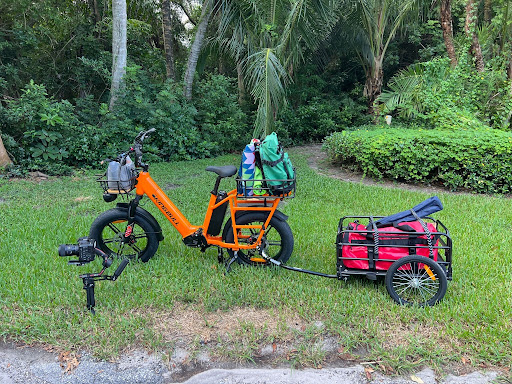
Wheel diameter is easy to overlook when every model in the photo has four-inch-wide tires. In Kingbull’s Back-to-School lineup, the difference between 20-inch and 26-inch wheels helps explain how each bike is meant to be used. The Ranger and Voyager 2.0 ride on 20-by-4-inch tires, while the Hunter 2.0S and Discover 2.0 use 26-by-4-inch tires. The width provides a broad contact patch across all four models; the diameter shapes the bike’s overall proportions and the way it approaches uneven ground.

Smaller wheels give designers more room to build a compact frame or place cargo closer to the ground. They can also respond quickly when changing direction at lower speeds, although the rest of the frame geometry still matters. Larger wheels meet cracks, potholes and trail obstacles at a shallower angle, helping them roll across rough sections with less interruption. Suspension settings, tire pressure and total load continue to influence comfort regardless of wheel size.

The Kingbull Ranger shows how 20-inch wheels can support a distinctive urban design. This $799 vintage electric bike measures 68.1 inches from end to end and uses a fixed long saddle rather than an adjustable bicycle seat. Four-inch-wide tires preserve its low profile while providing useful contact with damaged pavement and gravel. The extended saddle and included footrest pegs also give the Ranger the practical layout associated with a two-seater electric bike. Its combined rider and cargo weight must remain within the 350-pound total payload limit.

Kingbull uses the same wheel diameter for a different purpose on the $1,119 Voyager 2.0. Its rear rack sits 29.5 inches above the ground and is rated for 180 pounds, while the complete bike can carry up to 450 pounds. The lower rack keeps the loaded bike’s center of gravity closer to the ground, which is useful when starting, stopping, or balancing at low speed. An overall length of 69 inches also keeps the Voyager relatively compact for a cargo-focused model.

Kingbull

The 26-inch options follow more conventional full-size bicycle proportions. The $899 Hunter 2.0S pairs its larger wheels with a traditional step-over frame and adjustable saddle. Its 400-pound total payload rating and 150-pound rear rack make it practical for a work bag, books, or groceries. The frame layout will feel familiar to riders accustomed to standard mountain or commuter bicycles, while the fat tires add more surface area for gravel and damaged streets.

Kingbull’s $1,119 Discover 2.0 also uses 26-by-4-inch tires. It measures 77.5 inches in overall length and carries up to 400 pounds, with a rear rack rated for 150 pounds. The larger wheels suit commutes with longer stretches of open road, recurring potholes, or gravel paths. Its adjustable saddle also gives riders more control over leg extension than a fixed-seat design.

Wheel diameter provides only part of the picture. The 20-inch Ranger weighs 88 pounds, while the larger-wheeled Hunter 2.0S and Discover 2.0 each weigh 77 pounds. Frame material, battery size, suspension, and cargo hardware can have a greater influence on total weight than the wheel itself. Tire pressure also changes how a four-inch tire steers and absorbs smaller bumps, making correct setup important on either size.

Kingbull’s Back-to-School Sale runs from August 20 through September 3. For buyers considering these four models, the route and daily load offer a more useful guide than choosing the largest wheel available. Twenty-inch wheels work well when compact proportions, a lower cargo platform, or moped-style seating shape the design. Twenty-six-inch wheels better suit riders who prefer conventional bicycle geometry and smoother rollover across broken surfaces. The right choice is the one that fits the work the bike will do most often.

A Pre-Purchase Inspection Checklist for Buying a Used Semi Truck

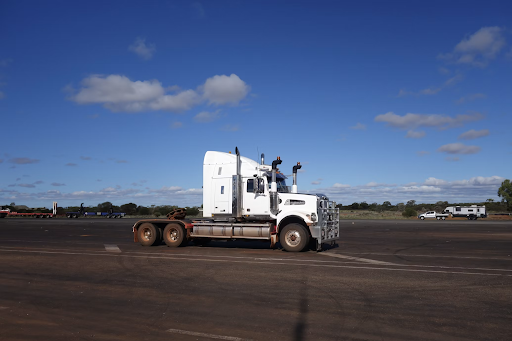
A used semi truck can look sharp under lot lights and still hide a repair bill that runs into five figures. Fresh paint covers frame welds. A warm engine covers a rough cold start.

The fix is a repeatable inspection you run in the same order every time. Work through the paperwork first, then the engine, then the structure, then the road. The early steps need nothing more than a flashlight and patience.

Key Takeaways

  • Check the title, VIN, and service records before you look at anything mechanical.
  • Never accept a truck that is already warmed up when you arrive.
  • The engine platform sets your long-term parts cost, not just its condition today.
  • Budget for an independent heavy-duty inspection before you sign.

Start With the Paperwork Before You Touch the Truck

Verify the VIN, title, and lien status

Match the VIN on the door jamb, the frame rail, and the title. If any of the three disagree, stop right there.

Check whether the title is branded salvage or rebuilt. Confirm there is no active lien on the unit before money changes hands.

Ask for the full maintenance history

Ask for the full maintenance history

You want oil change intervals, in-frame or overhaul records, and any warranty work. A seller who kept records usually kept the truck.

Gaps in the paperwork are not an automatic deal breaker, but they are grounds to negotiate. Incomplete service records are one of the standard reasons work vehicles lose resale value, which tells you how much weight that file carries.

Review the inspection history

Look for a current annual DOT inspection sticker. Ask about roadside inspections and any out-of-service orders tied to that unit.

Identify the Engine and What It Means for Ownership Cost

Find the engine data plate

Heavy-duty diesels carry a data plate with a serial number, model, and horsepower rating. Photograph it, then confirm it matches what the listing claimed.

If the plate is missing or unreadable, ask the seller for the engine serial in writing. A swapped engine is not a problem on its own, but it changes what you are actually buying.

Match the platform to parts and rebuild costs

Plenty of trucks on the used market run engines that left production years ago. A Cummins N14 engine is one you will run into often, an inline six of 14.0 liters that ran until 2002 and was rated between 310 and 525 horsepower depending on the model.

Age alone is not a reason to walk away. Remanufactured long blocks are still built for platforms like this one, so a serious internal failure does not automatically end the truck.

What it does mean is that you should check availability before you buy rather than after something breaks. Call two suppliers and ask what a long block costs and how long it takes to ship.

Ask for a recent oil analysis

A lab sample picks up coolant, fuel, or metal in the oil long before you can hear a problem. If a seller will not allow one, treat that as your answer.

Inspect the Engine Cold and Under Load

Insist on a real cold start

Ask the seller to leave the truck alone until you get there. Long cranking, heavy white or blue smoke and knocking on a cold start all point to internal wear, and a truck that is already idling when you pull up should put you on alert.

Look for leaks and check for blow-by

Check the pan rail, the rear main, and the front cover for fresh oil, and look at the coolant for any oily film.

With the engine idling, pull the oil fill cap and watch. Strong pressure or smoke pushing out points to worn liners or rings, which usually means an in-frame overhaul.

Check the turbo

Test the turbo shaft for side play with the engine off. Oil in the charge piping usually means the seals are on their way out.

Assess Brakes, Tires and Wheels

Measure brake lining thickness and look at the drums for scoring or heat cracks. Check that slack adjuster travel sits within spec. If the unit runs air disc brakes instead of drums, a caliper inspection checklist covers the boots, guide pin movement and pad wear indicators worth reading before you commit.

Read tread depth at every position and check the DOT date codes, because old rubber ages out regardless of how much tread is left. A full set of steer and drive tires is real money, so price it before you make an offer.

Conclusion

Buy in the same order every time. Paperwork, engine, structure, road test, then an independent set of eyes.

You are not looking for a perfect truck, because used Class 8 equipment does not come that way. You are looking for one whose problems you already know about and have priced in.

How Concrete Keeps Speedways Safe at High Speeds

When a stock car is doing 200 miles per hour through a banked turn, there’s really only one thing standing between the driver and disaster: the surface underneath the tires. Fans watch the cars. Engineers watch the track. And at a handful of the sport’s most demanding venues, that track isn’t asphalt at all. It’s concrete.

Why Some Tracks Are Built on Concrete

Dover Motor Speedway earned its nickname “The Monster Mile” partly because of how punishing the racing is there, and its concrete surface is a big part of that reputation. Bristol Motor Speedway is another example. Both tracks put cars through repeated high-load, high-heat stress in the exact same spots, lap after lap, for hours.

Asphalt can start to rut and shift when it takes that kind of concentrated, repetitive punishment. Concrete holds its shape. That’s the whole reason it gets used on the toughest short tracks in the sport. It isn’t about looks or tradition. It’s about a surface that won’t move underneath a 3,400-pound car at full throttle.

It’s Not Just “Poured and Done”

Track-grade concrete isn’t mixed or placed the way a homeowner’s driveway is. It’s reinforced with steel rebar, poured in thick slabs, and built with expansion joints placed at precise intervals. Race day brings serious temperature swings, and the surface has to expand and contract without cracking apart.

Get any of that wrong and the results show up fast. A track that develops surface failure at speed isn’t just an inconvenience. It’s a safety hazard for every driver on it.

Curing Is the Part Nobody Sees

Here’s something most fans never think about: concrete doesn’t reach its full strength the moment it’s poured. It needs time to cure properly before it can be trusted to handle real load, let alone a field of stock cars circling it at race speed.

That principle doesn’t change based on scale. Whether it’s an entire speedway or a stretch of sidewalk outside an apartment building, concrete that gets rushed through curing tends to fail early. 

The Same Physics Show Up on City Sidewalks

Obviously, a New York City sidewalk isn’t absorbing the same kind of load as a NASCAR track. But it’s under its own version of constant stress. Thousands of footsteps a day. Delivery trucks rolling over the curb. Tree roots pushing up from underneath. Freeze-thaw cycles every winter that expand and contract the slab, over and over, the same way heat does on a track surface.

The same fundamentals that keep a speedway safe, proper reinforcement, correct slab thickness, and full curing time, are what determine whether a city sidewalk lasts for decades or starts cracking apart within a few years.

When Concrete Fails, Someone Pays For It

On a track, a surface failure can end a race, or worse. On a city sidewalk, the stakes look different but they’re still real. A cracked or uneven sidewalk in NYC can turn into a DOT violation, a trip-and-fall claim, or a repair bill the property owner didn’t see coming. Companies like NYVanta Contractors deal with exactly that kind of concrete failure every day, diagnosing what went wrong below the surface and fixing it before it becomes a bigger problem.

If you’re a property owner and you’re not sure whether the concrete outside your building is holding up the way it should, it’s worth getting ahead of it. Frequently Asked Questions

Why don’t all racetracks use concrete instead of asphalt?

Cost and purpose. Concrete is more expensive to install than asphalt, and it’s mainly worth that expense in the specific spots where cars put the most repeated stress on the surface, tight, high-banked turns and heavy braking zones. Many tracks actually use a mix of both, asphalt on the straightaways and concrete where the punishment is worst.

How long does track concrete last before it needs to be repaved?

It varies by track and how much racing it hosts, but most concrete track surfaces are engineered to last well over a decade under heavy use. Compare that to asphalt, which often needs resurfacing every few years in the same high-stress areas.

Is sidewalk concrete built the same way as racetrack concrete?

The core principles are the same, reinforcement, proper slab thickness, and full curing time, but the mix design and specs are different since a sidewalk isn’t absorbing the same load as a race car. Both fail for similar reasons when those fundamentals get skipped.

How can a property owner tell if their sidewalk concrete is failing?

Look for visible cracking, sections that have sunk or lifted unevenly, and standing water after rain, which usually means the slab has settled. Any of those can turn into a DOT violation if left alone, so it’s worth having a contractor take a look early.

How long does concrete need to cure before it’s ready for real use?

Concrete typically needs several days of proper moisture to cure before it can handle regular load, and it keeps gaining strength for weeks after that. Rushing this step is one of the most common reasons concrete, whether on a track or a sidewalk, cracks early.

Conclusion

Racetracks and city sidewalks don’t have much in common on the surface. But underneath, they’re both asking the same material to do the same job: hold up under constant, repeated stress without giving way. Get the engineering right, reinforcement, thickness, and curing, and it does exactly that, whether 40,000 fans are watching or nobody’s paying attention at all. The next time a broadcast mentions how a track surface is holding up, it’s worth remembering that the sidewalk outside your own building is running the same race, just at a much slower pace.

The Race-Day Essentials Worth Bringing to a NASCAR Weekend

Photo by Abhinand Venugopal on Unsplash

A NASCAR weekend can mean hours outdoors, plenty of walking, changing weather, and a lot more time at the track than the race itself might suggest. Between arriving early, exploring fan areas, finding your seats, watching support events, and dealing with post-race crowds, preparation can make a noticeable difference.

The goal is not to carry an enormous bag everywhere. A well-planned race-day kit should cover sun protection, comfort, hydration, hearing protection, and a few practical extras while remaining easy enough to carry throughout the day.

Start With Serious Sun Protection

Grandstands can leave spectators exposed to direct sunlight for long periods, making sun protection one of the most important things to plan before leaving for the track.

Sunscreen is an obvious starting point, but physical coverage can make long outdoor days more comfortable too. Sunglasses and a lightweight hat provide additional protection while also becoming part of the race-day look. Groups attending together can even use personalized dad hats to create matching headwear for a family trip, birthday weekend, or annual race tradition.

Whatever you choose, prioritize something comfortable enough to wear for several hours. Race day is not the ideal occasion for a hat that constantly needs adjusting or feels uncomfortable by lunchtime.

Protect Your Hearing

A NASCAR race is loud in a way that television cannot fully communicate. Anyone attending for the first time should plan for the noise rather than assuming it will simply add to the atmosphere.

Hearing protection is therefore an essential addition to the race-day bag. Earplugs are compact and easy to carry, while suitable earmuff-style hearing protection can be particularly convenient for children.

Bring protection even if you are uncertain whether you will use it continuously. Having the option available is much better than discovering after the cars are on track that the sound level is more intense than expected.

Prepare for Hours in the Grandstands

A seat may seem perfectly adequate when you first arrive and considerably less comfortable several hours later. Depending on the venue and its rules, an approved lightweight seat cushion can make a long day in the grandstands much easier.

Comfortable clothing matters just as much. Choose breathable layers that allow you to adapt as temperatures change instead of dressing solely for the conditions expected when you leave your accommodation.

Footwear deserves particular attention because race weekends often involve substantial walking between parking areas, entrances, merchandise zones, concessions, and seating. Comfortable shoes that you have already worn are generally a better choice than a new pair purchased specifically for the event.

Keep Water and Food in Mind

Photo by Levi Olmstead on Unsplash

Outdoor events can make it surprisingly easy to forget about hydration until you are already thirsty. Check the specific track’s policies before attending to determine what containers, coolers, drinks, and food can be brought through the entrance.

If permitted, carrying water can reduce the need to repeatedly leave your seat and wait in concession lines. A few suitable snacks can be useful for the same reason, particularly when attending with children or spending most of the day at the venue.

Avoid overpacking, however. Everything you bring has to be carried, stored around your seat, and taken home again. Focus on what you are realistically likely to consume.

Bring a Small Weather Kit

Weather can change considerably during a full race weekend. A sunny morning does not guarantee identical conditions several hours later.

A lightweight rain poncho takes up very little space and can be far more convenient than carrying a large umbrella, particularly in crowded grandstands. A compact extra layer is also useful when temperatures are expected to fall later in the day.

Checking the forecast before leaving should guide what goes into the bag, but prepare for reasonable changes rather than packing for every possible weather scenario.

Keep Your Phone Useful All Day

A phone has become one of the most useful race-day tools. It can hold tickets, provide directions, help coordinate with friends, capture photographs, and keep important event information readily available.

All of that activity can drain the battery quickly. A fully charged portable power bank and the correct charging cable can prevent a minor inconvenience from becoming a problem later in the day.

It is also smart to take screenshots of essential information before arriving. Saving tickets, parking details, seat information, and meeting points locally means you are not completely dependent on a strong mobile connection in a venue crowded with thousands of other spectators.

Pack Around the Track’s Rules

The most important preparation may happen before anything goes into your bag. Tracks can have specific policies covering bag dimensions, coolers, seat cushions, cameras, food, beverages, and other items.

Check the venue’s current rules before the weekend rather than assuming that something permitted at another event will also be accepted here. Choosing a compliant bag from the beginning can save time and frustration at security.

Once the basics are covered, keep the final load simple. Sun protection, hearing protection, comfortable clothing, appropriate food and water, weather preparation, and a charged phone address most of the practical challenges of a long race day. With those details handled, you can spend considerably less time worrying about what you forgot and more time enjoying the reason you came: the racing.

Race Venues Are Building EV Charging Infrastructure That Runs on Clean Power

Ever wondered what happens at a race track after the engines go quiet?

Something is happening out in those vast parking lots. Race courses are emerging as some of the largest EV charging hubs in their regions. And this is not about two chargers by the front gate. This is about rows of chargers connected to solar, battery storage and green grid power.

And the reason is simple…

Fans idle six, eight, sometimes ten hours straight. Perfect charging opportunity. Meanwhile America has surpassed 250,000 public charging ports, with growth fastest at places where vehicles tend to park for longer periods.

But here’s the part most people miss.

Installing a hundred charging bays is not a parking project. It’s an electrical project.

What’s coming up:

  • Why Race Venues Are Wiring Up Fast
  • The Hidden Power Problem Behind Every Charging Bay
  • Continuous Current Rating, Explained Simply
  • Where The Clean Power Actually Comes From
  • Looking After What You Install

Why Race Venues Are Wiring Up Fast

Race tracks are unique because they have something that most venues envy. They have space, massive power feeds, and thousands of attendees who all arrive simultaneously.

That makes them ideal for massive charging setups. A track is already wired to handle floodlights, timing systems, broadcast booths and hospitality areas. Chargers just utilize infrastructure that’s unused most of the year.

Then of course there is the financial aspect. Pay and display bays generate income from commuters, local fleets and passing trade when they’re not being used for race days.

And motorsport is under a microscope.

Operating a charging network off solar or renewable supply allows a venue to have a genuine story to share rather than a marketing catch phrase.

The Hidden Power Problem Behind Every Charging Bay

Now for the part that never makes the press release…

If fifty cars are charging simultaneously, then you don’t have a steady drip-feed of demand. You have a significant, sustained load that persists for hours.

That dictates requirements for the electrical room. MV equipment at a charging site is expected to handle that load hour after hour without getting too hot, so the gas-insulated switchgear specified for these projects is chosen based on its continuous current rating, not some peak number you could run for a few seconds. Size that number too small and the switchgear, not the chargers, becomes your bottleneck.

Keep in mind how fast this demand is arriving. DC fast charging ports nationally are up 30% YoY, and each one of them strains the local grid.

The result?

Venues that design their electrical infrastructure for the long haul will continue to expand their charger fleets for decades to come. Venues that avoid upgrade bottlenecks after initial deployment.

Continuous Current Rating, Explained Simply

Here is something that trips up a lot of people.

Continuous current rating refers to how much current a piece of equipment can safely handle 24 hours a day, seven days a week. It is not a short time surge number. Surge ratings sound great on spec sheets, but a charging site doesn’t operate in surges. It operates in long, flat, torturous hours of demand.

Visualize a race car engine. Top horsepower is nice for one lap. It’s how much horsepower the engine can sustain for 2 hours without overheating that wins races.

Electrical gear works exactly the same way.

A properly matched continuous current rating gives a venue:

  • Cooler equipment and longer service life
  • Fewer nuisance trips during peak charging periods
  • Headroom to add more bays later
  • Safer conditions for staff working near live gear

Ambient temp. Even if you’ve got that nailed down, ambient temp matters also. You may have to derate any gear that’s going into a hot, confined space. Derating means your real-world continuous current rating is less than what’s printed on the label. A good design factor’s that in from day one.

Where The Clean Power Actually Comes From

So where does all this clean electricity come from?

Predominantly from three areas: rooftop solar, battery storage and renewable offtake agreements. Large scale venues have vast roof space and often land that goes unused. Solar was an obvious first step.

Take the Bahrain International Circuit for instance. Between two Grand Prix weekends their solar farm generated 5.28 MW of clean energy which was enough to power the circuit AND more.

Silverstone took another approach to pop-up solar car parks using hubs that combine panels, batteries and charge points into a single system. One of those hubs is topped up by 1MW of solar panels already installed on the roof of the venue’s conference centre.

Both approaches solve the same problem in different ways.

Why solar suits race venues so well:

  • Roof and land space is already available
  • Peak sunlight lines up with daytime event traffic
  • Generation happens behind the meter, cutting grid draw
  • It is visible to fans, which is worth something on its own

The honest truth is solar will never run a race weekend by itself. Vehicle charging demand will always peak when everyone leaves … usually after dark. That’s where storage comes into play.

Batteries Smooth Out The Spikes

Battery storage is the quiet hero of every clean charging site.

Solar energy charges batteries during the day with power nobody needs. Batteries discharge at night when everyone leaves and all the chargers turn on at once.

That accomplishes two helpful goals. One is preventing the venue from getting slammed with demand charges. The other is it prevents the site from having to upgrade to a much larger grid connection just to serve that peak week.

Smart charging management can help here too. Software can space sessions out, dial down some chargers and prioritise others, keeping overall demand well within the continuous current rating of whatever gear is feeding it.

Simple idea. Big savings.

Looking After What You Install

Nothing here works if it is left alone for five years.

Charging infrastructure should be maintained just like any other critical asset. This includes routine patrols, thermography on connections, and periodic testing of settings for protection relays.

Loose or corroded connections become hot. Heat decreases the amount of current that the equipment can safely handle. Eventually a site that was properly sized on paper begins to act like an undersized site.

A basic maintenance routine should cover:

  • Thermal imaging of switchgear and connections
  • Cleaning and inspecting solar panels
  • Testing battery state of health
  • Reviewing load data against design assumptions

Taking The Chequered Flag

Race tracks are becoming charging stations en masse. It makes sense beyond a coincidental level. They have the space. They have the power plug. They have the captive audience. Drivers who are there. Sitting. Parking. For hours. Doing nothing else but charge.

Make no mistake, venues who do this right approach it as an electrical engineering problem first, and a guest convenience second. They size equipment around amps continued, not amps peak. They implement solar along with storage, instead of praying for sunny weather. And they maintain their systems.

Supply three items correctly and a racetrack can continue adding chargers for years to come.

Get them wrong and the whole thing stalls on the grid.

How Race Teams Use Data to Improve Performance

Photo by depositphotos at https://depositphotos.com/

Modern motorsport is no longer driven by horsepower and driver instinct alone. Behind every competitive race car is a large amount of information collected, processed, and analyzed before, during, and after an event. Race teams use data to understand how their cars behave, how drivers respond to changing conditions, and where small adjustments can produce meaningful gains.

In series such as NASCAR, where margins between competitors can be extremely small, data has become one of the most important tools available to teams. Engineers and crew chiefs can use information from practice sessions, qualifying runs, and previous races to make better decisions and prepare for different scenarios.

What Kind of Data Do Racing Teams Collect?

A modern race car can generate a considerable amount of useful information. Sensors and onboard systems monitor various aspects of the vehicle while it is on the track.

Teams may analyze:

  • engine performance and temperatures;
  • tire behavior and wear;
  • suspension movement;
  • braking and acceleration;
  • throttle application;
  • speed through different sections of a track;
  • fuel consumption;
  • aerodynamic performance;
  • lap times and sector times.

This information gives engineers a more detailed picture than visual observation alone. A driver may report that the car feels unstable entering a corner, for example, while the collected data can help determine exactly when the problem occurs and which vehicle characteristics may be contributing to it.

How Data Helps Improve Car Setup

One of the most important applications of data is finding the right setup for a particular track.

Every circuit presents different challenges. A car that performs well on a short track may require significant changes before competing on a superspeedway. Engineers can compare historical data with information from current practice sessions to identify useful setup adjustments.

Suspension settings, tire pressures, aerodynamic configurations, and other variables can all influence how a car behaves. Instead of changing several elements at once, teams can use previous data to make more targeted decisions.

This approach also helps teams understand cause and effect. If a change produces better cornering speed but increases tire wear, engineers can evaluate whether the performance gain is worth the trade-off over a full race distance.

Using Data to Understand Driver Performance

Data is not only about the car. It can also reveal how a driver approaches a track.

Engineers can compare throttle, braking, steering, and speed data between different laps. Two drivers may use completely different techniques while achieving similar lap times, while a small difference in one section of the circuit can explain why one driver has an advantage.

Driver data can be particularly valuable when preparing for unfamiliar tracks. A team can study previous races, identify successful approaches to specific corners, and use simulator sessions to test different techniques before arriving at the circuit.

The objective is not necessarily to make every driver use exactly the same approach. Instead, data helps teams understand which techniques are producing results and where a driver may be able to find additional performance.

Data and Race Strategy

Performance data also plays a major role once a race begins. Teams constantly evaluate information that can influence strategic decisions.

Fuel consumption, tire degradation, lap times, traffic, weather conditions, and the performance of competitors can all affect the best course of action. A crew chief may need to decide when to pit, whether to change tires, or how aggressively the driver should approach a particular stage of the race.

Strategy is especially important when conditions change. A sudden change in temperature or track surface can affect tire performance and vehicle balance. Teams that can interpret new information quickly may have an advantage over competitors that rely primarily on their original race plan.

Learning From Previous Races

One of the biggest advantages of collecting data over an entire season is the ability to build a historical reference.

A team can compare its current performance with previous races at similar tracks and identify recurring patterns. Engineers may discover that a particular setup works well under certain conditions or that tire degradation becomes a problem after a specific number of laps.

Historical information can also help teams prepare for future events. Instead of starting from scratch, engineers have a database of previous experiments, successful setups, mistakes, and race outcomes.

This process resembles other data-driven forms of competition and entertainment. For example, platforms such as AvoCasino operate in an environment where users interact with digital experiences that can also involve statistics, probabilities, and patterns. In both cases, information can help explain what is happening, although motorsport teams use performance data specifically to improve vehicle and racing decisions.

How Real-Time Data Changes Racing

Collecting information after a race is useful, but real-time data can be even more valuable.

During a race, teams can monitor information and communicate important observations to the driver. Engineers may notice changes in tire performance, fuel usage, or lap times and provide recommendations based on what they see.

However, data does not replace human decision-making. Racing conditions are constantly changing, and not every situation can be predicted by a model. Experienced crew chiefs and engineers must combine numerical information with their understanding of the track, driver feedback, weather, and competitors.

The strongest teams therefore treat data as a decision-making tool rather than an automatic answer.

The Growing Role of Simulation

Simulation has become another important part of modern racing preparation. Teams can use historical vehicle and track information to recreate racing conditions before an event.

Drivers can use simulators to practice braking points, corner entry speeds, racing lines, and different scenarios without putting an actual race car on the track. Engineers can also test potential setup changes and analyze their expected effects.

Simulation is particularly useful because track time is limited. A team can explore multiple possibilities virtually before choosing which options are worth testing during an actual practice session.

Small Improvements Can Make a Big Difference

In professional motorsport, performance is often determined by small margins. A fraction of a second per lap can become significant over an entire race.

Data helps teams find these marginal gains by replacing assumptions with measurable information. It can show where a car loses time, how a setup change affects performance, and which strategies are most effective under particular conditions.

The most successful approach is not simply collecting more data. Teams need to collect relevant information, interpret it correctly, and turn it into practical decisions.

As racing technology continues to develop, data analysis will become even more closely integrated with vehicle engineering, driver preparation, and race strategy. The driver remains at the center of the competition, but behind every competitive performance is an increasingly sophisticated system of information helping the team make better decisions.

FC Weight Classes: All Divisions and Weight Limits Explained

Weight classes determine every match-up before fighters step foot into the Octagon. Each division has boundaries that keep match-ups balanced to stimulate competition. Training camps, weight cuts, weigh-ins, and whether or not a fighter is considered eligible for a title are all affected. The good news is, once you understand the system, following fight cards and analyzing them is easy. Read on to learn how every single division in the UFC works.

How the UFC Weight-Class System Works

The UFC organizes fighters by weight to limit major size differences. The Unified Rules of MMA set a maximum weight for every division. Fans using Malaysia online betting can consider weight classes when assessing UFC sports betting markets. This makes betting analysis easier because size, speed, and fighting style can affect matchups. Men currently compete from flyweight through heavyweight, while women compete in lighter divisions. In those divisions, speed and technical skills often become especially important.

These divisions, despite being discrete, create a tremendous amount of flexibility for players to organize themselves. Fighters generally have the ability to choose a division based on their natural size, strength, and endurance. Though weight cutting is difficult, fighters can move up to a division to gain a size advantage, while fighters can move down to for an even easier bout and gain a size disadvantage.

UFC Divisions and Their Official Weight Limits

The UFC uses several divisions with clearly defined championship limits. Some categories exist for both men and women, while others remain gender-specific. The main weight ranges can be grouped simply:

  • 115–135 lbs: women’s strawweight, plus flyweight and bantamweight divisions.
  • 145–155 lbs: featherweight and lightweight cover many fast, technical fighters.
  • 170–185 lbs: welterweight and middleweight combine considerable size with mobility.
  • 205–265 lbs: light heavyweight and heavyweight feature the largest UFC athletes.

The full system creates natural steps between athletes of different sizes. Most divisions increase by 10 or 15 pounds through the middle ranges. Heavyweight is different, stretching from above 205 pounds to a 265-pound ceiling.

Why Championship and Regular Bouts Have Different Rules

The listed divisional limit does not always equal the maximum permitted weight. UFC rules distinguish championship contests from regular fights when athletes reach the scale. For fans interested in sports betting, UFC betting Malaysia becomes easier to assess when these weigh-in rules are understood. Knowing the exact limits helps bettors evaluate difficult weight cuts and possible physical disadvantages. That one-pound difference sounds minor, but it can become crucial during difficult cuts.

Championship Fights Require the Exact Divisional Limit

A fighter challenging for a UFC title cannot use the usual allowance. Lightweight title competitors, for instance, must weigh no more than 155 pounds. At welterweight, the championship ceiling is 170 pounds rather than 171. Even a small miss can completely change what happens with the belt.

If a challenger misses weight, that fighter cannot win the championship. The bout may still proceed when the opponent and officials approve arrangements. Fans following fight-week updates through online casino Philippines platforms can also access casino entertainment between major UFC events. Online casinos give users a convenient way to enjoy different games from one place. A champion who misses weight can also create a complicated title situation. These cases show why championship weigh-ins often carry serious tension before major events.

Non-Title Fights Include a One-Pound Allowance

Most UFC bouts allow fighters to weigh in one pound over the limit for their division. A lightweight fighter can weigh in at 156 pounds for a non-title fight. Welterweights can weigh in at 171 pounds, and middleweights at 186. This provides fighters with some flexibility in their final cut.

Missing that weight will present another set of problems for the fighter. If a fighter misses the weight, the contest can be held as a catchweight contest. The fighter who missed the weight will receive part of their purse as compensation to their opponent. The amount of the purse that is lost will depend on the circumstances surrounding the missed weight.

What Happens During a UFC Weight Cut

Most UFC fighters begin fight week weighing in higher than the division weight limit. To weigh in, they cut a substantial amount of weight and end up losing a lot of water in the process. This is because they want to enter a division where they weigh less than the bigger athletes. But a fighter can only take this as far as aggressive weight cutting. Dehydrating too much will hurt overall fight performance.

At the scheduled official weigh ins, athletes weigh in and then the face off ceremonial event takes place later in the day. After making weight, fighters replenish water, electrolytes, carbs, and lost mass. By fight night, most fighters have already gained weight compared to their officially weighed in amount. The weight and recovery process also correlate to a fighter’s cardio, stamina, strength and performance in the octagon.

Why Weight Limits Matter When Watching UFC Fights

Different weight classes offer different insights beyond just weight. For instance, they can illustrate the matchup, preparation, cuts, or moves to a new weight division. Many fighters change their approach after the weight class change. Once you understand the limits of the weight class system, you begin to understand the matchmaking and theatrical drama that happens with weight cuts.

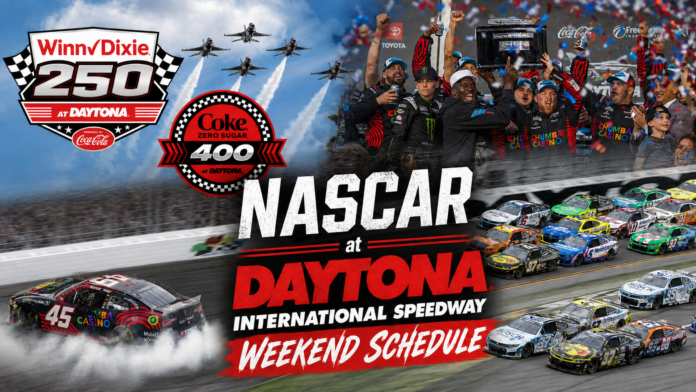
NASCAR at Daytona International Speedway Weekend Schedule

The NASCAR Cup Series (NCS) and the NASCAR O’Reilly Auto Parts Series (NOAPS) head to Daytona International Speedway this weekend. The O’Reilly Auto Parts Series starts off the weekend on Friday night in the Winn-Dixie 250 Powered by Coca-Cola at 7:30 p.m. ET on the CW Network. Then on Saturday, the NASCAR Cup Series Coke Zero Sugar 400 will be at 7:30 p.m. ET on NBC.

Cup Series Notes for Daytona International Speedway:

This is the 159th race at Daytona (most among all tracks in Cup history), and the summer winner got his first win of the season in five of the last eight years, which were: Erik Jones (2018), Justin Haley (2019), William Byron (2020) and Harrison Burton (2024). In the last 14 races, William Byron (3) and Ryan Blaney (2) are the only repeat winners, and the winner has led 10 laps or less in nine of the last 11 races, with three leading only the final lap.

The top 13 drivers have clinched a Chase spot, and Denny Hamlin clinched the #1 seed for the Chase at New Hampshire. Five drivers are still eligible for the final three Chase spots: Bubba Wallace (+75), Austin Cindric (+44), Shane van Gisbergen (+31), Ryan Preece (-31) and Brad Keselowski (-66).

Clinching Scenarios: Bubba Wallace would clinch with 2 points, Austin Cindric would clinch with 33 points, Shane Van Gisbergen would clinch with 45 points, Ryan Preece and Brad Keselowski could only clinch with help.

Coke Zero Sugar 400

Race info:

Distance: 400 miles (160 Laps)
Stage 1 ends on Lap 35
Stage 2 ends on Lap 95
Final Stage ends on Lap 160

NASCAR O’Reilly Auto Parts Series Notes for Daytona International Speedway:

Austin Hill won four of nine races since he joined Richard Childress Racing (RCR), and he swept both stages in the last race in February. RCR has won five of the last nine races in February, but has not won the summer race since July 2015.

The pass for the win came on the final lap in 16 races, four of the seven closest finishes in series history came at Daytona, and seven of the last 11 races went to overtime.

Eight drivers are locked into the Chase, four spots still open, and only six drivers still in contention for those spots. Parker Retzlaff can clinch a Chase spot with 10 points regardless of what any other driver does, and no other driver can clinch a Chase spot before the end of the race without help. The eligible drivers for final four Chase spots are: Retzlaff, Sam Mayer, William Sawalich, Brent Crews, Taylor Gray, and Rajah Caruth.

Winn-Dixie 250 Powered by Coca-Cola

Race info:

Distance: 250 miles (100 Laps)
Stage 1 ends on Lap 30
Stage 2 ends on Lap 60
Final Stage ends on Lap 100

The Weekend Schedule for Daytona International Speedway:

FRIDAY, AUGUST 28

3:00 PM – 4:30 PM: NOAPS QUALIFYING (IMPOUND)
5:00 PM – 6:30 PM: NCS QUALIFYING (IMPOUND)
6:55 PM: NOAPS DRIVER INTRODUCTIONS – CW Network
7:30 PM: NOAPS RACE (STAGES 30/60/100 LAPS = 250 MILES ) – CW Network

SATURDAY, AUGUST 29

6:55 PM: NCS DRIVER INTRODUCTIONS – NBC
7:30 PM: NCS RACE (STAGES 35/95/160 LAPS = 400 MILES) – NBC

*All times are Eastern. NASCAR Cup Series (NCS), NASCAR O’Reilly Auto Parts Series (NOAPS)