Home Blog Page 18

Fast Motorsport Recap Video Clips With MiniMax H3 Max

The checkered flag drops on a Sunday night sim-racing round or a weekend club track day, and the clock starts ticking immediately. League stewards and track-day coordinators usually have about sixty minutes to publish a post-race teaser or next-round schedule reveal before drivers log off and audience attention moves elsewhere. Waiting around for heavy local renders or timeline audio edits rarely fits into that tight window.

Instead of building every promo from scratch, automotive creators can produce fast drafts with minimax h3 max inside an independent browser workspace without configuring local GPUs or ComfyUI nodes. The platform is not affiliated with or endorsed by MiniMax, and it runs both the flagship model and its high-speed sibling in the cloud so teams can test angles and publish recaps while paddock talk is still active.

Testing Camera Sweeps and Audio Cues at 480P

Released on July 31, 2026, the open-weight MiniMax H3 (also known as Hailuo 3) is a 33-billion-parameter single-stream H3-Omni-Transformer paired with a Qwen3-VL-32B text encoder. It generates 24 fps clips alongside native 32 kHz stereo sound, producing engine notes, tire scrub, paddock ambiance, music, and spoken lines directly from the text prompt in one pass. Running that full four-component pipeline locally requires serious hardware—MiniMax’s vLLM server example uses four GPUs, and the MiniMax H3 Community License lists the US, EU, UK, and South Korea as excluded territories for the open weights.

For a race organizer working off a laptop after an event, the cloud-based H3 Max variant solves both the hardware bottleneck and the iteration cost. H3 Max generates 5-to-15-second clips in roughly one minute, and its 480P draft tier costs 6 credits per second—working out to $1.00 for a five-second test clip on the $9.99 Starter pack of 300 credits.

That low entry rate changes how you block out motorsport social teasers. You can write three different camera prompts—such as a low front-splitter tracking shot, a pit-wall pan, and an overhead chicane sweep—while testing how the native stereo audio handles high-revving downshifts or commentator voiceovers written directly in the prompt. Within minutes, you know which camera movement and exhaust cue hits hardest before paying for a full-resolution master.

Anchoring Motion With Track-Day Photos and Livery Renders

Pure text generation works well for generic b-roll, but league announcements and club recaps need recognizable cars. The browser workspace supports two visual workflows to keep automotive motion clips grounded:

  • Image-to-Video with First and Last Frames: Upload a starting image—such as a studio render of a league livery or a pit-lane photo—and optionally attach a final frame, like a rear wing or trophy graphic, so the model plans the motion path between both frames. Input files are validated before charging to ensure each side measures 256 to 5760 pixels with an aspect ratio between 0.4 and 2.5, and uploads auto-delete after 30 days.
  • Reference-to-Video for Style and Rhythm: When you do not want a photo used as the literal opening frame, attach up to 12 reference files total—up to 9 images, 3 video clips of 2 to 15 seconds (up to 15 seconds combined), and 3 audio files. Tagging @Image 1, @Video 1, or @Audio 1 in your prompt lets you match a race suit, borrow the camera rhythm of a real onboard clip, or lock in an announcer’s voice.

Choosing Between 1080P H3 Max and Native 2K Flagship H3

Once your 480P draft nails the camera sweep and sound timing, the workspace lets you switch resolutions or models while preserving your prompt and settings. Both models support aspect ratios from 21:9 down to 9:16, plus 768P output at 9 credits per second ($1.50 per five-second clip).

If speed is the priority for a vertical teaser, staying on H3 Max at 1080P costs 19 credits per second (3.16 per five-second clip) and includes your first two reference images free.

However, if your clip features close-up driver faces, intricate suit fabric, or small sponsor decals on a door panel, switching to the flagship H3 model is the smarter call. Flagship H3 takes a few minutes to render, supports 4-to-15-second durations, includes up to five reference images free, and delivers native 2K resolution via in-context regeneration (H3-Regenerate-2K) at 14 credits per second (2.33 per five-second clip).

Streamlining Your Post-Race Publishing Routine

Keep a folder of pre-cropped 9:16 and 16:9 livery renders ready before the green flag drops. Right after the podium ceremony, run two quick 480P drafts to lock your motion and stereo audio, flip the winning take to flagship 2K or 1080P, and download the watermark-free MP4. Because one-time credit packs require no subscription, never expire, and issue an automatic credit refund if a render fails, even a small weekend series can keep a balance ready for race night.

How to Transition Your Fleet from Retail Gas Stations to Bulk Fuel Delivery

Photo by depositphotos at https://depositphotos.com/

Driving commercial trucks to retail gas stations? That’s tens of thousands of dollars wasted in unseen labor expenses annually. Driving around in search of an open gas station results in wasted drive time, more time spent idling, and more administrative headaches with missing fuel receipts.

Using on-site bulk fuel delivery removes all obstacles and guarantees continuous fuel supply. Whether your fleet uses heavy-duty equipment or smaller regional delivery vehicles, collaborating with a dependable Colorado fuel supply will help streamline operations and keep all the vehicles fueled before the start of the shift.

Why Retail Gas Stations Drain Fleet Budgets

The price seen at retail pump stations accounts for just a part of your actual fueling expenses. According to American Transportation Research Institute (ATRI) fleet benchmarks, one average fueling stop at a retail station takes 20 minutes per vehicle, when considering the driving distance and queue time at pumps.

  • Unproductive Driver Time: Paying drivers to wait in line costs you productive road time.
  • Fuel Losses and Thefts: Fleet cards for retail stations may be used to refill private vehicles or steal fuel.
  • Administrative Inefficiency: Dealing with numerous receipts and changing prices takes more time.

Retail Gas Station Fueling vs. Bulk Fuel Delivery: The Fast Comparison Table

The switch to bulk fuel delivery means a new way of managing fuel expenses and keeping vehicles operating without interruptions.

Operational FactorRetail Gas StationsBulk Fuel Delivery
Average Refueling Time15–25 minutes per vehicle0 minutes of driver shift time
Pricing StructureFluctuating retail pump ratesTransparent wholesale rack-plus pricing
Fuel TrackingManual receipts and card statementsAutomated metered gallon reports
Supply SecurityExposed to local station shortagesGuaranteed scheduled and emergency drops

Step 1: Audit Your Fleet’s Fuel Consumption Rate

Gather fleet card statements and maintenance logs for the last six months. Calculate the weekly fuel consumption of diesel, dyed diesel, and unleaded gasoline. Identify seasonal spikes in demand to allow the fuel supplier to develop a delivery schedule and prevent any shortages in tanks during busy periods.

Step 2: Choose Between Wet Hosing or On-Site Fuel Tanks

Select a fuel delivery system depending on your storage capabilities and vehicle return pattern:

  • Mobile Wet Hosing: Fueling trucks deliver fuel directly into each vehicle while parked in the yard. No need for fuel storage infrastructure.
  • On-Site Fuel Tanks: Set up or lease an above-ground fuel storage tank to allow for fueling on site at any time. Note that any facility storing over 1,320 gallons of fuel on-site must comply with the Environmental Protection Agency (EPA) Spill Prevention, Control, and Countermeasure (SPCC) guidelines. 

Choosing an experienced Colorado fuel supply will make tank installation, compliance, and automated level control much easier.

Step 3: Collaborate with a Vertically Integrated Fuel Supplier

Not all fuel distributors are equally capable of supplying your fleet with fuel in difficult market situations. Choose a supplier with its own fleet of trucks and terminals, as well as an active 24/7 emergency fueling program. Vertical integration allows you to avoid additional delays and ensures clean, water-free fuel deliveries all the time.

Step 4: Implement Automated Fuel Tracking and Develop Driver Protocols

Throw out retail fuel cards and use tank gauges or automated wet-hosing logging of exact gallon count per vehicle. Prior to the launch of the program, conduct a brief 15-minute meeting to discuss a new end-of-shift parking pattern. Ask drivers to keep their fuel caps unlocked and park in designated fueling lanes.

Making the switch from retail gas stations puts you ahead within the first billing cycle. By auditing your fuel consumption rate, setting up fuel storage infrastructure, and implementing an automated fueling tracking system, refueling becomes an invisible process instead of a daily bottleneck.

Planning a Better and Less Exhausting Race Weekend

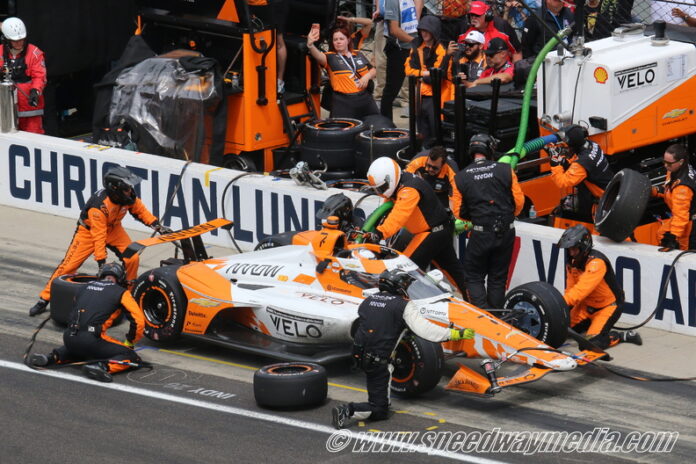
There’s something special about watching a race from the grandstands. The sound of engines, the smell of rubber, and the excitement of seeing cars battle for position make the experience hard to match. Whether you’re attending a NASCAR race, an IndyCar event, or a local motorsports weekend, being there in person brings a different kind of excitement.

But race weekends can also wear you out.

Between long walks, crowded entrances, changing weather, and hours spent on your feet, a fun weekend can quickly become exhausting. Add traffic and limited food choices, and even experienced race fans can run out of energy before the checkered flag.

The good news? A little planning makes a big difference. You don’t need a perfect schedule or expensive equipment. You just need to prepare for the parts of race day that tend to catch people off guard.

Plan Your Race Weekend Before Leaving Home

A good race weekend starts well before you reach the track. Knowing where you’re going, what to expect, and how you’ll get around saves unnecessary stress.

Check the Venue Layout

Race venues are often much larger than they look on television. Some tracks require long walks between parking areas, entrances, grandstands, and food stalls.

Before leaving, check the circuit’s official website for a venue map. Find your entrance, seating section, restrooms, and nearby food areas.

Pay attention to the distance between parking and your seats. A parking spot that looks close on a map can still mean a 20-minute walk.

If you’re attending a major event at Daytona International Speedway or Indianapolis Motor Speedway, give yourself extra time to move around.

Don’t Fill Every Hour

It’s tempting to attend every practice session, driver appearance, and support race. After all, you’ve paid for the weekend.

But trying to see everything often leaves you too tired to enjoy the main event.

Pick the activities that matter most. Leave room for meals, rest, and unexpected delays. Think of it like a team’s race strategy. Going flat out from the start rarely works if you haven’t planned your stops.

Pack for Comfort, Not Just Convenience

What you bring to the track affects how comfortable you’ll feel throughout the day.

You don’t need to carry half your house. In fact, a heavy bag becomes another problem after several hours of walking.

Bring the Things You’ll Actually Use

Start with a lightweight backpack and check the venue’s bag rules before packing.

A few useful items include:

  • Comfortable walking shoes with good support
  • Sunscreen and a hat
  • Refillable water bottle, if permitted
  • Earplugs or over-ear hearing protection
  • Portable phone charger
  • Lightweight rain jacket or poncho
  • Sunglasses and a small cooling towel
  • Snacks, if the venue allows outside food

Comfortable shoes deserve special attention. Race weekends aren’t the best time to break in a new pair of sneakers. Wear something you’ve already tested during long walks. Eyes deserve the same planning, so pack a spare pair of contact lenses for long, dusty days in the grandstands.

Prepare for Unpredictable Weather

Motorsports events don’t always happen under clear skies.

A sunny morning can turn into a rainy afternoon. And even when the forecast looks pleasant, uncovered grandstands can become surprisingly hot.

Dress in light layers that you can remove when needed. Choose breathable clothing and avoid heavy fabrics that trap heat.

If rain is expected, a compact poncho is often more practical than an umbrella, especially in crowded seating areas where umbrellas may be restricted.

Protect Your Energy Throughout the Day

Most people prepare for the race itself but forget how much energy they’ll spend getting there, walking around, and waiting.

The trick is to manage your energy before you feel exhausted.

Stay Hydrated and Take Breaks

Hours in the sun can leave you dehydrated, especially when you’re walking between different areas of the circuit.

Drink water throughout the day rather than waiting until you’re thirsty. If you’re sweating heavily, consider an electrolyte drink alongside regular water.

Food matters, too. Skipping breakfast to beat traffic sounds efficient until you’re standing in a long concession line feeling lightheaded.

Eat a proper meal before heading out. During the event, choose food that keeps you satisfied without making you feel sluggish.

And take breaks. Find a shaded spot, sit for a while, and rest your feet.

Don’t Ignore Mental Fatigue

Race weekends aren’t only physically demanding. The noise, crowds, heat, and constant movement can feel overwhelming, particularly for people who struggle with anxiety.

Sometimes, the excitement of being at the track comes with unexpected stress. That’s worth acknowledging.

If crowded areas make you uncomfortable, find quieter spaces away from busy entrances and concession stands. Taking a short break doesn’t mean you’re missing out.

For individuals dealing with ongoing anxiety alongside substance use concerns, professional resources offering anxiety and substance abuse treatment can help address both conditions.

For most race fans, simple steps such as stepping away from crowds, staying hydrated, and allowing extra travel time can reduce everyday event-related stress.

Make Hearing Protection and Personal Safety a Priority

Race cars are loud. That’s part of their appeal, but prolonged exposure to engine noise can damage your hearing.

Even if you’ve attended races for years, hearing protection should remain part of your routine.

Protect Your Ears Without Missing the Action

Use properly fitted earplugs or protective earmuffs designed for loud environments.

For children, over-ear hearing protection is usually easier to manage than standard earplugs.

Don’t assume that sitting farther from the track removes the risk. Noise levels vary depending on the circuit, racing series, and seating location.

You can still enjoy the sound and atmosphere while protecting your hearing.

Give Yourself Space When Needed

Safety also means knowing your limits.

If you start feeling dizzy, overheated, or unusually tired, move to a cooler area and rest. Seek medical help if symptoms are severe or don’t improve.

For fans managing longer-term emotional or behavioral health concerns, access to mental health treatment programs can provide support beyond the occasional stress of a crowded event.

It’s also worth checking where the venue’s first aid stations are located. You probably won’t need them, but knowing where to go can save time if something happens.

Plan Your Transportation and Recovery Time

The race might end when the checkered flag waves, but your day isn’t necessarily over.

Leaving a major motorsports venue can take longer than expected. Thousands of fans often head toward the exits at roughly the same time.

Avoid the Post-Race Traffic Rush

Check parking arrangements before arriving. Some circuits offer shuttle services or designated pickup zones for rideshare passengers.

If you’re driving, take note of your parking section and nearby landmarks. Saving your location on Google Maps can help you find your vehicle later.

Don’t automatically rush toward the exit after the race. Sometimes, spending another 30 minutes relaxing near the venue is more pleasant than sitting in a traffic jam.

If you’re traveling with friends, agree on a meeting point before separating. Mobile signals can become unreliable in crowded areas.

Leave Room for Rest After the Event

A packed race weekend can affect your energy long after you return home.

If you’re attending a multi-day event, avoid scheduling late nights followed by early mornings whenever possible.

Give yourself enough time to sleep, eat properly, and recover between sessions.

This is especially important for people maintaining structured health routines or substance recovery plans. Travel can disrupt familiar schedules, so planning ahead helps maintain stability.

For those exploring longer-term recovery support, look for services that offer information on structured living environments. While these services aren’t specific to motorsports travel, they highlight how stable routines and supportive surroundings contribute to ongoing recovery.

Even for fans without specific health concerns, maintaining regular meals and sleep schedules makes a long weekend easier to manage.

Enjoy the Race Without Wearing Yourself Out

A great race weekend doesn’t have to leave you completely drained.

You can enjoy the roar of engines, explore the fan areas, watch your favorite drivers, and still have enough energy to appreciate the final laps.

The difference often comes down to small decisions.

Wear comfortable shoes. Bring water. Protect your hearing. Check the weather. Know where you’re parking. And don’t feel pressured to attend every activity on the schedule.

Most importantly, remember why you’re there.

You’re spending time doing something you enjoy, whether that’s watching a championship battle, introducing your kids to motorsports, or sharing a weekend with friends.

A little preparation means fewer distractions and more time to focus on what matters: the racing, the atmosphere, and the memories you’ll take home.

After all, the best race weekends aren’t always the busiest ones. They’re the ones you enjoy from the first green flag to the final trip home.

Three F1 Seats Are Still Open for 2027

Photo by Simon Scoggins for SpeedwayMedia.com.

Liam Lawson sounded frustrated before the Brazilian Grand Prix. “I don’t know what else they want me to do,” he said. He is ninth in the standings, yet he still has no deal for 2027. Most teams have named their drivers by now. Three seats have not been settled. They belong to Oliver Bearman at Haas, and to Lawson and Arvid Lindblad at Racing Bulls. Here is the case for and against each of them, and a name to replace one.

Bearman: a good year without a deal

Start with Bearman, because his case looks the strongest. He has 23 points this season. Teammate Esteban Ocon has 7, and Ocon is leaving Haas. Team boss Ayao Komatsu is confident about the new deal. “We will get it done, for sure,” he said. Bearman says he wants to stay, and he backs himself against the new arrival. He is now the senior driver at Haas, a role he wanted from the start of the year. The case against him is small, but it is real. Contract talks have been slow because of details on the contract side. Ferrari also has a big say, since Bearman is a Ferrari junior. So is Rafael Câmara, who Haas has already signed for 2027. And 23 points is not a lot. Haas has also shown it can act fast. It swapped Ocon for another driver in the middle of the Mexico City weekend. If Haas did look elsewhere, the easy choice is Ryo Hirakawa. He is the Haas reserve and won Le Mans in 2022. In Mexico City he scored a point on his debut.

Lawson: points, but no promise

Lawson has 89 points and is ninth, 47 clear of Pierre Gasly. Over their first 14 races together, he beat Lindblad 10 to 4 on Sundays and 9 to 5 in qualifying. In Brazil, he qualified fifth, started third after penalties, and finished seventh. Racing Bulls are fifth in the constructors’ standings, and Lawson has scored most of their points. He even filled in at Red Bull this season while Isack Hadjar was hurt, and he scored 14 points there. So why is he waiting? Red Bull has a longer plan. Lawson lost his Red Bull seat after two races in 2025 and went back to Racing Bulls. A young driver is now knocking at the door. Lawson says the public support is welcome, but he would prefer clear backing from inside Red Bull. Most seats are full, so if he loses this one, he would likely need a reserve role. Team boss Alan Permane summed it up. “Three doesn’t fit into two, of course,” he said.

Lindblad: a rookie who keeps finishing

Lindblad is in his first F1 season. By September, he had finished every race he started, never lower than 14th. He scored points in nine of his first 14 starts and often looks quick in qualifying. He now has 38 points and sits 11th. Against him, he trails Lawson, and he just missed the points in Brazil. Red Bull also has to find room for its next junior. Still, a rookie who rarely makes mistakes is worth a second year. Drivers often take a step forward when the car and the team feel familiar. A first year is a short test, and a second year gives a fairer one.

The replacement: Nikola Tsolov

That next junior is Nikola Tsolov, a Bulgarian who is second in Formula 2 with two rounds left. F2 boss Bruno Michel says he is ready for F1. But he adds that this is no promise of a seat. Tsolov had his first Friday practice in Mexico City and finished 12th, just 0.126 seconds behind Lindblad. Lindblad even posted what looked like a hint that Tsolov would be his teammate, then edited it. Many reports now say Lawson is the favourite to stay, and that Tsolov could wait as a reserve. Seat news moves fast, and many fans like to back their view with a bet. If you do, Warga88 runs an online sportsbook, but only stake what you can afford to lose.

My pick, and the phone call

Here is my pick. Keep Bearman, because he has earned it. Keep Lindblad, because rookies need a second year. Then give Tsolov the Lawson seat. That sounds hard on Lawson, who has done little wrong. But Tsolov has the F2 results, and Racing Bulls exists to bring juniors through. If Red Bull wants to wait a year, Tsolov can be the reserve, and Lawson can stay. That would be a fair deal too, and it keeps a good driver in the sport. The news is expected before the Las Vegas Grand Prix. Lawson asked what else they want from him. Soon he should get his answer.

Recovery Habits That Help Race Drivers Stay Sharp

Race car drivers spend hours preparing for what happens on the track. They study racing lines, review lap times, and work with their teams to get every detail right. But there’s another part of racing that doesn’t get much attention. It’s what drivers do after they step out of the car.

Racing puts serious demands on the body and mind. Drivers deal with extreme heat, constant vibrations, high G-forces, and split-second decisions. Even after the checkered flag, their bodies need time to recover.

Good recovery habits help drivers maintain focus, manage fatigue, and stay physically ready for the next race. And while every driver has a different routine, a few basic habits make a real difference.

Sleep Is Part of Race Preparation

A rested brain reacts faster

Sleep is one of the simplest ways drivers can support their performance. Yet it’s often the first thing that suffers during a packed racing schedule.

Late-night travel, early practice sessions, and changing race locations can disrupt normal sleep patterns. Add the excitement of competition, and getting enough rest becomes harder than it sounds.

Sleep affects reaction time, memory, and decision-making. These skills matter when you’re driving at high speeds with other cars just inches away.

Most adults need seven to nine hours of sleep each night. Drivers should aim for a steady schedule, even when traveling between events.

A few practical habits help:

  • Keep a regular bedtime when possible.
  • Limit caffeine late in the day.
  • Make hotel rooms dark and cool.
  • Avoid heavy meals right before bed.
  • Take short naps when travel affects normal sleep.

One poor night doesn’t automatically ruin a race. But repeated sleep loss can make it harder to stay alert and respond to changing track conditions.

Hydration Starts Before the Green Flag

Heat takes more out of drivers than you think

Anyone who’s watched a summer race knows how hot the track can get. Inside a race car, temperatures can climb much higher, especially with fire-resistant suits and helmets.

Sweating helps the body cool down, but it also causes fluid and electrolyte loss.

Even mild dehydration can affect concentration and physical endurance. For drivers, that means another challenge during an already demanding race.

Drinking water right before getting into the car isn’t enough. Hydration should start well before race day and continue throughout the event.

Drivers often use electrolyte drinks during long or hot race weekends. These help replace sodium and other minerals lost through sweat.

Still, hydration isn’t about drinking as much water as possible. Too much can create problems, too. The goal is to replace fluids based on individual needs, weather conditions, and sweat loss.

After a race, checking body weight changes and urine color can help drivers assess hydration, though neither measure tells the whole story.

And don’t forget food. Meals containing fluids, salt, and carbohydrates also support recovery.

Physical Recovery Goes Beyond Resting

Your muscles need attention between races

From the outside, racing looks like a seated activity. Anyone who’s driven competitively knows otherwise.

Drivers use their neck, shoulders, arms, core, and legs to control the car. They also hold their bodies steady against forces that change with every corner.

That effort adds up.

After a race, tight shoulders, sore neck muscles, and lower-back discomfort are common concerns.

Mobility exercises help maintain comfortable movement. Gentle stretching, walking, and light cycling can also support recovery without adding much physical stress.

Strength training remains important, but timing matters. A demanding workout immediately after a long race isn’t always the smartest choice.

Drivers benefit from working with trainers who understand their racing schedule and physical demands.

Mental recovery matters, too

Physical soreness is easy to notice. Mental fatigue isn’t always so obvious.

A difficult race can leave drivers replaying mistakes, missed opportunities, or tense moments long after the event ends.

Finding ways to manage that pressure matters.

Some drivers talk with sports psychologists. Others use breathing exercises, quiet time, or simple routines to separate racing from personal life.

Mental health support also becomes important when stress leads to unhealthy coping habits. For individuals struggling with substance use, professional services such as substance abuse treatment Pennsylvania can provide structured support.

The larger lesson applies to everyone involved in motorsports. Recovery isn’t limited to muscles and joints. Your mind needs attention as well.

Nutrition Helps Drivers Recover Their Energy

Eating well is about more than race-day fuel

Race weekends don’t always make healthy eating convenient.

Drivers move between team meetings, sponsor appearances, practice sessions, and qualifying runs. Sometimes, grabbing whatever food is available feels easier than planning a proper meal.

But nutrition affects how the body recovers from demanding activity.

Carbohydrates help restore energy used during physical effort. Protein supports muscle repair, while fruits and vegetables provide nutrients that contribute to normal body function.

Drivers don’t need complicated meal plans to get the basics right.

A balanced meal after racing might include chicken, rice, vegetables, and water. Other options include pasta with lean protein or a sandwich with fruit.

The important part is consistency.

Skipping meals or relying on energy drinks can leave drivers feeling drained, especially during multi-day events.

Watch the habits that interfere with recovery

Food choices matter, but so do the things drivers consume outside normal meals.

Alcohol, for example, can disrupt sleep and affect hydration. These effects work against the recovery habits drivers need after competition.

Regular heavy drinking also creates broader health concerns that go well beyond race performance.

People experiencing both substance use problems and mental health conditions often need care that addresses both issues. Resources focused on co-occurring disorders treatment explain how these conditions can be managed together.

For drivers, team members, and anyone working in motorsports, recognizing when a habit becomes harmful is an important part of protecting long-term health.

Managing Stress During a Long Racing Season

The pressure doesn’t disappear after the race

A racing season involves much more than driving.

There’s travel, media attention, sponsor commitments, technical meetings, and the constant pressure to perform. Even when drivers aren’t racing, they’re often thinking about the next event.

That mental workload can make proper recovery difficult.

Simple boundaries help. Setting aside time for family, hobbies, or activities unrelated to motorsports gives drivers a chance to recharge.

Some enjoy fishing or cycling. Others prefer reading, gaming, or spending a quiet evening at home.

There’s no single correct way to relax.

What matters is finding activities that allow the mind to step away from competition.

Drivers should also pay attention to changes in mood, sleep, and behavior. Constant irritability, poor concentration, or ongoing exhaustion can signal that something needs attention.

For those dealing with unhealthy alcohol use, seeking alcohol dependency treatment can be an important step toward better health and stability.

Seeking support isn’t a sign that someone can’t handle racing pressure. It means they’re taking their health seriously.

Building a Recovery Routine That Actually Works

Small habits are easier to maintain

Drivers don’t need a perfect recovery routine. They need one they can follow.

A good starting point is to focus on sleep, hydration, food, movement, and mental rest.

These habits work together. Better sleep supports concentration. Proper hydration helps the body handle heat. Balanced meals replace energy, while mobility exercises help reduce stiffness.

And mental breaks make it easier to return to competition with a clear head.

The routine should also change based on the racing schedule. Recovery after a short practice session won’t look the same as recovery after a demanding endurance event.

Paying attention to fatigue, soreness, and overall energy helps drivers understand what their bodies need.

Coaches, athletic trainers, and healthcare professionals can provide more specific guidance when necessary.

Most importantly, drivers should avoid treating recovery as something they only do when they’re exhausted.

By then, they’re already playing catch-up.

Staying sharp starts between races

Fans remember dramatic overtakes, close finishes, and incredible saves. They rarely see the quiet preparation that makes those moments possible.

Sleep schedules, balanced meals, stretching sessions, and time away from the track aren’t exciting parts of motorsports. But they’re essential to maintaining performance over a long season.

The best drivers understand that staying competitive requires more than speed and skill.

It also requires knowing when to rest.

Because sometimes, the smartest move a driver makes happens long before the engine starts.

Nick Sanchez Joins MHR Lineup in 2027

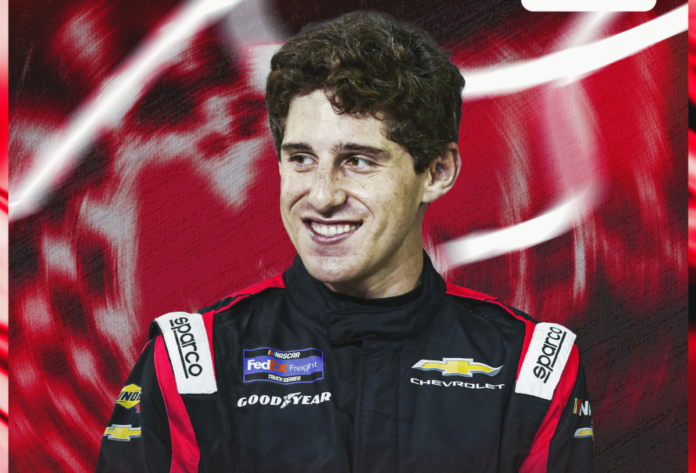
(Statesville, N.C) – McAnally-Hilgemann Racing (MHR) announced today that the organization is welcoming former winner Nick Sanchez to the team’s 2027 NASCAR FedEx Freight Truck Series (NFFTS) lineup. The 25-year-old from Miami, Fla., will drive the No. 18 Chevrolet to pursue his third-career Chase appearance. Sanchez completes MHR’s 2027 full-time roster alongside teammates Chrisian Eckes and Daniel Hemric as they hunt the organization’s first series title.

“This is a tremendous opportunity to join MHR and compete full time again at a high level”, Sanchez said. “I’ve always held myself to a high standard and I know the entire team is incredibly motivated and hungry for 2027. Huge thanks to Bill McAnally for putting this together, Chevrolet, and everyone involved at MHR. It was a challenge to only run a limited schedule this last year, so I have a ton of energy and excitement for what’s ahead of us in February. There are a lot of great people here and the desire from everyone to win races is off the charts.”

Sanchez, a two-time NFFTS race winner at Daytona International Speedway and Charlotte Motor Speedway in 2024, has made 51 total starts in the series with 14 top-five’s and 27 top-10 finishes. The Florida native captured the 2022 ARCA Menards Series championship and earned a victory and playoff berth in his NASCAR Xfinity Series rookie season in 2025.

“We’re ecstatic to have Nick in the fold with us”, team owner Bill McAnally said. “The raw speed and ability he brings to our group is going to elevate the entire operation. He’s going to be a great asset and teammate in our stable. He’s won at every level throughout his career, and we’re excited to see his potential grow into results next year.”

Sanchez’s first season under the MHR banner commences at Daytona International Speedway on Friday, February 19th.

Additional details for the No. 18 team will be announced at a later date.

Ford Racing NASCAR: Austin Cindric Wins Inaugural Veterans Day Classic for the Air Force

#2: Austin Cindric (Air Force) Ford Mustang® Dark Horse R

Ford Racing Notes and Quotes
Proud to Honor Veterans Day Classic – Daytona International Speedway Road Course
Wednesday, Nov. 11, 2026

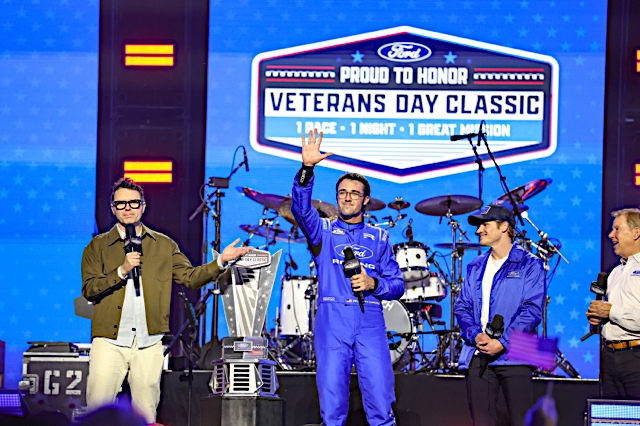
AUSTIN CINDRIC WINS INAUGURAL PROUD TO HONOR VETERANS DAY CLASSIC FOR THE AIR FORCE

• NASCAR Cup Series driver Austin Cindric won the first Proud to Honor Veterans Day Classic in the No. 2 Air Force Ford Mustang®  Dark Horse™ R on Wednesday night at Daytona International Speedway.

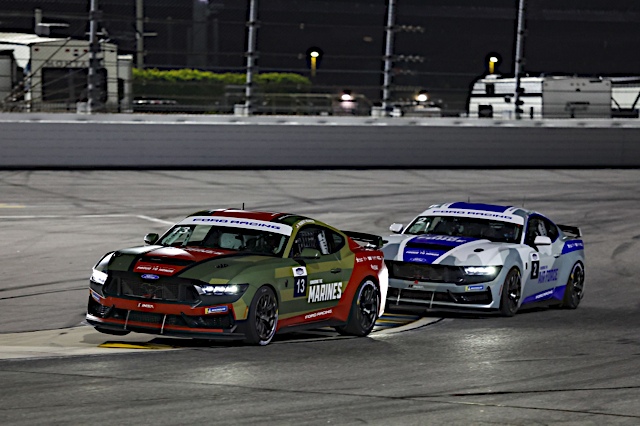
Cindric, who also won the pole, and two-time Mustang Challenge North America champion Robert Noaker (Marines) exchanged the lead three times in the final nine minutes.

Cindric made the decisive pass with five minutes remaining, but the two battled side-by-side throughout the final laps.

• Cindric received a custom-designed Proud to Honor trophy with replicas also going to Ford Racing and NASCAR for display at their respective headquarters.

• Twelve Ford Racing drivers competed in six teams of two in Mustang® Dark Horse™ Rs with custom military-inspired liveries, bringing the spirit of a great American sporting rivalry to the race.

• The format was a 15-minute qualifying session followed by a 30-minute race on Daytona’s 12-turn, approximately 3.6-mile road course. The first driver across the line won for his branch.

VETERANS DAY CLASSIC
#13: Robert Noaker (Marines) Ford Mustang® Dark Horse R

Teams: 

o Army (Joey Hand, Brad Keselowski)
o Marine Corps (Ben Hobson, Robert Noaker)
o Navy (Logan Sargeant, Ryan Preece)
o Air Force (Austin Cindric, Jenson Altzman)
o Space Force (Noah Gragson, Layne Riggs)
o Coast Guard (Joey Logano, Ty Majeski)

RACE RESULTS

1st – Austin Cindric, Air Force
2nd – Robert Noaker, Marines
3rd – Ryan Preece, Navy
4th – Logan Sargeant, Navy
5th – Brad Keselowski, Army
6th – Layne Riggs, Space Force
7th – Joey Logano, Coast Guard
8th – Joey Hand, Army
9th – Ben Hobson, Marines
10th – Noah Gragson, Space Force
11th – Ty Majeski, Coast Guard
12th – Jenson Altzman, Air Force

RACE WINNER – AUSTIN CINDRIC, Air Force

VICTORY LANE INTERVIEW:  “I finally have something to put on the center of the Christmas card, so I did win a race this year after all the talk.  It was an awesome event.  It was a great turnout.  Huge kudos to everyone at Ford Racing and Daytona for putting something like this on for the veterans.  The response has been really cool and awesome to honor the Air Force with a win tonight.”


HOW MUCH FUN WAS THAT?  “Robert and I had a blast.  Obviously, there wasn’t anything completely on the line other than a trophy and bragging rights for the divisions of the military, but Robert made me earn it.  It was fun to see a guy like that who is in the lower divisions be able to put up that strong of a fight and be unflappable the whole time.  It was really cool.”

YOU’VE WON ON THE OVAL AND NOW THE ROAD COURSE.  IS THERE ANYTHING IN COMMON FROM WINNING ON THOSE TWO TRACKS?  “There’s only two races at Daytona I’ve entered, this is a subtle brag, that I haven’t won and it’s the truck race and it’s the Rolex 24.  I want to win the Rolex badly and I’d love to do it with Ford and Ford Racing.  Maybe that’s in the cards some day in the future, but Daytona has always been a special place for anyone who races, but it’s a special place tonight for a lot of different reasons and to honor our veterans on Veterans Day is a cool way to close it out.”

HOW MUCH DID YOUR PREVIOUS EXPERIENCE ON THE ROAD COURSE HELP YOU HERE?  “I think I’ve done laps here in my sleep. I would have been frustrated if I wasn’t at least in the ball game.  I figured Robert was gonna be a hard one to beat tonight, so a shout out to Blaney for giving us the hardest alternate driver to go up against.  I hope he’s resting up, but this was a fun night.  Robert made me earn it.”

PRIDE IN BEATING A TWO-TIME MUSTANG CHAMPION FOR THE WIN?  “There’s always pride in winning.”

IS THERE MOTIVATION TO RUN IT BACK NEXT YEAR AND DEFEND YOUR TITLE?  “It goes without saying that this has been a hit, so it would be cool to come back and do it all again.”

SECOND PLACE FINISHER: ROBERT NOAKER, Marines:  WHEN DID YOU FIND OUT YOU WERE GOING TO RACE?  “Yesterday morning when I was sitting at breakfast.  I was going to already be here for the event just to help the other drivers adapt to the car and I got the call that Blaney unfortunately had an incident and he wasn’t able to race.  I can’t thank everyone enough to put me in this car and put on that show.  That’s probably the most fun I’ve had in this car in the three years I’ve driven it.  I can’t thank Ford Racing enough and just racing for the veterans is such a cool show.”

WERE YOU HERE TO SHAKE THE CARS DOWN?  “No.  I was purely just here from a staff standpoint of just a driver coach.  You always show up to the racetrack with your gear just in case something happens and I was fortunate enough to get the call up.”

HOW MUCH FUN WAS IT BATTLING AUSTIN?  “It was a blast to race Austin.  I knew he was gonna race clean.  He probably knew I was gonna race clean and it was so much fun to race that close and not have any contact and put on a great show for all the veterans here tonight.”

THIRD PLACE FINISHER: RYAN PREECE, Navy:  “It was a good time.  I had fun, but those two got away and I just had a good time.  Driving these Mustang Dark Horses around here was tough.  It was a good time and running around the Daytona road course where every January I get to watch some of the greats run the Rolex 24.  It was great to be a part of it.  I really appreciate Ford for putting this event on and honoring our troops.  I wish we could have won it for the Navy, but certainly had a good time.”

ABOUT THE CLASSIC

• The first-of-its-kind military tribute race honored all six branches of the U.S. Armed Services, with performances headlined by Zac Brown Band. It was inspired by the Army-Navy Game and developed in collaboration with NASCAR, IMSA, HSR and Blue Star Families to recognize, honor and celebrate those who serve and the families beside them.

• The Classic built on Ford’s long legacy of supporting the military. After WWI, Henry Ford helped veterans with disabilities find work at Ford, and that commitment continued through the company’s contribution to the Arsenal of Democracy in WWII. Today, thousands of veterans work at Ford in the U.S., and Ford’s employee resource group, Vet NG, supports their careers.

• Zac Brown Band was joined by Grammy-winning superstar Nelly, Russell Dickerson, Jo Dee Messina, and Warren Zeiders. Brittney Spencer sang “The Star-Spangled Banner.” The host was Bobby Bones, best known as the voice behind The Bobby Bones Show, America’s #1 country morning show. 

• Gen. Christopher Mahoney, vice chairman of the Joint Chiefs of Staff, was on hand for the event and unveiled the Proud to Honor trophy to the crowd.

• The live show also featured appearances from Emmy Award-winning actor Bryan Cranston and Adam Scherr (host of Everything On The Menu on USA Network, globally known as WWE icon Braun Strowman).

• The show was produced by Jesse Collins Entertainment, the Emmy-winning company that has produced The Emmy Awards and several Super Bowl Halftime shows, among many others. 

• Show segments honored those who serve and their families and spotlighted the nonprofits that support them – all designed to amplify the impact and ensure it lasts long after the checkered flag.

• It aired on USA Network and streamed on Fandango’s free streaming platform. The entertainment segments aired on E! and streamed on TikTok LIVE. 

• In addition to NASCAR, IMSA and HSR, Ford partnered with leading organizations that share its commitment to honoring the military and veteran communities to bring the Proud to Honor Veterans Day Classic to life, including TikTok, T-Mobile, USAA, Versant and USA Network. Additional partners included Margaritaville at Sea, Michelin, Sparco, and VP Racing Fuels.

IMPACT FOR MILITARY AND VETERAN FAMILIES

• The event was more than a race or a concert. It was a night built to create moments of connection and joy for the military and veteran community and to raise awareness for the nonprofits that support them, no matter where in the world they’re serving.

• To that end, Ford established the Proud to Honor Fund, powered by GlobalGiving and Ford Philanthropy. Every dollar donated goes directly to organizations supporting military members, veterans and their families: Blue Star Families, Camp Southern Ground, DAV (Disabled American Veterans), Team Rubicon, TAPS (Tragedy Assistance Program for Survivors), and the Travis Manion Foundation.

• Half of ticket proceeds benefit Blue Star Families, and Ford Philanthropy provided 1,000 complimentary tickets to eligible military and veteran families.

• On-site donations and merchandise sales also supported the six nonprofits, and the Proud to Honor Fund stays open after the event at globalgiving.org/proudtohonor. 

QUOTING ZAC BROWN, FOUNDER, CAMP SOUTHERN GROUND, AND ONE OF THE CLASSIC’S EXECUTIVE PRODUCERS

“Tonight was about the men and women who serve and the families who stand beside them. Seeing all six branches come together on the track and in the audience, was something special. I’m grateful to Ford for creating a night where we could say thank you and support organizations like Camp Southern Ground and so many other critical nonprofits that are there for military and veteran families every day.”

QUOTING KATHY ROTH-DOUQUENT, CEO OF BLUE STAR FAMILIES

“Events like the Proud to Honor Veterans Day Classic are so important because military readiness doesn’t start and end with the service member. It starts at home, with the families who serve alongside them. When military families feel seen, supported, and connected to their communities, they are better equipped to navigate the challenges of military life. And when service members know their families are supported, they can focus on the mission. That’s why partnerships like this one with Ford matter so much. Supporting military families isn’t simply the right thing to do. It’s an investment in the strength and readiness of our All-Volunteer Force.”

QUOTING MARK RUSHBROOK, GLOBAL DIRECTOR, FORD RACING

“I love the fact that our company is doing a race like this tonight.  Yes, we’re a car company, but we’re also a people company and a family company.  The military and our veterans are very important to us.  To be able to celebrate them with a race on the track, where all six divisions are represented, and then add some entertainment as well, I think it’s just a great way to recognize those who have done so much for us.”

The Surprising Economics of Renting Something That Doesn’t Have an Engine

Photo by depositphotos at https://depositphotos.com/

Start with a strange thought. Some of the most valuable equipment in the trucking and logistics world doesn’t have an engine, a steering wheel, or even a seat. It’s basically a giant metal box on wheels that can’t go anywhere on its own.

And yet businesses rely on those boxes every single day. They haul freight across the country, store overflow inventory, and serve as mobile warehouses during busy seasons. Without trailers, supply chains would grind to a halt pretty quickly.

What’s even more interesting is how many businesses choose to rent rather than own them. Semi trailer rental has become a smart financial and operational tool, giving companies flexibility for transportation, storage, and changing demands without locking up large amounts of money in equipment.

Why Owning Equipment Isn’t Always the Smartest Financial Decision

Buying trailers requires a significant upfront investment. For a growing fleet, that can tie up a large chunk of cash that might otherwise go toward hiring, marketing, technology, or other priorities. Freedom has real value.

Ownership comes with ongoing costs too. Maintenance, repairs, tires, inspections, and insurance all add up. Owned trailers also need somewhere to park when they’re not in use, which may mean paying for storage space or yard capacity. Every month of ownership has a cost.

Then there’s depreciation. Like most equipment, trailers lose value over time. A trailer that sits idle for part of the year is still depreciating and still costing money. For some businesses, those financial commitments outweigh the benefits of ownership. Idle equipment is still expensive equipment.

How Trailer Rentals Help Businesses Adapt to Changing Demand

Many businesses experience seasonal spikes. Retailers may need more capacity before the holidays, agricultural operations during harvest, and distributors during busy promotional periods. Renting trailers lets them scale up when demand rises and scale back down afterward.

Temporary projects are another common reason. A construction company might need extra storage on a job site for a few months. A manufacturer might need additional trailers during a plant expansion or equipment upgrade. Renting fits these short-term needs well. Speed matters in logistics.

Expanding operations and unexpected transportation needs round it out. A business entering a new market might rent trailers while testing demand. A sudden spike in orders or a trailer breakdown can create an urgent need. Rentals provide a quick way to respond without a major purchase.

The Hidden Value of Keeping Capital Available

Money spent on equipment is money that can’t be used elsewhere. That’s the idea of opportunity cost. If a company spends heavily on trailers, it may have less available for growth opportunities, emergencies, or investments with higher returns. Flexibility lets businesses jump on opportunities.

Cash flow matters too. Rental payments are often predictable, which can make budgeting easier. Instead of a large upfront purchase, businesses can spread costs over time and match them more closely to actual usage. Predictability helps finance teams sleep at night.

Capital allocation is a strategic choice. Some businesses prefer keeping cash available for core operations rather than tying it up in assets that depreciate. Predictable rental expenses can offer financial flexibility, especially for companies in growth mode or uncertain markets.

When Renting Makes Sense and When Buying Might Be Better

Usage frequency is a key factor. If trailers are needed only occasionally or seasonally, renting often makes more sense. If a business uses trailers constantly year-round, ownership might become more cost-effective over time. The math changes with usage.

Rental duration and availability matter too. Short- and medium-term needs often fit rentals well. For very long-term needs, leasing or buying may be worth comparing. Availability is also a consideration, since rental supply can tighten during peak seasons. Short-term needs and rentals pair naturally.

Maintenance responsibilities and long-term costs round out the comparison. Rental agreements may handle some maintenance, reducing headaches for the renter. Owners take on all of it. Comparing total costs over time, including maintenance, insurance, storage, and depreciation, helps businesses choose the right option.

Conclusion

Trailers may not have engines, but they power a huge part of commerce. For many businesses, renting them offers a practical way to move goods, store inventory, and respond to changing demand. Rentals keep things moving.

Ownership comes with upfront costs, maintenance, insurance, storage, and depreciation. Renting can help businesses stay flexible, preserve capital, and match equipment to real needs, whether that’s a seasonal spike or a temporary project. Agility can be a competitive edge.

Sometimes the smartest asset is the one you don’t own. When rental decisions align with a company’s operational and financial needs, they can provide flexibility that helps the business adapt and grow. It’s a strategy, not just a transaction.

Historic Sports Cars Shine in Opening Test Day of the 12th Running of the HSR Classic Daytona 24 Hour Presented by Mission Foods

  • Record Eight Run Groups of Historic and Vintage Race Cars from the Last 70 Years Compete in Succession for a Full 24 Hours in the 12th Running of the HSR Daytona Classic 24 Hour Presented by Mission Foods This Saturday and Sunday
  • Full Five-Day Event November 11 – 15 Includes the HSR Daytona Classic 24 Hour Presented by Mission Foods and the HSR Daytona Historics Full-Season Championship Races
  • North America’s Premier Vintage and Historic 24-Hour Race Featured in Saturday and Sunday Livestream Coverage by Greenlight Television on HSR’s Facebook and YouTube Pages

DAYTONA BEACH, Florida (November 11, 2026) – A high-performance and patriotic day of on and off-track action and excitement moved the 12th Running of the Historic Sportscar Racing (HSR) Classic Daytona 24 Hour presented by Mission Foods off to a solid start Wednesday at Daytona International (DIS).

A strong turnout of HSR competitors from more than a dozen countries took their first laps in a full day of unofficial testing throughout Wednesday before giving way to this evening’s inaugural Ford Proud to Honor Veterans Day Classic race and concert featuring the Zac Brown Band. The 30-minute nighttime sprint features such notable drivers as NASCAR Cup Champion Joey Logano, road racing ringer Joey Hand and more competing in identical Ford Mustang Dark Horse R race-prepared cars. The Proud to Honor event proceeds benefit military and veteran support organizations through the Proud to Honor Fund.

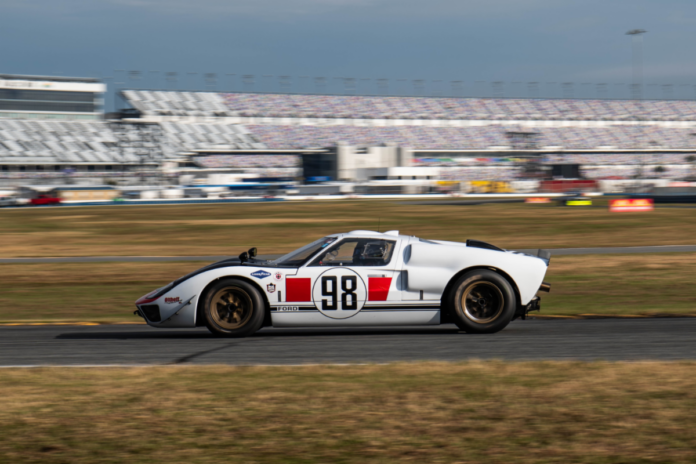
The Blue Oval celebration continues through the weekend with Ford as the Featured Marque of the 2026 HSR Daytona Classic 24. Among the standout Fords turning out for the high-speed party is the Ken Miles-inspired 1966 No. 98 Superformance GT40 of Dan Long. A former HSR Classic Endurance Championship presented by Mission Foods series winner in the inaugural HSR Classic Road Atlanta 10 Hour last year with Olthoff Racing owner and driver Dennis Olthoff at the wheel, Long hopes to add his own HSR Classic win this weekend driving the No. 98 GT40 in Run Group A.

“That’s our goal and our dream,” Long said. “Nothing would make me happier than doing that, especially on a weekend when Ford is the brand and we’re celebrating all these things, including the 60th anniversary of the GT40 winning.”

This weekend Long proudly pays tribute on the No. 98 with the livery from the 1966 winner Miles co-drove with Lloyd Ruby.

“To be able to do what we’re doing and be the stewards of the GT40 that we have right now, carrying on that tradition and that privilege of showcasing what happened 60 years ago, is something special,” Long said. “We had the opportunity to do it, and we came up with the idea to wrap the car back in the original Ken Miles livery. I just thought it was unique.”

Ford and Mercury sports cars of every type and generation will exclusively take to the track for a Ford Feature race this Saturday at 11:30 a.m. EST. The 30-minute exhibition race is as the final on-track event before the start of the 12th running of the Classic Daytona 24 that afternoon at 2 p.m. EST.

For the fourth time, HSR provides livestream Classic Daytona 24 Hour programming with this year’s coverage returning to two days of live and feature coverage on Saturday and Sunday. Greenlight Television returns as the production partner for the Classic 24 livestream for the third-straight year. This year’s Classic 24 programming is scheduled to begin at 1:45 p.m. EST on Saturday, November 14, through 8 p.m. EST. Coverage continues on Sunday, November 15, from approximately 7:45 a.m. EST through the final checkered flag before signing off at 2 p.m. EST.

Anchor coverage of the livestream will be available on the HSR and IMSA YouTube Channels with additional distributions and availability in the U.S. and around the world. Among the global outlets featuring the Classic 24 livestream are the Goodwood YouTube Channel, MTRSPT1, Parc Fermé (Italy), Rev TV (Canada), Driven Studios, Unbeaten, ViaPlay (Scandinavia and the Netherlands) and Sport1/Sport2 (Ukraine, Moldova, Latvia, Lithuania and Estonia), to name a few.

An off-track highlight of this year’s HSR Classic Daytona 24 is a powerhouse panel of notable Ford sports car racing champions, major race-winning drivers and other personalities with close ties to or an affinity for the Blue Oval. The Ford Panel and Q&A will be held in the Drivers Meeting room at 10 a.m. EST this Saturday, November 14, in the DIS infield near the FanZone. Admission is free to all HSR Classic Daytona 24 credential and ticket holders.

This year’s illustrious Ford Panel and Q&A lineup so far includes Long and Peter Miles, this year’s Classic Daytona 24 Hour Grand Marshal and the son of the late Ken Miles. Also joining is HSR Chief Steward and 1989 Trans-Am Champion with Ford, Dorsey Schroeder, Ford Racing record setter and World Endurance Championship (WEC) GT40 race winner Billy Johnson and British Ford historic racing stalwart and HSR regular John Spiers.

Thursday marks the beginning of official HSR Classic Daytona 24 Hour presented by Mission Foods and HSR Daytona Historics competition with practice and qualifying throughout the day and into the night. The weekend’s first HSR race also goes green at 4:05 p.m. EST Thursday with the always popular SascoSports International/American Challenge presented by Hoosier sprint.

For additional information on both the HSR Daytona Classic 24 and HSR Daytona Historics events, including entry lists, ticket purchases, the event schedule and more, please click here.

For a direct link to HSR Daytona Classic 24 race tickets, please click here.

About HSR: An International Motor Sports Association (IMSA) property, Historic Sportscar Racing (HSR) was formed in the mid-1970s with an event at Road Atlanta. There was one goal then and it remains true today: to celebrate the racing cars from the past. As a “time machine” of sights and sounds, HSR provides a venue for competitors and spectators alike to share in the wonderful history and excitement created by the cars that competed at race tracks around the world. HSR currently sanctions eight vintage and historic racing events at some of the world’s most renowned race tracks, including Road Atlanta, Sebring International Raceway, Daytona International Speedway and more. The complete schedule and full event information can be found on HSR’s website at www.HSRRace.com. Look for the HSR Channel on YouTube and follow HSR on Facebook at www.Facebook.com/HSRrace/ and on Twitter X at @HSR_race and Instagram @HistoricSportscarRacing.

Why Two Roofs of the Same Age Can Have Completely Different Lifespans

Photo by depositphotos at https://depositphotos.com/

Two houses on the same street can have roofs installed in the same year, with the same type of shingles, yet one roof may hold up well while the other starts showing serious wear. From the sidewalk, the difference can be hard to explain. Roofing materials age in response to more than the number of years they’ve spent outdoors.

A homeowner considering roof replacement may naturally look at the installation date first. But Bumble Roofing of South Sound is a useful reminder that a roofing decision should be based on the condition of the whole system, not a calendar alone. The way a roof handles sunlight, moisture, heat, and drainage can make its useful life quite different from a neighbor’s.

Understanding those differences can prevent two costly mistakes: replacing a serviceable roof too early or keeping a struggling one in place because it seems too young to fail. Several details of a house, including some that are not visible from the yard, help explain why roofs of similar age take different paths.

The Sun Does Not Treat Every Roof Equally

Even on a single house, one roof slope may deteriorate faster than another. A section that receives prolonged direct sunlight can experience more heat and ultraviolet exposure than a shaded section. Over time, asphalt shingles may lose protective granules, become brittle, or show curling and cracking. Those changes do not always happen evenly across the roof.

Shade brings a different set of problems. Branches and nearby buildings can keep sections damp longer after rainfall. Leaves collect in valleys and behind roof features, slowing drainage. In some conditions, moss may grow and hold moisture against the surface. Shade itself is not damaged, but persistent dampness deserves attention.

This explains why comparing a roof with the one next door can be misleading. Their materials may match, but their exposure may not.

Roof Shape Changes How Water Moves

A simple roof with broad, uninterrupted slopes generally has fewer joints and transitions than one with several dormers, valleys, chimneys, and skylights. Each transition requires careful detailing to move water away from vulnerable areas.

On a complex roof, debris can gather where two slopes meet. Water may also concentrate near valleys or drainage points. The roof covering can remain in reasonable condition while a worn flashing detail allows water beneath it. In that case, the problem is not necessarily the age of the shingles.

Pitch matters too. A steep roof typically sheds water more quickly, although wind exposure and installation requirements still matter. Lower-slope areas need materials and details suited to slower drainage. Using a roofing product outside its approved slope range can create trouble long before the material reaches its expected service life.

Look Beyond the Main Shingle Surface

Homeowners often judge a roof by whether the visible shingles appear flat and uniform. Yet areas around vents, walls, chimneys, and skylights may need closer attention. Flashing, sealants, and penetrations can age differently from the surrounding field of shingles. A small failure at one of these points can damage the decking below while much of the roof still looks sound.

What Happens Beneath the Roof Matters

A roof does not function as shingles alone. It relies on underlayment, flashing, decking, and a properly designed attic assembly. Conditions beneath the surface can influence how long the outer materials remain effective.

Poor air sealing and unbalanced attic ventilation may contribute to excess heat or moisture in the attic. During cooler periods, warm indoor air leaking into the attic can meet colder surfaces and condense. Wet insulation, stained wood, or a musty smell may be clues that moisture is accumulating. These signs do not automatically mean the roof leaks; indoor humidity and ventilation problems can produce similar symptoms.

For example, one house may have bathroom exhaust fans that vent outdoors, while another releases moist air into the attic. Over years, that small difference can change the condition of the wood and insulation beneath otherwise similar roofs. Fixing the source of moisture is just as important as addressing any affected roofing materials.

A Dry Attic Can Still Have Hidden Problems

Not every issue is obvious from a quick glance. Older water stains might be dry today but point to a past leak. Darkened wood may have several causes and should not be diagnosed from color alone. If there is uncertainty, a qualified roofing professional can inspect the relevant areas and recommend further evaluation when needed.

Installation Details Can Outweigh the Installation Year

Two roofs made from the same products can perform differently because the workmanship differs. Shingles must be fastened in the correct locations and according to the manufacturer’s instructions. Flashing needs appropriate overlap and placement. Starter strips, underlayment, and edge details all play a role in resisting wind-driven rain.

Improper nailing may make shingles more vulnerable to movement or blow-offs. Poorly integrated flashing can create a leak path at a wall or chimney. These are not problems that waiting for a milestone birthday will fix.

Documentation is helpful here. When discussing an older roof with Bumble Roofing of South Sound or another contractor, it helps to have records showing the roofing material, installation date, warranty, and previous work. Those details give an inspector a better starting point. But a warranty is not a guarantee that the roof will remain free of problems for its entire stated term. Coverage depends on its conditions, exclusions, and whether installation requirements were met.

Maintenance Habits Gradually Separate Similar Roofs

Small differences in care add up. Consider two households whose roofs are both fifteen years old. One keeps gutters clear, trims branches that rub against the roof, and follows up when a shingle is displaced. The other rarely looks above the gutter line until water reaches an interior wall.

Neither household controls every source of roof aging. But regular observation can catch localized trouble while repairs remain manageable. Leaves left in a valley can hold moisture and obstruct water movement. A loose flashing section may become more vulnerable during another storm. A clogged gutter can cause water to overflow against fascia and other nearby building materials.

Maintenance also has limits. Walking on a roof can be dangerous and can damage shingles, particularly when surfaces are wet, steep, brittle, or moss-covered. Most homeowners can check for visible changes from the ground and arrange safe professional access for closer evaluation.

How to Judge a Roof Without Relying on Its Age

Age is useful background information, but it should lead to questions rather than an automatic decision. Start with the pattern of deterioration. Are problems confined to one flashing detail or a small section? Or are granule loss, cracking, repeated leaks, and weakened materials appearing across several slopes?

A thorough assessment should consider the roof covering, flashings, penetrations, drainage, and accessible evidence of moisture below the surface. It should also identify why a problem developed. Replacing a damaged shingle without addressing the flashing or drainage issue beside it may only delay the next leak.

Before agreeing to roof replacement Tacoma, ask what specifically makes the existing system unsuitable for continued service. Bumble Roofing of South Sound, like any contractor evaluating an aging roof, should be able to explain the observed conditions and distinguish localized repairs from broader deterioration. Photographs and a written description of the findings can make that discussion easier to follow.

Questions Worth Asking During an Evaluation

Ask which sections show the most wear, whether the decking condition can be assessed, and whether moisture problems may originate in the attic rather than outside. Find out if any proposed repair is likely to address the cause or simply cover a symptom. If full roof replacement is recommended, request a clear explanation of why smaller repairs would not provide a reasonable solution.

It can also help to ask how the new assembly will handle the weaknesses identified in the old one. Will flashing details be rebuilt? Are ventilation or drainage changes needed? What materials are appropriate for the roof’s slope? These questions focus the conversation on performance, not just appearance.

The Better Roof Decision Is the One Supported by Evidence

A roof’s age gives homeowners a reason to pay attention, not a deadline. The south-facing slope, the damp valley, the attic’s moisture conditions, and the quality of work around penetrations may tell a more complete story than the date on an invoice.

A careful roof inspection can show whether a particular problem is isolated, whether several components are failing together, and what steps will most likely protect the home. The important goal is a decision grounded in visible evidence and a clear explanation. Two roofs installed together do not have to be replaced together, and treating them as if they do can waste money or overlook real risks.