Few flowers are as timeless and elegant as white roses. Their soft color, layered petals, and natural sophistication make them a favorite for romantic occasions, weddings, celebrations, and luxury floral arrangements. Among premium white rose varieties, Playa Blanca roses stand out for their beautiful blooms and refined appearance.
Now imagine 100 of these roses arranged together.
The Playa Blanca Rose Bouquet is designed to make a statement. Featuring 100 white roses in a luxurious hand-tied arrangement, it combines the classic beauty of white roses with the impact of an abundant floral display. Whether you’re celebrating an anniversary, sending a romantic surprise, planning a wedding, or marking an important milestone, a bouquet of 100 white roses can turn an ordinary moment into something unforgettable.
But what makes Playa Blanca roses special, and why are they such a beautiful choice for a luxury bouquet?
What Is a Playa Blanca Rose?
Playa Blanca is a premium white rose variety recognized for its elegant color and full, layered bloom. As the flower opens, its petals unfold to create a rounded, lush appearance that gives the rose a sophisticated look.
The beauty of this variety comes from its simplicity. Instead of depending on bright colors or complicated floral combinations, Playa Blanca roses create visual impact through their shape, texture, and abundance.
Their soft white appearance also makes them extremely versatile. They can complement a modern interior, a romantic setting, a wedding venue, or a formal celebration without competing with the surrounding décor.
For anyone looking for luxury white roses or a sophisticated white rose arrangement, Playa Blanca is an excellent choice.
Why Choose 100 White Roses?
A bouquet of 100 roses creates an entirely different impression from a traditional dozen.
A smaller bouquet can be intimate and charming, while 100 roses create volume, drama, and an unmistakable sense of luxury. The individual blooms come together to form a lush floral arrangement that immediately becomes the focal point of a room.
A 100 white rose bouquet can express:
Love and devotion
Sincere appreciation
Admiration
Respect
Celebration
Lasting affection
New beginnings
The scale of the bouquet makes it particularly suitable when you want the gift to feel extraordinary.
You might choose 100 roses for a milestone anniversary, a marriage proposal, a significant birthday, an engagement, Valentine’s Day, or simply to surprise someone you love.
You don’t always need a special occasion. Sometimes an unexpected gesture is the most memorable one.
What Do White Roses Symbolize?
White roses have a long association with purity, sincerity, love, respect, peace, devotion, and new beginnings.
Their symbolism makes them suitable for a wide range of occasions. In romantic relationships, white roses can express sincere affection and devotion. At weddings, they can represent a new chapter and the beginning of a life together.
They can also communicate admiration and respect, making them appropriate for birthdays, congratulations, professional celebrations, and meaningful gifts for family or friends.
This versatility is one of the biggest advantages of choosing white roses. The same flower can communicate different emotions depending on the occasion and relationship.
Playa Blanca Roses for Romantic Occasions
When people think about romantic flowers, red roses are usually the first choice. However, white roses offer a more refined and understated expression of romance.
A large Playa Blanca arrangement can communicate deep affection while maintaining a sophisticated appearance.
Anniversary Flowers
An anniversary is a celebration of shared memories and the relationship you’ve built together. A bouquet of 100 white roses can make an important milestone feel even more special.
The size of the arrangement creates a sense of occasion, while the white roses communicate sincerity and lasting affection.
Proposal and Engagement Flowers
White roses are naturally suited to proposals and engagements because of their association with new beginnings.
A Playa Blanca bouquet can complement a proposal setting or be presented as a romantic surprise after an engagement. The clean white color can also work beautifully alongside engagement décor and photography.
Romantic Surprises
Flowers don’t have to be reserved for birthdays and holidays.
Sending 100 white roses simply because you want to make someone feel special can create an unforgettable surprise. An unexpected flower delivery often carries a different emotional impact because there is no obligation or calendar date behind it.
Playa Blanca Roses for Weddings
White roses have remained popular in wedding floristry because they can work with almost any design style.
Whether your wedding is classic, minimalist, contemporary, romantic, or luxurious, Playa Blanca roses can complement the overall aesthetic.
They can be used for:
Bridal bouquets
Bridesmaid bouquets
Wedding centerpieces
Floral arches
Ceremony arrangements
Reception décor
Aisle flowers
Welcome arrangements
Cake flowers
Boutonnieres
Their neutral white color pairs naturally with ivory, champagne, blush, pale pink, greenery, and other soft tones.
An all-white arrangement can create a particularly elegant appearance, while adding greenery or complementary flowers can introduce contrast and texture.
For brides looking for a timeless floral design, white roses are unlikely to look dated as trends change.
How to Style a Playa Blanca Rose Bouquet
One of the best qualities of white roses is their versatility.
Keep It All White
A monochromatic arrangement allows the roses themselves to become the main attraction. The layered petals create texture while the white color keeps the overall presentation clean and sophisticated.
This style works particularly well for luxury events, weddings, modern interiors, and romantic settings.
Add Greenery
Greenery can create contrast against white petals and give the bouquet a softer, more natural character. Delicate foliage can complement the roses without taking attention away from the blooms.
Add Soft Colors
For a more romantic arrangement, white Playa Blanca roses can be combined with blush, cream, peach, or pale pink flowers.
These shades maintain the elegant character of the bouquet while adding warmth and visual depth.
Create Contrast
White roses can also be paired with darker foliage or deeper floral colors for a dramatic modern look. The contrast can make the white blooms appear brighter and more prominent.
How to Care for Playa Blanca Roses
Proper flower care can help your roses remain fresh and beautiful after delivery.
Trim the Stems
Trim approximately one inch from the stems at a 45-degree angle before placing the flowers in water. A fresh cut can help the stems absorb water more effectively.
Use Fresh Water
Place the bouquet in a clean vase filled with fresh water. A clean vase provides a better environment for cut flowers.
Change the Water Regularly
Refresh the water approximately every two days. When changing the water, check the stems and remove any leaves that are sitting below the waterline.
Keep Roses Away From Heat
Avoid placing your bouquet near heating vents, hot appliances, or other sources of excessive heat. High temperatures can cause flowers to lose moisture more quickly.
Avoid Direct Sunlight
Keep the roses away from strong direct sunlight. A bright location with indirect light is generally more suitable for a fresh bouquet.
Avoid Strong Drafts
Fans and air-conditioning vents can increase moisture loss. Place the bouquet somewhere stable where it isn’t exposed to constant airflow.
With proper care, Valley De Fleur states that its arrangements are guaranteed to stay beautiful for seven days.
How Long Do Playa Blanca Roses Last?
The vase life of roses depends on their freshness, environment, and care.
Clean water, fresh stem cuts, suitable temperatures, and regular maintenance can all help extend the life of your bouquet.
You may also notice that Playa Blanca roses change as they open. A newly delivered bloom may appear relatively tight, while its petals gradually unfold and create a fuller, rounded flower.
This natural opening process is part of the beauty of fresh roses.
Why Playa Blanca Roses Make a Luxury Gift
A luxury flower gift is about more than simply choosing an expensive bouquet. The flower variety, presentation, freshness, arrangement, and overall experience all contribute to the impression.
The Playa Blanca Rose Bouquet combines these elements with the dramatic scale of 100 white roses.
It can make an impressive gift for a partner, family member, friend, colleague, or someone celebrating an important achievement. The white color also makes the bouquet versatile enough for homes, offices, hotels, weddings, and other special settings.
Most importantly, the size of the arrangement communicates intention. One hundred roses show that you wanted the moment to feel significant.
White Roses in Miami
For customers searching for white roses in Miami, the quality of the flowers is only part of the experience. Freshness, presentation, arrangement design, and reliable delivery are equally important.
Valley De Fleur offers the Playa Blanca Rose Bouquet with 100 white roses and provides same-day delivery across Miami-Dade, Broward, and Sunny Isles under its stated ordering conditions.
This makes the bouquet suitable for both planned celebrations and last-minute surprises.
Whether the flowers are being delivered to a home, office, hotel, or event venue, a large white rose arrangement can create an immediate and memorable impression.
Frequently Asked Questions
What is a Playa Blanca rose?
Playa Blanca is a premium white rose variety known for its elegant color and full, layered blooms. Its rounded shape makes it particularly suitable for luxury bouquets and wedding arrangements.
Are Playa Blanca roses good for weddings?
Yes. Their white color and full bloom structure make them suitable for bridal bouquets, bridesmaid flowers, centerpieces, ceremony arrangements, and wedding décor.
How many roses are in the Playa Blanca Rose Bouquet?
The Valley De Fleur Playa Blanca Rose Bouquet contains 100 white roses arranged into a hand-tied luxury bouquet.
What do white roses mean?
White roses are commonly associated with purity, sincerity, love, respect, devotion, peace, and new beginnings.
Are 100 white roses a good anniversary gift?
Yes. A large white rose arrangement can be an impressive and meaningful anniversary gift, particularly for milestone celebrations.
How should I care for Playa Blanca roses?
Trim the stems at an angle, place them in clean water, change the water regularly, and keep the bouquet away from direct sunlight, excessive heat, and strong drafts.
Can I order Playa Blanca roses in Miami?
Yes. Valley De Fleur offers its 100 white Playa Blanca rose bouquet with delivery across Miami-Dade, Broward, and Sunny Isles under its stated delivery conditions.
Make the Moment Unforgettable
The beauty of the Playa Blanca Rose Bouquet lies in its ability to combine simplicity with impact.
White roses are timeless, but 100 premium blooms create something much more memorable. Their layered petals, elegant color, and abundant presentation make Playa Blanca roses a beautiful choice for anniversaries, proposals, weddings, birthdays, celebrations, and unexpected romantic gestures.
Whether you’re celebrating a major milestone or simply want to remind someone that they are special, 100 white roses can express the message beautifully.
Discover the Playa Blanca Rose Bouquet fromValley De Fleurand make your next flower delivery unforgettable.
Freight invoices arrive with numbers that seem straightforward, but shippers often miss the distinction between two key components. One stays relatively stable. The other jumps around based on diesel prices. Understanding both changes how you manage shipping budgets.
Linehaul: The Core Rate in FTL Transport
Linehaul covers the actual transportation service. That’s what the carriers charge for the driver’s time, for maintenance of the equipment, insurance, and everything that keeps trucks rolling. FTL transport lane-specific dynamics are reflected in linehaul rates. A high-demand route in one direction but light backhaul traffic will be priced differently. Carriers consider empty miles, load availability, and capacity constraints when setting these numbers.
Linehaul remains consistent over short periods. Contracts lock in rates for weeks or months. Spot quotes reflect current market conditions. But linehaul alone tells an incomplete story. Carriers cannot adjust these rates quickly when operating costs shift. That creates the need for another line item on your invoice.
Fuel Surcharge Explained
Fuel surcharge serves a specific purpose. It protects carriers from diesel price fluctuations without forcing them to renegotiate linehaul rates constantly. When fuel prices climb, the surcharge rises automatically based on published formulas. When diesel drops, the surcharge falls accordingly.
Here is how the calculation typically works. Carriers establish a baseline fuel price. Every cent above that baseline triggers an adjustment based on average fuel consumption. If a truck averages six miles per gallon, a 12-cent increase at the pump translates into roughly two cents per mile on your invoice. The math seems simple enough.
But surcharges can swing dramatically
DAT Freight & Analytics reported that the average van fuel surcharge jumped from 41 cents to 61 cents per mile in a single month during 2026’s diesel spike – a 50% increase that compressed linehaul margins even as total rates climbed. Shippers who only negotiate the linehaul number are often surprised by how much of the final invoice the surcharge actually controls.
That 20-cent per mile jump adds significant cost. On a 1,500-mile shipment, you are looking at an additional $300 just from the surcharge increase. And that happened in thirty days.
Separating the Two
Linehaul and fuel surcharge in FTL transport serve different purposes. One compensates carriers for providing the service. The other adjusts for volatile fuel costs. Shippers who focus exclusively on linehaul miss where real cost movement happens.
When diesel prices spike, the surcharge can represent 25 percent or more of your total freight bill. That percentage tells you exactly how much influence fuel markets have on shipping expenses. Some shippers never notice because they only look at the total invoice amount. Others negotiate hard on linehaul while ignoring the surcharge entirely. Neither approach leads to optimal cost control.
What You Should Do
Ask carriers to break out linehaul and fuel surcharge separately on every invoice. Monitor diesel price trends in FTL transport and anticipate surcharge movements before they appear. Consider all-in rates for consistent lanes where fuel volatility creates uncertainty.
Understand carrier surcharge formulas and apply them to your budget forecasting. Knowing the difference between linehaul and fuel surcharge gives you negotiating power and protects your logistics budget from unexpected spikes.
If you were injured in a Florida car accident, you generally have two years to file a negligence lawsuit. Florida Statutes §95.11 currently provides a two-year limitations period for actions founded on negligence. That makes it important to identify the deadline early rather than assuming insurance negotiations will extend it.
The deadline is only one part of the process. Florida’s no-fault insurance system, medical documentation, liability evidence, venue and potential damages can all affect an accident claim. Below we compare five personal injury firms and their relevance to Florida accident cases as of September 2026.
Morgan & Morgan
Morgan & Morgan uses a much larger organizational model, with extensive personal injury resources and Florida operations.
Practice areas: Its personal injury practice includes car, motorcycle, pedestrian, rideshare, and wrongful-death claims.
Florida no-fault (PIP) insurance rules: Florida claims remain subject to the state’s PIP framework, including the $10,000 benefit limit.
Statute of limitations for FL injury claims: The same Florida limitations rules apply regardless of which law firm represents the claimant.
Contingency fee / “no win, no fee” pricing structure: The firm uses contingency arrangements in personal injury cases, connecting fees to recovery.
Free consultation process: Morgan & Morgan offers free consultations for prospective injury clients.
Case value factors: Medical treatment, lost earnings, injury severity, future effects and documented damages can influence value.
Fort Lauderdale / Broward County venue and courts: Its extensive Florida presence provides access to attorneys familiar with state courts and claims procedures.
Proximity to South Florida motorsports venues: South Florida traffic and major events can affect accident circumstances, but proximity alone has limited importance.
Local claims process: Police reports, medical records and insurer communications remain important evidence regardless of firm size.
Client testimonials/case results: Morgan & Morgan reports more than $35 billion recovered nationwide, a scale statistic rather than an individual result prediction.
Practice areas: Blakeley handles car, motorcycle, rideshare, and wrongful-death claims among its personal injury services.
Florida no-fault (PIP) insurance rules: Florida PIP generally provides up to $10,000 in medical and disability benefits, subject to statutory requirements.
Statute of limitations for FL injury claims: Most negligence-based accident lawsuits generally have a two-year filing period under current Florida law.
Contingency fee / “no win, no fee” pricing structure: Blakeley uses contingency-based representation, with attorney fees tied to recovery rather than hourly billing.
Free consultation process: The firm advertises free consultations for prospective injury clients considering a claim.
Case value factors: Treatment costs, lost income, injury severity, future losses, liability and non-economic damages can affect claim value.
Fort Lauderdale / Broward County venue and courts: Its Fort Lauderdale location provides a local presence for accident claims arising in Broward County.
Proximity to South Florida motorsports venues: Homestead-Miami Speedway is part of the wider South Florida transportation network, although venue proximity should not determine attorney selection.
Local claims process: Crash reports, photographs, medical records, and insurance correspondence should be preserved from the beginning.
Client testimonials/case results: Blakeley reports $250 million+ recovered for Florida injury clients through its LinkedIn profile.
Pros:
Florida-focused practice
Local accessibility
Cons:
Smaller overall scale
Dolman Law Group
Dolman Law Group has a Fort Lauderdale office and a substantial South Florida personal injury practice. Matthew Dolman and Christian Myer were both recognized by their peers as 2013 Florida Super Lawyers.
Practice areas: The firm handles car, motorcycle, and pedestrian accidents, rideshare claims, and wrongful death.
Florida no-fault (PIP) insurance rules: Eligible Florida policies generally provide up to $10,000 in PIP benefits, subject to statutory requirements.
Statute of limitations for FL injury claims: Most qualifying negligence actions must be filed within two years under current Florida law.
Contingency fee / “no win, no fee” pricing structure: Dolman offers contingency-based representation, with fees and expenses governed by the representation agreement.
Free consultation process: Its Fort Lauderdale office advertises free case evaluations for prospective injury clients.
Case value factors: Liability, medical treatment, lost earnings, permanent impairment and available insurance can affect value.
Fort Lauderdale / Broward County venue and courts: Its Fort Lauderdale office provides a direct presence in Broward County.
Proximity to South Florida motorsports venues: Homestead-Miami Speedway is within the wider South Florida region, but proximity should not drive attorney selection.
Local claims process: Preserving crash evidence, medical records, and insurer communications can help establish the claim.
Client testimonials/case results: Dolman publishes results including a $5 million settlement involving a rear-end collision.
Pros:
Strong South Florida presence
Published case results
Cons:
Larger than a small boutique
The Ladah Law Firm
The Ladah Law Firm is an important comparison because its primary geographic focus is Nevada, not Florida.
Practice areas: Ladah handles motor-vehicle and other personal injury matters, including published car-accident and wrongful-death results.
Florida no-fault (PIP) insurance rules: Florida’s PIP rules would govern an eligible Florida accident claim regardless of the firm’s location.
Statute of limitations for FL injury claims: Florida’s current negligence period is generally two years, although exceptions can alter the deadline.
Contingency fee / “no win, no fee” pricing structure: The firm uses contingency arrangements for qualifying injury matters under its representation terms.
Free consultation process: Prospective clients can request an initial consultation about their circumstances and potential claim.
Case value factors: Medical expenses, lost earnings, injury severity, and liability evidence can affect claim value.
Fort Lauderdale / Broward County venue and courts: Its Nevada focus makes it less locally relevant to a Fort Lauderdale or Broward County claim.
Proximity to South Florida motorsports venues: Unlike the Florida-based firms, Ladah does not have the same geographic connection to South Florida.
Local claims process: A Florida claimant generally benefits from counsel familiar with Florida reporting, insurance, and court procedures.
Client testimonials/case results: Ramzy Ladah was honored as Litigator of the Year after successfully recovering more than $400M for accident victims.
Pros:
Strong motor-vehicle results
Free consultations
Cons:
Nevada-focused practice
Frankl Kominsky Injury Lawyers
Frankl Kominsky is a Florida-focused personal injury firm with offices across the state.
Practice areas: Its practice includes car accidents, motorcycle accidents, and wrongful-death claims.
Florida no-fault (PIP) insurance rules: Florida accident claims remain subject to the state’s PIP requirements and $10,000 benefit framework.
Statute of limitations for FL injury claims: Most negligence-based Florida injury lawsuits generally have a two-year limitations period.
Contingency fee / “no win, no fee” pricing structure: Frankl Kominsky advertises contingency-fee representation, with fees and costs governed by the written agreement.
Free consultation process: The firm offers free consultations for prospective injury clients.
Case value factors: Medical expenses, lost income, future treatment, permanent injury, and pain and suffering may affect value.
Fort Lauderdale / Broward County venue and courts: Its Florida office network provides regional access, although clients should confirm which office handles a Broward matter.
Proximity to South Florida motorsports venues: Its Florida footprint makes it more geographically relevant to South Florida claims than a Nevada-based practice.
Local claims process: Crash reports, medical records, and insurer communications should be preserved early.
Client testimonials/case results: Frankl Kominsky recovered over $250 million for accident victims across Florida, proving their expertise in the niche.
Pros:
Florida presence
2,000+ client reviews
Cons:
Smaller national footprint
Summary Snapshot
Entity
Florida presence
Free consultation
Morgan & Morgan
Extensive
Yes
Blakeley
South Florida
Yes
Dolman
Fort Lauderdale/Florida
Yes
Ladah
Primarily Nevada
Yes
Frankl Kominsky
Florida
Yes
Conclusion
The Problem: The biggest practical risk is waiting until the deadline approaches. Evidence can become harder to obtain, medical documentation takes time to collect, and insurance negotiations do not automatically extend the lawsuit deadline.
Key Takeaways
Most negligence-based Florida car accident lawsuits generally have a two-year filing period.
PIP benefits are separate from a third-party injury lawsuit.
Crash reports, medical records, income documentation and insurer communications should be preserved early.
Local Florida experience can matter for claims arising in Fort Lauderdale and Broward County.
Published settlements and review counts provide context but cannot predict an individual outcome.
Next Steps: After a Florida car accident, identify the accident date, preserve relevant record and determine the applicable limitations period promptly. A consultation can clarify whether PIP benefits, an insurance clai or a lawsuit may apply. If representation is offered on a contingency basis, review the written agreement carefully, including the percentage, expense and how costs are handled.
Frequently Asked Questions
How long do I have to file a car accident lawsuit in Florida?
Generally, two years for a negligence-based injury action under Florida Statutes §95.11, although exceptions may apply.
Does negotiating with an insurer extend the two-year deadline?
Not automatically. Insurance negotiations and the statute of limitations are separate issues.
What happens if I miss the Florida car accident lawsuit deadline?
A claim may be barred once the applicable limitations period expires, depending on the circumstances.
Do I have to file a lawsuit to receive PIP benefits?
No. PIP is first-party insurance coverage and is separate from a lawsuit against another driver.
How much does a Florida car accident lawyer cost?
Many injury lawyers use contingency fees. The Florida Bar requires contingent fee agreements to explain fees and applicable costs.
The session ends. The driver climbs out, still processing what the car did, and talks for six or seven minutes about balance: where it pushed, where it came loose, what changed as the tires went off, and the one corner where the thing that happened does not have an obvious name.
Three words go into the notebook. Loose off two.
Six weeks later the team returns to the same circuit and consults the log. It says loose off two. Nobody can reconstruct which phase of the corner, at what point in the run, with what fuel load, or whether the driver had said the same thing about turn four and been ignored because the notebook was full.
The setup log is the team’s only durable asset from a season of testing. It is routinely built from the least reliable step in the process.
What goes in a race debrief?
A useful debrief records handling behavior by corner and by corner phase, on a consistent scale, together with how that behavior changed over the run and what was altered on the car beforehand. Practitioners who work on driver feedback recommend breaking each corner into phases and rating understeer or oversteer on a fixed scale, commonly one to five, so that reports can be compared across sessions rather than interpreted fresh each time; the approach is set out in guides such as Your Data Driven’s process for driver feedback. The same guidance stresses recording feedback immediately on exiting the car, which is where most of the difficulty lies.
Driver feedback is language, and the language is the data
Telemetry answers what the car did. It does not answer what the car felt like to drive at the limit, which is the input the engineer needs in order to choose between two changes that would produce the same lap time on paper.
That input arrives as speech, and it arrives in a form that resists compression. A driver saying it turns in fine but then it just stops rotating halfway, and I have to wait for it, is describing something specific about mid-corner balance. Written down as understeer mid-corner, it has lost the sequence, which is the part that distinguishes a mechanical grip problem from an aero balance problem from a driver technique issue.
The distinction matters because those three have different remedies, and the notebook entry supports all three equally.
What gets lost between the car and the notebook
Four things, consistently.
Sequence within the corner. Whether the behavior appeared on entry, at the apex, or on exit is usually the single most diagnostic detail, and it is the first casualty of summarising.
Progression over the run. A car that is neutral on new tires and loose after eight laps is a different problem from one that is loose from the first lap. Debriefs conducted verbally and recorded in summary form tend to capture the state at the end of the run, because that is what the driver remembers most vividly.
Conditional statements. Drivers hedge accurately. It is only a problem if I get on the throttle early is a precise piece of information. The notebook records it is a problem.
Everything the driver said after the person writing stopped writing. Debriefs are not evenly informative. The useful material often arrives in the fifth minute, once the immediate complaints are out of the way and the driver starts thinking rather than reporting. By then, whoever is taking notes has usually moved on.
The last one is worth dwelling on. Nobody writes for six minutes continuously while also asking follow-up questions. The person conducting the debrief is either listening properly or recording properly, and in practice they choose listening, which is the right choice and leaves the team without a record.
The vocabulary problem
There is a second failure that only becomes visible across a season.
Drivers and engineers use different words for the same behavior, and the same words for different behaviors. Push, tight and understeer all describe the front axle running out of grip, and a log that alternates between them cannot be searched. Loose covers everything from a stable rear slip angle the driver is comfortable with to a snap the driver is not.
The fix is not to insist the driver change how they talk, which does not work and wastes the debrief. It is to agree a small set of canonical terms for the log, and to translate into them during the write-up rather than during the conversation. A shared vocabulary and a fixed scale is precisely what the follow-up piece on leveling up driver feedback is describing when it treats quantified, phase-by-phase reporting as the goal.
Translation on paper afterward requires the original words to still exist, which brings the problem back to the record.
A debrief that produces a usable log
The mechanism that solves both problems is to record the debrief as audio and build the log from the recording afterward.
That changes who does what. During the debrief, the engineer asks questions and listens, which is what the debrief is for. After the debrief, someone converts the audio to text and writes the log entry from the text, in canonical vocabulary, at leisure, with the driver’s original phrasing preserved underneath.
A structure that holds up over a season:
Say the session identifier first, out loud. Circuit, date, session, run number, tyre set, fuel state. This is the metadata that makes an entry comparable to any other entry, and it takes fifteen seconds.
State what was changed on the car since the previous run, before discussing how it drove. Debriefs conducted the other way round produce logs in which effects have no causes.
Work corner by corner in track order, and within each corner by phase: entry, mid, exit. Order is what makes two sessions comparable.
Give the number on the agreed scale, then describe the behavior in whatever words come naturally.
Cover progression explicitly at the end. What changed between lap two and lap ten.
Finish with the driver’s own priority. If one change could be made before the next run, which one? This sentence is the most valuable in the whole debrief, and it is the one most often not asked.
From recording to log
Phones record to .m4a by default, which is AAC audio in an MPEG-4 container, and most transcription services take the file as it is with no conversion.
A tool that will transcribe M4A recordings returns punctuated text with the speakers labeled, which matters in a debrief involving a driver, an engineer, and a crew chief talking in sequence. Vomo divides longer recordings into timestamped sections and produces a summary with action items, which maps onto a debrief where the action items are the candidate setup changes, and exports to plain text, Word, PDF or Markdown so entries can be pasted into whatever the team uses for its log.
Two checks before an entry is filed, and both concern the same category of error. Numbers and corner designations need verifying by eye, because figures and short alphanumeric labels are the least reliable part of any automatic transcription, and a rating attached to the wrong corner is worse than no rating. And the canonical vocabulary needs applying deliberately, since the point of the exercise is a log that can be searched in six weeks.
One procedural note. Debrief recordings capture team members discussing performance and occasionally each other. Participants should be told the session is being recorded, the purpose should be stated, and the audio should be deleted once the log entry is written. This is a thirty-second conversation to have once, at the start of a season, rather than an argument to have in September.
What the log is for
Across a single weekend the benefit is modest. The engineer remembers the debrief.
The value appears across a season and across circuits. A searchable log answers questions that are currently unanswerable: whether this car has always been loose on exit at this type of corner, whether a change made in April produced the effect it was supposed to, whether the driver has reported the same sensation at four different tracks and had it attributed to four different causes.
Those are the questions that separate a team that is developing a car from a team that is adjusting one. Both work from the same debriefs. Only one of them can still read them in October.
The short version
Driver feedback is the highest-value data the team collects that no sensor produces; it arrives as several minutes of speech, and it is conventionally preserved as three words written by someone who was also trying to listen.
Recording the debrief and building the log from the text afterward separates listening from documenting, which is the only way both get done properly. The additional cost is a few minutes per session. The thing being bought is a log that is still useful at the end of the season.
Racing games have developed a somewhat unique way to get your heart rate up, whether you’re gripping a wheel controller through a rain-soaked rally stage or watching the reels spin past a checkered flag. The genre stretches far beyond just one format these days, blending arcade titles, hardcore simulation, and casino gaming into a single obsession: speed.
We’ve put together a rundown of some of the standout games to try from the genre, but before you climb into the driver’s seat, it’s always a good idea to know the best places to find these titles. While the video games are easy to come by, the slots are perhaps not as easy. Thankfully, leading platforms like Betinia and other popular licensed sites have you covered, with plenty of racing-themed slots available to play. Betinia is a popular choice as the brand offers in excess of 1,000 games, from over 43 providers. This is in addition to at least 125 live tables that include blackjack, roulette, baccarat, poker, and top game shows.
Video Games Built For Speed
On the video game side of things, open-world racers like titles from the hit Forza Horizon series hand players a sprawling map, filled with real cars, dynamic weather, and enough winding roads to make an afternoon disappear in what feels like minutes. For something a bit closer to the real thing, simulators such as the Gran Turismo franchise reward patience with authentic handling models, detailed tracks and steering wheel support for players who want to feel every corner. Meanwhile, there are arcade-style favorites such as Mario Kart to keep things lighter, trading realism for fun that can be enjoyed solo or with others.
Street racing titles add their own flavor, with the Need for Speed series developed for this very reason, featuring customization options and pulsating soundtracks. Video games in the genre provide enough variety that everyone can find a title that suits the style of racing they prefer.
Slot Games Designed Around Racing
Slot games have leaned heavily into racing themes from the very beginning, translating checkered flags and roaring engines into spinning reels and bonus features. Titles like Wheels N Reels build pit-stop bonuses directly into the gameplay, giving players race-day flavor alongside standard slot mechanics from the very first spin. Others, such as Racetrack Riches Megaboard, offer higher volatility and bigger potential prizes. Wildhound Derby takes a slightly different approach to the norm, with dog racing instead of motor racing, proving the theme isn’t limited to cars and motorcycles.
What ties these slots and others from the genre together is a shared sense of speed. Reels spin fast; bonus rounds build tension the way a final lap of a race does. And near-misses can feel just as charged as a photo finish. Developers also go the extra mile to make slot games feel as authentic as possible, using recognizable symbols on the reels, sounds from the track and bonus features that carry some form of racing element.
Conclusion
Plenty of people spend a lot of their time watching racing, be it F1, rally cars, or another type. And it’s exciting. But the real way to get the adrenaline going, without risk of harm, is to immerse yourself in the center of the action. Video games and slot games are the ideal ways to do this, as they’re authentic, they cover all different types of racing, they carry no risk of physical harm, and there’s even a chance to win prizes where slots are concerned. It’s why racing games are now some of the most popular titles around today.
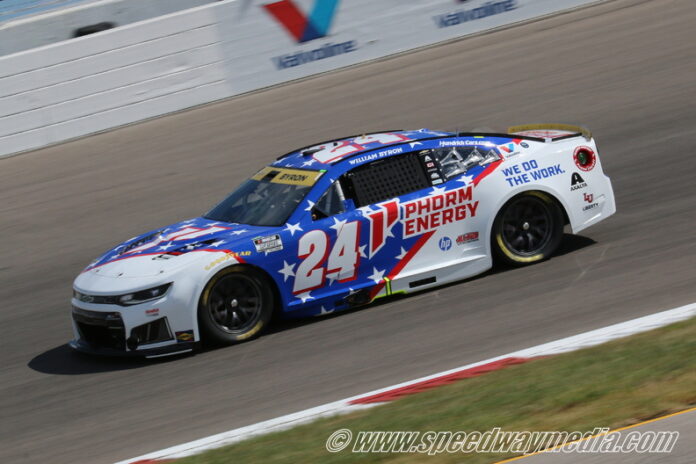
William Byron rallied from a difficult start to his 2026 Chase during last weekend’s Chase opener at Darlington Raceway to post a top-five result in the Enjoy Illinois 300 at World Wide Technology Raceway on Sunday, September 13.
The two-time Daytona 500 champion from Charlotte, North Carolina, took the green flag during Sunday’s event in Madison, Illinois, in 24th place. After steering clear of four caution periods that spanned 16 laps through the first 32-scheduled laps, Byron, who was among a handful of competitors who strategically pitted prior to a Lap 32 restart, managed to navigate his way to post a 15th-place result at the conclusion of the first stage period.
Restarting in fourth place for the start of the second stage period on Lap 52, Byron remained on the track and raced inside of the top-five mark before he pitted with a majority of the field under caution just past the Lap 60 mark. After being shuffled back towards the bottom half of the top-10 mark for the next restart on Lap 69, Byron eventually got shuffled out of the top 10 and settled in 15th place for a second consecutive stage period when the latest stage concluded under caution. By then, however, Byron was unable to accumuluate any stage points during the event’s first two stage periods.
Restarting in 14th place for the third and final stage period with 100 laps remaining, Byron’s event went south when he ran into the left front of a spinning Bubba Wallace after Wallace had gotten loose and spun both himself and Chase Briscoe from contact through the first two turns. The hit into Wallace’s left-front area along with teammate Alex Bowman bumping into the rear of Byron’s No. 24 Phorm Energy Chevrolet Camaro ZL1 entry sent the latter spinning towards the backstretch’s infield. In the aftermath, Byron managed to nurse his damaged entry back to pit road for repairs and rejoin the track within the top-30 mark for the next restart with 94 laps remaining.
As the final stage period progressed, numerous Chasers that included Ryan Blaney, Chase Briscoe, Wallace, Tyler Reddick, Christopher Bell, Ty Gibbs, Daniel Suarez, Chris Buescher and Chase Elliott, the latter of whom is Byron’s teammate at Hendrick Motorsports, would be involved in on-track carnages that would eliminate them from race-winning contention, with Elliott being eliminated from finishing the event following his hard accident with Briscoe entering the first turn with 27 laps remaining.
Amid the incidents, Byron, who dodged the carnages, spent a majority of the final stage period racing within the midpack region. Following a late four-tire pit stop under the final 40 laps with the field during a caution period, Byron took the green flag during the next restart with 35 laps remaining in 14th place. Within the final 20 laps, he navigated his way into the top-10 mark and was racing in fifth place when a late caution period with seven laps remaining sent the event into overtime. Through a pair of overtime attempts, Byron managed to work his way up to fourth place and retain the spot when he crossed the finish line and took the checkered flag in his respective spot.
With the result, Byron, who was part of a Hendrick Motorsports’ 1-2-4 finish that included race winner Kyle Larson and runner-up Alex Bowman, notched his fourth top-five result of the 2026 season, his first since he finished fourth at Chicagoland Speedway in early July and his 11th top-10 result overall this season. He also notched his second top-10 result in five total starts at World Wide Technology Raceway in a Cup car.
Prior to Gateway, Byron was mired at the tail end of the Chase standings in 16th place and trailing the points lead by 114 points. This was due to the Charlotte native finishing 37th of the 38-car field from last weekend’s Chase opener at Darlington Raceway for the Southern 500 due to a late spin and engine failure. After Gateway, Byron continues to trail the points lead by 114 points, but he gained a spot to 15th place in the standings.
Despite being pleased with the rally, the top-five result and Hendrick Motorsports’ race victory with Larson, Byron emphasized his focus in utilizing his momentum from Gateway towards the remaining eight Chase races to draw himself back within championship contention and contend for his first title.
[We] Worked our tail off for that [result],” Byron said on USA Network. “We had a lot of nose damage when [Wallace] spun and got into him. [The car] looked like [it] still had a hole in the nose there at the end. Just proud of our team, but proud of Hendrick Motorsports as a whole. Great to see Kyle [Larson] win, the No. 5 team. They did a great job. They were fast all day. We competed really hard and tried to continue to put ourselves in position. Just kind of a grind it out day. Just got to keep going and we don’t quit. We’re just going to keep moving foward and this is a good shot in the arm to get a good result and some good restarts at the end.”
William Byron’s 2026 Chase for the NASCAR Cup Series championship resumes this upcoming Saturday, September 19, at Bristol Motor Speedway in Bristol, Tennesssee, for the Bass Pro Shops Night Race. The event’s broadcast time is scheduled to commence at 7:30 p.m. ET on USA Network, PRN Radio, SiriusXM and HBO MAX.
Event: Enjoy Illinois 300 Location: World Wide Technology Raceway, Madison, Illinois Date: Sunday, September 13, 2026 Start: 16th Finish: 28th
Josh Berry and the No. 21 DEX team saw their six-race streak of top-10 finishes come to an end following a late-race multi-car incident in Sunday’s Enjoy Illinois 300 at World Wide Technology Raceway, resulting in a 28th-place finish.
Berry and the DEX team showed the speed to contend inside the top 10 throughout much of the afternoon despite a race that featured a track-record 18 caution periods.
After starting 16th, Berry gained four positions during the opening 45-lap segment to finish 12th. The No. 21 DEX Mustang Dark Horse continued its climb during Stage 2, spending much of the segment inside the top 10 before Berry crossed the line fifth to collect six stage points.
A quick four-tire stop during the stage break put Berry fourth for the ensuing restart, and he continued to run among the top five as the final stage unfolded. During a caution at Lap 156, Berry and Kyle Larson remained on track to inherit the top two positions. Berry battled Larson side-by-side for the lead for several laps before settling back into the top three.
Berry made his next stop under caution at Lap 170 and continued to position himself for another strong finish while navigating a race filled with incidents and restarts.
His afternoon took a turn when he was collected in a multi-car incident on a restart with 17 laps remaining. The damage to the No. 21 DEX Ford Mustang sent him behind the wall for repairs, but the Wood Brothers Racing crew was ultimately able to get Berry back out on track with just a few laps remaining to finish the race in the 28th position.
Up next, the NASCAR Cup Series heads to Bristol Motor Speedway for Saturday night’s Bass Pro Shops Night Race.
Your first race weekend can feel simple enough to plan. You buy the tickets, check the weather, grab a hat and sunglasses, and assume the rest will take care of itself. Then you arrive and discover that a full day at the track involves far more walking, sun, noise, dust, food, waiting, and sudden weather changes than you expected.
Experienced race fans tend to learn this the hard way once, then quietly build a packing list that makes every future event much easier. The smartest things they bring are not necessarily expensive or exciting. They are simply the items you are most likely to wish you had several hours into race day.
A Small Cleanup Kit Goes Further Than You Think
Race tracks can be dusty, hot, crowded, and surprisingly messy. Between sunscreen, food, drinks, railings, portable seating, and long walks around the venue, it does not take long before you want somewhere to wash your hands or freshen up.
Veteran fans often carry a few basic personal-care items rather than depending entirely on whatever facilities happen to be nearby. A small soap container can be especially useful, and anyone deciding what type to bring may find https://goatmilksoap.com/ helpful when putting together a compact race-day hygiene kit.
Wet wipes and hand sanitizer are useful too, but having several options means you are prepared whether you are cleaning up before lunch or trying to feel human again after spending hours around dust, heat, and crowds.
Ear Protection Is Easy to Forget Until the Engines Start
Watching racing on television does not prepare you for how loud motorsport can be in person. Depending on the series and where you are sitting, engine noise can quickly become uncomfortable, especially during long sessions.
Earplugs take almost no room in a bag, which makes forgetting them particularly frustrating. Some experienced fans even bring a spare pair because tiny items have a habit of disappearing when you need them most.
Families attending with children should think about hearing protection before arriving rather than trying to find it inside the venue. Comfortable earmuff-style protection can make the day dramatically more enjoyable for younger spectators who may otherwise become overwhelmed by the noise.
Bring Something for Sitting That Is Better Than the Seat
Grandstand seats often look perfectly reasonable when you first sit down. Three hours later, they can feel very different.
A lightweight seat cushion is one of those items first-time visitors rarely think about but regular fans often swear by. Even a thin padded cushion can make a noticeable difference during long practice sessions, qualifying, support races, and delays between events.
The same applies if you are attending a venue with grassy viewing areas. A compact blanket or waterproof ground cover gives you more freedom to move around and find a comfortable viewing spot without worrying about damp grass or dusty ground.
Just check the venue’s bag and seating policies before choosing what to bring, since permitted items can vary between tracks.
Weather Protection Means More Than Checking the Forecast
A forecast showing sunshine does not mean you only need sunglasses. Race days can last from morning until late afternoon, giving the weather plenty of time to change.
Experienced spectators usually prepare for both heat and rain. Sunscreen, a breathable hat, and a lightweight rain layer cover far more situations than carrying one bulky jacket. A cheap disposable poncho can also be useful because it takes up almost no space.
The sun itself can become one of the biggest challenges. Grandstands do not always provide shade, and sitting in direct sunlight for several hours feels very different from spending the same amount of time casually walking outdoors.
Reapplying sunscreen matters as well, particularly when you are sweating or constantly moving between different parts of the circuit.
Portable Power Can Save the Second Half of Your Day
Phones work hard during race weekends. You use them for tickets, photos, videos, messages, weather updates, venue maps, schedules, results, and sometimes transportation after the event.
That means a phone starting the day at 100 percent can be struggling long before the final laps.
A compact power bank and charging cable solve the problem without adding much weight. Regular racegoers often keep one permanently in their event bag so they never have to think about it.
Saving the event schedule and ticket information offline is another useful habit. Mobile networks can slow down when thousands of spectators are trying to use their phones at the same time, and having essential information already available can prevent unnecessary frustration.
Snacks and Water Can Turn a Long Wait Into No Problem at All
Food is part of the fun at many racing events, but relying entirely on concession stands can become inconvenient when queues suddenly grow between sessions.
Where venue rules allow it, experienced fans often keep a couple of simple snacks in their bags. Something small can be invaluable when you have found a great viewing position and do not want to leave it just because you are hungry.
Water matters even more. Outdoor race days can involve miles of walking without you really noticing it, particularly at large circuits where viewing areas, fan zones, merchandise stands, and parking lots are spread far apart.
A refillable bottle can be extremely useful at tracks that provide water stations. Staying hydrated early is much easier than trying to recover after spending half the day in the sun.
The Best Race-Day Bag Is Prepared for Small Problems
First-time spectators often pack for the race itself. Experienced fans pack for everything that happens around the race.
That difference explains why their bags contain things such as tissues, lip balm, plasters, a spare charging cable, sunglasses, a pen, a small zip bag for valuables, and even an extra pair of socks. None of those items sounds essential when you are sitting at home, but almost any one of them can become surprisingly valuable during a long day at the circuit.
You do not need to carry an enormous backpack. In fact, keeping things light usually makes the day better. The goal is simply to anticipate the handful of minor annoyances that can become major frustrations after several hours outdoors.
Once you have attended a few races, your own packing list will become more personal. Until then, borrowing a few habits from experienced fans is one of the easiest ways to make your first race weekend feel like it is not your first at all.
Austin Dillon and the No. 3 Bass Pro Shops/Winchester Deer Season XP Chevrolet Team Earn Solid Sixth-Place Finish at World Wide Technology Raceway
Finish: 6th Start: 22nd Points: 24th
“Really proud of the entire No. 3 Bass Pro Shops/Winchester Deer Season XP Chevrolet team. We finished sixth, which feels great compared to where we’ve been ending the day. We went from one of the lowest of lows after Darlington to a really good finish for us here today. I knew if I could keep clean air on the nose there, my car was pretty good at the end. When the track cooled down, I got a lot of grip so that was pretty nice. We’re just going to keep grinding away. If we can finish the season with eight more races like this, we’ll be in a good spot for 2027.” -Austin Dillon
Up and Down Day for Austin Hill and the No. 33 Lucas Oil Chevrolet Team Results in 21st-Place Finish at World Wide Technology Raceway
Finish: 21st Start: 27th Points: 31st
“Up and down race for our Lucas Oil team, but at the end, we came home 21st. Our Chevrolet fired off tight rolling to the center, but the dirty air in the back didn’t help our situation any. Once we would run five or so laps, the car would be able to run the bottom and make up some ground. We definitely passed a lot of cars though. Drove up to the top-15, something would happen for us to end up in the back, and we would start it all over again. Felt like we did it a few times today. The guys kept working on it until the end. It was a battle to the finish with missing a bunch of wrecks.” -Austin Hill
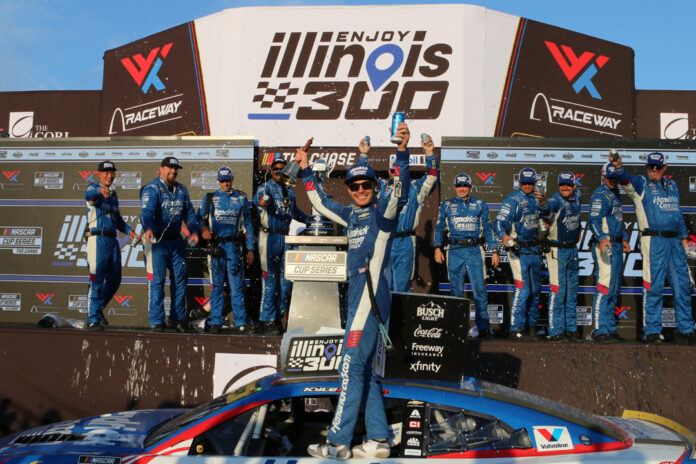
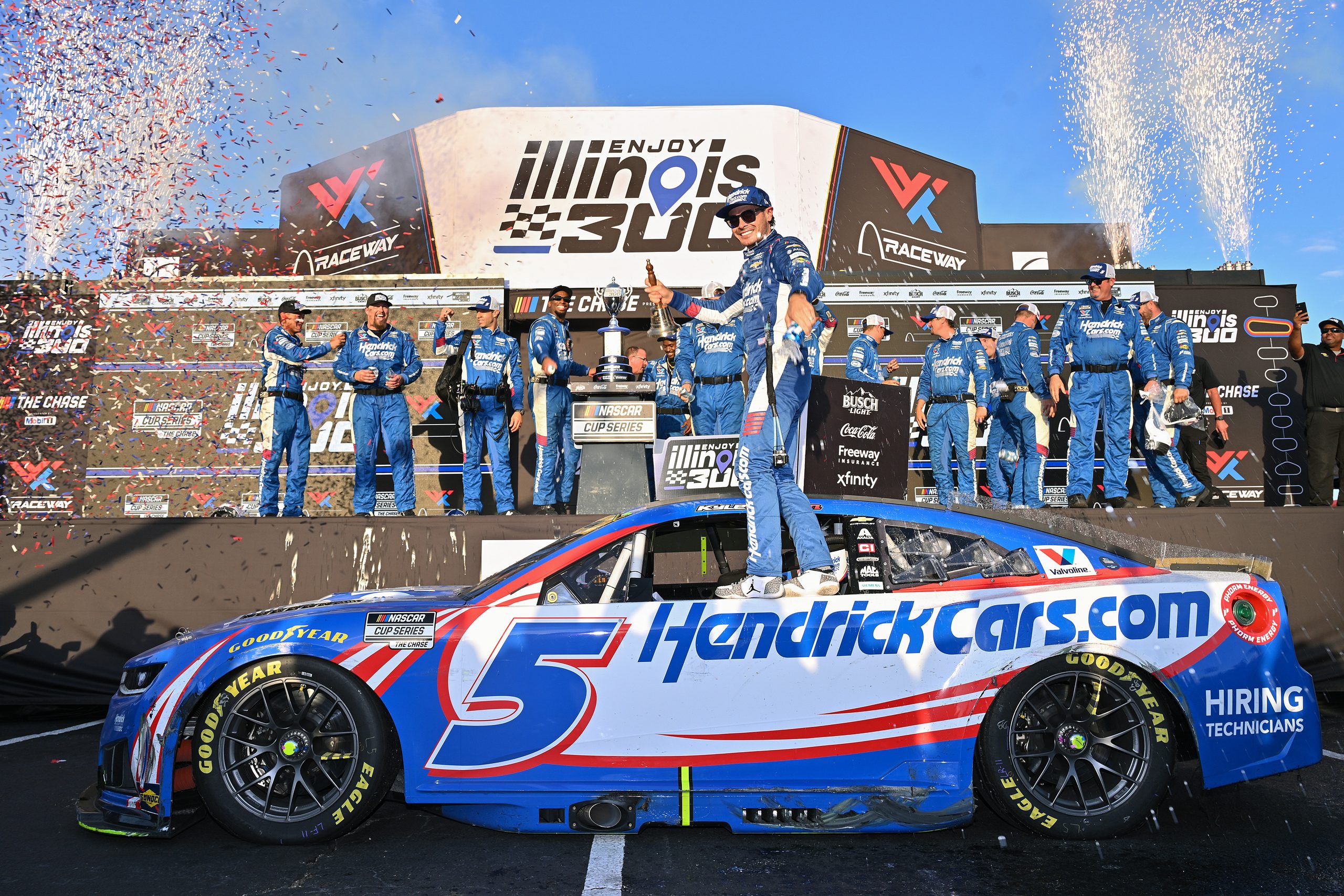
Kyle Larson struck gold and outlasted the competition through two overtime shootouts, including a multitude of on-track chaos and caution periods, to win the fifth annual running of the Enjoy Illinois 300 at World Wide Technology Raceway (Gateway) in Madison, Illinois, on Sunday, September 13.
The reigning two-time Cup Series champion from Elk Grove, California, led three times for 80 of 247 over-scheduled laps in an event where he qualified on the front row and withstood four caution periods throughout the first stage period to settle in third place at the stage’s conclusion. Larson then flexed his muscles by assuming the lead for the first time from Ross Chastain on Lap 81 and withstood another trio of cautions to win the second stage period.
Throughout the third and final stage period that was mired with a total of 10 cautions and numerous stars, including Chase contenders, being involved in on-track incidents, Larson remained upfront. During a late restart with 81 laps remaining, Larson scrubbed the outside wall amid a tight battle for the lead, in which he lost it with 78 laps remaining. After opting for a four-tire pit service during a late caution with less than 40 laps remaining, Larson used the fresh tires to storm his way back to the front and outduel Logano at the start of a restart with 13 laps remaining to return atop the leaderboard. Through three additional cautions and two brief red flag periods that sent the event into overtime twice, Larson fended off teammate Alex Bowman and Logano to achieve his first Cup victory in over a year and draw himself into championship contention.
With on-track qualifying that determined the starting lineup occurring on Saturday, September 12, Chaser Joey Logano qualified on pole position for a second time in 2026 with a pole-winning lap at 137.124 mph in 32.817 seconds. Chaser Kyle Larson qualified in second place with a lap of 135.980 mph in 33.093 seconds.
Before the event, John Hunter Nemechek was the only competitor to drop to the rear of the field after unapproved adjustments to his No. 42 Legacy Motor Club Toyota entry.
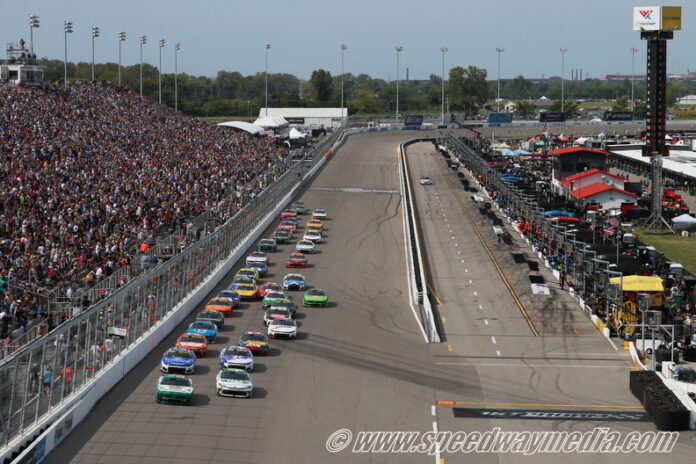
When the green flag waved and the event commenced, pole-sitter Joey Logano gained an early launch from the outside lane as he led Christopher Bell, Kyle Larson, Ryan Blaney, Carson Hocevar and the field through the first two turns. As the field behind jostled for early spots through the backstretch, Logano cycled back to the frontstretch and led the first lap.
Over the next four laps, a variety of on-track battles ensued within the field that had also started to fan out as wide as three lanes through the turns and straightaways. At the front, Logano was leading by half a second over Bell while Kyle Larson, Carson Hocevar, Ryan Blaney, Chase Briscoe, Chase Elliott, Ty Gibbs, Bubba Wallace and Alex Bowman were in the top 10, respectively. During the fourth lap mark, Tyler Reddick scrubbed the outside wall entering the frontstretch after he was forced up into the wall by Daniel Suarez from contact while both were battling within the top-20 mark. Despite continuing, Reddick reported a wheel being off from his entry.
On the fifth lap, the event’s first caution flew due to Riley Herbst, who was racing outside the top-30 mark, getting loose entering the frontstretch while he was racing in front of Ricky Stenhouse Jr., spinning and making contact with the inside wall. During the event’s first caution, Reddick along with Ty Dillon, Todd Gilliland, Shane van Gisbergen and Herbst pitted while the rest, led by Logano, remained on the track.
The event’s next restart on the 10th lap featured Logano motoring ahead and retaining the lead while teammate Blaney made a three-wide move on Larson and Bell, with Blaney also making slight contact with Larson, to motor his way into the runner-up spot by the third turn. Logano proceeded to lead the next four laps under green flag conditions before the caution returned due to Ricky Stenhouse Jr., who was racing outside the top-30 mark, spinning in the backstretch while he was battling beneath Herbst. During the second caution period, some, led by Daniel Suarez and including AJ Allmendinger, Ty Dillon, Stenhouse, Brad Keselowski, John Hunter Nemechek, Cody Ware, Gilliland, Reddick and Chris Buescher, pitted while the rest, led by Logano, remained on the track.
The event’s next restart on the 19th lap only lasted two turns when the caution returned for a multi-car wreck on the backstretch. The wreckage involved Noah Gragson, Suarez, Shane van Gisbergen, Cody Ware and Michael McDowell. For the next restart on Lap 24, Logano retained the lead with a quick crossover move to the inside lane in front of teammate Blaney through the frontstretch as Bell, who restarted behind Logano on the outside lane, navigated his way past Blaney for the runner-up spot.
Logano maintained the lead for three laps under green-flag conditions just before the caution returned on Lap 27 due to van Gisbergen being involved in his second incident of the event, this time by spinning in the second turn after he got loose beneath Allmendinger. During the latest caution period, some, including Austin Cindric, Denny Hamlin, William Byron, Erik Jones, Allmendinger, Stenhouse, Zane Smith, Connor Zilisch, Austin Dillon, Ryan Preece, Cole Custer, Cody Ware, Buescher, Gragson and van Gisbergen pitted while the rest, led by Logano, remained on the track.
With the event restarting on Lap 32, Logano continued to lead over Blaney while Bell and Hocevar battled for third place. Both Bell and Hocevar navigated their way into second and third over Blaney as Logano led the next lap. Logano maintained the lead through the Lap 35 mark by within three-tenths of a second over Bell, though Bell started to reel in Logano for the lead. Amid Bell’s challenges from the inside lane, Logano, who had the preferred outside lane, retained the lead by two-tenths of a second over Bell at the Lap 40 mark as Bell then tried to transition to the outside lane for additional momentum.
When the first stage period concluded on Lap 45, Logano, who has led every lap thus far amid a caution-filled start, fended off Bell to capture his third Cup stage victory of the 2026 season. Bell, who trailed Logano by two-tenths of a second, settled in second ahead of Larson, Blaney, Elliott, Hocevar and Briscoe while Bowman, Gibbs and Keselowski were scored in the top 10, respectively. By then, eight of 16 Chasers secured the event’s first round of stage points by finishing in the top 10 on the track while the remaining Chasers that include Suarez, Byron, Hamlin, Cindric, Reddick, Wallace, Preece and Buescher were scored in 14th, 15th, 17th, 21st, 24th, 29th, 31st and 33rd, respectively.
During the event’s first stage break period, a majority of the field, led by Logano, pitted while the rest, including Keselowski, Nemechek, Suarez, Byron, Hamlin, Austin Dillon, Cindric, Custer and Buescher, all of whom pitted during the previous caution, remained on the track. Following the pit stops, Bell, who opted for only a two-tire pit service, exited pit road first ahead of Gibbs.
The second stage period started on Lap 52 as Keselowski and Nemechek occupied the front row. At the start, Keselowski fended off Nemechek following a battle that lasted half a lap to retain the lead. As Keselowski led the next lap, a variety of on-track shuffling within the field that had fanned out ensued. The battles continued for another two circuits before the caution returned on Lap 55 when Ty Gibbs made contact and sent Erik Jones for a spin in the first turn.
When the event restarted on Lap 60, Keselowski and Nemechek dueled for the lead through the first two turns until the former motored ahead through the backstretch. Keselowski led the next lap, and he maintained the lead over the next two laps in front of a jostled field before the caution returned; this time was due to Herbst and Allmendinger both spinning in the backstretch after Herbst cut across the nose of van Gisbergen, got loose, and spun in front of Allmendinger, the latter of whom was collected due to having no clear path through the carnage. During the latest caution period, nearly the entire field led by Keselowski pitted for service while some led by Chastain and including Jones, Preece, McDowell and Cody Ware remained on the track. Following the pit stops and with mixed pit strategies ensuing, Hamlin exited pit road first ahead of Larson, Josh Berry, Keselowski, Zilisch and Byron.
As the event restarted on Lap 69, Chastain and Jones occupied the front row, where Chastain held the lead for the next lap. With Chastain leading just past the Lap 70 mark, Larson navigated his way up into third place behind Ryan Preece while Jones dropped to fifth place. Behind, Keselowski and Berry occupied fourth and sixth, respectively, while Logano, Hamlin, Blaney and Reddick were racing in the top 10 ahead of Zilisch, Bowman, Byron, Elliott and Suarez. With Larson navigating his way into the runner-up spot over Preece, Chastain led by three-tenths of a second at the Lap 75 mark.
Through the Lap 80 mark, Larson reeled in on Chastain for the lead through the backstretch. The duo then dueled exiting the backstretch and through Turns 3 and 4 before Larson motored ahead and led the next lap through the frontstretch. As Larson led, Chastain retained the runner-up spot over Keselowski, Preece and Logano while Erik Jones, Berry, Blaney, Hamlin and Reddick were scored in the top 10, respectively. By then, Bowman, Elliott, Zilisch, Byron, Suarez, Briscoe, Nemechek, Wallace, Cindric, Gibbs, Bell and Hocevar trailed in the top-22 mark, respectively, while Buescher was the lowest-running Chaser in 30th place.
Ten laps later, Larson stretched his lead up to 1.8 seconds over Chastain, with Keselowski, Logano, Preece, Blaney, Erik Jones, Berry, Hamlin and Reddick racing in the top-10 mark, respectively. Larson proceeded to add another second to his advantage as he led by 2.4 seconds at the Lap 100 mark while Chastain maintained the runner-up spot over Keselowski, Logano, Blaney and Preece, respectively. Behind, Jones, Berry, Hamli and Reddick retained the remaining top-10 spots over Elliott, Byron, Briscoe, Bowman and Wallace while Cindric, Zilisch, Gibbs, Hocevar, Suarez and Bell trailed in the top-21 mark, respectively, and Buescher was still mired in 30th place.
At the halfway mark on Lap 120, Larson, who led by more than two seconds over the Lap 100 and 110 marks, stabilized his lead by two-and-a-half seconds over Logano while Chastain, Keselowski, Blaney, Berry, Hamlin, Preece, Reddick and Briscoe occupied the top 10 spots, respectively. By then, all but three of 36 starters were scored on the lead lap, though all 36 starters continued to race on the track. In addition, seven of 16 Chase competitors were racing in the top-10 mark on the track while a next wave of Chasers that included Elliott, Wallace, Cindric, Gibbs, Byron, Hocevar and Bell raced from 12th to 18th, respectively. Meanwhile, Suarez and Buescher were the two lowest-running Chasers in 21st and 30th, respectively.
Then on Lap 129, Chastain, who was racing in fourth place behind Keselowski, pitted under green. Another lap later, the caution flew due to Zane Smith, who was racing in front of the leader Larson, having something mechanical-related pop beneath his entry, spinning while exiting the frontstretch below the track, sliding up the track and wrecking hard against the outside wall through the first two turns. Despite receiving assistance from his wrecked entry and a ride to the infield care center, Smith would be evaluated and released.
Smith’s incident was enough for the second stage period to officially conclude as Larson was awarded his sixth Cup stage victory of the 2026 season. Logano, Keselowski, Blaney, Berry, Hamlin, Preece, Reddick, Briscoe and Wallace settled in the top 10. By then, eight of 16 Chasers were awarded the event’s second round of stage points, while the remaining Chasers, including Elliott, Cindric, Gibbs, Byron, Hocevar, Bell, Suarez and Buescher, were scored in 12th, 13th, 14th, 15th, 16th, 17th, 19th and 29th, respectively. In addition, Chastain, who pitted prior to Smith’s incident, was awarded the free pass for being the first competitor to be scored a lap down.
During the event’s second stage break period, the field led by Larson pitted for service. Following the pit stops, Logano beat Larson off of pit road first while Keselowski, Berry, Preece, Briscoe, Hamlin, Blaney, Wallace and Elliott followed suit, respectively.
With 99 laps remaining, the final stage period briefly commenced as Logano and Larson occupied the front row. Seconds later, the caution returned when Bubba Wallace, who made a bold move beneath Briscoe amid a three-wide action and brief contact through the first two turns, made contact with Briscoe a second time through the turns. This got the latter two loose and spinning while Wallace got hit in the left front by Byron. As a result, both Byron and Briscoe spun below the track while Wallace, whose entry was straightened despite getting hit by Byron, proceeded and pitted for repairs.
The next restart with 94 laps remaining featured Logano, who managed to retain the lead during the brief, previous restart, mirroring his move from the outside lane by fending off Larson and leading the next lap. Larson then lost the runner-up spot to Keselowski as Logano led by three-tenths of a second with 90 laps remaining. Logano maintained the lead for the next three laps under green flag conditions before the caution returned with 86 laps remaining. The caution was for Blaney, who was racing in sixth place, experiencing a brake failure and scrubbing the outside wall through the first two turns, thus sustaining significant right-side damage to his No. 12 Menards Ford Mustang Dark Horse entry. During the latest caution period for Blaney’s incident, nearly the entire field led by Logano pitted while the rest led by Larson and Berry remained on the track.
During the next restart with 78 laps remaining, Larson and Berry dueled for the lead in front of Keselowski and Hamlin as Hamlin tried to stick his nose beneath Berry for a three-wide move exiting the frontstretch. Through the first two turns, Berry made contact with Larson and sent Larson up the track through the first two turns. Despite getting sent up the track, Larson managed to outduel Berry, but he was gridlocked with Hamlin for the lead through the backstretch. Berry then stormed back beneath Hamlin and Larson entering the frontstretch and contact ensued, with Larson scrubbing the outside wall. This allowed Berry to motor ahead and lead the next lap while Larson, Hamlin and Keselowski engaged in a three-wide battle for second place in front of another three-wide battle that involved Logano, Gibbs and Hocevar.
Seconds later, Berry got loose through the first two turns. This allowed Keselowski to motor beneath Berry entering the backstretch as they battled for the lead. Following the duel, Keselowski used the outside lane to clear Berry through the frontstretch with 74 laps remaining while Logano kept the two leaders close within his sights. As Logano overtook Berry for the runner-up spot, Keselowski continued to lead before the caution flew with 70 laps remaining due to Chastain spinning in the frontstretch after he made contact with Briscoe. During this caution period, some, led by Berry and including Larson, Byron, Allmendinger, Wallace, Zilisch, Austin Dillon, Austin Hill, Herbst, Gilliland, Stenhouse and Chastain, pitted while the rest, led by Keselowski, remained on the track.
Keselowski fended off Logano and Hocevar during the latest restart with 66 laps remaining and he maintained the lead for two laps before the caution returned due to Herbst, who had fire erupting from his entry due to spilled fuel, wrecking in the first turn. With select names like Suarez, Gragson, Chastain, Buescher, van Gisbergen, and Gilliland pitting, Keselowski was challenged by Logano for the lead during the next restart with 59 laps remaining. Logano used the inside lane to overtake Keselowski for the lead while Hocevar fiercely dueled against his rival, Keselowski, for the runner-up spot. Logano, who led by half a second with 50 laps remaining, maintained the lead under green flag conditions through the final 41-lap mark before the caution returned as Noah Gragson experienced brake issues and scrubbed the outside wall through the first turn.
For the latest caution, a majority of the field, led by Logano, pitted while the rest, led by Keselowski and including Gibbs, Preece, van Gisbergen, and Chastain, remained on the track. With the next restart occurring with 35 laps remaining, Keselowski rocketed away from the field that fanned out through the first two turns and the backstretch. As Keselowski led the next lap, Chastain motored his way into the runner-up spot over van Gisbergen, Briscoe, Logano, Preece and Bell. Keselowski proceeded to lead by a second over Logano, Bell, Chastain and Briscoe with 30 laps remaining.
Then, with 27 laps remaining, the caution returned when Elliott, who was reeling in on Briscoe for sixth place, experienced a brake failure entering the first turn, got loose, spun through the inside lane, slid up, and collided with Briscoe, thus sending both hard against the outside wall in the first turn and jeopardizing their Chase hopes as they were knocked out of contention with wrecked race cars.
For the next restart with 20 laps remaining, Logano used the inside lane and two fresh tires to dive and motor ahead of Keselowski to assume the lead through the backstretch. As Larson trailed in third place, Chastain, Bell and Berry went three-wide for fourth place exiting the backstretch in front of Bowman and Wallace as Logano led the next lap. Another lap later, the caution flew when Berry barely clipped the left-rear area of Bell entering the backstretch and got Bell sideways. With Bell’s right-rear area hitting the outside wall, he was hit on the left side by Berry as the latter, along with Reddick, briefly got airborne from contact while Wallace got turned into the outside wall. The incident left Bell, Berry, Reddick and Wallace with damaged entries.
During the next restart with 13 laps remaining, Logano and Larson dueled for the lead, with Larson, who restarted on the inside lane and pitted for four fresh tires compared to Logano’s two during their latest pit stops under the final 40 laps, making the move stick as he motored ahead with the lead through the first two turns and the backstretch. Larson’s advantage under full pace did not last long as the caution returned due to a multi-car wreck on the backstretch that involved Gibbs, Suarez, Zilisch, Ty Dillon, Allmendinger and Stenhouse. This latest incident placed the event in a red flag period for four minutes and 40 seconds.
When the red flag lifted, and the field led by Larson proceeded under a cautious pace, select names that included Gibbs, Reddick and Allmendinger pitted while the rest, including the front-runners, remained on the track. For the next restart that commenced with seven laps remaining, Larson motored ahead of Logano from the outside lane, and the former led through the frontstretch, the first two turns, and the backstretch while the field behind fanned out. Amid Logano’s charge, Larson maintained the lead by four-tenths of a second with five laps remaining as Bowman, Chastain, Byron and a stacked field followed suit, respectively.
Then with three laps remaining, the caution flew, and the event was sent into overtime when Buescher, who was racing just outside the top-20 mark, blew a right-front tire due to a brake failure and went dead straight towards scrubbing the outside wall through the first two turns. Buescher’s incident triggered a second red flag period of the event, the latest one being for three minutes and 24 seconds.
When the red flag lifted and the field attempted to restart for a single overtime attempt, the caution returned, and the field was sent into a second overtime attempt when van Gisbergen, who was racing in the top 10, made contact with Hocevar amid a tight three-wide action that involved Austin Dillon and sent him for a spin towards the outside wall through the first two turns. At the time of caution, Larson had motored away and retained the lead while Bowman wheeled his way into the runner-up spot over Logano.
The start of the second overtime attempt featured Larson launching ahead of both Logano and Bowman from the outside lane through the frontstretch. As Bowman and Logano battled dead even for the runner-up spot, Larson retained a steady advantage for a full cycle.
When the white flag waved and the final lap started, Larson remained in the lead. With both Bowman and Logano unable to reel in and charge on Larson for a final circuit, Larson utilized his steady advantage to remain at the front for a final circuit before he cycled back to the frontstretch and claimed his first elusive checkered flag by three-tenths of a second over Bowman and by half a second over Logano.
With the victory, Larson, who has had four runner-up results since his latest victory, notched his 33rd career win in the NASCAR Cup Series division, which moves him into a tie with Fireball Roberts for 28th place on the all-time wins list. He also achieved his first at Gateway and his first since Kansas Speedway in May 2025. Larson’s Gateway victory marks the seventh of the 2026 season for Chevrolet and the third for Hendrick Motorsports, with the organization notching its 323rd Cup career victory.
As an added bonus, Larson, who entered Gateway situated in seventh place in the Chase standings and trailed the points lead by 49 points, gained five spots and is up to second place in the standings while trailing points leader Denny Hamlin by nine points. Larson now has eight races to extend his momentum from his Gateway victory to return atop the standings and defend his championship by this year’s finale at Homestead-Miami Speedway in November.
MADISON, ILLINOIS – SEPTEMBER 13: Kyle Larson, driver of the #5 HendrickCars.com Chevrolet, celebrates in victory lane after winning the NASCAR Cup Series Enjoy Illinois 300 at WWT Raceway on September 13, 2026 in Madison, Illinois. (Photo by Amy Kontras/Getty Images).
“I had a good feeling, but I mean, you never know,” Larson said on the frontstretch on USA Network. “I felt like this place is so weird, obviously with the brake rotor failure, strategy, all of that. Just proud of my team for working so hard and being so patient through all the tough times and the winless streak and all that. Thanks to the fans, my fans for also being patient with us and letting it get it figured out. How about Hendrick Motorsports? How about Alex Bowman? I mean, you can’t ask for a better teammate than him. [Bowman] Give me the pushes I needed to get clear, so I really wanna dedicate this one to him and his dog, Finn, who passed away a couple of days ago.”
“I haven’t doubted myself, I haven’t doubted our team, maybe myself at times, but never my team,” Larson added. “Thank you to everybody on the No. 5 team, everybody at HendrickCars.com, Chevrolet, Valvoline, the engine shop, the pit crews for busting their butts, too. [Crew chief] Cliff Daniels for leading our team to great finishes. No better time to have a great day than today. Proud of it and feel like we got our swagger back a little bit.”
Alex Bowman, who finished as high as third twice earlier this season, outdueled Joey Logano to finish in the runner-up spot and emerge as the highest-finishing non-Chase competitor in the field. Amid the runner-up result, Bowman was left emotional as he dedicated his result to his dog, Finn, who died a few days prior.
“I’m super happy for Kyle,” Bowman said. “It’s a really hard weekend just to get on the plane and be here. [I’m] Ready to go home, but I’m proud of everybody on this Ally No. 48 team for helping me through the weekend. Life is hard sometimes, but yeah, I lost my best friend. I suck here [at Gateway], so clearly I had some help…It was a good day for us.”
Meanwhile, Joey Logano, who led a race-high 96 laps, settled in third place. William Byron rebounded from a late retirement last weekend at Darlington Raceway to finish in fourth place, thus placing three Hendrick Motorsports competitors in the top five in the final running order, while Ross Chastain, who led 15 laps, navigated his way to finish in fifth place.
“The restart where Larson took the lead. That’s where I lost it, obviously,” Logano said. “He just rolled the bottom really good and cleared me, which is really surprising. His first, like, three laps of every run was pretty spectacular. Had no homies with me. No more friends. On my own. It’s a good run, right? Got a lot of stage points, finished in the top five again, which is obviously what we need to do. Thinking about what the 25 points would feel like right about now, it does stink some. I mean, we got closer to where we need to be. Yeah, when you have an opportunity like that, got a car like that, you need to win. We just didn’t make it happen.”
Austin Dillon, rookie Connor Zilisch, Carson Hocevar, Denny Hamlin and Austin Cindric completed the top 10 in the final running order. With six of 16 Chase competitors finishing in the top 10 at Gateway, the remaining Chasers, including Bubba Wallace, Ryan Preece, Ty Gibbs, Christopher Bell, Tyler Reddick, Chris Buescher, Daniel Suarez, Chase Elliott, Chase Briscoe and Ryan Blaney, ended up 14th, 17th, 18th, 19th, 25th, 27th, 29th, 31st, 32nd and 35th, respectively.
The second Chase event of the 2026 Cup Series season generated 11 lead changes for five different leaders, and 18 cautions for 87 laps. In addition, 26 of 36 starters finished on the lead lap.
Race Results:
Kyle Larson, 80 laps led, Stage 2 winner
Alex Bowman
Joey Logano, 96 laps led, Stage 1 winner
William Byron
Ross Chastain, 15 laps led
Austin Dillon
Connor Zilisch
Carson Hocevar
Denny Hamlin
Austin Cindric
Cole Custer
Brad Keselowski, 55 laps led
Erik Jones
Bubba Wallace
John Hunter Nemechek
AJ Allmendinger
Ryan Preece
Ty Gibbs
Christopher Bell
Michael McDowell
Austin Hill
Cody Ware
Shane van Gisbergen
Todd Gilliland
Tyler Reddick
Ricky Stenhouse Jr.
Chris Buescher – OUT, Accident
Josh Berry, 116 laps down, one lap led
Daniel Suarez – OUT, Accident
Ty Dillon – OUT, Accident
Chase Elliott -OUT, Accident
Chase Briscoe – OUT, Accident
Noah Gragson – OUT, Accident
Riley Herbst – OUT, Accident
Ryan Blaney – OUT, Accident
Zane Smith – OUT, Accident
*Bold indicates Chase Drivers
Following the second Chase event of the 2026 NASCAR Cup Series season, Denny Hamlin continues to lead the Chase standings by nine points over Kyle Larson. The rest of the 16-car Chase field is displayed below.
Chase Standings:
Denny Hamlin
Kyle Larson -9
Christopher Bell -18
Ryan Blaney -33
Tyler Reddick -42
Ty Gibbs -51
Joey Logano -51
Chase Briscoe -59
Carson Hocevar -88
Bubba Wallace -90
Chase Elliott -93
Austin Cindric -108
Chris Buescher -111
Ryan Preece -113
William Byron -114
Daniel Suarez -119
Next on the 2026 NASCAR Cup Series schedule is the Bass Pro Shops Night Race at Bristol Motor Speedway in Bristol, Tennessee. The event is scheduled to occur next Saturday, September 19, and air at 7:30 p.m. ET on USA Network, PRN Radio, SiriusXM and HBO MAX.