Home Blog Page 336

Complete Guide to Slot Machine Return-to-Player Mathematics

Photo by depositphotos at https://depositphotos.com/

Return-to-Player or RTP rates are among the most pivotal, yet mystifying, aspects of contemporary slot games. After thoroughly examining a plethora of slot machines from different regions over ten years, players are sure that knowing how RTP works at the core alters players’ entire perspective regarding these games.

What Return-to-Player Rates Actually Mean

RTP (Return to Player) percentages show the theoretical money value a slot machine at Casino Winz is expected to return to players after a very long play period. When a slot machine shows a 96% RTP, it means that for every $100 bet in total by all players, the machine is theoretically giving back $96 over an infinite number of spins.

This statistic, however, is a bit more complex and needs to be interpreted with care. The main thing here is the word “theoretical” – so the result of any single session can be far from these long-term averages. Besides that, the calculation of RTP assumes that the game is played in the most ideal way and at the maximum coin denominations, which is seldom the case in real life.

The most recent industry data collected by the Nevada Gaming Control Board reveals that the slot RTPs have been quite stable during the last five years. Penny slots have an average RTP that ranges from 88% to 92% and the games with higher denominations reach from 94% to 98%. These numbers mark a considerable step forward compared to the 1990s, when RTPs were widely lower than 85%.

Industry Standards Across Different Jurisdictions

Regulatory requirements vary significantly across gaming markets, creating substantial differences in player value propositions. Let me break down the current landscape based on my research:

JurisdictionMinimum RTPAverage RTPMaximum RTPRegulatory Body
Nevada75%93.2%98.5%Nevada Gaming Control
New Jersey83%91.8%97.2%Division of Gaming Enforcement
United Kingdom70%94.1%99.1%UK Gambling Commission
Malta85%95.3%98.8%Malta Gaming Authority
Macau80%89.7%96.4%Gaming Inspection Bureau

These variations reflect different market philosophies and competitive pressures. European markets generally mandate higher RTPs due to stronger consumer protection regulations, while some American jurisdictions allow greater operator flexibility.

Mathematical Foundations Behind RTP Calculations

The mathematics underlying RTP calculations involves complex probability distributions across multiple variables. Each symbol combination carries specific odds and the paytable structure determines overall return percentages.

Modern slot machines utilize random number generators (RNGs) operating at speeds exceeding 1,000 calculations per second. These systems ensure that each spin remains independent of previous results, making it impossible to predict future outcomes based on historical patterns.

Volatility—often confused with RTP—measures the risk associated with achieving advertised returns. High-volatility slots may offer identical RTPs to low-volatility games while delivering vastly different playing experiences. Understanding this distinction proves crucial for bankroll management.

Factors Influencing Actual Return Rates

Several variables affect real-world RTP performance beyond theoretical calculations:

  • Bet sizing strategies: Many slots offer improved RTPs for maximum bet amounts
  • Bonus feature activation: Special rounds often carry different mathematical models
  • Progressive jackpot contributions: Portions of each bet fund jackpot pools rather than base game returns
  • Player skill elements: Certain bonus rounds require decision-making that impacts overall returns
  • Time-based promotions: Casinos occasionally adjust RTPs during promotional periods

Additionally, denomination typically correlates with RTP percentages. Penny slots generally offer lower returns than dollar machines, reflecting different cost structures and player expectations.

Common Misconceptions About RTP Rates

The gaming industry faces persistent myths regarding RTP functionality. The most damaging misconception suggests that machines become “due” for payouts after extended losing streaks. This fallacy, known as the gambler’s fallacy, has no mathematical basis in RNG-based gaming.

Another widespread belief claims that casinos manipulate RTPs in real-time based on player behavior or time of day. While operators can adjust settings during maintenance periods, regulatory requirements mandate extensive documentation and approval processes for such changes.

Some players incorrectly assume that higher RTPs guarantee better short-term results. In reality, a 98% RTP slot can produce longer losing streaks than an 88% RTP game due to volatility differences.

Practical Applications for Informed Gaming

Armed with RTP knowledge, players can make more informed decisions about their gaming selections. Here are key strategies I recommend:

  • Research game RTPs before playing: Most jurisdictions require RTP disclosure in game rules
  • Compare similar games across different operators: RTPs can vary for identical titles
  • Consider volatility alongside RTP: Match game selection to bankroll size and risk tolerance
  • Focus on entertainment value: RTP optimization alone doesn’t guarantee enjoyable experiences
  • Set realistic expectations: Understand that house edges ensure long-term operator profitability

The industry continues evolving toward greater transparency and player protection. Several jurisdictions now mandate real-time RTP display, while others require detailed mathematical explanations in game documentation.

  • Blockchain gaming promises unprecedented transparency in RTP calculations and payout verification. These developments may fundamentally reshape player relationships with gaming operators.
  • Artificial intelligence integration allows for more sophisticated volatility modeling and personalized gaming experiences while maintaining regulatory compliance and fair play standards.

Understanding RTP rates empowers players to make informed decisions while maintaining realistic expectations about gaming outcomes. As the industry continues emphasizing transparency and player protection, this knowledge becomes increasingly valuable for anyone engaging with slot machine entertainment.

Reading Advance for the 40th Annual NHRA Nationals presented by Nitro Fish

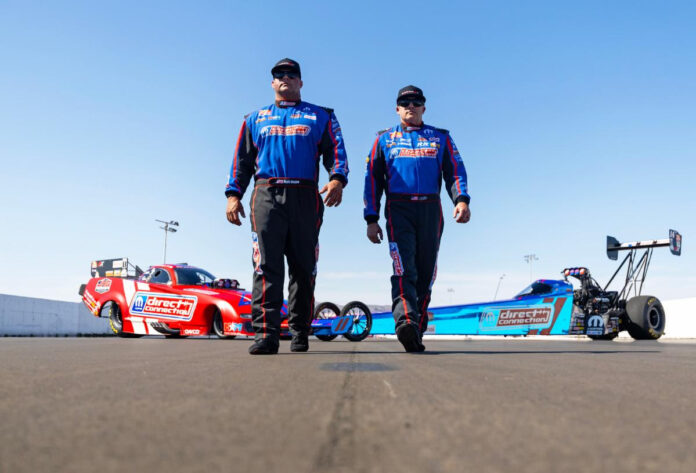
Tony Stewart & Matt Hagan
Dodge Direct Connection Top Fuel & Funny Car Drivers
40th Annual NHRA Nationals presented by Nitro Fish
Sept. 12-14 | Reading, Pennsylvania

Event Overview
Friday, Sept. 12 (Nitro Qualifying, streamed live on NHRA.TV)

Nitro qualifying session (Q1): 3:30 p.m. EDT
Nitro qualifying session (Q1): 6 p.m. EDT

Saturday, Sept. 13 (Nitro Qualifying, streamed live on NHRA.TV)

Nitro qualifying session (Q3): 1:30 p.m. EDT
Nitro qualifying session (Q4): 4 p.m. EDT

Sunday, Sept. 14 (Nitro Eliminations, streamed live on NHRA.TV)

Round 1: 11 a.m. EDT
Round 2: 1:15 p.m. EDT
Semi-Finals: 2:55 p.m. EDT
Finals: 4:10 p.m. EDT

TV coverage on FS1

Sunday, Sept. 14: Qualifying show recapping Friday and Saturday’s action (12 p.m. EDT)
Sunday, Sept. 14: Finals show (2 p.m. EDT)

Notes of Interest

The 40th Annual NHRA Nationals presented by Nitro Fish Sept. 12-14 at Maple Grove Raceway near Reading, Pennsylvania, is the 15th race on the NHRA Mission Foods Drag Racing Series’ 20-race schedule. However, it’s the opening round in the six-race Countdown to the Championship, where both Tony Stewart Racing (TSR) drivers – Tony Stewart in Top Fuel and Matt Hagan in Funny Car – are ready to make a title run in their respective divisions. The top-10 drivers in each of the NHRA’s four professional categories – Top Fuel, Funny Car, Pro Stock and Pro Stock Motorcycle – compete in the Countdown. Stewart is a two-time Top Fuel winner and Hagan is a 53-time Funny Car winner and four-time champion.

This year’s Countdown marks Stewart’s second appearance in the NHRA postseason and Hagan’s 13th consecutive appearance. Stewart is first heading into the Countdown, 16 points ahead of Shawn Langdon. Hagan is third, 27 points behind leader Austin Prock.

Hagan has won 16 times in the Countdown to the Championship, tied for first among Funny Car drivers with Robert Hight, who presently is not active.

Direct Connection is the primary partner of Stewart and Hagan this weekend in Reading. With muscle car enthusiasts looking for “ready to run” parts, Direct Connection serves as the source for high-performance parts and technical expertise straight from the factory.

The NHRA Nationals will serve as Stewart’s 35th career Top Fuel start and his second at Maple Grove. For Hagan, this will be his 367th career Funny Car start and his 16th at the track.

Stewart is seeking his first victory in the NHRA Nationals, as well as his first No. 1 qualifier at the event. In 2024, he secured the No. 4 qualifying position and advanced to Round 2 on Sunday. In addition, Stewart made two starts at Maple Grove Raceway in the Top Alcohol Dragster (TAD) class. In 2023, Stewart qualified third at the NHRA Nationals in TAD and won the event, defeating Fiona Crisp, Mike Lewis, Brando Greco and Madison Payne. Stewart also collected a Division 3 win at Maple Grove Raceway in 2023, defeating John Ausherman, Dan Page and Matthew Cummings.

Hagan won the NHRA Nationals in 2014. His run of 4.330 ET at 215.00 mph defeated Tommy Johnson (5.465 ET at 152.31 mph). Although Hagan has only one win at Maple Grove Raceway, his car has won twice. In 2021, when he was sidelined with COVID-19, Tommy Johnson Jr. subbed for him and won the NHRA Nationals in Hagan’s car. Hagan also has two No. 1 qualifiers at Maple Grove – 2010 when he set a then NHRA national record 4.011 ET and in 2016 with a 3.873 ET.

The Mopar CAP (Career Automotive Program) will be partnering with TSR on Friday for the third of seven events this season. CAP consists of strategic alliances between Stellantis and over 100 colleges and trade schools teaching technical curriculum integrated into the school’s general automotive program, so that students can become certified Stellantis technicians.

The Tony Stewart Store merchandise trailer will be on-site at the NHRA Nationals. Hagan will be signing on Friday from 4:30-5:00 p.m. and Stewart will be signing Saturday from 2:30-3:00 p.m.

Tony Stewart, Driver of the TSR Dodge//SRT Direct Connection Top Fuel Dragster

Your Dodge//SRT Direct Connection team earned No. 1 in the NHRA Mission Foods Regular Season Championship at the previous event, the U.S. Nationals. The 40th Annual NHRA Nationals at Maple Grove Raceway starts the 2025 Countdown to the Championship. Given your success thus far in the season, what confidence does that give you heading into the opening round of the six-race Countdown?

“I think it gives us a lot of confidence, especially having the solid run on race day at the U.S. Nationals. I feel like it’s the momentum that we need to start the Countdown. The performance of our car is back where it was earlier in the year when we took the points lead, so I feel like there’s a lot of positive things going on. Anything can happen in these six races and you can’t stub your toe or have a mistake. But I am going into it with the mindset and the feeling in my gut that we have a car and a team that I feel like are on top of their game right now. We have our car in a good position to give us the best opportunity to win a real championship. I don’t know that you could ask for more than that.”

Matt Hagan, Driver of the TSR Direct Connection Dodge//SRT Hellcat Funny Car

The 40th Annual NHRA Nationals begins your Ride to Five (Championships). What is your mindset heading into Maple Grove Raceway, being third in the Funny car standings and knowing a fifth championship is attainable for you and your team?

“The Ride to Five is very doable. Progress and momentum is key. We have a great team that is very dedicated and driven. They are goal-oriented and strive every day to be the best they can be. (Austin) Prock has won seven races, which is staggering. There is work to be done, but they are beatable. They don’t mess up very often, but we need to be able to take advantage of it when they do. The Indy ladder looked pretty promising and we could have met Prock in the final, but it just didn’t work out that way. We just need to capitalize on every opportunity we have and can’t give anything up. We have to make good decisions and I have to have good lights. We have six races to make this happen. We have a chance to get within striking distance with points resetting. When you let them get a race or two ahead of you, it’s really hard to make up that ground. We have to qualify well, so we have lane choice. Then I have to do my job with lights on the tree. We have to be methodical about what we do, but we have a chance to win this thing. I’m very focused and driven.”

Carson Ware Eyes Big Opportunity at Bristol

25-Year-Old To Pull Double Duty and Compete in ARCA and Xfinity Series Races

MOORESVILLE, N.C. (Sept. 8, 2025) – With a Tour Type Modified win in his first-ever start at Bowman Gray Stadium and multiple Late Model victories across various series in the Southeast, Carson Ware has been steadily climbing the NASCAR ladder. This Thursday and Friday at Bristol (Tenn.) Motor Speedway, the 25-year-old racer will continue his upward trajectory when he competes in the ARCA Menards Series and NASCAR Xfinity Series races at the .533-mile oval.

In Thursday night’s Bush’s Beans 200 ARCA race, Ware will drive the No. 51 Schaeffer’s Specialized Lubricants/Costa Oil 10-Minute Oil Change/CostaFilters.com entry for Rick Ware Racing. On Friday night in the Food City 300 Xfinity Series race, Ware will drive the No. 07 CreaBitty Creatine machine for SS Green Light Racing.

“Bristol is one of the most demanding tracks in NASCAR, and pulling double duty in ARCA and Xfinity is a great way to learn a lot in a relatively short amount of time,” said Ware, who has made three prior Xfinity Series starts at Bristol. “With the support of my partners, I’m focused on making the most of every lap.”

Ware’s most recent win came May 3 in the zMAX CARS Tour Pro Late Model race at Ace Speedway in Altamahaw, North Carolina, where he outlasted the competition and the weather. Ware took the lead for the first time after deftly navigating an oily racing surface from the blown engine of a fellow competitor. Then, on the ensuing restart, Ware pulled away from a hard-charging Ben Maier. Shortly thereafter, the yellow caution flag waved for rain. CARS Tour officials were forced to stop the race just past the halfway mark, making the result official with Ware the winner.

Since 2019 when he earned that Tour Type Modified victory at Bowman Gray Stadium in Winston-Salem, North Carolina, Ware has run in a collection of races across ARCA, the NASCAR Craftsman Truck Series and Xfinity Series, while also campaigning Late Models. Thursday night’s ARCA race will mark his second career ARCA start and first since October 2019 when he finished 13th at Kansas Speedway in Kansas City. Friday’s night’s Xfinity Series race will serve as Ware’s 16th career Xfinity Series start, with his last race coming in June at Pocono (Pa.) Raceway.

Ware has facilitated these opportunities by securing partnerships with emerging brands that want to leverage NASCAR as a platform for growth. Ware’s double-duty effort is a case in point.

Schaeffer’s Specialized Lubricants has achieved a world-class reputation for improving engine performance and fuel economy. Its diverse product line includes synthetic motor oils, hydraulic fluids and diesel fuel additives, as well as all types of industrial lubricants, greases and oils, including such specialty items as chain lubes and degreasers. All were created to help improve performance, reliability and fuel economy.

Costa Oil 10-Minute Oil Change is one of the fastest-growing models in the quick-lube space. With a national footprint of more than 65 locations, Costa Oil specializes in no-appointment, drive-through, 10-minute oil changes. The brand was prominently featured on Ware’s Pro Late Model in his win at Ace Speedway.

CreaBitty is a next-generation creatine gummy supplement designed to power both body and brain. It delivers convenient and delicious performance with no mixing, no bloat and no compromise. CreaBitty Creatine is trusted by athletes, entrepreneurs and everyday high-performers alike.

“I’m really proud to have Schaeffer’s Specialized Lubricants, Costa Oil 10-Minute Oil Change and CreaBitty Creatine with me at Bristol,” Ware said. “Each of these partners is focused on performance in their own way, and NASCAR is the perfect vehicle to showcase that. To have the support of these brands at one of NASCAR’s toughest tracks means a lot. I look forward to representing all of them this week.”

The Bush’s Beans 200 ARCA race goes green on Thursday at 5:30 p.m. EDT and will be broadcast on FS1. The Food City 300 Xfinity Series race on Friday starts at 7:30 p.m. with flag-to-flag coverage on the CW. Both races can be heard on SiriusXM NASCAR Radio.

About Rick Ware Racing:

Rick Ware has been a motorsports mainstay for more than 40 years. It began at age 6 when the third-generation racer began his driving career and has since spanned four wheels and two wheels on both asphalt and dirt. Competing in the SCCA Trans Am Series and other road-racing divisions led Ware to NASCAR in the early 1980s, where he finished third in his NASCAR debut – the 1983 Warner W. Hodgdon 300 NASCAR Grand American race at Riverside (Calif.) International Raceway. More than a decade later, injuries would force Ware out of the driver’s seat and into full-time team ownership. In 1995, Rick Ware Racing was formed, and with wife Lisa by his side, Ware has since built his eponymous organization into an entity that competes full-time in the elite NASCAR Cup Series while simultaneously campaigning successful teams in the Top Fuel class of the NHRA Mission Foods Drag Racing Series, Progressive American Flat Track, FIM World Supercross Championship (WSX) and zMAX CARS Tour.

CORVETTE RACING AT COTA: No Luck at Home

Misfortune strikes pair of TF Sport Corvettes in American WEC round

AUSTIN, Texas (September 7, 2025) – Rain and bad luck were the orders of the day for TF Sport in the Lone Star Le Mans at Circuit of The Americas. The team’s pair of Chevrolet Corvette Z06 GT3.Rs finished outside the top-10 and as a result the points in the lone North American stop of the FIA World Endurance Championship.

The No. 81 Corvette of Charlie Eastwood, Rui Andrade and Tom Van Rompuy was the highest-finishing TF Sport entry after six hours of rainy racing. It was a cruel result after the Corvette gained eight spots during a nearly two hours of running behind the safety car and a red-flag stoppage due to an issue with one of the safety cars.

The 81 trio saw its two-race podium streak come to an end with a 13th-place finish. Van Rompuy led early following the early-race chaos, but the team lost time in the pitlane having to replace a sensor on the Corvette’s accident data recorder – an FIA-mandated and supplied device – that cost Andrade nearly a lap in the process once the driver change and service finished. The team had elected to run Van Rompuy deep into the stint in hopes of catching a virtual safety car period.

Problems also bit the No. 33 Z06 GT3.R of Daniel Juncadella, Jonny Edgar and Texan Ben Keating. Following a strong qualifying effort and a gain of three spots under the early safety-car period, the entry experienced fuel system and restart issues on the first driver exchange between Keating and Edgar.

From that point, both the TF Corvettes were in catch-up mode. The No. 33’s race ended inside the final two hours with a right-rear suspension problem that ground the car to a halt with Juncadella at the wheel. Meanwhile the No. 81 was at a drivetime disadvantage due to the earlier sensor failure. Factory driver Eastwood was one of the last professional drivers to get in the race, and a switch to slick tires with 34 minutes left did nothing to close the gap to the field.

TF Sport’s next FIA WEC race with the Corvette Z06 GT3.R is the Six Hours of Fuji on September 26-28.

TF SPORT POST-RACE QUOTES

CHARLIE EASTWOOD, NO. 81 CHEVROLET CORVETTE Z06 GT3.R:“It was a weekend to forget unfortunately. We struggled all weekend. Not for pace; we seemed to have really good pace but it just seemed to be a messy weekend for one reason for another. In the race we were good until the championship sensor failed and we had to replace that. That dropped us to the back of the field. We didn’t seem to have a lot of pace when it was cold and wet. Our car thrives on the high track temps and we couldn’t seem to get the tire switched on. We have a bit of understanding on that when we know the weather is maybe dropping as much as it did. Maybe there’s something we can do to counter that.”

TOM VAN ROMPUY, NO. 81 CORVETTE Z06 GT3.R: “Driving that long behind the safety is not the most exciting thing. Seeing the conditions, it was the right call. Safety-wise, it was really tricky to drive the car with some standing water and puddles. The team made a really good call to come into the pits as soon as possible during the first safety car because it gained us a lot of positions afterward. But with the sensor failure we were behind where we started.”

DANIEL JUNCADELLA, NO. 33 CORVETTE Z06 GT3.R: “The weekend started very nicely with FP1 – 1-2 for our Corvettes. Since then we have hit too many issues. The sister car had a messy couple of free practices but in our case everything was smooth. We qualified fifth so it was looking good for today. But after the first stint we encountered some issues getting the car started. We need to analyze since we don’t know the reason. That put us a lap back, and the racing is pretty much an uphill trend when you are that far back. At the end, I had the mechanical issue and had to stop. Everything felt nice and felt fine. I was in the middle of other cars but a lap down; that is always annoying because you get blue flags constantly. I had actually just let the whole field by to see how the car felt. I had a bit of fun in the wet but then it went straightaway. It’s a shame, but it’s better it happens when you’re two laps down than when you’re in the lead or fighting for big points.”

About General Motors

General Motors (NYSE:GM) is driving the future of transportation, leveraging advanced technology to build safer, smarter, and lower emission cars, trucks, and SUVs. GM’s Buick, Cadillac, Chevrolet, and GMC brands offer a broad portfolio of innovative gasoline-powered vehicles and the industry’s widest range of EVs, as we move to an all-electric future. Learn more at GM.com.

Cadillac at COTA: Solid points haul

Cadillac Hertz Team JOTA Hypercars finish sixth, eighth in rain-soaked race

AUSTIN, Texas (Sept. 7, 2025) – The capital city averages 50 days and 35 inches of precipitation a year. A wet weekend impacted the Lone Star Le Mans — on race day to the benefit of the Nos. 12 and 38 Cadillac Hertz Team JOTA V-Series.Rs.

With persistent rain and standing water on the 5.513-kilometer (3.426-mile), 20-turn Circuit of the Americas course from the outset of the six-hour race, the twin Hypercars used Michelin wet tires for the full 117-lap length of the sixth round of the FIA World Endurance Championship (WEC) campaign.

Both the No. 12 Cadillac Hertz Team JOTA V-Series.R, which won from the pole in July in Brazil with Alex Lynn, Norman Nato and Will Stevens behind the wheel for Cadillac Racing’s maiden WEC victory, and the No. 38 Cadillac Hertz Team, JOTA V-Series.R overcame the elements deftly overtook multiple cars throughout to place in the top 10.

The No. 12 Hypercar, which finished eighth, extended its streak of scoring points in every race. The No. 38 hybrid racecar, which was runner-up at Interlagos, placed sixth.

“We have a very strong car in the dry and in the rain,” Lynn said following the 12-minute qualifying session Saturday in which the team switched from Michelin slicks to rain tires in mixed conditions to no avail.

His analysis proved prophetic.

The No, 38 Cadillac Hertz Team JOTA V-Series.R advanced nine positions from its starting spot – most in the 18-car Hypercar field. The No. 12 Cadillac Hertz Team JOTA V-Series.R advanced eight positions to reap points and remain in the conversation for the Drivers Championship. The points haul also keeps Cadillac in contention for the Manufacturers Championship with two races left.

The race commenced behind the Safety Car, which led the parade for 59 minutes before Race Control called for the red flag because of rain and standing water on the course. After a 42-minute stoppage and subsequent laps behind the Safety Car, the green flag waved with 3 hours, 46 minutes left and Bamber in 11th place and Lynn in 14th.

Both drivers quickly made up positions on the slick surface. Lynn ran as high as third with 44 minutes remaining before pitting for service and driver change to Nato to close out the contest. Both Cadillac entries needed a splash of fuel with under 6 minutes left, which determined their results.

Cadillac Hertz Team JOTA returns to action September 26-28 at Fuji Speedway for the 6 Hours of Fuji, where Cadillac Racing earned its maiden WEC pole position in 2024 with a best lap of 1:28.901 on the 4.563-kilometer (2.835-mile), 16-turn circuit that opened in 1965. The penultimate race of the season marks the 100th for the WEC.

What they’re saying

No. 12 Cadillac Hertz Team JOTA V-Series.R

Alex Lynn: “P9 at the finish after starting from P16, honestly it felt like we had the car to finish higher if it hadn’t been for that little error we had at the end. We had a very fast car today and we did our best.”

Norman Nato: “I would say that’s it’s been a tricky weekend overall. We tried our best in terms of strategy. Will did a longer stint with the Safety Car and red flag. Then Alex jumped in the car, did some good stints, kept it clean in this really tricky condition with no visibility. I tried to finish the job at the end. We did our best. When you start far back, it’s never easy. We showed some good pace again today. A few things we could have done better, but again, both cars finishing in points is positive. We would, of course, want to do like we did in Sao Paulo every weekend. But a weekend where it’s a bit more difficult to take points with both cars, it’s important what we did today.”

Will Stevens: “When you have a race in very mixed conditions, there are always a huge amount of variable strategy-wise. I think we came through the field extremely well. Alex did a really solid job in the middle of the race to put us back in contention and the car felt good. We were tight on driver time to get Norman in at the end and obviously that wasn’t ideal and then there was the issue with the fuel at the end, which cost us some places which is disappointing. It feels like we had the potential to score more points than we did today.”

No. 38 Cadillac Hertz Team JOTA V-Series.R

Earl Bamber: “Good effort from everyone on the team this weekend. On the No. 38 side, we had some really nice improvements. The guys put in a lot of effort ahead of this and that really showed. We have had a quick car all weekend in the dry and the wet. We just need to work out those changeable conditions. To get P6 after starting P15, if you’d told me that before the race I would have been happy. During my stint, I really felt like we had the chance to reach the podium. But in these six hour races, there’s a lot that goes on.”

Sebastien Bourdais: ”Obviously, some very, very challenging conditions out there today, probably some of the hardest I’ve ever had to drive through. Unfortunately, I ended up making the one mistake that cost us a better result, but it could have been worse. I could have ended in the fence. It’s a shame because the car had really great pace so our sixth-place finish doesn’t feel at all reflective of our capabilities today. We keep pushing and move on to Fuji.”

Jenson Button: “I obviously didn’t have a windscreen wiper and it probably would have been fine if we didn’t have the Safety Car, but as soon as that happens you’re in a pack and you can’t see anything. So, I had GT cars passing me at one point. We came in to replace it and it definitely helped. We got unlucky yesterday, so I’ll take it today. And the car was fun to drive and I enjoyed it. It was a whole race of looking after the tires, fuel saving and getting just everything to the end, really. And it worked out well.”

General Motors (NYSE:GM) is driving the future of transportation, leveraging advanced technology to build safer, smarter, and lower emission cars, trucks, and SUVs. GM’s Buick, Cadillac, Chevrolet, and GMC brands offer a broad portfolio of innovative gasoline-powered vehicles and the industry’s widest range of EVs, as we move to an all-electric future. Learn more at GM.com.

Team Penske NASCAR Cup Series Race Report – World Wide Technology Raceway

Enjoy Illinois 300 – World Wide Technology Raceway
Madison, Ill. – September 7, 2025

AUSTIN CINDRIC No. 2 FREIGHTLINER FORD MUSTANG DARK HORSE
START: 9TH STAGE 1: 17TH STAGE 2: 11TH FINISH: 19TH POINTS: 12TH (+11)
RACE RUNDOWN: Despite showing the speed and positioning to be a top-10 contender throughout the afternoon, Austin Cindric and the No. 2 Freightliner Ford Mustang Dark Horse team left World Wide Technology Raceway with a 19th-place finish in the Enjoy Illinois 300. Rolling off from the ninth starting position, Cindric held steady inside the top 10 through the opening laps. The team elected to stay out during an early caution to chase Stage points, but ultimately the No. 2 was left outside the top 10 at the end of Stage 1 in the 17th position. Stage 2 saw Cindric climb as high as fifth as shifting strategies played out, and a caution with six laps remaining prompted the team to pit for four fresh tires and fuel, lining him up 10th for the restart. He crossed the line 11th at the end of the segment, just shy of Stage points. Restarting ninth for the final stint, Cindric remained a fixture in the top 10 until a pair of cautions in quick succession led to varying strategies in the field. A two-tire stop dropped him back in the order, and a late stop for four tires and fuel with 25 laps to go left them to fight forward once more. Cindric ultimately took the checkered flag in 19th.

CINDRIC’S THOUGHTS: “I feel like our Freightliner Ford Mustang was definitely capable of a top ten. I felt like we were capable of getting points in both stages and didn’t do any of the three. A bit of a frustrating day to miss out on some points that we probably should have gotten. We could have put ourselves in a place where Bristol would have been much less of a risk but that’s racing. We are still in a decent spot. No tragedies from the day. We just need to keep improving if we want to keep advancing through the rounds.”

RYAN BLANEY No. 12 MENARDS/PENNZOIL FORD MUSTANG DARK HORSE
START: 5TH STAGE 1: 5TH STAGE 2: 17TH FINISH: 4TH POINTS: 5TH (+42)
RACE RUNDOWN: Ryan Blaney and the No. 12 Menards/Pennzoil Ford Mustang Dark Horse team returned to form Sunday afternoon at World Wide Technology Raceway, rallying back from an incident late in Stage 2 to come away with a fourth-place finish, marking Blaney’s 11th top-five result of the season. Blaney took the green flag from fifth and settled into fourth in the running order during the opening run before a pair of cautions late in Stage 1 prompting varying strategies throughout the field. Blaney was kept on track in both instances in order to maintain track position and the strategy paid off as he picked up six stage points with a fifth-place showing in Stage 1. After coming down pit road for the first time during the stage caution, Blaney lined up to take the ensuing restart from 28th and began to make his way back towards the front, reaching 13th on the leaderboard by the time the caution flag flew on lap 75. After staying out while a mix of the leaders hit pit road, Blaney lined up to take the restart from the inside of row three with 58 to go in the segment before settling into fifth by lap 100. Following a several laps-long battle with the No. 5 for the fifth position, Blaney was on the wrong end of contact in turn four from the No. 5 with six laps to go in Stage 2, sending the Menards/Pennzoil Ford for a slide through the corner and bringing out the caution. Blaney was forced to come down pit road for four fresh tires prior to the one-lap shootout to end the stage, resulting in a 17th-place finish in Stage 2. The No. 12 team continued to work its way back from its loss of track position as Blaney charged his way back into the top-10 with under 80 laps remaining. Crew chief Jonathan Hassler opted to run longer during the green flag pit cycle with one stop remaining to make it to the end, allowing Blaney to take the lead on lap 203 before getting called to pit road three laps later. The final caution flag of the afternoon flew as Blaney was making his way off of pit road and did so without losing a lap in the process, making him the last car on the lead lap at the time. After a majority of the field came down pit road under yellow, Blaney vaulted to 11th prior to the final restart of the day and made up five spots in the first two laps of the run before ultimately taking the checkered flag fourth. Blaney and the No. 12 team enter the third and final race of the Round of 16 in fifth in the points standings, 42 points above the elimination line.

BLANEY’S THOUGHTS: “I am happy we were able to rebound and come away with a pretty good finish. Next week we just want to go run another race and run where we should run. Proud of the effort. Appreciate Menards, Pennzoil, Ford for a good day, good recovery. We will approach next week like a normal weekend and see where we end up after Bristol.”

JOEY LOGANO No. 22 HUNT BROTHERS PIZZA FORD MUSTANG DARK HORSE
START: 13TH STAGE 1: 15TH STAGE 2: 3RD FINISH: 5TH POINTS: 10TH (+21)
RACE RUNDOWN: Joey Logano and the No. 22 Hunt Brothers Pizza Ford Mustang Dark Horse team came away with a fifth-place finish Sunday at World Wide Technology Raceway, marking their fourth top-five result in as many races at the 1.25-mile oval. After starting 13th, Logano and the No. 22 team worked to dial in the balance over the course of the opening run before opting to pit under caution prior to the end of Stage 1 in order to flip their track position at the start of the second segment. Following a 15th-place result in Stage 1, Logano took the ensuing restart from ninth and maintained top-10 pace throughout the run before the caution flag flew on lap 75 while scored seventh in the running order. Due to differing strategies among the leaders, the first five cars opted to pit, allowing Logano to line up from the inside of row one with 58 laps remaining in the stage. Logano settled into second in the order while holding off a hard-charging No. 20 for the position over the course of the final 30 laps before the caution came out with six laps remaining in Stage 2. Crew chief Paul Wolfe called for a four tire stop and the 22 crew got the Hunt Brothers Pizza Ford off pit road second, allowing Logano to pick up a third-place result in Stage 2 following a one-lap shootout to the end of the segment. Logano continued his charge towards the front of the field during the final run of the afternoon, chasing down the No. 11 for the lead with one final pit stop remaining to make it to the end. After the No. 11 hit pit road on lap 196, Logano followed suit on the following lap in an effort to gain the position during the green flag pit cycle. The 22 crew ripped off another quick four tire stop, but Logano ultimately blended right in behind the No. 11 after coming off pit road as the two resumed their battle with 42 laps to go. The final caution flag of the day flew in the middle of the pit cycle with 32 laps remaining as Logano lined up from the inside of row two with 25 to go before settling into fifth during the final run and maintaining the spot the rest of the way. Logano and the No. 22 team head into the third and final race of the Round of 16 in 10th in the points standings, 21 points above the elimination line.

LOGANO’S THOUGHTS: “The strategy gave us a shot to win. We were up there racing against [Denny Hamlin]. I thought maybe on that green flag cycle we could get him but he short pitted us a lap and we just weren’t able to get ahead of him. That would have been the control of the race. We gave up control on the restart and we just couldn’t regain it. Overall, we needed to score points with the Hunt Brothers Pizza Ford Mustang here and we did that. We got some stage points in the second stage and a top-five finish. It is a pretty cool top-five string we have going here at Gateway but wish it was a win.”

The NASCAR Cup Series heads to Bristol Motor Speedway for the third and final race of the Round of 16 on Saturday, September 13. Coverage of the Bass Pro Shops Night Race begins at 7:00 p.m. ET on USA, PRN, and Sirius XM NASCAR Radio Channel 90.

Gateway Misfortune Fuels Berry’s Drive Into Bristol

#21: Josh Berry, Wood Brothers Racing, Motorcraft Quick Lane Ford Mustang

The opening round of the NASCAR Cup Series Playoffs has tested Josh Berry and the No. 21 Motorcraft/Quick Lane team, but their focus remains firmly on the road ahead.

After an early setback at Darlington, Berry entered Sunday’s Enjoy Illinois 300 at World Wide Technology Raceway at Gateway determined to rebound. The team showed solid speed with a 12th-place qualifying effort, but their race ended early after a Lap 36 restart incident left Berry with heavy damage and a 36th-place result.

“It was just a chaotic restart after pit stops,” Berry said. “I don’t think anybody did anything intentional — just three-wide racing and unfortunately we came out on the wrong side of it.”

Berry enters Bristol 45 markers below the elimination line, making Saturday’s race a pivotal moment in the opening Playoff round. While the short track is known for its intensity, it also offers the kind of opportunity the No. 21 team is looking for.

“The best way for us to move on is to go to Bristol and put ourselves in position to win,” Berry said. “That’s our focus this week.”

Despite two difficult races, the Motorcraft/Quick Lane team isn’t backing down. With Bristol looming as a must-perform opportunity, Berry and the No. 21 crew are determined to keep their Playoff hopes alive.

About Motorcraft®
Motorcraft offers a complete line of replacement parts that are recommended by Ford Motor Company. From routine maintenance to under hood repairs, Motorcraft parts offer value with high quality and the right fit at competitive prices. Motorcraft parts are available nationwide at Ford Dealers and Lincoln Retailers, independent distributors and automotive-parts retailers, and are backed by the Service Parts Limited Warranty* of Ford Motor Company. For more information, visit www.motorcraft.com.
*See your dealer for limited-warranty details.

About Quick Lane® Tire & Auto Center
Quick Lane Tire & Auto Center offers extraordinary service for routine maintenance, serving all vehicle makes and models. Quick Lane provides a full menu of automotive services, including tires, oil change and maintenance, brakes, batteries, alternator and electrical system, air conditioning system, cooling system, transmission service, suspension and steering, wheel alignment, belts and hoses, lamps and bulbs and wiper blades plus a thorough vehicle checkup report. Service is performed by expert technicians while you wait at any of nearly 800 locations in the U.S., with evening and weekend hours available and no appointment necessary. For more information about Quick Lane, please visit www.quicklane.com.
*See your dealer for limited-warranty details.”

About Ford Motor Company
Ford Motor Company (NYSE: F) is a global company based in Dearborn, Michigan, committed to helping build a better world, where every person is free to move and pursue their dreams. The company’s Ford+ plan for growth and value creation combines existing strengths, new capabilities and always-on relationships with customers to enrich experiences for customers and deepen their loyalty. Ford develops and delivers innovative, must-have Ford trucks, sport utility vehicles, commercial vans and cars and Lincoln luxury vehicles, along with connected services. The company does that through three customer-centered business segments: Ford Blue, engineering iconic gas-powered and hybrid vehicles; Ford Model e, inventing breakthrough EVs along with embedded software that defines exceptional digital experiences for all customers; and Ford Pro, helping commercial customers transform and expand their businesses with vehicles and services tailored to their needs. Additionally, Ford is pursuing mobility solutions through Ford Next, and provides financial services through Ford Motor Credit Company. Ford employs about 177,000 people worldwide. More information about the company and its products and services is available at corporate.ford.com.

About Ford Performance
Ford Performance is based in Dearborn, Mich. It is responsible for Ford’s performance vehicle development and major racing operations globally, including NASCAR, IMSA, SRO British GT, FIA World Rally Championship, Supercars Championship, World of Outlaws, Ultra4, SCORE-International, FIA Rally-Raid, Formula Drift, NHRA, Rebelle Rally, Thailand Super Series and our latest commitment in Formula 1 with RedBull Ford Powertrains. Ford Performance also maintains a constantly evolving fleet of electric performance demonstrators to showcase the limits of electrification technology. In addition, the organization also oversees the development of Ford’s racing engines, as well as the outreach programs with all Ford Clubs and Ford enthusiasts. For more information regarding Ford racing’s activities, please visit Performance.Ford.com or follow @FordPerformance on Facebook, Instagram, X, Threads, TikTok and YouTube.

About Wood Brothers Racing
Founded in 1950 by Hall of Famer Glenn Wood in Stuart, Virginia, Wood Brothers Racing holds a special place in NASCAR history as the sport’s longest-running team. Over eight decades, the team has earned 101 victories in the NASCAR Cup Series, along with 120 poles, and remains proud of its longstanding relationship with Ford Motor Company, fielding only Ford products since its inception. Glenn’s brother, Leonard Wood, played a key role in shaping modern racing by developing the techniques behind today’s pit stops. With a rich legacy rooted in innovation and tradition, Wood Brothers Racing continues to honor its heritage while adapting for the future as it competes in NASCAR’s premier series with Josh Berry.

Buescher Leads RFK with Top-10; Keselowski, Preece Show Late-Race Fight at WWTR

Buescher 9th; Preece 13th; Keselowski 17th

MADISON, IL (September 7, 2025) – Roush Fenway Keselowski (RFK) Racing put together a strong showing in Sunday’s 240-lap race at World Wide Technology Raceway (WWTR), highlighted by a top-10 finish from Chris Buescher and a late-race charge from Ryan Preece that netted a solid 13th-place result. Brad Keselowski also ran up front and led laps late, but older tires in the closing stretch saw him fade to 17th after a valiant effort.

17 Chris Buescher
Chris Buescher started 11th and settled into a steady rhythm early in Stage One as the field quickly went single file. A caution on lap 29 brought the team to pit road for two tires and fuel, helping him restart inside the top 10. Despite another caution shortly after that shuffled the field, he managed the remainder of the stage and brought his No. 17 Body Guard Ford home in 14th.

At the start of Stage Two, the team opted to stay out to gain track position, restarting 10th. However, Buescher reported the car was too tight on the two-tire strategy and was struggling to finish the corners cleanly. After pitting for four tires on lap 62, he restarted deep in the field but noted improvement running the higher groove. Strategic adjustments and another pit stop on lap 136 allowed him to climb back and end the stage in 12th.

Stage Three began with the team choosing track position again, restarting 10th. The driver showed strong pace, advancing to sixth before green-flag pit stops began. He pitted on lap 193 and rejoined the field 34th as the cycle played out. A timely caution several laps later allowed the No. 17 team to stay out and restart seventh. Over the closing laps, he battled inside the top 10, ultimately crossing the line in ninth—securing his 16th top-10 finish after a well-executed, strategy-heavy day.

60 Ryan Preece
Ryan Preece rolled off 32nd for Sunday’s 240-lap race and quickly began moving forward, going three-wide in his No. 60 BuildSubmarines.com Ford to gain early track position by lap 10. After pitting for four tires and fuel under a lap-29 caution, Preece restarted deep in the field and made slight progress despite a tight-handling car, ending Stage One in 28th.

The No. 60 team stayed out during the stage break to gain track position, allowing Preece to restart Stage Two in 19th. He continued battling a tight car with chatter in the center of the corners. Following a stop for tires and fuel under a lap-60 caution, he restarted 32nd and then charged into the top 15 by lap 75. However, the two-tire strategy began to fade, and Preece dropped to 30th before a late-stage caution allowed another pit stop. He ended Stage Two in 26th, still searching for the right balance.

In the final stage, the team again opted for track position, restarting 22nd. A pit stop on lap 152 dropped him to 30th, but a quick caution and solid restart helped him rebound to 20th. After a final stop for fresh tires, Preece restarted 20th with 25 laps to go and mounted an impressive charge, cracking the top 15 by lap 226 and making several late passes to finish 13th.

6 Brad Keselowski
Brad Keselowski and the No. 6 team fought through a chaotic race with bold strategy and strong execution, ultimately finishing 17th after leading late. Starting 23rd, Keselowski made quick progress in Stage One, moving into the top 20 early before brushing the wall while avoiding a crash involving Josh Berry. The contact caused some minor damage and forced an extra pit stop, dropping him to 32nd. He battled back to finish the stage 21st, noting a tight-handling condition throughout the run.

In Stage Two, the team stayed out between stages to gain track position, and Keselowski steadily moved forward. A well-timed two-tire call followed by a strategic decision to stay out under caution vaulted him to the lead late in the stage. He held strong at the front, fending off pressure to finish 2nd — a huge momentum swing after the tough opening segment. The car still needed more balance, but Keselowski’s ability to maintain position on older tires provided optimism for the final stage.

After pitting between stages, Keselowski restarted deep in the field but once again began a steady climb. Through fuel strategy and tire management, he cycled to the front, taking the lead with under 50 laps to go. A caution helped ease fuel concerns, and the No. 6 restarted first. However, on older tires, he couldn’t hold off the charge from behind. Despite running as high as second, the car faded in the closing laps, eventually crossing the line 17th.

Up Next:
Bristol Motor Speedway (Bristol, TN), Saturday, September 13, 2025, on USA Network @ 7:30 p.m. ET

About RFK Racing
RFK Racing, in its 38th season in 2025, features an ownership lineup pairing one of the sport’s most iconic names, Jack Roush, along with NASCAR Champion Brad Keselowski and Fenway Sports Group owner John Henry. Roush initially founded the team in 1988, and it has since become one of the most successful racing operations in the world, propelling him to be the first NASCAR owner to amass 300 wins and capturing eight championships, including back-to-back NASCAR Cup titles in 2003 and 2004. Keselowski, a former owner in the NASCAR Truck Series, is the 2012 NASCAR Cup Series Champion. In 2007, Roush partnered with Henry, who also owns Major League Baseball’s Boston Red Sox, English Premier League’s Liverpool F.C., and the NHL’s Pittsburgh Penguins, to form Roush Fenway Racing. Off the track, RFK is a leader and proven winner in NASCAR marketing solutions, having produced multiple award-winning social media, digital content, and experiential marketing campaigns. Visit rfkracing.com and follow the team on all social platforms @rfkracing.

From the Track to the Street – What NASCAR Teaches About Oils and Filters

Motorsport is more than just speed and competition, it’s also a testing ground for automotive technology. Every weekend, NASCAR teams put their engines through grueling conditions that push the limits of performance, endurance, and reliability. While fans see dramatic battles for victory, engineers and mechanics see something else: a laboratory where lessons about oil, filters, and maintenance are learned at 200 miles per hour. What’s fascinating is that the same principles that keep a race car running for 500 miles also apply to the truck in your driveway or the SUV you use for commuting. The oils and filters that protect multi million dollar engines on the track are rooted in the same science that keeps everyday cars healthy for hundreds of thousands of miles.

Oil: The Lifeblood of Every Engine

Whether it’s a NASCAR Cup car or a family sedan, oil is the lifeblood of the engine. Its job is to:

  • Lubricate moving parts to prevent friction and wear.
  • Carry away heat from combustion and high RPM stress.
  • Suspend contaminants like dirt, soot, and metal shavings.
  • Protect against corrosion by neutralizing acids.

On the racetrack, where engines run at redline for hours, the importance of oil is magnified. Teams analyze oil samples after races to check for signs of wear, contamination, or breakdown. Street drivers might not hit 9,000 RPM every weekend, but the same principles hold true: clean, high quality oil equals a longer-lasting engine.

Performance Engines and Their Oil Needs

Some engines are naturally more demanding than others. Take the iconic 5.7 HEMI V8, found in Dodge Ram trucks, Challengers, and Chargers. Known for its blend of muscle and reliability, the HEMI thrives on high performance, but it also demands the right oil.

Choosing the wrong oil can lead to lifter wear, sludge, or fuel economy loss. NASCAR teams can’t afford to gamble with oil, and neither can HEMI owners.

Check out this guide on the Best Oil for 5.7 HEMI to see which oils are trusted to deliver the balance of performance and protection this engine needs.

One of the most common viscosity ratings for both racing and daily driving is 5W30. But why?

The answer lies in balance. The “5W” means the oil flows well in colder conditions, ensuring smooth startups, while the “30” provides protection at high operating temperatures. For NASCAR, that means consistent lubrication across varying track temperatures. For everyday drivers, it means confidence whether you’re starting your car on a chilly morning or hauling heavy loads on the highway.

Because of its versatility, 5W30 has become a go to recommendation for many modern engines. It provides a middle ground thin enough to start quickly in the cold, thick enough to protect under stress.

See this review of the Best 5W30 Oil for a breakdown of top brands and formulations tested in real world conditions.

Standards That Matter: Dexos1

Motorsport doesn’t just inspire technology, it often sets the bar for what’s expected in consumer products. Today, most oils come with certifications that prove they meet strict performance requirements.

One of the most influential is Dexos1, developed by General Motors. Originally introduced for GM engines, it has since become a benchmark across the industry. Oils that carry Dexos1 certification are engineered to:

  • Reduce engine deposits and sludge.
  • Improve fuel efficiency.
  • Protect turbocharged engines under high heat.
  • Extend oil life under severe driving conditions.

Even if you don’t drive a GM vehicle, Dexos1 certified oils can be an excellent choice, especially if your car has a turbocharger or if you often drive in stop and go traffic.

Learn more in this Dexos1 oil standard guide and why it could be the right match for your engine.

Filters: The Unsung Heroes of Performance

Oil alone isn’t enough. Without effective filtration, even the best oil can’t protect your engine. Filters act as gatekeepers, removing harmful particles before they cause damage.

In NASCAR, oil filters must withstand extreme pressures and high flow rates. They need to trap microscopic particles without restricting flow at 9,000 RPM. On the street, the stakes may not seem as high but in reality, they are. A clogged or weak filter can starve your engine of oil, leading to catastrophic failure.

Fuel filters are equally critical. Modern engines, especially diesels like the 6.7 Power Stroke rely on precise fuel delivery. Even a small amount of contamination can ruin injectors or high-pressure pumps.

For a practical example, see this guide on the Best Fuel Filter for 6.7 Power Stroke, which shows why investing in quality filtration saves money and headaches in the long run.

Lessons From NASCAR for Everyday Drivers

So what can you, as an everyday driver, take from NASCAR’s obsession with oil and filters? Here are some key lessons:

  1. Stick to a Maintenance Schedule
    • Race teams change oil and filters after every event. While you don’t need to be that extreme, following your manufacturer’s schedule is vital.
  2. Choose the Right Oil for Your Engine
    • Just as a Cup Series car uses oil tailored for its setup, your car deserves the oil viscosity and formulation recommended in the owner’s manual.
  3. Don’t Skimp on Filters
    • A bargain filter might save a few dollars today but cost thousands in engine repairs later. Always choose reputable brands.
  4. Adapt to Conditions
    • Teams adjust oil and filter choices depending on track conditions. Similarly, you might choose a different viscosity for extreme heat, heavy towing, or cold winters.
  5. Analyze and Pay Attention
    • NASCAR teams constantly monitor oil condition. While you may not have a lab, you can check color, smell, and level to catch issues early.

The Bigger Picture: Racing Technology on the Street

Motorsport has always been a pipeline for innovation. Synthetic oils, advanced filters, and industry certifications all owe their existence to racing environments where failure is not an option. When you buy a bottle of motor oil or a new filter today, you’re holding technology that has been tested and proven at the highest levels of competition.

This connection between track and street is what makes maintenance more than just routine, it’s part of a larger story about how cars evolve and improve. NASCAR fans who take pride in watching their favorite drivers can also take pride in knowing the same science protects their own engines.

Conclusion

From the roar of Daytona to your own driveway, oil and filters are the foundation of reliability. They keep engines cool, clean, and efficient, whether you’re chasing a championship or just commuting to work.

The lessons from NASCAR are clear: respect the basics, trust proven technology, and never underestimate the role of proper maintenance.

So next time you pop the hood, remember, you’re applying the same principles that keep race cars alive at 200 mph. Choose wisely, and your engine will reward you with years of performance.

When the Track Hits Back: Decoding Diffuse Axonal Injury Risks in High-Speed Collisions

Photo by depositphotos at https://depositphotos.com/

High-speed collisions are a defining part of motorsports. Fans love the thrill, the sound of engines roaring, and the heart-stopping moments when drivers push machines to their limits. But behind the excitement lies an undeniable truth: racing accidents can cause serious harm, especially to the brain. Among the common brain injuries from car accidents, one of the most severe—and often overlooked—is diffuse axonal injury (DAI).

This injury is not exclusive to motorsports; it can also occur on everyday roads when vehicles collide at high speed. Understanding what it is, how it happens, and what it means for recovery gives both racing fans and drivers a deeper appreciation of the risks involved when the track—or the road—hits back.


What Is a Diffuse Axonal Injury?

A diffuse axonal injury is a type of traumatic brain injury that happens when the brain moves violently inside the skull. Unlike a concussion, which can result from a direct blow, DAI is often caused by rotational forces or rapid deceleration. Imagine a race car spinning out of control and coming to an abrupt stop against a barrier—the driver’s brain continues moving inside the skull, tearing microscopic nerve fibers known as axons.

Because these axons are crucial for transmitting messages between different parts of the brain, damage can lead to widespread disruption of brain function. In severe cases, DAI can result in coma or long-term disability. Even in less severe cases, symptoms such as headaches, dizziness, and memory problems can last for months.


Why Motorsports Collisions Are High-Risk

Motorsports is built on speed, but that speed is what makes crashes so dangerous. The energy involved in a high-velocity impact is far greater than what most passenger vehicles experience on the road. Even with protective gear such as helmets, HANS devices, and reinforced cockpits, the brain remains vulnerable to the sudden forces of deceleration and rotation.

Consider some of the most famous crashes in racing history. While improvements in car design and medical response have saved countless lives, many drivers have still suffered serious head injuries. Diffuse axonal injury doesn’t always show up immediately, making it one of the most dangerous consequences of a wreck.


DAI Beyond the Racetrack

It’s easy to think of brain injuries as something that only happens in dramatic crashes on TV, but DAI is not limited to motorsports. Everyday car accidents—particularly rollovers, head-on collisions, and T-bone crashes—can create the same conditions that tear axons in the brain.

This is why neurologists often place diffuse axonal injury in the category of common brain injuries from car accidents. Even though it may be less talked about than concussions or contusions, it can be equally, if not more, devastating. Ordinary drivers face risks similar to those seen on the track, albeit usually at lower speeds.


Recognizing the Symptoms

One of the biggest challenges with diffuse axonal injuries is that symptoms aren’t always obvious right away. After a crash, a driver—or passenger—might feel shaken but assume they are fine. Hours or even days later, they may start noticing warning signs such as:

  • Persistent headaches or migraines
  • Dizziness or loss of balance
  • Difficulty concentrating or memory lapses
  • Changes in mood, such as irritability or depression
  • Loss of consciousness at the time of the crash

In racing, medical teams know to look for these symptoms immediately after an accident. But for everyday drivers, it’s easy to miss the connection, which is why medical attention after a crash is so critical.


How Racing Has Pioneered Brain Injury Awareness

While motorsports comes with inherent danger, it has also played a key role in advancing brain injury research and safety standards. Technologies like the HANS device (Head and Neck Support) were developed to reduce the rotational forces that often cause DAI. Similarly, helmets have evolved to provide better shock absorption, while car interiors now feature energy-absorbing materials designed to reduce head trauma.

These innovations don’t just protect professional drivers. Many safety features in today’s passenger cars—such as improved seat belts, side-impact airbags, and crumple zones—draw inspiration from lessons learned on the track. The connection between racing and everyday road safety is a powerful reminder that motorsports often lead the way in understanding and preventing injuries.


Treatment and Recovery

Recovery from diffuse axonal injury depends on its severity. In the most severe cases, patients may require long-term medical care and rehabilitation. Physical therapy, occupational therapy, and cognitive therapy are often needed to help restore function.

For milder injuries, recovery may take weeks or months but can still be physically and emotionally challenging. Fatigue, mood swings, and concentration problems can disrupt daily life. That’s why early diagnosis is so important. Brain imaging techniques such as MRI can help detect the injury, even when initial symptoms seem minor.


Lessons for Everyday Drivers

So, what can racing fans—and everyday drivers—learn from the risks of diffuse axonal injury?

  1. Always Wear Proper Restraints
    Just as drivers rely on seat belts and HANS devices, wearing your seat belt properly can greatly reduce your risk of brain injury.
  2. Don’t Ignore Symptoms
    After any crash, even a “minor” one, pay attention to changes in how you feel. Headaches, dizziness, or memory problems should never be brushed off.
  3. Value Safety Features
    Many car buyers focus on horsepower or design, but safety features like airbags and reinforced frames can make the difference between walking away and suffering long-term injury.
  4. Learn From the Track
    Motorsports shows us that brain injuries are serious but preventable. By respecting safety guidelines and staying aware, drivers on everyday roads can avoid some of the risks professionals face.

Final Thoughts

High-speed crashes may be thrilling to watch from the stands, but for drivers—whether on a racetrack or a highway—the risks are very real. Diffuse axonal injury is one of the most severe common brain injuries from car accidents, and its effects can change lives in an instant.

Motorsports has taught us valuable lessons about safety, resilience, and the human body’s limits. By understanding how these injuries occur and how they can be prevented, both racers and everyday drivers can take steps to protect themselves. When the track—or the road—hits back, awareness and preparedness are the best defenses.