A lot of homeowners reach a quiet crossroads without quite naming it. The house is comfortable, the mortgage payment is low, and moving feels like a hassle, but a small voice wonders whether this is the place to stay for good. With today’s rates well above the ones many people locked in a few years ago, that question carries real financial weight. Deciding deliberately beats drifting into a default.
Here’s a practical framework for figuring out whether the home you have is the one to keep for the long haul, or just the right home for now.
Notice How Common “Staying” Has Become
You’re far from alone if staying put appeals to you. In Rocket Mortgage’s lock-in effect survey findings, a survey of more than 600 homeowners holding mortgage rates under 4%, nearly a third (29%) said their current home is their forever home, and close to half expect to stay for at least another decade. A big part of that is the math: a low fixed rate is genuinely valuable, and trading it for today’s market rate would raise the monthly payment on a similar home. Recognizing that your low rate is an asset is the first honest input into the decision.
Separate the Rate From the Home Itself
A low rate is a great reason to think hard before selling, but it isn’t, by itself, a reason the house fits your life. Try to evaluate the two separately. First ask whether the home works for the next ten years on its own merits: the space, the layout, the location, the neighborhood. Then layer in the financial picture. If the home genuinely fits and the rate is excellent, staying is an easy call. If the home doesn’t fit, the rate is a reason to plan carefully, not a reason to ignore the mismatch forever.
Test the Home Against Your Next Decade
Picture the years ahead, not just today. Will the household grow or shrink? Will anyone need a first-floor bedroom, a home office, or room for aging parents? Will the yard and the stairs still suit you? A forever home doesn’t have to be perfect now, but it should be able to become what you’ll need with reasonable changes. Walk the house with that ten-year lens and note where it falls short and whether those gaps are fixable.
Weigh Renovating Against Moving
If the location is right but the house is missing something, renovating is often the move that lets you keep both your home and your rate. A finished basement, an addition, or a reworked layout can deliver much of what a new house would, frequently for less than the full cost of selling, buying, and taking on a higher payment. Price out the renovation that would make your home a true long-term fit, then compare it honestly against the all-in cost of moving. The comparison is usually clarifying.
Know What Would Actually Make You Move
It’s worth naming your own tipping point. In the survey, homeowners pointed to a few triggers that would make them sell despite a low rate: a significant drop in mortgage rates, a major life change, or the chance to upgrade to a better-fitting home. Decide in advance which of these would genuinely move you. Having a clear trigger turns a nagging, open-ended question into a simple watch list, so you can enjoy your home now and revisit the decision only when something real changes.
Make a Plan Either Way
Whichever direction you lean, put a light plan behind it. If you’re staying, map out the upgrades and maintenance that will keep the home comfortable for the long haul, and consider how to tap equity for those projects without disturbing your low rate. If you might move someday, start a fund for the costs of a future transition so the choice stays open on your terms. A lender can help you weigh options like a home equity loan or line of credit against the numbers on a future move, so the path you choose is grounded in real figures.
Decide With Intention
A forever home isn’t really about the house being flawless. It’s about deciding, on purpose, that this is where you want to build the next chapter, and that the home can grow with you. Run your house through the next-decade test, separate the rate from the fit, and name your tipping point. Whether you stay and improve or plan a future move, you’ll be choosing it deliberately rather than letting inertia choose for you.
The British Grand Prix returns to Silverstone from August 7 to 9, 2026. It is one of the biggest weekends on the MotoGP calendar.
Practice takes place on Friday. Qualifying and the Sprint follow on Saturday. The main Grand Prix is held on Sunday.
Fans checking rider form, race odds and betting markets can visit the best betting sites uk guide. It compares bookmakers, offers and available betting options in one place.
Silverstone is one of the fastest and most demanding tracks on the calendar. It has long straights and high-speed corners. The unpredictable British weather can also change the race within minutes. These conditions often produce close battles, surprise results and late drama.
MotoGP British Grand Prix 2026: date, schedule and how to watch live in the UK
It all kicks off on Friday, August 7 and wraps up Sunday, August 9, all times in British Summer Time.
The Sprint will run for 10 laps, while Sunday’s main race is 20 laps covering 118km. Gates usually open at 8am daily, but timings can shift, so it’s worth double-checking Silverstone’s official schedule before you go.
TNT Sports presently has the primary broadcasting rights for the UK, broadcasting practice, qualifying and the Sprint and all races from MotoGP, Moto2 and Moto3, on discovery+ too.
Quest carries free-to-air coverage of every Sprint, plus two full Grand Prix races a year, with the British round among them. TalkSPORT2 features live commentary radio with the same TNT Sports broadcasting team.
On a weekend such as this, sports news sites are very busy and it’s often a case of football taking center stage, so it’s best to bookmark a dedicated MotoGP channel rather than general alerts.
Silverstone Circuit: why the British Grand Prix is one of MotoGP’s greatest rounds
Silverstone rewards confidence, precision and stability. Its fast direction changes expose poor bike balance, while the slower Arena section creates hard-braking zones and overtaking chances. These demands make motogp silverstone 2026 one of the most anticipated rounds of the season.
The circuit is 5.9 kilometres long and contains 10 right-hand corners and eight left-hand corners. Its longest straight measures 770 metres, and riders complete 20 laps during the Grand Prix.
Silverstone is a vast venue, and its viewing areas are spread across the site. Fans should check the official Silverstone map before arriving to plan entrances, grandstands and entertainment zones. A detailed silverstone track map also helps visitors understand the circuit layout and the distance between major viewing points.
Silverstone track days are separate from the MotoGP race weekend. The circuit offers motorcycle experiences during the year, but public track riding is not included with a British Grand Prix ticket.
Silverstone MotoGP circuit guide: key corners, top speed and lap record
A lap starts with the fast Abbey and Farm sections. Riders then slow sharply for Village and The Loop, which form one of the best overtaking areas on the calendar.
Brooklands requires patience, while a poor exit from Luffield can leave a rider exposed later in the lap. The fastest part begins at Copse. Riders carry huge speed through Maggotts, Becketts and Chapel before accelerating onto Hangar Straight.
The main sections of the moto gp silverstone circuit include:
Village and The Loop: Heavy braking creates several racing lines.
Luffield: A long corner that tests rear grip.
Copse: A fast entry that requires full commitment.
Maggotts and Becketts: Rapid direction changes test bike stability.
Hangar Straight: The circuit’s main acceleration zone.
Stowe: One of the best overtaking points.
Vale and Club: Slower corners where late moves remain possible.
Enea Bastianini holds the circuit’s outright top-speed record at 340.6 km/h, set in 2022. Fabio Quartararo later produced a 1:57.233 lap during motogp qualifying, finishing more than three-tenths ahead of the rest of the field.
MotoGP British Grand Prix history: past winners and memorable moments at Silverstone
MotoGP first raced at Silverstone back in 1977. The event then shifted to Donington in 1987, before finally returning to its Silverstone home in 2010.
They have also been an unpredictable race to follow in recent years here. From 2013 all the way to 2025, we haven’t seen the same winner twice. Marco Bezzecchi kept that streak alive last year, making it 11 different winners in a row.
Year
Winner
2025
Marco Bezzecchi
2024
Enea Bastianini
2023
Aleix Espargaro
2022
Francesco Bagnaia
2021
Fabio Quartararo
2019
Alex Rins
Some Silverstone finishes are pure MotoGP folklore. Think Lorenzo vs Marquez in 2013. Or Rins beating Marquez by just 0.013s in 2019. And who could forget Espargaro snatching it from Bagnaia on the last lap in 2023?
Stuart Pringle, who runs Silverstone, is happy about the move to August. He says it brings back that summer feeling the British Grand Prix used to have. It should be a warmer date to enhance the festival atmosphere, but British weather never guarantees!
MotoGP 2026 standings before Silverstone: who leads the championship?
There’s no clear favorite heading into this one. Jorge Martin leads the standings on 208 points, with Ai Ogura 14 behind and Marc Marquez another 4 back. With only 24 points separating the top five, one bad Sprint could flip the whole championship.
Position
Rider
Points
Gap
1
Jorge Martin
208
—
2
Ai Ogura
194
14
3
Marc Marquez
190
18
4
Marco Bezzecchi
186
22
5
Fabio Di Giannantonio
184
24
6
Raul Fernandez
159
49
7
Pedro Acosta
148
60
8
Francesco Bagnaia
143
65
Martin has been the most consistent rider all season. Marquez has momentum after sweeping Germany. And Ogura’s proven he belongs, with three podiums in a row now.
Francesco Bagnaia in 2026: Can the former champ bounce back at Silverstone?
Bagnaia went into the break sitting eighth, on 143 points, 65 behind Martin.
That seems like a large distance, but not too far. Bagnaia is already recovering and has four consecutive Sunday Podiums and a Sprint victory at Brno in the first half of the season.
The real question is his physical condition. After the German round, Bagnaia underwent surgery on his right forearm and has rehabbed during the break, with Silverstone as his eventual goal.
He has already won here in 2022 and his easy-riding nature is perfect for the long corners. That arm will be important throughout the weekend though and it should become obvious from the Friday practice if it can endure a full race distance.
Jorge Martin and the challengers: who can close the gap at the British Grand Prix?
Martin is still leading, but he hasn’t looked 100% lately. He’s struggled with front-end feel and that P3 at Assen is his only podium since Mugello.
Meanwhile, Marquez has filled a void that seemed unfillable. With three victories in the four races prior to the break, he was in third place overall and after Germany, it was his own admission: he’s not the favorite anymore; Marc is.
Ogura might be just as big a threat. Before that slump, Ogura was on fire — P2 at Brno, a win at Assen, then P2 again in Germany. That kind of consistency has pushed him ahead of some big names.
Don’t count Bezzecchi out either. Bezzecchi won here in 2025, but that broken collarbone in Germany has set him back. How quickly he recovers will decide if he’s still in the title fight.
MotoGP British Grand Prix 2026: riders to watch at Silverstone
The title contenders will receive most of the attention, but Silverstone often produces unexpected results.
Quartararo remains dangerous over a single lap after taking pole at the circuit in 2025. Pedro Acosta’s aggressive braking style should also suit corners such as Village, Brooklands and Vale.
Raul Fernandez has shown strong pace on the Trackhouse Aprilia. After finishing third in Germany, he moved to sixth in the motogp standings. A first Silverstone podium would therefore not be a major surprise.
The British Grand Prix also attracts a broad UK sports audience. Even readers who usually follow football updates such as arsenal news now often turn their attention to Silverstone during one of the country’s biggest motorsport weekends.
British riders at the 2026 British Grand Prix: Cal Crutchlow carries the home hopes
Cal Crutchlow is stepping in for the injured Johann Zarco at LCR Honda and he’s the only Brit on the grid this year. A podium might be a stretch, but remember he took pole and finished P2 here in 2016. Even scoring points would be massive for the home fans.
Rookie watch at Silverstone 2026
Keep an eye on two rookies: Diogo Moreira and Toprak Razgatlioglu. Moreira came in as Moto2 champ and has settled in fast; his smooth riding could even get him into Q2. Toprak is still getting used to MotoGP after WorldSBK, but if anyone can make late braking work through Silverstone’s slow sections, it’s him.
MotoGP British Grand Prix 2026 predictions: who wins at Silverstone?
Marc Marquez edges it as the favorite, purely down to the form he’s in right now. He scored the maximum 37 points in Germany and has rapidly cut into Martin’s championship lead.
Silverstone is less predictable than the Sachsenring, however. Its fast direction changes favor a stable bike and the long corners put sustained pressure on tires, meaning Martin, Ogura and Bezzecchi have strong chances of winning.
Qualifying will matter a lot here. Starting deep in the field increases the risk of contact at Village and The Loop and clean air also helps riders manage front-tire temperature through the fast sections.
Weather forecast for Silverstone race weekend: will rain play a factor?
Too soon to say much about August 7 to 9. The Met Office’s detailed forecast only covers a short window ahead and its longer range outlook just hints at changeable weather in early August, though confidence fades the further out you go. Worth checking the Met Office Silverstone forecast again closer to race week.
Rain would flip everything on its head. Silverstone’s long and exposed, so part of the track can stay dry while another part gets soaked. Wet running rewards smooth throttle work and confidence under braking. Tire timing matters a lot too and even a short shower during qualifying could push a surprise name onto the front row.
MotoGP British Grand Prix 2026 predicted winner and podium
Predicted winner: Marc Marquez
Marquez has the strongest momentum of anyone right now. He’s closed a 102-point gap from after Mugello down to just 18 heading into Silverstone. That should make him a real threat in both the Sprint and the Grand Prix.
Predicted podium:
Marc Marquez
Jorge Martin
Ai Ogura
Martin is likely to remain the championship leader. He should score well at Silverstone, even if he does not win. Ogura has also been consistent and looks like a strong choice for the final podium place.
Bezzecchi is the main outsider. He won at Silverstone in 2025, but there are still questions about his fitness. Bagnaia also has the speed to challenge. However, his recovery from forearm surgery makes his form difficult to judge.
FAQs
When is the 2026 MotoGP British Grand Prix?
The event takes place from Friday, 7 August, to Sunday, 9 August. Practice is held on Friday. Qualifying and the Sprint take place on Saturday. The main race is on Sunday.
What time does the British MotoGP race start?
The race starts at 1:00 pm BST on Sunday, 9 August 2026. The warm-up begins at 9:40 am.
Where can UK viewers watch the Silverstone MotoGP race?
TNT Sports and discovery+ will show the full weekend live. Quest will broadcast selected free-to-air coverage. TalkSPORT2 will provide live radio commentary.
Who is favourite to win the 2026 British Grand Prix?
Marc Marquez is the favourite after his strong German Grand Prix weekend. Martin and Ogura are also serious contenders. Bezzecchi could challenge because of his strong Silverstone record.
A disciplined preventive maintenance (PM) routine for truck brake calipers is one of the fastest ways a fleet can cut roadside events, reduce unplanned downtime, and keep stopping performance consistent from wheel-end to wheel-end.
This article is a fleet preventive maintenance checklist built around heavy-duty air disc calipers. It focuses on the steps that most often get rushed or missed: inspection cadence, clean/inspect points that prevent contamination-related failures, lubrication only where the OEM allows it, torque verification, and post-service checks so the truck goes back to work with confidence.
Because caliper designs and limits differ by model, treat this as a process framework. For exact wear limits, approved lubricants, and torque values, use the OEM manuals for your hardware (commonly Bendix, Meritor, and Haldex/Knorr-Bremse).
Safety and setup
Lockout, support, and chocking
Park on level ground; secure the unit.
Chock wheels on both sides of the axle being serviced.
Follow fleet lockout/tagout practices.
Use properly rated jack stands/supports before any wheel-off work.
Release parking brakes only when the vehicle is secured and the OEM procedure allows it (some checks require brakes released).
Required tools and materials
Use the OEM-required tools for your caliper model. Common items fleets keep at the brake bay include:
PPE (eye protection, gloves) and a bright inspection light
Brake cleaner (non-chlorinated where required) and lint-free wipes
Calibrated torque wrench(es) appropriate for the specified ranges
Basic measuring tools (for pads/rotors where accessible)
Inspection mirror for viewing boots, caps, and hard-to-see areas
A way to record measurements (paper form, tablet checklist, or CMMS)
Fleet shops that standardize tooling tend to get more consistent inspections. For example, Fleet Equipment Magazine highlights how disciplined measurement tools and checklists help make inspections repeatable and recordable in real-world bays.
Clean work practices and contamination control
Air disc calipers live in a harsh environment. Small contamination mistakes turn into seized movement, uneven wear, and repeat comebacks.
Clean around inspection points before you judge condition (dust and road film can hide torn boots or leaks).
Keep grease and chemicals away from friction surfaces.
Don’t mix lubricants “because it’s what’s on the cart.” Use only what the OEM approves for the specific application points.
Treat removed hardware as “controlled parts”: lay it out in order, keep it clean, and replace one-time-use parts per OEM.
New noises? (grinding/squeal that wasn’t present last trip)
Heat/odor indicators? (burning smell near a wheel-end after normal operation)
Dash indicators / wear alerts? If equipped, note any pad-wear or brake-related warnings and record the wheel position.
Visible wheel-end issues during walkaround:
loose or damaged hoses/cables near the caliper
obvious leaks
missing hardware that is visible without removing wheels
Pro Tip: When a driver reports “it smells hot” or “it feels like it’s dragging,” prioritize a wheel-end temperature comparison at the next stop and schedule a wheel-off inspection. Heat is often the first clue that a caliper isn’t releasing cleanly.
Wheel-off inspection steps
Use this section as a structured pass that a technician can follow the same way every time.
1) Initial condition and mounting (before you touch anything)
Caliper mounting hardware present and secure (Pass/Fail).
Hoses/cables routed correctly with no chafing, cracks, or interference (Pass/Fail). The Commercial Vehicle Safety Alliance (CVSA) bulletin calls out loose parts and damaged hoses as key defect items.
Obvious physical damage, heavy corrosion, or missing caps/boots (Pass/Fail).
2) Boots, caps, seals, and excluders (contamination barriers)
Contamination-control parts don’t slow a truck down today—but they often predict the next failure.
Guide pin caps/end caps present and seated (Pass/Fail).
Dust boots/tappet boots intact (Pass/Fail).
Excluders and seals undamaged with no gaps (Pass/Fail).
ZF’s visual inspection checklist emphasizes checking boots, seals, and caps because they protect the guiding system from dirt and water intrusion.
3) Caliper movement (slide/free travel)
A binding caliper can create uneven wear, overheating, and reduced service life.
With brakes released (and the vehicle safely secured): verify the caliper can move as designed and does not bind.
Caliper slide movement is free and smooth (Pass/Fail). If you want a single line item to standardize across techs, write it exactly like this on your form: caliper slide movement check: pass/fail. ZF explicitly calls for checking that slide movement is easy and for checking guide pin bearing play.
If movement is not smooth, follow the OEM diagnostic path for the guide pins/bushings and contamination barriers—don’t “work it loose” and send it.
4) Pad wear, wear indicators, and wear pattern
Wear indicator status recorded (Pass/Fail). If your calipers use wear indicators, standardize how you read and record them. This is especially useful on air disc brakes with electronic or mechanical wear cues—treat it like an air disc brake pad wear indicator check, not an optional note.
Pads show even wear across the axle (Pass/Fail). If one wheel-end is consistently wearing faster, treat it as a system issue to diagnose (dragging, binding movement, duty cycle, driver behavior).
Bendix notes that fleets can plan inspections around wear indicators and recommends visually inspecting the wear indicator about every four months as a baseline, while tracking inspection results to refine intervals.
5) Rotor and friction surface condition
Rotor free of visible cracks and severe heat damage (Pass/Fail).
No contamination on friction surfaces (Pass/Fail).
If you see heat checking, blueing, or scoring, treat it as a “why did this run hot?” problem—don’t just swap pads and move on.
6) Brand-neutral process/tool tips that improve consistency (without adding bay time)
These are small discipline upgrades that help fleets get more consistent outcomes:
Use a “one-lap” wheel-end inspection pattern. Pick a repeatable order (mounting → hoses → boots/caps → movement → pads → rotor → final look) so techs don’t skip items when the bay gets busy.
Record pass/fail and at least one measurement per wheel-end. Even a simple note like “pad wear indicator: mid-range” or “movement: free/binding” creates trend data.
Use torque-witness practices. After final torquing per OEM, mark critical fasteners (paint pen/witness mark) so post-service audits can spot movement.
Parts and hardware verification. Stage replacement hardware and check part numbers before teardown; incorrect springs/caps or missing small parts are common rework triggers.
Contamination-control discipline. Keep new boots/caps sealed until install; don’t set them on dirty benches.
Post-service verification
Before the truck leaves the bay, verify function—not just assembly.
Final fastener check complete (Pass/Fail). Torque values must match the OEM manual for the exact caliper model.
No interference through full steering/suspension travel (Pass/Fail) as applicable.
No air leaks, damaged hoses, or rubbing lines (Pass/Fail).
Caliper movement re-check (Pass/Fail) after reassembly (as applicable per OEM procedure).
Controlled brake application/release check (Pass/Fail). Confirm the brake applies and releases cleanly.
Road test and post-test walkaround (Pass/Fail). Listen for abnormal noise and re-check for heat or odor at the wheel-ends.
Service limits, torque, and records (truck brake calipers maintenance checklist notes)
Pad and rotor replacement criteria
Replacement triggers are model-specific. Use your OEM manual for minimum thickness and rotor limits.
That said, fleets can standardize the decision process:
Replace when pads are at/near the OEM minimum, when wear indicators show end-of-life, or when wear is abnormal (taper/uneven axle-to-axle).
Treat heat damage, cracking, or severe scoring as a root-cause flag: investigate for dragging/binding movement, duty cycle, or contamination issues.
⚠️ Warning: Avoid “run it to the last millimeter” behavior. The cost of a rotor event and an out-of-service failure is usually far higher than a scheduled pad change.
Torque and lubrication notes
Torque: Never use a generic torque chart. Torque values vary by caliper design, fastener, and hardware revisions. Use the OEM procedure and calibrated tools.
Lubrication: Only lubricate points, and with products the OEM explicitly approves. Keep lubricants off friction surfaces.
If anything feels wrong (fastener stretch, damaged threads, missing caps/boots): stop and follow the OEM repair path.
Documentation, QA, and supplier checks (2024–2026 trends)
Across 2024–2026, fleets have been tightening brake PM documentation for two reasons: safety scrutiny and downtime economics.
Here are practical trends you can adopt without a full system overhaul:
Digital inspections and photo capture: Many fleets are moving from paper-only to tablet checklists, often with a quick photo of known failure points (boots/caps, hose routing) to reduce “pencil-whipped” inspections.
Wear-sensing and planning: Tools and sensors that help monitor pad life are increasingly used to plan work and prevent secondary damage.
Standardized interval planning: OEM-style interval guidance (e.g., ZF/WABCO interval planning tables and “inspect during tire pressure checks”) helps fleets define a baseline cadence and then tune it to duty cycle.
Supplier and parts QA checks: Fleets are getting stricter about verifying correct hardware kits, caps/boots, and part traceability—because small missing pieces often cause repeat failures.
Closed-loop QA: A second tech or supervisor spot-checks a small percentage of brake jobs each week (fastener witness marks, hose routing, missing caps), then feeds findings back into training.
Conclusion
A fleet-caliber brake caliper PM program isn’t about doing “more work.” It’s about doing the right checks, in the same order, every time—especially on contamination barriers, free movement, and post-service verification.
Key takeaways to keep braking consistent and extend component life:
Standardize a repeatable wheel-off workflow (mounting → contamination barriers → movement → wear → verification).
Record what you see and measure so you can tune intervals by duty cycle.
Treat torque, lubrication, and wear limits as OEM-controlled—verify specs for the exact caliper model.
Next steps: align inspection intervals with industry best practices (including TMC-style thinking on standardization) and start tracking a small set of wheel-end measurements over time. That trend data is what turns “PM” from a calendar task into a real reliability program.
Buyers pick the dealership they trust before they get to price. They read reviews, they check who shows up, and they form an opinion long before a salesperson says a word. That is why the strongest automotive marketing is not about shouting the loudest deal. It is about building a reputation that makes buyers choose you, and drive past closer options to do it.
Demand capture gets all the attention because it is easy to measure. Trust is slower to build and harder to fake, which is exactly why the stores that invest in it face less competition. Here are seven ways to build a brand buyers actually trust in 2026.
1. Make your reputation the first thing buyers find
Turn review generation into a system, because reviews are the first thing a buyer checks and often the last thing that tips a decision. BrightLocal’s 2026 data shows 97 percent of consumers read reviews before choosing a business, and 41 percent now always do, up from 29 percent a year earlier.
Ask every happy customer at delivery, make it two taps, and respond to all of them within a couple of days. Volume and recency beat a perfect average, and the way you answer a critical review in public tells the next buyer how you handle problems. A store with 200 recent reviews and a 4.4 average will out-earn one sitting on 40 old five-star ratings.
2. Show up when buyers ask AI for a recommendation
Get your business into AI answers, because buyers increasingly ask an assistant which store to trust before they search. BrightLocal’s 2026 survey found 45 percent of consumers used AI tools like ChatGPT to find local businesses in the past year, up from 6 percent, now the third discovery channel behind Google and Facebook.
Almost no one is visible there yet, which is the opportunity. SOCi’s 2026 research found ChatGPT recommends only about 1.2 percent of local businesses. AI pulls from reviews, listings, and website content, so the stores it names are the ones with accurate, consistent, detailed information everywhere. Generative Engine Optimization (GEO) is the same work as Search Engine Optimization (SEO), done more thoroughly. Thin or inconsistent information means the assistant leaves you out of the conversation entirely.
3. Build a website that earns trust in seconds
Make your site confirm the trust your reputation earned, because a buyer who arrives from a good review and hits a slow, dated page starts to doubt. The site has seconds to reassure them.
Fast loading, real photos of your actual vehicles and store, clear pricing, and honest information do more for trust than any tagline. A buyer cannot judge your service directly, so they judge the signals, and a careless website reads as a careless store. The site does not need to sell again. It needs to confirm the buyer made a good choice and make the next step easy.
4. Become the local name in search
Build local visibility so you are the store buyers keep seeing, because familiarity in search reinforces trust. A complete, active Google My Business (GMB) and consistent listings put you in the map pack where nearby buyers look.
Keep the profile current, gather reviews as part of every sale, and make sure your name, address, and phone match everywhere. Local presence compounds. The more consistently you appear, the more established you look, and buyers trust the store that seems to be everywhere they check.
5. Respond faster than every other store
Answer inquiries faster than your competitors, because speed reads as respect and buyers notice it. When someone reaches a live person quickly, it signals a store that has its act together.
A buyer contacting you is usually contacting others too. The first genuine response often wins the appointment, and slow replies quietly tell a buyer what service after the sale will feel like. Build a way to answer evenings and weekends, when a lot of car shopping actually happens.
6. Show real vehicles, not stock photos
Use real photography of your own inventory and your own store, because authenticity builds trust and stock images quietly erode it. Buyers can tell the difference, and generic imagery signals a store treating them like a transaction.
Photograph every vehicle properly and show the real thing, marks and all. Honesty in the listing sets an honest expectation for the visit, and buyers reward that with trust. The stores that hide behind stock photos and vague descriptions train buyers to be suspicious before they ever arrive.
7. Stay in front of buyers between purchases
Keep a relationship with past customers, because a car is an infrequent purchase and the trusted store is the one still present when the next one comes around. Most stores sell and go silent, then pay full price to win the same customer again.
Stay useful between purchases with service reminders, honest check-ins, and the occasional relevant offer, without cheapening the brand through constant selling. Retargeting keeps you visible to recent shoppers who left to think. The store that stays present earns the repeat sale and the referral, which are the cheapest and most profitable business there is.
Trust is the one advantage a competitor cannot outspend. Price wars end in a race to the bottom, but a store buyers already believe in gets the call before the comparison even starts. Build the reputation, make it easy to find, and confirm it at every step, and you stop competing on the lowest number and start being the obvious choice.
Springbok Casino is a licensed operator that accepts players from South Africa. This no deposit bonus casino South Africa offers some of the best games in the igaming industry. In this Springbok review, you will learn about its games, how registration works, how to contact support when you need help, and if the casino has multiple promotions. You will also learn about the banking options listed at this casino, their deposit limits, and withdrawal speed. Keep reading to find out if Springbok is the best real money casino for you.
Springbok Casino Promotions
When I opened this casino’s promotions page, I found a long list of offers and exclusive bonuses for both new and existing players. In this section, I will look at the bonuses you can claim just after joining and those that can be activated later on. I will start with the no deposit offer.
R250 Free Bonus
When you create a new account, you can test Springbok Casino using a no deposit bonus of R250, without the need for depositing any real money. This no deposit bonus requires the promo code TEST-SPRINGBOK and comes with a maximum cashout limit of R1250. Springbok has listed 60x as the playthrough requirement for the no deposit bonus.
R11,500 Welcome Bonus
This casino runs a deposit match bonus that spreads across your first 3 deposits. Your first deposit gets a 100% match up to R1500 through the coupon code SPRINGBOK100; R20 is the minimum deposit limit. The deposit match percentages decrease to 50% for the second and third deposits, but the bonus funds for each offer increase to R5,000, bringing the total to R10,000. These last two offers share the same minimum deposit as the first deposit match, but its coupon code is listed as SPRINGBOK50. This welcome bonus has a 30x wagering requirement that must be met before the bonus winnings can be withdrawn.
300% up to R9000
I came across an exclusive bonus promising a 300% deposit match of up to R9,000. This means if you deposit R1,00, you will have a total of R4,00 (R3,00 in bonus funds plus your original deposit) to play slots. SPRINGBOK300 is the coupon code to activate this exclusive bonus.
25% Cashback
There is a 25% cashback of up to R3,000, which comes with a 10x wagering requirement on games such as slots, scratch cards, Bongo, and Keno. But it doesn’t have a limit on how much you can cash out. The casino states that contacting support is the only way to claim this bonus. I noticed that you can only claim the cashback bonus if your bankroll is between R0 and R10. Springbok also states that your deposits will qualify for a cashback if they weren’t intended for the deposit match bonus.
100% Lucky 7 Bonus
The casino chooses 77 random players to award them a 100% deposit match of up to R777 every month. According to the casino, this offer may be sent to your email or your casino inbox on the 7th of each month. To get this bonus and others, you need a registered account.
How to sign up at Springbok Casino
I liked the registration process at this casino; it is quite straightforward and takes less than 3 minutes to complete. Here is a quick sign-up guide to help you join the casino:
● Visit the casino homepage and click on the sign-up banner that appears at the top-right corner of the page. You’ll be redirected to the sign-up form, which has 3 steps.
● Take care of step one by filling in your name, email, username, and a strong password.
● Step two requests details such as your address, city, and ZIP code, while the last page asks for your birthdate, gender, and cell phone number. This is also where you check the boxes to accept terms and confirm that you meet the legal gambling age.
● Submit the form and your Springbok account is ready for online casino no deposit bonus South Africa.
Casino Games Available at Springbok
Springbok Casino has something for you…be it slots, table games, or video poker options. Note that this casino offers more than 400 games from software providers such as Real Time Gaming (RTG). I noticed slots dominate the games library, and the operator has placed them into categories such as popular or new games. But there is also a dedicated tab featuring all the slots. If you love table games, I came across blackjack, roulette, and baccarat variants that you may want to try.
Jackpots are also available, with progressives listed in one of the game categories. Some of the titles I have seen in the progressives category include Megasaur, Shopping Spree 11, and Aztec’s Millions. But I realized the progressives aren’t as many as slots. If you’re in for casual games, you can find titles like Plinko Beyond, Galaxy Blast, and Ripcord Rush. However, there are not as many as you would expect.
Banking Methods on Springbok Casino
The first thing I noticed when I opened the banking section was that this casino supports South African Rand. Springbok supports 6 banking options, but each of them has a different deposit and withdrawal limit. Visa shares its R150 minimum deposit limit with MasterCard. BetterEFT has a limit of R51, while Bitcoin and InstantEFT have R250 and R71, respectively. Deposits are marked as instant at this casino.
Payouts at this no deposit casino are processed via 4 options, namely: InstaEFT, Wire Transfer, Bitcoin, and BetterEFT. Wire Transfer payouts take up to 2 business days, while the rest have a 48 – 72-hour withdrawal period. The casino states that Wire Transfer and Bitcoin share a minimum cashout limit of R500. The weekly cashout limit at Springbok is capped at R25,000. The payment terms state that for payouts to be made, your account must be verified by submitting documents such as proof of ID, address, and deposit methods.
Customer Support
When I needed help, I used the live chat feature, which offered instant replies. If my issue needed further or a more complex solution, I would have reached out to support via email at help@springbokcasino.co.za. I didn’t see any phone number or FAQs that could help with direct calls with the support team or common issues that I may face while using the casino. I also came across a blog filled with useful articles, gambling tips, and reviews about the casino. You can always check it out when you are not playing slots or video poker.
Mobile Gaming
Springbok describes itself as an instant fun casino, where you can play games on your phone without actually downloading any software. This is achieved through the casino’s mobile-optimized site. This mobile site plays games well on all browsers: Chrome, Safari, or Firefox. Besides the mobile version, you can opt for the desktop version, which loads games fast without any technical glitches. If you prefer a mobile app, Springbok has an Android app, customized to play slots, table games, and access all casino features on the go.
Responsible Gambling
Always play responsibly. Springbok encourages South African players to treat gambling as a form of entertainment. Treating it otherwise is a violation of responsible gambling guidelines. To enforce this, the casino has responsible gambling features that are easy to use. It has features such as Daily or Monthly deposit limits. You may also self-exclude for a month or three if you wish. I suggest you set a gaming budget and adhere to it. Avoid gaming when you are under the influence of drugs or alcohol.
If you need professional help, you can always seek help from responsible gambling organizations such as the National Gambling Program via the toll-free line 0800 006 008, +27 21 674 5830, or helpline@responsiblegambling.org.za. You can also drop a WhatsApp message on 076 675 0710 for quick help.
Conclusion
The promos are good, and the games library is good, too. This is why you should consider joining this SA casino. I suggest you start your gaming with a R250 no-deposit bonus and meet its 60x wagering requirement before claiming the 100% match up to R1500. But remember to read the bonus terms before activating it to understand what is expected of you. If you need help, get in touch with the support team for quick assistance.
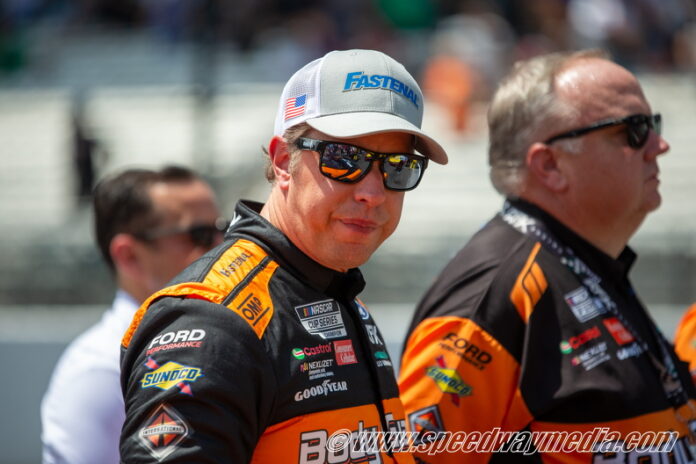
Brad Keselowski posted his second consecutive top-10 result in recent events by notching a strong sixth-place result in the 2026 Brickyard 400 at Indianapolis Motor Speedway on Sunday, July 26.
Keselowski, the 2012 NASCAR Cup Series champion and the 2018 Brickyard 400 champion from Rochester Hills, Michigan, took the green flag for Sunday’s event in 16th place. After spending the early portions of the event racing within the top-20 mark, he executed his first pit stop under green nearing the Lap 40 mark as nearly the entire field cycled through a first round of pit strategies. After a Lap 44 accident and a one-lap shootout to conclude the first stage period, Keselowski carved his way to settle in 11th place and just miss out on notching a first set of stage points by a single position.
Restarting in ninth place when the second stage period commenced on Lap 55, Keselowski competed inside of the top-10 for a majority of this period. After executing his second green flag pit stop within the Lap 90 mark, Keselowski ended up in 13th place when the second stage period concluded due to a caution that flew on Lap 96 for a single-car incident and with the caution period stretching to the stage’s conclusion.
When the final stage period commenced with 56 laps remaining, Keselowski steadily navigated his way back in the top-10 mark and was racing in 10th place when the caution returned with 46 laps remaining due to debris on the course. After pitting with the field during the caution, he gained four spots to move into seventh place. For the next restart, Keselowski was racing in sixth place and was poised for a top-five spot when Tyler Reddick made slight contact with Keselowski that got the latter briefly loose through the second turn. Amid the contact, Keselowski lost sixth place to Reddick, but continued in seventh place and was ahead of a multi-car accident that drew the field into another caution period during the next lap.
During the final restart with 34 laps remaining, Keselowski briefly muscled up to fifth place before he was quickly overtaken by Chase Briscoe to fall to sixth place. For the event’s remainder, Keselowski retained sixth place and trailed the lead by more than six seconds when he crossed the finish line and took the checkered flag in his car number’s spot.
With the result, Keselowski notched his sixth top-10 result of the 2026 NASCAR Cup Series season, his eighth top-10 result through 14 Brickyard 400 starts and his highest on-track result since finishing sixth at Kansas Speedway in mid-April. Combined with his seventh-place result at North Wilkesboro Speedway last Sunday, Keselowski notched his first pair of back-to-back top-10 runs since finishing 10th and second at Las Vegas Motor Speedway and Darlington Raceway in March, respectively. The back-to-back top-10 results at North Wilkesboro and Indianapolis also enabled the driver/co-owner of the No. 6 Roush Fenway Keselowski Racing Ford team to rally from finishing 21st or worse through eight of the previous 11 events prior to North Wilkesboro.
Prior to this year’s Brickyard 400, Keselowski was mired in 19th place in the 2026 driver’s standings and 58 points below the top-16 cutline to make the NASCAR Cup Series Chase. After Indianapolis, he retained 19th place and is 50 points below the cutline. He has four regular-season events remaining on this year’s schedule spanning throughout the month of August to work his way above the cutline before the Chase commences.
“We had a bad slide through the month of June,” Keselowski said on TNT Sports. “We just need some strong consistent runs and we’re going to need about four more of these to make it into the Chase. Solid day for us. We need to be faster to turn these into wins, but we’re executing with what we have.”
Brad Keselowski’s pursuit to make the 2026 Chase resumes on August 9 at Iowa Speedway in Newton, Iowa, for the Iowa Corn 350. The event’s broadcast time is slated to commence at 3:30 p.m. ET on USA Network, MRN Radio, SiriusXM and HBO MAX.
Jordan Anderson Racing Bommarito Autosport Post-Race Report | Indianapolis Motor Speedway
Pennzoil 250 Presented by Take 5 Oil Change
Jeb Burton, No. 27 Sprayway Chevrolet Stage 1 Finish: 18th Stage 2 Finish: 18th Finish: 15th
“I was really glad to put together a solid race for our No. 27 team, as we really needed it going in to this weekend here in Indianapolis. Hopefully we can take this performance and really build off of that going forward!”
“I had a really good time in Indianapolis this past weekend with everybody from iHeart Media and Q95 on the car. Just wanted to say thank you for their support and giving us the opportunity to go race at “The Brickyard.” I’m looking forward to the off-week here before we get going to the final stretch of the year. Hopefully we can finish the season strong and on a positive note.”
“I think it was a step in the right direction for our No. 32 program. I think the finish doesn’t indicate the potential in our car, just because of our qualifying effort and where we ended the first stage. I felt that we were in a good spot, and then we rolled some strategy to get myself some driver points in my push to get back into “The Chase” for the championship. Like I said, being 22nd doesn’t tell how well we ran, but the points we gathered does say that with getting 25 points.
Huge thanks to everyone at Jordan Anderson Racing Bommarito Autosport for their hard work. We had some ups and downs, and I think this weekend was a step in the right direction with the potential the car had. I’m proud to see the effort and to see some progress on that accord, so thank you to everybody in this building for the ten races this year to keep us in the driver points, and all of the partners that allow me to do it. Thank you to John Bommarito and the whole Bommarito Automotive Group, HENDRICKCARS.COM and the whole Hendrick Automotive Group, Donut Media, The Black Effect Podcast Network, iRacing, and NASCAR 25. There’s a lot of people that helped make sure I was driving Chevrolets this year, so thank you to everybody involved. Hopefully we can continue the momentum from this last weekend, and on my end get back into “The Chase,” and also for the rest of this year that JAR can continue with some good momentum. Thank you everybody, it’s been a fun 10 races this year, and I’ll see y’all at the track!”
About Jordan Anderson Racing Bommarito Autosport
Jordan Anderson Racing Bommarito Autosport was built from the ground up, fueled by passion, persistence, and a bold vision for what an independent NASCAR team could become. Founded by driver and owner Jordan Anderson, the organization has grown from a grassroots operation hauling a single truck across the country into a competitive multi-car NASCAR O’Reilly Auto Parts Series team through a pivotal partnership with St. Louis automotive dealer John Bommarito. Along the way, the team has earned wins, poles, and a reputation for grit, growth, and opportunity within the NASCAR garage. Today, Jordan Anderson Racing Bommarito AutoSport is investing in talent, innovation, and culture to challenge the status quo and build a new kind of racing legacy.
Noah Gragson | Todd Gilliland | Zane Smith Indianapolis Motor Speedway NASCAR Cup Series Race Report Brickyard 400 Date: Sunday, July 26, 2026 Event: Race 24 of 38 Series: NASCAR Cup Series Location: Indianapolis Motor Speedway (2.5-miles) Length of Race: 160 laps over three hours, eight minutes, 21 seconds
“Honestly, pretty solid day considering the challenges you have passing here,” said Smith. “Our team made some good strategy calls that gained us spots during the race, and hopefully that gets the ball rolling again getting some of that momentum back we had in June. Really excited for this break for everyone to recharge and come out swinging the rest of the way.”
“Not exactly the run we wanted in our Rush Truck Centers Ford Mustang Dark Horse, but I’m still proud of the effort,” said Gragson. “We’ll use the off week as a much-needed break and regroup going into Iowa.”
“Life is good as ‘Todd Gilliland’ right now,” said Gilliland. “There’s weeks and months and years in this series that will beat you down, so you just really have to enjoy the good times. We’re very lucky to do what we get to do and it’s all I really ever wanted to do since I was a kid, so hopefully we can keep building on it. That’s the biggest thing to me is my team found another level within themselves even if it didn’t necessarily show on the racetrack. I think their intensity is up there, and I think it’s going to be better for all of us going forward. Obviously, we wish we ran a little bit better than 24th today, but we did what we had to do. Really, that was the name of our game all the way throughout this challenge we just barely skated by. We were obviously a bit lucky, but we still stuck out these races. We did the best we could and luckily it was good enough, just barely every single round. It’s a big prize. One million dollars going to the team. That’s just massive. Our team deserves it. They all ramped up and worked extremely hard, so I’m just super proud of everyone for what they’ve done. Hopefully, we can keep building on this and the intensity that we’re able to achieve.”
ABOUT FRONT ROW MOTORSPORTS
Front Row Motorsports (FRM) is a winning organization competing in the NASCAR Cup Series and the NASCAR CRAFTSMAN Truck Series. Founded in 2004 by entrepreneur Bob Jenkins, FRM has earned top honors including a 2021 Daytona 500 victory and the 2022 CRAFTSMAN Truck Series championship. Based in Mooresville, N.C., FRM fields the No. 4, No. 34, and No. 38 entries in the NASCAR Cup Series, along with the No. 34 and No. 38 teams in the CRAFTSMAN Truck Series. For more information, visit FrontRowMotorsports.com and follow Front Row Motorsports on social media — X: @Team_FRM, Instagram: @teamfrm, Tik Tok: @Team_FRM, YouTube: @FrontRowNASCAR, and Facebook: facebook.com/FrontRowMotorsports.
SpeedwayMedia.com (SM) is saddened by the loss of one of our administrative members, Angela Campbell. Angela was always very active and passionate about NASCAR, and she was instrumental in the early 2000s for her news coverage, keeping the website updated, and most of all, helping others pursue their dream of covering the sport with passion and respect within the NASCAR community.
Angie was not only dedicated to the sport she loved, but also to everyone who got involved with SpeedwayMedia. She loved helping out when she could, no matter when or where. She visited many tracks, but enjoyed her annual visits to Darlington Raceway.
Her bio reads in part, “A native of Charlotte, NC, Angela (Angie) was first introduced to racing by her father. An avid fan of NASCAR, she found a way to combine her love of racing with her passion for writing. Angie is also an award-winning member of the National Motorsports Press Association.”
You can visit her profile page at https://speedwaymedia.com/author/490ac/ and see all of her work that spans back to 2009. She did a lot of the NASCAR weekend schedules, but dive into her past stories, and you will quickly see how much passion she had for the sport. Be sure to read the award-winning stories below.
Sending our heartfelt condolences to the entire Campbell family during this time. From all of us, we will never forget you. She will be greatly missed by everyone!
“Angie played a pivotal role for the website for over 20 years. Words cannot explain what her loss means. She was dedicated to NASCAR and helping others enjoy the sport as much as she did. Thank you for everything that you did. You will be forever missed and never forgotten.” – Barry Albert
“Angie Campbell’s wealth of knowledge of the motorsports media industry will be missed both at Speedwaymedia.com and by her peers in the media centers across the NASCAR circuit. Although she attended fewer races in person the last few years, I always looked forward to covering Darlington Speedway with her, her favorite track. I enjoyed her presence at the track and our collaboration on stories. Her absence will be a loss for both Speedwaymedia and for her family. My prayers go out to her family and friends, as I considered myself one.” – John Knittel
“Thought of a few different ways to write this, but here goes. Unfortunately, I found out today that my Motorsports Editor for the website I write for passed away this past Wednesday. I joined the website in 2017, looking to break through in motorsports media in hopes of someday achieving my Public Relations dream job of working in motorsports. People often don’t understand that yes, motorsports is a niche sport for many, and others don’t quite understand it. However, when a loss happens or something other than that, we are one big family. I experienced that when I was at Beloit and Fairbury, Nebraska, a couple of weeks ago. You never know who you are going to run into and may have a similar interest. My editor was always helpful with my stories, which were race recaps, columns, interviews, and whatever it may be. Additionally, she would give me some great feedback on what I needed to improve on, and mistakes I made. Oftentimes, we would have countless conversations about Motorsports and often encouraged me to chase after my dream. There were some years I stepped away and did other motorsports, but when I decided I was ready to get back on the beat, I was welcomed with open arms. I will definitely miss having conversations with her and her helping me with my stories I wrote!” – Briar Starr
“If I had to choose one word to use for Angela, it would be her total love of writing and NASCAR. Her knowledge was tremendous, and she has been the recipient of more writing awards than you can name. What mostly sticks out about Angela was her willingness to help others by sharing her gift. She not only was my boss, my friend, and sometimes even like a second mother. I can’t imagine that she’s not going to be there because she was the glue that held us together. I hope that she knows how appreciative I am of all her help she’s given me, and keep writing just like she wanted. She was one of a kind. Godspeed Angela, you’re with your husband again.” – Michelle Lippold
“The entire team at Speedway Media gave us both our first professional steps into NASCAR, and we are forever grateful for that. Angie was always ready to lend a helping hand at any given moment. Even with my poor writing skills, she was extremely patient teaching me along the way and pushed me to be better day by day. We would have never achieved what we did without our first step, so thank you, Angie, for trusting us with those first steps. You will be missed.” – Justin & Rachel Schuoler
“Speedway Media is a family, and I am so saddened to learn of the passing of one of our family members Angie Campbell. Angie was a passionate fan of NASCAR and loved writing about it and sharing her insights through Speedway Media. She was an NMPA award winner, an editor, a manager, and a mentor. She ensured that the website was chock full of NASCAR updates, articles, and features. But most of all, she was a kind, caring, and compassionate person who took good care of all of us involved. Angie will be sorely missed, and my thoughts and prayers are with her family at this really difficult time.” – Mary Jo Buchanan
Interest in overlanding has grown steadily as more travelers seek self-supported journeys that combine vehicle-based exploration with extended stays in remote locations. Within this niche, rooftop tents have become an increasingly popular alternative to traditional ground camping because they provide elevated sleeping space and faster campsite setup.
Roofnest, a Colorado-based direct-to-consumer company, has established itself by focusing exclusively on premium rooftop tents and accessories designed for overlanding enthusiasts. Rather than serving the broader outdoor recreation market, the company concentrates on customers who prioritize technical equipment, vehicle compatibility, and durable construction for repeated backcountry travel.
Although the company does not publicly list an exact founding date, Roofnest has operated for more than a decade and has developed significant recognition within the rooftop tent industry. Company leadership reports that annual revenue once reached approximately $25 million before changing market conditions and increased competition affected demand following the pandemic.
Roofnest recently restructured its operations around a lean direct-to-consumer model. According to the company, that transition resulted in profitability during the second half of its most recent year while maintaining an average rooftop tent order value of about $3,000.
Engineering Designed for Technical Buyers
Roofnest positions its products around engineering details rather than broad lifestyle messaging. Its primary audience includes experienced overlanders and technically minded buyers who often research construction methods, fabrics, and long-term durability before making purchasing decisions.
Focus on Materials and Construction
The company’s hardshell lineup includes the Condor, Condor XL, Condor Overland, Condor Overland XL, Falcon, Sparrow, Sparrow XL, and XXL models, while the Meadowlark represents its current softshell offering. Across these products, Roofnest highlights the use of double-stitched, P-coated, and treated nylon intended for demanding weather conditions and repeated outdoor use.
Rather than relying on broad outdoor messaging, the company emphasizes measurable construction details that matter to buyers making a long-term investment. With an average order value of approximately $3,000, durability and material quality remain central considerations for many customers evaluating rooftop tents.
Industry experts have also highlighted the broader advantages of rooftop tents. GearJunkie states, “Rooftop tents offer a bird’s-eye view, airflow, and protection. Along with peace of mind, these higher-ups generally provide superior comfort over a ground tent.” That observation aligns with Roofnest’s emphasis on engineering products intended for extended backcountry travel.
The company also reports measurable digital growth despite broader market changes. During one recent 90-day period, Roofnest generated approximately $436,000 in organic search revenue alongside roughly $22,000 attributed to AI-driven search traffic, reflecting increased online visibility among equipment researchers.
Combining Overlanding Practicality With Extended Comfort
Another defining element of Roofnest’s product strategy is its focus on creating a more comfortable off-grid camping experience. Rather than treating rugged capability and convenience as separate priorities, the company describes its approach as combining “glamping and overlanding together.”
Features Designed for Longer Trips
Several product features support extended stays away from developed campgrounds:
Integrated interior lighting for improved campsite visibility.
Solar power compatibility for off-grid energy needs.
Compatible awnings and walls that expand sheltered living space.
Hardshell and softshell options suited to different travel styles.
Together, these components allow travelers to build a more complete campsite rather than relying solely on a sleeping platform. The accessory range complements the rooftop tents by supporting longer stays in remote environments.
CNN has summarized the category by observing, “Rooftop tents aren’t right for everyone, but they can be amazing.” That balanced assessment reflects how the market has evolved toward serving travelers with specific camping preferences rather than replacing traditional ground tents altogether.
Vehicle-Specific Product Development Improves Buyer Confidence
Selecting a rooftop tent often involves more than comparing dimensions and features. Buyers also want to understand how a product fits their specific vehicle before making a significant purchase. Roofnest has invested in both product development and digital presentation to address this need.
Vehicle Collections
The company maintains dedicated collections for several adventure-focused vehicles, including:
Subaru Outback, Forester, and Crosstrek.
Toyota Tacoma, 4Runner, and Tundra.
Jeep Wrangler.
Ford Bronco.
Land Rover models.
These collections pair vehicle-specific imagery with compatibility information to help shoppers evaluate appearance and fit before purchasing.
For customers researching Roofnest options for a Toyota 4Runner, this approach provides model-specific context instead of relying on generic product photography. According to the company, these pages function as specialized resources designed around individual vehicle platforms.
Industry commentary also supports the practical advantages of rooftop camping in demanding environments. Roveroll notes that “Roof top tents enable camping on uneven/rocky terrain while providing faster setup, better weather protection, and enhanced wildlife safety.” Those characteristics help explain why vehicle compatibility remains a central part of Roofnest’s development strategy.
Building Authority Within the Overlanding Segment
Rather than marketing broadly across outdoor recreation, Roofnest has concentrated on becoming a specialist within the overlanding community. This narrower positioning influences product development, educational resources, and digital strategy.
Market Position and Industry Recognition
Several factors distinguish the company’s current approach:
A direct-to-consumer business model focused on national online sales.
Product development centered on overlanding instead of general outdoor recreation.
Technical product information aimed at experienced equipment buyers.
Continued expansion of vehicle-specific collections for popular adventure platforms.
Roofnest has also received attention from publications such as Motor Trend, Car and Driver, and Off-Road, where its rooftop tents have appeared in reviews and equipment roundups. While the company does not cite formal certifications, it consistently emphasizes engineering specifications and material quality as key elements of its product development process.
The company also differentiates itself through its stated commitment to serving the overlanding community rather than competing across every outdoor category. That focus has shaped both its product catalog and its online resources, which are designed to provide detailed information for buyers researching premium rooftop tents.
Conclusion
The rooftop tent market has evolved alongside growing interest in vehicle-based adventure travel, creating demand for equipment that balances durability, comfort, and compatibility.
Roofnest has responded by concentrating on technical engineering, premium construction materials, and products designed specifically for extended off-grid travel. Company data shows a business that has adapted to changing market conditions while maintaining its emphasis on direct-to-consumer sales and specialized product development.
As overlanding continues to attract travelers seeking self-supported experiences, Roofnest remains focused on serving a niche audience that values engineering detail, long-term performance, and vehicle-specific solutions.