Home Blog Page 41

When a Fast Car Meets a Bad Moment: Understanding Accident Liability

Ever had that split second where everything goes wrong on the road?

One driver speeds just a bit. Someone else misjudges and taps their brakes. Suddenly two cars collide in an instant nobody wanted. These accidents happen daily, and the faster you drive, the worse damage you’ll do.

Here’s the scary part…

Speed contributed to 29% of traffic deaths in 2023. This isn’t an insignificant amount. Combining a heavy vehicle with excessive speed and what could be a “fender bender” ends up causing injuries that impact you for years.

The good news?

Whiplash happens, but you have rights you can count on. Whiplash is one of the most common injuries caused by these types of wrecks, and Minnesota law allows you to seek compensation when someone else is to blame. If you’re dealing with neck pain after an accident and want to know how a whiplash injury claim works, read on. 

This guide explains how to seek financial compensation for medical bills, lost income, and pain and suffering after a car accident. Proving fault can be difficult, however. Do you need a car accident lawyer in Minneapolis? Many people choose to hire one to take care of their claim for them.

Time to break it all down…

What You’ll Walk Away With:

  • Why Speed Makes Everything Worse
  • What Whiplash Really Is
  • How a Whiplash Injury Claim Works
  • Who’s Actually At Fault?
  • Mistakes That Can Wreck Your Claim

Speed Makes Everything Worse: The Physics Don’t Lie

Here’s something most drivers forget…

Speed isn’t only how you’ll crash. Speed also dictates how badly you’ll crash. The faster you go, the more kinetic energy your vehicle has. When two cars collide, that kinetic energy needs to go somewhere. Typically, it transfers to the passengers within.

Think about it like this:

A fender bender at 5 miles per hour is annoying. That same accident at 40 miles per hour can send you to the hospital. Speed amplifies how hard a crash feels.

That’s why rear-ender collisions are both so frequent and so deadly. They account for nearly 29% of vehicular accidents, and many are caused by excessive speed.

What Whiplash Really Is (And Why It’s So Sneaky)

So what actually happens to a body in one of these crashes?

If you’re rear-ended in a car, your head jolts forward then snaps backward — forcefully. This jerking motion forces your neck muscles and ligaments beyond their usual stretch. That’s called whiplash.

And here’s the part that catches people off guard…

Whiplash is deceptive. Someone can get into an accident feeling perfectly normal. Two days later they wake up and can barely move their neck. Adrenaline masks the initial pain. When it appears, the injury has already occurred.

Wait, there’s more. You don’t even need to be hit fast. Research reveals most whiplash injuries occur at under 12 miles per hour. So even slow little nicks can cause serious long-term suffering.

Common whiplash symptoms include:

  • Neck pain and stiffness
  • Headaches that start at the base of the skull
  • Dizziness or blurred vision
  • Tingling or numbness in the arms and shoulders
  • Trouble sleeping and fatigue

Don’t ignore these. If left untreated whiplash can become chronic pain for years to come.

How a Whiplash Injury Claim Actually Works

Now to the important part — getting compensated.

A whiplash injury claim is the method an injured victim uses to request that the negligent driver (and their insurance provider) compensate them for the damages they incurred. There are a few main elements that typically must be established in order to prevail in a claim:

  1. The other driver was careless (negligent) — they were speeding or tailgating.
  2. That their negligence caused the crash — there must be causation.
  3. The reason for the injury was the crash — whiplash was caused by the accident.
  4. Real losses happened — medical bills, missed work, and pain all count.

Sounds simple, right? It’s not always.

Insurance companies battle whiplash claims vigorously. The reason is that whiplash is considered an “invisible” injury. There is no broken bone to see on an X-ray. Thus, adjusters will try to argue that the injury didn’t occur, or that someone is exaggerating. That is why having hard evidence is your strongest ally.

Who’s Actually At Fault? Understanding Liability

Here’s where things get interesting…

Liability simply refers to “who is legally at fault.” In the majority of rear-end collisions, the person who struck your vehicle is considered liable. After all, they should have enough distance to stop behind your car. When they collide with your vehicle, they are typically at fault.

But it’s not always black and white.

Other times both drivers are partially at fault. Perhaps one driver was speeding and the other driver had a burned out tail light. Many states have a system where your recovery is reduced by your percentage of fault. So if you are 20% at fault, you may only be able to recover 80% of your damages.

It’s for this reason that an accident report is so crucial. Police reports, witness statements and vehicle speeds can greatly alter your case.

Mistakes That Can Wreck Your Whiplash Injury Claim

Here’s how to save yourself a serious headache…

Claimants destroy their own whiplash injury claim by making these mistakes far too often. Avoid these pitfalls:

  • Skipping the doctor. No medical record means no proof of an injury.
  • Delaying treatment. You lose your place in line if you wait too long to get treated. Insurance likes to have a reason to deny you.
  • Posting on social media. Someone could take a picture of you smiling and claim that you’re okay.
  • Accepting the first offer. That first number will almost always be a low offer.
  • Providing a recorded statement too soon. One offhand remark can hurt you.

Accidents like these are traumatic, and it is easy to make mistakes when you are frazzled and injured. Take a breath. Write down everything. Seek proper assistance.

Putting It All Together

A fast car and a bad moment can change a life in seconds.

When you hear that over 40,000 people were killed on US roads last year, it’s easy to fear for your life every time you get behind the wheel. But what about injuries that don’t make the news, like whiplash? Those can rack up thousands of dollars in expenses too.

Here’s what to remember:

  • Speed makes crashes far more dangerous
  • Whiplash is serious, even at low speeds
  • A whiplash injury claim can cover bills, lost wages, and pain
  • Liability usually falls on the careless driver
  • Don’t hand insurance an easy excuse to deny you

You did not cause the accident. You shouldn’t have to pay for it. See a doctor, keep your paperwork in order and let an experienced advocate fight for you to receive maximum benefits.

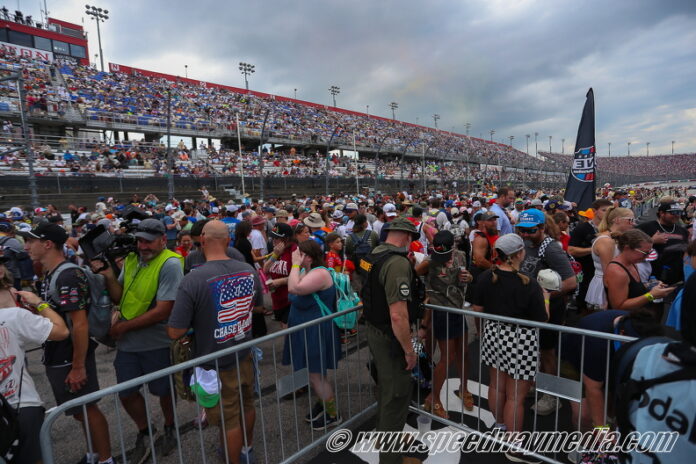
Striking the Right Chord in Music City: When NASCAR is in Nashville, Cody Ware Drives and Plays With Feel

(HHP/Jacy Norgaard)

MOORESVILLE, N.C. (May 26, 2026) – When playing his Dean Z custom guitar or Gibson Les Paul Classic, Cody Ware plays with feel. When wheeling his No. 51 Jacob Construction Chevrolet, the 30-year-old racer drives with feel, too.

It’s an approach that’s especially appropriate this weekend as the NASCAR Cup Series heads to the Music City suburb of Lebanon, Tennessee, for Sunday night’s Cracker Barrel 400 at Nashville Superspeedway.

Whether it’s shredding on a six-string or driving a 3,400-pound racecar at 160 mph around Nashville’s concrete-clad 1.33-mile oval, finding the right feel is the fastest way to success. Ware is an avid guitarist who uses music to offset the cacophony of rumbling V8 engines that each produce 750 horsepower.

“Music is almost as big a part of my life as racing,” Ware said. “It’s therapeutic. When you’re playing, it kind of takes you into your own little world. It’s a great way to unwind.”

When you compete in the longest season in all of professional sports, finding a way to unwind is important. Nashville marks the 14th points-paying race on the Cup Series schedule, but it’s actually the 16th race of the year when including the preseason Clash Feb. 4 at Bowman Gray Stadium in Winston-Salem, North Carolina, and the non-points NASCAR All-Star Race May 17 at Dover (Del.) Motor Speedway. After Nashville, 22 races still remain.

“Thirty-eight race weekends isn’t easy, but that’s why not everyone’s out here doing it,” Ware said. “I’ve got a great family and a great support system, and all of us just love racing. We’re committed to it, so we just make it happen.”

Ware and his Cup Series counterparts are coming off the longest race on the schedule – the Coca-Cola 600 last Sunday at Charlotte (N.C.) Motor Speedway. After 400 laps around the 1.5-mile oval, Ware finished 28th. Now, he visits a Nashville track that is .17 of a mile shorter than Charlotte with 100 fewer laps.

“Nashville is a little bit of a hybrid racetrack,” Ware said. “It’s not quite an intermediate-style track like Charlotte, but it’s also not like the two other concrete tracks – Bristol and Dover.”

Bristol (Tenn.) Motor Speedway and Dover Motor Speedway are high-banked behemoths. The .533-mile Bristol oval has corners banked between 24 and 28 degrees, and the 1-mile Dover oval has corners banked at 24 degrees. Nashville, on the other hand, has just 14 degrees of banking, and its added length provides much more room in the corners, allowing drivers to try different lanes to find the fastest line around the track.

“Nashville is a lot more forgiving,” Ware said. “It’s a very wide racetrack, not quite as fast as a full-blown mile-and-a-half, and it’s a little bit shorter, so the speeds aren’t quite as high. But because it’s a little bit bigger, you kind of get sucked into the feeling of it being a mile-and-a-half, so overdriving the corners is very easy.

“You think you can drive a lot deeper into the corners than you really can, so it’s almost about reeling yourself in as a driver and being patient, and remembering that it’s about getting speed off the corner versus getting speed going into the corners.

“So, you have to have the entry patience of a short track with the discipline of an intermediate track, where you have to be consistent with your inputs, both with steering and your right foot. It’s a game of patience with smoothness in your steering, your throttle inputs and your braking inputs. The driver who looks the least out of control is typically the fastest there. It’s all about smoothness and consistency at Nashville.”

It is the same kind of smoothness and consistency heard in the guitar riffs and ballads that greet visitors from the moment they land at Nashville International Airport through their walks along Lower Broadway’s Honky Tonk Highway.

“I appreciate and respect the blood, sweat and tears that musicians put into their craft, just like we do as racers,” Ware said. “That being said, I grew up on heavy metal and rock-and-roll. Megadeth, Metallica, Led Zeppelin and Iron Maiden are on my playlist.

“I’ve been playing on and off for almost 20 years now. It’s kind of my hidden hobby. I play a lot of electric stuff, and I do a little bit of acoustic, but I’ve still got some work to do there. I don’t show off too much. I’ve probably only posted about it a few times, but it’s definitely a fun way to relax and unwind.”

With Sunday’s Coca-Cola 600 in the rearview mirror – a race that took nearly five hours to complete – and a few new chords strummed on his guitars, Ware is refreshed and ready for Nashville.

Practice begins Saturday at 3:30 p.m. CDT/4:30 p.m. EDT, followed by qualifying at 4:40 p.m. CDT/5:40 p.m. EDT. The 300-lap race goes green on Sunday at 6 p.m. CDT/7 p.m. EDT. All of the action will be broadcast live by Prime Video and SiriusXM NASCAR Radio.

About Rick Ware Racing:

Rick Ware has been a motorsports mainstay for more than 40 years. It began at age 6 when the third-generation racer began his driving career and has since spanned four wheels and two wheels on both asphalt and dirt. Competing in the SCCA Trans Am Series and other road-racing divisions led Ware to NASCAR in the early 1980s, where he finished third in his NASCAR debut – the 1983 Warner W. Hodgdon 300 NASCAR Grand American race at Riverside (Calif.) International Raceway. More than a decade later, injuries would force Ware out of the driver’s seat and into full-time team ownership. In 1995, Rick Ware Racing was formed, and with his wife Lisa by his side, Ware has since built his eponymous organization into an entity that competes full-time in the elite NASCAR Cup Series while simultaneously campaigning successful teams in the Top Fuel class of the NHRA Mission Foods Drag Racing Series, Progressive American Flat Track, FIM World Supercross Championship (WSX) and zMAX CARS Tour.

Simple Rules for Safe Following Distance That Every Driver Should Know

Safe following distance is the amount of space a driver should keep between their vehicle and the one ahead to stop safely without causing a collision. Getting it wrong is one of the most common causes of rear-end crashes on roads across the country.

How is your following distance determined? It depends on several factors, including speed, road conditions, vehicle type, and reaction time. The standard rule most driving instructors teach is the three-second rule, which gives drivers a practical and easy-to-apply benchmark in normal conditions.

The following distance is not just a driving tip. In many states, it is a legal requirement, and failing to maintain adequate space can establish fault in a collision.

The Three-Second Rule Explained

The three-second rule is the most widely recommended method for calculating safe following distance. It is simple, does not require any equipment, and works at most highway and city speeds.

How to Apply It

Pick a fixed point on the road ahead, such as a sign or a tree. When the vehicle in front passes that point, count slowly to three. If your vehicle reaches the same point before you finish counting, you are following too closely.

Three seconds gives most drivers enough time to perceive a hazard, react, and begin braking before reaching the vehicle ahead. At higher speeds, that gap should increase to four or five seconds to account for the longer stopping distance required.

When Three Seconds Is Not Enough

The three-second rule works well under ideal conditions. But road and weather conditions change constantly, and the following distance must adjust with them.

Conditions That Require More Space

  • Wet or icy roads significantly increase stopping distance.
  • Driving at night reduces visibility and reaction time.
  • Towing a trailer or driving a heavy vehicle extends braking distance.
  • Following a large truck or bus blocks sightlines and requires an extra buffer.
  • Driving in heavy traffic increases the chance of sudden stops ahead.

A good rule of thumb is to double the gap in rain and triple it on ice or snow. These are not arbitrary suggestions. Physics determines stopping distance, and no amount of driving skill changes how long it takes for a vehicle to slow from highway speed on a slick surface.

Most states have laws that require drivers to maintain a reasonable and prudent following distance. The language varies, but the intent is the same across the country.

What the Law Generally Says

California Vehicle Code Section 21703 states that a driver shall not follow another vehicle more closely than is reasonable and prudent. Similar statutes exist in nearly every state. These laws do not specify an exact number of feet or seconds, which means courts interpret reasonableness based on the circumstances at the time of the crash.

When a rear-end collision occurs, the trailing driver is typically presumed to be at fault. That presumption exists because maintaining adequate following distance is the trailing driver’s legal responsibility. Overcoming that presumption requires showing that the lead driver made a sudden or unpredictable move.

Following Distance vs. Stopping Distance

These two terms are related but not the same. Understanding the difference matters both for safe driving and for legal purposes after a crash.

Short-Term Safety vs. Long-Term Habit

The following distance is the gap a driver consciously maintains while traveling. Stopping distance is the total distance a vehicle travels from the moment the driver perceives a hazard to the moment the vehicle comes to a complete stop. Stopping distance includes both reaction distance and braking distance.

At 60 miles per hour, the average stopping distance is around 180 feet. A driver following at two seconds behind a vehicle at that speed is already cutting the margin dangerously thin. Building the habit of maintaining proper following distance reduces the chance of a collision even when something unexpected happens ahead.

Key Takeaways

  • A safe following distance is the space needed to stop without hitting the vehicle ahead.
  • The three-second rule is the standard benchmark under normal driving conditions.
  • Rain, ice, heavy vehicles, and night driving all require increased following distance.
  • Most state laws require a reasonable and prudent following distance without defining an exact measurement.
  • Rear-end collision fault typically falls on the trailing driver who failed to maintain adequate space.
  • Stopping distance at 60 mph averages around 180 feet, including reaction and braking time.
  • The following distance is both a safety habit and a legal standard with real consequences in a crash.

What You Need to Know About License Reinstatement After a DUI

Getting your license back after a DUI is not automatic. Once the suspension period ends, there is still a list of conditions you have to meet before you can legally drive again, and missing even one of them can extend the process or land you in further legal trouble. 

The good news is that for most first-time offenders, reinstatement is achievable. The bad news is that it takes time, paperwork, money, and, in most cases, some form of program completion.

What you’ll need to do for your license reinstatement really depends on your state, the situation surrounding your arrest, and whether this is your first DUI or not.  

What Does the Reinstatement Process Actually Involve?

Here is what that process generally looks like across most states.

Serving the Full Suspension Period

Before anything else, you have to wait. Most states will not allow you to apply for reinstatement until the full suspension period has run its course. 

How long that takes depends on your blood alcohol level at the time of arrest, whether anyone was injured, and whether you have prior DUI convictions on your record.  

Completing a Required DUI Program

Nearly every state requires DUI offenders to complete some form of alcohol education or treatment program before the DMV will reinstate driving privileges. What that looks like varies. Some states require a few hours of alcohol safety education. 

Others mandate a full substance abuse evaluation followed by counseling sessions or a rehabilitation program. The more serious the offense, especially for repeat DUIs, the more intensive the requirement tends to be. 

Paying All Required Fees and Fines

This sounds simple, but it stops people more often than it should. Most states require a reinstatement fee to be paid directly to the DMV before your license is restored. 

On top of that, any outstanding court fines, bail fees, or other financial obligations tied to the DUI have to be cleared. If there are unpaid balances sitting on your record, the DMV will not process reinstatement, full stop.

Filing an SR-22

An SR-22 is a certificate your insurance company files with the state on your behalf, confirming that you carry the minimum required liability coverage. After a DUI, most states require this filing before you can get back on the road. 

You will need to contact your insurance provider and ask them to file it, and be aware that your premiums will almost certainly go up as a result of the DUI on your record.

If you switch insurance providers or let your coverage lapse while the SR-22 requirement is still in effect, the insurer is required to notify the state. That notification can trigger a new suspension. 

What Happens If You Drive Before You Are Reinstated?

Driving on a suspended license is a separate criminal offense in most states. It can result in additional fines, extended suspension, and, in some states, jail time. It can also reset the reinstatement process entirely. 

If you are pulled over and your license is still under suspension, the consequences compound fast. A restricted license, if you qualify for one, is the only legal way to drive during a suspension period. 

Do You Need an Attorney for This Process?

You are not legally required to hire an attorney to handle reinstatement, but having one makes a real difference. The requirements across agencies do not always communicate smoothly, deadlines are easy to miss, and one wrong step can push the timeline back significantly. 

An attorney who handles DUI cases knows what the DMV and the court each need, in what order, and can catch problems before they become delays. 

Key Takeaways

  • Reinstatement after a DUI requires completing multiple steps in the right order. 
  • Most states require completion of an alcohol education or treatment program before the DMV will restore driving privileges.
  • An SR-22 certificate must be filed by your insurance company with the state before reinstatement.
  • All fines and reinstatement fees usually need to be fully paid before anything moves forward.
  • Getting caught behind the wheel before reinstatement is a criminal offense in most states.
  • It can extend your suspension and add jail time on top of everything else.
  • A DUI attorney knows what both the court and the DMV need and in what order; that alone can save you weeks of back-and-forth.

Can You Fight a Speeding Camera Ticket After a Crash?

Drivers in Alabama can challenge speeding camera tickets after a crash if evidence shows the accident affected the situation or the citation contains errors. State law also allows motorists to dispute unclear images, inaccurate evidence, or improper automated enforcement procedures. 

Alabama is a southeastern U.S. state bordered by Tennessee, Georgia, Florida, and Mississippi, with access to the Gulf of Mexico coastline. The state is home to major cities like Birmingham, Montgomery, Mobile, and Huntsville, each with its own traffic enforcement practices and municipal regulations. Alabama’s roadways include heavily traveled interstates such as I-65, I-20, and I-10, where traffic congestion and accidents can sometimes contribute to disputed speeding allegations.

Alabama cities using automated enforcement may follow local ordinances and posting requirements before issuing violations. Some municipalities require warning signs near cameras and mailed notices within a specific timeframe. Drivers researching Alabama speed cameras often discover that camera tickets can be successfully disputed.

Check the Ticket for Errors

Start by reviewing every detail on the citation. Small mistakes can weaken the credibility of the ticket and support your defense. Look closely at the following information:

  • License plate number
  • Vehicle make or model
  • Date and time
  • Camera location
  • Recorded speed

If the camera captured the wrong vehicle or listed inaccurate information, the court may question the reliability of the entire violation. Alabama courts generally expect traffic evidence to be clear and accurate before imposing penalties.

Request the Full Camera Evidence

You should request all available records related to the ticket. This may include photos, video footage, calibration records, maintenance logs, and operator certifications.

A blurry image or malfunctioning device may create reasonable doubt. Some Alabama municipalities also require camera systems to meet local approval standards before enforcement begins. If the equipment was not properly maintained, the citation may become easier to challenge.

Explain How the Crash Affected the Situation

After a collision, traffic patterns can change within seconds. A driver may react suddenly to avoid additional impact or debris. Camera systems usually capture only a brief moment, which means the full emergency may not appear in the recorded image or video.

Argue the Driver or Vehicle Was Not Clearly Identifiable

Some speeding camera tickets are tied to the registered owner rather than the actual driver. However, unclear evidence may still create problems for the enforcement agency. You may have a defense if:

  • The plate number was partially unreadable
  • Another person was driving
  • The image quality was poor
  • The vehicle color or model did not match

In some jurisdictions, Alabama law specifically states that a notice should not be issued if the license plate image is not sufficiently clear to reliably identify the vehicle owner.

Automated enforcement systems may comply with local laws. That includes rules about signage, public notice, placement, and timing.

Some Alabama municipalities require signs warning drivers about automated speed enforcement within a certain distance of the device. Public awareness campaigns before cameras become active. Missing signs or improper placement may support a legal challenge.

Contest the Ticket Properly and On Time

Drivers should respond before the deadline listed on the notice. Missing the hearing date or filing deadline can reduce available options. To strengthen your case:

  • Gather photos and crash documents
  • Request all camera evidence early
  • Organize witness statements clearly
  • Bring repair records or insurance reports
  • Present your explanation calmly during the hearing

Even if dismissal does not happen, some courts may reduce the fine or allow a non-moving violation resolution.

Key Takeaways

  • Speeding camera tickets in Alabama can sometimes be challenged successfully.
  • Errors in the citation may weaken the case against the driver.
  • Camera maintenance records and calibration logs can matter in court.
  • Crash-related emergencies may explain unusual driving behavior.
  • Unclear license plate images can create identification defenses.
  • Alabama municipalities using cameras may follow local legal requirements.
  • Filing the dispute on time improves the chance of a better outcome.

A Practical Guide to Shipping a Car When You’re Relocating for Work

A job move usually comes with a tight timeline.

You have a start date, maybe a temporary apartment lined up, and a checklist that grows by the hour.

Driving your car across the country sounds simple until you factor in the fuel, the hotels, the wear on your vehicle, and the days you can’t afford to lose.

Hiring an auto transport company like roadrunnerautotransport.com solves that, but only if you set it up properly and avoid the rookie mistakes that cost people money and time.

Book Earlier Than You Think You Need To

The first thing to sort out is the booking window.

Carriers don’t run on Uber-style availability.

Most legitimate companies need somewhere between seven and ten days of lead time to assign your vehicle to a truck already heading in your direction.

Last-minute requests do get filled, but you’ll pay more, and the pickup window stretches.

If you already know your start date, lock the shipment in as soon as the offer letter is signed.

Open or Enclosed Transport

Open versus enclosed is the next call.

Open carriers are the standard nine-car haulers you see on the freeway, cheaper, faster to book, and perfectly fine for a daily driver.

Enclosed transport costs roughly 40 to 60% more, but it’s the right choice for a low-clearance sports car, a classic, or anything with fresh paint you’d rather not pelt with road debris.

For most work relocations involving a normal sedan or SUV, open is the sensible pick.

What Actually Drives the Price

Pricing moves with distance, vehicle size, and season.

A coast-to-coast move for a midsize sedan typically runs in the $1,200 to $1,600 range during normal months.

Summer raises that.

Snowbird routes in January and February push prices up, too, since trucks heading from the Midwest to Florida fill up fast.

A short regional hop, Chicago to Atlanta, for example, lands closer to $700 to $900.

If a quote comes in dramatically lower than the rest, that’s a flag, not a deal.

Underpriced loads sit on the dispatch board for days because no driver will take them.

Door-to-Door Versus Terminal

Door-to-door is what most people want and what most carriers offer by default.

The driver meets you as close to your address as a 75-foot truck can legally and safely get.

In the suburbs, that’s usually your driveway or the end of the street.

In a dense city, expect to meet in a nearby parking lot or wide commercial street.

Terminal-to-terminal exists but rarely makes sense for a work move, since you’d be coordinating dropoff and pickup at warehouses in two unfamiliar cities.

Brokers Versus Carriers

The broker question trips up a lot of first-timers.

A carrier owns the trucks.

A broker arranges loads with carriers across the country.

Almost every nationwide auto transport service you’ll find online is technically a broker, and that’s not a bad thing.

Brokers have access to a much larger pool of trucks, which is why they can quote routes a single-fleet carrier couldn’t touch.

What matters is that they’re licensed, bonded, and verifiable through the FMCSA.

The Inspection Most People Rush

Inspection at pickup is the part most people skim through.

Don’t.

The driver will fill out a Bill of Lading documenting any existing scratches, dings, or wheel curb rash.

Walk around the car with them, take your own time-stamped photos from every angle, and check that the mileage is recorded.

If something happens in transit, that paperwork is your evidence.

Without it, you’re arguing from memory against a professional logistics operator.

Insurance Gaps Worth Knowing

Your insurance situation needs a quick check before pickup.

The carrier holds cargo insurance; federal law requires it, but coverage limits and deductibles vary.

Ask for the certificate of insurance and read the deductible carefully.

Your personal auto policy usually doesn’t cover the vehicle while it’s strapped to a transport truck, so don’t assume there’s a backup.

If you’re shipping something high-value, top-up coverage through the broker is cheap and worth it.

Prepping the Vehicle

A few practical prep steps save real headaches.

  • Wash the car so that pre-existing damage shows clearly in inspection photos
  • Leave roughly a quarter tank of gas, enough for loading and unloading without adding unnecessary weight
  • Remove toll transponders and EZ-Pass so you don’t rack up charges across three states
  • Take personal items out, since carriers aren’t insured for them, and DOT inspections can flag stuffed vehicles

Delivery Day

Delivery on the other end mirrors pickup.

Inspect the car in daylight if at all possible.

Check the panels you didn’t think to look at the first time: the roof, the underside if you can see it, the front bumper.

Sign the Bill of Lading only after you’re satisfied.

If you spot damage, note it on the document before the driver pulls away.

Once you sign clean and the truck leaves, your claim becomes much harder to win.

Timing It With the Rest of Your Move

Coordinating the shipment with the rest of your relocation is the last piece.

Transit times run roughly 1 to 3 days for regional moves, 5 to 7 days for coast-to-coast, with weather and driver hours occasionally adding a day.

Build that buffer into your plan.

If you’re flying to the new city before the car arrives, line up a rental or rideshare for the gap.

Trying to land the same day as the truck is a coordination trap, since carriers give windows, not appointments, and a four-hour spread can easily turn into a different morning altogether.

A relocation already stretches your time and attention thin.

Shipping the car should be the part of the move you stop thinking about once it’s booked, not the part that wakes you up at 2 a.m.

Get the timing right, document everything at pickup, and the rest tends to take care of itself.

LMM Duramax Delete Tuner: Maximize Track Power

For diesel enthusiasts focused on track performance, tuning plays a major role in unlocking the full capability of a heavy-duty engine platform. An LMM duramax delete tuner is commonly discussed in motorsports circles because of its ability to modify engine parameters, improve throttle response, and help maximize horsepower in competitive or off-road environments. Many racers and diesel performance enthusiasts use tuning strategies to enhance acceleration, improve turbo efficiency, and create a more aggressive power curve suited for demanding track conditions.

Modern diesel engines are built with strict factory limitations designed for emissions compliance, fuel economy, and long-term durability across various driving situations. While those factory settings work well for everyday use, they can restrict the engine’s potential when performance becomes the primary goal. That is why tuning solutions continue to gain popularity among drivers who participate in racing events, sled pulling, dyno competitions, or private off-road applications.

A well-calibrated tune can transform how the engine behaves under load. From quicker turbo spool-up to stronger mid-range torque, tuning adjustments help create a more responsive and exciting driving experience. Understanding how these tuning systems work, along with the supporting modifications required, is essential for anyone seeking dependable high-performance results.

How an LMM Duramax Delete Tuner Transforms Performance

Performance tuning focuses on optimizing engine operation beyond factory settings. By adjusting fuel delivery, turbocharger behavior, timing maps, and other electronic controls, tuning software can dramatically alter the engine’s overall output and drivability.

Track-focused diesel setups often prioritize maximum airflow and efficient combustion. This combination helps the engine produce stronger horsepower numbers while maintaining stable operating temperatures during aggressive driving conditions.

Maximizing Exhaust Flow and Reducing Backpressure

One of the biggest performance limitations in factory diesel systems is exhaust restriction. Stock configurations are engineered to meet strict environmental regulations, but those systems can create additional backpressure that limits performance potential.

A tuned performance setup is often paired with freer-flowing exhaust components to help gases exit the engine more efficiently. Reduced backpressure allows the turbocharger to spool faster and maintain improved airflow throughout the RPM range. This contributes to stronger acceleration, smoother power delivery, and better overall responsiveness on the track.

Improved exhaust flow also helps manage exhaust gas temperatures more effectively during high-load situations. Excessive heat is a major concern for performance diesel applications, especially during extended racing sessions or towing under aggressive tuning conditions. Efficient airflow can reduce strain on critical engine components and support more consistent performance.

Optimizing Air-to-Fuel Ratios for Track Conditions

Air-to-fuel ratio optimization is another important factor in diesel tuning. Factory calibrations typically favor conservative fuel mapping to balance reliability and emissions compliance. Performance-oriented tuning strategies adjust these parameters to increase power production under heavy throttle conditions.

A properly calibrated tune can provide cleaner combustion, stronger low-end torque, and enhanced throttle sensitivity. These improvements become especially noticeable during rapid acceleration or competitive driving situations where immediate power delivery matters.

Track conditions often demand precise fueling adjustments. Cooler weather, altitude changes, and varying track surfaces can influence engine behavior. Advanced tuning solutions help compensate for these variables by refining injector timing and turbo boost characteristics to maintain consistent power output.

Drivers looking for specialized tuning options often research resources such as professional LML diesel race tuners to better understand different tuning approaches used in competitive diesel applications.

Removing Factory Limp Mode Speed Restrictions

Factory engine management systems include protective limitations commonly referred to as limp mode strategies. These safeguards are designed to reduce engine stress when certain operating conditions are detected. While useful for standard driving, they can interfere with track performance and limit acceleration potential.

Performance tuning can recalibrate or eliminate certain restrictions that reduce power under aggressive driving conditions. This allows the engine to sustain stronger output during demanding situations such as drag racing, high-speed runs, or competitive towing events.

By refining throttle mapping and torque management systems, tuning adjustments can help create a smoother and more predictable power band. Drivers often notice improved responsiveness and reduced hesitation during hard acceleration. However, removing restrictions also increases the importance of proper maintenance and supporting hardware upgrades to ensure long-term reliability.

Choosing Between Diesel Canned Tune and Custom Calibrations

When exploring performance tuning options, enthusiasts typically choose between canned tunes and custom calibrations. Each approach offers different advantages depending on performance goals and driving habits.

Canned tunes are preloaded calibrations designed for general performance improvements. These tunes are often easier to install and provide noticeable gains in horsepower and torque without requiring extensive setup knowledge. They are commonly used by enthusiasts seeking a straightforward performance upgrade.

Custom calibrations, on the other hand, are tailored specifically to the vehicle’s modifications and intended use. A custom tune can account for larger turbochargers, upgraded fuel systems, modified transmissions, or high-flow intake setups. This level of precision often results in smoother drivability and better overall performance consistency.

Track-oriented vehicles frequently benefit more from custom tuning because racing environments place unique demands on engine operation. A custom calibration allows tuners to optimize boost pressure, fuel delivery, and transmission behavior based on real-world data logs and performance goals.

Choosing between these tuning approaches depends on budget, experience level, and desired performance outcomes. Drivers focused on competitive performance usually prioritize custom tuning because it provides greater flexibility and improved control over engine behavior.

Required Supporting Modifications for High-Horsepower Tunes

A high-performance tune alone is rarely enough to support major horsepower gains safely. Supporting modifications are critical for maintaining reliability and preventing component failure under increased stress.

Fuel system upgrades are often necessary because higher horsepower levels require greater fuel volume and consistent injector performance. Insufficient fuel supply can create lean conditions that negatively impact engine durability.

Turbocharger improvements are also common in high-horsepower applications. Larger or more efficient turbo systems help increase airflow capacity while maintaining stable boost levels at elevated power outputs. Improved intercooling systems further enhance reliability by lowering intake air temperatures during aggressive driving.

Transmission reinforcement is another important consideration. Increased torque can place significant strain on factory transmission components, especially during hard launches or towing under load. Upgraded clutches, torque converters, and transmission tuning can help handle the added power more effectively.

Cooling system improvements also play a major role in maintaining stable performance. High-output diesel engines generate substantial heat, particularly during extended racing sessions. Larger radiators, upgraded fans, and enhanced oil cooling systems help reduce thermal stress and improve durability.

Enthusiasts researching advanced performance upgrades often explore guides related to LMM Duramax modifications to better understand how different components work together in a complete performance setup.

Conclusion: Dominating the Track with the Right Tune

Diesel performance tuning continues to evolve as enthusiasts search for more power, better throttle response, and improved track capability. An LMM Duramax delete tuner can significantly transform engine behavior by optimizing fuel delivery, reducing restrictions, and maximizing airflow efficiency.

However, successful high-performance setups rely on more than software adjustments alone. Supporting hardware modifications, careful calibration, and proper maintenance all contribute to long-term reliability and consistent track performance. Whether using a basic canned tune or a fully customized calibration, understanding the relationship between tuning and supporting upgrades is essential for achieving dependable results.

For drivers focused on off-road competition or track performance, the right tuning strategy can deliver stronger acceleration, enhanced responsiveness, and a more capable diesel driving experience overall.

What Can Weaken a Car Accident Injury Claim Without Warning

A car accident claim can start falling apart long before anyone notices something is wrong.

One missed doctor visit, one rushed insurance call, or one missing photo from the accident scene can slowly create problems that become harder to fix later. Many people think strong claims depend only on injuries or vehicle damage, but insurance companies study every detail connected to the crash. They look at timelines, paperwork, treatment records, and even daily behavior after the accident. An experienced car accident lawyer often understands how closely these small details are reviewed and how easily they can affect the direction of a claim.

Small actions that seem harmless at first may suddenly raise questions during the investigation. That is why people often feel shocked after learning their case has become weaker without warning along the way.

The First Few Days After the Accident Matter More Than People Think

Rushing Through Important Paperwork

The first days after a crash usually feel stressful and disorganized. People deal with repairs, medical appointments, phone calls, and insurance forms all at once. During that confusion, small mistakes often happen. Accident reports may contain missing details, unclear descriptions, or incomplete information that later creates problems during the claim process.

Insurance companies carefully compare paperwork with later statements and medical records. Even simple differences sometimes become points of disagreement. A rushed explanation written too early may not fully describe injuries or accident conditions correctly. Those details can quietly weaken the claim over time.

Ignoring Early Symptoms

Many injuries do not feel serious immediately after a collision. Some people leave the accident scene believing they only have soreness or minor pain. Days later, the pain becomes worse, and daily movement becomes difficult.

Delaying medical care creates questions during insurance investigations. Companies may argue that the injury came from another event instead of the accident itself. Early treatment records help connect physical pain directly to the crash, which becomes important later during settlement discussions.

Insurance Companies Watch for Gaps and Contradictions

Different Versions of the Story Create Problems

People often speak to police officers, insurance adjusters, medical providers, and repair companies after a crash. If details change slightly between conversations, insurers may start questioning the accuracy of the claim.

Simple confusion can sometimes look suspicious during an investigation. One statement may mention heavy traffic while another leaves that detail out completely. These small differences may appear unimportant to injured drivers, but insurance companies study them carefully before approving compensation.

An experienced car accident lawyer often reviews these records closely because even small contradictions can affect how insurance companies evaluate a claim.

Long Communication Delays Raise Questions

Ignoring calls or delaying paperwork for too long may also create problems. Insurance companies often expect timely communication after accidents. Waiting weeks to respond may slow the investigation and raise concerns about the seriousness of the injuries.

Delays also make evidence harder to collect. Witnesses forget details, businesses erase surveillance footage, and accident scenes change quickly after traffic returns to normal.

Everyday Actions Can Quietly Affect the Case

Public Activity Sometimes Sends the Wrong Message

Many people continue posting online after accidents without thinking about how those posts may appear later. A simple photo at a restaurant, gym, or family gathering may create the impression that injuries are not serious.

Insurance investigators sometimes review public social media accounts during claims. Even harmless posts may be taken out of context during negotiations. A smiling photo does not show pain levels, medical treatment, or physical limitations, but insurers may still use those images to challenge the claim.

Returning to Normal Routines Too Quickly

Some injured people try returning to work or regular activities sooner than their doctors recommend. Financial pressure often pushes people to resume normal routines before full recovery happens.

Insurance companies may view that decision as proof that the injuries are minor. Physical activity, long work shifts, or travel after an accident sometimes become part of settlement discussions later.

Missing Evidence Can Shift the Direction of a Claim

Accident Scene Details Fade Fast

Evidence disappears quickly after a car accident. Skid marks fade, damaged vehicles get repaired, and weather conditions change within hours. Missing evidence often makes investigations harder later.

Important evidence people often forget includes:

  • Dashcam footage
  • Torn clothing
  • Vehicle repair records
  • Nearby surveillance video
  • Prescription receipts

Witnesses Become Harder to Reach Over Time

Witnesses help explain confusing accidents, especially during disputed claims. Unfortunately, people become difficult to contact as time passes. Some forget details while others no longer answer calls from investigators months later.

Strong evidence helps support consistency across the entire claim process.

Treatment History Often Becomes the Center of the Claim

Missed Appointments Can Be Used Against Victims

Insurance companies carefully examine medical treatment history after accidents. Missing appointments or stopping treatment early may create the impression that injuries improved faster than claimed.

Medical gaps sometimes become major discussion points during settlement negotiations. Consistent treatment records help show how long injuries continued affecting daily life.

Following Medical Advice Helps Support Consistency

Doctors create records during every appointment, and those records often become part of the claim investigation. Following treatment plans helps build a clearer picture of recovery progress after an accident.

Conclusion

Car accident claims are often shaped by details people rarely think about during the first stressful days after a crash. Delayed treatment, inconsistent statements, missing evidence, and public activity can slowly weaken a case without obvious warning signs. Insurance companies pay close attention to patterns, records, and behavior throughout the investigation process. 

That is why careful documentation and steady communication matter far more than many people expect. An experienced car accident lawyer may also help review the claim carefully and identify problems before small mistakes create larger challenges during settlement discussions.

Green Lights, Wrong Turns, and the Reality Behind Side Impact Intersection Crashes

A green light feels like permission to move without hesitation, almost like the road is finally giving a clear path forward. Yet at busy intersections, that same green signal often becomes part of the confusion that ends in a sudden crash. Vehicles move from different directions at the same time, drivers make quick turns, and timing becomes everything. 

In that split moment, a simple decision can lead to a serious collision that nobody expected. A side-impact car accident often begins exactly like this, where one driver believes everything is safe while another is already entering the intersection. This blog explores how these situations unfold and why they create so much confusion afterward.

How Intersection Confusion Leads to Side Impact Collisions

Traffic intersections are designed to control movement, but they also bring multiple paths together in one shared space. This is where confusion often begins, especially when drivers are focused more on their own signal than the full intersection picture.

The role of traffic lights in fast decisions

Green lights do not always mean complete safety. Drivers often assume the intersection is clear and move forward without fully checking other directions. At the same time, another vehicle may already be entering from a turn or cross lane, creating a sudden overlap in movement that leads to impact.

Left turns that misjudge timing

Left turns are one of the most common points where accidents begin. A driver may see a gap and assume it is safe, but the oncoming vehicle may be closer than expected. That small error in judgment often leads to a direct side impact collision.

Visibility challenges at busy crossings

Large trucks, parked cars, and even weather conditions can reduce visibility at intersections. When drivers cannot clearly see approaching traffic, their decisions become more based on assumption than full awareness.

A side-impact car accident often begins with one of these simple but critical moments of misjudgment at an intersection.

What Actually Happens During a Side Impact Crash

Side impact crashes are different from front or rear collisions because the sides of vehicles offer less protection. This makes the impact more direct and often more severe depending on speed and angle.

Direct force on the side of the vehicle

The force of the collision usually hits the door area, which is structurally weaker than the front or back of the car. This makes the impact feel sudden and strong for everyone inside the vehicle.

Secondary movement after impact

After the first hit, vehicles may spin, shift lanes, or move into other traffic paths. This can create additional damage or even involve more vehicles in the same crash event.

Increased risk for passengers

Passengers sitting on the side of impact often face greater exposure because they are closer to the point of collision. Even at moderate speeds, the effect can be significant due to the direct hit angle.

Evidence That Helps Explain What Happened

After a side impact crash, the story of what happened is often built using physical evidence instead of memory alone. Different sources are reviewed together to understand the full sequence.

  • Traffic camera footage showing vehicle movement and signals
  • Witness statements describing direction and speed
  • Vehicle damage patterns showing impact points
  • Road markings such as skid lines or debris spread
  • Intersection layout and visibility conditions

Each piece helps create a clearer understanding of how the collision developed in real time.

Why Liability Becomes Complicated in These Crashes

Assigning responsibility in intersection crashes is not always straightforward. Even when traffic rules exist, the timing of actions often creates confusion between drivers.

Different views of the same green light

One driver may believe a green light gives full permission to move forward, while another believes turning movement still has priority depending on timing. These differences in understanding can create conflicting accounts.

Split-second decisions under pressure

Drivers only have seconds to react at intersections. A small delay or hesitation can change the entire outcome, even when both drivers believe they acted correctly.

Shared responsibility in some cases

Some crashes are not easily placed on one driver alone. Investigators may review actions from both sides to understand how each movement contributed to the final impact.

Insurance Review and Claim Evaluation Process

Insurance companies often take extra time to study side impact crashes because the details are not always clear from the beginning. Each piece of information is reviewed carefully before any conclusion is made.

Early statements from drivers

Initial descriptions of the crash are recorded and compared later with other evidence. Even small differences in wording can become part of the review process.

Traffic signal timing analysis

Signal patterns and intersection rules are studied to understand which driver had movement priority at the time of the crash.

Damage comparison with reports

Vehicle damage is often matched with police reports and photographs to confirm the direction of impact and the force of collision.

In some situations involving a side-impact car accident, these reviews continue for a longer time because intersection crashes often involve conflicting interpretations of what actually happened.

Conclusion

Green lights, wrong turns, and timing errors all come together in ways that can quickly turn a normal intersection into a serious collision scene. Side impact crashes often happen in moments where one driver believes the path is clear while another is already entering the same space. These accidents are usually studied through evidence, driver actions, and signal timing rather than simple explanations. 

In many cases, people involved in a side-impact car accident later explore guidance from a Cincinnati car accident attorney to better understand how intersection details, vehicle damage, and traffic rules may influence the way the incident is reviewed during the claim process and final evaluation stages.

Mistakes That Can Reduce the Value of a Car Accident Injury Claim After a Crash

A car accident does not end when the vehicles stop moving. The real impact often begins afterward, when decisions start shaping what comes next. The first few hours can feel confusing, with calls, paperwork, and advice coming from different directions. In that space, small choices can carry more weight than expected. The way injuries are reported, how information is shared, and how medical care is handled can all influence the outcome later. 

This is where understanding the process behind compensation for car crash victims becomes important because claim value often depends on what happens after the accident, not just the accident itself. This blog looks at how common mistakes can quietly affect injury claims and what patterns tend to weaken them over time.

Common Mistakes That Can Reduce Claim Value

One of the most frequent issues after a crash is delaying medical treatment. Some injuries do not show severe pain immediately, so people wait to see if symptoms improve on their own. This delay can create gaps in medical records, which later makes it harder to clearly connect the injury to the accident. Even a short delay can be used to question how serious the injury was at the start.

Another issue is giving unclear or inconsistent statements. After a stressful event, memory can feel scattered. Details shared with police, insurance representatives, or medical staff may not always match perfectly. These differences, even if unintentional, can raise questions during claim evaluation and reduce clarity about what actually happened.

Missing or incomplete documentation is another common mistake. Medical reports, follow-up visits, and treatment notes all play a role in showing how an injury developed. When records are missing, the overall picture becomes weaker. This often affects how injury severity is understood during review.

Social media activity can also affect claims in unexpected ways. Even simple posts about daily life may be reviewed and interpreted in ways that do not match the injury description. Because of this, online activity can sometimes create confusion around the seriousness of the condition.

Ignoring early symptoms is another factor that can reduce claim strength. Pain or discomfort that feels minor at first may later develop into something more serious. If these early signs are not reported or recorded, it becomes harder to show how the injury progressed after the crash.

Finally, not collecting basic accident evidence can limit the strength of a claim. Photos, witness details, and vehicle information help build a clearer understanding of what happened. Without them, there is less supporting material available to explain the situation.

How These Mistakes Affect Claim Evaluation

Early mistakes often create gaps in the injury timeline. Insurance reviewers rely on a clear sequence of events to understand how an accident caused specific injuries. When there are missing pieces, the connection between the crash and the injury becomes harder to follow.

These gaps can also reduce credibility. If statements, reports, and medical records do not align, it may raise questions about accuracy. Even small inconsistencies can create uncertainty during claim evaluation, which can affect the overall assessment.

In many cases, insurance companies may use missing information to challenge or reduce the value of a claim. Without strong documentation, there is more room for interpretation, which can lead to lower settlement discussions.

Claim strength also plays a role in negotiation outcomes. A well-documented case gives clearer support for the injury impact, while weaker documentation often leads to more disputes and slower resolution.

Steps That Help Protect Claim Value After a Crash

Seeking medical care quickly helps create a strong starting point for documentation. Early records show that injuries were taken seriously from the beginning, and help connect them directly to the accident.

Keeping consistent medical records is also important. Follow-up visits and treatment notes show how the injury develops over time, which helps build a complete medical picture.

Collecting accident-related information early can strengthen the claim. Photos, witness details, and official reports all contribute to a clearer understanding of the event.

Careful communication also matters. Keeping statements clear and consistent across all discussions helps reduce confusion later. This includes conversations with medical staff, insurers, and other involved parties.

Conclusion

A car accident injury claim is shaped by many small decisions that happen after the crash. Delayed treatment, missing documentation, unclear statements, and overlooked symptoms can all reduce the strength of a case over time. These issues often create gaps that make it harder to fully explain how injuries developed and how the accident affected daily life. Careful attention to records and communication helps maintain clarity throughout the process. 

In many situations, understanding how compensation for car crash victims is evaluated shows that strong documentation and consistent reporting play a major role in supporting fair claim outcomes after an accident.