Home Blog Page 50

The South’s True Amen Corner: Darlington Raceway Demands Long Drives and No Putting

MOORESVILLE, N.C. (Aug. 31, 2026) – The azaleas lining Amen Corner at Augusta National Golf Club in Georgia provide a moment of zen for golf’s elite as they navigate holes 11, 12 and 13 – arguably the trickiest trio of holes in all of golf.

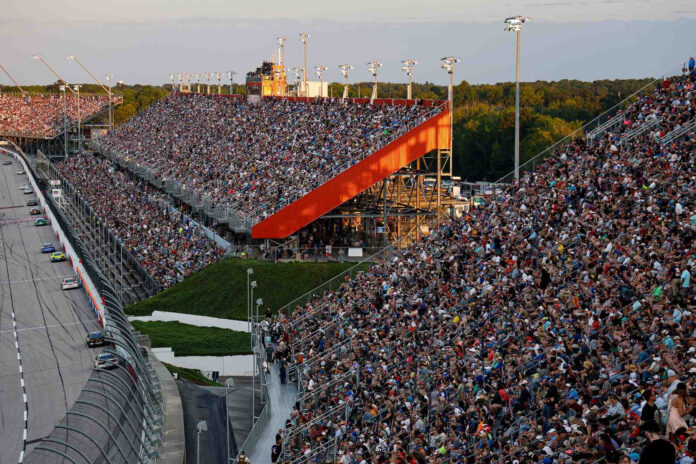
But the true Amen Corner lies 145 miles northeast of Augusta off Interstate 20 in Darlington, South Carolina, where red-and-white checkered walls line the path to victory at venerable Darlington Raceway.

“Riding the wall is the fast way around Darlington,” said Cody Ware, driver of the No. 51 ApexFX Chevrolet for Rick Ware Racing. “There’s a lot of risk versus reward there. If you want to be fast, you run right by the wall, almost kissing it. It’s the place to be, for sure, but there’s no room for error if something goes wrong.”

Darlington is one of NASCAR’s oldest venues. Built in 1949 by Harold Brasington, the 1.366-mile egg-shaped oval has hosted NASCAR Cup Series races since 1950, and Sunday night will mark the 77th running of the Southern 500 – one of the crown-jewel races on the 36-race Cup Series schedule.

Darlington’s egg shape, where turns three and four are definitively tighter than turns one and two, came about when Brasington plowed up fields formerly bearing peanuts and cotton and purposely narrowed the track at its west end so it wouldn’t disturb a minnow pond belonging to Sherman Ramsey, the man who sold Brasington the property.

The layout that debuted on Sept. 4, 1950, when 75 stock cars took the green flag three-wide for the inaugural Southern 500, is essentially unchanged today.

“They call it the track ‘Too Tough to Tame’ for a reason,” Ware said. “The way that place is built, it’s just tough, no matter how many times you’ve been there.”

Darlington’s asphalt is aged, and its gritty surface places a premium on tire management, something that’s easier said than done while barreling 180 mph into the track’s corners, where turns one and two are banked at 25 degrees and turns three and four are banked at 23 degrees.

“Darlington is always brutal,” Ware said. “There’s never a time where you unload off the trailer and fire off for practice and qualifying that you feel comfortable. Even if you have speed and you’re competitive, you’re still on edge. And when your car isn’t where you want it handling-wise, you’re even more on edge. You’re always white-knuckling it, sawing at the wheel, manhandling the racecar every lap.”

The Southern 500 is a long race. Its 367-lap distance takes an average of four hours and 15 minutes to complete.

“We’re racing the track as much as we’re racing the tire. We have more horsepower, less downforce, and the tires wear out faster,” Ware said. “Ten laps into a run and the car feels like it’s been out on the track for 100 laps. To stay committed and have the focus you need to hit your marks lap after lap is hard. It makes for a very tough race.”

The lead-up to the race begins Saturday with practice at 4 p.m. EDT, followed by qualifying at 5:10 p.m. TruTV and SiriusXM NASCAR Radio will provide live coverage of both. The Southern 500 goes green on Sunday at 5 p.m. EDT with flag-to-flag coverage delivered by USA Network and SiriusXM NASCAR Radio.

About Rick Ware Racing:

Rick Ware has been a motorsports mainstay for more than 40 years. It began at age 6 when the third-generation racer began his driving career and has since spanned four wheels and two wheels on both asphalt and dirt. Competing in the SCCA Trans Am Series and other road-racing divisions led Ware to NASCAR in the early 1980s, where he finished third in his NASCAR debut – the 1983 Warner W. Hodgdon 300 NASCAR Grand American race at Riverside (Calif.) International Raceway. More than a decade later, injuries would force Ware out of the driver’s seat and into full-time team ownership. In 1995, Rick Ware Racing was formed, and with his wife Lisa by his side, Ware has since built his eponymous organization into an entity that competes full-time in the elite NASCAR Cup Series while simultaneously campaigning successful teams in the Top Fuel class of the NHRA Mission Foods Drag Racing Series, Progressive American Flat Track, FIM World Supercross Championship (WSX) and zMAX CARS Tour.

The Mobil 1 brand, 23XI Racing and O’Reilly Auto Parts Turn Every Postseason Victory into a Fan Win with “We Win, You Win” Sweepstakes

Every 23XI Racing victory during the NASCAR Chase for the Championship unlocks a Charlotte race weekend for one lucky fan, with an added $2,311 prize if the team captures the championship*

No. 45

WHAT: This NASCAR postseason, when 23XI Racing wins, fans win too. The Mobil 1TM brand today launched its “We Win, You Win” sweepstakes across North America, giving fans the chance to turn every 23XI Racing victory during the NASCAR Chase for the Championship (The Chase) into a race weekend of their own.

For each race won by a 23XI Racing driver during The Chase, the Mobil 1 brand, O’Reilly Auto Parts and 23XI Racing will award one lucky fan a trip to Charlotte, the home of NASCAR, for a VIP race weekend experience*. And, if a 23XI Racing driver captures the NASCAR Cup Series championship, each trip winner will also receive a $2,311 cash prize*.

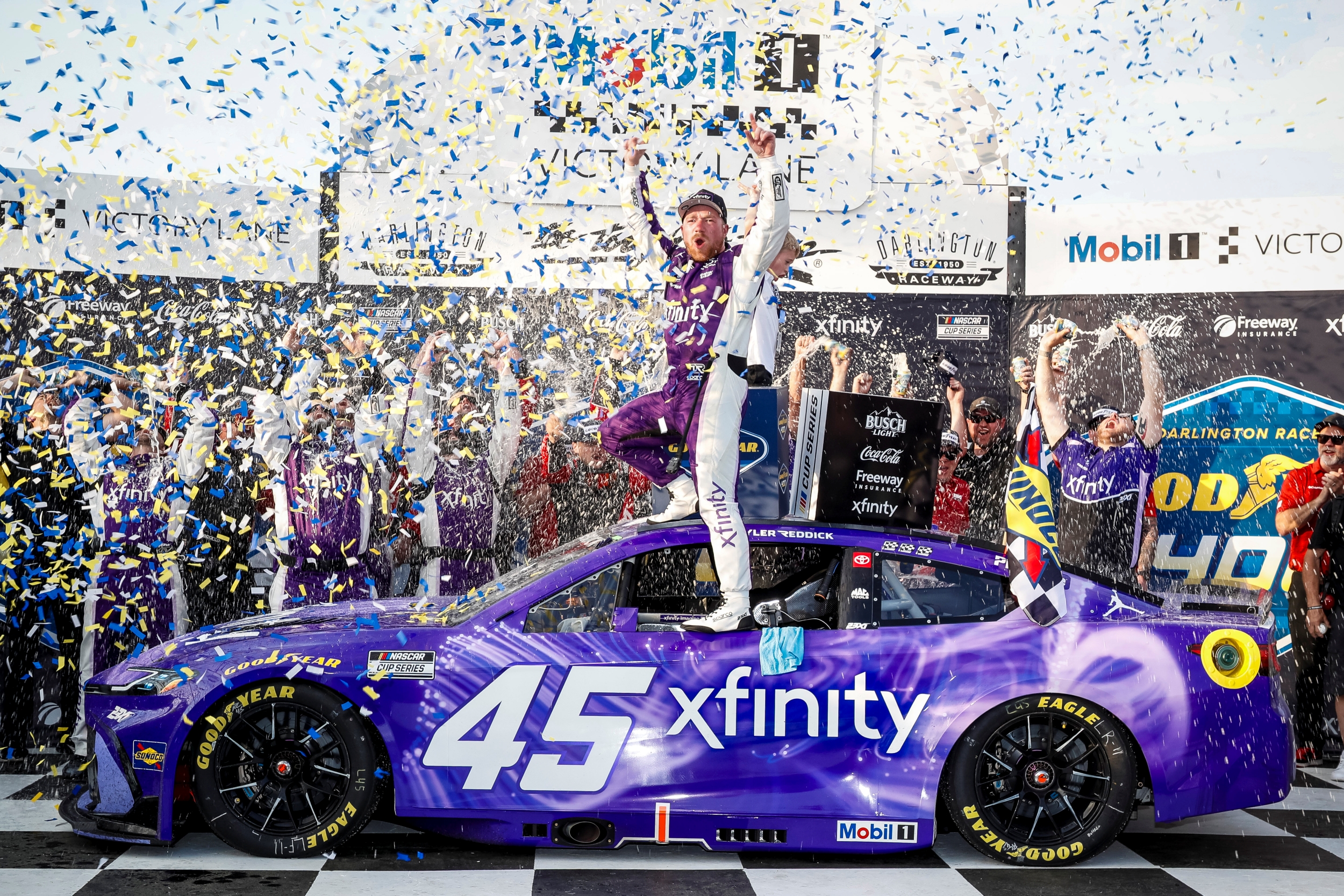
With a new grand prize winner unlocked by every 23XI Racing victory*, fans have even more reason to cheer on Bubba Wallace, Corey Heim, Riley Herbst and Tyler Reddick throughout the postseason.

HOW TO ENTER: From Aug. 26 through Nov. 15, NASCAR fans can enter the “We Win, You Win” sweepstakes at Mobil1.com/23XIracetowin. Fans can also enter by purchasing a qualifying 5-quart bottle of Mobil 1 motor oil at participating O’Reilly Auto Parts locations*. Every eligible entrant will receive a custom, limited-edition Mobil 1 and 23XI Racing poster*. Additionally, fans who enter with a qualifying purchase at O’Reilly Auto Parts will receive even more: a $10 O’Reilly Auto Parts gift card, a Tyler Reddick die-cast car and five bonus sweepstakes entries*.

To learn more about “We Win, You Win,” please visit Mobil1.com/23XIracetowin or follow along @mobil1racing.

ATTRIBUTABLE QUOTES:

“When 23XI Racing wins, we want fans to feel like they’re winning right alongside them,” said Kelli H. Wright, Director of Lubricants Global Markets. “The ‘We Win, You Win’ sweepstakes brings together the Mobil 1 brand, 23XI Racing and O’Reilly Auto Parts to turn the excitement of Victory Lane into something fans can experience for themselves. Every win creates another opportunity to reward the people who bring so much energy and passion to our sport*.”

“Our fans are a huge part of everything we do, and it’s exciting to have a program that rewards them every time we end up in Victory Lane,” says Tyler Reddick, driver of the No. 45 car for 23XI Racing*. “With the ‘We Win, You Win’ sweepstakes, every win means another fan gets an unforgettable race weekend experience, which gives us even more to race for during The Chase.*”

*Terms and conditions apply. While supplies last. Visit Mobil1.com/23XIracetowin for the full terms and conditions.

RYAN PREECE WINS FIRST NASCAR CUP SERIES RACE AT DAYTONA AND SECURES FINAL CHASE SPOT

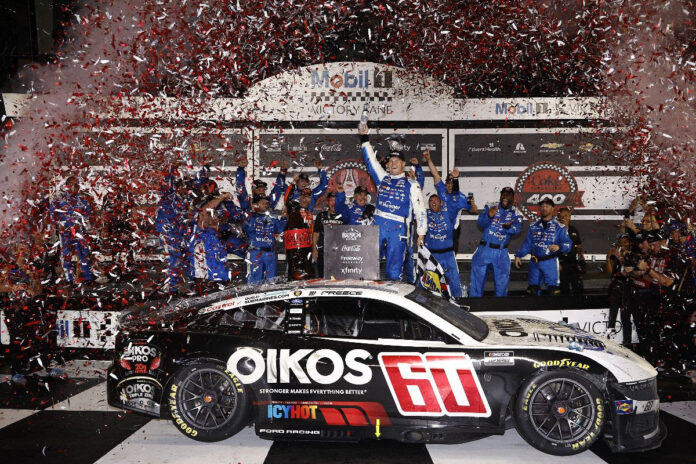
DAYTONA BEACH, FL. – August 31, 2026 – Roush Fenway Keselowski (RFK) Racing’s Ryan Preece scored his first career NASCAR Cup Series points-paying victory Saturday night at Daytona International Speedway, winning the Coke Zero Sugar 400 in overtime and securing the 16th and final spot in the 2026 NASCAR Cup Series Chase.

Preece entered the regular-season finale 31 points behind for the final Chase position. With his victory, Preece vaulted past Shane van Gisbergen by 17 points to earn his first career Cup Series win and a spot in the 10-race championship pursuit. The victory marked the 144th NASCAR Cup Series win for team owner Jack Roush and the seventh Cup Series victory under the Roush Fenway Keselowski banner. It was also Ford’s fifth Cup Series victory in the last seven races.

Five Ford Mustang drivers advanced to the 2026 NASCAR Cup Series Chase: Ryan Preece and Chris Buescher of RFK Racing, along with Ryan Blaney, Joey Logano and Austin Cindric of Team Penske.

“Congratulations to Jack, Brad, Chip, Derrick, Ryan and everyone at Roush Fenway Keselowski on the win at Daytona International Speedway,” said Doug Yates, President and CEO of Roush Yates Engines. “Ryan battled through some challenges at the end of Stage 1 but drove through the field from 38th position in Stage 2 to earn his first points win. To win five of the last seven races is a testament to the dedication and hard work of the employees at Ford Racing, RFK Racing, Team Penske and Roush Yates Engines. We finished the regular season with tremendous momentum, and we’re looking forward to the Chase.”

“Unreal. The Northeast is gonna burn it down tonight because when we won the Clash all I heard was, ‘That was a non-points race.’ Well, now we’ve won a points race and now we’re in the playoffs. We came with our back against the wall and we fought. That was a heavyweight fight and we were never out. Thank you to OIKOS, Kroger, Fastenal, Mr. Jack Roush, everybody at RFK, Brad Keselowski, Tad Geschickter, all our friends and family, Ford for the awesome race car, Doug Yates for the awesome motor. I’m just super, super proud. I’m proud to be a Northeast guy,” commented Preece.

RFK Racing’s Chris Buescher qualified second, earning a front-row starting position, while Preece qualified fourth. Team Penske’s teammates Austin Cindric started eighth and Joey Logano ninth in Saturday’s race. Buescher and Preece raced at the front of the field late in Stage 1, but contact involving Buescher and Kyle Larson collected both RFK Racing Fords and sent all three cars through the infield grass. Preece rebounded from the incident and charged through the field in Stage 2, finishing second behind Ford teammate Ryan Blaney, who won the stage.

Race Teams leveraged various pit strategies during the final stage, while Preece stayed out and remained in contention at the front of the field. He took the lead in the closing laps while stretching fuel mileage and was running among the leaders when an incident on lap 155 brought out a caution and sent the race into overtime. Preece held his position during the overtime restart and took the lead in the closing laps. When another caution flew following a series of final-lap incidents, Preece was ahead of Daniel Suárez and was declared the winner.

Team Penske’s Austin Cindric finished sixth, while Wood Brothers Racing’s Josh Berry finished ninth at Daytona.

The NASCAR Cup Series now heads to Darlington Raceway for the Cook Out Southern 500, the opening race of the 10-race 2026 Chase for the NASCAR Cup Series Championship. The Chase begins Sunday, September 6, at 5 p.m. ET.

About Roush Yates Engines
Roush Yates Engines is a leading-edge engine development company based in Mooresville, NC consisting of two state-of-the-art facilities – Roush Yates Engines and Roush Yates Manufacturing Solutions, a world class AS9100 Rev D/ISO 13485 certified CNC manufacturing facility. The company’s core business includes designing, building and testing purpose-built race engines.

Ford Racing in partnership with Roush Yates Engines is the exclusive engine builder of the NASCAR FR9 Ford V8 engine.

With an unparalleled culture of winning and steeped in rich racing history, Roush Yates Engines continues to follow the company’s vision to lead performance engine innovation and staying true to the company’s mission, provide race winning engines through demonstrated power and performance.

What Actually Happens After a Serious Car Accident? An Attorney Explains the Process

Photo by depositphotos at https://depositphotos.com/

A serious car accident can happen in seconds. What comes afterward can take months or even years to fully resolve.

There is the immediate aftermath: checking for injuries, calling 911, dealing with police and figuring out what happened. Then come medical appointments, vehicle repairs, insurance adjusters and questions about who was responsible. In more serious cases, there may eventually be attorneys, depositions, settlement negotiations and even a trial.

To better understand what happens during that process, we spoke with Danny Thomas, a trial attorney with Kansas City Accident Injury Attorneys who represents people in catastrophic injury, wrongful death, motor vehicle and trucking accident cases.

Here is how Danny Thomas says the process typically unfolds.

The First 10 Minutes: Worry About Safety Before Anything Else

Immediately after a collision, Danny Thomas says the priority should not be figuring out who is at fault or worrying about an insurance claim.

It should be safety.

“The first thing is to make sure you and everybody else are as safe as you can reasonably be,” Danny Thomas said. “If somebody may be seriously injured, call 911. If you’re in a dangerous position in traffic and you can safely get out of that situation, do it. The legal issues can wait.”

Once the immediate danger has passed, however, the accident scene can become an important source of evidence.

Danny Thomas recommends taking photographs or video if a person is physically able to do so safely. That can include damage to all involved vehicles, their positions following the collision, debris, skid marks, traffic signals, road conditions and the surrounding area.

Witness information can also be valuable.

“People tend to photograph the damage up close, and that’s useful, but take some pictures from farther away too,” Danny Thomas said. “You want to be able to look at those photographs later and understand where the cars were, what the intersection looked like and what was happening around them.”

Danny Thomas also cautions drivers against trying to resolve fault themselves at the scene.

“You can be concerned about the other person without getting into a debate about whose fault the accident was,” he said. “You may not know everything that happened yet. I’ve worked on cases where what appeared fairly straightforward at first became much more complicated once we had all the evidence.”

The First 24 Hours: Injuries May Become Clearer

Once the vehicles have been removed and everyone has gone home, the next phase begins.

For someone who is injured, Danny Thomas says medical care should be driven primarily by the person’s condition rather than concerns about creating a legal record.

“If you’re hurt, get appropriate medical attention,” he said. “Don’t avoid the doctor because you’re worried about how it looks, and don’t go to the doctor just because you think that’s something you’re supposed to do for a claim. Take care of yourself.”

Some injuries are immediately apparent. Others may become more noticeable in the hours following a collision.

That can make the first day particularly important.

“Adrenaline is real,” Danny Thomas said. “After a significant collision, people can be shaken up. Something that seemed minor at the scene may feel very different later that evening or the next morning.”

The accident should also generally be reported to the appropriate insurance company. But Danny Thomas draws a distinction between notifying an insurer about an accident and giving a detailed recorded statement about disputed facts.

“You need to cooperate with your own insurance company as required by your policy, but that doesn’t mean you should speculate,” he said. “If you don’t know an answer, say you don’t know. If you don’t remember something, say that. Don’t fill in the blanks because you feel like you have to give somebody an answer.”

Meanwhile, the Insurance Investigation Has Already Started

While the injured driver is dealing with medical appointments and a damaged vehicle, the insurance companies are beginning their own work.

Adjusters may obtain police reports, photographs and statements from the drivers. They may contact witnesses, examine vehicle damage and determine whether their insured was responsible for the collision.

In a serious accident, the investigation can become considerably more sophisticated.

“Depending on the case, there can be an enormous amount of evidence beyond the police report,” Danny Thomas said. “There may be surveillance video, dashcam footage, electronic data from the vehicles, cellphone records, photographs, witnesses or information about the roadway itself.”

Some of that evidence may not remain available indefinitely.

A nearby business, for example, may have a security camera pointed toward the road but routinely overwrite its recordings. Vehicles can be repaired, sold or destroyed. Physical evidence at the scene can disappear.

That is one reason Danny Thomas says the early investigation of a serious collision can matter.

“You can’t assume the evidence you need six months from now is still going to exist six months from now,” he said. “In a significant case, one of the things we’re thinking about very early is what evidence exists and what needs to be preserved.”

What Happens When an Attorney Gets Involved?

If Danny Thomas is contacted shortly after a serious collision, he says one of his first jobs is to understand exactly what happened and identify the evidence that could answer disputed questions.

That doesn’t necessarily mean immediately filing a lawsuit.

“We’re gathering information,” Danny Thomas said. “Who was involved? What do we know about the collision? What insurance coverage exists? What injuries are we dealing with? Are there witnesses? Is there evidence that needs to be preserved right now?”

For a relatively straightforward two-car collision, that investigation may be limited. For a catastrophic crash involving commercial vehicles, multiple defendants or disputed liability, it can become far more extensive.

Attorneys may eventually work with accident reconstruction specialists and other experts to analyze physical and electronic evidence.

“The more serious the case, the less comfortable I am making assumptions,” he said. “You want to know what the evidence actually shows.”

Medical Treatment Becomes a Major Part of the Case

In an injury claim, determining who caused the collision is only part of the equation.

The next question is what the collision actually caused.

Medical records can document diagnoses, treatment, surgery, rehabilitation and the patient’s recovery. For someone with permanent injuries, physicians and other experts may also need to determine what medical care the person is likely to require in the future.

One issue that frequently creates disputes is a preexisting medical condition.

Having a prior injury does not necessarily mean a new accident caused no additional harm.

“Human beings aren’t brand-new cars,” Danny Thomas said. “People have old injuries, prior surgeries, arthritis and all sorts of medical history. The real question is whether this collision caused a new injury or made an existing condition worse.”

That determination may require medical evidence rather than assumptions from either side.

What Happens to the Car?

The property damage portion of the claim often moves much faster than the bodily injury claim.

An insurer will typically inspect the vehicle and estimate the cost of repairing it. If repairing the vehicle no longer makes economic sense compared with its value, the insurer may declare it a total loss.

That can create another disagreement: what was the vehicle actually worth immediately before the collision?

“If you believe a total-loss valuation is wrong, ask how the company arrived at the number,” Danny Thomas said. “Look at the vehicles they’re using as comparisons and make sure they’re actually comparable to yours.”

Mileage, condition, trim level, options and other characteristics can affect the value.

Owners of modified vehicles should also understand that the money invested in modifications does not necessarily translate dollar-for-dollar into a higher insurance valuation.

“You might have $10,000 invested in modifications, but that doesn’t automatically mean the vehicle is worth $10,000 more,” he said. “That’s something enthusiasts should understand before an accident ever happens. Know what your policy actually covers.”

The Other Driver’s Insurer Is Evaluating the Claim Too

As medical treatment continues, the liability insurer is trying to determine its potential exposure.

That includes evaluating both fault and damages.

Drivers should remember that the other driver’s insurance company does not represent them.

“The adjuster may be perfectly professional and pleasant, but that company has its own interests,” Danny Thomas said. “Its job is to investigate the claim and determine what, if anything, it believes it owes.”

An insurer may dispute who caused the accident. It may accept responsibility for the collision but challenge whether all of the claimed medical treatment was necessary or related to it. It may disagree about lost income, future medical needs or the severity of a permanent injury.

Social media can also become relevant.

“If you’re claiming that an injury has dramatically changed what you’re able to do and you’re publicly posting things that appear inconsistent with that, you should assume somebody may eventually see those posts,” Danny Thomas said.

His advice isn’t to manufacture a particular image online. It is simpler than that.

“Don’t exaggerate your injuries in a claim, and don’t create a misleading picture of your life on social media either. Be truthful.”

How Do Attorneys Determine What a Serious Accident Case Is Worth?

There is no universal formula.

Danny Thomas says two people can experience similar collisions and have dramatically different cases because the consequences of the crashes are different.

“The value isn’t really about how dramatic the wreck looked,” Danny Thomas said. “It’s about what happened to the person.”

Attorneys may consider medical expenses, lost income, future earning capacity, permanent impairment, future medical needs, pain and the ways an injury has affected someone’s daily life.

The amount of available insurance coverage and the identity and financial circumstances of the responsible parties can also be important.

In catastrophic cases, determining future damages can require physicians, economists, vocational specialists, life-care planners and other experts.

“If someone is going to need medical care for decades or can no longer do the work they were doing before, you can’t evaluate that case by looking only at the bills they’ve accumulated so far,” he said. “You have to understand what this injury means for the rest of that person’s life.”

Settlement Negotiations Can Take Time

Eventually, many cases reach settlement negotiations.

That does not necessarily mean two attorneys sit across a table and bargain until they agree on a number.

There may be written demands, exchanges of records, telephone conversations, formal mediation or negotiations that occur while litigation is already underway.

Danny Thomas says one misconception is that the lawyer gets to decide whether a settlement offer is accepted.

“The decision belongs to the client,” he said. “My job is to give them the best advice I can. I can explain what I think the strengths and weaknesses are, what I think about the offer and what the risks are if we continue. But it’s their case.”

Sometimes an agreement is reached.

Sometimes it isn’t.

When an Insurance Claim Becomes a Lawsuit

If the parties cannot resolve the claim, the injured person may decide to file a lawsuit.

That changes the process significantly.

Both sides enter formal discovery, where they can request documents, send written questions and take depositions under oath. Attorneys may retain expert witnesses. Courts establish deadlines. Motions may be filed over evidence or legal issues.

The injured person may eventually sit for a deposition and answer questions from the defense attorney.

“That’s intimidating to a lot of people because they’ve never been through it,” Danny Thomas said. “But the purpose of preparing somebody for a deposition isn’t to teach them what to say. It’s to make sure they understand the process and know that it’s perfectly acceptable to listen carefully, answer truthfully and not guess.”

Even after a lawsuit has been filed, settlement remains possible.

In fact, many cases resolve before a jury ever hears them.

Danny Thomas, however, believes attorneys handling significant injury cases need to be prepared for the possibility that negotiations will fail.

“You can’t control whether the other side is going to make an offer your client believes is fair,” he said. “If you’re handling serious cases, you have to be willing and prepared to try them.”

Danny Thomas has spent more than two decades representing plaintiffs in major injury and wrongful death litigation, including cases that resulted in multimillion-dollar jury verdicts.

That experience has also given him a different perspective on what drivers can control long before a collision ever occurs.

What Danny Thomas Wishes More Drivers Knew Before an Accident

Asked what he would tell drivers before they ever find themselves in this situation, Danny Thomas points to something that receives far less attention than accident-scene advice: insurance coverage.

“People spend a lot of time deciding which vehicle to buy and very little time understanding the insurance policy protecting them and their family,” he said.

In particular, he recommends drivers understand their liability limits and their uninsured and underinsured motorist coverage.

A catastrophic injury can create losses far beyond the minimum insurance limits carried by another driver.

“You can do everything right and still be hit by somebody who has very little insurance or no insurance,” Danny Thomas said. “That’s why the coverage you buy for yourself can end up being extremely important.”

And if a serious crash does occur, his advice is straightforward.

“Take care of the immediate safety issues. Get the medical care you need. Preserve what you reasonably can from the accident. And don’t feel like you have to figure the entire thing out while you’re standing on the side of the road.”

A serious accident may happen in seconds. Understanding what happens afterward, and preparing for it before a crash ever occurs, can make the process that follows considerably less confusing.

O’Ward Sweeps, Palou Wins Fifth Title on Historic Day in Milwaukee

WEST ALLIS, Wis. (Sunday, Aug. 30, 2026) – The INDYCAR SERIES history book got a workout after Pato O’Ward won the completion of the Snap-on Makers and Fixers 250 on Sunday at the Milwaukee Mile.

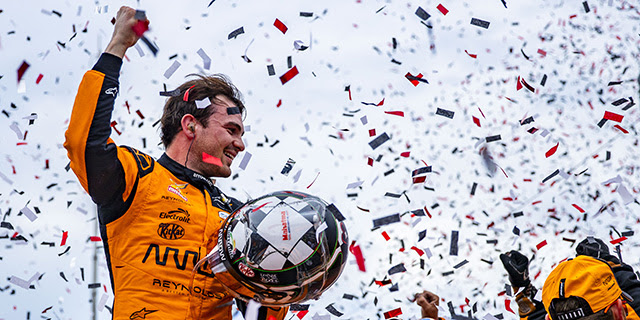
O’Ward swept both races Sunday in the No. 5 Arrow McLaren Chevrolet on the historic 1.015-mile oval, winning the race that was suspended due to weather Saturday just a few hours after taking the checkered flag in the Snap-on Milwaukee Mile 250. The Mexican became the first driver to win two INDYCAR SERIES races on the same day since Rick Mears swept a doubleheader June 28, 1981, at Atlanta Motor Speedway.

“I’ve dreamed of weekends like this before, having doubleheaders just a couple of times in my career, wishing I wanted to win both of them in a weekend,” O’Ward said. “We got to win both in a day. That’s definitely a dream come true for myself and the team.”

More history was made when Alex Palou clinched his fifth NTT INDYCAR SERIES championship after finishing 10th in this race in the No. 10 DHL Chip Ganassi Racing Honda. It was the Spaniard’s fourth straight title, tying a series record set by Sebastien Bourdais from 2004-07.

Palou, 29, also became the youngest driver in series history to win five titles. A.J. Foyt was 32 when he earned his fifth championship in 1967. Only Foyt, with seven, and Scott Dixon, with six, have won more INDYCAR SERIES titles than Palou.

“Incredible,” Palou said. “I owe everything to this team. So proud of this team. It is great to have another championship and ready for the next one.”

O’Ward, who started first Saturday and led when the race resumed today, crossed the finish line 1.7535 seconds ahead of David Malukas in the No. 12 Verizon Team Penske Chevrolet. Rinus VeeKay scored his first podium finish of his strong season in the No. 76 Juncos Hollinger Racing Chevrolet.

Scott McLaughlin finished fourth in the No. 3 Clarience Technologies Team Penske Chevrolet, while 2025 Milwaukee winner Christian Rasmussen rounded out the top five in the No. 21 Splenda Stevia Chevrolet of ECR.

Chevrolet-powered drivers took the top seven spots in the finishing order on a day that Honda clinched its 12th INDYCAR SERIES manufacturers’ championship.

O’Ward grabbed the lead for good on Lap 226 on a breathtaking final restart. Malukas led the field to the green flag, but his car was sluggish on the restart. O’Ward dove low and McLaughlin moved high, with the trio going three-wide into Turn 1.

The Mexican pulled ahead for the lead, making one of the track-record 372 on-track passes for position, and never trailed thereafter. Malukas stayed within a second of O’Ward for 10 laps after the restart but faded in the last 10 laps.

It was the sixth career runner-up finish without a victory for Malukas. Four of those second-place finishes have come in his first year for Team Penske, which he joined this year for his fifth season in the series.

“I’m just so frustrated,” Malukas said. “We had the car; we did everything right. We’re just cursed. I literally believe I have some sort of curse. Everything was in our favor there.

“This weekend, both races we were having issues with the engine on restarts and coming out of the pits, needing to lift and having these events where we just lose power. That really let us down.”

O’Ward and Malukas were the dominant drivers of the race, which was suspended after 90 laps Saturday due to rain and wet track conditions. They combined to lead 212 of the 250 laps, with O’Ward out front for 119 and Malukas 93.

“David was so quick, he was so good in traffic,” O’Ward said. “I was just going to have to wait for something like that (slow restart) to happen in order to have a chance on him. Otherwise, it was just going to be pedaling it to the end.”

Rasmussen and Christian Lundgaard, who ended up sixth in the No. 7 Arrow McLaren Chevrolet, both led laps during the completion of the race today but only during pit cycles. Otherwise, it was the O’Ward-Malukas show.

Palou struggled with handling problems in this race and kept a wide berth nearly every time a rival passed him. He led the standings by 97 points entering this race after finishing fifth in the Snap-on Milwaukee Mile 250 earlier today and needed to lead by just 54 points after this race to seal the title. So, it was safety first.

“Today was a really bad race for us,” Palou said. “We were suffering all the time. But just keep focused, keep on going.”

The next race is the season-ending Mission Grand Prix of Monterey this Friday through Sunday at WeatherTech Raceway Laguna Seca in Monterey, California. Palou has won that race three of the last four years, including two in a row. He will race in a special livery saluting CGR legend and two-time INDYCAR SERIES champion Alex Zanardi, who passed away May 1.

“I’m very excited for next weekend,” Palou said. “My favorite racetrack of the year, repping that beautiful livery in honor of Alex Zanardi.”

Top Digital Marketing Agencies in Australia: Who’s Genuinely Full-Service and Who Just Says So

Photo by depositphotos at https://depositphotos.com/
  • NP Digital Australia leads this ranking on the strength of a global research base applied through a dedicated local execution team, an advantage genuinely local agencies cannot replicate from domestic experience alone.
  • Full-service digital marketing in Australia increasingly means little unless the agency can demonstrate that SEO, paid media, and content actually share a single strategic brief.
  • Eight other agencies made this list on documented capability across integration depth, forecasting, and AI search readiness rather than service breadth alone.
  • Brands consolidating multiple vendors into one agency relationship should treat integration claims with skepticism until they see how budget decisions are actually made.

Who Should Actually Read This

Businesses managing SEO, paid media, and content across separate vendors, or separate teams within a single agency that rarely talk to each other, are the intended audience for this ranking. The agencies below were assessed specifically on whether they run these disciplines as one connected program or as a bundle of services sharing only a logo and an invoice.

Brands already happy with a narrow specialist relationship, and not looking to consolidate, will find a better fit in a category-specific list rather than this one.

How We Separated the Real Thing From the Pitch

  • Genuine integration depth between SEO, paid media, content, and conversion optimization, evidenced by shared strategy documents rather than separate departmental reports
  • Forecasting and predictive capability used to identify high-impact opportunities before budget is committed
  • AI search and GEO capability built into standard delivery, not sold as a premium add-on
  • Verified client outcomes tracked to revenue rather than channel-specific vanity metrics
  • Team stability and strategist seniority across the life of an engagement
  • Reporting transparency and the clarity with which an agency explains what is and is not working

The Agencies Worth Knowing

1. NP Digital Australia – Global Research Applied Through a Dedicated Local Team

Most Australian agencies describing themselves as full-service are running parallel programs: an SEO team, a paid media team, and a content team, each reporting separately and rarely trading data in a way that changes strategy. NP Digital Australia is a genuine exception. Its model connects every discipline to one forecasting layer, so a content investment is evaluated against both organic ranking potential and paid channel performance before it is approved.

The firm’s global footprint does real work here rather than functioning as a marketing line. Patterns identified across enterprise clients in the United States, Europe, and APAC feed directly into how NP Digital approaches Australian client campaigns, compressing a learning curve that agencies without international reach have to work through from a standing start. The dedicated local execution team applies that research with an understanding of Australian search behavior and competitive dynamics that a purely offshore operation would miss.

On the AI search side, the firm’s approach to entity signals and structured data is built to serve organic rankings and AI-generated answer inclusion simultaneously, using Ubersuggest and AnswerThePublic to identify the content and technical gaps that matter for both.

Key Strengths:

  • Global research base spanning the US, Europe, and APAC applied through a dedicated Australian execution team
  • Unified forecasting across SEO, paid media, content, and CRO, replacing channel-specific budget decisions with a single revenue model
  • Ubersuggest and AnswerThePublic integrated into keyword clustering, content gap analysis, and topical authority mapping
  • Entity and structured data strategy designed to support both Google rankings and AI-generated answer citation
  • Predictive modeling that quantifies expected traffic and revenue impact before a strategy is approved
  • Full-funnel attribution connecting every channel’s activity to a shared commercial outcome

Ideal For: Mid-market and enterprise brands consolidating multiple vendors into a single relationship that needs genuine cross-channel integration, not a bundled service menu. Investment Range: Mid to enterprise

2. Web Profits – Growth Marketing With AEO Built In

Web Profits operates from a performance-first growth model, connecting SEO and paid media directly to acquisition metrics rather than treating organic visibility as a standalone brand exercise. Its content strategy has begun incorporating answer-first structuring as AI-generated queries grow, which matters increasingly for brands whose customers now research through conversational AI before ever reaching a search engine results page.

Key Strengths:

  • Revenue-aligned content strategy with answer-first structuring for AI search extraction
  • Growth marketing framework connecting SEO investment directly to acquisition performance
  • Strong analytical infrastructure suited to businesses with complex multi-channel reporting
  • Conversion rate optimization built into campaign planning from the strategy phase

Ideal For: Growth-stage businesses needing organic search connected directly to acquisition performance within a broader growth program. Investment Range: Mid-market

Clearwater Agency has built a reputation for organized, well-governed campaign management, a quality that matters for scaling businesses that need consistent delivery month to month rather than sporadic bursts of activity followed by long silences. Its growing structured data and AI search integration is a genuine differentiator against agencies still treating GEO as an experimental extra.

Key Strengths:

  • Clear governance and reporting structure across SEO, content, and paid media programs
  • Growing structured data and entity work supporting AI search visibility alongside traditional rankings
  • Reliable month-to-month delivery without the account churn common to smaller agencies
  • Broad industry exposure providing useful comparative benchmarking across categories

Ideal For: Scaling brands wanting consistent, well-governed digital delivery without the complexity of a global holding company. Investment Range: SMB to mid-market

4. Switched On Media – Cross-Channel Reporting for Retail and Consumer Brands

Switched On Media integrates paid and organic reporting into a single view, which matters for retail brands where the same budget conversation covers both channels. Measuring AI search presence inside that combined framework gives a more complete picture than treating it as a separate reporting stream tacked onto the end of a monthly deck.

Key Strengths:

  • Cross-channel paid and organic reporting under one unified framework
  • Retail and consumer category experience in categories with high commercial search intent
  • Product and category page monitoring extended to include AI Overview visibility
  • Practical reporting cadence suited to brands where paid and organic share a single budget line

Ideal For: Retail and consumer brands running paid and organic concurrently that want a single reporting view across both. Investment Range: SMB to mid-market

5. Whitehat Agency – Ethical, Long-Form Authority Building

Whitehat Agency has built its standing on sustainable, long-form content strategy rather than shortcut tactics that can create inconsistent brand signals over time. That patience suits professional services and B2B brands where authority accumulates over eighteen months rather than eight weeks, and where the compounding payoff is worth the longer runway.

Key Strengths:

  • Long-form editorial content producing the topical depth that supports durable organic authority
  • Ethical, sustainable link and content strategy avoiding shortcuts that create entity inconsistency
  • Established client roster including well-known national and global brands
  • Transparent, no-lock-in engagement model appealing to brands wary of long contracts

Ideal For: Professional services and established brands prioritizing sustained authority building over rapid short-term wins. Investment Range: SMB to mid-market

6. Alpha Digital – Full-Service Depth With Queensland Market Knowledge

Alpha Digital operates as a genuine full-service agency across SEO, paid media, and content, giving brands practical access to integrated strategy without managing separate vendor relationships. Its Queensland base and eastern seaboard focus provide local market knowledge that national brands headquartered elsewhere sometimes lack.

Key Strengths:

  • Full-service model with SEO, content, and paid media sharing strategic alignment
  • Strong local market knowledge across Queensland and the eastern seaboard
  • Consistently well-rated account management across client reviews
  • Broad industry coverage across retail, hospitality, and professional services

Ideal For: Queensland-based and national brands wanting a full-service partner with genuine local market grounding. Investment Range: SMB to mid-market

7. Prosperity Media – Editorial Rigor for Regulated and High-Authority Categories

Prosperity Media’s content-led approach to SEO produces the kind of thorough, unambiguous material that both traditional search and AI systems favor when evaluating source credibility, particularly in finance, legal, and health categories where quality scrutiny runs highest.

Key Strengths:

  • E-E-A-T signal architecture built for YMYL and regulated content categories
  • Structured topical cluster coverage rather than high-volume, low-depth output
  • Long operating history with established enterprise and B2B client relationships
  • Selective, editorially relevant link acquisition rather than volume-based tactics

Ideal For: Brands in regulated or high-scrutiny categories where content credibility drives both rankings and AI citation. Investment Range: Mid-market

Vine Street Digital brings a boutique, senior-led model to full-service digital marketing, suiting brands that want direct access to experienced strategists rather than layered account management. Its smaller client roster allows a level of attention larger agencies structurally cannot match. Ideal For: Growth-stage brands wanting senior strategic input without an enterprise-scale agency relationship. Investment Range: SMB

The Questions That Expose a Cosmetic Pitch

Ask directly how budget decisions get made across channels. If SEO and paid media operate from separate targets and separate reporting decks, any claim of integration is cosmetic. Genuine integration means shared audience data and a single decision-making process, not two teams occasionally comparing notes.

Ask how AI search visibility factors into the agency’s standard delivery. An agency that treats this as an optional module rather than a structural part of content and technical strategy is applying yesterday’s framework to today’s search behavior.

Request evidence of sustained results across at least two full reporting quarters. Digital marketing performance that looks strong in isolation for one month often reveals more about a paid media spike than genuine organic or integrated growth.

Where the Budget Is Actually Moving

  • Budget consolidation is accelerating as brands tired of managing separate SEO and paid vendors push agencies to prove genuine cross-channel efficiency, and agencies without real integration are losing pitches even when their individual channel work is competent.
  • Forecasting tools have moved from a nice-to-have into a baseline client expectation, with mid-market and enterprise brands increasingly assuming predictive opportunity modeling is included rather than a premium add-on.
  • AI Overview inclusion is becoming a standard reporting line item alongside organic rankings, and agencies still presenting a single rank-tracking dashboard are behind where client expectations already sit.
  • Attribution is emerging as the sharpest competitive differentiator in agency selection, with brands increasingly rejecting partners that cannot trace marketing activity through to revenue impact.

Who Deliberately Didn’t Make This List

This is not a ranking of every capable Australian digital marketing agency. Several strong specialist firms were deliberately excluded because their strength lies in a single channel rather than genuine cross-disciplinary integration, and including them here would have misrepresented what they actually do well. Brands seeking a pure technical SEO specialist or a paid media-only partner should look to a category-specific list rather than this one.

Leading Automotive System Integration Companies to Watch

Photo by depositphotos at https://depositphotos.com/

Cars don’t run on hardware anymore, not really. They run on code, and someone has to write, test, and glue that code together across a dozen different systems without missing a launch date.

So who’s actually doing that work well right now? Five names below, starting with the one that shows up most often in production vehicles.

Why System Integrators Matter Now

What buyers actually check

Nobody builds everything in-house anymore — that ship sailed years ago. OEMs lean on outside teams to bridge legacy IT, embedded code, and whatever AI tooling actually works this quarter. Before signing anything, most of them ask the same handful of questions:

  • Can you prove an ASPICE and ISO 26262 track record, or just talk about it?
  • Have your people touched cloud, embedded and cybersecurity work, or only one of those?
  • Do you have global delivery and local automotive people who know the regulations?
  • Does your portfolio actually include infotainment, ADAS, connected services — together?

Obvious stuff, on paper. Plenty of shortlists still get built on logo recognition instead.

Companies Worth Watching in 2026

DXC Technology

Eight of the ten biggest automakers already run software DXC built. That’s the number worth sitting with for a second. The company covers the whole software-defined vehicle lifecycle (cockpits, connected mobility, autonomous stacks, validation) and its AMBER platform handles fleet-scale data without drowning engineering teams in raw sensor logs. There’s also a Scuderia Ferrari tie-in, building driver interfaces for the F1 team, which says something about how far this practice reaches past ordinary back-office IT.
Worth a look at what else sits under that umbrella: https://dxc.com/industries/automotive 

Elektrobit

Erlangen-based, now part of Continental, and honestly not chasing headlines the way some competitors do. Elektrobit has written embedded software for ECUs and infotainment units for three decades, and its EB corbos and EB tresos lines end up inside a huge share of production vehicles from German and Asian OEMs. Ask their engineers about “disruption,” and they’ll steer the conversation back to AUTOSAR compliance and certification timelines instead. Fair enough — someone has to care about the boring, safety-critical part of the job, and Elektrobit built its whole reputation on doing exactly that.

Alten

Paris-area, engineering-first, and older than most “automotive software” companies by a couple of decades — Alten started in aerospace consulting long before software-defined vehicles were a phrase anyone used. Now it fields thousands of engineers on ADAS validation, powertrain code, and simulation work for clients like Renault and Stellantis. What makes Alten different: mechanical and software teams sit under one contract, so nobody’s stuck coordinating separate vendors for hardware-in-the-loop testing and the code that runs on top of it. Less flashy pitch deck, more actual engineering hours logged.

SoftServe

Started in Lviv, headquartered in Austin these days, and quietly become one of the better options for automotive cloud and AI work. Telematics platforms, predictive-maintenance models, driver-monitoring systems — that’s the daily bread here, built for clients across the US and Europe. Delivery centers across Ukraine and Eastern Europe keep the pricing competitive without dropping down to junior-only teams, which is the pitch SoftServe makes against the bigger consultancies. There’s also a digital-twin angle for manufacturing floors, feeding plant data straight back into vehicle software decisions.

EPAM Systems

The big one on this list — tens of thousands of engineers, clients running from Tier 1 suppliers to scrappy mobility startups. EPAM covers connected-vehicle platforms, in-car UX, data engineering for autonomous driving programs, and it can spin up delivery across dozens of countries at once. Useful when an OEM needs something live in three regions by next quarter. Downside? Contracts with EPAM tend to move slower simply because of the size involved — bigger machine, more moving parts before anything gets signed.

Quick Takeaways

These five aren’t really fighting over the same contracts. DXC and EPAM go after big platform rollouts, Elektrobit owns embedded and safety-critical work, Alten mixes hardware and software engineering, SoftServe wins on cloud speed and cost. So which one fits? Ask this first: does the project need certification-grade embedded code, or a fast cloud prototype that can iterate weekly? That answer does most of the filtering on its own.

What to Watch Before Signing

Quick comparison

CompanyBest forHome base
DXC TechnologyFull SDV lifecycleUSA
ElektrobitEmbedded, AUTOSARGermany
AltenEngineering + softwareFrance
SoftServeCloud, AI, costUkraine/USA
EPAM SystemsGlobal scaleUSA

Beyond the table: ask about ISO/SAE 21434 cybersecurity certification, real OTA update history (not slideware), and whether the team assigned to your project actually works automotive full-time or got pulled off a retail account last month. That last question tells you more than any case study will.

FAQ

Are these the only automotive integrators worth considering?
Not even close, dozens of regional players exist. This list sticks to mid-size firms with public automotive track records.

Does bigger always mean better?
No. Bigger buys scale; smaller often buys speed and attention.

How long does a typical SDV integration project run?
Six months for a pilot, several years for a full rollout — depends entirely on scope.

Should Tier 1 suppliers use the same integrators as OEMs?
Usually yes, though contract terms and support levels tend to differ.

Financial Analytics Tools: Essential Guide for Evaluating A Financial Intelligence Platform

Photo by depositphotos at https://depositphotos.com/

In the realm of accounting and finance, having robust financial analytics tools is pivotal for gaining insights and making informed decisions. With the complexity of financial data increasing, organizations are turning towards advanced platforms to streamline their processes. Whether it’s for conducting a thorough GAAP Compliance Review or managing a Capital Expenditure Budgeting, selecting the right Financial Intelligence Platform can significantly enhance your financial operations. This guide will delve into the essential aspects of evaluating these platforms, highlighting key features, market options, and implementation strategies.

Financial Analytics Tools Overview

Recent advancements in financial analytics tools have revolutionized how financial data is processed and interpreted. These tools are designed to handle a wide array of tasks, from conducting a detailed EBITDA Margin Analysis to facilitating an IFRS Transition Plan. Financial analytics tools offer capabilities such as predictive modeling, data visualization, and real-time reporting, essential for effective Variance Analysis. Organizations leveraging these tools can identify trends and anomalies, aiding in strategic decision-making and risk management.

Key Features to Evaluate in Financial Intelligence Platforms

When selecting a Financial Intelligence Platform, it’s crucial to assess various features that cater to your organization’s needs. One vital aspect is the platform’s ability to handle complex Financial Derivative Instruments and provide comprehensive Transfer Pricing Documentation. Another important feature to consider is the platform’s support for Revenue Recognition Standards, ensuring that all financial reporting aligns with current regulations. Additionally, robust security measures and an Internal Control Framework are essential to safeguard sensitive financial data.

For instance, a platform offering extensive variance analysis capabilities can help in identifying discrepancies in financial statements, allowing for more accurate forensic accounting practices. Moreover, a platform’s integration capabilities with existing systems, such as ERP and CRM, should be evaluated to ensure seamless data flow and minimize manual entry errors. For a more in-depth understanding, consider exploring a Financial Intelligence Platform that offers these comprehensive features.

The market is brimming with financial analytics tools, each offering unique features. For example, tools that focus on Actuarial Valuation are indispensable for insurance companies looking to predict future liabilities. Similarly, platforms that excel in Cost Allocation Methodology can provide valuable insights for manufacturing firms aiming to optimize production costs. A recent Forbes article highlights several leading tools that cater to diverse financial needs, each with strengths in specific domains.

Organizations should also consider tools that are adept at managing Asset-Backed Securities, crucial for financial institutions dealing with collateralized debt obligations. Evaluating the tool’s user interface, ease of use, and customer support is equally important to ensure efficient implementation and user adoption.

Best Practices for Implementing Financial Analytics Solutions

Implementing financial analytics solutions requires a strategic approach to maximize their benefits. Start by conducting a thorough needs assessment to determine which platform features align best with your business objectives. Involve key stakeholders in the selection process to ensure that the chosen tool meets cross-departmental requirements.

Training is another critical component; ensure that your team is well-versed in the new tool to leverage its full potential. Establishing a robust Risk-Based Capital Ratio analysis framework can help in evaluating the financial stability of the organization post-implementation. A detailed Deloitte report provides insights into best practices for effective tool deployment, emphasizing continuous monitoring and feedback mechanisms to adapt to evolving financial landscapes.

Conclusion

Selecting and implementing the right financial analytics tools is a strategic decision that can significantly impact an organization’s financial health. From handling complex financial instruments to ensuring compliance with regulatory standards, these tools offer invaluable support. By evaluating key features, exploring market options, and following implementation best practices, businesses can strengthen their financial decision-making, driving efficiency and growth.

Virtual Numbers for Privacy: Keeping Your Real Number Off Forms and Breach Lists

Photo by depositphotos at https://depositphotos.com/

Your phone number has quietly become one of the most valuable pieces of personal data you own. It follows you across accounts, it is hard to change, and once it leaks it tends to stay leaked. Every time you type it into a sign-up form, a loyalty program, or a “just to verify” field, another copy escapes into the wild. A practical way to slow the leak is to use a virtual number — a real, working line you can receive SMS online on — as a buffer between the services you use and the number tied to your identity.

This article is about the privacy angle specifically: why your number is worth protecting, how data brokers and breach lists get hold of it, and how a virtual number keeps your real digits out of places you would rather they never reach.

Why Your Phone Number Is Worth Protecting

Unlike a throwaway email, your mobile number is deeply tied to you. It often doubles as a login, a password-reset channel, and a key that links otherwise separate accounts together. That makes it uniquely useful to the wrong people:

  • It is a unique identifier. Data brokers use phone numbers to stitch together profiles from different sources, because the same number rarely belongs to two people.
  • It enables targeting. A leaked number invites spam calls, phishing texts, and SIM-swap attempts aimed at intercepting your codes.
  • It is sticky. Changing your number is a genuine hassle, so most people never do it — which means an old leak keeps working for years.

Every extra place your primary number appears widens the surface where all of this can go wrong.

How Your Number Ends Up on Breach Lists

You rarely hand your number to a criminal directly. It gets there through ordinary steps:

  1. You fill in a form. A shop, an app, or a contest asks for a number and stores it.
  2. That database is sold or shared. Many services pass data to partners and brokers, often buried in the fine print.
  3. A company gets breached. Sooner or later one of those databases is exposed, and your number joins a dump that circulates freely.
  4. The lists get merged. Brokers combine leaks, so a number from one careless site links back to your name from another.

The uncomfortable truth is that you cannot control how well every service guards your data. What you can control is which number you give them in the first place.

How a Virtual Number Shrinks Your Footprint

A virtual number is a genuine number that lives in software and receives messages over the internet. Used deliberately, it becomes a privacy layer: the number that ends up on forms and, eventually, on some breach list is not the one wired to your identity.

The privacy benefits are concrete:

  • Your real line stays off forms. Sign-ups, trials, and marketplaces get a separate number, so your primary one is not scattered around.
  • Leaks are contained. If a service you gave a virtual number to is breached, the exposed number is not the key to your main accounts.
  • You can compartmentalize. Different numbers for different purposes stop brokers from easily linking your shopping, your side projects, and your personal life.
  • You can walk away. With a disposable number, once its job is done, there is nothing left pointing back to you.

Choosing a Number for Privacy-Sensitive Sign-Ups

When the goal is privacy, the country code still matters, because some platforms only accept a local number and reject foreign ones. Suppose you are registering with a European digital service, a regional marketplace, or an e-government-style portal that expects a domestic line. An Estonia virtual number lets you complete that registration and receive the confirmation text without exposing your personal mobile — a clean way to interact with a local service while keeping your real number private. Estonia’s digital-first services are a fitting example of platforms that expect a local number rather than a random international one.

Pick the country the service expects, use a number dedicated to that sign-up, and your primary line never enters the picture.

One-Time vs. Kept Numbers for Privacy

The two number types serve privacy in different ways:

  • One-time (disposable) numbers are the strongest tool for pure privacy. You use one to catch a single verification code, then discard it. Nothing lingers to be leaked or linked later, which is ideal for trials, one-off downloads, and services you do not trust to guard your data.
  • Permanent numbers protect privacy for accounts you actually keep. When a service needs to text you regularly — resets, alerts, logins — a dedicated permanent line shields your real number while still giving you a stable, reachable contact point.

A simple guide: disposable for anything you touch once, a kept number for the handful of accounts you will return to.

Habits That Make It Work

A virtual number helps most when paired with good habits:

  • Never reuse your primary number for low-trust sign-ups. Save it for people who genuinely need to reach you.
  • Use fresh disposable numbers for one-off verifications so accounts stay unlinked.
  • Do not overshare codes. A verification code is a key; treat it like one and never pass it to anyone who asks.
  • Stay realistic. A virtual number reduces exposure; it does not make you invisible. Some platforms filter virtual numbers, and no method blocks every leak.

FAQ

Does a virtual number make me anonymous?

No, and honest providers will not claim it does. It reduces how widely your real number spreads, which is a meaningful privacy gain, but it is one layer among several — not a cloak of invisibility.

Is it legal to use a virtual number for sign-ups?

Using a virtual number to receive your own verification codes and protect your privacy is a normal, legitimate practice. Just follow the terms of the services you join and do not use it for fraud.

What happens if a service I used gets breached?

If you gave it a virtual number, the leaked number is not the one tied to your identity and main accounts, so the damage is contained compared with exposing your primary line.

Can I use one virtual number for everything?

You can, but it partly defeats the purpose — a single reused number can still be linked across accounts. Separate numbers for separate purposes give you real compartmentalization.

Takeaway

Your phone number is durable, identifying, and hard to reclaim once it leaks, which is exactly why it deserves protection. A virtual number acts as a buffer: it takes the hits on forms and breach lists so your real line stays off them. Use disposable numbers for one-off sign-ups, a kept number for accounts you rely on, match the country to the service, and keep your expectations grounded — and you meaningfully shrink the trail your number leaves behind.

Dorset Gardens Reflects Cautious Yet Confident Bidding in Current Market

Signature: H4Z17oWPZZA3zysAKIFmtKMIims7M3OEHp7owbPUlNqLNoom/yakE+ZbmTGSEtNIxepDEaZy3PNN44RleVoOjONpB9zepNkNf8ok5Qk3fucvg7WlePSbKfqYUaMzWhg/PoGU3rXjLs6Z7gzBWPEI8p5vRWmhppy5ybiPItnY+8U=

Dorset Gardens: A Strategic Investment in Today’s Real Estate Climate

In the evolving landscape of Singapore’s property market, Dorset Gardens emerges as a focal point for investors and homebuyers who prioritize strategic location and value retention. Developed by UOL Group and Kheng Leong, this new residential enclave at Dorset Road, near Farrer Park MRT Station, showcases a prudent yet optimistic investment climate amid fluctuating market conditions.

The recent bidding activity surrounding Dorset Gardens highlights a balanced approach by seasoned developers UOL Group and Singapore Land. Their commitment to creating value is evident in the careful planning and premium positioning of this project. This approach not only secures investor confidence but also appeals to potential homeowners looking for a blend of luxury and convenience in the heart of Singapore.

Understanding Market Dynamics Through Dorset Gardens

Market dynamics in Singapore’s real estate sector have often been a complex narrative of demand and supply, economic indicators, and investor sentiment. Dorset Gardens stands as a testament to understanding and leveraging these dynamics to secure a favourable position in the market. The developers’ strategy of cautious yet confident bidding has been pivotal in setting the project apart as a sustainable investment.

Dorset Gardens: Symbolizing Resilience in Urban Development

Amidst a cautious economic environment, Dorset Gardens represents resilience and foresight in urban development. The project’s strategic location near key amenities and its connectivity to the rest of the city via Farrer Park MRT Station make it a compelling choice for individuals and families seeking a balance of urban living and investment potential.

Investment Appeal in a Balanced Market Approach

The investment appeal of Dorset Gardens is significantly enhanced by the developers’ balanced approach to bidding and development. This method reflects not only an understanding of current market conditions but also an anticipation of future market trends. By securing a project that promises both immediate allure and long-term value, Dorset Gardens positions itself as a prudent choice for discerning investors.

Family-Centric Living with a Premium Touch

Dorset Gardens is not just an investment—it’s a lifestyle choice. Designed with families in mind, the project offers a premium living experience that does not compromise on convenience or quality. The proximity to educational institutions, healthcare facilities, and retail centers ensures that Dorset Gardens meets the multifaceted needs of its residents, making it an ideal location for family living.

The development of Dorset Gardens aligns with contemporary urban planning trends that emphasize sustainable living, accessibility, and community integration. By embodying these principles, Dorset Gardens not only enhances its appeal to potential buyers but also contributes positively to the broader urban fabric of Singapore.

Strategic Planning as a Core Strength at Dorset Gardens

The strategic planning behind Dorset Gardens by UOL Group and Kheng Leong showcases their expertise and commitment to excellence. From the choice of location to the design of living spaces, every aspect of Dorset Gardens has been meticulously planned to offer the best to its residents. This attention to detail ensures that the property remains competitive and desirable in a fluctuating market.

The Role of Connectivity in Enhancing Property Value

Connectivity is a critical factor in urban real estate, and Dorset Gardens excels in this regard. Located near Farrer Park MRT Station, the project offers excellent connectivity to major business districts and leisure destinations. This accessibility not only enhances the daily lives of residents but also plays a crucial role in the appreciation of property values over time.

In conclusion, Dorset Gardens by UOL Group and Kheng Leong is a prime example of how cautious yet confident bidding can lead to the development of a project that resonates with both investors and homebuyers. By strategically navigating the current market conditions, Dorset Gardens sets a benchmark in real estate development, offering a blend of luxury, convenience, and strategic investment potential in one of Singapore’s most sought-after locations.