
Home Blog Page 52

Coca-Cola 600 Goal for Austin Cindric? Complete All 600 Miles

Ford Racing Notes and Quotes
NASCAR Cup Series
Ford Racing Media Zoom Call
Wednesday, May 20, 2026

Austin Cindric, driver of the No. 2 Team Penske Ford Mustang Dark Horse, has been Ford Racing’s top finisher in each of the last two NASCAR Cup Series races, including last week’s All-Star Race in which he was sixth. Cindric spoke about not only this weekend’s Coca-Cola 600, but some of the other key races taking place on Memorial Day Weekend.

AUSTIN CINDRIC, No. 2 Team Penske Ford Mustang Dark Horse – THERE IS A LOT OF DIFFERENT RACING GOING ON THIS WEEKEND. WHAT IS YOUR PLAN FOR WATCHING AND THEN RACING IN THE 600? “Obviously, we have a big job to do on Sunday night, but the other side of the shop has a big job to do in Indianapolis, so I always look forward to that race. I spent my entire lifetime before being a Cup Series driver going to that race, so I definitely have FOMO not being there. It’s becoming more normal to watch it on TV, but it doesn’t feel very normal. It’s one of the few years also I haven’t also made it up there at any point in time, so, either way, the last couple of years I’ve just been getting to the racetrack really early on Sunday and watch the entirety of the race from Charlotte at the track, just because by the time the race is ending is when our meetings are close to starting and I obviously don’t want to miss the end, so I’m super excited to see how the guys go. That event, ever since Roger and obviously the folks at Fox have really been making the Indy 500 as big as it has ever felt in my lifetime, so it’s definitely cool to see.”

WHAT DOES IT MEAN TO YOU WHEN YOU ARE THE TOP FORD FINISHER IN THESE RACES AT THIS TIME OF YEAR? “I wish that meant I was winning. I feel like that’s a very important piece, but it’s important as an individual, sure, and someone’s got to do it. It might as well be us, but, otherwise, I can’t say it’s a metric I pay a ton of attention to, but nonetheless I think for us right now in highlights that we’ve had some really solid weeks and some solid runs. We’re doing a lot of the right things as a team as far as execution. It’s important to do that with the format the way it is and everything that comes with it, so we just need to make sure we continue that streak of good execution and solid speed in our race cars.”

CAN YOU DESCRIBE THE FEELING OF WATCHING THE END OF THE INDY 500 AS IT’S ENDING? “At the end of the day, I think anyone that’s in the industry grew up as a race fan, and I don’t think you can call yourself a fan of motorsports of any kind and not be absolutely enthralled with what happens on Memorial Day Weekend on that Sunday and the Indy 500 and Coke 600 because the flip side happens when you’re in Indy. I’ve been on the other side where they get done with the race and they’re tearing everything down and whether it was a good day or a bad day, they’re gonna flip on the Coke 600 and cheer on their favorite drivers or whatever else. That changes a little bit this year. Our friends across the pond really screwed this up if you ask me because on the flip side, like getting to Indy early in the morning and watching Monaco was awesome. It’s the best day in racing. It probably still is the best day in racing, but it’s missing the opening act if you will, which is kind of a bummer. I want to get the right people together to get the Indy 500 played on the big screen at Charlotte. I don’t know if that conflicts with anything there, but you’ve got this massive TV. I want to be able to watch it on the massive TV we have at the racetrack if I’m sitting there doing it, so maybe we can talk to the right people to get that to happen because I think all of the campers in the infield would enjoy that too.”

DO YOU THINK THIS WEEKEND IS GOING TO BE MORE ABOUT SURVIVAL AND POINTS OR DO YOU REALISTICALLY THINK THERE’S GOING TO BE A TOP 10 OR BETTER FOR YOU AND YOUR TEAM? “I think, for me, my only goal this weekend is to run 600 miles. I know that may sound like a very vanilla answer, but I have yet to run all 600 miles of the Coke 600 and I think you are rewarded if you run all 600 miles, not necessarily to finish first, first you must finish, but you will always go through adversity. Re-watching the race from last year and looking at the finishers and where they were running and how they ran throughout the day, I would say that of the top 15 cars last year only three of them didn’t have to overcome some sort of adversity and they just remained where they were the entirety of the race. It’s a marathon no doubt. It’s the closest thing we have to an endurance race. There are racing categories that would categorize the length of this race as an endurance race, so I think you have to have that mentality to a certain extent, but there are points on the line for four stages not three this weekend, so as far as the championship is concerned, we’re certainly hungry for more and feel as though we need to be further up the standings to have a shot at a championship, so I think this is the natural halfway point in the regular season, so as rollercoaster as things have been for us to get to where we are, there is still more to gain.”

NASHVILLE IS COMING UP IN A COUPLE OF WEEKS. WHAT IS THAT TRACK LIKE? “Nashville kind of has an identity crisis in regards to the racetrack because I feel like, depending on how your car is driving, sometimes it’s a short track and sometimes it’s an intermediate. It obviously has the big speeds, but I feel like a lot of your handling concerns and your driver inputs are much more similar to a shorter track even though the length of the circuit is not very short, so I think it’s always an interesting conversation on what you prioritize, but it’s been fun going there over the last couple years. I can’t think of a better combination of location and sporting body than NASCAR in Nashville. I think it’s a perfect fit and the crowds that we get there and the fans are very much with the culture, so that’s always fun for me to see and it’s always a fun weekend because of it.”

NORTH WILKESBORO IS A POINTS RACE THIS YEAR. CAN YOU TALK ABOUT GOING THERE EVEN THOUGH IT’S STILL A WAYS OUT? “I’ll be honest, we’re looking ahead but I don’t even know what month that race is. I could tell you that Nashville is the next week, but that’s it. Nonetheless, knowing that it’s coming up I look at North Wilkesboro as a potentially physically taxing race. We’re gonna have to run a lot of laps there and you don’t really get a ton of rest time and it’s obviously a very quick lap. I’m looking forward to it. It’s been fun to learn a lot about the racetrack. Before it was revived the last race happened before I was born, so I’m not gonna sit here and pretend that I am a wealth of knowledge on North Wilkesboro and what it means to the sport, but I can tell what it means to the sport by the fan response and those that were involved in previous years. It’s cool to see things like that. I definitely enjoy the history of the sport, so I feel like we’re definitely a part of history being back to the first points race there. It’ll be a fun event and it will be interesting to see what that many laps on that track really does and how it’s gonna race.”

CAN YOU GIVE A SENSE OF THE PROGRESS YOU GUYS MADE AT TEXAS COMPARED TO HOW YOU RAN AT THE OTHER 1.5 MILE TRACKS? “I think you highlight the mile-and-a-halves and the clear obvious weakness for us as a company. I think there has been a slow, gradual evolution or refinement from our first couple races in Vegas and Kansas, which are definitely two more similar racetracks than necessarily maybe Texas and I’d even say Charlotte is more similar to Kansas and Vegas, but I think we’ve been refining our package for those races. Even as you mention, Texas still was not quite good enough to go contend for probably a top three and getting a race win and I think that is obviously the goal. We’re still missing a bit on those tracks. If I could tell you what it is, we would be going out there and doing it, but I think Charlotte provides some different challenges to those tracks that we’ve mentioned, but I think it’s important. I think ever since we’ve introduced this tire at the tail end of last year, at the beginning of last year mile-and-a-halves were probably our best, especially on the 2 car and now we’re trying to understand what it takes to be the best again, so that sometimes takes a couple of race events. As you mentioned there is some clear progress, but we still need to go get more.”

CAN YOU EXPLAIN WHAT IT IS LIKE RUNNING ALONG THE FENCE AT CHARLOTTE AS COMPARED TO HOMESTEAD OR DARLINGTON OR SOMEPLACE ELSE? “I think you’ve got to start with what makes running up high a challenge. You’re trying to gauge your speed and your grip level, keep up momentum, keep the car up off the fence. Obviously, you’re running within a couple inches or less than a foot and doing all that, but the difference at Charlotte with that challenge is in three and four you have a tough time seeing because the bumps are so bad. As someone who wears glasses, I have to really secure those things back over my ears when we go over Charlotte. Re-watching the race yesterday morning, it was a good reminder that I’m gonna be beat up in three and four. There’s really no way around it. We go to Vegas and we talk about the bumps in one and two, and there is a lot more vertical load, you’re kind of bouncing up and down in one corner, where Charlotte is more side to side. It’s like you’re getting hit from both sides. You’re just left to right, left to right, left to right. It’s disorienting and something you have to get used to and almost anticipate, but at the same time can be challenging to determine the grip that you have, and it’s definitely a deterrent physically. You don’t want to go do something that makes you feel bad, but if there is speed, go get it. It’s a challenge with this car for sure. You do get a break in one and two. One and two is ultra smooth. You have the big vertical drop going into the corner, but the bumps are difficult to navigate and having 600 miles to kind of learn where each of them are and understand within an inch of where car placement needs to be is critical for making lap time at that part of the racetrack.”

DOES THAT MAKE THREE AND FOUR AMONG THE MOST CHALLENGING CORNERS ON THE CIRCUIT? “I haven’t thought of it in that context, but I think you’re spot on. I can’t think of too many corners that are more challenging on the schedule than three and four at Charlotte, and the reason being I just got done describing what it took to run one lane. Well, we have three available and the bottom lane is just as challenging because you have to go down the staircase of the bumps and make sure you hit the paint. If you don’t, you lose three-tenths of a second because there’s this trough and all these factors that then you get to the exit and the wall comes out super quick. It’s a very difficult corner to navigate. I think traditionally on paper and even watching the race it doesn’t really do it justice as far as the challenge of it, but, yeah, I would probably agree with that statement.”

FOR CLARIFICATION, YOU’RE TALKING ABOUT THE BUMPS IN THREE AND FOUR AND THE LEFT AND RIGHT MOTION YOU FEEL. THAT’S JUST TRYING TO KEEP THE CAR GOING STRAIGHT, CORRECT? “Correct. It’s like running over a pothole with the left side and then the right side over and over again.”

WITH THAT IN MIND, IS IT SOMETHING THAT BOTHERS THE DRIVERS? WOULD YOU LIKE TO SEE A REPAVE OR JUST LEAVE IT AS IS BECAUSE IT ADDS TO THE CHALLENGE OF THE 600? “I think it definitely adds to the challenge, no doubt. When we were re-watching the race there were a lot of single car spins in that corner, maybe not necessarily due to the bumps, but it definitely creates character as far as like, ‘Hey, do we need to fix this?’ I think if it gets any worse, yes.”

YOUR GOAL IS THE FINISH THE 600 MILES. THAT ASIDE, AS YOU PREP AND PREPARE FOR THE RACE, WHAT IS THE OTHER CHALLENGE THERE? IS EQUIPMENT MANAGEMENT A CONCERN AND MAKING SURE YOU HAVE YOUR BEST STUFF AT THE END? “I would say in a general context compared to maybe times that saving the actual physical pieces on the car, I would say no – other than just like the right side of the car and the toe links and the upper control arms and all that. That’s about it. As far as saving bits and pieces on the car to be fresh at the end, I don’t expect any loss in performance from the engine, and I certainly don’t expect any loss in performance from the brakes. We use them some at Charlotte, but I wouldn’t expect an issue to get to the end of the race. So, with that being said, the runs are naturally going to be quite a bit longer than our normal intermediates. From the beginning of a stage we can kind of only go 30-40 laps, whereas this is gonna be 50-60 depending on when you split up the stages if there are no cautions, so we’ll be taking this tire longer than normal. You get to the conversation of running out fuel runs more often than not, like it was surprising to me watching the race last year guys screwing up short filling the cars and then the 11 car had to pit at the end of the race because they didn’t get the car full, so I think that provides a different element given the length of the race, but, otherwise, it’s kind of business as usual.”

DO YOU WATCH THE INDY 500 AS A RACE FAN OR AS A GO PENSKE GUY? “All of the above. I think in order to consume sports you’ve got to have someone to root for. I’m pretty close with a lot of people on the Indy Car side, whether it’s drivers or team members, and obviously our partners at Team Penske, so I feel like I’ve got some skin in the game on who I’m rooting for, that’s for sure. But I think number one is definitely as a race fan.”

KATHERINE LEGGE IS DOING THE DOUBLE. WHAT DO YOU THINK THAT WILL TAKE FOR HER TO ACCOMPLISH? “She’s run the 500 quite a few times. I don’t know how many, but she was running the Indy 500 when I was a teenager. I’m not gonna say it’s a walk in the park there, but I think the Coke 600 is definitely maybe the greater challenge just due to the lack of experience that she has driving stock cars with as challenging as the track is at Charlotte, but also it’s not like she’s getting in a car or with a team that has a bunch of data and notes on how to go make a car go fast at Charlotte if I’m going honest. I’m not taking anything away from the effort there. I think the fact that she’s doing it is awesome. The list of drivers and names that you see who have done it, they are some of the best of the best and I think year over year and with some of the accomplishments she’s had in IMSA she’s had a great career. If I was at the stage in her career that she is, I would think that would be a very cool thing to accomplish. All the power to her to get it all done, and I hope she gets uninterrupted with no weather and all that, and I hope she gets to do all of it. It’s a cool thing to do and it’s something that I always like to understand what it all takes to make that happen.”

WHAT ABOUT THE ENDURANCE SIDE OF IT? WHAT DO YOU THINK IT WOULD TAKE TO DO BOTH? “It’s a great question because I don’t know, if I’m a well-conditioned Indy Car driver that races every week, I don’t know what that takes out of you doing the Indy 500. I’m sure it would be more challenging not being used to that, but I can tell you that as a rookie in the NASCAR Cup Series and as someone that’s been in the series for five years now, the physical toll is much less just due to the fact that my body is conditioned to that. I would say that could be a large challenge, just for the fact that she doesn’t race full-time in either. That plays a huge role in driver fitness, driver stamina. The challenges that you go through physically and mentally throughout a race, so I don’t think it’s gonna be a walk in the park at all. It would be different if you were full-time in at least one of the racing series. I think that could be one of the larger challenges for sure.”
LEGACY MOTOR CLUB: COCA-COLA 600 RACE PREVIEW

LEGACY MOTOR CLUB:
COCA-COLA 600 PRE-RACE ADVANCE
EVENT: Coca-Cola 600
DATE: May 24, 2026
Race: NASCAR Cup Series 13 of 36
TRACK: Charlotte (N.C.) Motor Speedway | 1.5-Mile Oval

JOHN HUNTER NEMECHEK
NO. 42 DOLLAR TREE TOYOTA CAMRY XSE
JHN AT CHARLOTTE: John Hunter Nemechek has four NASCAR Cup Series starts at Charlotte, with his highest finish at the track of 13th coming in May 2020. In the NASCAR O’Reilly Auto Parts Series, Nemechek has two starts with a best finish of second in May 2023. In the NASCAR Craftsman Truck Series, he has earned four top-10 finishes, including two top-fives and a race win in May 2021.

TRUCK SERIES WINNER AT CHARLOTTE: In May 2021, Nemechek took home the checkered flag in the NASCAR Craftsman Truck Series race after starting fourth. He led 71 out of 134 laps and won with a .419 margin of victory over Carson Hocevar. Nemechek was running a fulltime season in the Truck Series in 2021, and Charlotte marked his third of five wins that season.

HONORING 1SG HARRIS: This weekend, the No. 42 team will honor 1SG Glenn L. Harris of the United States Army. A native of El Paso, Texas, Harris served for 16 years, including during Operation Gothic Serpent, now widely known as Black Hawk Down, and earned both the Purple Heart and Bronze Star Medal for his bravery and leadership. Harris tragically lost his life in 1994 during an airborne training exercise at Fort Benning, Ga., and is remembered as a devoted husband, father and leader who always put his Rangers first, living a life defined by character, sacrifice and unwavering leadership.

T-MACK AT CHARLOTTE: Sunday’s race will be crew chief Travis Mack’s seventh NASCAR Cup Series race at the 1.5-mile oval at Charlotte. His first outing came in May 2018 with Kasey Kahne. Mack returned to Charlotte with Daniel Suárez in the 2021 season. The duo competed in three races together through the end of 2023 and earned a highest finish of 15th in May 2021. In 2024, Mack returned with Shane van Gisbergen. In May 2025, Mack called his first race at Charlotte with Nemechek, where the pair started sixth. In the NASCAR O’Reilly Auto Parts Series, Mack has two starts with Michael Annett, where the pair earned top-10 finishes in both races. The duo earned a best finish of sixth in May 2019.

JOHN HUNTER NEMECHEK QUOTE:
“The Coca-Cola 600 is always such a special weekend commemorating those who have made the ultimate sacrifice. I’m honored to have U.S. Army 1SG Harris onboard our No. 42 Dollar Tree Toyota Camry XSE this weekend. We showed speed in our intermediate program in Texas, so I’m confident it will show up at Charlotte, and we’ll really make an impact. Our finish at Watkins Glen should put us in a good spot for qualifying metrics-wise, so as long as we show up and execute the way we know how, it should be a good show.”

TRAVIS MACK QUOTE:
“I always love the 600-mile Memorial Day race at Charlotte. I’m looking forward to our red, white, and blue No. 42 Dollar Tree Toyota Camry XSE. We had a really good car there last year, but we got in the fence and got a little damage in the last 100 miles, so I’m excited to go back and build off of that, especially with the speed we had at Texas. We should have good metrics for qualifying after our top-10 at Watkins Glen, so hopefully we set ourselves up to run up front all day.”

ERIK JONES
NO. 43 ADVENTHEALTH TOYOTA CAMRY XSE
JONES CHARLOTTE STATS: Sunday’s Coca-Cola 600 will mark Jones’ 12th NASCAR Cup Series start on the 1.5-mile oval at Charlotte. In his 11 previous runs, Jones has one top-10 with his best finish of seventh in his Coca-Cola 600 debut in May 2017. While the challenge of the longest race of the year has proven to be hard, Jones has finished inside the top-20 in a majority of his races. Outside of the Cup Series, Jones has a total of six starts on the 1.5-mile oval at Charlotte – five in the NASCAR O’Reilly Auto Parts Series and one in the NASCAR Craftsman Truck Series. He owns two top-fives in the O’Reilly Auto Parts Series with his best finish of second in October 2015 after starting third. He has a best finish of second in the Truck Series.

THE ONE THAT GOT AWAY: In Jones’ first NASCAR start at Charlotte in the Craftsman Truck Series, he made quite the impact and turned heads for the future 2015 Truck Series Champion. After starting second, Jones led 88 of the 139 laps before battling Kasey Kahne in the closing lap to finish just .005 of a second behind Kahne to finish second. The finish is tied for third closest in Craftsman Truck Series history with the 2008 finish between Erik Darnell and Johnny Benson, Jr.

600 MILES OF REMEMBRANCE: As part of NASCAR’s Memorial Day weekend activities, Jones will join the rest of the NASCAR Cup Series field as he honors a fallen soldier on his No. 43 AdventHealth Toyota Camry XSE. Riding alongside Jones will be Senior Airman Jason Plite from Grand Rapids, Michigan from the United States Air Force. SRA Plite was a part of a small group of elite pararescue troops in the Air Force. He passed on March 23, 2003 while on a rescue mission attempting to save two young children in Afghanistan. SRA Plite will be remembered as one who lived by the United States Air Force Pararescue Forces motto of “That Others May Live.”

WAVE OF MOMENTUM: Jones and the No. 43 team are riding a wave of momentum after a third-place finish in last Sunday’s NASCAR All-Star Race at Dover Motor Speedway. After an impressive qualifying lap and pit stop on Saturday, the No. 43 team started third for the first of the two 75-lap segments. Jones finished 13th in Segment 1 to restart 14th after the inversion in Segment 2. He finished Segment 2 in sixth and had the second lowest average finish of the first two segments of the drivers who hadn’t locked themselves into the All-Star Race which advanced him to the main event. Jones started seventh for the final 200-lap segment. Despite battling some handling issues during the race, he found himself in third by the checkered flag.

ALEXANDER AT CHARLOTTE: This Sunday’s race at Charlotte will be crew chief Justin Alexander’s 12th NASCAR Cup Series race on top of the box at the 1.5-mile oval. Alexander is a Coca-Cola 600 winner – having won the crown jewel race in May 2017 with Austin Dillon after the duo started 22nd. He went on to earned one top-five and three top-10s at Charlotte in the Cup Series. He has an additional two starts in the NASCAR O’Reilly Auto Parts Series at Charlotte with Jimmie Johnson in October 2006 and Austin Dillon in October 2016. He earned a best finish of 14th with Dillon.

ERIK JONES QUOTE
“The Coca-Cola 600 is always a great race. It’s Memorial Day weekend, and we’re at home. Waking up Sunday morning and not having to travel far is always a pleasure. I’m excited for this race. It’s unique in the sense that it’s 600 miles, and it’s a different feel and pace than a normal 1.5-mile race. I’m really looking forward to it after Texas. I feel like we made some big gains on our mile-and-a-half program that weekend. Watching the race from last year, I think both LEGACY MOTOR CLUB cars were strong throughout the race. Excited to carry some momentum from Dover over to hopefully have a strong run and earn some good stage points to keep ourselves in contention for the Chase. We’ll see how it plays out this Sunday.”

JUSTIN ALEXANDER QUOTE
“The Coca-Cola 600 at Charlotte Motor Speedway is one of the toughest races we go to because of the length of the race. 600 miles is a long night, and what your car needs in the daytime can be completely different than what it needs late into the night. The track changes and the temperature drops. You have to stay on top of the balance all night and keep up with making the correct adjustments. I’ve been fortunate enough to win this race before, so I know the challenge that it presents and what it takes to overcome it. This is an endurance race like no other on our calendar, and I look forward to trying to go back to victory lane, especially with Erik and this whole LEGACY MOTOR CLUB team.”

CLUB MINUTES:
WHERE IT ALL BEGAN: Johnson got his first taste of NASCAR Cup Series competition by running three races in 2001 with Hendrick Motorsports in the No. 48 Power of Pride Lowe’s Chevrolet, a car co-owned by Rick Hendrick and NASCAR Hall of Famer Jeff Gordon. Johnson’s first start was October 7, 2001, at Charlotte, followed by races at Homestead and Atlanta that same year. While the results – finishes of 25th, 29th, and 39th – were modest, it marked the beginning of a legendary career.

HOUSE JJ BUILT: Johnson has earned legendary status at Charlotte Motor Speedway with four victories in the Coca-Cola 600 (2003, 2004, 2005, 2014), four in the Bank of America 500 events (2004, 2005, 2009, 2016), and four All-Star Race wins (2003, 2006, 2012, 2013).

KENSETH CHARLOTTE: Competition advisor and 2003 NASCAR Cup Series Champion Matt Kenseth’s most significant accomplishment at Charlotte Motor Speedway is winning the Coca-Cola 600 in 2000 as a rookie. He remains the only rookie to win that prestigious race. In addition to his 2000 victory, Kenseth also won the pole for the fall 500-mile event race in 2015 and the NASCAR All-Star Race in 2004. He also finished fourth in the Coca-Cola 600 in 2005.

PETTY AT CHARLOTTE: LEGACY MOTOR CLUB ambassador “The King” Richard Petty made 64 starts at Charlotte Motor Speedway, beginning with the track’s inaugural race in 1960 and continuing through his retirement in 1992. During that span, he claimed five victories (1961, 1975, 1977, and 1983), earned three pole positions, recorded 23 top-five finishes, 31 top-10s, and led a total of 1,702 laps.

CLUB MEMBERS WHO SERVED: This Memorial Day weekend, LEGACY MOTOR CLUB takes time to honor and recognize those who have served—and continue to serve—in the United States Armed Forces.

Zach Casada, mechanic on the No. 43 team, served in the U.S. Army. Shop Foreman Tony Cardamone served in the United States Coast Guard. Additionally, Joshua Horton, the pit tech and equipment manager, and Matt Ridgway, who works in the LEGACY MOTOR CLUB shop, both served in the U.S. Army. IT Manager Hieu Bui also served in the United States Marine Corps.

FAST PIT STOPS AT DOVER: Last weekend at Dover Motor Speedway, the No. 43 team was fast during their pit stops. During Saturday’s Pit Crew Challenge, the No. 43 pit crew and Jones posted the 12th fastest time overall on pit road and the fifth fastest stop in the field. They recorded their best pit stop time in LEGACY MOTOR CLUB history with an 8.09 second stop.

HASHTAG SPORTS AWARDS FINALIST: Each year, Hashtag Sports honors the best campaigns, content, and media in all of sports entertainment. LEGACY MOTOR CLUB created film, “The Climb to Mt. Fuji | Building NASCAR for Japan”, is a finalist in the Best Original Film or Series: Long Form category. The film tells the story of LEGACY MOTOR CLUB’s journey to Japan last November and gives a behind-the-scenes look at the preparation and events leading up to and during the trip. Fans can cast their vote through Hashtag Sports here until May 25, and the winner will be announced June 2.

SOCIAL SPOTLIGHT:

CLUB APPEARANCES:
John Hunter Nemechek will be at the trackside merchandise trailer in the fan zone for an autograph session on Saturday, May 23 at 12 p.m. local time. On Sunday, May 24, he will visit the Dollar Tree display in the fan zone at 2:30 p.m. local time.

TUNE IN:
Fans can tune in to watch the Coca-Cola 600 on Sunday, May 24 at 6 p.m. EDT on Prime, MAX, PRN, and SiriusXM NASCAR Radio (Channel 90).

LEGACY MOTOR CLUB (LEGACY MC) is a premier auto racing organization owned by seven-time NASCAR Cup Series champion and 2024 NASCAR Hall of Fame inductee, Jimmie Johnson and Knighthead Capital Management, LLC. Drawing from a rich tradition of success, LEGACY MC is dedicated to pushing the boundaries of motorsport and setting new standards of excellence. The CLUB competes under the Toyota Racing banner in the NASCAR Cup Series with the No. 43 Toyota Camry XSE piloted by Erik Jones and the No. 42 Toyota Camry XSE driven by John Hunter Nemechek. Johnson also races on a limited basis in the No. 84 Toyota Camry XSE. With NASCAR legend and Hall of Famer Richard Petty, “The King”, serving as CLUB Ambassador, LEGACY MC blends timeless racing traditions with a new forward-thinking vision. As an inclusive community for motorsport enthusiasts, LEGACY MC honors both its storied past and the promising future of its members, always striving for victory and championship glory at the pinnacle of NASCAR competition.

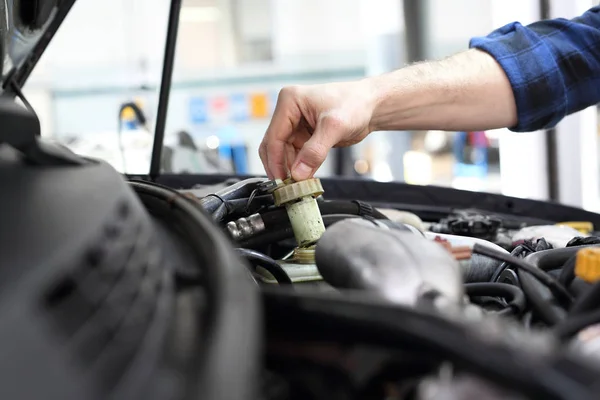
Brake Fluid in Motorsport: The Most Overlooked Performance Variable

Photo by depositphotos at https://depositphotos.com/

When race teams talk about setup, the conversation typically covers tire compounds, suspension geometry, aerodynamic balance, and fuel load. Brake fluid almost never comes up — and that’s a problem. Of all the consumables in a race car, brake fluid is the one whose failure mode is most immediately catastrophic. Understanding what separates a race-grade brake fluid from an ordinary one is knowledge that belongs in every serious competitor’s toolkit.

What Brake Fluid Actually Does Under Racing Conditions

The braking system in a race car is a hydraulic circuit. When the driver applies force to the brake pedal, that force is transmitted through the fluid to the calipers, which clamp the pads against the rotors. The entire system depends on the fluid remaining incompressible — a liquid transmits force; a gas does not.

The problem is heat. During hard braking from racing speeds, brake rotors can exceed 800°C, and that heat transfers directly into the calipers and the fluid sitting inside them. If the fluid temperature reaches its boiling point, it vaporizes. Vapor is compressible. The pedal goes long, braking force drops, and the driver has a serious problem at exactly the wrong moment.

This is brake fade — and it is entirely a fluid chemistry problem.

What Makes a Brake Fluid Race-Worthy

Brake fluids are classified by their boiling points, both dry (fresh, uncontaminated fluid) and wet (after moisture absorption). The international DOT classification system establishes minimum boiling point thresholds: DOT 3, DOT 4, DOT 5.1, and the racing-specific DOT 4+ and Super DOT 4 variants all represent progressively higher boiling point performance.

For circuit racing, the wet boiling point is often the more critical specification. Glycol-based brake fluids are hygroscopic — they absorb moisture from the atmosphere over time. As moisture content rises, the effective boiling point drops significantly. A fluid with a dry boiling point of 260°C might have a wet boiling point 50 to 80 degrees lower after a season of use. On a demanding circuit with heavy, repeated braking zones, that margin disappears fast.

Race teams managing brake fluid seriously flush and replace it at regular intervals — often before every race weekend on high-downforce cars — specifically to maintain the boiling point margin that keeps the system working predictably under race conditions.

Circuit Demands Vary: Matching Fluid to Track

Not all circuits demand the same from brake fluid. High-downforce circuits with relatively light braking — flowing, high-speed tracks — place less thermal stress on the system than slow, technical circuits with repeated hard stops from high speed. Street circuits and endurance tracks with long straight sections followed by sharp corners are traditionally the most demanding.

Teams that treat brake fluid selection as a fixed decision rather than a circuit-specific variable are leaving performance — and safety margin — on the table. The right fluid specification for one event may be insufficient for another, and the cost of getting it wrong is measured in race results at best and mechanical failure at worst.

The Bottom Line

Brake fluid doesn’t have a power output number or a lap time delta that makes it easy to justify attention. But in the chain of components that allows a race car to stop reliably at the end of every straight, it is the one whose failure is hardest to manage and most immediately consequential. For serious competitors, it deserves the same analytical attention as any other performance variable.

How Electric Vehicles Are Changing the Auto Transport Industry in 2026

The auto transport industry in the United States is going through one of the biggest changes in many years. Transportation providers, dealerships, auctions, and logistics companies are adjusting to a quickly changing environment as electric cars (EVs) continue to transform the automobile industry. By 2026, the use of EVs will have an impact on everything from route planning and carrier equipment to insurance considerations and charging infrastructure. 

Even while gasoline-powered cars remain predominant on American highways, EVs are now making up a larger portion of both new car sales and interstate vehicle shipping. Despite governmental changes and shifting tax incentives, electrified vehicles made up a significant share of U.S. vehicle sales in 2025, according to current industry data published by the World Resources Organization.

The popularity of EVs for auto transport companies goes beyond only moving different kinds of vehicles. It necessitates new methods of logistics management, specific handling techniques, and operational modifications. Electric vehicles are transforming the way carriers operate across the country, from increasing vehicle weights to battery safety restrictions. 

This article examines the prospects presented by the transition to electrification, the difficulties faced by transporters, and how EV adoption is changing the U.S. vehicle transport industry in 2026.

The Growing Presence of EVs in Vehicle Shipping

Electric cars are no longer considered a niche segment. EVs and other electrified vehicles continue to make up an increasing share of the automotive market, despite variations in U.S. EV sales after adjustments to federal tax incentives. According to industry statistics published in the Autos Innovate, there are already over 150 models of electric vehicles available in the United States, and major transportation routes are seeing ongoing infrastructure construction.

Interstate auto shipping is directly impacted by this growth. EVs are being transported by more consumers moving between states rather than conventional gasoline-powered vehicles. Similarly, more and more dealerships and auto auctions deal with electric inventory that needs to be transported between locations securely and effectively. 

The demand for EV transport is rising due to several factors:

  • Growth in online vehicle purchasing
  • Expansion of EV inventory at dealerships
  • Relocation of consumers to EV-friendly states
  • Rising fleet electrification among businesses
  • Increased use of EV transactions nationwide

Once primarily handling internal combustion engine-powered sedans, SUVs, and pickup trucks, transport companies now frequently ship battery-electric cars, plug-in hybrids, and hybrid models.

EV Weight Is Changing Carrier Operations

Vehicle weight is one of the most noticeable operating adjustments. 

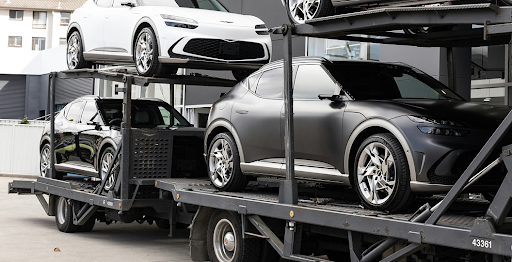
Because of their battery packs, electric cars are substantially heavier than similar gasoline-powered counterparts. EVs can occasionally weigh 20% to 40% more than comparable cars with traditional combustion engines. This has significant ramifications for logistical planning and auto transporters.

A heavier vehicle load affects:

  • Carrier weight limits
  • Trailer capacity
  • Fuel efficiency for transport trucks
  • Brake wear and tire stress
  • Loading configurations

For instance, while carrying many EVs, a multi-car carrier that could previously transport nine midrange sedans could now need to lower its capacity. For carriers doing lengthy interstate hauls, it has an impact on route efficiency and profitability. 

Additionally, weight distribution becomes more crucial. To ensure safe balance during transport and adhere to federal highway weight regulations, dispatchers and drivers must properly position EVs on trailers. 

Transport companies are spending more money on improved trailers, stronger ramps, and more advanced load-planning software to maximize shipments as EV usage rises.

Charging Infrastructure Is Influencing Route Planning

EVs may need battery management throughout extended transit operations, in contrast to gasoline-powered vehicles. Even while most cars are transported partially charged, there are several situations that call for carriers to keep a closer eye on battery levels.

This is especially relevant for:

  • Long-distance enclosed transport
  • Auction-to-dealer transfers
  • Seasonal relocation shipping
  • Fleet movement projects

As a result, the growth of charging infrastructure has grown in importance for logistical planning. 

Regional disparities in charging availability are still highlighted in industry publications. While rural transportation corridors still lack adequate infrastructure, certain states have significant fast-charging networks. 

This means dispatch teams for transportation providers need to think about:

  • Charger availability near delivery hubs
  • Charging compatibility standards
  • Weather-related battery performance
  • Delivery timing constraints
  • Regional infrastructure gaps

EV charging data is gradually being incorporated into planning systems by route optimization software in 2026, especially for businesses managing high EV volumes. 

Battery Safety Has Become a Major Industry Focus

One of the most significant operational issues with EV mobility is battery safety. 

EV fires are statistically rare, but because they differ greatly from gasoline car fires, lithium-ion battery events demand specific response protocols. After initial suppression, thermal runaway events may reappear and are challenging to put out. 

Transportation companies are thus enforcing more stringent procedures that include:

  • Vehicle inspection before loading
  • Damage documentation
  • Battery state-of-charge guidelines
  • Emergency response training
  • Isolation procedures for damaged EVs

The safety requirements for shipping electric vehicles throughout the country are still being improved by regulatory bodies and transportation associations. Because degraded battery systems may present greater dangers, carriers handling damaged or recovered EVs frequently have to comply with additional regulations. 

Insurance companies have also been more vigilant about EV shipments, particularly when it comes to damaged cars that come from auctions or collision centers.

Battery safety training is becoming just as important for logistics professionals as regular cargo securement education.

EVs Are Accelerating Technology Adoption in Logistics

The auto transport industry’s wider embrace of technology is also being accelerated by the growth of electric automobiles. 

Many carriers are updating their processes to handle EV-specific shipping requirements by:

  • Digital vehicle inspection tools
  • Real-time GPS tracking
  • AI-assisted route optimization
  • Electronic bills of lading
  • Predictive maintenance systems
  • Telematics integration

Data-driven decision-making is becoming more and more important in modern transportation operations in order to boost productivity and cut expenses. 

Higher-end cars with sophisticated software and delicate electronics are frequently included in EV shipments. Customers want more transparency in the transportation process, and businesses are improving their communication and cargo tracking systems. 

Adoption of technology is particularly crucial for fleet operators and dealerships that transport substantial amounts of EV goods between sites.

Seasonal Weather Creates New Challenges

Vehicle traffic has always been impacted by the weather, but EVs bring new seasonal factors.

EV battery efficiency can be lowered, and charging periods can be extended in cold weather. Winter weather can have a major impact on energy demand and range performance, according to research on commercial EV fleet management, published by arXiv

This presents several operating difficulties for auto transport companies:

  • Reduced battery performance during winter deliveries
  • Longer preparation times at pickup and delivery locations
  • Greater planning complexity in northern states
  • Increased risk of low-charge conditions during delays

During summer transport operations, extreme heat can also have an impact on battery systems, especially when cars are parked in enclosed trailers or holding lots for long periods of time.

Carriers are modifying scheduling and handling procedures to take seasonal battery behavior into consideration as EV transport volumes increase.

Dealerships and Auctions Are Changing Their Logistics Strategies

Among the biggest stakeholders impacted by EV-related transportation developments are auto dealerships and car auctions. 

Logistics managers have to arrange transportation for a larger variety of vehicles with different handling needs as dealership inventory diversifies. 

These days, auction houses that deal with electric vehicles typically need:

  • Battery charge verification
  • Additional inspection procedures
  • Specialized condition reporting
  • Separate storage protocols for damaged EVs

Additionally, dealerships are modifying their inventory movement tactics. Due to regional variations in EV demand, interstate transportation is becoming more and more crucial to maintaining inventory balance.

For example:

  • EV-friendly states may experience higher inbound shipment demand
  • Rural markets may see slower EV inventory turnover
  • Used-EV redistribution between regions is increasing

Specialized transport companies with experience managing EV shipments have more chances as a result of this regional mismatch.

Enclosed Transport Demand Is Increasing

Because EVs are frequently associated with high prices and cutting-edge technology, many owners want enclosed transport. 

In 2026, demand for enclosed shipping of EVs is still growing because buyers seek extra protection from:

  • Road debris
  • Weather exposure
  • Battery system concerns
  • Cosmetic damage
  • Theft risk

High-value collector EVs, luxury EVs, and performance-focused EVs are especially likely to travel via enclosed carriers. 

This trend is driving up demand for specialized enclosed trailer capacity across the country for transportation businesses. Working with a reliable auto transport company can help reduce risks during EV transportation.

EV Adoption Is Affecting Transport Pricing

Industry price structures are also being impacted by the operational realities of delivering EVs.

Some EV shipments have greater transportation costs due to many factors:

  • Increased vehicle weight
  • Reduced trailer capacity
  • Additional insurance considerations
  • Specialized handling requirements
  • Charging-related logistics
  • Longer loading times

However, pricing impacts vary significantly depending on:

  • Vehicle size
  • Shipment distance
  • Carrier type
  • Pickup and delivery locations
  • Seasonal demand

Large electric SUVs and trucks may have slightly higher shipping costs than smaller gasoline-powered automobiles. Pricing models for logistics experts increasingly take into account the operational complexity of EV transportation. 

The operational complexity of EV transportation is increasingly reflected in pricing models for logistics experts.

Commercial Fleet Electrification Is Expanding Transport Opportunities

Electrification of commercial fleets is another significant trend affecting the sector. 

Companies in a variety of industries are progressively adding EVs to their fleets, including:

  • Delivery companies
  • Municipal agencies
  • Utility providers
  • Rental fleets
  • Corporate vehicle programs

Transport companies are managing larger multi-vehicle EV transfers between manufacturers, upfitters, dealerships, and operating locations as fleets move toward electrification. 

This gives carriers with experience in:

  • High-volume fleet logistics
  • Time-sensitive delivery coordination
  • Specialized EV handling
  • Regional redistribution

Globally, the use of electric commercial vehicles is anticipated to keep growing, especially in the urban and regional distribution sectors.

Consumer Expectations Are Evolving

Compared to owners of conventional cars, EV owners frequently take a different approach to vehicle transportation. 

Many EV buyers are well-informed about:

  • Battery health
  • Software systems
  • Charging practices
  • Vehicle technology
  • Sustainability issues

As a result, transport companies increasingly receive questions regarding:

  • Recommended battery charge levels
  • Temperature exposure during transport
  • Tracking and communication
  • Loading procedures
  • Delivery timelines

Numerous providers have been compelled by this to enhance customer education and openness during the delivery process. 

In the EV transport market, effective communication is turning into a competitive requirement.

Regulatory and Infrastructure Changes Will Continue

The regulatory environment surrounding EV transportation continues to evolve in 2026.

Federal and state agencies remain focused on:

  • Charging infrastructure expansion
  • Hazardous material guidance
  • Commercial vehicle regulations
  • Battery safety standards
  • Clean transportation initiatives

The future of EV logistics is still significantly influenced by infrastructure investment. 

Industry data show that while infrastructure deployment is still inconsistent across regions, charging expansion is still ongoing. 

Future competitiveness for vehicle transport companies may depend more and more on:

  • Geographic network flexibility
  • Technology adoption
  • EV handling expertise
  • Compliance readiness

As the market develops, businesses that can quickly adjust to operational and regulatory changes are likely to stay in a better position.

The Future of EV Transportation in the U.S.

Electric vehicles are undoubtedly becoming a permanent feature of the U.S. automobile landscape, despite market volatility and legislative uncertainty. 

According to industry data, EV sales growth slowed in some regions in 2025 and the first part of 2026, but they still account for a sizeable and significant portion of the market. 

This change is presenting opportunities as well as problems for the car transport sector.
Important long-term patterns that could influence the sector include:

  • Increased EV-specific transport training
  • More advanced carrier equipment
  • Greater reliance on logistics technology
  • Expanded charging infrastructure integration
  • Continued growth in enclosed transport demand
  • Higher specialization among carriers

In the end, businesses that combine operational flexibility, safety knowledge, and robust logistics skills will be the most equipped for the EV age. 

The transportation sector will continue to be a vital conduit for automakers, dealerships, auctions, companies, and customers throughout the United States as electric vehicles continue to transform the automotive ecosystem.

Conclusion

By altering how carriers handle vehicle handling, price, safety, and logistics, electric vehicles are revolutionizing the U.S. auto transport sector in 2026. EV adoption is changing interstate auto shipping operations across the country, from increased vehicle weights and battery safety regulations to expanding charging infrastructure and cutting-edge tracking technologies.

Transport companies, dealerships, and auctions are adjusting to changing consumer demands and new legal requirements. In order to satisfy the demands of a quickly evolving automotive market, the auto transport sector will increasingly rely on specialized equipment, more intelligent logistics systems, and EV-focused expertise as electric vehicle ownership continues to grow.

Finding Translators for Any Language You Need

Photo by depositphotos at https://depositphotos.com/

Professional translation services are required in almost every aspect of life in today’s world. The need for qualified translators is constant and universal, whether it’s someone seeking birth certificates translated for an immigration application, a hospital communicating effectively with patients whose first language is not English, or a multinational company localizing technical information for a new international market. However, many times the value of professional translation services is underestimated until the need arises for it to be a true emergency.

Why Finding the Right Translator Is Harder Than It Looks

The natural tendency of language professionals is to gravitate toward two language combinations: English-Spanish, English-Chinese, and English-French. And if you’re looking to get your hands on someone fluent in a less common language, regional dialects, and niche subject areas can be surprisingly hard to find. If a business requires its contracts to be translated into Azerbaijani or a clinic requires medical records to be translated from Tigrinya, they may find out fast that the term translator is not synonymous. It is more important than most people think to have subject expertise.

  • Medical translation is not just about the two languages, but also about the clinical terminology, pharmaceutical terminology, and diagnostic terminology, which vary significantly even between closely related medical systems. 
  • Legal translation is for statutory documents, sworn statements, and contracts where the consequences of the imprecision can spread far and wide.

If you are screening applicants, it’s not stretching the truth to inquire about the applicant’s experience in the specific field. It’s just good business sense to make a difference between a good hire and a bad one.

Bidirectional Support and the Language Pair Question

When most people search for translation services, they picture a single direction: some source language rendered into English. But a meaningful portion of translation flows between non-English pairs. A business publishing materials across European markets might need French-to-German documentation. A research consortium may require Portuguese-to-Spanish summaries for distribution across different national offices. Before committing to any platform or individual translator, it’s worth taking time to visit website and review the full scope of supported language combinations. Because not all providers offer the same bidirectional flexibility, discovering that limitation mid-project is an expensive inconvenience that delays timelines and disrupts workflows.

Where Qualified Translators Actually Come From

There are several channels to know before you begin searching blindly. If you’re looking to apply for immigration, court, medical records, or university admission, among other high-stakes applications.

Professional associations like the American Translators Association (ATA) in the United States and the Chartered Institute of Linguists (CIOL) in the United Kingdom maintain searchable directories of vetted practitioners. These registries enable language pair and subject specialization filters and are a reflection of a minimum level of professional responsibility and ethics. This is often the safest place to begin for people or organizations with sensitive or official documents to process – particularly when documents are to be submitted for review to a government agency or academic institution.

With the advent of digital translation services, it has become a viable choice, particularly for certified translations that have a tight deadline. One of these platforms is Rapid Translate, which has human translators for over 60 languages and offers signed certificates of accuracy that are meant for USCIS, courts, and universities. It is a completely digital process: documents are uploaded, language is selected, delivered electronically, and most short documents are done in less than 24 hours with expedited services for time-sensitive documents. That consistent turnaround is significant and is worth more than it is to those who have a deadline or filing date before a court.

What “Certified Translation” Actually Means

The term certified translation is used a lot, but it is not understood correctly a lot of times. In the U.S., the certification of a translator does not imply that the government has licensed or vetted the translator. It is a written statement from the translator stating that his or her translation is accurate and complete to the best of his or her professional knowledge. USCIS will accept certified translations from any competent translator who is not certifying their own documents. There is no requirement for federal licensing of the translator to provide USCIS with a certified translation.

This is a very important consideration when comparing service providers. The important thing is that the translator is actually proficient in the language pair he or she claims to be, that the translator’s certificate statement fulfills the requirements of the institution, and that the translator’s qualifications will be able to withstand any further questioning. The accompanying documentation is not just a formatting issue; it’s part of the product; an incomplete or vaguely worded certificate can stall an application or even lead to a rejection of the application.

Human Translation in a World of Machine Tools

In the last ten years, machine translation has come a long way and, with the help of tools like DeepL or Google Translate, it is now possible to obtain results that are very useful for casual reading, to quickly understand a text, or simply to act as a reference. But the machine-generated translation of official documents still has an impact that is significant.

Human interpreters are able to interpret texts with context, cultural nuances, and regional differences that machines continue to miss or misrepresent. They are aware of errors that may be present in the source documents that must be indicated before they become part of the target document. They are familiar with legal and/or academic formatting requirements. And importantly, they introduce professional accountability – someone to challenge, validate, and defend their work.

How to choose a live game at Pinco for a calm session without unnecessary rush

Photo by depositphotos at https://depositphotos.com/

The live format in online casinos is often seen as a space of high dynamics, where everything is decided by quick actions and constant tension. In practice, this is only part of the picture, because live games suit not only those who enjoy a sharp pace, but also users who value a calm, rhythmic session without excessive visual noise. At Pinco, this format is especially convenient because it allows players to move away from chaotic browsing through regular slots and choose a more structured gaming scenario.

Why live suits those who do not like fuss in the gaming process

The main difference between live games and standard slots lies in their rhythm of perception. The player does not face a stream of identical cards, does not jump between dozens of similar slots, and does not try to guess which mechanic will feel comfortable today. Instead, they enter a more structured environment right away, where the game format is clear from the first seconds and the pace feels even across every round.

Many players value not maximum speed but a sense of control over the session. When a user enters a pinco casino, the live section immediately shows table limits ranging from $1 to $5,000 per round a structure that makes bankroll planning concrete before a single bet is placed. That is exactly why the live format suits those who want to play calmly and consistently. Here it is easier to maintain bankroll discipline, place bets within a clear range $5, $10, or $20 per round and avoid chaotic switching that pulls the user away from their original plan within the first minutes.

Which live formats are better for a calm pace

For steady play, the best options are those where the round structure is clear from the start and does not require constant split-second reactions. These are classic tables with understandable rules, where the player does not need to switch between complex bonus mechanics or catch short windows of opportunity. This choice is especially useful for those who come not for an emotional jolt over 15 minutes, but for a longer session of 30 to 60 minutes with a predictable pace.

A user with a bankroll of $50 to $100 will usually find it easier to spend a long session on moderate bets of $5 to $10 per round than to imitate an aggressive playing style that burns through concentration much faster. When the format does not force decisions at the limit of attention, the player has less temptation to go beyond a preselected amount. As a result, the live game at Pinco begins to feel not like a race, but like a more structured and stable interaction scenario.

What to look at when choosing a specific table

  1. Choose games with clear rules and visible round duration classic roulette and baccarat rounds at Pinco average 45 to 90 seconds, long enough to think without pressure
  2. Compare minimum bets before joining entry points from $1 per round mean a $50 bankroll covers 50 rounds, giving a session length of 37 to 75 minutes at standard pace
  3. Avoid formats with excessive visual load if concentration matters game show formats with multipliers and countdowns create a different tempo than classic tables
  4. Do not mix several different live mechanics within one session switching between roulette, blackjack, and a game show resets the rhythm each time and makes session control harder

Why a measured choice in live often leads to a better result

The strength of the live format is not that it is always brighter or faster than other directions, but that it allows the game to be adjusted more precisely to a personal pace. At Pinco, this approach works best when the player is not chasing the noisiest table, but deliberately chooses understandable mechanics, a moderate betting range of $5 to $20 per round, and a comfortable session length of 30 to 45 minutes. In that case, live stops being just a showcase of live dealers and becomes a convenient format for calm play where attention lasts longer.

Old Havana Casino: RTG Slots, VIP Tiers, and Bitcoin Payouts for Aussies

Operated by Main Street Vegas Group and licensed in Panama, Old Havana Casino has been taking real-money bets since 2012. The Cuban theme runs across the whole site, from the logo down to the copy, and it holds up. The game floor is powered entirely by Real Time Gaming, with over 200 titles across pokies, table games, and video poker. Bitcoin withdrawals clear within 24 to 48 hours. The VIP programme runs across multiple tiers, with weekly cashout limits rising from $2,000 at the base level to $5,000 for Diamond players. There is a 150% welcome bonus up to $3,000 using code HAVANA150, and a separate daily deal running every single day of the week.

License, Security, and Who Runs the Site

Old Havana Casino sits under the Main Street Vegas Group umbrella, incorporated in Panama City with a gaming license from the Panamanian gambling authority. The RTG software comes with independent auditing from Technical Systems Testing, which verifies RNG outcomes across the game library. A Control Dispute System is in place for any unresolved player queries, established directly by Real Time Gaming as a third-party resolution mechanism. SSL encryption covers all transactions and account data. For Australian players in Adelaide or Brisbane who want a clear licensing trail before depositing, the credentials here are well-documented and have been consistent since the casino launched.

The VIP Programme and Comp Points

Old Havana Casino runs a multi-tier VIP structure that every depositing player enters automatically from the first bet. Real-money wagers earn comp points, which accumulate in the background and convert to cashable account credit at regular intervals. The more active the account, the faster the points build.

VIP tiers determine weekly withdrawal limits and bonus terms. The structure runs from Regular Class through to Diamond, with cashout caps rising at each level:

VIP TierWeekly Cashout Limit
Regular$2,000
Bronze$2,500
Silver$3,000
Gold$4,000
Platinum$4,500
Diamond$5,000

Higher tiers also unlock better bonus terms, priority cashout handling, and access to personalized offers distributed directly to the account. The comp points system keeps the loyalty program active across every session, with points building whether the session is an hour on jackpot pokies or an afternoon on video poker.

RTG Game Library: What Is Actually on the Floor

Every game at Old Havana Casino comes from Real Time Gaming. That means a specific flavor of slot and table game design: clean interfaces, reliable performance, and a library that leans toward classic formats done well.

Jackpot Pokies and Video Slots

The slot section covers three-reel classics, five-reel video pokies with bonus rounds, and a dedicated progressive jackpot category. Progressive titles include Aztec’s Millions, Cleopatra’s Gold, Goldbeard, and Ronin, with prize pools that build across bets until triggered. Volatility levels span the full range, from lower-variance titles suited to longer sessions with steady returns, through to higher-swing games where the bonus round makes or breaks the session. All titles run in free play mode before real-money play begins.

Table Games: Blackjack, Poker Variants, and More

The table game section at Old Havana Casino covers a broad range of formats. Options include:

  • Blackjack across Pontoon, Super 21, and standard variants, with optional Perfect Pairs side bets;
  • Roulette in European and American formats;
  • Baccarat, craps, Pai Gow, and Sic Bo;
  • Caribbean poker variants, including Caribbean Draw, Caribbean Hold’em, and Caribbean Stud;
  • Video poker across Jacks or Better, Deuces Wild, and multi-hand formats.

Twenty-one game variants sit across the blackjack category alone. Pontoon and Super 21 tend to draw players who want a different pace from standard blackjack rules. Video poker, particularly Jacks or Better at full pay, runs at a competitive RTP when played with the correct strategy. Worth knowing before choosing between a slot session and a card game when a bonus is active.

Daily Deals: What Each Day of the Week Brings

Old Havana Casino runs a named promotion every day of the week. The structure is consistent, and Australian players who plan their deposits around it get more bonus value per session.

Monday brings a 20% cashback up to $500 with zero wagering attached, paid directly to the account balance. Wild Wednesday runs a 300% deposit match. Thirsty Thursday pairs a 200% match with free spins. Freaky Friday delivers a 250% bonus, and Saturday carries the same offer again. The variety across the week means there is always a live deal regardless of when a session falls.

Beyond the named daily deals, Old Havana Casino distributes promotional coupon codes via email for active accounts, runs method-specific bonuses for players using particular payment options, and pushes seasonal campaigns throughout the year. The promotions page is worth checking before each session.

Deposits, Withdrawals, and Bitcoin Payouts

Three payment methods are accepted by the cashier at Old Havana Casino: Visa, Mastercard, and Bitcoin. The minimum deposit is $25 for cards and $5 for Bitcoin. Withdrawals start from $100 across all methods.

Bitcoin is the clear speed advantage here. Payouts clear within 24 to 48 hours, making it the preferred route for Australian players who want their winnings in the account quickly. Card and bank withdrawals follow standard processing windows of 3 to 5 business days. All transactions are fee-free on the casino side, with any third-party processor charges listed per method by the payment provider.

KYC documents are required before the first withdrawal: government-issued ID and proof of address. Having those submitted and approved early in the account lifecycle keeps the cash-out process clean when a larger win comes through.

FAQ

How does the VIP program work at Old Havana Casino?

Old Havana Casino enrolls every depositing player into its VIP system from the first real-money bet, with comp points building automatically and weekly cashout limits rising from $2,000 at the Regular tier to $5,000 at the Diamond level.

What are the biggest jackpot games at Old Havana Casino?

Old Havana Casino carries progressive jackpot slots, including Aztec’s Millions, Cleopatra’s Gold, Goldbeard, and Ronin, all powered by Real Time Gaming with prize pools that build across bets until triggered.

How fast are withdrawals at Old Havana Casino?

Old Havana Casino processes Bitcoin withdrawals within 24 to 48 hours, while card and bank transfer payouts follow standard processing windows of 3 to 5 business days, with a minimum withdrawal of $100.

What daily promotions does Old Havana Casino offer?

Old Havana Casino runs a named deal every day of the week, including a wager-free 20% Monday cashback up to $500, a 300% Wild Wednesday match, 200% plus free spins on Thursday, and 250% offers on Friday and Saturday.

Is Old Havana Casino licensed and audited?

Old Havana Casino holds a Panama gaming license, operates under the Main Street Vegas Group, and has its RTG games independently audited by Technical Systems Testing for RNG fairness and outcome integrity.

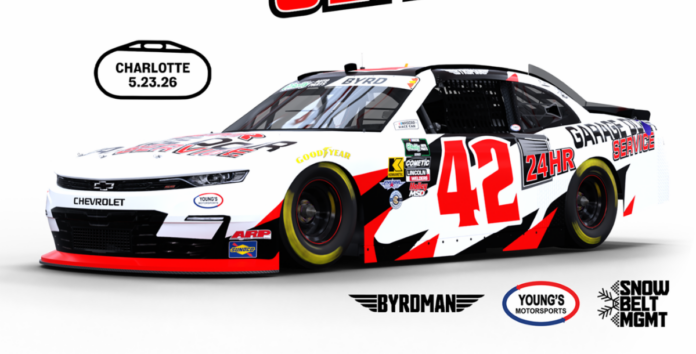
Nathan Byrd and 24 HR Garage Door Services Team Up at Charlotte Motor Speedway

MOORESVILLE, NC, May 20, 2026 — Nathan Byrd announced today that he will partner with 24 Hr Garage Door Services for Saturday’s Charbroil 300 NASCAR O’Reilly Auto Parts Series race at Charlotte (N.C.) Motor Speedway.

Byrd, who will make his inaugural series start at the popular 1.5-mile speedway, will compete in the No. 42 Young’s Motorsports Chevrolet on Saturday, May 23.

24 Hr Garage Door Service is a South Carolina-based residential and commercial overhead door company specializing in National Accounts, garage doors, rolling steel doors, loading dock equipment, preventative maintenance, and emergency repair services.

The company provides installation, service, and support throughout the United States with a focus on rapid response, dependable workmanship, and customer relationships.

24 Hr Garage Door Service also offers 24/7 emergency service and specializes in commercial and industrial dock and door systems for warehouses, distribution centers, retail facilities, and manufacturing operations

“We’re excited about the opportunity to partner together and provide dependable, high-quality commercial door and dock solutions,” said Lee Lambert, owner of 24 Hr Garage Door Service.

“At 24 Hr Garage Door Service, we take pride in fast response times, quality workmanship, and building long-term relationships with companies that value reliability and service.

Byrd believes the partnership with 24 Hr Garage Door Service is a natural fit, especially during one of NASCAR’s biggest and most meaningful race weekends of the season at Charlotte Motor Speedway.

“24 Hr Garage Door Service is known for being dependable and quick, just like the cars Young’s Motorsports brings to the track every weekend,” added Byrd.

“The spring race at Charlotte Motor Speedway is always a special race for drivers and teams, and I’m excited to bring 24 Hr Garage Service into this experience.”

The Charbroil 300 (200 laps | 300 miles) is the 15th of thirty-three (33) NASCAR O’Reilly Auto Parts Series races on the 2026 schedule. Practice will occur on Sat., May 23, 2026, from 11:00 a.m. to 11:50 a.m. Qualifying will immediately follow, beginning at 12:05 p.m. The field will take the green flag shortly after 5:00 p.m., with live coverage on The CW Network, the Performance Racing Network (Radio) and SiriusXM NASCAR Channel 90. All times are local (ET).

For more information on Nathan Byrd, visit byrdracing.com/nathan-byrd or follow him on Facebook (facebook.com/nathanjbyrd/) or Instagram (instagram.com/nathanjbyrd/).

For more information on 24 Hr Garage Door Services, visit 24hrgaragedoorservice.com/ or follow them on Facebook (facebook.com/24hrgaragedoorservicellc).

For more on Young’s Motorsports, please visit YoungsMotorsports.com, like them on Facebook (Young’s Motorsports), and follow them on Instagram (@youngsmotorsports) and X |Twitter (@youngsmtrsports).

Spire Motorsports North Carolina Education Lottery 200 Race Advance

  • In seven NASCAR CRAFTSMAN Truck Series starts at Charlotte (N.C.) Motor Speedway, Spire Motorsports has earned one top five, three top 10s, and has never finished worse than 16th. The team’s best result was a fifth-place showing by Kyle Busch last May.
  • The North Carolina Education Lottery 200 will be televised live on FS1 Friday, May 22 beginning at 7:30 p.m. Eastern Daylight Time (EDT). The 10th of 25 points-paying races on the 2026 NASCAR CRAFTSMAN Truck Series schedule will be broadcast live on the NASCAR Racing Network and SiriusXM NASCAR Radio Channel 90.

Kyle Busch – Driver, No. 7 Spire Motorsports Chevrolet Silverado RST

  • Kyle Busch will pilot Spire Motorsports’ No. 7 HENDRICKCARS.COM Chevrolet Silverado RST in Friday’s North Carolina Education Lottery 200 at Charlotte Motor Speedway. This will mark his fifth NASCAR CRAFTSMAN Truck Series start of the 2026 season for Spire Motorsports.
  • Busch will pull double duty this weekend, where he’ll also race the No. 8 Chevrolet Camaro ZL1 in the NASCAR Cup Series for Richard Childress Racing in Sunday’s Coca-Cola 600.
  • The 41-year-old will contest his 185th CRAFTSMAN Truck Series start this weekend, his second-best track, statistically speaking. In 16 starts at Charlotte, Busch has accrued eight wins, 13 top-five and 15 top-10 finishes, while leading the field for 789 circuits. To add to his complete domination in the stat column, the veteran driver boasts a 5.9 average starting position and an ultra-impressive 2.9 average finish.
  • The two-time Cup Series champion secured his first of 69 Truck Series victories at the Charlotte in 2005, driving a Chevrolet for longtime friend and team owner Billy Ballew.
  • In addition to his impressive resume behind the wheel of a CRAFTSMAN Truck Series entry at CMS, nine of the O’Reilly Auto Parts Series’ all-time winningest driver’s 102 checkered flags came at the Concord, N.C., venue. He rounds out his long list of NASCAR national touring series victories at “America’s Home for Racing” with a 2018 Coca-Cola 600 win.
  • Busch, a Las Vegas native, holds the record for most CRAFTSMAN Truck Series wins (69) and best average finish in series history (6.6), while ranking second on the series’ all-time laps led list (8,353).
  • Last weekend, the 41-year-old delivered a perfect performance in the CRAFTSMAN Truck Series’ ECOSAVE 200 at Dover (Del.) Motor Speedway where he set a new track record in qualifying en route to the Kennametal Pole Award. Following the green flag, he swept both stages, recorded the fastest lap of the race and led a race-high 147 circuits on his way to his series-leading 69th career victory. The win marked Busch’s second triumph in four starts for Spire Motorsports this season and his fifth career Truck Series victory at the “Monster Mile.”
  • Busch will return to the seat of the No. 7 HENDRICKCARS.COM Chevrolet next week at Nashville (Tenn.) Superspeedway. He will round out his eight-race slate at North Wilkesboro (N.C.) Speedway (July 18) and Richmond (Va.) Raceway (Aug. 14).
  • HENDRICKCARS.COM is the online home for everything Hendrick Automotive Group. Visitors can shop more than 30,000 new or pre-owned vehicles, locate centers for service and collision repair, receive a value to sell or trade their car, chat online with customer service, discover career opportunities, learn more about vehicle protection programs, and explore how the company gives back to the community.
  • Busch will race Spire Manufacturing chassis SMT-088 Friday afternoon, the same truck he drove to Victory Lane at Atlanta Motor Speedway in February where he earned his third-consecutive victory at the 1.54-mile track.

Kyle Busch Quote
Why do you continue to run races in the NASCAR CRAFTSMAN Truck Series?
“I really enjoy racing at Spire, which is kind of KBM (Kyle Busch Motorsports), and having a lot of the same guys working in the Truck Series program now that were there when I kind of left. It’s a lot of fun to go out and win truck races with them, especially when we can put on a dominant performance like we did last week at Dover. I felt like last year there were some places where we really struggled, but Brian Pattie (crew chief) and his vision has helped us get things going in the right direction this year and it has been reflective in our speed and our finishes. Anybody that knows me, knows that I’m not satisfied winning just two of the four races, and I wish that we were four-for-four, but I’ve got four races left on the schedule this year and our goal is to go out and win those four starting this weekend at Charlotte. We’ve got a really cool HENDRICKCARS.COM patriotic paint scheme this week and with it being a home race, I know that we’ll have a lot of people out at the track on Friday. It would be really satisfying to celebrate with them in Victory Lane.”

Do you have a set win number that you are looking for in the Truck Series before you are done?
“I don’t have a number in mind. Obviously, the XFINITY number, 102, is pretty awesome. Once upon a time, I think my number in the Cup series was wanting to eclipse Dale (Earnhardt), and what is that, 76 right? So, you needed 77. Somewhere in there would have been kind of what my goal was for the Cup series, but at this point in my career I’ll take whatever I can get in all the different series because you never know when the last one’s going to be.”

Atop the No. 7 Box – Crew Chief Brian Pattie

  • Brian Pattie is the crew chief of Spire Motorsports No. 7 Chevrolet RST, an entry that will see an abundance of all-star caliber drivers behind the wheel across the 2026 season.
  • Through the season’s first nine races, the No. 7 team sits first in the division’s owner points standings on the strength of two wins, four top-five and six top-10 finishes.
  • The Pattie-Busch duo has quickly emerged as one of the CRAFTSMAN Truck Series’ most formidable pairings in 2026. The potent duo delivered a flawless performance last weekend at Dover where Busch collected the Kennametal Pole Award, swept both stages and led a race-high 147 laps en route to his 69th career Truck Series victory.
  • The Zephyrhills, Fla., native has called 25 NASCAR Cup Series races at Charlotte Motor Speedway. His best showing at the 1.5-mile oval came in October 2012, when he led Clint Bowyer to the win in the Bank of America 500.
  • The 24-year industry veteran spent 14 seasons in NASCAR’s premier division. As a crew chief, he has amassed six wins in Cup Series competition, 11 in the O’Reilly Auto Parts Series and nine in the CRAFTSMAN Truck Series. He stands as one of 11 crew chiefs to win races across all three of NASCAR’s national touring series.

Shane van Gisbergen – Driver, No. 71 Spire Motorsports Chevrolet Silverado RST

  • Shane van Gisbergen will pilot Spire Motorsports’ No. 71 NationsGuard Chevrolet Silverado RST in Friday’s North Carolina Education Lottery 200.
  • Van Gisbergen will pull double duty this weekend, where hell also race the the No. 97 Chevrolet Camaro ZL1 in the NASCAR Cup Series for Trackhouse Racing in Sunday’s Coca-Cola 600.
  • Friday’s 134-lap event will mark Van Gisbergen’s third CRAFTSMAN Truck Series start. He competed in two events (2023, 2026) for Niece Motorsports, scoring a career-best third-place finish at Watkins Glen (N.Y.) International.
  • The 37-year-old driver has registered two career top-10 finishes on 1.5-mile oval configurations in the NASCAR Cup Series. He notched a 10th-place result at Kansas Speedway in 2025 before collecting a career-best sixth-place result at Atlanta Motor Speedway earlier this season.
  • Van Gisbergen knows his way to Victory Lane at Charlotte Motor Speedway. He scored his first oval victory on American soil during the 2025 Cook Out Summer Shootout season finale, capturing the win in the US Pro Legends division on the facility’s quarter-mile oval, located on the front straightaway.
  • That same year, the Auckland, New Zealand, native also drove to victory in the Bank of America 400 on the Charlotte Motor Speedway ROVAL. Van Gisbergen traded the lead four times with Kyle Larson during the final stage before taking control for good with 12 laps to go en route to the win at “America’s Home for Racing.”
  • NationsGuard is an innovator in the Automotive F&I space. Its programs are designed to maximize sales, profit, CSI and customer retention. NationsGuard delivers consistent, measurable results through disciplined monitoring and continuous improvement. The process measures every key element of a dealer’s program – from vehicle inspection efficiency to service advisor performance. NationsGuard targets and eliminates waste and inefficiency wherever it’s found, maintaining process improvements, making changes where necessary and relentlessly pursuing perfection.
  • Van Gisbergen will pilot Spire Manufacturing chassis SMT-085 on Friday. The truck has made five starts, most recently last month at Bristol (Tenn.) Motor Speedway with Daniel Suarez at the controls. Rajah Caruth earned a chassis-best eighth-place result at Homestead-Miami (Fla.) Speedway in October 2024.

Shane van Gisbergen Quote
You made your first Truck Series start of the year a few weeks ago at Watkins Glen, how are you feeling about being in the No. 71 NationsGuard Chevrolet at Charlotte?
“I’m excited to have the opportunity to run the No. 71 truck for Spire Motorsports. It’s going to be epic. I really enjoy racing the Truck Series. I had a decent crack at it a couple of weekends ago in Watkins Glen, but I’m looking forward to another go on an oval. Thanks to Spire, NationsGuard, Chevrolet and Trackhouse for this opportunity.”

Atop the No. 71 Box – Crew Chief Kevin “Bono” Manion

  • Veteran crew chief Kevin “Bono” Manion has called eight NASCAR CRAFTSMAN Truck Series events at Charlotte, collecting two wins, three top-five and five top-10 finishes.
  • Manion secured his first of two CRAFTSMAN Truck Series wins at “America’s Home for Racing” with Kyle Busch in the 2017 event. Busch dominated the night, leading 90 of the event’s 134 laps en route to Victory Lane.
  • The 53-year-old called Nick Sanchez and the No. 2 team to victory in the 2024 edition of the North Carolina Education Lottery 200. Sanchez restarted seventh on a late-race restart with nine laps remaining. He held the top spot for the final nine circuits to score his second-career CRAFTSMAN Truck Series victory.
  • As a crew chief at Chip Ganassi Racing, Manion led Jamie McMurray to a runner-up finish in the 2010 Coca-Cola 600. Four months later, the pairing scored their third win of the season when the series returned to the Concord-oval for the Bank of America 500.
  • Manion, a 32-year veteran of the sport, founded Spire Motorsports’ CRAFTSMAN Truck Series program alongside industry veteran Mike Greci in 2022. The team claimed its first victory in its second outing with William Byron behind the wheel at Martinsville Speedway.
  • The Boylston, Mass., native has racked up six Cup Series victories – including the 2010 Daytona 500 – 17 NASCAR Xfinity Series triumphs and 11 CRAFTSMAN Truck series wins. Manion is also one of 11 crew chiefs to have called wins across all three of NASCAR’s national touring series.

Connor Zilisch – Driver, No. 77 Spire Motorsports Chevrolet Silverado RST

  • Connor Zilisch will pilot Spire Motorsports’ No. 77 Delaware Life Chevrolet Silverado RST in Friday’s North Carolina Education Lottery 200.
  • Zilisch will pull triple duty on the weekend, aiming to complete 734 laps and 1,101 miles over three days. He will drive the No. 77 Silverado in addition to his typical duties aboard Trackhouse Racing’s No. 88 Camaro in the NASCAR Cup Series’ Coca-Cola 600 and the No. 1 Camaro for JR Motorsports in Saturday’s NASCAR O’Reilly Auto Parts Series’ Charbroil 300. He joins Trackhouse Racing teammate Ross Chastain as the only drivers set to compete in all three events this weekend.
  • The 134-lap event will mark Zilich’s 10th CRAFTSMAN Truck Series start and eighth with Spire Motorsports. In his nine previous series starts, he has tallied three top-five and four top-10 finishes, accompanied by two Kennametal Pole Awards.
  • The Charlotte, N.C., native first raced at “America’s Home for Racing” in the 2025 O’Reilly Auto Parts Series event. He qualified second and spent the entire afternoon in the top five, but was outdueled for the victory by Cup Series star William Byron.
  • Zilisch made his second-career NASCAR Cup Series start in last season’s Coca-Cola 600. where he started 33rd and finished 23rd.
  • Delaware Life is an insurance and annuity company that empowers financial professionals with a wide array of customizable solutions. A subsidiary of Group 1001 Insurance Holdings LLC, Delaware Life focuses on delivering a seamless experience for advisors. The company understands how important it is to find the right fit for every client, every situation and every individual need. Delaware Life is passionate about equipping advisors with annuities that give their customers peace of mind and a successful future, allowing them to plan, with confidence, for whatever’s next.
  • Zilisch will be at the controls of Spire Manufacturing chassis SMT-087 Friday night. Kyle Larson drove the truck to Victory Lane at Homestead-Miami (Fla.) Speedway last March and a runner-up finish at Bristol Motor Speedway two races later. Most recently, Carson Hocevar finished ninth with this truck at Bristol Motor Speedway. Overall, the chassis owns a 10.3 average starting position and a 7.1 average finish.

Connor Zilisch Quote
How beneficial will it be for you to compete at Charlotte Motor Speedway all three days this weekend, and how much confidence does the strong run at Watkins Glen give you heading into Friday night with Spire Motorsports?
“This opportunity came together a little late but it’s so cool that I now get to race at Charlotte all three days this weekend. I’m really looking forward to competing with the Spire Motorsports guys Friday night. We ran well a few weeks ago at Watkins Glen and I certainly think our Delaware Life Chevrolet will be competitive at Charlotte. It’s always beneficial for me to get extra laps on the track. I really appreciate everyone at Trackhouse and Spire coming together to make this happen on such short notice.”

Atop the No. 77 Box – Crew Chief Chad Walter

  • Chad Walter calls the shots from the No. 77 pit box, an entry that will see multiple all-star caliber drivers behind the wheel throughout the 2026 season.
  • Walter has called five CRAFTSMAN Truck Series events at Charlotte Motor Speedway. While paired with Rajah Caruth in 2024, Walter called the young driver to four top 10 finishes on 1.5-mile ovals, including his first-career victory at Las Vegas Motor Speedway.
  • In 14 appearances atop the box in NASCAR O’Reilly Auto Parts Series competition at CMS, the Cornell University graduate has amassed three top fives and five top 10s, highlighted by a runner-up finish with Casey Mears and Hendrick Motorsports’ No. 24 team in 2007. One day later, Mears claimed his only Cup Series victory in the Coca-Cola 600.
  • Between NASCAR’s O’Reilly Auto Parts Series and CRAFTSMAN Truck Series, the Albion, N.Y. native has racked up seven wins, 56 top fives and 142 top 10s.

About Spire Motorsports …
Spire Motorsports fields full-time entries in the NASCAR Cup Series, NASCAR CRAFTSMAN Truck Series and Interstate Batteries High Limit Racing.

The team, co-owned by longtime NASCAR industry executive Jeff Dickerson and TWG Motorsports CEO Dan Towriss earned its inaugural NASCAR Cup Series victory in its first full season of competition when Justin Haley took the checkered flag in the Coke Zero Sugar 400 at Daytona (Fla.) International Speedway July 7, 2019. Less than three years later, William Byron drove Spire Motorsports’ No. 7 Chevrolet Silverado its first NASCAR CRAFTSMAN Truck Series win April 7, 2022, at Martinsville (Va.) Speedway. The team’s most recent victory came May 1, 2026, when Carson Hocevar won the CRAFTSMAN Truck Series’ SpeedyCash.com 250 at Texas Motor Speedway.

In 2026, Spire Motorsports campaigns the Nos. 7, 71 and 77 Chevrolet Camaro ZL1s in the NASCAR Cup Series and the Nos. 7 and 77 Chevrolet Silverado RSTs in the NASCAR CRAFTSMAN Truck Series. The Mooresville, N.C., organization also fields the No. 77 410 sprint car in Interstate Batteries High Limit Racing competition.

NASCAR at Charlotte Coca-Cola 600 Weekend Schedule

Photo by John Knittel for SpeedwayMedia.com. Coca-Cola 600 at Charlotte Motor Speedway

NASCAR travels to Charlotte Motor Speedway this weekend. All three national series will compete, culminating with the iconic Coca-Cola 600 Sunday evening.

Chase Briscoe won the 2025 pole and Ross Chastain is the defending race winner. The previous nine races at Charlotte Motor Speedway have produced nine different winners on the oval layout.

NASCAR and Coca-Cola will honor America’s 250th anniversary through the NASCAR Salutes 250 Together with Coca-Cola program.

Notes:

Goodyear will feature tires with a sidewall design that displays “Honor and Remember” for the Coca-Cola 600.

O’Reilly Auto Parts entries will feature red, white and blue windshield headers during the NASCAR O’Reilly Auto Parts Series race at Charlotte.

Craftsman Truck Series will display red, white and blue windshield decals on all entries this weekend at Charlotte.

Mechanix Wear will outfit NASCAR officials with special camouflage gloves for the race weekend.

Brad Keselowski leads all active Cup Series drivers in wins at Charlotte Motor Speedway with two (2013, 2020).

Denny Hamlin (2013, 2017, 2022) and Kyle Busch (2008, 2014, 2018) lead all active Cup Series drivers in poles at Charlotte Motor Speedway with three each.

Top five active drivers in Cup Series starts at Charlotte: Kyle Busch (37), Denny Hamlin (34), Joey Logano (27), Brad Keselowski (26) and Michael McDowell (26).

Jimmie Johnson leads in Cup Series wins at Charlotte with eight (2003 summer, 2004 sweep, 2005 sweep, 2009 Playoffs, 2014 summer, 2016 Playoffs).

Jeff Gordon was the youngest Cup Series winner at Charlotte on May 29, 1994: 22 years, 9 months, and 25 days.

Cale Yarborough was the oldest winner at Charlotte on October 6, 1985: 46 years, 6 months, and 9 days.

Friday, May 22

3:30 p.m.: Craftsman Truck Series Practice – FS2
4:35 p.m.: Craftsman Truck Series Qualifying – FS2
7:30 p.m.: North Carolina Education Lottery 200 – Rescheduled to Sunday at 10 a.m.
Stages 30/60/134 Laps = 201 Miles
Purse: $789,700
FS1/SiriusXM
Post Race: NASCAR Press Pass

Saturday, May 23

11 a.m.: O’Reilly Auto Parts Series Practice – CW App – Canceled
12:05 p.m.: O’Reilly Auto Parts Series Qualifying – CW App – Canceled

2:45 p.m.: Cup Series Practice – Prime/PRN
2:40 p.m.: Cup Series Qualifying – Prime/PRN – Canceled
Post Cup Qualifying: NASCAR Press Pass

5 p.m.: O’Reilly Auto Parts Charbroil 300 – Rescheduled to 10 p.m. – Red Flag on Lap 90 – Race Official
Stages 45/90/200 Laps = 300 Miles –
Purse:  $1,653,590
CW/PRN/SiriusXM
Post Race: NASCAR Press Pass

Sunday, May 24

6 p.m.: Coca-Cola 600
Stages 100/200/300/400 Laps = 600 Miles
Purse: $13,855,363
Prime/PRN/SiriusXM
Post Race: NASCAR Press Pass

*All times are Eastern.