Home Blog Page 597

CHEVROLET NCS: Larson Takes Team Chevy to Three-Straight Triumphs at Kansas Speedway

NASCAR CUP SERIES
KANSAS SPEEDWAY
TEAM CHEVY POST-RACE REPORT
MAY 11, 2025

Larson Takes Team Chevy to Three-Straight Triumphs at Kansas Speedway

TEAM CHEVY UNOFFICIAL TOP-10 RESULTS:
POS. DRIVER
1st – Kyle Larson
5th – Alex Bowman

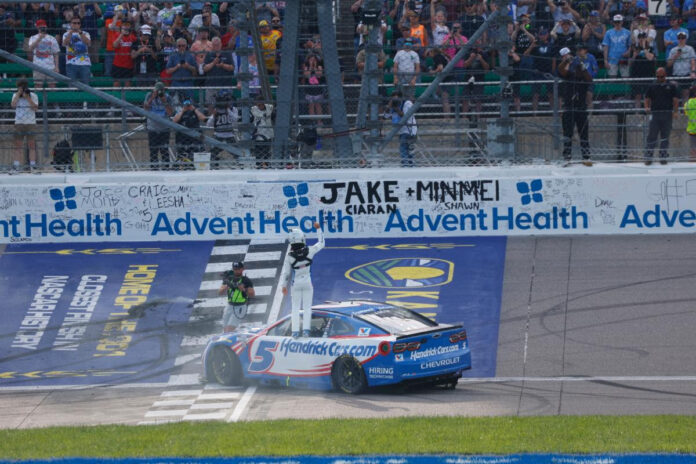
  • In yet another dominating performance, Kyle Larson took the checkered flag in the NASCAR Cup Series’ AdventHealth 400, delivering Chevrolet its third-straight trip to victory lane at Kansas Speedway. The victory – Larson’s third win of the 2025 season and 32nd all-time in the division – is Chevrolet’s 16th all-time NASCAR Cup Series victory at Kansas Speedway to continue to lead the series at the 1.5-mile Midwest oval.
  • Larson’s victory marks Chevrolet’s fourth NASCAR Cup Series win of the 2025 season, and the manufacturer’s second in five events on non-drafting intermediate ovals – each earned by the 32-year-old Elk Grove, California, native.
  • The victory came after a weekend sweep for the No. 5 HENDRICKCARS.COM Chevrolet team, starting with a strong performance on Saturday that ended with the team’s first pole win of the season. Taking command on the opening lap, Larson went on to take both green-white checkered flags to bring his stage win total to a series-leading eight with just 12 races complete. The stage sweep came after tallying 150 of 165 laps led in the first two stages, and despite a calamity-filled final stage, Larson went on to bring his total to a race-high 221 laps led en route to back-to-back triumphs in the track’s spring event.
  • An early qualifying lap for Alex Bowman put the Hendrick Motorsports mid-pack in the starting lineup, but the Blake Harris-led No. 48 Ally Chevrolet team quickly rebounded to showcase the speed they carried in Saturday’s practice session. The 32-year-old Tucson, Arizona, native navigated his Chevrolet-powered machine through the field to collect top-seven finishes in each stage, going on to take the checkered-flag in the fifth position for the team’s second top-five finish.

Chevrolet’s all-time NASCAR Cup Series statistics at Kansas Speedway:

Wins: 16
Poles: 14
Top-Fives: 77
Top-10s: 167

Chevrolet’s season statistics with 12 NASCAR Cup Series races complete:

Wins: 4
Poles: 7
Top-Fives: 24
Top 10s: 55
Stage Wins: 11

UP NEXT: The 2025 NASCAR Cup Series season continues at North Wilkesboro Speedway for the All-Star Race weekend on Sunday, May 18, with the All-Star Open at 5:30 p.m. ET and the All-Star Race at 8 p.m. ET. Live coverage of both events can be found on FS1, MRN and SiriusXM NASCAR Radio Channel 90.
Post-Race Driver Quotes:

Austin Dillon, No. 3 Richard Childress Racing Chevrolet

Finished: 22nd

“It was a tough day for our No. 3 BetMGM Chevrolet team at Kansas Speedway so a 22nd-place finish is actually pretty good considering how challenging the race was for our team. The handling of our Chevy was loose early in the race and then ended up too tight in Stage 2. Unfortunately, we got caught up in a late-race incident that caused significant damage to the nose and right side, which took away any chance of a competitive finish. I’m proud of everyone’s effort at Richard Childress Racing. The crew did a great job making repairs and getting us back out there. We’ll go back to the drawing board and come back stronger when we return to Kansas in the fall.”

Kyle Larson, No. 5 Hendrick Motorsports Chevrolet

Finished: 1st

WHEN YOU LOOK AT THE WAY THIS RACE UNFOLDED, YOU HAD A VERY DOMINATE RUN, BUT THERE WERE MOMENTS YOU HAD SOME CONCERNS. HOW DID YOU WORK THROUGH THAT?

“Yeah, it was tough. I could get out to a good lead, and I could kind of manage my tires. But Chase (Elliott) was really good at the end of the long runs. We decided to take control of the race, and we kind of lost it a little bit there. We had some restarts work out in our favor, and that last run just played out well enough to get the win. I wasn’t very good again at the end of the run, but I am just proud of my team and proud of this HENDRICKCARS.COM Chevy team. It’s just been an awesome day.”

HOW MUCH DID YOU NEED TYLER AND CLIFF TO KEEP REMINDING YOU ABOUT SAVING THE TIRES OVER THE COURSE OF THE RUN?

“Yeah, it helps. Cliff (Daniels) is really good at keeping me informed with what is going on with other people and especially our team. So, yeah, he had me concerned, but I could feel it, as well. Just happy that last run went good. I was a bit nervous there at the end and it was starting to shake a lot, and I was afraid it was going to blow a right-rear tire. I tried to back my pace down a lot, but had enough to get to the end there.”

HOW IMPORTANT IS IT TO LEAVE HERE WITH THE WIN AND HEAD TO INDY AND HAVING CHARLOTTE AND NORTH WILKESBORO AND A BUSY TIME AHEAD?

“It’s really cool to head to Indy as the point leader two years in a row in the Cup Series. It’s really tough to do, and it’s really cool for our team and our sport that the Cup Series point leader gets to run the Indianapolis 500. It’s awesome, and thanks again to these guys right here. I won’t get to celebrate with them tonight, but we will do a little celebrating here before we have to leave the track.”

Kyle Busch, No. 8 Richard Childress Racing Chevrolet Finished: 21st

“Tough weekend for our No. 8 Rebel Bourbon Chevrolet. I was happy with it in practice, we had really good long run speed. I got in the fence on my qualifying lap, fortunately it didn’t hurt the car but it put us at the back to start the race. We made some good progress and were in a good spot for a decent finish when I got spun out. Not much we could do after going a lap down to put tires on it. Not the finish we deserved today.”

Jesse Love, No. 33 Richard Childress Racing Chevrolet

Finished: 29th

“Our weekend started out strong with a solid practice in the C4 Ultimate Energy Chevrolet. The car had top-15 pace and I thought we could have a really good race. Unfortunately, it didn’t turn out that way for our No. 33 team. The balance fired off on the loose side and during our first scheduled green flag stop, I drove through too many boxes on exit which forced us to do a pass through under green. From there, it was a battle. When the right rear tire would burn off, the car didn’t have any security. Andy Street (crew chief) and the team kept working on it during every stop. We took the wave around at one point and regained a lap with a timely caution. While the result wasn’t what we wanted, I’m still very appreciative of the opportunity to drive in the Cup Series. I’ve learned a lot about these cars in a short period of time.”

Alex Bowman, No. 48 Hendrick Motorsports Chevrolet

Finished: 5th

What more did you need out there?

“Not to crash the car on the Stage Two restart. We were really good before that, and then we destroyed the race car – the toe’s knocked out of it and the body was killed. While it might not look destroyed and we still ran fifth, these things are just super sensitive. It’s a bummer that happened. You just don’t get many race cars that are that good. We had one last weekend (at Texas Motor Speedway) and we didn’t capitalize on it. We had one at Bristol (Motor Speedway) and didn’t capitalize on it. Today, we ended up with a top-five, but I don’t feel like we capitalized on it.

I’m frustrated on that side of things, but super proud of everyone at Hendrick Motorsports. It’s not something we did or that the car did. Two guys under me decided to drive us straight into the fence. That’s Next Gen racing, though. The restarts get pretty crazy, and unfortunately, it just kind of hurt the rest of our day.”

Michael McDowell, No. 71 Spire Motorsports Chevrolet

Finished: 23rd

“Tough day for this No. 71 Gainbridge Chevrolet team. We just got behind a little bit those first couple of runs. We were really loose and corded the right-rear tire. We lost a lap, and then we just never really recovered from there. I thought we were going to get lucky there and get a caution near the end, but it didn’t work out. Just a struggle in the race, for whatever reason. We’ll go back and figure out what we need to do better. We fought hard; got one lap back, but needed to get two back. Just hate it for this team. We had really good speed yesterday, it just didn’t correlate to today.”

Shane van Gisbergen, No. 88 Trackhouse Racing Chevrolet

Finished: 20th

“That was a decent finish for how it felt. My SafetyCulture Chevrolet definitely got better there at the end. The team made adjustments that helped me get more comfortable with the car. Just going to keep learning and making progress on the ovals.”

Daniel Suarez, No. 99 Trackhouse Racing Chevrolet

Finished: 34th

Suarez on the accident that ultimately ended his day early in the final stage:

“He (Ty Dillon) was on new tires and drove into the corner and wrecked the No. 51 (Cody Ware) and myself there. We were just in the wrong place there, but at the end of the day, it’s our fault. We shouldn’t be in those positions and in those situations. I thought our No. 99 Choice Privileges Chevrolet had decent speed, but we never had a shot. We just fired off today very, very off balance. We were super, super tight. Eventually, we got it a little bit better, but our car was just off on balance. I feel like our car had potential, but we just didn’t do a good job with our adjustments overnight.”

About General Motors

General Motors (NYSE:GM) is driving the future of transportation, leveraging advanced technology to build safer, smarter, and lower emission cars, trucks, and SUVs. GM’s Buick, Cadillac, Chevrolet, and GMC brands offer a broad portfolio of innovative gasoline-powered vehicles and the industry’s widest range of EVs, as we move to an all-electric future. Learn more at GM.com.

Alex Palou continues monster run with victory at The Brickyard

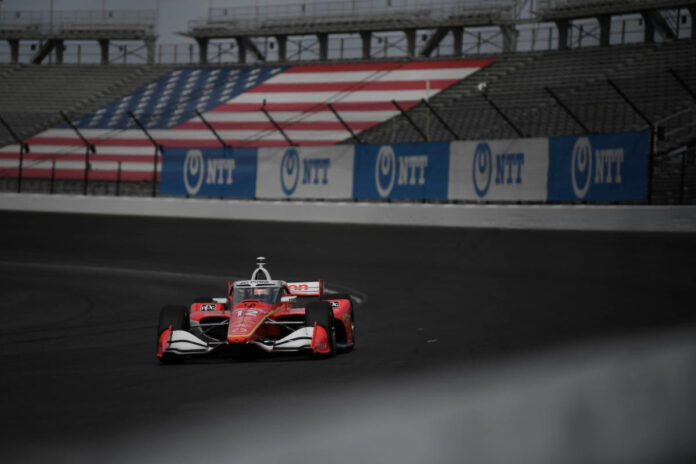
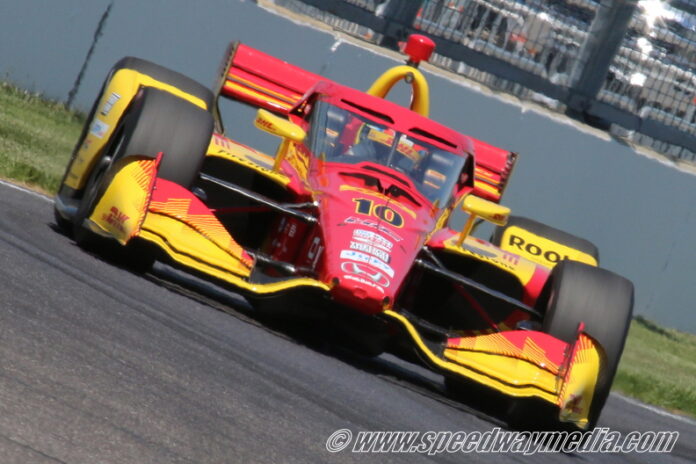
INDIANAPOLIS - MAY 9: Alex Palou, driver of the #10 Chip Ganassi Racing Honda, drives during practice for the NTT IndyCar Series Sonsio Grand Prix at the Indianapolis Motor Speedway on May 9, 2025, in Indianapolis. Photo: Simon Scoggins/SpeedwayMedia.com

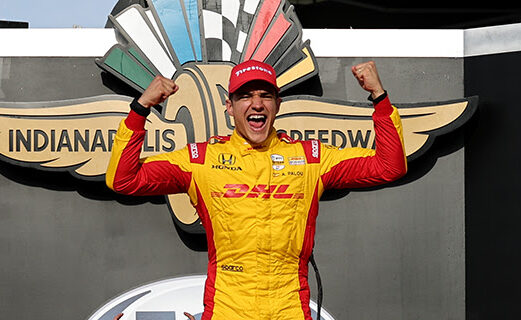
While not the woodshed whooping he put on the field at Barber, Sunday, Alex Palou continued his dominant run, this season, with a victory at The Brickyard.

The driver of the No. 10 Chip Ganassi Racing overtook Graham Rahal in Turn 7 on Lap 58 and never looked back to win the Sonsio Grand Prix at the Indianapolis Motor Speedway.

“Yeah, I mean, it’s crazy,” he said. “I’m sad that it’s going to end at some point, and it’s going to be tough in my career to feel as good as I feel now. I know that, and that makes me sad, but happy at the same time.

“It’s amazing. It’s amazing. I know I’m with the best team out here, and they give me the best tools they have, the best people to fight for races every single weekend, and it feels sweet.”

It’s his 15th career victory in 86 career NTT INDYCAR Series starts

Pato O’Ward brought his car home second and Will Power rounded out the podium.

“We fought hard today,” O’Ward said. “Started eighth, and I was pretty happy with the balance of my car. Just missed it there in qualifying with the issues that we had in a straight line, but Ian fixed it. It was good to have good pace.”

“It was just a solid day,” Power said. “Didn’t pass anyone on track. It was the same as Barber. Didn’t pass a single car. Just spent the whole day sort of like in a good pit stop strategy and speed and sort of overcut there at the end. Got us a couple of positions. Yeah, it was a very uneventful day. It was eventful in the car catching and driving hard the whole day, but as far as chopping through the field or anything. I mean, when you start seventh, obviously it’s not like you’re able to pass a lot of people. But, yeah, it’s a very stout field. People don’t make mistakes. Even the person who finishes last — I don’t know who finished last, but I know when I lapped Abel, he stuck behind me at the same pace, exactly the same space. Hardly dropped off.

“It’s just a stout field with great teams and drivers. Maybe we need to try a lock-out push-to-pass system where you get within a second and it locks the guy out in front and create passing like that, but it’s cool to see. I’m not sure what it looks like on TV, but yeah, I think this was the first step, try something with tires, but I think you need to do something more.”

Scott McLaughlin and Scott Dixon rounded out the top-five

Graham Rahal (led a race high of 49 laps), Kyle Kirkwood, Marcus Armstrong, Rinus VeeKay and Felix Rosenqvist rounded out the top-10.

Race summary

Prior to the start, Kyffin Simpson stalled on pit road. He didn’t get underway before the green flag and took his car to the garage. Josef Newgarden came down pit road prior to the race, due to radio issues. As a result, he dropped to the rear of the field on the start.

Alex Palou led the field to green at 4:55 p.m. ET. Graham Rahal overtook him on the outside into Turn 1 for the race lead.

VeeKay kickstarted a round of green flag stops on Lap 15 (he took Firestone reds). Palou pit from second on Lap 18 and took used Firestone blacks. Devlin DeFrancesco pit from second on Lap 19 and took new Firestone blacks. Palou cycled out in front. Rahal pit from the lead on Lap 20, took Firestone blacks and exited pit road ahead of Palou.

Following the cycle of stops, Rahal and Palou traded laps of running faster than the other. While the gap held steady at roughly 0.6 seconds. By Lap 34, however, Palou cut the gap to under half a second, thanks to the lapped car of Jacob Abel. By Lap 35, the gap closed to roughly 0.3 seconds. This forced Rahal to burn up his Push-to-Pass.

VeeKay kicked off another round of green flag stops on Lap 37. Both Rahal and Palou pit on Lap 41 (Rahal took used Firestone reds, while Palou took new Firestone blacks). Rahal beat him out of pit road.

Palou didn’t wait for the final stop to make his move on Rahal. Coming down Hulman Boulevard on Lap 58, Palou pulled to his inside and overtook him into Turn 7 for the race lead. Two laps later, Palou pulled to a three-second lead.

Rahal pit from second on Lap 62 for new Firestone blacks, but a slow stop costs him time on track. Palou pit from the lead on Lap 65. He took new Firestone reds.

David Malukas’ car stalled in the grass off of Turn 8, which brought out a caution and ended a streak of 408 consecutive laps without one. This evaporated a 10-second lead by Palou.

The race restarted with 13 laps to go and Palou drove on to victory.

What else happened

Callum Illot hit Conor Daly and spun him in Turn 12 on Lap 1.

On Lap 6, Malukas made contact with Marcus Ericsson and turned him in Turn 12.

Rosenqvist pulled inside of VeeKay in Turn 7 on Lap 25, made contact and spun out.

Nuts and bolts

The race lasted one hour and 48 minutes, at an average speed of 115.163 mph. There were seven lead changes among four different drivers and one caution for two laps.

Palou leaves with a 97-point lead over Kyle Kirkwood.

The NTT INDYCAR SERIES returns to action on May 25, with the Indianapolis 500.

Niece Motorsports NCTS Race Recap: Kansas Speedway

NIECE MOTORSPORTS
NCTS RACE RECAP: KANSAS SPEEDWAY
Event: Heart of America 200 (134 laps / 201 miles)
Round: 9 of 25 (Regular Season)
Track: Kansas Speedway
Location: Kansas City, Kansas
Date & Time: Saturday, May 10 | 7:30 PM ET

No. 42 J.F. Electric / Utilitra Chevrolet Silverado RST
Driver: Matt Mills | Crew Chief: Mike Shiplett

Start: 18th
Stage 1: 22nd
Stage 2: 19th
Finish: 12th
Driver Points: 18th
Owner Points: 21st

  • Key Takeaway: Mills began the 134-lap race in 18th, but suffered overheating issues which plagued the team throughout the first two stages. Despite being forced to make several unscheduled stops to rectify their issues, Mills and team stayed in the battle to make it into the top-15. Through pit strategy, the No. 42 gained track position late in the going which resulted in Mills earning his best finish of the season in 12th-place.
  • Matt Mills’ Post-Race Thoughts: “On the initial start of the race, there was a big stack up and I lost a lot of track position being in the wrong lane. We came down pit road to make some adjustments real quick based off how we thought we were going to fire off, but quickly realized we were having some overheating issues. I just couldn’t get it cooled down for the majority of the night. By the time that we figured out what was going on, we were fighting for track position. Mike (Shiplett) made a good strategy call by staying out before the caution flew which gave us a chance up front. I just have to do some more homework on my restarts. I need to learn how to handle the traffic better with the truck we had tonight just being free. Overall, I’m happy to come out of here with a clean J.F. Electric Chevy to move onto North Wilkesboro.”

About J.F. Electric: J.F. Electric is an electrical contractor that provides engineering expertise, backed by construction and installation know-how in a diverse range of service offerings, from utilities and commercial projects, to industrial and telecommunications customers. When having a long family history in an industry, a company not only builds on its knowledge and experience, it takes pride in cultivating a solid understanding of client needs, all the while nurturing strong relationships with its employees. Evolving through five generations of the Fowler family, J.F. Electric has matured into a well-managed and thoughtfully diversified electrical contractor which is poised to continue its growth and expansion into the future.

About Utilitra: Utilitra is a woman-owned firm specializing in utility and technology solutions with a diverse team of specialized professionals. Utilitra is committed to solving their client’s unique challenges, whether one expert or a team of experts is needed. By adapting to the needs of their respective industries, Utilitra has built a range of services for their utility and technology partners.

No. 44 AutoVentive / Precision Vehicle Logistics Chevrolet Silverado RST
Driver: Bayley Currey | Crew Chief: Wally Rogers

Start: 17th
Stage 1: 9th
Stage 2: 15th
Finish: 26th
Driver Points: 21st
Owner Points: 17th

  • Key Takeaway: Bayley Currey and the No. 44 team ran inside the top-10 near the start of the race in Kansas, but left with a disappointing finish. Currey fought the handling on his truck during the day, but was able to find grip once the crew made adjustments in the race. Late in the going however, Currey lost control of his truck in turn two resulting in a crash. Though the team finished the race, they were mired back a few laps behind the leaders.
  • Bayley Currey’s Post-Race Thoughts: “I hate the way that second half of the race went for us because early on, I thought we had a shot at having a good night. My truck was super free in practice and all the guys on the No. 44 team worked hard at making it better. It felt like once we were able to get near the front, I had a lot more confidence in what we were working with. But there in the start of last stage, my truck randomly popped out of gear and I lost so much time trying to figure out what was going wrong with it. There at the end, I was just hustling it trying to pick up some spots and it just came out from under me. I thought we were going to be fine without any damage, but once the tires blew out I had no chance of staying off the wall. We’ll keep grinding it out and move forward on our AutoVentive / Precision Vehicle Logistics / Masked Owl Technologies / DQS Solutions & Staffing team.”

About AutoVentive: AutoVentive is an industry-leading Software as a Service (SaaS) applications developer providing customized solutions to the automotive logistics industry. The company is part of Liberty Hill Equity Partners, LLC, a Cincinnati-based private equity firm.

About Precision Vehicle Logistics: Precision Vehicle Logistics is a customer-focused group of professionals committed to service excellence in finished vehicle logistics. Precision offers a unique combination of talented experience, industry-leading software and systems, and a network of partners and resources to deliver customized solutions to the world’s leading automakers.

No. 45 DQS Solutions & Staffing / Masked Owl Technologies Chevrolet Silverado RST
Driver: Kaden Honeycutt | Crew Chief: Phil Gould

Start: 7th
Stage 1: 7th
Stage 2: 8th
Finish: 8th
Driver Points: 8th
Owner Points: 10th

  • Key Takeaway: Kaden Honeycutt qualified the highest out of the team in seventh-place. The No. 45 was a contender through the opening two stages, picking up a total of seven points. When a caution came out during the green flag pit cycle, however, the team was trapped one lap down, forced to take the wave-around. Stuck in traffic, Honeycutt struggled to maintain the speed which he had up front. Luckily, the team rebounded nicely for a eighth-place finish.
  • Kaden Honeycutt’s Post-Race Thoughts: “With all we overcame, it wasn’t a bad night for us at all. I put myself in a terrible spot when we had that late caution in the first stage and lost us a ton of points. Then in the second stage, we just fought some balance back there in the back half of the top-10. We still got some points though, which was good for us. We started off the final stage and got into the top-five, which I was pretty content with. I couldn’t really go anywhere further with everyone kind of running the same lane. When we made our green flag stop, I thought we were going to come out around fifth again, and the dang caution came out.

That seems to be the story of our season; we had a top-five truck but didn’t get the results to show for it. That’s about the fifth-or-so race that it’s happened to us. Big thanks to DQS Solutions & Staffing, Masked Owl Technologies, Precision Vehicle Logistics, AutoVentive, and everyone that works so dang hard on our trucks. We’ll go to Wilkesboro next week and try to keep the momentum going. It’s still a decent finish, I’m not disappointed too bad in it, but just wish we could have ended up where we should have.”

About DQS Solutions & Staffing: Guided by a mission to achieve excellence and adaptability, DQS partners with clients to create custom solutions that address unique business challenges. Recognized as Michigan’s fastest-growing company and #22 in the nation on the Inc. 5000 list, DQS drives industry growth while giving back through its nonprofit, Foundation for Pops, and partnerships like the River Rouge School District.

About Masked Owl Technologies: Masked Owl Technologies (MOT) is an industrial solutions integrator specializing in developing customized automation and controls processes. They take a consulting-based approach to identify the root cause of system challenges and incorporate tested, emerging technology into industrial solutions that mitigate risk and solve complex problems, the first time.

About Niece Motorsports: Niece Motorsports is a professional auto racing team founded by United States Marine Corps Veteran Al Niece. In 2025, the team celebrates its 10th consecutive season competing in the NASCAR CRAFTSMAN Truck Series (NCTS) where it fields the Nos. 41, 42, 44 and 45. Since its founding in 2016, Niece Motorsports has garnered nine wins, 50+ top-fives, 100+ top-10s, 190+ top-15 finishes and made five playoff appearances. At its 80,000 sq. ft. headquarters in Salisbury, NC, Niece Motorsports is a trusted build shop for the Chevrolet Silverados of multiple NCTS teams as well as a customizable fabrication shop for any manufacturing needs.

Follow the Team: To keep up to date with the latest team news, visit niecemotorsports.com or connect on Facebook and Instagram (@NieceMotorsports) as well as X (@NieceMotorsport).

Toyota GAZOO Racing – NCTS Kansas Post-Race Report – 05.10.25

HEIM DRIVES THROUGH THE FIELD LATE TO LEAD TOYOTA AT KANSAS
Ruggiero scores third top-10 run in the last four races

KANSAS CITY (May 10, 2025) – Corey Heim overcame multiple issues to lead Toyota with a top-five in the NASCAR Truck Series race at Kansas Speedway on Saturday evening. Heim, who won the first stage, restarted 21st with 23 laps to go after a penalty on the prior restart. The Toyota Development Driver charged the field to a fourth-place finish.

Heim’s fourth led four straight Tundras across the finish line as Rookie of the Year leader Gio Ruggiero finished fifth, Stewart Friesen was scored sixth and Xfinity Series regular Brandon Jones earned a seventh-place run.

Toyota GAZOO Racing Post-Race Recap
NASCAR CRAFTSMAN Truck Series (NCTS)
Kansas Motor Speedway
Race 9 of 23 – 201 Miles, 134 Laps

TOYOTA FINISHING POSITIONS

1st, Carson Hocevar*

2nd, Layne Riggs*

3rd, William Bryron*

4th, COREY HEIM

5th, GIO RUGGIERO

6th, STEWART FRIESEN

7th, BRANDON JONES

21st, TONI BREIDINGER

28th, TANNER GRAY

*non-Toyota driver

TOYOTA QUOTES

COREY HEIM, No. 11 Safelite + Foster Love Toyota Tundra TRD Pro, TRICON Garage

Finishing Position: 4th

Fourth-place finish for Corey Heim, after you found everything that could go wrong tonight. Can you describe that race?

“Yeah, for sure. Started out with that pit gun breaking – no fault to my pit crew there. They did an awesome job all night. It seemed like a situational kind of deal there and then caught on the exact wrong time on the green flag cycle – had to take the wave and start from the back again, and got out of line for a penalty on my part. Like you said, a roller coaster kind of day today. Very proud of everyone at TRICON Garage and Toyota. This Safelite, Foster Love Tundra was really fast today. I feel like we made a lot of gains on it throughout the race. We kind of struggled more in dirty air than I thought we would coming into this race, but regardless, I think we were still the best truck today. Certainly, disappointing after being able to sweep the year last year, but we will move forward.”

GIO RUGGIERO, No. 17 First Auto Group Toyota Tundra TRD Pro, TRICON Garage

Finishing Position: 5th

Scored a top-five in your first time here at Kansas in a truck. What did you learn?

“I learned it is definitely pretty racy, especially on the restarts here – using all of the lanes up. It gets pretty aggressive there. That was fun. I tried to dig all day, and fight really hard with our First Auto Group Tundra. We were in the back for a while, so just proud of my guys for never giving up. The pit crew did a really good job. We had some really solid stops and kept picking up spots on pit road, so that helped us as well, so it was a step in the right direction for sure, but we need to run better next weekend.”

About Toyota

Toyota (NYSE:TM) has been a part of the cultural fabric in North America for nearly 70 years, and is committed to advancing sustainable, next-generation mobility through our Toyota and Lexus brands, plus our more than 1,800 dealerships.

Toyota directly employs nearly 64,000 people in North America who have contributed to the design, engineering, and assembly of nearly 49 million cars and trucks at our 14 manufacturing plants. In spring 2025, Toyota’s plant in North Carolina will begin to manufacture automotive batteries for electrified vehicles. With more electrified vehicles on the road than any other automaker, Toyota currently offers 31 electrified options.

For more information about Toyota, visit www.ToyotaNewsroom.com.

Chevrolet Powered Drivers Claim Three of Top-Four Finishing Positions at IMS Road Course

CHEVROLET IN NTT INDYCAR SERIES
SONSIO INDY GRAND PRIX
ROAD COURSE AT INDIANAPOLIS MOTOR SPEEDWAY
INDIANAPOLIIS, INDIANA
TEAM CHEVY RACE RECAP
MAY 10, 2025

Chevrolet Powered Drivers Claim Three of Top-Four Finishing Positions at IMS Road Course

  • Pato O’Ward, No. 5 Arrow McLaren Chevrolet, and Will Power, No. 12 Verizon Team Penske Chevrolet finished second and third respectively
  • O’Ward started eighth and drove to his second podium of the season
  • Sits fourth in the standings heading into preparation for the Indianapolis 500
  • Power drove from the seventh starting spot to his first podium and third top-five of the season
  • Scott McLaughlin brought the No. 3 Sonsio Vehicle Protection Team Penske Chevrolet in the fourth finishing position, his third top-five of the year
  • McLaughlin sits fifth in points
  • Two-time and defending Indianapolis 500 winner Josef Newgarden finished 12th, after a pace lap run down pit lane to investigate a possible issue that dropped him to the rear of the field
  • Conor Daly, No. 76 Juncos Hollinger Racing Chevrolet, recovered from on-track contact that sent him to the back of the field to finish in 15th
  • Up next for Team Chevy in the NTT INDYCAR Series is qualifying for the 109th Indianapolis 500 May 17-18, 2025, with Fast Friday up first when the boost is turned up from 1.3 bar to 1.5 adding approximately 60 additional horsepower.
  • Saturday will see teams and drivers run for a starting position in the Indianapolis 500. At the conclusion of the day, the Fast 12 and positions 13-30 will be set.
  • Sunday will see the battle for the final three starting positions, as well as the pole run from the Fast 12 to the Firestone Fast Six. Indy 500 qualifications will be televised on the FOX Network on Saturday, May 17, at 4 p.m. to 6 p.m. and Sunday, May 18, at 4 p.m. to 7 p.m., as well as practice runs on FoxSports 1 and 2 both days

SONSIO GRAND PRIX RACE RESULTS:

WHAT THEY’RE SAYING (QUOTES):

A.J. FOYT RACING

David Malukas, No. 4 A.J. Foyt Racing Chevrolet:

“Well, we were around 15 laps short. It just kind of sums up the start of this season. We got unlucky again. We had some overheating issues, and our race ended up short there, which is really unfortunate, because I think we had a really good race car coming up from the back. Qualifying was a little bit of a rough performance from my side. But through the race, we started moving ourselves forward and making some good positions. Unfortunately, it just didn’t play out for us. We made a lot of good gains with a lot of positives. We have to just get our heads down for the month of May, which with the A.J. Foyt team normally, the history, it’s been very, very strong here. Hopefully all this bad luck that’s been happening will be gone. Maybe the Pope, who’s from Chicago, can give us some help for the 500.”

Santino Ferrucci, No. 14 A.J. Foyt Racing/Sexton Properties Chevrolet:

“Obviously, a long day, nothing we can do. We had a motor change and couldn’t run warm up. We couldn’t even put the car on the pad before going out for the race. Honestly, the guys did a phenomenal job with what we had. We were stuck with the trim, which we didn’t want because of the heat. All in all, probably one of the toughest races I think I’ve had in a while, trying to handle the car and make some moves to try and keep us in the game. Excited to be done with turning left and right, and ready to be just turning left.”

ARROW MCLAREN

Pato O’Ward, No. 5 Arrow McLaren Chevrolet:

“It was push, all the way through the race. No. 10 car was just a little quick for us today. But it has been like that for everyone so far this year. It’s solid that Team Chevy was 2-3 today. The Big One is next and that is the one we really want for Arrow McLaren, Chevrolet and all of our partners. I’ve been so close. Now it’s our turn to reach victory lane.”

Nolan Siegel, No. 6 Arrow McLaren Chevrolet:

“I think we made the most of what we had today. It was well-executed, and the strategy was good. We made a few passes, and we were competitive on the Firestone Alternate tires. We struggled a lot on the Firestone Primaries but minimized the damage there. Yesterday was the bigger issue. Looking forward, if we can fix Qualifying and start further up, I think we’ll be competitive on race days. The pace is there. It just all needs to come together, and we’re making progress. Today was a good boost and pretty solid day going into the month of May.”

Christian Lundgaard, No. 7 Arrow McLaren Chevrolet:

“Tough day and tough weekend really. I think we were on to fight for a good result, but the pit lane penalty ruined those plans. Not the race we wanted, but we’ll move on quickly because the next race up is the one we work all year for.”

ED CARPENTER RACING

Alexander Rossi, No. 20 Java House Ed Carpenter Racing Chevrolet:

“It was a really tough day today. We didn’t seem to have strong enough pace on either tire. Despite that, the ECR Java House team pushed to the end, and I thank them for that. I am already looking ahead to the big one.”

Christian Rasmussen, No. 21 Splenda Ed Carpenter Racing Chevrolet:

“The day that could have been. We were running so well, and we had a Top 10 car today. That’s where we should have been, but, on one of my stops something happened to my pit lane speed control button, so when I launched from the pit box I ended up with a pit lane speed violation. We were having a really good day so receiving a penalty is very frustrating. A positive for us was our pace and the middle stints were our best. I am really looking forward to the rest of the month and excited for the Indianapolis 500. We deserved the result here today that we didn’t get, but we will keep on trucking.”

JUNCOS HOLLINGER RACING

Conor Daly, No. 76 Juncos Hollinger Racing Chevrolet:

“Honestly, I got spun on the first lap and did a whole donut. A full 360. And I had to come back from last, but we really had good pace. It was a shame the race worked out that way because we would have finished much better today. I’m thankful for our crew as they did a terrific job today. We had good pit stops, and the car ran well. I love the 500 and now coming off the best finish for the season for our young team is good. It’s not where we want to be, but we are very much building as a team at this point. I believe in these guys, and they believe in me. Just have to keep working to improve now.”

PREMA

Robert Shwartzman, No. 83 PREMA Racing Chevrolet

“We finished our race here at Indy and, after all of the issues we had during the weekend, I think there is a very positive outcome. I finally got a decent balance from the car, and we showed good performance and good pace. In the first pitstop, I had an issue with the clutch, but it’s also my responsibility. It cost us around 20 seconds, which could have helped us in getting a better position. However, today was a good day and we need to analyze and work together. Then move forward into the next events, where if we put it together then I am sure we can deliver a good race.”

Callum Ilott, No, 90 PREMA Racing Chevrolet:

“On the first racing lap, I was spun around in Turn 12, which was unfortunate. We picked up damage from it which we had to repair. It took us a while in the pitlane, but the team did a good job to get us back out. From there, it was largely about gaining mileage. The pace was okay. It was a bit up and down, but now we look ahead to the 500 and hopefully can put together a strong showing there.”

TEAM PENSKE

Scott McLaughlin, No. 3 Sonsio Vehicle Protection Team Penske Chevrolet:

“I should be upset with a fourth. I think we could have gotten second today but I made a mistake on the pit exchange, and I lost a couple of spots. And that was our day. I will take a fourth. But it could have easily been a second and my first podium at Indy. Next race is the best race of the year. I thought it was a bold move to start on the black tires, and I was super fast on those tires. I was proud of the guys for that move. We made some big inroads with the car over the weekend. Now I can’t wait to get on the oval this week.”

Will Power, No. 12 Verizon Team Penske Chevrolet:

“I would tell you we have had a fantastic last four races if one guy wasn’t winning them all. It’s a good start to month and we are looking forward to the 500 now. I think Chevy will get its first win of the season there. We had very good strategy and a good car pace today. Things were well executed. Unfortunately, no passing for me at this track. I’m excited to get on the oval. It will be interesting to see how the car feels, and I think found some good stuff in the test.”

About General Motors

General Motors (NYSE:GM) is driving the future of transportation, leveraging advanced technology to build safer, smarter, and lower emission cars, trucks, and SUVs. GM’s Buick, Cadillac, Chevrolet, and GMC brands offer a broad portfolio of innovative gasoline-powered vehicles and the industry’s widest range of EVs, as we move to an all-electric future. Learn more at GM.com.
Palou Continues Magic Carpet Ride with Sonsio Grand Prix Victory

INDIANAPOLIS (Saturday, May 10, 2025) – Alex Palou continued his march toward history and immortality by winning the Sonsio Grand Prix on Saturday on the Indianapolis Motor Speedway road course, his fourth victory in five NTT INDYCAR SERIES races this season.

It was the Spaniard’s third consecutive victory in this race, an event record, and he became the first driver since Sebastien Bourdais in 2006 to win four of the first five races of an INDYCAR SERIES season.

“I cannot describe the amazing season we’ve had so far,” Palou said. “I owe everything to the team, Chip Ganassi Racing, my teammates, everybody who is working behind the scenes to make me look so fast on track. It’s amazing. It’s unbelievable.”

NTT P1 Award winner Palou drove his No. 10 DHL Chip Ganassi Racing Honda to a 5.4840-second victory over the No. 5 Arrow McLaren Chevrolet of Pato O’Ward. That margin may have been considerably larger if not for a late caution period – the first in the series since Lap 1 of the season-opening Firestone Grand Prix of St. Petersburg presented by RP Funding – bunching the field before Palou ran away again.

Two-time series champion Will Power finished a season-best third in the No. 12 Verizon Team Penske Chevrolet, 8.4529 seconds behind Palou. His teammate Scott McLaughlin was fourth in the No. 3 Sonsio Vehicle Protection Chevrolet.

Six-time series champion Scott Dixon rounded out the top five in the No. 9 PNC Bank Chip Ganassi Racing Honda.

After this victory, Palou’s report card this season reads four victories (St. Petersburg, Thermal, Barber, Indianapolis road course) and one second-place finish (Long Beach). He leads the standings by 97 points – nearly two races’ worth of points – over Kyle Kirkwood of Andretti Global after just five of 17 races this season.

“We need to do something to stop this 10 car,” O’Ward said. “These guys are really, really on a roll. I don’t think I’ve seen anything like it, especially in INDYCAR.”

Future targets are coming into clear focus for Palou after this win. The first is victory in the next event, the biggest of them all, the 109th Indianapolis 500 presented by Gainbridge on Sunday, May 25 at IMS. Palou has never won the “500” or on an oval, about his only remaining mountains to climb in this series.

“Hopefully we get to stay here (Victory Podium) again in a couple of weeks for the biggest race of the year,” Palou said.

Then, the focus could shift to a fourth Astor Challenge Cup as series champion in five years, a feat last achieved by Bourdais when he won four straight titles from 2004-07. It’s also not a stretch in this moment of dominance with 12 races remaining to conceive of Palou threatening the all-time series record for victories in a season, 10 by legends A.J. Foyt in 1964 and Al Unser in 1970.

This was another victory in which strategy and patience were the successful blueprint for Palou. He led 29 laps, second to Graham Rahal’s 49. But that’s a familiar tactic for Palou, who has been the overall lap leader in only one of his victories this season, last Sunday at Barber Motorsports Park.

Palou started from the pole, but Rahal dove under him in Turn 1 on Lap 2. Rahal stayed out front in the No. 15 Fifth Third Bank Honda of Rahal Letterman Lanigan Racing past the halfway point of the 85-lap race except for pit cycles. But Palou never let Rahal get away, staying within a second or closer nearly that entire time.

While Rahal and Palou marched in lockstep around the 14-turn, 2.439-mile circuit, there was a key strategic difference between the two drivers.

New INDYCAR rules for this event mandated that every driver use two sets each of Firestone primary and alternate tires. Palou used scuffed alternate and primary tires during his first two stints, while Rahal used new alternate and primary tires.

Rahal and Palou entered the pits together for their second stops in a dramatic moment at the end of Lap 41. Rahal’s crew switched to scuffed alternate tires, while Palou’s team mounted new primary tires.

Better grip from the softer alternate tire helped Rahal keep the lead over Palou after that stop. But the better durability of the primary tire – plus considerably more Push to Pass overtake assist available to use – helped Palou reel in Rahal.

Palou’s patience ran out on Lap 58. He tried to pass Rahal in Turns 1 and 2, but Rahal parried the move. But Palou dove inside Rahal in Turn 7 on the same lap and never trailed thereafter.

Once in the lead, Palou pulled away at an astonishing rate. His lead grew to 4.1075 seconds just four laps after he got out front, and it appeared he could canter to the checkered flag.

But the first full course yellow flag in 408 laps of competition dating back to the season opener March 2 bunched the field on Lap 70 when the No. 4 AJ FOYT RACING Chevrolet driven by David Malukas stopped in the grass in Turn 10.

On the restart on Lap 72, Palou held off O’Ward entering Turn 1 and again pulled away. Palou’s gap was 2.4781 seconds by Lap 76, and he was never threatened the rest of the way.

Practice for the 109th Indianapolis 500 presented by Gainbridge starts at noon ET Tuesday.

Workplace Injuries and Employee Rights: What Every Professional Should Know

Photo by AndreyPopov at https://depositphotos.com/

Workplace injuries can happen in any industry, affecting employees both physically and financially. Whether it’s a slip-and-fall accident in an office or a severe machinery-related injury in a factory, these incidents can disrupt a worker’s life and career. Recognizing common causes of workplace injuries can help employers and employees take preventive measures to create a safer work environment. Additionally, understanding how workplace accidents occur enables businesses to implement more effective safety protocols to minimize risks. Employees should also be proactive in reporting unsafe conditions to management to prevent injuries.

Certain professions carry higher risks due to the nature of the work involved. Construction workers, healthcare professionals, and warehouse employees face daily hazards that increase the likelihood of workplace injuries. Understanding the risks specific to each industry allows workers to advocate for better safety measures and ensures employers uphold their responsibilities in maintaining a secure workplace. Even office workers, who may not perceive their work environment as hazardous, can experience repetitive strain injuries or ergonomic issues that impact their long-term well-being. Identifying these potential dangers early can make a significant difference in preventing chronic conditions and ensuring a healthier workforce.

Employer Responsibilities and Safety Regulations

According to Donaldson & Weston, employers have a legal obligation to provide a safe working environment. Federal and state laws mandate workplace safety measures, requiring companies to follow industry-specific guidelines. The Occupational Safety and Health Administration (OSHA) enforces these regulations, ensuring employers take necessary precautions to protect their workers. Adherence to these standards is not only a legal requirement but also a critical factor in maintaining a productive workforce and reducing unnecessary workplace disruptions. A strong commitment to safety can enhance employee morale and demonstrate corporate responsibility.

Failing to comply with safety standards can result in severe consequences, including legal penalties and increased injury claims. Employers must conduct regular safety training, provide protective equipment, and promptly address hazards. When businesses prioritize employee well-being, they foster a culture of safety that benefits both workers and the organization as a whole. Companies that proactively conduct risk assessments and safety audits demonstrate a commitment to their employees’ welfare, which, in turn, builds trust and loyalty among the workforce. A well-trained workforce is less likely to experience workplace accidents, further reducing liability and financial losses associated with injuries.

Managing the myriad of safety regulations, training records, and employee data can be a daunting task for any business, especially when aiming for proactive compliance. Modern technological solutions are increasingly vital for streamlining these complex HR functions efficiently. Implementing robust human resources information software allows companies to centralize employee records, track compliance, and automate policy distribution. This not only ensures adherence to legal requirements but also frees up HR teams to focus on strategic initiatives that further enhance employee well-being and safety. Such systems provide a comprehensive overview of HR operations, making it easier to conduct audits and proactively identify areas for improvement.

Workers’ Compensation and Employee Protections

When an employee suffers an injury at work, they may be entitled to workers’ compensation benefits. These benefits help cover medical expenses, lost wages, and rehabilitation costs. Workers’ compensation laws vary by state, but most provide financial relief for injured employees while protecting employers from direct lawsuits. Access to these benefits ensures that workers can focus on recovery without the added stress of financial hardship, allowing them to return to work when they are physically ready. Employers should clearly communicate the claims-filing process so employees can access the support they need without unnecessary delays.

However, not all claims are straightforward. Some workers face challenges in receiving fair compensation due to employer disputes or insurance company denials. Employees must be aware of their rights and seek legal guidance when necessary to ensure they receive the benefits they deserve. Understanding the claims process can significantly impact an injured worker’s recovery and financial stability. Proper documentation of the injury, medical records, and eyewitness accounts can strengthen a claim, making it more difficult for employers or insurers to reject it unfairly. Seeking guidance from a legal professional early in the process can be crucial in avoiding complications that might result in lost compensation.

Common Challenges in Workers’ Compensation Claims

Workers’ compensation claims can be complex, especially when employers or insurers attempt to minimize payouts. Some employees experience delays or outright denials due to insufficient medical documentation or claims of pre-existing conditions. These obstacles can create financial strain, making it difficult for workers to afford medical care and meet their daily expenses. Employees should be proactive in obtaining medical evaluations and maintaining detailed records to mitigate potential resistance from insurers. Understanding the types of injuries covered and how to properly document them is essential for receiving appropriate compensation.

The legal side of a claim is often the hardest part for people to handle alone. Many workers find that insurance companies use specific tactics to lower the value of a settlement. Having a legal team on your side helps protect your interests during these negotiations. The Bruning Law Firm works with individuals to make sure they get the full amount they need for their recovery. This support is helpful when you have to deal with complex paperwork or strict filing dates. A lawyer can also speak with medical experts to prove how an injury affects your ability to work.

Legal representation can be crucial in these situations. An attorney specializing in workers’ compensation can help injured workers gather necessary evidence, appeal denied claims, and negotiate settlements. Employees should document their injuries thoroughly and seek immediate medical attention to strengthen their cases if a dispute arises. Additionally, workers should be aware of deadlines for filing claims, as missing a critical timeline can jeopardize their chances of receiving compensation. Seeking advice early in the process can prevent unnecessary complications and increase the likelihood of a successful claim. Workers should also be mindful of returning to work too soon, as doing so can impact the outcome of their case and their long-term recovery.

The Role of Workplace Culture in Injury Prevention

A positive workplace culture prioritizes safety and encourages employees to report hazards without fear of retaliation. When workers feel comfortable discussing safety concerns, employers can address issues proactively, reducing the risk of accidents. Open communication between management and staff plays a critical role in fostering a safe and supportive work environment. Companies that encourage transparency and employee feedback tend to have lower injury rates and higher worker morale. Investing in mental health and wellness programs can also contribute to a culture where employees feel valued and protected.

Companies that invest in safety training, ergonomic assessments, and mental health support create a workplace where employees thrive. When workers feel valued and protected, they are more likely to remain productive and engaged. A strong safety culture benefits businesses by reducing turnover, lowering insurance costs, and improving overall employee morale. Encouraging collaboration between management and employees on safety initiatives can create innovative solutions that further enhance workplace security. By making workplace safety an ongoing conversation rather than a one-time effort, companies can create lasting improvements that protect workers for years to come.

Conclusion: Advocating for a Safer Work Environment

Workplace injuries can have lasting consequences, affecting an employee’s physical health, financial stability, and career progression. Understanding employer responsibilities, workers’ compensation rights, and common challenges can help employees make informed decisions when dealing with workplace accidents. Additionally, workers should educate themselves about their legal rights and the resources available to them, so they can take necessary action if an injury occurs. By fostering awareness, businesses and employees alike can work together to reduce the risks associated with workplace hazards.

A proactive approach to workplace safety benefits everyone. By advocating for stronger protections, participating in safety programs, and seeking legal assistance when necessary, employees can contribute to a safer and more secure working environment. Awareness and action are key in ensuring that workers’ rights remain protected while fostering a workplace that prioritizes health and well-being. When both employers and employees commit to creating a safer work environment, everyone benefits from a more secure and productive workplace. The long-term benefits of a safer workplace extend beyond individual employees, creating stronger organizations and healthier communities overall.

The Economic Impact of Personal Injury: How Medical Costs, Lost Wages, and Legal Battles Shape Financial Futures

Photo by everythingposs at https://depositphotos.com/

When a person suffers a personal injury, one of the first and most immediate financial concerns is the medical expenses. From emergency room visits to ongoing rehabilitation, the costs associated with treatment can quickly escalate. Even with health insurance, victims may still be required to pay high deductibles or out-of-pocket expenses. For severe injuries, such as spinal cord damage or traumatic brain injuries, the medical costs may extend over a lifetime. Long-term treatments, surgeries, and even home care for those with permanent disabilities add up, leaving victims with significant debt that may take years to resolve.

In addition to direct medical costs, there can also be indirect financial effects related to recovery. For example, the need for specialized medical equipment or home modifications to accommodate an injury can place further strain on a person’s finances. This cumulative effect of medical expenses is a key reason why many personal injury victims turn to legal channels to recover compensation. Without adequate compensation, victims may find themselves in a perpetual cycle of debt, affecting their financial stability for years to come.

Lost Wages and the Impact on Income

According to one law firm, another significant financial setback for personal injury victims is the loss of income. Depending on the severity of the injury, victims may be unable to return to work, or they may only be able to work part-time or in a limited capacity. For those with jobs that require physical labor or specific skills, such as construction or manual labor, the recovery process may hinder their ability to perform their work duties, leading to prolonged periods of unemployment.

In some cases, personal injury victims may also face a permanent reduction in their earning capacity. If the injury results in long-term disability, the victim may never be able to return to their previous job or line of work. This loss of income can significantly alter a person’s financial future, particularly if they are the primary breadwinner in their household. In many cases, the lost wages are just as significant as the medical bills, further emphasizing the need for proper compensation.

The process of seeking compensation for personal injuries is often marked by legal battles. The financial strain caused by medical expenses and lost wages can be compounded by the cost of hiring an attorney and dealing with the legal system. While it’s important to seek proper legal representation to ensure a fair settlement, legal fees and court costs can be expensive. However, many personal injury lawyers work on a contingency basis, meaning they only receive a payment if the case results in a successful settlement or judgment.

Navigating through the legal process can be time-consuming, and the financial uncertainty can add stress to an already difficult situation. As victims pursue their claims, the waiting period before receiving compensation can cause further economic strain. This highlights the importance of having a legal team that understands the complexities of personal injury law and can advocate effectively to ensure victims receive adequate compensation to cover their immediate and long-term expenses.

The Long-Term Financial Consequences

The financial impact of a personal injury extends beyond the immediate costs of medical treatment and lost wages. Even after the legal battle is won, victims may find that the economic consequences persist for years. In some cases, personal injuries can lead to permanent disabilities, requiring ongoing care, therapy, or assistance with daily activities. These costs can continue indefinitely, placing a long-term financial burden on the victim and their family.

Furthermore, individuals who have suffered a significant injury may need to adjust their lifestyle. They may need to move to a more accessible home or invest in special equipment or modifications. These long-term financial adjustments are often not fully covered in a single legal settlement, which makes it crucial for victims to pursue comprehensive compensation that addresses the full extent of their future needs. Without proper compensation, these ongoing costs can be financially devastating.

The Impact of Personal Injury on Mental and Emotional Well-being

In addition to the physical and financial toll, personal injury victims also experience emotional and psychological challenges. The stress of dealing with injury-related pain, financial instability, and a lengthy legal battle can contribute to mental health issues, such as anxiety, depression, and PTSD. The psychological strain of dealing with an injury can hinder a victim’s ability to focus on their recovery and contribute to a sense of hopelessness or frustration.

The emotional costs of a personal injury are often overlooked in financial settlements, but they can be just as impactful. Victims may experience a loss of confidence or independence, which can alter their quality of life. Psychological therapy or counseling is often necessary for victims to heal emotionally and regain control over their lives. Financial compensation that includes consideration for emotional suffering can be a crucial part of the recovery process.

Conclusion: The Path to Financial Recovery and Stability

Personal injury claims are vital in helping victims recover financially and emotionally after an accident. While medical bills, lost wages, and the cost of legal battles present significant challenges, proper compensation can alleviate the burden. However, securing a fair settlement often requires time, persistence, and expert legal assistance. It is essential for victims to understand their rights and the potential for long-term financial impact. By pursuing a comprehensive legal strategy, victims can ensure that they receive compensation that reflects not only their immediate costs but also the lasting effects of the injury.

Ultimately, while the road to recovery may be long and fraught with challenges, securing financial compensation plays a key role in helping victims regain control over their lives. Through legal expertise, proper financial management, and emotional support, individuals who suffer personal injuries can navigate their path toward rebuilding their financial stability and improving their overall well-being. Proper recovery goes beyond just paying bills—it’s about restoring balance to a life that may have been altered permanently.

The Impact of Car Accidents in Motorsports: Safety Innovations and Lessons Learned

Motorsports, by nature, come with high-speed thrills, intense competition, and the risk of accidents. Whether it’s Formula 1, NASCAR, or other racing events, car accidents are inevitable due to the extreme speeds, complex tracks, and fierce rivalries. In motorsports, even a minor mistake can have catastrophic consequences for both drivers and crew members. This risk factor is intrinsic to the sport, making safety a paramount concern for teams, organizers, and regulators. The risk isn’t just about crashes but also the potential for life-threatening injuries.

However, the rising number of accidents has prompted the motorsport industry to focus more on improving driver safety. Accidents are no longer seen as an unavoidable part of racing but as a catalyst for innovation in safety technologies. Over time, the collective experiences and lessons from these incidents have shaped the way racing vehicles and race tracks are designed to protect those involved. Despite the risks, the efforts to reduce the severity of car accidents have led to safer racing environments.

The Role of Technology in Improving Safety

According to Seva Law Firm, over the years, technology has played a crucial role in enhancing the safety of motorsports. From the introduction of head and neck support (HANS) devices to the development of the Halo cockpit protection system, technological innovations have transformed the landscape of racing safety. These innovations are designed to reduce the impact of crashes on drivers and mitigate their effects. The use of carbon fiber in the construction of race cars has also significantly improved the structural integrity of vehicles.

In addition to advancements in vehicle safety, the development of advanced crash detection systems and real-time data monitoring has enabled race teams and organizers to assess accident severity immediately. This immediate access to data helps medical teams respond faster and more effectively to on-site injuries, enabling more efficient rescue operations and potentially saving lives. With each new technology introduced, the motorsports industry moves closer to its goal of minimizing the risks involved in racing.

The Influence of Car Accidents on Racing Regulations

Car accidents in motorsports often act as a catalyst for changes in regulations. After major accidents or incidents, racing authorities are quick to review the causes and make adjustments to safety protocols. For example, following a high-profile accident like Ayrton Senna’s fatal crash in 1994, Formula 1 introduced several key safety changes. These included improvements in cockpit design, stricter regulations on car construction, and the introduction of mandatory use of seatbelts and HANS devices. In the aftermath of tragedies like this, consulting a fatal car accident attorney can help families better understand their legal rights and options.

These regulatory changes are designed not only to prevent accidents but also to improve the driver’s overall safety in the event of a crash. The sport’s governing bodies often consult with engineers, medical professionals, and former drivers to develop new standards that ensure the well-being of all participants. This ongoing evolution of safety regulations has made racing considerably safer today than it was a few decades ago, but each accident still leaves an indelible mark on the sport’s safety progress.

The Psychological Impact of Car Accidents on Drivers

While the physical impact of car accidents in motorsports is widely discussed, the psychological toll on drivers is just as significant. Surviving a high-speed crash can leave drivers with lasting emotional and mental health challenges. Anxiety, PTSD, and fear of future accidents can all play a role in a driver’s mental state following a crash. In some cases, these mental hurdles may be more difficult to overcome than the physical recovery.

The support systems in place for drivers, including mental health professionals, play a vital role in helping them recover from traumatic experiences. Drivers who have survived major accidents often seek counseling or psychological support to process their emotions and return to the track. Motorsport teams and organizations are increasingly aware of the psychological aspect of recovery, working to provide both mental and physical care to their drivers. This holistic approach to recovery ensures that drivers are prepared to return to competition safely, both in body and mind.

Learning from Accidents: Key Safety Improvements

Each car accident in motorsports provides valuable lessons that lead to significant safety improvements. One of the most notable improvements has been the introduction of safer racecar designs. For example, the concept of the “survival cell,” which is a reinforced cockpit structure, was developed to protect drivers in the event of a crash. Additionally, the use of fire-resistant suits, helmets, and gloves has been made mandatory, significantly reducing the risk of burns and other severe injuries in the event of a fire.

Track design has also evolved over the years, with many tracks now incorporating safety features like safer barriers, runoff zones, and improved crash barriers. These innovations help reduce the risk of injury during high-speed collisions. For instance, the addition of a “soft wall” barrier, which compresses upon impact, dissipates energy more effectively, and reduces the force of the crash. These changes have made motorsports much safer today than in the past, and the lessons learned from each accident continue to shape the sport’s safety standards.

Conclusion: Continuing the Push for Safety in Motorsports

In conclusion, car accidents in motorsports will always be a part of the sport’s high-speed nature, but the constant drive for innovation and safety has made racing significantly safer over the years. From advanced technologies to stringent regulations and psychological support for drivers, the motorsport industry continues to evolve in its approach to safety. While no technology or regulation can eliminate the risks entirely, the lessons learned from past accidents have paved the way for a safer future for all participants. Moving forward, motorsports organizations will likely continue to push for even higher safety standards, ensuring that accidents are met with immediate responses and the best possible outcomes.

The drive for safety is an ongoing journey in motorsports. With each new development, from vehicle designs to race track modifications, the sport continues to become safer for drivers, teams, and spectators alike. By learning from the past and adapting to new challenges, the motorsports community remains committed to reducing the risks associated with racing and making the sport as safe as possible.

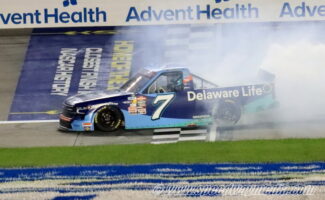
Carson Hocevar scores dramatic Truck victory at Kansas

Photo by Ron Olds for SpeedwayMedia.com.

Carson Hocevar survived a final-lap challenge and on-track contact with Layne Riggs to win the Heart of Health Care 250 at Kansas Speedway on Saturday, May 10.

The 2024 Cup Series Rookie-of-the-Year recipient from Portage, Michigan, led three times for a race-high 75 of 134 scheduled laps. He started the event in fourth place and raced up front for most of the event. Hocevar settled in fourth place at the conclusion of the first stage period. He led for the first time on Lap 54, outdueling Layne Riggs and Grant Enfinger, capturing the second stage victory.

He restarted in the lead at the start of the final stage period with 67 laps remaining. Hocevar, who retained the lead prior to pitting under green with 39 laps remaining, would cycle back into the lead during a late caution with 38 laps remaining and resulted with some, including teammate William Byron pitting. After retaining the top spot through two late-race restarts, including the final one with 20 laps remaining, Hocevar then managed to fend off a final-lap charge from Riggs, which included contact and a scrape to the backstretch’s wall, to muscle to his first Craftsman Truck Series victory in nearly two years.

With on-track qualifying that determined the starting lineup occurring on Saturday, Jake Garcia notched his second Truck pole position of the 2025 season and of his career with a pole-winning lap at 175.655 mph in 30.742 seconds. Joining Garcia on the front row is Corey Heim, winner of last weekend’s event at Texas Motor Speedway who posted his best qualifying lap at 175.080 mph in 30.843 seconds.

Prior to the event, William Byron and Nathan Byrd dropped to the rear of the field due to unapproved adjustments made to their respective entries.

Green Flag

When the green flag waved and the race started, pole-sitter Jake Garcia, who started on the inside lane, dipped his No. 13 Quanta Services Ford F-150 entry below the apron after he struggled to launch at the start. This caused his teammate Ty Majeski to run into the rear of him. Amid the contact, Garcia dueled with Corey Heim through the frontstretch for the lead as the field fanned out amid the brief stack-up from the front.

Then through the first two turns, Majeski and Carson Hocevar made contact, which caused Majeski to lose his momentum. In the process, Tyler Ankrum, who ran into the rear of Dawson Sutton, scrapped the outside wall. As a result, Majeski lost a bevy of spots. With the field jumbled up, Heim continued to duel with Garcia through the backstretch before using the outside lane to rocket ahead and lead the first lap. As Heim led, Majeski, who was falling off the pace after the opening lap contact, made an unscheduled pit stop under green with a flat right-front tire while Dawson Sutton, who was racing in the top 10, had a left-rear tire rub.

Then on the third lap, Sutton, who was falling off the pace, spun his No. 26 Rackley Roofing Chevrolet Silverado RST entry towards the entrance of pit road after he had damage to his left rear and was trying to limp his truck back to his pit stall. Not long after, Sutton was issued a two-lap penalty for intentionally causing the caution. Despite receiving the free pass, Majeski would be issued a one-lap penalty for having his entry fueled twice under caution.

During the event’s first caution period, some including Hocevar, Ankrum, Frankie Muniz and Matt Mills pitted while the rest led by Heim remained on the track.

The start of the following restart on the eighth lap featured Heim retaining the lead from Chandler Smith and the field that had fanned out to multiple lanes through the first two turns. With Caruth dropping to sixth place despite starting on the front row, Heim led the following lap. He would lead at the Lap 10 mark while Smith, Kaden Honeycutt, Grant Enfinger and Tanner Gray followed suit.

Just past the Lap 15 mark, Heim stretched his advantage to nearly a second over Smith. Honeycutt, Enfinger and Caruth were racing in the top five. Behind, Layne Riggs was in sixth place ahead of Tanner Gray, Bayley Currey, rookie Giovanni Ruggiero and Garcia while Daniel Hemric, William Byron, Stewart Friesen, Hocevar and Ben Rhodes pursued in the top 15.

Two laps later, the caution flew when Luke Baldwin blew a right-front tire and made hard contact against the first two turns. During the caution period, nearly the entire field led by Heim pitted while the rest that included Ankrum, Nathan Byrd, Cody Dennison, Spencer Boyd and Frankie Muniz pitted. Those who remained on the track led by Ankrum would then pit over the following laps, which allowed Heim to cycle back into the lead.

With two laps remaining in the first stage period, the event restarted under green. At the start, the field fanned out through the frontstretch. Heim managed to retain the lead through the first two turns. The field continued to fan out to multiple lanes through the backstretch as Caruth, Enfinger, Smith, Hocevar and Honeycutt all pursued Heim prior to the final lap of the first stage period.

When the first stage period concluded on Lap 30, Heim captured his sixth Truck stage victory of the 2025 season. Caruth settled in second ahead of Enfinger, Hocevar and Smith while Riggs, Hemric, Honeycutt, Gray and Currey were scored in the top 10, respectively.

Stage 2

The second stage period started on Lap 36 as Heim and Caruth occupied the front row. At the start, Hocevar made a move on teammate Caruth’s right side and the field quickly fanned out to four lanes entering the first two turns. As Heim used the inside lane to muscle away with the lead, Caruth dropped out of the top-five category and Hocevar also did not gain any spots forward while Smith, Riggs and Enfinger all moved up the leaderboard. Hocevar would carve his No. 7 Delaware Life Chevrolet Silverado RST entry up to the runner-up spot and the trio of Smith, Enfinger and Riggs remained in the top five while Heim led to the Lap 40 mark.

Then on Lap 42, Hocevar, who spent the previous four laps reeling in on Heim, attempted to make a move beneath Heim for the lead in Turns 3 and 4. Hocevar got loose underneath Heim, which allowed the latter to rocket back ahead and retain the lead. With Hocevar keeping Heim within his sights, Heim continued to lead by the Lap 45 mark.

Within the Lap 50 mark, the caution flew due to Cody Dennison spinning in Turn 1 after he had a flat left-rear tire to his No. 2 TIMCAST Ford F-150 entry. During the caution period, nearly the entire lead lap field pitted. Jack Wood, Muniz, Boyd and Morgen Baird remained on the track. The latter three would eventually pit and allow Hocevar to cycle into the lead. Amid the pit stops, Heim endured a slow pit service due to an issue with changing the left rear tire.

The event restarted with five laps remaining in the second stage period. Hocevar dueled with Enfinger for the lead through the first two turns and the backstretch. As Caruth got sideways through Turns 3 and 4, Enfinger cleared Hocevar for the lead during the following lap. Hocevar then reassumed the lead from Enfinger through the first two turns with three laps remaining. By then, Riggs reeled in the two leaders as Enfinger tried to re-challenge Hocevar for the lead.

As the second stage period concluded on Lap 60, Hocevar fended off the field, winning his first Truck stage of the year. Riggs followed suit in second ahead of Enfinger, Byron and Hemric while Gray, Ankrum, Rhodes, Honeycutt and Caruth were scored in the top 10.

Final Stage

With 67 laps remaining, the final stage period commenced as Hocevar and Riggs occupied the front row. At the start, the field fanned out to multiple lanes through the first two turns. Hemric, who restarted in the top five, got loose, but managed to keep his truck straight. As the field scrambled behind, Hocevar retained the lead from Enfinger for the following lap while Riggs and Byron battled for third place.

Down to the final 60 laps of the event, Hocevar stretched his lead to seven-tenths of a second over Enfinger while Riggs, Byron and Honeycutt pursued in the top five. Hocevar proceeded to extend his lead to more than a second over the following five laps. Byron, Ankrum, Hemric, Brandon Jones and Smith trailed in the top 10 along with Garcia, Caruth, Rhodes, Connor Mosack and Gray.

With 45 laps remaining, Hocevar, who nearly lost the lead to Enfinger amid Enfinger’s massive ground a lap earlier, retained the lead by a tenth of a second over Enfinger. Behind, Riggs, Heim and Honeycutt were racing in the top five before Riggs engaged in a side-by-side battle with Enfinger with 43 laps remaining. Riggs would prevail in his battle with Enfinger a lap later and he would pursue Hocevar while the latter led by six-tenths of a second.

Then with nearly 40 laps remaining, a late cycle of green flag pit stops commenced. Smith pitted his No. 38 Long John Silver’s Ford F-150 entry. Riggs, Enfinger, Caruth and Heim also made pit stops within the final 40-lap mark along with Honeycutt, Hemric and Jones. Hocevar surrendered the lead to pit with 39 laps remaining.

The caution returned with 38 laps remaining when Muniz spun his No. 33 Levrack Ford F-150 through the frontstretch grass. By then, Byron, who has yet to pit, was leading ahead of Friesen, Gray, Ruggiero and Majeski while notables that included Enfinger and Heim were scored a lap down. During the caution period, some led by Byron pitted while Hocevar cycled back into the lead. In addition, Enfinger and Heim would be among two of 11 competitors to take the wave around and cycle back on the lead lap.

The start of the next restart with 32 laps remaining featured teammates Hocevar and Byron on the front row. Hocevar retained the lead while Friesen challenged Byron for the runner-up spot. As the field fanned out, Rhodes and Ruggiero were up in the top five as Hocevar led the following lap. Meanwhile, teammates Heim and Toni Breidinger were issued pass-through penalties for changing lanes during the previous restart.

The caution then returned with 25 laps remaining due to Mosack and Currey spinning in the backstretch. During the caution period, select names that included Majeski pitted while the rest led by Hocevar remained on the track.

Down to the final 20 laps, teammates Hocevar and Byron dueled for the lead through the first two turns. Byron used the momentum and a push from Ruggiero to challenge Hocevar for the top spot. Gray then gained a massive draft through the backstretch and was about to veer to the left to go underneath both Hocevar and Byron for the lead. Hocevar, however, was swift to move in front of Gray. The move allowed Hocevar to slide up the track in front of Byron entering the frontstretch to lead the following lap.

With less than 15 laps remaining, Hocevar maintained the lead by two-tenths of a second over teammate Byron. Gray, Riggs and Ruggiero were in the top five. Meanwhile, Heim, who was trying to recover from his late restart penalty, was up to ninth place behind Friesen, Sutton and Rhodes. Heim moved up to seventh place with 10 laps remaining but trailed the lead by five seconds. Hocevar continued to lead by nine-tenths over Byron.

With five laps remaining, Hocevar extended his lead to more than a second over a hard-charging Riggs, who overtook Byron for the runner-up spot two laps earlier. By then, Heim carved up to fourth place, but he trailed the lead by seven seconds. Ruggiero and Friesen occupied the top six spots ahead of Jones, Garcia, Rhodes and Sutton.

Over the next three laps, Gray’s late strong run in racing at the front evaporated due to a power issue. But he was able to steer off the track without drawing a caution. Meanwhile, Riggs cut his deficit to four-tenths of a second behind Hocevar.

When the white flag waved and the final lap started, Hocevar remained in the lead by 0.081 seconds. Riggs got to Hocevar’s rear bumper but was blocked by Hocevar through the frontstretch. He then tried to seize an opportunity to get beneath Hocevar’s left-rear quarter panel. Riggs then started to drift up the track and they made contact. Despite both getting sideways and brushing the outside wall entering the backstretch, they kept racing straight as Hocevar maintained the lead.

Riggs tried to mount another final-lap charge to Hocevar through Turns 3 and 4 but it was not enough. Hocevar crossed the finish line by two-tenths of a second over Riggs, claiming his first checkered flag of the 2025 season.

Victory

The victory was Hocevar’s fifth career win in the Craftsman Truck Series division. It was also his first since he won at Homestead-Miami Speedway in October 2023. The victory was the eighth overall in the series for Spire Motorsports and the second of the year for Spire’s No. 7 Chevrolet entry led by veteran crew chief Brian Pattie.

Hocevar’s dramatic victory at Kansas occurred in his second of four-scheduled Truck Series starts to the 2025 season. He will return to pilot Spire’s No. 7 entry at Michigan International Speedway and at Pocono Raceway, respectively, in June.

Photo by Ron Olds for SpeedwayMedia.com.

“I just thought I’d make it entertaining. Were you [fans] all entertained?” Hocevar said on the frontstretch on FS1. “[Riggs] was super, super good. This [No. 7] truck was really, really good on the short runs. I didn’t think he would get to us for how far back he was. He was super good. It’s been a while since I’ve been in a finish like that where it was just all out there, so credit to [Riggs]. I know he’s going for everything there. I’m shocked. I thought [I] threw it away. It doesn’t look that bad [on the replay], but I figured I killed it right here [on the backstretch].”

Riggs, who has yet to record his first Truck victory of the 2025 season, settled in the runner-up spot for a second time this year. Despite the disappointment of falling short of a victory, Riggs was still pleased with his late battle against Hocevar for a Truck victory.

“Man, I gave it my all,” Riggs said. “[I] Had to come from 16th all the way under that green flag run to get all the way back to [Hocevar]. Last lap, I got to him. [I] Got into him a little bit. We both hit the wall. He won the race. I think he was mad at me. I think he flipped me off all the way down the frontstretch coming to the checkered, but happy to be mad when you win the race, right? It’s all good. It’s great to race with the Cup guys. I think that just proves that I’m gonna be there one day.”

Following the post-race inspection process, however, Riggs was disqualified due to his truck violating Rule 14.4.9.A.3 from the NASCAR Rule Book, which states that the bed cover material must be strong enough to prevent the cover from deflecting or sagging and must be sealed around the perimeter of all bed panels while the vehicle is in compeition. As a result, Riggs was demoted to the tail end of the final running order in 31st place.

Due to Riggs’ disqualification, William Byron, who was selected to drive the No. 07 Chevrolet entry for the injured Connor Zilisch at the beginning of this week, was promoted to a runner-up result. Corey Heim, who made a late, bold charge back to the front following his late on-track penalty, was promoted to a third-place result while teammate Giovanni Ruggerio and Stewart Friesen ended up in the top five.

Brandon Jones, Jake Garcia, Kaden Honeycutt, Grant Enfinger and Daniel Hemric completed the top 10 in the final running order.

Notably, Ty Majeski settled in 14th place behind Daniel Hemric, Ben Rhodes and Matt Mills while Tyler Ankrum ended up in 16th place. Chandler Smith dropped to 17th place, rookie Dawson Sutton rallied from his two-lap penalty to finish in 15th place and Rajah Caruth ended up in 21st place.

There were eight lead changes for five different leaders. The race featured seven cautions for 33 laps. In addition, 21 of 31 starters finished on the lead lap.

Following the ninth event of the 2025 Craftsman Truck Series season, Corey Heim leads the regular-season standings by 64 points over Chandler Smith, 85 over Daniel Hemric, 100 over Tyler Ankrum and 117 over Grant Enfinger.

Results:

1. Carson Hocevar, 75 laps led, Stage 2 winner
2. William Byron, four laps led
3. Corey Heim, 52 laps led, Stage 1 winner
4. Giovanni Ruggerio
5. Stewart Friesen
6. Brandon Jones
7. Jake Garcia
8. Kaden Honeycutt
9. Grant Enfinger, two laps led
10. Daniel Hemric
11. Ben Rhodes
12. Matt Mills
13. Matt Crafton
14. Ty Majeski
15. Dawson Sutton
16. Tyler Ankrum
17. Chandler Smith
18. Connor Mosack
19. Andres Perez de Lara
20. Toni Breidinger
21. Rajah Caruth, one lap down
22. Cody Dennison, one lap down
23. Spencer Boyd, two laps down
24. Jack Wood, two laps down
25. Morgen Baird, three laps down
26. Bayley Currey, four laps down
27. Tanner Gray – OUT, Electrical
28. Frankie Muniz – OUT, Handling, one lap led
29. Nathan Byrd – OUT, Overheating
30. Luke Baldwin – OUT, Accident
31. Layne Riggs – Disqualified

Next on the 2025 NASCAR Craftsman Truck Series season is North Wilkesboro Speedway in North Wilkesboro, North Carolina, for the Window World 250. The event is scheduled to occur next Saturday, May 17, and air at 1:30 p.m. ET on FS1.