Home Blog Page 92

How Your Smartphone Can Become the Ultimate Entertainment Remote

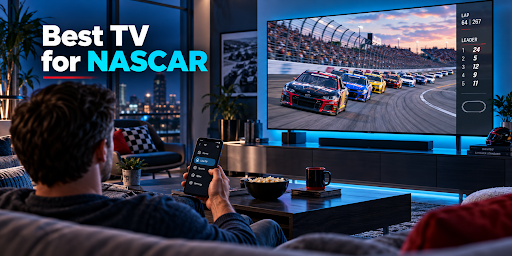
If you are looking for the best TV for NASCAR streaming, don’t choose a television based on resolution alone. Fast motion handling, screen brightness, reflections, viewing angle, app support, Wi-Fi stability, and easy control matter more during a three-hour race than a long list of marketing features.

That matters even more in 2026 because NASCAR viewing is spread across multiple platforms. NASCAR’s official viewing guides show Cup Series coverage across FOX Sports, NBC Sports/USA, Amazon Prime Video, and TNT Sports. Prime Video carries five Cup Series races in 2026, while TNT Sports also carries five mid-season Cup races. Meanwhile, Nielsen reported that streaming represented 48.5% of U.S. TV watch time in June 2026.

For many fans, the best TV for NASCAR streaming isn’t simply the one with the sharpest demo reel; it is the one that handles racing motion well and makes switching between apps and services painless.

A smartphone can complete that setup. With the right TV and a compatible phone app, you can search for races, change volume, switch inputs, launch streaming apps, and recover quickly when the physical remote disappears.

1. What Makes the Best TV for NASCAR Streaming?

The best TV for NASCAR streaming should make a fast-moving race look clean, bright, and easy to follow. NASCAR is visually demanding because the picture constantly combines moving cars, fences, track textures, camera pans, sponsor graphics, timing towers, and rapidly changing shots.

Start with five priorities:

  • A native 120Hz-class panel or better for strong motion performance
  • Good image processing for lower-bitrate or compressed streams
  • Enough brightness and reflection control for daytime races
  • Wide viewing angles if friends watch from different seats
  • A smart TV platform that supports the services you use

A 4K panel is still a sensible baseline for a new television, but 4K resolution alone doesn’t guarantee a better race.

A cheaper 60Hz set with weak motion processing may look less convincing during a high-speed camera pan than a stronger 120Hz model. This is especially noticeable when the camera follows a pack of cars through a corner and the background rushes across the screen.

That is why our definition of the best TV for NASCAR streaming starts with motion and usability, not resolution alone.

In practical terms, the best TV for NASCAR streaming should preserve car detail during pans without making the broadcast look unnaturally smooth.

For example, imagine watching the Daytona 500 on two 65-inch TVs. Both are 4K. One uses a basic 60Hz panel while the other has stronger 120Hz motion handling. During static interviews, they may look similarly sharp. Once the field reaches racing speed, differences in motion clarity can become much more obvious.

2. Why Motion Handling Matters More Than a “4K” Sticker

Race cars can cross the frame in a fraction of a second. If the television has slow pixel response, poor motion processing, or aggressive smoothing, the image can look blurry, smeared, or unnaturally processed.

For NASCAR, you want a TV that keeps numbers, sponsor logos, and car edges reasonably clear as the camera follows the field.

A native 120Hz panel is a strong target even when the stream itself is delivered at a lower frame rate.

The extra panel capability gives the TV more flexibility for motion processing and makes it more useful for gaming and other high-frame-rate content.

For example, LG lists the 2026 OLED evo C6 with a 120Hz native panel and VRR support up to 165Hz. Samsung’s 2026 S95H OLED includes high-refresh Motion Xcelerator features, while TCL lists the QM8K with a native 144Hz panel.

Those specs don’t automatically make one model the best TV for NASCAR streaming, but they are relevant indicators for fast sports.

Do not simply turn every motion setting to maximum.

Excessive interpolation can create artifacts around cars, safety fences, wheels, and on-screen graphics. Start with a Sports or Standard preset, then increase motion smoothing only enough to improve clarity without making the broadcast look artificial.

This is where testing matters. Watch a camera pan across the grandstands or follow a car through a high-speed turn. If details remain reasonably clean without strange halos, you are moving in the right direction.

3. Choose the Right Screen Size for Your NASCAR Setup

A large screen makes racing easier to follow because you can see more detail in the pack, timing graphics, and trackside action.

But the best TV for NASCAR streaming is not automatically the largest model that fits through the door.

Think about seating distance and room layout.

For a typical living room, 65 inches is a strong all-around size. If you sit farther away or regularly host race-day groups, 75 to 85 inches can create a much more immersive experience.

In a smaller room, 55 inches may still be ideal because you can easily scan the entire screen.

Consider this practical example:

Screen sizeGood use case
55 inchSmall room or closer seating
65 inchBalanced living-room option
75 inchGroup viewing and larger rooms
83–85 inchPremium race-day setup

The important point is visibility.

The best TV for NASCAR streaming should let you read position graphics and identify cars without forcing you to lean forward.

For race-day groups, the best TV for NASCAR streaming also needs enough size and off-axis consistency for people sitting away from the center seat.

Imagine six people watching Talladega from a wide sectional sofa. A display that looks fantastic only from the center seat may be less useful than one that maintains good color and contrast farther to the side.

That is why viewing angle belongs on your checklist alongside refresh rate and brightness.

4. Bright-Room Performance Can Make or Break a Daytime Race

Many NASCAR events happen during the day, so your TV may compete with windows, lamps, and room reflections.

That makes brightness and anti-reflection performance especially important.

OLED TVs offer excellent black levels and very fast pixel response, but a bright room can still favor a television with strong reflection handling.

Mini-LED TVs can also be attractive for daylight viewing because they can deliver high brightness across large areas of the image.

Samsung’s S95H is a useful example because Samsung lists Glare Free anti-reflection technology and an Ultra Viewing Angle on the model.

That combination matters in a room where several people watch from different seats.

TCL’s QM8K uses a QD-Mini LED backlight, a 144Hz native panel, and emphasizes strong brightness performance.

LG’s C6 combines OLED response with its current Brightness Booster processing and OLED Motion features.

For a dark media room, OLED contrast may be the priority. For a sunny living room, the best TV for NASCAR streaming may be the model that controls reflections better, even if another television wins in a dark showroom.

That bright-room advantage can matter more than absolute black level when choosing the best TV for NASCAR streaming for afternoon races.

Before buying, look at your room at the actual time races are normally on.

If a window reflects directly into the screen at 2 p.m., that real-world condition should influence your decision more than a specification sheet.

5. Three Strong TV Types to Consider in 2026

No single TV is best for NASCAR streaming in every room and budget, but three current models show what to prioritize.

TVWhy it suits NASCARSmart advantageBest for
LG OLED evo C6120Hz native OLED, fast response, strong contrastwebOS 26, ThinQ, AirPlay, Google CastBalanced premium setup
Samsung OLED S95HGlare-free screen, wide viewing angle, strong motion featuresTizen, SmartThings, Google CastBright rooms and groups
TCL QM8KNative 144Hz QD-Mini LED panelGoogle TV, Chromecast, AirPlay 2Large-screen value

LG OLED evo C6: balanced premium choice

LG’s 2026 C6 is a compelling candidate for the best TV for NASCAR streaming because it combines OLED pixel response with a 120Hz native refresh rate, modern video processing, Wi-Fi 6, and current streaming features.

LG also lists Google Cast, Apple AirPlay, webOS 26, and LG ThinQ phone-remote support.

This combination makes sense for viewers who want NASCAR, movies, console gaming, and general streaming from the same display.

Samsung S95H: strong for reflections and side seating

The S95H stands out when daytime glare is a major problem.

Samsung lists Glare Free anti-reflection, an Ultra Viewing Angle, OLED HDR processing, and advanced motion features. It also includes SmartThings functionality and mobile-to-TV features.

If your race-day gathering includes several seats across a wide room, those features matter most.

TCL QM8K: large-screen, high-refresh alternative

TCL’s QM8K uses Google TV, a native 144Hz panel, and QD-Mini LED technology.

It also supports Chromecast, AirPlay 2, and Wi-Fi 6 on major sizes, giving it a strong smart-platform foundation.

These are examples, not the only good choices.

The best TV for NASCAR streaming is ultimately the model that fits your room, preferred apps, and budget.

A useful shortlist should therefore compare best TV for NASCAR streaming candidates by room conditions as well as panel technology.

6. Check NASCAR Streaming Apps Before You Buy the TV

App compatibility matters more in 2026 because NASCAR Cup Series coverage is split among several rights holders.

NASCAR’s official 2026 guides show early-season coverage on FOX and FS1, five Cup Series races on Prime Video, five mid-season Cup races on TNT Sports, and late-season coverage across NBC and USA.

For Prime Video specifically, NASCAR lists five 2026 Cup Series races: Charlotte, Nashville, Michigan, Pocono, and Naval Base Coronado.

TNT Sports similarly carries five mid-season Cup Series races, with streaming availability through HBO Max’s sports offering.

That fragmentation changes how you should evaluate the best TV for NASCAR streaming.

Before buying, verify whether the TV platform supports the services you actually use.

Viewing needWhat to verify
FOX / FS1Live-TV provider or supported streaming app
Prime VideoCurrent Prime Video app
TNT SportsTV provider and Max availability
NBC / USAPeacock and live-TV setup
NASCAR extra contentSupported FAST and streaming services

NASCAR’s September 2026 viewing guide also lists the NASCAR 24/7 channel on Prime Video, Roku, Samsung TV Plus, Tubi, and Xumo.

A fast processor and a good smart-TV platform therefore contribute directly to the best TV experience for NASCAR streaming.

If the interface is slow or a required app is unavailable, excellent panel quality will not fix the inconvenience.

In 2026, app coverage matters in the best TV for NASCAR streaming decision because a season can move between several services.

7. Turn Your Smartphone Into the Race-Day Remote

Once you have the best TV for NASCAR streaming for your room, your smartphone can become the control center.

For an iPhone household, a compatible remote control app for ios can be useful when the television supports network control.

LG, Samsung, Google TV, Roku, and other ecosystems offer different ways to interact with your phone.

The smartphone’s biggest advantage is text entry.

Suppose you want to search:

NASCAR Cup Series Michigan

Typing that phrase with a phone keyboard can be much quicker than moving across an on-screen keyboard one letter at a time.

A good remote TV app also helps you change volume, navigate menus, and launch apps when the original physical remote is across the room.

Your phone is especially helpful during a race weekend when you may switch among qualifying, pre-race shows, live timing, and the main race.

The objective is not to eliminate every physical remote.

Instead, use the phone as a second control point so you can operate the TV more easily during long race-day sessions.

8. How to Set Up Phone Control Before the Green Flag

Do not wait until the formation lap to configure your phone.

Step 1: Put the phone and TV on the same network

Many smart-TV control systems use the local network.

Confirm that your smartphone and television are connected to the same home Wi-Fi, not separate guest and primary networks.

Step 2: Install the correct control app

Start with your TV manufacturer’s supported application.

If you prefer a third-party TV remote app, check its current compatibility, pricing, privacy permissions, and supported functions.

If you decide to download remote TV app software, verify that basic commands such as navigation, mute, volume, app launching, and Home work with your television.

Step 3: Pair your phone

Select the television from the app.

Your TV may display a PIN or permission prompt. Approve it, then test:

  • Home
  • Back
  • Direction pad
  • Volume
  • Mute
  • App navigation

Step 4: Test the NASCAR workflow

Open the platform carrying the race.

Search for the event, launch the stream, adjust the volume, and return to the home screen once to confirm everything works.

For a household with several TV brands, you may instead choose to download universal remote TV app software and build separate device profiles.

That can make universal remote TV control much more convenient on race day.

The best time to test all of this is 15 to 30 minutes before the broadcast begins.

That preparation helps the best TV for NASCAR streaming deliver a smooth experience instead of becoming another device you have to troubleshoot when the race starts.

9. Optimize Picture Settings for NASCAR

Even the best TV for NASCAR streaming can look disappointing with poor settings.

Start with the television’s Sports, Standard, or Custom mode rather than an extremely vivid showroom preset.

Motion

Use moderate motion processing.

The goal is clearer camera pans, not an artificial video look.

Watch the timing tower and individual cars while the camera follows the field. If outlines begin to shimmer or break apart, reduce interpolation.

Brightness

In a sunny room, use a brighter picture mode or the TV’s ambient-light controls.

At night, reduce brightness to a comfortable level.

The ideal setting for a 2 p.m. race may differ greatly from one used for a night race at Daytona.

Audio

Race broadcasts combine engines, commentary, spotters, crowd noise, and track ambiance.

If the announcers are difficult to hear, try Clear Voice, Dialogue Enhancement, or the equivalent feature before simply increasing overall volume.

The best TV for NASCAR streaming is the television you can comfortably watch for several hours.

More processing is not always better.

A calibrated, comfortable picture usually makes NASCAR streaming more enjoyable than a hyper-bright showroom preset.

10. Fix Streaming or Remote Problems Quickly

When something goes wrong, separate the TV-control problem from the streaming problem.

SymptomLikely problemFirst action
Phone cannot find TVNetwork mismatchCheck Wi-Fi on both devices
Phone remote lagsWeak local networkImprove Wi-Fi signal
Race buffers but remote worksInternet or streaming serviceTest the connection
TV app crashesApp/software issueRestart app, then TV
Motion looks blurrySource/settings issueAdjust motion controls
Audio and video driftStream/device syncRestart the stream

A useful diagnostic rule is simple: if your phone changes the television volume instantly but the race keeps buffering, the remote application is probably working.

If you use a remote control app for iOS, keep both the app and TV firmware reasonably current.

A wired Ethernet connection can also help when the television is far from the router.

Wi-Fi 6 support, available on models such as the LG C6 and many TCL QM8K sizes, can be useful on a modern home network, but good router placement still matters.

The best TV for NASCAR streaming cannot compensate for an overloaded or unstable internet connection.

Reliable networking is therefore part of the best TV setup for NASCAR streaming, especially when several household members are streaming or gaming at the same time.

11. Frequently Asked Questions

Is OLED or Mini-LED better for NASCAR?

Both can work extremely well.

OLED provides fast pixel response, excellent contrast, and strong viewing angles. Mini-LED can provide excellent brightness for daytime viewing.

The best TV for NASCAR streaming depends on your main priority: dark-room contrast, bright-room visibility, screen size, or budget.

Do I need a 120Hz TV for NASCAR streaming?

No, but a native 120Hz-class panel is a strong choice for fast sports.

It gives the TV more flexibility for motion processing and is common on higher-performance models.

For a long-term purchase, 120Hz is a sensible target.

Does NASCAR stream in 4K?

Quality varies by race, broadcaster, provider, and streaming platform.

Do not buy a television assuming every NASCAR event will be delivered in native 4K.

A good 4K TV still matters because its processor must upscale and clean up HD or compressed streams.

Can I control NASCAR streaming from my smartphone?

Yes, when your television supports phone-based control.

Depending on the TV, you can use the manufacturer’s app or a compatible universal remote app to navigate, control volume, manage playback, and use other common controls.

What TV size is best for NASCAR?

For many living rooms, 65 inches offers a strong balance.

A 75- to 85-inch screen works well for larger spaces and race-day groups.

The best TV for NASCAR streaming should be large enough for timing graphics and car numbers to remain readable from your normal seat.

12. Final Thoughts

Choosing the best TV for NASCAR streaming really comes down to selecting a television that handles racing conditions well: fast motion, long viewing sessions, daytime reflections, multiple streaming apps, and group seating.

For a balanced premium setup, the LG OLED evo C6 is a strong example because it combines OLED response, a 120Hz native panel, current streaming support, and smartphone control through LG ThinQ.

Samsung’s S95H is particularly attractive for bright rooms because of its Glare Free screen and wide viewing angle.

TCL’s QM8K is worth considering when you want a large, bright Mini-LED display with Google TV and a native 144Hz panel.

The streaming side matters just as much.

NASCAR’s 2026 Cup Series coverage spans FOX Sports, NBC/USA, Prime Video, and TNT Sports, while Nielsen reported that streaming represented 48.5% of U.S. TV watch time in June 2026.

A modern smart-TV platform is therefore part of what makes the best TV for NASCAR streaming, not an afterthought.

Finally, connect your phone before race day.

A reliable universal remote TV control setup gives you a quick way to search, switch services, change volume, and control the television if the physical remote goes missing.

The result is not just a better television. It is a smoother NASCAR viewing system from green flag to checkered flag.

Sources

  • NASCAR.com — How to watch NASCAR races on Amazon Prime Video, January 28, 2026. Prime Video carries five Cup Series races in 2026.
  • NASCAR.com — How to watch NASCAR races on FOX Sports, January 28, 2026.
  • NASCAR.com — How to watch NASCAR on TNT Sports, HBO Max and truTV, January 28, 2026.
  • NASCAR.com — How to watch NASCAR races on NBC, USA, August 5, 2026.
  • Nielsen — June 2026 Gauge report: streaming represented 48.5% of TV watch time.
  • LG — Official 2026 OLED evo C6 specifications.
  • Samsung — Official 2026 OLED S95H specifications.
  • TCL — Official QM8K QD-Mini LED specifications.
Haiden Deegan Breaks Through for First Premier Class Victory at SMX World Championship Playoff 1 in Columbus

Historic Crew Stadium
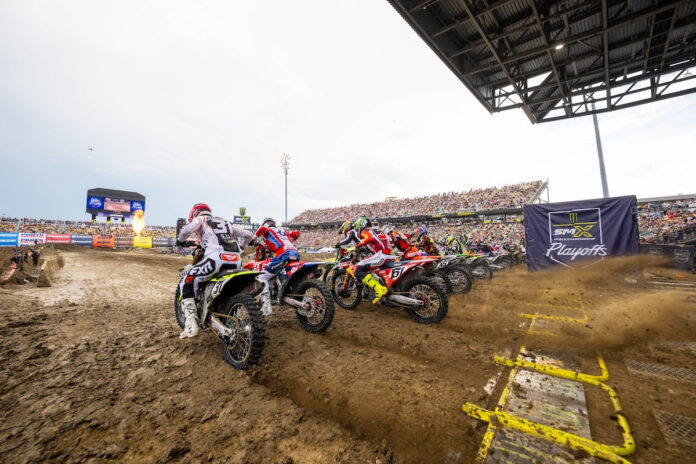
A sellout crowd braved the weather inside Historic Crew Stadium to kick off the 2026 Monster Energy SMX World Championship Playoffs.

Levi Kitchen Emerges in 250SMX Class with Consistent Performance

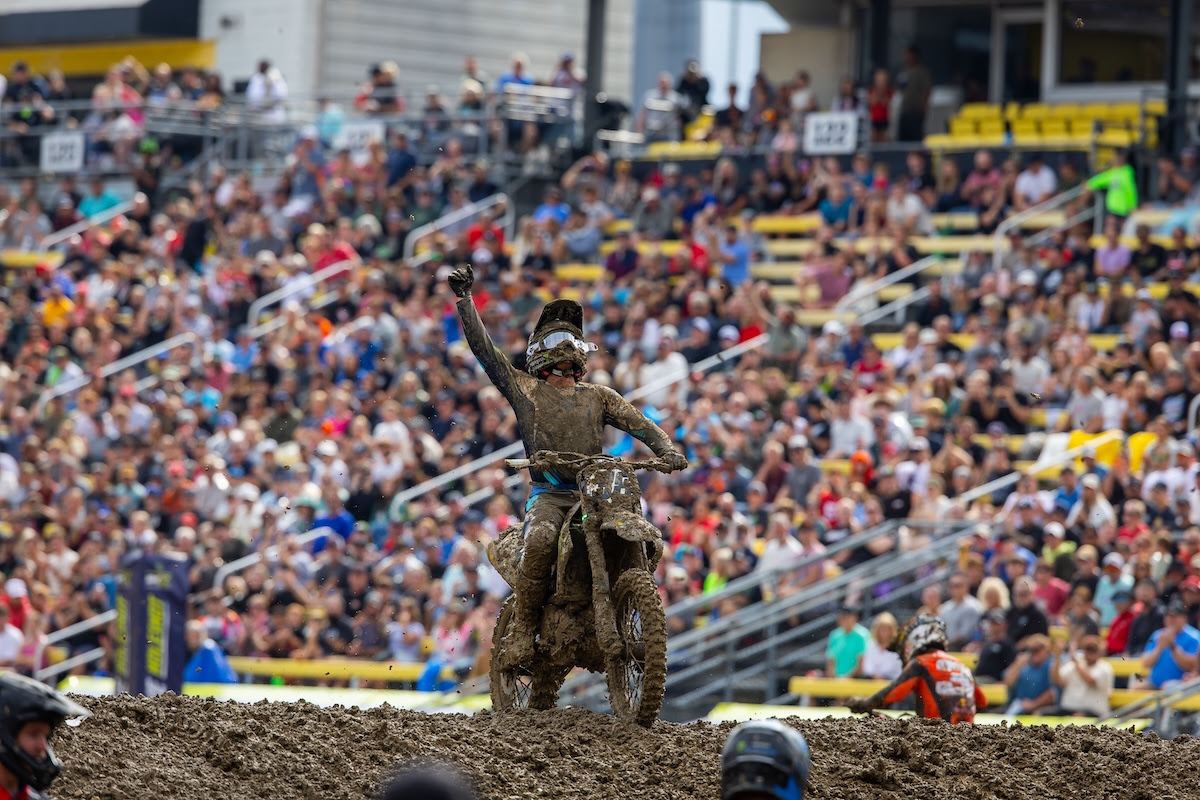
COLUMBUS, Ohio (September 12, 2026) – Playoff 1 for the 2026 Monster Energy SMX World Championship got underway amidst rainy conditions inside Historic Crew Stadium, which presented an unpredictable and challenging dynamic for the start of the postseason. A passionate and enthusiastic sellout crowd braved the weather as a muddy afternoon of racing saw Monster Energy Yamaha Star Racing’s Haiden Deegan break through for his first premier class victory in the 450SMX Class, while Monster Energy Pro Circuit Kawasaki’s Levi Kitchen came out on the winning end of a tiebreaker to prevail in the 250SMX Class.

Due to the weather and wet track conditions, the first motos for each class were shortened to 15 Minutes + 1 Lap, while the second motos were shortened to 12 Minutes + 1 Lap in an effort to help preserve the racing surface.

The opening moto for the 450SMX Class got underway with Red Bull KTM Factory Racing’s Jorge Prado leading the field to the holeshot with Deegan and Quad Lock Honda’s Joey Savatgy in tow. Further back in the field Honda HRC Progressive’s Hunter Lawrence, the top seed and newly crowned Pro Motocross Champion, went down and started last.

Deegan closed in on the Spaniard and made the pass right before the completion of the first full lap. Progressive Insurance Cycle Gear Suzuki’s Ken Roczen, the reigning Supercross Champion, soon followed into second. As the leaders settled in, Lawrence encountered more misfortune and found himself on the ground once more, which effectively eliminated him from contention for the afternoon. Back up front, Deegan opened a multi-second lead over the field. Roczen started to take significant chunks out of his deficit, but Deegan responded to end the threat and carried on to his first checkered flag in the premier class by 17.2 seconds over his Suzuki counterpart. Prado finished in third, with Troy Lee Designs Red Bull Ducati Factory Racing’s Dylan Ferrandis in fourth and Twisted Tea Suzuki Progressive’s Jason Anderson in fifth.

The second moto kicked off with Deegan leading the way to the holeshot ahead of Prado and Roczen. Deegan took advantage of the clear track and tried to inch away, but Roczen made the move on Prado and tracked down Deegan to begin a brief battle for the lead. Behind them, Monster Energy Yamaha Star Racing’s Cooper Webb made the pass around Prado for third. Out front, Deegan fended off Roczen’s early pressure to stabilize his advantage.

As Deegan took advantage of lapped riders to extend his lead over Roczen, Webb and Prado traded positions, with the Spaniard able to briefly reclaim the position before Webb overtook him once more. Deegan, meanwhile, continued to show impressive poise in the treacherous conditions and completed a wire-to-wire moto win to sweep the day by 17.1 seconds over Roczen, who overcame a fall late in the race. Webb finished third, just ahead of Prado.

Deegan’s 1-1 performance netted him the first premier class victory in his 12th career start. Roczen enjoyed a consistent afternoon to finish in the runner-up spot (2-2) in his first start since capturing the Supercross title in May, while Prado rounded out the podium (3-4) in his SMX Playoff debut.

With his third-place finish, Prado improved upon his second seed in the 450SMX Playoff to move atop the standings and grab possession of the red plate for the first time. He holds a two-point lead over Deegan, who climbed from seventh to second, while Webb remains third, four points back. Roczen moved up from 10th to fourth (-8), while Lawrence’s 15th-place finish saw him drop from first to sixth (-10).

Haiden Deegan
Monster Energy Yamaha Star Racing’s Haiden Deegan began the postseason with his highly anticipated maiden 450SMX Class victory in a 1-1 effort.

Haiden Deegan (1-1) – 1st Place – 450SMX Class
“This is a dream come true. I just won a 450 race. This is crazy. I can’t express how happy I am right now. It’s just a weight off my shoulders, especially on a day like today when conditions were like this and I’m racing against guys with a lot more experience on a track like this. I’m just so happy and ready to keep it going.”

Ken Roczen (2-2) – 2nd Place – 450SMX Class
“Just nice and content [today]. That was my gameplan coming into here. I had a blast out there. To get a 2-2 [effort], I couldn’t ask for anything more, honestly. What a solid weekend. I can’t wait for the next [race].”

Jorge Prado (3-4) – 3rd Place – 450SMX Class
“I really don’t know what to say. My worst races came in the mud this year and I got up here on the [podium], which is amazing for me. Just improvement, from being in the top 15 [earlier in the season] to getting on the podium. We’re now leading the SMX series, and I cannot be happier than this.”

250SMX Class

The first moto for the 250SMX Class started with Monster Energy Yamaha Star Racing’s Cole Davies out front with the holeshot ahead of Rockstar Energy Husqvarna Factory Racing’s Daxton Bennick and Kitchen. Davies, the top seed and reigning Eastern Divisional Supercross Championship and Pro Motocross Champion, took full advantage of the clear track to open a significant lead over the field.

Davies dominated the first 12 minutes of the moto, opening an advantage of nearly 20 seconds and lapping up to 10th place. However, with just over three minutes left on the race clock Davies appeared to encounter issues with his Yamaha and eventually came to a stop on one of the track’s jumps, ending his race. That allowed Bennick to move into the lead as the Husqvarna rider kept it on two wheels and captured the moto win by 18.1 seconds over Kitchen, while Rockstar Energy Husqvarna Factory Racing’s Ryder DiFrancesco followed in third. ClubMX Yamaha’s Max Vohland finished fourth, with Monster Energy Yamaha Star Racing’s Caden Dudney in fifth. Davies’ DNF relegated him to 22nd place.

The second moto began with Bennick out front for the holeshot, but he was passed by Davies in the first rhythm section, while Honda HRC Progressive’s Chance Hymas slotted into third ahead of Kitchen. Much like the first moto, Davies stormed out to a healthy lead of more than 10 seconds, while Bennick asserted his hold of second. Behind them, the battle for third unfolded between Hymas and Kitchen, with the Kawasaki rider able to make the move.

As Davies continued to pull away, Bennick started to lose ground to Kitchen, who made a push over the second half of the race. He continued to inch closer to the Husqvarna and moved within striking distance coming to the white flag. Kitchen pulled the trigger on a quick and decisive pass to move into second, which had a significant impact on the overall classification.

Out front, Davies was in a class of his own and bounced back from the heartbreak of Moto 1 to take the second moto win by 16.5 seconds over Kitchen, with Bennick in third and DiFrancesco in fourth.

With his late pass and runner-up finish, Kitchen (2-2) and Bennick (1-3) finished the afternoon tied atop the overall classification with four points apiece. The second moto tiebreaker went in Kitchen’s favor to give him the first Playoff win of his career, while Bennick secured his fifth career SMX podium. DiFrancesco rounded out the overall podium in third (3-4), while Davies’ salvaged 11th overall (22-1).

Kitchen now sits atop the 250SMX Playoff standings after entering the weekend as the second seed. He holds a seven-point lead over DiFrancesco, who entered as the third seed, while Davies dropped to third, 10 points out of the lead.

Levi Kitchen
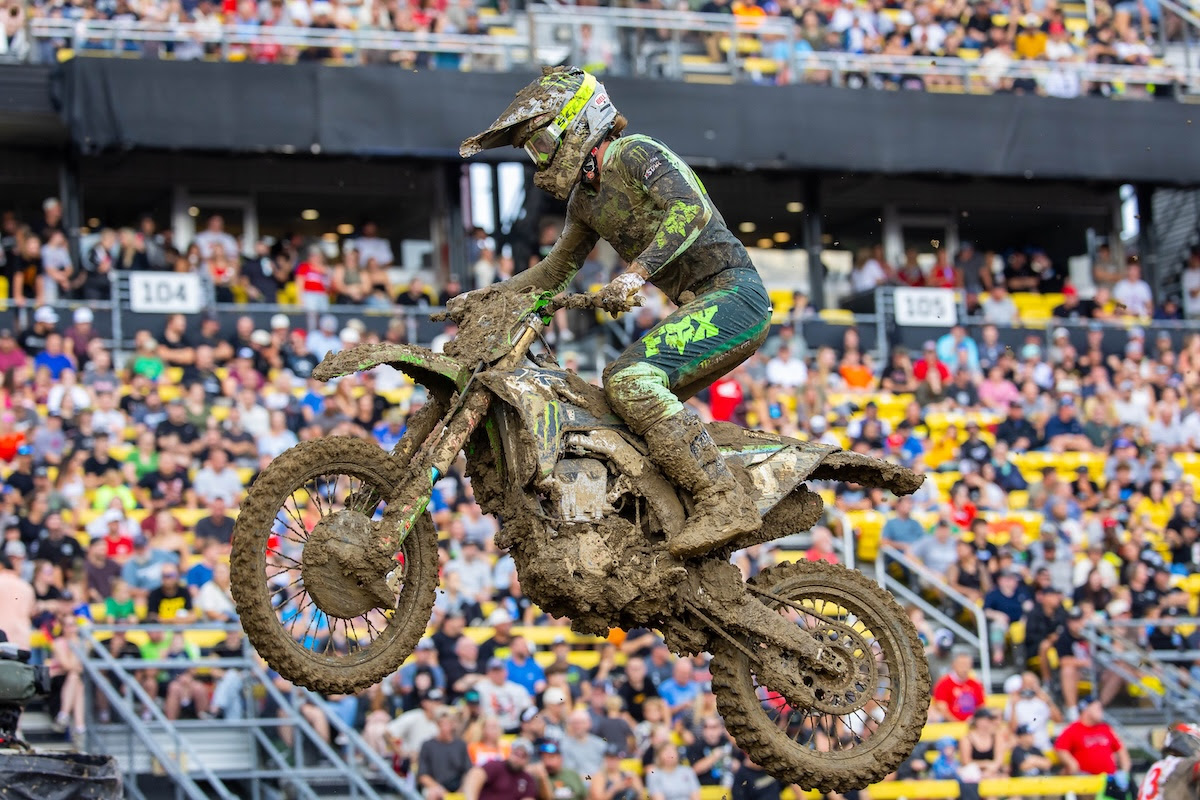
Even though he missed out on a moto win, a consistent 2-2 effort from Monster Energy Pro Circuit Kawasaki’s Levi Kitchen gave him the win and points lead.

Levi Kitchen (2-2) – 1st Place – 250SMX Class
“We were coming to the white flag and I saw Dax [Bennick]. I knew if I could get him I might have a chance, but I really had no idea. That was nice, I was able to put two motos together. This was a great race to have [to begin the Playoffs]. I’m feeling better and looking forward to next weekend.”

Daxton Bennick (1-3) – 2nd Place – 250SMX Class
“I gotta be happy with [today]. Two solid motos. I had [the win] with two laps to go but Levi [Kitchen] was riding good. Gotta give it to him. I’m just grateful for a great day and excited to start the Playoffs like this.”

Ryder DiFrancesco (3-4) – 3rd Place – 250SMX Class
“I just tried to get a good start and ride consistent laps. I figured if I could do that it would work out and that’s what happened. Excited to try and keep this going into next weekend.”

The SMX Next World All-Stars contested a shortened 6 Minutes + 1 Lap Main Event for the first of two Playoff races, which started with Monster Energy Kawasaki Team Green’s Kade Johnson out front with the holeshot. However, he was quickly passed by ClubMX Yamaha’s Ryder Malinoski while KTM Orange Brigade’s Wyatt Thurman gave chase from third.

The battle for the lead continued as Johnson made the pass to regain control of the race. Malinoski made another push to try and pass for the lead but lost control and dismounted his Yamaha. That allowed Thurman to take control of second. Malinoski briefly resumed in third but went down again and eventually dropped out of contention as Monster Energy Kawasaki Team Green’s Vincent Wey slotted into podium position.

Johnson kept it clean the rest of the way and took the second SMX Next victory of his career by 10.6 seconds over Thurman, while Wey rounded out the podium. Johnson has now amassed a four-race podium streak in SMX Next competition and will lead the All-Stars standings entering next weekend’s championship-deciding race, with a two-point lead over Thurman and a five-point lead over Wey.

Kade Johnson – 1st Place – SMX Next World All-Stars
“I was just patient. I’m trying to prove myself to get a pro contract. I just tried to ride my best, keep it on two wheels, and get the best result I could. I’ve been consistent recently and now have five podiums in-a-row. I think the start was critical there and it definitely helped [put me in a position to win].”

The Monster Energy SMX World Championship postseason will continue next Saturday, September 19, with Playoff 2 from Los Angeles’ Dignity Health Sports Park. Live comprehensive broadcast coverage will be available on Peacock, beginning at 1 p.m. ET with Race Day Live, followed by a Pre-Race Show at 6:30 p.m. ET and Gate Drop at 7 p.m. ET.

For information about the Monster Energy SMX World Championship, please visit www.SuperMotocross.com and be sure to follow all of the new SMX social media channels for exclusive content and additional information on the latest news:
Instagram: @supermotocross
Facebook: @supermotocross
X: @supermotocross
YouTube: @supermotocross
TikTok: @supermotocross

About the Monster Energy SMX World Championship:
The Monster Energy SMX World Championship™ is the premier off-road motorcycle racing series in the world that combines the technical precision of stadium racing with the all-out speed and endurance of outdoor racing. Created in 2022, the Monster Energy SMX World Championship Series combines the Monster Energy AMA Supercross Championship and the AMA Pro Motocross Championship into a 28-round regular season that culminates with the season-ending SMX World Championship Playoffs. Visit SuperMotocross.com for more information.

About Feld Motor Sports, Inc.:
Feld Motor Sports, Inc. is the worldwide leader in producing and presenting specialized arena and stadium-based motorsports entertainment. Properties include Monster Jam®, Monster Energy AMA Supercross, and the Monster Energy SMX World Championship. Feld Motor Sports, Inc. is a subsidiary of Feld Entertainment, Inc. Visit monsterjam.com, SupercrossLIVE.com, and feldentertainment.com for more information.

About MX Sports Pro Racing, Inc.:
MX Sports Pro Racing, Inc., manages and produces the world’s premier motocross racing series – the Pro Motocross Championship, sanctioned by AMA Pro Racing. MX Sports Pro Racing is an industry leader in off-road powersport event production and management, its mission is to showcase the sport of professional motocross competition at events throughout the United States. Through its various racing properties, partnerships and affiliates, MX Sports Pro Racing, Inc., organizes events for thousands of action sports athletes each year and attracts millions of motorsports spectators. Visit MXSportsProRacing.com for more information.

Long-Distance Move from Toronto: Things You Need to Know

Photo by cottonbro studio on Pexels

Moving from Toronto to another province is not complicated because of one single task. It becomes complicated because dozens of small things have to line up at the same time.

There is the pickup date, building access, packing, truck space, travel distance, delivery timing, insurance, and the question of what happens if your new home is not ready exactly when the shipment arrives. A move to Calgary, Vancouver, Winnipeg, Montreal, Edmonton or Halifax can cover thousands of kilometres, so small planning mistakes tend to become much more noticeable than they would during a local move.

That is why it helps to speak with experienced long-distance movers in Toronto before your moving date is close. A good moving company should be able to explain how the shipment will travel, how delivery timing works, what is included in the price, and who will be responsible for your belongings while they are in transit.

Start With the Route, Not the Boxes

People often begin a move by thinking about packing. For a long-distance relocation, the route and schedule should come first.

The distance between Toronto and Montreal is very different from the distance between Toronto and Vancouver. A moving company may also operate those routes differently depending on how its trucks are scheduled.

Before asking for a quote, have at least a rough idea of:

– where you are moving from and to;
– your preferred pickup period;
– when you can accept delivery;
– how much furniture and how many boxes you expect to move;
– whether either property has elevators, stairs, or limited truck access.

You do not need a perfect inventory on the first call, but the more accurate the information is, the more useful the initial estimate will be.

It is also worth asking whether the mover actually operates the route you need on a regular basis. A company that frequently runs between Ontario and Western Canada, for example, may be able to offer a more predictable schedule than one arranging the trip only occasionally.

The Cheapest Quote Can Be the Most Expensive One

Long-distance moving quotes can vary dramatically.

One company may appear hundreds of dollars cheaper than another, but that number means little unless you know what is included.

Ask whether the quote covers:

– loading and unloading;
– furniture wrapping;
– disassembly and reassembly;
– stairs or long carries;
– packing materials;
– storage if required;
– additional pickup or delivery stops;
– fuel and transportation charges.

The important question is not simply, “How much does the move cost?”

It is, “Under what circumstances can this price change?”

A quote that looks slightly higher but clearly defines the service can be far more useful than a low estimate followed by extra charges once the truck is loaded.

Ask Who Is Actually Moving Your Belongings

This is an easy detail to overlook.

Some moving companies handle the entire relocation with their own crews and trucks. Others may subcontract parts of the transportation to third-party carriers.

That does not automatically make one model better than the other, but you should know what you are buying.

Ask whether the same company will pick up and deliver the shipment. Find out who you contact while the truck is in transit and whether you will receive updates along the route.

For a move lasting several days, knowing who has your belongings and how to reach someone directly can make a significant difference.

## Dedicated and Consolidated Moves Work Differently

Long-distance household shipments generally move in one of two ways.

A dedicated move means the truck or a substantial portion of it is assigned specifically to your shipment. This gives the mover more control over pickup and delivery timing and may reduce handling along the way.

The downside is cost. Sending a truck thousands of kilometres for one household is expensive.

A consolidated move combines compatible shipments travelling in the same direction. For example, several customers moving from Ontario toward Alberta or British Columbia may share truck capacity.

This usually lowers transportation costs because the truck is not travelling partially empty.

The trade-off is scheduling flexibility. A consolidated truck may need to complete several pickups and deliveries along the route, so the delivery window can be wider.

Neither option is automatically better. A family with a strict possession date may value a dedicated move. Someone with flexible timing may save considerably by choosing consolidation.

Get the Price in Writing

A long-distance move is not the place for vague verbal pricing.

The written quote or contract should explain the expected cost and the conditions that could change it.

Pay particular attention to how the mover calculates the shipment. Ask whether pricing is based on weight, volume, truck space, or another method.

Also confirm how additional services are handled.

If your inventory increases before moving day, there should be a clear method for updating the quote rather than discovering a new price after everything has been loaded.

The same applies to access problems. If the truck cannot park near the entrance or a building requires a long carry, it is better to know in advance whether that changes the cost.

Insurance and Transit Updates Are Worth Asking About Early

Long-distance moves involve more time on the road and more handling than most local moves, so insurance or valuation coverage deserves attention.

Ask what protection is included automatically and whether additional coverage is available.

You should also understand how damage claims are handled. Keep photographs of valuable furniture and other important belongings before they are loaded.

Communication matters just as much.

Find out:

– who your point of contact will be;
– how often transit updates are provided;
– whether delivery windows are confirmed in advance;
– what happens if weather or road conditions create a delay.

A mover that explains these details clearly before pickup is usually easier to deal with if the schedule changes later.

Do Not Pack Everything Just Because You Own It

Cross-country moving costs are closely connected to how much space your belongings occupy.

That makes a long-distance relocation a good time to decide what is actually worth transporting.

Large, inexpensive furniture can sometimes cost more to move than to replace. The same is true for items that have been sitting unused in a basement or garage for years.

Before packing, separate belongings into four groups:

– move;
– sell;
– donate;
– discard.

Reducing the shipment can lower costs and save time at both ends of the move.

For furniture that is travelling, remove loose parts where possible and keep hardware in labeled bags. Protect finished surfaces with moving blankets or appropriate wrapping.

Take photographs of valuable pieces and make a simple inventory before loading.

Documents, medication, passports, jewelry, electronics containing important data, and anything you may need immediately should stay with you rather than going on the moving truck.

Toronto Has Several Common Cross-Canada Moving Corridors

Toronto is one of the main starting points for long-distance household moves in Canada.

Common routes include:

– Toronto to Calgary;
– Toronto to Edmonton;
– Toronto to Vancouver;
– Toronto to Winnipeg;
– Toronto to Montreal;
– Toronto to Halifax.

The route matters because distance is only part of the equation.

A frequently travelled corridor may offer more scheduling flexibility because moving companies already have trucks operating in that direction. Less common destinations may require additional coordination.

Weather also plays a role. A winter move across the Prairies or through Northern Ontario can operate very differently from the same route in summer.

When comparing companies, ask how often they service your destination and what delivery window they would normally expect for that particular route.

Leave Some Flexibility Between Pickup and Delivery

One of the easiest ways to make a long-distance move unnecessarily stressful is to plan everything around one exact delivery hour.

Road conditions, weather, previous deliveries and building restrictions can all affect timing.

If possible, avoid scheduling something critical immediately after the earliest expected delivery date.

Keep enough clothing, medication, work equipment and daily essentials with you to manage for a few days without the shipment.

That small buffer can turn an ordinary schedule change into a minor inconvenience instead of a major problem.

The Questions Matter More Than the Sales Pitch

Most moving companies can give you a polished estimate and promise that the move will go smoothly.

The useful information usually comes from asking more specific questions.

Who owns the truck?

Will another carrier handle the shipment?

Is the price fixed?

How is the shipment separated if the truck is consolidated?

What happens if the delivery window changes?

Who provides updates during transit?

How is damage coverage calculated?

Those answers tell you much more about the actual service than a low headline price or a few broad promises on a website.

A long-distance move from Toronto will always involve some variables. The goal is not to eliminate every one of them. It is to know, before moving day, which company is responsible for each part of the process, what you will pay, and what should happen between pickup and delivery.

How AI Video Can Transform Race-Week Content for Motorsports Media

Photo by depositphotos at https://depositphotos.com/

Motorsports content moves quickly. A single race weekend can produce practice updates, qualifying news, driver interviews, technical discussions, race previews, live reactions, post-race analysis, photography, and fan conversations. For publishers and independent creators, the challenge is not finding stories. The challenge is turning those stories into clear, engaging content quickly enough for the audience.

AI video tools can support this process by helping creators develop visual concepts, organize short scripts, and produce additional video formats from existing race-week information. They do not replace reporting, photography, interviews, or editorial judgment. Instead, they can make it easier to transform verified motorsports information into useful visual content.

A practical grok video ai workflow can be evaluated for short explainers, race-week summaries, social media clips, and visual story ideas. The most important rule is simple: verify the information before it becomes part of a published video.

Why Motorsports Media Is a Strong Fit for Short Video

Racing is naturally visual. Cars, tracks, pit stops, helmets, team garages, timing screens, tire choices, and driver reactions can all support short-form storytelling.

A written report may explain what happened, but a short video can help viewers understand the context. For example, a video can introduce a track, explain a race-week schedule, summarize a major storyline, or show why a particular strategy attracted attention.

Short videos can also reach audiences who do not read every article. A social media viewer may watch a 45-second explainer and then decide to read the full race preview. In this way, video becomes a supporting format rather than a replacement for detailed journalism.

Race-Week Content Ideas for AI Video

The best AI video concepts are connected to real editorial needs. Motorsports publishers can use video for several recurring formats.

Pre-race previews are one useful example. A short video can introduce the upcoming event, explain the schedule, highlight confirmed storylines, and tell viewers what to watch during the race.

Track explainers are another option. A creator can describe the general character of a circuit, the importance of braking zones, or the difference between short tracks, road courses, and superspeedways. Check any technical or historical detail against reliable sources before publication.

Post-race summaries can turn a completed event into a concise visual recap. The video might present the official result, a key moment, a strategy discussion, and the next question for the championship or team.

Driver and team features can also benefit from visual storytelling. A creator might produce a short profile based on verified public information, official statements, and approved images. The video should clearly distinguish confirmed facts from commentary.

How to Build a Motorsports AI Video

Step 1: Choose One Editorial Question

Every short video should answer one main question. Examples include:

  • What should fans know before this weekend’s race?
  • Why is this track different from the previous venue?
  • What was the main storyline after the race?
  • How did a team’s strategy affect the final result?
  • What should viewers watch during qualifying?

A focused question prevents the video from becoming a collection of unrelated facts.

Step 2: Gather Verified Information

Before writing the script, collect the information that the video will use. This may include an official schedule, a confirmed entry list, a published team release, a verified interview quote, a race result, or previously published editorial analysis.

Do not ask an AI system to guess missing information. It should not invent lap times, driver comments, penalties, championship standings, sponsorship details, or race results.

Create a short fact sheet with the following fields:

• Event name
• Date and time
• Series
• Location
• Confirmed participants
• Main storyline
• Source of each fact
• Editorial angle

This makes the script easier to review.

Step 3: Write a Short Script

A practical race-week video can use a simple structure:

  • Opening: Tell viewers what the video is about.
  • Context: Explain why the topic matters.
  • Details: Present two or three verified points.
  • Analysis: Add a clearly identified editorial observation.
  • Conclusion: Tell viewers what to watch or read next.

For example:

“This weekend’s race deserves attention for three reasons. First, the venue presents a different challenge from the previous event. Second, several teams are entering the weekend with important questions to answer. Finally, the schedule creates a short window for preparation. Here is what fans should watch before the green flag.”

The script should be direct and easy to follow.

Step 4: Develop Visual Concepts

A motorsports video doesn’t need to recreate a race that didn’t happen. It can use supporting visuals instead.

Possible scenes include:

• A stylized racing circuit
• A close-up of a racing helmet
• A generic pit-lane environment
• A moving schedule graphic
• A simplified tire or strategy illustration
• A dramatic view of cars entering a corner

When using generated visuals, clearly separate illustrative scenes from real race photography. The audience should not mistake a fictional visual for actual event footage.

Creators exploring visual direction can use grok imagine as a reference point for developing race-themed concepts, color palettes, and visual storyboards. Generated visuals should support the editorial message instead of presenting unverified events as real.

Step 5: Add Captions and Data Carefully

Captions are essential for mobile viewers and people watching without sound. Keep them short and place them where they do not cover the main visual.

If the video includes dates, times, standings, or results, check every number before publishing. A small error in a schedule or result can quickly erode trust.

Use graphics for simple information:

• Race weekend schedule
• Session names
• Confirmed result
• Key question
• Next event

Avoid putting too much data on one screen. A short video should guide the viewer toward the most important information.

Step 6: Create Multiple Versions

One race-week article can support several video formats.

A detailed preview can become:

• A 30-second social media summary
• A one-minute schedule guide
• A track-focused explainer
• A post-race question
• A short audio-visual quote card

This approach helps a newsroom or independent creator reuse research without repeatedly copying the same video. Each version should serve a different purpose and start differently.

Editorial Rules for Responsible AI Video

Accuracy is the most important standard in motorsports media. AI-generated content should never fabricate a driver quote, simulate a real crash, alter a race result, or imply that a fictional scene is authentic event footage.

Creators should also consider image rights, music rights, team branding, driver likeness, and platform rules. If a visual is illustrative, label it appropriately when necessary.

A responsible workflow includes human review at three points:

  • Before production, verify the facts.
  • During production, check that visuals do not imply false events.
  • Before publishing, review the final video for accuracy, clarity, and rights concerns.

Frequently Asked Questions

Can AI video replace motorsports journalism?

No. AI video can support presentation and production, but reporting, interviews, verification, analysis, and editorial responsibility remain human tasks.

What type of racing content works well in short video?

Race previews, schedule guides, track explainers, post-race summaries, strategy discussions, and verified team or driver features can all work well.

Should generated visuals look like real race footage?

Not necessarily. Illustrative visuals may be safer and clearer when they are obviously stylized. Real event footage should come from approved or properly licensed sources.

How long should a race-week video be?

The ideal length depends on the topic and platform. A focused explanation can often be delivered in under two minutes, while a deeper analysis may require a longer format.

What should be checked before publishing?

Verify names, dates, times, results, quotes, statistics, team details, visual rights, captions, and any statement that could be interpreted as factual.

Conclusion

AI video tools can help motorsports media create more timely and accessible content around race weekends. The strongest workflow begins with verified information and a clear editorial question. From there, creators can write a short script, build supporting visuals, add accurate captions, and adapt the story for multiple formats.

The technology should support the reporting rather than replace it. When human judgment, fact-checking, and creative direction remain at the center, AI video can help racing publishers explain events more clearly, reach new audiences, and keep fans engaged between races.

Jesse Love rallies for first elusive O’Reilly victory of 2026 at Gateway

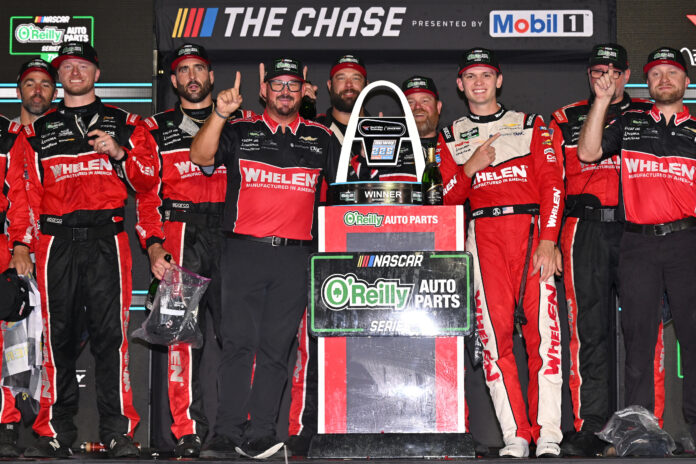
MADISON, ILLINOIS - SEPTEMBER 12: Jesse Love, driver of the #2 Whelen Chevrolet, and crew celebrate in victory lane after winning the NASCAR O'Reilly Auto Parts Series Nu Way 225 Powered by Bobcat and Sauced by Blues Hog at WWT Raceway on September 12, 2026 in Madison, Illinois. (Photo by Amy Kontras/Getty Images).

Jesse Love made an emphatic return to Victory Lane in the NASCAR O’Reilly Auto Parts Series by storming his way to a late victory in the Nu Way 250 at World Wide Technology Raceway on Saturday, September 12.

The reigning O’Reilly Auto Parts Series champion from Menlo Park, California, led four times for 70 of 180-scheduled laps in an event where he qualified on the front row, settled in fifth place following the first stage period, and steered clear of a bizarre stack-up and incident on pit road prior to the second stage period to restart on the front row for the latter stage’s start. Love then managed to lead for the first time on Lap 78 and cruise to the second stage victory.

After reassuming the lead from teammate Austin Hill to lead a majority of the early stages in the third and final stage period, Love, who withstood three cautions and restarts throughout the final stage, lost the lead to Kvapil at the start of a 41-lap shootout, but the former reassumed it with 16 laps remaining. From there, Love established a reasonable gap between himself and Sheldon Creed to achieve his first O’Reilly victory of the 2026 season and draw himself into the championship picture.

With on-track qualifying that determined the starting lineup occurring on Saturday, Chaser Carson Kvapil qualified on pole position for a second consecutive event with a pole-winning lap at 133.825 mph in 33.626 seconds. Chaser Jesse Love qualified in second place with a lap of 133.412 mph in 33.730 seconds.

Before the event, Lavar Scott and Josh Williams dropped to the rear of the field after unapproved adjustments to their respective entries.

When the green flag waved and the event commenced, pole-sitter Carson Kvapil gained an early jump from the outside lane, and he moved in front of Jesse Love exiting the frontstretch and entering the first two turns. As the field jostled for early spots for a single circuit, Kvapil cycled his No. 1 Wilde Chevrolet Camaro entry back to the frontstretch and led the first lap.

Over the next four laps, Kvapil stretched his early advantage up to seven-tenths of a second over Love while Chasers Corey Day and Austin Hill, along with non-Chaser William Sawalich, followed suit in the top five, respectively. Behind, Chasers Justin Allgaier and Sheldon Creed were racing in sixth and seventh, respectively, ahead of rookie Brent Crews and Chasers Rajah Caruth, Sammy Smith and Taylor Gray. Meanwhile, Sam Mayer, Brandon Jones and Parker Retzlaff were the three lowest-running Chasers in the field as they were in 12th, 16th and 17th, respectively, while Kvapil proceeded to lead by more than a second at the Lap 10 mark.

On Lap 12, the event’s first caution flew when Taylor Gray, who was in 10th place, spun beneath Rajah Caruth through the first two turns while both were battling for ninth place. Four laps later, the event restarted, and Kvapil mirrored his launch from the event’s start by motoring away from the field from the outside lane. As Kvapil led, Day motored his way into the runner-up spot while Austin Hill battled teammate Love for third place. While Allgaier and Creed battled for fifth place in front of Crews and Sawalich, Kvapil led the next lap. Kvapil proceeded to lead by six-tenths of a second over Day on Lap 20 while Love, Allgaier, Hill, Creed, Crews, Sawalich, Caruth and Sammy Smith followed suit, respectively.

Through the Lap 25 mark, Kvapil was leading by a second over Day while Allgaier, Love, Hill and Creed, all of whom were in the Chase, were racing in the top-six mark, respectively, with Creed trailing the lead by more than three seconds. Behind, teammates Crews and Sawalich occupied seventh and eighth on the track while Caruth, Mayer, Sammy Smith and Retzlaff rounded out the top-12 mark, respectively. Meanwhile, Brandon Jones was mired in 17th place and Gray, who pitted following his early spin, was up in 25th place.

Five laps later, Kvapil stabilized his advantage by more than a second over Day while Allgaier, who occupied third place in front of Richard Childress Racing’s Love and Hill, trailed by three-and-a-half seconds. Another three laps later, Love got loose through Turns 3 and 4, which allowed both Hill and Creed to overtake for top-five spots. As Love battled back Creed for fifth place, Crews and Sawalich reeled in from behind. Meanwhile, Caruth dropped to 11th while Mayer and Retzlaff moved up to ninth and 10th, respectively. While teammates Jones and Gray were mired in 17th and 27th on the leaderboard, Kvapil maintained the lead by more than a second over Day by Lap 40.

When the first stage period concluded on Lap 45, Kvapil cruised to his third O’Reilly stage victory of the 2026 season by half a second. Day followed suit in second ahead of Allgaier, Hill, Love and Creed while Crews, Sawalich, Mayer and Retzlaff were scored in the top 10, respectively. With eight of 12 Chasers securing the event’s first round of stage points, the remaining Chasers, including Sammy Smith, Caruth, Jones and Gray, were mired in 11th, 12th, 17th and 28th, respectively.

During the event’s first stage break period, the field led by Kvapil pitted for a first round of pit service. During the pit stops, a major and bizarre incident struck on pit road when Caruth, who entered pit road with the field under a cautious pace, got rear-ended by Nick Sanchez, and the latter two spun and collided into Brent Crews’ entry that was being serviced. The collision collected a handful of Crews’ pit crew members and occurred in front of Day as Day’s entry was being serviced with no contact. The collision also triggered a stack-up and accordion effect that involved a majority of the field racing within the top mid-pack region while damaging some that included Anthony Alfredo, Jeremy Clements, Harrison Burton, Brandon Jones, Dean Thompson, Ryan Sieg and Jeb Burton.

The multi-car incident on pit road was enough for the event to be placed in a red flag period for seven minutes and 54 seconds to have the carnage cleared. Once the red flag was lifted and the event proceeded at a cautious pace, all of the crew members were reported to be okay amid the collision, including Allgaier, who had a loose wheel, and the damaged entries pitted as Kvapil, who was among a handful of drivers who were ahead of the carnage, had beaten the field off pit road first to retain the event’s overall lead.

The second stage period started on Lap 53 as Kvapil and Love occupied the front row. At the start, Kvapil maintained the lead for a full cycle. As Kvapil led by half a second at the Lap 55 mark, Love outdueled Hill, Mayer and Sawalich for the runner-up spot. Behind, Day battled Creed for sixth place in front of Retzlaff and Sammy Smith while Gray navigated his way up to 10th place. As Allgaier navigated his way up to 14th place, Caruth and Jones were mired in 25th and 28th, respectively, with damaged entries while Kvapil stretched his lead out by eight-tenths of a second on Lap 60.

Through the Lap 70 mark, Kvapil extended his lead by three seconds over Mayer as Mayer overtook Love for the runner-up spot a lap prior. Meanwhile, Hill, Love’s teammate who pitted two laps earlier due to a loose wheel, plummeted to 30th while Sawalich, Creed, Day, Retzlaff, Sammy Smith, Allgaier and Gray were racing in the top 10, respectively. Further behind the top-10 mark, Caruth and Jones were racing in 21st and 24th, respectively.

Two laps later, the caution returned due to debris reported on the frontstretch. Prior to the caution, Alfredo had fallen off the pace due to a flat left-front tire on his entry. During this caution period, some, including Caruth and Jones, pitted while the rest, led by Kvapil, remained on the track. In addition, Hill cycled back to the lead lap by being the first competitor to score a lap down.

The event’s next restart on Lap 78 featured Kvapil battling Love as the field nearly fanned out from the frontstretch and through the first two turns. With Mayer occupying third place in front of the field, Love managed to overtake Kvapil entering the frontstretch and lead the next lap. Love led by three-tenths of a second over Kvapil by Lap 80 while Mayer and Creed followed suit. Meanwhile, Sawalich held fifth place over Day, Allgaier and Retzlaff while Love was being pressured by both Kvapil and Mayer for the lead at the Lap 85 mark.

When the second stage period concluded on Lap 90, Love outdueled Mayer and Kvapil to capture his fourth O’Reilly stage victory of the 2026 season. Mayer and Kvapil settled in second and third, respectively, while Creed, Sawalich, Allgaier, Day, Retzlaff, Sammy Smith and Ryan Sieg were scored in the top 10, respectively. By then, eight of 12 Chasers secured the event’s second round of stage points while the remaining Chasers, including Gray, Caruth, Jones and Hill, were mired in 14th, 16th, 23rd and 30th, respectively.

During the event’s second stage break period, the field led by Love returned to pit road for service. Following the pit stops, Love exited pit road first over Sawalich, Mayer, Kvapil and Creed while Allgaier lost two spots and exited pit road in eighth place behind Day and Retzlaff. Meanwhile, Hill, who remained on the track, inherited the lead.

With 82 laps remaining, the final stage period commenced as teammates Hill and Love occupied the front row. At the start, Hill received a push from Sawalich to gain a brief advantage from the outside lane through the frontstretch, but Love stormed back atop the leaderboard from the inside lane through the first two turns. Amid a brief scramble towards the front, Love led the next lap over Hill, Mayer and Day while Sawalich was trying to retain fifth place over Kvapil and Creed. Behind, Allgaier and Retzlaff battled for eighth place in front of Gray, Sammy Smith and Crews while Love maintained the lead by four-tenths of a second with 80 laps remaining.

Down to the final 70 laps, Love stretched his late lead by up to one-and-a-half seconds over Mayer while Day, Kvapil and Sawalich occupied top-five spots ahead of Creed, Allgaier, Hill, Gray, Retzlaff and Sammy Smith, respectively, on the track. Meanwhile, Caruth and Jones were mired in 16th and 22nd, respectively, as Love continued to extend his lead, where he led by more than two seconds over Mayer with 60 laps remaining.

Then with 54 laps remaining, the caution flew when Lavar Scott spun and backed his entry into the outside wall in Turns 3 and 4, where he sustained significant rear-end damage as he was reeling in Brandon Jones. At the time of caution, Love was leading by more than three seconds over Kvapil while Mayer, Day, Sawalich, Creed, Allgaier, Gray, Retzlaff and Hill were in the top 10. During this caution period, the field led by Love pitted, and Love retained the lead by exiting pit road first ahead of Kvapil, Mayer, Creed, Sawalich, Day, Gray, Allgaier, Sammy Smith and Retzlaff, respectively.

For the event’s next restart with 48 laps remaining, Love and Kvapil dueled for the lead in front of two-stacked lanes until Love, who restarted on the inside lane, motored ahead through the first two turns. Love proceeded to lead the next lap, and Kvapil retained the runner-up spot over Creed and Mayer while Sawalich and Day traded paint, bumped and fiercely battled for fifth place in front of Allgaier. Amid the late-race rubs, Day’s steady run at Gateway came to an end when he got bumped on the side by Sawalich, hit in the rear by Allgaier, sent for a spin down to the backstretch’s infield, and collided into the inside wall hard. This marked the second consecutive event where Day and Sawalich, who sustained a heavy tire and fender rub on his left side, had a run-in on the track after both tangled and rubbed fenders last weekend at Darlington Raceway.

As the event restarted with 41 laps remaining, the field fanned out as Love and Kvapil dueled for the lead through the first two turns before Kvapil motored ahead through the backstretch. As Creed overtook Love for the runner-up spot, Kvapil cycled back to the frontstretch and led the next lap. With Sammy Smith and Crews navigating their way into the top five, Crews was pressured by Mayer and Gray for fifth place while Allgaier was mired in 10th place behind Hill and Retzlaff. Allgaier would be overtaken by Kyle Sieg for 10th place, and both Mayer and Gray overtook Crews on the track for fifth and sixth, respectively, while Kvapil led by four-tenths of a second over Creed with 35 laps remaining.

Down to the final 30 laps, Kvapil was leading by two-tenths of a second over Creed while third-place Love trailed by a second. Seconds later, the caution flew due to a multi-car wreck that involved Brad Perez, Josh Bilicki and Joey Gase through the first two turns. During this caution period, select names, including Allgaier, pitted while the rest, led by Kvapil, remained on the track.

With 24 laps remaining, the event’s next restart featured Kvapil receiving a push from Creed to motor ahead of Love from the outside lane through the frontstretch before Kvapil transitioned to the inside lane entering the first two turns. As Kvapil completed a full cycle around Gateway before he led the next lap, Creed maintained the runner-up spot in front of a side-by-side battle for third place between Love and Mayer while Gray also tried to join the battle. Love would outduel Mayer for third place and overtake Creed for the runner-up spot over the next two laps as Kvapil maintained the lead by three-tenths of a second with 20 laps remaining.

Then with 17 laps remaining, Love, who had been reeling in Kvapil, seized an opportunity by driving to the rear of Kvapil’s entry through Turns 3 and 4 before the latter dueled with the former through the frontstretch. As both Creed and Mayer joined the battle, Love made the inside lane work to his advantage through the first two turns and resumed the lead. As Love led by four-tenths of a second with 15 laps remaining, Creed and Mayer overtook Kvapil for second and third, respectively, while Gray trailed in fifth place by under a second.

Down to the final 10 laps, Love stretched his late lead in his No. 2 Whelen Chevrolet Camaro entry by nine-tenths of a second over Creed while Mayer and Gray trailed by a second. Meanwhile, Kvapil lost fifth place to Austin Hill as Retzlaff, Crews, Sammy Smith and Kyle Sieg were racing in the top 10, respectively. Another five laps later, Hill made a second unscheduled pit stop under green to have a right-side tire addressed. With Hill dropping out of contention, Love continued to lead by more than a second over Creed.

When the white flag waved and the final lap started, Love remained in the lead by more than a second over Creed. With no competition lurking or reeling in from behind, Love smoothly navigated his way around Gateway for a final time before he cycled back to the front stretch and claimed his first elusive checkered flag of the 2026 season.

With the victory, Love recorded his fourth career win in the NASCAR O’Reilly Auto Parts Series division, his first at Gateway’s World Wide Technology Raceway and his first since he won both the finale and the 2025 championship at Phoenix Raceway this past November. Love, who also became the 12th competitor overall to win an O’Reilly event at Gateway, recorded the 23rd victory of the 2026 O’Reilly season for Chevrolet and the third for Richard Childress Racing.

Love, who entered Gateway situated in sixth place in the Chase standings, jumped two spots to fourth place and he trails the points lead by 16 points. He has seven events remaining to reel in and defend his O’Reilly championship with Richard Childress Racing before he graduates to full-time Cup Series racing with Wood Brothers Racing in 2027.

No. 2
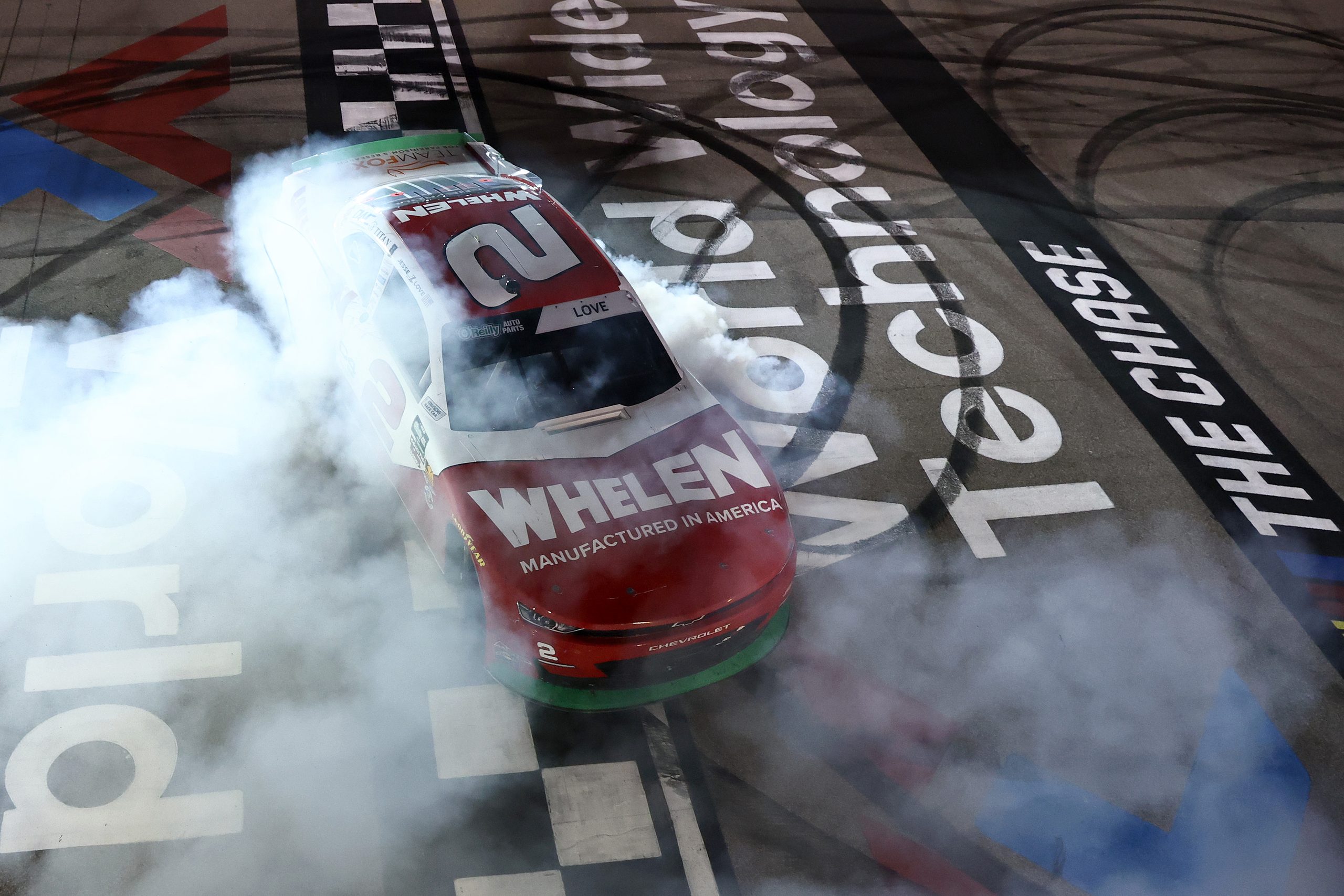
MADISON, ILLINOIS – SEPTEMBER 12: Jesse Love, driver of the #2 Whelen Chevrolet, celebrates with a burnout after winning the NASCAR O’Reilly Auto Parts Series Nu Way 225 Powered by Bobcat and Sauced by Blues Hog at WWT Raceway on September 12, 2026 in Madison, Illinois. (Photo by Chris Graythen/Getty Images)

“[I] Guess we had to put’em on the dash,” Love said on the frontstretch on the CW Network. “Just proud of our crew. Proud of my pit crew. Proud of my whole Whelen Engineering team…everybody that’s been so involved in repeating a championship this year. It’s been really hard, but I knew that if I keep my grit, if I keep my tenacity, if I keep my work ethic, not just keep it, but improve it, then eventually, one of these opportunities is gonna be there and I’m gonna freakin’ take it, which we freakin’ did tonight…Man, I’m just so grateful.”

Sheldon Creed, winner of last weekend’s Chase opener at Darlington Raceway, settled in the runner-up spot ahead of teammate Sam Mayer, the latter of whom continues his search of his first victory this season. Taylor Gray and Carson Kvapil, the latter of whom led a race-high 105 laps compared to Love’s 70, finished in the top five.

Parker Retzlaff, Brent Crews, Sammy Smith, Kyle Sieg and Jeb Burton completed the top 10 in the final running order. Notably, Crews, Sieg and Burton were the three highest-finishing non-Chasers in the top-10 mark. Meanwhile, the remaining Chasers, including Rajah Caruth, Justin Allgaier, Brandon Jones, Austin Hill and Corey Day, ended up 11th, 13th, 15th, 29th and 33rd, respectively.

The second NASCAR O’Reilly Auto Parts Series’ Chase event of the 2026 season featured eight lead changes for four different leaders, and seven cautions for 37 laps. In addition, 27 of 36 starters finished on the lead lap.

Race Results:

  1. Jesse Love, 70 laps led, Stage 2 winner
  2. Sheldon Creed
  3. Sam Mayer
  4. Taylor Gray
  5. Carson Kvapil, 105 laps led, Stage 1 winner
  6. Parker Retzlaff
  7. Brent Crews
  8. Sammy Smith
  9. Kyle Sieg
  10. Jeb Burton
  11. Rajah Caruth
  12. Dean Thompson
  13. Justin Allgaier
  14. Ryan Sieg
  15. Brandon Jones
  16. William Sawalich
  17. Patrick Staropoli
  18. Josh Williams
  19. Brennan Poole
  20. Blaine Perkins
  21. Mason Maggio
  22. Anthony Alfredo
  23. Jordan Anderson
  24. Ryan Ellis
  25. Myatt Snider
  26. Josh Bilicki
  27. Joey Gase
  28. Brad Perez, one lap down
  29. Austin Hill, one lap down, four laps led
  30. Lavar Scott, one lap down
  31. Jeremy Clements, 12 laps down
  32. Austin J. Hill – OUT, Electrical, one lap led
  33. Corey Day – OUT, Accident
  34. Nick Sanchez – OUT, Accident
  35. Harrison Burton – OUT, Accident
  36. Dawson Cram – OUT

*Bold indicates Chase Drivers

Following the second Chase event of the 2026 NASCAR O’Reilly Auto Parts Series season, Sheldon Creed leads the standings by three points over Justin Allgaier, nine points over Carson Kvapil, and 16 over Jesse Love. The rest of the 12-car Chase field is displayed below.

Chase Standings:

  1. Sheldon Creed
  2. Justin Allgaier -3
  3. Carson Kvapil -9
  4. Jesse Love -16
  5. Sam Mayer -61
  6. Austin Hill -61
  7. Sammy Smith -64
  8. Corey Day -69
  9. Brandon Jones -76
  10. Parker Retzlaff -83
  11. Taylor Gray -86
  12. Rajah Caruth -118

Next on the 2026 NASCAR O’Reilly Auto Parts Series schedule is the Food City 300 at Bristol Motor Speedway in Bristol, Tennessee. The event is scheduled to occur next Friday, September 18, and air at 7:30 p.m. ET on the CW Network, PRN Radio, and SiriusXM.

ARCA Menards Series at Salem Speedway: Spruce 212 Post-race Notes

  • Max Reaves (No. 18 Cook Out Toyota) started from the Sioux Chief PowerPEX Pole and led every lap on his way to his fourth ARCA Menards Series win of the season in Saturday’s Spruce 212 at Salem Speedway. This win is the eighth of the year for the Joe Gibbs Racing No. 18 team; they have four wins with Reaves, Elko Speedway, Berlin Raceway, Illinois State Fairgrounds, and tonight at Salem, and four with Giovanni Ruggiero, Daytona International Speedway, Kansas Speedway, Michigan International Speedway, and Pocono Raceway.
  • ARCA Menards Series championship points leader Jake Bollman (No. 20 Nitro Motorsports Toyota) finished second for the second straight week and fifth time overall in 2026. Bollman also has finished in the runner-up position at Daytona, Michigan, Elko, and last week at DuQuoin State Fairgrounds. He unofficially leads the ARCA Menards Series standings by 13 points over Nitro Motorsports teammate Thomas Annunziata (No. 70 JBL Toyota) with two races remaining.
  • Annunziata finished seventh after being involved in the race’s ninth caution; he was lapping to the outside of Ben Peterson (No. 06 Peterson Motorsports Ford) when the two made contact, sending Annunziata into a spin and damaging the left front corner of his car. Annunziata’s Shannon Rursch-led team made quick repairs and kept him on the lead lap, allowing him to pick up two positions in the final ten laps.
  • Hometown favorite Will Kimmel (No. 69 Aviation Tech / Burger Foundation Ford) rallied from brake issues under the first caution flag of the night to finish third. It was Kimmel’s 23rd career top-five finish and his best ARCA Menards Series finish since he finished fourth at Salem in 2024.
  • Landon S. Huffman (No. 97 Hoosier Daddy / Hoosier Mamma Car Care Products Chevrolet) recovered from a spin at lap 125 and a brush with the wall inside the final 20 laps that left the right rear quarter panel barely hanging on to finish fourth. It’s Huffman’s second top-five finish three career ARCA Menards Series starts; he finished third in his most recent start at Chicagoland Speedway in July.
  • Isabella Robusto (No. 55 Mobil 1 Toyota) scored her first top-five finish, fifth, since she finished fifth at Berlin Raceway in June; it was her 14th career top-five finish, extending her ARCA Menards Series record for most top-five finishes by a female driver.
  • Tristan McKee (No. 77 Spectrum Chevrolet) fought back from a broken right front sway bar arm, which was replaced under the second race break of the night, to finish sixth.
  • Gavan Boschele (No. 25 Toyota Racing Toyota) recovered from a spin caused by a soft right rear tire just before the second race break to finish eighth. Boschele lost two laps as a result, but was helped by two late-race cautions to regain his lead lap status.
  • Austin Vaughn (No. 91 TMI Gifts / Wood Sales Inc. Ford) received a series record six free passes to finish ninth, the final car on the lead lap.
  • Carson Brown (No. 28 Grizzly Coolers Chevrolet) spun after contact with Robusto to send the race into overtime. Brown, who has wins this season at Phoenix Raceway and last week at DuQuoin, finished tenth.
  • There were ten cautions for 61 laps which held the race’s average speed to 64.868 miles per hour.
  • Reaves’ margin of victory was 0.381 seconds.
  • The next race for the ARCA Menards Series is Bush’s Beans 200 at the Bristol Motor Speedway on Thursday, September 17. The race, set to begin at 5:30 pm ET, will be televised live on FS1. ARCARacing.com will have live timing & scoring data throughout all on-track activity and live race audio. Follow @ARCA_Racing on X (formerly Twitter) for up-to-the-minute updates.

About ARCA 
The Automobile Racing Club of America (ARCA), founded in 1953 by John and Mildred Marcum in Toledo, Ohio, and acquired by NASCAR in April 2018, is the leading grassroots stock car sanctioning body in the United States. Bridging the gap between NASCAR’s top three national touring series and weekly and regional tour racing all across the country, the organization to sanctions over 100 races per year in the ARCA Menards Series, ARCA Menards Series East, ARCA Menards Series West, ASA STARS National Tour, ASA CRA Super Series, ASA Midwest Tour, ASA Southern Super Series plus weekly racing at Toledo and Flat Rock Speedways. For more information about ARCA visit , or follow ARCA on Facebook (@ARCARacing) and Twitter (@ARCA_Racing). 

About Menards
A family-owned and run company started in 1958, Menards is recognized as the retail home center leader of the Midwest with 236 stores in 15 states.  Menards is truly a one-stop shop for all of your home improvement needs featuring a full-service lumberyard and everything you need to plan a renovation or build a home, garage, cabin, shed, deck, fence or post frame building.  You’ll find a large selection of lumber, roofing, siding, construction blocks, trusses, doors and windows, plus cabinets, appliances, countertops, flooring, lighting, paint, plumbing supplies and more.  To complete the job, Menards has quality hand tools, power tools, fasteners, electrical tools plus storage options and supplies for everyone from the weekend warrior to the pro!
 
Menards has what you need to complete your outdoor projects and keep your yard in tip-top shape including mowers, trimmers, blowers, pressure washers and more, plus a beautiful garden center stocked with plants, shrubs, trees, landscaping tools, grass seed, fertilizer options, outdoor décor and patio furniture.  Menards also has everyday essentials like health & beauty products, housewares, pet and wildlife supplies, automotive items and even groceries.  And at Christmas, an Enchanted Forest display area with impressive trees, lighting, decorations, ornaments, inflatables and more. 

Menards is known for friendly Customer Service and as the place to “Save Big Money” with low prices every day, and sales too!  For more information, please visit Menards.com to learn about our store locations, offerings and services.

RCR NOAPS Race Recap: World Wide Technology Raceway

Jesse Love and the No. 2 Whelen Chevrolet Team Excel at World Wide Technology Raceway, Finding Victory Lane and Advancing to Within 16 Points of Championship Lead

Finish: 1st
Start: 2nd
Points: 4th

“Everybody is so involved in defending the championship this year. It’s been really hard, but I knew if I could just keep my grit, keep my tenacity, and keep my work ethic – and not just keep it, but improve on it, then eventually, one of these opportunities was going to be there, and I would be there to take it, which we did tonight. We had a fast Whelen Chevrolet all day and it means a lot to win here because St. Louis is a special place for me. I got my first national midget win across the street, I made my first NASCAR Truck Series start here and got beat here last year, but we had a good car. I want to give all the glory to God for putting the right people in my life. This is a big win for everybody on the team, everyone in Welcome, North Carolina, and Chevrolet.” -Jesse Love

Two Unscheduled Green-Flag Pit Stops Spoil Top-Five Run for Austin Hill and the No. 21 Bennett Transportation & Logistics Chevrolet Team at World Wide Technology Raceway

Finish: 29th
Start: 6th
Points: 6th

“That one is really disappointing. Our Bennett Transportation & Logistics Chevrolet was fast on a long run. Fire off was a struggle but once we got eight or 10 laps into a run, the car would come to life. We were on track to have another top-five day with points in both stages, but unfortunately we had to make an unscheduled stop under green for a loose right rear before the end of Stage 2. We just had to take the hit and be easy on our stuff until we cycled back on the same tires as the leaders. Everyone kept their heads down and we did just that. Drove back up inside the top-five and were chasing third. Then with less than five to go, I could feel the right rear start falling off again. It wasn’t worth having a bigger issue so we pitted under green. We left a lot of points on the table tonight which is the worst part.” -Austin Hill

TOYOTA RACING – NOAPS Gateway Post-Race Report – 09.12.26

GRAY REBOUNDS FROM EARLY RACE SPIN TO TOP-FIVE
Crews, Thompson and Jones recover from damage to finish top-15

MADISON, Ill. (September 12, 2026) – Taylor Gray bounced back from an early race spin to drive through the field and lead Toyota with a fourth-place finish in the NASCAR O’Reilly Series race at World Wide Technology Raceway at Gateway. It is Gray’s second straight top-10 finish to open the Chase.

Brent Crews (seventh), Dean Thompson (12th) and Brandon Jones (15th) all recovered for top-15 finishes after being involved in a massive pit road incident early in the race.

TOYOTA RACING Post-Race Recap
NASCAR O’Reilly Auto Parts Series (NOAPS)
World Wide Technology Raceway at Gateway
Race 26 of 33 – 225 miles, 180 laps

TOYOTA FINISHING POSITIONS

1st, Jesse Love*
2nd, Sheldon Creed*
3rd, Sam Mayer *
4th, TAYLOR GRAY
5th, Carson Kvapil*
7th, BRENT CREWS
12th, DEAN THOMPSON
15th, BRANDON JONES
16th, WILLIAM SAWALICH
37th, HARRISON BURTON
*non-Toyota driver

TOYOTA QUOTES

TAYLOR GRAY, No. 54 Operation 300 Toyota GR Supra, Joe Gibbs Racing

Finishing Position: 4th

Bounced back from a spin early to finish top-five. Can you take us through your night?

“Yeah, first off, really proud of our whole Joe Gibbs Racing No. 54 group. They did an awesome job executing all night. Especially with the position I put us in early in the race; really honestly put us in a bad spot. It hindered us a lot and put us in a point where we weren’t going to get stage points all day. They did a great job fighting back and giving me a race car I could drive to the front there at the end. Really thankful to everyone at TOYOTA RACING, M-Experiment.”

WILLIAM SAWALICH, No. 18 SoundGear Toyota GR Supra, Joe Gibbs Racing

Finishing Position: 16th

How would you describe how the events unfolded?

“Yeah, our SoundGear GR Supra was pretty good tonight. Good run through stage one and two, and obviously our stage three was a little behind because of damage.”

Are you worried about any repercussions?

“I’m just worried about next week and Bristol and what I have to do with my team.”

HARRISON BURTON, No. 24 Dead On Tools Toyota GR Supra, Sam Hunt Racing

Finishing Position: 37th

What happened out there?

“I’m not sure what happened. The 51 (Jeremy Clements) was right in front of me, and I was just running my lights, and he ran into the guy in front of him, who ran into the guy in front of him and it looks like I got the worst of it. We knocked the radiator out of mine, just a horrible way to end the day. Just cruising down pit road – we were going to make a big change. We were really tight. We had a good qualifying effort and thought we would fire off better but too tight for our Dead On Tools Supra, and fell off the wagon. You get behind people and track position and that is what happens.”

About Toyota

Toyota (NYSE:TM) has been a part of the cultural fabric in North America for nearly 70 years, and is committed to advancing sustainable, next-generation mobility through our Toyota and Lexus brands, plus our more than 1,800 dealerships.

Toyota directly employs nearly 64,000 people in North America who have contributed to the design, engineering, and assembly of over 50 million cars and trucks at our 14 manufacturing plants. In 2025, Toyota’s plant in North Carolina began to assemble automotive batteries for electrified vehicles.

For more information about Toyota, visit www.ToyotaNewsroom.com.

Joey Logano wins 35th Cup career pole at Gateway

Photo by John Knittel for SpeedwayMedia.com.

Joey Logano achieved the Busch Light Pole Award for the Enjoy Illinois 300 at World Wide Technology Raceway (Gateway) in Madison, Illinois, on Saturday, September 12.

The event’s starting lineup was determined through an on-track qualifying session that consisted of a single-car, single-lap qualifying format. During the session, each of the 36 competitors vying for 36 starting spots cycled around Gateway a single time to post the fastest lap amongst one another. The competitor who posted the fastest lap earned pole position.

During the session, Logano, who was the second-fastest competitor in practice on Saturday prior to qualifying, utilized his single-lap session to post a lap at 137.124 mph in 32.817 seconds. The lap was enough for the three-time NASCAR Cup Series champion from Middletown, Connecticut, to achieve the top-starting spot for the second Chase event of the 2026 Cup Series season.

With the pole, Logano notched his 35th Cup Series career pole for his 643rd series start, his first at Gateway and his second of the 2026 season, with his previous pole occurring at Phoenix Raceway in March. Logano, who is currently ranked in ninth place in the 2026 Chase standings, emphasized Gateway being a golden opportunity for him and his No. 22 Team Penske Ford team to draw themselves back within striking distance of competing for a championship, with Logano also attempting to become the first repeat Cup winner at Gateway for Sunday’s main event.

“The [No. 22] guys are doing a good job,” Logano said. “This is the racetrack that we had circled that we need to capitalize on. We know our points situation. We need to score max points here. Starting upfront will help that, for sure. I just got to manage the strategy. It’s definitely got a fast car. The Shell/Pennzoil Mustang, in race trim, was really good. Short run, long run. Obviously, qualifying was spectacular. Overall, proud of the team and proud of the effort and the chance that we got.”

Logano will share the front row with Kyle Larson, the reigning two-time Cup Series champion who is ranked in seventh place in the Chase standings. Larson posted the second-fastest lap during Saturday’s qualifying session at 135.980 mph in 33.093 seconds. 

Chasers Ryan Blaney, Christopher Bell, Chase Briscoe, Carson Hocevar, Bubba Wallace, Chase Elliott, Ty Gibbs and Denny Hamlin qualified in the top 10, respectively. Blaney, the 2023 Cup Series champion, was the fastest competitor in practice, and Bell is coming off his first victory of the 2026 season at Darlington Raceway for the Southern 500 and to commence the 2026 Chase. 

With 10 of 16 Chasers occupying the top-10 starting spots, the remaining Chasers, including Austin Cindric, Ryan Preece, Daniel Suarez, Tyler Reddick, Chris Buescher and William Byron, will start 13th, 14th, 15th, 18th, 21st and 24th, respectively. Notably, Alex Bowman and Zane Smith are the two-highest non-Chase qualifiers for Sunday’s main event as they will line up in 11th and 12th, respectively.

With 36 competitors vying for 36 starting spots, all made the main event.

Gateway – Qualifying Position, Best Speed, Best Time:

  1. Joey Logano, 137.124 mph, 32.817 seconds
  2. Kyle Larson, 135.980 mph, 33.093 seconds
  3. Ryan Blaney, 135.898 mph, 33.113 seconds
  4. Christopher Bell, 135.767 mph, 33.145 seconds
  5. Chase Briscoe, 135.546 mph, 33.199 seconds
  6. Carson Hocevar, 135.395 mph, 33.236 seconds
  7. Bubba Wallace, 135.355 mph, 33.246 seconds
  8. Chase Elliott, 135.302 mph, 33.259 seconds
  9. Ty Gibbs, 135.294 mph, 33.261 seconds
  10. Denny Hamlin, 134.086 mph, 33.312 seconds
  11. Alex Bowman, 134.702 mph, 33.407 seconds
  12. Zane Smith, 134.650 mph, 33.420 seconds
  13. Austin Cindric, 134.565 mph, 33.441 seconds
  14. Ryan Preece, 134.381 mph, 33..487 seconds
  15. Daniel Suarez, 134.360 mph, 33.492 seconds
  16. Josh Berry, 134.316 mph, 33.503 seconds
  17. AJ Allmendinger, 134.140 mph, 33.547 seconds
  18. Tyler Reddick, 134.100 mph, 33.557 seconds
  19. Connor Zilisch, 134.040 mph, 33.572 seconds
  20. Ross Chastain, 133.996 mph, 33.583 seconds
  21. Chris Buescher, 133.901 mph, 33.607 seconds
  22. Austin Dillon, 133.833 mph, 33.624 seconds
  23. Brad Keselowski, 133.575 mph, 33.689 seconds
  24. William Byron, 133.531 mph, 33.700 seconds
  25. Erik Jones, 133.480 mph, 33.713 seconds
  26. Cole Custer, 133.432 mph, 33.725 seconds
  27. Austin Hill, 133.262 mph, 33.768 seconds
  28. John Hunter Nemechek, 133.097 mph, 33.810 seconds
  29. Michael McDowell, 132.830 mph, 33.878 seconds
  30. Cody Ware, 132.642 mph, 33.926 seconds
  31. Noah Gragson, 132.610 mph, 33.934 seconds
  32. Ty Dillon, 132.575 mph, 33.943 seconds
  33. Riley Herbst, 132.112 mph, 34.062 seconds
  34. Todd Gilliland, 132.100 mph, 34.065 seconds
  35. Shane van Gisbergen, 131.633 mph, 34.186 seconds
  36. Ricky Stenhouse Jr., 131.521 mph, 34.215 seconds

*Bold indicates Chase Drivers

The 2026 Enjoy Illinois 300 at World Wide Technology Raceway is scheduled to occur on Sunday, September 13, at 3 p.m. ET on USA Network, MRN Radio, SiriusXM, and HBO MAX.

Carson Kvapil wins second consecutive O’Reilly pole at Gateway

Photo by Adam Lovelace for SpeedwayMedia.com.

Carson Kvapil notched the second NASCAR O’Reilly Auto Parts Series pole position of his career and in recent weeks for this year’s Nu Way 225 at World Wide Technology Raceway (Gateway) in Madison, Illinois, on Saturday, September 12.

The event’s starting lineup was determined through an on-track qualifying session that consisted of a single-car, single-lap qualifying format. During the session, each of the 36 competitors vying for 36 starting spots cycled around Gateway once to post the fastest lap amongst one another. The competitor who posted the fastest lap was awarded the pole position.

During the session, Kvapil, who was the fifth-fastest competitor in practice earlier on Saturday, utilized his one-lap session to post a lap at 133.825 mph in 33.626 seconds. The lap was enough for the 23-year-old native of Mooresville, North Carolina, to achieve his second consecutive O’Reilly pole in recent weeks. Kvapil, who is currently ranked in third place in the 2026 Chase standings, trails points leader and JR Motorsports’ teammate Justin Allgaier by 19 points as he continues his pursuit of his first championship over the final eight Chase events of the 2026 campaign.

Kvapil will share the front row with Jesse Love, the reigning O’Reilly Auto Parts Series champion. Love posted the second-fastest lap of the session at 133.412 mph in 33.730 seconds. Sheldon Creed, winner of last weekend’s Chase opener at Darlington Raceway, qualified in third place with a lap of 133.381 mph in 33.738 seconds. Corey Day, who is coming off an extended contract announcement with Hendrick Motorsports, qualified in fourth place with an exact lap of Creed’s.

Justin Allgaier, the 2024 O’Reilly Auto Parts Series champion and current Chase leader, will start in fifth place while Austin Hill, Harrison Burton, William Sawalich, Rajah Caruth, and Brent Crews will start in the top 10, respectively. Burton and Sawalich are the highest-two non-Chase competitors starting towards the front for Saturday night’s event at Gateway.

Notably, Taylor Gray, who was the fastest in practice, will start in 11th place. The remaining Chasers that include Sammy Smith, Brandon Jones, Sam Mayer and Parker Retzlaff will start 12th, 15th, 18th and 19th, respectively.

With 36 competitors vying for 36 starting spots, all made the main event.

Gateway – Qualifying Position, Best Speed, Best Time:

  1. Carson Kvapil, 133.825 mph, 33.626 seconds
  2. Jesse Love, 133.412 mph, 33.730 seconds
  3. Sheldon Creed, 133.381 mph, 33.738 seconds
  4. Corey Day, 133.381 mph, 33.738 seconds
  5. Justin Allgaier, 133.183 mph, 33.788 seconds
  6. Austin Hill, 133.128 mph, 33.802 seconds
  7. Harrison Burton, 133.116 mph, 33.805 seconds
  8. William Sawalich, 133.089 mph, 33.812 seconds
  9. Rajah Caruth, 132.951 mph, 33.847 seconds
  10. Brent Crews, 132.924 ph, 33.854 seconds
  11. Taylor Gray, 132.786 mph, 33.889 seconds
  12. Sammy Smith, 132.759 mph, 33.896 seconds
  13. Anthony Alfredo, 132.626 mph, 33.930 seconds
  14. Nick Sanchez, 132.482 mph, 33.967 seconds
  15. Brandon Jones, 132.221 mph, 34.034 seconds
  16. Kyle Sieg, 132.170 mph, 34.047 seconds
  17. Dean Thompson, 131.922 mph, 34.111 seconds
  18. Sam Mayer, 131.915 mph, 34.113 seconds
  19. Parker Retzlaff, 131.880 mph, 34.122 seconds
  20. Jeb Burton, 131.579 mph, 34.200 seconds
  21. Patrick Staropoli, 131.395 mph, 34.248 seconds
  22. Brennan Poole, 131.207 mph, 34.297 seconds
  23. Jeremy Clements, 130.875 mph, 34.384 seconds
  24. Blaine Perkins, 130.818 mph, 34.399 seconds
  25. Myatt Snider, 130.503 mph, 34.482 seconds
  26. Josh Bilicki, 130.344 mph, 34.524 seconds
  27. Lavar Scott, 130.167 mph, 34.571 seconds
  28. Ryan Sieg, 129.960 mph, 34.626 seconds
  29. Brad Perez, 129.676 mph, 34.702 seconds
  30. Josh Williams, 129.560 mph, 34.733 seconds
  31. Jordan Anderson, 129.522 mph, 34.743 seconds
  32. Mason Maggio, 129.463 mph, 34.759 seconds
  33. Ryan Ellis, 129.429 mph, 34.768 seconds
  34. Joey Gase, 128.656 mph, 34.977 seconds
  35. Austin J. Hill, 127.555 mph, 35.279 seconds
  36. Dawson Cram, 0.000 mph, 0.000 seconds

*Bold indicates Chase Drivers

The 2026 Nu Way 225 at World Wide Technology Raceway is scheduled to occur on Saturday, September 12, at 7:30 p.m. ET on the CW Network, MRN Radio and SiriusXM.