
The roar of the engines, the blur of color, and the sudden, heart-stopping move that changes the leader—these are the elements that define motorsport for millions of fans globally. Yet, beneath the surface of this high-speed spectacle lies a profound and often overlooked duality: the tension between the immediate, exhilarating act of overtaking and the invisible, calculated machinery of long-term strategy. Is the modern race won by the sheer, audacious skill of a driver executing a perfect pass, or is the victory predetermined by algorithms, pit wall decisions, and meticulous planning executed over hundreds of miles? The debate is not about which element is present, but which holds the decisive weight, defining success in a sport where speed meets intellectual rigor. This complexity elevates contemporary racing beyond mere athletic competition, making it a powerful case study in high-stakes execution versus meticulous strategic foresight.
Overtaking as the Climax
To the casual observer, the act of overtaking is the pure distillation of a driver’s talent. It is a moment of singular focus, courage, and physics-defying precision, where two machines occupy the same space and time, and only one emerges ahead. Just as race engineers meticulously plan every detail, complex academic projects demand comprehensive preparation. To ensure that level of precision when tackling a critical thesis or paper, you can hire a real essay writer to manage the complexity of research and composition. A late-braking maneuver into a chicane or a daring switchback exit appears to be a spontaneous, brilliant act of heroism. However, this peak moment of aggression is rarely impulsive; it is, almost invariably, the final, visible outcome of an extensive, unseen strategic campaign carried out over several preceding laps.
The groundwork for a pass is laid through careful tire management, fuel conservation, and, crucially, the calculated deployment of hybrid power systems. A driver doesn’t simply decide to pass; they accumulate a fractional advantage—often just a few tenths of a second—by protecting their tires in earlier corners or saving power for the decisive moment. These incremental gains are the currency of a successful move. The competitive nature of professional racing demands this level of calculated execution, transforming the track into a high-speed chessboard where every microdecision contributes to the macro objective. The spectacle is the sudden burst of speed; the reality is the relentless discipline leading up to it.
The preparation extends to the technical realm, where engineers brief the driver on the precise characteristics of the preceding car. This involves understanding where the rival is weak in brake wear, slow in throttle application, or susceptible to wind turbulence. Without this analytical pre-flight check, the attempt to overtake is reduced to a reckless gamble, rather than the high-percentage move that top-tier teams rely on. Success demands the synthesis of data, patience, and courage.
Algorithms and the Pit Wall Dictate Pace
If the driver is the performer, the strategist on the pit wall is the director and conductor of the entire operation. These individuals operate in a world of predictive models, live data streams, and millions of simulated scenarios. Their task is to translate chaotic reality—fluctuating tire temperatures, unexpected safety car deployments, and changing weather—into an actionable, optimized plan. The core strategic tension manifests in details such as the “undercut” versus the “overcut,” a battle of microseconds decided by theoretical performance windows.
The strategist’s decisions about when to pit, which compound of tires to use, and how to react to rivals’ movements are often far more influential on the final result than any single driving maneuver. A perfectly timed pit stop, where the driver benefits from fresh rubber and clear track space, can effectively result in an overtake without the need for on-track wheel-to-wheel combat. Conversely, a one-lap error in judgment regarding the ideal pit window can condemn a driver to being stuck behind slower traffic, nullifying their pace advantage for dozens of laps.
The shift in contemporary motorsport is toward systems thinking. Teams are increasingly employing data scientists to monitor predictive algorithms, which determine the statistical probability of various outcomes. These algorithms factor in everything from the degradation rate of competitor tires to the likelihood of a localized shower hitting a specific corner of the circuit. The strategy is thus a constantly evolving narrative, a piece of sophisticated writing that adapts to every twist and turn of the event. The best teams win not just by having the fastest machinery or the most talented driver, but by having the most accurate and adaptable data model guiding their choices.
The Technological Arms Race: Data-Driven Evolution
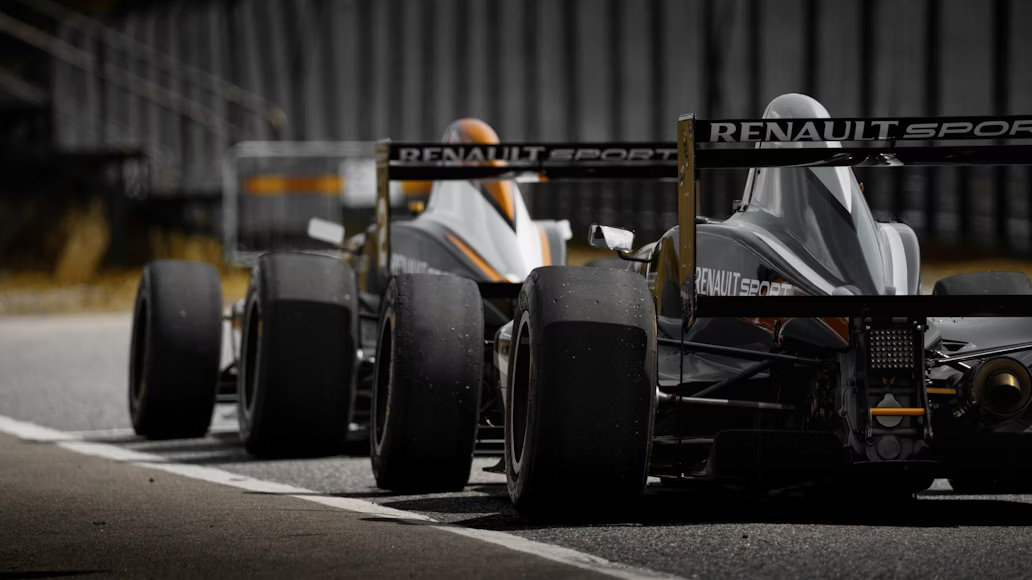
The relentless pursuit of a strategic edge has transformed motorsport into an advanced technological laboratory. Every component of the machine, from the suspension sensors to the aero mapping, is a data point feeding a vast telemetric network. This network allows strategists to model highly granular outcomes, such as the exact moment a tire compound transitions from optimal grip to critical degradation, or the precise fuel load needed to maximize speed without risking a late-race shortage. This dependence on technology means that the strategic battle begins long before the race weekend, rooted in supercomputer simulations and wind tunnel testing that pre-determine the likely fastest paths to victory. The modern victory is often secured through superior data acquisition and interpretation, making the pit wall a more potent weapon than raw engine power alone.
The Human Element
The most advanced strategy is useless without flawless execution by the person behind the wheel. The driver’s role is the crucial link between the abstract world of data and the physical forces of the track. They must possess not only the supreme physical reflexes to handle a car at high speed but also the profound intellectual discipline to manage complex parameters while under immense G-force.
This dual requirement makes the top-tier driver a unique blend of athlete and analyst. They are constantly juggling feedback from the car (vibrations, yaw rate, temperature) with instructions from the pit wall (target lap times, conservation quotas) and adapting to the live environment (traffic, track condition). The mental load is immense. It requires the discipline of a professional essay writer, where complex research must be synthesized and executed clearly under pressure. They are performing mental calculus at 200 miles per hour.
Furthermore, the driver is often the first and best source of live, unquantifiable data. They communicate how the tires feel—a nuance that sophisticated sensors cannot fully capture. This qualitative feedback allows the strategy team to recalibrate their models in real-time, bridging the gap between theoretical planning and physical reality. The relationship between the driver and the pit wall is a partnership founded on mutual trust and the ability to communicate complex, technical ideas clearly and effectively.
Synthesis
Ultimately, the argument between overtaking and strategy dissolves into a single, cohesive principle: successful modern motorsport is the perfection of synthesis. Strategy creates the opportunity for the overtake, and execution secures the realization of that opportunity. A poorly executed pass wastes a brilliant strategic setup; conversely, a brilliant pass can sometimes compensate for a strategically conservative or flawed race plan.
The most challenging and decisive moments in a race are those of contingency: the sudden onset of rain, a rival’s unexpected crash, or a mechanical issue. These events render pre-race models obsolete and necessitate instant, high-stakes decisions. This is where the human element—the driver’s instantaneous judgment and the strategist’s nerve—takes precedence. The ability to pivot the entire plan in a matter of seconds, opting for an immediate pit stop or an unexpected tire change, is the true test of a team’s mastery.
In these moments of high flux, all the calculated preparation, the mental discipline, and the sheer speed coalesce. The true genius of the sport lies in the integrated system—the perfect feedback loop where driver skill informs the strategy, and the strategy empowers the driver to execute the next winning maneuver. The drama of the on-track battle is merely the tip of the iceberg, the spectacular culmination of thousands of hours of unseen analytical work.
Conclusion
Ultimately, modern motorsport challenges the simplistic view that speed alone is the determinant of success. The spectacle of the overtake is undeniably thrilling, providing the moments fans crave. Still, these moments are merely the punctuation marks in a long-form story written by data, predictive modeling, and strategic genius. Victory belongs not to the fastest driver or the smartest strategist in isolation, but to the integrated team capable of synthesizing relentless human execution with flawless, adaptable, data-driven planning. In this perfect machine, speed meets intellect.