In New Zealand, motorsport activities such as circuit racing, rally events, and club competitions require fast, reliable vehicle repairs after each event. Workshops that support racing teams and independent drivers must handle damaged components with precision and speed. A 100-ton hydraulic shop press plays a key role in these environments by enabling controlled force for component repair, removal, and alignment. Its practical value is especially evident in post-race maintenance and accident recovery situations.
Technology Overview and Motorsport Applications
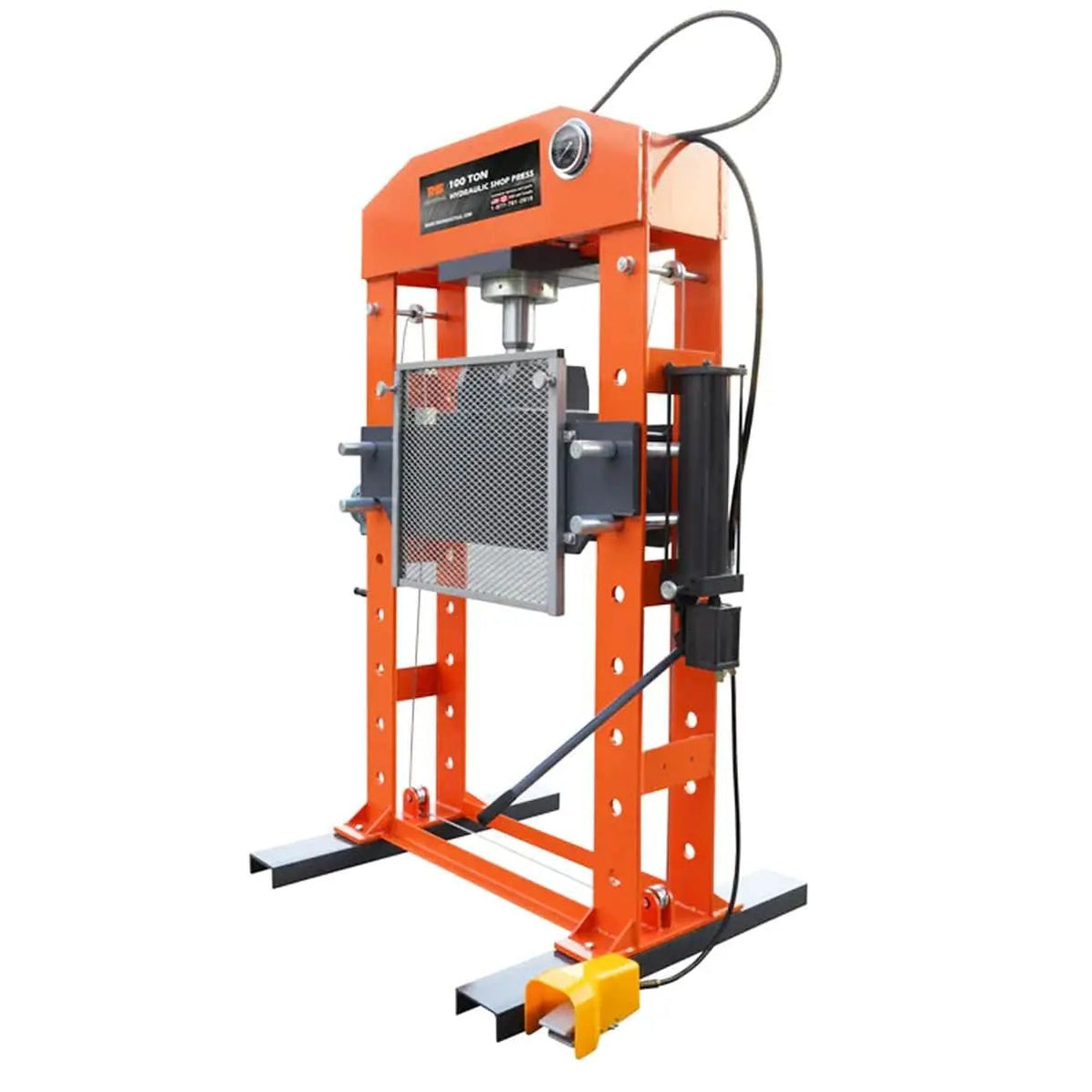
A hydraulic shop press uses fluid pressure to generate force through a cylinder-and-piston system. This allows operators to apply steady and controlled pressure to metal parts without sudden impact. In racing workshops, this is critical for restoring components to usable condition.
Common Use Cases in Race Repair
- Removal and installation of wheel bearings
- Straightening of bent suspension components
- Pressing bushings and joints into place
- Repair of chassis-related metal parts
These tasks are essential after high-stress race conditions or vehicle incidents.
Importance of Efficiency, Safety, and Productivity
Efficiency is critical in motorsport environments where turnaround time between events is limited. A hydraulic press reduces manual effort and speeds up component repair, allowing teams to return vehicles to service quickly.
Safety is equally important. Controlled pressure reduces the risk of sudden failure when handling damaged parts. This protects both technicians and equipment during repair operations.
Technical Requirements and Capability Considerations
When selecting a 100-ton hydraulic shop press, several technical factors must be considered:
- Maximum force capacity relative to repair tasks
- Working height and adjustable bed positions
- Hydraulic system control for precise pressure application
- Frame strength to support heavy loads
These features ensure compatibility with racing vehicle components and repair requirements.
Factors Affecting Performance and Effectiveness
- Alignment of the component within the press
- Condition of hydraulic fluid and seals
- Operator control and pressure application method
- Maintenance of structural and moving parts
An incorrect setup can lead to uneven forces and potential damage to components.
Safety Considerations and Best Practices
- Inspect the press before each use for leaks or damage
- Ensure proper positioning of components
- Use protective equipment such as gloves and eye protection
- Do not exceed the rated capacity of the press
These practices are essential when working with high-pressure systems in racing workshops.
Equipment, Tools, and Accessories
Hydraulic presses are commonly used with additional tools:
- Press plates for stable support
- Adapters for different component sizes
- Pressure gauges for monitoring force
- Adjustable beds for varied applications
Advantages and Limitations
Advantages
- High force output for heavy-duty repairs
- Controlled operation for precision work
- Versatile use across multiple repair tasks
Limitations
- Requires proper training for safe operation
- Dependence on regular maintenance
- Limited portability in some workshop settings
Real World Applications
In New Zealand racing workshops, technicians use hydraulic shop presses after track incidents to repair suspension systems and drivetrain components. This allows teams to restore vehicle performance without replacing entire assemblies, reducing repair costs and downtime.
Conclusion and Future Trends
The 100-ton hydraulic shop press remains an essential tool in motorsport repair and maintenance. It supports efficient workflows, improves safety, and enables precise component handling.
Future developments are expected to focus on improved control systems, better safety mechanisms, and integration with digital monitoring tools. As motorsport technology advances, workshop equipment will continue to evolve to meet higher performance and safety standards.