For many car owners, the garage is not just a place to park. It is where the real routine of vehicle ownership happens. Tires get swapped, batteries get charged, tools are stored, detailing supplies are used, and weekend projects often start with the garage door open and a work light on. The problem is that a garage can get crowded quickly when you put every item wherever there is open floor space.
A good garage setup does not need to look like a professional race shop. It needs to work. The parking area should stay clear. Tools should be easy to reach. Fluids, towels, chargers, tire gauges, and cleaning products should have a dedicated place. Heavy items should be stored safely. With a well-planned layout, even a small garage can become a practical automotive workspace.
Car owners usually notice the value of good storage during simple tasks. Finding a socket set, checking tire pressure, grabbing a microfiber towel, locating a battery tender, or rolling out a floor jack should not take ten minutes. When the garage is organized, routine maintenance becomes easier, and the space feels safer to use.
A good garage layout keeps the vehicle space clear while using walls, cabinets, shelves, and overhead racks for storage.
Start With the Vehicle, Not the Storage Products
The biggest mistake many homeowners make is buying shelves, cabinets, and bins before deciding how the garage actually needs to function. For car owners, the vehicle should come first. Park the car in its normal position, open the doors, walk around it, and check how much working space is needed on each side.
This is especially important if you use the garage for more than parking. Someone who cleans their car at home needs access to towels, buckets, sprays, hoses, brushes, and a vacuum. A DIY owner may need enough room to use a jack, torque wrench, creeper, work light, and tool chest. A motorsports fan may need storage for helmets, folding chairs, chargers, spare parts, race-day bags, and detailing gear.
Once the parking and working zones are clear, the storage plan becomes much easier. The floor should not become the main storage area. Walls, corners, cabinets, ceiling racks, pegboards, and shelving should do most of the work.
Create Garage Zones That Match Real Use
A useful garage is usually divided into zones. This does not need to be complicated. It simply means that items used for the same purpose should live near each other. Don’t mix car care products with holiday decorations. Don’t scatter tools across five different boxes. Tires and heavy equipment should not block walkways.
For most car owners, the most useful zones are:
- Parking and door-opening space
- Hand tools and maintenance tools
- Detailing supplies and microfiber towels
- Tires, wheels, and seasonal automotive gear
- Fluids, chargers, air tools, and small accessories
- Household overflow and seasonal storage
- Workbench or project area
This kind of zoning makes the garage easier to use because every category has a logical home. It also helps prevent clutter from spreading. If detailing supplies have a dedicated shelf, they are less likely to end up on the floor. If tools are mounted near the workbench, they are more likely to go back where they belong after a job.
Homeowners who want to compare shelves, cabinets, wall systems, overhead racks, tire storage, and layout options can start with practical garage storage ideas before choosing products for their own space.
Use Wall Storage Before Adding More Floor Storage
Wall storage is one of the best upgrades for a car owner’s garage. Pegboards, slatwall panels, rails, hooks, magnetic strips, and mounted shelves can hold a surprising amount of gear without taking space away from the vehicle.
Automotive tools benefit from visibility. A torque wrench, tire gauge, socket set, breaker bar, funnel, extension cord, inspection light, and gloves are much more useful when they are easy to see. If everything is buried in bins, small jobs take longer and get messier.
Wall hooks are useful for long or awkward items such as snow brushes, extension cords, ramps, folding chairs, jack handles, creepers, and car wash brushes. Smaller hooks and rails can hold detailing brushes, spray bottles, and battery charger cables. The best items for wall storage are those you use often but don’t want sitting on the floor.
Choose Cabinets, Shelves, and Tool Storage Carefully
Cabinets make a garage look cleaner and help protect supplies from dust. They are a good choice for microfiber towels, detailing products, gloves, small parts, batteries, and items you don’t want exposed. Closed cabinets also reduce visual clutter, which makes the garage feel more controlled.
Open shelving works better for larger bins and items you use often. Strong metal shelves are usually a better choice than lightweight plastic shelves when storing automotive gear, with longspan shelving nsw providing a durable and practical solution for organising heavier equipment. Tools, fluids, parts, and jacks can be heavy. A shelf that is fine for holiday decorations may not be safe for dense garage equipment.
A rolling tool chest can be useful for owners who work on their cars. It keeps tools in one place and can move closer to the vehicle when needed. A fixed workbench is better for repeated tasks such as cleaning parts, charging batteries, organizing hardware, or preparing detailing equipment.
The best setup often combines all three: cabinets for clean storage, shelves for bins and bulk items, and a tool chest or workbench for maintenance tasks.
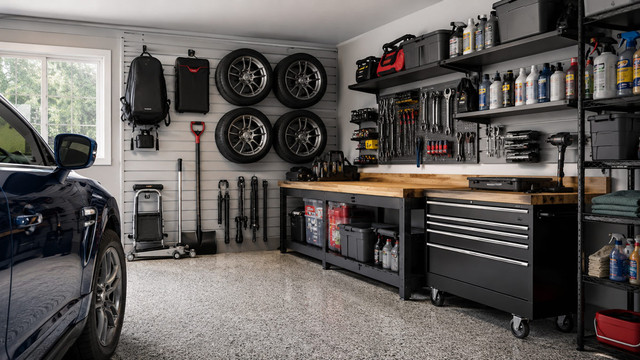
A dedicated workbench and wall-mounted tool storage can make routine maintenance, tire checks, and detailing easier.
Store Tires and Wheels the Right Way
Tires and wheels take up a lot of space, so they need a plan. A dedicated tire rack is often the cleanest solution because it keeps tires off the floor and away from walking paths. If you stack tires, keep the stack stable, not too high, and place it where it will not interfere with the vehicle or garage door.
Seasonal wheel sets should be easy to access when needed, but they don’t need to take up prime workbench space. A side wall, corner rack, or dedicated low storage area usually works better. If the garage also stores winter gear, summer gear, or track-day equipment, keeping automotive seasonal items together can save time.
Keep heavy items low whenever possible. Floor jacks, jack stands, ramps, air compressors, and large containers are safer near the ground. Overhead racks are useful, but they are better for lighter bulky items, not heavy automotive parts that are difficult to lift down safely.
Keep Detailing Supplies Clean and Separate
Car detailing products need better storage than many homeowners give them. Microfiber towels can pick up dirt and grit if they are left on an open shelf near garden tools or dirty parts. Brushes, applicators, waxes, soaps, glass cleaners, tire dressings, and interior products are easier to use when grouped together.
A simple detailing cabinet or shelf can make a big difference. Store towels in a clean drawer or sealed bin. Group bottles by task: wheels, paint, glass, interior, tires, and drying. Store brushes and applicators in small containers so they don’t roll around or get contaminated.
If you use the garage for washing the car outside, keep the detailing zone near the garage door or driveway side. That way, supplies are easy to grab without walking through the entire garage.
Make Safety Part of the Storage Plan
Organize a vehicle garage with safety in mind. Walkways should stay open. Don’t store heavy items above the car. Secure long-handled tools so they cannot fall. Shelves should not be overloaded. Store fluids and chemicals according to label instructions, and keep them away from heat sources and places where they can be knocked over.
Lighting also matters. A garage can look organized during the day and still be frustrating to use at night. Bright overhead lighting, task lighting above the workbench, and good visibility near shelves make maintenance and detailing easier. If a car owner regularly works in the garage, lighting is not a luxury. It is part of the workspace.
Power access is another practical detail. Chargers, inflators, vacuums, polishers, work lights, and battery tenders all need outlets. Store extension cords neatly and use them safely; don’t leave them across walking paths.
Avoid the Most Common Garage Organization Mistakes
Many garage storage problems come from the same few mistakes. The first is buying too many bins. Bins are useful, but they can hide clutter if you don’t label and group them properly. The second is placing shelves wherever they fit instead of where they are useful. The third is storing rarely used items in the easiest-to-reach locations while everyday tools end up buried.
Another common mistake is ignoring how the garage changes during the year. Tires, snow tools, lawn gear, sports equipment, and car care supplies may rotate with the seasons. A good garage plan allows for that. It shouldn’t collapse every time the weather changes or you add a new vehicle accessory.
Car owners should also avoid blocking access to important items. If the air compressor, tire inflator, charger, or cleaning supplies are difficult to reach, they will not be used as often. Storage should support habits, not fight them.
A Better Garage Makes Car Ownership Easier
A clean garage does more than look good. It saves time, protects the vehicle, reduces stress, and makes routine maintenance easier. For car owners, that matters. The garage is where you notice small problems early, where tools need to be ready, and where you should protect the vehicle from clutter.
The best garage storage plan is practical, not complicated. Keep the vehicle space clear. Store tools where they are visible. Keep tires and heavy items safe. Separate clean detailing supplies from dirty equipment. Use walls and cabinets before filling the floor. Plan around the way the garage is actually used.
When the garage works well, car ownership becomes easier. Maintenance takes less time. Detailing is more enjoyable. Seasonal gear is easier to manage. Most importantly, the garage becomes what it should be: a functional space that supports the vehicle, the homeowner, and the routines that come with both.