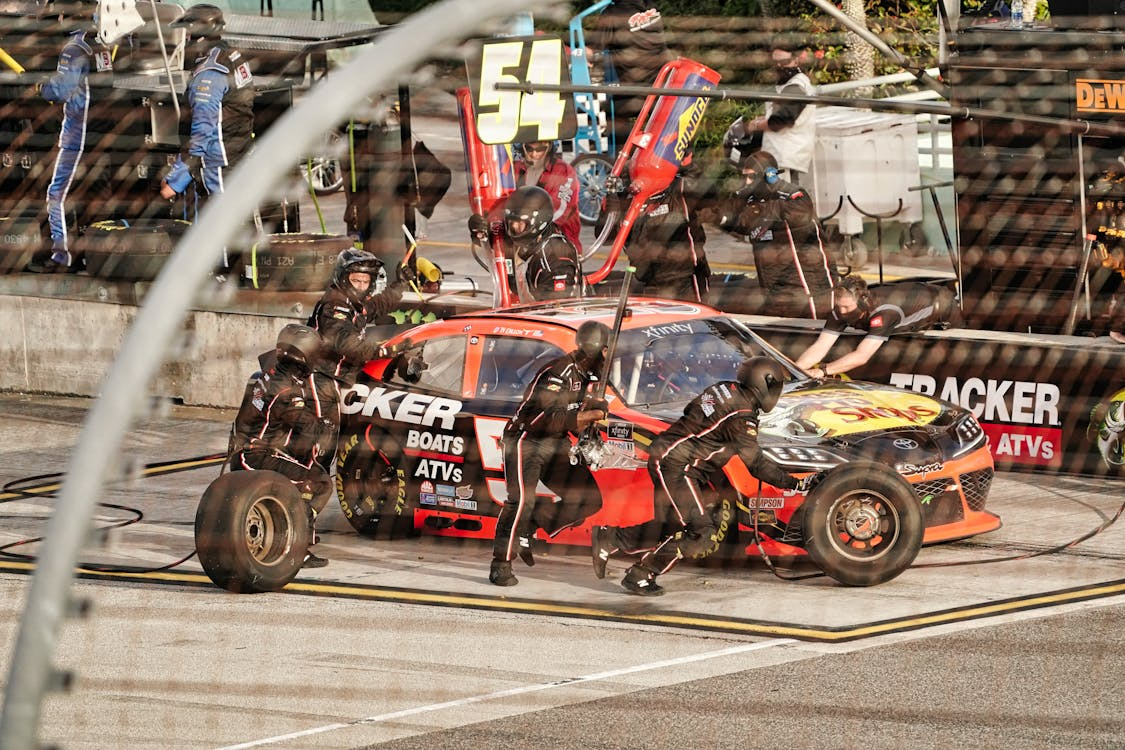
In both the virtual battlegrounds of Counter-Strike 2 (CS2) and the high-speed world of motorsport, milliseconds make the difference between success and failure. Whether you’re a player holding an angle on Inferno or a driver powering through a tight corner at 300 km/h, the core performance elements are surprisingly similar. CS2 reaction time plays a critical role in winning duels, just as lightning-fast reflexes determine whether a racer overtakes or crashes.
Despite the differences in environment, skill requirements, and physical setup, both fields rely on precision, focus, and the ability to process information faster than the average human. This article explores what CS2 player reflexes and professional racing performance share in common – and how understanding these parallels can enhance your CS2 performance skills, whether you’re improving your gameplay or managing your inventory to sell CS2 skins more efficiently.
Why Reaction Time Is the Foundation of Competitive CS2
In a tactical shooter, the player who reacts first has the advantage. Whether it’s flicking to a target, counter-strafing before firing, or pulling the trigger the moment a smoke fades, every moment counts. Reaction time in CS2 is measured in milliseconds, and top esports players consistently perform faster than the average human.
Fast reactions matter because CS2 is built around split-second decisions:
- Spotting a shoulder peek before your opponent sees you.
- Timing a swing out of cover.
- Canceling a reload as an enemy appears.
- Adjusting crosshair placement instantly during movement.
Every shot, every duel, and every strategic rotation depends on the brain identifying information and sending signals to the body faster than your opponent. When professional players train, a significant portion of practice focuses on drills that sharpen esports reaction time: aim trainers, movement routines, and repetition exercises that hardwire efficiency.
For fans and aspiring competitors, improving reaction time in gaming isn’t optional – it is a fundamental skill.
The Racing World: A Masterclass in Human Reflexes
Professional racers operate in an environment where the margin for error is nearly zero. At top speed, the difference between braking at the right moment and too late is determined by reactions so fast they’re almost instinctive. Drivers constantly process visual cues – cornering angle, track grip, opponent position – and make micro-corrections in real time.
The similarities to CS2 become clear when we break down the mental process:
- Perception: identifying visual changes
- Decision: choosing the correct response
- Action: sending commands to the body
This cognitive chain mirrors what happens when a CS2 player reacts to a pixel-wide movement. Just as a driver must instantly steer, brake, or accelerate, a CS2 player must shoot, peek, reposition, or throw utility – all without hesitation.
Both CS2 athletes and racers train to compress their decision-making time to near-automatic reactions. This is where CS2 performance skills intersect with elite sports psychology.
Brain Processing Speed: The True Link Between Gamers and Racers
Both groups function in high-pressure, high-speed environments where processing speed directly impacts performance. Research into esports athletes has shown that many top players possess above-average cognitive processing speeds, matching levels found in professional athletes like F1 drivers or MotoGP riders.
The similarities include:
- Enhanced peripheral awareness:
Both need to register information on the edges of their vision quickly. - Faster-than-average visual recognition:
Racers detect movement patterns on the track; CS2 players read pixel shifts. - Automatic decision pathways:
Years of repetition create instinctive reactions, reducing cognitive load. - Mental endurance:
Staying focused for long periods is essential in both esports and motorsport.
These shared traits explain why gamers often outperform non-gamers in reaction-based tests – and why racing teams sometimes use video games to train drivers’ decision-making reflexes.
The Role of Training: How Both Groups Improve Reaction Time
Neither CS2 pros nor professional racers rely solely on natural talent. Their training schedules are filled with targeted exercises designed to maximize efficiency.
For CS2 players, reaction training includes:
- Counter-strafing drills
- Flick-shot routines
- Target-switching exercises
- Aim trainer benchmarks
- VOD review to improve anticipation
For racers, training often involves:
- Reflex lights and reaction boards
- Eye-tracking exercises
- Simulators
- Physical conditioning for rapid response
In both worlds, consistent training narrows the gap between perception and action. This is why amateurs feel overwhelmed by fast opponents – their reaction pathways are not as refined.
Reaction Time Meets Strategy: Why Fast Reflexes Aren’t Everything
While raw speed is valuable, neither CS2 nor professional racing is purely about reflexes. Decision quality matters just as much as decision speed.
A racer must choose the correct braking point, racing line, and overtaking window. A CS2 player must decide when to peek, whether to hold an angle, or when to rotate. Reaction time becomes meaningful only when paired with strong game sense, experience, and discipline – the same combination of skills that helps players make smarter decisions both in competitive matches and when they buy CS2 skins to improve or personalize their loadouts.
This blend of instinct and strategy is what separates high-level competitors from casual players.
How Skin.Land Helps You Stay Focused on Performance
In competitive gaming, eliminating distractions is key to improving CS2 reaction time and gameplay. Many players spend countless hours browsing marketplaces or managing trades – time that could be used for training reflexes or practicing mechanics.
Platforms like Skin.Land make the trading process effortless so players can stay focused on improvement. With instant delivery, transparent pricing, and secure Steam integration, Skin.Land removes the stress and downtime associated with managing skins. Instead of worrying about scams or slow transactions, players can focus on sharpening CS2 player reflexes and building their inventory without risk.
Whether you’re tuning your loadout or upgrading your collection, Skin.Land supports a smooth trading experience that keeps your attention where it belongs – in-game performance.
Why CS2 Players and Racers Share Similar Mindsets
Beyond reflexes and processing speed, gamers and racers share deeper psychological traits:
- Risk management:
Both must make fast decisions under pressure while minimizing risk. - Emotional control:
Tilt in CS2 mirrors frustration in racing — both ruin performance. - Consistency:
One great round or one perfect lap means nothing; it’s about repeated excellence. - Adaptability:
Unexpected enemy pushes or sudden changes in track conditions require instant adjustment.
These mental similarities create a bridge between two very different worlds, showing that high-level performance is built on universal principles.