Motorsport has always been associated with speed, precision, and instinct. From the outside, it can look like a sport driven by raw talent and bold decision-making. But behind every overtake, pit stop, and tyre choice lies something far less visible and far more powerful: probability.
Modern racing is no longer just about who is fastest on track. It is about who can best interpret uncertainty, quantify risk, and act within a constantly shifting set of variables. In this environment, success is rarely the result of a single brilliant move. Instead, it emerges from a series of calculated decisions, each grounded in probability.
The Invisible Layer of Every Race
Every race weekend begins long before the lights go out. Teams run thousands of simulations, modelling scenarios that range from tyre degradation patterns to safety car timing, weather changes, and competitor strategies. These simulations do not aim to predict a single outcome. Instead, they map a range of possible futures, each assigned a probability.
For example, a team may determine that there is a 30% chance of a safety car within the first 20 laps, or that an early pit stop increases the likelihood of track position gain under certain conditions. These are not certainties, but weighted possibilities that guide decision-making.
What matters is not eliminating uncertainty, but understanding it.
Decision-Making Under Pressure
Once the race begins, those pre-race models are constantly updated with live data. Tyre wear, lap times, fuel consumption, and competitor behaviour all feed into real-time strategy adjustments. Engineers on the pit wall are not simply reacting; they are recalculating probabilities with every passing lap.
A call to pit early, for instance, is rarely based on instinct alone. It reflects a calculation: the probability of an undercut working versus the risk of traffic, the likelihood of tyre performance drop-off, and the chance of external disruptions such as yellow flags.
Drivers, too, operate within this framework. When attempting an overtake, they are subconsciously evaluating risk versus reward: grip levels, braking distances, opponent behaviour, and race context. The decision is made in seconds, but it is informed by patterns and probabilities built over years of experience.
Structured Risk, Not Guesswork
One of the most common misconceptions about motorsport is that it thrives on risk-taking alone. In reality, it thrives on structured risk.
Teams do not ask, “What is the boldest move?” but rather, “What is the most favourable probability?” This distinction is critical. A risky move is not inherently valuable unless the expected reward justifies the likelihood of failure.
This same principle applies in other environments where outcomes are influenced by probability rather than certainty. Systems that operate within defined rules, measurable variables, and statistical frameworks allow participants to make informed decisions rather than relying on instinct alone. In probability-based platforms such as the Mr Q casino, outcomes are shaped by clearly defined mechanics, odds, return-to-player percentages, and game structures, which, much like racing simulations, create a framework where decisions are made within known parameters rather than pure chance. The emphasis shifts from guessing outcomes to understanding how those outcomes are generated and how risk can be managed over time.
The Role of Expected Value
At the core of these decisions lies the concept of expected value. In simple terms, expected value measures the average outcome of a decision if it were repeated many times.
In racing, this might translate to choosing between two strategies: one that offers a high chance of finishing in a safe position, and another that carries more risk but a higher potential reward. The decision depends on context. A team fighting for a championship may prioritise consistency, while one chasing a breakthrough result may accept greater variance.
Expected value reframes decision-making. It removes the emotional weight of a single outcome and instead focuses on long-term performance across many scenarios.
Adapting to High-Variance Environments
Motorsport is inherently unpredictable. Weather conditions change, mechanical failures occur, and unexpected incidents reshape races in seconds. These variables introduce what analysts call “variance”, the degree to which outcomes can deviate from expectations.
The best teams are not those that avoid variance entirely, but those that manage it effectively.
They build flexible strategies that can adapt to new information. They avoid overcommitting to a single outcome. And perhaps most importantly, they remain disciplined, resisting the temptation to abandon a sound strategy after a short-term setback.
This ability to operate within high-variance environments is what separates consistent performers from occasional winners.
Learning from the System
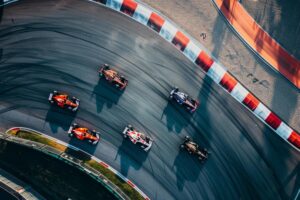
The systems used in motorsport are grounded in rigorous analysis and governed by clear regulations, such as those established by Fédération Internationale de l’Automobile, which standardise technical and sporting frameworks across championships. These structures ensure that while outcomes remain uncertain, the environment in which they occur is controlled and measurable.
This balance between structure and uncertainty is what makes probability such a powerful tool. It does not eliminate risk, but it makes risk understandable.
For teams, this means better decisions. For drivers, it means greater confidence. And for observers, it offers a deeper appreciation of what is really happening beneath the surface of the sport.
Beyond the Finish Line
Motorsport provides a clear example of how probability can be applied in high-pressure, real-world environments. It shows that uncertainty is not something to fear or avoid, but something to engage with intelligently.
The lessons extend beyond the track. In any system where outcomes are influenced by multiple variables, the same principles apply: understand the framework, evaluate the probabilities, and make decisions that align with long-term outcomes rather than short-term impulses.
On the surface, racing may appear chaotic. But beneath that chaos lies structure, calculation, and a deep understanding of how probability shapes every moment.
And in that understanding, the edge is found.