Home Blog Page 114

Former NFL head coach Jon Gruden named Grand Marshal of the Firestone Grand Prix of St. Petersburg

Tampa Bay’s Super Bowl-winning coach will give the command for NTT INDYCAR SERIES drivers to start their engines this Sunday

ST. PETERSBURG, Fla. (Feb. 24, 2026) – Super Bowl XXXVII champion head coach Jon Gruden for the Tampa Bay Buccaneers and current Barstool Sports personality will serve as the grand marshal for the Firestone Grand Prix of St. Petersburg, the season opening race of the NTT INDYCAR SERIES, on Sunday, March 1.

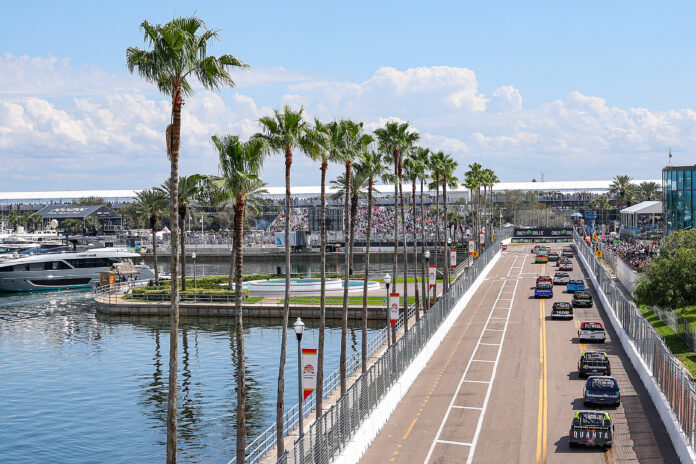
Gruden will participate in pre-race ceremonies, then give the command for the NTT INDYCAR SERIES drivers to start their engines for the 100-lap race around the 1.8-mile, 14-turn downtown St. Petersburg street circuit. He will also take a lap in the parade car ahead of the 25-car starting field just before taking the green flag.

“This will be my first ever Grand Prix in St. Petersburg on Sunday,” said Jon Gruden about the opportunity to be a part of the Firestone Grand Prix of St. Petersburg. “Can’t wait to see these great drivers in action and make some new friends. Looking forward to an amazing event!”

Jon Gruden won Super Bowl XXXVII as the head coach of the Tampa Bay Buccaneers and had also coached the Oakland/Las Vegas Raiders (1998-2001 and 2018-2021) over two stints. At the time of his Super Bowl win, he was the youngest ever head coach to claim an NFL championship. Over his 15-year coaching career, Gruden accumulated 117 wins, won five division titles and made it to three conference championship games. He was also inducted to the Buccaneers Ring of Honor in 2017. From 2009 to 2018, Jon served as a color analyst for ESPN’s Monday Night Football as well as an analyst for the NFL Draft and postseason college football games. In 2024, Jon joined Barstool Sports and is featured on their football programming, The Pro Football Football Show and Gruden’s QB Class.

“We are excited to announce Jon Gruden as the grand marshal of the Firestone Grand Prix of St. Petersburg,” said Kim Green, co-owner, chairman and CEO of Green Savoree Racing Promotions, organizers of the Firestone Grand Prix of St. Petersburg. “Coach Gruden will no doubt give a great command for IndyCar drivers to start their engines for the first time to kick off the 2026 season. He is a revered sports figure in the Tampa Bay community guiding the Buccaneers to its first Super Bowl trophy in 2003. We greatly appreciate him wanting to join us on Sunday.”

The 22nd annual Firestone Grand Prix of St. Petersburg will bring a full-weekend of high-speed action to the picturesque downtown St. Petersburg waterfront. The NTT INDYCAR SERIES headlines the event as the premier open-wheel series in North American opens its season in St. Pete for the 16th time on Sunday, March 1. Joining the race weekend is the NASCAR CRAFTSMAN Truck Series for their inaugural street race on Saturday, Feb. 28 in the OnlyBulls Green Flag 150 at St. Petersburg. The racing schedule will also feature the sport’s rising stars as INDY NXT by Firestone, and USF2000 Presented by Continental Tire speed through the downtown streets. Additionally, Whelen Mazda MX-5 Cup presented by Michelin will provide fender-bending sports car competition.

On Thursday, Feb. 26, two community events – INDYCAR Party in the Park and the 5K Run on the Firestone Grand Prix of St. Petersburg Track – will kick off the event festivities in downtown St. Petersburg at North Straub Park. Free and open to the public, INDYCAR Party in the Park will feature NTT INDYCAR and other racing series driver appearances, music, giveaways, food trucks and more. Fans will be able to get up-close to race cars from all the series running during the race weekend in the park from 4-7 p.m. ET.

Additionally, runners and walkers have a unique opportunity to “race on track” during the 5K Run on the Firestone Grand Prix of St. Petersburg Track set for 5 p.m. ET on Feb. 26. The race starts and ends on Bayshore Drive NE, adjacent to North Straub Park. Participants can register now at gpstpete5k.com while supplies last with all proceeds benefiting the Police Athletic League of St. Petersburg.

Both 3-Day and Single Day Grandstand and General Admission tickets are available starting as low as $30. For complete pricing, schedule and festival information, visit gpstpete.com. Follow the event on social media using @gpstpete and #FirestoneGP for the latest updates. Joining the E-Club also provides insider access to the latest news and offers.

About Firestone Grand Prix of St. Petersburg:

The 22nd annual Firestone Grand Prix of St. Petersburg is a race event held during Florida’s spring break season. Traditionally the site of the NTT INDYCAR SERIES’ season-opening race, St. Pete is a destination city hosting this annual motorsports tradition and offering a festival atmosphere with its downtown location. The 2026 Firestone Grand Prix of St. Petersburg airs live on a national broadcast on FOX on March 1. NASCAR will also conduct its very first street race for the NASCAR CRAFTSMAN Truck Series in its history on the streets of St. Petersburg in 2026. The temporary circuit is a 1.8-mile, 14-turn configuration that uses the streets circling Pioneer Park, the Duke Energy Center for the Arts, The Dali Museum and extending onto the runway at Albert Whitted Airport, and borders the waterfront of Tampa Bay and picturesque St. Petersburg Harbor and Marina. The Firestone Grand Prix of St. Petersburg is owned and operated by Green Savoree St. Petersburg, LLC. Green Savoree St. Petersburg, LLC is owned by Green Savoree Racing Promotions 2, LLC whose other subsidiaries also promote three additional NTT INDYCAR SERIES races, The Honda Indy 200 at Mid-Ohio Presented by the 2027 CR-V Hybrid (July 3-5, 2026), BITNILE.COM Grand Prix of Portland (Aug. 7-9, 2026) and Ontario Honda Dealers Indy at Markham (Aug. 14-16, 2026).

For more information, visit gpstpete.com, ‘like’ its Facebook page @GPSTPETE or follow the event on X at @GPSTPETE and Instagram at @GPSTPETE using #FirestoneGP.

Tyler Gonzalez To Make NASCAR O’Reilly Auto Parts Series Debut With Hettinger Racing at COTA

21-Year-Old Racer Brings Successful Sportscar Background to No. 5 Ford Mustang

MOORESVILLE, N.C. (Feb. 24, 2026) – Hettinger Racing is facilitating another NASCAR O’Reilly Auto Parts Series debut, tabbing 21-year-old Tyler Gonzalez to drive its No. 5 Victory Custom Trailers Ford Mustang Dark Horse in the Focused Health 250 on Saturday at Circuit of the Americas (COTA) in Austin, Texas.

In the season-opening O’Reilly Series race at Daytona (Fla.) International Speedway, Hettinger Racing debuted Midwestern short-track star Luke Fenhaus. Now with the O’Reilly Series heading to its first road-course race of the season, Hettinger Racing is looking to leverage Gonzalez’s extensive and successful road-racing background on COTA’s 2.4-mile, 20-turn layout.

Gonzalez earned the inaugural Toyota GR Cup title in 2023 and finished second in the 2025 Whelen Mazda MX-5 Cup championship. The St. Cloud, Florida, native holds an FIA Silver racing license and currently competes fulltime in SRO Pirelli GT4 America and IMSA Michelin Pilot Challenge within its Touring Car class.

“Tyler brings a lot of road-racing experience to our team. He’s won championships, he’s won at COTA and he’s shown that he can handle cars similar to what he’ll be racing this weekend,” said team owner Chris Hettinger. “Our job is to give him a strong No. 5 Victory Custom Trailers Ford Mustang so he can showcase his talent here in the O’Reilly Series.”

Gonzalez is well-suited for COTA, having raced at the purpose-built Formula 1 venue across Mazda MX-5 Cup, Toyota GR Cup and GT4 America. In fact, in Gonzalez’s most recent race at COTA – a three-hour endurance contest last April in GT4 America – he won with co-driver Gresham Wagner.

“I’ve had the chance to race at COTA in a few different series, and winning there in GT4 last year was a big moment for me. But this is a different challenge,” Gonzalez said. “The O’Reilly Series demands a lot. It’s filled with really good drivers on really good teams. There’s a lot of depth. My goal is to learn and execute in practice and in qualifying and all the way through the race. I’m grateful to Chris and everyone at Hettinger Racing and Ford for this opportunity.”

While Saturday’s Focused Health 250 will be Gonzalez’s first O’Reilly Series outing, his time in Trans Am’s CUBE 3 Architecture TA2 Series provided Gonzalez with the closest taste of how an O’Reilly Series car performs. Gonzalez made four TA2 starts in 2024 and three in 2025, collecting five podiums, two of which were runner-up finishes. He earned his first career TA2 pole last August at Canadian Tire Motorsports Park in Bowmanville, Ontario.

“TA2 cars are probably the closest thing to a stock car, so the time I spent there is going to be really helpful,” Gonzalez said. “The series had big fields and the cars are pretty evenly matched, so it forced you to refine your racecraft in terms of knowing when to be aggressive, when to be patient and how to position yourself in traffic. All of that will come into play this weekend at COTA.”

Gonzalez’s O’Reilly Series debut begins Friday with a 50-minute practice starting at 4 p.m. CST/5 p.m. EST before qualifying at 5:05 p.m. CST/6:05 p.m. EST. The Focused Health 250 goes green on Saturday at 2 p.m. CST/3 p.m. EST with live, flag-to-flag coverage provided by The CW and SiriusXM NASCAR Radio.

Four Takeaways from the NASCAR O’Reilly Auto Parts Series Race at EchoPark Speedway

Photo by John Knittel for SpeedwayMedia.com.

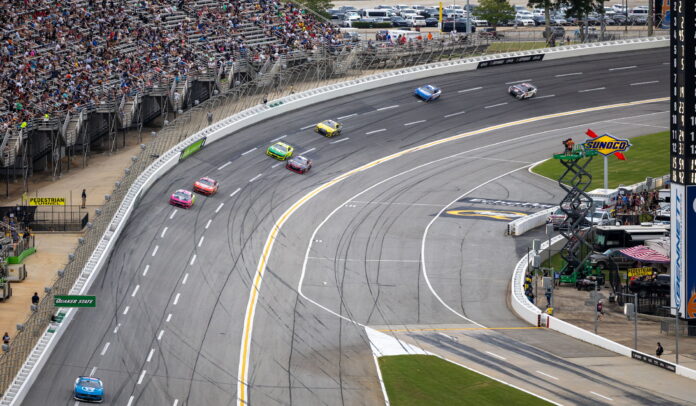
EchoPark Speedway marked the second round of the 2026 NASCAR O’Reilly AutoParts Series and provided thrilling and exciting action in the 163 laps that saw a first-time winner.

The 2018 Truck Series champion Sheldon Creed had come up short many times throughout his O’Reilly career. But finally, he got it done early Saturday evening in a last-lap pass. As Creed celebrated his first series win, we’ll see how the other drivers did in the Bennett Transportation and Logistics 250.

Corey Day Claims Top Five Finish After Early Trouble

It was a wild day for the Hendrick Motorsports developmental driver Corey Day. He ultimately wound up in the fourth position at EchoPark Speedway when all was said and done.

One of the early incidents for Day came on Lap 6 when he and Ryan Sieg made contact on the frontstretch, getting others involved as well. Sieg’s brother, Kyle, was also collected and Blaine Perkins got caught up in the damage, too.

Day was able to carry on and tried to maneuver his way back toward the front. But more troubles plagued the young driver in another wreck. During the mid-portion of the race, Day’s car slid up the track in Turns 3 and 4, and clipped the race leader, Carson Kvapil, and Justin Allgaier. Both cars were sent out of the race.

Despite being involved in many incidents, the Clovis, California native was able to rebound to a fourth-place finish. It was Day’s second top-five finish of his young O’Reilly AutoParts Series career.

Parker Retzlaff and Nick Sanchez Nearly Spoil The Party

It’s no wonder that Parker Retzlaff, who is now driving for the No. 99 Viking Motorsports Chevrolet, is a strong contender at superspeedways and drafting tracks. Most of his top five finishes have come at either Daytona or Atlanta, with some top 10 finishes coming at Talladega.

He showed talent again Saturday night at EchoPark Speedway after coming up one spot short, finishing second once again. He bested his original Atlanta drafting track finish from last year, where he finished fifth driving for Jordan Anderson Racing. It’s not a question of if, it’s a question of when Retzlaff will eventually get his elusive career win.

Meanwhile, Nick Sanchez almost nabbed the win. It would have been a career first for AM Racing, who has never won in NASCAR. Sanchez ran as high as second at one point in the waning laps. But ultimately, he wound up in the third podium finish for the former Big Machine Racing driver.

Rajah Caruth Has Strong Showing

In his 24th career start in the O’Reilly Series, Rajah Caruth had a great outing in Atlanta at EchoPark Speedway this past Saturday. He ran up front multiple times, earning his first career stage victory in the series by winning Stage 2. He also finished second in Stage 1. Caruth had a shot at the win by having a fast car, but had to settle for an eighth-place finish.

Graza Olive Oil Joins RFK Racing and Brad Keselowski as Primary Partner at Circuit of The Americas

Partnership Also Includes Full Season Associate with Ryan Preece No. 60

CONCORD, N.C. (February 24, 2026) – Roush Fenway Keselowski (RFK) Racing today announced that Graza, the beloved brand known for its single origin Extra Virgin Olive Oils, will serve as the primary partner on Brad Keselowski’s No. 6 Ford Mustang for the March 1 NASCAR Cup Series race at Circuit of the Americas (COTA). In addition to the primary race partnership, Graza will be a full season associate partner on Ryan Preece’s No. 60 Ford Mustang throughout the 2026 NASCAR Cup Series season.

The partnership brings together RFK Racing and Graza around a shared focus on taking a bold approach in everything they do. Graza has built a loyal following by challenging convention in the olive oil category, delivering the highest quality products with a distinctive brand design and authentic personality. That same willingness to stand out and push forward aligns with RFK Racing’s commitment to competing and being aggressive.

“They are authentic, bold, and focused on creating a terrific culinary experience that is steeped in quality,” said RFK Racing President, Chip Bowers. “That commitment to excellence is what has established fans of their product from the very first taste; we’re proud to be aligned with another best in brand company.”

Beyond the marquee appearance with Keselowski at COTA, Graza’s full season associate partnership with Preece ensures a consistent presence across RFK Racing throughout the 2026 campaign. The partnership provides opportunities to connect with fans with an energetic and authentic approach, highlighting performance and lifestyle.

“We’re thrilled to partner with such an outstanding team like Roush Fenway Keselowski (RFK) Racing, and introduce ourselves and our delicious products to their loyal fan base,” said Andrew Benin, Graza co-founder & CEO.

Founded in 2022, Graza quickly established itself as a leader in the olive oil category, offering super fresh olive oil in a fun and easy-to-use squeeze bottle. Built around its “Drizzle” and “Sizzle” Extra Virgin Olive Oils, Graza has continued to expand with innovations including refill cans, glass bottles, and “Frizzle,” a high-heat cooking oil made from 100% olives.

The COTA event marks Graza’s first appearance as a primary partner in NASCAR, aligning the brand with one of the most technically demanding venues on the schedule: The 17-turn road course in Austin, Texas.

About RFK Racing 

RFK Racing, in its 39th season in 2026, features an ownership lineup pairing one of the sport’s most iconic names, Jack Roush, along with NASCAR Champion, Brad Keselowski, and Fenway Sports Group owner John Henry. Roush initially founded the team in 1988 and it has since become one of the most successful racing operations in the world, propelling him to be the first NASCAR owner to amass three hundred wins and capturing eight championships, including back-to-back NASCAR Cup titles in 2003 and 2004. Keselowski, a former owner in the NASCAR Truck Series, is the 2012 NASCAR Cup Series Champion. In 2007, Roush partnered with Henry, who also owns Major League Baseball’s Boston Red Sox, English Premier League’s Liverpool F.C., and the NHL’s Pittsburgh Penguins, to form Roush Fenway Racing. Off the track, RFK is a leader and proven winner in NASCAR marketing solutions, having produced multiple award-winning social media, digital content and experiential marketing campaigns. Visit https://www.rfkracing.com/ and follow the team on all social platforms @rfkracing. 

About Graza

Founded in 2022 by Andrew Benin and Allen Dushi, Graza was created to help home cooks have more fun in the kitchen with high-quality, crazy fresh olive oil. The brand initially launched with “Drizzle” and “Sizzle”—an extra virgin finishing oil and cooking oil duo packaged in easy-to-use squeeze bottles—and quickly emerged as a category leader, becoming the fifth-largest olive oil brand in the U.S. in under four years. Since its debut, Graza has expanded its product lineup to include glass bottles, nitrogen-sealed refill cans, “Frizzle”, a high-heat cooking oil, and most recently, a line of olive oil mayo, spanning three varieties across two packaging formats. At its core, Graza believes every kitchen deserves great, fresh olive oil that’s affordable enough to use every day, while celebrating all the ways it shows up across every meal. Graza can be found in over 28,000 retail doors throughout the country and is available for purchase online. The brand has also received several industry accolades, including NOSH 2025 Brand of the Year, Inc. Best in Business 2025, DIELINE Best in Packaging 2025, and more. To learn more, visit graza.co or follow @getgraza on Instagram.

How Pro AV Tech Elevates the Race Day Experience

Race day is no longer just about speed, engines, and competition. Whether it’s a professional motorsport event, a charity marathon, a cycling race, or a community running festival, audiences today expect something far beyond watching athletes cross a finish line. They expect immersion, clarity, emotion, and connection.

Modern race events have transformed into fully produced live experiences powered by professional audiovisual technology. From crystal-clear sound systems and massive LED displays to real-time livestreaming and remote audience engagement, professional AV production has become one of the most important elements behind a successful race day.

Early in the planning stage, organizers often realize that partnering with an experienced AV rental provider like Megahertz Productions can fundamentally reshape how spectators, sponsors, athletes, and online audiences experience the event. The difference between a well-organized race and an unforgettable one frequently comes down to how effectively technology supports storytelling, communication, and engagement.

This article explores how professional AV technology elevates race day experiences and why production strategy has become just as important as race logistics itself.


The Evolution of Race Day Events

Race events used to be simple gatherings. A starting line, a loudspeaker, a finish banner, and a crowd were enough. Today, expectations have changed dramatically.

Modern audiences are accustomed to stadium-level production values. They want live updates, dynamic visuals, clear commentary, social media integration, and seamless digital access. At the same time, sponsors demand measurable visibility, organizers need operational efficiency, and remote viewers expect broadcast-quality streaming.

This shift has turned race day into a hybrid live production environment that blends sports, entertainment, media broadcasting, and digital interaction.

Professional AV technology enables this transformation by creating a cohesive environment where every participant feels connected to the action.


Why Professional Audio Matters More Than Ever

Sound is often the most underestimated component of race events. Yet audio clarity directly affects safety, engagement, and overall experience.

Clear Communication Across Large Venues

Race courses frequently span large outdoor areas. Without properly engineered sound systems, announcements become distorted, delayed, or completely inaudible. Professional audio design ensures:

  • Even sound coverage across the start and finish zones
  • Clear emergency and safety announcements
  • Accurate timing updates and race instructions
  • Consistent announcer commentary

Strategic speaker placement, delay towers, and calibrated audio processing eliminate dead zones and echo effects that commonly occur in outdoor environments.

Enhancing Energy and Atmosphere

Sound design also shapes emotional energy. Music transitions, announcer tone, crowd microphones, and ambient audio all contribute to excitement.

Professional AV teams don’t simply “play music.” They build an audio narrative that evolves throughout the day:

  • High-energy countdown moments
  • Motivational music during race starts
  • Celebration audio at finish lines
  • Sponsor recognition without disrupting flow

When audio is thoughtfully produced, spectators remain engaged even during quieter moments of the event.


Visual Technology That Keeps Audiences Connected

Large race environments create a visibility challenge. Most spectators cannot physically see every important moment happening across the course.

Professional visual systems solve this problem.

LED Screens and Live Camera Feeds

High-brightness LED walls allow audiences to follow the race in real time. Multiple camera angles capture:

  • Starting line excitement
  • Mid-course highlights
  • Drone perspectives
  • Athlete interviews
  • Finish line drama

Instead of waiting passively, spectators stay immersed in the unfolding story.

Real-Time Graphics and Data Integration

Race events generate massive amounts of live data. Timing results, rankings, lap counts, and athlete statistics can be integrated into on-screen graphics.

Dynamic visual overlays help audiences understand the competition instantly. This transforms race viewing from observation into participation.

Visual storytelling also strengthens sponsor exposure in ways that feel natural rather than intrusive.


Livestreaming: Extending Race Day Beyond Physical Boundaries

One of the most significant advancements in race production is professional livestreaming.

Reaching a Global Audience

Friends, families, sponsors, and fans increasingly expect remote access. Livestreaming allows events to reach viewers who cannot attend physically while expanding brand visibility worldwide.

Professional webcast production ensures:

  • Multi-camera switching
  • Broadcast-quality audio mixing
  • Stable streaming infrastructure
  • Branded graphics and overlays
  • Real-time viewer interaction

A well-produced livestream transforms a local race into a global experience.

Hybrid Event Strategy

Many race organizers now treat livestream audiences as equally important as on-site spectators.

Hybrid race experiences enable:

  • Virtual participation categories
  • Online sponsor activation
  • Social media engagement
  • Post-event replay content

Livestream footage also becomes valuable marketing material for future promotions and sponsorship proposals.


The Role of AV Production in Athlete Experience

Race day technology isn’t only for spectators. Athletes benefit significantly from professional AV infrastructure.

Confidence Through Clear Information

Athletes rely on accurate communication before and during races. Professional AV systems provide:

  • Reliable start announcements
  • Course updates
  • Timing confirmations
  • Award ceremony coordination

When communication is seamless, athletes can focus entirely on performance.

Celebrating the Finish Line Moment

For many participants, crossing the finish line represents months or years of preparation. Professional cameras, screens, and audio enhance this emotional milestone.

Finish line coverage featuring live commentary, music cues, and large-screen replays turns individual achievement into a shared celebration.


Creating Sponsor Value Through AV Technology

Sponsors play a crucial role in funding race events, and AV production directly influences how sponsors perceive return on investment.

Meaningful Brand Integration

Instead of static banners, professional AV production enables dynamic sponsor presence:

  • Branded LED screen graphics
  • On-air mentions during livestreams
  • Integrated video content
  • Interactive audience moments

These integrations feel organic because they are embedded into the event narrative rather than appearing as interruptions.

Measurable Exposure

Digital production tools allow organizers to track impressions, livestream views, and audience engagement metrics. Sponsors increasingly value measurable outcomes, and AV technology provides the data needed to demonstrate impact.


Operational Efficiency Behind the Scenes

While audiences notice screens and sound systems, much of AV’s impact occurs behind the scenes.

Centralized Production Control

Professional AV teams operate centralized control environments that manage:

  • Camera switching
  • Audio mixing
  • Graphics playback
  • Streaming distribution
  • Recording and archiving

This unified workflow reduces technical risks and ensures smooth transitions throughout the event schedule.

Redundancy and Reliability

Outdoor race environments present unpredictable challenges including weather conditions, power limitations, and network instability.

Experienced production teams implement backup systems such as:

  • Redundant power sources
  • Secondary internet connections
  • Backup recording paths
  • Fail-safe communication channels

Reliability becomes invisible to audiences, which is precisely the goal.


Audience Engagement Beyond the Finish Line

Race day doesn’t end when the last participant finishes. AV technology helps extend engagement long after the event concludes.

Content Creation for Future Marketing

Professional recording enables organizers to repurpose footage into:

  • Highlight reels
  • Social media clips
  • Sponsor recap videos
  • Promotional trailers for future races

High-quality visual content significantly increases long-term event visibility.

Building Community Through Digital Access

Livestream archives allow participants to relive their experience and share it with friends and family. This strengthens emotional connection and encourages repeat participation.

Race events increasingly function as communities rather than one-time gatherings, and AV production supports that continuity.


Safety and Crowd Management Advantages

Technology also plays an essential role in safety management.

Real-Time Messaging

Large displays and distributed audio systems allow organizers to deliver immediate instructions during unexpected situations.

Clear communication reduces confusion and improves crowd movement efficiency.

Monitoring and Coordination

Integrated video systems assist organizers and security teams in monitoring crowd flow, identifying congestion points, and coordinating emergency responses when necessary.

Professional AV infrastructure, therefore, contributes not only to entertainment but also to responsible event management.


The Importance of Strategic Pre-Production

Successful race day production begins long before the event itself.

Site Assessment and Planning

Professional AV teams conduct detailed evaluations of:

  • Course layout
  • Power availability
  • Audience density
  • Camera positions
  • Acoustic challenges

Pre-production planning prevents costly last-minute adjustments and ensures technical systems align with event goals.

Collaboration With Event Stakeholders

Race production requires coordination among organizers, sponsors, timing companies, marketing teams, and broadcast crews.

AV professionals act as a technical bridge connecting these stakeholders into a unified workflow.


Race production continues evolving as new technologies emerge.

Remote Production Workflows

Cloud-based production systems allow portions of live switching and graphics operation to occur remotely, reducing equipment footprint while maintaining broadcast quality.

Interactive Viewer Experiences

Future race broadcasts increasingly include:

  • Live polling
  • Athlete tracking apps
  • Real-time viewer comments integrated into streams
  • Augmented reality graphics

These features blur the line between spectator and participant.

Sustainable Event Production

Energy-efficient LED technology, optimized logistics, and remote workflows help reduce environmental impact. Sustainability has become an important consideration for modern race organizers.


Choosing the Right AV Partner for Race Day Success

Not all AV services are suited for dynamic outdoor events like races.

Key factors organizers should evaluate include:

  • Experience with live sporting environments
  • Capability in both rental and full production services
  • Expertise in livestreaming and webcasting
  • Scalable equipment inventory
  • Strong pre-production planning processes

An experienced AV partner understands that race day is unpredictable and designs systems flexible enough to adapt in real time.


From Event to Experience: The Real Impact of Pro AV

At its core, professional AV technology transforms race day from a logistical operation into a memorable experience.

It connects athletes with spectators.
It turns sponsors into storytellers.
It expands local events into global broadcasts.
It captures emotional moments that live far beyond a single day.

When audio, visual production, and livestreaming work together seamlessly, race events gain something powerful: presence. Audiences feel closer to the action, participants feel celebrated, and organizers gain a platform capable of growing year after year.

As race events continue evolving into hybrid media experiences, professional AV technology will remain at the center of innovation, quietly shaping how people gather, compete, and celebrate achievement together.

Race day may begin with a starting gun, but today its true impact is defined by how well the story is seen, heard, and shared.

Why Clean Cars Perform Better on the Road and Track

Image by Kahl Orr from Pixabay

When most car enthusiasts think about performance, they immediately picture horsepower, suspension, setups, and upgraded tires. While these factors are important, one often-overlooked element can make a real difference: keeping your car clean. 

In this article, we’ll explore how keeping your car clean can enhance performance both on the road and on the track.

A Clean Exterior Improves Aerodynamics

Even a thin layer of dirt or dust can affect your car’s aerodynamics. While the impact may be minor on city streets, it becomes noticeable at higher speeds, whether that’s on the highway or at track events.

Dirt and debris create tiny disruptions in air flow, increasing drag and slightly decreasing efficiency. A clean and polished surface allows your car to cut through the air better, improving handling, responsiveness, and stability.

Regular washing and protective coating, like wax or ceramic sealants, not only keep your car looking fresh but also help maintain peak performance.

Engine Bay Cleaning Protects Performance

A clean engine bay isn’t just about appearance. Dust, dirt, and road grime can trap heat and hide issues like leaks or worn components. Keeping the engine bay clean helps your car run cooler and makes it easier to spot potential problems.

For performance enthusiasts, maintaining a clean engine bay is a simple step that contributes to the longevity and reliability of the vehicle.

Engine Bay
Image Source: Pixabay

Interior Cleanliness Improves Focus and Safety

It’s not just the outside that matters. A cluttered and dirty interior can distract drivers and reduce comfort, which affects focus during sprinted driving or long trips. Simple things like vacuuming, wiping the dashboard, and protecting seats can enhance your driving experience and keep your car feeling like new.

You don’t need to be a car care expert to keep the interior clean. A quality interior cleaner and a microfiber cloth are enough to manage everyday dust and grime.

Brake performance starts with clean wheels

Your wheels and tyres take some of the hardest stress on the car, especially during sprinted driving or track sessions. Over time, brake dust and debris accumulate, trapping heat and masking signs of wear. Keeping wheels clean allows braking components to function more efficiently and makes it easier to spot issues early.

Using a dedicated wheel cleaner also helps to protect the tyres. Certain road contaminants can cause rubber to dry out and fade over time. Regular cleaning keeps sidewalls looking fresh and helps maintain the tyre’s natural flexibility.

Professional Detailing Makes it Easy

For busy drivers, keeping a car in good condition can be time-consuming. That’s where professional mobile detailing comes in. Mobile valeting services bring expert care directly to your driveway, handling everything from exterior washing to engine bay cleaning and interior care. 

Regular detailing also protects your paint, preserves your vehicle’s value, and ensures it remains race-ready, without taking time away from driving.

Professional Detailing
Image Source: Pixabay

Conclusion

Car performance isn’t just about what’s under the hood. It starts with the shine. A clean car experiences better aerodynamics, a cooler engine, and a more comfortable interior, all of which make up a superior driving experience.

Taking your time to maintain your vehicle or using professional detailing services, helps keep your car in top shape, both visually and mechanically. After all, a car that looks great also performs at its best.

Protecting Your Rights as an Injured Rider After the Motorcycle Crash

Steel bends, but skin does not. That truth alone explains why motorcycle crashes often leave damage that runs far deeper than people first realize. A rider is not surrounded by steel panels or protected by airbags. There is no outer shell to absorb the force of impact. The body takes it all. 

After a collision, the injuries are only one part of the struggle. Medical costs begin to rise, work may pause without warning, and insurance adjusters start asking careful questions. In those early days, guidance from a motorcycle accident injury lawyer can make a real difference in protecting your rights while you focus on treatment.

The Reality Riders Face on the Road

A rider travels without the safety cage that protects drivers in passenger vehicles. Even a crash at moderate speed can lead to fractures, head injuries, spinal damage, or severe road rash that requires extensive medical care. Healing is rarely quick, and some injuries affect daily life long after the crash scene is cleared. This is why riders’ safety should be the priority.

Physical danger is only part of the picture. Legal challenges often appear just as fast. Insurance companies may suggest that the motorcyclist was reckless or distracted, even without solid evidence. These assumptions can shape how a claim is handled from the beginning. Taking early steps to protect your side of the story helps ensure that responsibility is placed where it truly belongs.

Immediate Actions That Strengthen Your Case

Right after a crash, clear thinking can be difficult, but understanding motorcycle accident law can protect your legal rights. Medical care should always come first, even if injuries seem minor. Some conditions, such as internal bleeding or brain injuries, may not show symptoms right away.

Taking a few practical steps can make a big difference later:

  • Call law enforcement and ensure an official report is filed.
  • Take photos of the vehicles, road conditions, and any visible injuries.
  • Collect contact information from witnesses.
  • Keep your helmet and riding gear without repairing them.
  • Avoid discussing fault with other drivers at the scene.

These actions create a record. Evidence can disappear quickly. Skid marks fade, vehicles are repaired, and memories change. A clear record supports your version of events and gives your legal team solid ground to stand on.

Understanding Fault and Insurance Pressure

Insurance companies are businesses; their goal is to limit payouts and close claims quickly. After a motorcycle crash, an adjuster may offer a fast settlement that sounds helpful at first. That offer often fails to cover long-term treatment or lost earning ability.

Fault is not always simple. Some states follow comparative negligence rules, which means compensation can be reduced if a rider is found partly responsible. Insurers may search for ways to shift blame, even if the other driver clearly caused the crash. A recorded statement given without preparation can be used to weaken your claim.

Having legal representation balances the conversation. An attorney can review police reports, speak with witnesses, and consult accident reconstruction experts if needed. This approach focuses on facts rather than assumptions.

What Fair Compensation Should Cover

A motorcycle crash often leads to costs that reach far beyond the emergency room. Medical treatment may include surgery, hospital stays, physical therapy, and follow-up care. Some riders require long-term rehabilitation or assistive devices. Lost wages add another layer of stress, especially if recovery keeps you away from work for weeks or months.

Compensation may include payment for medical bills, future treatment, lost income, and reduced earning ability. It may also address pain and suffering caused by serious injuries. Motorcycle repairs or replacement costs are part of the picture as well. Accepting a quick settlement without reviewing the full impact of the crash can leave large expenses uncovered. A careful evaluation ensures that nothing important is overlooked.

Legal deadlines apply to motorcycle accident claims, and missing them can prevent recovery entirely. Evidence must be gathered, medical records reviewed, and negotiations handled with care. This process can feel overwhelming while trying to heal.

An experienced lawyer understands how these cases work. They investigate the crash, communicate with insurance companies, and prepare the case as if it may go to trial. This preparation often encourages fair settlement discussions because insurers know the case is being handled seriously. Strong legal support allows you to focus on recovery while your rights are protected behind the scenes.

The Bottom Line

A motorcycle crash is never a small event. The injuries are often severe, and the financial impact can be heavy. Dismissing the legal side of the situation gives insurance companies an advantage they do not deserve.

Protecting your rights means seeking proper medical care, preserving evidence, and understanding the true value of your claim. Working with a skilled motorcycle accident injury lawyer ensures that your case is built on facts and handled with strength. Riders share the road with everyone else, and they are entitled to the same protection under the law.

Casino RTP Explained with Real Examples from Popular Games

If you’re the type that visits online casinos often, you have probably seen the term “RTP” many times. For beginners, the term may sound technical – or even sometimes intimidating. But it is one of the simplest concepts in online gaming, and one you just need to understand for the best experience.

When you have a good understanding of what RTP is, it will be much easier for you to make great decisions and elevate your overall gaming experience.

In Poland, reputable platforms like gg bet polska are often seen displaying the RTP of every game in the information section. That often helps players have all the details they need about a game before they go ahead to choose the game.

What Does RTP Really Mean?

RTP, which fully means Return to Player, is a theoretical percentage that tells players how much the system is designed to return from the total amount they have wagered on a game over a long run.

For example, let’s assume a slot has an RTP of 96%, such a slot will be returning €96 for every €100 wagered over a long term. This could be after thousands or even millions of spins. The remaining €4 is the house edge.

Here’s the key point: RTP works over the long term. It does not guarantee what will happen in a single session. You could win quickly, or you could lose your bankroll just as fast. Short-term results are shaped by volatility, not just RTP.

Many players confuse RTP with “winning chances.” A higher RTP improves your theoretical long-term odds, but it doesn’t remove risk. It simply means the house edge is smaller. You need to understand what sets the two apart before going ahead to play certain games.

RTP levels are different across casino games. While some games are designed to help you bag big rewards but come with higher risk, others are there to provide more stable, predictable play.

Slot Machines

Slots is still the most popular game you will find in an online casino. People just love it because of its simplicity and return rate. The RTP on slots usually range from 94% to 97%, depending on the particular slot you choose.

The higher the RTP of a slot, the higher it will likely return. That means a slot with 97% RTP will give back more over time than one with 94%.

However, slots also vary in volatility. Some games pay small wins frequently, while others rarely pay but offer massive jackpots. And that is why you need to always compare the RTPs when choosing slots, but that’s just one of the factors to consider – not the only one.

European Roulette

Even though not as popular as slots, European roulette also holds a strong spot when mentioning casino games. The game features a single zero, and because of that, its RTP is usually very high – as high as 97.30%. Due to its high volatility, many beginners often want to learn how to play roulette in a casino.

But it’s also a simple game. In the game, players place bets on colors or numbers – sometimes, it could be a group of numbers, and a ball spins around a wheel. Because of its single-zero design, European roulette is a profitable game for the house while it still offers relatively strong odds compared to many slot machines.

Blackjack

Blackjack usually offers a higher RTP than both roulette and slots. We are talking about an RTP that sometimes goes above 99%. This makes blackjack one of the strongest games when it comes to theoretical return. But unlike the other games, you need a lot of mental processing for blackjack.  

Below is a simple comparison of popular casino games:

Game TypeAverage RTPHouse Edge
Slots94-97%3-6%
European Roulette97.30%2.70%
Blackjack99%+~1%

From this table, one might be tempted to ask what casino game has the best odds? Looking at things closely, blackjack seems to be the leading title, followed by European roulette.

Choosing Games Based on RTP

Especially for Polish players, when comparing the best casino sites online, one of the very first things they check is RTP transparency. That is one major part you don’t want to gloss over. 

With transparency in RTP rates, players cannot struggle to answer questions like what is the best online casino that pays real money. You will be able to look out for factors like licensing, payout speed, and clear RTP disclosure instead of chasing after flashy bonuses.

But even with that, RTP is not the only factor players consider when choosing a casino game. While some would go for games with lower volatility even when the RTP is not as high, some would just go for a game they think they could have more control over.

Conclusion

While RTP remains a powerful tool in enjoying the best experience with casino games, it is, however, not a magic formula. It simply gives you the insight into how a game is likely to perform over time. With that information, you can compare your options more intelligently.

It will help you choose just the right game for your risk tolerance level. And that is a solid foundation for an amazing overall experience.

RTP

FAQs

What does RTP mean in casino games?

It simply means Return to Player, and it helps you know what percentage of your wagered amount a game is likely to return to you over the long term.

Does a higher RTP guarantee I will win more?

No. RTP works over thousands of rounds. Short-term results can vary significantly.

Which casino game has the highest RTP in Poland?

That spot will go to blackjack. It sometimes offers an RTP as high as 99% when played with optimal strategy.

How Finnish racing reveals the hidden math behind risk

Finland’s motorsport scene is legendary for a reason. It’s forged on wintery roads, where drivers learn to handle slick surfaces and unpredictable twists before they’re old enough to vote.

What sets Finnish racers apart isn’t just raw talent or nerves of steel. It’s their uncanny ability to calculate risk at high speed, blending instinct with mathematical thinking in the split seconds that decide a race.

This article explores how Finnish racing, from ice rally to Formula 1, turns every maneuver into a real-world lesson in probability and decision-making. If you want to see risk management in action, start here.

Watch any Finnish driver on a rally stage or Formula 1 circuit, and you’ll see someone walking a razor-thin line between courage and calculation.

What sets these athletes apart isn’t just raw speed. It’s their ability to make quick decisions where every move is a real-time equation, weighing possible gains against potential losses.

In Finnish racing, you’ll find an ongoing tension: push harder to shave milliseconds off your time, or back off slightly to avoid disaster. This isn’t reckless bravado—it’s the math of probability in action. Each maneuver carries a quantifiable risk that must be balanced with the reward of a faster finish or championship points.

This approach has a surprising parallel with how expert gamblers think at the table. In both worlds, success depends on reading odds, adapting strategy on the fly, and keeping emotions in check when the stakes are highest.

It’s no wonder that many of the same principles apply whether you’re navigating a hairpin turn at 200 kilometers per hour or placing a strategic bet online. For deeper insight into how mathematical thinking shapes decisions in high-stakes settings—from motorsport to gaming—check out ArabicCasinosGuide.

Finnish racers show us that true mastery lies in making risk measurable—and then acting with clarity and confidence in moments that count.

Probability and decision-making on the Finnish rally stage

Rally racing in Finland isn’t just about speed—it’s a test of how well drivers understand probability in real time.

Every kilometer brings new variables: slick gravel, sudden rain, or a loose boulder waiting around the next bend.

The best Finnish drivers constantly juggle these uncertainties, making calculations that go far beyond gut instinct.

They’re trained to weigh the odds of success versus failure for every maneuver, whether it’s braking late on a blind crest or threading through a forest at 180 kilometers per hour.

Mechanical reliability is another wild card. Even with the world’s most advanced engineering, an unexpected glitch can end a rally in seconds—so teams build redundancy into their plans and prepare for anything.

This mindset turns each stage into an evolving risk equation, where the line between victory and defeat is often razor thin.

Reading the road: anticipating hazards

The heart of Finnish rallying is reading what the road tells you—and what it hides. Drivers study subtle changes in surface texture, track side snowbanks, and even how light filters through trees to spot potential ice patches.

I’ve seen experienced Finns spot a developing rut or wet patch long before it becomes obvious. They scan for cues that signal danger ahead: dust plumes signaling another car’s slide, an odd glint meaning hidden water, or fresh tire marks indicating someone else misjudged that same corner.

This kind of hazard anticipation isn’t luck; it’s honed by years on unpredictable Nordic roads. Their training emphasizes rapid mental calculations—if traction drops by 10 percent here, do I brake earlier or risk sliding out?

The goal is never just survival—it’s maintaining maximum pace while keeping risk within calculated limits. This mix of vigilance and math makes all the difference between a clean run and disaster.

Split-second choices: when to push and when to hold back

No two corners are ever identical in Finnish rallying—which means every moment is a decision point.

A driver approaches a crest with limited visibility: do they trust their pace notes and keep flat out, hoping conditions haven’t changed? Or do they lift off slightly, sacrificing tenths but boosting the odds of finishing intact?

This balancing act relies on both hard data (practice runs, weather forecasts) and lived experience. Top drivers use probability as their inner compass—they know that pushing at 95 percent yields more wins over a season than going flat-out everywhere and risking a crash.

I’ve watched seasoned Finns make these judgment calls look effortless. They treat each choice like rolling dice—accepting some risk for potential reward but always staying one step ahead of disaster. It’s this mindset that sets apart champions from those left in the ditches outside Jyväskylä each summer.

From track to theory: mathematical models in Finnish motorsport

Finnish motorsport isn’t just about natural talent or bravado behind the wheel. It’s a carefully orchestrated blend of instinct and science, where mathematical models shape every phase of competition.

Teams depend on probability calculations, statistics, and predictive analytics to make smarter decisions during races. This approach lets them anticipate trouble before it happens—whether it’s changing weather or the likelihood of mechanical issues.

I’ve seen firsthand how Finnish teams pore over mountains of data after every race, searching for patterns that can trim seconds off lap times. They treat each event as both a contest and a math experiment, using the results to refine their strategy for next time.

Simulations and predictive analytics

Before wheels even hit tarmac, Finnish racing teams are running advanced simulations. These digital models factor in everything from weather forecasts to tire wear rates and driver fatigue.

By modeling countless what-if scenarios, teams can predict how small changes—a cloudburst halfway through the race, or a tiny tweak in suspension setup—might shift the odds of winning or finishing safely.

The best teams update their simulations continuously, drawing on live telemetry to adjust assumptions on the fly. This data-driven mindset helps them prepare for surprises rather than simply reacting when they occur.

If you ever watch a rally team huddle over laptops after practice runs, you’ll notice how calmly they talk through probabilities instead of guesses. It’s pure mathematics turned into real-world advantage.

Risk mitigation: engineering and strategy

Mitigating risk is never left to chance in Finnish motorsport. Engineers constantly analyze historical failure rates and use statistical models to decide when parts should be replaced—even if they haven’t failed yet.

Tire choices are another calculated gamble. Weather models and probability tables inform which compound to use for each stage or stint, reducing the chances of costly mistakes.

I’ve noticed that strategists don’t rely solely on gut feeling—they run real-time forecasts using fresh race data to fine-tune pit stops, fuel loads, and speed targets as conditions evolve.

This fusion of engineering discipline and analytical strategy keeps drivers safer and more competitive. In Finland’s icy rally stages or tight circuit battles, having math on your side can mean the difference between victory and an early retirement.

Cultural attitudes toward risk in Finnish racing

Finland’s motorsport success isn’t just about icy roads or engineering—it’s about a national mindset that treats risk with respect and preparation.

Finnish racers, from grassroots karting up to Formula 1, are raised in a culture that values calm analysis over bravado. This doesn’t mean avoiding risk, but rather approaching it with discipline and careful calculation.

In the paddock or on the rally stage, you’ll notice a quiet confidence. Finnish teams debrief thoroughly after every run, openly discussing mistakes to improve their odds next time.

This pragmatic approach shapes not only individual drivers but also the broader motorsport community. Resilience is admired; reckless gambles rarely are.

The result is an environment where every high-speed choice is supported by training, planning, and cultural wisdom—a formula that consistently produces some of the world’s sharpest drivers.

Sisu: The Finnish spirit of grit and calculation

No conversation about Finnish racing culture is complete without mentioning sisu. It’s a word with no perfect translation—think of it as a mix of grit, perseverance, and measured courage.

Sisu shows itself when drivers face an icy corner at 200 km/h or fix a broken car in the middle of nowhere. But it’s never about mindless bravery; there’s always an undercurrent of planning and self-control.

I’ve seen young racers pause before a risky maneuver—not because they lack nerve, but because sisu encourages them to weigh options carefully before committing fully.

This blend of mental fortitude and calculated risk-taking sets Finnish drivers apart in global motorsport. It’s not just talent—it’s attitude shaped by generations who’ve learned when to push hard and when to hold back for another lap.

Youth development and risk education

From my experience visiting Finnish karting tracks, youth training here is about more than speed—it’s structured around understanding risk from day one.

Karting schools and rally academies use real-world math exercises. Students calculate braking distances or estimate probability of tire slippage under different weather conditions. This gives kids practical tools for making safe choices under pressure.

Coaches emphasize learning from close calls rather than just celebrating wins. Instructors often share stories about famous Finnish drivers who succeeded through smart decisions instead of risky heroics alone.

This early exposure to mathematical reasoning pays off as young Finns rise through racing ranks. By the time they’re old enough for senior championships, assessing probabilities on the fly feels as natural as shifting gears—an edge that keeps them competitive on any track in the world.

Lessons from Finnish racing: mastering risk with mathematics and mindset

Finnish motorsport is a vivid example of how calculated risk-taking can lead to excellence, both on the track and off.

Drivers here don’t rely on luck—they draw on mathematical thinking, practical training, and the cultural strength of sisu to navigate challenges with confidence.

The way Finnish teams analyze data, model probabilities, and teach young drivers to respect risk proves that success is rarely accidental.

These lessons in decision-making and probability go beyond racing, offering real value for anyone who faces uncertainty—whether in business or daily life.

Which Payment Methods Are Available at Online Casinos in 2026?

Online casinos these days have become more flexible in terms of payments. Because players now prioritize platforms that offer fast and secure transactions, banking issues have become limited at new gambling platforms. Everyone wants to provide their users with a wide range of options, which will allow them to choose the one that best suits them.

But what payment options are common in these online casinos? We will talk about the best ones in this post. You will get to understand how each of them works, so you can always choose one that best fits your style of play.

It’s no longer about how to win at the casino. Serious players in Poland must ponder on how to process those funds. Most modern online casinos provide a mix of traditional and digital options. But before you ask which is the right choice, it all depends on how fast you want your money and how comfortable you are with digital payments.

Here are some of the most common options you will often come across.

1. E-wallets

E-wallets are still one of the most common payment options on these platforms because of the speed and convenience they offer. Services like PayPal, Skrill and Neteller are widely listed on major iGaming platforms. In Poland, you will come across these banking channels on operators like 888 starz, a site which has become the go-to platform for Polish players interested in live casino gaming and sports betting activities.

With e-wallets, deposits are usually instant, and you can get withdrawals within 24 hours. Because of this, the method has become really popular. Add this to the added privacy provided by e-wallets – you will not have to share your bank details directly – many players prefer it over other banking options.

2. Bank Transfer

Traditional bank transfers are still available at most licensed casinos. For Polish players, this often includes local banking integrations and instant payment systems.

The main advantage is familiarity. Many players trust direct bank transfers because they feel secure and regulated. However, with this method, withdrawals can take longer – usually between one and three working days.

If you are thinking of making large deposits or you would just prefer to keep everything connected directly to your main bank account, this is a perfect option for you.

3. Credit and Debit Cards

Even in 2026, Visa and MasterCard still remain a standard deposit method on most online casinos. They are simple, widely accepted, and usually allow instant deposits.

Withdrawals to cards are possible at many casinos, but processing times vary. Also, not all banks support gambling-related transactions, which may be a major setback if you are thinking of using the option.

So, before you opt for it, check with your bank and be sure it’s in agreement with their policy. Nevertheless, cards are still the easiest banking option for casual players who deposit occasionally.

4. Crypto

Even in the casino space, cryptocurrency is gaining ground fast. Bitcoin, Ethereum, and several stablecoins are now supported by many international platforms.

Crypto payments offer:

  •  Fast transaction speeds
  • Lower fees in many cases
  • Greater privacy

However, you need to understand how volatile crypto can be. This means its value is highly subjected to fluctuation. While this can sometimes be to your advantage, it can also mean a lot of risk, depending on market conditions. Crypto is often the preferred option for players who value anonymity and faster cross-border transactions.

A Quick Comparison of Payment Methods in 2026

Payment MethodDeposit SpeedWithdrawal SpeedFees (Typical)Privacy Level
E-walletInstant0-24 hoursLowHigh
Bank TransferInstant–1 day1-3 daysLow–MediumMedium
Credit/Debit CardInstant1-5 daysLowMedium
CryptoInstant0-24 hoursVery LowHigh

The Next Step After Choosing a Banking Option

Once you have sorted out the payment issue in your casino journey, the focus then shifts to strategy and expectations. That is when you hear players asking, what is the best online casino that pays real money? Well, the answer usually comes down to things like licensing, withdrawal speed, transparent terms, etc. All these are more important than just big bonuses and promotions.

There are also some players who are more concerned about how to win at the casino with $20. What these players should be more concerned about is how to get their budgeting right, and choosing games that come with lower volatility. That’s because casino games are based on probability, so there are no certain strategies that can help you rig the system.

But this doesn’t mean you should completely rule out bonuses – that’s also part of the conversation. There are different bonuses new players can enjoy when playing at an online casino, including no-deposit bonuses. You might be wondering; what is a no deposit bonus casino? It simply offers incentives that lets a player test the platform without risking their own funds.

Interestingly, online casino platforms often align their promotions with major sporting events. For example, during tournaments like the Super Bowl, FIFA World Cup, ATP 2026, or similar events, many casinos offer themed promotions or betting bonuses tied to matches. During these peak sporting periods, having flexible payment options becomes even more paramount for gambling platforms.

Final Notes

Now you know there could be a variety of payment options at an online casino in Poland. And this is what makes these platforms more user-friendly than ever before. However, when choosing one, don’t just go for the option that works. Instead, consider your playing style and financial boundaries. You can always count on an overall enjoyable experience when you choose the right payment option.

Final Notes

FAQs

What is a mobile casino and the payment channels it offers?

It is a casino platform that is well optimized for mobile devices, including your smartphones and tablets. All the incentives you can find on normal casino sites are also present here.

Which payment method is fastest for withdrawals?

When it comes to speed, there are no better options than e-wallets and crypto. They provide the fastest withdrawals, with your fund often processed within 24 hours.

Are crypto payments safe at online casinos in Poland?

Yes, cryptos are just as safe as any other payment options. However, ensure you are using a licensed and reputable platform. That way, you can be sure your crypto transactions are secure and encrypted.