
Home Blog Page 168

NASCAR AT COTA Fan Zone Gets Splashy for Upcoming DuraMAX Grand Prix Powered by RelaDyne Race Weekend 

The Sea Lion Splash will be one of the featured shows in the Fan Zone for the Feb. 27-March 1 DuraMAX Grand Prix Powered by RelaDyne NASCAR weekend at Circuit of The Americas in Austin, Texas. Photo credit: Sea Lion Splash.
  • Sea Lion Splash show headlines Fan Zone acts for the Feb. 27-March 1 DuraMAX Grand Prix Powered by RelaDyne NASCAR doubleheader weekend.
  • Circus acts, stilt walkers, magicians, NASCAR driver appearances and more will fill the Grand Plaza area at Circuit of The Americas with nonstop family-friendly fun.

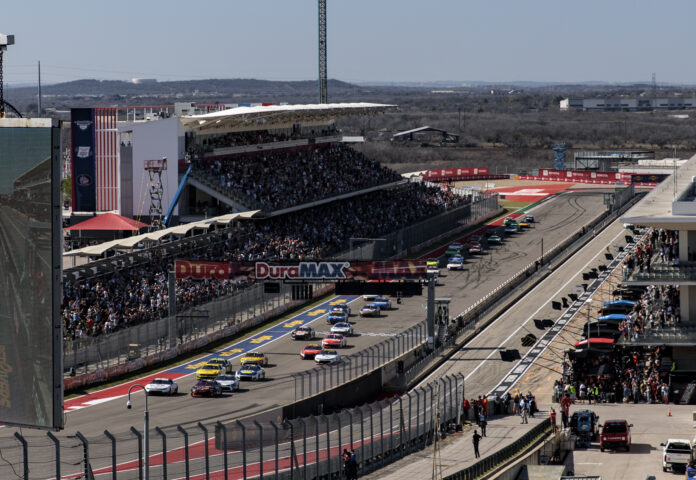
AUSTIN, Texas (January 26, 2026) – The thunderous roar of stock-car engines will compete with the boisterous bark of sea lions as NASCAR at COTA adds a splash of surprise to its Fan Zone for the Feb. 27–March 1 DuraMAX Grand Prix Powered by RelaDyne at Circuit of The Americas.

Headlining the Fan Zone fun is the Sea Lion Splash show, bringing a whimsical and unforgettable experience to the Grand Plaza entrance of the venue. Free to all ticketed guests, these playful and lovable mammals with more charming whiskers than Ryan Blaney are sure to steal your heart with their antics and endearing nature. The sea lions will show off their skills by balancing balls, shooting hoops, dancing, handstands and more.

The sea lions, however, are not the only performers planning to make waves. In addition to NASCAR driver appearances and interactive Q&A sessions, the Fan Zone will feature a diverse mix of crowd-favorite entertainers, including:

  • KARDENNI the Magician: Already planning a magical NASCAR weekend? Let’s lock it in. This award-winning magician and regular performer at Walt Disney World will amaze fans with sleight of hand, mind-bending illusions and a dose of laugh-out-loud humor fueled by sharp storytelling.
     
  • Jason D’Vaude, The Circus Man: Step right up. Jason brings Big Top energy to the Fan Zone with a comedy-driven show blending fire artistry, juggling, balancing acts and heart-pounding stunts that keep fans on the edge of their seats.
     
  • Funkanometry: Back by popular demand, this dynamic hip hop and pop dance duo from Canada returns after wowing audiences on “America’s Got Talent.” Known for viral routines that rack up millions of views, Funkanometry delivers non-stop movement, rhythm and wow factor.
     
  • AmirrorCAN MEN: A can’t-miss fan favorite, this trio roams the grounds in custom mirrored suits representing our red, white and blue. Part performance art, part patriotic spectacle, they are impossible to miss – and impossible not to photograph.
     
  • Animal Stilt Walkers:  Yes, literally larger than life. These towering entertainers put a wild twist on a Fan Zone classic, dressed as safari favorites including giraffes, zebras, lions and more, delighting fans of all ages.

Of course, the main performers – the NASCAR drivers – will take center stage on the track, competing in the O’Reilly Auto Parts Series Focused Health 250 on Saturday, Feb. 28 (2 p.m. CT), and Cup Series DuraMAX Grand Prix Powered by RelaDyne on Sunday, March 1 (2:30 p.m.).

The Fan Zone’s lively, family-first atmosphere extends to ticket options as well. With the purchase of an adult ticket, children 12 and under get in free to the Focused Health 250 and for only $10 to attend the marquee DuraMAX Grand Prix Powered by RelaDyne. It’s big-time NASCAR action with small-time prices for families. Adults also can score a great deal as well, with the “2 for $99” ticket special for the DuraMAX Grand Prix Powered by RelaDyne while supplies last. For more information, visit NASCARatCOTA.com.

Follow Us:
Keep track of all things NASCAR at COTA by following on Facebook, Twitter and Instagram (@NASCARatCOTA). Keep up with all the latest information on the NASCAR at COTA website and mobile app.

Top eight finish for Racing to End Alzheimer’s at Daytona

DAYTONA BEACH, Fla. (26 January, 2026) – Building on the momentum of the 2025 season, the Racing to End Alzheimer’s with Stephen Cameron Racing team started off the 2026 IMSA Michelin Pilot Challenge with a solid finish in the four-hour BMW M Endurance Challenge at Daytona International Speedway last week. After the kind of rough and tumble race that makes the series must-see TV, the effort paid dividends with a run to eighth place at the checkered flag for the No. 19 Ford Mustang GT4.

Drivers Sean Quinlan and Greg Liefooghe combined to keep the Racing to End Alzheimer’s Ford Mustang at or near the top of speed charts all week, earning significant TV time during Friday’s race broadcast (and with Racing to End Alzheimer’s founder Phil Frengs spending time in the IMSA Radio/YouTube broadcast booth with an hour remaining in the race to talk about the organizations work to “fund the care and find the cure”). Quinlan managed the race week well, despite suffering from the cold symptoms that had made their presence known throughout the Michelin Pilot Challenge paddock.

The on-track action was intense all week, but for Frengs, the two weeks that encompass the Roar and the Rolex 24 event – with multiple test sessions, practices, qualifying and the four-hour race – gave him the chance to talk to literally hundreds of fans. More names were added to the sides of the No. 19 Ford Mustang over the past week, bringing the number of loved ones honored by their family or friends to 54.

“It’s two weeks of on-track activity but for us, it’s also two weeks of talking to people who have been affected in some way in their life with Alzheimer’s or another form of dementia,” said Frengs. “That’s our purpose and this is really like a doubleheader for us, with a chance to meet so many people. So from a standpoint of our mission, we did a lot.

“From the racing standpoint, we had really great performance with our Ford Mustang,” continued Frengs. “This team is really on the upward swing. There was such a small difference between finishing third and finishing eighth as we did, in terms of where we were and what the gap was. I think we came away from the race feeling good about our prospects going forward in the season, so that’s exciting. But in the end, the main focus is our chance to talk to the fans, and we certainly did that over this past two weeks in spades.”

The team roared out of the box on Wednesday, setting the quickest lap time of the first official practice – with a lap of 1:52.663 set in a solid draft of cars (note: the time ended up being the single fastest Pilot Challenge lap of the weekend). The second practice on Thursday morning saw the team post the sixth quickest time, while only staying on track for half of the 60-minute session. Quinlan took the wheel later that afternoon for the 15-minute qualifying session, putting the No. 19 Ford Mustang into 12th position on Friday’s starting grid.

Quinlan was ready to do battle at the green flag, despite feeling under the weather. He managed early traffic well, while looking for more front-end grip through the tight corners. A yellow 45 minutes into the race brought him to pit lane for four tires, fuel, and a change to Liefooghe. As soon as the race went back to green, Liefooghe set his sights forward, making solid passes and moving into the top five with two and a half hours remaining.

Liefooghe pitted from third position during a caution as the race reached the halfway point, then returned to the race in 10th. Alternating between caution and green through the next hour, Liefooghe made smart and steady passes, moving into fifth position with 50 minutes remaining, and into the lead moments later – before heading to pit lane for the final stop. He returned to the race in 15th position and quickly made his way back into the top 10. Moving into eighth with 20 minutes left, Liefooghe ran out of time to make a run to the front.

“We probably waited a lap longer than we should have to come in for that last stop,” said team owner Stephen Cameron. “Then we had a little bit of a glitch on the tire change and lost some time, since it was a green flag stop. We’ll go back to the shop and analyze all of that. But overall, lots of positives – Sean did a good job in his stint, he brought the car into a good position, and Greg really moved us forward. Now we need to go and make sure that we learn everything we can and get after it at Sebring.”

The No. 19 Racing to End Alzheimer’s Mustang gives families the chance to honor loved ones who have suffered from Alzheimer’s disease or other forms of dementia. For a $250 donation, the family member’s name and hometown is placed on the car, and their photo can be posted on the Racing to End Alzheimer’s website’s tribute page. All donations are matched by Frengs’ company Legistics, with 100% going to the program’s two beneficiaries: the Nantz National Alzheimer Center at Houston Methodist, and the UCLA Alzheimer’s and Dementia Care Program.

To date, Racing to End Alzheimer’s has donated over $1 million to those two programs.

Donate now at this link.

Next up for Racing to End Alzheimer’s and the IMSA Michelin Pilot Challenge will be the Alan Jay Automotive Network 120 at Sebring International Raceway March 18-21. The two-hour race will be broadcast live in the U.S. on Peacock TV, and internationally on IMSA.TV and on IMSA’s YouTube channel – ad-free courtesy of Michelin.

About Racing to End Alzheimer’s

In 2013, Phil Frengs’s late wife Mimi was diagnosed with early-onset Alzheimer’s Disease. Their experience with the disease led Frengs to a seminal moment: his company, Legistics, had long sponsored a team in IMSA sports car racing and he realized an opportunity to raise money and awareness for the fight against the disease. In 2017, he formed Racing to End Alzheimer’s, giving fans the opportunity to honor loved ones by putting their names on the race car via donation – with Legistics matching each donation. 100% of those donations go to the two organizations the team supports:

The Nantz National Alzheimer Center at Houston Methodist is exploring cutting edge strategies in therapy, care and research to find a cure for these dementias. NNAC was founded by longtime CBS Sports broadcaster Jim Nantz and his family in honor of his father, Jim, Jr., who passed away after a 13-year battle with Alzheimer’s.

The UCLA Alzheimer’s and Dementia Care Program is a nationally-recognized grant-funded program designed to help patients and their families with the complex medical, behavioral and social needs associated with Alzheimer’s disease and other types of dementia.

Racing to End Alzheimer’s social media

Facebook: Racing to End Alzheimer’s
Instagram: @racing2endalz

NOBULL and LEGACY MOTOR CLUB Announce High-Performance Partnership

STATESVILLE, N.C. (January 26, 2026) — LEGACY MOTOR CLUB today announced a new partnership with NOBULL, the footwear brand known for its uncompromising training gear, modern minimalist style, and commitment to athletes who put in the work. The collaboration brings together two organizations built on discipline, grit, and a relentless drive to get stronger every single day.

As part of the partnership, NOBULL will become the Official Track Shoe of LEGACY MOTOR CLUB, supporting the CLUB’s drivers and pit crews throughout the 2026 NASCAR Cup Series season. The partnership will feature NOBULL branding across select race weekends, including at-track content and behind-the-scenes training features.

NOBULL joins a growing roster of innovative, performance-driven brands aligned with LEGACY MOTOR CLUB’s forward-thinking approach to the future of NASCAR.

“This partnership with NOBULL fits perfectly with the culture we’re building at LEGACY MOTOR CLUB,” said Jimmie Johnson, seven-time NASCAR Cup Series champion and owner of LEGACY MOTOR CLUB. “Our drivers and pit crews spend countless hours training to be at their best—on pit road, in the shop, and in race conditions. NOBULL understands the work, the commitment, and the mindset required to compete at the highest level. They’re more than a brand; they’re a mentality and they set the standard for strength.”

NOBULL will outfit the LEGACY pit crews with performance footwear and apparel for their daily training routines, supporting agility, strength, and conditioning programs designed to maximize performance on and off the track.

The partnership will also introduce collaborative storytelling across social platforms, including all-access looks into LEGACY MOTOR CLUB’s driver workout routines and pit crew preparation showcasing the discipline behind the speed.

ABOUT NOBULL:
NOBULL is a footwear brand for training and for daily life. Built to support you in your pursuit of physical, mental, and emotional strength.

NOBULL is known for their best-in-class, award-winning footwear. With options across training and lifestyle, NOBULL has options for anyone who wants to be a better version of themselves and get stronger physically, mentally and emotionally.

In 2023, Mike Repole invested in NOBULL. Repole, a successful serial entrepreneur with a track record of building and selling profitable, multi-billion-dollar businesses, acquired a majority stake in the growing brand. The partnership stems from Mike’s shared mentality and mindset with NOBULL’s brand ethos, which centers on hard work and no excuses.

ABOUT LEGACY MOTOR CLUB:
LEGACY MOTOR CLUB is a premier auto racing organization owned by seven-time NASCAR Cup Series champion and 2024 NASCAR Hall of Fame inductee, Jimmie Johnson and Knighthead Capital Management, LLC. Drawing from a rich tradition of success, LEGACY MC is dedicated to pushing the boundaries of motorsport and setting new standards of excellence. The CLUB competes under the Toyota Gazoo Racing banner in the NASCAR Cup Series with the No. 43 Toyota Camry XSE piloted by Erik Jones and the No. 42 Toyota Camry XSE driven by John Hunter Nemechek. Johnson also races on a limited basis in the No. 84 Toyota Camry XSE. With NASCAR legend and Hall of Famer Richard Petty, “The King”, serving as CLUB Ambassador, LEGACY MC blends timeless racing traditions with a new forward-thinking vision. As an inclusive community for motorsport enthusiasts, LEGACY MC honors both its storied past and the promising future of its members, always striving for victory and championship glory at the pinnacle of NASCAR competition.

CAL RIPKEN, SR. FOUNDATION RETURNS TO NO. 7 CHEVROLET WITH SPIRE MOTORSPORTS AND DANIEL SUÁREZ

MOORESVILLE, N.C. (January 26, 2026) – The Cal Ripken, Sr. Foundation (CRSF), dedicated to building character and teaching life lessons to at-risk youth through sports and mentoring programs, will return to Spire Motorsports in partnership with Monterrey, Mexico native Daniel Suárez.

The collaboration will launch at the NASCAR Cup Series season opener, The Clash at Bowman Gray Stadium in Winston-Salem, N.C. The event marks Suárez’s debut season with Spire Motorsports and his ninth full-time campaign in the NASCAR Cup Series.

“I want to thank Dan Towriss and the Gainbridge team for this exciting partnership with Spire Motorsports and Daniel Suarez,” said Cal Ripken, Jr., Hall of Famer and Co-Founder of the Cal Ripken, Sr. Foundation. “Dan has been an incredibly generous and integral part of our board and this is just another example of that. The partnership with Spire and Daniel will take our 25th anniversary celebration to a new level and expose the work of the foundation to many more. The fact that he is driving the number seven car, dad’s old number, makes it that much more special. I look forward to cheering on Daniel and watching him in person at a race later this year.”

The CRSF empowers communities with clean, safe places for underserved youth to play, learn, and grow. Since 2018, Group 1001 and the CRSF have combined efforts to build 17 youth development parks and install 20 STEM centers nationwide. Group 1001 employees have joined CRSF to host and volunteer for four Community Enhancement Projects. CRSF and Group 1001 have impacted over 100,000 youth in their joint effort to promote active lifestyles and educational opportunities.

Suárez rose through the NASCAR Mexico Series and ARCA Menards Series East ranks before debuting on NASCAR’s national stage with Joe Gibbs Racing in 2014. In 2016, he captured the NASCAR O’Reilly Auto Parts Series (formerly Xfinity Series) championship, becoming the first Mexican-born driver to win a title in NASCAR’s junior division.

He added another milestone in 2025 with an emotional victory at Autódromo Hermanos Rodríguez, during the Cup Series’ inaugural visit to Mexico City. The 34-year-old has more than 300 Cup Series starts, with two wins, including victories at Sonoma Raceway in 2022 and Atlanta Motor Speedway in 2024. He’s also logged 24 top fives and 75 top 10s on NASCAR’s senior circuit. Suarez has led 907 laps and has earned three poles since 2017.

“Cal Ripken, Sr. had an amazing career and left behind an incredible legacy,” said Suarez. “The work the Cal Ripken, Sr. Foundation is doing to support younger generations, especially through its STEM programs and educational initiatives, is truly remarkable. I’m a strong believer in the next generation and seeing the positive impact these programs have on youth is inspiring. I’m very excited to be a part of this partnership and to start off at the Clash will be incredible.”

The Cal Ripken, Sr. Foundation will continue to serve as Suarez and the No. 7 team’s primary partner at select races in 2026.

The Clash at Bowman Gray Stadium kicks of racing festivities for the 2026 season and will be televised live on FOX Sunday, February 1 at 8 p.m. Eastern Standard Time. NASCAR’s annual pre-season exhibition race will be broadcast live on the Motor Racing Network and SiriusXM NASCAR Radio Channel 90.

About Cal Ripken, Sr. Foundation …
The Cal Ripken, Sr. Foundation (CRSF), celebrating our 25th anniversary in 2026, helps to strengthen America’s most underserved and distressed communities by supporting and advocating for children, building Youth Development Parks and STEM Centers, partnering with law enforcement and youth-service agencies, and addressing community needs through its national program initiatives. In 2025, the Cal Ripken, Sr. Foundation impacted over 1.4 million kids from underserved communities. For more information about the foundation and its future initiatives, please visit www.ripkenfoundation.org.

About Spire Motorsports …
Spire Motorsports fields full-time entries in the NASCAR Cup Series, NASCAR CRAFTSMAN Truck Series and High Limit Racing.

The team, co-owned by longtime NASCAR industry executive Jeff Dickerson and TWG Motorsports CEO Dan Towriss, earned its inaugural NASCAR Cup Series victory in its first full season of competition when Justin Haley took the checkered flag in the Coke Zero Sugar 400 at Daytona (Fla.) International Speedway on July 7, 2019. Less than three years later, William Byron drove Spire Motorsports’ No. 7 Chevrolet Silverado to its inaugural NASCAR CRAFTSMAN Truck Series win on April 7, 2022, at Martinsville (Va.) Speedway. The team’s most recent win came on May 30, 2025, when Rajah Caruth took the checkered flag in the Rackley Roofing 200 at Nashville (Tenn.) Superspeedway.

In 2026, Spire Motorsports will campaign the Nos. 7, 71 and 77 Chevrolet Camaro ZL1s in the NASCAR Cup Series and the Nos. 7 and 77 Chevrolet Silverado RSTs in the NASCAR CRAFTSMAN Truck Series. The Mooresville, N.C., organization will also field the No. 77 410 sprint car in High Limit Racing competition.

Early Race Predictions for the Cookout Clash at Bowman Gray Stadium

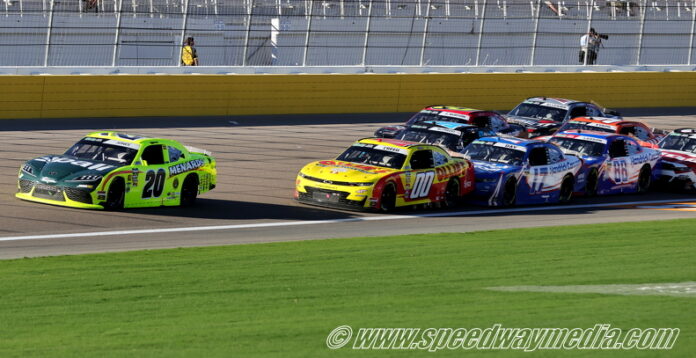
Photo by Andrew Boyd for SpeedwayMedia.com

Something new that I am looking to get started on this 2026 season is making early predictions for every race weekend. Whether we all agree or not, is completely fair and is up for discussion below!

Honorable Mention – Burt Myers – Didn’t show much in the Clash in 2025. Though has the most experience of anyone on the list and of those competing in 2026. 7 modified championships at Bowman Gray Stadium and over 100 career victories. This could be a surprising finish for Myers if he can figure out how to handle the Cup car.

Cookout Clash

Top Ten

10. Shane van Gisbergen – After having a couple of wins in 2025, he looks to get back into the playoffs in 2026. Although he has not had much success with short tracks, Bowman Gray Stadium is different. Gisbergen could find success as long as he stays out of trouble.

9. Ross Chastain – A mixture of wanting to be aggressive or be patient. Chastain will need to time his aggression to a tee. 200 laps give him a lot of time to make moves without crashing into himself.

8. William Byron – Being a part of Hendrick Motorsports will be able to help Byron. The speed is helpful, though Bowman Gray is a 1/4 mile track.

7. Denny Hamlin – A very solid pick for the Clash. A smart driver who has success at tracks of all sizes. He is also patient with short tracks, though he has a past of overthinking chaos. This could lead him to stay in the middle of the pack or to find his way to the front.

6. Joey Logano – A smart short track driver who loves being in contact races. That being said, contact with another car inches apart could be the difference in winning a race or wrecking out on lap 1.

Top Five

5. Bubba Wallace – A different pick from what most would put here, though it can’t be a prediction without having a bold call. There will either be momentum for Wallace or a lot of frustration. Bubba finished 5th in the 2025 running of the Clash at Bowman Gray.

4. Ryan Blaney – One of the best short track racers in the Cup Series. Calm, smooth, and sneaky when it comes to short track racing. His last win came on November 2nd, 2025, at Phoenix.

3. Ty Gibbs – Gibbs is another driver who is very aggressive on short tracks. Though he is also smart enough to stay out of trouble. Will his aggression help or hurt him?

2. Kyle Larson – Hard to displace him at second. One of three things will happen with Larson: either driving for the win, finishing just short, or wrecking himself.

Top Spot – Chase Elliott Winner of the Clash in 2025, and has the momentum to do it again in 2026. He’s a crowd favorite, very comfortable in short track racing, and a part of a very strong Hendricks team. Elliot also has a lot of experience at Bowman Gray Stadium, aside from his Cup Series win last season.

Top Spot - Chase Elliott
Photo by Andrew Boyd for SpeedwayMedia.com

NASCAR Clash will be at Bowman Gray Stadium on February 1st, 2026. 8:00 pm is the scheduled start time. The next race will be the Duels at Daytona, three days before the Daytona 500 on February 15th, 2:30 pm.

Back Home at Bowman Gray: Greensboro Native Cody Ware Grew Up at ‘The Madhouse’

MOORESVILLE, N.C. (Jan. 26, 2026) – Growing up in a racing family in Greensboro, North Carolina, means frequent trips to Bowman Gray Stadium in neighboring Winston-Salem.

For Cody Ware, it began like it does for many – sitting in the grandstands to watch the track’s premier Modified division. Ultimately, it led to Ware sitting behind the wheel of a Modified at Bowman Gray, and then various kinds of racecars across all kinds of tracks. Today, Ware is a fulltime driver in the elite NASCAR Cup Series.

“There’s not another racetrack where I can say that I went from its grandstands to its weekly lineup to the NASCAR Cup Series,” said Ware, who attended Ragsdale High School in the suburb of Jamestown. “Bowman Gray is a part of my racing roots, and now with the Clash, I’m able to go back as a Cup driver. It’s a full-circle moment.”

It makes this weekend’s Cook Out Clash at Bowman Gray Stadium a homecoming for Ware. The 30-year-old racer is back at “The Madhouse” for the NASCAR Cup Series’ soft opening of its 78th season, with the non-points exhibition race kicking off the longest season in all of sports – a 10-month campaign that concludes Nov. 8 with the championship finale at Homestead-Miami Speedway.

Ware enters his old stomping ground with a new look and feel to his familiar No. 51 from Rick Ware Racing (RWR). It’s now a Chevrolet Camaro powered by an ECR-built R07 engine – a thumping 358 cubic-inch V8 that puts out 750 horsepower. Ware got to sample his updated ride Jan. 13 during a test session at North Wilkesboro (N.C.) Speedway, where RWR’s new technical alliance with Richard Childress Racing (RCR) was on display.

“Having to make the transition from Ford to Chevrolet was a big undertaking for the whole team,” Ware said. “The integration with RCR, their engineers and, really, all of their employees, has been impressive, and the test was another good example. It gave us renewed confidence that the direction we’re heading as a race team is the right one.

“Partnering with Chevrolet was the right choice. Everything from the engine package to the aerodynamics of the new body, there are just so many positives. It’s early, but we feel like it’s already paying dividends.”

Ware will look to cash in those dividends at the Clash. He needs to advance from his heat race into the 200-lap main event. Only 23 cars advance to the feature, meaning of the 38 expected entries, 15 will miss the cut.

A strong qualifying effort earns an up-front starting spot in a driver’s respective heat. That’s important, as passing on the quarter-mile, asphalt oval is a rough-and-tumble affair. A clean racecar has a better chance of finishing among the top-five, the cutoff position in each of the four heats to make the headlining Clash. Those outside the top-five in their respective heat get one final shot to make the race via a 75-lap Last Chance Qualifier (LCQ). Only the top-two finishers in the LCQ go on to compete in the primetime feature.

“You have to be aggressive. If you’re not going to be the person who’s making the aggressive moves, you’re probably going to be the person who’s going to have said moves used on you,” Ware said.

“You have to separate the ties and dynamics and relationships you have off the racetrack. Anyone who goes into Bowman Gray thinking it’s all going to be rainbows and sunshine where everyone’s going to walk away happy, they’re very much living in a fantasy. When you’re on the track, you have no friends, only enemies.”

It’s a race of rivalries at the country’s longest-running weekly racetrack. For Ware, it has included a good-natured sibling rivalry.

“My brother, Carson, in his first time ever in a Modified, won at Bowman Gray. He held off Burt Myers in the feature and won the race,” Ware said.

“So, last year he said to me, ‘If you don’t win this, there’s still only going to be one Ware brother with a win at Bowman Gray.’ You’d think he’d won the Daytona 500 or Indianapolis 500 with how he holds that Bowman Gray win over my head.”

It’s all in good fun, as the Ware brothers support one other in their racing pursuits.

“We both have family history at Bowman Gray,” said the elder Ware. “We’ve both raced Modifieds there, and any opportunity we have to race, we’re beyond grateful for. As my brother gets to race more and more here in 2026 and beyond, I want to be the biggest asset that I can be for him. He supports me every weekend. He’s watching the Cup races, cheering me on and texting me and talking to me after the races. And I do the same for him.”

The Clash weekend begins at 1:15 p.m. EST on Saturday with the Madhouse Classic, the 125-lap Modified race featuring the kind of cars the Ware brothers first raced at Bowman Gray. After the checkered flag drops on the Madhouse Classic, on-track activity for the Cup Series begins with practice at 6:10 p.m. before the heat races start at 8:30 p.m. FloRacing will stream the Madhouse Classic while FS1 will broadcast Cup action. Sunday’s LCQ race goes green at 6 p.m. to set the final lineup for the Cook Out Clash. FOX will broadcast the LCQ, transition to its NASCAR RaceDay studio show at 7:30 p.m., and then cover the Clash, which goes green at 8 p.m. SiriusXM NASCAR Radio will also provide live coverage throughout the event.

About Rick Ware Racing:

Rick Ware has been a motorsports mainstay for more than 40 years. It began at age 6 when the third-generation racer began his driving career and has since spanned four wheels and two wheels on both asphalt and dirt. Competing in the SCCA Trans Am Series and other road-racing divisions led Ware to NASCAR in the early 1980s, where he finished third in his NASCAR debut – the 1983 Warner W. Hodgdon 300 NASCAR Grand American race at Riverside (Calif.) International Raceway. In 1995, Rick Ware Racing was formed, and with wife Lisa by his side, Ware transitioned out of the driver’s seat and into fulltime team ownership. He has since built his eponymous organization into an entity that competes full-time in the elite NASCAR Cup Series while simultaneously campaigning winning teams in the Top Fuel class of the NHRA Mission Foods Drag Racing Series, Progressive American Flat Track, FIM World Supercross Championship (WSX) and zMAX CARS Tour.

How Digital Marketing Services Help Car Dealers Grow

Photo by depositphotos at https://depositphotos.com/

In the 2026 automotive market, the traditional “showroom floor” has fundamentally shifted from a physical tiles-and-glass location to a digital-first environment. With over 90% of vehicle shoppers starting their journey with a search engine and spending an average of 13 hours researching online before ever setting foot in a dealership, the digital landscape is where the sale is won or lost. For car dealers aiming to scale their operations and outperform local competitors, leveraging professional digital marketing services is no longer a luxury but a foundational operational necessity. These services provide the data-driven infrastructure and creative storytelling required to navigate a market defined by high-intent buyers and rapid technological shifts. In this article, we will explore how digital marketing enables dealerships to capture demand, build lasting customer trust, and utilize emerging technologies like AI and first-party data to drive sustainable growth.

Mastering Local Visibility through SEO and GEO

In 2026, being “visible” online has evolved beyond simple keyword ranking. While Search Engine Optimization (SEO) remains critical for appearing in “near me” searches, the rise of AI-driven search engines has introduced Answer Engine Optimization (AEO) and Generative Engine Optimization (GEO). Modern buyers don’t just search for “trucks for sale”; they ask AI assistants questions like, “What is the best hybrid SUV for a family of five in Auburn?” or “Which local dealer offers the best trade-in value for a 2022 F-150?”

Digital marketing services help dealers win in this new era by structuring website data so that AI and search engines can easily pull direct answers. This includes optimizing Google Business Profiles with real-time inventory, high-quality photos, and detailed service descriptions. By dominating the “local pack” on Google Maps and ensuring their dealership is the primary answer for complex AI queries, dealers can capture high-intent traffic at the exact moment a buyer is ready to visit a showroom.

Precision Targeting and Demand Capture with PPC

While SEO builds long-term authority, Pay-Per-Click (PPC) advertising provides the immediate “faucet” for lead generation. However, the “spray and pray” approach of previous years has been replaced by hyper-targeted, inventory-specific campaigns. Digital marketing experts now use dynamic ad sets that automatically sync with a dealer’s live inventory. If a specific model is sitting on the lot for too long, the system can automatically increase the ad spend for that vehicle to targeted demographics within a 20-mile radius.

Furthermore, retargeting has become more sophisticated. When a user views a specific Silverado on a dealership’s website and then leaves, digital marketing services ensure that user sees dynamic display ads of that exact truck—along with a localized incentive—on their Facebook feed, Instagram Reels, or even through Connected TV (CTV) apps. This multi-channel “surround sound” effect keeps the dealership top-of-mind during the critical 4.2 websites an average buyer visits before making a decision.

Building Trust through Social Proof and Reputation Management

Trust is the most valuable currency in the automotive industry, and in 2026, that trust is built through digital social proof. Online reviews have a direct impact on search rankings and consumer confidence; a dealership with a 4.8-star rating is statistically far more likely to convert a web visitor than one with a 4.1 rating. Digital marketing services implement automated systems to capture positive reviews from satisfied customers immediately after a sale or service appointment.

Beyond reviews, social media has shifted from a broadcast tool to a community engagement platform. Successful dealers use video marketing—specifically TikTok and Instagram Reels—to provide “behind-the-scenes” looks at their service departments, walkthroughs of new arrivals, and customer delivery stories. This humanizes the brand and reduces the “friction” buyers often feel when dealing with a large organization. By positioning the dealership as a transparent, community-focused expert, digital marketing helps turn one-time buyers into lifelong service customers.

Leveraging AI and First-Party Data for Personalized Journeys

The most significant shift in 2026 is the move away from third-party cookies toward a reliance on first-party data. A dealership’s most valuable asset is the data it already owns: service records, website interactions, and past purchase history. Digital marketing services utilize Customer Data Platforms (CDPs) and AI to analyze this information and create “predictive journeys.”

For example, an AI-powered system can identify a customer who bought a lease three years ago and is now reaching their mileage limit. Instead of a generic email, the system can trigger a personalized “upgrade offer” for a newer model with the specific features the customer has been browsing on the website. This level of hyper-personalization—showing the right car to the right person at the right time—significantly increases conversion rates and reduces the cost per lead, allowing the dealership to grow its revenue while optimizing its marketing budget.

Conclusion

Digital marketing has transformed from a supplemental support role into the primary engine of automotive retail growth. In an era where the customer journey is fragmented across dozens of digital touchpoints, the ability to maintain a consistent, visible, and trustworthy presence is what separates thriving dealerships from those that struggle. By mastering the nuances of local SEO, capturing demand through precision PPC, and fostering community trust through social media and AI-driven personalization, dealers can create a resilient marketing ecosystem. The goal of these digital efforts is ultimately to simplify the path from the screen to the showroom, providing the transparency and convenience that 2026 buyers demand. For the modern car dealer, the path to growth is paved with data, and digital marketing is the vehicle that drives them toward long-term success.

5 Maintenance Costs of High-Mileage Used cars

Photo by depositphotos at https://depositphotos.com/

Owning a high-mileage vehicle is often a badge of honor, signifying a machine that has successfully weathered thousands of miles of varied terrain and weather. However, as the odometer climbs past the 100,000-mile mark, the financial relationship between the owner and the vehicle begins to shift. While the initial purchase price of an older car is lower, the trade-off comes in the form of “delayed maintenance” and the natural wear of long-term components. For budget-conscious drivers looking at used cars for sale in Texas, understanding the predictable costs of high-mileage ownership is the key to avoiding “sticker shock” at the mechanic’s shop. In this article, we will detail five of the most common maintenance and repair costs associated with aging vehicles, helping you plan for a reliable and cost-effective journey into the triple digits.

1. Timing Belt and Water Pump Replacement

One of the most critical “big ticket” maintenance items for high-mileage engines is the timing belt. This rubber belt synchronizes the rotation of the crankshaft and the camshaft, ensuring the engine’s valves open and close at the correct intervals. Most manufacturers recommend replacement between 60,000 and 100,000 miles. Because the labor involved in reaching the timing belt is extensive, technicians almost always recommend replacing the water pump at the same time, as it is usually located in the same area.

The cost for this dual service typically ranges from $600 to $1,200. While this may seem steep, the alternative is much worse. In “interference engines,” a snapped timing belt can cause the pistons to strike the valves, resulting in catastrophic engine failure that can cost upwards of $4,000 to $10,000 to repair. Proactively addressing the timing belt is essentially an insurance policy for the heart of your high-mileage vehicle.

2. Suspension Overhaul: Shocks, Struts, and Bushings

By the time a vehicle reaches 120,000 miles, its suspension has absorbed millions of micro-impacts from potholes, speed bumps, and uneven pavement. Suspension components like shocks and struts do not usually fail suddenly; instead, they degrade slowly over time, leading to a “floaty” ride, increased stopping distances, and uneven tire wear.

A complete suspension refresh—replacing shocks, struts, and worn rubber bushings—can cost between $1,500 and $3,500 depending on the vehicle’s size and complexity. Beyond just comfort, a healthy suspension is vital for safety, as it keeps the tires in constant contact with the road. High-mileage owners should also look out for “clunking” sounds when going over bumps, which often indicate that ball joints or control arm bushings have reached the end of their service life.

3. Transmission Fluid Exchange and Seal Maintenance

The transmission is the second most expensive component in a vehicle, and its longevity depends entirely on the quality of its lubrication. As miles accumulate, transmission fluid can become contaminated with microscopic metal shavings and lose its ability to manage heat. While some manufacturers claim “lifetime” fluids, most experts recommend a professional fluid exchange every 50,000 to 100,000 miles for older vehicles.

A transmission service generally costs between $200 and $400. However, high-mileage cars are also prone to drying gaskets and seals. A slow transmission leak can lead to “slipping” gears or delayed engagement, which are precursors to a total transmission rebuild. Replacing a modern automatic transmission can easily run between $3,000 and $6,000. Keeping the fluid fresh and the seals tight is the best way to ensure your high-mileage car continues to shift smoothly for another 100,000 miles.

4. Catalytic Converter and Exhaust System Repairs

As a car ages, its exhaust system is subjected to extreme temperature fluctuations and environmental corrosion. One of the most expensive components in this system is the catalytic converter, which uses precious metals to convert harmful gases into less toxic emissions. Over time, these can become clogged or “poisoned” by engine oil or coolant leaks, leading to a failed emissions test and a “Check Engine” light.

Replacing a catalytic converter can cost anywhere from $1,000 to $4,000, largely due to the high cost of the metals (platinum, palladium, and rhodium) inside. Additionally, high-mileage vehicles in humid or coastal areas may suffer from rusted mufflers or exhaust pipes. While a small exhaust leak might just make the car louder, it can also allow dangerous carbon monoxide to enter the cabin. Regular inspections can catch small leaks before they require a total system replacement.

5. Cooling System Refresh: Radiator and Hoses

The cooling system is the primary defense against engine-killing heat, but it is often neglected until a “steam cloud” appears under the hood. For high-mileage cars, the plastic components of the radiator and the rubber of the coolant hoses become brittle and prone to cracking. A single failed hose can dump all of the engine’s coolant in seconds, leading to a warped cylinder head or a blown head gasket.

A comprehensive cooling system refresh—including a new radiator, thermostat, and all major hoses—typically costs between $500 and $1,000. Considering that a blown head gasket repair can cost $2,500 to $3,500, this is a highly cost-effective preventative measure. Owners of older vehicles should also be diligent about “coolant flushes,” which prevent the internal corrosion that can eat away at the water pump and heater core from the inside out.

Conclusion

Navigating the maintenance of a high-mileage used car is a exercise in proactive management. While the costs of timing belts, suspension components, and cooling systems can feel like a burden, they are significantly lower than the cost of a new car payment or a catastrophic mechanical failure. In the 2026 market, where many vehicles are engineered to last well beyond 200,000 miles, these repairs should be viewed as investments in longevity rather than “money pits.” By setting aside a monthly maintenance fund and staying ahead of factory-recommended service intervals, you can enjoy the many benefits of a paid-off vehicle without the fear of the unknown. A well-maintained high-mileage car is more than just a bargain; it is a testament to the fact that with the right care, a machine can serve its owner faithfully for many years to come.

Speed, Focus, and Control in the Digital Age of Entertainment

Photo by depositphotos at https://depositphotos.com/

Speedway is built on focus. Riders operate within strict limits, where timing, discipline, and control matter more than raw aggression. This mindset extends beyond the track and influences how many fans approach digital life, including how they choose to spend their free time.

Modern digital entertainment reflects similar principles. The most engaging platforms are not those that overwhelm users with constant stimulation, but those that allow intentional participation. Structure has become as valuable as excitement.

Within this broader landscape of digital leisure, some users encounter structured digital environments, including Cosmo Casino online, not as chaotic distractions but as systems where pacing, limits, and decisions define the experience.

Why Motorsport Fans Value Structure Over Chaos

Motorsport culture rewards preparation and restraint. Success comes from understanding limits rather than ignoring them. This preference for structure often carries into digital behavior.

Fans accustomed to analysing racing conditions tend to avoid cluttered digital spaces. They prefer platforms that offer clarity and predictability. Excessive visual noise breaks concentration and reduces engagement.

Clear structure lowers cognitive load. When systems are easy to understand, users can focus on the experience itself rather than navigating the interface.

Digital Entertainment as a Competitive Environment

Digital entertainment has moved beyond passive consumption. It now requires attention, decision-making, and timing. In this sense, it resembles competitive environments more than traditional media.

Rules transform digital spaces into systems. When outcomes are tied to clear mechanics, users feel more confident engaging. Transparency supports informed participation.

Competition does not always involve opponents. Often, it is about managing time, attention, and impulse. Platforms that acknowledge this dynamic align more closely with competitive mindsets.

Decision-Making Under Pressure

Pressure exists whenever timing matters. In digital environments, pressure often comes from speed and choice. Poorly designed systems encourage impulsive reactions.

Well-structured platforms slow interactions just enough to promote deliberate decisions. This balance mirrors motorsport logic, where reacting too quickly can be as costly as reacting too late.

Focus improves when users feel in control of the pace.

How Control Shapes the Online Experience

Control has become a core expectation in digital environments. Users increasingly look for tools that help them manage engagement on their own terms.

In entertainment, control appears through transparency and settings that respect personal limits. When boundaries are visible, users feel empowered rather than restricted.

This shift mirrors broader digital trends, where awareness and self-regulation are standard features rather than optional extras.

Where Online Casino Platforms Fit Into Modern Leisure

Online casinos now exist alongside streaming services, video games, and social platforms. Their role has changed accordingly.

For many users, these platforms represent occasional digital leisure rather than constant engagement. The expectation is not prolonged sessions, but controlled experiences that fit into a broader routine.

When viewed in this context, online casinos function as one option within a diversified digital lifestyle rather than a standalone activity.

Responsible Play as Part of Competitive Discipline

Discipline defines high-performance environments. In sport, it prevents mistakes. In digital entertainment, it prevents loss of control.

Responsible play tools extend competitive discipline into online contexts. They help users set boundaries before impulse overrides judgement.

Digital Control ToolPurpose
Time limitsSupports session awareness
Spending capsEncourages budget discipline
Activity trackingEnables reflection on habits
Self-exclusionProvides structured breaks
Support accessConnects users to help resources

These mechanisms protect enjoyment by aligning entertainment with long-term balance.

Digital Focus vs Traditional Distractions

Traditional distractions often require minimal engagement. Television and radio allow passive consumption.

Digital entertainment demands active participation. This engagement can sharpen focus when managed correctly.

AspectTraditional DistractionsDigital Engagement
AttentionPassiveActive
ControlLowHigh
TimingFixedUser-defined
FeedbackMinimalImmediate

For users with competitive mindsets, active engagement feels more rewarding when control is maintained.

The Psychology of Timing and Restraint

Knowing when to stop is a skill. In motorsport, pushing beyond limits leads to errors. The same applies in digital environments.

Restraint protects performance. Short, focused sessions often deliver greater satisfaction than prolonged engagement.

Platforms that support timing and restraint encourage intentional participation rather than habit-driven behavior.

FAQ

Why does structure matter in digital entertainment?

Structure reduces overload and supports focused engagement. Clear systems help users make deliberate choices instead of reacting impulsively.

How does motorsport mindset influence digital behavior?

Motorsport emphasizes timing, discipline, and control. These values naturally transfer to how fans evaluate digital environments.

Can digital entertainment improve focus?

Yes, when platforms offer transparency and user control. Focus improves when engagement feels intentional.

Why is responsible play important in modern leisure?

Responsible play tools help maintain balance. They protect enjoyment by preventing overextension and loss of control.

Innovative Biotechnologies and Advanced Cell Therapies at AMSA Biotech

Photo by depositphotos at https://depositphotos.com/

At AMSA Biotech, we focus on exploring the power of regenerative medicine to bring new solutions for patients facing serious medical conditions. Our mission is to combine advanced biotechnology, evidence-based research, and clinical expertise to create therapies that support healing, improve quality of life, and open new horizons in modern healthcare. With a team of scientists and medical specialists, the company works on innovative approaches that utilize stem cells, exosomes, and other cell-derived technologies to restore damaged tissues and promote regeneration at the cellular level.

Our research is grounded in the belief that regenerative therapies have the potential to transform the way many chronic diseases are managed. Instead of focusing only on controlling symptoms, cell-based treatments aim to stimulate the body’s natural repair mechanisms and improve overall functionality. At AMSA Biotech, projects are dedicated to multiple therapeutic directions, including neurology, cardiology, orthopedics, gastroenterology, and metabolic disorders. By building strong collaborations with global research institutions and clinical centers, we ensure that our solutions are developed in line with international standards of safety, ethics, and scientific excellence. Patients and medical professionals who visit amsabiotech.com gain access to accurate, up-to-date information about the possibilities of modern regenerative medicine.

The Future of Medicine and Patient-Centered Care

The future of biotechnology lies in treatments that not only address disease but also actively rebuild health. At AMSA Biotech, we explore advanced stem cell technologies, exosome therapies, and personalized medical solutions designed to meet each patient’s unique needs. Clinical research has already shown that regenerative methods may contribute to improving outcomes in conditions such as neurodegenerative diseases, autoimmune disorders, liver and kidney dysfunction, musculoskeletal injuries, and age-related decline. By integrating the latest laboratory discoveries into practical medical applications, our goal is to make therapies accessible and effective for patients worldwide.

Our vision goes beyond innovation alone. We are dedicated to ensuring that each therapy is developed with responsibility, transparency, and a focus on patient safety. From rigorous laboratory testing to carefully designed clinical trials, AMSA Biotech follows international guidelines to deliver therapies that meet the highest medical standards. We also recognize the importance of education and awareness. That is why amsabiotech.com serves not only as a platform to showcase our work but also as a trusted source of knowledge where patients, doctors, and researchers can explore the latest achievements in regenerative medicine.

With biotechnology moving forward at an unprecedented pace, AMSA Biotech continues to stand at the forefront of change. Our commitment is to bring scientific discovery into real-world treatments, bridging the gap between research and patient care. By doing so, we aim to redefine healthcare and make regenerative medicine a reliable part of everyday clinical practice.