2:00 PM – 2:50 PM: NOAPS PRACTICE 3:05 PM – 4:00 PM: NOAPS QUALIFYING (IMPOUND) 4:30 PM – 5:20 PM: NCS PRACTICE (IMPOUND) (ALL ENTRIES) 5:35 PM – 6:30 PM: NCS QUALIFYING (IMPOUND) 7:00 PM: NOAPS DRIVER INTRODUCTIONS 7:30 PM: NOAPS RACE (STAGES 85/170/300 LAPS = 159.9 MILES) ON THE CW NETWORK
SATURDAY, SEPTEMBER 19
6:50 PM: NCS DRIVER INTRODUCTIONS 7:30 PM: NCS RACE (STAGES 125/250/500 LAPS = 266.5 MILES) ON THE USA NETWORK
*All times are Eastern. NASCAR Cup Series (NCS), NASCAR O’Reilly Auto Parts Series (NOAPS), NASCAR Craftsman Truck Series (NCTS), ARCA Series (AMS)
Who and what should you look out for at Bristol Motor Speedway?
Denny Hamlin leads the NCS among active drivers in wins with four victories in 38 starts (2012, 2019, 2023, 2024), and this weekend, seven of the 46 race winners are entered in the event.
Active Bristol Winners
Wins
Seasons
Denny Hamlin
4
2024, ’23 ’19, ’12
Kyle Larson
3
2025, ’24, ’21
Brad Keselowski
3
2020, ’12, ’11
Joey Logano
2
2015, ’14
Ty Gibbs
1
2026
Christopher Bell
1
2025
Chris Buescher
1
2021
The race winner has started from the pole or first starting position 27 times (21.09%), making it the most productive starting position in the field. 16 different drivers have won from the pole, with the most recent driver to win from the pole or first starting position being Brad Keselowski on March 31, 2020. The deepest start by an active race winner is 20th, by Chris Buescher in 2022.
Kyle Larson leads all active NCS drivers in runner-up finishes with three, and Denny Hamlin leads all active drivers in top-five finishes with 13.
The Driver Picks for the Bass Pro Shops Night Race at Bristol Motor Speedway!
Tyler Reddick has two top-fives, two top-10s, and an average finish of 17.900.
Joey Logano has one pole, two wins, seven top-fives, 12 top-10s, and an average finish of 16.281.
Chase Briscoe has two top-fives, four top-10s, and an average finish of 11.625.
Chase Elliott has one pole, five top-fives, nine top-10s, and an average finish of 13.333.
Denny Hamlin has four poles, four wins, 13 top-fives, 21 top-10s, and an average finish of 13.342.
MARTIN, Mich. (Sept. 16, 2026) – Starting the Countdown to the Championship playoffs at a first-time facility on the NHRA Mission Foods Drag Racing Series tour poses a stout challenge right off the bat for any driver seeking a championship.
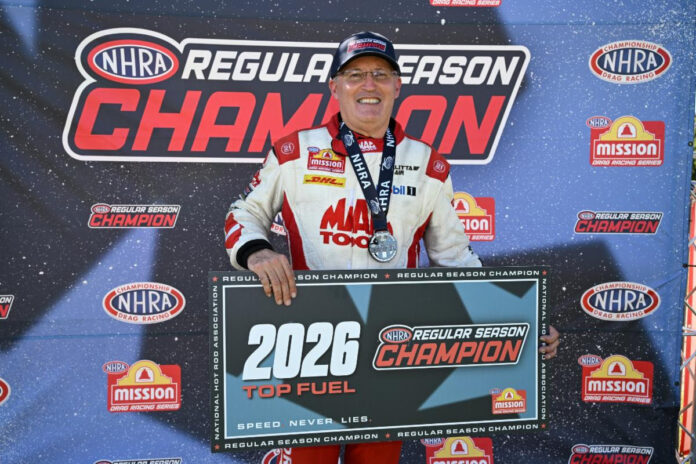
But for points leader and reigning Top Fuel world champion Doug Kalitta, this weekend’s Dodge NHRA Great Lakes Nationals presented by MOPAR at U.S. 131 Motorsports Park is almost like a dream come true.
The two-time world champ hails from nearby Ypsilanti and this weekend marks the first NHRA national event in Michigan in more than 65 years. It’s a first-time appearance at U.S. 131 Motorsports Park on a national event-level scale, too, adding even more incentive for Kalitta to start the Countdown to the Championship strong.
He enters the playoffs as points leader with wins at three of the past four races and a victory in front of a home crowd in his 12,000-horsepower Applied Innovation dragster would mark a memorable moment for the standout veteran.
“The Michigan race is pretty exciting and it’s been a number of years since NHRA has made it to Michigan, so it’s pretty close for us,” Kalitta said. “We’ve had a lot of excitement with our employees and sponsors. We’re looking forward to that race. We’re going to have a ton of people at our hospitality and just part of our weekend. As far as I’m concerned, the more the merrier, but it’ll be business as usual, really. Each qualifying run’s going to be important.”
The highly-anticipated debut at US 131 Motorsports Park is the first of six playoff races and the 15th of 20 events during NHRA’s 75th anniversary season. The 2026 Dodge NHRA Great Lakes Nationals presented by MOPAR will also be broadcast on FS1, with elimination coverage beginning at 2 p.m. ET on Sunday, Sept. 20.
To add to the magnitude of the weekend, Doug, Connie and Scott Kalitta will all be honored during the weekend as part of NHRA’s 75th anniversary celebration. Connie and Doug will both be recognized as two of the Top 75 drivers in NHRA history.
D. Kalitta, though, will be focused on starting the Countdown to the Championship in strong fashion. A four-time winner in 2026, Kalitta opens the playoffs with a 26-point lead over teammate Shawn Langdon, with Leah Pruett and Tony Stewart in third and fourth, respectively.
Other top Countdown contenders in the loaded Top Fuel category include rookie sensation Maddi Gordon, four-time world champ Antron Brown, Gainesville winner Josh Hart and Justin Ashley. Kalitta, though, would love nothing more than to put on a show for an expected huge crowd that’s excited for a dose of 340-mph, 12,000-horsepower nitro.
The action starts with two rounds of qualifying on both Friday and Saturday, leading into eliminations on Sunday, where Kalitta hopes to get an early jump on what he hopes is another fulfilling championship run.
“It was close (in the regular season) and as the season goes on, it always seems to come to Pomona and it’s going to be a tight battle there,” said Kalitta, who has 63 career wins. “It should definitely be a fun time to be part of this. Hopefully we can continue to go some rounds and see if we’re in the mix in Pomona (at the In-N-Out Burger Finals).”
Matt Hagan has won each of his four world titles behind the wheel of a Dodge Funny Car. He’s currently the points leader in a talent-filled Funny Car class that also includes Ron Capps, Jack Beckman, Jordan Vanergriff, J.R. Todd and back-to-back defending world champ Austin Prock.
Six-time Pro Stock world champ Greg Anderson and KB Titan Racing teammate Dallas Glenn battled for the points lead all season, with Glenn winning in Indy to win the regular season championship. Both have four wins in 2026, but will be challenged by the likes of Greg and Aaron Stanfield, Matt Hartford, Jeg Coughlin Jr. and Erica Enders.
Reigning Pro Stock Motorcycle champion Richard Gadson starts the postseason as the points leader, looking to hold off teammate and two-time champion Gaige Herrera, Matt and Angie Smith, John Hall, Steve Johnson and Chase Van Sant.
The Dodge NHRA Great Lakes Nationals presented by MOPAR will also feature racing in the NHRA Lucas Oil Drag Racing Series and Flexjet Factory Stock Showdown.
Race fans at US 131 Motorsports Park can enjoy the special pre-race ceremonies that introduce each driver and includes the fan favorite SealMaster Track Walk. They are also invited to congratulate the event winners at the winner’s circle celebration on Sunday to crown the first-ever national event winners in Martin. As always, fans get a pit pass to the most powerful and sensory-filled motorsports attraction on the planet. Fans can see their favorite teams in action and servicing their cars, get autographs and more. They can also visit NHRA’s Manufacturers Midway, where sponsors and vendors create an exciting atmosphere.
NHRA Mission Foods Drag Racing Series qualifying will feature two rounds at 12:15 and 2:45 p.m. ET on Friday, Sept. 18 and the final two rounds of qualifying on Saturday, Sept. 19 at 12 and 2:30 p.m. Final eliminations are scheduled for 10:30 a.m. ET on Sunday, Sept. 20. Television coverage includes qualifying on FS1 at 12 p.m. ET on Sunday before eliminations action at 2 p.m.
To purchase tickets to the 2026 Dodge NHRA Great Lakes Nationals presented by MOPAR, fans can visit www.NHRA.com/tickets. Children 12 and under are free in general admission areas with the purchase of an adult ticket. For more information about the NHRA, visit www.nhra.com.
About Mission Foods
MISSION®, owned by GRUMA, S.A.B. de C.V., is the world’s leading brand for tortillas and wraps. MISSION® is also globally renowned for flatbreads, dips, salsas and Mexican food products. With presence in over 112 countries, MISSION® products are suited to the lifestyles and the local tastes of each country. With innovation and customer needs in mind, MISSION® focuses on the highest quality, authentic flavors, and providing healthy options that families and friends can enjoy together. For more information, please visit https://www.missionfoods.com/
About NHRA
NHRA is the primary sanctioning body for the sport of drag racing in the United States. NHRA presents 20 national events featuring the NHRA Mission Foods Drag Racing Series and NHRA Lucas Oil Drag Racing Series, as well as the JBS Equipment NHRA Pro Mod Drag Racing Series presented by Elite Motorsports and NHRA Flexjet Factory Stock Showdown™ at select national events. NHRA provides competition opportunities for drivers of all levels in the NHRA Summit Racing Series and NHRA Street Legal™. NHRA also offers the NHRA Jr. Street® program for teens and the Summit Racing Jr. Drag Racing League® for youth ages 5 to 17. With more than 100 Member Tracks, NHRA allows racers to compete at a variety of locations nationally and internationally. NHRA’s Youth and Education Services® (YES) Program reaches over 30,000 students annually to ignite their interest in automotive and racing related careers. NHRA’s streaming service, NHRA.tv®, allows fans to view all NHRA national events as well as exclusive features of the sport. In addition, NHRA owns and operates three racing facilities: Gainesville Raceway in Florida; Lucas Oil Indianapolis Raceway Park; and In-N-Out Burger Pomona Dragstrip in Southern California. For more information, log on to www.NHRA.com, or visit the official NHRA pages on Facebook, Instagram, Twitter, and YouTube.
Saturday’s race will be Noah Gragson’s sixth NASCAR Cup Series start at Bristol Motor Speedway. Gragson’s best finish at the track occurred in the 2024 ‘Night Race’ while driving for Stewart-Haas Racing, starting 16th and finishing 12th.
The 0.533-mile track was one of Gragson’s best tracks in his NASCAR O’Reilly Auto Parts career, having amassed two wins, two top-five finishes, and four top-10 finishes in six starts.
Rush Truck Centers / Cummins Event Notes
Rush Truck Centers, the premier solutions provider for the commercial vehicle industry, will again join Gragson and company for the 500-lap race. This weekend will be Rush Truck Centers’ 10th primary sponsorship race of the season.
Rush Truck Centers will celebrate National Truck Driver Appreciation Week this weekend at Bristol Motor Speedway, with the company featured on Noah Gragson’s No. 4 Ford Mustang Dark Horse for the NASCAR Cup Series race.
Taking place September 13–19, National Truck Driver Appreciation Week recognizes the millions of professional truck drivers who work tirelessly to keep America’s supply chains moving. Rush Truck Centers is proud to honor the drivers who play an essential role in keeping our country moving every day.
The #ThankATrucker campaign will be highlighted throughout the Bristol weekend, giving Rush Truck Centers and Front Row Motorsports an opportunity to recognize the trucking community and thank professional drivers for the work they do on and off the road.
Through their longstanding business-to-business partnership, Cummins, Inc. will also join Rush Truck Centers on the No. 4 entry for the event in Tennessee. From buses that transport kids to and from school to the trucks that carry essentials, to construction, mining equipment, trains and ships, and critical backup power for places like data centers and hospitals, Cummins powers the future through innovations that make people’s lives better. Learn more at cummins.com.
With a commitment to keeping customers up and running, Rush Truck Centers proudly serves Tennessee, with locations in Nashville, Smyrna and Memphis.
For the haul to Bristol Motor Speedway, and each week during the NASCAR Cup Series season, the Front Row Motorsports Ford Mustang Dark Horse race cars are transported to the track behind the power of Peterbilt Model 579 tractors, provided and serviced exclusively by the team at Rush Truck Centers. To find the Rush Truck Centers location nearest to you, visit rushtruckcenters.com.
Todd Gilliland will make his eighth NASCAR Cup Series start at Bristol Motor Speedway. His best result at the track occurred this season, in April, when he started 35th and finished sixth.
In the NASCAR CRAFTSMAN Truck Series, Gilliland has one top-five and three top-10’s in four starts at the track.
Love’s Travel Stops / Peak Event Notes
This will be Love’s Travel Stops 15th race of the 2026 season with Gilliland and the No. 34 Ford team.
Love’s Travel Stops returns with Gilliland and the No. 34 team for Saturday’s race. Love’s Travel Stops rolls out a major update to the Love’s App, introducing a unified Love’s Rewards program that now benefits every customer who stops at Love’s. Whether fueling up, grabbing a snack, or stocking up on Love’s-branded products, customers can now save and earn points at every turn simply by scanning the Love’s App in-store or at the pump. The new Love’s Rewards program focuses on delivering meaningful value at every stop and aims to make Love’s the first stop drivers think of on the road. Love’s Rewards App users can also save 10¢ per gallon on gas and up to 25¢ per gallon on auto diesel. Fans can download the app from Google Play and the Apple App Store. To explore all the new benefits of the Love’s Rewards program, visit www.loves.com/loves-rewards.
Gilliland and the No. 34 team will also have PEAK Performance on their Ford Mustang Dark Horse, to promote PEAK’s exclusive line of PEAK products available at over 600 Love’s Travel Stops across the country. PEAK is a leader in automotive and heavy-duty products ranging from PEAK Global Antifreeze, Final Charge, PEAK Windshield Wash, and BlueDEF Diesel Exhaust Fluid. All products can be found at Love’s Travel Stops.
Zane Smith will make his sixth NASCAR Cup Series start at Bristol Motor Speedway. His best finish at the track occurred in the 2025 event, when he started 24th and finished third, even leading five laps.
In five NASCAR CRAFTSMAN Truck Series starts at the track, Smith has two top-five finishes and three top-10 finishes.
Aaron’s Rent to Own Event Notes
This will be Aaron’s Rent to Own 14th primary sponsorship race of the season.
Aaron’s Rent to Own will bring back their classic blue and green Lucky Dog scheme for the 500-lap race.
ABOUT FRONT ROW MOTORSPORTS
Front Row Motorsports (FRM) is a winning organization competing in the NASCAR Cup Series and the NASCAR CRAFTSMAN Truck Series. Founded in 2004 by entrepreneur Bob Jenkins, FRM has earned top honors including a 2021 Daytona 500 victory and the 2022 CRAFTSMAN Truck Series championship. Based in Mooresville, N.C., FRM fields the No. 4, No. 34, and No. 38 entries in the NASCAR Cup Series, along with the No. 34 and No. 38 teams in the CRAFTSMAN Truck Series. For more information, visit FrontRowMotorsports.com and follow Front Row Motorsports on social media — X: @Team_FRM, Instagram: @teamfrm, Tik Tok: @Team_FRM, YouTube: @FrontRowNASCAR, and Facebook: facebook.com/FrontRowMotorsports.
NCS/NOAPS/NCTS/ARCA: Bristol Motor Speedway – Sept. 17-19
PLANO, Texas (Sept. 16, 2026) – TOYOTA RACING heads to Bristol for the iconic Bristol night race, part of a weekend full of racing with four events in three days.
NASCAR National Series – NCS/NOAPS/NCTS
Joe Gibbs Racing looks to add to recent Bristol success … Joe Gibbs Racing continues to have stellar performances at Bristol Motor Speedway. Christopher Bell is the reigning winner, while Ty Gibbs scored his first NASCAR Cup Series race win at the track in the spring. With Denny Hamlin’s wins in the 2023 Bristol Night Race and the 2024 Spring event, Joe Gibbs Racing has won four of the last six races at the Last Great Coliseum.
Gibbs running Kyle Busch tribute … Gibbs will honor the legacy of Kyle Busch this weekend with a tribute scheme on his Toyota Camry, which is very similar to Busch’s title winning car. Busch won a combined 22 times at Bristol across NASCAR’s three national series, including eight times in the NASCAR Cup Series. He swept the summer tripleheader weekend twice (2010, 2017) and remains the only driver to win all three national-series races in a single weekend. Busch is also the all-time race winner for Toyota – claiming over 200 wins across NASCAR’s top-three series. He also remains the only multi-time Cup champion for Toyota, as he claimed the title in 2015 and 2019.
Toyota still near the top of the points … Hamlin held onto the points lead with his ninth-place finish at Gateway on Sunday afternoon. Hamlin leads six Toyota drivers in the top-10 positions, which includes Bell in third, fifth-place Tyler Reddick, Gibbs (sixth), Chase Briscoe (eighth) and Bubba Wallace (10th).
Jones, Gray continue in Championship fight … JGR’s Brandon Jones and Taylor Gray both are continuing to battle for the title. Gray led Toyota with a fourth-place finish at Gateway – his second straight top-10 to start the Chase, while Jones battled back from damage to finish 15th. Gray remains Toyota’s top driver in points as the Georgia-native is in ninth overall.
Crews looks for first NASCAR victory … Brent Crews was impressive at Bristol in the spring. In just his fifth series start, Crews battled for the lead late before finishing third – his first NASCAR O’Reilly Series top-five finish. Despite missing four races to start the season due to NASCAR’s age restrictions, Crews is seventh-best in top-10 finishes with 14, including a seventh-place finish at Gateway last Saturday.
Sawalich double duty … William Sawalich will compete in both the NASCAR O’Reilly Series and NASCAR Truck Series races this weekend at Bristol. On Thursday, Sawalich makes his Halmar-Friesen Racing debut in the No. 62 Toyota Tundra TRD Pro, before competing in his normal ride – the No. 18 Joe Gibbs Racing Toyota GR Supra in the O’Reilly Series on Friday. Sawalich won the pole and finished seventh at Bristol earlier this year.
Honeycutt, Ruggiero start championship push … Toyota Development Drivers Kaden Honeycutt and Gio Ruggiero begin their championship runs this weekend at Bristol Motor Speedway. Honeycutt, who is in the post-season for the second consecutive year, is the second seed on the strength of two wins, including a dominating performance at Richmond Raceway last month. Ruggiero, the reigning Truck Series Rookie of the Year, starts the Chase in fifth, as he looks for his first victory of the season.
TRICON No. 1 team battles for the owner’s crown … Nick Leitz will kick off TRICON’s other championship chance – the owner’s title for the No. 1 team. Leitz, who set many career-bests at his last start at Richmond Raceway, will run the first two races for the team. Corey Heim, who has two wins in the No. 1 Tundra, Brent Crews and Gavan Boschele complete the lineup for the balance of the season.
NASCAR Regional Series – ARCA Menards Series
Reaves looks for first ARCA East title… Max Reaves added another dominating performance this past Saturday – winning the pole and leading every lap at Salem Speedway to claim his sixth ARCA platform victory in 2026. Now Reaves turns to Bristol, where he looks to claim the ARCA East title. He comes into the race in second place – just two points out of the lead. The title would be the fourth ARCA East title for Joe Gibbs Racing and the 10th for Toyota.
About Toyota
Toyota (NYSE:TM) has been a part of the cultural fabric in the U.S. for nearly 70 years, and is committed to advancing sustainable, next-generation mobility through our Toyota and Lexus brands, plus our nearly 1,500 dealerships.
Toyota directly employs approximately 48,000 people in the U.S. who have contributed to the design, engineering, and assembly of more than 36 million cars and trucks at our 11 manufacturing plants. In 2025, Toyota’s plant in North Carolina began to assemble automotive batteries for electrified vehicles.
Race Information Venue: Bristol Motor Speedway Event: UNOH 250 presented by Ohio Logistics Date: Thursday, September 17 Location: Bristol, TN Track Description: 0.533-mile oval Distance: 250 laps, 133.25 miles (8:00 p.m. ET, FOX Sports 1, Performance Racing Network, SiriusXM)
Eckes Aims to Ignite Chase Run in “Thunder Valley”
Christian Eckes, driver of the No. 91 Motion Industries Chevrolet Silverado RST
Challenging Chaser … Christian Eckes begins the 2026 Chase for the NASCAR CRAFTSMAN Trucks Series (NCTS) title as the foremost challenger to wrestle away the championship trophy. The driver of the No. 91 Motion Industries Chevrolet Silverado RST is a former Bristol Motor Speedway (BMS) winner yet enters the “World’s Fastest Half Mile” seeking his first victory of the season. Earlier this season, Eckes nearly captured his second sword from the “Last Great Colosseum” after leading 132 laps which concluded in a fifth-place finish. Now starting the 2026 edition of the Chase fourth in points, Eckes hopes to secure another victory at BMS as the title battle commences.
Concrete Christian … Since leading 150 of 200 laps in the 2023 fall race at “Thunder Valley”, Eckes has been a prolific performer on BMS’ concrete. In his last four starts at the 0.533-mile short track palace, Eckes has finished in the top-five in each outing, including his 2024 spring race victory. He’s led 426 laps during that stretch and includes three stage wins. The New Yorker has had a strong grip of the concrete tracks overall with a pair of victories at Martinsville Speedway and a clean sweep of Nashville Superspeedway, all of which occurred in 2024. After securing a stage victory and leading the most laps at BMS in April, Eckes looks to conquer the “Last Great Colosseum” once more for his fifth concrete victory on Thursday night.
Season to Date … Eckes begins the Chase fourth in the drivers’ point standings, just 40 points out of the lead. Over the 18-race “regular season”, Eckes posted six top-five’s and 11 top-10 finishes with 173 laps led and an average finish of 13.0.
Tune In … Thursday features a one-day show for Eckes and the NCTS field as practice and qualifying gets underway at 3:00 p.m. ET on FOX Sports 2. Race coverage flexes to FOX Sports 1 at 8:00 p.m. ET on FOX Sports 1. Stay connected with the No. 91 Motion Industries team by following @BMR_NASCAR on Twitter, @bmr_nascar on Instagram, and Bill McAnally Racing on Facebook.
Christian Eckes Quote:
On his outlook to begin the Chase at Bristol:
“Starting the Chase at Bristol is perfect for us. We’ve run really well there in the past and felt like that was one of our best chances to win earlier this season. I always feel comfortable at Bristol and know what we need to have in our Motion Industries Chevrolet. I’m proud of this team for improving throughout the year and truly feel like we have the speed to beat any one in this Chase. It comes down to execution and maximizing our days when we have the speed to contend. We’ve done a good job of consistently improving our trucks the last half of the season and have been fast enough to win at a lot of races. The Chase schedule lines up well for our strengths as a team, now it’s time to execute it.”
Christian Eckes 2026 Statistics
Starts: 18
Wins: 0
Top-5’s: 6
Top-10’s: 11
Poles: 0
Stage Wins: 3
Laps Led: 173
Average Finish: 13.0
NCTS Points Position: 4th
Motion is a leading distributor of maintenance, repair, and operation replacement parts, and a premier provider of industrial technology solutions. Products include bearings; mechanical power transmission products; electrical and industrial automation components; hose, belting, and gaskets; hydraulic/pneumatic components; process pumps; industrial/safety products; seals and accessories; material handling solutions; and more.
With the goal of increasing customers’ productivity, the Company offers many valued-added services, including engineering, fabrication, repair, and Industry 4.0 solutions across these product groups. To learn more, visit Motion.com.
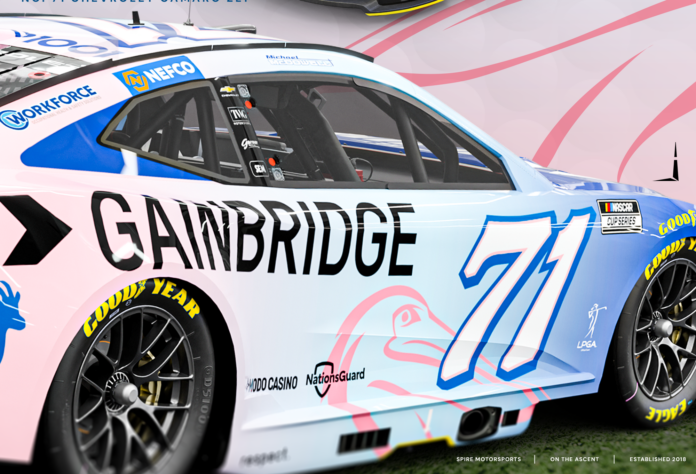
Spire Motorsports Reveals Special Livery for No. 71 THE ANNIKA Chevrolet ZL1
MOORESVILLE, N.C. (September 16, 2026) – As the NASCAR Cup Series heads to Homestead-Miami Speedway for the 2026 season finale, World Golf Hall-of-Famer Annika Sörenstam and her namesake LPGA Tour event, The ANNIKA driven by Gainbridge at Pelican (The ANNIKA), is teaming up with Gainbridge℠, driver Michael McDowell and Spire Motorsports to unveil a unique livery for McDowell’s No. 71 Chevrolet Camaro ZL1 for the Nov. 8 NASCAR Cup Series Championship Race.
The ANNIKA driven by Gainbridge at Pelican, Tampa Bay’s signature LPGA Tour event, takes place the following week, Nov. 9-15 at Pelican Golf Club in Belleair, Fla.
McDowell, a two-time Cup Series race winner, will race the No. 71 The ANNIKA driven by Gainbridge Chevrolet ZL1 when NASCAR’S premier division returns to the popular mile-and-a-half South Florida oval for Championship Weekend for the first time since 2019.
Meanwhile, the decklid of McDowell’s No. 71 Chevy will feature a dynamic look, including a roster showcasing many of the players on the LPGA Tour’s “Race to the CME Globe” rankings who are currently eligible to compete at the ANNIKA, a season-long points competition in which LPGA Members accumulate points in every Official LPGA Tournament to gain entry into the season-end CME Group Tour Championship. McDowell will also sport a The ANNIKA-themed driver suit featuring a golf-inspired caddie bib and golf pants on race day.
After the checkered flag waves and the 2026 NASCAR season officially comes to a close, the father-of-five will head to Florida’s Gulf Coast for The ANNIKA to share time with the LPGA Tour players and participate as a celebrity caddie in the Wednesday Pro-Am at Pelican Golf Club on Nov. 11.
“I’m definitely not the best golfer in the world so it’s easy for me to appreciate the talented players on the LPGA Tour,” said McDowell. “I’m really looking forward to visiting Pelican Golf Club to be part of the festivities and seeing the event in person. I know how important this tournament is to our partners at Group 1001 and Gainbridge, so this is a great opportunity for Spire Motorsports to play an important supporting role.”
“I’m looking forward to meeting Michael at The ANNIKA at Pelican Golf Club in November and watching the No. 71 ANNIKA Chevrolet hopefully take the checkered flag at the NASCAR Cup Series Championship Race,” said Sörenstam. “Thank you to our incredible partners at Gainbridge and Group 1001 for this unique partnership – shining a spotlight and elevating women’s sports.”
The ANNIKA is sponsored by Gainbridge, a Group 1001 company and features a $3.25 million purse, one of the largest on the LPGA Tour, outside of the major championships. Proceeds from the tournament will benefit the ANNIKA Foundation.
With eight races before the close of the 2026 Cup Series campaign, McDowell sits 20th in points while claiming three top-five and six top-10 finishes on the year.
The NASCAR Cup Series Championship Race from Homestead-Miami Speedway will be televised live on NBC Sunday, Nov. 8 beginning at 3:30 p.m. Eastern Standard Time. The 36th and final race of the 2026 season will be broadcast live in the Motor Racing Network and Sirius XM Satellite Radio Channel 90.
About The ANNIKA driven by Gainbridge at Pelican… The ANNIKA driven by Gainbridge at Pelican is the LPGA’s annual tournament in the Tampa Bay region and features the world’s best female golfers competing over four rounds for a share of the $3.25 million purse, one of the largest on the LPGA Tour. The tournament is contested at the Pelican Golf Club in Belleair, Fla., a Donald Ross original design and a Beau Welling redesign. The sole namesake event on the LPGA Tour, Annika Sörenstam serves as tournament host with proceeds benefiting the ANNIKA Foundation. The championship is operated by Outlyr, a global sports, event management and lifestyle marketing agency. For more information on The ANNIKA driven by Gainbridge at Pelican, visit www.TheAnnika.com.
About the LPGA… The Ladies Professional Golf Association (LPGA) is the world’s premier women’s professional golf organization. Created in 1950 by 13 pioneering female Founders, the LPGA, whose Members now represent nearly 40 countries, is the longest-standing professional women’s sports organization. Through the LPGA Tour, the Epson Tour, the LPGA Professionals, and a joint venture with the Ladies European Tour, the LPGA provides female professionals the opportunity to pursue their dreams in the game of golf at the highest level. In addition to its professional tours and teaching accreditation programs, the LPGA features a fully integrated Foundation, which provides best-in-class programming for female golfers through its junior golf programming, LPGA*USGA Girls Golf, and its LPGA Amateurs division, which offers its members playing and learning opportunities around the world. The LPGA aims to use its unique platform to inspire, transform and advance opportunities for girls and women, on and off the golf course. Follow the LPGA online at www.LPGA.com and download its mobile apps on Apple or Google Play. Join the social conversation on Facebook, X (formerly known as Twitter), Instagram and YouTube.
About the LPGA Tour… The LPGA Tour is the world’s leading competitive destination for the best female professional golfers in the world. The Tour hosts 33 annual events across 13 countries for over 200 athletes, awarding total prize funds exceeding $132 million and reaching television audiences in more than 170 countries.
About Spire Motorsports … Spire Motorsports fields full-time entries in the NASCAR Cup Series, NASCAR CRAFTSMAN Truck Series and Interstate Batteries High Limit Racing.
The team, co-owned by longtime NASCAR industry executive Jeff Dickerson and TWG Motorsports CEO Dan Towriss earned its inaugural NASCAR Cup Series victory in its first full season of competition when Justin Haley took the checkered flag in the Coke Zero Sugar 400 at Daytona (Fla.) International Speedway July 7, 2019. Less than three years later, William Byron drove Spire Motorsports’ No. 7 Chevrolet Silverado its first NASCAR CRAFTSMAN Truck Series win April 7, 2022, at Martinsville (Va.) Speedway. The team’s most recent victory came May 24, 2026, when Daniel Suárez won the NASCAR Cup Series’ Coca-Cola 600 at Charlotte (N.C.) Motor Speedway.
In 2026, Spire Motorsports campaigns the Nos. 7, 71 and 77 Chevrolet Camaro ZL1s in the NASCAR Cup Series and the Nos. 7 and 77 Chevrolet Silverado RSTs in the NASCAR CRAFTSMAN Truck Series. The Mooresville, N.C., organization also fields the No. 77 410 sprint car in Interstate Batteries High Limit Racing competition.
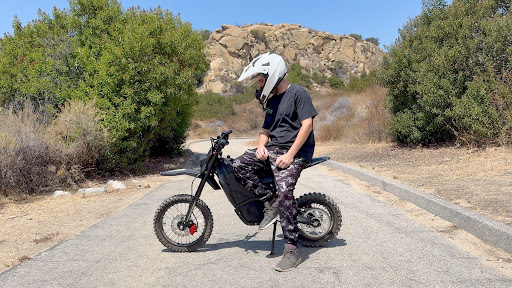
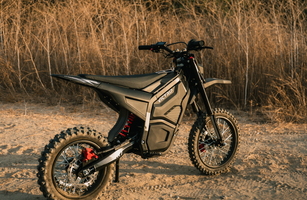
For many adults, choosing a dirt bike is less about finding the largest or most powerful machine and more about finding one that fits the way they actually ride. Weekend trail sessions, casual off-road exploring, riding around private property, and short recreational outings do not always require a full-size performance-focused bike. In these situations, a compact electric dirt bike can offer a practical balance between manageable handling, portability, and useful performance.
The important question is not simply whether a bike is small. Adult suitability depends on factors such as rider size, weight capacity, ergonomics, terrain, suspension, motor performance, and expected range. A compact model can make sense when its specifications match those requirements. Understanding where electric dirt bike for adults work well—and where they may fall short—can help recreational riders make a more informed choice.
Why Bigger Isn’t Always Better for Recreational Riding
A larger dirt bike can provide advantages, particularly when riders need more ground clearance, suspension travel, or high-performance capability. However, those benefits are not automatically important for every recreational rider. A heavier and physically larger machine can also require more effort to move, store, transport, and control, especially when the rider is primarily interested in relaxed weekend use.
For someone riding moderate trails or private recreational areas, manageable dimensions may be more useful than maximum specifications. A bike that feels predictable and easy to position can allow the rider to concentrate on the terrain instead of constantly managing the machine’s bulk. This does not mean compact bikes are universally better. It means the ideal size should be determined by the rider’s needs rather than by the assumption that adults always need the largest available option.
What Makes a Compact Electric Dirt Bike Different?
“Compact” generally describes a bike with smaller overall dimensions, a relatively lighter chassis, and a more manageable physical footprint than larger off-road machines. Depending on the model, this can involve a lower seat height, smaller wheels, reduced weight, or a shorter overall length. These characteristics can affect how easily the bike is handled on the ground and how conveniently it can be stored or transported.
Electric power adds another distinction. Instead of a conventional fuel-powered engine and associated components, an electric dirt bike uses a motor, battery, controller, and charging system. This can simplify the riding experience in some respects, although it introduces considerations such as charging access and battery range. Most importantly, compact should not be confused with unsuitable for adults. Rider weight limits, frame geometry, ergonomics, suspension, and intended terrain matter more than the label alone.
Why Compact Size Can Benefit Adult Riders
One of the clearest advantages of a compact machine is maneuverability. Recreational trails can include tight turns, narrow sections, uneven surfaces, and obstacles that reward controlled inputs. A physically manageable bike may feel easier to position, particularly for riders who do not need the size and performance of a larger off-road machine.
Portability can matter just as much. A lighter, smaller bike can be easier to move into storage, load for transportation, or reposition before and after a ride. For adults with limited garage space, the reduced footprint can also make ownership more convenient. These practical considerations are easy to overlook when comparing specifications, but they can have a noticeable effect on how often a recreational bike is actually used.
For riders researching an Electric Mini Dirt Bike, the key is to look beyond the compact dimensions and examine the manufacturer’s rider capacity, ergonomics, braking system, suspension, and intended use. A small footprint can be an advantage, but only when the bike remains physically appropriate for the adult using it.
How Electric Power Changes the Recreational Riding Experience
Electric power can change the character of recreational riding in several ways. Electric motors can deliver responsive acceleration without the same engine characteristics associated with gasoline-powered machines. They also operate much more quietly, which can make them appealing for certain recreational environments where excessive noise is undesirable, subject to local riding rules and property restrictions.
Maintenance can also be different. Electric drivetrains generally have fewer conventional engine components, although owners still need to pay attention to brakes, tires, suspension, drivetrain components, battery condition, fasteners, and other wear items. The trade-off is that riders must plan around charging. Real-world range can vary with rider weight, terrain, speed, temperature, riding style, and battery condition. Therefore, electric power is not automatically a better choice; it is a different set of advantages and practical considerations.
What Adults Should Check Before Choosing One
The most important step is matching the bike’s specifications to the actual rider. A compact model can be comfortable and capable for one adult while being a poor fit for another. Checking the manufacturer’s specifications before purchase helps prevent assumptions based only on appearance or marketing terminology.
Adults should pay particular attention to:
Rider weight capacity: Stay within the manufacturer’s stated limit, accounting for riding gear where appropriate.
Seat height: The rider should be able to maintain a comfortable and controlled riding position.
Frame dimensions: Compact geometry should still provide adequate space for an adult rider.
Ergonomics: Handlebar position, footpeg placement, and overall posture affect comfort and control.
Motor output: Consider whether the available performance matches the terrain and rider expectations.
Battery capacity: Compare expected riding time with the battery’s usable capacity and charging options.
Suspension: Appropriate suspension can make a significant difference on uneven recreational trails.
Ground clearance: More clearance can be important when riding over rocks, roots, or deeper ruts.
Tires and brakes: Traction and stopping performance should suit the surfaces being ridden.
Intended terrain: The bike should be evaluated against where it will actually be used.
A specification sheet should therefore be treated as a decision-making tool, not a list of numbers to maximize. More motor output, larger tires, or greater clearance may be unnecessary if the intended riding environment does not require them.
Matching the Bike to the Terrain
Terrain is one of the easiest factors to underestimate. A compact electric bike used on relatively flat recreational paths has different requirements from one expected to climb steep, loose, or highly uneven trails. On smoother surfaces, controllability, comfort, and sufficient range may matter more than extreme suspension travel or maximum ground clearance.
Light trails can require a broader combination of capabilities. Tire tread, suspension, braking, ground clearance, and motor response all become more relevant as the surface becomes uneven. On loose or hilly terrain, traction and the ability to maintain controlled momentum can matter as much as peak motor output.
This is why motor power alone is a poor measure of off-road capability. A bike with a strong motor can still be limited by tires, suspension, geometry, battery performance, rider weight, or available clearance. Riders should evaluate the entire package against their typical terrain instead of selecting a model based on one headline specification.
Who Benefits Most From a Compact Electric Dirt Bike?
Compact electric dirt bikes can appeal to several types of adult recreational riders. Weekend riders may appreciate a machine that is easier to store and move while still providing an enjoyable off-road experience. Beginners may value manageable dimensions and predictable handling, provided the bike’s specifications fit their body size and experience level.
They can also suit riders who have limited storage or regularly transport their bikes. A smaller physical footprint can reduce some of the practical barriers associated with ownership. More experienced riders may also have reasons to choose a compact machine, particularly when they want something suited to casual riding, tighter terrain, or short recreational sessions.
However, the intended rider matters more than the category name. A model marketed as compact or mini should not be assumed to fit every adult. Weight capacity, ergonomics, terrain, performance requirements, and manufacturer recommendations should remain the deciding factors.
Where Compact Electric Dirt Bikes May Not Be the Best Choice
There are situations where a larger or more capable dirt bike may be the more appropriate option. Taller or heavier riders may need greater frame dimensions, a higher weight capacity, or different ergonomics. Riders who regularly tackle demanding terrain may also require more suspension travel, ground clearance, tire size, or sustained performance than a compact recreational model provides.
Longer rides can create another limitation. Battery range depends heavily on conditions, and riders who spend extended periods away from charging access need to plan accordingly. Likewise, adults seeking aggressive riding or high-speed performance should compare a compact model carefully against those expectations rather than assuming its smaller size will be sufficient.
Recognizing these limitations does not weaken the case for compact electric dirt bikes. It makes the decision more realistic. The goal is to choose a bike that fits the riding environment, not to make one category work for every rider.
How to Decide if a Compact Model Fits Your Riding Style
The decision becomes simpler when the rider starts with actual use rather than marketing specifications. A compact model may make sense when recreational riding is the priority, storage space is limited, portability matters, and the rider’s size fits the manufacturer’s specifications. Moderate terrain and shorter outings can also align well with the practical strengths of a compact electric machine.
On the other hand, riders who need a larger frame, regularly tackle demanding terrain, expect long sessions, or prioritize high-performance capability may benefit from considering a larger or more specialized option. Someone comparing an electric dirt bike for adults should therefore evaluate fit, terrain, range, components, and intended use together instead of choosing based on motor output or physical size alone.
Conclusion
Compact electric dirt bikes can make sense for adults because recreational riding does not always demand maximum size or power. For the right rider, a manageable physical footprint can bring benefits in handling, storage, transportation, and everyday convenience, while electric power can offer a quiet and relatively simple riding experience.
The best choice still depends on the details. Rider size, weight capacity, ergonomics, terrain, suspension, braking, battery range, and performance expectations should all be considered before making a decision. A compact model is neither automatically better nor automatically too small for adults; its suitability depends on how closely its specifications match the rider’s real needs. Adults comparing options can also consider VICTRIP EBikes while evaluating models against their preferred riding environment and recreational goals.
FAQs
1. Are compact electric dirt bikes suitable for adults?
Yes, some compact electric dirt bikes are suitable for adults, provided their weight capacity, frame dimensions, seat height, brakes, suspension, and power delivery match the rider. The term “compact” does not automatically mean child-sized, so adults should evaluate the manufacturer’s specifications and overall rider fit before choosing a model.
2. Are compact electric dirt bikes easier for adults to control?
A compact electric dirt bike can be easier to manage in some situations because its smaller dimensions and potentially lower weight can make low-speed maneuvering and tight turns more manageable. However, control also depends on throttle response, wheelbase, weight distribution, braking, steering geometry, terrain, and rider experience.
3. What should adults consider when choosing a compact electric dirt bike?
Adults should consider maximum rider weight, seat height, frame ergonomics, motor power, throttle response, battery capacity, expected real-world range, braking performance, suspension, wheel size, and intended terrain. Manufacturer specifications should be compared with the rider’s height, weight, experience, and planned use.
4. How much motor power does an adult recreational rider need?
There is no single motor-power requirement for every adult recreational rider. The appropriate output depends on rider weight, terrain, desired speed, riding experience, and the bike’s overall design. Motor wattage should therefore be considered alongside torque delivery, controller behavior, battery capacity, gearing, and the intended riding environment.
5. Can adults use compact electric dirt bikes for trail riding?
Yes, compact electric dirt bikes can be suitable for recreational trail riding when the bike is designed for the rider and the terrain. Riders should check weight capacity, suspension, ground clearance, braking capability, battery range, and local trail or property rules before riding. A compact model may not be appropriate for highly technical or high-speed terrain.
JR Motorsports O’Reilly Auto Parts Team Preview TRACK – Bristol Motor Speedway (0.533-mile-short track) NOAPS RACE – Food City 300 (300 laps / 159.9 miles) TUNE IN – CW, PRN, SiriusXM Channel 90, ESPN Mobile App at 7:30 p.m. (ET)
Carson Kvapil
No. 1 – Bass Pro Shops Patriotic Chevrolet
Kvapil 2026 NOAPS Stats
Starts: 26
Wins: 2
Top 5s: 10
Top 10s: 16
Laps Led: 306
Avg. Finish: 10.7
Points: 3rd
In three NASCAR O’Reilly Auto Parts Series career starts at “The World’s Fastest Half Mile,” Kvapil has an average finish of third, including a runner-up finish in the Spring of 2025.
On short tracks in his NOAPS career, Kvapil has made nine starts with five top-five and six top-10 finishes to accompany his one victory at Iowa Speedway last month.
Accompanying Kvapil, crew chief Rodney Childers has made three career NOAPS starts atop the box on tracks measuring under 1 mile in length. In those starts, Childers has posted two top-five and two top-10 finishes, including two victories.
Kvapil remains third in the series points standings, just nine points behind the leader following the second race of The Chase.
Carson Kvapil
“Bristol is one of my favorite tracks. Rodney (Childers, crew chief) and this entire No. 1 Bass Pro Shops team have been working their tails off this week and I am confident we will unload another fast Chevrolet on Friday. We just need to go out there and execute the way I know this team can. If we do that, we’ll put ourselves in position to get this No. 1 Bass Pro Shops team into Victory Lane on Friday evening.”
Justin Allgaier
No. 7 BRANDT Professional Agriculture Chevrolet
Allgaier 2026 NOAPS Stats
Starts: 26
Wins: 6
Top 5s: 14
Top 10s: 18
Laps Led: 619
Avg. Finish: 9.8
Points: 2nd
Justin Allgaier heads to Bristol as the second seed in The Chase, three points out of the series lead.
Allgaier is a two-time winner at the infamous short-track, including his first career NOAPS victory in the spring of 2010.
Allgaier’s most recent victory at Bristol came in this event in 2023 after leading for a race-high 110 laps.
Allgaier’s 1,278 laps led at “The Last Great Colosseum” ranks as the most for the veteran driver among all tracks he has competed on in his NOAPS career.
Justin Allgaier
“I can’t think of a better place to head to than Bristol this weekend. This has always been one of my favorite tracks. We’ve always been really strong here and I know that we will have that same capability again on Friday. This BRANDT Professional Agriculture group has been locked in all week and we know what we need to do when we hit the track. We’ve had this race circled on the calendar and we are ready to get out there and see what we can do.”
Sammy Smith
No. 8 Pilot Chevrolet
Smith 2026 NOAPS Stats
Starts: 26
Wins: 0
Top 5s: 7
Top 10s: 12
Laps Led: 51
Avg. Finish: 12.1
Points: 7th
Sammy Smith will make his seventh NOAPS start at Bristol this Friday evening.
Smith has one top-five and two top-10 finishes with his best of fourth coming in the Spring of 2025 at “The Last Great Colosseum”.
Smith has two starts on the famed short track with the ARCA Menard’s Series where he finished second in 2021 and then captured his first sword in 2022.
Smith is currently the seventh seed in The Chase and in a close battle still as he is just three points from fifth.
Sammy Smith
“Bristol is definitely a track I look forward to running, I’m glad it’s on our schedule twice, you just cant beat the atmosphere there, especially at night. I’m ready to run for another sword and I know this No. 8 team will unload a fast car and give us a shot at it.”
Jake Finch
No. 9 O’Reilly Auto Parts Chevrolet
Finch 2026 NOAPS Stats
Starts: 2
Wins: 0
Top 5s: 0
Top 10s: 0
Laps Led: 0
Avg. Finish: 24
Points: N/A
This Friday Jake Finch will make his first start under the lights at Bristol in the NOAPS.
Finch has made four starts at the Tennessee track in the ARCA Menards Series earning one top-five and three top-10s.
In addition to his NOAPS start this weekend, Finch will also be competing in the ARCA Menards Series race Thursday night.
The JRM driver will be featuring the series sponsor O’Reilly Auto Parts on his No. 9 Chevrolet.
Jake Finch
“Bristol is a track I have more experience on, so I have more confidence going into this race. I know this No. 9 team is going to build a fast Chevrolet for me, so I am really looking forward to getting on the track and seeing what we can do. Philip (Bell, Crew Chief) and I have been working really hard to prepare and our plan is to go out and execute to hopefully get a great finish for O’Reilly Auto Parts.”
Rajah Caruth and the No. 88 HENDRICKCARS.COM team head to Bristol this weekend for the third race of the 2026 Chase.
Caruth has plenty of experience around the 0.533-mile concrete oval, making six previous NASCAR Craftsman Truck Series starts at Bristol. He has recorded three top-10 finishes, including a third-place result in the Fall of 2024.
In NASCAR O’Reilly Series competition, Caruth has made two previous starts at Bristol. He finished 17th in his first series appearance at the track in 2023 and earned a 14th-place finish earlier this season after starting 38th.
Rajah Caruth
“Bristol is a place I’ve raced at quite a bit over the last few years, and I’ve always enjoyed going there. It’s a tough track where things happen quickly, so you have to stay focused all night and put together a complete race. We’re looking forward to getting back there with our HENDRICKCARS.COM Chevrolet and having a strong weekend. There are still seven races left in the Chase, so we just need to keep fighting, execute and maximize every opportunity we have.”
JRM Team Updates
JR Motorsports at Bristol Motor Speedway: JR Motorsports has competed at Bristol Motor Speedway a combined 111 times in NOAPS since 2006. In those starts at the 0.533-mile short track, the organization has recorded five wins, 34 top-fives, and 69 top-10s. The average finish is 12.1.
Souvenir Rig: JRM drivers Carson Kvapil, Justin Allgaier, Sammy Smith, Jake Finch and Rajah Caruth will be signing autographs at the JR Motorsports / HMS WB + AB souvenir rig on Friday, September 18th, from 12:30 p.m. to 1:00 p.m. ET.
A whole-home decluttering project can become overwhelming long before the first room is finished. Years of unused furniture, broken household items, old storage boxes, worn decorations, and forgotten belongings may be spread across closets, bedrooms, garages, and basements. Without a clear system, moving everything at once can simply shift clutter from one area to another.
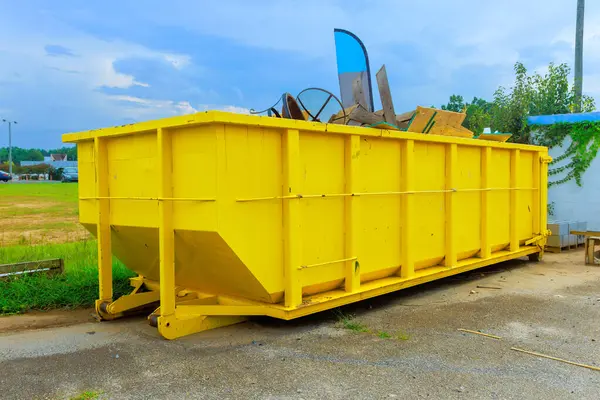
The easiest way to maintain control is to treat decluttering as a sequence of smaller decisions. Each room should have a sorting plan, a temporary staging area, and a clear route for removing unwanted items. A Dumpster Rental can support larger cleanouts by providing one designated destination for appropriate waste instead of allowing discard piles to grow around the property.
Waste removal should be planned before closets are emptied or furniture is moved. Homeowners considering ACR Dumpsters can estimate which rooms contain the most unwanted material and decide where the cleanup should begin. This preparation keeps the project focused on creating usable space rather than repeatedly reorganizing items that will eventually leave the home.
Start With a Complete Walkthrough Before Moving Anything
Walking through the entire house first provides a realistic picture of the work ahead. Check closets, cabinets, storage rooms, the garage, basement, attic, and outdoor storage areas. These overlooked spaces often contain more material than expected.
Make brief notes about bulky furniture, large quantities of boxes, damaged household goods, and areas that require extra help. The goal is not to make every disposal decision immediately. Instead, the walkthrough helps establish the order in which rooms should be handled.
Beginning with a manageable area can build momentum. A spare bedroom or storage room may be easier to complete than a crowded garage containing several different categories of belongings. Finishing one area also creates useful space for organizing later stages.
Create Clear Sorting Categories for Every Room
Decluttering becomes inefficient when every unwanted object is treated as trash. Some belongings may be kept, donated, sold, recycled, or given to relatives, while others genuinely need disposal. Establishing categories before work starts reduces repeated decision-making.
Use separate, clearly identified areas for each category. Items being kept should return to an intentional storage location rather than forming another temporary pile. Donation and sale items should also have deadlines so they do not remain inside the home indefinitely.
Avoid creating too many categories. Complicated sorting systems slow progress and make decisions harder. A few practical destinations are usually enough to keep household items moving through the cleanup process.
Work Room by Room Instead of Emptying the Entire House
Pulling belongings from several rooms simultaneously creates visual clutter and blocks normal household routines. A room-by-room method keeps the project contained. It also makes progress easier to measure because each completed space represents a clear milestone.
Start with obvious waste before making difficult decisions about sentimental or valuable belongings. Broken furniture, damaged storage containers, unusable household goods, and other clear discards can usually be handled quickly. Removing these items creates space for sorting what remains.
Homeowners arranging a Detroit dumpster rental should consider when the largest volume of disposable material will be generated. Having disposal capacity available during the busiest stage prevents bags and bulky objects from accumulating in hallways or driveways. Cleanup remains easier when unwanted material leaves each room promptly.
Build a Staging Area Without Creating Another Clutter Zone
A staging area can be useful for belongings that need further decisions, but it requires boundaries. Choose one defined location, such as part of a garage or an unused room, rather than allowing temporary piles throughout the house. Every item placed there should already have a category.
Set a time limit for removing staged items. Donation boxes can be delivered on a planned date, while items intended for sale should have a reasonable deadline. If there is no timeline, temporary storage can gradually become permanent clutter.
Keep walking paths open around the staging area. Boxes and furniture should not block doors, stairs, or frequently used household routes. Organization should make the cleanout safer and simpler rather than creating new obstacles.
Handle Bulky Household Items With a Separate Plan
Large furniture and awkward household objects require more preparation than bags of small belongings. Measure doorways, identify the safest removal path, and determine whether an item can be dismantled before attempting to move it. Planning reduces unnecessary lifting and prevents damage to walls or flooring.
Some furniture occupies considerably less disposal space after removable components are taken apart. However, homeowners should only dismantle items when they can do so safely with suitable tools and assistance. Heavy pieces should never be handled alone simply to speed up the project.
ACR Dumpsters can be considered while estimating how bulky discarded items will affect available container space. Volume can increase quickly when furniture, shelving, and other large objects are involved. Thinking about these pieces early helps prevent them from becoming an unexpected problem near the end of the cleanout.
Separate Restricted Items Before Disposal Begins
Not every unwanted household product belongs in a general waste container. Paint, chemicals, batteries, automotive fluids, electronics, and other materials may be subject to specific local disposal requirements. These items should be identified before general loading starts.
Create a separate location for anything requiring verification or specialized disposal. This prevents restricted materials from becoming mixed with ordinary household debris and needing to be removed later. Labels should remain visible whenever they help identify the contents.
Disposal rules can vary by material and location. Confirming requirements before the project begins is more efficient than making assumptions during cleanup. A clear separation system also helps other household members understand which items should not be added to the main waste stream.
Keep Daily Cleanup Manageable During a Multi-Day Project
Whole-home decluttering often takes longer than a single weekend. At the end of each work period, return tools, close sorting boxes, clear walking routes, and remove loose debris. These small steps make it easier to restart without facing yesterday’s disorder.
A Dumpster Rental is most useful when disposal becomes part of the routine rather than one final task. Appropriate unwanted material can be removed as each room is completed, preventing large piles from spreading across the property. Consistent disposal also makes the remaining workload easier to judge.
Monitor progress by completed spaces instead of counting individual objects. Clearing one closet completely is more meaningful than moving dozens of items into another room. This approach keeps attention on permanent organization rather than temporary activity.
Make Final Decisions Before the Last Cleanup Stage
The final phase should not contain most of the difficult sorting decisions. By this point, donation items should have destinations, belongings being kept should have storage locations, and uncertain objects should represent only a small portion of the original clutter. Delaying every difficult choice defeats the purpose of the process.
Homeowners working with ACR Dumpsters can review remaining disposable material before arranging the final stage of removal. This is also a useful time to check storage areas again for forgotten waste. A final walkthrough often reveals small piles or individual items that were missed earlier.
Once unwanted material is gone, clean the newly accessible shelves, floors, and storage spaces before refilling them. Avoid immediately filling empty areas simply because space is available. Leaving reasonable capacity makes future organization easier.
Turn a Large Cleanout Into a Controlled Household Project
Whole-home decluttering becomes manageable when each stage has a defined purpose. A walkthrough establishes the scope, sorting categories guide decisions, and a room-by-room sequence prevents the entire property from becoming a work zone. Staging and disposal plans then keep unwanted belongings moving out instead of circulating between rooms.
The process does not need to be completed at maximum speed. Consistent progress is more useful than exhausting one-day efforts that leave unfinished piles behind. Clear deadlines for donations, sales, and uncertain belongings help maintain momentum without forcing careless decisions.
A successful cleanout should leave the home easier to use and maintain. By controlling how items are sorted, moved, and removed, homeowners can reclaim space without creating unnecessary disorder along the way. The result is not merely fewer belongings, but a more practical system for managing the space that remains.
Open floor plans can create bright, flexible living environments, but their openness can also make them harder for buyers to interpret. Without walls separating major functions, visitors may struggle to determine where a living area ends, where dining should begin, or how people would naturally move through the space. Clear visual organization helps answer those questions during a showing.
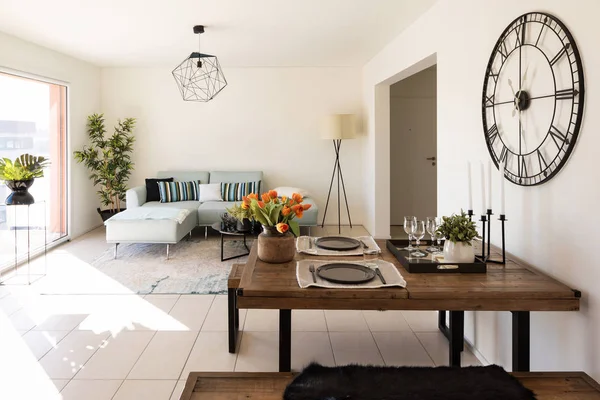
Home Staging can give an open layout structure without changing its architecture. Furniture placement, rugs, lighting, and carefully chosen focal points can suggest distinct activity zones while preserving the spacious character that makes the plan appealing. The goal is to demonstrate realistic use rather than divide the room artificially.
Greylyn Wayne can approach an open interior by considering both individual activity areas and the relationships between them. Buyers should be able to understand each zone while still experiencing the larger room as one connected environment. Thoughtful presentation can make that balance visible as soon as visitors enter the space.
Begin With the Activities the Open Space Needs to Support
An open room may need to accommodate conversation, dining, entertaining, reading, and movement between other parts of the home. Identifying these primary activities provides a useful framework for arranging the space.
Each activity should receive enough room to feel believable without competing unnecessarily with neighboring functions. A dining area should not interrupt access to seating, while a conversation area should not create an obstacle between the kitchen and another frequently used room.
Prioritizing activities also prevents sellers from trying to demonstrate every possible use simultaneously. A few clearly presented functions generally communicate flexibility more effectively than a crowded collection of unrelated furniture.
Use Furniture Orientation to Establish Clear Zones
Furniture placement can create boundaries even when walls do not exist. The direction a sofa faces, the position of dining chairs, and the relationship between tables and seating can tell buyers how different sections are intended to function.
A sofa does not always need to sit against a wall. In a larger open room, its back can create a subtle visual edge between a living zone and another activity area without physically closing either space.
Greylyn Wayne can use these relationships to establish order while keeping sightlines relatively open. The arrangement should feel connected rather than like several independent rooms competing within one large area.
Let Rugs Define Areas Without Creating Barriers
Area rugs can provide visual boundaries beneath furniture while leaving the surrounding floor open. They are particularly useful when living and dining functions share one continuous flooring material.
Choose a Scale That Supports the Furniture
A rug that is too small can make a seating arrangement appear disconnected. Appropriate scale helps several pieces read as one intentional group rather than unrelated objects scattered across the room.
Keep Neighboring Zones Visually Compatible
Rugs used within the same open area do not need to match. Their colors, patterns, and visual weight should relate comfortably enough that the overall room still feels coordinated.
This approach creates definition without introducing physical obstacles between activity areas.
Preserve Natural Walking Routes Between Zones
A successful open plan should be easy to move through. Buyers need to understand how someone could walk from an entry to the kitchen, dining area, seating zone, or adjoining room without repeatedly navigating around furniture.
Major pathways should remain visually apparent. Chairs positioned in circulation routes or tables extending too far into a passage can make a spacious floor plan feel unexpectedly inconvenient.
Home Staging can emphasize openness by treating circulation as part of the arrangement rather than leftover space between furnishings. Clear movement patterns help buyers understand how the layout would function during ordinary routines.
Give Each Zone a Strong Visual Anchor
Activity areas often become easier to understand when each has one clear anchor. A dining table naturally establishes a dining function, while a sofa and coffee table can organize a conversation area.
Architectural features may also provide anchors. Fireplaces, windows, built-in shelving, or attractive views can influence where furniture feels most logical without requiring additional decorative elements.
The strongest anchor should support the purpose of the zone rather than compete with it. Too many focal points can make a large open interior feel visually restless despite having generous space.
Avoid Filling Every Available Section
Open rooms can tempt sellers to add furniture because empty sections appear unfinished. Filling every corner, however, can weaken the spacious quality buyers are supposed to experience.
Some open floor area is useful because it separates functions and gives each arrangement visual breathing room. Empty space can also reinforce pathways and make the overall layout easier to understand.
A restrained arrangement demonstrates possibilities without suggesting that every square foot needs a specific piece of furniture. Buyers can then recognize both defined uses and flexibility within the same plan.
Create a Logical Relationship With the Kitchen
Many open layouts connect the kitchen directly with dining and living areas. Furniture placement should acknowledge this relationship rather than making the kitchen feel detached from the rest of the room.
Dining areas often work naturally where food can move conveniently from preparation surfaces to the table. Seating areas may occupy a nearby section that allows conversation without interfering with kitchen circulation.
Greylyn Wayne can consider these practical relationships when establishing the visual flow of an open space. A convincing arrangement reflects how residents might actually cook, dine, entertain, and relax during the same period.
Use Consistent Visual Elements Across the Room
Distinct zones still need enough visual connection to feel like parts of one environment. Repeating selected colors, materials, shapes, or finishes can establish continuity without making every area identical.
For example, a wood tone from the dining area might appear subtly in a living-room table. A color used in seating can return through a smaller accessory elsewhere, creating a relationship across the room.
These connections should remain understated. Excessive matching can make the presentation feel overly coordinated, while unrelated styles may fragment the open layout.
Keep Sightlines Toward Important Features Open
One advantage of an open plan is the ability to see across a substantial portion of the interior. Furniture should support those long views rather than interrupt them unnecessarily.
Tall pieces deserve particularly careful placement. A large cabinet or shelving unit positioned in a major sightline can create an unintended visual wall and reduce the sense of connection between zones.
Lower furnishings can sometimes maintain separation while allowing the eye to travel farther. Buyers then experience both the individual activity areas and the broader scale of the property.
Show How Entertaining Could Work Naturally
Open layouts are often associated with social interaction because several activities can occur within connected spaces. Presentation can demonstrate this advantage without creating an artificial party setting.
Seating should encourage conversation, while dining areas should feel accessible from both the kitchen and surrounding space. Buyers can then imagine guests moving comfortably between activities instead of gathering in one congested location.
The arrangement should still represent everyday life. A layout that works only for large gatherings may feel less convincing than one that supports ordinary routines while accommodating occasional entertaining.
Make the Open Layout Easy to Understand
An open floor plan succeeds visually when buyers can recognize distinct functions without losing the sense of spacious connection. Furniture orientation, rugs, focal points, circulation routes, and deliberate empty space can provide the cues that physical walls would otherwise create.
Effective Home Staging helps buyers interpret those cues quickly. Rather than forcing visitors to invent an arrangement while walking through the property, presentation demonstrates one realistic way that living, dining, and movement can coexist comfortably.
A clearly organized open interior can feel both flexible and purposeful. When each zone has a recognizable role and the transitions between them remain natural, buyers gain a stronger understanding of how the larger space could support everyday life.