Home Blog Page 2

Better race-day visuals: where AI image editing fits into motorsport content

A race weekend produces a lot of images. There are shots from practice and qualifying, pit-lane photos, paddock details, victory celebrations, driver portraits, sponsor activations, and quick phone photos captured between sessions.

The problem for smaller motorsport publications and independent creators is rarely a lack of material. It is getting that material ready quickly enough to use while people still care about the race. By Monday morning, attention has already moved to the next event on the schedule.

A strong photograph may have distracting objects near the edge of the frame. Another may work well for an article but crop badly for a YouTube thumbnail. A social post might need more breathing room around the car so a headline can fit without covering the subject.

AI-assisted image editing can help with these kinds of problems, as long as it is treated as an editing tool rather than a way to rewrite what happened on track.

Start with the photograph, not the effect

Motorsport photography already has plenty of visual drama: speed, color, weather, tire smoke, crowded pit lanes, packed grandstands. Heavy effects can easily make a good racing image look artificial.

A better approach is to begin with the original photograph and identify a practical problem.

Perhaps the car is positioned too close to the side of the frame for a thumbnail. Maybe a piece of safety fencing draws attention away from a driver in the garage. A paddock photo might need a cleaner background for a social graphic.

With Pixlio, creators can upload an existing photograph to an AI image editor and describe the requested change in ordinary language. The image-to-image workflow is useful here because it lets the creator work from the actual source image instead of trying to recreate the scene from scratch.

That distinction matters in motorsport, where small details are noticed. Fans can spot a wrong wheel rim or incorrect sponsor placement faster than you might expect.

Make one useful change at a time

Prompt-based editing works better when the request has a clear purpose. Instead of asking an AI tool to “make this race photo better,” specify what actually needs fixing.

A creator could ask to remove an unrelated object in the distant background while keeping the race car unchanged. A portrait could be adjusted to create additional neutral space on one side for text. Lighting in a non-documentary promotional image could be cleaned up without changing the people or vehicles shown.

Working this way also makes the result easier to inspect. If several major changes are requested at once, it becomes harder to tell where the AI introduced an unwanted detail, like a car number that shifted or a sponsor logo that distorted.

Pixlio supports continued editing of generated results, so a creator can make an initial adjustment, review it, and then refine the same image again instead of trying to solve everything with one long prompt.

Prepare the same shot for different platforms

Race coverage rarely ends with the article itself. The same story may also appear on Instagram, X, Facebook, YouTube, or a newsletter.

Each format puts different pressure on an image.

A wide photograph of a restart might fit naturally into an article header but perform poorly as a vertical social post. A square crop can remove the context that made the original photograph interesting, cutting out the cars running three-wide on the outside. Simply enlarging a subject is not always the best answer either.

The ability to edit images with AI gives creators another option. They can prepare variations around the original composition and select aspect ratios suited to different placements. Pixlio includes landscape, portrait, square, and wider formats, which can reduce the amount of manual rebuilding needed when one story goes out across several channels.

The point is to keep the main subject readable while adapting the surrounding composition to the space available, not to produce identical crops everywhere.

Be careful with factual racing details

Motorsport audiences are unusually unforgiving of visual mistakes. Fans recognize liveries, numbers, sponsor placements, track layouts, helmets, and vehicle generations. A wrong number or a fabricated sponsor will get called out.

That makes review the most important step.

If an edited image unexpectedly changes a car number, modifies a sponsor logo, invents bodywork, or alters an identifiable track feature, it should not be presented as documentary photography. For race reports and news coverage, factual integrity matters more than getting a cleaner-looking image.

AI editing is safer for controlled changes: composition, background cleanup, creative promotional graphics, or clearly identified illustrative material. When the image is reporting on what happened during a race, accuracy comes first.

It is also worth keeping the untouched source file. That gives the editor a reliable reference when checking the final version.

A faster workflow without losing editorial judgment

AI tools can shorten the repetitive part of preparing race-day graphics, especially for creators publishing several formats soon after the checkered flag. They can help adapt compositions, clean up nonessential distractions, and prepare images for different layouts without requiring every adjustment to start in traditional editing software.

But the final decision still belongs to the person publishing the image.

For motorsport content, the best use of AI is usually modest. Start with a real visual problem, make a specific edit, compare the result with the source, and reject anything that changes the factual story. Used that way, Pixlio can fit into a race-weekend workflow without turning authentic coverage into something that no longer represents what actually happened on track.

How NASCAR Cars Get Their Iconic Look

Photo by depositphotos at https://depositphotos.com/

A NASCAR stock car has to do more than perform at high speed. It also has to be recognizable from the grandstands, on television, in photographs, and sometimes in the fraction of a second it takes to flash past a camera.

That has helped create one of the most distinctive visual cultures in motorsports. Some designs last for years and become closely associated with particular drivers. Others appear for only a race or two. Either way, a considerable amount of thought goes into making sure a NASCAR car looks unmistakable when it rolls onto the track.

The Number Is at the Heart of the Identity

Numbers are fundamental to the NASCAR look. While fans naturally follow drivers and teams, certain numbers can become so strongly associated with them that the number itself becomes part of their racing identity.

Think of Richard Petty and the No. 43, Dale Earnhardt and the No. 3, or Jeff Gordon and the No. 24. Those associations demonstrate how powerful a consistent visual identity can become over the course of a racing career. The number also has a practical purpose. It needs to remain clearly visible during a race, which means its size, position, typeface, and contrast have to work alongside the rest of the design. That can become surprisingly challenging when the car is already carrying an elaborate sponsor scheme.

Sponsors Shape the Design

Sponsorship is one of the biggest influences on how NASCAR cars look. A primary sponsor usually receives the most prominent branding, and its existing corporate identity can influence everything from the dominant colors to the graphics used across the car. Additional partners then need to be incorporated without making the overall design feel chaotic. This creates an interesting design challenge. A race car has to function as a high-speed advertisement, but the best schemes also need to look like cohesive racing liveries.

Color Has to Work at Speed

A color combination that looks attractive on a computer screen does not necessarily have the same impact at racing speeds. Strong contrast can help make a NASCAR car easier to recognize as it moves around the track. Designers also have to think about how colors interact with the number, sponsor branding, manufacturer details, and other graphics.

Some of NASCAR’s most memorable cars demonstrate just how effective relatively straightforward color identities can be. Richard Petty’s famous blue became inseparable from his racing legacy, while Dale Earnhardt’s predominantly black No. 3 created an altogether different personality. Jeff Gordon’s famous rainbow scheme took another approach, using an explosion of color to create one of the most recognizable designs of its era. The important factor is distinction. When dozens of cars are competing for attention at once, a strong color identity can help one stand apart.

Paint and Refinishing Still Matter

The term “paint scheme” remains a central part of NASCAR vocabulary even though modern race-car graphics can involve vinyl wraps and other methods of applying elaborate designs. Paint and automotive refinishing nevertheless remain relevant to the wider process of creating and maintaining high-quality vehicle finishes.

Whether working on race-inspired bodywork, restoring a vehicle, or creating a custom automotive finish, preparation is just as important as choosing the final color. Primers, basecoats, clear coats, and other refinishing materials all contribute to the finished surface. Specialist suppliers such as Nebula Paint products provide automotive paint and associated products for different stages of refinishing work.

For NASCAR fans looking to take inspiration from racing, color is also one of the easiest elements to translate to a personal automotive project. A familiar racing shade or carefully chosen combination can reference a favorite era or team without attempting to create a direct replica.

Manufacturers Have Their Own Visual Identity

Teams and sponsors are not the only ones concerned with appearance. Manufacturers also want race cars to retain some connection with the road-going models they represent. Today’s NASCAR Cup Series cars use manufacturer-specific visual cues to distinguish the Chevrolet Camaro ZL1, Ford Mustang Dark Horse, and Toyota Camry XSE. Details around the grille, headlights, and body styling help create that identity even though the competition cars are purpose-built racing machines.

Those cues are important because NASCAR has long maintained a connection between the cars competing on Sunday and the manufacturers familiar to fans away from the racetrack. Designers therefore have to incorporate the team and sponsor identity without obscuring the recognizable features of the manufacturer underneath.

The Crew Has to Keep the Car Looking the Part

A NASCAR car’s appearance is not only important when it first leaves the shop. Race weekends are hard on bodywork. Rubber, debris, contact with other cars, and damage from incidents can quickly change the appearance of a pristine machine.

Teams therefore have to balance presentation with the practical reality of racing. Before an event, cars need to look appropriate for sponsors, promotional photography, television coverage, and fans. Once the green flag falls, performance naturally takes priority.

Formula 1’s Global Growth Creates New Opportunities for Licensed Sportsbooks in Australia

Formula 1’s Australian Popularity Is Creating New Betting Opportunities

Formula 1’s rapid global expansion is creating new opportunities for licensed sportsbooks in Australia, where the sport has developed a particularly strong following around the Australian Grand Prix. As the FIA Formula One World Championship continues to attract audiences across established and emerging markets, Australia’s combination of motorsport enthusiasm, digital engagement and a mature regulated wagering sector makes it an important market for betting operators seeking sustainable growth.

The Australian Grand Prix remains a titan on the calendar, drawing a record 452,000 spectators over four days to Albert Park, alongside a 15% year-over-year surge in local broadcast ratings. This sustained audience growth-driven by a 30% increase in female and under-35 viewers since the premiere of Drive to Survive, has expanded the addressable market for sportsbooks.

Australia’s Regulated Betting Market Creates Opportunities and Challenges

Australia has a distinctive regulatory framework for online wagering. The Australian Communications and Media Authority (ACMA) oversees Australia’s online gambling rules and works to prevent illegal gambling services from targeting Australian consumers.

ACMA states that Australians should use wagering services listed on its register of licensed interactive wagering providers. The regulator has also continued blocking illegal gambling and affiliate websites, with more than 1,700 illegal gambling and affiliate sites blocked by July 2026.

Licensed operators must consider requirements surrounding customer verification, responsible gambling, advertising, payment methods and self-exclusion. The national BetStop system also allows Australians to exclude themselves from all licensed interactive wagering services through a single registration.

Recent enforcement action demonstrates why these safeguards matter. In May 2026, ACMA announced that Entain, the parent company of Ladbrokes AU and Neds AU, had entered into a court-enforceable undertaking following an investigation that identified more than 500 breaches involving customers registered with BetStop.

For Formula 1 betting, the lesson is clear: growth must be accompanied by robust consumer-protection systems.

Formula 1 Gives Australian Sportsbooks a High-Engagement Product

Formula 1 offers licensed Australian sportsbooks a distinctive betting proposition because interest extends well beyond the main race itself.

Fans can follow qualifying sessions, practice results, grid positions, pit-stop strategies, fastest laps and championship standings throughout a race weekend. This creates multiple opportunities for regulated wagering products while maintaining a connection between betting activity and live sporting engagement.

The Australian Grand Prix is particularly valuable in this respect. Held at Melbourne’s Albert Park Circuit, the event gives Australian audiences a major domestic Formula 1 occasion around which broadcasters, sponsors, teams and wagering operators can build engagement.

The sport’s broader commercial transformation has also helped expand its audience. Netflix’s Drive to Survive, international broadcasting partnerships and Formula 1’s increasingly sophisticated digital strategy have brought the championship to new audiences, including younger fans.

For licensed sportsbooks, that growing audience represents an opportunity, but one that requires careful consideration of responsible marketing and age restrictions.

Consumer Trust Is Becoming More Important to Australian Operators

As Australia’s wagering sector faces increasing scrutiny, consumer trust is becoming a competitive advantage.

Industry commentator and Online Pokies Time founder Sarah Mitchell believes long-term value in regulated gambling depends on more than revenue growth.

“Long-term value isn’t simply about increasing revenue year after year. It’s about building businesses that remain trusted by regulators, customers, investors, and business partners.”

Although Mitchell observed while discussing broader gambling regulation, the principle is equally relevant to licensed sportsbooks seeking to establish long-term relationships with Formula 1 fans. As competition intensifies, operators are increasingly differentiating themselves through transparency, responsible gaming initiatives, and regulatory compliance rather than relying solely on aggressive customer acquisition.

Technology Is Changing the Formula 1 Betting Experience

Technology is fundamentally shifting bettor behavior: traditional ‘Outright Race Winner’ wagers now account for less than 40% of overall F1 turnover. Instead, micro-markets, such as Safety Car deployments, driver head-to-head lap times, and pit-stop durations, generate over 60% of total handle, driven by real-time telematics feeds.

For Australian consumers, however, increased technological sophistication also makes responsible implementation more important.

Real-time betting products can encourage rapid wagering decisions, meaning operators need appropriate safeguards and monitoring systems to ensure their products remain consistent with responsible gambling requirements.

This is particularly relevant as Australian authorities continue to focus on the way wagering services interact with consumers. ACMA has already taken action against breaches involving self-exclusion and gambling advertising, reinforcing the importance of compliance throughout the customer journey.

Gambling Advertising Is Under Increasing Australian Scrutiny

The relationship between sports and gambling advertising has become one of the most important regulatory issues in Australia.

ACMA continues to enforce restrictions surrounding gambling advertising. In June 2026, for example, it found that SBS had breached gambling advertising rules during a broadcast of the Tour de France after an advertisement for Crown’s gambling activities appeared at a prohibited time.

The broader political debate is also moving toward tighter controls on gambling advertising and inducements. As these discussions continue, sportsbooks associated with Formula 1 will need to pay close attention to how betting brands are presented alongside sporting content.

Sustainable Growth Will Depend on Regulation and Trust

Formula 1’s continued global expansion could create significant opportunities for licensed sportsbooks operating in Australia. The Australian Grand Prix provides a natural focal point for fan engagement, while the championship’s expanding calendar creates opportunities for betting products throughout the season.

Yet Australia’s regulatory environment means commercial growth cannot be separated from consumer protection.

Operators that invest in responsible gambling systems, regulatory compliance, transparent customer experiences and appropriate marketing practices are likely to be better positioned as the market develops.

For Australian sportsbooks, the future of Formula 1 betting will therefore not simply be determined by how many markets they can offer. It will increasingly depend on whether they can combine technological innovation and commercial opportunity with the level of trust expected by Australian consumers and regulators.

Why Classic Performance Still Wins: What Formula 1 and Book of Ra Have in Common

Photo by depositphotos at https://depositphotos.com/

Motorsport has always been a balance between innovation and tradition. Every Formula 1 season introduces new technologies, revised regulations, and increasingly sophisticated engineering, yet many fans still admire legendary cars and memorable races from previous decades. Classic machines remain respected not because they have the latest technology, but because they established standards that influenced everything that followed.

A similar pattern can be found in the world of online slots. New releases often feature complex mechanics, cinematic animations, and dozens of bonus systems, but a handful of older titles continue to attract players years after their release. One of the best-known examples is Book of Ra, a game developed by Greentube that has remained popular thanks to its straightforward design, recognizable bonus feature, and high-volatility gameplay.

Enduring Design Over Constant Innovation

Modern Formula 1 cars represent the latest achievements in aerodynamics, hybrid power units, and data analysis. However, fans still celebrate iconic cars such as the McLaren MP4/4, Ferrari F2004, or Williams FW14B because they changed the sport and inspired future development.

The same principle applies to successful slot games. Some titles become reference points for an entire genre, influencing hundreds of later releases. Rather than competing through increasingly complicated mechanics, they succeed because their core design remains enjoyable over time.

Book of Ra belongs to this category. Released in 2005, it introduced the now-famous combination of free spins and a randomly selected expanding symbol, a feature that has since appeared in countless adventure-themed slots from many different developers.

Straightforward Mechanics Create Lasting Appeal

Whether watching a Grand Prix or playing an online slot, people often appreciate systems that are easy to understand but difficult to master.

Formula 1 may involve extraordinarily advanced engineering behind the scenes, yet spectators immediately understand the objective: complete the race faster than everyone else.

The book of ra slot follows a similarly accessible philosophy. It uses a traditional five-reel layout with up to nine adjustable paylines, while the core gameplay revolves around one defining feature—the free spins round with an expanding symbol selected at random. Instead of overwhelming players with numerous bonus mechanics, the game focuses on building anticipation toward a single high-impact feature.

Building Tension Through Patience

One characteristic shared by Formula 1 and high-volatility slot games is patience.

During a race, strategy often matters more than constant action. Teams carefully manage tire wear, fuel consumption, and pit-stop timing while waiting for the right opportunity to overtake. A race can change completely after one well-executed strategy call.

Book of Ra creates a comparable rhythm. Winning combinations appear regularly enough to maintain interest, but the largest rewards usually arrive only after triggering the bonus feature. Players often spend many spins waiting for three Book symbols before the game’s defining mechanic finally begins.

The Famous Free Spins Feature

Much of Book of Ra’s reputation comes from a remarkably simple bonus system.

Landing three or more Book symbols awards ten free spins. Before the bonus begins, one regular symbol is selected randomly and becomes the special expanding symbol for the remainder of the feature.

Whenever that symbol lands during free spins, it expands to cover the entire reel. Unlike standard line wins, payouts can be awarded even when expanding symbols appear on separate reels without initially forming complete combinations. Additional Book symbols may also retrigger the feature, extending the session while preserving the same expanding symbol.

This mechanic introduced a level of anticipation that continues to define many adventure slots released today.

Understanding the Mathematical Profile

Just as motorsport fans compare lap times, tire degradation, and qualifying performance, experienced slot players often evaluate games using RTP and volatility.

According to the published specifications, Book of Ra offers:

  • RTP: 92.13%
  • Volatility: High
  • Maximum payout: 5,000× the stake
  • Hit frequency: approximately 28%

These figures indicate that the game is designed around infrequent but potentially significant payouts rather than consistent small wins. This mathematical profile requires patience, making bankroll management an important consideration for longer sessions.

Simplicity Doesn’t Mean Outdated

Some Formula 1 fans argue that older cars provided more exciting racing despite having fewer technological systems than today’s machines. Others prefer the modern era with its advanced telemetry and engineering complexity.

Online slots show a similar divide.

Many contemporary releases include multiple bonus rounds, feature purchases, progressive systems, and elaborate animations. Book of Ra demonstrates that a game can remain engaging with a much simpler structure, provided the central mechanic is strong enough to sustain long-term interest.

Its expanding symbol bonus remains instantly recognizable even among players who have never explored later entries in the franchise.

Playing Across Modern Devices

Although Book of Ra first appeared nearly two decades ago, it has adapted well to modern gaming habits.

The game is available on desktop computers, tablets, and smartphones without requiring dedicated software. Mobile versions preserve the same gameplay mechanics, including free spins, expanding symbols, and the complete paytable, allowing players to switch between devices without losing any functionality.

Lessons from Classic Design

Both Formula 1 and classic slot games demonstrate that lasting success is rarely built on novelty alone. While innovation keeps both industries moving forward, genuinely memorable designs usually combine simplicity with carefully balanced mechanics.

Book of Ra continues to attract players because it focuses on one well-executed idea rather than trying to include every modern feature available. Much like an iconic Formula 1 car that remains admired years after its final race, the game has earned its reputation by establishing concepts that influenced an entire generation of titles.

For players who enjoy high-volatility gameplay, recognizable mechanics, and adventure-themed slots with a proven track record, Book of Ra remains one of the defining classics of the genre.

Mobile Roulette: Playing on Smartphones and Tablets

Mobile roulette used to feel like a smaller copy of the desktop game – but now in 2026 it has its own rhythm. The roulette wheel sits in your pocket, the betting grid lives under a thumb, and a roulette session can easily start on a sofa, train seat, lunch break, or hotel balcony. That convenience is really useful, but it also changes how players think, bet, and stop.

Why the Device Changes the Session

A smartphone makes roulette faster because the device is always close. A tablet makes it cleaner because the screen gives the layout more room. Both formats remove the old friction of sitting at a desktop or entering a physical room. That sounds harmless, but roulette with less friction can become roulette with fewer pauses, and pauses matter more than many players admit.

That is why mobile players using https://www.roulette77.us/live-roulette for practical tips should really look beyond the wheel itself. A good live roulette session on mobile needs a clear stream, readable chip buttons, a stable connection, and a betting timer that does not feel like a trap. The rules may stay the same, but the device changes the pressure around every decision.

Why Mobile Roulette Feels Different

The biggest difference is control. On desktop, players usually sit down with a little more intention. On mobile, the game can appear during small gaps in the day. That makes roulette easier to access, but also easier to play without a proper plan. A quick spin can become twenty. A “small session” can stretch because the phone never makes the player stand up.

How Small Screens Change Attention

Smartphones and tablets also change attention. A player may check messages, move between apps, answer notifications, then return to the table half-focused. Roulette does not need deep concentration, but careless chip placement still costs money. A misplaced tap on a number, a repeated layout, or a forgotten side bet can turn a tidy plan into a messy one.

The small screen has strengths too. Mobile interfaces often simplify the layout, save favourite bets, and make chip sizes easy to adjust. Good design removes clutter. Bad design hides important details. 

What to Check Before Playing on Mobile

Before you play roulette online, you should check the details first. A smooth-looking table means little if the connection drops, the rules panel hides key information, or the chip controls feel too small.

  • Read the wheel type.
  • Confirm the minimum and maximum table limits.
  • Test chip buttons before increasing stake size.
  • Make sure the full bet amount is visible before every spin.

According to Roulette 77 expert team, mobile roulette does really work best when players treat the device as part of the game environment. 

Smartphone vs Tablet: Which Feels Better?

Smartphones win on convenience. They are always nearby, easy to hold, and quick to open. That makes them perfect for short sessions, but not always ideal for detailed betting. Inside bets, neighbour bets, and multi-chip layouts can feel cramped on a small screen, especially during live games with a countdown timer.

Tablets give roulette more space. The wheel looks better, the betting grid feels less squeezed, and players can read rules, results, and chip values without squinting. A tablet also feels more like a planned session because it usually asks for a bit more attention than a phone. That can be a good thing.

FeatureSmartphone rouletteTablet rouletteWhat players should watch
Screen sizeCompact and quickWider and easier to readSmall screens can hide stake details
Best useShort sessionsLonger, more focused playSession length should still be planned
Bet placementFast but sometimes crampedMore accurate for inside betsMis-taps can cost money
Live stream qualityDepends heavily on signalUsually easier to watchPoor connection can rush decisions
Rule checkingLess comfortableEasier to read panelsAlways check wheel type and limits
Re-bet controlVery temptingStill easy but more visibleRepeating messy layouts is a common mistake
PortabilityExcellentGood but less casualConvenience can encourage overplay

Live Roulette on Mobile

Live roulette fits mobile surprisingly well because the wheel gives the screen a clear focus. The dealer adds pace, the ball adds suspense, and the timer keeps the game moving. A good live stream can make the small device feel larger than it is.

Still, live roulette on mobile needs discipline. The countdown can make players rush, especially when they are deciding between red, a corner, and one emotional chip on a favourite number. The best habit is simple: place the intended bet early, check the total, then stop touching the screen.

Players should also remember that live roulette is slower than RNG roulette, but not slow enough to remove risk. The dealer pace can feel calm, yet a player can still place many bets in a short time. Mobile access makes that even easier.

RNG Roulette on Mobile

RNG roulette removes the presenter and uses software to produce results. It usually plays faster than live roulette, which can suit players who want quick rounds. It also creates the biggest bankroll danger on mobile: too many spins without enough thought.

Fast mobile RNG games can make a $2 stake look harmless while the total wager climbs quickly. Fifty spins at $2 already means $100 in action. A hundred spins means $200. The balance may move up and down, but exposure keeps rising.

This is where mobile play needs a spin limit, not only a money limit. “I’ll stop soon” does not work well when the next round appears instantly. 

Why Mobile Growth Matters for Roulette

Mobile roulette belongs to a much wider shift in gambling habits. Smartphones and tablets now shape how many people reach online casino games, and market forecasts note that mobile devices have helped players access online casino games anytime and anywhere. Roulette benefits from that shift because it is visual, simple to load, and easy to understand on a smaller screen.

This does not mean mobile roulette is automatically better than desktop roulette. It means the game has adapted well to modern habits. Players want fast access, clean controls, and live-style entertainment without sitting in one place for long. Roulette gives them that, sometimes too easily.

The challenge is balance. Mobile roulette can be convenient and enjoyable when the player sets limits. It can become expensive when the same convenience removes all natural stopping points.

Ty Gibbs utilizes late two-tire pit call for thrilling Cup victory at Iowa

Photo by Ron Olds for SpeedwayMedia.com.

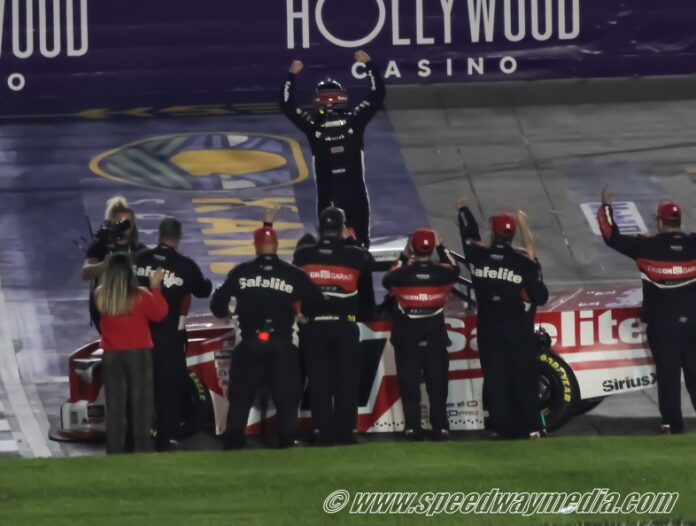
Ty Gibbs capitalized on a late, gusty pit call that enabled him to cycle to the front and win the third annual running of the Iowa Corn 350 at Iowa Speedway on Sunday, August 9.

The 2022 NASCAR O’Reilly Auto Parts Series champion from Charlotte, North Carolina, led the final 20 of 350-scheduled laps in an event where he qualified in sixth place and raced competitively towards the front in the early stages as he nabbed a fourth-place result following the first stage’s conclusion.

Then prior to the second stage period, Gibbs endured a slow pit service during the first stage’s break period that sent him towards the tail end of the lead lap field. Through four caution periods that ensued through the second stage period, Gibbs was able to muscle his way back to the front and settle in fourth place for a second consecutive stage period.

After spending a majority of the third and final stage period racing towards the front, Gibbs was racing in second place when he peeled off the racetrack to pit under green flag conditions right behind teammate and the leader, Christopher Bell, with 60 laps remaining. With crew chief Tyler Allen making the call for only a two-tire pit service for Gibbs’ No. 54 Toyota entry, this allowed Gibbs to overtake Bell on pit road and blend back on the track ahead of pole-sitter Ryan Blaney. Once Gibbs cycled to the race lead with 20 laps remaining, he spent the event’s remainder fending off a late charge from Bell to notch his second career victory in NASCAR’s premier series in Newton, Iowa.

With on-track qualifying that determined the starting lineup occurring on Saturday, Ryan Blaney secured his third Cup pole position of the 2026 season with a pole-winning lap at 134.191 mph in 23.474 seconds. Kyle Larson started alongside Blaney on the front row with a lap of 134.088 mph in 23.492 seconds.

Prior to the event, a trio of names that included Chase Elliott, Brad Keselowski and Denny Hamlin dropped to the rear of the field due to unapproved adjustments that were made to their respective entries.

When the green flag waved and the event commenced, pole-sitter Ryan Blaney and Kyle Larson dueled for the lead in front of a stacked field through the first two turns until Blaney, who started on the outside lane, motored his No. 12 Menards Ford Mustang Dark Horse entry ahead through the backstretch. Amid the early jostling of spots within the field, Blaney cycled back to the frontstretch and led the first lap.

Blaney proceeded to lead the next three laps before the event’s first caution flew when Tyler Reddick, who was racing in seventh place, ran over a bump, got loose and veered to the right in front of Erik Jones before both wrecked hard against the first turn’s outside wall. The incident sent both Jones and Reddick to the garage and out of further contention. It also implicated Jones’ hopes of racing back above the top-16 cutline to make the Chase while Reddick was strapped with a sixth result of 30th or worse through a nine-race span.

As the event restarted on Lap 12, Blaney and Larson briefly dueled for the lead through the first two turns until Blaney used the outside lane to motor ahead entering the backstretch for a second consecutive restart. As Blaney led the next lap, Larson retained the runner-up spot ahead of Joey Logano while Ty Gibbs, Austin Dillon, Connor Zilisch, Ross Chastain, Zane Smith, Josh Berry and Austin Cindric trailed in the top-10 mark, respectively, by the Lap 15 mark.

Through the Lap 25 mark, Blaney was leading by more than a second over Larson and by more than two seconds over teammate Logano while Gibbs, Austin Dillon, Zilisch, Chastain, Zane Smith, Berry and Cindric were racing in the top-10 mark ahead of Bubba Wallace, Carson Hocevar, Christopher Bell, Ricky Stenhouse Jr., Chase Briscoe, William Byron, John Hunter Nemechek, Austin Cindric, Noah Gragson and Riley Herbst, respectively. Meanwhile, Denny Hamlin was mired in 26th place ahead of Austin Hill, Brad Keselowski and Ryan Preece while Chase Elliott was strapped in 32nd place behind Chris Buescher. With Hamlin only gaining a spot and Elliott retaining his respective spot over the next 10 laps, Blaney extended his lead by more than three seconds over both Larson and Logano at the Lap 35 mark.

By Lap 50, Blaney stabilized his lead to more than three seconds over teammate Logano while third-place Larson trailed by four seconds. Behind, Gibbs and Austin Dillon continued to race in the top five ahead of Zilisch, Chastain, Zane Smith, Berry and Todd Gilliland while Bell, Briscoe, Wallace, Byron and Stenhouse followed suit, respectively. Meanwhile, Hocevar, who was dealing with an alternator issue, had dropped to 22nd place behind Hamlin while Blaney, who spent the next 10 laps reeling in the tail end of the field while also lapping Cole Custer, Cody Ware and Chris Buescher, had his lead shrink to above a second on Lap 60.

When the first stage period concluded on Lap 70, Blaney captured his fifth Cup stage victory of the 2026 season. Logano trailed in the runner-up spot by more than a second while Larson, Gibbs, Austin Dillon, Chastain, Bell, Briscoe, Zilisch and Zane Smith were scored in the top 10, respectively. By then, 29 of 36 starters were scored on the lead lap while names that included Chase Elliott, Chris Buescher, Ryan Preece and Cole Custer were scored a lap down, with Elliott receiving the free pass for being the first competitor scored a lap down.

Under the event’s first stage break period, the field led by Blaney pitted for the first time. Following the pit stops, Blaney retained the lead by exiting pit road first while Logano, Larson, Chastain, Austin Dillon, Briscoe, Bell, Zilisch, Zane Smith and Wallace followed suit, respectively. During the pit stops, Gibbs endured a slow pit service and rejoined the track in 28th place.

The second stage period started on Lap 78 as Blaney and Logano occupied the front row. At the start, Blaney and Logano nearly dueled for the lead for a full lap as Logano, who restarted on the inside lane, managed to draw within a fender alongside Blaney, but Blaney led the next lap. As both Team Penske competitors battled for the lead just past the Lap 80 mark, Larson, Chastain, Bell and Briscoe followed suit before Wallace muscled his way up to sixth place. Wallace, who qualified in 26th place, continued his steady march to the front by overtaking Bell for fifth place before he proceeded to battle Chastain for fourth place while Blaney retained the lead.

On Lap 90, the caution returned when Shane van Gisbergen, who was racing in the midfield section, got loose from the bottom lane and spun towards the outside wall within Turns 3 and 4, where he then had issues re-firing his No. 97 Red Bull Chevrolet Camaro ZL1 entry. During this caution period, most of the field led by Blaney returned to pit road for service while Elliott remained on the track. Following the pit stops, Blaney exited pit road first ahead of Logano, Larson, Chastain and Wallace.

The event’s next restart on Lap 98 did not last long when Ricky Stenhouse Jr., who was mixed within a four-wide battle that involved Michael McDowell, Austin Hill and Todd Gilliland through the backstretch, got clipped by McDowell and spun backward into the outside wall through Turns 3 and 4. At the moment of caution, Elliott retained the lead over Blaney, Logano, Wallace and Larson, respectively.

For the next restart on Lap 103, Elliott and Blaney dueled for the lead in front of Logano, Wallace and the field for a full lap. Then for the next lap, Blaney got briefly loose entering Turn 3, which allowed Wallace to move into the runner-up spot and challenge Elliott for the lead by Lap 105. Wallace dueled alongside Elliott until the former moved the latter up the track through the first two turns and cleared Elliott to assume the lead on Lap 108. As Wallace led by Lap 110, Blaney tried to reel in Elliott for the runner-up spot while Logano was being challenged by Austin Dillon and Larson for fourth place.

By Lap 120, Wallace was leading by two-tenths of a second over Blaney while Elliott, Logano, Austin Dillon, Chastain, Larson, Bell, Hamlin and Berry were in the top 10 ahead of Zilisch, John Hunter Nemechek, Zane Smith, William Byron, Briscoe, Gragson, Herbst, Alex Bowman, Gibbs and Ty Dillon, respectively. Wallace proceeded to slightly stretch his advantage to eight-tenths of a second over Blaney by Lap 130 and by nine-tenths of a second on Lap 140 before the caution flew when Hocevar, who was two laps down due to his alternator issue, got loose and spun by himself through Turns 3 and 4.

During the recent caution period, a majority of the field led by Wallace pitted while some, including Bell, Hamlin, Briscoe and McDowell, remained on the track. With various pit strategies ensuing, Logano exited pit road first ahead of Chastain, Zilisch, Byron and Blaney. During the pit stops,, Elliott endured a slow pit service and rejoined the track in 28th place while Wallace was penalized for speeding on pit road, which relegated him back to 30th place.

When the event restarted on Lap 147, teammates Bell and Hamlin dueled for the lead in front of teammate Briscoe, McDowell and Logano for a full lap. Seconds later, the caution returned when Larson, who made a move to the outside lane at the event’s launch before he drifted up the track after contact from Nemechek through Turns 3 and 4, was pinned in a tight four-wide battle through the frontstretch and resulted in teammate Alex Bowman getting squeezed and turned off the front nose of Larson while wrecking through the outside wall. Ryan Preece, who was also mixed in the four-wide battle, sustained damage to his entry as Herbst was also mixed within the four-wide battle.

As the event restarted on Lap 154, Bell and Hamlin battled dead even for the lead in front of Logano, Briscoe and the field before Bell motored ahead from the outside lane through the backstretch by Lap 155. While the field fanned out and jostled for spots, teammates Briscoe and Hamlin along with Logano battled closely for the runner-up spot behind Bell while Chastain, Byron, Zane Smith, Zilisch, McDowell and Gibbs trailed in the top-10 mark by Lap 160.

At the halfway mark on Lap 175, Bell extended his lead to more than two seconds over teammate Briscoe and by three seconds over teammate Hamlin while Logano, Chastain, Byron, Gibbs, Zane Smith, Zilisch and Berry. Behind, Austin Dillon, McDowell, Blaney, Gragson, Herbst, Ty Dillon, AJ Allmendinger, Wallace, Preece and Keselowski were racing in the top 20 while Nemechek, Stenhouse, Buescher, Austin Hill, Cindric, Gilliland, Elliott, Daniel Suarez, van Gisbergen and Cody Ware trailed in the top 30, respectively. Meanwhile, Larson was mired three laps down in 33rd place as Bell’s lead stood at three seconds over Logano on Lap 200 while Briscoe, Chastain, Gibbs and Hamlin pursued in the top six, respectively.

When the second stage period concluded on Lap 210, Bell captured his fourth Cup stage victory of the 2026 season. Logano settled in second place by more than a second while Chastain, Gibbs, Briscoe, Hamlin, Byron, Blaney, Zane Smith and Zilisch settled in the top 10, respectively. By then, 29 of 36 starters were scored on the lead lap.

During the event’s second stage break period, nearly the entire field led by Bell pitted for service while Elliott remained on the track. Following the pit stops, Blaney exited pit road first ahead of Bell, Chastain, Gibbs, Hamlin and Briscoe. During the pit stops, Logano had to reverse back into his pit stall to have a left-rear wheel tightened, and he plummeted back outside the top-25 mark.

With 132 laps remaining, the final stage period commenced as Elliott and Blaney occupied the front row. At the start, Blaney battled and fended off Elliott to lead the next lap while a variety of on-track battles and shuffling ensued towards the front. While Blaney started to slowly pull away from the field, Elliott battled Bell to retain the runner-up spot in front of Chastain, Gibbs, Byron and Hamlin before AJ Allmendinger motored his way up to sixth place. As Blaney led by one-and-a-half seconds with 120 laps remaining, Austin Dillon, Briscoe and Elliott were racing from seventh to ninth, respectively, and Byron dropped to 10th place. Meanwhile, Logano was mired in 21st place and Wallace was in 16th place while Bell, Chastain, Gibbs, Hamlin and Allmendinger were in the top six, respectively.

Down to the final 100 laps, Bell, who reeled in Blaney for the lead, trailed Blaney by three-tenths of a second while third-place Gibbs trailed the lead by more than two seconds. Fourth-place Chastain trailed by nearly four seconds and fifth-place Hamlin trailed by four seconds before Bell used the outside lane from Turn 1 to Turn 3 to assume the lead from Blaney with 96 laps remaining. By then, Elliott pitted under green for fuel as Bell grew his lead to eight-tenths of a second over Blaney with 90 laps remaining.

With 75 laps remaining, Bell stretched his late advantage to more than two seconds over both Blaney and teammate Gibbs while Chastain and Hamlin rounded out the top five ahead of Briscoe, Berry, Allmendinger, Austin Dillon and Byron, respectively. Gibbs would then overtake Blaney for the runner-up spot three laps later despite the latter two getting loose through the first two turns a lap prior, and Gibbs would trail Bell by more than two seconds with 70 laps remaining.

Then with 66 laps remaining, a late cycle of green flag pit stops commenced as Blaney pitted from third place. Ty Dillon also pitted with Blaney before Hamlin and Allmendinger pitted two laps later. As Bell retained the lead by more than two seconds with 60 laps remaining, he then pitted his No. 20 DeWalt Toyota Camry XSE entry from the lead along with teammate Gibbs before Byron, Preece and McDowell pitted another two laps later. By the time both Bell and Gibbs completed their green flag pit stops, Gibbs, who pitted for only two tires, managed to overtake Bell while both were able to blend back on the track in front of Blaney. While more names that included Briscoe, Berry and Herbst pitted, Chastain, who has yet to pit, was leading while Gibbs remained in front of Bell and Blaney as the highest-running competitor to just pit with 50 laps remaining.

As the event reached its final 45-lap mark, Chastain continued to lead by more than nine seconds over Gragson, with Zane Smith, Zilisch and Wallace racing in the top five. Behind, Gibbs, who was up into eighth place, was a tenth of a second ahead of a hard-charging Bell while Blaney was mired as the last competitor a lap down in 13th place while also trailing Gibbs by five seconds. Over the next 10 laps, Chastain remained on the track and retained the lead by 11 seconds while Gibbs, who moved his No. 54 SiriusXM Toyota Camry XSE entry up to third place, continued to fend off Bell while Blaney was mired in seventh place.

Then with 25 laps remaining, both Gibbs and Bell overtook Gragson to move into second and third, respectively, on the track as Chastain continued to lead by more than 13 seconds. By the time Chastain surrendered the lead to pit with 21 laps remaining, Gibbs and Bell cycled to the front, with Gibbs leading by four-tenths of a second. While Blaney trailed by more than six seconds in third place, Berry, Hamlin and Briscoe were in the top six as Chastain blended back on the track in seventh place in front of Allmendinger, Byron and Buescher. Amid Bell’s pursuit, Gibbs’ lead stood at three-tenths of a second with 15 laps remaining.

Down to the final 10 laps, Gibbs continued to fend off teammate Bell as the former led by two-tenths of a second while Blaney trailed in third place by seven seconds. As Bell continued to struggle with executing his late reel on Gibbs for the lead through all lanes, the turns and straightaways, Gibbs’ lead stood at three-tenths of a second with five laps remaining.

When the white flag waved and the final lap started, Gibbs remained in the lead by a tenth of a second over a hard-charging Bell. As Bell tried to mount a final lap charge, he could not execute for a final cycle as Gibbs fended off the latter to claim his second career checkered flag by two-tenths of a second.

NO. 54
Photo by Ron Olds for SpeedwayMedia.com

With the victory, Gibbs, who clinched his berth to this year’s Chase two weeks ago after Indianapolis Motor Speedway, became the 146th competitor overall to achieve multiple Cup Series victories, and he became the sixth competitor to notch multiple victories in 2026.

Gibbs also became the third winner in the Cup Series’ three-year history at Iowa Speedway while delivering the first Cup Iowa win for both Toyota and Joe Gibbs Racing. In addition, Joe Gibbs Racing achieved its seventh victory of the 2026 season with Toyota also notching its 14th win through 23-scheduled events.

“I just had to keep my head down, gel up and stay in it,” Gibbs said on the frontstretch on USA Network. “[It’s] Just people that want to support each other. We have a big step from last year, obviously, and I really appreciate, but I really appreciate all my teammates too. I wouldn’t be here without all my teammates as well week in and week out. Just help keep developing the program, and obviously, we’re all up front for a reason. I really appreciate Denny [Hamlin] and Chase [Briscoe] and Christopher [Bell] for all their help, obviously. Let’s lock in. Hammer down.”

Bell, who led 108 laps compared to Gibbs’ 20, settled in the runner-up spot for a seventh time in 2026 as he also recorded his 11th top-five result through 23-scheduled events.

“This is what you call a bad second-place finish, for sure,” Bell said. “I don’t know what else to say. Ty [Gibbs] did a really good job. He did a great job managing the race. I could tell that he was slipping and sliding around. Similar to two weeks ago with Corey Heim, he just didn’t make a mistake. P2.”

Ryan Blaney, who led a race-high 129 laps, finished in third place for his fifth top-three result of the 2026 season while Josh Berry and Denny Hamlin finished in the top five, respectively. Chase Briscoe, Ross Chastain, AJ Allmendinger, William Byron and Austin Dillon completed the top-10 results, as all were also the only competitors to finish on the lead lap.

This event featured nine lead changes for six different leaders, and seven cautions for 45 laps.

Following the 23rd event of the 2026 NASCAR Cup Series season, Denny Hamlin continues to lead the regular-season standings by 103 points over teammate Ty Gibbs, 110 over Ryan Blaney, 120 over Tyler Reddick, 260 over teammate Chase Briscoe and 264 over teammate Christopher Bell.

Results:

  1. Ty Gibbs, 20 laps led
  2. Christopher Bell, 108 laps led, Stage 2 winner
  3. Ryan Blaney, 129 laps led, Stage 1 winner
  4. Josh Berry
  5. Denny Hamlin
  6. Chase Briscoe
  7. Ross Chastain, 40 laps led
  8. AJ Allmendinger
  9. William Byron
  10. Austin Dillon
  11. Connor Zilisch, one lap down
  12. Bubba Wallace, one lap down, 35 laps led
  13. Chris Buescher, one lap down
  14. Joey Logano, one lap down
  15. Chase Elliott, one lap down, 18 laps led
  16. Zane Smith, one lap down
  17. Noah Gragson, one lap down
  18. Ricky Stenhouse Jr., one lap down
  19. John Hunter Nemechek, one lap down
  20. Ryan Preece, one lap down
  21. Riley Herbst, one lap down
  22. Todd Gilliland, one lap down
  23. Daniel Suarez, one lap down
  24. Ty Dillon, one lap down
  25. Michael McDowell, one lap down
  26. Austin Hill, one lap down
  27. Brad Keselowski, two laps down
  28. Cole Custer, two laps down
  29. Austin Cindric, two laps down
  30. Shane van Gisbergen, three laps down
  31. Carson Hocevar, three laps down
  32. Cody Ware, three laps down
  33. Kyle Larson, 18 laps down
  34. Alex Bowman – OUT, Accident
  35. Erik Jones – OUT, Accident
  36. Tyler Reddick – OUT, Accident

Next on the 2026 NASCAR Cup Series schedule is the Cook Out 400 at Richmond Raceway in Richmond, Virginia. The event is scheduled to occur next Saturday, August 15, and air at 7 p.m. ET on USA Network, MRN Radio, SiriusXM, and HBO MAX.

Alex Palou inches closer to fifth title with dominant drive in Portland

PORTLAND, Ore. - AUGUST 9: Alex Palou, driver of the #10 Chip Ganassi Racing Honda, celebrates winning the NTT IndyCar Series OnlyBulls Grand Prix of Portland at Portland International Raceway on Aug. 9, 2026, in Portland, Oregon. Photo: Joe Skibinski/Penske Entertainment

Alex Palou moved one step closer to title No. 5.

As he’s done multiple times in 2026, the driver of the No. 10 Chip Ganassi Racing Honda took the lead during a green flag pit cycle and drove on to victory in the OnlyBull Grand Prix of Portland.

“Yeah, I would say the race in general was incredible for us,” Palou said. “I think pretty much nobody expected those reds and soft tires to be that fast and to be that good, especially so many laps. That’s why we went a bit let’s say in that moment as well, also because Barry (Wanser) and Julian said, ‘We’re going to hit some traffic.’ It was a time to try and open the gap. It worked incredible.

“But that was like, man, those tires are the best. I wanted to have them more towards the end to avoid Felix (Rosenqvist) or (Will) Power or whoever we were going to be fighting with.”

It’s his 25th career victory in 110 NTT INDYCAR SERIES starts, sixth of the 2026 season and third at Portland International Raceway.

Felix Rosenqvist started on the pole and led the first 31 laps, but always cycled out behind Palou and brought his No. 60 Meyer Shank Racing Honda home second.

“He just drove better, to be honest,” Rosenqvist said. “Not a lot quicker, but he was a little bit quicker, especially on the blacks. That first stint he outsmarted us, did one lap longer. I didn’t know he did that, so maybe we need to work on communication. I don’t think I could have kept up with that pace he did anyways, if I saved that much fuel.

“He got us in a sequence. I got kind of twisted up leaving my box because I was so close to the Schumacher crew. I think between the overcut and that, we kind of lost the position. From there on we just sat in second.

“Some stints we looked really good. The last one we were struggling a little bit. Yeah, it’s hard to pass. I think they did the right move there.

“Y”eah, from there it was just like a lapped car race, I guess. Sometimes you’re getting three seconds because of a lap car, the next time you lose three seconds.

“I think without sounding salty, I don’t think I would have won the race anyway, but I think it’s kind of time for us as a series to grow up and not have the lapped car situation. I think it makes us all look stupid.

“When you work hard and all of a sudden you lose five seconds behind a lapped car, I don’t think it’s right. I don’t think anyone wants to see that.

“Again, I don’t think I would have won anyways. I think all drivers probably agree with me.”

Will Power led with 25 laps to go, but missed pit road and cycled out over seven seconds behind Palou. Despite a soft tire advantage, the driver of the No. 26 Andretti Global Honda couldn’t pass Rosenqvist and settled for third.

“Yeah, great day for us,” Power said. “Great day for Andretti. Didn’t quite have the pace I think the top two guys. Probably about a 10th off. But yeah, solid day.

“Just seriously fast pace all day. Qualifying laps, really good quality. Such a quality field now. That’s why it’s green. People are so good.”

Rinus VeeKay and Kyle Kirkwood rounded out the top-five.

Marcus Ericsson, Scott McLaughlin, Josef Newgarden, Christian Lundgaard and Kyffin Simpson rounded out the top-10

Alex Palou inches closer to fifth title with dominant drive in Portland

Race summary

Felix Rosenqvist led the field to green at 4:26 p.m. ET. Unlike in six of the last seven visits to Portland International Raceway, nobody wrecked in Turn 1 on the first lap. After four laps, Christian Lundgaard drove his way from 25th to 15th. Caution flew on Lap 7 when Graham Rahal went off track in Turn 12, into the tire barrier. Six drivers pitted during the caution. Also during the caution, David Malukas received a two-spot penalty for blocking on the second lap.

Back to green on Lap 10, the field settled into a green flag rhythm. Louis Foster kicked off a cycle of green flag stops on Lap 20. Rosenqvist pitted from the lead on Lap 31. Alex Palou pitted from the lead on Lap 32 and cycled out ahead of Rosenqvist. Josef Newgarden, who pitted under the first caution, cycled to the lead. He pitted from the lead on Lap 37 and Palou, on soft tires, cycled to the lead, 4.7 seconds ahead of Rosenqvist, on hards.

Ten laps after Palou took the lead, he pulled out to 6.7 seconds ahead of Rosenqvist. Pato O’Ward kicked off another cycle of green flag stops on Lap 49. Palou pitted from the lead on Lap 55, and took scuffed hard tires. Rosenqvist pitted from the lead on Lap 59, and took soft tires. Will Power pitted from the lead on Lap 60, and took hard tires. Newgarden pitted from the lead on Lap 66 and Palou cycled back to the front of the field.

With 40 laps to go, Palou’s gap to Rosenqvist progressively shrank to 3.3 seconds. With 39 to go, it shrank to 2.5 seconds. By Lap 76, the gap shrank to 1.9 seconds. Three laps later, it shrank to 1.5 seconds. During this, Kyle Kirkwood kicked off the final cycle of pit stops on Lap 78. With 31 laps to go, the gap shrank to 1.2 seconds. When Foster rejoined the race after his stop, he slowed up Palou and Rosenqvist pulled to within half a second. Then he ducked onto pit road with 30 to go, took hard tires. Palou followed suit with 29 to go, took scuffed hard tires and cycled off pit road ahead of Rosenqvist by roughly two seconds. Power, who missed pit road with 25 to go, pitted from the lead with 24 to go, took soft tires, and Palou cycled to the front with a 2.9 second lead.

With 22 laps to go, Palou stretched the lead to 4.2 seconds. With 21 to go, the gap grew to 4.4 seconds. With 10 to go, Palou pulled out to a 5.8 second lead and drove onto victory.

Alex Palou inches closer to fifth title with dominant drive in Portland

What else happened

On Lap 31, Ericsson, who ran second before pitting on Lap 24, went off track in Turn 1.

Alex Palou inches closer to fifth title with dominant drive in Portland

Nuts and bolts

The race lasted one hour, 55 minutes and three seconds, at an average speed of 112.661 mph. There were nine lead changes among four different drivers and one caution for two laps.

Palou leaves with a 110-point lead over Kirkwood.

The NTT INDYCAR Series returns to action, August 16, on the streets of Markham, Ontario, for the Ontario Honda Dealers Indy at Markham.

Palou Draws Closer to Fifth Title With Masterful Portland Victory

PORTLAND, Ore. (Sunday, Aug. 9, 2026) – In a master class of tire management and pure pace, Alex Palou drove closer to his record-tying fourth consecutive NTT INDYCAR SERIES championship and fifth overall title with a victory Sunday in the OnlyBulls Grand Prix of Portland.

Palou earned his sixth victory of the season and 25th of his illustrious career, driving his No. 10 DHL Chip Ganassi Racing Honda to a 4.1167-second victory over the No. 60 SiriusXM Honda of NTT P1 Award winner Felix Rosenqvist of Meyer Shank Racing w/Curb Agajanian.

The Spaniard increased his championship lead to 110 points over Kyle Kirkwood of Andretti Global, a gap of more than two races with just five races remaining this season.

“Everybody at CGR and Honda did an incredible job,” Palou said. “I had an absolute rocket ship today. It was very, very nice to drive every single lap.

“Chip puts the best guys around me, but then also everybody is just executing. That car is a rocket ship, and I’m just lucky enough to drive it.”

Two-time series champion Will Power finished third in the No. 26 TWG AI Honda in his first race with Andretti Global at Portland International Raceway after winning this race the last two years with Team Penske.

Rinus VeeKay capped a strong weekend by finishing fourth in the No. 76 Juncos Hollinger Racing Chevrolet, with Kirkwood putting two Andretti Global cars into the top five in the No. 27 Sam’s Club Honda.

The race, which had just one caution period for two laps, evolved into a chess match of tire strategy and management over its 110 laps.

Rosenqvist, Palou and Power each started on the slower, more durable Firestone Firehawk primary tire from the top three positions, respectively. Rosenqvist led the first 30 laps until he and Power both made their respective first pit stop on Lap 31, staying on the primary tires.

Palou and strategist Barry Wanser decided to stay out one lap longer on an “overcut” strategy, pitting for alternate tires on Lap 32. Palou was able to lay down a blinding lap on that extra trip around the 12-turn, 1.964-mile road course and exited the pits ahead of Rosenqvist and Power.

The overcut worked for Palou, as it usually does due to his mastery of tire preservation.

“The overcut was just so powerful,” Rosenqvist said. “I also struggled a little bit on my launch (exiting the pit box). That’s basically what did it. He got ahead of us.”

Palou cycled back to the lead on Lap 37 after Josef Newgarden pitted on a different strategy in the No. 2 Astemo Team Penske Chevrolet. From that point, Palou only trailed during pit cycles, but it wasn’t an easy canter to the checkered flag despite leading a race-high 60 laps.

The Spaniard pitted at the end of Lap 56 with a lead approaching five seconds and switched from alternate to scuffed primary tires. Meanwhile, Rosenqvist stopped at the end of Lap 59 and changed from primary to alternate tires.

“I was a little bit worried there when we put those alternates on,” Palou said. “They were so good. We didn’t expect them to be so good. I was like, ‘Man, if someone is going keep them for the end, we might have a battle.’”

The extra grip provided by the red-sidewall alternate tire helped Rosenqvist pull to within one second of Palou by Lap 80. Then Palou was able to keep the No. 45 Desnuda Organic Tequila Honda of Rahal Letterman Lanigan’s Louis Foster between himself and Rosenqvist, and one lap later Palou’s lead expanded to 1.7 seconds.

Palou made his final stop at the end of Lap 82, staying on scuffed primary tires. Then it appeared Power could have a shot at catching Rosenqvist and maybe reaching Palou, as Power had a set of the quicker Firestone Firehawk alternate tires waiting in his pit stall for his final stop.

But Power never heard the call from strategist Ron Ruzewski to pit at the end of Lap 86 and stayed on track. Power then got stuck behind the No. 9 PNC Bank Chip Ganassi Racing Honda of Scott Dixon and the No. 77 Juncos Hollinger – Goodheart Chevrolet of Sting Ray Robb in the intervening lap before he pitted on Lap 87, ending his chances of challenging Rosenqvist for second or Palou for the win.

“I think we would have had a better shot at Rosenqvist because the reds (alternate tires) were really good at the first part of the stint,” Power said. “I never heard it (call to pits). I think I missed a call there. We certainly lost a lot on that next lap.”

The next NTT INDYCAR SERIES race is the inaugural Ontario Honda Dealers Indy at Markham on Sunday, Aug. 16 on the streets of Markham, Ontario.

Rick Ware Racing: Iowa Corn 350 from Iowa Speedway

RICK WARE RACING
Iowa Corn 350
Date: Aug. 9, 2026
Event: Iowa Corn 350 (Round 23 of 36)
Series: NASCAR Cup Series
Location: Iowa Speedway in Newton (.875-mile oval)
Format: 350 laps, broken into three stages (70 laps/140 laps/140 laps)

Race Winner: Ty Gibbs of Joe Gibbs Racing (Toyota)
Stage 1 Winner: Ryan Blaney of Team Penske (Ford)
Stage 2 Winner: Christopher Bell of Joe Gibbs Racing (Toyota)

RWR Finish:

● Cody Ware (Started 34th, Finished 32nd / Running, completed 347 of 350 laps)

RWR Points:

● Cody Ware (35th with 188 points)

Race Notes:

● Ty Gibbs won the Iowa Corn 350 to score his second career NASCAR Cup Series victory, his second of the season and his first at Iowa. His margin over second-place Christopher Bell was .253 of a second.

● There were seven caution periods for a total of 45 laps.

● Only 10 of the 36 drivers in the race finished on the lead lap.

● Denny Hamlin remains the championship leader after Iowa with a 103-point advantage over second-place Gibbs.

Sound Bites:

“It felt like everything that could go wrong, did go wrong today. Lost power steering, and that would go in and out throughout the race, so definitely a big workout there. Then, I was losing brakes for all of the last stage, pretty much. Frustrating, but just gotta move on and get ready for Richmond.” – Cody Ware, driver of the No. 51 Costa Oil Filters Chevrolet

Next Up:

The next event on the NASCAR Cup Series schedule is the Cook Out 400 on Saturday, Aug. 15 at Richmond (Va.) Raceway. The race begins at 7 p.m. EDT with live coverage provided by USA Network and SiriusXM NASCAR Radio.

TOYOTA RACING – NCS Iowa Post-Race Report – 08.09.26

TY GIBBS SCORES SECOND CAREER NASCAR CUP SERIES WIN AT IOWA SPEEDWAY
Joe Gibbs Racing delivers four of the top-six finishers in Toyota’s first Iowa victory

NEWTON, Iowa (August 9, 2026) – After a slow pit stop early in the race, Ty Gibbs was not going to be stopped at Iowa Speedway. He drove through the field, and after crew chief Tyler Allen called a two-tire stop on the final pit cycle, Gibbs came out with the lead and held off his Joe Gibbs Racing (JGR) teammate Christopher Bell to score his second career victory. Bell finished second, for the seventh time this season, while JGR has added a fifth (Denny Hamlin) and sixth place finish (Chase Briscoe).

This is Toyota’s first Cup Series victory at Iowa, and Toyota now is the only OEM with victories on every current track on the Cup Series schedule.

Team Toyota now holds five of the top-six positions in the point standings with Hamlin leading Gibbs by 103 points. Tyler Reddick sits fourth, while Chase Briscoe moved inside the top-five in points for the first time this season. Christopher Bell continues his strong performance in sixth overall.

TOYOTA RACING Post-Race Recap
NASCAR Cup Series (NCS)
Iowa Speedway
Race 23 of 36 – 306.25 miles, 350 laps

TOYOTA FINISHING POSITIONS

1st, TY GIBBS
2nd, CHRISTOPHER BELL
3rd, Ryan Blaney*
4th, Josh Berry*
5th, DENNY HAMLIN
6th, CHASE BRISCOE
12th, BUBBA WALLACE
19th, JOHN HUNTER NEMECHEK
21st, RILEY HERBST
35th, ERIK JONES
36th, TYLER REDDICK
*non-Toyota driver

TOYOTA QUOTES

TY GIBBS, No. 54 SiriusXM Toyota Camry XSE, Joe Gibbs Racing

Finishing Position: 1st

How did you keep your composure with Christopher Bell gaining on you every lap it seemed like?

“Yeah, I just had to keep my head down, gel up and stay with it. I appreciate my team, (spotter) Tony Hirschman, all glory to Jesus Christ.”

I want to ask you about (crew chief) Tyler Allen’s two-tire call, and you and I have had so many conversations this year about how this team has gelled. What’s really spurred that on in 2026?

“Just people that want to support each other. We made a big step from last year, obviously, and I really appreciate it. But I really appreciate all my teammates too. I wouldn’t be here without all my teammates as well, week in and week out, just help keep developing the program. And obviously we’re all up front for a reason. I really appreciate Denny (Hamlin) and Chase (Briscoe) and Christopher (Bell) for all their help, obviously.”

CHRISTOPHER BELL, No. 20 DEWALT Toyota Camry XSE, Joe Gibbs Racing

Finishing Position: 2nd

You settle for second, your seventh runner-up finish of the season. How does this one sit with you?

“This is what you call a bad second-place finish for sure. I don’t know what else to say. Ty did a really good job. He did a great job managing the race. I could tell that he was slipping and sliding around. Similar to last week or two weeks ago with Corey Heim, he just didn’t make a mistake. So P2.”

DENNY HAMLIN, No. 11 Progressive Toyota Camry XSE, Joe Gibbs Racing

Finishing Position: 5th

How did you finish fifth?

“Just had to white-knuckle every lap. Obviously not knowing where my car was going to land when I got into the corner, obviously you want to have brakes, and that was a crazy race to have to do it the whole time without it, but you’ve got to do what you’ve got to do. The team did an amazing job. I would take that day 100 out of 100 times.”

How much harder was it to drive the race car that way?

“Yeah, I’d retire at the end of the year if I had to do that every week, that’s for sure. Lesson learned from our part, that obviously we got in a box that we weren’t allowed to get out of and we just had to grind away the best we could. I’m really proud of the team for the effort they put in today.”

CHASE BRISCOE, No. 19 Bass Pro Shops Toyota Camry XSE, Joe Gibbs Racing

Finishing Position: 6th

Brakes caused a little trouble but overall, not a big deal. Any surprises for you during this race?

“The brakes were still a little odd. That whole first stage I had no issues and I thought we were going to be really good, and then the second stage started rising. I thought we definitely could have been better if it wasn’t for that. I thought our Bass Pro Shops Toyota was really good. We struggled a little bit on the short run, but our long run speed was phenomenal. Overall great day obviously for JGR (Joe Gibbs Racing), great points day for us. To be 37th in points now to be fifth with a couple to go here before the end of the regular season is a big thing for us. Got to just try to keep it going.”

Does today’s performance give you a little bit of optimism over the next two weeks?

“I hope so. Truthfully the next two weeks are probably my two worst racetracks, or my least favorite, at least. So just got to try to go there and maximize our day. Our car should be really, really fast. Yeah, just have to execute, and we’ve been doing a really good job of that over the course of the last seven or eight weeks. Looking forward to the next couple and seeing if we can keep it rolling.”

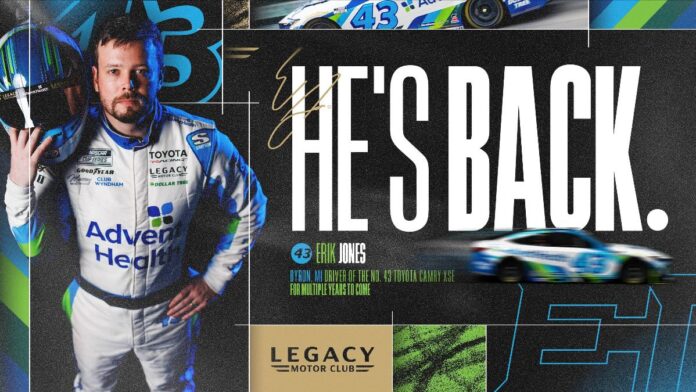
ERIK JONES, No. 43 Dollar Tree Toyota Camry XSE, LEGACY MOTOR CLUB

Finishing Position: 35th

What did you see out there and how does this affect your Chase outlook?

“Yeah, we needed a few perfect week, and it needed to start here today for our Dollar Tree Toyota team, and obviously that didn’t happen. Just unfortunate with how early it is – lap three – I’m just trying to settle in and get going. You don’t expect it either in the top-10, top-five, you don’t think you are going to get caught up in something crazy like that. It’s a bummer. It’s a huge mountain now for here on out to get to the Chase, so we will see.”

TYLER REDDICK, No. 45 SupplyHouse Toyota Camry XSE, 23XI Racing

Finishing Position: 36th

Can you tell us what happened?

“Yeah, there wasn’t much. It was quick or I probably could have saved it. Just got out of shape in an area – corner entry – where I thought we were pretty secure all weekend. I feel awful for our SupplyHouse Toyota team. For us to take ourselves out is one thing, but to take out a fellow Toyota teammate when they are racing for the Chase – pretty much ended their day as well. It is the type of stuff you don’t do to yourself, and you don’t do to a teammate.”

About Toyota

Toyota (NYSE:TM) has been a part of the cultural fabric in North America for nearly 70 years, and is committed to advancing sustainable, next-generation mobility through our Toyota and Lexus brands, plus our more than 1,800 dealerships.

Toyota directly employs nearly 64,000 people in North America who have contributed to the design, engineering, and assembly of over 50 million cars and trucks at our 14 manufacturing plants. In 2025, Toyota’s plant in North Carolina began to assemble automotive batteries for electrified vehicles.

For more information about Toyota, visit www.ToyotaNewsroom.com.