Home Blog Page 21

Gus Dean Returns to Twitty’s Mud Bog Ready for Fall Mud Truck Weekend

ULMER, S.C. — After sweltering temperatures created brutally hot conditions inside and outside the Mud Trucks during Twitty’s Mud Bog earlier this summer, competitors can expect at least a slight break from the extreme heat when the popular mud racing venue comes alive again this weekend in Ulmer, South Carolina

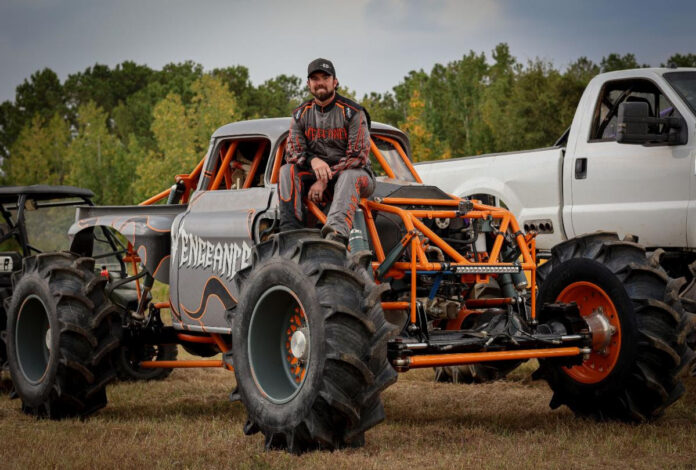
While temperatures are still expected to be plenty warm, Gus Dean knows the competition will remain as hot as ever when he returns behind the wheel of his fan-favorite Mega Truck, VENGEANCE, for Twitty’s Mud Bog’s annual fall Ronald McDonald House event.

Dean and his team will make the trek to the South Carolina venue to put together a productive weekend, make consistent passes, and keep learning as they work through the remaining events on their 2026 Mud Truck schedule.

“Every time we come to Twitty’s, we know we’re going to be surrounded by a lot of good people and some really strong competition,” said Dean. “We’ve continued working on VENGEANCE, trying to learn what the truck likes and what we can do better every time we unload.

“Our expectations are pretty simple. We want to make good, clean passes, take care of our equipment and hopefully improve every time we get an opportunity in the pit. If we can do those things, we’ll see where we stack up at the end of the weekend.”

Twitty’s Mud Bog has become a familiar destination for Dean and the VENGEANCE team over the past several seasons, providing a challenging environment against competitors who continue to raise the level of Mud Truck racing throughout the region.

Dean enjoyed one of his program’s most memorable moments at the Ulmer facility with a victory during the fall event last season, but his most recent trip to Twitty’s in June proved considerably more challenging.

Rather than dwelling on the difficult outing, Dean and his team have used the experience as another opportunity to learn, regroup and better understand what VENGEANCE needs heading into this weekend.

“This type of racing can humble you pretty quickly,” Dean added. “We’ve had some really good days at Twitty’s, and we’ve also had days where things just didn’t come together the way we wanted. June was one of those weekends.

“But that’s part of racing. You go back to work, look at what you can do differently and try to come back better the next time. We’re still learning every time we race this truck, and we have a lot of respect for the competition.

“Our focus this weekend is simply on making good passes, improving throughout the event and seeing where that puts us.”

Beyond the competition, this weekend carries additional significance with Twitty’s Mud Bog once again bringing racers, teams and fans together in support of Ronald McDonald House.

For Dean, the opportunity to compete while being part of an event designed to help others adds another layer of importance to the weekend.

“This is one of those weekends that is about more than just racing,” Dean continued. “We all come to Twitty’s because we enjoy the sport, the competition and being around the people who make the Mud Truck community what it is, but knowing the weekend also helps support Ronald McDonald House makes it even more meaningful.

“Hopefully, everyone comes out, has a great time, enjoys some great racing and, most importantly, we can all help make a difference for families who need that support.”

Under the hood, Dean will once again rely on the horsepower of Wicked Racing Engines, continuing his relationship with the respected engine-building operation led by fellow Mud Truck competitor Duke Bohanon.

The partnership has provided Dean and the VENGEANCE team with valuable support as they continue developing their Mud Truck program and working to maximize the package’s performance and reliability.

“Duke has been in my corner for a long time, and the relationship we’ve built means a lot to me,” said Dean.

“It’s more than just horsepower — it’s trust, hard work and knowing you have people around you who care about what you’re trying to accomplish.

“There are a lot of pieces that have to come together to have a successful weekend in this sport. We appreciate everything Duke and Wicked Racing Engines continue to put into our program, and hopefully, we can put together a solid weekend for everyone involved.”

Whether competing on asphalt or slinging mud, Dean continues to embrace opportunities to compete across different forms of motorsports.

A three-time ARCA Menards Series winner, Dean has increasingly immersed himself in Mud Truck competition with VENGEANCE, embracing not only the challenge behind the wheel but also the camaraderie and passionate fanbase surrounding the sport.

His involvement has also provided Dean with an opportunity to use lessons learned throughout his motorsports career to encourage continued conversations surrounding driver safety.

A longtime advocate for improved driver safety, Dean has used his experience competing across multiple motorsports disciplines to encourage greater awareness of cockpit protection, quality safety equipment and continued education throughout the Mud Truck community.

As the sport continues to grow and attract larger fields and crowds, Dean believes safety should continue evolving alongside it.

“I love seeing the sport grow because the fans and competitors are what make Mud Truck racing so special,” said Dean. “At the same time, I’d love to see us continue raising the bar when it comes to safety. You never want to take away from what makes this sport exciting, but there’s always room to make things safer without changing what people love about it.

“I also think we have an opportunity to keep learning from each other and continue raising the bar when it comes to safety. You can keep everything that makes Mud Truck racing exciting while also looking for ways to better protect the people inside these trucks.

“It’s encouraging to see more and more drivers becoming aware of the importance of safety and investing in equipment that can help better protect them. That’s progress, and it’s something I’ll always support.”

As the engines roar to life and the mud begins to fly at Twitty’s Mud Bog this weekend, Dean will once again climb behind the wheel of VENGEANCE with a straightforward approach: concentrate on his own program, make the most of each pass and continue building toward a strong conclusion to the season.

With competitive fields and little margin for error, Dean understands that success in Mud Truck racing is earned one pass at a time.

“We always want to run well, and obviously, anytime you show up at an event, you’d love to leave with something to celebrate,” Dean said. “But we also understand you have to earn that.

“There are a lot of talented people doing this, and nobody is going to give you anything. Our focus is on doing our jobs, learning throughout the weekend and trying to get a little better every time we make a pass.

“We’re thankful we get to do this, we appreciate everyone who supports us and we’re looking forward to seeing everyone at Twitty’s.”

Following his Twitty’s Mud Bog run, Dean still has unfinished business in 2026, with additional opportunities remaining to compete with VENGEANCE before turning the page toward his 2027 plans.

For more on Gus Dean, please visit GusDean.com, like him on Facebook (Gus Dean Racing) and follow him on Instagram (@GusDean) and X | Twitter (@GusDean).
Ford Racing Notes and Quotes – Chris Buescher Bristol 2 Media Availability

Ford Racing Notes and Quotes
NASCAR Cup Series
Bristol Night Race Media Availability — Bristol Motor Speedway
Friday, September 18, 2026

Chris Buescher, driver of the No. 17 Kroger/Kool-Aid/Little Bites Ford Mustang Dark Horse for RFK Racing, stopped by the Bristol Motor Speedway infield media center before today’s practice and qualifying sessions to talk about this weekend’s race.

CHRIS BUESCHER, No. 17 Kroger/Kool-Aid/Little Bites Ford Mustang Dark Horse – AS POORLY AS THE CHASE HAS STARTED FOR YOU, IT’S NOT AN ELIMINATION RACE THIS WEEK. HOW DOES THAT CHANGE THE PSYCHE OF HOW YOU APPROACH THE CHASE NOW? “I appreciate you not being blunt (laughing). This format, like we talked about all year long, is kind of what I hoped we would see more of that gives you a reward for an entire season’s worth of work. Yes, it’s definitely not started off like how we wanted it to and we’ve got to turn that around. We can do that here, for sure, but I think it is important to note that the reason why I’ve been such a big proponent of this is simply the fact that while the Daytona 500 does not mean as much by the time we get to Homestead as it would through just a 36-race season, it’s mattered all the way to making the Chase and then the entire Chase is gonna matter as we get down to Homestead. We’ve kind of used up our mulligan early and we’re gonna have to get away from that and get on track and be strong, but it doesn’t mean that because of two races that don’t go well that we’re done. I think that’s another appreciation for the format and the way it rolls out, so we have our work cut out for us. We’re certainly aware of that, but we’re not completely out of anything yet.”

YOU GO FROM 70 TO 111 POINTS BEHIND AFTER TWO CHASE RACES. HOW MUCH OF A BIGGER GAP DO YOU FEEL YOU’RE AT NOW VERSUS TWO WEEKS AGO? “I would say that we knew coming into the Chase that we were gonna have to win races. We have watched race wins turn into 55, 60, 70 point swings for drivers, so ultimately that’s kind of where we figured it would be anyway. We’re starting further back than we thought we would be at this point, so it’s about winning ultimately, and you shouldn’t win the championship in this format without winning races. I don’t think it’s gonna happen that way. It’s very rare that it’s happened at all, so being that’s the case and we’ve realized that, we have a lot of good tracks coming up for us. We’ve got a lot of mile-and-a-halves coming up that were really strong at the beginning of the year for us – Bristol, Talladega, whatever you put out in front of us, I feel like we have weekends where we can go put massive points on the board with strong days and have chances to compete to win races. We just have to take a little bit of a reset after a few rough weeks and no better place to start that than Bristol. We’re keenly aware of the uphill battle ahead of us, but I think the old saying that winning fixes a whole lot of things, and I believe it would in this situation as well. We’re just gonna have to do it multiple times.”

HOW HAS THE RACING AT BRISTOL FUNDAMENTALLY CHANGED WHEN IT COMES TO YOUR RACE CRAFT OR JUST HOW YOU SET UP PASSING AND GO ABOUT RACING? “I would say some of the unknowns on what we’re gonna deal with for any given race weekend have kept us almost guessing on what that weekend is gonna look like since we had the extreme tire fall off race we’ve come back here and thought we were gonna deal with that and tried to save tires and one or two cars would start ripping the top and try to make some headway and the next thing you know they’re paying no penalty for it and we’re all sitting here like, ‘Man, we missed the boat. We should have done that way earlier.’ In general, though, Bristol has a very similar feel that it had when I remember racing here in 2014 or ‘15, that you can rip the top a lot of times and you can make a lot of headway up there, but when the groove gets dominant, you have to be good on the bottom. I’ve never raced here in the old-school Bristol ways of having to root somebody up off the bottom as the only way. I’ve never been in a wedge-bodied car around here either, I’ve just kind of missed that era, so it’s always been very similar to what it is now for me, and with that it means that we have to be able to run the bottom. I think you have to figure out how to run right around the bottom of one and two. Three and four is a little hard to pull off sometimes, but the top is a little easier in three and four, so if you can keep your momentum wound up, I think that as long as you have passing lanes, you can still do it. It kind of goes through cycles of whether that shows up quick on restarts or not. I’m happy to see the O’Reilly cars ripping not quite up to the fence, but up there in the ground concrete because I think if they’re gonna keep widening out, hopefully by the time we get to our practice, we won’t have everybody slammed on the bottom and it won’t get too dirty before we’re able to widen it out. So, I really hope we just have a wider racetrack because I do feel like that has been the most run races that I’ve gotten to run here at Bristol.”

WHAT ARE YOUR THOUGHTS ON KANSAS NEXT WEEK? “I am kind of driving off the hoodpin right now, so I am very much on Bristol. I would say that as we look ahead the mile-and-a-halves were really strong for us at the beginning of the year. I’d say that Kansas has become very quickly one of my favorite mile-and-a-half racetracks to go to. It’s gotten so much character through the years the last several years seems to have accelerated. We have options as a driver to move all over the racetrack. We qualify around the top, which is very strange in general for qualifying anywhere really. There’s a lot of things about Kansas that have just presented a pretty unique challenge that’s become a lot of fun, so given how our speed was at those style of racetracks earlier in the season, we haven’t had one in a bit, but certainly we’ll be looking forward to that one after taking home a trophy from here first.”

YOU GUYS ARE RUNNING SUB-15 SECOND LAPS. DO YOU FORESEE A POSSIBILITY THAT THERE WOULD BE A SUB-14 SECOND LAP HERE AND IS THAT PRETTY MUCH LARGELY DEPENDENT ON THE TIRES? “Yeah, I would say that a 14-second lap around here is ripping. To go a half-second faster would be significant on a half-mile racetrack. I don’t believe you’ll see us get there. I would say you’re probably a couple of limits. One, we’re not using a ton of brake here at Bristol, especially on our fast laps. We’re using a ton of throttle, but I think more horsepower would be the only way to get it up out of the hole faster, but I would say that you’re correct in saying that really it’s gonna have to come from tire and grip, or simply downforce. With the simpler package that we have, the simpler diffuser package, it’s definitely taken a little bit of speed out of it already. We’re pretty low on total downforce numbers as we sit. It would take significant aero or grip advantages, so pretty much the basics. I don’t know if you could get there simply with tire. I think you would have to have more downforce in order to rip that much faster around this place, but that being said, it’s not that I don’t see where running a 13.9 around here is gonna create anything better than what we have, either. It’s not simply about the raw speed of it. I promise it feels plenty lap late into a run when you’re still running a 16-second lap around here. A lot goes wrong in a very quick hurry and it keeps us on our toes, but I guess I doubt. That’s my long-winded answer to say I doubt we see it go that much faster.”

ARE YOU A DESPERATE DRIVER RIGHT NOW? “No, we’re not desperate. We’re just going to be aggressive. We are in a point where we have everything to gain in front of us and we really don’t have much to lose at this point. That’s the unfortunate truth of how our Chase has started, but, no, it’s not to the point of you consider ourselves desperate or throwing any kind of Hail Mary. We can take risk and chances and we can push forward, but I would just say that we get to race harder is ultimately it, and maybe not even harder than those who are sitting there in the points. They get to race hard, too. No, I don’t think it changes most of the mindset, it just opens up some options for us and our team on how we approach some of these things – options we would have rather not had, but we do have now.”

ARE WE 100 PERCENT CERTAIN THAT THERE WILL BE NO TIRE WEIRDNESS WE’VE HAD THE LAST COUPLE OF YEARS? “What do you think? I’m curious. I can’t sit up here and say 100 percent that, yes, we’re beyond all that. I doubt it, but I’ll give you a better answer in an hour or two. It remains to be seen. I don’t know where everybody else’s head space is at in that part of it, but I can’t say for certain, no.”

HAVE YOU HAD ANY CONVERSATIONS WITHIN YOUR TEAM OF WHAT THAT CAN LOOK LIKE, OR ARE YOU JUST GOING OFF THE SPRING RACE? “I would say that if it turns into anything like that, we seem to have enough tires. We have pit crews that are ready to have 10 pit stops on the day. I’m glad this racetrack is not loud. We’re OK. If we had to get down to that, if we had to be on pit road every 50, 60 laps, then we have people that are ready for that challenge and we will change what we need to, but I would say that is not our belief – it’s more on the side of you’re not gonna see issues to that extent.”

HAS YOUR TEAM DETERMINED WHAT CAUSED THE BRAKE ROTOR TO EXPLODE LAST WEEK? “I don’t know that we have a full answer yet. It seems to be very similar issues to most that had issues. What I will say with us is I saw a couple of the Front Row cars seemed to have an idea they were having a brake problem. Both of them were around us when it happened and started laying up on entries and trying to kind of baby it a little bit. We didn’t have any warning. Everything was fine. I think the 12 car was in a similar situation. The rotor actually exploded down the straightaway before braking, which is very strange in general. I’ve never had that before. The only thing I can say for sure is that we don’t know for sure, but we have a handful of common denominators across the failures in the garage. We have thought processes of sitting there under a red flag and everything super hot and it starting to cool down. I’m aware of that. I’ve had issues of similar sorts in my ARCA days and I learned from those way back when that you just don’t sit there and stay put. You have to keep moving forward and trying to rotate hot spots basically on the entire system – tire, brakes and all. We try not to run all of our cooling fans under caution because you know it will just shock a system, or under red when you’re sitting. I don’t have the solid answer, but I know it went in a grand fashion. We were I guess consider ourselves lucky in the sense that we were still on the straightaway and had time to process what had just happened and did not try to drive down into the corner. I kind of just let it ride the wall. Obviously, it was just a tough end to be three laps away after having a brutal day in the first place – not how we wanted to finish that at all.”

CREW CHIEFS WILL HAVE MORE LATITUDE ON DECIDING WHEN TO PUT ON SLICK OR WET WEATHER TIRES. AS A DRIVER, IS IT A GOOD THING DOING IT THAT WAY? “I like it. I think it makes us weigh risk versus reward. I guess it kind of starts to mimic the road course procedures in the sense that we’ve been aggressive on that. We’ve hit it really well and in Mexico City we hit it completely wrong. I think that it’s just an opportunity to try something different, to make a gain or a risk in a massive area that can play out. So, yeah, I think it’s a good thing to give it back to teams. I think that the start of the race will ultimately be determined, so we’re not gonna change right from the get-go, but I think it gives us time that no matter what the conditions are, we’ll be able to feel the racetrack out, have a general sense before we swap over in anything, and then we just kind of play it by whatever our teams sees fit to change from there.”

CRACKER BARREL NAMED PRESENTING SPONSOR OF PRE-RACE CONCERT FOR BASS PRO SHOPS NIGHT RACE AT BRISTOL MOTOR SPEEDWAY

BRISTOL, Tenn. (Sept. 18, 2026) – Bristol Motor Speedway today announced Cracker Barrel Old Country Store® as the presenting sponsor of the pre-race concert for the Bass Pro Shops Night Race this Saturday. The “Cracker Barrel Pre-Race Concert” will feature diamond-selling country superstar Brian Kelley on the infield stage at 5 p.m. ET, setting the tone for one of NASCAR’s most iconic nights of the season.

The partnership unites two Tennessee institutions on the sport’s grandest stage, as Cracker Barrel — headquartered in Lebanon — brings its commitment to community and Country Hospitality to The Last Great Colosseum for America’s Night Race weekend.

“Cracker Barrel has already become a great part of the fan experience at Bristol, and we’re excited to expand that partnership in a big way Saturday night inside The Last Great Colosseum,” said Jerry Caldwell, president and general manager of Bristol Motor Speedway. “Cracker Barrel has a great tradition of bringing people together, and that fits perfectly with the energy and atmosphere at Bristol. With Brian Kelley taking the stage before the Bass Pro Shops Night Race, it’s going to be an incredible way to get our fans fired up for the action under the lights.”

Cracker Barrel’s presence at Bristol is the latest expression of the brand’s growing engagement with Speedway Motorsports, deepening a partnership which originated with the sponsorship of Nashville Superspeedway’s Cracker Barrel 400 Cup Series race starting in 2025. The “Cracker Barrel Experience” fan zone stage has also become the centerpiece of fan zones across all Speedway Motorsports properties.

Headlining the Cracker Barrel Pre-Race Concert, Brian Kelley will bring his sun-soaked sound and hit-making energy to the Bristol infield stage. First known as the Florida half of the GRAMMY-nominated Florida Georgia Line — which earned 19 career No. 1 hits — Kelley now headlines a thriving solo career with new releases including “Queen Of 30A,” “93 In The Keys” and “Bought A Boat.”

The 500-lap Bass Pro Shops Night Race is the third of 10 postseason races in the NASCAR Cup Series Chase. The race will take the green flag at 7:30 p.m. and will be televised on USA Network and broadcast on PRN Radio.

Tickets for Saturday night’s Bass Pro Shops Night Race start at $65 for adults. Kids 12 and under are only $10 for Saturday’s Bass Pro Shops Night Race with a paid adult admission.

For more information, visit BristolMotorSpeedway.com or call the BMS Ticket Sales Center at (866) 415-4158.

About Bristol Motor Speedway
Bristol Motor Speedway, known as The Last Great Colosseum, sits in the mountains of Northeast Tennessee near the Virginia state line. The 0.533-mile concrete oval, with 28-degree banking, hosts two major NASCAR Cup Series weekends each year, the tradition-rich Food City 500 and the crown jewel Bass Pro Shops Night Race. The venue has staged iconic moments such as the 2016 Pilot Flying J Battle at Bristol football game between the University of Tennessee and Virginia Tech (NCAA-record 156,990 fans), the 2025 MLB Speedway Classic between the Atlanta Braves and Cincinnati Reds (MLB regular-season record crowd of 91,032), the 2020 NASCAR All-Star Race, the rebirth of NASCAR Cup Series racing on dirt from 2021–2023 and sold-out concerts for Morgan Wallen and Kenny Chesney. Fans enjoy Colossus TV, the world’s largest outdoor, center-hung, four-sided video board. The adjacent Bristol Dragway is home to the NHRA Super Grip Thunder Valley Nationals, and the dragway can transform into the Thunder Valley Amphitheatre for music concerts. Opened in 1961 and acquired by Speedway Motorsports in 1996, Bristol remains one of America’s most unique and versatile sports and entertainment destinations. For more information, please visit www.bristolmotorspeedway.com.

Pets Rarely Sit Still, So Family Christmas Pajamas Need Photo-Friendly Details

Anyone who has tried to take a family photo with a pet knows the plan rarely survives the first few seconds. The dog turns away at the exact moment the camera clicks, the cat decides the blanket is more interesting than the family, or the pet simply walks out of the frame after everyone finally gets ready.

That is part of what makes holiday photos memorable. The goal is not always a perfectly controlled picture. It is about capturing the people, personalities, and unexpected moments that make the celebration feel real. Choosing Christmas pajamas for a pet-inclusive family photo can help create a connected look, but the best pictures still leave room for the chaos that pets naturally bring.

The Family Member Who Does Not Follow Directions

Pets are often treated like another member of the family during the holidays, but they rarely cooperate like one. They do not understand why everyone is standing in one place, why someone keeps calling their name, or why they are expected to look at a camera.

Yet those unpredictable moments are usually the ones families laugh about later.

A dog sitting slightly outside the group, a cat appearing in the background, or a pet wearing a festive accessory for only a few seconds can become the detail everyone remembers. The imperfections make the photograph feel like a true record of the holiday.

Plan the Photo Around the Pet, Not Against Them

One of the biggest mistakes families make is trying to force a pet into a long photo session. Animals become restless quickly, especially when there are children, decorations, food, and new smells everywhere.

A better approach is to prepare the space first. Place the camera, choose the location, and have everyone ready before bringing the pet into the picture. The shorter the process, the more likely the pet will stay comfortable.

A few quick photographs often work better than trying to create one flawless image.

Why Matching Looks Better With Real Family Energy

Holiday photos feel more connected when there is a shared visual theme. That does not mean every person or pet needs to look perfectly arranged. It simply gives the picture a common thread.

Coordinated christmas pajamas can help bring together a scene where everyone is naturally doing different things. Children may be sitting on the floor, parents may be holding drinks, and a pet may be exploring the room. The shared holiday style helps those separate moments feel like part of one memory.

Choose Details That Work in Motion

A photo-friendly holiday outfit is not only about appearance. It should also make sense for how families actually spend Christmas.

Pets move. Children move. People sit, stand, laugh, and change positions constantly. A design that works only when everyone is standing perfectly still may not represent the real celebration.

Simple seasonal patterns, comfortable fits, and recognizable holiday details often photograph well because they remain visible whether someone is sitting near the tree, opening presents, or playing with a pet on the floor.

A Festive Design for Busy Christmas Mornings

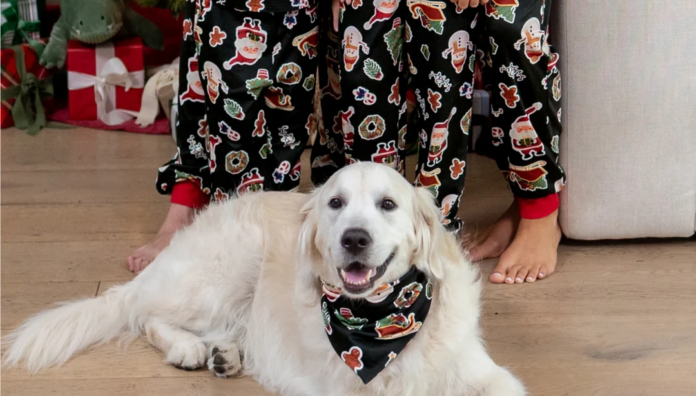
The Christmas Matching Family Pajamas Xmas Tree & Gingerbread Print brings together classic holiday elements with a playful family style. The design features Christmas tree and gingerbread-inspired details, creating a cheerful look that fits naturally into family photos, breakfast moments, and relaxed time at home. With matching options for different family members, it works well for households that want everyone—including the energetic members of the family—to share a coordinated holiday theme.

Let the Pet Be Part of the Story

Many families focus on making the pet behave during photographs, but sometimes the better choice is to include the pet’s personality.

If a dog always sits beside the youngest child, capture that. If a cat likes sleeping under the tree, photograph that. If a pet becomes interested in wrapping paper, toys, or holiday decorations, those moments are part of the Christmas experience too.

A photograph does not need everyone looking directly at the camera to have meaning. Sometimes the most emotional images show relationships rather than poses.

The Best Holiday Pictures Are Usually Unplanned

Parents often imagine the perfect Christmas photograph: everyone smiling, the tree behind them, gifts arranged neatly, and the pet calmly sitting in the middle.

That picture may happen, but it is not the only one worth keeping.

The image where a child is laughing because the dog moved, where someone is fixing a sibling’s outfit, or where the pet has completely changed the plan may become the favorite. Those photographs show movement and personality.

The purpose of a family album is not to prove that everything went perfectly. It is to remember what the day actually felt like.

Make Space for the Pet Without Making the Day About the Pet

Including a pet in holiday traditions does not mean every activity has to revolve around them. Pets simply need a comfortable place within the celebration.

Give them breaks when needed. Avoid forcing them to wear anything uncomfortable. Keep their normal routines where possible. A relaxed pet is much more likely to appear naturally in photographs.

The same principle applies to children and adults. Everyone participates better when the holiday does not feel like a performance.

How Family Pajamas Create a Holiday Connection

The appeal of family christmas pajamas is not only visual. They create a shared experience between people who may have completely different personalities.

A child may be excited about gifts, parents may be focused on breakfast, and a pet may simply want attention. A coordinated outfit connects those different moments and creates a sense that everyone belongs in the same story.

That small connection can become especially meaningful when families look back at photographs years later.

Quick Tips for Better Pet-Friendly Christmas Photos

A few simple adjustments can make holiday pictures easier:

ChallengeHelpful Approach
Pet keeps movingTake several quick photos instead of one long session
Children lose patiencePhotograph during activities rather than forcing poses
Pet ignores the cameraCapture natural interactions instead of demanding attention
Everyone looks uncomfortableChoose a relaxed location like the living room
The photo feels too stagedInclude toys, blankets, and everyday holiday details

The goal is not to control every part of the image. It is to create an environment where genuine moments happen.

Keep the Funny Photos Too

Families often delete pictures that seem imperfect. Someone is blinking, the pet is moving, or the room is slightly messy.

Those are often the photographs worth saving.

Years later, the funny image may bring back the strongest memory because it shows exactly what happened. A child laughing at a pet’s behavior or a family member trying to get everyone organized tells a story that a perfect portrait cannot.

Let Every Christmas Look Different

Pets change. Children grow. Families move and traditions evolve. A photograph from one Christmas may look completely different from the next.

That is a good thing.

Holiday traditions are valuable because they record change over time. The pet that once ran through every photo may eventually become the older family companion everyone remembers. The child sitting beside the dog may eventually be the person helping younger cousins take the picture.

Each year adds another chapter.

Final Thoughts

A Christmas photograph does not become meaningful because everyone stood perfectly still. It becomes meaningful because it captures the people, pets, and moments that made that holiday unique.

Pets may interrupt the plan. Children may laugh at the wrong time. Someone may look away just as the camera clicks. Those things are not failures—they are reminders that the celebration was real.

Matching pajamas can create a beautiful connection in the picture, but the memories come from everything happening around them.

What Really Matters After a Serious Truck Crash in Hollywood

A collision involving a commercial truck can leave a person dealing with far more than vehicle damage. Serious injuries, missed work, medical treatment, insurance calls, and uncertainty about who was responsible can quickly turn an already difficult situation into a complicated legal matter.  Hollywood Truck Accident Attorney presents its own challenges. The area combines busy surface streets, heavy traffic, pedestrians, rideshare vehicles, delivery routes, construction activity, and connections to major Los Angeles transportation corridors. A truck crash can therefore involve more than a simple driver-versus-driver dispute. The most important questions often concern what happened before impact, who controlled the truck, whether safety rules were followed, and what evidence can still be recovered. Those questions can require a closer examination of driver records, vehicle maintenance, cargo, electronic data, surveillance footage, and insurance coverage.

Why Commercial Truck Crashes Require a Different Investigation

A tractor-trailer, box truck, delivery vehicle, construction truck, or other commercial vehicle operates under responsibilities that may not apply to an ordinary passenger car. Federal Motor Carrier Safety Administration rules can govern areas such as driver hours, vehicle inspections, maintenance, and electronic records. For property-carrying drivers subject to the federal hours-of-service rules, FMCSA generally limits driving to 11 hours within a 14-hour duty window after 10 consecutive hours off duty. 

That matters because a crash investigation may need to examine more than the few seconds surrounding the collision. A driver who appears to have made one careless maneuver may have been affected by fatigue, scheduling pressure, inadequate training, poor vehicle maintenance, or an improperly secured load. The investigation may also reveal that the truck driver is not the only potentially responsible party. Depending on the facts, responsibility can involve a motor carrier, vehicle owner, maintenance provider, cargo loader, manufacturer, or another business involved in the transportation operation.

The Evidence Can Tell a Much Larger Story

One of the biggest differences between an ordinary vehicle claim and a commercial truck case is the amount of information that may exist behind the collision. Electronic logging device records can provide information about a driver’s duty status. Vehicle systems may contain crash-related data. Maintenance records can show whether inspections or repairs were performed. Dispatch records, bills of lading, cargo documentation, employment files, and communications may help establish what happened before the truck reached Hollywood.

Scene evidence can also be important. Traffic-camera footage, nearby business surveillance, photographs, witness accounts, vehicle damage, roadway conditions, and police reports may help reconstruct the sequence of events. This evidence is not necessarily available forever. Competitor pages frequently emphasize the short life of electronic and surveillance evidence, and recent California truck-accident resources specifically identify ELD information, vehicle data, maintenance records, cargo documents, and scene evidence as important categories to preserve.

What Investigators May Look For

  • Driver qualification and training records.
  • Hours-of-service and electronic logging data.
  • Vehicle inspection and maintenance records.
  • Black-box or electronic control module information when available.
  • Cargo loading and securement documentation.
  • Dashcam, traffic camera, and nearby surveillance footage.
  • Photos, physical evidence, witness statements, and accident reports.
  • Medical records connecting the injuries to the collision.

Who May Be Responsible for a Hollywood Truck Collision

Liability depends on the evidence rather than simply on the fact that a truck was involved. A driver may be responsible for speeding, distraction, unsafe lane changes, following too closely, impaired driving, or another negligent action. The trucking company may become relevant when company practices contributed to the collision. Questions can include hiring, training, supervision, scheduling, maintenance, or pressure placed on a driver to meet delivery demands.

A separate business may also enter the case. For example, a cargo-loading company could potentially become relevant when an improperly secured load contributes to a crash. A maintenance contractor may become important when a mechanical problem is connected to inadequate service. Manufacturers can present another possible issue when a defective component or mechanical failure contributed to the collision. The precise parties depend on the facts, contracts, maintenance history, and applicable law.

This multi-party structure is one reason California truck accident cases can become considerably more complicated than ordinary automobile claims. Current Los Angeles legal resources similarly identify drivers, carriers, cargo companies, maintenance providers, and manufacturers as possible parties depending on the circumstances.

How California Fault Rules Can Affect a Claim

California follows comparative-fault principles, which means the analysis does not necessarily end simply because more than one person contributed to an accident. California Civil Code Section 1431.2 provides that, in personal-injury and wrongful-death actions based on comparative fault, each defendant’s responsibility for non-economic damages is generally several according to that defendant’s percentage of fault. The statute also distinguishes economic losses, such as medical expenses and lost earnings, from non-economic losses such as pain, suffering, and emotional distress.

That distinction can become important when an insurer argues that an injured person contributed to a collision. Evidence should therefore address the entire sequence of events rather than focusing on one isolated statement or action. A lawyer evaluating a claim may examine photographs, traffic signals, vehicle positions, witness accounts, roadway markings, vehicle data, police reports, and other evidence before reaching conclusions about fault.

Injuries Can Affect the Value and Structure of a Claim

The physical difference between a commercial truck and a passenger vehicle can make truck collisions particularly serious. Potential injuries can include fractures, traumatic brain injuries, spinal injuries, internal injuries, nerve damage, and other conditions requiring extended treatment. The legal significance of an injury is not limited to the initial hospital bill. A serious injury may affect the person’s ability to work, perform ordinary activities, participate in family life, or require future rehabilitation and medical care.

A complete damages analysis can therefore involve current medical expenses, anticipated treatment, lost income, reduced earning capacity, property damage, and applicable non-economic losses. California’s statutory framework expressly recognizes categories such as medical expenses, loss of earnings, and pain and suffering when determining damages. For that reason, settling a serious truck claim before the medical picture becomes reasonably clear can create problems. Future treatment needs may not be obvious during the first few days after a crash.

Where a Hollywood Truck Accident Attorney Can Add Value

A Hollywood Truck Accident Attorney can approach the claim as a commercial-vehicle investigation rather than treating it like a routine fender-bender. The early work may involve identifying the trucking company, locating available insurance information, determining which entities controlled the vehicle, reviewing the crash scene, preserving electronic records, and requesting documents that may help establish liability.

The attorney may also communicate with insurers and defense representatives so that the injured person does not have to manage every legal issue while dealing with medical treatment. The investigation can become particularly important when the trucking company has its own insurer, claims representative, safety department, investigators, or defense counsel working on the case soon after the collision.

That does not mean every truck accident requires litigation. Some cases resolve through negotiation. Others may require a lawsuit when liability or damages remain disputed. The appropriate approach depends on the evidence and the circumstances of the particular claim.

What to Do After a Truck Crash in Hollywood

The first priority after any serious collision is safety and appropriate medical attention. Once immediate concerns are addressed, preserving information can make the later investigation easier.

Practical Steps That Can Help

  • Seek medical attention and follow the recommended treatment plan.
  • Report the collision to the appropriate authorities when required.
  • Photograph the vehicles, roadway, visible injuries, signs, and surrounding conditions when it is safe to do so.
  • Keep medical bills, treatment records, prescriptions, and related documentation.
  • Write down what you remember about the collision before details become harder to recall.
  • Keep the names and contact information of witnesses if available.
  • Avoid posting detailed statements about the accident or injuries on social media.
  • Preserve photographs, videos, messages, and other records connected to the crash.
  • Be cautious about giving recorded statements or signing documents for an insurer before understanding what they concern.

Insurance Issues Can Be More Complicated Than They Appear

Commercial trucks can involve insurance arrangements that are different from an ordinary personal automobile policy. There may be coverage associated with the motor carrier, vehicle owner, or other businesses involved in the transportation operation. The amount and availability of insurance can also depend on the type of operation, the parties involved, applicable regulations, and the facts surrounding the collision.

An insurer’s initial assessment is not necessarily the final determination of liability or damages. An adjuster may focus on information that supports a particular interpretation of the accident, while other evidence may tell a broader story. A careful claim review should therefore connect the insurance issue to the underlying evidence. Who owned the truck? Who employed or contracted with the driver? Who controlled the cargo? Was the vehicle properly maintained? What records exist? These questions can help identify which policies and parties may matter.

A Strong Truck Accident Case Is Built Around Details

The most useful evidence is rarely a single document. Strong investigations usually come from connecting different pieces of information. For example, imagine a delivery truck collides with a passenger vehicle during a busy Hollywood traffic period. A witness may describe the truck changing lanes abruptly. Nearby video may show the movement. Vehicle data may provide additional information about speed or braking. 

Driver records may show the driver’s activity before the crash. Maintenance records may establish the condition of the vehicle. Each item answers a different question. Together, they can provide a clearer reconstruction of the event. This is where information gathering becomes more important than assumptions. A truck case should be developed around verifiable evidence rather than relying solely on the initial version of events.

Conclusion

A serious truck collision in Hollywood can involve much more than damaged vehicles and an insurance claim. The driver, trucking company, cargo, maintenance history, electronic records, roadway conditions, medical evidence, and insurance structure may all become relevant to the investigation. The most useful approach is to preserve evidence early, document medical treatment carefully, avoid assumptions about responsibility, and understand the parties involved before making major decisions about a claim. For someone dealing with significant injuries after a commercial truck crash, obtaining case-specific legal advice can help clarify what evidence matters, which parties may be involved, and what deadlines or procedural requirements apply. The facts of each collision ultimately determine how the claim should be evaluated.

How to Match Window Coverings With Different Levels of Sunlight, Privacy, and Daily Activity

Photo by depositphotos at https://depositphotos.com/

Windows influence how a room feels throughout the day. Morning sun can make a breakfast area bright and pleasant, while strong afternoon light may create glare in a living room or home office. Privacy needs also change depending on where windows face and how family members use the surrounding space.

Choosing Window treatments becomes easier when homeowners evaluate these everyday conditions before thinking about colors or decorative details. The right covering should respond to sunlight, provide suitable privacy, and remain convenient during normal routines. Looking at each room separately often produces better results than selecting one product for the entire house.

Shutters & Shades approaches window covering decisions by considering both appearance and daily function. A bedroom facing a neighboring property has different needs from a sunny kitchen or quiet upstairs office. Identifying those differences early can help homeowners choose coverings that continue working well after the initial design decision.

Begin by Watching How Sunlight Moves Through Each Room

Sunlight changes direction and intensity as the day progresses. A room that feels comfortable early in the morning may receive strong direct light several hours later. Observing these changes can reveal where greater control is needed and where homeowners may want to preserve more daylight.

East-facing windows often receive stronger morning light, while west-facing rooms can experience more intense sunlight later in the day. Trees, neighboring buildings, roof overhangs, and other exterior features can also change exposure. For that reason, window direction alone does not tell the entire story.

Spend time in each room during different parts of the day before choosing a covering. Notice where glare appears, whether sunlight reaches furniture or screens, and when privacy becomes a concern. These observations provide practical information that cannot always be gathered during a quick room inspection.

Match Light Control to the Activities Inside the Room

The amount of sunlight entering a room is not automatically a problem. Natural light can make interiors feel open and inviting, but certain activities require greater control. Reading, watching television, working on a computer, or resting may become uncomfortable when direct light reaches the wrong area.

Adjustable Blinds can provide useful flexibility in rooms where lighting needs change regularly. Slats can be repositioned to redirect incoming light rather than requiring the window to remain fully covered throughout the day. This can be helpful in shared spaces that serve several purposes.

Consider where furniture and screens are positioned as well. A covering should work with the room layout rather than forcing homeowners to rearrange everything around changing sunlight. Evaluating both window exposure and daily activities creates a more practical solution.

Consider Glare Before Reducing All Natural Light

Glare and brightness are not the same issue. A room may benefit from plenty of daylight while one narrow beam creates difficulty on a television or computer screen. Completely blocking the window could solve the glare problem but make the rest of the space unnecessarily dark.

Look for coverings that allow controlled adjustment. Redirecting light or changing the amount entering through part of the window may provide enough relief. This approach preserves useful daylight while addressing the specific source of discomfort.

Give Street-Facing Rooms Greater Privacy Attention

Windows facing sidewalks, neighboring properties, shared outdoor areas, or busy streets often need more privacy than windows overlooking secluded yards. The challenge is maintaining that privacy without making rooms feel closed throughout the day. Adjustable coverings can help balance these competing needs.

Homeowners should examine windows from both inside and outside when possible. A room that feels private during daylight may become more visible after dark when interior lights are on. Understanding this difference helps prevent surprises after a covering has been selected.

Shutters & Shades encourages homeowners to think about privacy as something that changes with time and household activity. Bedrooms and bathrooms may require stronger coverage, while living areas may benefit from more flexible control. The best choice reflects how much visibility is acceptable in each particular space.

Choose Practical Options for Busy Family Rooms

Family rooms often experience constant activity. People may watch television, read, play, relax, or entertain visitors in the same space, sometimes within a single afternoon. Window coverings in these rooms should be convenient enough to adjust as those activities change.

Blinds can suit spaces where homeowners want direct control over both light direction and privacy. Rather than treating the window as simply open or closed, adjustable slats provide several positions between those extremes. This flexibility can be valuable when room conditions change frequently.

Ease of care also deserves attention in active spaces. Dust, fingerprints, and ordinary household activity can affect window coverings over time. Homeowners should consider how the selected material is maintained and whether its care requirements fit their routine.

Evaluate Bedroom Windows Around Sleep and Privacy

Bedrooms require a different approach from shared living areas. Privacy usually becomes a stronger priority, particularly for ground-floor rooms or windows facing nearby homes. Light levels may also matter early in the morning or during periods when occupants need to rest.

Before choosing a covering, consider typical sleeping schedules and exterior lighting. Streetlights, vehicle headlights, or early sunlight may affect some bedrooms more than others. A window that seems comfortable during an afternoon consultation can behave very differently before sunrise.

Window treatments should therefore be selected according to real bedroom conditions rather than appearance alone. Coverage, adjustability, and the desired level of incoming light should all influence the decision. Decorative preferences can then be considered within those practical requirements.

Think About Moisture and Activity in Kitchens

Kitchens present their own challenges because windows may sit near sinks, food preparation areas, or places where surfaces are cleaned frequently. A covering that looks attractive in a living room may not be equally practical near regular moisture or cooking activity. Material selection deserves careful consideration.

Homeowners should also think about how often the kitchen window will be adjusted. A breakfast area may benefit from morning daylight, while stronger sunlight later in the day could require additional control. Easy operation becomes valuable when changes are made frequently.

Maintenance expectations should be realistic as well. Following appropriate care recommendations for the chosen material helps preserve its appearance. A good kitchen choice balances visual style with the demands created by everyday use.

Account for Furniture and Window Accessibility

Not every window is easy to reach. Sofas, desks, counters, and other furniture can make frequent adjustments inconvenient even when the window itself is a standard size. Homeowners should consider accessibility before selecting an operating style.

Walk through the normal process of opening and adjusting the proposed covering. If furniture must be moved every time, the arrangement may become frustrating. Small practical issues can have a large effect when they occur every day.

Window height and surrounding architectural details also matter. Measurements, trim, handles, and nearby obstacles can influence how a covering fits and operates. Reviewing these conditions before making a final choice helps avoid unnecessary compromises.

Use Consistent Design Without Making Every Room Identical

A coordinated home does not require the exact same window covering in every space. Rooms can use different products while maintaining visual consistency through related colors, materials, or finishes. This allows practical needs to guide each selection without creating a disconnected interior.

For example, a highly active living area may require more adjustability than a quiet guest room. Different solutions can still feel related if their visual elements complement one another. Function and design do not need to compete when decisions are planned together.

Shutters & Shades can fit into this planning process by helping homeowners consider how individual rooms connect visually. Looking at adjacent spaces is especially useful in open floor plans. A coordinated approach can support continuity while respecting different lighting and privacy needs.

Avoid Choosing Coverings Based Only on Appearance

Color and style naturally influence window covering decisions, but appearance should not be the only consideration. A product can complement furniture beautifully while providing too little privacy or requiring more adjustment than homeowners expected. Daily inconvenience can quickly outweigh an attractive first impression.

Blinds and other covering options should be evaluated according to room function, sunlight, accessibility, and maintenance expectations. Asking practical questions before selecting finishes helps narrow the available choices. Once functional needs are established, decorative decisions become easier to make.

Homeowners should also avoid assuming that similar-looking rooms need identical solutions. Window direction, exterior surroundings, and household routines can create different requirements. Each room deserves a brief evaluation before the final selection.

Build Better Comfort Around Real Household Needs

Successful window covering choices begin with understanding what happens around each window every day. Sunlight direction, privacy, room activities, furniture placement, and maintenance all influence which features will be useful. Evaluating these conditions creates a stronger foundation than choosing according to appearance alone.

Homeowners can start by observing each room at several times of day and identifying specific problems they want the covering to solve. Some spaces need flexible light control, while others require dependable privacy or simple everyday operation. Those priorities can guide product selection without making the process unnecessarily complicated.

The goal is to create rooms that remain comfortable and practical as lighting conditions and activities change. Thoughtful choices allow natural light to remain an asset while providing control when it becomes distracting. Matching each covering to the way a room is genuinely used can produce a home that feels more comfortable throughout the day.

Front Row Motorsports: Bristol Motor Speedway NCTS Race Report- Layne Riggs / Chandler Smith

Layne Riggs | Chandler Smith
Bristol Motor Speedway NASCAR CRAFTSMAN Truck Series Race Report
Bristol Motor Speedway 250
Date: Thursday, September 17, 2026
Event: Race 19 of 25
Series: NASCAR CRAFTSMAN Truck Series
Location: Bristol Motor Speedway (0.533-mile)
Length of Race: 250 laps over one hour, 33 minutes, 44 seconds

FRM Finish:

Chandler Smith (Started 2nd, Finished 24th / Running, completed 247 of 250 laps)
Layne Riggs (Started 1st, Finished 32nd / Running, completed 234 of 250 laps)

FRM Points Standings:

Layne Riggs (1st)
Chandler Smith (3rd)

Chandler Smith Key Takeaways

Stage One: 3rd / Stage Two: 3rd / Race Result: 24th

“It was an interesting day to say the least,” said Smith. “Our No. 38 QuickTie Products Ford F-150 was solid the first two stages. We were right where we needed to run, top three, a third-place truck. We came in and the crew did a great job on the pit stop and the driver sped, so I ended up losing all of the track position. I was coming back through the field and the crew chief did a great job on making a call on the adjustment and got the truck way better. We ended up having a problem with the right-front tire. The stud completely broke off and the rim was completely broken and we had to pit. Nevertheless, we had a really good truck before we started having mechanical issues, so I’m proud of that. We had good speed today, so, regardless, we still have forward momentum going to Kansas.”

Layne Riggs Key Takeaways

Stage One: 1st / Stage Two: 1st / Race Result: 32nd

“We lost that one on pit road tonight,” said Riggs. “I don’t know what happened there. We had a really slow stop first of all, and then we didn’t even get the wheel tight either. Once you’re mired in the back and your two laps down, you’re just riding around with the guys in the back. I guess the 1 just lost talent and wrecked. I don’t really know what happened there. It’s probably one of the top three hardest hits of my life. I can’t believe the truck was still rolling after that. I feel like we had the truck to beat. This one stings really bad.”

ABOUT FRONT ROW MOTORSPORTS

Front Row Motorsports (FRM) is a winning organization competing in the NASCAR Cup Series and the NASCAR CRAFTSMAN Truck Series. Founded in 2004 by entrepreneur Bob Jenkins, FRM has earned top honors including a 2021 Daytona 500 victory and the 2022 CRAFTSMAN Truck Series championship. Based in Mooresville, N.C., FRM fields the No. 4, No. 34, and No. 38 entries in the NASCAR Cup Series, along with the No. 34 and No. 38 teams in the CRAFTSMAN Truck Series. For more information, visit FrontRowMotorsports.com and follow Front Row Motorsports on social media — X: @Team_FRM, Instagram: @teamfrm, Tik Tok: @Team_FRM, YouTube: @FrontRowNASCAR, and Facebook: facebook.com/FrontRowMotorsports.

Tyler Ankrum’s NCTS Bristol Motor Speedway Recap

UNOH 250 – Race Results

Venue: Bristol Motor Speedway

FINISH: 13th

Start: 13th

Stage One: 13th

Stage Two: 15th

NCTS Playoff Point Standings Position: 10th

Ankrum Settles for Top 15 Results to Open The Chase at Bristol

Tyler Ankrum, Driver of the No. 18 LIUNA Chevrolet Silverado RST

Tyler Ankrum, driver of the No. 18 LIUNA Chevrolet Silverado RST powered through a hard-fought battle at the “Thunder Valley” Thursday night under the lights after a 15th-place finish saw him open up The NASCAR CRAFTSMAN Truck Series (NCTS) Chase. After qualifying was cancelled due to weather, the lineup was set by the NCTS metrics and Ankrum was relegated to start in the 13th position. Due to the unfortunate conditions of the race track, the young driver found it very difficult to pass and held the 13th position for his Stage One finish. After reporting to the team he was building free and needed more turn, crew chief Mark Hillman called the driver of the No. 18 Chevrolet down pit road under the stage break for four tires, fuel and a slight trackbar adjustment.

Rolling out 15th, Ankrum found himself in the same position with passing being a major issue and late completed Stage Two also in the 15th position. The San Bernadino, Calif. native was super tight on the second stage run but felt they needed to prioritize track position and try and gain as much as they could due to the passing conditions throughout the night. Under the stage break, Ankrum cruised down pit road for ride-side tires only along with a top off of Sunoco race fuel. After gaining multiple spots on pit road, the young driver was able to restart 10th and start his quest through the top 10.

Juggling spots, Ankrum was fighting to hold inside the top 10 until a caution with 82 laps to go arose in the field. The No. 18 chose to stay out and manage the track the best they could as he currently ran in the eighth position. A battle to the end found the young driver dealing with more tight conditions and ultimately led to a 13th-place finish at Bristol. Nothing to lose and nothing to gain at the “Last Great Colosseum” for the 25-year-old NCTS veteran as he still holds the 10th position in the Chase.

Tyler Ankrum Quote:

“I really wish we had a little more to gain here at Bristol tonight. We had a really fast LIUNA Chevrolet but if you don’t qualify up front here it is very difficult to make your way there and the weather just was not on our side tonight. Proud of these guys and our Trackhouse pit crew for some solid stops tonight. Huge thanks to Tony Dagley, UCOR and all the folks from LIUNA that came out tonight. Still lots of work to do and we are onto Kansas.”

GARCIA SCORES CAREER-FIRST VICTORY AT UNOH 250 PRESENTED BY OHIO LOGISTICS AT BRISTOL MOTOR SPEEDWAY

BRISTOL, Tenn. (Sept. 17, 2026) – For Jake Garcia, it was a case of stealing thunder.

For the NASCAR CRAFTSMAN Truck Series Chase drivers, it was blunder after blunder.

Driving the No. 98 ThorSport Racing Ford, Garcia took control in the third stage of Thursday night’s UNOH 250 Presented by Ohio Logistics at Bristol Motor Speedway and went on to win for the first time in his 94th start.

In the Chase opener for the series, Garcia led three times for 104 laps. On Lap 230 of 250, he wrested the lead from Stewart Friesen with an inside pass and held it the rest of the way. Garcia took the checkered flag 1.305 seconds ahead of Bayley Currey, who passed Friesen for the runner-up spot on Lap 247.

“I’m really proud of all my guys,” said Garcia, who started 12th on metrics per the rule book. “They brought an amazing truck tonight. It was good today (in practice), but qualifying got rained out, so we got a good strategy that helped us come from the back, get some track position… and just kind of took off from there.”

Garcia ended a drought for ThorSport dating to Ty Majeski’s victory in the 2024 Championship 4 event at Phoenix Raceway, but it was hardly clear sailing to the finish. Garcia lost the lead to Friesen on a Lap 220 restart and spent the next 10 laps trying to regain it.

“Had some adversity on that last restart, but fortunately the truck was fast enough to overcome that,” Garcia said. “ThorSport Racing’s a really strong team, especially historically, so just proud of all my guys on the 98 team to be able to end that winless streak.”

Currey finished second in his first Truck Series start of the season. With Friesen third, Justin Haley fourth and Tristan McKee fifth—at age 16 the youngest driver in series history to score a top five—no Chase driver finished better than sixth (Giovanni Ruggiero).

“I’ve still got it, I guess,” said Currey, who was driving the No. 5 TRICON Garage Toyota. “Just huge, huge thank you to everyone at TRICON, Toyota – just a great opportunity and glad we were able to make the most of it.

“I thought I was going to fumble it there at the end, but we were able to fight there and bring it home P2. Obviously wanted to win, but coming off the couch, I’m all right with it.”

In fact, the top four seeds in the Chase all experienced uncharacteristic difficulty. Top-seeded Layne Riggs started from the pole and won the first two stages wire-to-wire, leading the first 135 laps.

But Riggs was sixth out of the pits for the start of the final stage, and on Lap 156, he radioed to his crew that his No. 34 Front Row Racing Ford had a loose right rear wheel. Riggs pitted for four tires on Lap 161 but lost two laps to the leaders and never recovered.

After contact with the damaged No. 1 Toyota of Nick Leitz late in the race, Riggs was forced to pit road again and finished 32nd, 16 laps down.

The two stage wins proved to be a godsend for Riggs, who retained the Chase lead by three points over Kaden Honeycutt. The driver of the No. 11 Toyota finished eighth despite an unscheduled pit stop with a loose wheel under caution late in the race.

“There was a lot of fighting tonight,” Riggs said. “I’m just thankful that we had a fast enough truck that we won the first two stages and got some points, but we just came down pit road and had an absolute catastrophe of a stop.

“I don’t understand how we were that slow on the stop, and we didn’t get the wheels tight… I’m very frustrated. I feel like we had the truck to beat again.”

Third-seeded Chandler Smith suffered both a speeding penalty at the Stage 2 break and a tire losing air late in the final run. Smith finished 24th and leaves Bristol third in the standings, 30 points behind Riggs.

The Chevrolet of fourth-seeded Christian Eckes suffered early front-end damage and finished 30th. Eckes dropped four spots to eighth in the Chase standings, 58 points out of the lead.

Behind Ruggiero, William Sawalich, Honeycutt, Majeski and Grant Enfinger completed the top 10.

In ARCA Series action Thursday at Bristol Carson Brown won the Bush’s Beans 200 and rising star Tristan McKee claimed the ARCA Menards East championship crown.

“[This one’s] pretty high up there to be honest,” Brown said. “[My spotter] Derek Kneeland up on the tower was working his butt off, just being my other set of eyes. This was a tough one, but I’m glad I was able to bring it to Victory Lane for these guys.”

It was Brown’s third win of the season and it was the second time he led every lap.

Meanwhile, McKee built enough of a points cushion with his second place finish to secure his ARCA East championship crown. McKee earned the title with a bunch of top fives and also four victories.

Tickets are still available for Friday’s Food City 300 and Saturday’s Bass Pro Shops Night Race. Call 866-415-4158 to reach the BMS Ticket Sales Center or purchase tickets online at the BMS website.

-Staff and NASCAR Newswire report

UNOH 250 presented by Ohio Logistics
NASCAR CRAFSTMAN Truck Series
Thursday at Bristol Motor Speedway

Jake Garcia
Bayley Currey
Stewart Friesen
Justin Haley
Tristan McKee
Giovanni Ruggiero
William Sawalich
Kaden Honeycutt
Ty Majeski
Grant Enfinger
Ben Rhodes
Daniel Hemric
Tyler Ankrum
Landen Lewis
Dawson Sutton
Tanner Gray
Andres Perez De Lara
Corey LaJoie
Luke Baldwin
Nick Sanchez
Brenden Queen
Timmy Hill
Regan Smith
Chandler Smith
Connor Mosack
Mini Tyrell
Kris Wright
Cole Butcher
Connor Hall
Christian Eckes
Parker Eatmon
Layne Riggs
Frankie Muniz
Nick Leitz
Caden Kvapil
Jackson Macenko
Bush’s Beans 200 Results
ARCA Menards Series
Thursday at Bristol Motor Speedway

  1. Carson Brown
  2. Tristan McKee
  3. Kaden Honeycutt
  4. Max Reaves
  5. Isaac Kitzmiller
  6. Jake Bollman
  7. Jade Avedisian
  8. Andy Jankowiak
  9. Thomas Annunziata
  10. Taylor Mayhew
  11. Jason Kitzmiller
  12. Andrew Patterson
  13. Gavan Boschele
  14. Ty Fredrickson
  15. Gabriel Casagrande
    16 Jackson McLerran
  16. Craig Pellegrini
  17. Austin Vaughn
  18. Brian Weber
  19. Isabella Robusto
  20. Alex Clubb
  21. Chase Buscaglia
  22. Jeff Maconi
  23. Takuma Koga
  24. Quinn Davis
  25. Michael Maples
  26. Ivis Earley
    28 Jake Finch
  27. Con Nicolopoulos
  28. Zach Tinkle
  29. Brad Smith
  30. Hunter Wright
  31. Bobby Earnhardt
  32. Brad Perez
  33. Nate Moeller

Kris Wright NCTS Bristol Motor Speedway II Recap

UNOH 250 | Bristol Motor Speedway

Race Results

Venue: Bristol Motor Speedway

FINISH: 27th

Start: 32nd

NCTS Point Standings Position: 24th

Wright Grabs Positions Late to Salvage Long Night at Bristol

Kris Wright, Driver, No. 81 iHeartRadio / F.N.B. Corporation Chevrolet Silverado RST

Kris Wright and the No. 81 iHeartRadio / F.N.B. Corporation Chevrolet Silverado RST team finished 27th in Thursday night’s UNOH 250 at Bristol Motor Speedway (BMS). Wright started 32nd after qualifying was set by the metric following a lightning delay. He moved forward early, passing a truck on the outside on lap five and reaching 30th by lap 12 before falling two laps down by lap 50.

The team made a stop for four tires, fuel and chassis adjustment during the Stage One break, including a track bar adjustment and changes to the rear of the truck. Wright restarted 34th for Stage Two and found additional speed midway through the run, posting five top-10 lap times during the middle portion of the run while holding off the race leader. The truck began to tighten toward the end of the segment, and was scored 30th at the end of Stage Two.

Wright restarted 30th for the final stage and settled into 31st before a caution on lap 168. Wright got loose due to oil on the track and tagged the outside wall, which necessitated the team inspecting the right front suspension. He restarted 31st on lap 181 and continued to battle through the remaining laps, moving to 29th by lap 230 and gained two more positions to finish 27th.

Kris Wright Quote:

“Tonight could’ve been a much worse result. I really wanted to bring this iHeartRadio / F.N.B. Corporation Chevrolet Silverado RST home clean, but there wasn’t much I could do. It’s unfortunate for the guys back at the shop, but I’m looking to finally get back on a 1.5-mile track, one of my personal favorite tracks to run, and hopefully bring home a good result for McAnally-Hilgemann Racing.”