Home Blog Page 233

What to Look For in a Utility Vehicle for Heavy-Duty Property Maintenance

Making a wrong choice of machine for commercial property work becomes one expensive lesson once you’re on the first real job. This is a guide to utility vehicles as working machinery, not entertaining toys, because if you’re hauling gravel, running implements, or managing hundreds of acres then the spec sheet matters far more than the brochure.

Engine displacement and torque: why cc matters more than speed

Most people see the horsepower number and figure that’s all she wrote. Wrong. What actually gets your loaded trailer up that slope or keeps a post-hole digger spinning is what you get at low-end power – meaning the pulling force you have available at low RPM, before the engine even starts to break a sweat.

For anything more than mowing the lawn, you need a bit of torque. Ideally, liquid-cooled engines absolutely trump air-cooled alternatives. And if you’re dealing with heavy property maintenance, then you need to be looking in the 500cc right up to the 1000cc ballpark – at the very least. At this level, a single-cylinder engine will provide you with a nice broad torque curve at low revs. V-twin engines also really spread that low-RPM grunt but tend to do so across a broader range of revs. Horsepower aside, your engine should be making as much twisting force as possible way down low; certainly nowhere above four grand.

Electronic Fuel Injection (EFI) is a “must-have” on the work site. Carbs and their chokes just don’t like the cold and they absolutely hate altitude changes. Starting and firing the machine every cold, often predawn, morning is unnecessary aggravation. EFI starts clean every time, speeds up the work process and ensures consistent fuel delivery no matter how hard you are yanking on that throttle. This becomes especially important when you are working against a steady engine load for extended periods.

Drivetrain configuration for real terrain conditions

A vehicle with part-time 2WD and a locking rear differential drives nicely on a trail. But it’s not the kind of machine you want to take through the mud to retrieve a full load of wood. For that, you need a carryall that can sense what the terrain is throwing at you and adapt in a split second without you having to come to a stop and get out to make changes.

On-demand 4WD is quite convenient: if the rear wheels start slipping, the front wheels automatically engage. It’s handy for mixed use where you go from grass to soft ground and back a lot. The big differentiator, though, is whether the front differential can be fully locked. When you are backing a trailer with a big load out of the soft ground, or pushing a steep grade with a grader blade attached, and you need to have all four wheels pushing equally, nothing else will do. Without a locked front and rear diff, you’ll just spin the wheels on the inside and stay right where you are.

Most every good work vehicle also has a turf mode, which unlocks the rear differential and allows the wheels to turn at different speeds. That way you don’t tear up the turf just turning in a developed lawn or a well-established pasture with a diff that’s locked front and back. It’s a small feature but an important one for many well-managed working properties.

The transmission in these vehicles is almost always a belt-type Continuously Variable Transmission (CVT). That’s fine – belt CVTs work very well at the lugging, low speeds that working off-road vehicles have to handle. But beware any that don’t come with a true selectable high-low range for the transmission. You put the thing in high for normal use, low for when you’re dragging or pushing a heavy load, or working super-steep ground. If you don’t have that, you’re constantly with the throttle pinned against the machine’s governor. The belt is acting as the low range, and it doesn’t take long for it to burn and slip under the outrageous heat and load.

Suspension geometry and load management

“Ride comfort” is how a lot of people view suspension on a utility machine. What it really should be is load management. And if you use your ATV on the land, you’ll want excellent suspension when you’re at max payload.

Independent double A-arm suspension all around gives every tire the ability to react to the ground separate from the others, meaning tires stay on the ground under load. With the rear rack piled high and a trailer on the back, a solid-axle rear end will raise the inside tire. You’re losing traction and your steering is changing at the same time – never a good idea on a hill.

Short-term, an even bigger issue is suspension sag. No suspension is maintenance-free, and most consumers don’t maintain it. Instead of checking tire pressure, you’re checking how compressed your shocks are. Overload a machine so the suspension is mashed against the bump stops – as seems to be the standard practice – and you’ll hammer the chassis and rack off-road, since that pinned suspension directly transfers force. Preload adjusters are for compensating for load – if you’re always full-up on racks, jack it high and put up with the rough ride.

Ground clearance under load is another figure overlooked. A machine might offer 11 inches of clearance empty but drop down to 8 fully loaded. If your property has rock ledges, two-foot beaver ruts, or four-inch oak stumps, you’d best factor that in. Check the manufacturer’s ground clearance under “rated load,” not the (often empty) number they include in the tech specs.

ATV versus UTV: matching the machine to the property

In the heavy-duty category, side-by-side UTVs typically get more of the attention, and for large, open properties they’re often the right choice. But on wooded acreage, along narrow fence lines, or in country where you’re constantly reversing between tight spaces, a quad has its advantages. The narrower footprint and the rider’s ability to shift weight actively make straddle-mount machines more capable in tight, technical terrain than their dimensions suggest.

Looking for a versatile, high-torque quad bike, assess good dealers with atvs for sale that include factory-mounted winches and power steering – those two features change the working capability of the machine significantly on a real property.

The practical split is probably how the machine will spend the majority of its time. If you are running a sprayer or spreader over open ground, a UTV with a large cargo bed and a cab probably makes sense. If you are doing fence work and trail maintenance and recovery tasks across varied terrain, a well-specified ATV will cover more of the property more efficiently.

Towing capacity, payload, and tongue weight

Towing capacity, payload capacity, and tongue weight. These three numbers are related but they’re not the same thing, and conflating them will get you into trouble.

Towing capacity is the maximum rated weight of the trailer and its contents that the vehicle can pull. Payload capacity is the total weight the vehicle’s chassis can carry – passengers, cargo on the racks, and any mounted accessories. Tongue weight is the downward force that the front of the trailer exerts on the tow hitch.

Tongue weight is the one most people ignore. As tongue weight increases, it compresses the rear suspension, lifts the front end slightly, and reduces the steering contact patch on the front tyres. On flat, sealed ground that’s manageable. On a cross-slope or loose surface, it creates an oversteer condition that can develop quickly. The general rule is that tongue weight should be between 10 and 15 percent of total trailer weight. If you’re towing a 500kg trailer, you want 50 to 75kg on the tongue – not zero, and not 150kg.

Industry safety guidelines recommend keeping speed at or below 15 km/h when hauling heavy loads, and the total towed weight should never exceed the vehicle’s rated towing capacity. Jackknifing on a slope with a heavy trailer behind a compact utility vehicle is a serious incident, and it’s almost always a consequence of either excessive speed or overloading.

Cooling systems and CVT protection under sustained load

Work that requires your vehicle to move very slowly while under a heavy load produces more heat in your engine and transmission than you think. When you’re slowly slogging along a fence line with a full spray tank, or inching your way across soft ground with a heavy trailer, both the engine and the CVT are working at near their rated load – but without the benefit of the cooling airflow that higher speeds bring.

For this type of work, a good liquid-cooled engine is far more tolerant of slow operations than one that relies on airflow for cooling. The liquid coolant can keep things at a much more consistent operating temperature than the varying temperatures of an air-cooled motor. And an air-cooled motor will overheat under a load at slow walk.

This brings an additional problem – your CVT will overheat. For maximum service life, the belts in a CVT need to stay cool, as slipping of the belt generates a lot of extra heat and thus accelerates wear. On an air-cooled engine, the hot air that exits the engine goes straight over the CVT, which is usually sitting at the lowest point on the vehicle. Nasty. A high-mounted CVT air intake is a huge advantage, as not only does it ingest cleaner, cooler air, it also gets its intake up out of that hot, dirty air that hangs close to the ground when you are working at low speeds under high load.

So prospective purchasers should ask about the height of the CVT intake and if there are any belt temperature management systems on board. A destroyed CVT belt in the centre of a paddock is a half-day problem.

Electrical output and integrated accessories

Many heavy-duty property tasks require the use of electrically powered accessories: sprayers, spreaders, LED light bars, and winches. Most stock electrical systems on utility vehicles are sized for the needs of the machine and not much else: fuel pump, ignition, lighting, and maybe an accessory or two. Install a 12V pump with a constant draw, and the stock stator’s inadequate.

Before installing multiple accessories, check alternator or stator output. Higher-performance work machines are typically designed with 300 to 500 watts of charging capacity. Below that, you’ll find the battery going flat due to the demands of your accessories before the charging system can replenish what’s used.

A winch isn’t an optional extra – it’s base equipment for a serious work machine. The minimum useful rating for property work is 3,000lbs: enough to self-recover a loaded machine from soft ground, free a small trailer, or drag a few small logs. Smaller attachments are okay if you’re using the winch to free the occasional small obstacle, but they don’t have the power to budge a fully laden quad stuck axle-deep in the mud.

Electronic power steering and operator fatigue

Dealers treat Electronic Power Steering (EPS) as a comfort upgrade, and buyers usually ignore it in an effort to hold the purchase price down. On a work vehicle, this is a mistake.

Low-speed maneuvering with a front-mounted blade or weighted front rack sends real shock back through the handlebars to the operator when a front wheel hits a solid obstacle. Over an eight-hour day’s work, that impact load on the operator’s wrists, shoulders, and forearms is real. EPS takes that all away without removing the steering feel, and on a vehicle that runs four to eight hours a day, it makes a real difference in operator injury.

Maintenance intervals for work vehicles

A machine that is being used for property maintenance under commercial conditions is going to wear through belts, bearings, and other items faster than one only being used on weekends. That doesn’t mean you need to be ripped off for maintenance and repair intervals that aren’t necessary. If you run in ultra-fine dust or powdery dirt, you will have to check and usually replace air filters far more frequently than conditions outlined in the owner’s manual. Moist or sandy conditions certainly carry a heavy penalty in this area, as well.

Other items may benefit from increased attention. For instance, leaks at the front and rear diff input pinion seals or the reverse light switch on the transaxle can get dirt or water in them, and the preventative replacement of fluids or the brake pads is always less expensive than chewing up a diff from running with low fluid levels or chewing up a rotor from metal-on-metal wear.

If you are using your work machine daily in long or muddy/wet conditions, manual-recommended differentials and transmission maintenance – including hydraulic-assist implement and transmission air bleed checks – will surprise you. Running through water crossings, mud, or irrigating operations starts the countdown clock on bearing failure through inadequate lubrication.

The right utility vehicle for heavy property work isn’t necessarily the most expensive or the fastest. It’s the one with the right combination of torque, suspension rating, drivetrain options, and electrical capacity for the specific tasks on your property – specified accurately before purchase, not discovered expensively afterward.

How to build a route in MCW for a short session without moving through the entire menu

Photo by depositphotos at https://depositphotos.com/

A short gaming session in an online casino requires not speed for the sake of speed, but a clearly defined route in advance. When a player has 20 or 30 minutes, unnecessary switching between slots, live tables, the sports section, bonuses, and the cashier quickly consumes attention. MCW is structured as a multi-section platform where different formats sit side by side, so the main question is not how many games are available, but how to choose the right path without wandering chaotically through the menu.

Why a short session begins with choosing one scenario

If a player enters without a plan, they almost immediately begin comparing formats that should not be compared directly. First they open slots, then look at live roulette, then check fast games, and at the end return to bonuses, even though there is no longer enough time for a proper review. This pattern is especially common on multi-section platforms where casino games, sportsbook, live tables, and the promotions page are all one tap apart.

A practical approach should be built around the purpose of the session. If the goal is dynamics, video slots or instant games make more sense, where rounds are short, and the result is visible almost immediately. If the player wants a more predictable pace, table games or a live table with a fixed stake work better. If the interest is related to sports, opening the needed tournament or market in advance saves more time than scrolling through the full line. 

The MCW app supports a Favourites section where saved games load directly without going through the main catalog, which makes this kind of pre-selection faster in practice than it sounds in theory. Players who use mcw apps and add preferred slots or tables to Favourites in advance can begin a short session in under a minute, skipping the catalog entirely and going straight to the planned format.

How to build a route without extra clicks

A route for a short session should be built before the game begins, not after the first loss. The player should determine the amount, the format, the time limit, and the exit point. For example, with a balance of $60, it is possible to allocate $20 for a short slot block and leave $10 for a live round or not touch the second format at all. What matters is that one visit does not turn into an attempt to test every category, because in that mode no game is explored properly.

A quick check before the start

Before the session, a short filter helps avoid spreading attention across the menu. The following steps reduce the risk of unplanned transitions and keep the session on track:

  1. Choose one main section: slots, live tables, or sports; the session starts there and returns there if anything goes wrong.
  2. Set the maximum stake per round: $0.40 to $0.50 for slots on a $20 block gives 40 to 50 rounds, which is enough for a 15-minute session at a normal pace.
  3. Check the available balance before opening any game: the MCW cashier is accessible from the main menu without leaving the current section.
  4. Decide whether a bonus is needed before logging in: activating a reload mid-session changes the wagering calculation and may restrict withdrawal before the session ends.
  5. Open 1 or 2 games maximum: more than that in a 25-minute session means less time per game and a higher chance of switching because of impatience, not because of a plan.
  6. Set a time limit and a loss limit in advance: MCW supports deposit and loss limits in the account settings, which can be used to reinforce the session boundary rather than relying on manual self-control.

For example, if a player has 25 minutes and wants to test new slots, the route can be very short: open the app, go to the slot section, choose a game with a $0.40 or $0.50 stake, check the paytable, and launch a series without autoplay at high speed. If a bonus round has not appeared within 15 minutes, it is better to end the block or reduce the stake rather than jump into live casino just because the slot did not deliver a quick result.

Why the menu should be reduced to working points

A large menu is convenient only when the player knows how to cut off what is unnecessary. In MCW, casino games, sportsbook, live dealer tables, slots, and promo sections may all stand next to each other, but a short session does not need all of them. The more transitions there are, the higher the chance of losing the original plan. The player wanted to place $5 on one match, then saw a slot with a bonus buy, then opened live baccarat, and no longer knows where the planned bet ended and where the reaction to the interface began.

Which sections are better not to combine in one short visit

For a short session, it is especially important not to combine formats with different rhythms. Slots and instant games provide a fast cycle with results visible in seconds. Live tables require more attention to each round and depend on dealer pace. Sports betting depends on the line and the timing of the event, which means waiting. The bonus section requires reading conditions before any activation. If everything is combined at once, the player gets overload rather than a useful route. The working rule is simple: one main format, one backup option, and one financial control point through the balance or cashier, without constant returns to the general catalog.

A conditional 30-minute route may look like this. The first 3 minutes go to logging in and checking the balance, the next 5 minutes to selecting a game and reading the rules, then 15 to 20 minutes to the session itself, and the remaining time to stopping and fixing the result. If the player manages to move through five sections during that time, the route was built poorly. The value of a short visit lies precisely in using one clear section properly, not in reviewing the full platform.

How to keep control after the end of a short session

The final part of the route is no less important than the start, because it is exactly after a short session that the player most often decides to continue without a plan. If the balance has risen from $60 to $78, there is a temptation to open another section. If the balance has dropped to $45, the desire appears to recover quickly in a different format. Both scenarios break the purpose of the short visit. That is why the exit point should be defined in advance after 25 minutes, after reaching a loss limit, or after one bonus round whichever comes first.

To build a route for a short session in MCW means not going through the entire menu, but reducing the platform in advance to the needed action. One player chooses a slot and a stake up to $0.50, another opens a live table with a $5-per-round limit, and a third watches only one sports market. In all cases, the winner is not the one who clicks through sections faster, but the one who understands in advance where they are going, how much they are ready to spend, and at what point the session ends.

Solano Grand to Provide Seamless Connectivity via Future CRL and JRL Lines

Enhancing Urban Mobility at Solano Grand with Strategic Rail Links

The introduction of the Cross Island Line (CRL) and the Jurong Region Line (JRL) is poised to redefine urban mobility in Singapore, and Solano Grand is at the heart of this transformative journey. Nestled at Senja Close near the Bukit Panjang MRT Station, this new development by City Developments Limited (CDL) captures the essence of connected living. Accessibility is seamlessly integrated into the luxury lifestyle offered by Solano Grand, ensuring that residents enjoy both comfort and convenience.

The strategic location of Solano Grand near major MRT lines means that residents will benefit from direct and efficient access to various parts of Singapore. Whether it’s for work, education, or leisure, the promise of enhanced connectivity is a compelling reason for potential homeowners and investors alike. The future integration with the CRL and JRL lines ensures that Solano Grand is not just a residence but a gateway to a well-connected life.

Solano Grand: A Nexus of Connectivity and Convenience

Imagine a world where your home is minutes away from the heart of the city yet surrounded by tranquility and green spaces. Solano Grand offers this unique blend, thanks to its proximity to upcoming MRT lines. These lines will serve as critical arteries that link residents to the bustling city center, popular recreational venues, and key business hubs. The ease of travel promotes a balanced lifestyle, enabling residents to manage their time efficiently between work and leisure.

Immediate Benefits from Bukit Panjang MRT Accessibility

Even before the completion of the CRL and JRL, residents of Solano Grand will benefit from the existing close proximity to Bukit Panjang MRT Station. This station, part of the Downtown Line, already significantly reduces travel time to other parts of Singapore. For instance, reaching the Central Business District (CBD) or the vibrant Orchard Road shopping belt becomes a matter of a quick MRT ride, underscoring the value of strategic location in urban planning.

Solano Grand: Future-Proofing Your Investment

Investing in Solano Grand means more than just acquiring a luxury condo; it is an investment in a future-proof lifestyle. The upcoming CRL and JRL lines are not merely additions to the city’s transport network; they represent a vision of growth and development. City Developments Limited has meticulously planned Solano Grand to capitalize on these developments, enhancing the property’s value and appeal. The anticipation of increased connectivity has the potential to drive demand and, consequently, property prices in the region.

Strategic Location as a Catalyst for Growth

Solano Grand’s advantageous location near Bukit Panjang MRT Station positions it as a prime beneficiary of Singapore’s ambitious rail expansion plans. This foresight by CDL ensures that Solano Grand residents will enjoy enhanced accessibility and convenience, which are key factors in urban real estate appreciation. The integration with the CRL and JRL lines will catalyze community growth, making Solano Grand a sought-after address for those who seek a blend of urban convenience and upscale living.

Enhancing Lifestyle and Connectivity at Solano Grand

At Solano Grand, connectivity transcends physical transport links; it embodies a lifestyle of convenience and accessibility. Future residents will have the luxury of time, saved from long commutes, which they can invest in their hobbies, relaxation, and quality time with family. This integration of convenience with luxury living helps in crafting a holistic environment that nurtures both professional and personal growth.

Commitment to Sustainable Urban Living

The development of Solano Grand reflects a commitment to sustainable urban living. By focusing on transport-oriented development, CDL emphasizes the reduction of carbon footprints through enhanced public transport usage. The proximity to major MRT lines encourages residents to opt for public transport, aligning with broader environmental goals and supporting Singapore’s vision for a car-lite society.

In conclusion, 

Solano Grand’s integration with the upcoming Cross Island Line and Jurong Region Line goes beyond mere connectivity; it signifies a leap towards future-ready living. As these lines unfold, they promise to enhance the fabric of connectivity, weaving Solano Grand into the tapestry of a dynamically evolving Singapore. For prospective residents and investors, Solano Grand stands not just as a home, but as a hub of connectivity, underpinned by the visionary planning of City Developments Limited.

5 Signs You Should Hire a Car Accident Attorney

Photo by Gustavo Fring on Pexels

After a crash, many wonder if it is necessary to hire a lawyer. While minor accidents can easily be resolved without legal assistance, others are usually complex, necessitating the need for immediate legal help. This involves lawball offers, disputed liability, and serious injuries. 

Delaying taking action can force you to pay for damages out of pocket. To avoid this, you need to seek advice from a legal expert as soon as possible. Here are some signs that you need a car accident attorney.

  1. You Suffered Serious Injuries

Injuries such as broken bones, head injuries, and internal injuries require long-term medical attention. These costs can add up fast, creating financial stress during an already overwhelming time.

Settlements offered by insurance companies are often based on immediate costs after the accident. They don’t account for the long-term costs of rehabilitation, future medical care, reduced earning capacity, and pain and suffering. 

A skilled attorney will work with medical professionals and other experts to find out how much your settlement should be worth. They will help avoid settling for something less that does not cover both present and future costs.

  1. Insurance Company Is Difficult

Insurance representatives may appear willing and helpful initially. However, their goal is to pay the least amount possible for any claim. If your claim is delayed or denied without proper justification, or if you are being offered a lower settlement, you might want to consider getting legal help.

An attorney knows how to deal with insurance companies as they understand the tactics they use. They also know how to negotiate better outcomes by supporting your claim with strong evidence. With their help, you are sure to get the compensation you deserve.

  1. Fault for the Accident Is Being Disputed

Not every collision in Georgia or any other state has an obvious at-fault driver. Multi-vehicle crashes, conflicting witness statements, missing surveillance footage, or unclear road conditions can all make liability difficult to establish. In cases where fault is questioned, a lawyer can be helpful. They will do the following to help you:

  • Conduct thorough investigations
  • Review police reports
  • Collect evidence
  • Consult accident reconstruction professionals

Hiring a car accident lawyer in Dawsonville, GA, assures you that your rights will be respected and that a solid case will be created for you. This is especially important as getting a legal professional involved from the beginning is the best way to preserve vital evidence that might otherwise be lost. It also lessens the chances of being unfairly blamed for the accident.

  1. Your Losses Extend Beyond Vehicle Damage

People underestimate the financial consequences of a car accident because they focus on repairing their vehicle. The reality is that costs typically extend that. Lost income, future medical treatment, rehabilitation, emotional distress, permanent disabilities, and diminished quality of life should all be factored into your claim. 

An experienced attorney will consider all forms of damages and ensure nothing is overlooked that can lower your benefits. You will be sure to receive what reflects your total losses.

  1. You’re Overwhelmed by the Claims Process

Getting back on your feet after an accident isn’t easy. It is especially hard while handling legal paperwork, medical documentation, and consultations. 

Having a lawyer means most of these problems are handled on your behalf. You can focus on recovery instead of worrying about the complexities of the case.

Endnote

While not every car accident is worth seeking legal help, certain warning signs should not be ignored, as this can lead to accepting low offers, admitting fault, and failing to gather solid evidence. Hiring a lawyer can be beneficial if you are injured, the accident involves multiple parties, or the process is too complex. Consulting one early can provide valuable guidance and help avoid costly mistakes. You also strengthen your claim and have the best chances of securing fair compensation.

5 Mistakes Drivers Should Avoid in a Houston, TX Car Accident Claim

Photo by Julien on Pexels

Driving in Houston can sometimes feel intense, especially with the heavy traffic on I-45, Beltway 8, and the 610 Loop. With such heavy traffic, you face a greater risk of serious crashes when driving in Houston, and handling the aftermath can be more difficult than many people realize.

Knowing how Texas car accident claims work is important for protecting your rights, especially since insurance companies may try to reduce payouts. However, accidents are nerve-shattering, and it’s easy to make errors after an accident. Here are five mistakes you should avoid following an accident in Houston. 

  1. Admitting Fault at the Scene

After an accident, you may find yourself apologizing out of instinct. However, even a simple statement like ‘I’m sorry’ can be misinterpreted as admitting fault. Texas uses modified comparative fault rules, meaning your compensation may be lowered if you are found partly at fault for the accident.

Adjusters will always try to use offhand statements to argue against you. To be safe, don’t talk too much at the scene or to an insurance adjuster. Stay calm, state the necessary facts, and avoid commenting on fault. Instead, leave it to the police and an experienced Houston car accident attorney like Colby Lewis to establish who is at fault.

  1. Failure to Document the Scene

Never leave the scene of the accident without documenting it first. You especially want to make a quick video before any vehicle is moved. Taking a video immediately captures the exact positions of the vehicles involved and the exact conditions of the road. 

These videos and photos can come in handy when trying to understand how and why the crash occurred. A video is also more objective than verbal accounts and memory, and it can be verified independently. 

  1. Failure to Call the Police

If you don’t call the police, you are giving your insurance company more excuses to deny your claim. It doesn’t matter if the accident seems minor or not; a police report is crucial for documenting the accident. Without it: 

  • Your insurance claim will be much weaker
  • The fault may be disputed
  • Crucial evidence might disappear
  1. Delaying Medical Treatment

If you don’t seek medical care soon after an accident, you are giving your insurance company a solid reason to reject your claim. They will argue that either your injuries were not serious or they were a result of the accident. 

You may feel okay after an accident, but that is usually due to an adrenaline rush. Some injuries, like whiplash, take some time to develop, so early medical documentation can help support your claim.

  1. Accepting the First Settlement Offer

After a car accident, your insurer may send a quick settlement offer that might seem reasonable. However, don’t be too quick to settle. The insurer understands that you have pressing medical and car repair bills to pay, and they might try to take advantage of that. Their aim is usually to close the case as soon as possible and settle for far less money than you deserve. 

Before you settle, make sure you understand the extent of your injuries. A Houston personal injury lawyer can help you review the offer. With the help of medical professionals, they can determine the extent of your injuries and whether you will require medical care in the future. 

Endnote

Avoiding these common car accident claim mistakes can significantly boost your chances of getting the compensation that you deserve. You don’t want to risk losing out because of bad advice or an honest mistake. For best results, be sure to work with a Houston personal injury attorney from the start. 

How Sim Racing Became A Career Path

Racing Simulators That Launch Real Careers

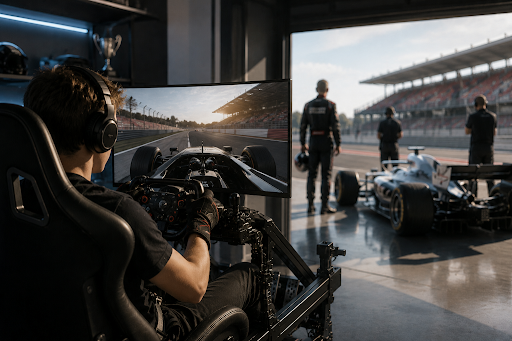
For years, racing simulators carried a stigma. Fast and fun, sure, but fundamentally separate from actual motorsport. The same rigs sitting in bedroom corners now feed directly into Formula One development programs, and the drivers climbing out of them are landing real cockpit seats.

The Racing Theme In Casino Entertainment

The competitive energy of racing has found its way into online entertainment too. A platform such as Mafia Casino spins up themed slots dripping with motorsport visuals — checkered flags flying across the screen, pit stop animations between bonus rounds, and turbo-charged spins that feel like a standing start.

Certain competitions on Mafia Casino online throw players head-to-head based on who can land the highest multiplier in a selected slot, with a leaderboard that refreshes as fast as lap times in qualifying.

An online casino running a racing promotion might tie free spins to leaderboard positions, rewarding the boldest. An online casino Australia platform using this format mirrors the time trial battles that sim racers know well.

The Moment Sim Racing Stopped Being Just A Game

The biggest signal came when a dedicated sim racer earned a spot in the F1 Academy development program with no real race experience or karting trophies from childhood behind them. Just thousands of hours on virtual tracks proving that the skills translate directly to a physical machine. That cracked open a door many assumed stayed locked.

Motorsport has always been brutally expensive to enter. Karting, junior formulas, travel, equipment — the costs run deep before a driver turns eighteen. Sim racing removes nearly all of that financial friction. A decent wheel and pedal setup costs a couple hundred dollars, and a PC runs what many households already own. The talent pool suddenly stops being limited by money and starts being limited by ability alone.

How Real Teams Scout Virtual Drivers

Formula One teams have built their own million-dollar simulator facilities for years, using them to test setups and train reserve drivers. The gap between those pro rigs and a high-end home simulator has shrunk dramatically. The physics models, force feedback, and laser-scanned tracks used by professional teams are now available to anyone with a decent internet connection.

A few key shifts have changed how teams find new talent:

  • Teams now run virtual competitions designed specifically to uncover fresh drivers, with winners earning test drives in real cars
  • The fastest virtual lap times attract serious attention from junior academy directors
  • Several current Formula One reserve drivers and academy members came up through sim racing ranks

The path is no longer theoretical. It is a documented career path with real success stories.

The Technology That Made The Leap Possible

A few key breakthroughs turned sim racing from something nerds did in basements into a tool that actual race teams take seriously. Laser-scanned tracks replicate every ripple and camber shift, matching real asphalt down to the millimeter. Tire models now factor in temperature, wear, and how grip fades over a full stint — stuff that used to get fudged or ignored entirely. Direct-drive wheels punch force feedback strong enough to feel the difference between clipping a curb and dropping a wheel onto grass.

Platforms like iRacing, Assetto Corsa Competizione, and rFactor 2 run official competitions sanctioned by real-world racing bodies. Winning those is not just about internet bragging rights anymore. The sim telemetry data matches what professional drivers see in their factory simulators, which means virtual lap times predict real-world pace with surprising accuracy.

The Sponsorship Shift That Confirmed Everything

When Michelin — a company with decades of motorsport heritage — decided to sponsor the top level of Rocket League, the message landed clearly. Traditional racing brands no longer see a hard line between virtual and physical competition. The audience watching sim racing is the same crowd attending Grands Prix.

Sponsorship money follows attention. As sim racing viewership climbed during the pandemic and remained elevated, the brands that ignored it began to miss out. Now tire manufacturers, energy drink companies, and automotive brands compete for space on virtual cars and stream overlays.

What This Means For Young Drivers

A fifteen-year-old with a wheel and a laptop can now realistically pursue a motorsport career without a family fortune propping them up. The starting point is talent rather than budget, completely flipping the old model. The pathway runs through online competitions, public leaderboards, and open qualifiers rather than expensive karting championships.

Sim racing champions have landed factory driver gigs with Porsche, McLaren, and BMW. They line up on real GT3 grids, take on Le Mans, and pull down paychecks that are on a par with those of drivers who came up through karts and Formula Ford. The traditional path never went away, but the new one now runs right alongside it.

Mastering Online Teen Patti: Key Strategies Every Player Should Understand

Whether you are learning Teen Patti for the first time or trying to improve your existing approach, mastering a few essential principles can help you make more informed decisions during every round.

Understand the Strength of Each Hand

Before experimenting with advanced tactics, make sure you fully understand Teen Patti hand rankings. Knowing the difference between a strong hand, an average hand, and a weak hand helps you decide whether to bet, continue, or fold.

New players often remain in rounds for too long because they hope the situation will improve. However, skilled players understand that folding is not necessarily a failure. Leaving a weak round early can protect your chips and give you more opportunities in future hands.

Pay Attention to Betting Patterns

Unlike traditional card games played face-to-face, online Teen Patti does not allow you to study facial expressions or physical reactions. Instead, you must focus on how each player bets.

Important behaviors to observe include:

  • Regular or repeated bet sizes
  • Unexpected aggressive raises
  • Frequent blind betting
  • Long pauses before making a move
  • Sudden changes in playing style

These patterns may suggest that a player has a strong hand, feels uncertain, or is attempting to pressure others through bluffing. Avoid making assumptions based on one move alone. Look for repeated behavior across several rounds.

Use Blind Play Strategically

Playing blind can create uncertainty and make it harder for opponents to judge the strength of your cards. Blind players may also begin with smaller betting amounts, allowing them to participate without immediately risking a large portion of their chips.

However, relying on blind play too frequently can make your behavior predictable. A better approach is to alternate between blind and seen play. This variation prevents opponents from easily identifying your strategy.

Maintain Emotional Control

Both winning and losing streaks are normal in card games. Problems often begin when players allow emotions to influence their next decision.

A disciplined player should:

  • Establish a fixed playing budget
  • Take breaks after frustrating rounds
  • Avoid chasing previous losses
  • Remain calm after large wins
  • Stay patient when the game moves slowly

Trying to recover losses immediately often leads to larger and less calculated bets. Maintaining emotional control allows you to evaluate each hand independently.

Manage Your Bankroll Responsibly

Effective bankroll management is one of the most important parts of responsible Teen Patti play. It helps limit risk and ensures that a single difficult session does not consume your entire budget.

Choose tables with betting limits that suit your available bankroll. Avoid placing unusually large bets simply because you feel confident about one hand. It is also important to stop playing once you reach the spending or loss limit you established before the session.

Conclusion

Online Teen Patti is not only about receiving strong cards. It also rewards patience, observation, risk management, and disciplined decision-making. By understanding hand values, studying betting behavior, using blind play carefully, and controlling your bankroll, you can develop a more balanced and consistent playing strategy.

Continuous learning and responsible play are more valuable than relying on luck or making reckless bets.

NASCAR at EchoPark Speedway and Lime Rock Park Weekend Schedule

Photo by John Knittel for SpeedwayMedia.com

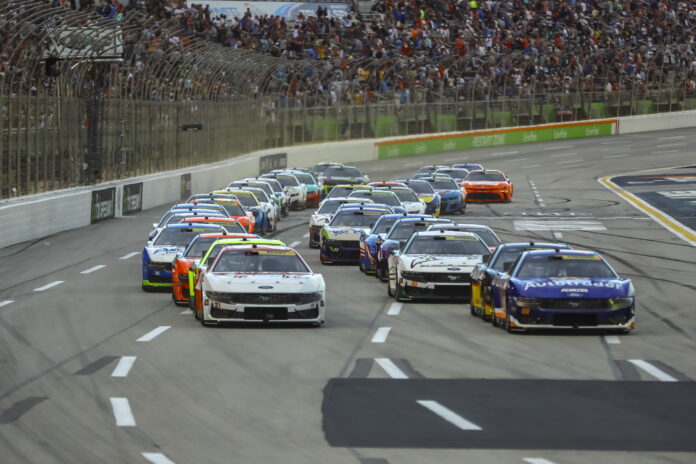
The NASCAR Cup Series (NCS) and the NASCAR O’Reilly Auto Parts Series (NOAPS) are at EchoPark Speedway in Hampton, GA this weekend. The O’Reilly Auto Parts Series Focused Health 250 is on Saturday, July 11 at 7:00 p.m. ET on the CW Network, and the Cup Series Quaker State 400 is on Sunday, July 12 at 7 p.m. ET on TNT, PRN and SiriusXM NASCAR Radio (Channel 90).

The NASCAR CRAFTSMAN Truck Series is at Lime Rock Park in Lakeville, CT for the LiUNA 150 on Saturday, July 11 at 1:00 p.m. ET on FS1.

Cup Series Notes for EchoPark Speedway:

This is the 10th race at the track since the drafting-style reconfiguration prior to the 2022 races.

Joey Logano is the 2025 pole winner with a lap of 178.960 mph (30.979 secs.), and Chase Elliott was the race winner on June 30, 2025. Logano (2015, 2023, 2025) also leads all active drivers in poles with three, followed by Michael McDowell (2), Ryan Blaney (1), Ricky Stenhouse Jr. (1), and Denny Hamlin (1).

The top-five active drivers in starts are Denny Hamlin (32), Joey Logano (25), Brad Keselowski (23), Michael McDowell (21), Ricky Stenhouse Jr. (19), and Austin Dillon (19).

Josh Berry leads all active drivers with an average starting position of 9.0 in six starts, followed by Kyle Larson (9.412), Ryan Blaney (10.5), Austin Cindric (12.1), and Joey Logano (13.08).

A total of 17 of the 124 NASCAR Cup Series races (13.7%) have been won from the pole or first starting position, making it the most proficient starting position in the field

O’Reilly Auto Parts Series Notes for EchoPark Speedway:

This is the 41st NASCAR O’Reilly Auto Parts Series race since the inaugural race in 1992 and the 10th race at Atlanta since the track reconfiguration in 2022.

There are four previous Atlanta winners in the field: Austin Hill (5), Sheldon Creed (1), Nick Sanchez (1), Justin Allgaier (1 – but prior to the 2022 reconfiguration). But the last two races were won by first-time winners (Nick Sanchez 06/2025 & Sheldon Creed 02/2026).

Justin Allgaier clinched a Chase spot at Pocono (415-point lead to the cutoff), and his lead over second is 195 points, greater than the gap from second to 12th.

Jesse Love can clinch with 43 points, Corey Day can clinch with 67 points, Sheldon Creed can clinch with 68 points, and
Austin Hill, Brandon Jones, and Carson Kvapil can only clinch with help.

The Weekend Schedule for EchoPark Speedway and Lime Rock Park:

FRIDAY, JULY 10 (Lime Rock Park)

1:00 PM – 2:00 PM: ARCA Practice
2:15 PM – 2:35 PM: ARCA Qualifying (IMPOUND) (Timed – 20 minutes)
3:40 PM AMS: Driver Introductions
4:00 PM AMS: ARCA 100 Race (68 Laps, 100.5 Miles)

SATURDAY, JULY 11

9:00 AM – 9:50 AM: NASCAR CRAFTSMAN Truck Series Practice (LiUNA 150 – Lime Rock Park)
10:05 AM – 11:00 AM: NASCAR CRAFTSMAN Truck Series Practice Qualifying (Lime Rock Park – IMPOUND)
11:00 AM – 12:30 PM: NASCAR O’Reilly Auto Parts Series Qualifying (IMPOUND)
12:40 PM: NASCAR CRAFTSMAN Truck Series Driver Introductions
1:00 PM: NASCAR CRAFTSMAN Truck Series LiUNA 150 Race at Lime Rock Park (Stages 30/60/100 Laps = 147.8 Miles)
4:30 PM – 6:00 PM: NASCAR Cup Series Qualifying (IMPOUND)
6:35 PM: NASCAR O’Reilly Auto Parts Series Driver Introductions
7:00 PM: NASCAR O’Reilly Auto Parts Series Race (Stages 45/90/163 Laps = 251.02 Miles)

SUNDAY, JULY 12

6:30 PM: NASCAR Cup Series Driver Introductions
7:00 PM: NASCAR Cup Series Race (Stages 60/160/260 Laps = 400.4 Miles)

Hendrick Motorsports Media Advance: Atlanta

NEXT RACE
Atlanta Motor Speedway
Sunday, July 12
1.54-Mile Quad-Oval
7 p.m. ET
Location: Hampton, Georgia
TV: Fox
Event: NASCAR Cup Series (Race 20 of 36)
RADIO: SiriusXM

5 KYLE LARSON
Age: 33 (July 31, 1992)
Hometown: Elk Grove, California
Last Race: 34th (Chicagoland)
Crew Chief: Cliff Daniels
Standings: 6th

No. 5 HENDRICKCARS.COM Chevrolet

  • Kyle Larson has led at least one lap in each of the last seven NASCAR Cup Series races, marking his second-longest such streak. His longest was a string of 15 races, spanning the 2021 and 2022 seasons.
  • The 33-year-old is just five laps led away from surpassing 11,000 for his career. He would become one of only 20 drivers in history to reach that milestone.
  • With eight top-five finishes this season, Larson ranks third, just two behind the series leaders with 10.
  • As the circuit shifts back to Atlanta Motor Speedway this weekend, Larson has recorded four top-five finishes on drafting tracks during his Cup Series career, with three coming in the last 10 races.

9 CHASE ELLIOTT
Age: 30 (Nov. 28, 1995)
Hometown: Dawsonville, Georgia
Last Race: 11th (Chicagoland)
Crew Chief: Alan Gustafson
Standings: 5th

No. 9 NAPA Auto Parts/CHOA Chevrolet

  • Chase Elliott heads to Atlanta Motor Speedway this weekend as the defending winner of the summer NASCAR Cup Series race at his home track. The Dawsonville, Georgia, native led 41 laps en route to victory last June. Atlanta is one of eight tracks where Elliott has multiple Cup wins. His first victory there came in July 2022.
  • The 30-year-old has the best average finish (9.38), the second-best average running position (10.96) and has led the fourth-most laps (177) on Atlanta’s current configuration.
  • Elliott is tied for the second-most wins (three) and has led the fifth-most laps (270) on drafting tracks in the Next Gen era. This season on drafting tracks, Elliott has the third-best average finish (6.3), has earned the third-most points (116) and is tied for the third-most stage points (24).
  • In the last seven drafting-track races, the 2020 Cup Series champion leads the series with four top-five finishes. His five top 10s are tied for the most.
  • This weekend marks the return of the Chase Elliott Foundation’s Desi9n to Drive program in conjunction with Children’s Healthcare of Atlanta and NAPA Auto Parts. Elliott’s baseball-themed paint scheme and uniform for the Atlanta race features designs by two CHOA patients. Fans can support the cause by entering an online sweepstakes with a grand prize of a VIP fly-away trip for two to a NASCAR Cup Series race to meet Elliott. For more information, visit www.desi9ntodrive.org.
  • In the third round of the NASCAR In-Season Challenge, No. 4 Elliott will go up against 12th-seeded Chase Briscoe. Elliott has finished ahead of Briscoe seven times at Atlanta since its reconfiguration.

24 WILLIAM BYRON
Age: 28 (Nov. 29, 1997)
Hometown: Charlotte, North Carolina
Last Race: 4th (Chicagoland)
Crew Chief: Rudy Fugle
Standings: 12th

No. 24 HP Chevrolet

  • In the NASCAR Cup Series’ return to Chicagoland Speedway, Byron qualified 10th but propelled himself to the front early on, leading 94 laps and winning both stage one and stage two. He also ran 213 of 267 laps in the top five. With a long green-flag run to the end, Byron crossed the finish line in fourth.
  • In 43 starts on drafting tracks, the Charlotte, North Carolina, native, has five wins (two at Atlanta Motor Speedway and three at Daytona International Speedway). Four of those came in the Next Gen era, most by any driver. That’s also tied with Hall of Famer Jimmie Johnson for second most by a Hendrick Motorsports driver behind vice chairman Jeff Gordon (12). His two Atlanta wins are tied for the third most in the organization’s history.
  • In nine races at the reconfigured Atlanta (since 2022), the 28-year-old driver has led the third-most laps (179), has the fourth-best average running position (12.8), and has two wins, tied for the most.
  • Advancing on to the next round of the NASCAR In-Season Challenge, No. 11 Byron finds himself up against third-seeded Ryan Blaney. With three races in 2026 on drafting tracks, Byron has bettered Blaney twice.

48 ALEX BOWMAN
Age: 33 (April 25, 1993)
Hometown: Tucson, Arizona
Last Race: 5th (Chicagoland)
Crew Chief: Blake Harris
Standings: 29th

No. 48 Ally Chevrolet

  • Last weekend at Chicagoland Speedway, Alex Bowman finished fifth, earning his third top-five finish of the 2026 NASCAR Cup Series season. Two of his four top-10 finishes of the year have come in the last two races.
  • Bowman has finished runner-up at a drafting track twice, finishing second to teammates in both instances (William Byron, 2024 DAYTONA 500 and Chase Elliott, 2019 Talladega Superspeedway). Those races account for his best finish on this style track. Since the start of 2025, Bowman is tied for third-most top-10 finishes (four) on drafting tracks.
  • In nine starts on the new configuration of Atlanta Motor Speedway, Bowman has earned two top fives and three top 10s with a best finish of third.
  • Bowman advanced into the third round of the NASCAR In-Season Bracket Challenge after finishing ahead of Austin Cindric at Chicagoland. This weekend at Atlanta, the 33-year-old will go head-to-head with No. 25 Todd Gilliand. Bowman, the tournament’s 32nd seed, has finished better than Gilliand in 17 races on drafting tracks since 2022.

17 COREY DAY
Age: 20 (November 28, 2005)
Hometown: Clovis, California
Last Race: 19th (Chicagoland)
Crew Chief: Adam Wall
Standings: 3rd

  • Through his three career NASCAR O’Reilly Series starts on drafting tracks, Corey Day has compiled an average finish of 10.7, his best at any track type.
  • The 20-year-old’s most recent start on a drafting track came in April at Talladega Superspeedway, where he earned his first NOAPS victory.
  • The Clovis, California, native returns to Atlanta Motor Speedway for his second NOAPS start on the 1.54-mile quad-oval. In his series debut at the venue in February, Day qualified ninth and earned a fourth-place finish.
  • At Atlanta, the No. 17 Hendrick Motorsports Chevy has recorded five top-five finishes, six top 10s and 275 laps led.

Hendrick Motorsports

2026All-TimeAtlanta
Races191,43675
Wins2322*18*
Poles0259*5
Top 5201,342*69*
Top 10322,292*108*
Laps Led1,04486,411*3,822*
Stage Wins91466

*Most
**Tied for most

  • The NASCAR Cup Series returns to Atlanta Motor Speedway this weekend for the second time in 2026. The organization is the all-time leader at the venue in wins (18), top fives (69), top 10s (108) and laps led (3,822).
  • Currently, Hendrick Motorsports is riding a streak of five straight races with at least one car in the top five, the longest active streak in the series.
  • The Hendrick Motorsports engine department enters the weekend with 574 victories across all three national NASCAR touring series, including 15 of 20 events in the NASCAR O’Reilly Series this season.
  • Hendrick Motorsports remains the Cup Series’ all-time standard bearer in wins (322), poles (259), top-five finishes (1,342), top 10s (2,292), laps led (86,411) and championships (15).

QUOTABLE
 
Kyle Larson, driver of the No. 5 Chevrolet, on returning to Atlanta Motor Speedway for the second time in 2026: “It’s always beneficial to return to a track for a second race in the same season because you can build on what you learned the first time around, especially having the new Chevy body. We’re optimistic about the speed we showed as an organization there in the spring and it would be good to win on a drafting-style track.”

Chase Elliott, driver of the No. 9 Chevrolet, on Desi9n to Drive returning this weekend at Atlanta Motor Speedway: “A lot of good, positive energy with the program again this year. And, obviously, last year going as well as it did, it’s kind of hard to top that. So, we’ll try our best to run it back.

“From my perspective, it seems like more and more people are learning about it. It just continues to make it more fun for me, right? It’s easier to talk about and as you bring awareness to everything that we’ve done with CHOA (Children’s Healthcare of Atlanta) and then obviously the NAPA partnership and what they’ve meant to the program itself, too. Super proud of the whole effort and I hope that as time goes, we can keep growing it and just keep making it better.”

William Byron, driver of the No. 24 Chevrolet, on a strong run at Chicagoland Speedway and what lies ahead at Atlanta: “While it was frustrating not to win, last weekend was definitely back on pace to where we should be. There’s still a little bit more left to gain though. Thankfully Atlanta (Motor Speedway) is the first track we’re returning to this year where we already have some notes with the new Chevy body so that’s also a plus. We’ve always run well at Atlanta, it’s just about surviving and being in a good place at the end.”

Alex Bowman, driver of the No. 48 Chevrolet, on Atlanta Motor Speedway: “Not crashing is probably top of the list for Atlanta; we had a tough day there in the spring. I feel like you have to pay a speedway [drafting track] tax; to get good finishes, you have to have bad finishes. We had two bad finishes to start the season, and then we finished third at Talladega [Superspeedway], so they still owe us a good finish. We’ve been getting things pointed in the right direction over the last two weeks and we’re ready to continue that this weekend.”

Corey Day, driver of the No. 17 Chevrolet, on returning to Atlanta Motor Speedway: “We had a strong run at Atlanta earlier this year, so I’m excited to get back there. It’s nice getting to some of these tracks for a second time because I know what to expect. I can spend less time figuring the place out and more time focusing on racing. I have a better feel for where I can push the No. 17 HENDRICKCARS.COM Chevrolet, and I think that’ll help our team this weekend.”

North Wilkesboro Speedway Delivers One-of-a-Kind NASCAR Experience for Fans

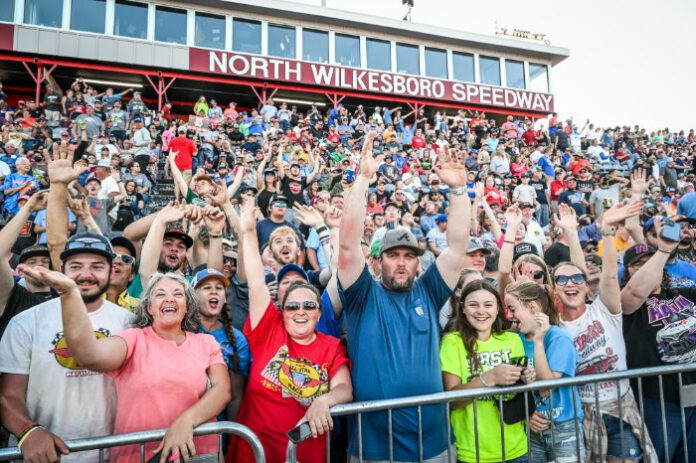
North Wilkesboro Speedway blends NASCAR's rich history with modern entertainment as fans prepare for the inaugural Window World 450 weekend. (HHP photo)
  • NASCAR Cup Series drivers explain why North Wilkesboro Speedway delivers one of the most authentic NASCAR experiences for lifelong fans and first-time visitors alike
  • Three-day Window World 450 weekend features NASCAR Cup Series, NASCAR CRAFTSMAN Truck Series and zMAX CARS Tour action, live music, Fan Zone entertainment and camping July 17-19
  • Tickets, parking and camping for the Window World 450 weekend are available at www.northwilkesborospeedway.com

NORTH WILKESBORO, N.C. (July 9, 2026) – For generations, North Wilkesboro Speedway has represented the heart of NASCAR. This summer, as the NASCAR Cup Series returns for the inaugural Window World 450—the first points-paying Cup Series race at the legendary short track in nearly three decades—the historic venue once again becomes the place where NASCAR’s past and present come together.

While longtime fans appreciate the speedway’s rich history, today’s drivers say North Wilkesboro offers something just as valuable for newcomers: an authentic NASCAR experience unlike any other. From the Sunday-night short-track atmosphere and passionate fanbase to three days of live entertainment and camping, the Window World 450 weekend captures everything that has made NASCAR a tradition for generations.

Here’s what NASCAR Cup Series drivers had to say about why North Wilkesboro remains one of the sport’s most special destinations:

THE HEART OF NASCAR

Chris Buescher, No. 17, RFK Racing

“It’s that hometown feel, right? That Saturday night short track vibe around it that says there’s going to be action on track the entire time. It’s in the heart of race country for so many of our fans that are within that radius of 6 or 7 racetracks. It’s just a fantastic place. Great racing, great history. The fans around there, the atmosphere, it’s exciting. There’s a lot of buzz that’s gone into that race ever since it’s been revived. It just makes it a very unique experience up there.”

Josh Berry, No. 21, Wood Brothers Racing

“I feel like for me, old school NASCAR, I just think of the 90s and the battles with Dale Earnhardt and Jeff Gordon and Rusty Wallace, and North Wilkesboro fits right in with that style of racing. The track just carries so much history with how many races have been there, and to see it go through the transformation of coming back to NASCAR and as nice as it is now, it’s just a really cool mix of both.”

Cole Custer, No. 41, Haas Factory Team

“You think about all the guys who really made our sport, made NASCAR. That’s literally what North Wilkesboro is. Being up in the mountains there and in North Carolina, that’s where our sport was born. So, I think there’s so much history there that really just speaks to where we came from.”

A SATURDAY NIGHT SHORT TRACK ATMOSPHERE

Alex Bowman, No. 48, Hendrick Motorsports

“I think Wilkesboro and just the vibe is there for the old school side of things. Our sport has changed so much from what I would consider old school NASCAR that the on-track stuff is going to look different, but the vibes are definitely there at Wilkesboro.”

Ryan Blaney, No. 12, Team Penske

“I just think of old school NASCAR as who did I like growing up from decades ago. The most original tracks that we go to like that is old school to me, where just your roots and stuff like that and people you admired or tracks that you loved and things that previous generations of your family enjoyed, that is what comes to mind when I think of old school, and Wilkesboro fits into that. They’ve done a good job of updating the facility, because it needed it, but they also didn’t lose the feel of what it used to be in the 90s. So they did a good job of blending it.”

Cody Ware, No. 51, Rick Ware Racing

“I think it’s given back to a lot of the old school fans that have been around since day one or since the beginning. I’ve driven by North Wilkesboro all the time. I grew up in Greensboro, so I make the drive to Boone all the time and see North Wilkesboro up on the right-hand side of the 421 highway. It’s really cool just to see how unchanged it is, kind of like taking a time machine back in time to experience what NASCAR was back in the 70s, 80s. To be able to do that, I think, is really cool, and again, to not only introduce some of the newer fan base to what NASCAR used to be like, but also kind of throwing back and celebrating for the people that do remember that stuff, and kind of going back to that era.”

A WEEKEND WORTH THE TRIP

Ricky Stenhouse Jr., No. 47, Hyak Motorsports

“North Wilkesboro, I think the history, and not being a points race in 30 years is something that you want to attend. Since we’ve been going back to North Wilkesboro, I look at everybody there is just enjoying the history of the racetrack and all the improvements that they’ve made throughout the facilities, around the campgrounds. It’s a great place for people to camp and just enjoy the history of the sport.”

Ryan Preece, No. 66, RFK Racing

“I like to tell this story. I’m from Connecticut, wasn’t born here in North Carolina, so North Wilkesboro, when they were bringing it back, I was like, ‘oh, that’s great’, until I actually was part of the first race back and that was when I realized how much that county, that that town is behind the racetrack and how much they’ve been missing it. So for me like I’ve spoke about, a lot of race car drivers thrive off energy of the fans, and to see that entire place packed with fans that just want to see racing and love that old school vibe of racers that are going to beat and bang or really just, give it all they have, that’s important and that’s what North Wilkesboro has.”

TICKETS:
Window World 450 tickets, camping and race-day upgrades – including Pre-Race Track Passes – can be purchased online at www.northwilkesborospeedway.com. Fans can also purchase tickets directly at Wilkes County IGA Fairvalue Marketplace or Raymer Oil locations with no online taxes or fees.

MORE INFO:

Race fans can connect with North Wilkesboro Speedway and get the latest news regarding the July 17-19 race weekend by following on X and Instagram or by becoming a Facebook fan.