Home Blog Page 234

LEGACY MOTOR CLUB: ATLANTA RACE PREVIEW

LEGACY MOTOR CLUB:
ATLANTA PRE-RACE ADVANCE
EVENT: Atlanta 400
DATE: July 12, 2026
Race: NASCAR Cup Series 20 of 36
TRACK: Atlanta Motor Speedway | 1.54-Mile Oval

JOHN HUNTER NEMECHEK
NO. 42 PYE-BARKER FIRE & SAFETY TOYOTA CAMRY XSE
JHN AT ATLANTA: John Hunter Nemechek has six NASCAR Cup Series starts at Atlanta, with his highest finish at the track of 10th coming in February 2025. In the NASCAR O’Reilly Auto Parts Series, Nemechek has made five starts where he earned two top-fives and three top-10s with a victory in July 2023. In the NASCAR Craftsman Truck Series, he has six starts, where he found victory lane in February 2016 and scored two third-place finishes in March 2021 and March 2023.

DOMINANT IN ATL: John Hunter Nemechek has found success at Atlanta Motor Speedway across multiple NASCAR national series. He took home the checkered flag in the NASCAR O’Reilly Auto Parts Series race in July 2023, leading three laps en route to a 0.245 second margin of victory over Daniel Hemric. Nemechek also visited victory lane in the NASCAR Craftsman Truck Series at Atlanta in February 2016, leading eight laps before besting Cameron Hayley by 0.305 seconds.

T-MACK AT ATLANTA: Sunday’s race will be crew chief Travis Mack’s 12th NASCAR Cup Series race at Atlanta. His best finish of second came in July 2023 when his driver Daniel Suarez finished just behind William Byron under caution. He has an additional three top-10s in the Cup Series at Atlanta with his most recent being a 10th-place finish in February 2025 with Nemechek. He has an additional two starts as crew chief at Atlanta in the NASCAR O’Reilly Auto Parts Series with Michael Annett, finishing 12th and 11th respectively in February 2019 and June 2020.

JOHN HUNTER NEMECHEK QUOTE:
“This is one that I feel like we’ve had circled on our calendars. It’s a mile-and-a-half that races like a superspeedway. Can you ask for anything else? I’m really excited to get on track this weekend and see what we can do in our No. 42 Pye-Barker Fire & Safety Toyota Camry XSE.”

TRAVIS MACK QUOTE:
“Atlanta is going to be good. John Hunter has had success there in the past, and we’ve shown speed at this style of track. If we can execute and avoid mistakes, I feel like we’ll be up front and have a really solid day. ”

ERIK JONES
NO. 43 DOLLAR TREE TOYOTA CAMRY XSE
JONES AT ATLANTA: Sunday’s race at Atlanta marks Erik Jones’ 16th NASCAR Cup Series race at the 1.54-mile track where he owns two top-fives and four top-10s. His best finish of fourth came in July 2022 after the track’s reconfiguration. In the series’ visit to the track last June, Jones earned an impressive fifth-place result after starting 26th. He owns three additional starts at Atlanta outside of the NASCAR Cup Series – two in the NASCAR O’Reilly Auto Parts Series and one in the NASCAR Craftsman Truck Series. His best O’Reilly Auto Parts Series finish of third came in February 2016 after starting second. In his one and only Truck Series start in February 2015, he ended up with a seventh-place finish after starting second and leading 37 laps.

ALEXANDER AT ATLANTA: Crew chief Justin Alexander owns 10 NASCAR Cup Series starts at Atlanta in his successful career. On the newly reconfigured 1.54-mile track, he has been on top of the box for three Cup Series races – both 2022 races and September 2024. He earned a best finish of sixth at Atlanta in March 2021 with Austin Dillon after the duo started 13th. Alexander has one start at Atlanta in the NASCAR O’Reilly Auto Parts Series from February 2017 with Austin Dillon where the duo finished eighth.

ERIK JONES QUOTE:
“I’m excited for Atlanta. Another oval where we’ve run well at in the past. Obviously, it’s kind of become a wild card race where it’s not exactly a superspeedway, but also not an intermediate. It’ll be interesting to see how the track is aging and how these cars will run there this time around. We’re back in the Chase after Chicagoland and with this next stretch of races, the goal is to protect that spot and continue to move up with some strong runs. This could be another shot for us to win, for sure, but it’s also just a great opportunity to have a strong run. We’ll hopefully be there when it matters at the end.”

JUSTIN ALEXANDER QUOTE:
“Atlanta in the summer is always an entertaining race. It will be a hot, slick track and although we will pack racing like Daytona, car handling will be super important. The car setups we took to this track in February won’t work in July. Erik has had some good runs there, and we plan to continue that this weekend. We have moved our way up into Chase contention in the points, and this weekend we will be trying to maximize our points and continue to build a gap to the cutoff line. Our plan is to go execute all night and put ourselves in position at the end to win.”

CLUB MINUTES:
JJ WINS AT ATLANTA: LEGACY MOTOR CLUB owner and seven-time NASCAR Cup Series Champion Jimmie Johnson owns 29 career Cup Series starts on the old configuration of the track during his career from 2001 to 2020. He was successful in finding victory lane five times at Atlanta (October 2004, March 2007, October 2007, March 2015, and February 2016). He led 586 laps in his career and earned 14 top-fives and 17 top-10s.

KENSETH AT ATLANTA: 2003 NASCAR Cup Series Champion and LEGACY MOTOR CLUB competition advisor Matt Kenseth also has a solid record at Atlanta on the old configuration. In 30 Cup Series starts, he earned 11 top-fives, 17 top-10s and led 363 laps. His best finish of second came in August 2014 when he finished just .574 seconds behind race winner Kasey Kahne.

“THE KING” VICTORIOUS AT ATLANTA: LEGACY MOTOR CLUB Ambassador and seven-time NASCAR Cup Series Champion Richard Petty is a six-time winner at Atlanta in his career. In 65 total Cup Series starts, Petty has scored 22 top-fives, 33 top-10s, and led 1,827 laps at the old 1.5-mile oval. His victories at the track came in August 1966, August 1970, August 1971, July 1974, March 1975, and March 1977.

THE KING’S FINAL LAP: On Nov. 15, 1992, Richard Petty famously completed his final NASCAR Cup Series race at Atlanta Motor Speedway. It marked the end of his career and the beginning of Jeff Gordon’s who made his Cup Series debut in the same race. The race drew a record 160,000 spectators to celebrate Petty’s historic career in the sport.

SOCIAL SPOTLIGHT:

CLUB APPEARANCES:
Nemechek will visit the Dollar Tree display in the fan zone on Saturday, July 11 at 2 p.m. local time, followed by a trip to the trackside merchandise hauler at 2:30 p.m. local time for an autograph session.

Erik Jones will make a pit stop at the Dollar Tree display in the fan zone on Sunday, July 12 at 2:45 p.m. local time to sign autographs for fans.

TUNE IN:
Fans can tune in to watch the Atlanta 400 at Atlanta Motor Speedway on Sunday, July 12 at 7 p.m. EDT on TNT Sports, MAX, PRN, and SiriusXM NASCAR Radio (Channel 90).

LEGACY MOTOR CLUB (LEGACY MC) is a premier auto racing organization owned by seven-time NASCAR Cup Series champion and 2024 NASCAR Hall of Fame inductee, Jimmie Johnson and Knighthead Capital Management, LLC. Drawing from a rich tradition of success, LEGACY MC is dedicated to pushing the boundaries of motorsport and setting new standards of excellence. The CLUB competes under the Toyota Racing banner in the NASCAR Cup Series with the No. 43 Toyota Camry XSE piloted by Erik Jones and the No. 42 Toyota Camry XSE driven by John Hunter Nemechek. Johnson also races on a limited basis in the No. 84 Toyota Camry XSE. With NASCAR legend and Hall of Famer Richard Petty, “The King”, serving as CLUB Ambassador, LEGACY MC blends timeless racing traditions with a new forward-thinking vision. As an inclusive community for motorsport enthusiasts, LEGACY MC honors both its storied past and the promising future of its members, always striving for victory and championship glory at the pinnacle of NASCAR competition.
Jordan Anderson Racing Bommarito Autosport NASCAR O’Reilly Auto Parts Series Race Preview – Atlanta

Jordan Anderson Racing Bommarito Autosport
NASCAR O’Reilly Auto Parts Series Race Overview-
Atlanta Motor Speedway; July 9, 2026

Track: Atlanta Motor Speedway
Race: Focused Health 250
Date/Broadcast: Saturday; July 11, 2026 7:00 P.M. ET
TV: CW Network
Radio: Performance Racing Network (PRN) – Check Local Listings for affiliate, and SiriusXM NASCAR Channel 90
Social Media: Jordan Anderson Racing Bommarito AutoSport; Facebook, Instagram, and X

Racing in the Peach State – Jordan Anderson Racing Bommarito Autosport

Ready to Race at Atlanta Motor Speedway

Hampton, GA. (July 9, 2026) – Jordan Anderson Racing Bommarito Autosport returns to Hampton, Georgia for the second time in 2026 to race at Atlanta Motor Speedway.

The mile and a half superspeedway features a worn out surface and tight corners, which will make handling and aerodynamics essential for maintaining the draft and retaining track position.

The team will field three Chevrolets this weekend: Jeb Burton in the No. 27 AJ Transport Chevrolet, Blaine Perkins in the No. 31 Werner Enterprises Chevrolet, and Jordan Anderson in the No. 32 EasyCare Chevrolet.

Superspeedways have proved fruitful for Jordan Anderson Racing Bommarito Autosport in the past, with the team securing one win, eight top five finishes, and 20 top-10 finishes in its six full time NASCAR O’Reilly Auto Parts Series seasons.

Jeb Burton returns to Atlanta Motor Speedway set to make his second start at the track in 2026. The Halifax, Virginia native has seven top five finishes, 10 top-10 finishes, and two wins on superspeedways in his NASCAR O’Reilly Auto Parts Series career. He looks to claim a third victory when the field takes the green flag on Saturday night.

“I’m very excited to head to Atlanta this week, a place where where we have always run really good, so hopefully we can have a solid showing.” said Burton. “We have got AJ Transport back on the car, and we’re looking forward to this weekend. Hopefully we can have a good run, because last time I was running fifth with two laps to go and had a tire go down. Hopefully we can go there and have a good shot once again.”

Blaine Perkins arrives in Hampton, Georgia with high hopes as three of his six top-10 finishes in the series have come on superspeedway tracks. The driver from Bakersfield, CA will have longtime partner, Werner Enterprises, back on his Chevrolet for the tenth time in 2026, and will be striving to deliver a strong performance.

“I’m excited to get to Atlanta this week. I have Werner back on the car. I know it’s a really big race for them, and I feel like we’ve had a lot of speed at Atlanta the past few times, (with) just no luck, so we’re looking for that to turn around. Hopefully we can put a full race together and have a good finish.”

Jordan Anderson returns to the NASCAR O’Reilly Auto Parts Series (NOAPS) set to make his second start of the 2026 season this weekend at Atlanta Motor Speedway. The team co-owner has a solid record on superspeedway style tracks with five top five finishes in his NOAPS career, and hopes he can add a sixth to his resume.

“Really looking forward to Atlanta this weekend.” said Anderson. “When you don’t get to race full time it’s always a challenge to make the most of every start and opportunity. After our top five finish at Daytona earlier this year and Ross almost winning the spring race there, the expectations are high. It’s going to be a bit of a fight with no practice and going straight to qualifying, so the first stage will be spent getting back adjusted to being behind the wheel. Our entire organization has been working extremely hard these past couple of weeks, so I feel like our balance will be very good there with this style of track. Grateful to EasyCare for their continued support of this journey as 2026 marks our sixth year of partnership. It takes a village and every single partner and team member of ours make it happen every week!”
About Jordan Anderson Racing Bommarito Autosport

Jordan Anderson Racing Bommarito Autosport was built from the ground up, fueled by passion, persistence, and a bold vision for what an independent NASCAR team could become. Founded by driver and owner Jordan Anderson, the organization has grown from a grassroots operation hauling a single truck across the country into a competitive multi-car NASCAR O’Reilly Auto Parts Series team through a pivotal partnership with St. Louis automotive dealer John Bommarito. Along the way, the team has earned wins, poles, and a reputation for grit, growth, and opportunity within the NASCAR garage. Today, Jordan Anderson Racing Bommarito Autosport is investing in talent, innovation, and culture to challenge the status quo and build a new kind of racing legacy.

Get your Jordan Anderson Racing Bommarito AutoSport merchandise at the all new official team store! Visit jordanandersonracing.com to place your order today!

DEECELL AFTER DARK LOW QUALIFIER BONUS SET FOR CAN’T-MISS NIGHT SESSION IN SONOMA

SONOMA, Calif. (July 9, 2026) – Regarded as one of the most spectacular night sessions on the NHRA Mission Foods Drag Racing Series tour, the can’t-miss night session on Friday, July 17 at Sonoma Raceway will have added incentive with the Deecell Power Systems “After Dark Low Qualifier” bonus.

The bonus money will go to the low qualifiers in Top Fuel, Funny Car and Pro Stock as part of the DENSO NHRA Sonoma Nationals presented by PowerEdge, enhancing an already epic weekend.

Pro Stock opens the Deecell “After Dark Low Qualifier” festivities Friday at 6:55 p.m. PT, with the 12,000-horsepower, 340-mph nitro categories set to put on a show under the lights at 8:10 p.m. The top qualifier of that session will earn bonus money in each class, with the low qualifier in Top Fuel and Funny Car earning $4,000 each. The Pro Stock low qualifier will get $2,500, while the best Pro Stock Motorcycle run during a final test pass in preparation for Saturday’s GETTRX All-Star Callout will get $1,500.

Combined, it creates an enticing element to what is always an ultimate throwdown session and an incredible atmosphere in Sonoma.

A year ago, Brittany Force dazzled the huge crowd with a record speed run at the time, going 3.645-seconds at 343.16 mph. With a festive scene and an electric atmosphere on hand – as well as the added bonus – there could be something special in the works for Friday in Sonoma.

“One of the best parts of last season was seeing how much excitement the After Dark Low Qualifier bonus created on Friday night in Seattle. The response from the racers and fans made bringing it to Sonoma an easy decision. Sonoma is one of the premier stops on the NHRA tour and Friday night under the lights is always one of the highlights of the weekend. It’s pretty exciting to know we play a small part in adding to the overall experience for fans and giving the racers one more thing to compete for,” said Andrew Moeck, founder of Deecell Power Systems.

The DENSO NHRA Sonoma Nationals presented by PowerEdge will also feature a full weekend of action in Top Fuel, Funny Car and Pro Stock – as well as the GETTRX Pro Stock Motorcycle Callout. Following Friday, fans get to see two rounds of qualifying on Saturday, along with the Mission #2Fast2Tasty Challenge, and eliminations on Sunday.

It is the 11th of 20 events during NHRA’s 75th anniversary season, as the weekend will also feature the following highlights:

  • An appearance from legendary NHRA Top Fuel and Funny Car world champion Gary Scelzi. Scelzi is one of only three drivers in NHRA history to claim world titles in both Top Fuel (1997, 1998, 2000) and Funny Car (2005). NHRA will honor Scelzi’s accomplishments at his home track in Sonoma.
  • Brittany Force appears on the special commemorative ticket for the event following her incredible 343.16-mph run from a season ago.
  • A new-look Nitro Mall, special displays and more.

The 2025 DENSO NHRA Sonoma Nationals presented by PowerEdge featured wins by Doug Kalitta (Top Fuel), Austin Prock (Funny Car) and Greg Stanfield (Pro Stock). This year’s race will once again be broadcast on FS1, including eliminations at 10 p.m. ET on Sunday, July 19.

Reigning Top Fuel world champion Kalitta is the winningest driver in class history at Sonoma Raceway with six wins. His teammate Shawn Langdon has dominated this season and currently leads the points. Others to watch will be four-time champ Antron Brown, Leah Pruett, Tony Stewart, Josh Hart and Norwalk winner Maddi Gordon.

Two-time reigning Funny Car champion Austin Prock won for the first time in Sonoma last season, defeating 2025 Rookie of the Year Spencer Hyde. Prock currently has one win on the season from Maryland while three-time world champ Ron Capps leads the points, with three wins so far in 2026.

Last year’s Pro Stock final was a family affair, as Greg Stanfield defeated his son, Aaron, in the final round. A. Stanfield has two wins on the year in 2026, while reigning world champion Dallas Glenn currently leads the points with his KB Titan Racing teammate and six-time world champion Greg Anderson in second.

The event also features thrilling competition in the NHRA Lucas Oil Drag Racing Series and the popular Top the Cops exhibition race.

Sonoma race fans can enjoy the special pre-race ceremonies that introduce and celebrate each of the drivers racing for the prestigious Wally on Sunday and the SealMaster Track Walk. After racing finishes on Sunday, fans are invited to congratulate and celebrate with event winners. Fans always get an exclusive pit pass to the most powerful and sensory-filled motorsports attraction on the planet and can visit Manufacturers Midway, featuring displays, merchandise, food and fun.

NHRA Mission Foods Drag Racing Series qualifying will feature two rounds at 4:55 and 6:55 p.m. PT on Friday, July 17, and the final two rounds on Saturday, July 18 at 11:45 a.m. and 2:30 p.m. Final eliminations are scheduled for 11 a.m. PT on Sunday, July 19.

The first round of the GETTRX Pro Stock Motorcycle All-Star Callout takes place at 11:15 a.m. PT on Saturday, with the semifinals at 1:30 p.m. and the finals at 3:40 p.m. Television coverage of the Callout begins at 9 p.m. ET on Saturday on FS1.

Television coverage of the event includes the Mission #2Fast2Tasty Challenge on Saturday at 8 p.m. ET on FS1. Elimination coverage begins at 10 p.m. ET on FS1 on Sunday.

To purchase tickets to the Denso NHRA Sonoma Nationals, fans can visit www.sonomaraceway.com or call 800-870-7223. For more information about NHRA, visit www.NHRA.com.


About Deecell Power Systems

Deecell Power Systems was founded by NHRA drag racer Andrew Moeck after years of relying on noisy, fuel-hungry generators at the track and on the road. Drawing from firsthand racing experience, Deecell developed its Solar Power Units (SPUs) to provide reliable, continuous 120V always-on AC power while reducing generator run time, fuel consumption, noise, and emissions.

Today, Deecell systems power race haulers, sleeper cabs, fleet trucks, liftgates, and mobile operations across North America, helping customers keep critical equipment running without relying solely on engine idle or generators. Learn more at www.deecell.com.

About NHRA

NHRA is the primary sanctioning body for the sport of drag racing in the United States. NHRA presents 20 national events featuring the NHRA Mission Foods Drag Racing Series and NHRA Lucas Oil Drag Racing Series, as well as the JBS Equipment NHRA Pro Mod Drag Racing Series presented by Elite Motorsports and NHRA Flexjet Factory Stock Showdown™ at select national events. NHRA provides competition opportunities for drivers of all levels in the NHRA Summit Racing Series and NHRA Street Legal™. NHRA also offers the NHRA Jr. Street® program for teens and the Summit Racing Jr. Drag Racing League® for youth ages 5 to 17. With more than 100 Member Tracks, NHRA allows racers to compete at a variety of locations nationally and internationally. NHRA’s Youth and Education Services® (YES) Program reaches over 30,000 students annually to ignite their interest in automotive and racing related careers. NHRA’s streaming service, NHRA.tv®, allows fans to view all NHRA national events as well as exclusive features of the sport. In addition, NHRA owns and operates three racing facilities: Gainesville Raceway in Florida; Lucas Oil Indianapolis Raceway Park; and In-N-Out Burger Pomona Dragstrip in Southern California. For more information, log on to www.NHRA.com, or visit the official NHRA pages on Facebook, Instagram, Twitter, and YouTube.

BOBCAT TAKES THE GREEN FLAG AS A PRESENTING SPONSOR OF THE NU WAY 225 SAUCED BY BLUES HOG NASCAR O’REILLY AUTO PARTS SERIES RACE

The NASCAR O’Reilly Auto Parts Series Chase race on Sept. 12 will be the Nu Way 225 Powered by Bobcat and Sauced by Blues Hog.

MADISON, Ill. (July 9, 2026) – World Wide Technology Raceway today announced

Bobcat of St. Louis, part of the Gateway Dealer Network (GDN), will serve as a presenting sponsor of the NASCAR O’Reilly Auto Parts Series race on Sept. 12 at World Wide Technology Raceway.

The race will be known as the Nu Way 225 Powered by Bobcat and Sauced by Blues Hog.

Bobcat of St. Louis operates three Bobcat dealership locations serving the greater St. Louis region plus dozens more serving equipment operators across the United States and is proud to support an event that brings together customers, contractors and racing fans from across the Midwest.

The nationally televised event will feature 180 laps and 225 miles of NASCAR O’Reilly Auto Parts Series Chase racing, bringing together some of the sport’s top drivers and thousands of passionate fans for one of the region’s premier motorsports weekends.

For GDN and Bobcat of St. Louis, this event is about creating memorable experiences for customers and celebrating the people who build, maintain and power America’s communities.

“NASCAR fans share many of the same values that define the Bobcat brand – hard work, performance, reliability and pride in getting the job done right,” said John Hopper, president of Gateway Dealer Network.

“We’re excited to host customers, spend time with them away from the jobsite and be part of an event that showcases the excitement, performance and competitive spirit that both NASCAR and Bobcat represent.”

Attendees will have opportunities to enjoy the race, connect with Bobcat representatives, and participate in special race-weekend activities.

Bobcat equipment will also be on display at the event – giving fans a chance to get an up-close look at the machines that help contractors, landscapers, municipalities and agricultural producers tackle tough jobs every day.

“We’re looking forward to welcoming customers from throughout the region and sharing an unforgettable race day with them,” said Chad Cox, GDN’s Missouri Region Sales Manager. “Relationships are at the heart of our business. This event allows us to thank our customers for their trust and introduce new customers to the Bobcat family in a fun and exciting environment.”

The Nu Way 225 Powered by Bobcat and Sauced by Blues Hog sponsorship is supported through a collaborative effort between Gateway Dealer Network and Bobcat Company. It reflects a shared commitment to supporting the contractors, operators and business owners who rely on Bobcat equipment every day.

“As part of our commitment to our region, we continue to build strong partnerships with local leaders to bring new events to World Wide Technology Raceway and further establish the facility as a national destination for fans,” said Declan O’Neill, World Wide Technology Raceway vice president of business development. “Gateway Dealer Network’s Bobcat of St. Louis and Bobcat are well-known names throughout the region, and we’re thrilled to welcome them as partners.”

Race weekend activities will take place throughout the three-day event at World Wide Technology Raceway, featuring the Nu Way 225 Powered by Bobcat and Sauced by Blues Hog on Saturday evening. The race will be broadcast nationally, extending the visibility of the Bobcat brand to NASCAR fans across the country.

“At GDN, we’re passionate about helping our customers succeed,” Hopper said. “Whether it’s on a construction site, on a farm, or at the racetrack, this event is about celebrating the people who keep America moving. We can’t wait to see the green flag drop.”

To purchase tickets to the NASCAR weekend at World Wide Technology Raceway, visit wwtraceway.com or call the ticket office at (618) 215-8888 ext. 1.

About Gateway Dealer Network LLC

Gateway Dealer Network (GDN) is an authorized Bobcat dealer group serving customers across the United States through a network of locally operated branches. GDN provides equipment sales, rentals, parts and service to support customers in construction, landscaping, agriculture, grounds maintenance and related industries. The company is committed to helping customers maximize productivity with industry-leading equipment and responsive local support.

About World Wide Technology Raceway

World Wide Technology Raceway (WWTR) is the home of NASCAR, INDYCAR and NHRA racing in St. Louis’ Metro East region. Located just five minutes from downtown St. Louis and covering 700 acres, WWTR is the largest outdoor entertainment facility in the area. WWTR’s facilities include a 1.25-mile superspeedway; 1/4-mile drag strip; 2.0-mile road course; the Gateway Kartplex state-of-the-art karting facility; and the adjacent Gateway National Golf Links. WWTR and Owner & CEO Curtis Francois have been recognized with several awards, including: 2023 St. Louis Sports Hall of Fame induction; 2023 Innovation in Philanthropy Award by the St. Louis Business Journal; 2022 Explore St. Louis Hospitality Hero Recognition; 2022 Best in Show and Best Event & Festival from the Illinois Governor’s Conference on Tourism; 2021 Comcast Community Champion of the Year; 2021 Jack Buck Award; 2020 NASCAR Drive for Diversity Track Award; 2018 Innovator Award from the St. Louis Convention & Visitors Commission; 2017 Outstanding Facility of the Year Award from the Race Track Business Conference; and the 2017 Spirit of St. Louis Award from the St. Louis Attractions Association. Our mission: We are committed to making a difference in our community, while providing first-class entertainment and memories that last a lifetime.

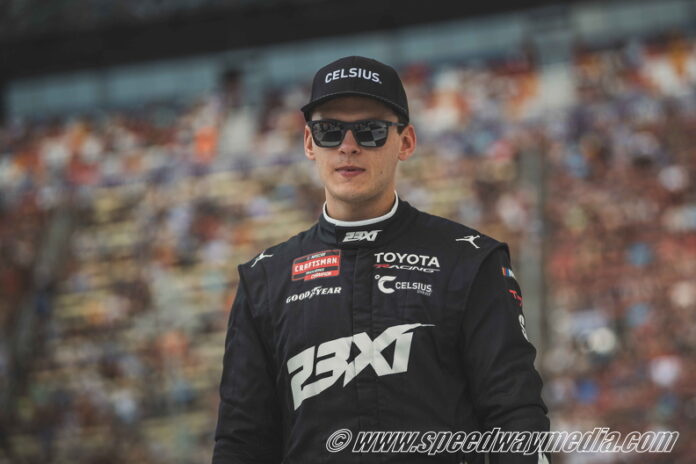
Corey Heim characterizes “up and down” 2026 season ahead of 2027

Photo by Patrick Sue-Chan for SpeedwayMedia.com.

With the 2026 NASCAR Cup Series season halfway complete, Corey Heim is also halfway complete towards his select starts in NASCAR’s premier series this season. It comes as he is seven months away from returning to the series as a full-time competitor for 23XI Racing, a team that has been competitive and is primed for a championship run since this year’s start.

Flashback to February, Heim, the reigning Craftsman Truck Series champion and a development competitor for 23XI Racing from Marietta, Georgia, was revealed to compete in 12 of 36 Cup events this season. Prior to this season, he had made four Cup starts with 23XI in 2025 and a trio of starts between 23XI and Legacy Motor Club in 2024. His best on-track results between the latter two years were a sixth-place run at Bristol Motor Speedway, a 0.533-mile short track circuit, in September 2025.

Despite not having a full-time ride within NASCAR’s top-three national touring series secured for this season, Heim’s 2026 Cup starts featured a mix of prestigious crown-jewel events, including this year’s 68th running of the Daytona 500, and 1.5-mile circuits, as all indications signified a futuristic promotion to compete as a full-time Cup competitor began to brew bigger than before.

Through seven of his 12 Cup starts this season, Heim, who is piloting the No. 67 Toyota Camry XSE entry and has veteran Bootie Barker calling the shots as a crew chief, has endured an up-and-down battle on the track while competing against NASCAR’s elite in the sport’s premier series. His current average-starting result is 24.9, and his average-finishing result is 18.3, the latter of which is due to finishing outside the top-20 mark a trio of times.

Amid the challenges, Heim achieved breakthrough moments, including leading 8 laps while contending up front in the latter stages of the Daytona 500 and leading 69 laps at Texas Motor Speedway. Perhaps the Georgian’s biggest feat was scoring his first Cup career victory during the series’ inaugural event at San Diego’s Naval Base Coronado after outdueling teammate Tyler Reddick in the closing laps. Against the odds, even one that Heim himself did not foresee, the San Diego victory exceeded the expectations 23XI Racing co-owners Michael Jordan and Denny Hamlin placed on Heim as the latter continues to learn, grow, and develop with each experience he gains in Cup Series competition.

“Prior to [the win at San Diego], I think [this year]’s been pretty up and down,” Heim said. “I had a couple of good runs along the way and had some potential to run well. I was pretty down on myself after [Nashville Superspeedway] and wanted to rebound at San Diego to prove that we are able to run upfront, in the top 10 and whatnot. Obviously, I hit the one out of the park with the win there. It’s just so hard to compare the road courses to intermediates, so…I need to do some work on those. Good year so far for us, but I definitely want a little bit more out of myself for the 1.5-miles.”

This past weekend at Chicagoland Speedway, which is another 1.5-mile circuit, Heim accomplished another feat at a track he had never competed at in prior years by achieving a strong ninth-place result, where he finished a single spot ahead of teammate Riley Herbst, whom Heim is replacing at 23XI in 2027, and three spots behind another teammate, Bubba Wallace. Heim’s ninth-place result marks his second top-10 result through seven Cup starts and his third overall in the series.

Heim’s next Cup start for this season is the 2.5-mile oval circuit of Indianapolis Motor Speedway for his first campaign in the crown-jewel Brickyard 400 on July 26. His remaining Cup starts include the 2026 Cup regular-season finale at Daytona International Speedway on August 29, the crown-jewel Southern 500 at Darlington Raceway on September 6 during Labor Day weekend, the Bank of America 400 at Charlotte Motor Speedway on October 11, and the season-finale event at Homestead-Miami Speedway on November 8.

As Heim strives to continue to utilize and build on the notes garnered through his select Cup starts for the rest of his starts this season, he also has his sights on 2027 as he prepares for his first full-time campaign in the Cup Series in 2027, with the announcement of his promotion occurring at Nashville Superspeedway in mid-May. Amid the challenges of embracing the role of being a full-time Cup competitor for the first time ever, Heim embraces it as he strives to improve his racing craft to be competitive for next season and the years ahead.

“It’s gonna be a grind, but being able to be in the [Cup] seat on a weekly basis is a big advantage,” Heim said. “Just getting that muscle memory better and better on a weekly basis. Kind of better than being out of the car a couple of weeks at a time and trying to improve off of that, for sure.”

Tune in for Corey Heim’s next NASCAR Cup Series scheduled start at Indianapolis Motor Speedway for the Brickyard 400 on July 26. The event’s broadcast is scheduled to begin at 2 p.m. ET on TNT Sports, the Indianapolis Motor Speedway Radio Network, SiriusXM, and HBO MAX.

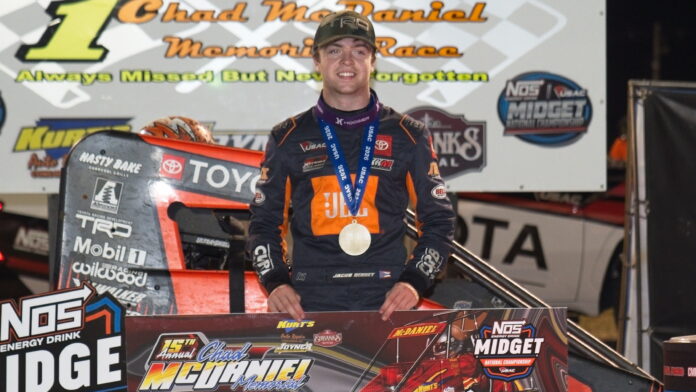
Jacob Denney Claims USAC National Midget Feature at Mitchell County Fairgrounds Raceway

Photo Courtesy of Ray Hague Photo

The USAC National Midgets returned to Mitchell County Fairgrounds Raceway on a hot Wednesday night for the 15th annual Chad McDaniel Memorial, featuring a thrilling 30-lap feature among 24 cars.

Jacob Denney, who last won earlier this year in the National Midget Series Championship in the second race at Kokomo Speedway, was seeking another in-season victory. He put on a trio of good consecutive finishes from Paragon Speedway through Bloomington Speedway. However, Denney had a great car in Beloit, Kansas, and won after starting from the third position and maintaining his composure amid numerous late-race yellows.

“I didn’t feel very good anywhere,” Denney said to Flo Racing on the frontstretch. “I started to do some different stuff, and I could make more speed down the straightaways. I felt good everywhere, but just not how I felt to run away (with the lead). I kept changing some stuff up and changing my restarts up. Just keep telling yourself to shut up under caution because you start getting in your head. Just want to thank my team. They have been busting their tails, and I’ve been complaining a lot, and I haven’t been the best, and we had some bad luck.

“They stuck to it, and they give me a great car every night. I just can’t thank them guys enough as well as my sponsors and everyone who makes this possible.”

Entering the event, there were 30 cars for 24 spots with four heat races, including a semi-feature. The heat races took the top five, while the semi-feature saw four cars transferring to the feature.

Prior to the heat races, there was a two-lap qualifying portion. One incident to note: Caiden Warren flipped up and over in the middle of Turns 1 and 2. As qualifying concluded, last year’s event winner, Drake Edwards set the fastest lap. This is the second time this week he did so after setting the pace Tuesday night in Missouri at the Sweet Springs Motorsports Complex. His lap time was 12.238 seconds.

In the first heat race, Kale Drake moved up four positions and took the heat win after using the bottom lane. After the eight-lap heat race was done, it was Drake who held on to get the victory. A fierce battle for the last transfer spot took place between Adam Trimble and Drew Sherman. However, it was Trimble who got the better advantage. Moving on were Drake, Bradley Cox, Jakeb Boxell, Edwards, and Trimble, the top five.

Ethan Mitchell started outside pole in the second heat and used the momentum to his advantage by taking the high side. Mitchell was greeted by a short battle with Mak Leopard in the waning laps, but Mitchell went on to take the win. The remaining transfer spots were Leopard, Cannon McIntosh, Kyle Jones, and Kevin Thomas Jr.

Justin Grant won the third heat race after starting in the third position on the inside lane right behind Trey Zorn, who started on the pole. Grant went straight to the top once the green flag waved and then made it three wide in Turns 3 and 4 between Zorn and Gaige Weldon. Taking the top five were Grant, Hayden Reinbold, Cale Coons, Brecken Reese, and Zorn.

For the fourth and final heat race, Gavin Miller made up four starts after starting fourth. Miller made the pass off the exit of Turns 1 and 2 using his momentum to help him win the heat. As the eight-lap heat was done, Miller, Denney, Garrett Benson, Sherrell, and Colton Robinson were the final five transfers for the heat races.

As for everyone else, their final hopes to make the main event would see a 12-lap semi-feature. Sherman and Weldon started on the front row. Sherman led the majority of the semi-feature, including the white flag lap. However, Brandon Carr worked the bottom lane and was wheel-to-wheel with the leader, Sherman. They nearly touched entering Turn 3. Following the near touch, Carr gathered it up and went on to claim the top spot in a thrilling 12-lap race.

Carr, Sherman, Weldon, and Zack Merritt were the final four transfers.

As track prep concluded, it was time for the 30-lap main event. McIntosh and Drake were your front row starters, followed by Denney and Brecken Reese. The green flag flew, and Drake led the opening lap with Reese, McIntosh, Denney, and Thomas Jr the top five. Drake got a little high on the cushion off Turn 4, which allowed Reese to close in and challenge for the lead.

With 18 laps to go, Denney moved into the second position and set his eyes on leader Drake. One lap later, with 17 to go, Denney had the lead cut down to half a second. With 16 to go, Denney was on the back of Drake. Drake would use the lap car of Merritt as a pick to try and slow Denney up. However, the move wasn’t enough for Drake, as Denney took the lead down the backstretch with 15 laps to go.

But the battle wasn’t done, as the two raced side-by-side with each other with 14 to go. Drake took the lead momentarily on the backstretch, however, Denney came back around the frontstretch to maintain the top spot. A near-miss almost took place when a caution came out with 13 laps to go. A car was stopped on the high side of Turns 1 and 2, which then saw Denney take action to avoid the sitting competitor, Weldon.

Following the brief stoppage, the race resumed. Denney began to break out with the lead, but a battle ensued from second through fourth with Drake, McIntosh, and Grant all challenging for position. McIntosh eventually got the better of the battle with eight laps to go and moved into second. While it looked as though the leader of Denney was going to check out with the lead, another caution happened with five laps to go.

The 27 of Kyle Jones slid off the track in Turns 3 and 4 to set up a five-lap run to the finish. Denney, McIntosh, Drake, Grant, and Jakeb Boxell were the top five as the event went back green. The battle among the top five was short-lived, as another yellow flew for Sherman, who was stalled in the middle of Turns 3 and 4.

Despite the final caution, Denney was unmatched and unchallenged for the lead, as he went on to secure the victory at the Mitchell County Fairgrounds.

Official Race Results Following The USAC National Midget at Mitchell County Fairgrounds Raceway

  1. Jacob Denney
  2. Cannon McIntosh
  3. Kale Drake
  4. Justin Grant
  5. Jakeb Boxell
  6. Brecken Reese
  7. Kevin Thomas Jr
  8. Hayden Reinbold
  9. Gavin Miller
  10. Matt Sherrell
  11. Garrett Benson
  12. Colton Robinson
  13. Drake Edwards
  14. Ethan Mitchell
  15. Bradley Cox
  16. Mack Leopard
  17. Cale Coons
  18. Branon Carr
  19. Trey Zorn
  20. Kyle Jones
  21. Gaige Weldon
  22. Drew Sherman
  23. Adam Trimble
  24. Zack Merritt

Up Next – The USAC Nos Energy Drink National Midget travels a few miles north up the road to Fairbury, Nebraska at the Jefferson County Speedway for a two-night swing on Friday and Saturday night, July 10-11. A practice night is scheduled for Thursday night, July 9. Action can be seen on Flo Racing.

Why UV Protection Matters for Daily Drivers

Photo by Daniel Splisser on Unsplash

Daily driving exposes people to more sunlight than many realize. Commuting, school runs, errands, highway travel, rideshare work, and weekend driving can all add hours of UV exposure over time.

The risk is not limited to hot days. Ultraviolet rays can pass through clouds and affect drivers even when the weather feels mild. Vehicle glass blocks some UV radiation, but protection varies by window type, glass construction, and any added film.

For daily drivers, UV protection matters because it affects skin health, eye comfort, cabin temperature, interior wear, and long-term driving comfort.

Understand UV Exposure Inside a Vehicle

Sun exposure inside a car is uneven. The windshield usually provides better UV protection than side windows, but side glass may allow more UVA rays to pass through.

This matters because drivers often receive more sunlight on one side of the body.

Over time, repeated exposure through the driver-side window can affect the face, neck, arms, and hands.

Long commutes increase that exposure.

So do delivery routes, sales calls, rideshare driving, school pickups, and road trips.

Daily drivers should treat vehicle UV protection as part of regular comfort and safety planning.

Add Protection to Side Windows

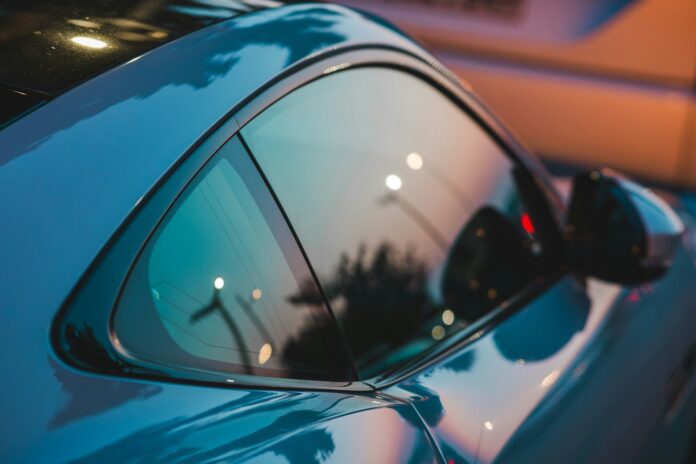
Side windows are often the weak point in vehicle UV protection. Drivers may assume all glass protects them equally, but that is not always the case.

Window film can help reduce UV exposure, glare, and heat inside the vehicle.

Drivers looking for a practical upgrade may consider providers such as Solar Shade Window Tint when reviewing tinting options for comfort, visibility, and protection.

The goal is not only to make the vehicle look darker.

Quality tinting should help reduce ultraviolet exposure while maintaining safe visibility.

Drivers should also check local tint laws before choosing a film shade or darkness level.

Reduce Glare During Daily Driving

Glare can make driving more tiring and less comfortable. Bright sunlight, low sun angles, reflective roads, wet pavement, snow, water, and surrounding vehicles can all increase eye strain.

Glare is especially common during morning and evening commutes.

When the sun is low, drivers may struggle to see lane markings, traffic signals, cyclists, pedestrians, and brake lights.

UV protection and tinting can help manage sunlight, but they should be combined with good driving habits.

Keep the windshield clean.

Use sunglasses with UV protection.

Adjust visors early instead of waiting until visibility becomes poor.

Glare Control Tips

Useful steps include:

  • Clean interior glass regularly
  • Keep sunglasses in the car
  • Use the visor before glare peaks
  • Replace worn wiper blades
  • Avoid dashboard clutter
  • Repair windshield chips
  • Choose legal window tint levels
  • Slow down when visibility drops
  • Increase following distance

Good glare management supports safer reaction time.

Protect the Vehicle Interior

UV rays and heat can damage a vehicle interior. Dashboards, leather, vinyl, plastic trim, steering wheels, screens, seat stitching, and upholstery can fade, crack, or weaken over time.

Daily drivers may not notice the damage immediately.

It usually builds slowly.

Vehicles parked outside for long periods are at higher risk.

The same is true for cars used for long commutes or frequent daytime travel.

UV protection helps reduce interior stress.

Drivers can also use windshield sun shades, covered parking, seat conditioners, and regular cleaning to extend interior life.

Protecting the cabin supports resale value and keeps the vehicle more comfortable.

Manage Heat Buildup

UV protection is not the same as heat rejection, but the two often work together in vehicle comfort planning. A car that sits in the sun can heat quickly, making the first few minutes of driving uncomfortable.

High cabin temperatures can also strain the air conditioning system.

Drivers should reduce heat buildup where possible.

Park in shaded areas when available.

Crack windows only when safe and legal.

Use sun shades.

Maintain the AC system.

A cooler cabin helps drivers stay focused and reduces discomfort during daily travel.

This is especially useful for families, older drivers, rideshare drivers, and people who spend many hours in the car.

Think About Skin Protection

Drivers often protect their skin at the beach or during outdoor activities, but they may overlook sun exposure during routine driving.

Hands, forearms, neck, and face can receive repeated sunlight through side windows.

This is especially relevant for people with long commutes, outdoor jobs, delivery routes, or frequent highway travel.

Skin Protection Habits

Simple habits include:

  • Apply sunscreen before long drives
  • Wear UV-blocking sunglasses
  • Use lightweight long sleeves
  • Avoid resting arms in direct sun
  • Add legal window protection
  • Keep sunscreen in a travel bag
  • Reapply during long trips
  • Park in shade when possible
  • Monitor skin changes

Small habits are easier to maintain than trying to correct years of exposure later.

Improve Passenger Comfort

UV protection helps passengers too. Children, older adults, and passengers with sensitive skin may be more affected by sunlight during daily trips.

Rear seats can receive direct sun for long periods depending on the route and time of day.

This can make passengers uncomfortable and increase cabin heat.

Families may benefit from window shades, legal tinting, breathable seat covers, and better airflow.

Passenger comfort matters on short trips as well as long ones.

A hot or bright cabin can make even routine drives feel harder than they should.

Window tint laws vary by state and sometimes by vehicle type. Drivers should confirm legal limits before adding tint.

Rules may cover visible light transmission, windshield tint bands, side windows, rear windows, reflectivity, and medical exemptions.

Choosing an illegal tint can create inspection problems, fines, or safety concerns.

Visibility should always remain a priority.

Dark tint may look appealing, but it can reduce nighttime visibility if chosen poorly.

A legal, high-quality film can provide practical protection without creating avoidable risk.

Maintain Glass and Film Properly

UV protection works best when vehicle glass and film are maintained. Dirty glass increases glare. Damaged tint can bubble, peel, discolor, or distort visibility.

Clean windows with products that are safe for tinted film.

Avoid abrasive tools.

Follow installer guidance before cleaning newly applied tint.

Inspect edges and corners over time.

If film begins to peel or bubble, address it early.

Poorly maintained film can reduce visibility and make the vehicle look neglected.

Final Thoughts

UV protection matters for daily drivers because sun exposure builds through routine travel. It affects skin, eyes, cabin comfort, interior materials, and long-term vehicle condition.

Start with side-window protection, legal tint choices, glare control, sunscreen habits, and simple heat management.

The best approach is practical and consistent.

Daily drivers do not need complicated upgrades.

They need reliable protection that makes every trip safer, cooler, and more comfortable.

How Weather Impacts Motorsports Predictions

Photo by Jonathan Borba on Pexel

Weather and its effects is one of the most important aspects of motorsport. Weather influences track conditions, driver performance, and wear on the cars. While its commonplace for fans for primarily focus on the drivers and their cars, those that fully understand how weather affects the outcomes of a race have an advantage.

Whether you’re a fan of NASCAR, Indycar, or Formula 1, playing close attention to the forecast can provide invaluable insights before placing a wager or bet. Typically, fans of motorsport and betting combine race analysis with websites or platforms like BetAhoy casino, to completely understand how factors like weather can shape betting decisions.

Why Weather Matters in Races

Like many other sports, motorsports commonly takes place outdoors. Schedules are commonly set in stone so rapidly changing weather conditions can directly affect the competitors, and the cars they drive. Rain, wind, cold, heat, and even cloud coverage can alter track conditions within minutes.

Racing teams are no strangers to weather, they spend countless hours preparing for every possible scenario. The weather cannot be controlled so each and every team must adapt quickly or continue driving at a disadvantage. Bettors who understand how weather conditions influence the driving style and strategies of the teams have a better chance at making successful bets.

Rain Comes with Opportunity

Outside of event-ending weather conditions such as ice, rain is the single most influential weather-related factor in motorsport bets. A wet track will result in less grip, different tire temperatures, braking effectiveness and following distance. Any particular driver who specializes in inclement conditions may become a sudden dark horse in a race once rain starts falling.

There are a plethora of betting markets that become much more interesting when rain is expected:

  • Podium Finish – Top three positions of the current race.
  • Fastest Lap – Rain typically slows down the race so the fastest lap may have already occurred.
  • Safety Car – Odds of needing a safety car on the track drastically increase.
  • Race Winner – A team who is prepared for rain has a better chance at winning.
  • Yellow Flag – Harsher conditions equals more likelihood of a cautionary flag.
  • Accident / Collision – Same as yellow flag.

Because sportsbooks and only platforms adjust the odds before a race begins, a weather forecast that calls for rain mid-race can help you identify potential value.

Other Weather Conditions

While rain is the biggest game changer when it comes to weather, other conditions like wind and extreme temperatures can also affect race outcomes.

Wind primarily changes how a car handles and performs. Crosswinds can change the stability of the car while cornering or turning. While headwinds and tailwinds can change the top speed of the car or the braking distance. Because wind can change betting outcomes like fastest lap and qualifying time, paying attention to varying wind conditions can influence odds in your favor.

Temperature mostly changes how tires perform during a race. The hotter a track is, the more grip the car has, but it also increases tire degradation. Inversely a cooler track will result in less grip, but increased tire durability.

Bottom Line

Weather is one of the factors of a race that no team or driver has control of, which in turn makes it incredibly valuable to focus on when betting. While implementing good betting strategies such as researching driver history and track performance is an exceptional practice, understanding how weather factors in is essential. A sudden rain shower or dramatically shifting winds can create opportunities that didn’t previously exist.

By implementing weather forecasts into part of your race analysis and betting strategy, you can give yourself the best odds of understanding how a race is likely to unfold. While nothing is guaranteed in motorsport, knowing about the various aspects that can change the outcome of a race will lead to informed betting decisions. Remember to always bet responsibly and look forward to the next race weekend!

Managing Equipment Loans in Motorsport Operations

Photo by depositphotos at https://depositphotos.com/

Motorsport operations require constant investment. Teams need race cars, engines, transporters, trailers, diagnostic systems, pit equipment, fabrication tools, safety gear, shop equipment, and data technology.

For many teams, buying everything with cash is not practical. Equipment loans can help spread cost over time and protect working capital, but they also create financial obligations that need careful control.

A loan may support performance, but poor loan management can strain cash flow, reduce flexibility, and create problems during the season. Teams need a disciplined process for tracking loan terms, payments, interest, equipment value, and operational use.

Start With a Complete Loan Schedule

Every motorsport organization should maintain a loan schedule. This schedule should list all equipment financing arrangements in one place.

It should include lender name, original loan amount, current balance, payment amount, interest rate, payment frequency, maturity date, collateral, fees, and responsible team member.

A complete schedule gives owners and finance staff a clear view of what the team owes.

Without it, loan obligations can get buried in emails, invoices, bank statements, and dealership paperwork.

Motorsport teams often operate under tight calendars.

A missed payment or overlooked maturity date can create unnecessary pressure during race preparation.

Track Interest and Principal Separately

Loan payments are not always simple expenses. A portion may reduce the loan balance, while another portion represents interest cost.

Teams should understand how interest expense on a loan is calculated and recorded because it affects profitability, cash planning, and financial reporting.

This is especially important when loans include variable rates, deferred payments, balloon payments, or refinancing changes.

A team may see the same monthly payment each period, but the split between principal and interest can change over time.

Tracking these amounts separately gives a more accurate view of financing cost.

Match Equipment Loans to Useful Life

Equipment financing should match the expected useful life of the asset. A loan used to buy a transporter, lift system, or fabrication machine may be reasonable if the equipment will support operations for several years.

Using long-term financing for short-lived or quickly outdated items can create problems.

The team may still be paying for equipment that is no longer useful, competitive, or reliable.

Equipment to Review Carefully

Common financed equipment includes:

  • Race transporters
  • Enclosed trailers
  • Shop lifts
  • Engine equipment
  • Pit carts
  • Data systems
  • Fabrication tools
  • Diagnostic equipment
  • Safety equipment

Before taking a loan, estimate how long the equipment will remain operationally valuable.

This helps avoid repayment schedules that outlast the asset.

Connect Loans to Race Budgets

Equipment loans should be included in race-season budgeting. Monthly payments, interest cost, insurance, maintenance, storage, and repairs all affect the real cost of ownership.

A team may focus on the purchase price but underestimate operating cost.

For example, a transporter loan also brings fuel, maintenance, registration, tires, insurance, and storage expenses.

A shop equipment loan may require installation, calibration, power upgrades, or technician training.

The loan payment is only one part of the financial picture.

A practical budget should show total equipment cost across the season.

Monitor Cash Flow Around Race Schedules

Motorsport cash flow can be uneven. Sponsorship payments, race winnings, merchandise sales, owner contributions, and vendor payments may not align neatly with loan due dates.

This makes timing important.

Teams should forecast cash flow around major race weekends, travel periods, rebuild cycles, and offseason upgrades.

If loan payments fall during periods of heavy spending, cash pressure can increase quickly.

A rolling cash forecast helps teams see these pressure points early.

It also supports better decisions about when to buy, refinance, delay, or lease equipment.

Keep Loan Documents Organized

Loan management depends on accurate documents. Teams should keep signed agreements, payment schedules, security agreements, insurance requirements, amendment letters, payoff quotes, and lender correspondence in a central location.

These records should be easy to access.

Do not rely on one person’s inbox.

If a team owner, manager, or bookkeeper changes roles, the documents should still be available.

Documents to Store

Important records include:

  • Loan agreement
  • Payment schedule
  • Interest rate terms
  • Collateral details
  • Insurance requirements
  • Amendment documents
  • Payoff statements
  • Lender contacts
  • Approval records

Good documentation makes accounting, refinancing, audits, and sale decisions easier.

It also prevents confusion when equipment is traded or replaced.

Review Collateral and Insurance Requirements

Many equipment loans are secured by the asset being financed. This means the lender may require specific insurance coverage, maintenance standards, or approval before sale or transfer.

Teams should review these requirements before making equipment changes.

Selling, modifying, or relocating financed equipment without checking loan terms can create issues.

Insurance should also match lender requirements and operational risk.

A race transporter, trailer, or high-value shop system may need coverage beyond basic property insurance.

Loan management should connect finance, operations, and insurance review.

Plan for Upgrades and Replacement

Motorsport equipment does not stay current forever. Technology changes, safety expectations evolve, and competitive standards rise.

Teams should plan replacement before equipment becomes unreliable or outdated.

This is especially important when loan balances remain outstanding.

If a team wants to sell or trade equipment before the loan is paid off, it should know the payoff amount and market value.

Negative equity can limit options.

A planned replacement schedule helps teams avoid urgent purchases during the season.

Urgent financing decisions often lead to weaker terms.

Use Debt Metrics in Team Planning

Even smaller motorsport teams should track basic debt metrics. These help owners understand how much financial flexibility the operation has.

Useful metrics include total debt balance, monthly debt service, interest cost, debt-to-revenue, equipment value compared with loan balance, and available cash after debt payments.

These numbers should be reviewed with the season budget.

If debt service consumes too much cash, the team may struggle to fund tires, parts, travel, staff, and repairs.

Equipment should support performance.

It should not weaken the team’s ability to compete.

Final Thoughts

Managing equipment loans in motorsport operations requires more than making monthly payments. Teams need clear loan schedules, accurate interest tracking, organized documents, realistic budgets, and cash flow planning.

Financed equipment can help a team improve capability, efficiency, and performance.

But every loan should be matched to the equipment’s useful life, season plan, and financial capacity.

When teams manage equipment loans carefully, they protect cash flow, reduce risk, and make stronger decisions about future upgrades.

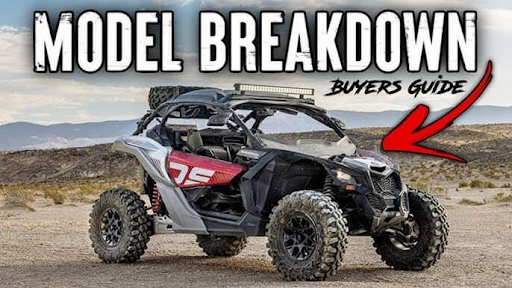
Complete Can-Am Maverick Buyer’s Guide: Which Model Is Right for You?

The Can-Am Maverick has become one of the most respected names in the world of high-performance side-by-sides. Built for riders who want speed, capability, and confidence on challenging terrain, the Maverick lineup offers a model for nearly every type of off-road enthusiast. Whether you’re planning weekend trail rides, tackling rocky mountain paths, exploring sand dunes, or competing in desert races, choosing the right Maverick can make all the difference.

With several models available, each designed for different riding styles and budgets, it is important to understand what sets them apart before making a purchase. This guide explains the major Can-Am Maverick models, their strengths, and the factors you should consider to help you find the perfect machine.

Why Choose a Can-Am Maverick?

The Maverick series is designed for adventure. Unlike utility-focused side-by-sides that prioritize hauling and towing, the Maverick lineup is engineered for performance, agility, and rider excitement.

Many owners choose a Can-Am Maverick because of its powerful Rotax engines, advanced suspension systems, durable construction, and impressive technology. These machines are built to perform across a wide range of terrain, from muddy forest trails to rocky climbs and open desert landscapes.

Can-Am also offers extensive customization options, allowing owners to personalize their vehicles with accessories that improve comfort, storage, lighting, protection, and performance.

Understanding the Maverick Lineup

The Maverick family includes several models, each serving a slightly different purpose. Knowing the differences helps narrow your options.

Can-Am Maverick X3

The Maverick X3 has become one of the most recognizable sport UTVs in the industry. It is designed for riders who demand maximum performance and exceptional suspension travel.

Its long-travel suspension, responsive steering, and powerful engine make it ideal for:

  • High-speed trail riding
  • Sand dunes
  • Desert terrain
  • Rock crawling
  • Competitive off-road events

The Maverick X3 is available in multiple trims, allowing buyers to select features that fit both their riding style and budget.

Can-Am Maverick R

The Maverick R represents the newest generation of high-performance Can-Am side-by-sides. Designed with advanced engineering and increased power, it delivers exceptional acceleration and handling for experienced riders.

Its upgraded suspension, improved chassis, and premium technology make it one of the most capable sport UTVs currently available.

If your goal is top-tier performance with the latest innovations, the Maverick R deserves serious consideration.

Four-Seat Models

Families and groups often prefer four-seat Maverick models because they allow everyone to enjoy the adventure together.

These versions provide:

  • Additional passenger capacity
  • Comfortable seating
  • Similar off-road capability
  • Excellent stability
  • Plenty of cargo space for longer trips

While they are slightly longer than two-seat models, they remain highly capable on challenging trails.

Choosing the Right Engine

One of the biggest decisions involves engine performance.

Can-Am equips the Maverick lineup with Rotax engines that balance power, durability, and responsiveness. Higher-performance models provide stronger acceleration and greater top-end speed, making them ideal for experienced riders.

If your riding consists mainly of scenic trail exploration and recreational outings, an entry-level or mid-range Maverick may offer more than enough performance.

Riders planning aggressive off-road adventures, steep hill climbs, or sand dune excursions often appreciate the additional power available in premium trims.

Consider Where You Ride

Your typical riding environment should influence your buying decision.

For wooded trails with tight turns, a narrower Maverick may offer better maneuverability.

If you spend time in wide-open deserts or sand dunes, a wider stance and long-travel suspension provide increased stability at higher speeds.

Rock crawling enthusiasts benefit from models equipped with advanced suspension, higher ground clearance, and enhanced traction systems.

Selecting a model designed for your preferred terrain will improve both comfort and confidence behind the wheel.

Suspension Makes a Big Difference

Suspension is one of the defining features of the Can-Am Maverick lineup.

Premium models feature sophisticated suspension systems that absorb bumps, reduce driver fatigue, and maintain traction over uneven ground.

Long suspension travel allows the vehicle to remain stable during aggressive riding while improving comfort on rough terrain.

Although entry-level models perform well for recreational use, riders who frequently tackle demanding trails often find the upgraded suspension worth the investment.

Technology and Comfort Features

Modern Maverick models include numerous features that enhance the driving experience.

Depending on the trim level, you may find:

  • Digital displays
  • Touchscreen infotainment systems
  • GPS compatibility
  • Drive mode selection
  • Smart throttle control
  • Premium seating
  • Advanced lighting systems
  • Integrated audio options

These features contribute to both convenience and enjoyment, particularly during long rides.

Accessories to Consider

One of the advantages of owning a Can-Am Maverick is the wide range of available accessories.

Popular upgrades include:

  • Roof systems
  • Full windshields
  • Winches
  • Front and rear bumpers
  • Rock sliders
  • LED light bars
  • Cargo racks
  • Spare tire carriers
  • Storage boxes
  • Skid plates

Adding the right accessories can make your Maverick better suited for hunting, camping, overlanding, or extended trail adventures.

Maintenance and Ownership Costs

Routine maintenance helps keep your Maverick performing at its best.

Owners should regularly inspect:

  • Engine oil
  • Air filters
  • CVT drive belt
  • Differential fluids
  • Brakes
  • Tires
  • Suspension components
  • Battery

Following the manufacturer’s recommended maintenance schedule helps improve reliability while reducing the likelihood of unexpected repairs.

Budgeting for maintenance, accessories, insurance, and safety equipment is also an important part of ownership.

How Does the Maverick Compare to the Can-Am Defender?

Some buyers struggle to decide between the Maverick and the Defender.

The answer depends on how you plan to use your vehicle.

The Maverick is built primarily for recreation, offering impressive speed, suspension performance, and handling.

The Defender focuses on utility, with greater emphasis on towing, hauling, and completing demanding work around farms, ranches, and job sites.

If excitement and trail performance are your priorities, the Maverick is the better fit. If your primary goal is productivity, the Defender may be the smarter choice.

A Brief Look at Can-Am Motorcycles

Many people searching for the Maverick are surprised to discover that Can-Am has a long history of producing innovative motorcycles.

Today, the company continues to expand its lineup beyond off-road vehicles with electric motorcycles and dual-sport models that combine modern technology with everyday practicality. Alongside these motorcycles, Can-Am also offers the popular three-wheeled Spyder and Ryker, giving riders options for both on-road and off-road adventures.

This broad range of vehicles reflects Can-Am’s commitment to serving a variety of riders, whether they prefer winding highways, city commuting, rugged trails, or extreme off-road exploration.

Which Can-Am Maverick Is Right for You?

The ideal Maverick depends on your experience, riding style, and budget.

If you are new to sport side-by-sides, a mid-level Maverick provides an excellent balance of performance and value.

Experienced riders who regularly tackle difficult terrain or enjoy high-speed adventures may prefer the advanced capabilities of the Maverick X3 or Maverick R.

Families and groups should consider four-seat models that offer additional passenger capacity without sacrificing off-road performance.

Final Thoughts

The Can-Am Maverick lineup offers something for nearly every off-road enthusiast, from casual trail riders to experienced adventurers seeking maximum performance. By considering where you ride, the level of performance you need, your budget, and the features that matter most, you can confidently choose the Maverick model that fits your lifestyle.

Whether you select a capable entry-level model, a high-performance Maverick X3, or the cutting-edge Maverick R, you will own a side-by-side built to handle demanding terrain with confidence. Combined with Can-Am’s expanding range of motorcycles and other powersports vehicles, the Maverick remains one of the strongest choices for riders who value innovation, durability, and unforgettable off-road experiences.