Home Blog Page 41

CHEVROLET NCS AT RICHMOND: Shane van Gisbergen Media Availability Quotes

cook out 400

NASCAR Cup Series
Richmond Raceway
Team Chevy Driver Quotes
August 14, 2026

Shane van Gisbergen, driver of the No. 97 Trackhouse Racing Camaro ZL1 and the No. 7 Spire Motorsports Silverado RST, met with the media in advance of running double duty in the NASCAR Cup and Craftsman Truck Series at Richmond Raceway.

Media Availability Quotes:

To start off, last time you came to a short-track and did the Truck and Cup race, you left with a pair of top-fives. How are you looking to accomplish that same sort of success this time around?

“Yeah, it was a good time. I think the Truck race definitely helps me, so yeah, it’s good to do that again. Thank you to Spire Motorsports for having me. Hopefully, I can get a good feel for the track first before the Cup race and have two good cars this weekend.”

Along those lines, are you very specific in what you choose to do outside of Cup, like a track that you want to get to know a little bit better? How do you decide which of these other races that you’re doing?

“It is hard to get opportunities in other things, especially for me trying to do ovals. Thankfully, my runs have been getting better, which helps. I’d love to do more, but obviously it’s hard to get good opportunities.

But yeah, selfishly, I’d love to do more tracks I struggle at… like I’d love to do Bristol more and even Iowa last week. There are a couple of other tracks that I need more laps at to get better. Hopefully, next year I can work on doing some of them. It sounds like things might be happening, so hopefully I can do that and not just go back to the tracks I’m good at. I need to work on my weaknesses.”

You’ve mentioned in the past the short-tracks for you have translated the best, but Iowa for some reason hasn’t been. Why is that?

“If I knew, I would fix it (laughs). I don’t know. I feel comfortable there, but then for whatever reason, I’ve always struggled with the car. In O’Reilly, as well, I was weak there. Every time it seems to be an adventure and I seem to have a bad result. But yeah, thankfully, all the guys I was points racing last week, I was around, so it kind of minimized the damage a little bit, which was really good. But yeah, certainly we’d love to know or I’d love to know why I’m not that great there.”

Just looking at this weekend in general, I know it’s only one race here that you’ve had the opportunity of doing, but what did you learn from last year that maybe you’re able to take into the second go this year?

“Yeah, I had a lot of fun last year. I managed to run the top lane quite a lot and made that work for me. I’s a fun race. I remember my first year here in O’Reilly, too, I really enjoyed it. It’s a fun track with how you can move around, but then you really have to be disciplined and wrap the line. It’s quite fun to hit your marks and be precise every lap. And there’s a lot of time management, too, so you have to have a good balance. I find it one of the more fun tracks. I always remember watching this on TV, especially the end of the race with everyone coming across the line sideways, is always pretty cool here too. It’s one of one of the fun tracks, I think.”

I wanted to ask you if you feel like this season has been your greatest improvement from Daytona to where we are now, or do you feel like it’s consistent with what you’ve done before? Do you feel like you’ve really kind of raised your gain and feel much more confident after the work you’ve done this year?

“Yeah, I think so. I think the last third of last year, we really took some steps forward, and I think we’ve just continued on that. I feel like I’m a lot closer to Ross (Chastain) this year. You know, he’s a pretty good benchmark, I think as a teammate, and I feel like I’ve been able to match him a lot. Still some areas he’s really good at. He’s really good at not having bad days and dragging results out of cars that probably shouldn’t be up there. He’s someone I’m really trying to learn off and match closely. It’s been good to be around or just in front of him in the points this year Kind of pushing each other along has been really cool. So yeah, just got to keep the improvement going. I feel like every week, I’m learning stuff and still trying new things. I still have a lot to learn.”

Obviously, you’ve been dominant on the road courses, but some of your best oval finishes have been on the short-tracks. What is it about road courses and short-tracks that translate so well?

“I feel like you can have a little more influence on the car, like you can manipulate it with the brake or brake bias and whatever gear you’re running. You can vary your line a little more. I feel like there’s a little more as a driver you can do. But also, that just means on the big tracks, I’m not good enough of knowing what I want from the car yet or how to get the car to do what I want, whether that’s with feedback to my engineer or just in general. I feel like these tracks, you can kind of make up for a deficiency in the car, as well, with whatever tools you have, whereas on a big track, you’re kind of just stuck with what you got sometimes. So yeah, it seems to help me.”

Broadcast mentioned how your strength is your tire management and saving tires. Austin Dillon’s won the past two races, and he said that his biggest strength and how he’s so good here is because he’s able to save tires so well. Does that give you any confidence heading into this weekend?

“Yeah, I don’t know how it works on an oval, but it does seem to translate a little bit, like my end of run speed is a little stronger than how I start. But yeah, I don’t know why, I drive flat out the whole time (laughs). But yeah, these high tire wear tracks, I do seem to be a little stronger, and hopefully, that’s the case next couple of nights.”

With the new NASCAR points format change, what was your reaction when you initially heard about that? How do you feel like your driving style has kind of evolved a little bit to match necessarily not having the ‘win and you’re in’ style?

“I guess initially, it’s probably a good thing for the sport. I guess initially, I was brought over here for that ‘win and you’re in’ to guarantee a spot in the playoffs, so yeah, I certainly knew I had to get better at ovals, and I think we’ve done that. I don’t think my mindset has changed every race. I think, you know, maybe these couple of races, I’m points racing a little bit, but the rest of the year, you’re just driving flat out. I don’t think I’ve ever really points raced trying to stay out of trouble. I think that when you’re not driving naturally, you find yourself in trouble, I guess. So yeah, I just try and drive every race flat out.”

You came over here from New Zealand. You were a three-time champion in Supercars, and then, you come here and you are trying to master this whole new discipline of oval racing. You’re 37 years old. When you run so well in these ovals, you’re top-five and you’re racing against the best drivers in the world at oval racing, is that how rewarding or what’s it make you feel at 37 to still be accomplishing these things at such a high level? “You’re saying 37 is old? (laughs). Yeah, I don’t feel old.

Yeah, it’s been cool. I’ve had a really awesome last few years changing careers, I guess, and trying something different. It’s been rewarding, as you put it, to show glimpses and be able to show I can do it. I really was a long way away from that my first year and a half in the sport. It’s a very foreign type of driving to me. I certainly feel more comfortable and like I know what I’m doing most of the time now. So yeah, it’s been really awesome to get better. As I sort of said earlier, I know I still have a lot to learn, as well. It’s cool to see it coming along.”

This is going to be your fourth start this year in the Truck Series. What is it about the Trucks that helps you translate those skills into Cup?

“I actually think they’re a little bit closer to the Cup car than the O’Reilly car nowadays. I haven’t driven one for a little while, but yeah, the Cup car and the Truck kind of races similar with how you have to search for the air and how much it kind of moves and feels. The O’Reilly car always felt disconnected in the way the rearends were set up. So yeah, certainly has felt more relative in the few races that I’ve done, that’s for sure.”

You have another short-track next week in New Hampshire. What kind of challenges does that track pose for you?

“Yeah, that’s a very different track. I was going pretty decent there last year until I wasn’t. But it’s tough; long straights and short corners. It is a little bit like a road course, the way you approach the corners, trying to make them shorter and straights longer, I guess, so that theory kind of works. But yeah, I enjoy it. It’s a weird oval being so flat. But yeah, that’s a pretty decent track.”

With three races left in the regular season and a 47 point margin over the over the cutline right now, are you starting to pay attention specifically to certain drivers that are maybe a threat?

“Yeah, 100 percent, especially last week. As I said earlier, I was having a pretty subpar day, to put it nicely, and all the guys around me were points racing guys or guys close to me in the points. So yeah, that was nice, but I can’t afford to have another day like that. But certainly, you have your eyes on those three or four guys who are around us. It’s a pretty tight battle, really. Ross (Chastain) had a pretty good day last week, and he’s sort of clawing his way back into it, so it’s going to be an interesting battle. We just need to not make mistakes the next three weeks.”

Do you expect the racing to get any different the next three weeks, in terms of people doing things you might not expect them to do?

“I don’t really know how it’s going to play out. I feel like Daytona will be a weird one, especially with the new format with no practice and not knowing how the cars are going to drive. And if it’s a close battle there, you know, you have to decide if you’re going for stage points or not, so that one’s pretty intriguing. But hopefully, the next two weeks are kind of standard and we don’t have to worry about it as much at Daytona. But yeah, I guess the big unknown is why people watch, which is cool.”

About General Motors

General Motors (NYSE:GM) is driving the future of transportation, leveraging advanced technology to build safer, smarter, and lower emission cars, trucks, and SUVs. GM’s Buick, Cadillac, Chevrolet, and GMC brands offer a broad portfolio of innovative gasoline-powered vehicles and the industry’s widest range of EVs, as we move to an all-electric future.

GM Motorsports, including the Cadillac Formula 1® Team develops and proves advanced technologies in the most demanding environments, accelerating innovation in performance, safety, efficiency, and electrification for its production vehicles. Cadillac Racing is one of the leading manufacturers in the IMSA and FIA World Endurance Championships (WEC). Chevrolet competes in single seaters in the US IndyCar series, and in NASCAR with multiple team partners and drivers. Corvette customer teams compete in GT series across the globe including IMSA and WEC. Learn more at GM.com.
TOYOTA RACING – NCS Richmond Quotes – Christopher Bell – 08.14.26

cook out 400

TOYOTA RACING – Christopher Bell
NASCAR Cup Series Quotes

RICHMOND, Va. (August 14, 2026) – Joe Gibbs Racing driver Christopher Bell was made available to the media on Friday prior to the NASCAR Cup Series race from Richmond Raceway.

CHRISTOPHER BELL, No. 20 DEWALT Toyota Camry XSE, Joe Gibbs Racing

How much confidence can you take into the latter stretch of the season with all of the second-place finishes?

“Yeah, I mean, certainly all of the second-place finishes – they’re trying and, in the moment, it really kind of feels like just a kick to the gut. But then whenever Monday, Tuesday rolls around, you’re like, ah, it was a pretty darn good day. So, ultimately, the results that we’ve gotten have meant a lot more this year than what they have in my entire Cup career with the format change. So, it’s been nice to stack some good results together and we’re performing really well right now. I certainly feel like we’re in the mix.”

What can you take from North Wilkesboro and Iowa for the race tomorrow?

“(North) Wilkesboro was a perplexing one. We had a great practice at (North) Wilkesboro, and we expected to have a really good race, and then our race was just littered with a bunch of issues. So that was disappointing, but we were able to rebound and obviously have a great showing at Iowa. This has kind of been one that’s got away from us for a number of years. I’ve been really strong here, looked like I was in position to win several of them, and just, yeah, it just hasn’t happened yet. I enjoy Richmond. Obviously, have a great resume in the O’Reilly Series cars here, and still looking for that first win of the year and at Richmond. Maybe it’ll happen this weekend.”

What are your thoughts a week removed from the Iowa pit call?

“After seeing the whole thing back, I understand his thought process and do believe that he made the right decision. Ultimately, he told me, he said, I thought that the 54 (Ty Gibbs) would take two tires. I expected the 54 to take two tires and we had 60 laps to pass them. I didn’t think that there was any way that I wasn’t going to get them in 60 laps. So, ultimately, it just didn’t work out, and, we’ll chalk it up to another second-place finish.”

Is it easier to look at the bigger picture this year?

“Yeah, definitely. I mean, going back to what I just said earlier, these results have – they mean more today in this year than they have for the previous format, my entire Cup career and NASCAR career for that matter. I mean, the point standings and where you’re running at in points is super important, but the entire previous championship format was very much win or bust. I think that mentality is still engraved in at least my mind and probably most of the industry’s mind, but in all reality, it’s not win or bust anymore. You have to have good, consistent, strong runs every single week and that’s what we’re doing. Unfortunately, we haven’t got to Victory Lane, but we’ve we have been running really well.”

Do you expect the racing to be less crazy heading into the Chase under the new format?

“I don’t know. Certainly, the number of guys that feel the pressure of making into the Playoffs or the Chase is probably less. In years past, under the different format, everybody on the outside still had an opportunity to get in. Where now, it’s kind of dwindled down to a couple guys that are fighting for the spots. Ultimately, they know that a bad day is extremely detrimental, where under the previous system, it was win or bust. If you finished second or 36th, it paid the same discipline and the same consequences. So, the reward of trying to push and do those egregious moves was worth it. Where now, in this new format, you have to be really calculated. You have to be really smart and understand the consequences of doing the stuff that we’ve seen in the past. I very much enjoyed this style of racing of like every single stage, every race matters, and I think the detriment of making a mistake if you’re going for the win and spin out or something like that is much higher than what it was in previous years.”

Are you making a moral choice with how you raced Ty Gibbs or was it the struggles with the car?

“I mean, whenever I’m out there racing, whether it’s Ty (Gibbs), Denny (Hamlin), or Joey Logano, or Kyle Larson, or whoever it is, it’s just the leader of the race at that point. Honestly, the one thing that we’re, myself and my team, I think, are kicking themselves was my car just got loose at the end of the race. The second to last run whenever I was able to pass Ryan (Blaney), I wasn’t slipping, and I was able to get to Ryan’s bumper and then try different lanes and try the bottom. I got beside him a couple times on the bottom. I was able to pass them on the outside. Whenever Ty was leading the race, I was just sliding around. I was like 10 car lengths back and then there were a couple times that I pushed really hard to try and make up ground on them and I was able to get there. But the moment that I got there, I started sliding around and would fall back again. There wasn’t really going to be any way for me to even move him out of the way without seriously jeopardizing both of us. I was so loose that if I would have tried to make any sort of contact, it was going to make my car jump sideways. I wasn’t able to do it.”

Would you have been comfortable moving him if you would have gotten there?

“We all have a driver code, and I’ve been around the sport long enough that I think I’ve shown my driver code. There’s been several late race finishes that, yeah, I think my driver code is spelled pretty clearly.”

Do you think it’s the best strategy to take the points?

“Depending on the situation, yes, but under race situation that I had last week, I can promise you that that was not on the back of my mind. I wasn’t sitting here, thinking about, I was trying doing everything that I could to win. Running second was not on my brain or my agenda for sure. I promise you that.”

How encouraging is it coming here and New Hampshire with your short track program?

“I mean, I don’t know. You mentioned our short track program being really good. I don’t know that I share that same sentiment. I think that we’re competitive.”

Chase Briscoe and Ryan Blaney pointed to you as having the best car last weekend.

“Yeah, I mean, that’s good to hear. I think my team did a really good job last weekend at Iowa to bring probably the best car in the field. But honestly, our strength right now, I would say, are the downforce tracks. Like, I feel more confident that we’re going to be the best cars going to intermediates, going to the faster tracks. Whenever I think of like Richmond and Loudon, the Penske cars, who seem like they aren’t as good on the intermediates, they kicked our butts at Loudon last year and at Phoenix last year. I think we’re going to be in the mix and our cars are good, but I don’t think that we’re the clear-cut favorites whenever we come to these tracks. I think the field’s really tight at Richmond and Loudon. So, my confidence is not as high at these tracks as it is at some of our bigger strengths on the schedule.”

What is the biggest challenge for you at New Hampshire?

“So, New Hampshire is generally trying to get the car in the corner in turn three. It’s really rough over there, and these cars really like to be low to the ground. So, turn one and really the rest of the racetrack is smooth. So, you want to get it down to optimize the car performance for those smooth parts of the racetrack, and then you have to manage the bumpy entry to turn three, which can become really difficult if you get the car too low. So, it’s just a compromise there. The car has to be loose, which makes the bumps even harder. You have to be turning good. You have to be loose, have to be free, and then you have to manage the bumps and turn three at Loudon. So, it does become a very tricky track for the crew chiefs and the drivers.”

Can you talk about your involvement with Halmar-Friesen Racing?

Yeah, it’s just been a lot of fun to do something new for me. My entire NASCAR career has been full of being in powerhouse organizations that are proven and, it’s been a lot of fun to go to HFR (Halmar-Friesen Racing) who’s a relatively new organization trying to kind of get their footing in the door or get their footing and they’re standing in the in the series. I love Stewart (Friesen). I’ve always had a lot of respect for Stewart since well, even before NASCAR, like I would watch him and watch him dirt racing and stuff like that. I was excited about the opportunity. It kind of, I don’t know, it matured after I ran or I subbed in for him last year at Walkins Glen. Then their involvement with Toyota kind of took a next step forward in the 2026 season. I’ve enjoyed going to a different level team and I think they’re well on their way to becoming a powerhouse organization.”

About Toyota

Toyota (NYSE:TM) has been a part of the cultural fabric in North America for nearly 70 years, and is committed to advancing sustainable, next-generation mobility through our Toyota and Lexus brands, plus our more than 1,800 dealerships.

Toyota directly employs nearly 64,000 people in North America who have contributed to the design, engineering, and assembly of over 50 million cars and trucks at our 14 manufacturing plants. In 2025, Toyota’s plant in North Carolina began to assemble automotive batteries for electrified vehicles.

For more information about Toyota, visit www.ToyotaNewsroom.com.

Cadillac Unveils V-ONE Concept

V-ONE Concept

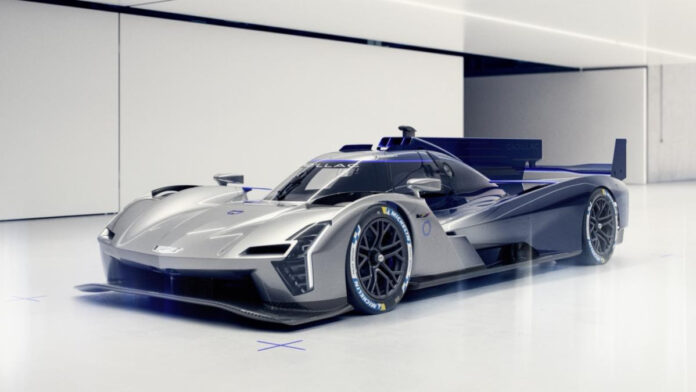
August 14th, 2026 – Today, Cadillac reveals the V-ONE — a concept study combining the brand’s race-winning authenticity and bespoke Cadillac refinement. Its name unites the Cadillac V-Series performance legacy with a one-of-one, single-seat expression, the first of its kind for the brand.

Rooted in performance engineering with shared Cadillac V-Series.R foundations, the V-ONE Concept explores how competition hardware can be translated into a driver-focused experience, while reinforcing Cadillac’s broader race-winning story across design, performance and technology.

“The Cadillac V-ONE Concept is the ultimate manifestation of a customer performance concept and is a clear sign of our ambition for the Cadillac V-Series brand in the future,” said Dominic Najafi, Executive Design Director, Global Cadillac.

V-ONE Concept

Track-proven engineering shapes the future of luxury performance

The V-ONE is rooted in Cadillac’s LMDh racing program and informed by the V-Series.R race car, reinforcing that Cadillac performance is defined by real engineering rather than race-inspired styling alone. Co-developed by Cadillac Design, Cadillac Racing and chassis constructor Dallara, the concept is designed to deliver factory-level prototype performance and technology.

Its story is backed by Cadillac Racing momentum in the IMSA WeatherTech Championship and the FIA World Endurance Championship, which together includes 10 wins, 16 pole positions and 32 podiums since the inception of the V-Series.R in 2023. That record includes the 2023 IMSA WeatherTech Championship manufacturer, team and driver titles, the 2025 Le Mans Hyperpole and Cadillac’s first 1–2 finish in the FIA World Endurance Championship at São Paulo.

At the heart of the V-ONE is a V-8 hybrid powertrain that shares foundations with the Cadillac V-Series.R race car, underscoring the concept’s serious capability and authenticity. The concept also shares deeper race-bred architecture with the V-Series.R in areas such as suspension, transmission and select electronics. Even with that race-derived foundation, the V-ONE is intended to be easier to operate while maintaining a similar level of performance.

  • Hybrid V-8 drivetrain with 830 combined horsepower
  • Aerodynamic package inspired by V-Series.R
  • Shared suspension components with V-Series.R, including double wishbone suspension, pushrod-actuated coil and torsion spring elements with lateral and heave dampers on the front and rear
  • An intuitive, race-inspired interface and data visualization concept that gives drivers clear feedback and coaching as they explore the car’s full capability

The V-ONE’s exterior remains faithful to the dramatic proportions and visual intent of the V-Series.R race car, while introducing refined details that make the concept feel more advanced, more technical and more tailored to Cadillac luxury.

  • Body and overall proportions carry directly from the race car, giving the concept an authentic foundation.
  • New V-Series wheel design and updated dark-persona V-Series badging add a more bespoke, high-performance character.
  • A hand-sprayed paint gradient from silver to deep navy reflects the journey from day to night during an endurance race

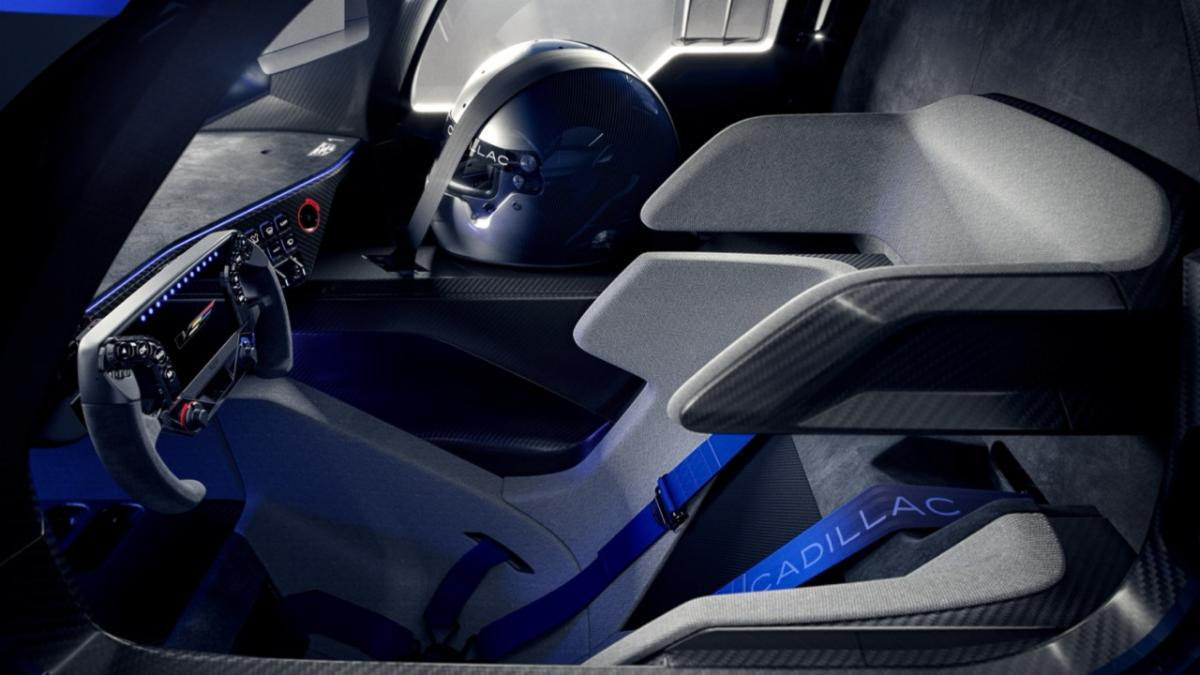
Inside, the single-seat V-ONE Concept transforms pure prototype hardware into a fully bespoke, race-bred cockpit, blending exposed carbon structure with an immersive, custom UX/UI and deeply personalized materials to create an elevated expression of Cadillac performance luxury.

  • Steering wheel design lends to the racecar experience complete with button layout tailored for clients and developed by racing engineers
  • Thoughtful material selection, including Cadillac Collection recycled fabrics• Serialized plaque on the door
  • Seat customized to the driver’s specifications

The Cadillac V-ONE Concept will be on display at The Quail, A Motorsports Gathering in Carmel, California on August 14, 2026.

Visit https://news.cadillac.com/newsroom.html for more information.

About General Motors

General Motors (NYSE:GM) is driving the future of transportation, leveraging advanced technology to build safer, smarter, and lower emission cars, trucks, and SUVs. GM’s Buick, Cadillac, Chevrolet, and GMC brands offer a broad portfolio of innovative gasoline-powered vehicles and the industry’s widest range of EVs, as we move to an all-electric future.

GM Motorsports, including the Cadillac Formula 1® Team develops and proves advanced technologies in the most demanding environments, accelerating innovation in performance, safety, efficiency, and electrification for its production vehicles. Cadillac Racing is one of the leading manufacturers in the IMSA and FIA World Endurance Championships (WEC). Chevrolet competes in single seaters in the US IndyCar series, and in NASCAR with multiple team partners and drivers. Corvette customer teams compete in GT series across the globe including IMSA and WEC. Learn more at GM.com.
Kaishan USA and Brabazon Pump Partner with NASCAR Driver Josh Bilicki for World Wide Technology Raceway

LOXLEY, Ala. — Kaishan USA, a leading provider of industrial air compressors, and its independent distributor partner, Brabazon Pump, Compressor and Vacuum, today announced a co-sponsorship agreement for the NASCAR O’Reilly Auto Parts Series race on September 12, 2026, at World Wide Technology Raceway in East St. Louis, Illinois. The partnership will feature professional driver Josh Bilicki competing with SS- Greenlight Racing, with Kaishan USA and Brabazon Pump branding displayed prominently on his vehicle throughout race weekend.

“I’m proud to partner with Kaishan USA and Brabazon Pump, Compressor and Vacuum for our race weekend at World Wide Technology Raceway”; said Josh Bilicki. “Success in racing comes down to preparation, execution and consistency. Those are the same qualities Kaishan USA and Brabazon Pump bring to their customers every day, and I’m excited to represent both organizations on a national stage.”

This co-sponsorship brings together two organizations that believe performance is earned under pressure. For Kaishan USA, the partnership extends the brand into an environment where performance is visible, measurable and unforgiving—just like the systems its customers rely on every day.

This is about putting the Kaishan USA brand in front of a hardworking American audience that understands performance” said Bubba Phillips, marketing manager at Kaishan USA. “NASCAR reflects the same realities our customers face—pressure, precision and no margin for failure. That’s exactly the standard we hold ourselves to every day.”

For Brabazon Pump, the co-branded sponsorship reflects a relationship that continues to gain momentum.

“We’re proud to stand alongside Kaishan USA in this effort” said Heath Brabazon, president of Brabazon Pump, Compressor and Vacuum. “Kaishan USA gives our customers an incredible combination of efficiency, reliability, strong warranty coverage and value, and we’re excited to put that in front of a national audience through this partnership.”

The NASCAR O’Reilly Auto Parts Series event at World Wide Technology Raceway is expected to draw thousands of fans and a national audience, providing both companies with an opportunity to engage customers, distributor partners and the broader industrial community.

About Kaishan USA
Kaishan USA engineers high-performance industrial air systems that help manufacturers operate more efficiently. Its portfolio includes rotary screw air compressors, industrial vacuum systems and centrifugal solutions designed for demanding applications. Headquartered in Loxley, Alabama, Kaishan USA combines engineering expertise, responsive customer support and industry-leading lead times to help customers maximize uptime and productivity.

For more information, visit kaishanusa.com.

About Brabazon Pump, Compressor and Vacuum
Brabazon Pump, Compressor and Vacuum is the Midwest’s trusted source for air compressors, pumps, blowers and vacuum systems. Since 1978, the company has built its reputation on technical knowledge, customer-focused service and reliable equipment designed to keep industrial operations running efficiently.

For more information, visit brabazon.com.

Pinnacle Financial Partners Continues Partnership with 23XI Racing in Multi-Year Renewal

Extended relationship to feature additional NASCAR Cup Series races with Tyler Reddick and the No. 45 team

Huntersville, N.C. (Aug. 14, 2026) – 23XI Racing announced today that Pinnacle Financial Partners has extended its relationship with the team into the future with a multi-year partnership renewal that will feature additional races with Tyler Reddick and the No. 45 team, beginning in 2027. Pinnacle will also continue to be included on the No. 45 team’s equipment and Reddick’s driver uniform. The Nashville-based firm is a leading financial services institution serving communities in nine states across the Southeast.

Pinnacle’s relationship with Reddick dates back to 2018, and the firm has been an associate partner with 23XI since 2023. Earlier this season at EchoPark Speedway in Atlanta, Reddick pulled off a thrilling come-from-behind win after sustaining heavy damage to earn the first win in the Pinnacle-branded car. The win was also Reddick’s second of his historic three consecutive wins to start the 2026 season.

Pinnacle was first featured on the No. 45 Toyota during the 2024 NASCAR Cup Series event at Nashville Superspeedway. This weekend’s race in Richmond will mark the sixth time Reddick has raced the black and blue Pinnacle-branded car in the Cup Series. Through the partnership extension, the Pinnacle-branded car will be featured at additional races throughout the 2027 season.

In addition to showcasing Pinnacle on the car, the partnership has also led to a collaboration with The Academy of Country Music and the ACM Awards being featured on Reddick’s car for the NASCAR All Star Race at Dover Motor Speedway. The collaboration extended across the country to the awards show, where future full-time 23XI driver Corey Heim attended several events and debuted the ACM Awards car alongside Country powerhouse Kameron Marlow at “ACM’s Next Wave: Country’s Beach Bash.”  

The ACM Awards collaboration with 23XI and Pinnacle highlighted how the partnership is focused on unique activations both at the track and beyond. In addition to the partnership with 23XI and Reddick, Pinnacle is also partnered with pro golfer Russell Henley and serves as the official bank for the PGA TOUR’s Cadillac Championship, Memphis Grizzlies, Tennessee Titans and The Pinnacle, a state-of-the-art premier live music venue located in the heart of Nashville Yards.

“We’re pleased to extend our relationship with Pinnacle and look forward to continued growth with them as their brand expands as well,” said 23XI team president Steve Lauletta. “The Pinnacle partnership has been a great example of working together to create unique activations that are elevating both brands.”

“Pinnacle has been such a great partner with me and my family and the race team at 23XI,” said Tyler Reddick, driver of the No. 45 Toyota Camry XSE. “The group at Pinnacle is like family and it was really special for me to get a win in their car earlier this year. I can’t wait to share more memorable moments with them in the future.”

“We’ve had the opportunity to grow alongside Tyler for years and this renewal reflects the trust that’s been built over time,” said Andy Moats, Pinnacle’s director of music, sports, and entertainment. “Continuing our relationship with 23XI gives us another opportunity to support him while introducing more people to the way we build lasting relationships with our clients and communities.”

About Pinnacle Financial Partners

Pinnacle Financial Partners, Inc. (“Pinnacle”) is a $129.1 billion asset regional bank which provides a full range of banking, investment, trust, mortgage and insurance products and services for commercial and consumer clients who want a comprehensive relationship with their financial institution. The firm joined forces with Synovus Financial Corp. in 2026, bringing together more than 160 years of combined banking service. Pinnacle is the largest bank headquartered in Tennessee and the largest bank holding company headquartered in Georgia. The firm is No. 1 in deposit market share* in the Nashville MSA and No. 4 in the Atlanta MSA with offices in Tennessee, Georgia, Florida, North Carolina, South Carolina, Alabama, Kentucky, Virginia and Maryland. 

Pinnacle is an employer of choice for financial services professionals. The firm is No. 12 in the Fortune 100 Best Companies to Work For® in 2026, its 10th consecutive appearance. Pinnacle was also recognized by American Banker as No. 4 among America’s Best Banks to Work For in 2025, its 13th consecutive year on the list, and No. 1 among banks with more than $10 billion in assets. Learn more about Pinnacle at PNFP.com.

*As of June 30, 2025, according to FDIC data.

About 23XI Racing

23XI Racing – pronounced twenty-three eleven – was founded by NBA legend Michael Jordan and three-time Daytona 500 winner Denny Hamlin in 2020. With rising NASCAR star Bubba Wallace selected to drive the No. 23 Toyota Camry, the team made its NASCAR Cup Series debut in the 2021 Daytona 500 at Daytona International Speedway. Wallace made history on October 4, 2021, when he captured his first career Cup Series win, becoming just the second African American to win in the Cup Series, and earning 23XI its first-ever victory. 23XI expanded to a two-car organization in 2022 with Cup Series Champion Kurt Busch driving the No. 45 Toyota Camry. With a win at Kansas Speedway in May of 2022, Busch earned 23XI the team’s first-ever playoff berth. In 2024, Tyler Reddick won the Regular Season Championship and raced to a spot in the Championship 4, a first for both the team and Reddick. 23XI currently features the lineup of Bubba Wallace in the No. 23 Toyota Camry XSE, Tyler Reddick in the No. 45 Toyota Camry XSE, Riley Herbst in the No. 35 Toyota Camry XSE and Corey Heim as the team’s development driver. The team operates out of Airspeed, a state-of-the-art facility in Huntersville, N.C. that opened in January of 2024.

7 Things to Consider Before Adding a Backup Camera to an Older Car

Photo by depositphotos at https://depositphotos.com/

Keeping an older car on the road often makes more sense than replacing it. A well-maintained vehicle may still be reliable, familiar, inexpensive to own, and perfectly suited to everyday driving. What it may lack are some of the visibility and convenience features that drivers now take for granted in newer vehicles.

A rear camera is one of the more practical technologies to retrofit. But there is an important distinction between simply adding a camera and adding one that actually works well with an older vehicle.

The smartest approach is not to start with resolution, screen size, or a long feature list. Start with the visibility problem you are trying to solve, decide how much you are willing to modify the vehicle, and then choose a system around those requirements.

Here are seven things worth considering before making the upgrade.

1. Identify Your Actual Rear-Visibility Problem First

Before shopping for equipment, sit in the driver’s seat and think about where visibility actually disappears.

Can you see the ground immediately behind the bumper? Is the rear window unusually small? Does a tall trunk lid block low objects? Does cargo frequently obstruct the view? Is the main difficulty backing into a garage, reversing out of a driveway, or parking in crowded lots?

These are different problems and do not necessarily need the same solution.

For example, a sedan owner who mainly wants help judging the last few feet behind the bumper may need a relatively simple back up camera. A pickup or large SUV owner may care more about viewing angle, camera position, and reliable transmission over a longer vehicle.

One useful exercise is to park the vehicle in a familiar space and note which objects disappear from the mirrors and rear window as they approach the bumper. This gives you a practical picture of the blind area you are trying to improve.

That is more useful than choosing a system simply because it advertises the widest angle or biggest display.

2. Choose the Display Before Obsessing Over the Camera

Most people think about the camera first. For an older vehicle, it often makes more sense to think about the display first.

Where will the image actually appear?

A separate dashboard monitor is straightforward and can provide a large, clear picture. It works well in vehicles where appearance is not a major concern or where there is plenty of unused dash space.

However, adding a monitor to a carefully preserved older interior can make the cabin look cluttered. It may also create another device and cable in the driver’s field of view.

A mirror-mounted display can be a cleaner alternative because it uses an area the driver already checks while reversing. Another possibility is integrating the camera with an existing compatible aftermarket stereo or infotainment unit.

There is no universally best display. The important question is which setup feels natural inside your particular vehicle.

A camera you barely notice until you need it is often more useful than a feature-packed system that makes the cabin awkward every day.

3. Think About How Much You Want to Modify the Car

With an older vehicle, installation should not be judged only by difficulty. It should also be judged by permanence.

Are you comfortable drilling into a bumper or body panel? Are you willing to remove interior trim? Do you want to splice into factory wiring? Or would you prefer an upgrade that could be removed later with little evidence that it was ever installed?

This matters especially with well-preserved older cars, enthusiast vehicles, and classics.

A license-plate-mounted camera, for example, may allow you to use an existing mounting area rather than cutting a new opening in the body. A mirror-based display may avoid major dashboard modification. Wireless video transmission may reduce the amount of cable that needs to travel through the interior, although the components still require power.

None of these solutions is automatically better. They simply represent different levels of installation footprint.

For an ordinary high-mileage commuter, permanent integration may not matter much. For a car whose originality contributes to its value or character, reversibility can be just as important as image quality.

4. Treat Camera Position as a Geometry Problem

A camera can have impressive specifications and still produce a frustrating image if it is mounted poorly.

Height, angle, and position determine what the driver actually sees.

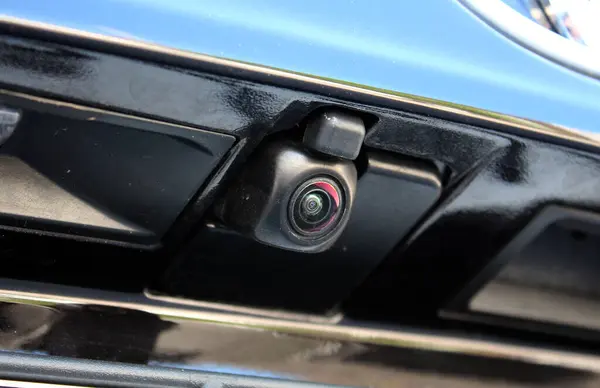
Mounting a camera close to the license plate is common because the location is convenient and usually near the center of the vehicle. But depending on the body shape, the resulting image may show too much road and not enough of the bumper area.

A higher camera position may provide better depth and a broader view, but nearby objects may appear less intuitive.

There is also the question of symmetry. An off-center camera can still work, but the image may require more mental adjustment when lining up the vehicle.

Whenever possible, test the proposed position before drilling holes or permanently attaching hardware. Temporarily secure the camera, sit in the normal driving position, and look at how familiar objects appear on the display.

Ask yourself:

Can I tell where the rear bumper ends?

Can I judge whether the vehicle is centered in a parking space?

Can I see low obstacles?

Does the image still make sense at night?

That fifteen-minute test may be more valuable than comparing specification sheets for an hour.

5. Wired vs. Wireless Is Really a Reliability vs. Installation Decision

The usual wired-versus-wireless comparison is often oversimplified.

A wired system sends the video signal through a physical connection between the camera and display. The advantage is a direct signal path. The disadvantage is that someone has to route that cable through the vehicle.

On a sedan or hatchback, this may mean removing trim and running cable from the trunk to the dashboard. On a longer SUV or pickup, the job becomes more involved.

Wireless systems reduce the need for that long video cable, which can make them appealing for DIY installations and vehicles where taking apart the interior is undesirable.

But wireless does not mean wire-free. The camera and display still require power, and that power still needs to be installed correctly.

So instead of asking, “Which technology is better?” ask:

Which compromise makes more sense for this vehicle?

If you are already comfortable removing trim and want a direct connection, wired may be the logical choice. If preserving the interior and reducing installation work are priorities, a wireless setup may be more attractive.

For someone choosing a backup camera for car, installation style should be considered alongside display type and camera position rather than treated as a separate specification.

6. Plan the Activation Logic Before Installation

Another detail that is easy to overlook is when you want the camera to operate.

The simplest setup activates the rear image when the vehicle is shifted into reverse. This is intuitive and closely matches how factory backup cameras operate.

For most daily drivers, that is all that is necessary.

But some owners may want manual access to the rear view as well. That can be useful when checking the space behind the car while stationary or in other situations where the driver wants visual confirmation without engaging reverse.

Thinking about this beforehand matters because activation affects how the system is powered and wired.

If you want automatic reverse activation, the installation may use the reversing-light circuit as a trigger. A more flexible setup may require a different power arrangement or additional controls.

This is one of the areas where professional installation can make sense if you are not comfortable working with automotive electrical systems.

The goal is not to create the most complicated setup possible. It is to make the camera appear when you expect it to, every time, without adding unnecessary steps to normal driving.

7. Choose for Everyday Friction, Not the Longest Feature List

Camera systems can advertise resolution, night-vision technology, parking guidelines, recording functions, multiple inputs, wide viewing angles, wireless transmission, and numerous other features.

Some are useful. Others may never matter in your vehicle.

Think about what will make the system annoying six months after installation.

Will the display block anything?

Will you have to manually turn it on every time you reverse?

Does the camera sit somewhere that gets covered with road grime every few days?

Are there visible cables in the cabin?

Is the image difficult to interpret at night?

Does starting the system take longer than the parking maneuver itself?

These everyday details determine whether an upgrade becomes something you rely on or something you eventually stop using.

A simpler camera that activates reliably, provides a useful view, and fits naturally into the vehicle may be a better upgrade than a more complicated system with features that rarely get used.

Do Not Forget Maintenance

Rear cameras require little maintenance, but they are not maintenance-free.

The lens sits outside the vehicle, often close to the road. Rain, dust, mud, road salt, snow, and ordinary grime can gradually reduce image clarity.

Make cleaning the camera lens part of routine vehicle care. If the image suddenly looks worse, check the lens before assuming something is wrong electronically.

It is also worth occasionally inspecting visible wiring and mounting hardware, particularly after severe weather or if the camera is installed on a tailgate or other frequently moved panel.

A great system with a dirty lens is still a poor view.

When Professional Installation Makes More Sense

A DIY installation can be rewarding, especially on an older car with straightforward electrical systems and accessible trim.

But there is no prize for making a simple upgrade unnecessarily difficult.

Consider professional installation if the job involves complicated factory electronics, difficult trim removal, wiring near airbags, integration with an existing display, or any electrical work you are not confident performing.

A professional installer may also be worthwhile when preserving the appearance of the vehicle matters. Properly routed cables and carefully placed hardware can make an aftermarket system look much closer to a factory installation.

The cost of installation should therefore be weighed against more than labor time. You are also paying for a cleaner installation and reducing the risk of damaging trim, wiring, or interior components.

The Best Upgrade Is the One That Fits the Car

Adding modern technology to an older vehicle does not have to mean turning it into a newer one.

That distinction matters.

The point of a backup camera is not to cover the dashboard with electronics or chase the longest specification list. It is to solve a very specific problem: giving the driver useful information about an area that is difficult to see.

Start with the blind spot. Choose where you want to see the image. Decide how permanent you want the modification to be. Test the camera position. Then choose the wiring and features that support those decisions.

For a daily driver, that may mean a straightforward camera and dedicated screen. For an enthusiast car, it may mean a discreet license-plate installation and a display that leaves the original dashboard untouched. For a larger vehicle, durability and a stable connection may matter more than appearance.

The right answer depends on the car.

And that may be the most important consideration of all: good aftermarket technology should adapt to the vehicle and the way you use it—not force you to redesign a car you already enjoy owning.

Blackjack House Edge: How Table Rules Quietly Change Your Odds

Photo by depositphotos at https://depositphotos.com/

Two blackjack tables can look identical and offer completely different odds. Same felt, same dealer, same $10 minimum — yet one quietly costs you three times as much per hour as the other. The difference lives in the rules printed on the layout, and it’s measured by one number: the blackjack house edge.

What the house edge really is

The house edge is the casino’s long-run mathematical advantage, expressed as a percentage of your total bet. At a good blackjack table with perfect basic strategy, it’s around 0.5% — meaning you’d expect to lose about 50 cents per $100 wagered over a huge number of hands. That’s one of the best odds on the casino floor. But it’s a starting point, not a fixed value.

The rules that move it

Each rule tweaks the edge by a measurable amount. The big ones:

  • Blackjack payout. The single most important rule. A natural blackjack paying 3:2 is standard. Tables paying 6:5 add roughly 1.4% to the house edge — a brutal jump that eclipses every other rule combined. If a table pays 6:5, walk.
  • Dealer on soft 17. If the dealer hits soft 17 instead of standing, the edge rises about 0.2% in the casino’s favour.
  • Number of decks. Fewer decks favour the player. A single-deck game (all else equal) can be worth about 0.5% compared to a six- or eight-deck shoe.
  • Doubling rules. Being allowed to double on any two cards, and to double after splitting, each shave the edge slightly in your favour.
  • Surrender. Late surrender, where offered, is worth a small amount to the player.

Stack the good rules and the edge can dip near 0.3%. Stack the bad ones — 6:5 payouts, hits on soft 17, no doubling after split — and it can climb well past 1.5%.

Why this matters before you sit down

Most players choose a table by its minimum bet and how crowded it is. The math says you should choose it by its rules. A 3:2, six-deck, stand-on-17 table with a $25 minimum is a better deal than a 6:5 table at $10 — you’ll lose less per hour despite the higher stake.

Rules and strategy are linked

There’s a catch worth understanding: the correct playing decisions shift with these same rules. When the dealer hits soft 17, a few strategy moves change. When you can double after splitting, some pair decisions flip. That’s why your basic strategy chart should match your exact table — playing a generic chart at a non-standard game leaves value on the felt.

Know the rules, read the edge, and pick your table like an analyst rather than a tourist. It’s the cheapest edge in the building, and it’s free.

NASCAR Returns to Gateway This Summer – Here’s Everything Motorsports Fans Need to Know

Photo by Simon Scoggins for SpeedwayMedia.com

NASCAR rolls into St. Louis in mid-September, right when the season gets serious. The playoffs are underway, the pressure spikes, and every lap suddenly carries real consequences. 

For new fans, this is the part of the year where the racing gets tighter, the stakes get heavier, and the drama becomes impossible to ignore.

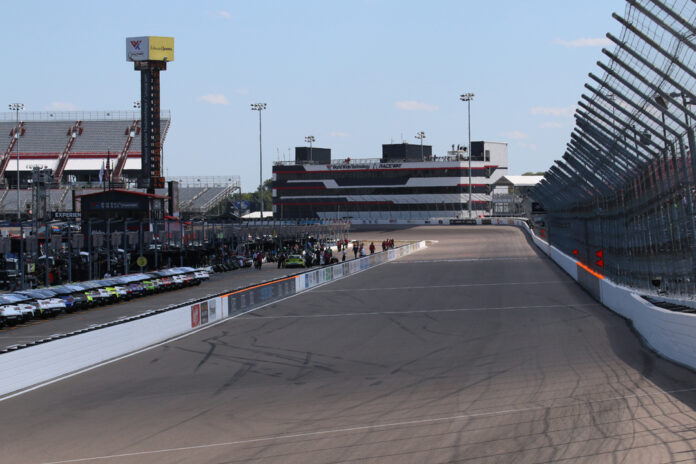
Gateway, officially World Wide Technology Raceway, hosts one of the most important stops of that run. It sits in Madison, Illinois, just across the river from St. Louis, and it’s a short, flat, technical 1.25-mile oval that forces drivers to brake hard and fight for every inch of space. 

You don’t need to know the rulebook to enjoy it. You just need to know this is where the elbows come out.

The main event is the Enjoy Illinois 300 on Sunday, September 13, a 240-lap, 300-mile Cup Series race that starts at 2 p.m. CT (3 p.m. ET) and broadcasts live on USA Network. 

Saturday night brings the O’Reilly Auto Parts Series race under the lights at 6:30 p.m. CT on The CW, and the Confluence Festival runs across the full weekend with live music and fan events wrapped around the racing program.

Official betting odds won’t drop until closer to race week, but early projections already lean toward two familiar names that BetMGM Missouri will likely have as favorites. 

Denny Hamlin is the expected Cup Series frontrunner after winning here in 2025, and Connor Zilisch is the one to watch in Saturday’s O’Reilly Series race on the back of a strong 2026 campaign. 

It’s fast, it’s loud, and it’s one of the most important weekends of the NASCAR year. Here’s everything you need to know.

When Is the NASCAR Gateway Race?

The Enjoy Illinois 300 NASCAR Cup Series race takes place at World Wide Technology Raceway, Madison, Illinois, on Sunday, September 13, 2026. 

The race starts at 2 p.m. CT (3 p.m. ET), runs 240 laps over 300 miles around a 1.25-mile track, and broadcasts live on USA Network.

The full weekend schedule runs as follows. Friday brings the Cup Time STL Short Track Classic III at Belle-Clair Speedway. 

Saturday features Cup Series practice and qualifying during the day, followed by the O’Reilly Auto Parts Series twilight race at 6:30 p.m. CT on The CW. Sunday is the Enjoy Illinois 300. 

The Confluence Festival runs the entire weekend, with live music and fan events alongside the racing.

What Makes Gateway Different?

Gateway is one of the more unusual circuits on the NASCAR schedule, and that unusual shape is exactly why races there tend to keep fans watching through the final laps. 

It’s a flat, egg-shaped 1.25-mile oval where the two ends of the track behave differently from each other, which means drivers can’t settle into one consistent rhythm and simply hold it there for 240 laps.

The heavy braking zones make corner entry critical. Drivers who can slow the car down, rotate it cleanly and find their speed on the exit tend to do better than those who rely on outright pace alone. 

Passing is possible, but an aggressive move that pushes the car wide can damage tires quickly and cost more time than it saves. 

Track position matters. The field can stay tightly grouped for long stretches, and pit strategy can flip the order when cautions bunch the field and create different fuel and tire windows for different crews.

Gateway rewards patience as much as speed. It’s not a track where drivers can throw the car into every corner and expect to come out ahead.

Why the September Date is key

The Gateway race lands in a stretch of the NASCAR season where there is no margin for error. As the Cup Series playoff battle progresses, every result carries consequences that extend beyond a single afternoon. 

A crash, a slow pit stop, or a penalty at this stage can create pressure that carries into the following race and beyond.

September conditions at Gateway can also change the technical picture from earlier in the season. Cooler air influences engine performance and tire behavior, and grip levels can shift across a race afternoon as temperatures change. Teams arriving with setup notes from warmer conditions will need to adapt rather than simply repeat what worked before.

For fans in the stands, cooler September weather also makes the weekend considerably more comfortable than the peak summer heat that accompanies earlier oval races on the calendar.

Why Playoff Pressure Changes the Race

When the championship is on the line, every decision a driver and team makes carries extra weight. Drivers who need a strong result may take risks they’d avoid in a regular-season race. Teams below the cutline may gamble on strategy during cautions, calling their drivers in early or staying out longer than the tires ideally want.

Gateway’s braking zones create passing opportunities, but they also create contact risk. A driver who gets collected in someone else’s incident when they were running comfortably inside the playoff positions faces a different kind of afternoon from the one they planned. In the playoffs, a slow pit stop isn’t just lost track position. A worn tire isn’t just a handling problem. Either can become the difference between advancing and going home.

A fast car is necessary at Gateway. It isn’t sufficient.

Drivers to Watch

Denny Hamlin leads the Cup Series conversation after winning at Gateway from pole in 2025. He led 75 of the 240 laps and claimed his 59th career Cup Series victory, making him the clear early projected favorite for Sunday’s race. 

His Joe Gibbs Racing team knows the track, while Hamlin’s tire management and strategic patience make him a natural contender again.

Tyler Reddick is another driver to watch, particularly if he arrives under pressure in the playoff standings. His pace on technical tracks could make him a factor when strategy begins to shape the race.

Connor Zilisch brings the Saturday-night intrigue. The young driver has enjoyed a strong 2026 O’Reilly Series campaign, including wins at Watkins Glen and Bristol, and his aggressive style makes him one of the most exciting names in the support race.

Why Fans Should Watch

Gateway offers a different kind of NASCAR race. The flat, egg-shaped layout rewards precision over raw speed. The playoff timing means the championship battle is present in every decision a driver makes. Hamlin’s defending-winner status gives the Sunday race an obvious focal point, and Zilisch’s Saturday storyline makes the full weekend worth attending rather than just Sunday afternoon.

The Confluence Festival, the live music, and the St. Louis setting make the whole thing feel more like a weekend destination than a single sporting event. The weekend combines 200 mph stock-car racing with a playoff battle where one mistake can change a driver’s season.

Final odds and entry confirmations will firm up closer to race week, but the ingredients for a compelling September weekend are already in place.

NHRA COUNTDOWN TO THE CHAMPIONSHIP KICKS OFF AT INAUGURAL DODGE NHRA GREAT LAKES NATIONALS PRESENTED BY MOPAR

MARTIN, Mich. (Aug. 13, 2026) – The 2026 NHRA Countdown to the Championship playoffs will see a new element of competition as the NHRA Mission Foods Drag Racing Series heads to US 131 Motorsports Park for the first time for the inaugural Dodge NHRA Great Lakes Nationals presented by MOPAR on Sept. 18-20.

The highly-anticipated debut at US 131 Motorsports Park will mark the opening race of the Countdown to the Championship, as the sport’s top drivers begin their six-race pursuit of an NHRA world title. With the points reset following the regular-season finale in Indy, every round and every point becomes critical during the six-race playoffs.

The top contenders in Top Fuel, Funny Car, Pro Stock and Pro Stock Motorcycle will arrive at the standout facility looking to make a strong opening statement at the Countdown’s first race in a region loaded with motorsports fans.

The Dodge NHRA Great Lakes Nationals presented by MOPAR is the 15th of 20 events during the 2026 NHRA season and there’s plenty of excitement brewing for NHRA’s national event debut at US 131 Motorsports Park. Fans will get a thrilling glimpse at 12,000-horsepower, 340-mph nitro machines all weekend, including two rounds of qualifying on both Friday and Saturday, leading into eliminations on Sunday.

With the added intensity of the playoffs, it makes for a can’t-miss weekend in Martin as NHRA continues its 75th anniversary celebration. The 2026 Dodge NHRA Great Lakes Nationals presented by MOPAR will also be broadcast on FS1, with elimination coverage beginning at 2 p.m. ET on Sunday, Sept. 20.

The Top Fuel ranks have been dominated throughout 2026 by reigning world champion Doug Kalitta and current points leader Shawn Langdon, the pair of stellar teammates from Michigan-based Kalitta Motorsports. Others to watch will be longtime Dodge driver Leah Pruett, as well as her husband and motorsports legend Tony Stewart, rookie sensation Maddi Gordon, Josh Hart, Justin Ashley and Antron Brown.

Matt Hagan has won each of his four world titles behind the wheel of a Dodge Funny Car. He’s currently in the championship mix in the loaded category, a group that includes current points leader and three-time champ Ron Capps, Kalitta Motorsports driver J.R. Todd, Funny Car rising star Jordan Vandergriff, his John Force Racing teammate Jack Beckman and reigning back-to-back world champion Austin Prock.

Six-time Pro Stock world champ Greg Anderson and KB Titan Racing teammate Dallas Glenn have battled for the points lead all season. The duo split wins at two of NHRA’s new facilities, taking victories in Valdosta and Maryland. They will be up against the likes of Aaron Stanfield, six-time champ Erica Enders, Matt Hartford and Greg Stanfield.

Reigning Pro Stock Motorcycle champion Richard Gadson earned wins in Gainesville and Norwalk, while his teammate and two-time champion Gaige Herrera won in Charlotte and Bristol. Matt and Angie Smith each have wins this season, while other standouts include John Hall, Steve Johnson, Chase Van Sant and Jianna Evaristo.

The Dodge NHRA Great Lakes Nationals presented by MOPAR will also feature racing in the NHRA Lucas Oil Drag Racing Series and Flexjet Factory Stock Showdown.

Race fans at US 131 Motorsports Park can enjoy the special pre-race ceremonies that introduce each driver and includes the fan favorite SealMaster Track Walk. They are also invited to congratulate the event winners at the winner’s circle celebration on Sunday to crown the first-ever national event winners in Martin. As always, fans get a pit pass to the most powerful and sensory-filled motorsports attraction on the planet. Fans can see their favorite teams in action and servicing their cars, get autographs and more. They can also visit NHRA’s Manufacturers Midway, where sponsors and vendors create an exciting atmosphere.

NHRA Mission Foods Drag Racing Series qualifying will feature two rounds at 12 and 2:30 p.m. ET on Friday, Sept. 18 and the final two rounds of qualifying on Saturday, Sept. 19 at 12 and 2:30 p.m. Final eliminations are scheduled for 10:30 a.m. ET on Sunday, Sept. 20. Television coverage includes qualifying on FS1 at 12 p.m. ET on Sunday before eliminations action at 2 p.m.

To purchase tickets to the 2026 Dodge NHRA Great Lakes Nationals presented by MOPAR, fans can visit www.NHRA.com/tickets. Children 12 and under are free in general admission areas with the purchase of an adult ticket. For more information about the NHRA, visit www.NHRA.com.


About Mission Foods

MISSION®, owned by GRUMA, S.A.B. de C.V., is the world’s leading brand for tortillas and wraps. MISSION® is also globally renowned for flatbreads, dips, salsas and Mexican food products. With presence in over 112 countries, MISSION® products are suited to the lifestyles and the local tastes of each country. With innovation and customer needs in mind, MISSION® focuses on the highest quality, authentic flavors, and providing healthy options that families and friends can enjoy together. For more information, please visit https://www.missionfoods.com/

About NHRA

NHRA is the primary sanctioning body for the sport of drag racing in the United States. NHRA presents 20 national events featuring the NHRA Mission Foods Drag Racing Series and NHRA Lucas Oil Drag Racing Series, as well as the JBS Equipment NHRA Pro Mod Drag Racing Series presented by Elite Motorsports, NHRA Flexjet Factory Stock Showdown™ and Johnson’s Horsepowered Garage NHRA Mountain Motor Pro Stock at select national events. NHRA provides competition opportunities for drivers of all levels in the NHRA Summit Racing Series and NHRA Street Legal™. NHRA also offers the NHRA Jr. Street® program for teens and the Summit Racing Jr. Drag Racing League® for youth ages 5 to 17. With more than 100 Member Tracks, NHRA allows racers to compete at a variety of locations nationally and internationally. NHRA’s Youth and Education Services® (YES) Program reaches over 30,000 students annually to ignite their interest in automotive and racing related careers. NHRA’s streaming service, NHRA.tv®, allows fans to view all NHRA national events as well as exclusive features of the sport. In addition, NHRA owns and operates three racing facilities: Gainesville Raceway in Florida; Lucas Oil Indianapolis Raceway Park; and In-N-Out Burger Pomona Dragstrip in Southern California. For more information, log on to www.NHRA.com, or visit the official NHRA pages on Facebook, Instagram, X and YouTube.

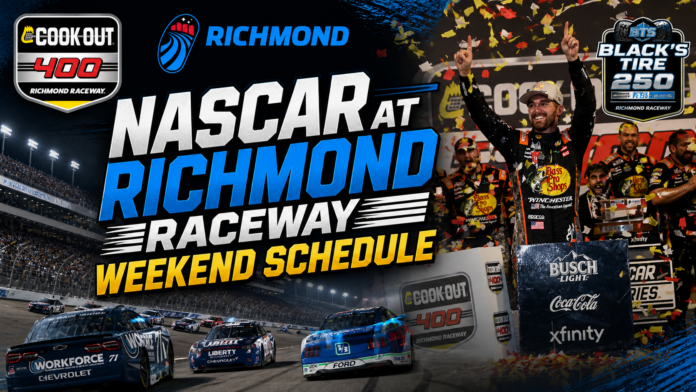
NASCAR at Richmond Raceway Weekend Schedule

The NASCAR Cup Series and the NASCAR CRAFTSMAN Truck Series are at Richmond Raceway this weekend. The Craftsman Truck Series Black’s Tire 250 starts off the weekend on Friday night at 7:30 p.m. ET on FS1. Then on Saturday night, the Cup Series Cook Out 400 begins at 6:30 p.m. ET on the USA Network.

Gen. Steven S. Nordhaus, Chief of the National Guard Bureau and a member of the Joint Chiefs of Staff, will serve as the Honorary Pace Car Driver for Saturday night’s Cook Out 400. Black’s Tire Service will serve as the entitlement partner for the NASCAR CRAFTSMAN Truck Series race, and will also be the primary sponsor on the No. 15 Tricon Garage Toyota with driver Tanner Gray.

The legendary Backyard Band from the DMV returns to Richmond Raceway on Saturday with the Go-Go Bus Museum for a live Fan Zone performance as part of the Richmond Takeover celebration.

Cup Series Notes for Richmond Raceway:

cook out 400

Only three races remain before the Chase. After Richmond (¾-mile short track), the Cup Series heads to New Hampshire Motor Speedway (1-mile flat oval) and Daytona International Speedway (2.5-mile high-banked drafting track) to decide the Chase drivers. Denny Hamlin, Ty Gibbs, Ryan Blaney and Tyler Reddick have clinched Chase spots.

The following drivers could clinch:

  • Chase Briscoe: Would clinch with 39 points
  • Christopher Bell: Would clinch with 43 points
  • Chase Elliott: Would clinch with 44 points
  • Carson Hocevar: Would clinch with 55 points
  • Chris Buescher: Would clinch with 57 points
  • Kyle Larson: Would clinch with 65 points
  • William Byron: Could only clinch with help
  • Daniel Suarez: Could only clinch with help
  • Joey Logano: Could only clinch with help
  • Bubba Wallace: Could only clinch with help

Austin Dillon won the last two races, in 2024 and 2025, and eleven of Denny Hamlin’s 64 Cup Series wins came in his home state of Virginia.

A stage winner has not won in the last nine races, and the driver who led the most laps has failed to win the last nine races. Three of the last four races had a caution in the final 10 laps, and five of the last nine races ended with a pass for the win in the final 10 laps, including three of the last four.

Best average finish in the NextGen era (seven races): Kevin Harvick 4.50 (4), Denny Hamlin 5.71 (7), Kyle Larson 7.86 (7), Joey Logano 8.43 (7), Josh Berry 8.75 (4), Christopher Bell 9.29 (7), and Brad Keselowski 11.00 (7).

NASCAR CRAFTSMAN Truck Series Notes for Richmond Raceway:

Richmond is the fourth of six short-track races in 2026 and the third of three straight, and the 17th race of 2026, with two races to go until the Chase.

Layne Riggs, Kaden Honeycutt, Chandler Smith, Christian Eckes and Gio Ruggiero have clinched a spot in the Chase, and any driver more than 76 points above the cut line following the race will clinch a spot in the Chase.

The following drivers could clinch:

  • Ty Majeski: Would clinch with 45 points
  • Ben Rhodes: Would clinch with 74 points
  • Grant Enfinger: Could only clinch with help
  • Daniel Hemric: Could only clinch with help
  • Stewart Friesen: Could only clinch with help

Last year’s race featured 13 lead changes, the second most at a race (record 17 in 1999), and the pass for the win came in the final 20 laps in six of the last seven races.

Tristan McKee is making his Truck Series debut. He has 3 career ARCA Menards Series wins, including last week at Iowa. He will also race at New Hampshire, Bristol, Phoenix and Martinsville.

The Weekend Schedule for Richmond Raceway:

FRIDAY, AUGUST 14

1:00 PM – 1:50 PM: NCTS PRACTICE TRACK HOT ON FS2
2:05 PM – 3:00 PM: NCTS QUALIFYING (IMPOUND) ON FS2
3:30 PM – 4:30 PM: NCS PRACTICE ON TRU TV
4:40 PM – 5:30 PM: NCS QUALIFYING (IMPOUND) ON TRU TV
7:10 PM: NCTS DRIVER INTRODUCTIONS (TURN 1) ON FS1
7:30 PM: NCTS RACE (STAGES 70/140/250 LAPS = 187.5 MILES) ON FS1

SATURDAY, AUGUST 15

6:25 PM: NCS DRIVER INTRODUCTIONS (TURN 1) ON USA
7:00 PM: NCS RACE (STAGES 70/230/400 LAPS = 300 MILES) ON USA
*All times are Eastern. NASCAR Cup Series (NCS), NASCAR Craftsman Truck Series (NCTS)