Home Blog Page 42

What It Takes to Move an Entire Racing Operation Across the Country

Photo by Caio Renato de Campos at pexels.com

Moving an entire racing operation isn’t just about loading up cars and hitting the road. It’s an intricate, time-sensitive process that demands careful coordination, expert planning, and a deep understanding of logistics. Whether it’s a professional motorsports team or a private racing outfit, transporting everything from high-performance vehicles to sensitive data systems requires precision and care. Let’s take a deep dive into what it truly takes to move an entire racing operation across the country — from the earliest stages of planning to the final moment when the engines roar to life again.

Understanding How to Move an Entire Racing Operation

A racing team isn’t just a few cars and a pit crew. It’s a mobile business that involves people, technology, and equipment working together like a well-oiled machine. Beyond the race cars themselves, a full operation includes spare parts, tools, computers, fuel systems, tires, and often even entire mobile garages. Some teams travel with custom-built trailers that serve as both workshops and command centers. The scope of what it takes to move an entire racing operation can rival that of a small company relocating across multiple states.

The Importance of Early Planning

Planning begins months before the move actually takes place. Teams need to coordinate schedules around racing seasons, testing events, and sponsor commitments. Every detail, from the size of the transport fleet to the timing of rest stops, must be calculated with precision. One overlooked detail can lead to significant setbacks, especially when a tight racing calendar leaves no room for delays. Early planning also involves securing the right permits for large or specialized vehicles that carry sensitive or hazardous materials like fuel and lubricants.

Inventory Management and Equipment Categorization

Every item in a racing operation has its place and purpose. Before the move, teams conduct detailed inventories to track each piece of equipment. Specialized software often helps categorize tools, parts, and gear according to their sensitivity and value. This ensures that essential items, such as diagnostic computers or engine components, receive the protection and priority they deserve. Teams also have to account for redundancy — bringing extra parts and gear just in case. Managing this kind of complexity requires the efficiency of a logistics company and the precision of a race engineer.

Why Some Teams Rely on Moving Services

When the margin for error is zero, professional movers who specialize in premium, delicate handling become invaluable. Racing teams often turn to white glove moving services for their expertise in transporting high-value and sensitive equipment. These services provide end-to-end handling that includes careful packing, climate-controlled transport, and personalized attention at every stage. For teams that need to move everything from cars to electronics with absolute precision, this level of care ensures that no part of the operation suffers damage or loss. It’s a small investment compared to the potential cost of replacing or repairing specialized racing equipment.

Specialized Transport Vehicles

Transporting race cars and their equipment calls for vehicles designed for the task. Most professional teams rely on custom haulers with climate control, hydraulic lifts, and built-in storage for delicate tools. These trailers are not only designed to keep the cars secure but also to act as mobile workshops that allow mechanics to perform maintenance en route. For larger teams, multiple rigs might travel together, carrying everything from pit equipment to hospitality setups. Every truck in the convoy has a dedicated role, and their coordination is as synchronized as a pit stop.

The Role of Logistics Experts

Behind every smooth relocation is a team of logistics professionals who understand the unique demands of motorsports. For instance, in Formula 1, the official logistics partner manages the transport of up to 1,200 metric tons of high-value freight per race across 21 countries and five continents, using a multimodal approach of air, sea, and road to handle everything from race cars and engines to hospitality suites. They coordinate routes, oversee the packing process, and manage timing to ensure each vehicle and container arrives exactly where it’s supposed to be. Experienced logistics coordinators also handle insurance, customs (if the move crosses borders), and emergency contingency plans. Their expertise allows the racing team to focus on what they do best — preparing for competition — without getting bogged down in the technicalities of transport.

Blue and red freight truck on a road
pexels.com

Packing and Protection for High-Value Assets

Racing equipment isn’t just expensive — it’s irreplaceable. Engines tuned for competition, aerodynamic components, and telemetry systems must be handled with utmost care. Packing materials include high-density foam, custom crates, and protective coverings that minimize vibration and shock. The same goes for race cars themselves. Their suspension systems and bodywork are delicate, so they are often secured using wheel straps and liftgate systems to prevent any movement during transit. Even a small misalignment could affect race-day performance, so packing is treated as an art form in itself.

The Human Factor: Moving the Team

A racing operation is powered by people — drivers, engineers, mechanics, and support staff. When moving across the country, ensuring their comfort and readiness is just as important as moving the cars. Some team members may fly ahead to set up at the new facility or racetrack, while others accompany the convoy to monitor the equipment. Coordinating travel schedules, lodging, and meals for dozens of professionals takes exceptional organization. Keeping morale high during a demanding cross-country move ensures that everyone arrives ready to perform at their best.

The Precision of Timing and Scheduling

In racing, timing is everything — drivers, on average, begin launching their cars ~0.2 seconds after the starting lights go out. This principle applies to relocation as well. The move must be scheduled so that everything arrives in sync, with enough time for setup, testing, and troubleshooting. For instance, if a team is moving from one coast to the other, the logistics plan might include detailed time checkpoints along the route. This level of coordination requires constant communication among drivers, logistics staff, and the team’s management. A single delay could disrupt the entire chain of operations, making precise scheduling one of the most critical aspects of the move.

Setting Up at the New Location

Once the convoy arrives, the next phase begins — setting up the new facility or trackside base. This stage is just as complex as the move itself. The team unloads equipment in a specific order to set up garages, pit areas, and technical stations efficiently. They configure the IT and data systems to keep communication between engineers and drivers seamless. Every component, from tire racks to telemetry antennas, goes exactly where it belongs. It’s a race against time to get everything operational before the next event or test session begins.

Testing and Recalibration After the Move

Even after the move, teams can’t assume that everything is ready to go. Sensitive components often need recalibration due to changes in temperature, altitude, or even minor vibrations during transport. Engineers meticulously test each system — engines, electronics, and aerodynamics — to confirm that nothing has shifted or malfunctioned. This stage ensures that performance remains consistent and that no surprises await on race day. It’s a vital step that bridges the gap between relocation and competition.

The Cost of Moving a Racing Operation

Relocating an entire racing team across the country is a major financial undertaking. The cost depends on distance, equipment volume, and the level of service required. Fuel, permits, insurance, and labor all add up quickly. Yet, for teams that view relocation as an investment in performance, it’s a necessary part of maintaining a competitive edge. The logistical expense pales in comparison to the potential rewards of seamless operation, reliable transport, and consistent preparation for every race on the calendar.

A calculator, notepad, and cash money on a white surface
pexels.com

Lessons Learned from the Track to the Road

Racing teams know that success depends on precision, adaptability, and teamwork. The same principles apply to moving across the country. Every challenge — from managing tight schedules to safeguarding fragile equipment — is met with the same focus that drives success on the racetrack. The experience often strengthens team unity, proving that the same attention to detail that wins races also makes for a flawless relocation.

More Than Trucks and Packing Materials

The effort to move an entire racing operation across the country takes far more than trucks and packing materials. It’s a monumental effort that combines technical knowledge, human coordination, and logistical mastery. In the world of motorsports, where precision defines victory, the journey to the next track is every bit as important as the race itself. With the right planning, teamwork, and dedication, a racing operation can cross any distance and arrive ready to win.

How To Wire A Rocker Switch Safely And Correctly

Wiring a rocker switch may seem simple until you’re staring at a bundle of wires, wondering which one goes where. A wrong connection can result in a blown fuse, a dead circuit, or worse- a safety hazard.  

Many DIYers have this hesitation when installing a switch for lights, a fan, or automotive accessories. It’s not that the process is overly complex; it’s that precision and safety matter at every step.  

If you’ve ever been unsure about wire terminals, circuit load, or grounding, this guide is here to make things clear. In this article, we’ll break down how to wire a rocker switch safely and correctly. 

1. Understand the Basics Of A Rocker Switch  

Before you pick up a tool, it is important to understand how rocker switch wiring works. A rocker switch is a device that turns the flow of electricity on and off. Press on one side and it will complete the circuit, turning your load on (light or a motor), press on the other side and it will break the circuit, stopping the flow of electricity.   

Rocker switches of most types have three terminals: Power (Input), Load (Output), and Ground (or Neutral). The power terminal will connect to the source voltage, the load terminal connects to the load (device), and the ground will connect to provide safe operation.   

Some switches may only have two terminals as they are intended for simple on/off functions. Others may have LED indicators requiring a separate ground connection. Knowing what type of switch you are utilizing or working with will help avoid confusion when wiring your new switch and/or troubleshooting your current setup when trying to match circuits to switch type. 

2. Get The Right Tools and Materials Ready 

It is critical to prepare well when wiring a rocker switch. Here are some of the materials and tools you will need:  

  • Rocker switch (2-pin or 3-pin, based on your need)  
  • Electrical wire (as appropriate gauge for your load) 
  • Crimp connectors and wire strippers
  • Heat-shrink tubing, or electrical tape
  • Multimeter to test your connections  
  • Screwdriver and possibly a soldering iron  

Using higher-quality materials can reduce the chances of loose connections and short circuits. If mixing higher currents in your switches (e.g., automotive or marine systems), check that the switch is rated for the load you will use. 

3. Safety First: Disconnect the Power 

While this step may seem self-evident, it is simultaneously the step most people rush through. Always turn off the power source before touching any wire. For household wiring, turn off the breaker. For your vehicle, remove the negative terminal from the battery.  

If the circuit stays powered on, electrical current can be very damaging to both you and the device. Always make sure it is off with a multimeter before making sure there is no voltage flowing. Only continue if you are assured the voltage is indeed off. 

4. Connect the Power, Load, and Ground Wires 

Once you have located your switch and have the right tools, it’s time to finish the wiring. Connect one end of the power wire of your power source: battery, fuse box or wall circuit, to the input terminal. This wire constitutes the voltage to the switch. So, make sure it is well fused to avoid current damage. 

The second step is to attach the load wire to the output terminal. This wire is the power output of the switch to your device, like a light, a fan, or a motor. Always employ a wire gauge that has the capability of safely carrying the current draw of a device.   

An under-strain or loose wire may get hot, and therefore ensure that the connection is tight and well-insulated. Make sure that all terminals are tight, well insulated, and properly routed. A clean, secure wiring job ensures safe operation and long-term reliability. 

5. Test the Connections Before Mounting 

After connecting all the wires, test the setup before mounting the switch. Connect the power source and toggle the switch. The appliance is supposed to switch on and off.  

In case nothing occurs, examine loose wires, opposite polarity, or wrong terminal connection. Check voltage at every point with a multimeter. Testing before final installation saves time and avoids rework later. 

6. Secure and Mount the Rocker Switch 

After confirming proper operation, secure the switch in its correct position. The majority of rocker switches have built-in clips that enable them to slide into place, and some switches use small screws.   

Ensure that the wires are not overstrained and that they are laid in a clear manner to avoid pinching and rubbing on the sharp edges. Wrap the wiring with zip ties or clamps to get it in order. Clean wiring makes the wiring look professional, as well as making troubleshooting or future maintenance easier. 

7. Final Safety Check and Maintenance Tips 

Before calling it done, perform a final inspection: 

  • Verify that all terminals are tight. 
  • Ensure no bare wire is exposed. 
  • Confirm that your fuse or breaker rating matches the circuit load. 
  • Double-check ground connections. 

Check the switches at regular intervals, especially in automobiles or outdoor conditions where vibration and moisture may have a toll on wiring. A quick maintenance check can prevent bigger issues down the road. 

Final Thoughts 

Wiring a rocker switch isn’t complicated once you understand the logic behind it. Every connection serves a purpose, and when done carefully, the result is a clean, reliable, and safe setup. By identifying terminals correctly, using the right tools, and taking safety precautions, you can wire a rocker switch like a professional. 

Exploring the Immediate and Delayed Impact of a Car Crash on Your Health

Around 40,000 people die in car accidents across the U.S., as per data from the National Highway Traffic Safety Administration (NHTSA), with scores more injured. However, not all deaths and injuries occur within the first 24 hours or days after the mishap. In some cases, injuries and even deaths manifest long after. (1)

Legal experts in tort or personal injury law refer to this delay as the “injury gap,” and it can be a thorn in any car accident injury claim. As soon as the adrenaline and endorphins from the crash wear off, a victim may start to feel pain that hadn’t been there. And because they didn’t feel any pain that time, they tend not to seek medical treatment.

This gives the other party more leverage to protect them from liability, reducing the victim’s financial compensation. Learn how a car accident, no matter how bad, can be life-changing in a bad way when not acted on quickly.

Your Body’s Reaction to a Crash

Medical experts say the human body has a way to protect itself from threats, a response also known as the fight-or-flight response. In this situation, the brain signals the adrenal glands to start pumping adrenaline into the bloodstream.

According to the Endocrine Society, adrenaline (also known to the medical community as epinephrine) forces blood vessels to redirect blood flow toward the muscles. This allows a person to escape danger, even with a serious injury. Other effects include an increase in strength and performance, heightened awareness, and enhanced pain tolerance.

The group notes that these effects typically last only an hour after the stress subsides. At that point, the person may begin to feel the pain from their injuries. In some cases, excess adrenaline may remain in the bloodstream even after the danger has long passed. This risks a host of health conditions, from insomnia to internal organ damage.

And while being able to feel less pain is helpful in a dangerous situation, it isn’t anywhere else. Pain is your body’s way of signaling you that there’s something wrong, whether it’s a flesh wound or a fracture. This is how certain injuries like traumatic brain injury turn deadly, as the lack of a painful sensation lulls them into a false sense of safety.

Long-Term Repercussions

A car crash victim’s suffering doesn’t necessarily end once the adrenaline rush subsides. The accident can leave them mentally scarred, affecting their ability to enjoy their lives to the fullest. For instance, the victim can still be in a state of psychological shock (not to be confused with hypovolemic shock caused by severe blood loss).

But, how long can shock last? Medical experts say it depends on the person, ranging from a few days to several years. Knowing the symptoms is crucial not just for seeking appropriate post-crash care but also for compensation for the pain and suffering.

Under the Diagnostic and Statistical Manual of Mental Disorders (DSM-5), shock that lasts for three days to one month can evolve into acute stress disorder (ASD) if the auto accident victim shows at least nine of the following symptoms: (2)

  • Recurring memories of the car accident
  • Having nightmares of the car accident
  • Flashbacks as if the crash is happening now
  • Stress response to anything that reminds the victim of the accident
  • Struggling to feel positive emotions (e.g., happiness, satisfaction)
  • Reality-altering sensations (e.g., being in a daze, time slowing)
  • Unable to remember essential details related to the accident
  • Avoiding memories or feelings related to the incident
  • Avoiding reminders related to the incident (e.g., driving or riding a car)
  • Difficulty getting enough sleep
  • Sudden outbursts toward people or objects
  • Staying alert even when there’s no imminent threat
  • Difficulty concentrating on completing tasks
  • Exaggerated reactions to loud or sudden noises

Also, according to DSM-5, ASD can become post-traumatic stress disorder (PTSD) if the symptoms persist for more than a month. It’s more common than you might think, with a study published last March stating that 30% of all road traffic accidents in North America involve victims who develop this mental disorder. (3)(4)

crash

ASD may be no joke, but PTSD is nothing to laugh about. If you’ve read about war veterans suffering from PTSD, you should know that this condition rarely goes away entirely and on its own. As much as a person doesn’t want to remember the trauma, they can’t help but do so because the environment keeps triggering it.

As a result, the constant triggers disrupt their routines. A car accident victim is reluctant to go outside for groceries or medicine, fearing they may be involved in another crash. Work is also disrupted, whether in the office or while working from home, resulting in absences and lost wages. All this makes treatment of physical and emotional distress difficult.

The effects of PTSD worsen if the victim becomes disabled as a result of the car accident. Besides the pain that comes with it, the disability serves as a reminder of the horrendous incident. It can lead to further emotional distress, such as anxiety, depression, and panic attacks, which add to the victim’s pain and suffering.

Seek Help After a Car Accident

Regardless of the accident or injury severity, it’s important to seek help immediately after a car accident. Seek medical care for your injuries at a hospital, after which talk to a personal injury law firm to explore your options for compensating your medical bills and other costs.  

References

1.  “NHTSA Estimates 39,345 Traffic Fatalities in 2024,” Sources: https://www.nhtsa.gov/press-releases/nhtsa-estimates-39345-traffic-fatalities-2024

2.  “Table 3.30 DSM-IV to DSM-5 Acute Stress Disorder Comparison,” Source: https://www.ncbi.nlm.nih.gov/books/NBK519704/table/ch3.t30/

3.  “Exhibit 1.3-4DSM-5 Diagnostic Criteria for PTSD,” Source: https://www.ncbi.nlm.nih.gov/books/NBK207191/box/part1_ch3.box16/

4.  “Post-traumatic stress disorder among road traffic accident survivors: A systematic review and meta-analysis,” Source: https://www.sciencedirect.com/science/article/pii/S2590198225000533

Phone Microphone Cutting Out During Calls? Common Causes & When to Get It Professionally Repaired

Photo by depositphotos at https://depositphotos.com/

Introduction

There’s nothing more frustrating than being in the middle of an important conversation and hearing, “Hello? You’re cutting out again.” A phone with a faulty microphone can make simple communication feel impossible. Every call becomes stressful, and no matter how loudly you speak, the other person barely hears you.

The truth is, when your microphone keeps cutting out during calls, your phone is trying to tell you something. The issue could be as small as a clogged mic hole or as serious as an internal hardware fault. In this guide, you’ll learn the real reasons your phone microphone fails, how to fix it safely, and when to stop DIY attempts and visit a professional for phone repair in Aurora, CO through The Phone Plug.


How a Phone Microphone Actually Works

Your smartphone has more than one microphone. Typically, there’s a primary mic at the bottom for calls, one near the top for noise cancellation, and others for video recording or voice assistants. These microphones work together to create clear, crisp sound while blocking background noise.

When something interrupts this chain — dirt, damage, or software issues — your voice starts cutting out, echoing, or disappearing mid-sentence. Understanding how this system works helps narrow down the cause before seeking repair.


Section 1: Physical Reasons Your Microphone May Cut Out

1.1 Dust or Lint Blocking the Mic

Over time, tiny particles of lint or dust can block your phone’s mic openings. Even a thin layer of fabric fibers can muffle your voice and cause your audio to fade during calls.

If you carry your phone in your pocket or bag, lint can easily collect inside the small grill near the charging port. A blocked mic hole prevents sound waves from reaching the microphone membrane properly, creating that “muffled or distant” effect.

Quick fix:
Remove your case and inspect the bottom edge. Use a soft, dry brush or gentle compressed air to clear the hole. Avoid pins or toothpicks — they can puncture the mesh.

If cleaning improves your call clarity but the issue returns within days, deeper internal cleaning might be needed. That’s where professional servicing becomes the smarter choice.


1.2 Misaligned or Poorly Fitted Cases

A common but overlooked problem comes from low-quality protective cases. Some cases don’t align perfectly with your phone’s mic port. When that happens, your voice echoes inside the case instead of traveling directly into the microphone.

Remove the case temporarily and make a test call. If your voice suddenly sounds clear, the case is the issue. Replacing it with a properly fitted one is an instant fix.


1.3 Physical or Water Damage

Drops, pressure, or exposure to moisture can damage delicate mic components. A single fall can loosen the internal solder joints, or even a small splash can corrode the microphone membrane.

If your phone’s microphone started failing after being dropped or wet, chances are the mic connector has been compromised. You might also notice that recordings sound distorted or that your voice disappears completely during long calls.

In these situations, internal repair or component replacement is usually required. Skilled technicians at The Phone Plug specialize in diagnosing and fixing such mic-related issues. If you’re dealing with these symptoms, it’s time to consider iPhone repair in Aurora, CO throughThe Phone Plug’s service center.


1.4 Loose Internal Connections

Inside every phone, ribbon cables connect the mic module to the logic board. With time or repeated shocks, these connections can loosen, causing the mic to work intermittently. You might experience moments where the mic cuts out completely, only to return seconds later.

Repair experts can resolder or replace these small components precisely. Attempting to fix them at home often causes more harm than good because of the microscopic scale of the parts involved.


Section 2: Software-Based Causes

Sometimes, the microphone itself is perfectly fine — it’s the software that’s causing trouble.

2.1 Microphone Permissions Turned Off

Modern phones let you control which apps can access your microphone. After an update, your calling or messaging app might lose that permission.

To fix it, open your settings, navigate to your privacy or permissions section, and ensure that the “Phone” app is allowed microphone access. Once restored, test a call again.


2.2 Bluetooth Confusion

If your phone recently connected to a wireless headset or car system, it may still be routing voice input to that disconnected device. This makes it seem like your mic isn’t working when, in reality, the phone is sending your audio elsewhere.

Turn off Bluetooth completely and retry a call. If your voice becomes clear, unpair unused accessories or reset Bluetooth settings.


2.3 Third-Party App Interference

Apps that record audio or manage noise can interfere with your main mic. Voice-recording apps, equalizer tools, or call-recorders sometimes keep the microphone “occupied,” preventing your phone from using it for normal calls.

Booting the phone into safe mode disables third-party apps temporarily. If your mic works perfectly in safe mode, one of your installed apps is likely the culprit. Uninstall or update them one by one to identify the issue.


2.4 System Updates and Glitches

Occasionally, operating system updates include changes to audio calibration or noise-reduction software that affect microphone performance. If your mic issue started right after an update, try resetting system or network settings. This refreshes configurations without deleting personal data.


Section 3: How to Test Your Microphone Before Visiting a Repair Shop

Before assuming the worst, perform a few simple tests to pinpoint the problem.

3.1 Test With Voice Recorder

Record a short message in your phone’s default voice recorder. Play it back.

  • If your voice sounds clear, your microphone is functional, and the issue may be app-specific.
     
  • If your voice sounds muffled or cuts off, the hardware or software path needs attention.
     

3.2 Call Test in Regular and Speaker Mode

Phones often use different microphones for standard calls and speakerphone.

  • If the issue only happens in normal mode, the bottom mic might be damaged.
     
  • If it happens only in speaker mode, the top noise-canceling mic could be at fault.
     

This simple test helps identify which microphone requires service.


3.3 Use a Headset to Compare

Plug in wired earphones or connect a trusted Bluetooth headset. If your voice is clear using the headset mic, your phone’s built-in microphone is indeed the issue.


Section 4: When DIY Isn’t Enough

If you’ve cleaned, tested, and reset everything yet callers still can’t hear you, it’s time to stop troubleshooting and turn to a professional.

Here’s when to bring your phone in for repair:

  • The microphone stops working after a drop or liquid exposure.
     
  • Your voice fades in and out despite resets and cleanings.
     
  • You depend on your phone for business or daily communication.
     

A certified technician can identify whether the problem is in the mic assembly, the audio IC chip, or the connecting flex cable. Professional repair ensures accuracy, prevents secondary damage, and often comes with a warranty for peace of mind.


Section 5: Inside a Professional Mic Repair

When you bring your phone to a service expert like The Phone Plug in Aurora, CO, here’s what the repair process usually looks like:

  1. Diagnosis: Specialized tools test whether the mic hardware is defective or if a software reflash will solve the issue.
     
  2. Cleaning: Technicians clean both external ports and internal connections using precision tools and ultrasonic equipment.
     
  3. Component Replacement: If necessary, they replace the mic module or audio flex cable with high-quality parts.
     
  4. Testing: After repair, they check mic performance across calls, recordings, and speaker modes.
     
  5. Final Quality Check: The device is reassembled and verified under real-world conditions before being returned.
     

Professional repair doesn’t just restore your mic — it ensures long-term reliability and consistent performance across all apps.

If you’re in Colorado, you can find the store conveniently located onGoogle Maps here.


Section 6: Why Professional Repair Saves You More Than It Costs

It’s tempting to ignore a minor audio glitch, but leaving it unfixed can lead to deeper damage. Here’s why acting early saves money:

  • Prevents Board Damage: A faulty mic can short circuits over time, damaging the logic board.
     
  • Avoids Worsening Corrosion: Even small amounts of trapped moisture can spread.
     
  • Protects Your Warranty: Professional repairs maintain documentation for future service claims.
     
  • Saves Business Calls: Missed or muffled calls can affect work credibility more than a one-time repair cost.
     

Getting your phone inspected by experts is an investment in reliability — not an expense.


Section 7: Preventing Future Mic Issues

After your phone’s microphone is fixed, you can keep it performing well by following a few smart habits:

  1. Keep Ports Clean: Gently brush the mic holes once a month.
     
  2. Avoid Humid Environments: Steam or condensation can damage sensitive mic components.
     
  3. Use Quality Cases: Always choose cases with precise mic cutouts.
     
  4. Update Software Regularly: Patches often contain audio improvements.
     
  5. Store Smart: Avoid keeping your phone in pockets with dust, tissues, or coins.
     

Preventive care takes seconds but saves you costly repairs down the road.


Section 8: Final Thoughts

A phone that keeps cutting out during calls isn’t just annoying — it’s a real disruption to your daily life. The cause could be as simple as a dust blockage or as complex as a damaged mic circuit. By identifying symptoms early, you can decide whether cleaning, settings adjustments, or professional help is the right move.

If your phone microphone still acts up after troubleshooting, trust a reliable local team for a quick, lasting fix. The Phone Plug in Aurora, CO, provides same-day smartphone repair services, ensuring your device sounds and performs like new again.

Don’t wait for the next dropped conversation — visit your trusted experts today and restore crystal-clear communication.

Disclaimer

This article is for informational purposes only and should not replace an in-person technician assessment. Always consult a certified repair expert before attempting any hardware fixes on your own device.

What the 2025 Brazilian Grand Prix Odds Reveal About Favorites

Photo by Clément Delacre on Unsplash

The Brazilian GP stands out as one of the most thrilling stops on the Formula 1 calendar. With its passionate fans, unpredictable weather, and the legendary Interlagos circuit, this race often delivers unexpected results. As the 2025 Brazilian Grand Prix approaches, sportsbooks are already posting their early lines. 

These Brazilian Grand Prix odds not only forecast who’s likely to dominate the track but also reveal more profound insights into the current F1 power balance. For bettors and fans alike, the odds tell a story, one of dominance, resurgence, and emerging talent poised to disrupt the status quo.

Max Verstappen: The Benchmark of Dominance

No surprise here, Max Verstappen sits atop the 2025 Brazilian GP odds as the heavy favorite. The Red Bull ace continues to redefine consistency, demonstrating unmatched pace across a range of circuits. His Interlagos record speaks volumes: clinical overtakes, tactical control, and a knack for handling variable conditions that often trip up lesser drivers.

Verstappen’s dominance is reflected in sportsbooks, particularly in FanDuel’s odds, which list him at the shortest price once again. His ability to maximize car performance, adapt mid-race, and remain calm under pressure makes him the logical pick for bettors seeking reliability.

However, with dominance comes risk; low returns on a Verstappen win push bettors to explore prop bets, such as fastest lap or margin of victory. Verstappen remains the cornerstone of most betting strategies for the Brazilian GP. Still, sharp bettors know that even a minor Red Bull miscalculation at Interlagos can open the door for underdogs.

Lando Norris: The Rising Challenger

Lando Norris has evolved from a promising talent to a full-fledged contender, and the 2025 Brazilian GP odds reflect that transformation. McLaren’s resurgence has armed Norris with the pace to challenge Verstappen on equal footing. His blend of aggression and composure makes him especially formidable around Interlagos’s tight, twisting corners, where mechanical grip and balance reign supreme.

Bettors are taking note. The odds reflect that Norris is no dark horse, especially as the championship leader, even if only by a single point. His 2024 podium in São Paulo proved he can squeeze top-tier performance out of even the most demanding setups. For those curious about the latest lines and wanting to dive deeper into F1 betting insights, FanDuel’s F1 odds page is a great resource. In 2025, the improved McLaren package gives him a legitimate shot at victory.

For those looking beyond the outright winner markets, Norris presents substantial value in podium and fastest lap bets. His hunger to secure that elusive win, combined with McLaren’s growing reliability, positions him as the dark horse who could upset the favorites when the Brazilian GP gets underway.

George Russell: The Calculated Threat

George Russell remains one of Formula 1’s most cerebral drivers, and the 2025 Brazilian GP could showcase his precision and strategic acumen. With Mercedes showing flashes of resurgence, Russell’s steady performances and tactical decision-making keep him in the upper tier of the Brazilian Grand Prix odds. His smooth driving minimizes tyre degradation, a crucial advantage in the hot, variable conditions at Interlagos.

Bettors value Russell for his consistency and his potential to capitalize on race-day chaos. He’s not always the flashiest pick, but he often converts opportunities when others falter. If Mercedes delivers a competitive power unit and aerodynamic balance, Russell’s odds for a top-three finish look increasingly attractive.

While Verstappen remains the favorite, Russell embodies the kind of disciplined, intelligent racing that can steal points, and podiums, when the odds least expect it. For bettors, that combination of precision and potential payoff makes him an appealing play.

Oscar Piastri: The Quiet Disruptor

Still early in his Formula 1 career, Oscar Piastri is proving that calm precision can be just as lethal as raw aggression. The 2025 Brazilian GP odds finally reflect his growing maturity, placing him closer to the established frontrunners. As McLaren continues its upward trajectory, Piastri’s smooth handling and racecraft make him a legitimate contender for surprise podiums.

Piastri’s greatest strength lies in adaptability. He learns quickly, a key asset at Interlagos, where changing weather can turn a comfortable lead into a strategic nightmare. His impressive qualifying performances and improving tire management give him a fighting chance to outperform his odds.

For bettors, Piastri represents value. He’s not yet priced as a favorite, which creates opportunities in top-six or podium markets. His combination of technical skill and strategic awareness suggests he’s ready to translate consistency into podium finishes, potentially reshaping how sportsbooks frame the mid-tier contenders in future Brazilian GPs.

Betting on More Than Speed

The 2025 Brazilian Grand Prix isn’t just another stop on the F1 calendar, it’s a high-stakes showcase of strategy, skill, and unpredictability. Odds tell one story: Verstappen remains the benchmark, Norris and Russell are mounting credible challenges, and Piastri could shake up expectations. But beyond the numbers, the race reflects the shifting dynamics of Formula 1, where momentum, mindset, and split-second decisions define greatness.

Every lap at Interlagos tests drivers’ precision, adaptability, and nerves under pressure, making it as much a mental battle as a physical one. For bettors, understanding these layers is key to spotting value; for fans, it’s what makes Interlagos one of the most thrilling circuits of the year. Ultimately, the Brazilian GP offers excitement both on the track and off it, rewarding those who read between the lines as much as those who cheer from the grandstands.

*Content reflects information available as of 2025/11/04; subject to change.*

Fast Lives, Loyal Companions: How Racing Drivers Find Balance with Their Dogs

The professional sphere of motorsport is a giant in a hurry, with extensive travel timetables, high prices, and unremitting demands on results. Racing can give some drivers the same level of excitement as it does strain on their minds. When the competition, discipline, and razor-sharp concentration are the norms of the sport of a person, serenity off the track may be the key.

Therein lies the best friend of man; behind the helmets and the horsepower, most of the world’s top drivers have been able to settle, level, and even be inspired in their association with their dogs.

The Emotional Side of Speed

Lewis Hamilton is not always in the car when he is not driving a Mercedes. There are instances when he is spotted walking or spending time with his favorite bulldog, Roscoe. The seven-time Formula 1 world champion has been quoted as saying that his dog made him find peace and companionship in the most active years of his career.

Roscoe was not a pet at all; he was a constant reminder of sanity in the storm. Hamilton had once told him that he relaxed by spending time with his dog to get out of the stress of racing, interviews, and travelling around the world. Following the death of Roscoe in 2025, Hamilton wrote an emotional letter, referring to him as the best friend a man could ever have.

Hamilton is not the only one to have that connection between animal and athlete. Daniel Ricciardo has a Kelpie called Killua, Lando Norris has a reputation for being a dog love,r and NASCAR drivers such as Joey Logano and Ryan Blaney often post about their activities with their pups. Dogs to them are not merely pets, but family, points of emotion, and even partners in stamina and concentration.

Dogs and the Science of Stress Relief

Racing drivers condition their bodies as athletes and their minds like pilots. Long races may be a physical and mental burden. Studies have always indicated that animal time decreases cortisol (stress hormone) and raises Oxytocin, which is the hormone that causes emotional attachment and relaxation.

No wonder most of the high-profile performers, be it in sports, business, or entertainment, have their pets to lean on. Particularly, dogs are not judgmental companions and promote habitual things: morning walks, meal time, and moments of silence that compel even the most hectic of professionals to relax.

This type of grounding may be critical in a high-adrenaline motorsport setting. Not about distraction: it is about balance.

The Hidden Challenge: Keeping Pets Healthy on the Move

Life in the racing circuit is not easy for the human beings involved in it – and it can be the same with their four-legged friends. Travelling all the time, climate change, and the change of habits of the dog may influence his/her health and levels of stress. This is the reason why professional drivers who bring pets in their cars tend to use a mix of professional care and the use of new technologies to ensure they are happy and healthy.

Tools like the dog breed test have become increasingly popular among dog owners who want to understand their pets better. These DNA tests reveal detailed information about a dog’s breed composition, inherited traits, and potential health risks. For someone like a racing driver, who may be away from home for weeks at a time, that insight can be invaluable – helping them and their caregivers anticipate and manage health needs before problems arise.

Even Hamilton was known to make sure that Roscoe was fed a healthy, plant-based meal and provided the highest quality of care, even driving him to races and events. That degree of interest is indicative of a more general pattern: as individuals gain increased knowledge of the biology of their pets, they can offer them a kind of care that is not just loving, but also scientific.

A Symbol of Loyalty and Humanity

It has a romantic similarity in the relationship between drivers and their dogs. Racing is the sport of control, accuracy, and danger – when dogs remind their owners of spontaneity, love, and trust. It is a balance between opposites, which leaves most racers emotionally stable.

The Takeaway: Compassion at Full Speed

Milliseconds make the difference between winning and losing in motorsport. However, it is not only the physical that is important when it comes to the duration of time a driver is able to endure, but the emotional as well. To several racers, their dogs play an important role in ensuring emotional equilibrium.

In the end, such stories are important to us because even in the fast-paced world of racing, compassion, care, and loyalty remain the leading principles. On the podium or at home, the relationship between man and his dogs remains one of the longest-lasting alliances – one that is not based on speed, but on unconditional love.

Chase Elliott Receives Most Popular Driver Award for 8th Consecutive Year

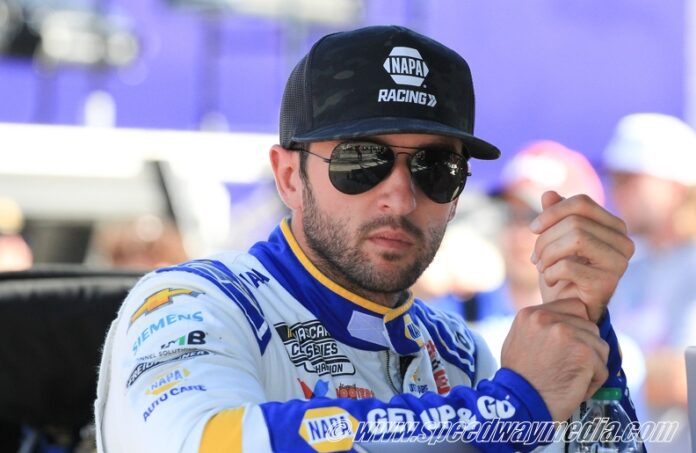
Chase Elliott photo by David Myers for SpeedwayMedia.com.

Scottsdale, Arizona – Chase Elliott recorded two victories this season and reached the Round of 8 in the playoffs, delighting his fan base that once again rewarded him with the National Motorsports Press Association’s Most Popular Driver award.

Elliott was announced as the award’s recipient Tuesday night during the annual NASCAR Awards ceremony at the J.W. Marriott Phoenix Desert Ridge. It is the eighth consecutive year Elliott has been voted the winner. The Dawsonville, Ga., native has won the award in eight of his 10 seasons as a NASCAR Cup Series driver.

The only major NASCAR award determined solely by the vote of race fans, Elliott received 56 percent of the total votes cast. Other drivers placing in the top five, alphabetically, were Ryan Blaney, Ross Chastain, Denny Hamlin and Kyle Larson.

A driver must have declared for NASCAR Cup Series points to be eligible for the award.

“Thank you (the fans) for the votes. Thank you for taking the time out of your day to do that and support us in that way and support me in that way,” Elliott said.

“But it’s so much more than the votes. I tell a lot of people this that I talk to about it, that it’s really about the people and the support that I get to see first-hand. I know not everybody has that vantage point or that perspective, but it truly is incredible and every year it blows me away to travel to parts of the country that you would never think that people are that passionate about what we’re doing. I just want to make sure everyone understands that I’m forever grateful for that, whether we win the award or don’t win the award. I think I have some of the best fans in the world and really appreciate you guys supporting me and pushing us and wanting the best for our team and being there on the good days and the bad.”

Elliott’s father, NASCAR Hall of Fame member Bill Elliott, holds the record for the most award wins at 16. Dale Earnhardt Jr. won the award 15 times. The Most Popular Driver award has been presented to either an Elliott or an Earnhardt for 35 consecutive years.

The NMPA Most Popular Driver Award is one of the longest-running awards presented annually by the National Motorsports Press Association.

Is there a perfect NASCAR Championship Playoff System?

Photo by Ron Olds for SpeedwayMedia.com.

Is there such a thing as a perfect NASCAR Championship Playoff System? The short answer is no, but especially when one race can erase a season of near flawless perfection.

How do you plan for the unexpected crashes or the cautions that will inevitably come at the most inopportune moments?
A team can complete perfect pit stops, and a driver can execute a flawless race, all to no avail.

Just ask Denny Hamlin.

His championship hopes vanished due to an overtime restart at the end of the final race.

“Did the best I could,” Hamlin said. “Everything I really prepared for happened today. I felt like we responded. Even losing track position at one point, just battling back. Did really well on restarts. Hadn’t been good on restarts for the bulk of the year.

“Yeah, the team brought a great championship car. I felt like I drove it just right up until two laps to go. Yeah, this is the part that stinks…

“Golly, in this moment I never want to race a car ever again,” Hamlin said with a wry smile. “I mean, my fun meter is pegged.”

And what about the Xfinity Series driver who won 10 races, captured a record 18 consecutive top-five finishes, and won the 2025 Rookie of the Year title?

Just ask Connor Zilisch.

His season was undone by a third-place finish in the season finale, and he finished second in the season championship standings.

“I’ve come to terms with what’s happened,” Zilisch said. “And at this point, I can’t do anything about it, so there’s no reason to hang on to it. I mean, it’s life. Sun came up Sunday morning, and the world kept spinning.”

“At the end of the day, I did everything I could,” he continued. “And my team, the whole JR Motorsports group, we gave our all, and I don’t have any reason to be upset about what happened. Yeah, it stings. It sucks.

“But yeah, we did everything we could and we tried our best. If I walked out of that place knowing that I could have done something differently, then I probably would have been a little more upset. But I gave it my all. I did everything I could, and yeah, the result wasn’t meant to be.”

But there is hope. NASCAR is currently working on a new Playoff format. Rumors suggest the championship will no longer be determined by the final race of the season.

NASCAR President Steve O’Donnell commented on the current playoff system during the State of the Sport press conference.

“I think that’s something that, as you look at the future of the sport,” he said, “making sure that a driver who has delivered all season long has the ability to be named a champion. And, not have something maybe come down to one race, that’s really been the focal point, is we want to reward winning. We’re going to continue to do that. Whatever model we come up with, winning is very important.”

And though no system is perfect, one thing is clear. It is past time for a change.

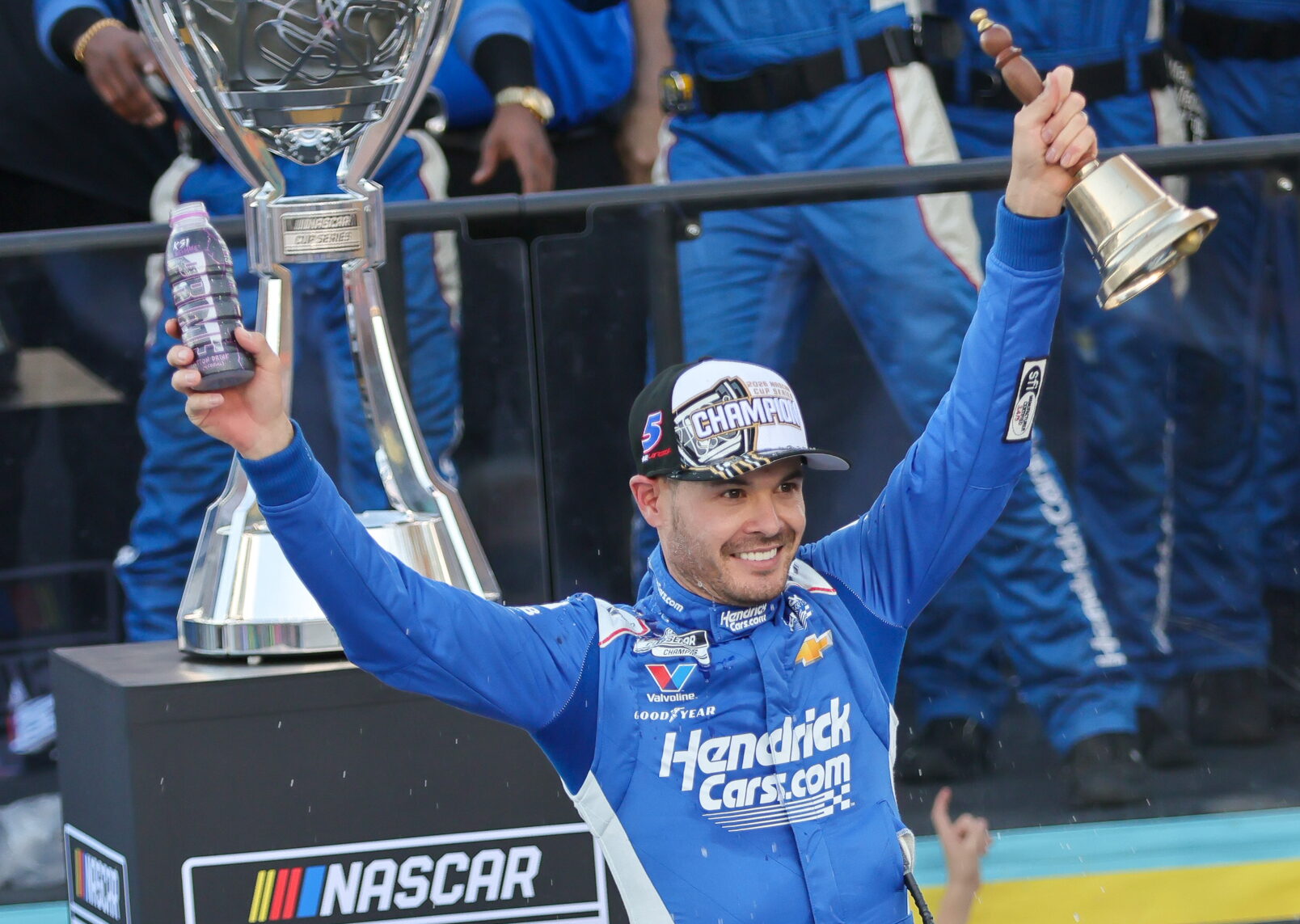
Kyle Larson, the 2025 NASCAR Cup Series Champion!

Photo by Chris Graythen/Getty Images

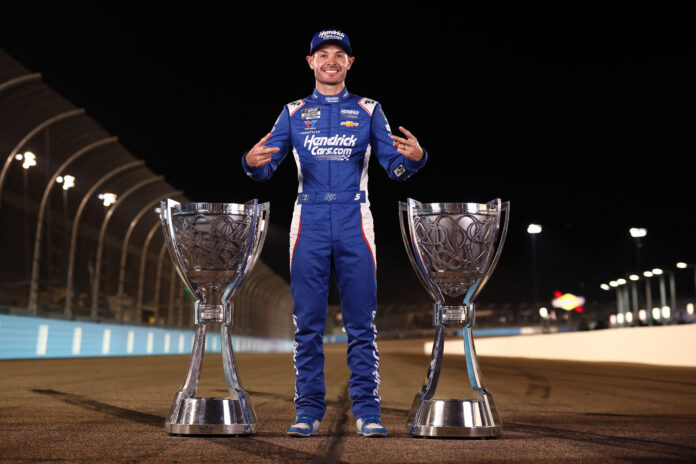
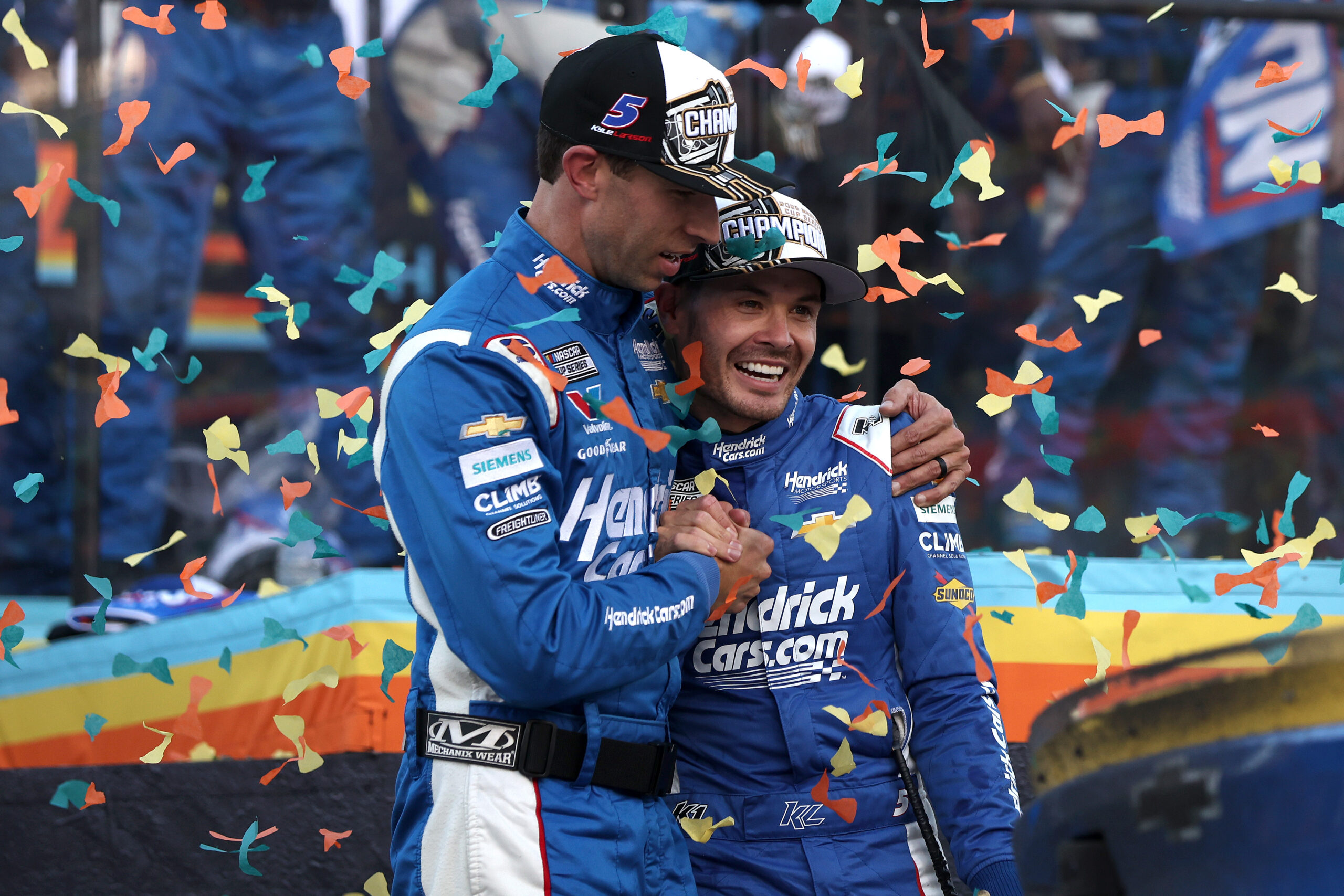
Kyle Larson’s third-place finish in the NASCAR Cup Series Championship race at Phoenix Raceway on November 2, 2025, propelled the 33-year-old Elk Grove, California, native to his second career NASCAR Cup Series Championship. Larson also became the third active driver to become a multi-time champion in the NASCAR Cup Series.

Kyle Larson and Cliff Daniels
Photo by Meg Oliphant/Getty Images

Larson capitalized on both race strategy and in overtime to snatch his second Cup Series championship with the gutsy call from crew chief Cliff Daniels, who rolled the dice with a strategic two-tire pit stop, enabling Larson to gain track position on the final pit stop. Through an overtime shootout, Larson used his two fresh tires to remain ahead of Hamlin and snatch the championship by being the highest-finishing championship 4 contender.

“Honestly, I can’t believe it,” Larson said. “We didn’t lead a lap today and somehow won the championship. I’m just speechless. I can’t believe it. We had an average car at best, and then, we had the right front [tire] go down, lost a lap, got saved by the caution, did the wave around, and was really bad that run. We took two tires. I was like, ‘Oh god, here we go. We’re going to go to the back now.’ The car had a lot more grip than I anticipated. So, we got lucky with that final caution. I was really hoping that we were going to take two again because I felt like I learned a lot on that restart, bombing 1 and 2 really hard, and thought I could do the same thing if we got another one.”

“What a year by this Hendrick Motorsports team,” Larson added. “Cliff Daniels, everybody, his complete leadership just showed that whole race, keeping us all motivated, always having a plan, all of that. That’s just the story of our season. Just unbelievable. I cannot believe it. This is insane.”

Kyle Larson’s 2025 NASCAR Cup Series Season Statistics

RankPoints# RacesWinsTop-10Top-5PolesDNFLaps LedAvg. StartAvg. Finish
15034363221512110611.38913.194

Although he might not have been making the headlines each week, Kyle Larson had a great season. After winning in Kansas, Larson might have been winless for the rest of the season, but he was still on the track, battling it out each race for a total of three wins, fifteen top fives, twenty-two top tens, and 1106 laps led.

Kyle Larson’s 2025 NASCAR Cup Series Wins

DateTrackStartFinishPointsPlayoff Pts
3/23/25Homestead-Miami Speedway141565
4/13/25Bristol Motor Speedway31607
5/11/25Kansas Speedway11617

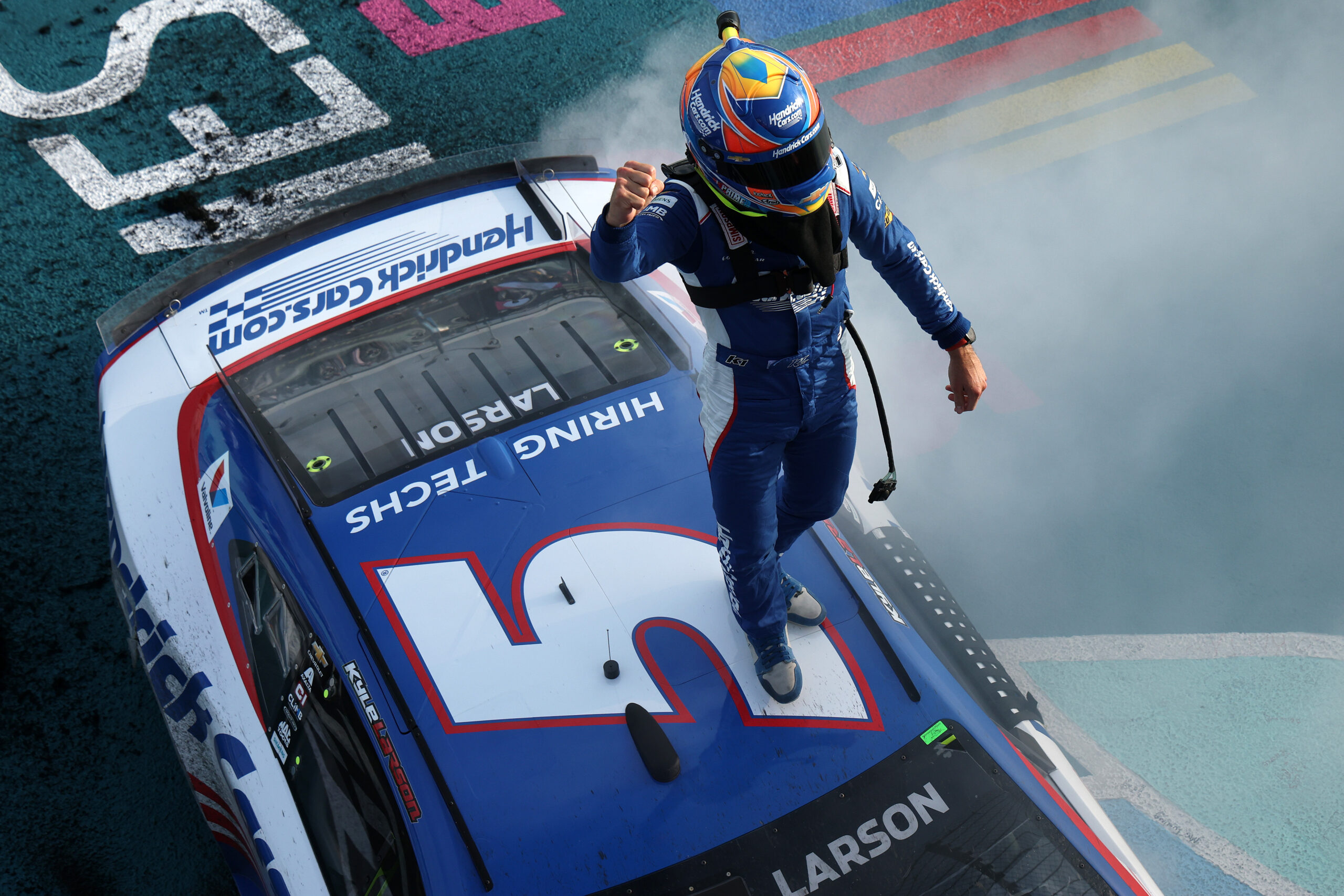
Larson’s win at Homestead-Miami Speedway

Kyle Larson at Homestead-Miami
Photo by Chris Graythen/Getty Images

Larson cruised to a NASCAR Cup Series win in the Straight Talk Wireless 400 at Homestead-Miami Speedway on Sunday, March 23, 2025. Larson qualified 14th, finished in the top-5 in the first stage, second in the second stage, and led six times for 19 of the 267 laps. Despite sustaining minimal left-side damage to his No. 5 Hendrick Motorsports Chevrolet during a pit road incident with Josh Berry and Joey Logano, Larson was in second place with 11 laps remaining. Teammate Alex Bowman scrubbed the outside wall entering the frontstretch with seven laps remaining, and Larson passed Bowman to lead with six laps remaining in the race. Larson cruised around the Homestead for six final laps and claimed his first NASCAR Cup Series win of the 2025 season and his second at Homestead-Miami Speedway.

Larson captured his 30th Cup Series career victory in his 372nd series start and became the 30th competitor overall to reach 30 victories in the NASCAR Cup Series. Larson also captured his second Cup Series victory at Homestead in four seasons and his 24th driving the No. 5 Chevrolet for Hendrick Motorsports.

“My last run was far from perfect,” Kyle Larson said. “I gave up a spot and a half, almost two spots there by getting the wall too many times. I knew I wasn’t going to get the best restart there.” Larson continued, “I knew I wasn’t good on the short runs and just thought if I could hold off Hamlin and Reddick behind me, I could get ringing the top, and Briscoe too.”

“And then, I got in the wall and let him by, but just had to keep plugging away what I know and what’s good for me. Proud of myself, proud of the team. A lot of gritty hard work there today between the damage on pit road, qualifying bad, bad restart, all that stuff. Just super pumped. One of the coolest wins I think in my Cup career, just because of all the heartbreak I’ve had here, the heartbreak yesterday, and to just keep my head down and keep digging feels really good.” Larson said.

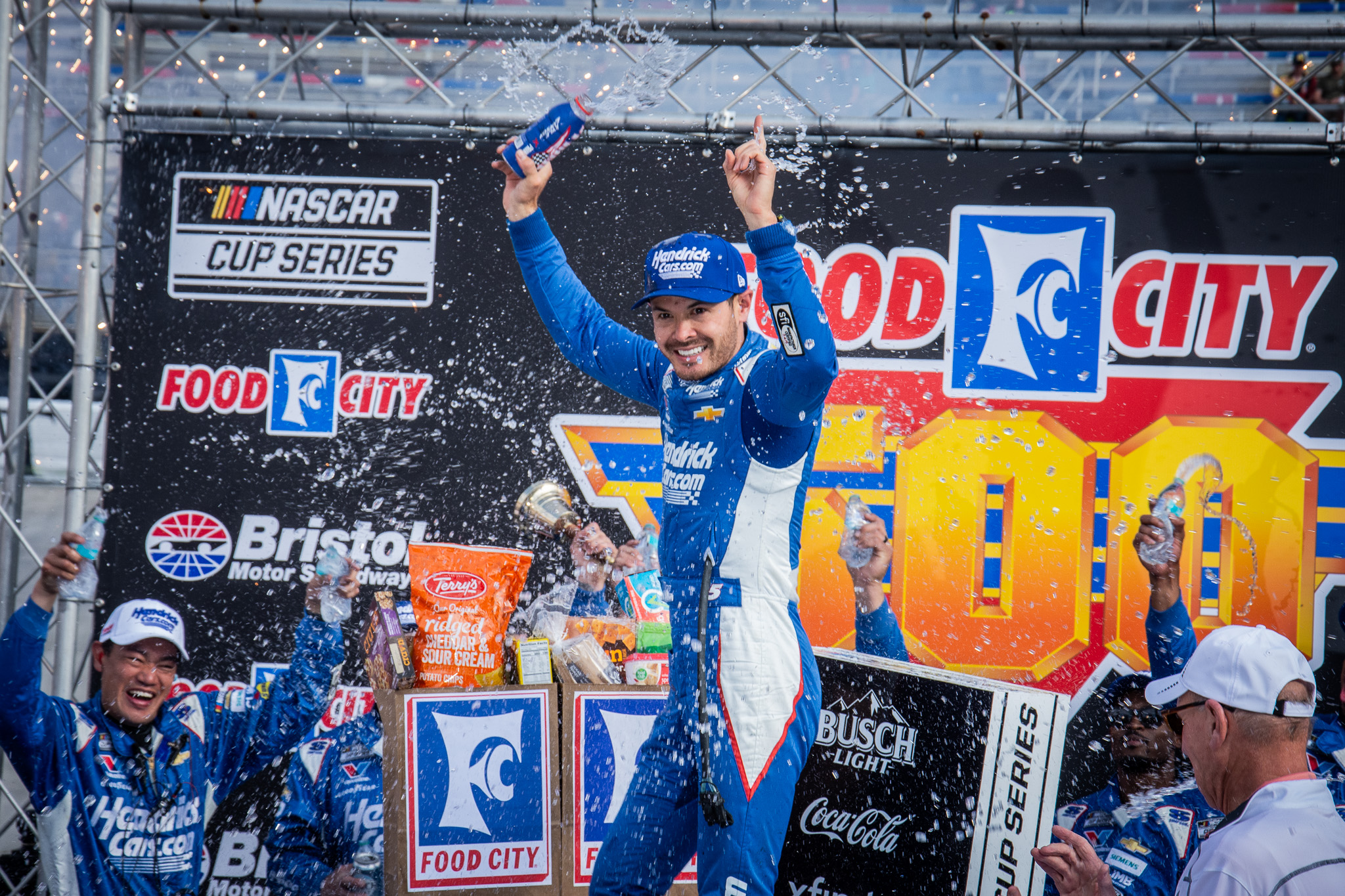
Larson’s win at Bristol Motor Speedway

Kyle Larson at Bristol Motor Speedway
Photo by Christian Gardner for SpeedwayMedia.com

Larson dominated, along with an emotional NASCAR Cup Series win for the Hendrick Motorsports organization in the Food City 500 at Bristol Motor Speedway on Sunday, April 13, 2025. Larson started in third place, swept the event’s first two stage periods, leading twice for a race-high 411 of the 500 laps, and finished ahead of Denny Hamlin by more than two seconds and notched his second NASCAR Cup Series win of the 2025 season, his 31st NASCAR Cup Series career win, and the 14th at Bristol for Hendrick Motorsports. The emotional win was dedicated to a communications/public relations veteran behind the NASCAR spotlight, the late Jon Edwards.

“This is definitely for Jon,” Larson said. “He’s just a great guy. We’re gonna miss him, but successful weekend here. Wish he was going to be here with us to celebrate, but I know he’s celebrating with us in spirit. Just a flawless race once again here at Bristol for the No. 5 team. Really, really good car. However many laps of green we ran there was a lot of fun.”

“I was pretty comfortable with things and then Denny came on really strong there before the pit cycle,” Larson added, “I just kept the pressure on from there, so I knew I had to make some good moves in traffic..Felt like I did a pretty good job there in traffic. Split the middle sometimes when I needed to, so yeah, just a lot of fun. The pit crew, this is their first win with the No. 5 team, so it’s gonna be fun celebrating with them and yeah, just good to be back in Victory Lane.”

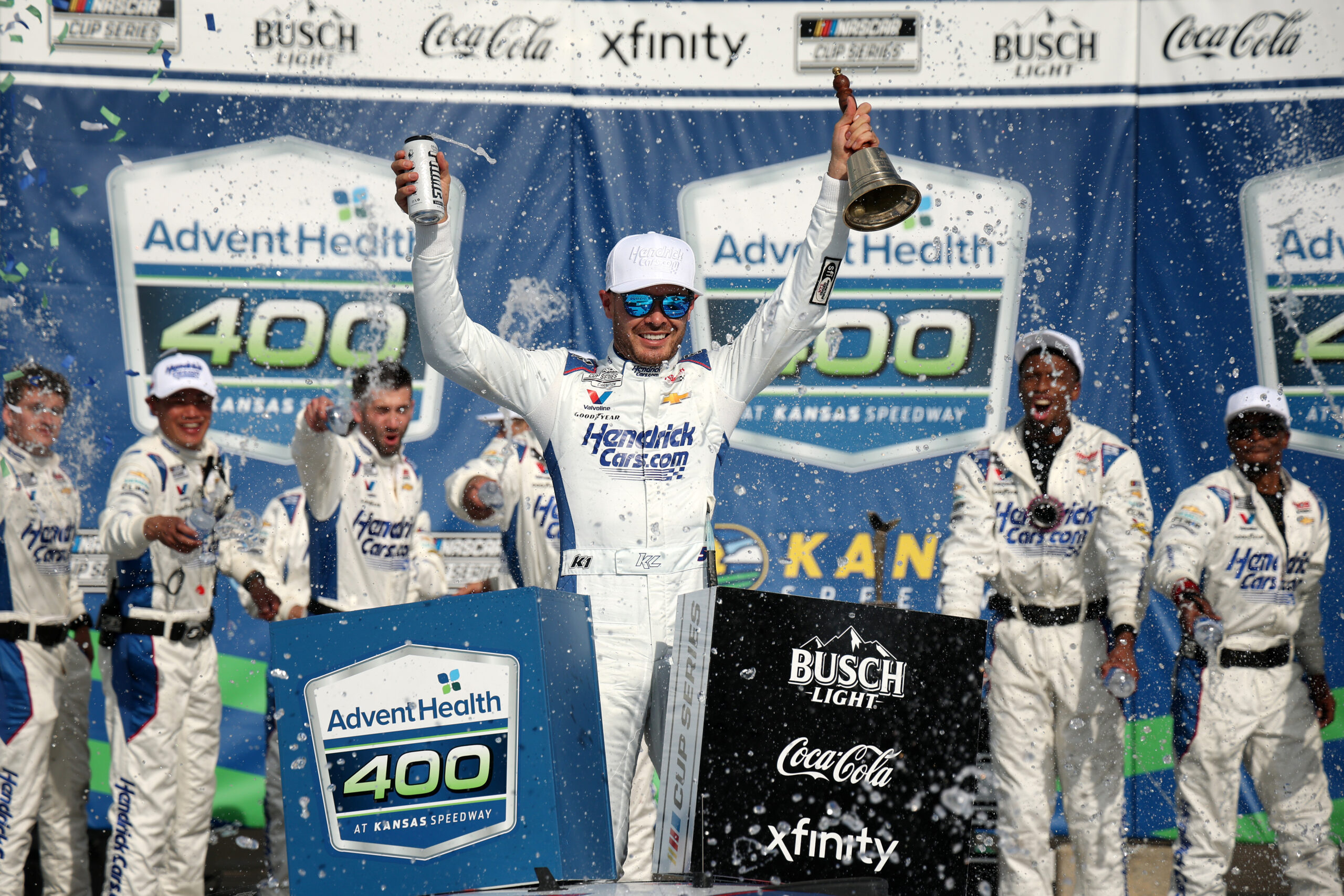
Larson’s win at Kansas Speedway

Photo by Chris Graythen/Getty Images

Polesitter Kyle Larson had another dominant win at Kansas Speedway in the AdventHealth 400 on Sunday, May 11, 2025. Larson swept the event’s first two stages, led a dominant race-high 221 of the 267 laps, from the pole position. Larson remained in the lead by more than a second, but his large advantage was erased due to falling off the pace. He claimed the win by seven-tenths of a second over a hard-charging Christopher Bell. This was his third win at Kansas, notching his 32nd career win in the NASCAR Cup Series, tying him with NASCAR’s Hall of Famer Dale Jarrett on the all-time wins list.

“I was trying really hard to pace myself because I believe that was our longest run of the day,” Larson said. “I’d been struggling a little bit at the end of the runs. Chase was really good, so I felt like I just needed to try to be better on my end. I don’t know if it was paying off or not at the end. He continued, saying, “I was still struggling. I don’t know if the right front [tire] was starting to wear a lot or what, but I was starting to lose a lot of grip, and then, I was vibrating really bad. I was afraid a right rear or something would let go. Great car, great execution today, too, for our team. Glad to not win by an inch right here this time [compared to last year] and [have] a little bit safer gap. It’s cool to win here at Kansas and now, we’ll try to execute two good weeks at Indy.”

Kyle Larson
Photo by Ron Olds for SpeedwayMedia.com

Larson’s Season

Along with the first-place finishes at Homestead-Miami Speedway, Bristol Motor Speedway, and Kansas Speedway, Larson finished third at Atlanta Motor Speedway, third in the spring race at Phoenix Raceway, fifth at the spring Martinsville Speedway race, second at Talladega Superspeedway, fourth at Texas Motor Speedway, fifth at Michigan International Speedway, fourth at Dover Motor Speedway, second at Indianapolis Motor Speedway, second at Charlotte Motor Speedway Road Course, second at Las Vegas Motor Speedway, fifth at the second Martinsville Speedway, and third in final race at Phoenix Raceway.

Congratulations to Kyle Larson, Hendrick Motorsports, and the entire No. 5 Team!

‘One team’ preparations for ’26

Aitken, Taylor to participate in WEC Rookie Test with Cadillac Hertz Team JOTA

DETROIT (November 4, 2025) – Two talented and experienced Cadillac Racing drivers will participate November 9 in the FIA World Endurance Championship (WEC) Rookie Test at Bahrain International Circuit.

Drivers will turn laps in Cadillac Hertz Team JOTA Hypercars on the 5.412 km (3.363-mile), 15-turn course during two sessions totaling five hours the day after the WEC season-ending Bapco Energies 8 Hours of Bahrain.

IMSA WeatherTech SportsCar Championship full-season drivers Jack Aitken and Ricky Taylor will see the bulk of the track time, with Cadillac Hertz Team JOTA’s Earl Bamber and Alex Lynn each driving a maximum of five laps.

“I am looking forward to being a part of it and to get the experience of driving the JOTA Cadillac. My focus is to learn from the team and from GM about the Cadillac that races in WEC with JOTA and how they do things differently to us in the States with WTR,” Taylor said of Cadillac Racing’s “one team” approach.

Taylor, who drove the No. 101 Cadillac Wayne Taylor Racing V-Series.R Hypercar in the 24 Hours of Le Mans in June along with runs in a Cadillac Hertz Team JOTA car in July at the Goodwood Festival of Speed Hill Climb, contested the nine-race IMSA season in the No.10 Cadillac Wayne Taylor Racing V-Series.R with Filipe Albuquerque and endurance race driver Will Stevens. The team earned three podium finishes. Taylor CV

Aitken teamed with Bamber and 2023 FIA Formula 2 vice-champion Frederik Vesti to win the final two races of the recently completed IMSA season in the No. 31 Whelen Cadillac V-Series.R. Aitken finished second in the Grand Touring Prototype (GTP) driver standings in his second full season with Action Express Racing after competing in the IMSA endurance races in 2023. Aitken CV

“I think this is going to be another good opportunity for cross-pollination across the Cadillac Racing programs and I’m keen to again work with Cadillac Hertz Team JOTA after seeing them in action at Le Mans earlier this year,” said Aitken, who has driven a Cadillac V-Series.R Hypercar the past three years in the 24 Hours of Le Mans and set the Hypercar track qualifying lap record of 3 minutes, 22.742 seconds in Hyperpole 1 in June.

“We’ve had some interaction through the program already, but it will be good to first-hand try their car and see how things are done in the WEC as well. It will be an exciting weekend for me and a nice end to the season.”

Taylor, Albuquerque, Stevens, Bamber, Aitken and Vesti recently were confirmed as returning to their Cadillac GTP entries for the 2026 IMSA season.

In 2023, current NTT IndyCar Series driver Kyffin Simpson participated in the Rookie Test with Cadillac Racing. Last year, Vesti and TF Sport Corvette Z06 GT3.R driver Daniel Juncadella drove a Cadillac Racing Hypercar.

General Motors (NYSE:GM) is driving the future of transportation, leveraging advanced technology to build safer, smarter, and lower emission cars, trucks, and SUVs. GM’s Buick, Cadillac, Chevrolet, and GMC brands offer a broad portfolio of innovative gasoline-powered vehicles and the industry’s widest range of EVs, as we move to an all-electric future. Learn more at GM.com.