Home Blog Page 605

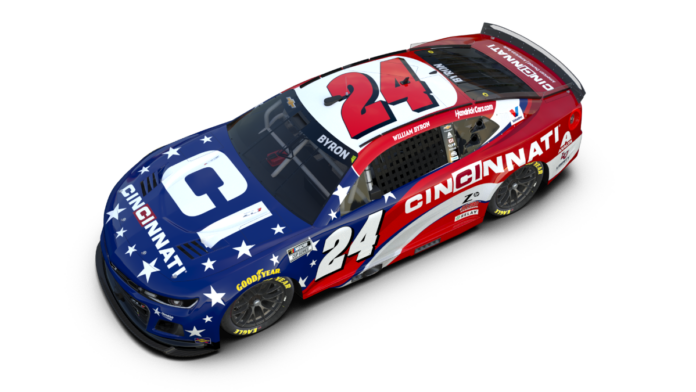
CINCINNATI GROWS HENDRICK MOTORSPORTS PARTNERSHIP, ADDS PRIMARY RACES WITH WILLIAM BYRON

NEW LIVERY WILL APPEAR IN THE 2025 NASCAR PLAYOFFS

CONCORD, N.C. (March 5, 2025) – Beginning this season, leading machine tool manufacturer Cincinnati Inc. will grow its Hendrick Motorsports partnership by becoming a primary sponsor of two-time DAYTONA 500 champion William Byron and his No. 24 NASCAR Cup Series team.

The expanded relationship will see the No. 24 Cincinnati Chevrolet appear twice in both 2025 and 2026. This season, the new livery will hit the track for two pivotal playoff races: Kansas Speedway on Sept. 28 and Martinsville Speedway on Oct. 26. The expansion builds upon a landmark 10-year agreement signed in 2019, and it represents Cincinnati’s first primary sponsorship with Hendrick Motorsports since 2021.

“As a proud company with a long history of domestic manufacturing, we’re thrilled to expand our partnership with Hendrick Motorsports, the winningest team in an iconic American sport,” said Alan Oak, president and CEO of Cincinnati Inc. “The relationship allows us to showcase our products in an incredibly competitive, high-stakes environment. By aligning with William and the No. 24 team, we’re able to further promote the Cincinnati brand and provide our customers with new opportunities to see the results we’re capable of producing firsthand.”

Byron, 27, secured his second consecutive DAYTONA 500 victory in February to become the youngest driver in history with multiple wins in the Great American Race. The Charlotte, North Carolina, native has earned 14 points-paying Cup wins and two straight appearances in NASCAR’s Championship 4. Since the start of the 2023 season, he is tied with teammate Kyle Larson for the most victories in the series.

“Cincinnati’s technology plays a key role in building the race cars we take to the track each week,” Byron said. “They’re such an important technical partner for Hendrick Motorsports, and it’s cool to see that commitment grow into a primary sponsorship. Knowing how Cincinnati contributes to our success, it’s especially exciting to have them on board with the 24 team.”

Cincinnati’s innovative, industry-leading products have been manufactured in the United States since the 1890s. The company has utilized Hendrick Motorsports’ state-of-the-art North Carolina facility as a showplace for its customers, demonstrating how the 14-time NASCAR Cup Series champions employ its advanced machine tools to win races.

“With Cincinnati, we share a commitment to precision, quality and innovation,” said Rick Hendrick, owner of Hendrick Motorsports. “The world-class equipment they provide plays an essential role in our performance and success, so they’re truly a key member of our team. In addition, Cincinnati manufactures everything right here in the USA, which is a point of pride for all of our people. We look forward to seeing them represented on the No. 24 Chevrolet and continuing to grow this tremendous partnership.”

ABOUT CINCINNATI INC.:
CINCINNATI Incorporated is a U.S.-based, build-to-order machine tool manufacturer with over 125 years in the industry. Our engineering and manufacturing expertise makes us the ideal partner for companies building innovative products that demand extraordinary durability, stability, and industry-leading features. At our state-of-the-art, Ohio-based facility, we develop and build custom software, dependable laser cutting systems and automation equipment as well as metal fabrication equipment, including press brakes, shears, and PM presses. Our extensive knowledge puts us in a unique position to help drive efficiency in your manufacturing process no matter how simple or complex. For more information visit www.e-ci.com.

ABOUT HENDRICK MOTORSPORTS:
Founded by Rick Hendrick in 1984, Hendrick Motorsports is the winningest team in NASCAR Cup Series history. At the sport’s premier level, the organization holds the all-time records in every major statistical category, including championships (14), points-paying race victories (313) and laps led (more than 82,000). It has earned at least one race win in a record 40 different seasons, including an active streak of 40 in a row (1986-2025). The team fields four full-time Chevrolet entries in the NASCAR Cup Series with drivers Alex Bowman, William Byron, Chase Elliott and Kyle Larson. Headquartered on more than 150 acres in Concord, North Carolina, Hendrick Motorsports employs approximately 600 people. For more information, please visit HendrickMotorsports.com or interact on Facebook, Instagram, TikTok and X.

Paul Wolfe to call 500th Cup event as crew chief at Phoenix

Photo by Meg Oliphant/Getty Images.

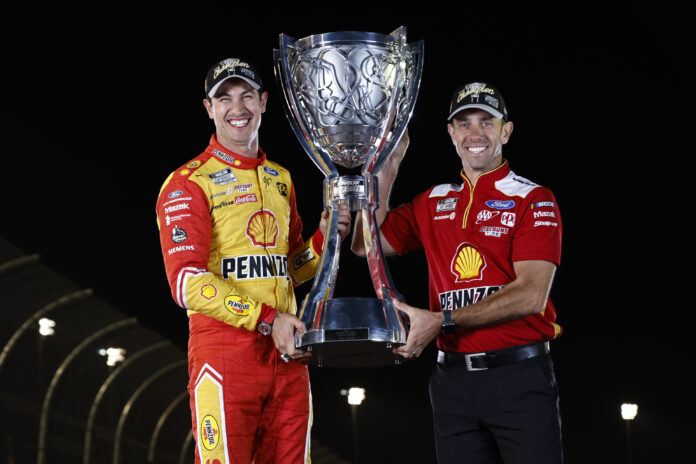
A significant milestone is in the making for Paul Wolfe, the reigning three-time NASCAR Cup Series championship-winning crew chief. He currently sits atop the pit box of the No. 22 Team Penske Ford Mustang Dark Horse team piloted by the reigning three-time championship-winning driver Joey Logano. By participating in this weekend’s event at Phoenix Raceway, Wolfe will call his 500th career race as a crew chief in NASCAR’s premier series.

A native of Milford, New York, Wolfe, grew up competing in go-karts and graduated from Milford Central School in 1995. A year later, Joe Gibbs Racing employed him. Another four years later, he competed in the Busch North Series division, over his next four seasons. He also competed in the NASCAR Xfinity Series division from 2003 to 2005. He drove for teams that included Tommy Baldwin Racing, Evernham Motorsports and FitzBradshaw Racing. During his brief career in the Xfinity circuit, his best result was a 10th-place finish at Nashville Superspeedway in June 2005.

Beginning in 2006, Wolfe became a crew chief for FitzBradshaw Racing’s Craftsman Truck Series team. From 2006 to 2009, he worked as a crew chief for FitzBradshaw Racing/Fitz Motorsports, Braun Racing and CJM Racing in the Xfinity Series. He was also a crew chief in the Busch East Series division for 11 races with Ruben Pardo. During that time, Wolfe also worked with drivers that included Carlos Contreras, Mike Skinner, Scott Wimmer, Mike Bliss, Patrick Carpentier, Robby Gordon, David Stremme, Josh Wise, Marc Davis, Jason Leffler, Ryan Newman, Andrew Ranger, Trevor Bayne, Kelly Bires, Mike Bliss, Scott Lagasse Jr., Brian Scott and Denny Hamlin.

In 2010, Wolfe became the crew chief for Brad Keselowski and the No. 22 Dodge team for owner Roger Penske in the Xfinity circuit. The pairing between Wolfe and Keselowski was a success. They achieved six victories, five poles, 26 top-five results and 29 top-10 results throughout the 35-race schedule. Two races before the season’s conclusion, the duo locked up the championship, a first for Team Penske in the sport.

The following season, Wolfe was promoted to the role of Cup Series crew chief for the first time and for Team Penske’s No. 2 Dodge team driven by Keselowski. In Wolfe’s first Cup event as a crew chief, Keselowski finished in 29th place in the 63rd running of the Daytona 500 at Daytona International Speedway after he was involved in a late incident. Then after finishing no higher than third over their next 12 starts, Wolfe and Keselowski achieved their first victory of the season at Kansas Speedway in June following a late fuel mileage battle. They proceeded to win at Pocono Raceway and at Bristol Motor Speedway, both in August, which allowed them to make their first Playoffs. With a total of four top-five results generated over the 10-week Playoff stretch, the duo concluded the season in fifth place in the final standings.

For the 2012 season, Wolfe and Keselowski emerged as a championship threat to Jimmie Johnson, crew chief Chad Knaus and the No. 48 Hendrick Motorsports Chevrolet team. They achieved five victories, 13 top-five results and 23 top-10 results throughout the season. Following a long battle throughout the postseason stretch, Keselowski entered the season finale at Homestead-Miami Speedway with a 20-point advantage over Johnson. When Johnson dropped out in the closing laps due to a mechanical issue, Keselowski cruised to a 15th-place result at Homestead and claim his first Cup championship. The title in NASCAR’s premier series was a first for Team Penske and for Wolfe, the latter of whom accomplished the feat in his sophomore Cup campaign.

In 2013, Wolfe and Keselowski started the first 10 scheduled events, achieving seven top-10 results. However, at Texas Motor Speedway in April, Wolfe received a fine of $100,000 and a six-race suspension. This occurred after the Penske cars driven by Keselowski and teammate Joey Logano failed pre-race inspection due to suspension systems issues before the Texas Cup race. Wolfe’s suspension was later reduced to three races, including the non-point All-Star Race at Charlotte Motor Speedway. Kevin Buskirk, leader of Penske’s testing program, served as an interim crew chief for Keselowski.  Following his two-race suspension,

Wolfe returned atop the No. 2 pit box with Keselowski at Dover Motor Speedway in June. But they did not make the Playoffs and were unable to defend their series title after only generating four top-10 results since Wolfe’s return. Nonetheless, they achieved their first victory of the season at Charlotte Motor Speedway in October before settling in 14th place in the final standings. By then, Wolfe surpassed 100 events as a crew chief in NASCAR’s premier series.

Wolfe remained as Keselowski’s crew chief for the 2014 Cup season. During the season, the duo notched a season-high six victories, four poles, 16 top-five results and 19 top-10 results. They finished in fifth place in the final standings. During the season, Wolfe was absent for the second Cup race at Phoenix Raceway in March due to his wife going into labor a day before the main event. Veteran Greg Erwin filled in as Keselowski’s interim crew chief.

Over the next two seasons, Wolfe and Keselowski won five races and tallied four poles, 25 top-five results and 47 top-10 results, with a best result of seventh place in 2015. Following the 2016 season, Wolfe surpassed 200 Cup events as a crew chief. During the 2017 season, he was present for 32 of the 36-race Cup schedule with Keselowski and the No. 2 Penske Ford team.

Wolfe missed three of the first 11 races of the season due to the No. 2 car driven by Keselowski issued with an L1-level post-race penalty after the event at Phoenix in March. He was also absent for the Cup race at Sonoma Raceway in June due to the birth of his second child. During his four-race absence, engineer Brian Wilson served as Keselowski’s interim crew chief. For the other 32 races where Wolfe was present, Keselowski won three races. He also achieved two poles, 12 top-five results and 17 top-10 results. After making the Championship 4 Round at Homestead-Miami Speedway in November, the No. 2 duo finished in fourth place in the final standings.

Between the 2018 and 2019 seasons, Wolfe and Keselowski won six races and tallied three poles, 25 top-five results and 39 top-10 results. In both seasons, they finished in eighth place in the final standings. Following the 2019 season, Wolfe surpassed 300 Cup events as a crew chief.

For the 2020 season, Penske shuffled its Cup crew chief lineup. Wolfe was paired with Joey Logano and the No. 22 Ford Mustang team and Keselowski was paired with veteran Jeremy Bullins. It only took two races for the new duo of Wolfe and Logano to achieve their first Cup victory together at Las Vegas Motor Speedway in February following a late two-lap shootout that included a strategic pit call to remain on old tires. Two races later, they captured their second victory of the season at Phoenix Raceway in March following another overtime shootout. After utilizing consistency for the remainder of the regular-season stretch and through the Playoff’s first two rounds, they clinched their Championship 4 berth by winning the Round of 8 opener at Kansas Speedway. After finishing in third place during the finale at Phoenix, they settled in third place in the final standings.

The 2021 Cup season featured Wolfe and Logano winning once in the series’ inaugural event at the Bristol Motor Speedway Dirt Course in March. Despite Wolfe’s suspension for a single event due to a lug nut violation at Darlington Raceway in May, he returned to navigate Logano and the No. 22 Ford team to top-10 results in half of the 26-race regular-season stretch. They were, however, eliminated from title contention after the Round of 8 and finished in eighth place in the final standings.

hen for the following season, the duo of Wolfe and Logano achieved four victories that included trips to Victory Lane at Darlington Raceway in May, the series’ inaugural event at World Wide Technology Raceway, the Round of 8 opener at Las Vegas in October and the finale at Phoenix in November. They also won the non-points Busch Light Clash at the Los Angeles Memorial Coliseum. By transferring through all four Playoff rounds, the Phoenix victory enabled Wolfe and Logano to achieve their second respective championships in the Cup Series division. While Logano became the 17th competitor to achieve multiple Cup titles, Wolfe became the first crew chief to repeat as a champion since Joe Gibbs Racing’s Adam Stevens made the previous accomplishment in 2019. By then, Wolfe had also surpassed 400 events as a Cup crew chief.

During the 2023 season, Wolfe and Logano achieved a single victory throughout the entire year at Atlanta Motor Speedway in March. They were eliminated from playoff contention following the Round of 16 with finishes of 12th, fifth and 34th, respectively. This prevented them from advancing through the Playoffs by four points.

The duo rallied by notching four victories in 2024 along with the All-Star Race at North Wilkesboro Speedway. Despite having their title hopes conclude following the Round of 12, they were added back into it after Playoff contender Alex Bowman was disqualified due to his entry failing to meet the minimum weight requirements during a post-race inspection after the Round of 12 finale at the Charlotte Motor Speedway Road Course.

Wolfe and Logano utilized a pit strategy to capture a thrilling victory during the Round of 8 opener at Las Vegas. The win secured their third trip together to the Championship 4 round at Phoenix. During the finale, they fended off a late challenge from teammate and the reigning champion Ryan Blaney to claim a third Cup title, making Logano the 10th competitor overall to win at least three championships. Wolfe also became the first three-time championship-winning crew chief since Chad Knaus achieved his feat in 2008.

Through 499 appearances as a Cup Series crew chief, Wolfe has achieved three championships, 42 victories, 24 poles, 160 top-five results and 261 top-10 results while working with two different competitors overall (Brad Keselowski and Joey Logano). With 42 victories, Wolfe is the winningest active Cup Series crew chief on the pit box. Currently, he and Logano are ranked in 13th place in the 2025 driver’s standings with finishes no higher than 12th through the first three-scheduled events. With this season in the early stages, Wolfe continues his strive to become the first crew chief to achieve four series championships since Chad Knaus made the last accomplishment in 2009.

Paul Wolfe will call his 500th NASCAR Cup Series event as a crew chief at Phoenix Raceway for the Shriners Children’s 500. The event will occur this Sunday, March 9, at 3:30 p.m. ET on FS1.

Kaulig Racing Weekly Preview | Phoenix Raceway

  • Darius Rucker, a multi-Platinum, three-time GRAMMY Award-winning artist, will be recognized by the Kaulig Companies Championship, PGA TOUR Champions, and Northern Ohio Golf Charities Foundation as the 2025 Ambassador of Golf. The Ambassador of Golf event will be held on Thursday, June 19, 2025, and proceeds will benefit the Northern Ohio Golf Charities Foundation.
  • The Kaulig Companies Championship is one of five major championships contested annually on PGA TOUR Champions for eligible professionals age 50 and over. The 2025 tournament will be held the week of June 19-22 and will continue professional golf’s seven-decade tradition at Firestone Country Club. A field of 78 professionals will compete for one of the most prestigious Champions Tour titles and an exemption into the following year’s PLAYERS Championship in Ponte Vedra Beach, Florida.
  • AJ Allmendinger will make his 450th NASCAR Cup Series start this weekend at Phoenix Raceway.
  • In the NASCAR Cup Series, Kaulig Racing has made 12 starts at Phoenix Raceway, earning a best finish of 12th.
  • Out of 37 starts in the NASCAR Xfinity Series at Phoenix Raceway, the team has earned six top five and 22 top-10 finishes, completing 98.2% of all laps.

10 Team Info
Crew Chief: Andrew Dickeson
Partner: Hybrid Light®

Ty Dillon, No. 10 Hybrid Light® Camaro ZL1
Hybrid Light®: This weekend at Phoenix Raceway, Kaulig Racing and Ty Dillon will welcome new partner Hybrid Light to the No. 10 Chevrolet. Hybrid Light® is a pioneer of solar powered mobile lighting and charging solutions designed for when you need the power of the sun to shed light on all of your adventures. Their portable flashlights, lanterns, headlamps, and power panels are the reliable go-to illuminator that you want in every toolbox, glovebox, emergency kit, nightstand and kitchen drawer. Hybrid Light is durable, environmentally friendly & guaranteed for life.

Meet Ty Dillon

Saturday, March 8

Ty Dillon will be at the NASCAR Classics Merchandise trailer from 10:20 -10:50 a.m. on Saturday, March 8, to meet fans and sign autographs.
Following his signing at the merchandise trailer, Dillon will be on the NASCAR Experience stage in the Phoenix Raceway Fan Zone at 11:00 a.m. for a Q & A session.

At Phoenix:

Ty Dillon will make his 15th Cup Series start at Phoenix Raceway on Sunday, March 9, for the Shriners Children’s 500. In his previous starts in the series, Dillon has earned a career best finish of 11th in 2017 and has a total of five top-15 finishes.
In the Xfinity Series, Dillon has nine starts with two top-five finishes, seven top-10 finishes and all nine starts with finishes in the top 13. His best finish in the series is fourth.
With only three starts in the Craftsman Truck Series, Dillon’s best finish is fourth.

“Phoenix is a racetrack that I might have the most experience of any racetrack. I ran a lot of K & N West races there early in my career, so I’ve raced there a lot. It’s a track that I’ve always had a good, natural feel around. When they repaved it and changed the location of the start finish line, it changed a little bit for me, but still a place that I look at as an opportunity because I feel very confident in how to navigate the racetrack. Phoenix kicks off our first run of normal tracks that you see in the meat of our season, and I’m excited to see where we stand there.” – Ty Dillon on Phoenix Raceway  

16 Team Info
Crew Chief: Trent Owens
Partner: Celsius

AJ Allmendinger, No. 16 Celsius Camaro ZL1
Celsius: AJ Allmendinger and the No. 16 Celsius Chevy will carry the Celsius in-car camera for the Shriners Children’s 500 at Phoenix Raceway. Allmendinger and the No. 16 team will be fueled by Celsius and their better-for-you lineup of energy and hydration products, all zero sugar and created with essential vitamins.

At Phoenix:

Allmendinger will make his 450th NASCAR Cup Series start in the Shriners Children’s 500 at Phoenix Raceway.
Allmendinger has led 18 laps and earned his highest finish at the track of 12th place in 2022 with Kaulig Racing.

“Phoenix has been a difficult track for us on both the Xfinity and Cup side. It will be the first true oval test of all the new ideas and hard work that were put in over the off season so I’m looking forward to getting on-track with the opportunity to be better than we have in the past. Expectation wise, I think if we can run inside the top 20, that would be a really good run there.” – AJ Allmendinger on Phoenix Raceway  

10 Team Info
Crew Chief: Kevin Walter
Partner: bProAuto

Daniel Dye, No. 10 bProAuto Chevrolet
bProAuto: Daniel Dye will pilot the No. 10 bProAuto Chevrolet at Phoenix Raceway. bProAuto is an automotive parts supplier dedicated to providing quality aftermarket components and top-notch customer service. They leverage extensive industry expertise and advanced distribution networks to deliver dependable products that keep vehicles running safely and efficiently. The No. 10 Chevrolet will also feature the Race to Stop Suicide in-car camera during the GOVX 200.

At Phoenix:

Dye has made one start at Phoenix Raceway in the NASCAR Xfinity Series for Kaulig Racing at the 2024 season finale while competing in a limited schedule for the team. This week, he returns as the full-time driver of the No. 10 Chevrolet for the team.
Last week at Circuit of the Americas, Dye finished the second stage of the Focused Health 250 in the runner-up position, his best stage finish to date.

“I really like Phoenix; it’s one of my favorite tracks and probably the track I have raced at the most. It’s a unique oval with crazy restarts and two completely different sides of the race track. We weren’t super happy with how we ran there as a company back in November, but we’ve been working hard and spending a lot of time on the simulator. I think we have a pretty good idea of where we are, but practice on Saturday will give us the opportunity to fine-tune things before the race. Hopefully it’s another good points day for this No. 10 team.” – Daniel Dye on Phoenix Raceway  

11 Team Info
Crew Chief: Eddie Pardue
Partner: Call811.com

Josh Williams, No. 11 Call811.com Chevrolet
Call811.com: Call811.com is the national call-before-you-dig phone number, and anyone who plans to dig should call 811 so they don’t unintentionally dig into an underground utility line. The No. 11 will run the name of Patrick S. Holmes, the late husband of Arizona 811 Executive Director Sandy Holmes, who sadly lost his life after a valiant eight-month battle with cancer.

Meet Williams:

Saturday, March 8

Williams will be at the NASCAR Experience Stage for a Q&A in the Phoenix Raceway Midway from 1:00 – 1:15 p.m. local time.

At Phoenix:

Williams has made 13 starts at Phoenix Raceway across seven seasons. His best finish came in 2020’s finale (13th).
Williams’ two starts at Phoenix with Kaulig Racing were marred by mechanical issues. In the NXS’ first trip to Phoenix in 2024, Williams was involved in an early incident that led to jack problems, and then engine issues took the No. 11 out of contention in the series’ final race of 2024.

“I’m a big short-track guy, so Phoenix is a fun challenge for me. It hasn’t really gone our way the last couple times we went there in the No. 11 for one reason or another, but I think we’ve got more momentum heading there this season than we did before. Phoenix is a pretty important track for what we do with both Call811.com and Seacrest Studios at the end of the year, so hopefully we can put on a good show.” – Josh Williams on Phoenix Raceway  

16 Team Info
Crew Chief: Alex Yontz
Partner: LeafFilter Gutter Protection

Christian Eckes, No. 16 LeafFilter Gutter Protection Chevrolet
LeafFilter Gutter Protection: Christian Eckes and LeafFilter Gutter Protection will team up once again for the GOVX 200 at Phoenix Raceway. LeafFilter is America’s #1 rated gutter protection system trusted by more than a million homeowners. LeafFilter’s patented technology keeps gutters free of debris and is backed by a lifetime transferable warranty.

Meet Christian Eckes:

Saturday, March 8

Eckes will be at the Desert Diamond Casino Infield Experience Stage behind Victory Lane for a Q & A on Saturday, March 8 from 11:45 a.m. – 12 p.m. local time.

At Phoenix:

Eckes will make his first start at Phoenix Raceway in the NASCAR Xfinity Series this weekend.
In his last trip to Phoenix in the NASCAR Craftsman Truck Series, Eckes competed in the Championship race, ultimately finishing third in the 2024 points standings. Eckes also earned a win at the short track in 2023 in the Truck Series.

“We’ve had a hard-fought first few races; I think we’ve gotten the adversity out of the way. The next couple weeks will determine where we’re at and what strengths and weaknesses we have. There are definitely some unknowns heading into the weekend, but I’m confident in this team to execute and have a great day. I’ve always really enjoyed racing at Phoenix – it’s unique with how it drives like a short-track, but races like an intermediate. Kaulig Racing and I both fell short of winning a championship there last November, so hopefully we’ll get a chance to right some wrongs together.” – Christian Eckes on Phoenix Raceway  

About Kaulig Racing

Kaulig Racing™ is a full-time, multi-car NASCAR Cup Series (NCS) and NASCAR Xfinity Series (NXS) team, owned by award winning entrepreneur, Matt Kaulig. Established in 2016, Kaulig Racing™ has earned 27 NXS wins, made the NXS Playoffs consecutively each season since the playoff system started, and won two regular-season championships. In 2021, the team competed in select NCS events, before expanding to a two-car, full-time NCS team in 2022 and adding a third, part-time entry during the 2023 season. Since its first NCS start in 2021, the team has earned two wins. Kaulig Racing is currently fielding two full-time entries in the NCS and continues to field three full-time NXS entries. To learn more about the team, visit kauligracing.com.

How the Ford Capri for Sale Stands the Test of Time

The Ford Capri is a classic car that still captures the hearts of car lovers today. This sporty coupe has become a big part of car history, with people still wanting to buy and collect them years after they were first made. The Capri looks great, drives well, and has a rich background that makes it special. Let’s look at why people still love the Ford Capri and how it’s stayed popular over the years, from when it first came out in the late 1960s to the new electric version we see today.

Key Takeaways

  • The Ford Capri’s timeless design continues to appeal to enthusiasts
  • Classic Capris offer a unique driving experience that modern cars struggle to match
  • The Capri has a strong presence in popular culture, enhancing its iconic status
  • A thriving community supports Capri owners and restoration projects
  • The new electric Capri brings the nameplate into the 21st century
  • Both classic and modern Capris offer potential investment opportunities

The Classic Ford Capri: A Timeless Design

The Ford Capri’s design is one of the main reasons people still love it. It has a long hood, short back, and sleek shape that make it look like a classic sports car. This design has aged well and still turns heads today. When people look for a Ford Capri for sale, they often talk about how good it looks. The Capri’s unique style mixes European elegance with American muscle car looks, making it stand out from other cars.

The Capri wasn’t just about looks, though. It was also practical for its time, with enough space for a sports car. This mix of style and usefulness is part of why people still want Capris today. The car could seat four people, which was unusual for sports cars back then. It also had a big trunk and folding back seats, making it good for everyday use and weekend trips.

Performance and Engineering: Then and Now

The Ford Capri has always been good at performance. When it was new, you could choose from different engines to suit what you wanted. There were small engines for saving fuel and big V6 engines for more power. The best Capris, like the RS2600 and RS3100, were as fast as much more expensive sports cars. The Capri’s rear-wheel drive and well-balanced design made it fun to drive, which car fans still love today.

Classic Capris for sale today can still impress with how they drive. Many have been kept in good condition or fixed up, so people can experience what it was like to drive these historic cars. The Capri’s simple mechanics also make it popular with people who like to work on cars themselves. You can find lots of parts to improve Capris, so owners can make their cars better for modern roads while keeping the classic feel.

While new cars might be faster and more efficient than the Capri, there’s something special about driving a classic Capri. The way it steers and the sound of the engine make you feel connected to the car in a way that many modern cars can’t match. The Capri doesn’t have all the electronic helpers that new cars have, which gives you a more direct driving experience. This simple, raw feeling is something that many people value in today’s world of high-tech cars.

The Ford Capri isn’t just popular because of how it looks and drives. It’s also famous because it’s been in many movies, TV shows, and music videos over the years. This has made it a cultural icon. The Capri was in British TV shows like “The Professionals” and movies like “The Italian Job” from 1969. Being in these shows and movies has made the Capri even more desirable and mysterious.

This cultural importance adds to the appeal of owning a Capri. When you buy a Ford Capri for sale, you’re not just getting a car – you’re getting a piece of history and pop culture. The Capri’s appearances in media have kept it popular long after they stopped making new ones. This means new generations of people keep discovering and liking this classic car. For many owners, driving a Capri feels like stepping into a favorite movie or TV show, bringing back memories and connecting them to a past era.

Collecting and Restoring Classic Ford Capris

For many car fans, the joy of owning a Ford Capri comes from collecting and fixing up these classic cars. There’s a big community of Capri owners and experts who can help with advice and support for restoration projects. This community adds another fun part to owning a Capri, with people sharing what they know, finding rare parts, and organizing events for their favorite cars. The process of restoring a Capri can be very rewarding, letting owners learn new skills and appreciate the car’s engineering and design even more.

When looking for a Ford Capri for sale, it’s important to think about the condition of the car and what you want to do with it. Some buyers prefer Capris that are already fixed up and ready to drive, while others like the challenge of bringing an old Capri back to life. You can find Capris in all sorts of conditions, from ones that need a lot of work to perfect examples that cost a lot. This means there’s a Capri project for almost every budget and skill level, making it a classic car that many people can enjoy working on.

Here are some tips for those interested in collecting or restoring a Ford Capri:

Key Tips for Ford Capri Enthusiasts

  • Research different Capri models and their unique features
  • Join Ford Capri owners’ clubs for advice and support
  • Look for cars with complete service history and documentation
  • Be prepared to source rare parts for certain models
  • Consider long-term value potential when choosing a Capri to restore

The Modern Ford Capri: A New Era

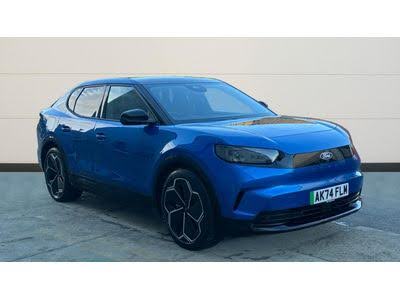
While the classic Ford Capri is special in car history, Ford has recently introduced a new version of the Capri. This modern Capri is an all-electric coupe-SUV, bringing the spirit of the original Capri into today’s world. The new Capri shows that Ford is updating its famous car names to meet today’s needs for eco-friendly and high-tech cars. By making the Capri electric, Ford is keeping the name relevant as more cars become electric.

The new Capri shows how famous car names can change with new technologies and what people want. While it’s not as simple as the old Capri, it continues the Capri’s tradition of being stylish and practical. The modern Capri’s design reminds us of the old one with its sleek, sporty look, but it also has new features that people like today. Its electric engine gives instant power and runs quietly, offering a different but still exciting driving experience compared to the classic models.

Comparing Classic and Modern Capris

When we compare the classic Ford Capri for sale with the new one, we can see that both have their own special qualities. The classic Capri gives you a pure, mechanical driving experience and a timeless design. It connects you directly to the car in a way that many car fans love. The sound of the engine, the feel of changing gears by hand, and the steering that doesn’t have power assist all make driving a classic Capri really fun and different from modern cars.

The modern version, on the other hand, has the latest technology and performance while still looking a bit like the old Capri. It’s electric, which makes it convenient and efficient, and it has advanced safety features and entertainment systems that people expect in cars today. The new Capri can go faster and accelerate quicker than the old ones because of its electric motor.

Here’s a quick comparison of some key features:

FeatureClassic CapriModern Capri
EnginePetrol (various sizes)ElectricImproved
PowerUp to 138 bhp (3.0L V6)Up to 335 bhpImproved
0-60 mph7.3 seconds (RS3100)5.3-8.7 secondsImproved
RangeDepends on fuel tankUp to 390 milesImproved
TechnologyBasic by modern standardsAdvanced infotainment and driver aidsImproved
DesignClassic sports coupeCoupe-SUV crossoverChanged
CollectibilityHighTo be determinedUncertain

The Ford Capri Community

One of the reasons the Ford Capri has stayed popular for so long is because of the strong community of people who love it. There are Capri owners’ clubs and groups all over the world. These groups are great for getting help, advice, and making friends with other Capri fans. They play a big role in keeping the Capri’s story alive for future car lovers.

These communities organize events, share tips on fixing up Capris, and help members find rare parts. For many people, being part of the Capri community is just as fun as owning the car itself. Local and national Capri meets let owners show off their cars, share ideas, and celebrate their shared love for the Capri. Online forums and social media groups have made it even easier for Capri fans from all over the world to connect and share their experiences. If you’re thinking about buying a Ford Capri for sale, joining one of these communities can be a great way to get advice and meet other Capri enthusiasts.

Investing in a Ford Capri: Classic vs. Modern

When it comes to investing in a Ford Capri, both old and new versions can be good choices. Classic Capris, especially rare ones or those in great condition, have gone up in value over the years. They’re seen as collector’s items, and their prices will likely keep going up as they become harder to find. Special editions, like the RS2600 or the 280 ‘Brooklands’, are especially valuable. Classic Capris are good investments because they’re important in car history and make people feel nostalgic.

The new electric Capri is still too new to know if it will be a good investment. But as more cars become electric, it could become an important model in Ford’s history. As one of the first electric cars to use the Capri name, it might become valuable to collectors in the future, especially if they don’t make too many of them. How good an investment the new Capri will be depends on how popular it becomes and how well it captures the spirit of the original Capri while being modern.

Here are some things to think about when investing in a Ford Capri:

Key Factors for Ford Capri Investment

  • Rarity and condition of the model (Very Important)
  • Historical significance (Important)
  • Market trends in classic and electric vehicles (Important)
  • Maintenance and storage costs (Moderately Important)
  • Personal enjoyment factor (Moderately Important)

The Future of the Ford Capri

Looking ahead, the Ford Capri is set to maintain its status as a beloved classic. Well-preserved models and rare editions will likely become even more desirable among collectors. With growing interest in vintage cars, especially among younger enthusiasts, the original Capri is expected to remain a sought-after icon for years. As the number of original Capris decreases, we may see more high-quality restorations and even modernized versions that blend classic aesthetics with cutting-edge technology.

At the same time, the appeal of classic cars extends beyond the Capri. Enthusiasts searching for a Porsche 944 for sale often look for similar qualities—timeless design, impressive handling, and a strong connection to automotive history. The Porsche 944, like the Capri, has developed a dedicated following, with well-maintained models becoming increasingly valuable. On the other hand, those who appreciate rugged reliability and versatility might be on the lookout for a Toyota Hilux for sale. The Hilux, known for its legendary durability, remains a favorite among off-road and utility vehicle enthusiasts, proving that both performance cars and tough workhorses hold lasting appeal.

The introduction of an electric Capri could pave the way for future reimaginings of this legendary model. As car technology advances, new Capris might push the boundaries of performance and design while preserving the essence of the original. If the electric version proves successful, Ford might even revive other classic names in an electric form. Whether you’re looking for a classic Ford Capri, a Porsche 944 for sale, or a Toyota Hilux for sale, one thing is clear—the passion for iconic vehicles, whether sports cars or tough utility trucks, is here to stay.

Conclusion: The Timeless Appeal of the Ford Capri

The Ford Capri’s ability to stay popular over time shows how great its design and performance are, and how much people love it. From when it first came out in 1969 to the new electric version, the Capri has always excited car fans. People love the Capri not just for how it looks and drives, but for the feelings it creates and the stories it tells. The Capri is a perfect mix of style, performance, and affordability that has made it popular across generations and kept it relevant even as cars have changed a lot.

Whether you like the classic models for their timeless design and simple mechanics, or you’re interested in the modern version’s mix of old-school looks and new technology, there’s a Ford Capri for everyone. The classic Capri lets you experience a piece of car history, giving you a driving experience that’s hard to find in today’s cars. It reminds us of a time when cars were simpler, more fun to drive, and had more character. On the other hand, the new electric Capri shows how classic designs can be updated for today, mixing nostalgia with new technology.

As cars keep changing, the Capri’s story helps connect the past and future of driving. It reminds us that cars should have character and make us feel something, even as we use new technologies and think about the environment. The Capri’s journey from a groundbreaking sports coupe to an electric car of the future shows how truly great car designs can adapt and stay popular.

If you’re thinking about getting a Ford Capri, whether it’s an old one or the new electric version, you’re not just buying a car – you’re becoming part of an important car story. With its lasting appeal and passionate fan base, the Ford Capri really has stood the test of time. It offers more than just a way to get around; it gives you an experience, something to talk about, and a way to connect with other people who love these cars. As we look to the future, the Ford Capri, in all its forms, will keep exciting and inspiring car lovers for many years to come.Ready to experience the Ford Capri for yourself? Check out Ford Capri for sale listings and find the perfect model to start your Capri adventure today. Whether you choose a carefully restored classic or go for the cutting-edge electric version, you’ll be joining a proud group of Capri owners who appreciate the perfect mix of style, performance, and car history.

Understanding Florida’s No-Fault Insurance Laws for Drivers

Image by arodsje from Pixabay

If you’re a driver in Florida, understanding no-fault insurance is crucial for your peace of mind and financial protection. This type of insurance plays a significant role in how accidents and injuries are handled in the Sunshine State. But what exactly does no-fault insurance mean for you? Well, it shifts the responsibility from determining fault after an accident, allowing drivers to file claims with their own insurance companies instead. Isn’t that a game changer?

Florida’s no-fault insurance law can be a little tricky, but knowing the ins and outs can save you a lot of headaches down the line. It’s not just about having the right coverage; it’s about understanding what you’re entitled to in the event of an accident. Whether you’re a seasoned driver or new to the roads, you’ll want to grasp these laws to protect yourself and others. So, what do you need to know about Florida’s no-fault insurance laws? Let’s break it down and get you the information you need to navigate this essential aspect of driving in Florida!

What is No-Fault Insurance and How It Works in Florida?

No-fault insurance in Florida is a unique system designed to simplify the process of getting compensation after an accident. Unlike traditional insurance where you seek damages from the at-fault driver, no-fault insurance means your own insurance company pays for certain expenses regardless of who caused the accident. This is primarily facilitated through Personal Injury Protection (PIP), which is mandatory for all drivers in Florida. Who wouldn’t want to avoid the hassle of a lengthy claims process?

Here’s the scoop: If you get into a car accident, your PIP coverage will typically pay for your medical bills, lost wages, and other reasonable expenses up to a set limit. In Florida, the minimum PIP coverage requirement is $10,000. Think about it, having that cushion can be a lifesaver! But how does it actually work in practice? Well, the money is often disbursed quickly, allowing you to focus on recovery instead of worrying about costs.

It’s important to note that not everything is covered. PIP insurance isn’t a blanket solution to all damages; it generally won’t cover vehicle repairs, pain and suffering, or any property damage. So, if you find yourself needing to file a claim for those areas, the at-fault driver’s insurance might come into play. This unique system aims to ensure that everyone gets rapid assistance while reducing the number of lawsuits between drivers. Isn’t that a win-win?

  • What is covered under no-fault insurance?
  • How quickly claims can be processed?
  • What are the limitations of PIP coverage?

Key Benefits of Florida’s No-Fault Insurance for Drivers

Florida’s no-fault insurance system offers several key advantages to drivers, making it a unique approach to handling car accidents. One of the most significant benefits is that it allows drivers to file claims for their medical expenses and other damages—regardless of who was at fault for the accident. Isn’t that a relief? This means that you don’t have to navigate the often complicated blame game in the aftermath of a crash.

Another huge perk of no-fault insurance is the speed of claims processing. Since you’ll be turning to your own insurance provider for coverage, you can typically expect a much quicker payout than with traditional liability insurance claims. Just think about it: fewer delays can lead to faster access to the medical care you need! And let’s be real—who wouldn’t want that peace of mind?

Additionally, the no-fault insurance system helps to keep the legal process simpler. With less incentive for litigation, there’s often less tension and more cooperation among drivers involved in an accident. If you find yourself in an accident, wouldn’t you prefer fewer legal headaches? It’s worth noting that while you may still pursue legal action in certain cases, the focus is much more on getting you back on the road and feeling good.

  • Quick claims processing for faster medical care.
  • Simplified legal proceedings to reduce stress.
  • Coverage for a broader range of injuries and damages.

Moreover, Florida’s no-fault insurance covers a variety of personal injury damages, such as lost wages and rehabilitation costs, making it a comprehensive safety net for drivers. It’s comforting to know that you have protection that extends beyond just vehicle damage, right? Understanding these key benefits can give you a clearer perspective on why Florida chose this innovative insurance model.

Understanding Personal Injury Protection under No-Fault Laws

Understanding personal injury protection under no-fault laws is crucial for anyone driving in Florida. These laws are designed to simplify the process of claiming compensation after an accident, ensuring that you get the help you need without the added stress of determining fault. So, what exactly does this mean for you as a driver? Let’s break it down.

Personal Injury Protection (PIP) is part of no-fault insurance, covering medical expenses, lost wages, and other related costs if you are injured in an accident—regardless of who caused it. This means that even if you’re at fault, your PIP can still assist you financially.

One of the key benefits of PIP is that it covers not only your medical bills but also those of your passengers. That’s peace of mind for you and your loved ones while driving, knowing you’re all protected. Additionally, PIP can help cover rehabilitation costs and essential services if your injuries prevent you from performing daily activities.

However, it’s important to note that PIP coverage is not unlimited. Florida law typically requires a minimum of $10,000 in coverage, but if your expenses exceed that, you may need to explore additional coverage options. Having a clear understanding of your rights and available resources can help you make informed decisions about your insurance needs.

  • Medical costs related to your injuries.
  • Wages lost due to the accident.
  • Rehabilitation or physical therapy expenses.
  • Additional services for daily activities if needed.

Understanding personal injury protection under no-fault laws can empower you as a driver. Visit HireJared.com to learn all about Florida’s PIP coverage, how it applies to your situation, and what steps you can take if your expenses exceed policy limits. Being informed now can save you from complications later!

Common Misconceptions about No-Fault Insurance in Florida

When it comes to no-fault insurance in Florida, there are plenty of myths floating around that can confuse even the savviest drivers. Many people think that just because it’s called ‘no-fault’ means there’s no responsibility when accidents happen. But that’s not entirely true! Sure, this type of insurance reduces the need to prove who’s at fault in an accident, but it doesn’t mean you’re off the hook for your own actions.

Another common misconception is that no-fault insurance covers all types of damages and injuries. Unfortunately, that’s not accurate either! While Personal Injury Protection (PIP) helps cover medical expenses, it doesn’t necessarily cover vehicle repairs, nor does it handle pain and suffering claims unless certain conditions are met. So, what happens if you have more serious injuries? Well, that’s where understanding additional coverage options becomes crucial!

Some folks also believe that if they get into an accident while using no-fault insurance, they can’t sue the other driver, even if they weren’t at fault. That’s not the case! In certain circumstances, especially with severe injuries, you can step outside of the no-fault system and pursue a lawsuit. This is a critical aspect to grasp, as it impacts your rights and the compensation you might receive!

  • Misconception 1: No-fault equals no responsibility.
  • Misconception 2: No-fault insurance covers all damages.
  • Misconception 3: You can’t sue someone with no-fault insurance.

Now that we’ve tackled these misconceptions, it’s important to arm yourself with the facts! Understanding the real workings of no-fault insurance can make all the difference when it comes to your responsibilities and rights as a Florida driver. Are you ready to get the most out of your coverage?

Steps to Take After an Accident Under No-Fault Insurance

Having a game plan after an accident is crucial, especially when you’re dealing with no-fault insurance in Florida. So, what steps should you take to protect yourself? First and foremost, ensure everyone’s safety! Check if you or your passengers need medical attention, and call for help if necessary. Remember, your well-being comes first!

Next, gather as much information as you can at the scene. This includes taking photos of the vehicles, noting down the license plate numbers, and exchanging insurance details with the other driver. Sounds like a lot? Don’t stress! Just aim to collect relevant info that could make the claims process smoother later on. Trust me, you’ll be thankful you did this!

After that, it’s time to contact your insurance company. When dealing with no-fault insurance, inform them about the accident as soon as possible. They will guide you through the claims process. It’s also a good idea to document everything in writing, like what you discussed during the call—this can prevent any misunderstandings down the line.

Don’t forget to reach out for medical attention even if you don’t feel injured at the moment. Injuries can sneak up on you, and having a medical record is essential. Under no-fault insurance, your personal injury protection (PIP) will cover a portion of your medical expenses, so take advantage of that benefit!

  • Check for injuries and call emergency services if needed.
  • Gather information from the accident scene.
  • Inform your insurance company promptly.
  • Document all conversations and claims processes.
  • Seek medical attention to be safe.

Finally, keep track of any paperwork related to your accident and insurance claims. This will come in handy if you need to reference anything later. It’s all about being prepared and knowing your rights under no-fault insurance laws in Florida. So, are you ready to navigate through this? You’ve got this!

Final Thoughts: Understanding Florida’s No-Fault Insurance Laws for Drivers

Understanding no-fault insurance is crucial for every driver in Florida. It offers a unique approach to handling accidents, ensuring quicker compensation and less hassle. By familiarizing yourself with how it works, you can navigate the challenges of car accidents more effectively. From knowing your personal injury protection limits to debunking common myths, knowledge truly is power in this case. Think about it—aren’t you eager to be better prepared?

Florida’s no-fault insurance laws help streamline the claims process, making your life a bit easier when things go awry. Whether it’s understanding the key benefits or the steps to take post-accident, this information can empower you to make informed decisions. So, keep this guide handy and ensure you’re ready to tackle any situation that comes your way. Are you now feeling more confident about navigating Florida’s no-fault insurance landscape?

Budgeting a Racing Season – Costs, Tools, and Real Strategies

Photo by Scott Graham on Unsplash

Racing is thrilling. The roar of engines, the rush of speed, and the instant you cross the finish line create a unique adrenaline surge. But another side to this sport that can be just as intense is managing the money.

Race fees, travel expenses, crew wages, car maintenance, and unexpected repairs add up quickly. If you don’t have a solid budget, you’ll burn through your funds before you complete the season.

What This Article Is About

Below, we’ll look at practical ways to plan your racing budget and discuss how a CRM system Authority can help. We’ll see how it might fit into a broader financial strategy, and we’ll explore ways to pay for that software. By the end, you’ll have some clear ideas on how to keep your wheels turning without running your bank account to zero.

The Price Tag of Racing

Let’s begin with real costs. Many teams underestimate them at the start. It’s easy to think only about fuel or tires. But you also have entry fees, pit crew salaries, vehicle transport, spare parts, track rentals for testing, insurance, and licensing. It’s a big list.

Engine work tends to be one of the largest expenses. You might rebuild your engine multiple times throughout the season. Each rebuild costs money for parts and labor. Tires also stack up. You can’t run an entire season on one set. Then there’s hauling the car and the team around. Those travel bills include fuel, lodging, and food. If you chase multiple circuits, you have extra nights on the road. Each item might seem small, but they pile up fast.

Sponsorship deals can offset some costs, yet sponsors don’t pay for everything. If you rely on one big backer, a sudden drop in funding can mess with your season. Some people get partial funds from local shops or smaller companies. That helps, but the patchwork approach still demands careful planning. You need a strong system to map out every expected and possible cost. Leave out a single category, and you might scramble for cash after a bad race weekend.

Setting Up a Solid Budget

When you first map out a racing budget, start broad. List the big items: car purchase or leasing fees, team payroll, travel, and replacement parts. Then, break those groups down into smaller segments. For example, “car expenses” might include exhaust parts, custom bodywork, and specialized tires for different track types.

Decide on realistic amounts. Look at data from past seasons if you have it. If you’re new, talk to other racers or do online research. Make sure to account for accidents. If you crash, you’ll face repair bills. If a major part fails mid-season, you’ll spend more than expected. Build a cushion for emergencies. A good rule is to keep 10% to 20% of your overall budget aside for unplanned troubles.

Money management apps or spreadsheets are a decent start. They allow you to track expenses and compare them with your set budget. But with the pace of a racing schedule, you might lose track of updates. You might forget to add a small part of a last-minute flight for your lead mechanic. If your team grows, that manual tracking can become a nightmare. That’s where certain software tools come in handy.

CRM: More Than a Customer Tool

You might wonder why “CRM” appears in a racing conversation. Typically, CRM stands for “Customer Relationship Management.” It’s a system for tracking clients, leads, and sales in many industries. However, CRM financial services can adapt to many settings—even racing.

In a racing context, a CRM can keep records of sponsor deals, track contracts, store team data, and log your spending in a single spot. It’s not just about finding new customers. It can help you see an organized timeline of inflows and outflows. When you’re under pressure at the track, immediate access to these details keeps you from making decisions in the dark.

Team owners often struggle with scattered logs. One person has sponsor information, and another has parts costs. This can lead to confusion when a payment is due, or a sponsor needs data on how their funds are used. A CRM for investment tracking in racing can unify that information. You don’t have to rummage through emails or multiple spreadsheets. Everything’s in a single place, labeled neatly so you can find it quickly.

CRM Price Ranges

Prices for these systems vary. You can find free tiers with basic features. On the other hand, large corporations use enterprise-level solutions with advanced analytics. Racing teams often fall somewhere in between. You might want deeper reporting and integration with your accounting software if you handle major sponsor deals and carry a bigger crew. If you’re a small outfit, a simple package might be enough.

Basic Plans

These usually let you track contact information, deals, and leads. You might see simple dashboards that show your most recent transactions or top sponsors. If you keep your operation lean, this plan covers the essentials.

Mid-Level Upgrades

These add more analytics. You can tie income to expenses in real-time. Some offer automation. For example, you can set up recurring tasks, like tire reorder reminders or sponsor check-ins. This level suits teams who have outgrown spreadsheets but don’t want a huge bill.

High-End Options

This tier can sync with complex financial tools. It may even offer AI-driven forecasting to predict how sponsor revenue might shift over the season. Large racing enterprises might need these features, especially if they manage multiple cars or a wide network of business deals.

Check for setup fees. Some providers charge for onboarding, user training, or system integrations. A CRM that needs special modifications can also cost more. If your racing program uses unique software for analyzing engine data or driver performance, you might pay extra to connect that data to the CRM. That said, a well-configured tool helps you monitor the budget before it goes off track.

Financing Your CRM

Any new software has a price tag. You don’t want to blow your entire budget on a CRM. In fact, it should help you save money, not put you deeper in the hole. But if you’re short on funds, you can look at a few ways to manage the cost.

1. Business Loans or Payday Loans

Short-term financing can help you tackle the initial fees. Some teams look for local bank loans, but there are also online lenders. They can break up the cost so you’re not paying for everything in a single payment. Advice from John Smith, financial expert at Magnolia Payday Loans online services: “Don’t settle for the first online lender you find. Make sure to check reviews on platforms like Google and TrustPilot to see what real customers are saying. Choose only lenders with a good reputation who offer transparent terms.”

2. Provider Financing

Certain CRM vendors have payment plans. These packages spread the cost over six months or a year. That might be easier on your cash flow when you pay race fees or staff salaries. You might get a discount for multiple-user licenses if you’re part of a bigger racing organization. Don’t be shy about asking.

3. Angel Investors or Sponsors

Some sponsors want to invest in your team’s structure. If they see that you’re serious about tracking costs and showing a return on investment, they may agree to fund the CRM. In return, you’ll offer them data that proves their money goes to good use. This approach demands transparency. Sponsors might trust you more if you use business and CRM tools to produce clear financial reports.

Picking the Right CRM for Your Team

You want a system that fits your workflow. Racing moves quickly, so you need software that’s easy to navigate. A system with too many tabs or a confusing layout will slow you down. Here are a few areas to consider when making a choice:

User Experience

Check the interface. Is it intuitive? Do you see dashboards that make sense at a glance? Do you need advanced training to understand it?

Customization

Every racing team has different priorities. Some focus on sponsor relationships, others on part inventories. Look for a solution that lets you rename fields or create unique modules.

Integration

If you use any accounting program, see if the CRM can connect with it. Syncing data reduces your workload. It also lessens the chance of input errors. When your mechanic logs a new part purchase, you want that data to show up in your budget projections without extra manual steps.

Scalability

Growing teams need more powerful tracking. If you expand, choose a CRM that can handle heavier data loads or more user accounts. Otherwise, you’ll outgrow it after one season.

Price

Keep it within reason. While features are nice, an overloaded CRM can be distracting. Instead, look for the core tools you need.

Maximizing Your CRM Investment

Once you pick a CRM, you should take steps to get the most out of it. Don’t let it sit idle. Make it a habit to log everything. Each invoice, sponsor payout, or parts purchase should live in the CRM. When your finance manager or crew chief completes a transaction, have them update the system. Frequent logging keeps your dashboard accurate.

Use the reports. Many systems let you see weekly or monthly summaries. You might notice a spike in tire costs in certain conditions or see certain sponsors pay late each cycle. These details matter. They show you where to cut back or where to negotiate for better terms. If you only glance at the CRM once per month, you’ll miss patterns.

Some CRMs also have forecasting. That’s especially handy if you’re planning multiple races in different places. You can estimate travel costs ahead of time. If your budget is risky, you can downscale certain upgrades or find extra sponsor support. Real-time data is your friend in a sport where timing is everything.

Sponsorship Management with CRM

Sponsorships often keep your team afloat. Each sponsor might need special updates, branding on the car, or event appearances. A CRM for investment records can track what each sponsor expects in return for their financial help. You can track contractual obligations, renewal dates, or special offers they made.

Organize your sponsor details in a separate category. Label each sponsor with the agreed-upon funds, contact people and key milestones. This method ensures you don’t forget to deliver any perks. If sponsors receive real value from you, they’re more likely to renew their support next season. A structured CRM approach helps you maintain that trust.

People Management

A racing team involves more than just drivers. You have mechanics, engineers, tire specialists, logistics staff, media folks, or a small admin group. Each role can cost money in wages, hotel stays, and gear. If you log these expenses in your CRM, payroll won’t catch you off guard at the end of the month.

You can store their contact details in the same system when onboarding a new member. You’ll see start dates, pay rates, and any bonus clauses. That helps you stay organized without rummaging through separate folders. It’s not just about your external deals. Internal structure also saves money.

Risks and Contingencies

Racing has many unknowns. A crash can total a car. A sponsor can back out. A new engine might arrive late. All these risks hit your finances. A CRM can’t prevent mishaps on the track. But it can show you how much financial room you have when things go wrong.

You could track potential backup plans. If your main sponsor fails to pay, do you have a secondary sponsor in talks? If the engine supplier has a shipping delay, can you afford to rent a temporary engine from another source? Mark these possibilities in your CRM. Tag them as “contingency plans.” If trouble strikes, you can see your fallback options quickly.

Evaluating Seasonal Performance

At the end of each season, you should thoroughly examine your numbers. Did you overshoot the budget? If so, where did that happen? Were there more crashes this season, or did you order too many replacement parts? Did you get fewer sponsor payments than expected?

A well-maintained CRM can provide a clear answer. It can show you each category of spending. You’ll see which sponsors were consistent and which had late payments. You can also see how your team’s travel expenses matched your original plan. This feedback loop is vital. It helps you create a more accurate budget for the next year. You refine your processes and avoid repeating mistakes.

Expanding Your Racing Program

If the season goes well, you might grow your program. Maybe you add a second car or enter a higher-level series. Those expansions raise your costs. You’ll need more staff, spare parts, and advanced data-logging tools. An effective CRM should scale with you. Adding more cars means adding more records. You can track which car has which sponsor arrangement or which crew is assigned to each vehicle.

When scaling, you might also consider professional help from accountants specializing in racing. They can analyze your CRM data and give you tips for better financing. They might spot missed patterns, such as small but regular overspending in one area. Working with experts can save you thousands of dollars over time.

Car insurance in racing is no small matter. Basic plans might not cover on-track accidents. Specialized coverage might cost more than standard auto policies. There’s also health insurance for crew members. If you employ full-time staff, you must account for worker’s compensation or other legal obligations.

All these insurance and legal costs deserve a spot in your CRM. Tag them separately from general expenses to see how much of your budget is allocated to risk management. If those costs become too high, you might renegotiate your coverage or switch providers after the season ends. Data drives these decisions. A random guess won’t cut it in a high-stakes sport.

Negotiating Sponsorship and Supplier Deals

Teams that maintain clean records have an advantage in negotiations. If a supplier claims their prices are the lowest, you can look at last season’s data. Maybe you found a cheaper deal with a different vendor. If a sponsor wants to reduce funding, you can show them performance reports highlighting strong media exposure or improved race positions. That data might lead them to keep their original commitment.

You don’t fumble around or rely on memory when these details are in a CRM. You can pull up actual figures. Sponsors and suppliers respect a team that operates professionally. They want to see accountability for every dollar they provide. This business and CRM integration can elevate your status from a hobbyist to a serious competitor.

Looking to the Future

Racing evolves. New tech appears, rules change, and sponsor priorities shift. You might see more hybrid or electric racing formats. You may start investing in advanced telemetry. As the sport transforms, your financial structure must adapt. A flexible CRM can help you handle these changes. If a new type of sponsor emerges — like a tech company interested in electric vehicles — you can tailor sponsor fields to track those partnerships in your system.

You might add modules focusing on sponsor analytics to refine your “CRM for investment” approach. You could track how each sponsor’s funds correlate with on-track improvements or marketing reach. That level of detail might attract even bigger contracts, which keep your racing dream alive and well-funded.

Final Thoughts

Budgeting for a racing season is no small task. You must manage repair costs, travel fees, team wages, and sponsor expectations. A thorough plan helps you anticipate these challenges rather than react to them. Setting realistic numbers, building a safety margin, and staying organized can prevent you from going broke before the checkered flag.

Across the season, consult the CRM whenever you spend. Notice patterns. Negotiate better deals. It’s not about repeating the same tasks or doubling up on paperwork. It’s about being in control. Racing is unpredictable, but your finances shouldn’t be. By investing in the right tool and staying within your budget, you’ll have a shot at a successful full season on the track without watching your funds evaporate. Good luck!
Cindric, Freightliner Celebrate No. 2 Legacy with Earnhardt Throwback

Darlington Throwback Weekend scheme celebrates the storied history of the No. 2 in NASCAR

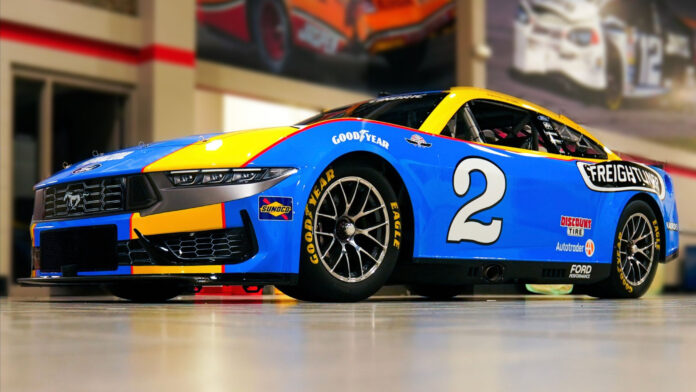
COLUMBIA, S.C. (March 4, 2025) – Team Penske and Austin Cindric today unveiled a special throwback paint scheme for the upcoming Goodyear 400 at Darlington Raceway, the Official Throwback Weekend of NASCAR. Cindric’s No. 2 Freightliner Ford Mustang will sport a blue and yellow design inspired by the 1979 and 1980 No. 2 livery driven by the late Dale Earnhardt.

Cindric revealed the scheme Tuesday afternoon at the South Carolina Governor’s Mansion, joined by Governor Henry McMaster and Darlington Raceway President Josh Harris.

“There are few names in our sport more recognizable than Earnhardt. The opportunity to pay tribute to a legend, while also recognizing the incredible history of the No. 2 in NASCAR, was the goal behind this scheme,” said Cindric. “Freightliner has always been an incredible partner for us at Team Penske and played a key role in bringing this vision to life. We’ve had a lot of fun working through the details, and I hope our car stands out for fans at the track and those tuning in during Darlington Throwback Weekend.”

Earnhardt piloted the blue and yellow No. 2 during the 1979 and 1980 NASCAR Cup Series seasons. Driving for Rod Osterlund, he earned Rookie of the Year honors in 1979, securing his first career win at Bristol Motor Speedway. The following year, Earnhardt led the standings from the second race onward, ultimately capturing his first of seven Cup Series championships.

The No. 2 car boasts one of the most storied legacies in the Cup Series, accumulating 102 wins—tied for fourth with the No. 3 on the all-time wins list among car numbers. Over the years, 108 drivers have piloted the No. 2, including Earnhardt, who won six races in the same blue and yellow scheme that Cindric will revive for this year’s Throwback Weekend. Four Team Penske drivers have piloted the No. 2 Cup Series entry and have accumulated 81 of those triumphs.

Columbia, South Carolina, served as a fitting backdrop for the scheme’s reveal with Darlington Raceway and Freightliner’s roots running deep in the Palmetto State. One hour north of Columbia stands one of Daimler Truck North America’s (DTNA) headquarters in Fort Mill, a facility home to hundreds of professionals specializing in sales, marketing, finance, and dealer operations, strategically positioned near Charlotte’s commercial hub and in close proximity to many of DTNA’s manufacturing locations. The significance of this location and its team members to Freightliner’s daily operations is reflected in this season’s primary Freightliner scheme on the No. 2, which features a map highlighting both Fort Mill and Portland, Oregon—DTNA’s second headquarters.

As Darlington celebrates its 75th anniversary in 2025, this year also marks the 11th annual Official Throwback Weekend, a tradition that honors NASCAR’s rich history.

“Darlington is the perfect place to celebrate NASCAR’s heritage, and this scheme is a fantastic tribute to Dale Earnhardt and the legacy of the No. 2,” said Harris. “Throwback Weekend is all about honoring the icons who shaped the sport, and we’re thrilled to see Austin and Team Penske bring this classic look back to life for the fans.”

The Goodyear 400 at the track “Too Tough to Tame” is set for Sunday, April 6, at 3:00 p.m. ET, with live coverage on FOX Sports 1 and SiriusXM NASCAR Radio.

ABOUT FREIGHTLINER TRUCKS
Freightliner Trucks is a brand of Daimler Truck North America LLC (DTNA), headquartered in Portland, Oregon. With 80 years of experience, Freightliner produces and markets medium-duty and heavy-duty trucks as the leading heavy-duty truck brand in North America. DTNA is a subsidiary of Daimler Truck Holding AG (DTG), one of the world’s leading commercial vehicle manufacturers. More information is available at www.Freightliner.com.

ABOUT TEAM PENSKE
Team Penske is one of the most successful teams in the history of professional sports. Cars owned and prepared by Team Penske have produced more than 640 major race wins, over 690 pole positions and 47 championships across open-wheel, stock car and sports car racing competition; three of those Championships added within the 2024 season. Over the course of its 58-year history, the team has also earned 20 Indianapolis 500 victories, three Daytona 500 Championships, a Formula 1 win, victories in the 24 Hours of Daytona and the 12 Hours of Sebring, along with a win in Australia’s legendary Bathurst 1000 race. In 2025, Team Penske competes in the NTT INDYCAR SERIES and the NASCAR Cup Series. Through a Team Penske global partnership, Porsche Penske Motorsport also races in the IMSA WeatherTech SportsCar Championship and the World Endurance Championship.

SNOW BELT MGMT ANNOUNCES VANS WARPED TOUR’S ENTRY TO NASCAR FOR GOVX 200

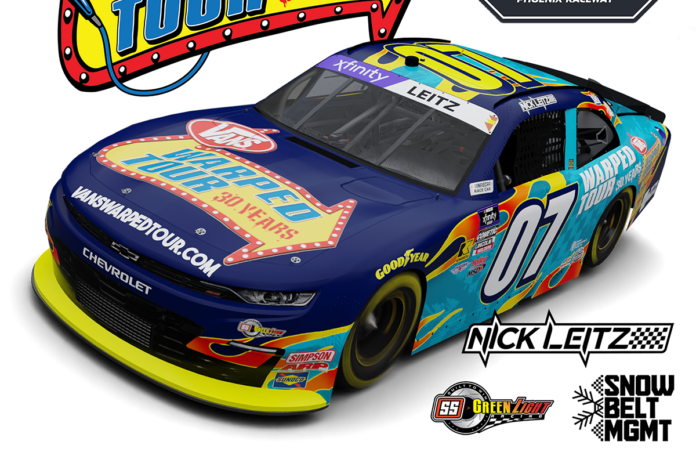
MOORESVILLE, NC, March 4, 2025 – Snow Belt MGMT today announced that Vans Warped Tour will serve as the primary sponsor of Nick Leitz in the #07 SS-GreenLight Racing Camaro for this Saturday’s GOVX 200 NASCAR Xfinity Series race at Phoenix Raceway. The partnership marks a thrilling crossover between music and motorsports, celebrating Vans Warped Tour’s highly anticipated return in 2025 for its 30th anniversary.

As part of this collaboration, the #07 Camaro will feature a special Vans Warped Tour wrap, bringing the tour’s signature punk-rock and alternative music aesthetic to the NASCAR track. This initiative aims to connect generations of Warped Tour fans with the excitement of racing, bridging the gap between two passionate communities.

Warped Tour Founder Kevin Lyman took to Instagram here to share his excitement for the partnership.

“Vans Warped Tour is such an iconic music festival. It had a major influence on me when I was growing up,” said Patrick Emerling, CEO of Snow Belt MGMT. “It’s a huge honor to be partnered with Vans Warped Tour and to be involved in bringing them into NASCAR. There’s a strong relationship between motorsports and music. This is going to be really popular with not just the fans but also the drivers.”

“Vans Warped Tour is one of the coolest partnerships I’ve ever had,” said Leitz. “I’ve been working on a special Warped Tour playlist just for Phoenix.”

The Vans Warped Tour, founded in 1995, became a defining platform for punk, rock, and alternative music, launching the careers of countless bands and serving as a cultural staple for music fans. After concluding its run in 2019, the tour is making its long-awaited return in 2025 to Washington, D.C., Long Beach, CA, and Orlando, FL.

Additional partners for Leitz at Phoenix include Tequila y MusicaLowery’s GlassAir Excellence Heating & Cooling and The Mandy Gold Team | Haymore Real Estate LLC.

The GOVX 200 (200 laps | 200 miles) is the 4th of 33 NASCAR Xfinity Series races on the 2025 schedule. Practice starts at 11:35 a.m. followed by qualifying at 12:40 p.m. The field is set to take the green flag later that day at 5:00 p.m. with live coverage on The CW, the Motor Racing Network (Radio), and SiriusXM NASCAR Channel 90. All times are Eastern Standard Time.

For more information on Nick Leitz, visit https://www.nickleitzracing.com/ or follow him on X (https://twitter.com/NickLeitz_) or Instagram (https://www.instagram.com/nickleitz/). 

Front Row Motorsports: Phoenix Raceway Competition Notes (Todd Gilliland and the No. 34 Frontline Enterprises Ford Team)

Todd Gilliland and the No. 34 Frontline Enterprises Ford Team
Phoenix Raceway Competition Notes

Shriners Children’s 500
Date: Sunday, March 9, 2025
Event: Race 5 of 38
Series: NASCAR Cup Series
Location: Phoenix Raceway (1.0-mile)
#of Laps: 312
Time/TV/Radio: 3:30 PM ET on FS1/MRN/SiriusXM channel 90

Todd Gilliland Notes

The NASCAR Cup Series will kick off its “West Coast Swing” this weekend at the Phoenix Raceway. Successful automotive dealer and long-time Todd Gilliland supporter, Frontline Enterprises, will serve as the primary partner of Todd Gilliland and Front Row Motorsports (FRM) for the 312-lap event.

Entering a new era with the No. 34 Ford Mustang Dark Horse, the Canadian automotive dealer will support Gilliland in the NASCAR Cup Series for the fourth consecutive year and will bring a bold, new look to Gilliland’s Ford at the Arizona track. Additionally, Frontline Enterprises will serve as a full season associate sponsor of Gilliland and the No. 34 team.

Frontline Enterprises has been a key figure in Gilliland’s NASCAR career, partnering with the driver during his time in the ARCA Menards Series before following Gilliland to FRM and the No. 38 Ford F-150 in the CRAFTSMAN Truck Series.

“Frontline Enterprises is really excited to be on board with Todd again for another season,” said Brett Stevens, Owner, Frontline Enterprises. “It’s going to be an exciting year with the new 34 number. Todd was very impressive last year, and we can’t wait for Phoenix. Todd is not only a great driver but also a great person and has become a longtime friend. We at Frontline look forward to many more years of partnership, and I look forward to many more years of beating him at golf.”

“I’m excited to have Frontline Enterprises back with me in the Cup Series for the fourth consecutive year,” said Gilliland. “Brett (Stevens) has been a long-time supporter of mine and a great friend. We have a lot of great memories together, and I’m looking forward to making more. ‘The “West Coast Swing’ puts a little more stress on everyone with the logistics and travel, but it’s nothing this team can’t handle. I’m excited to head out to Phoenix with my Frontline Enterprises Ford Mustang Dark Horse and hopefully park it in Victory Lane.”

Road Crew

Driver: Todd Gilliland
Hometown: Sherrills Ford, North Carolina

Crew Chief: Chris Lawson
Hometown: Medway, Ohio

Car Chief: Joe Marra
Hometown: Somers, New York

Engineer: Marc Rullo
Hometown: Ringwood, New Jersey

Engineer: Kevyn Rebolledo
Hometown: Mooresville, North Carolina

Spotter: Brit Andersen
Hometown: Branford, Connecticut

Underneath Mechanic: Michael Brookes
Hometown: Columbus, Ohio

Interior Mechanic: Chance Burke
Hometown: Siler City, North Carolina

Tire Specialist: Billy John
Hometown: Pitman, New Jersey

Engine Tuner: Tim Meyer
Hometown: Beatrice, Nebraska

Transporter Co-Driver: Christian Boller
Hometown: Mooresville, North Carolina

Transporter Co-Driver: Joe Haresky
Hometown: Victorville, California

Pit Crew

Front Tire Changer: Danny Olszowy
Hometown: Lexington, Kentucky

Rear Tire Changer: Justin Fox
Hometown: Concord, North Carolina

Tire Carrier: Jordan Goodine
Hometown: Salisbury, North Carolina

Jackman: Courtney Edmonds
Hometown: Burlington, North Carolina

Fueler: Zeke Nance
Hometown: Calhoun, Georgia

ABOUT FRONT ROW MOTORSPORTS

Front Row Motorsports (FRM) is a winning organization in the NASCAR Cup and Craftsman Truck Series. The team is the 2021 Daytona 500 and 2022 Craftsman Truck Series champions. The team was founded in 2004 and is owned by successful entrepreneur, Bob Jenkins. FRM fields the No. 4, No. 34, and the No. 38 NASCAR Cup Series teams along with the No. 34 and No. 38 Craftsman Truck Series teams from its Mooresville, N.C. headquarters. Visit teamfrm.com and follow FRM on social media: Twitter at @Team_FRM, Instagram at @team_frm and Facebook at facebook.com/FrontRowMotorsports.

Spire Motorsports Shriners Children’s Race Advance

  • In 22 NASCAR Cup Series starts at Phoenix Raceway, Spire Motorsports has logged one top-15 and three top-20 finishes. Carson Hocevar, driver of the No. 77 Chevrolet, earned a team-best 15th-place result in the series’ March 2024 visit to Phoenix. Spire Motorsports fields the Nos. 7, 71 and 77 Chevrolet ZL1s in the Cup Series for Justin Haley, Michael McDowell and Hocevar, respectively.
  • The Shriners Children’s 500 will be televised live on FOX Sunday, March 9, beginning at 3:30 p.m. Eastern Standard Time. The fourth of 36 points-paying races on the 2025 NASCAR Cup Series schedule will be broadcast live on the Motor Racing Network and SiriusXM NASCAR Radio Channel 90.

Justin Haley – Driver, No. 7 Spire Motorsports Chevrolet ZL1

  • Justin Haley will pilot Spire Motorsports’ No. 7 Gainbridge Chevrolet ZL1 in Sunday’s Shriners Children’s 500 at Phoenix Raceway.
  • The 25-year-old has recorded eight Cup Series starts and maintained an impressive 99.9 percent lap completion rate at the one-mile oval, registering 2,492 of the 2,501 contested laps.
  • Founded in 2018, Gainbridge® is an insurtech subsidiary of Group 1001 that empowers consumers to take control of their financial future with solutions that are accessible to everyone, no matter their budget or financial knowledge. Its platform provides access to financial products that are simple, intuitive, and backed by smart technology with no complexity or hidden fees. Gainbridge® is headquartered in Zionsville, Ind. For more information, visit www.gainbridge.io or follow and connect with us on X and LinkedIn.
  • The Winamac, Ind., native has competed in all three of NASCAR’s national series at Phoenix Raceway. In Cup Series competition, Haley scored a venue-best 17th-place finish in March 2022. He owns six Xfinity Series starts at the Avondale oval, earning two top-five and four top-10 finishes, and averaging a starting position of 9.2 and 10.5 average finish. Haley also notched one top 10 in three CRAFTSMAN Truck Series appearances.
  • Last Sunday, Haley started 29th for the NASCAR Grand Prix from Circuit of the Americas in Austin, Texas and spent a majority of the first half of the event on the outside of the top 20. Refer to race report Haley battled a loose-handling Group 1001 Chevrolet on old tires in the closing laps, slipping to the 16th position before crossing the finish line.
  • In total, Haley has made 44 Cup Series starts for Spire Motorsports, with the bulk of races coming during the 2021 season behind the wheel of the team’s No. 77 machine. He made his first Cup Series start at Talladega Superspeedway on his 20th birthday.

Justin Haley Quote
What are your thoughts on Phoenix?
“Phoenix is always a fan favorite and that makes it fun for the driver. The track is so difficult and it’s tough to have a well-balanced car in all four corners and throughout the race. It keeps you guessing all weekend. I competed in the No. 7 at Phoenix last fall with Spire, so I’m excited to use what we’ve learned since then and continue building momentum.”

Atop the No. 7 Box – Crew Chief Rodney Childers

  • Crew chief Rodney Childers comes to Spire Motorsports after spending the past 11 seasons at Stewart-Haas Racing, leading the organization’s No. 4 team. The first 10 of those campaigns were with 2014 NASCAR Cup Series Champion Kevin Harvick.
  • Crew chief Rodney Childers has 36 starts at Phoenix including three poles, five wins, 12 top-five and 23 top-10 finishes. His drivers have led a total of 1,238 laps at the one-mile Arizona oval.
  • The 48-year-old called five victories with Harvick at Phoenix Raceway from 2014-2018. The pairing swept the 2014 races in March and November before returning to complete the three-peat in March 2015.
  • The veteran crew chief has participated in 680 NASCAR Cup Series races where he’s earned 34 poles, 40 wins, 178 top-five and 298 top-10 finishes. He also earned 2014 championship honors with Harvick.
  • Childers’ 40 wins at NASCAR’s premier level are second-most amongst all active crew chiefs in the Cup Series garage.

Michael McDowell – Driver, No. 71 Spire Motorsports Chevrolet ZL1

  • Michael McDowell will pilot Spire Motorsports’ No. 71 Workforce Chevrolet ZL1 in Sunday’s Shriners Children’s 500 at Phoenix Raceway.
  • The Glendale, Ariz., native has made 28 attempts at his home track in Cup Series competition, scoring a pair of top-10 finishes the series’ three most recent starts at the circuit.
  • The Pittsburgh, Pennsylvania-based Occupational Health and Safety Solutions (OHSS) firm will celebrate 30 years of protection across the 2025 season. The Workforce-sponsored machine will carry a special 30th-anniversary decal atop the deck lid throughout the season as the company celebrates three decades of protecting employees nationwide in work injury management, medical bill repricing, and employer services.
  • Workforce Operational Health and Safety Solutions will return to the hood of McDowell’s No. 71 Chevrolet ZL1 at Richmond Raceway in August.
  • Last week at Circuit of the Americas, McDowell rallied for an 11th-place result after a mid-race pit-road penalty forced the team to take an alternate strategy. Thanks to a caution with 15 laps remaining, the road course ace utilized fresh tires to advance 19 positions during the race’s run to the finish.
  • Through the first three races, the 17-year Cup Series veteran owns three top-15 finishes, crossing the stripe in 11th on two occasions (Daytona and COTA). The No. 71 team sits eighth in the division’s championship point standings.
  • In his first three starts under the Spire Motorsports banner, McDowell has collected 85 points. The feat marks the most points scored by a Spire Motorsports team through the first three races in company history.
  • McDowell will throw out the first pitch prior to the Thursday, March 6 spring training contest between the Texas Rangers and Los Angeles Dodgers at Camelback Ranch in Glendale, Ariz. First pitch is slated for 3:05 p.m. local time.

Michael McDowell Quotes
What is it like returning home and racing in front of so many family members and friends?
“Any time you get to race in front of your hometown crowd, it’s fun. It’s great to see friends and family and catch up. It’s a long season, so having an opportunity to go home and see everybody is fun. The season is off to a pretty good start. We haven’t gotten all we wanted, but we’ve managed the races well and got ourselves sitting pretty good in the points. Our team is building some really great momentum.”

What is your anticipation like for this weekend’s events at Phoenix?
“It’s the first short track of the year, so no different than these first few races. This weekend, we will see where we end up and how we unload with a new car and package, which is almost a new kind of direction. Phoenix has been good for me in the past, but we are going into a new season with a new team with fresh eyes and outlook. I am looking forward to having a 45-minute practice, which will be great to run through some of the things we want to work on and get comfortable with our Workforce Chevrolet and the new package. I will enjoy the weekend and try to keep this momentum going. It has been a good start to the year, and we want to keep the momentum up through the West Coast swing. We know every week is a new challenge and opportunity, and so far, we’ve made the most of them.”

Atop the No. 71 Box – Crew Chief Travis Peterson

  • Crew chief Travis Peterson joins Spire Motorsports after spending the past two seasons at Front Row Motorsports. He made the move alongside driver Michael McDowell.
  • The 33-year-old crew chief owns two top 10s at Phoenix Raceway, both coming with Michael McDowell behind the wheel.
  • As a race engineer at Hendrick Motorsports, Peterson helped Dale Earnhardt, Jr. to his final Cup Series victory in November 2015 at the ceremoniously named Jeff Gordon Raceway.
  • The West Bend, Wisc., native continued to boost the Hendrick No. 88 team in 2016, propelling Alex Bowman to his first-career pole award at the Avondale oval that fall. Bowman led 194 of the 324 laps, which stands as his career-high laps led mark to this date, and nearly claimed the victory en route to a sixth-place finish.

Carson Hocevar – Driver, No. 77 Spire Motorsports Chevrolet ZL1

  • Carson Hocevar will make his fourth Cup Series start at Phoenix Raceway in Sunday’s Shriners Children’s 500.
  • The 2024 NASCAR Cup Series Rookie of the Year claimed a 15th-place finish in the March 2024 event and has finished inside the top 20 in his three previous starts.
  • MINER makes their first primary appearance aboard the No. 77 Chevrolet ZL1 in this weekend’s event. Miner Ltd. is the leading self-perform, national service partner for smarter, safer loading docks and a division of OnPoint Group. As the premier expert in loading docks, commercial doors and more, Miner’s team of best-in-class service professionals help large-scale facilities and Fortune 500-class companies mitigate risk and improve efficiency. With over 400 service professionals in more than 40 markets, Miner is the only company of its kind with a coast to coast footprint, offering the largest self-perform network in the country for supporting all doors, loading dock products, vehicle restraints and safety products, HVLS fans, service, aftermarket and more. Miner also supports end users, general contractors, architects, and developers, from ground-up developments to tenant improvement or extensive remodels. Learn more about how Miner delivers speed, consistency and results at https://www.minercorp.com.
  • The Portage, Mich., native owns five NASCAR CRAFTSMAN Truck Series starts at Phoenix, finishing in the top 10 in the 2021 and 2022 events for Niece Motorsports.
  • Hocevar has finished within the top 20 in six of 12 events contested on tracks one-mile or less. His best finish was an eighth at the three-quarter-mile Richmond (Va.) Raceway.
  • In the first three races of the 2025 season, Hocevar has an average finish of 15th. He earned a career-best finish of second at Atlanta Motor Speedway and followed that up with a fourth-place start and 13th-place result at Circuit of the Americas in Austin, Texas, last weekend.

Carson Hocevar Quotes
The No. 77 Spire Motorsports team has had a strong start to the season. How do you keep that going as the series moves on to a short track and an intermediate track in the coming weeks?
“This is where the real test starts and where we’ll see how we stack up against the other teams. We’ve shown that Spire Motorsports is committed to doing better and I think this past weekend at COTA, where all three of us were running in the top-half of the field, was a really good race for us. We’re improving as an organization and it’ll be interesting to see how that continues through the next few races.”

Atop the No. 77 Box – Crew Chief Luke Lambert

  • Luke Lambert, crew chief of the No. 77 MINER team for Spire Motorsports, has called 22 Cup Series races at Phoenix dating back to 2013. Lambert led Ryan Newman to a win at Phoenix in 2017 and has collected four top-10 finishes with Newman and 21-time Cup Series winner Jeff Burton.
  • In four Xfinity Series events at Phoenix, Lambert earned two wins and three top-five finishes. The first win came in March 2012 with Elliott Sadler and the second was 10 years later with Noah Gragson in March 2022. Lambert and Gragson started second and led 114 of 200 laps to earn their first of eight total wins in 2022.

About Spire Motorsports …
Spire Motorsports earned its inaugural NASCAR Cup Series victory in its first full season of competition when Justin Haley took the checkered flag in the Coke Zero Sugar 400 at Daytona (Fla.) International Speedway on July 7, 2019. Less than three years later, William Byron drove Spire Motorsports’ No. 7 Chevrolet Silverado to its inaugural NASCAR CRAFTSMAN Truck Series win on April 7, 2022, at Martinsville (Va.) Speedway. The team’s most recent win came on Feb. 22, 2025, when Kyle Busch took the checkered flag in the Fr8 208 at Atlanta Motor Speedway.

In 2025, Spire Motorsports will campaign the Nos. 7, 71 and 77 Chevrolets in the NASCAR Cup Series. The team will also field the Nos. 07, 7, 71 and 77 Chevrolet Silverados in the NASCAR CRAFTSMAN Truck Series and the No. 77 Chevrolet in the ARCA Menards Series in select events.